12 Beautiful Thanksgiving Centerpiece Ideas for a Warm Holiday Table
Thanksgiving centerpieces are best kept under 12 inches tall — high enough to feel abundant, low enough that nobody has to talk around them. The 12 thanksgiving centerpiece ideas below all follow that rule, with practical notes on scale, height, and what survives a three-hour meal intact. If you are planning the whole setting too, these pair naturally with our roundup of thanksgiving table decor ideas, which covers runners, place settings, and the rest of the tablescape.
1. The Pumpkin-and-Eucalyptus Runner: A Classic Among Thanksgiving Centerpiece Ideas
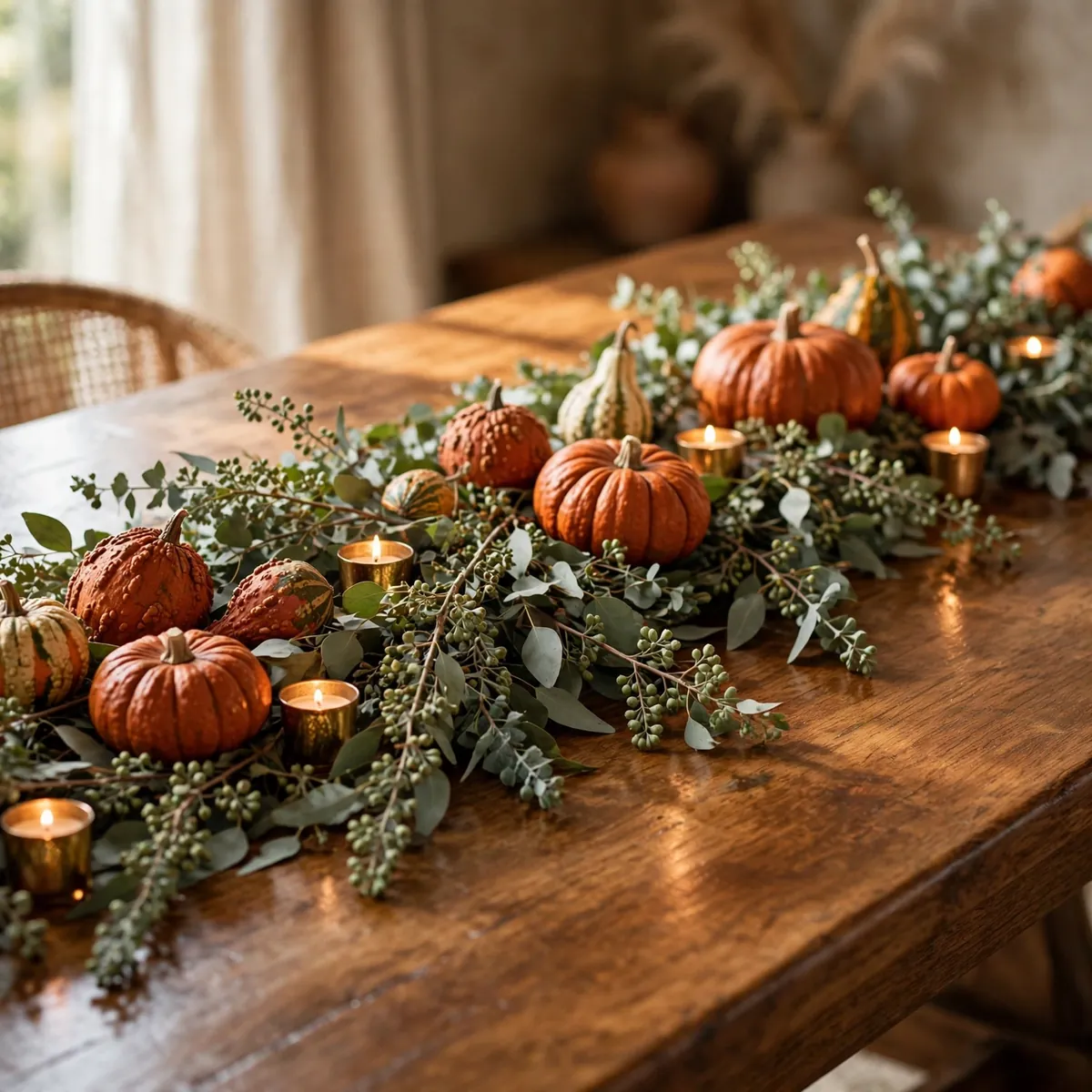
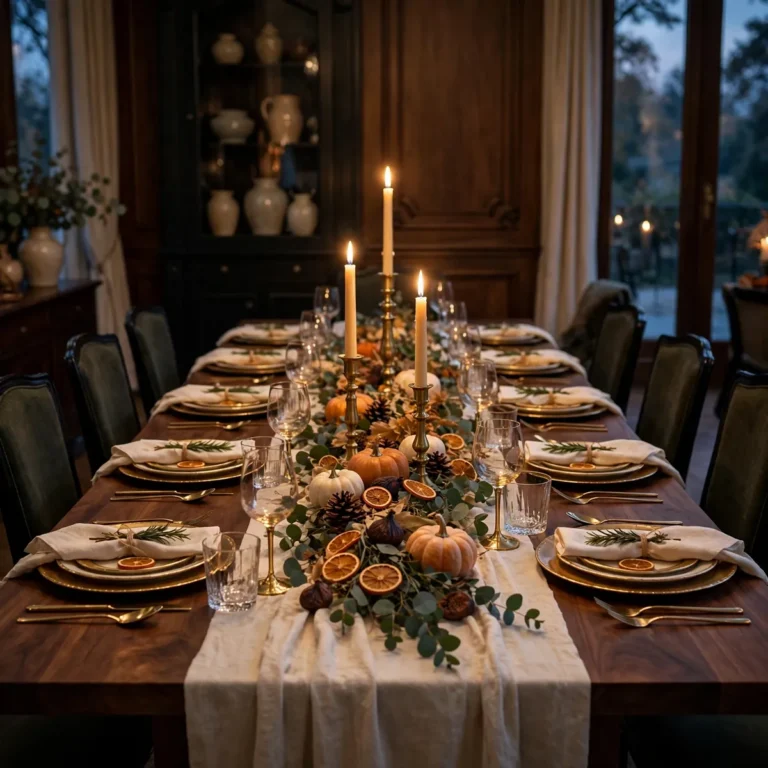
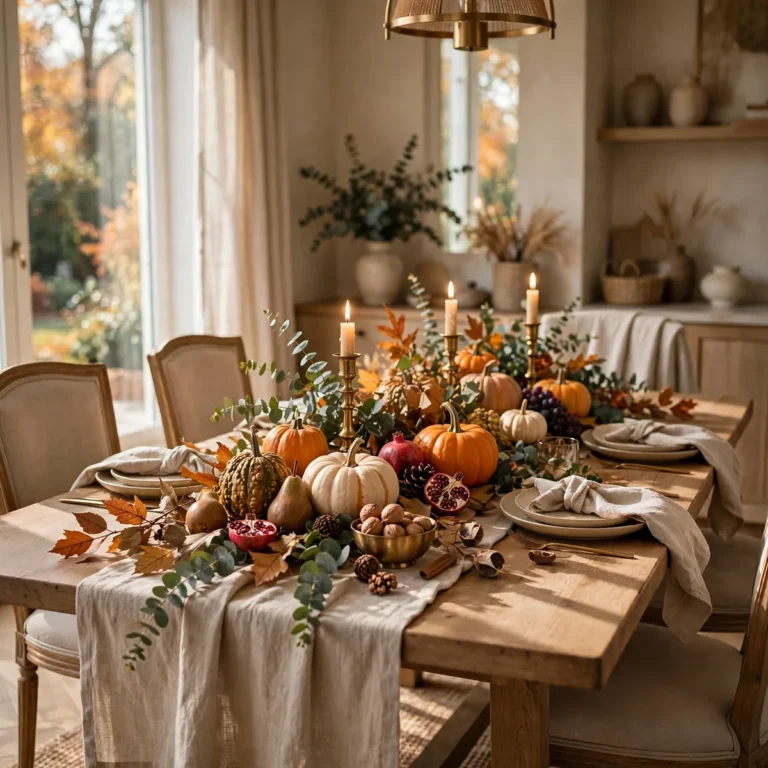
Instead of one big arrangement, lay a loose garland of seeded eucalyptus down the center of the table and tuck small heirloom pumpkins, gourds, and brass votives into it. It reads lush from every seat, leaves the middle flexible for platters, and costs less than a single florist bouquet.
This is the most forgiving centerpiece on this list. Eucalyptus drapes naturally, pumpkins hide any gaps, and nothing is fragile — assemble it days ahead and it still looks good on Thursday.
Quick tips:
- Cut eucalyptus into 18–24 inch lengths and overlap the ends so the runner reads as one continuous line.
- Keep the runner 6–12 inches short of each table end so place settings at the corners have breathing room.
- Use unscented candles — eucalyptus already scents the air, and fragrance fights the food.
2. Amber-Glass Candle Clusters
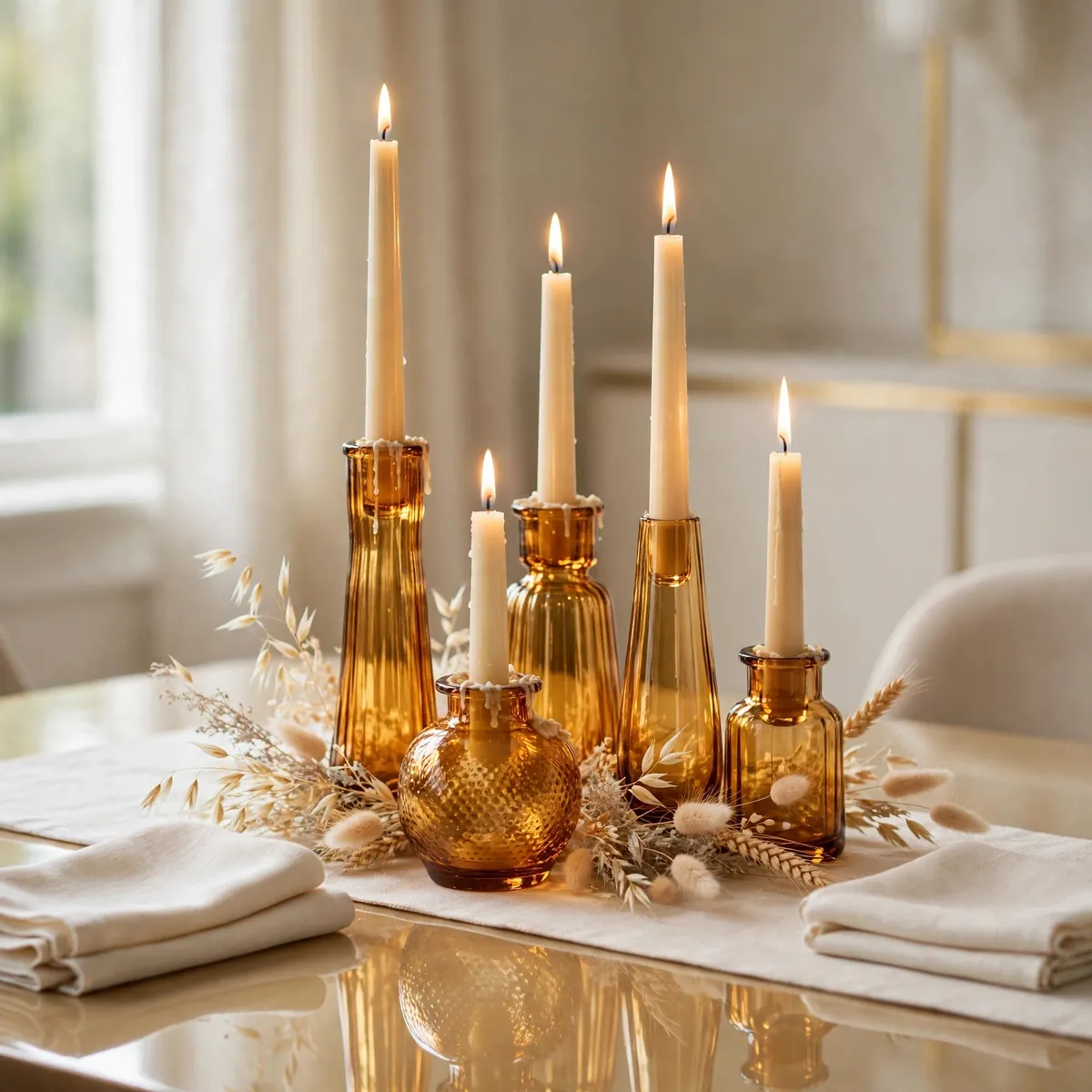
For tables where serving space is tight, skip the greenery entirely and cluster candles. Grouped candlelight supplies warmth, height variety, and glow while occupying almost no footprint — ideal for round tables and crowded buffets.
- Gather 5–7 candle holders in mixed heights (3–10 inches): amber glass, brass, and one or two cream ceramic pieces.
- Cluster them tight in the center, tallest in the middle, like a little city skyline.
- Tuck 3–4 sprigs of dried grass or a few loose leaves at the base to hide any bare tabletop between holders.
- Light everything 30 minutes before guests sit down — candlelit amber glass photographs and feels completely different from cold glass.
Quick tips:
- Odd numbers of holders (5 or 7) look more natural than even ones.
- Keep flames at least 12 inches from any foliage and away from overhead arrangements.
3. The Dough-Bowl Harvest Arrangement
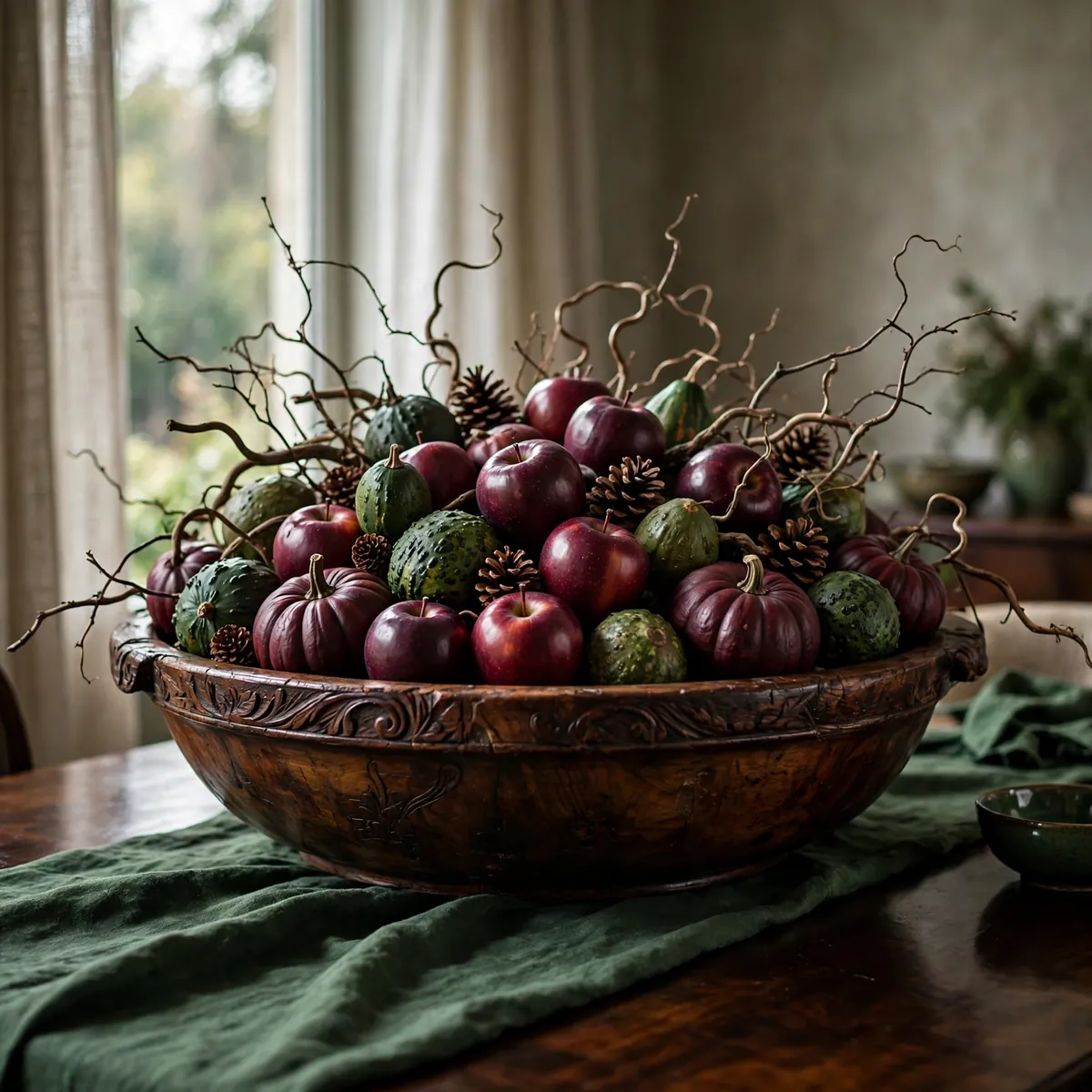
A vintage-style wooden dough bowl is the perfect centerpiece vessel: long, low, and sturdy. Fill it with dark red apples, burgundy pumpkins, green gourds, pinecones, and a few twisting branches. Everything in it is heavy enough to stay put when the table gets bumped, and the bowl doubles as a serving piece afterward.
This arrangement sits entirely under 10 inches tall, so conversation flows right over it, and every element lasts days at room temperature. Keep the palette tight — all burgundy and forest green, or all cream and orange — so it looks designed rather than accidental, and let it echo the rest of your thanksgiving decor ideas so the table feels like part of the room’s plan.
Quick tips:
- Put a folded tea towel in the bowl first so round fruit nests in place instead of rolling.
- Refresh: swap in fresh apples the morning of if anything bruised overnight.
4. Modern Fruit-and-Greenery Centerpiece
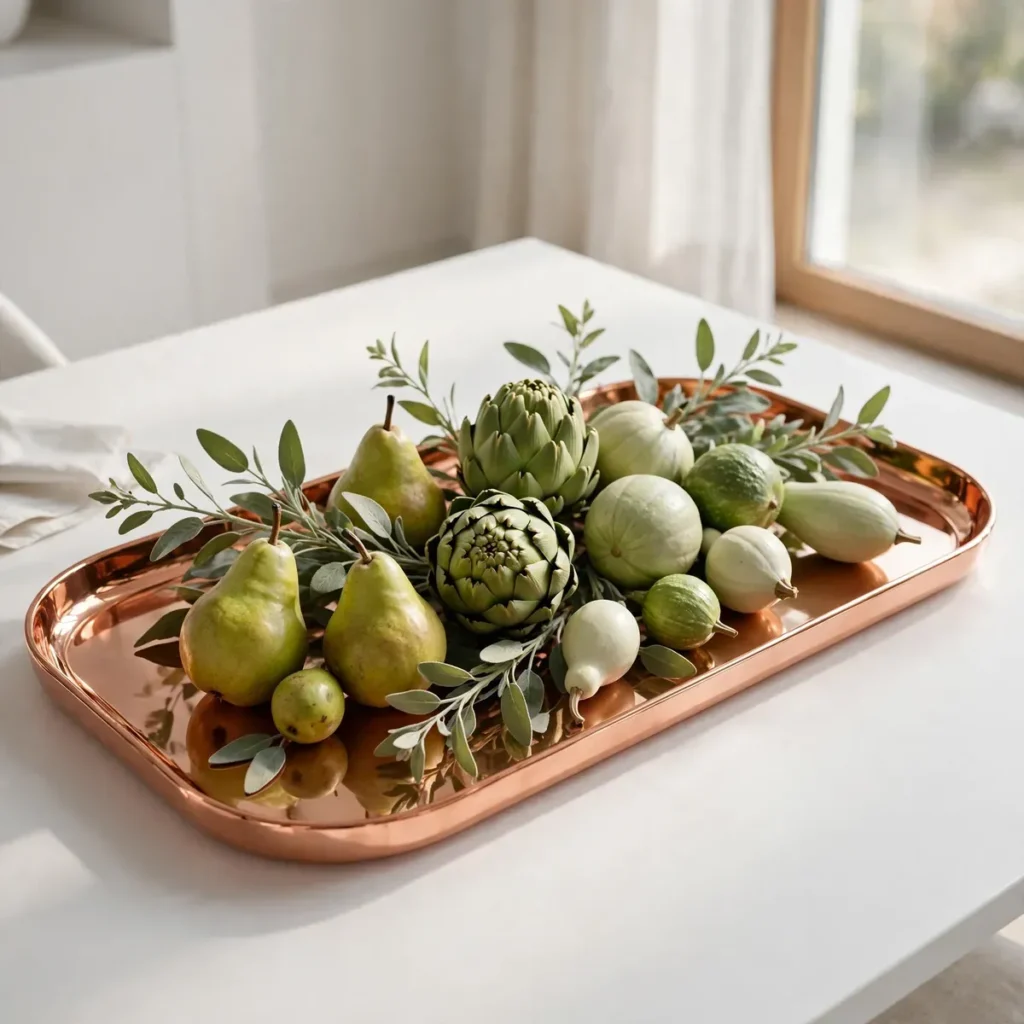
For a Thanksgiving table that skips the orange-and-rust script, build a centerpiece in greens and metallics: pears, artichokes, pale green gourds, and sage eucalyptus on a long copper or brass tray. It reads fresh and modern — the tray’s sheen supplies the festive warmth instead of the usual autumn palette.
- Why it works: green is the most forgiving color on camera and under mixed lighting; nothing here looks faded by Thursday.
- Scale: one tray per 3 feet of table. On a 6-foot table, run two trays with a gap between them for the turkey platter to land.
- Height: artichokes and pears stand 4–8 inches tall — well under the 12-inch conversation line.
- After the meal: everything edible goes back to the kitchen. Nothing to compost but stems.
Quick tips:
- Rub copper trays with a lemon half the night before so they shine instead of spotting.
- Mix textures — smooth pears, ridged gourds, feathery eucalyptus — so a single-color palette still looks layered.
5. The Low Wreath-Style Ring for Round Tables
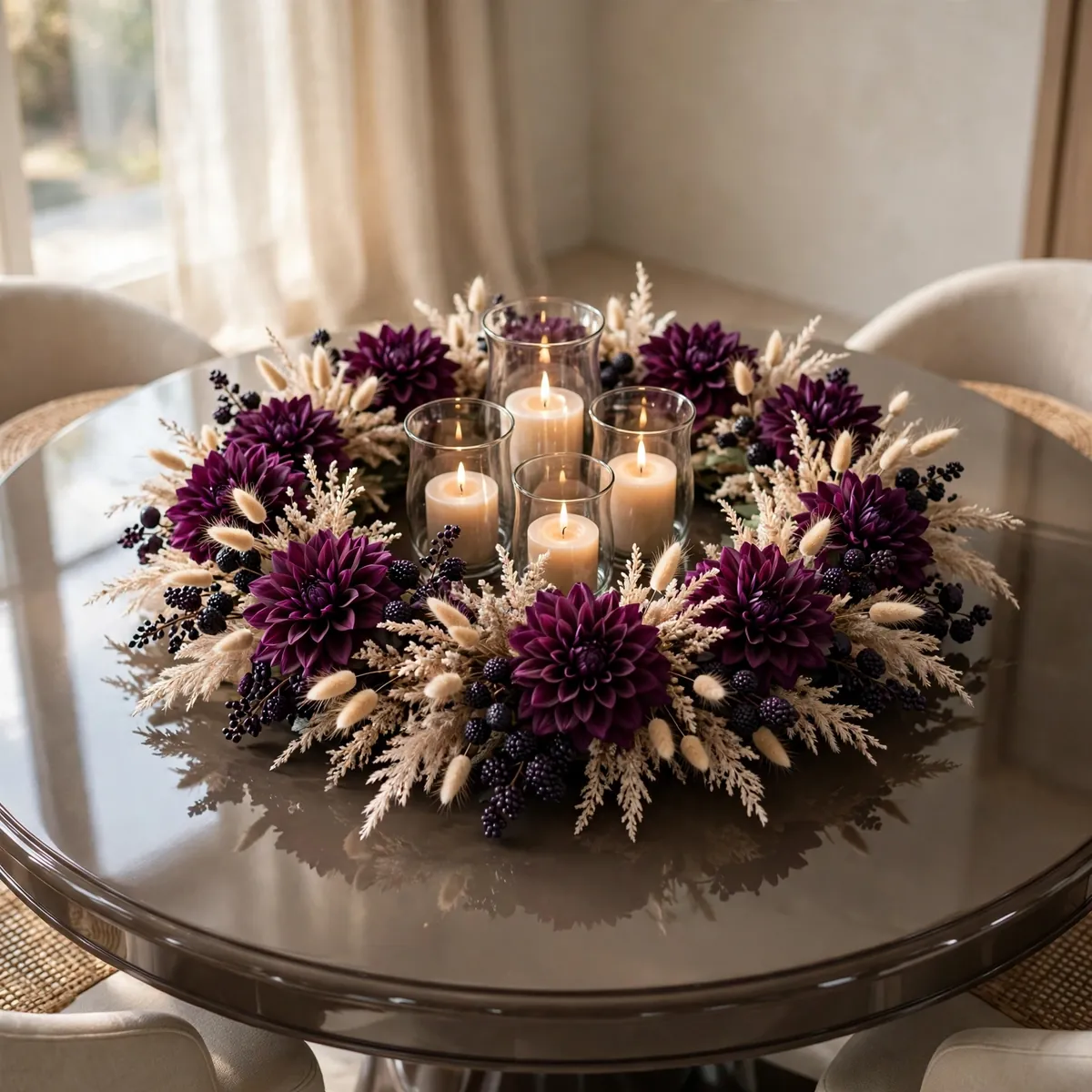
Round tables need a different shape than rectangular ones: a long arrangement leaves awkward dead zones on either side. The fix is a ring — a low wreath of foliage and flowers, 18–22 inches across, with a cluster of hurricane candles glowing in its center. The circle mirrors the table’s shape, every guest sits the same distance from it, and it leaves a generous outer ring for platters and plates.
Plum dahlias, dark berries, and champagne-toned grasses give this version a rich late-autumn mood that feels dressier than pumpkins while staying seasonal. At under 12 inches tall it never blocks conversation, and the candle glow hits every face evenly — half of what makes a round-table dinner feel warm.
Quick tips:
- Size the ring to about half the table’s diameter so serving dishes still fit comfortably around it.
- Use LED candles inside the hurricanes if the ring is tight — real flames plus dried foliage need distance.
6. Pumpkin Vase Florals
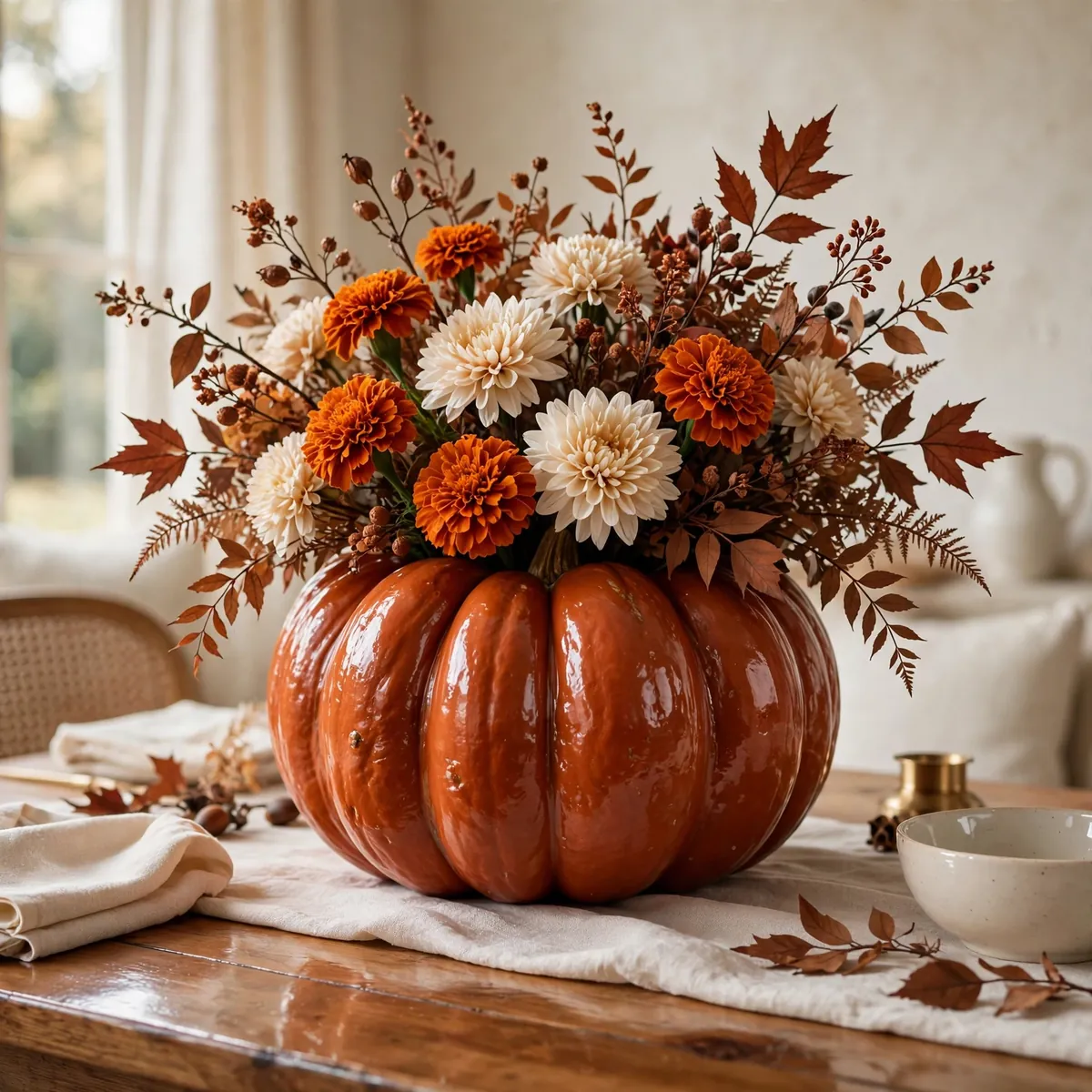
Hollowing out a pumpkin as a vase is the fastest way to make a grocery-store bouquet look custom. The pumpkin hides the mechanics, supplies the seasonal color, and costs almost nothing.
- Choose a medium pumpkin with a flat bottom; cut a lid, scoop it clean, and line the inside with a glass jar or plastic cup.
- Fill the jar with water and arrange burnt-orange marigolds, cream mums, and russet foliage — mums and marigolds are long-lasting cut flowers that hold for days.
- Keep the arrangement compact and rounded, 10–12 inches tall at most, so it stays a centerpiece and not a wall.
- Coat the cut edge of the lid with petroleum jelly to slow softening if you assemble it a day early.
Quick tips:
- Real pumpkins last 3–4 days as vases; faux pumpkins (carved with a craft knife) last all season — pick based on when you’re building.
7. Wheat, Branches & Dried Grasses
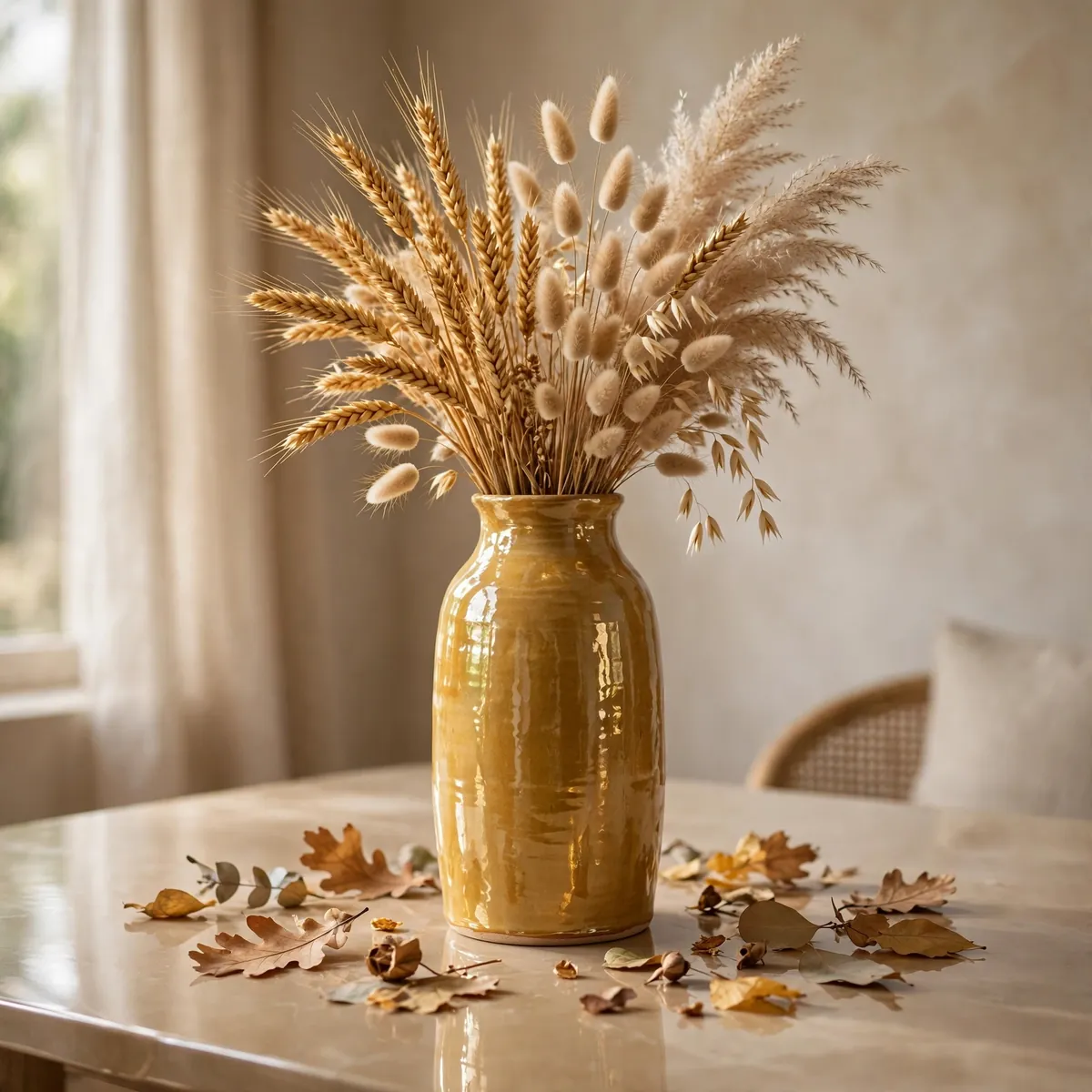
Fresh flowers die. Dried things don’t. A tall ceramic jug filled with golden wheat stalks, bunny-tail grasses, and pampas plumes is the lowest-maintenance centerpiece here — no water, no wilting, and it looks the same on day one and day thirty.
Height works differently with grasses than with flowers: thin, airy stems can rise above the 12-inch rule because guests can see through them. Use one statement jug at the center of a round table, or a pair flanking the middle of a long table, and let the plumes arc above the sightline without blocking it.
Quick tips:
- Spray dried grasses with unscented hairspray to stop shedding on the tablecloth.
- Combine three grass types — one tall and structural (wheat), one soft (bunny tails), one airy (pampas) — for a professional look.
8. A Row of Mini Pumpkins and Votives
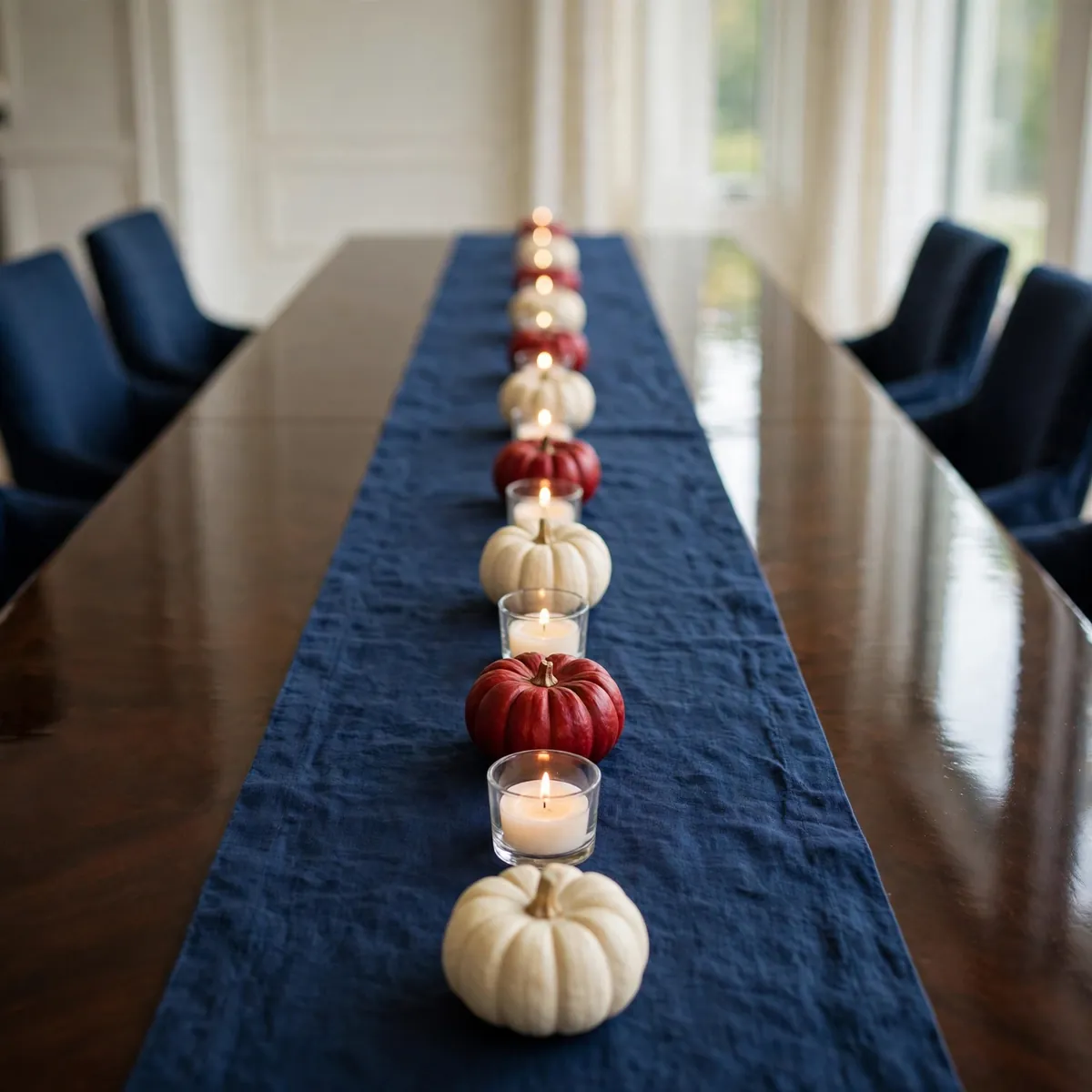
When in doubt, repeat. A simple alternating row of mini pumpkins and tea lights down the center of the table is almost impossible to get wrong, works on any table length, and scales with your guest count. The repetition creates rhythm, and rhythm is what makes a table look intentionally designed.
- The pattern: mini pumpkin, tea light in a clear glass cup, mini pumpkin — repeated the length of the table. White, cranberry, and orange minis mixed look richer than one color.
- The runner: lay a linen runner first (deep navy or forest green makes orange pumpkins pop); stop it 6–12 inches short of each end.
- Height: everything sits under 5 inches — the lowest-profile idea on this list, perfect when the food is the star.
- Cleanup: tea lights lift off in seconds when it’s time to clear; pumpkins go straight into a basket for the porch.
Quick tips:
- Space elements 6–8 inches apart so serving dishes can land between them.
- For a 10-person table you’ll need about 14–16 minis and 7–8 votives.
9. The Edible Centerpiece
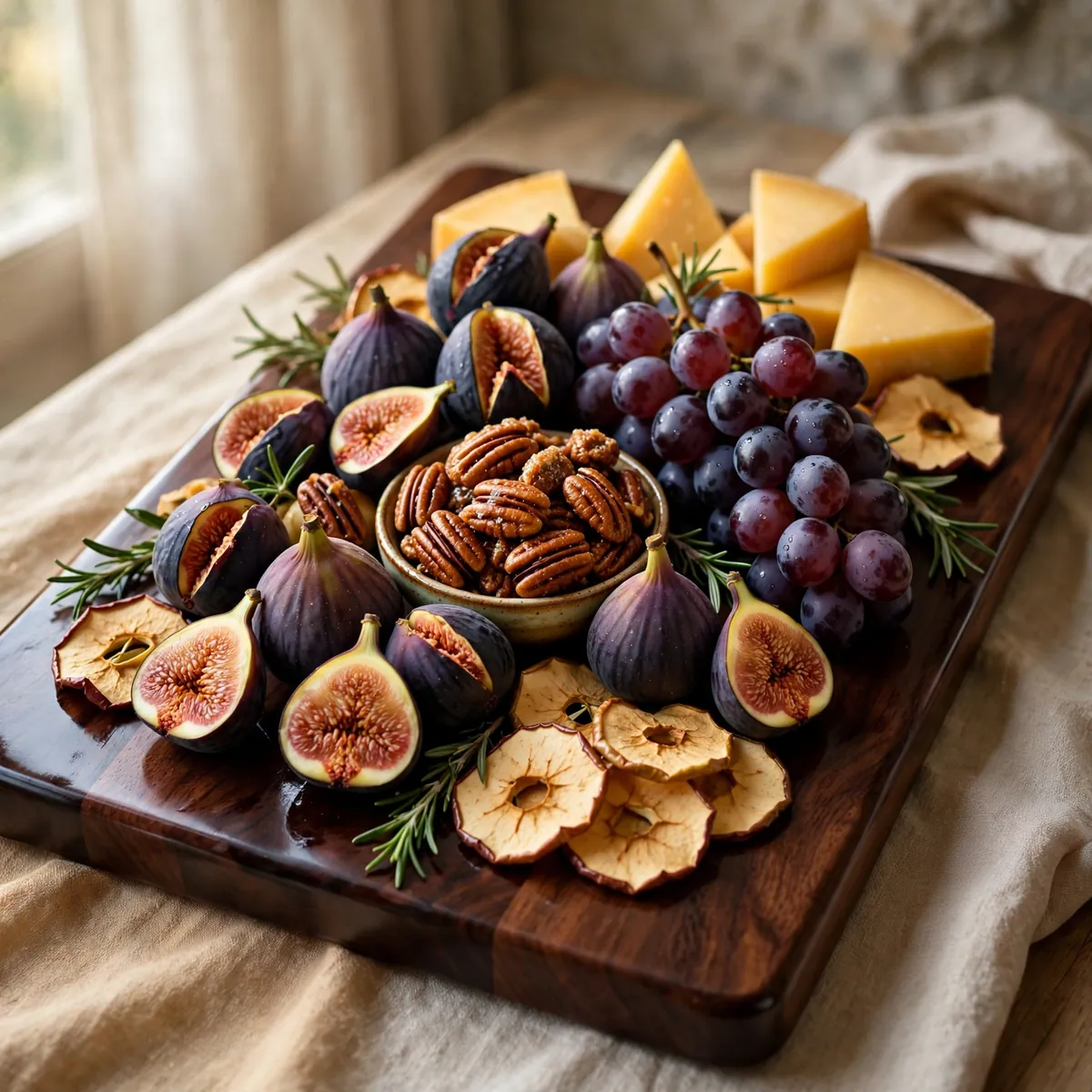
The most practical centerpiece is one guests can eat. A long walnut board heaped with figs, grapes, candied pecans, dried apple slices, rosemary sprigs, and a wedge or two of cheese serves as decor during the welcome hour and as the first course once everyone sits down. Nothing gets moved aside, nothing gets wasted, and it buys you time if the turkey runs late.
Style it like a cheese board, not a fruit bowl: cluster items in groups, let colors touch, and leave no bare board showing. Keep it under 8 inches tall, use small bowls for nuts so nothing rolls, and refresh it once before the main course goes down.
Quick tips:
- Choose sturdy fruits — figs, grapes, pears — that survive hours at room temperature; skip cut melon or berries that weep.
- Rosemary and thyme sprigs are edible garnish that also scent the table.
10. The Gratitude Tree
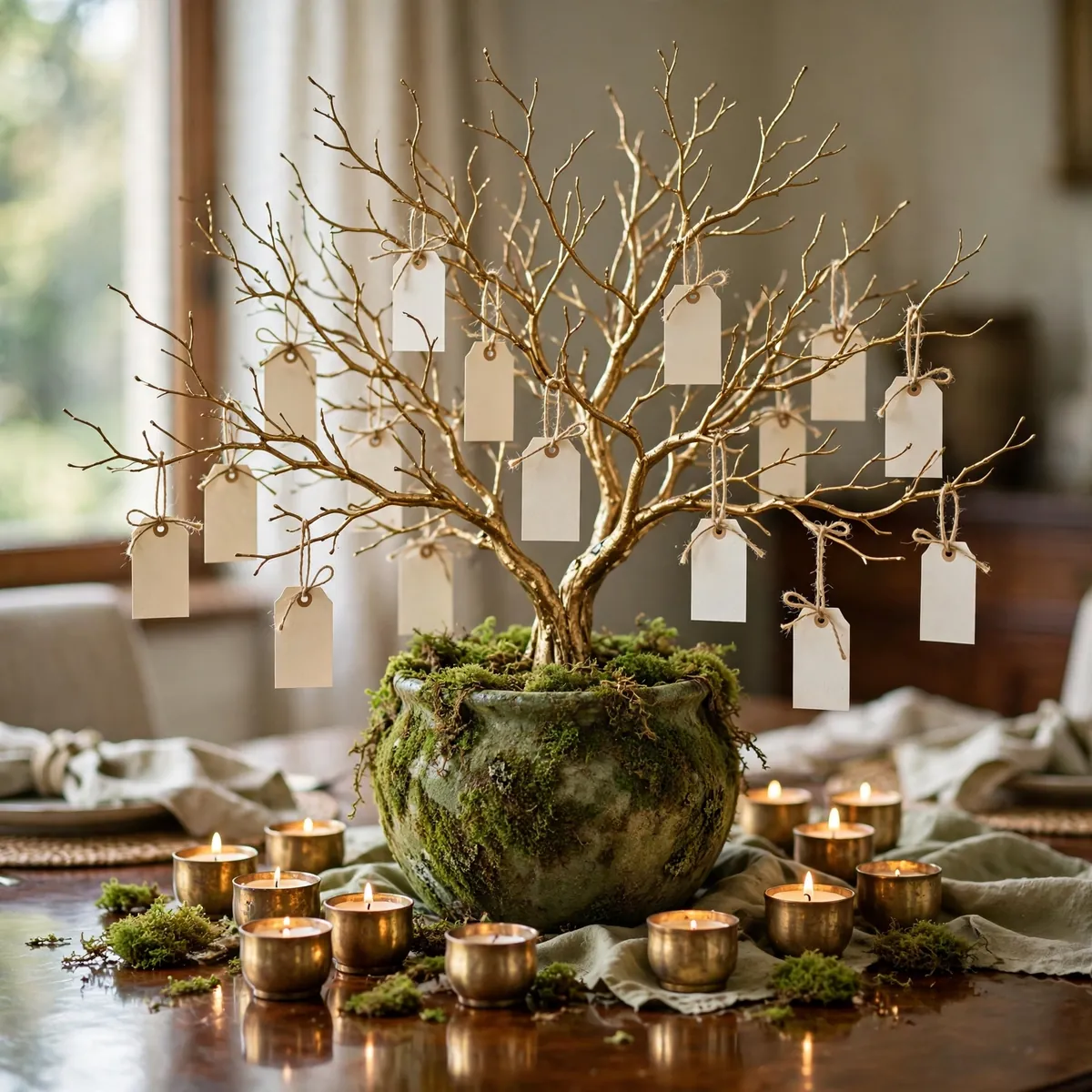
Centerpieces that invite participation beat passive decor. A gratitude tree — bare branches in a mossy stoneware pot, hung with blank paper tags and pens — gives guests something to do during the pre-dinner lull and becomes the table’s conversation piece. By dessert it’s covered in handwritten notes, and it photographs better than any floral arrangement because it’s personal.
- Anchor 5–7 bare branches (birch, manzanita, or pruned garden branches) in a heavy pot with floral foam or stones.
- Hang 2–3 dozen small kraft or cream tags on twine loops, with a cup of pens beside the pot.
- Ring the base with small brass votives — the candlelight makes the tags glow.
- Before dinner, write the first tag yourself (“this table, full”) so guests understand the assignment.
Quick tips:
- Keep branches under 18 inches above the table and airy — sparse branches don’t block sightlines.
- Read a few tags aloud before dessert; it’s the moment people remember.
11. Lantern with Flickering Candlelight

A single oversized lantern does the visual work of a whole arrangement with none of the fuss, which makes it one of the easiest thanksgiving centerpiece ideas for anyone short on time. Set a large bronze or black lantern in the center of the table, light two or three pillar candles inside it, and ring the base with ember-orange maple leaves, acorns, and pinecones. The glass panels protect the flames from drafts and elbows, the glow is warm and contained, and the whole thing reads as one confident object.
- Why lanterns win: wind-proof, kid-proof, pet-proof — the flame is enclosed, and the lantern itself is heavy enough not to tip.
- Scale: one large lantern (14–18 inches tall) anchors a 6-person table; for long tables, use one large lantern in the center plus two smaller ones spaced down the line.
- The base ring: keep foliage 6+ inches from the glass so leaves don’t scorch, and use unscented pillars so the candle glow doesn’t compete with dinner.
- After Thanksgiving: swap the leaves for pinecones and evergreen sprigs and the lantern carries straight into December.
Quick tips:
- Choose lanterns with glass on all four sides — open-sided lanterns let drafts kill the flame.
- Place a battery timer candle inside so it lights itself at the same time every evening through the holiday week.
12. Low Bowl of Seasonal Blooms
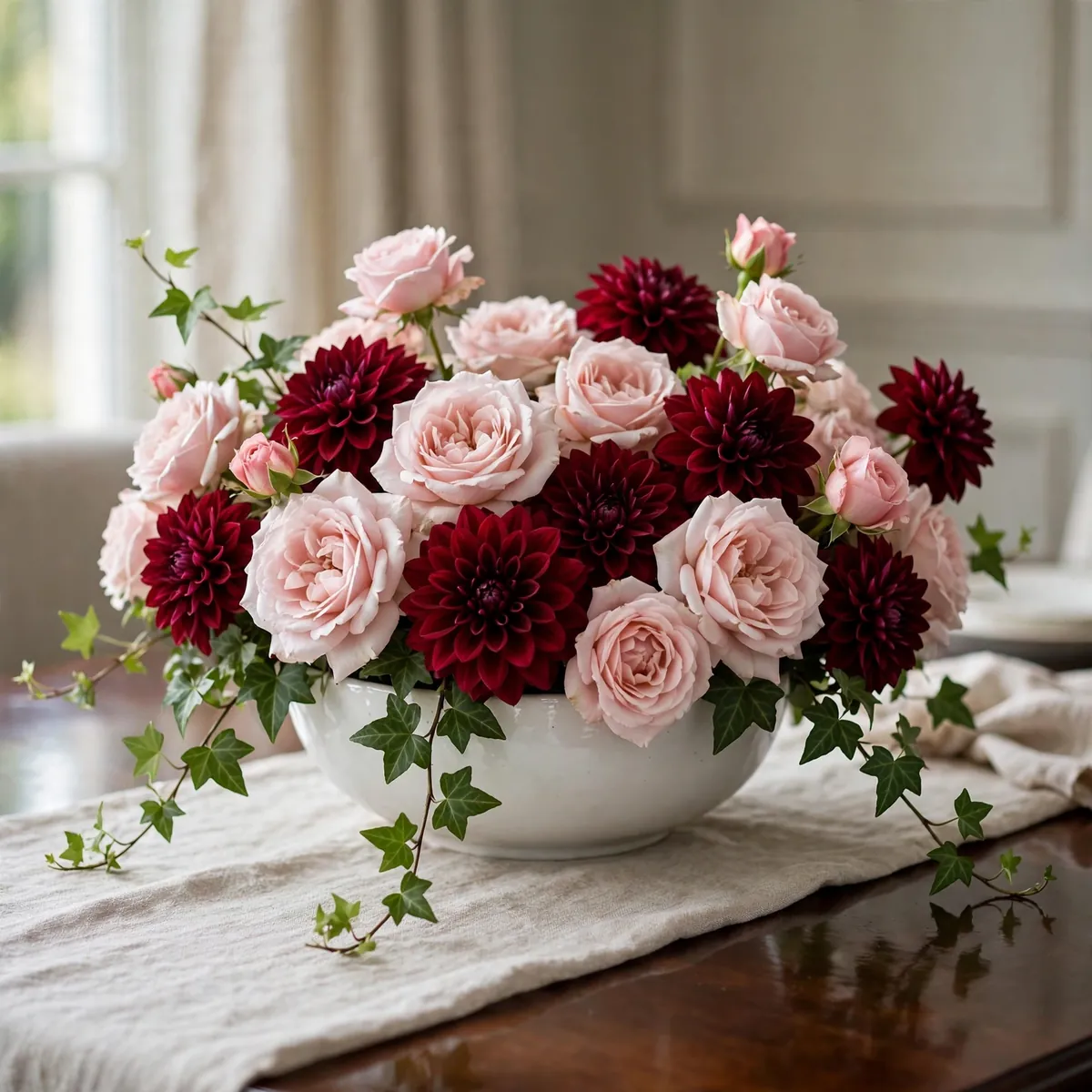
Sometimes the right answer is just flowers — but low ones. A wide, shallow bowl packed tight with blush garden roses, garnet dahlias, and trailing ivy gives you the lushness of a florist arrangement at a fraction of the cost, and at 8 inches tall it never interferes with conversation. The trick is density: a low bowl should look overfilled, with no visible water or mechanics.
Buy your flowers Tuesday for a Thursday dinner — dahlias and garden roses open over 48 hours and look their best on day two or three. Strip leaves that would sit below the waterline, change the water daily, and keep the bowl away from the fruit bowl (ripening fruit releases ethylene gas that ages flowers faster).
Quick tips:
- A 10-inch bowl needs roughly 18–24 stems to look full; buy one extra bunch as insurance.
- This is the best pick for a formal table — it reads classic without a single pumpkin in sight.
Frequently Asked Questions
How tall should a Thanksgiving centerpiece be?
Keep the main body under 12 inches tall so guests can see and talk across the table. If you want height, go well above the sightline instead — tall, slim candlesticks or airy branches guests can see through work, but nothing in the middle ground between 12 and 18 inches, which sits exactly at eye level.
What colors work best for Thanksgiving centerpieces?
Warm shades — orange, rust, amber, gold, burgundy, and earthy greens — create the classic cozy feel. For a modern look, try an all-green palette with metallics or cream and gold. Pick two or three colors plus one metal and repeat them throughout the tablescape for a pulled-together look.
How far in advance can I set up my centerpiece?
Dried arrangements, candles, pumpkins, and gourds can be set up days ahead — they don’t change. Fresh floral centerpieces are best arranged 1–2 days before Thanksgiving; keep them hydrated and out of direct sun. Build produce-based centerpieces the day before and swap anything bruised the morning of.
Can I make a Thanksgiving centerpiece on a budget?
Absolutely. The best-looking options cost almost nothing: a eucalyptus runner with grocery-store mini pumpkins, a dough bowl of apples and yard-gathered pinecones, or a cluster of candles you already own. Natural materials look expensive when grouped tightly in a limited color palette.
Conclusion
Of all the thanksgiving centerpiece ideas on this list, the right one isn’t the tallest or the most elaborate — it’s the one that lets the meal happen around it. Keep it low, keep the palette tight, leave room for the food, and choose materials that still look good three hours in. Pick the idea that matches your table shape and your energy level, build it the night before, and then forget about it and enjoy the people around the table. That’s the whole point.