Dark Elegant Bedroom: 12 Cozy Ideas That Feel Luxurious
A dark elegant bedroom is a bedroom built on deep, rich color, charcoal, ink navy, forest green, espresso, or warm black, balanced with layered warm light, soft textiles, and natural wood. It is designed to feel calm and cocooning, like a boutique hotel suite, rather than gloomy.
These dark elegant bedroom ideas show how to pull it off: choose a deep color with warm undertones, layer lighting at 2700 Kelvin, add wood and brass, and keep the decor edited. For more ideas in the luxury direction, our luxurious bedrooms post explores high-end finishes and materials.
The secret is not simply painting every surface dark. Designers create comfort by layering textures, controlling contrast, choosing the right furniture scale, and allowing warm details to soften the mood. These dark elegant bedroom ideas will help you create a refined space that feels cozy rather than heavy.
1. Choose A Deep Color With Warm Undertones

Begin with a color that has depth but does not feel harsh. Charcoal, smoky blue, forest green, warm black, cocoa brown, and muted plum are excellent choices. Warm undertones are especially helpful because they make the room feel enveloping instead of cold.
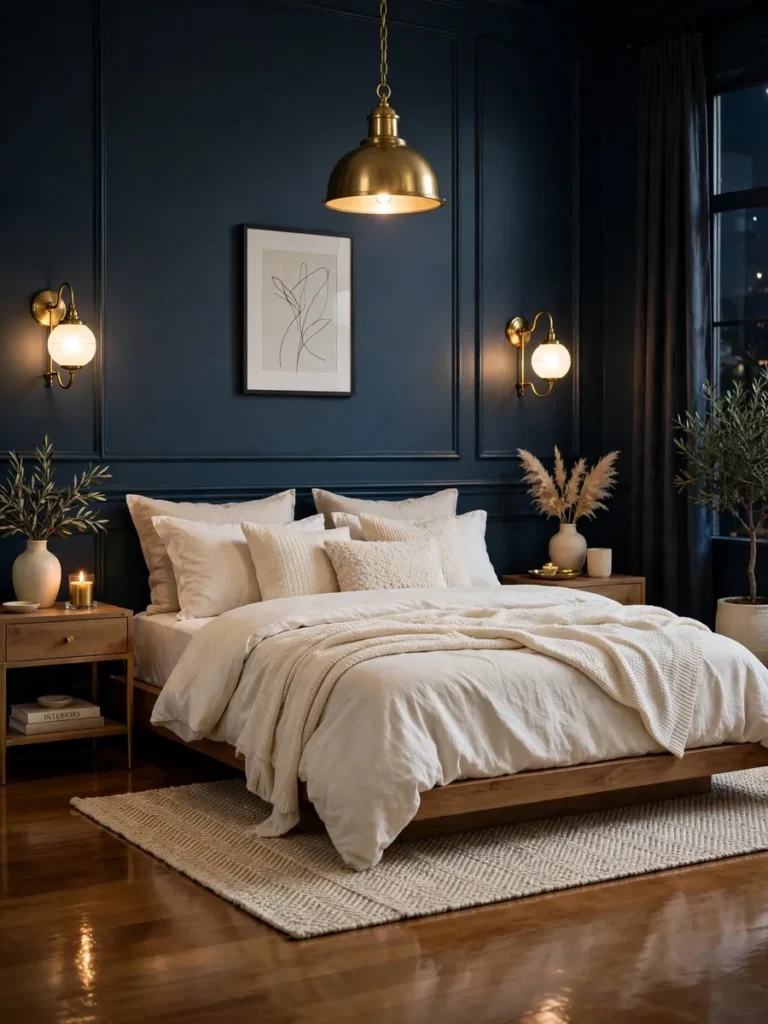
Use the deepest shade on the main wall or throughout the room, then balance it with warm white, taupe, camel, or walnut. A limited palette usually looks more luxurious than many competing colors. Concrete examples: ink navy on all four walls with warm-white trim, or a charcoal accent wall behind the bed with the other walls in warm greige. In both cases the warmth in the undertone is what keeps the room inviting.
2. Make The Bed The Softest Focal Point
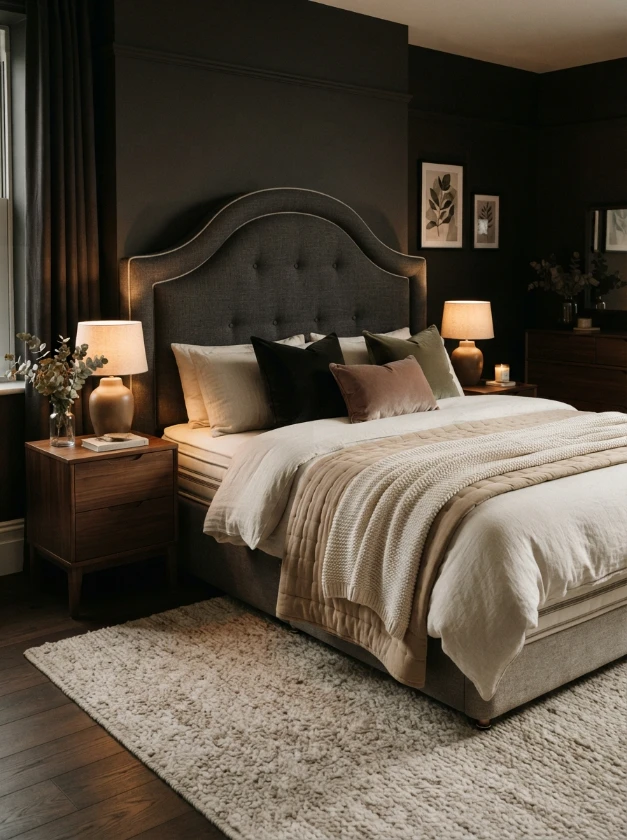
A dark room needs a welcoming bed. Choose an upholstered headboard, layered duvet, quilt, knitted throw, and pillows in different textures. Cream, mushroom, warm beige, muted olive, and dusty rose can stand out beautifully against deep walls.
Keep the bed visually generous but not overloaded. The goal is a relaxed, hotel-inspired focal point that invites rest. For example, a charcoal upholstered headboard with an ivory linen duvet, a knitted camel throw, and three pillows in cream, mushroom, and muted olive reads elegant without any heaviness.
3. Use Warm Layered Lighting
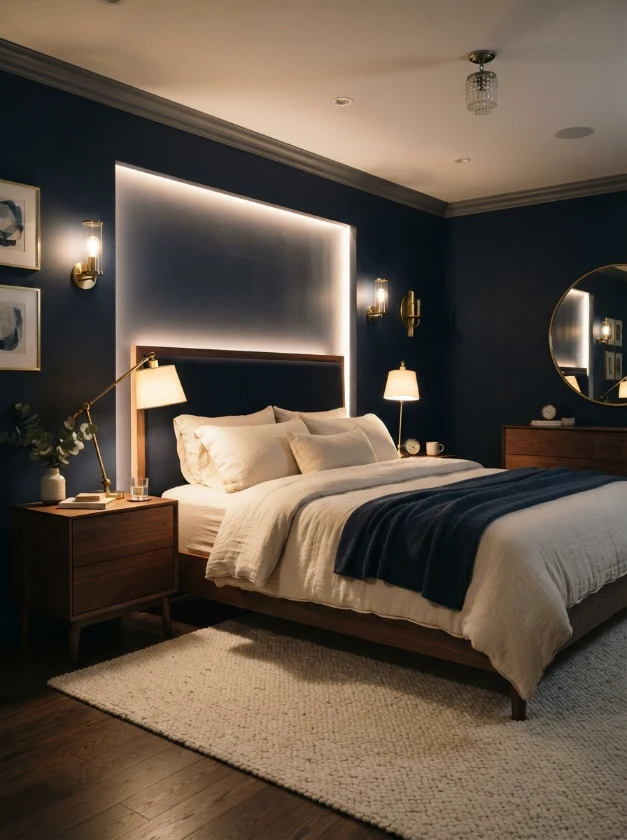
Lighting is one of the most important elements in a dark elegant bedroom. Combine bedside lamps, wall sconces, concealed LED strips, pendant lights, and dimmable ceiling fixtures. Warm bulbs create a soft glow that makes dark paint and wood feel richer.
Avoid relying on one bright overhead light. Several gentle sources create depth and let you change the mood from morning to evening. Aim for warm-white bulbs at 2700 Kelvin in every source, and put the overhead light on a dimmer. Never rely on one bright ceiling light in a dark room; it flattens the color and kills the mood.
4. Add Wood To Bring Natural Warmth
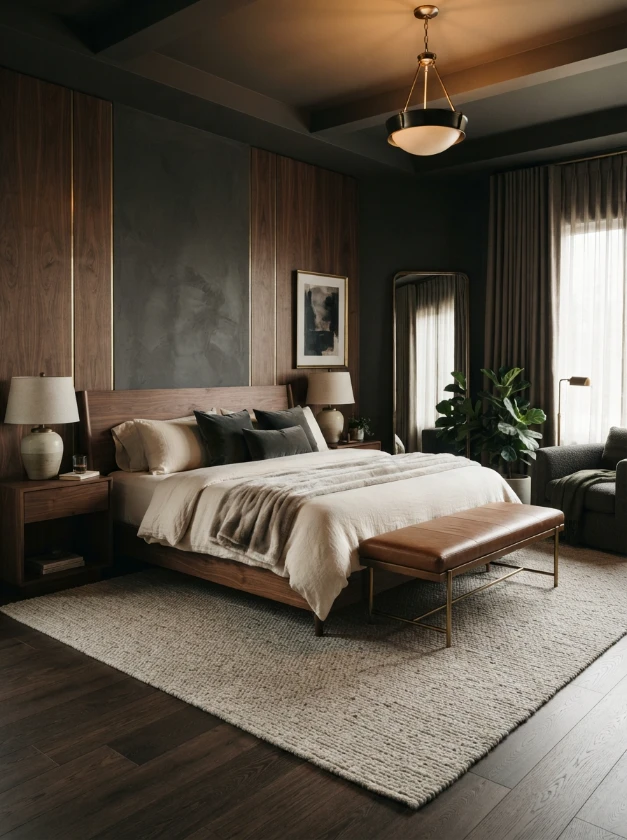
Dark colors become more welcoming when paired with natural wood. Walnut nightstands, oak flooring, smoked timber panels, or a warm wooden bench can prevent the room from feeling overly polished or cold.
Choose one main wood tone and repeat it in two or three places for a cohesive look. The grain adds visual texture without needing loud decoration. Try walnut nightstands flanking the bed, an oak floor, and one smoked-timber bench at the foot; repeating the same wood tone in three places keeps the room cohesive.
5. Balance Dark Walls With Soft Contrast
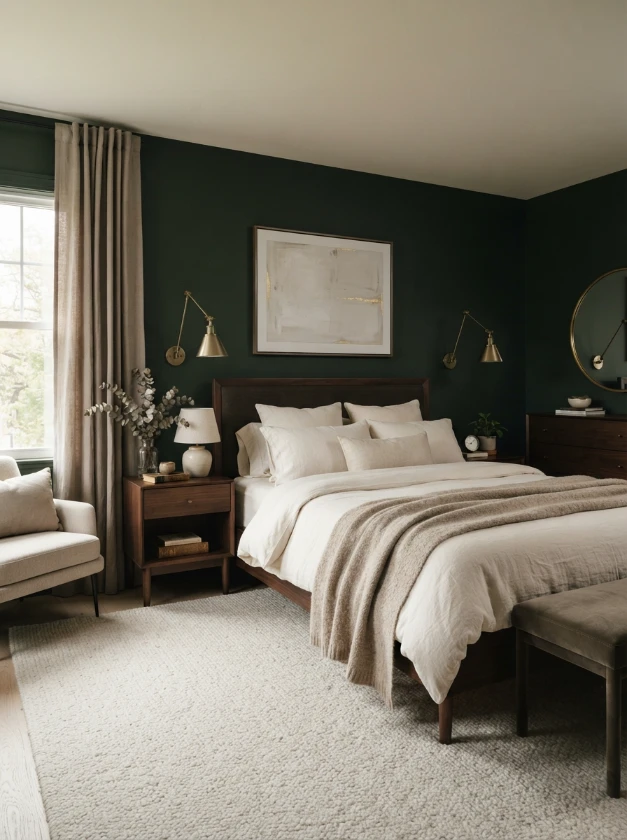
Contrast helps a moody bedroom feel comfortable. Pair dark walls with lighter bedding, a soft rug, pale curtains, or warm artwork. The contrast should be gentle rather than stark.
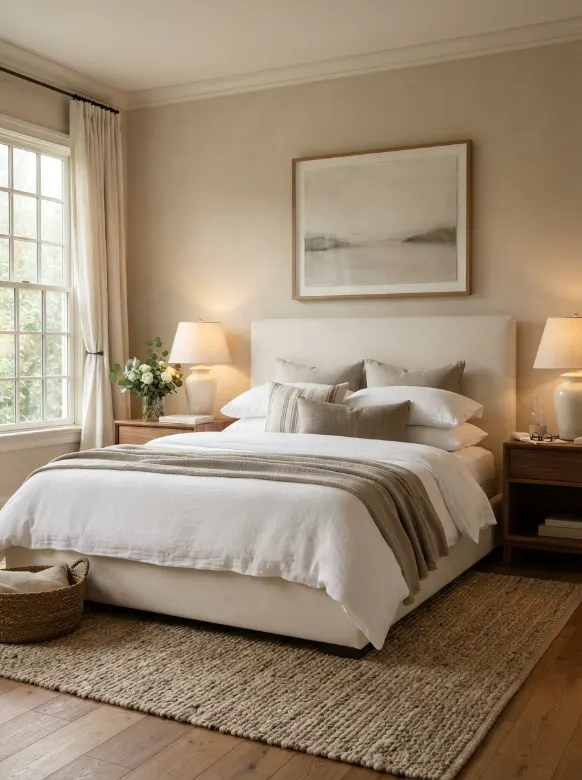
Try charcoal with cream, forest green with oatmeal, navy with warm gray, or espresso with ivory. These combinations feel elegant while keeping the room approachable. A reliable formula: dark walls, bedding two shades lighter, and one medium-tone layer in between, such as a camel throw over an ivory duvet in a forest-green room.
6. Add Classic Wall Molding Or Paneling
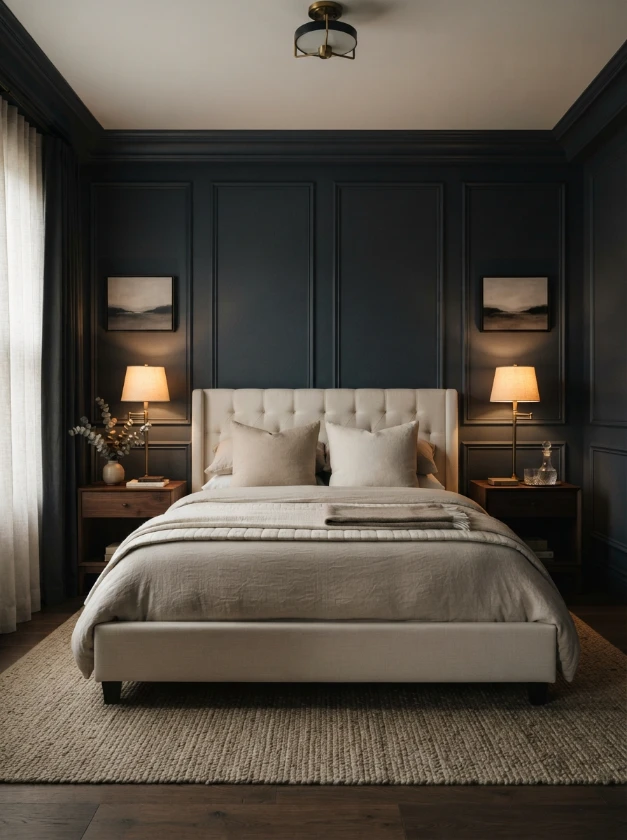
Architectural detail gives dark walls structure. Shallow molding, vertical paneling, beadboard, or a simple picture-frame treatment can create rhythm and make the color feel intentional.
Paint the trim in the same shade for a sophisticated monochromatic effect, or use a slightly lighter tone for subtle definition. Matte or eggshell finishes are usually calmer than high gloss. Picture-frame molding painted the same charcoal as the wall, in a matte finish, gives flat drywall an architectural rhythm that reads custom.
7. Create A Textural Feature Wall
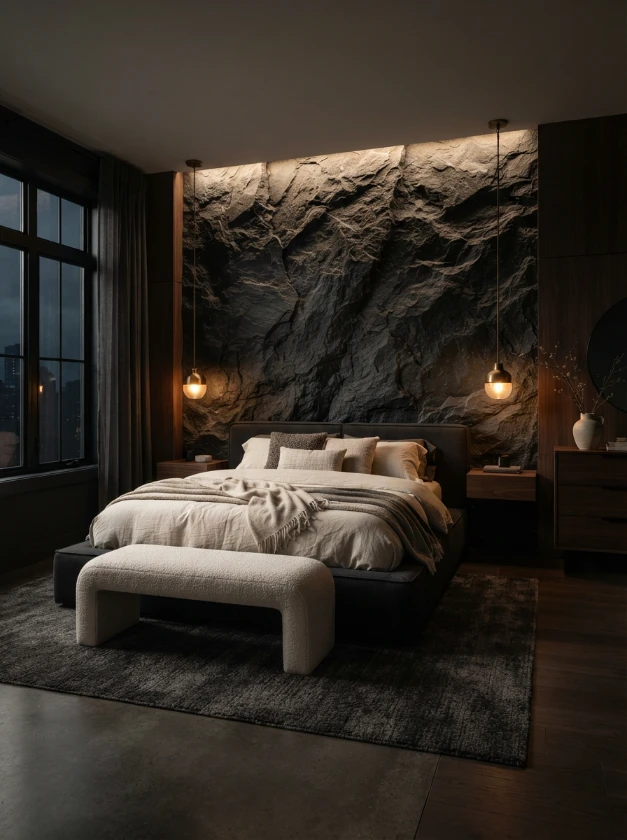
If you prefer a simpler room, let one wall provide the drama. Stone, limewash, textured wallpaper, fluted wood, or a deep painted accent wall can become the visual anchor.
Keep the remaining furniture and accessories restrained so the feature feels curated. One strong statement is often more effective than several competing focal points. A forest-green limewash wall behind the bed with brushed-brass sconces is the classic version: texture plus metal glow against deep color.
8. Style A Small Sitting Or Reading Corner
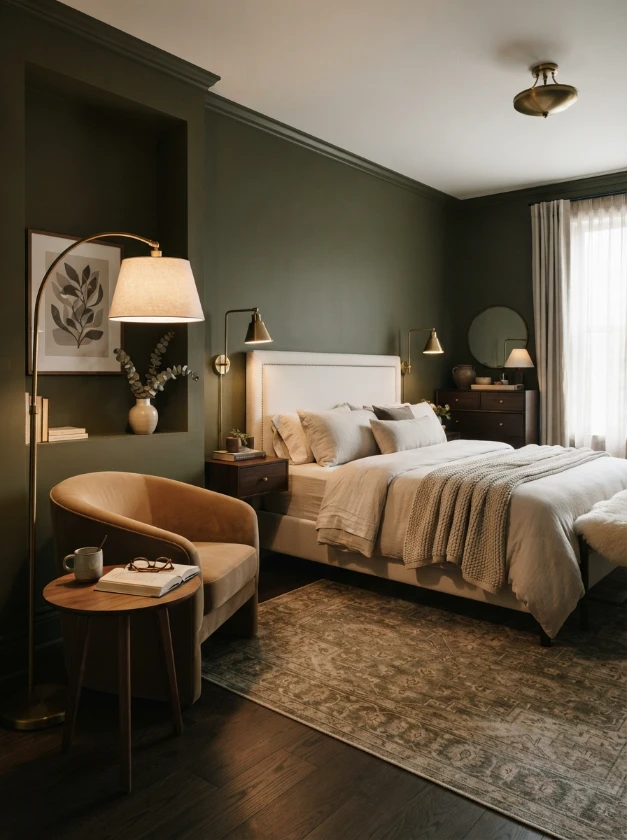
A chair or bench can make the bedroom feel like a complete retreat. Choose velvet, boucle, linen, or leather in a shade that complements the bed. Add a small table and a warm lamp for a useful evening corner.
Keep the arrangement compact and leave a clear walkway. Comfort should support the room rather than make it feel crowded. A velvet armchair in muted plum, a small brass side table, and a warm reading lamp turn an unused corner into the room’s evening spot.
9. Use Curtains To Soften The Darkness
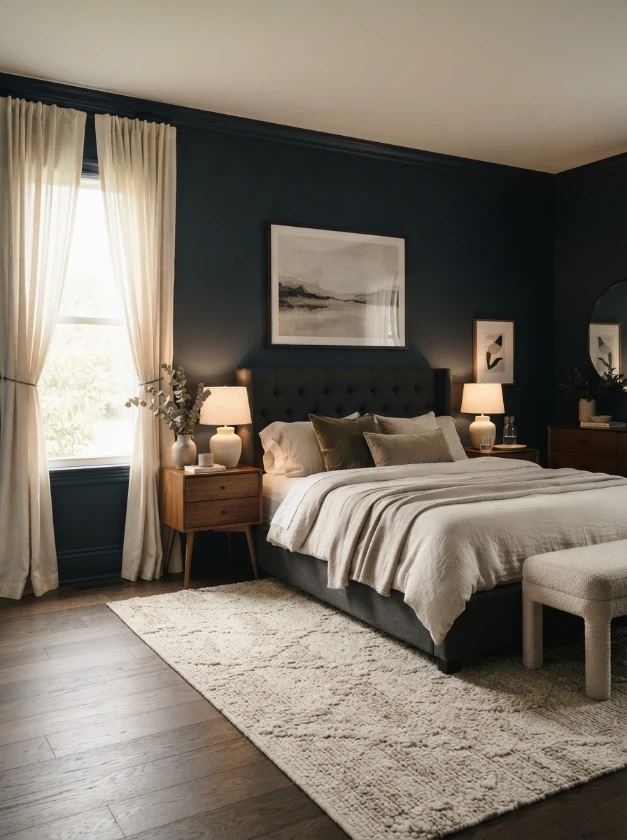
Window treatments help control both light and atmosphere. Full-length curtains in linen, cotton, velvet, or a soft woven fabric add movement and soften hard edges.
Warm ivory, taupe, muted olive, or smoky beige can create a gentle transition between the windows and dark walls. Layer sheer curtains with blackout panels when you need both daylight and privacy. Floor-to-ceiling linen curtains in warm ivory, hung wide of the window frame, soften the transition from dark walls to glass and make the ceiling feel taller.
10. Add Brass, Bronze, Or Aged Metal Accents
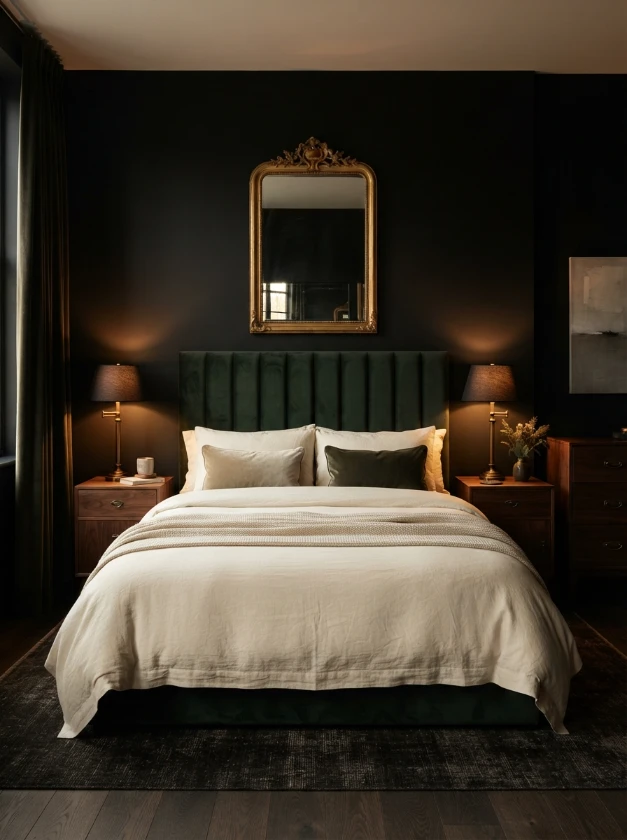
Metal details can bring a quiet glow to a dark room. Aged brass lamps, bronze handles, antique gold mirrors, and darkened metal frames work especially well with charcoal, green, brown, and navy.
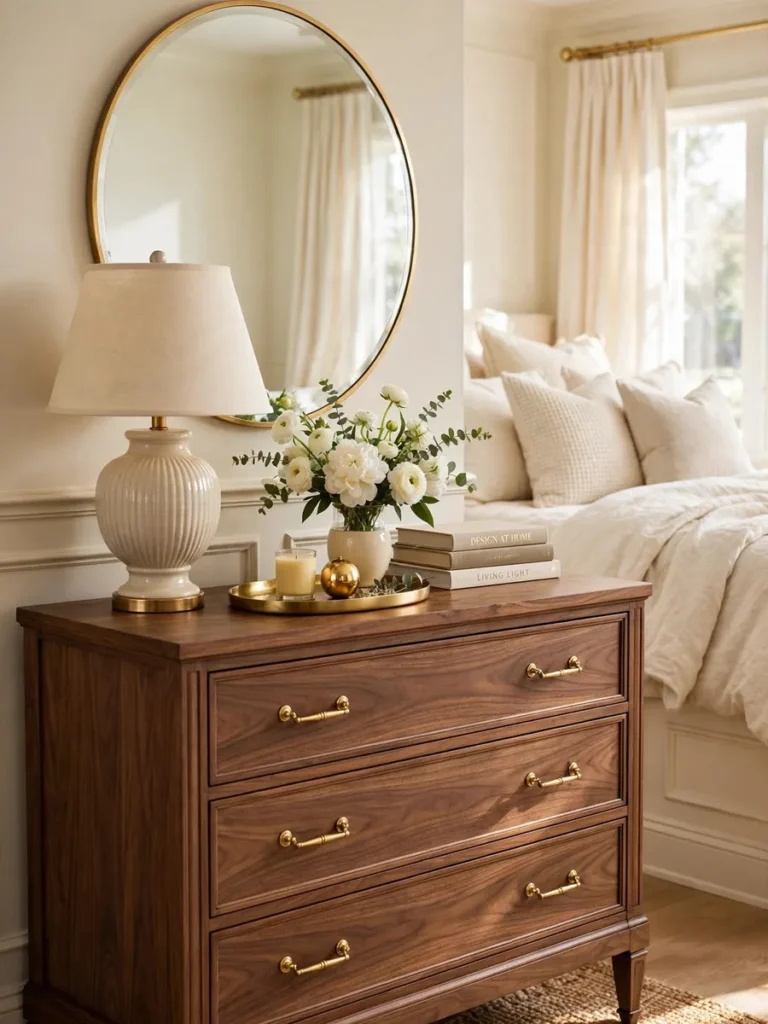
Repeat the finish sparingly. Two or three coordinated accents are enough to make the room feel considered without becoming flashy. Aged-brass bedside lamps, one antique-gold mirror, and darkened-bronze drawer pulls are enough; two or three coordinated metal accents keep the glow quiet. For more metallic drama, our glam room ideas lean fully into brass and mirrors.
11. Keep Decor Personal But Edited
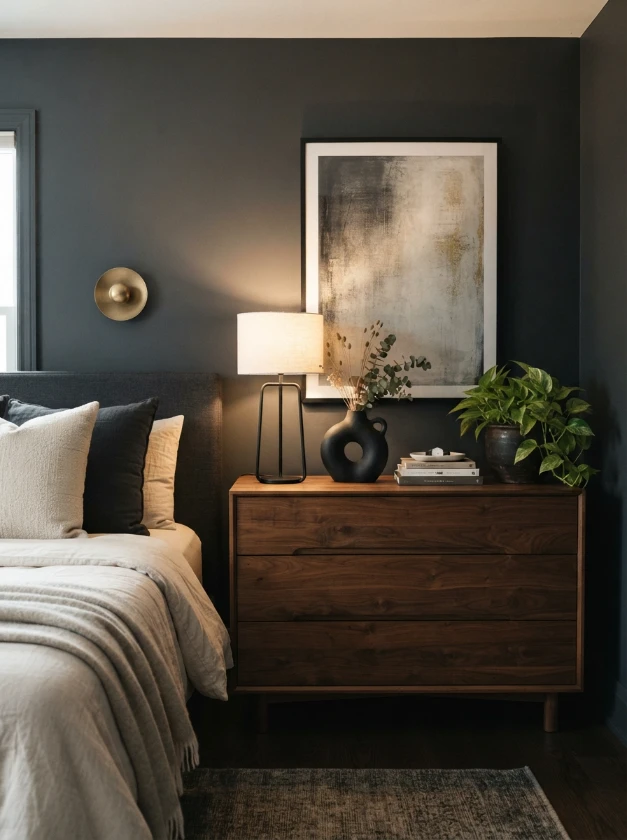
Luxury comes from clarity. Choose a few meaningful objects such as framed art, a ceramic vase, books, a sculptural lamp, or a plant. Leave some surfaces open so the darker palette can breathe.
In a dark elegant bedroom, clutter becomes more noticeable. Use closed storage for everyday items and display only pieces that support the mood. Edit to five objects or fewer on display: one framed art print, one ceramic vase, a small stack of books, and one plant. Everything else lives in closed storage.
12. Finish With A Grounding Rug And Soft Layers
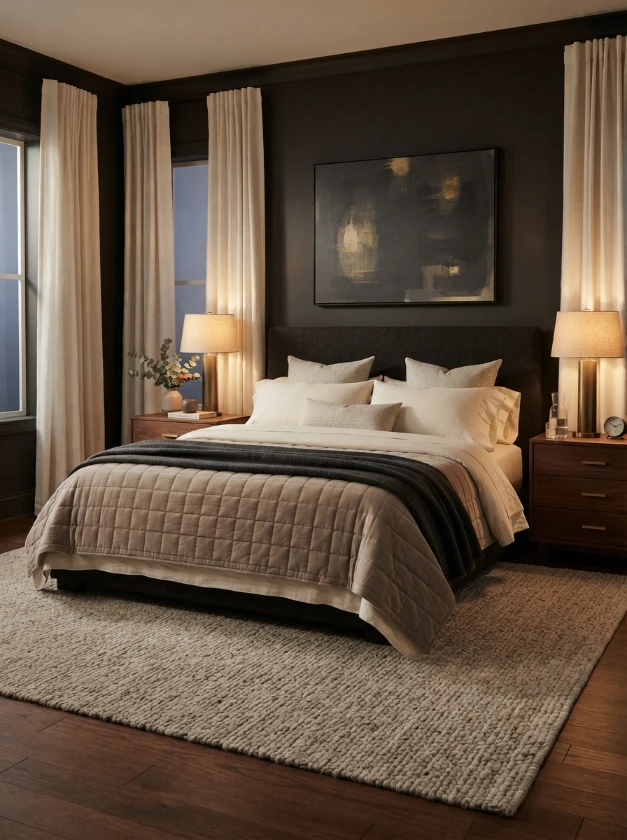
A rug anchors the bed and adds comfort underfoot. Choose a subtle pattern or tonal texture rather than a busy print. Wool, vintage-inspired designs, plush pile, and woven rugs can all work beautifully.
Complete the room with layered blankets, soft cushions, and natural textiles. These small details keep the design warm, tactile, and livable. A large tonal wool rug that extends past the bed on three sides grounds the whole composition; a rug that only fits under the nightstands makes a dark room feel smaller.
Dark Moody vs Dark Elegant: The Difference
Dark moody and dark elegant are cousins, not twins. A dark moody bedroom leans dramatic: near-black walls, high contrast, gothic or industrial edges. A dark elegant bedroom keeps the depth but softens everything: warm undertones in the paint, brass instead of black metal, velvet and linen instead of leather, and layered warm light instead of a single stark source. If your room feels dramatic but not restful, you are in moody territory; warm up the metals, soften the textiles, and add one more lamp.
Dark Bedroom Paint Colors: Shades and Finishes
The shade and the finish matter equally. Matte or eggshell finishes absorb light and make dark paint feel velvety; satin or gloss bounces light and can look harsh. Stick to colors with warm undertones so the room feels enveloping rather than cold.
| Color | Mood it creates | Pairs best with |
|---|---|---|
| Charcoal with warm undertone | Sophisticated, calm | Brass, walnut, cream textiles |
| Ink navy | Classic, cocooning | Warm white trim, camel, aged gold |
| Forest green | Rich, natural | Brass sconces, oak, oatmeal linen |
| Warm black | Dramatic, intimate | Cognac leather, bronze, ivory |
| Muted plum | Romantic, soft | Antique gold, mushroom, dusty rose |
Bedding That Keeps It Elegant, Not Heavy
Use the base-middle-top formula. Base: sheets and duvet in a light neutral like ivory or warm white, so the bed glows against dark walls. Middle: one textured layer, a knitted throw or quilt in camel, mushroom, or muted olive. Top: two or three pillows mixing one solid, one texture (velvet or boucle), and one subtle pattern. Black sheets look dramatic in photos but make the bed disappear into dark walls; light bedding is what keeps the room elegant.
Finishing Touches: Dark Bedroom Decor That Reads Elegant
Finish with decor that catches light: one large art print in a thin dark frame, a round mirror that bounces lamplight, a ceramic or stone vase with dried stems, and a small stack of clothbound books on the nightstand. Each piece should either reflect light or add texture; anything that does neither is clutter in a dark room.
How To Keep A Dark Elegant Bedroom From Feeling Heavy
Use the darkest color with intention, add several warm light sources, mix matte and tactile finishes, and include at least one natural material. Keep furniture proportionate, avoid too many unrelated accents, and use lighter textiles to create breathing room.
The best dark elegant bedroom combines drama with comfort. It should feel composed in daylight and soft after sunset. Small rooms can go dark too. Keep the darkest color on the walls and the ceiling one shade lighter, or paint the ceiling the same color for a cocooning effect in a room with good natural light. Use a mirror opposite the window, keep furniture leggy so floor shows, and lean on the light bedding formula above. Renters can get most of this look without painting: charcoal or navy bedding, floor-length dark curtains, a peel-and-stick wallpaper accent wall, and warm lamps transform a white rental bedroom.
Dark Elegant Bedroom FAQs
Do I have to paint the walls black for a dark elegant bedroom?
No. Elegant dark bedrooms more often use charcoal, ink navy, forest green, espresso, or muted plum than true black, and always with warm undertones. Black walls work in large rooms with strong lighting, but deep colors with warmth are more forgiving and easier to live with.
Can a dark elegant bedroom work in a small room?
Yes. Keep the darkest color on the walls, use light bedding so the bed glows, add a mirror opposite the window, and layer warm light sources. Painting the ceiling the same dark color actually helps small rooms feel intentional and cocooning rather than chopped up.
How can I get this look without painting the walls?
Renters can build the look with charcoal or navy bedding, floor-length dark curtains, a peel-and-stick wallpaper accent wall behind the bed, dark lampshades, and warm 2700-Kelvin bulbs. Textiles and lighting carry about eighty percent of the effect.
Are dark bedrooms better for sleep?
Dark colors can support better sleep because the room stays dimmer and feels calmer at bedtime, especially with blackout curtains and warm low lighting in the evening. Keep screens out of the bed and the room cool; the color helps set the mood, but light and temperature matter more.
What lighting works best in a dark bedroom?
Layered warm lighting: bedside lamps, wall sconces, and a dimmable overhead, all with warm-white bulbs around 2700 Kelvin. Avoid a single bright ceiling light, which flattens dark paint. Three or more gentle sources let you shift the mood from morning brightness to evening calm.
Final Thoughts
A dark elegant bedroom does not need to be intimidating. With deep color, warm wood, layered lighting, plush bedding, gentle contrast, and edited decor, the room can feel calm, sophisticated, and personal. Start with one strong foundation, then build the atmosphere slowly through texture and light.