Master Bedrooms Decor Ideas: 11 Stylish Ways To Transform A Plain Room
Master bedroom decor is the deliberate styling of your private suite — lighting, color, texture and layout working together so the room feels calm, personal and easy to rest in. These master bedrooms decor ideas give you 11 designer-style ways to do exactly that.
The goal is not to make your bedroom look like a hotel showroom. Instead, use master bedrooms decor ideas that create a retreat with enough visual structure to feel stylish and enough softness to make you want to stay there. Start with the elements that have the biggest impact, then add smaller details once the foundation feels right.
For more inspiration, compare these ideas with our luxurious bedroom ideas and dark elegant bedroom ideas to see how different palettes create different moods. If you love a grand, hotel-suite feel, browse our luxurious bedroom ideas alongside this list for even more inspiration.
1. Give The Bed A Strong Designer Focal Point
The bed should immediately tell the eye where to look. A tall upholstered headboard, a paneled feature wall, or a wide built-in headboard can make an ordinary bed feel architectural. Choose one dominant material and let it set the tone for the rest of the room.
For a sophisticated look, combine a warm neutral headboard with walnut nightstands, textured bedding, and a restrained accent color. If the room is large, a wider headboard can visually anchor the entire sleeping zone and make the proportions feel more intentional.
For example, an upholstered queen bed with a tall wingback headboard in warm greige bouclé instantly anchors a neutral room — add two matching nightstands whose tops sit within 2–3 inches of your mattress height, so a lamp and water glass are always within reach. Best for: anyone starting from a plain bed frame who wants the biggest single change first.

2. Build A Walk-In-Style Storage Wall
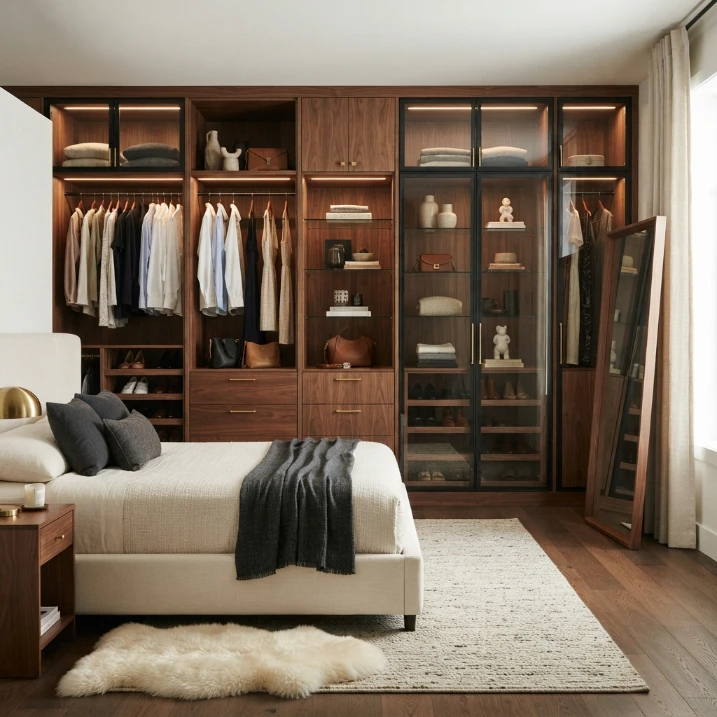
One of the easiest ways to make a bedroom feel more luxurious is to reduce visible clutter. Floor-to-ceiling wardrobes, built-in drawers, glass-front sections, and concealed shelving can create the calm appearance of a boutique dressing room.
Use integrated lighting inside shelves and wardrobes so the storage becomes part of the design. Cream, charcoal, walnut, or soft gray cabinetry can work beautifully, while brass or black hardware adds a small architectural accent. Keep everyday items behind doors and reserve open shelves for a few carefully chosen pieces.
For example, a run of floor-to-ceiling wardrobes 24 inches deep along one wall swallows a full wardrobe, bedding and shoes — if built-ins aren’t possible, flank the bed with two tall wardrobes and use shallow drawers under the bed for seasonal bedding. Best for: small or clutter-prone bedrooms where closets never seem big enough.
3. Let Large Windows Become Part Of The Design
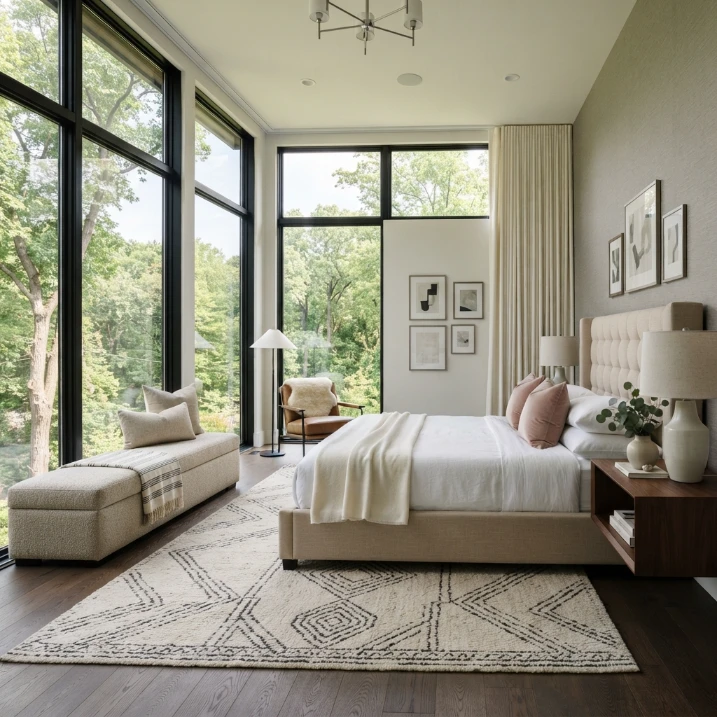
If your bedroom has generous windows, avoid competing with them. Use full-height curtains that begin close to the ceiling and extend beyond the window frame. This makes the room feel taller and gives the bed a more finished backdrop.
Layer sheer curtains with heavier drapes when you want flexibility between daylight and privacy. Soft blush, warm ivory, muted taupe, or deep olive can add color without overwhelming the natural view. A simple bench near the window can also turn unused space into a useful resting spot.
For example, mount the curtain rod 4–6 inches above the window frame and extend it 8–12 inches past each side, so full-length curtains frame the window instead of covering it — sheer linen panels soften daylight while blackout curtains behind them keep early sun off the bed. Best for: dark or north-facing bedrooms that need every bit of light.
4. Use A Bold Wall Color With Calm Bedding
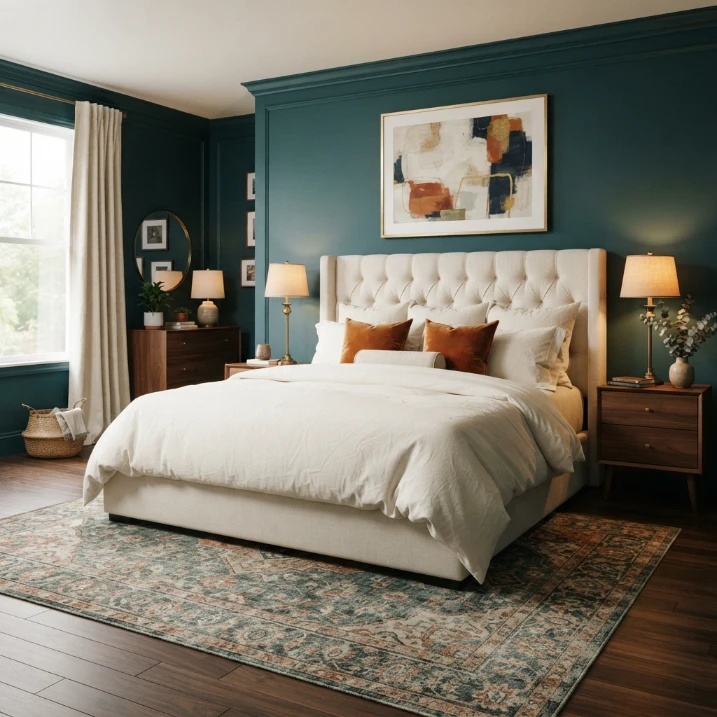
A plain room can change dramatically when one wall receives a confident color. These master bedrooms decor ideas use deep teal, smoky blue, forest green, warm terracotta, or muted navy to create depth without requiring new furniture.
When the wall is strong, keep the bedding quieter. Layer cream, oatmeal, soft white, or warm gray linens with one repeated accent color. This contrast gives the bedroom character while preventing the palette from becoming visually noisy.
For example, paint the bed wall deep navy and keep bedding, curtains and rug in warm white and stone — the one-bold-wall, three-calm-surfaces formula makes strong color feel designed, not risky. Color families that work beautifully here: deep navy, olive, cocoa and warm greige in a matte or eggshell finish. If paint feels flat, try limewash for soft movement, vertical wood paneling for warmth, or a large-scale mural for drama. For a moodier take on the whole room, our dark elegant bedroom ideas show how deep tones carry through an entire space.
Best for: renters of white rooms and anyone bored of all-neutral bedrooms who wants real color without repainting the whole space.
5. Create A Private Cinema And Relaxation Zone
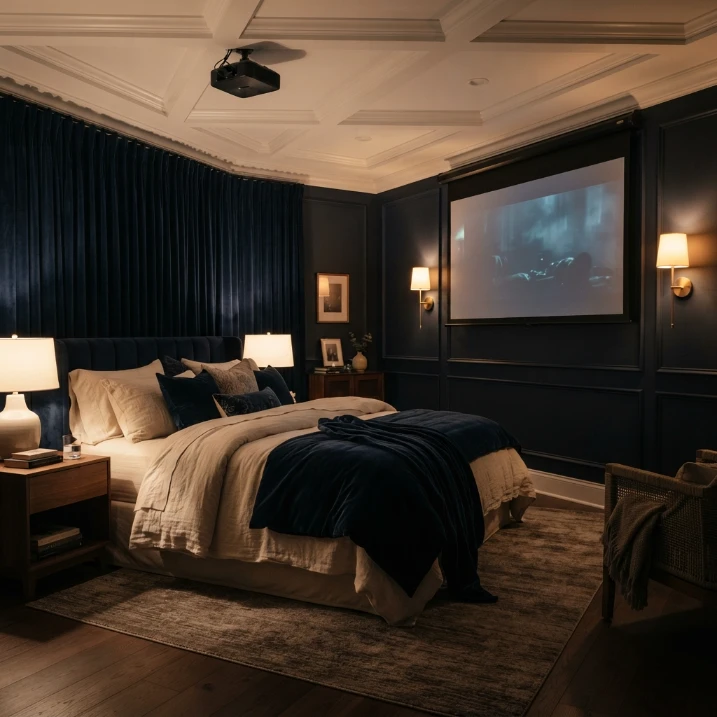
A master bedroom can be more than a place to sleep. If space allows, a compact projector, hidden screen, blackout curtains, and a comfortable seating area can turn one side of the room into a private cinema.
Keep the technology visually discreet during the day. A ceiling-mounted projector or concealed cabinet works better than letting equipment dominate the room. Add dimmable warm lighting and soft throws so the space can move easily from daytime relaxation to movie-night mode.
For example, place a low media bench on the wall opposite the bed with a single armchair and a dimmable arc floor lamp — then layer the lighting: warm 2700–3000K bulbs for ambient glow, a task light near the chair, and an accent glow behind the TV so the room never feels like a cinema with hospital-white overheads. Keep cords hidden with a cable raceway. Best for: couples who unwind with a show or a book before sleep.
6. Add Warm Wood And One Rich Accent Color
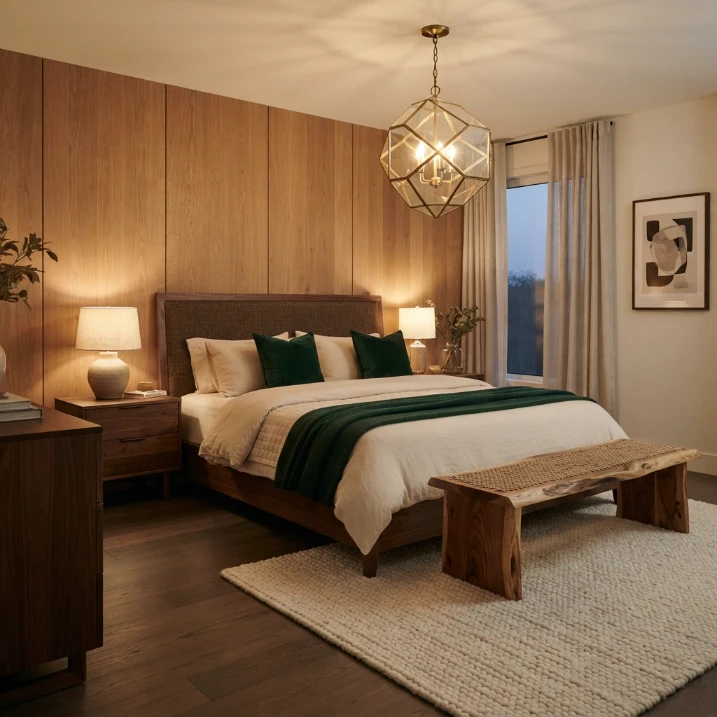
Warm wood is an excellent way to keep a stylish bedroom from feeling cold. Walnut, oak, smoked wood, and medium-toned timber can be used on nightstands, a dresser, ceiling beams, shelving, or a small bench.
Then introduce one richer accent such as mustard, rust, emerald, burgundy, or deep blue. Repeat that accent in at least two or three places—a cushion, curtain, artwork, or chair—so it feels intentional. This is one of the simplest master bedrooms decor ideas for creating a collected designer appearance.
For example, a walnut dresser and nightstands set the warm base, while one rich accent — an emerald velvet bench at the foot of the bed — delivers the luxury hit without overwhelming the room. Repeat the accent twice more in small doses (a throw pillow, a vase) so it feels intentional. Best for: rooms with cool grey or white walls that feel stark rather than serene.
7. Turn An Empty Window Area Into A Storage Bench
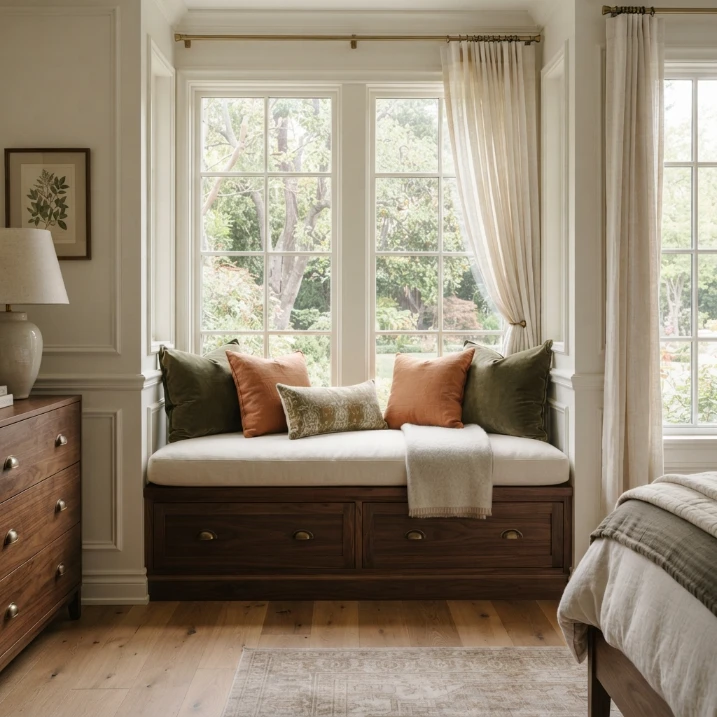
An awkward window wall can become one of the most useful parts of the bedroom with a built-in bench. Add drawers below the seat for blankets, seasonal bedding, or clothing that does not need to be accessed every day.
Finish the bench with a thick upholstered cushion and a few pillows in coordinated textures. Keep the surrounding decor simple so the nook feels like a deliberate architectural feature rather than furniture squeezed into an empty corner.
For example, a 48-inch upholstered bench with a hinged top under the window hides throw blankets and off-season clothes while giving you a spot to sit and dress — top it with a washable cushion cover so it survives daily use. Best for: master bedrooms where the window wall is currently dead space.
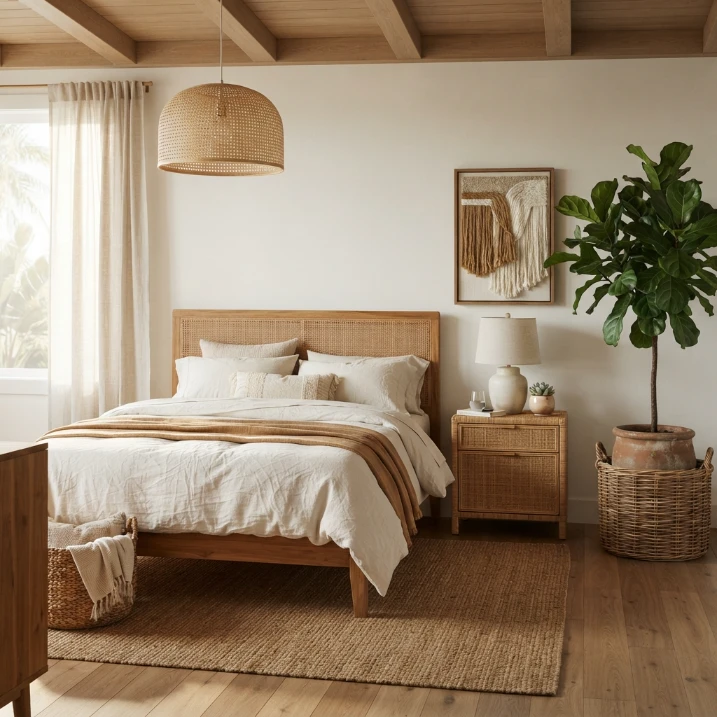
8. Bring In Tropical Texture Without Making It Themed
Natural materials can give a bedroom a relaxed resort quality. Think woven baskets, cane furniture, rattan details, linen bedding, warm wood, leafy plants, and textured wall art rather than obvious tropical patterns everywhere.
A mostly neutral foundation lets these materials stand out. Add one large plant near a window, a woven pendant light, or a carved wood accent table. The result feels warm and elevated while remaining suitable for everyday living.
For example, hang one rattan pendant over the bed, place a tall monstera in a seagrass basket in the corner, and layer a small jute rug underfoot — three natural textures, one corner, instant vacation feel without a full theme makeover. Best for: bedrooms that feel flat and one-note despite good furniture.
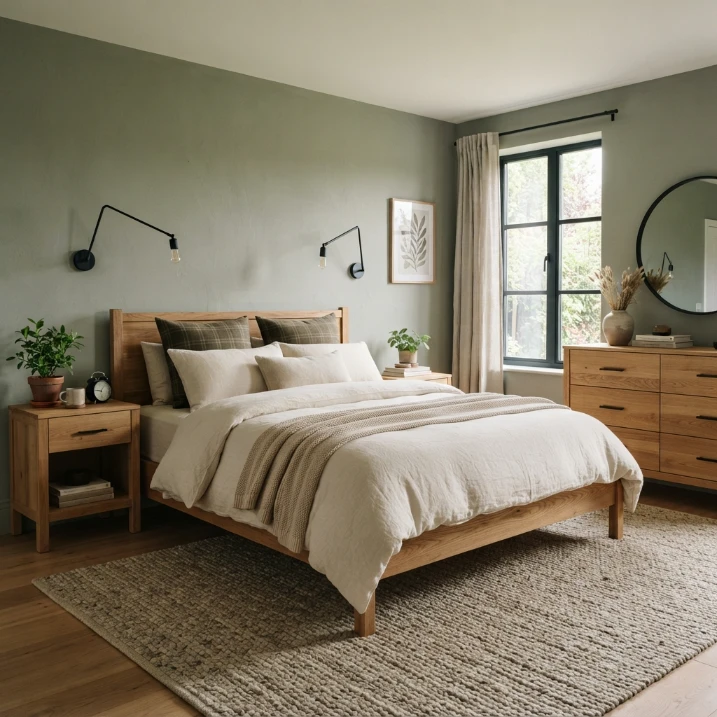
9. Mix Rustic Green With Modern Black Details
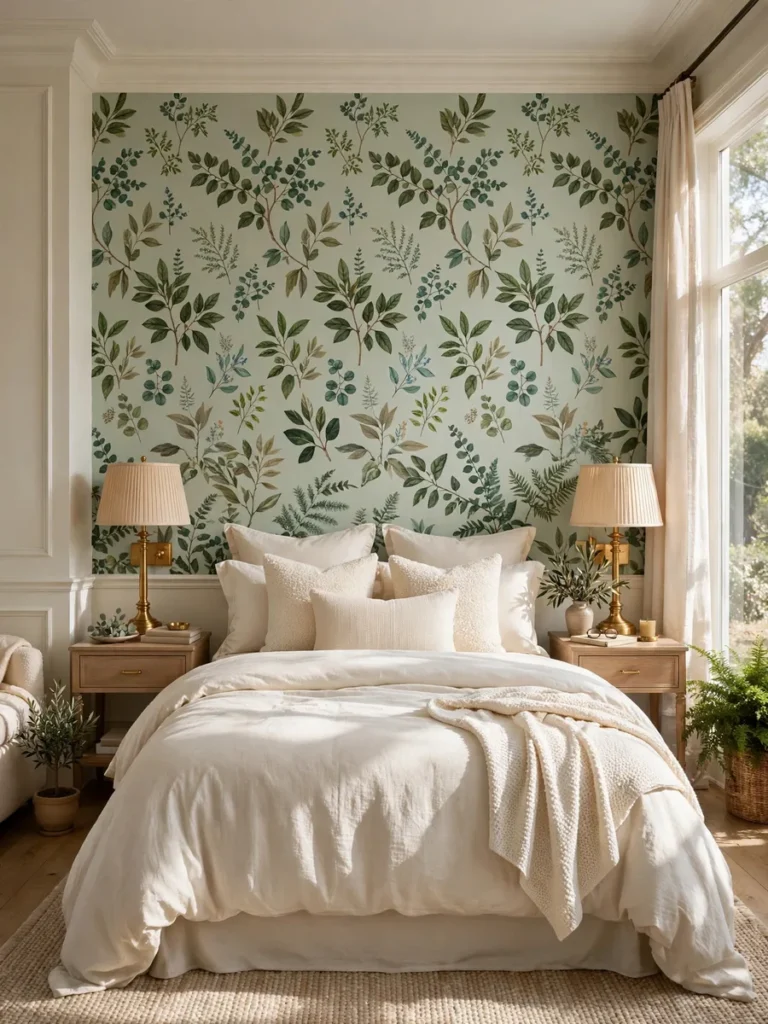
For a bedroom that feels grounded but current, combine muted green with natural wood and small black accents. Sage, olive, or moss walls can create a calm backdrop, while black window frames, lamps, picture frames, or hardware sharpen the look.
Layer in plaid, woven fabric, a textured rug, and slightly weathered wood to keep the scheme from becoming too sleek. The contrast between organic materials and crisp black lines gives the room depth without requiring many decorative objects.
For example, an olive board-and-batten wall behind the bed paired with matte black sconces, drawer pulls and a simple black-framed mirror reads modern-rustic instead of cabin cliché — keep bedding soft and light so the dark details pop. Best for: farmhouse lovers who want the look to feel grown-up, not themed.
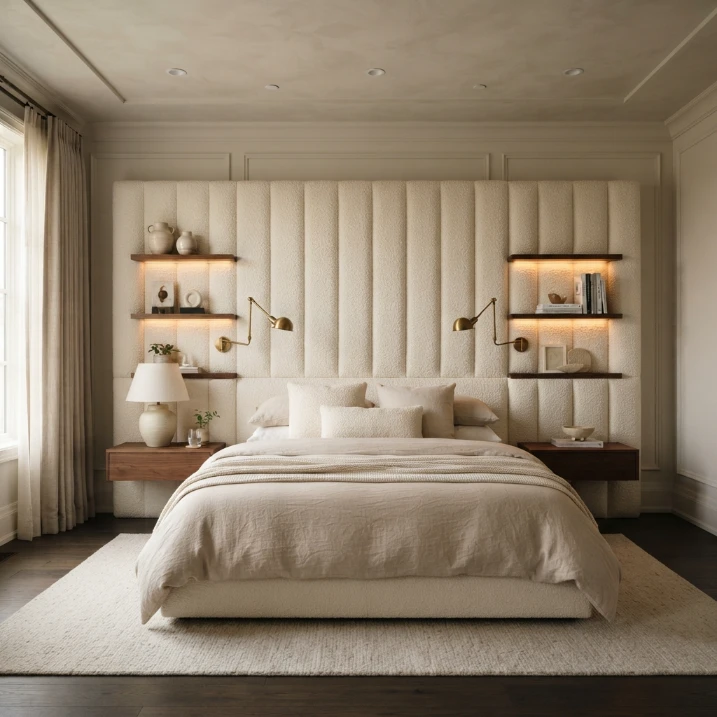
10. Make The Headboard Work Harder
A headboard can provide storage, lighting, and visual structure at the same time. Consider a full-width upholstered wall with slim shelves, integrated reading lights, or softly illuminated niches.
Keep shelf styling restrained: a framed print, ceramic object, book stack, or small plant is enough. Hidden charging points can also make the setup more useful. When practical features are built into the focal wall, the room looks cleaner because fewer accessories need to sit on the nightstands.
For example, a headboard with built-in shelves and swing-arm reading lights replaces both nightstands’ jobs — books, glasses and a phone dock live within arm’s reach. If you keep nightstands, their tops should sit level with, or within 2–3 inches of, the mattress top so reaching for a lamp never feels like a stretch. Best for: book readers and anyone whose nightstand is currently a cluttered catch-all.
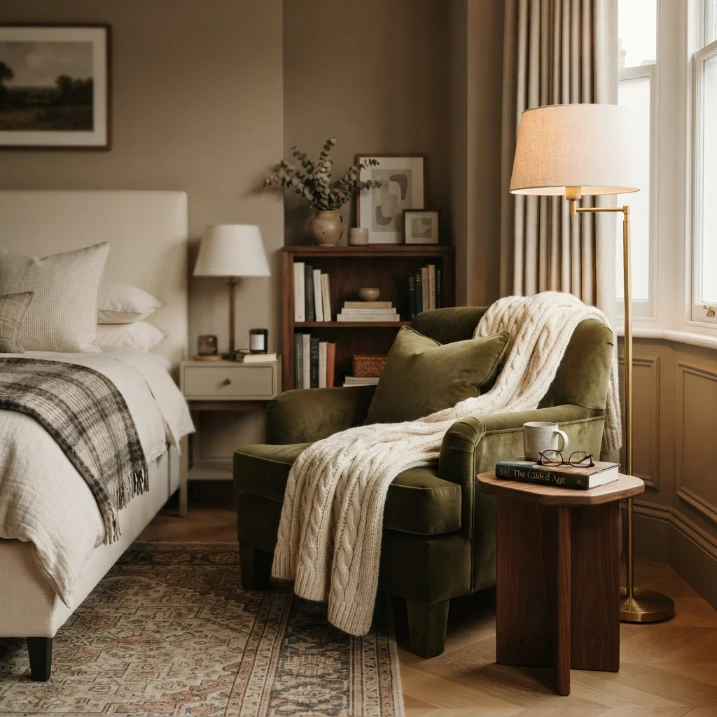
11. Finish With A Sophisticated Reading Corner
A reading corner gives the master bedroom another layer of comfort and makes use of space that might otherwise remain empty. Among these master bedrooms decor ideas, this is one of the easiest to adapt to a small unused corner. Choose one comfortable armchair, a small side table, a floor or wall lamp, and a soft throw.
For a polished look, repeat one material from the main bedroom—such as walnut, brass, boucle, velvet, or linen—in the reading corner. A small bookcase can complete the area without turning it into a separate room within the room.
For example, a low-slung boucle armchair in the brightest corner with an arc floor lamp and a small marble side table creates a genuine reading ritual — coziness comes from texture and warm light, so drape a chunky knit throw over the chair arm and keep the lamp on a warm 2700K bulb. Best for: anyone whose bedroom currently has only one job (sleeping) and deserves a second one.
Pick Your Master Bedroom Style at a Glance
If the 11 ideas feel like a lot, this quick table matches four popular master bedroom styles with the palette, hero piece and budget shortcut that define each one.
Modern organic — Palette: warm whites, oak, clay. Key piece: upholstered bed in oatmeal linen. Budget: thrifted wooden bed frame + fresh neutral bedding.
Classic hotel — Palette: ivory, champagne, soft gold. Key piece: tufted headboard + mirrored nightstands. Budget: matching white bedding sets + one pair of glass table lamps.
Moody luxe — Palette: deep navy or cocoa, brass. Key piece: velvet accent bench at the bed’s foot. Budget: one bold accent wall + brass-look hardware.
Soft minimal — Palette: greige, stone, pale blue. Key piece: low platform bed. Budget: declutter + sheer curtains + warm 2700K bulbs.
Modern Master Bedroom: What Defines the Look
A modern master bedroom is defined by clean lines, calm color and breathing room — not cold emptiness. Think a low-profile bed, uncluttered nightstands with one lamp each, and a restrained palette of warm neutrals with a single accent color.
For example, swap a fussy traditional dresser for a simple oak console and replace five decorative pillows with two sleeping pillows and one textured lumbar — the room instantly reads modern without a single big purchase.
If Your Master Bedroom Connects to an Ensuite
When your master bedroom opens into an ensuite bathroom, treat the two rooms as one suite, not two strangers. Carry the bedroom’s color palette into the bath through towels, a bath mat or the vanity hardware, and echo one material — oak, brass or stone — on both sides of the doorway.
For example, if your bedroom runs warm whites with brass nightstand lamps, repeat the brass in the bathroom taps and lay a small stone tray on the vanity that echoes the bedside stone lamp base — the connection feels deliberate even when the rooms are styled differently.
How To Pull The Whole Bedroom Together
The most successful bedroom decorating ideas are connected by repetition. Pick a main neutral, one supporting color, and one material that appears in several places. Repeat the same wood tone across the nightstands and dresser, echo your accent color in bedding and artwork, and use similar metal finishes on lamps and hardware.
Finally, leave some surfaces quiet. Style the nightstands with only a lamp, a book, and one small decorative object. A bedroom feels more expensive when every item has a reason to be there. Lock in the measurements that make it all work: an 8×10-foot rug under a queen bed (9×12 for a king) so it extends well past the sides, and warm 2700–3000K bulbs in every fixture so the whole room glows instead of glaring.
Master Bedroom Decor FAQs
Do these master bedroom decor ideas work in a small master bedroom?
Yes — small master bedrooms use the same 11 ideas, just scaled down. Use a light palette, one mirror to double the light, floating nightstands to free floor space, and keep furniture low so the ceiling feels higher.
What size rug fits a master bedroom?
For a queen bed, choose an 8×10-foot rug; for a king, a 9×12-foot rug. The rug should extend roughly 24 inches past each side of the bed so your feet land on softness, and the front legs of any seating should sit on it too.
How can I get a designer look on a budget?
Start with bedding, lighting and curtains — the three swaps that change the room fastest for the least money. Then upgrade in this order: layered textiles, a statement headboard or bold accent wall, and finally matching nightstands and art.
How many pillows and colors should a master bedroom have?
Stick to 2–3 colors and 5–7 pillows on a queen or king bed — sleeping pillows, two shams, one or two decorative pillows and a lumbar. More than that turns bed-making into a chore instead of a ritual.
Should I do an accent wall or paint the whole room?
An accent wall is the safer move for bold color — you get the drama with one gallon of paint and zero commitment on the other three walls. Try limewash for soft movement, vertical paneling for warmth, or a large-scale mural for a true focal point.
Final Thoughts
Turning a plain master bedroom into the most stylish room in the house is less about buying more and more about making better choices. These master bedrooms decor ideas give you a practical sequence: start with the bed, improve the lighting, control storage, introduce warm materials, and then build personality through color and texture.
With a clear palette and a few strong focal points, the room can feel elegant without losing the comfort that makes a bedroom feel like your own private retreat. And remember, a cozy master bedroom isn’t about square footage or spend — it’s texture and warm light, layered until the room feels like it was made for slow mornings.