10 Stunning Modern Rustic Farmhouse Kitchen Ideas Warm, Timeless & Full of Character
A modern rustic farmhouse kitchen isn’t about chasing trends — it’s about creating a space that feels lived-in, grounded, and emotionally warm. The style prioritizes texture over perfection and function over flash: natural wood, stone, brick, and aged metals forming an honest, timeless visual language.
The goal is to invite people to stay longer, not impress them with gloss. Success comes from balancing rough surfaces with softer elements so the room feels cozy rather than heavy. A modern rustic farmhouse kitchen built on these principles tells a story on every surface — and kitchens designed for people, not photos, are the ones that feel welcoming at any hour.
Design Logic for a Modern Rustic Farmhouse Kitchen That Feels Alive
1. Balance Exposed Beams, Brick, and Warm Wood
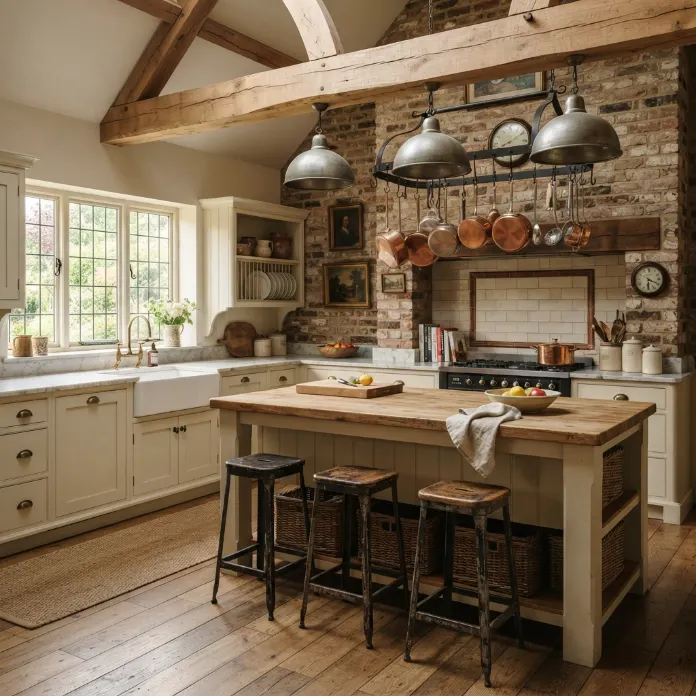
Let structure become decor. Exposed wooden beams ground the ceiling and add warmth; brick walls bring texture variation, because flat perfect surfaces kill soul fast. Creamy cabinetry acts as a visual buffer so the room never feels heavy or medieval. In a modern rustic farmhouse kitchen, the wood countertop repeats the beam tone, creating material rhythm that guides the eye, while a farmhouse sink anchors the composition as a soft nostalgic focal point.
The rule: contrast, not clutter. Limit yourself to three main materials — wood, brick, a light neutral — and repeat them intentionally. Rustic is curated imperfection with a clear design hierarchy.
2. Go Moody With Dark Cabinets and a Hearth
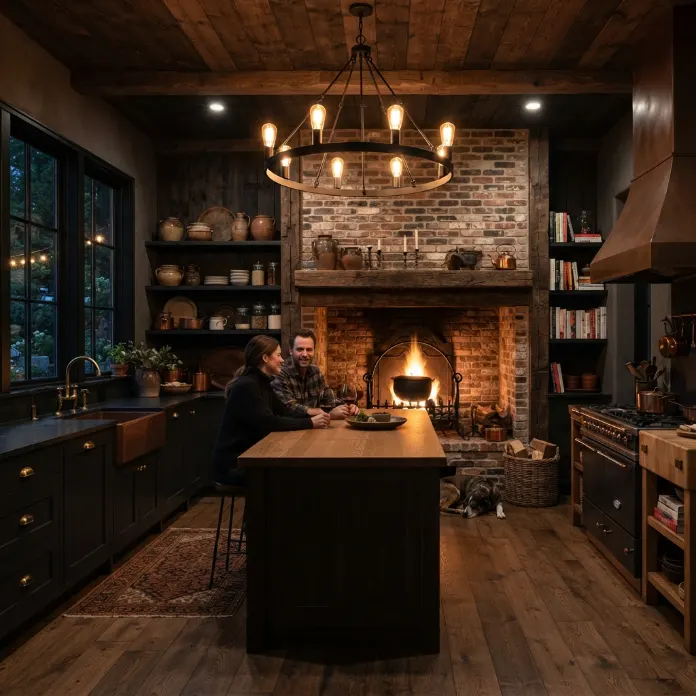
Lean into rustic drama: dark cabinetry absorbs light to create intimacy, and a fireplace becomes the visual and emotional anchor. Fire introduces movement and warmth that balances the heaviness of dark wood and brick. Open shelving above the hearth shows lived-in layering, with ceramics softening hard lines, while an oversized island reinforces generous farmhouse proportions. This moodier modern rustic farmhouse kitchen thrives on warm, low lighting that prevents harsh reflections on dark surfaces.
The rule: dark works when texture is rich. Mix matte finishes, aged wood, and rough brick so light lands gently instead of bouncing aggressively.
3. Turn Cast Iron Into Wall Art
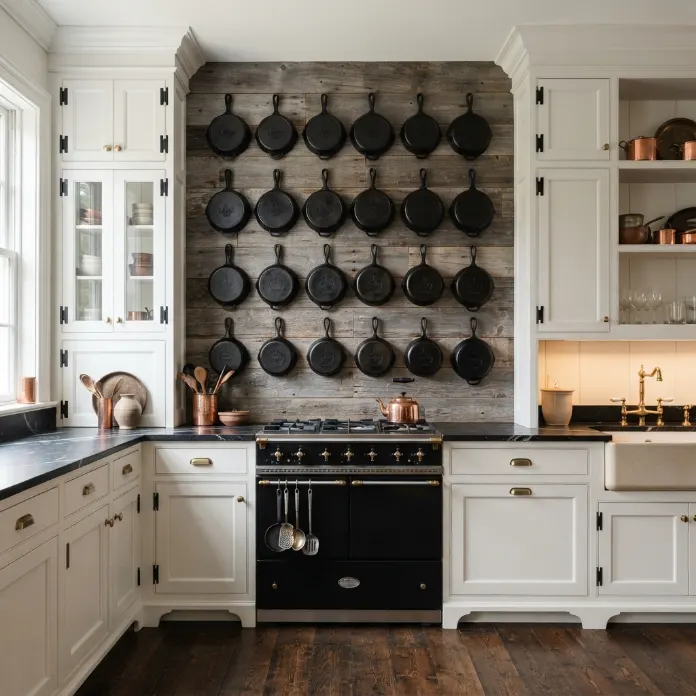
Decor should earn its place — and a wall of hanging cast iron skillets is practical storage turned statement art. A reclaimed wood backdrop adds vertical texture that stretches the space upward while grounding it in warmth; white cabinetry frames the display so black iron pops without overwhelming. This is contrast control in a modern rustic farmhouse kitchen: light surfaces support dark accents instead of competing.
Keep spacing intentional and symmetrical to prevent visual chaos. Use similar shapes, tones, and finishes so the wall reads curated, not cluttered. A subtle farmhouse sign below reinforces the theme without shouting it.
4. Style a Butcher Block Sink Ledge
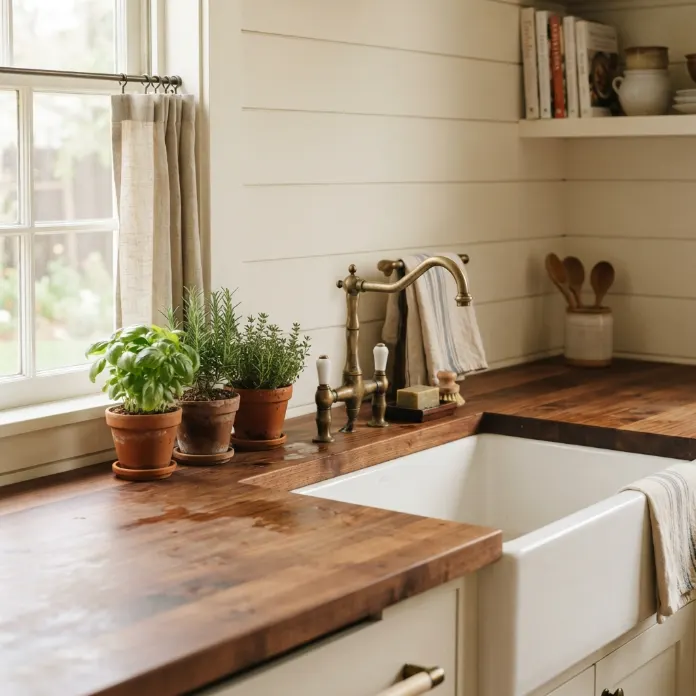
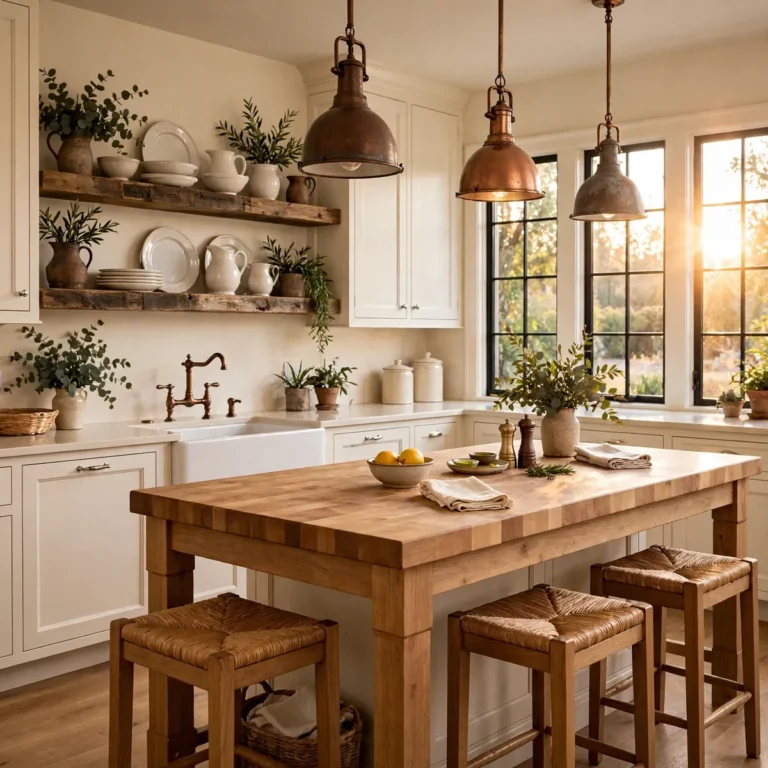
Rustic kitchens shine in the details. A thick butcher block counter introduces natural grain variation that softens the geometry of cabinetry; paired with a farmhouse sink, it creates a tactile moment where function meets beauty. Brass fixtures add warmth and age gracefully — exactly the kind of material a modern rustic farmhouse kitchen loves, because it looks better over time.
Herbs near the window connect the kitchen to nature. The imperfect counter edge sells authenticity. Focus on touchable materials: kitchens should feel good under your hands, not just look good in photos. Choose finishes that invite daily use — scratches included.
5. Harmonize Copper Accents With Stone
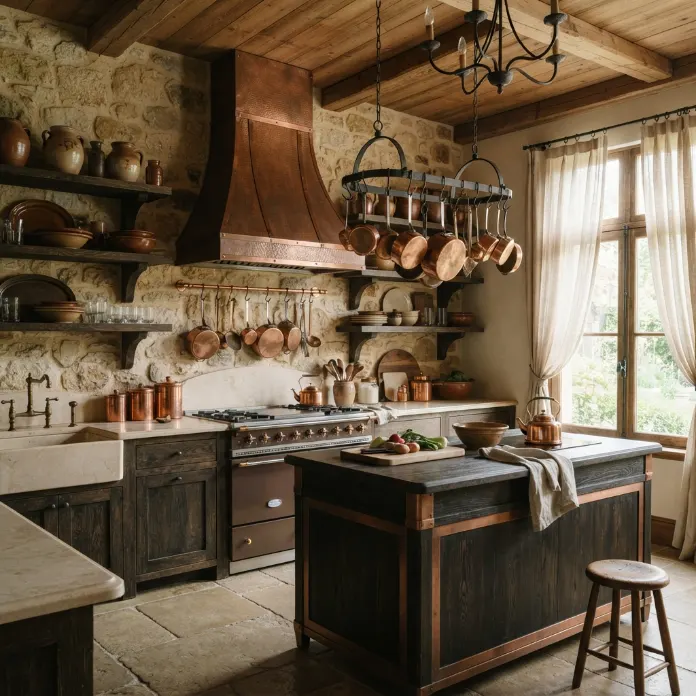
Stone walls establish an earthy foundation; copper cookware and wood surfaces layer warmth on top. Because stone carries visual weight, open shelving keeps the room breathable and prevents a boxed-in feel. Copper introduces reflective warmth that balances the matte textures of stone and wood, and the farmhouse sink anchors the composition as a nostalgic focal point. Keep everything in a modern rustic farmhouse kitchen within a tight color range — creams, browns, soft metallics — for cohesion.
The tip: resist trendy colors and let texture do the talking. Texture ages better than color trends ever will.
6. Keep It Light With Soft Stone Walls
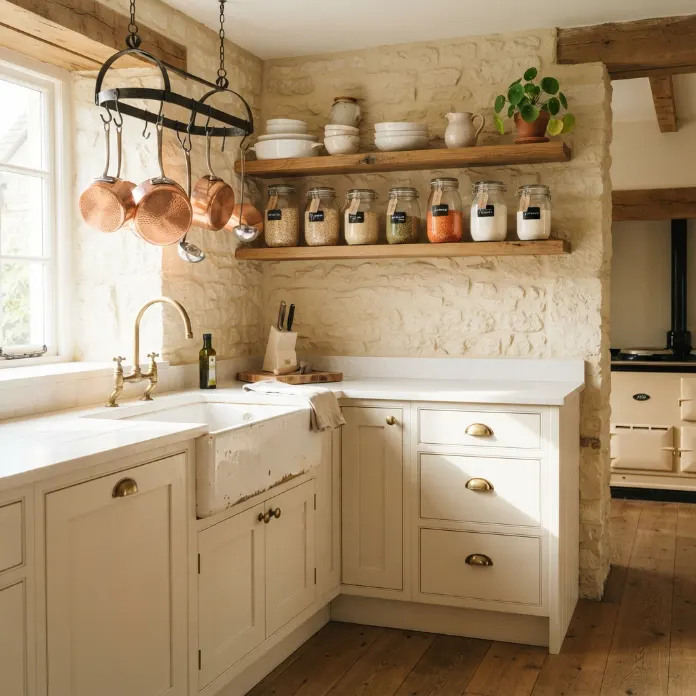
A lighter take that stays grounded through material choice. A stone wall brings historical character while soft neutral cabinets keep the space open and modern. Heavy textures live on the vertical plane while smoother finishes dominate the base, preventing visual overload. Open shelves break up the stone and introduce functional styling moments; wood countertops act as a warm bridge between stone and paint. This is a modern rustic farmhouse kitchen that proves rustic doesn’t have to mean dark.
Keep finishes matte and natural so the space feels calm, not clinical. Light rustic works when textures are layered thoughtfully.
7. Hang Woven Pendants Over a Reclaimed Island
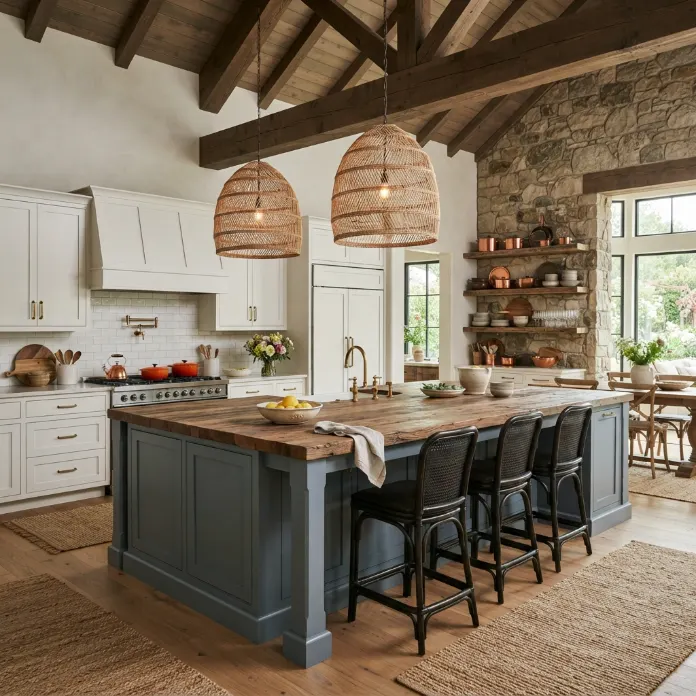
Woven pendant lights introduce softness overhead, balancing the weight of stone walls and thick wood beams. The island becomes a true centerpiece in reclaimed wood — visual texture above, practical storage below. Repetition of natural materials creates a cohesive story from shelves to countertops, and the palette stays grounded in neutrals so texture takes center stage.
Prioritize lighting that casts warm shadows: rustic kitchens thrive on glow, not glare. Skip cool LEDs and embrace warmth. The collected-not-decorated feel is the whole point — nothing here should look like it arrived in one delivery.
8. Embrace Open Shelving With Aged Wood
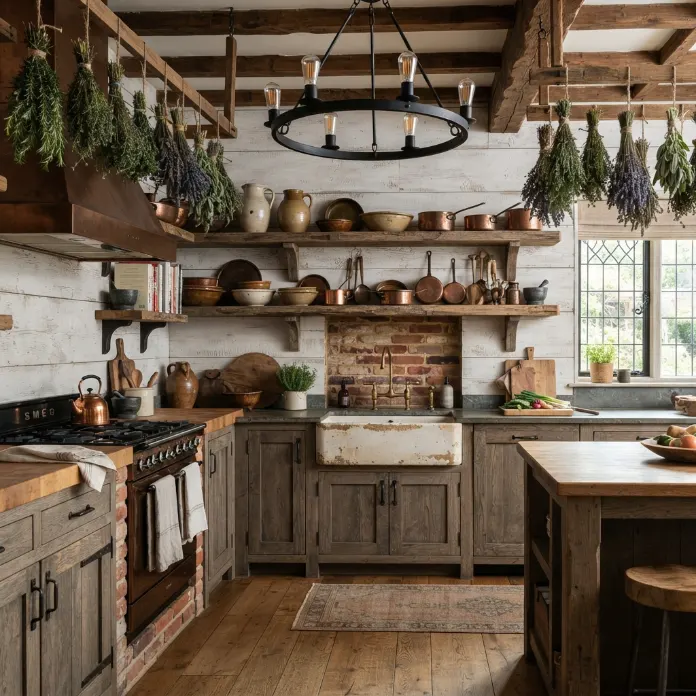
Aged wood cabinetry shows grain, knots, and imperfections that instantly add character — rustic honesty at its best. Open shelving keeps the space visually light while showcasing everyday items as decor. Brick walls reinforce texture and history, grounding the room emotionally. A modern rustic farmhouse kitchen built this way puts the farmhouse sink center stage as the quiet hero.
Avoid high-gloss finishes; choose materials that wear gracefully and tell a story over time. Rustic charm lives in restraint — the worn, the handmade, and the well-loved.
9. Choose a Farm Table Island With Storage
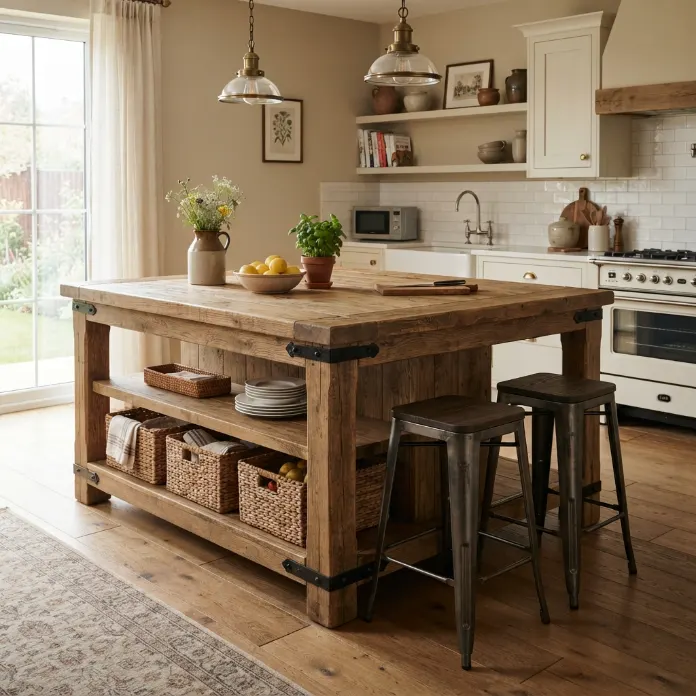
Simplicity can still feel intentional. A farm table-style island introduces flexibility, making the kitchen feel less built-in and more lived-in. Open shelving underneath keeps storage accessible and visually light. Wood tones dominate while neutral surroundings prevent heaviness. This multi-functional piece is farmhouse philosophy in furniture form, and it belongs in any modern rustic farmhouse kitchen built for gathering.
Prioritize scale: the island should feel substantial without blocking flow. Rustic kitchens should support movement and gathering, not just aesthetics.
10. Blend Modern Lines With Warm Wood Counters
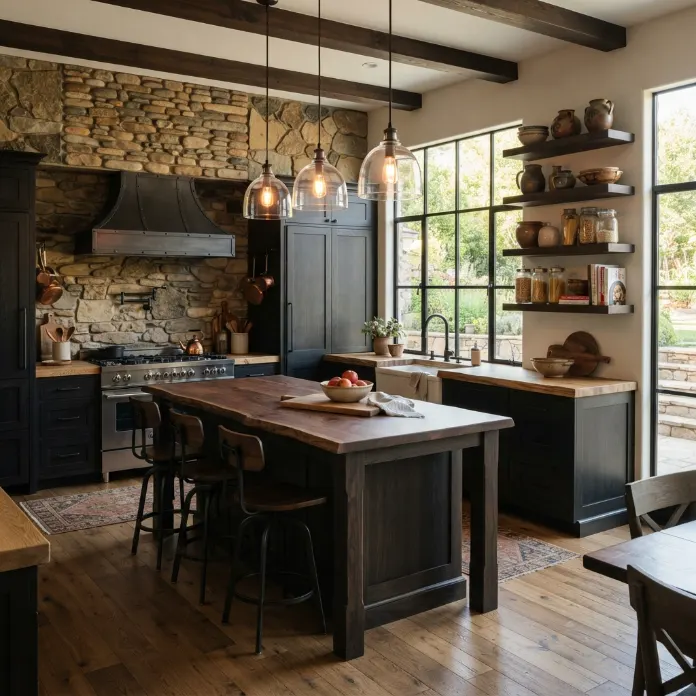
Blend rustic warmth with modern structure: clean cabinetry provides order while a thick wood countertop introduces organic contrast. Glass pendants soften the space and add visual rhythm above the island; open shelving keeps the room from feeling too formal and preserves the farmhouse spirit. In this modern rustic farmhouse kitchen, the wood grain becomes the star — proof that rustic doesn’t require excess.
Let one material shine and keep everything else supportive. Simplicity is the secret weapon of timeless rustic design.
FAQs
1. What defines a modern rustic farmhouse kitchen?
A modern rustic farmhouse kitchen blends rustic warmth with modern structure — natural wood, stone, brick, and aged metals meet clean cabinetry and thoughtful lighting. It prioritizes texture over perfection and function over flash, creating a space that feels lived-in, grounded, and emotionally warm rather than glossy or staged.
2. How do I keep a rustic kitchen from feeling dark or heavy?
Balance is everything. Pair heavy textures (stone walls, exposed beams) with smooth, light finishes on the base — creamy cabinetry, white shaker doors. Keep the palette tight (wood, brick, one light neutral), repeat materials intentionally, and use warm, low lighting instead of harsh overheads so the room feels cozy, not cave-like.
3. What’s the easiest way to add farmhouse character without renovating?
Start with touchable details: a butcher block counter section, brass fixtures, a wall of hanging cast iron skillets, or woven pendant lights. Open shelving styled with everyday ceramics and a farmhouse sink moment deliver instant character. Choose materials that age gracefully — patina and wear are the whole point of rustic charm.
4. Can a small kitchen work as a modern rustic farmhouse kitchen?
Absolutely. Focus on material repetition rather than square footage: one wood tone, one textured wall (brick or stone), and warm lighting. A farm table-style island with open storage below adds function without bulk, and vertical elements like a cast iron wall or tall open shelves draw the eye up. Small rustic kitchens feel collected and intentional when every piece earns its place.
Conclusion
A modern rustic farmhouse kitchen isn’t built overnight — and that’s the beauty of it. The style evolves through intentional choices, layered textures, and pieces that earn their place over time. Start with the core elements — natural materials, warm lighting, practical layouts — and decor becomes effortless instead of forced.
Let the kitchen grow with you rather than feeling finished on day one. When form follows function and warmth leads every decision, the kitchen becomes the heart of the home.