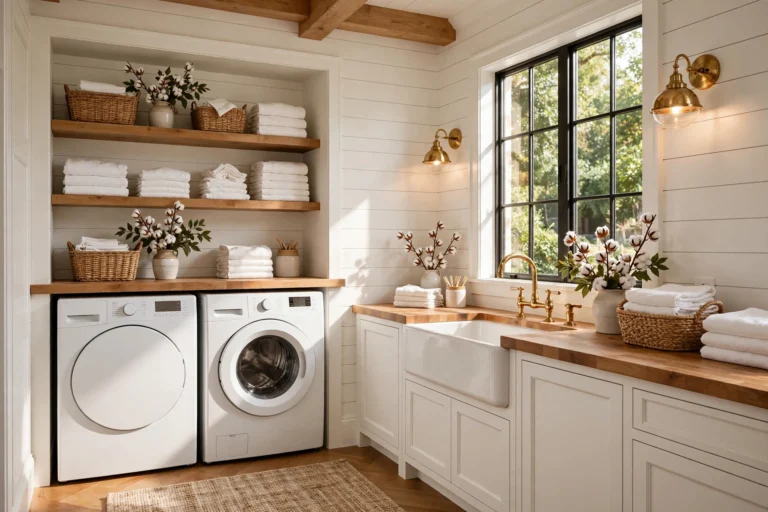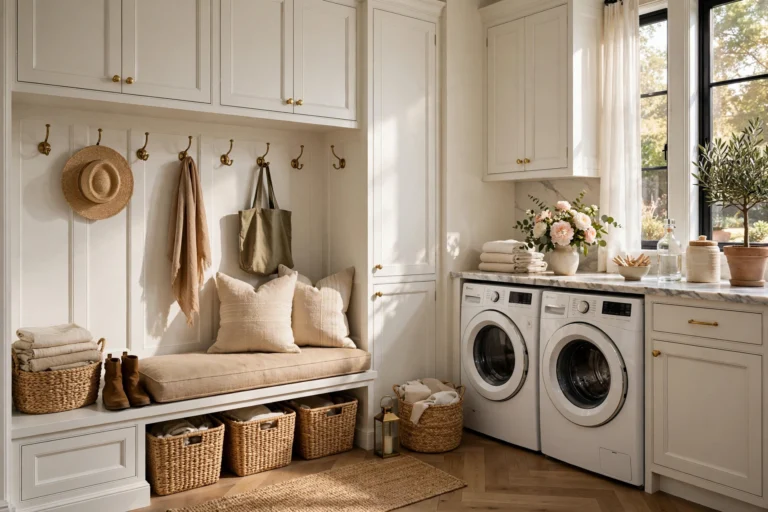
12 Stunning Basement Laundry Room Ideas to Banish the Dungeon Feel ♥ (Pro Design Playbook)
Why Basements Deserve Better Laundry Rooms
A basement laundry room has a reputation problem. Too many of them are dim, damp afterthoughts where laundry goes to feel punished. But a basement is actually the ideal laundry location: machines sit on concrete, noise stays downstairs, and there is room to spread out.
The secret is designing against the basement’s weaknesses: low light, cool dampness, and that unfinished feeling. Solve those three and the space becomes a genuine pleasure.
These ideas are built from the ground up for below-grade living, because a basement laundry room has different needs than a closet or a main-floor nook, with moisture control, serious lighting, and layouts that use the extra space, which is why none of these overlap with small-closet thinking.
Here are 12 ideas to transform your lower level. Working with a tight space instead? Our laundry closet ideas tackle compact laundry setups.
1. Bright White Everything with Serious Lighting
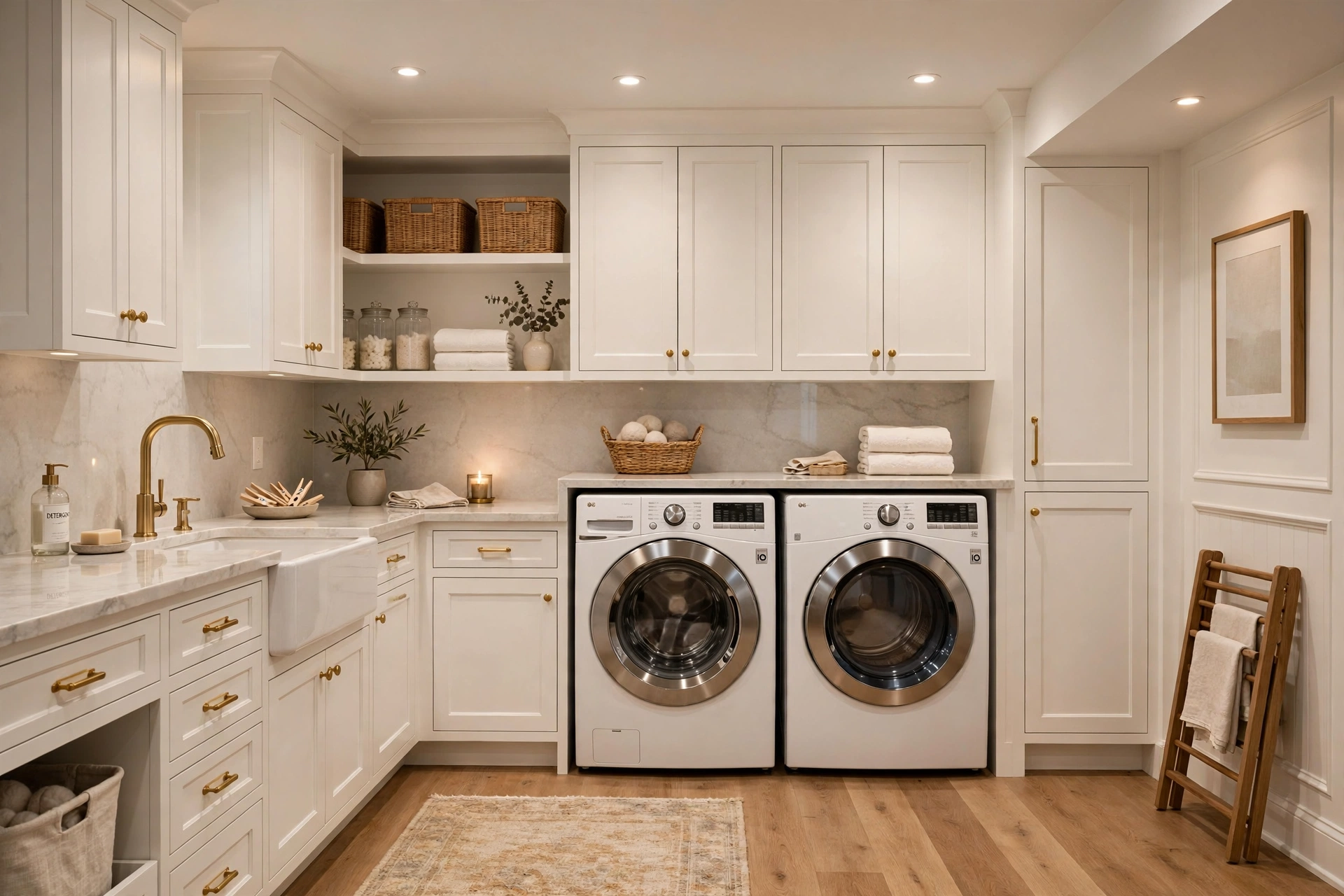
Light is the single biggest upgrade. White shaker cabinets, pale quartz counters, and light floors bounce every lumen around the room.
Layer the lighting: recessed cans for general glow, under-cabinet strips for task work, and a warm pendant for character. A well-lit basement laundry room stops feeling like a basement at all.
Choose 4000K bulbs, bright enough for stain-spotting without the harshness of daylight tubes.
Add a large mirror on one wall to double the perceived light. In a windowless space, reflective surfaces work as hard as the fixtures themselves.
2. An Egress Window with a Cozy Window Seat
If your basement has an egress window, celebrate it. Natural light transforms laundry day, and a window seat beside the machines gives you a spot to fold in daylight.
Build the seat with storage inside for out-of-season linens. Cushions in washable fabric keep it practical. Ideas for this space should treat the window as the room’s best feature:
- Keep the window wall free of tall cabinets.
- Use a light-filtering shade, not blackout.
- Place a plant on the sill, it will thrive.
- Paint the window trim bright white to maximize reflection.
Even a small window makes the room feel connected to the world above.
If the window is high on the wall, a simple step platform makes it usable for ventilation. Fresh air on laundry day is a small luxury that costs nothing.
Hang a sheer curtain rather than a heavy blind so daylight filters through even when the window is closed. Soft light flatters every finish in the room.

3. Embrace Industrial with Concrete and Black Metal
Stop fighting the basement’s bones and style them instead. Sealed concrete floors, white-painted ductwork, and matte black open shelving turn utility into an aesthetic.
Woven baskets soften the industrial edge while keeping everything organized. This is one of the boldest basement laundry room ideas, and it costs less than hiding everything behind drywall.
Seal the concrete to resist moisture and make mopping effortless.
A vintage-style rug runner adds warmth underfoot without hiding the concrete’s character. The most stylish below-grade designs balance hard industrial surfaces with soft textiles.

4. Moisture-Proof Everything from the Floor Up
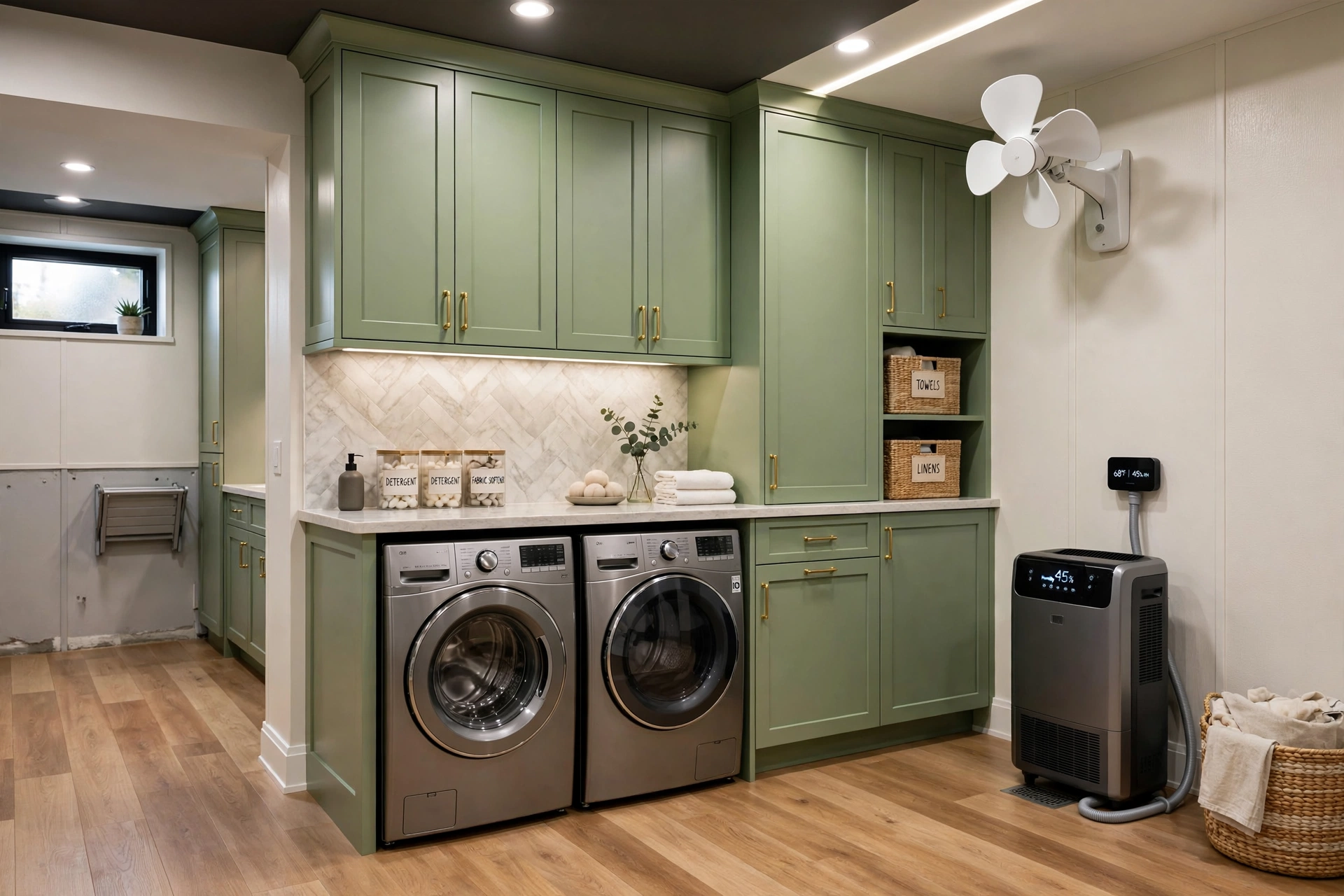
Basements are humid. Design for it: vinyl plank flooring that shrugs off water, a wall-mounted fan for air movement, and cabinets raised slightly off the floor.
Sage green cabinetry keeps the practical choices feeling fresh and intentional. Your moisture defense checklist:
- Run a dehumidifier sized for the room’s square footage.
- Choose mold-resistant drywall or PVC beadboard.
- Seal the concrete slab before laying flooring.
- Vent the dryer rigidly to the exterior, no flexible foil.
- Leave machines pulled slightly from the wall for airflow.
Dry air protects both your clothes and your home’s structure.
Keep a simple hygrometer on the shelf to monitor humidity at a glance. When readings stay under 50 percent, your basement laundry room is in the safe zone.
5. Raised Machine Platforms with Pull-Out Steps
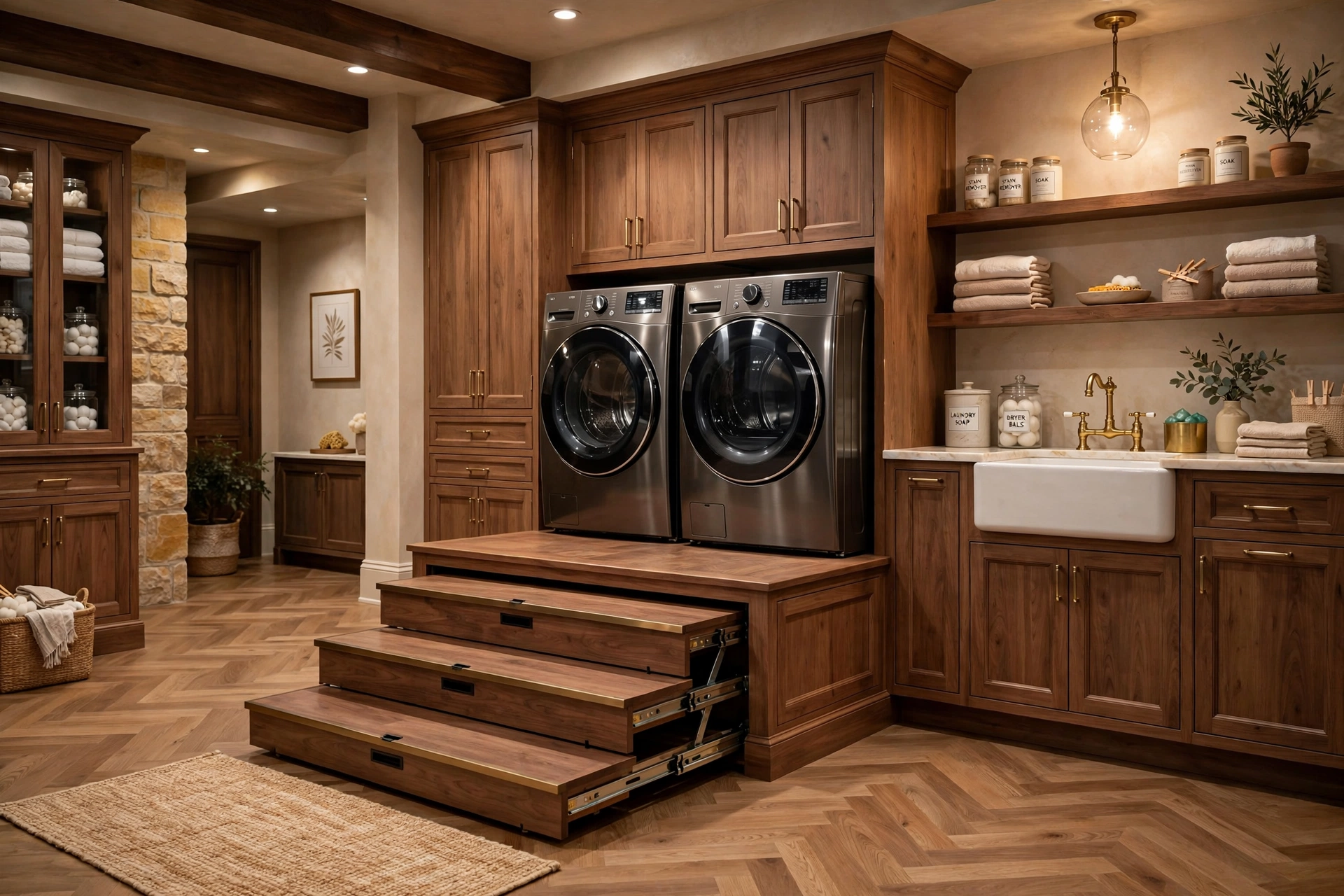
Front-loaders sit low, which punishes your back. A raised platform lifts machines to a comfortable height and creates bonus storage drawers underneath.
Add a pull-out step for reaching high shelves. Warm wood cabinetry around the platform makes the practical build look custom. Ergonomic design is one of the most underrated basement laundry room ideas.
Anchor the platform to the wall so vibration never walks the machines.
The drawers underneath swallow detergent stockpiles and seasonal supplies. In a basement laundry room with room to spare, hidden storage keeps the open areas feeling calm.
6. A Laundry Chute from Upstairs
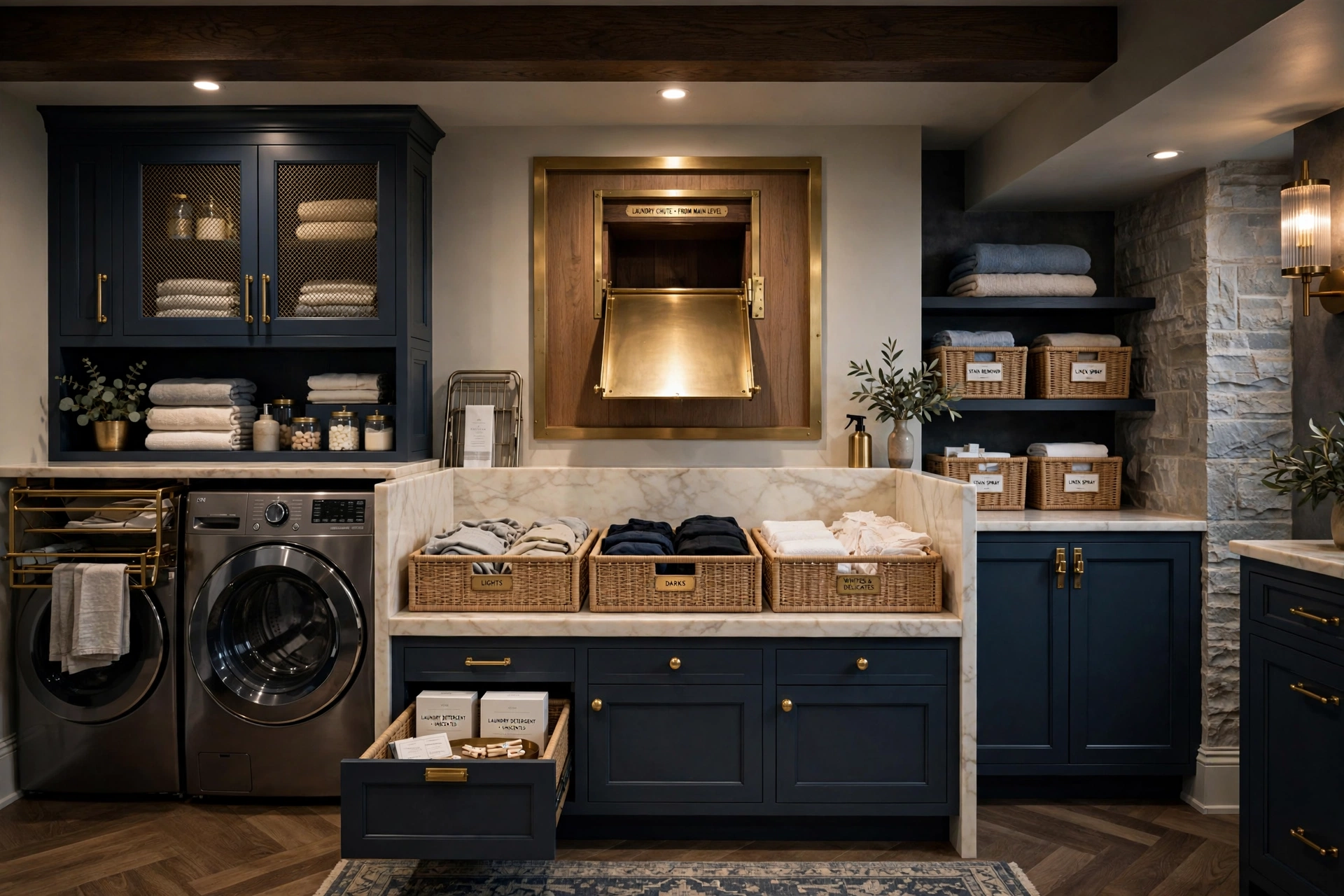
The ultimate basement perk: a chute that drops dirty clothes straight from the bedrooms above onto the sorting counter.
Frame the chute opening with navy cabinetry and brass details so it reads as architecture, not an afterthought. Position it over a wide counter where sorting happens on landing.
Line the chute with smooth material so nothing snags, and add a child-safe latch on the upstairs door.
Place a lidded hamper at the chute’s landing point to catch everything neatly. The system works best when the drop zone is as considered as the chute itself.
7. Combine with a Home Gym Corner
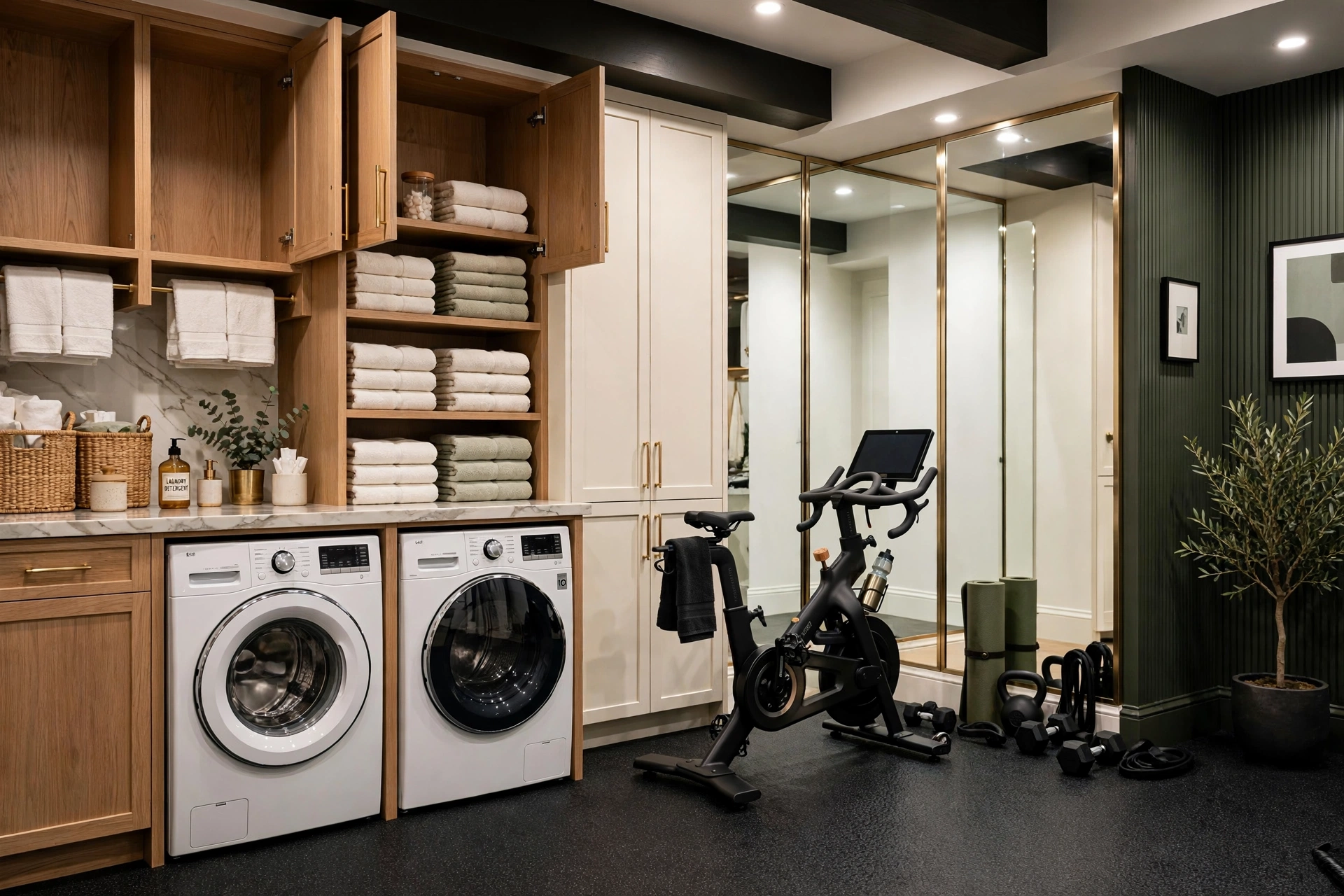
Basements are big enough to multitask. Put the laundry along one wall and a compact gym setup on the other, and both get used more.
Rubber flooring under the workout zone handles dropped weights and damp shoes. A folded towel station serves both exercisers and folders. Bright mirrors make the shared space feel energetic rather than cramped.
Keep a laundry basket by the gym door, because sweaty workout clothes should go straight into the wash queue.
A small towel warmer by the gym corner is a spa-level touch that costs little. Warm towels after a basement workout feel like a luxury hotel.
8. A Craft and Sewing Corner
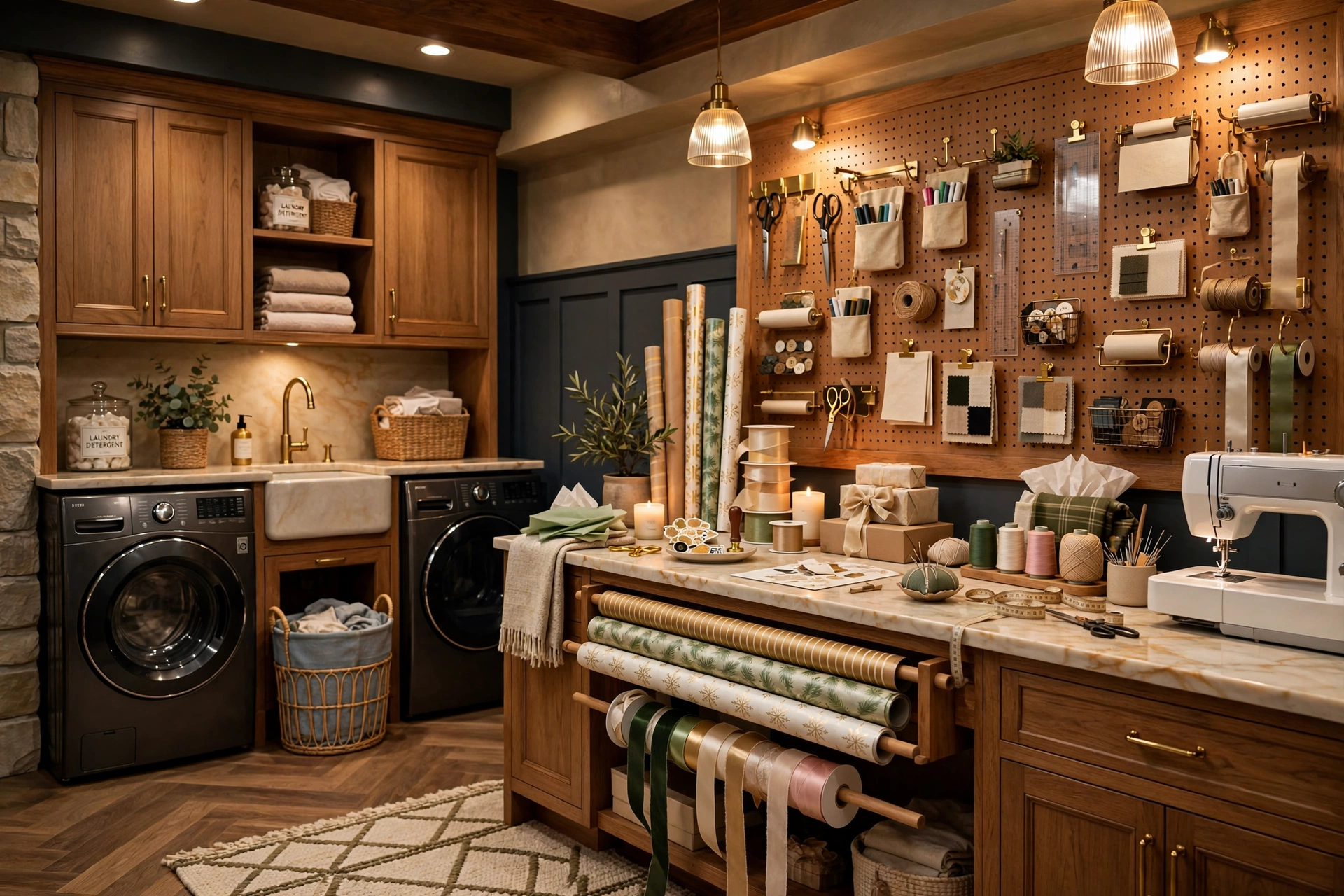
Laundry and mending are natural partners. A long craft counter with a sewing machine, pegboard supplies, and warm task lighting turns the room into a creative studio between loads.
The pegboard keeps notions visible and reachable. Deep drawers swallow fabric and patterns. When the machines run, the craft corner keeps you happily nearby for the whole cycle, which means clothes move to the dryer on time instead of sitting forgotten.
Choose a counter height that works for both sewing and gift wrapping.
A rolling cart for the sewing machine lets you tuck it away when the counter serves other purposes. Flexible furniture is what makes a basement laundry room truly multi-functional.
9. A Floor Drain and Mop Sink
Basements flood, washers leak, and mops need rinsing. A sloped tile floor with a central drain plus a corner mop sink makes the room practically indestructible.
Pale blue cabinets keep the ultra-practical choices feeling clean and calm. Easy-clean surfaces mean a spilled detergent bottle is a thirty-second fix, not a disaster. Of all basement laundry room ideas, this one is pure peace of mind.
Test the drain slope with a bucket of water before tiling, because standing water defeats the purpose.
A wall-hung mop sink leaves the floor beneath it easy to clean. Every fixture in a basement laundry room should earn its keep against moisture.

10. A Reading Nook by the Machines
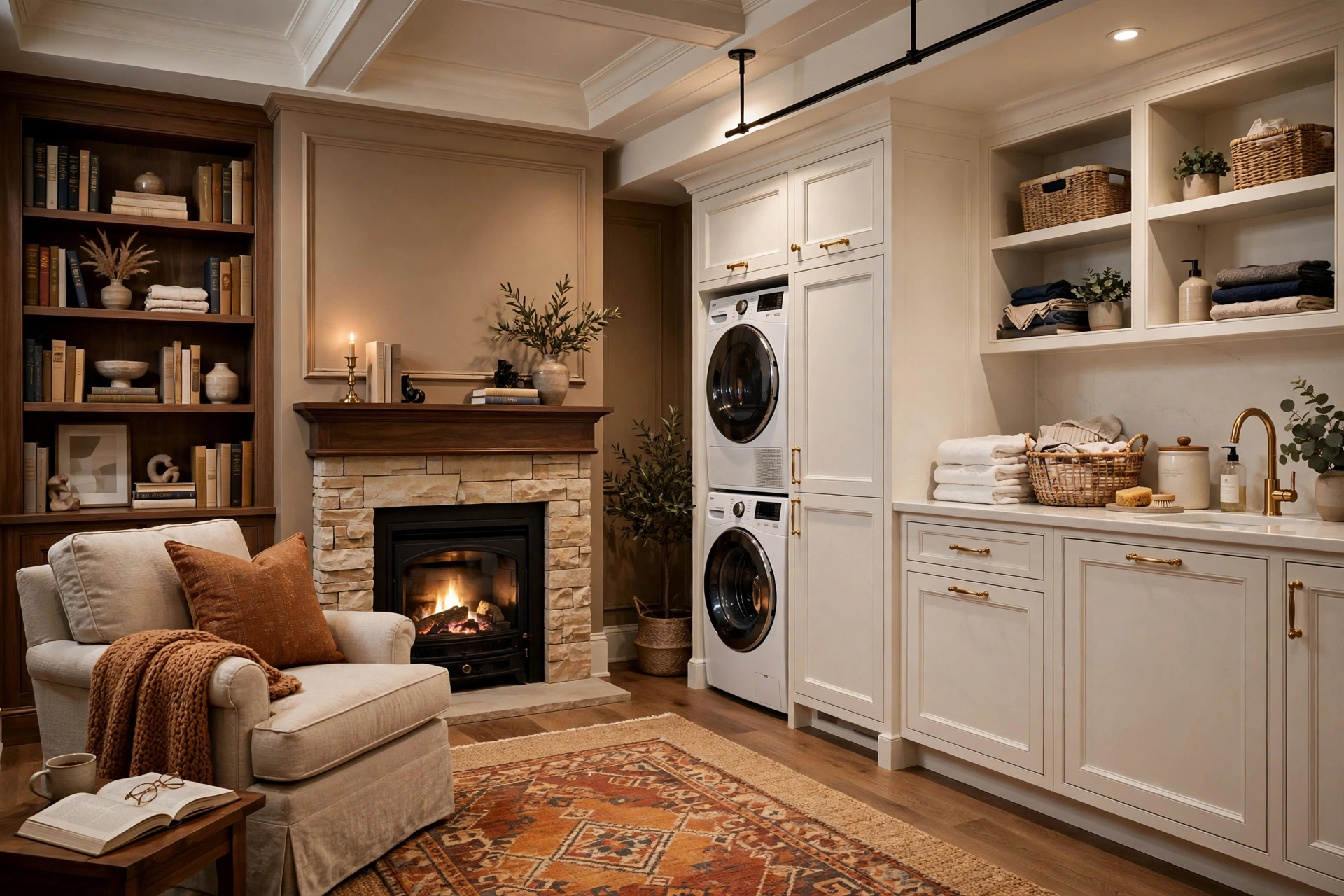
Make waiting for the cycle genuinely pleasant: a cozy reading chair, a small bookshelf, a warm rug, and an electric fireplace-style heater.
Tuck the machines into white cabinetry so the corner reads as a sitting room that happens to do laundry. If you are going to spend time here, the space should reward you, and because the nook keeps you close, clothes never sit damp in the washer for hours, which protects fabrics and prevents that forgotten-load smell.
A plug-in heater with a timer adds warmth without any renovation.
Keep a small basket of the current read beside the chair so the nook is always inviting. When the space welcomes you, the chore stops feeling like waiting.
11. Soundproofing for Quiet Cycles
Basement machines rumble through floor joists. Acoustic panels on the ceiling, a solid-core door, and anti-vibration pads under the machines hush the whole operation.
Close off the water heater and furnace in a separate utility closet so the laundry zone feels like a finished room. Quiet design details:
- Acoustic ceiling panels above the machines.
- Weatherstripping around the room’s door.
- Anti-vibration pads under each machine foot.
- Insulation in the ceiling joists for upstairs quiet.
Silence is a luxury, and it is cheaper than you think.
Run the machines during the day when the sound matters least, and let the soundproofing handle the rest. A quiet basement laundry room is one you will actually enjoy using.

12. A Pulley Clothes Airer for the High Ceiling
Basements often have the ceiling height that main floors lack. A traditional pulley airer hangs laundry up in the warmest air, then lowers for easy loading.
It is energy-free drying with vintage charm. Pair it with plants under grow lights, because the humidity from drying clothes actually helps greenery thrive, and the green-and-white palette keeps the tall space feeling fresh rather than cavernous.
Mount the pulley hardware into joists, not just drywall, since wet laundry is heavy.
Lower the airer at night and raise it in the morning to catch the warmest air near the ceiling. Working with the room’s natural heat layers dries clothes noticeably faster.

Frequently Asked Questions
How do I keep a basement laundry room from feeling damp?
A properly sized dehumidifier is non-negotiable, aim for one rated for your room’s square footage plus a margin. Pair it with moisture-resistant flooring, good dryer venting, and airflow from a fan or vent grille.
Check the dehumidifier’s collection bucket or drain hose weekly at first. Once you learn your basement laundry room’s rhythm, maintenance becomes a quick monthly habit.
What flooring is best for a basement laundry room?
Luxury vinyl plank and sealed concrete are the top picks: both handle moisture, both clean easily. Avoid hardwood and carpet, which suffer in humid below-grade conditions.
Can I put a laundry room in a basement without a window?
Yes. Layer recessed lighting, under-cabinet strips, and light finishes to simulate brightness. A basement laundry room without natural light needs roughly twice the lumens of an above-grade room to feel equally cheerful.
How do I stop washer vibration from shaking the house?
Anti-vibration pads under each machine foot, a level installation, and acoustic insulation in the ceiling joists solve most rumble. Front-loaders on a solid concrete slab vibrate far less than on a wood subfloor.
Conclusion
A basement laundry room should never feel like a punishment detail. With bright layered lighting, honest moisture control, and layouts that use the space only a basement provides, the lower level becomes the best laundry spot in the house. Pick the ideas that solve your basement’s biggest complaints first, light, dampness, or noise, and build from there. Your future self, folding in daylight by the egress window, will thank you.