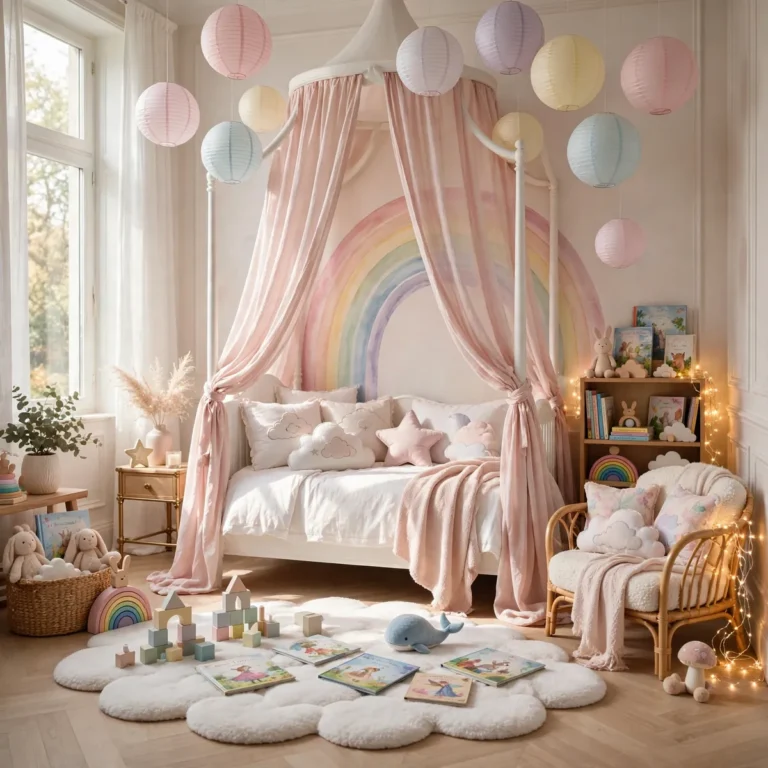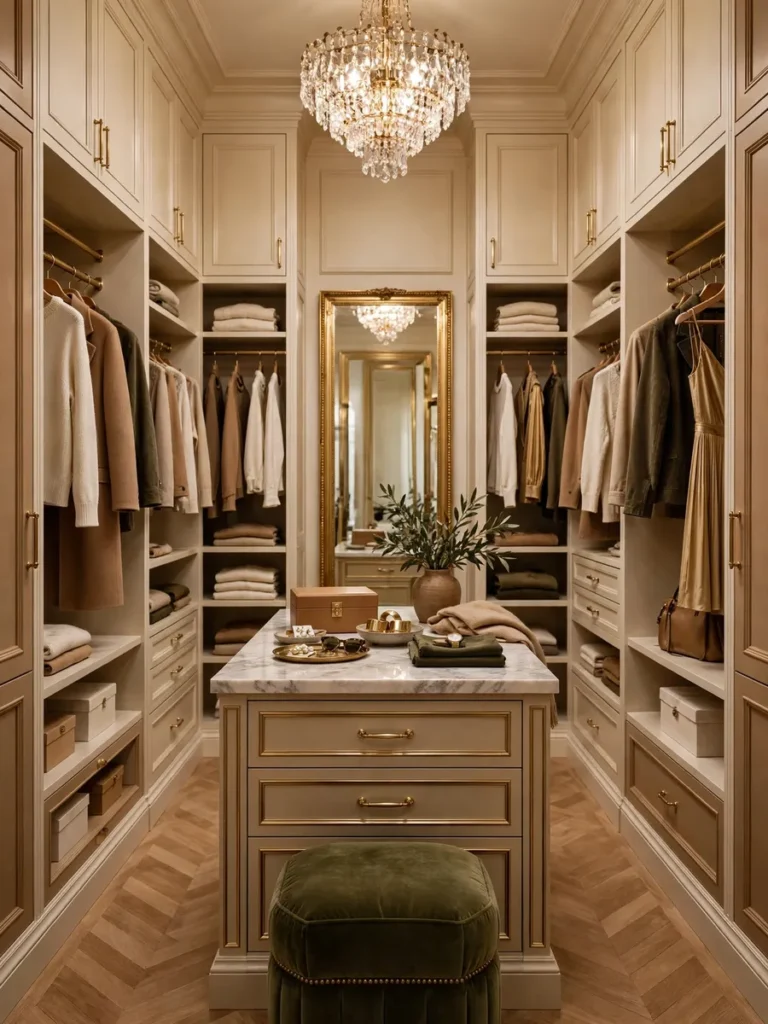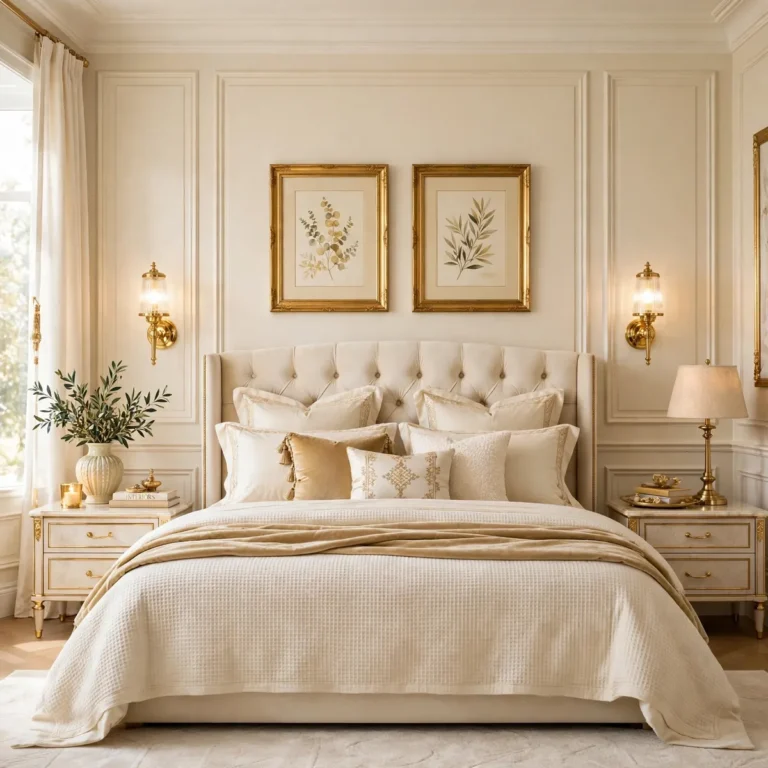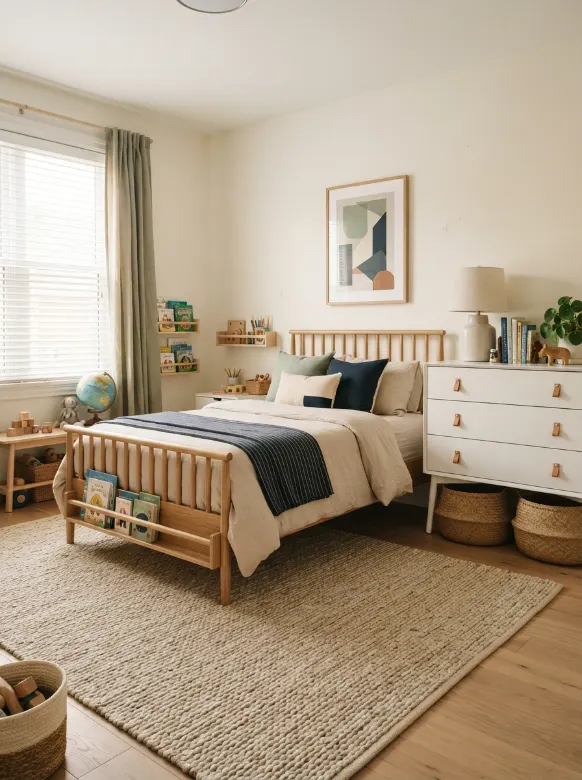
12 Bedroom Lighting Ideas for a Cozy, Beautifully Lit Room
Bedroom lighting does far more than help you see. It decides whether the room feels calm or stark, whether you can read in bed without waking the person next to you, and how easily you wind down at night. One bright ceiling bulb cannot do all of that on its own — good bedroom lighting is always built in layers, with each layer doing a different job.
The twelve bedroom lighting ideas below walk through those layers, from statement chandeliers and space-saving sconces to warm bulb choices and smart controls that shift the mood as the evening unfolds. And because lighting never works in isolation, it pays to think about what it falls on too — if you are planning the backdrop as well, these bedroom accent wall ideas pair naturally with several of the fixtures on this list.
Keep one principle in mind as you read: every light you add should have a reason — general brightness, reading, atmosphere, or highlighting something beautiful. That simple rule will keep your bedroom feeling restful instead of over-lit.
1. Plan Bedroom Lighting Ideas Around Three Layers
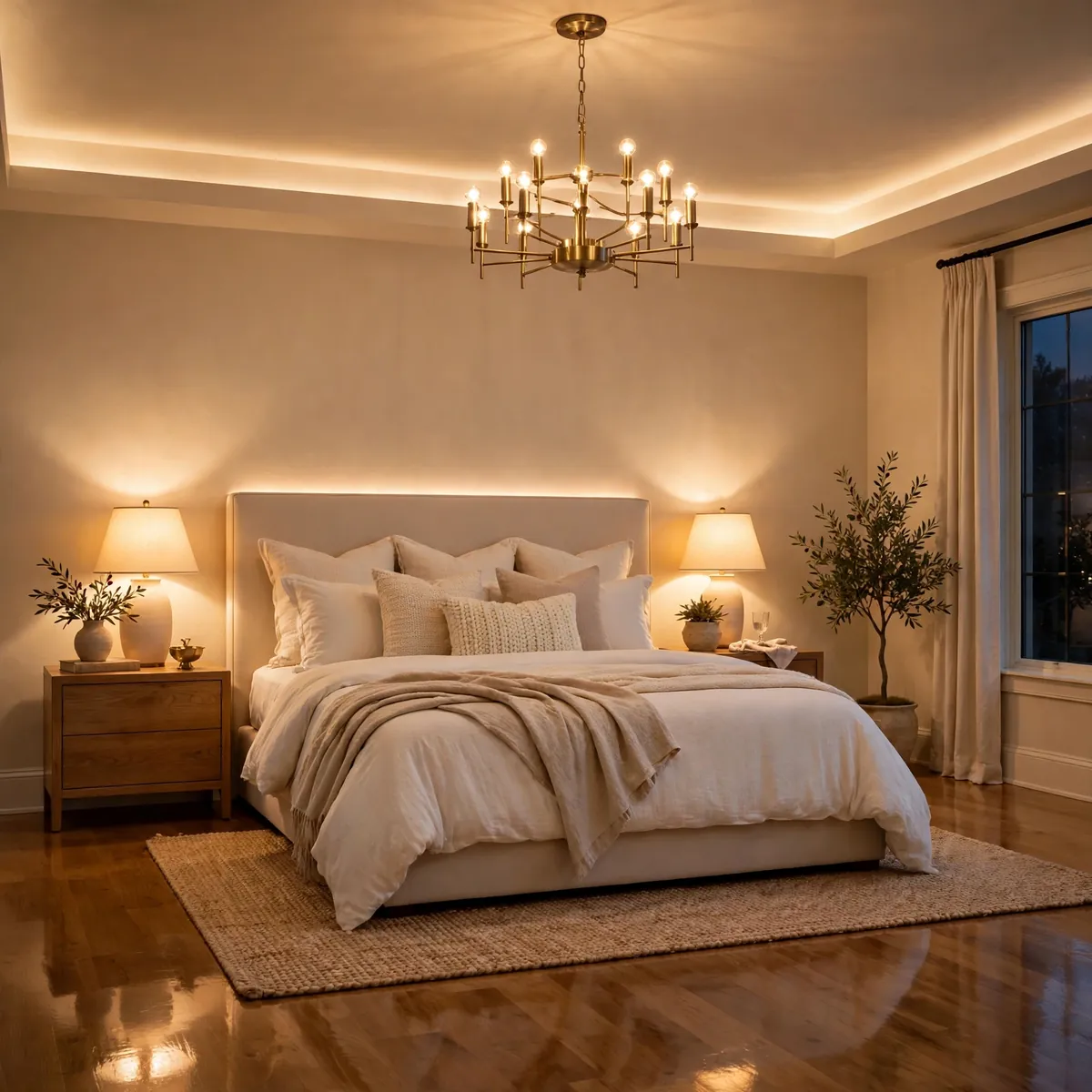
The single most useful concept in bedroom lighting is layering. Almost every well-lit bedroom combines three kinds of light: ambient light, which is the general brightness that fills the room (usually a ceiling fixture); task light, which is focused light for specific jobs like reading in bed or getting dressed (bedside lamps, sconces, desk lamps); and accent light, which is decorative light that adds depth and mood (LED strips, picture lights, candles’ electric cousins). When all three are present, you never have to choose between a room that is bright enough to clean and one that feels calm enough to sleep in — you simply switch layers on and off as the day changes.
Start your plan by naming the jobs each area of the room needs to do. The bed needs reading light. The dressing area needs clear, true-to-color light. The ceiling needs to handle general illumination without glaring into your eyes when you lie down.
Once you know the jobs, assign a fixture to each one, then connect as many as possible to dimmers or smart controls so you can reshape the room’s mood in seconds.
Quick tips:
- Aim for at least three separate light sources, not one bright ceiling fixture.
- Sketch the room and mark where each layer goes before you buy anything.
- Switch layers independently — separate switches beat one master switch.
2. Hang a Statement Chandelier as the Focal Point
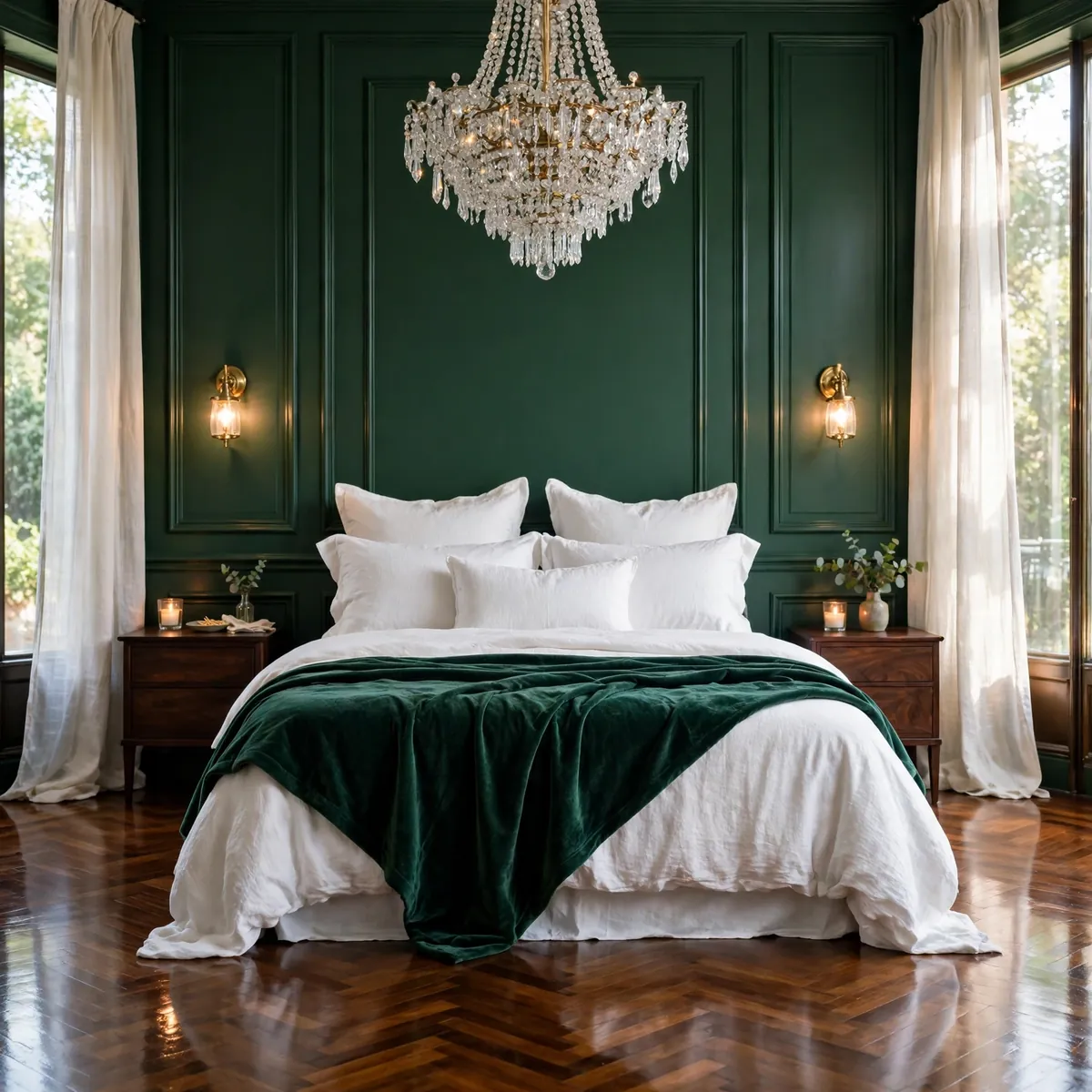
A chandelier turns the bedroom’s ambient layer into a design moment. Hung centrally or directly over the bed, it draws the eye upward and gives the room a finished, intentional feel that a plain flush mount rarely achieves.
Scale matters more than style. In an average-height room, keep the bottom of the fixture at least seven feet from the floor, or hang it over the bed where nobody walks underneath — that placement buys you headroom and keeps the fixture in the sightline where it looks best.
Choose diffused shades or frosted bulbs rather than exposed bright bulbs, since you will see the fixture from the pillow, and add a dimmer: full brightness for cleaning, a low glow for evening.
Quick tips:
- Over the bed is the safest placement for low ceilings.
- Pick frosted or shaded bulbs to avoid glare from the pillow.
- Add a dimmer so one fixture covers both daytime and nighttime needs.
3. Try Pendant Lights Beside the Bed
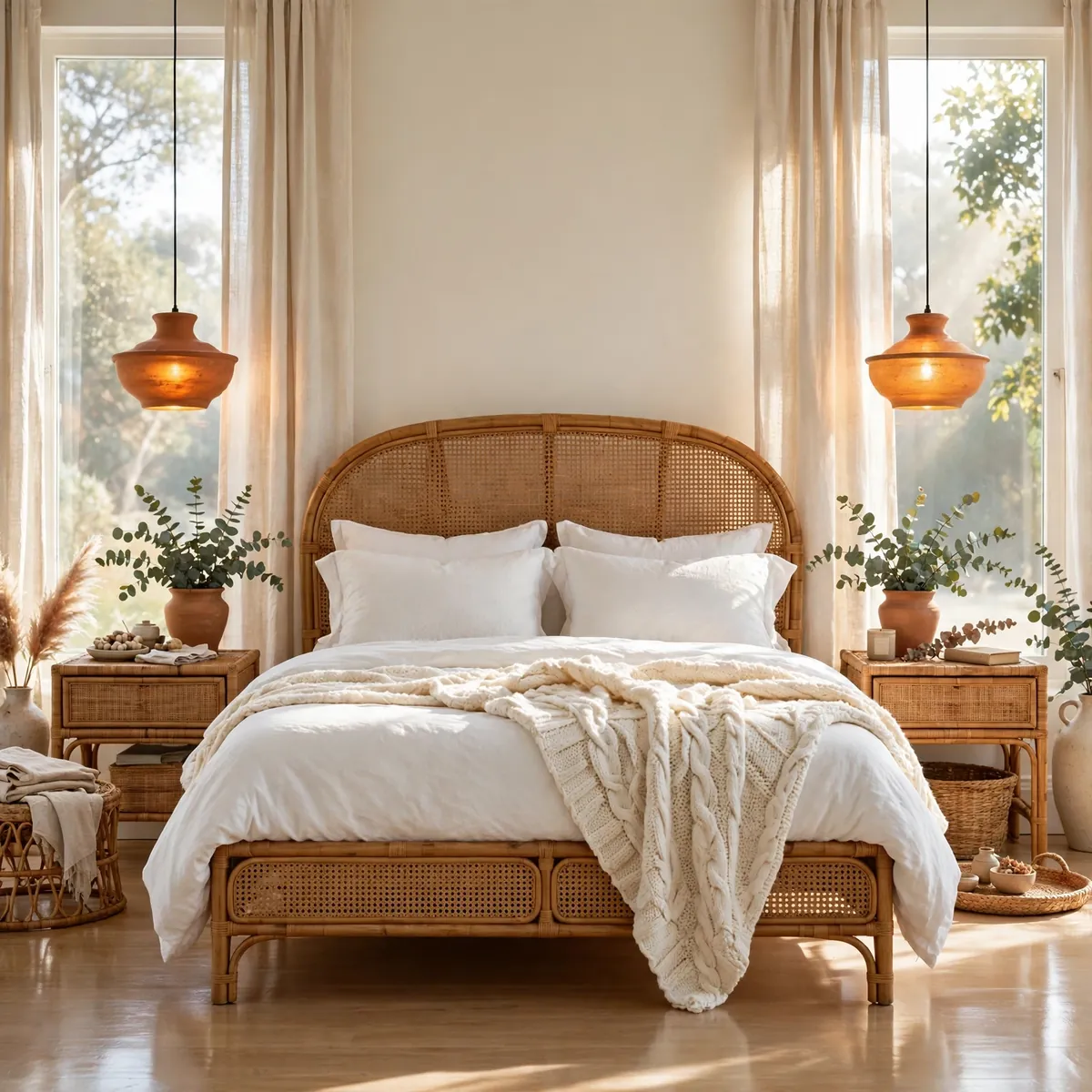
Pendant lights hung low on each side of the bed do the job of bedside lamps while freeing the nightstand surface for books, water, and glasses. They read as modern and deliberate, and they are one of the simplest ways to make a small bedroom feel designed rather than cramped.
Hang each pendant so its bottom sits roughly at the same height a table lamp shade would — around the level of your shoulder when you sit up in bed. That keeps the light where you need it for reading without shining straight into your eyes.
Wire them to separate switches or smart bulbs so each side of the bed gets its own control.
Quick tips:
- Match pendant bottom height to a standard lamp shade height for reading.
- Keep both sides at equal height — mismatched heights look accidental.
- Use separate controls so each sleeper owns their light.
4. Mount Wall Sconces to Free Up Nightstands
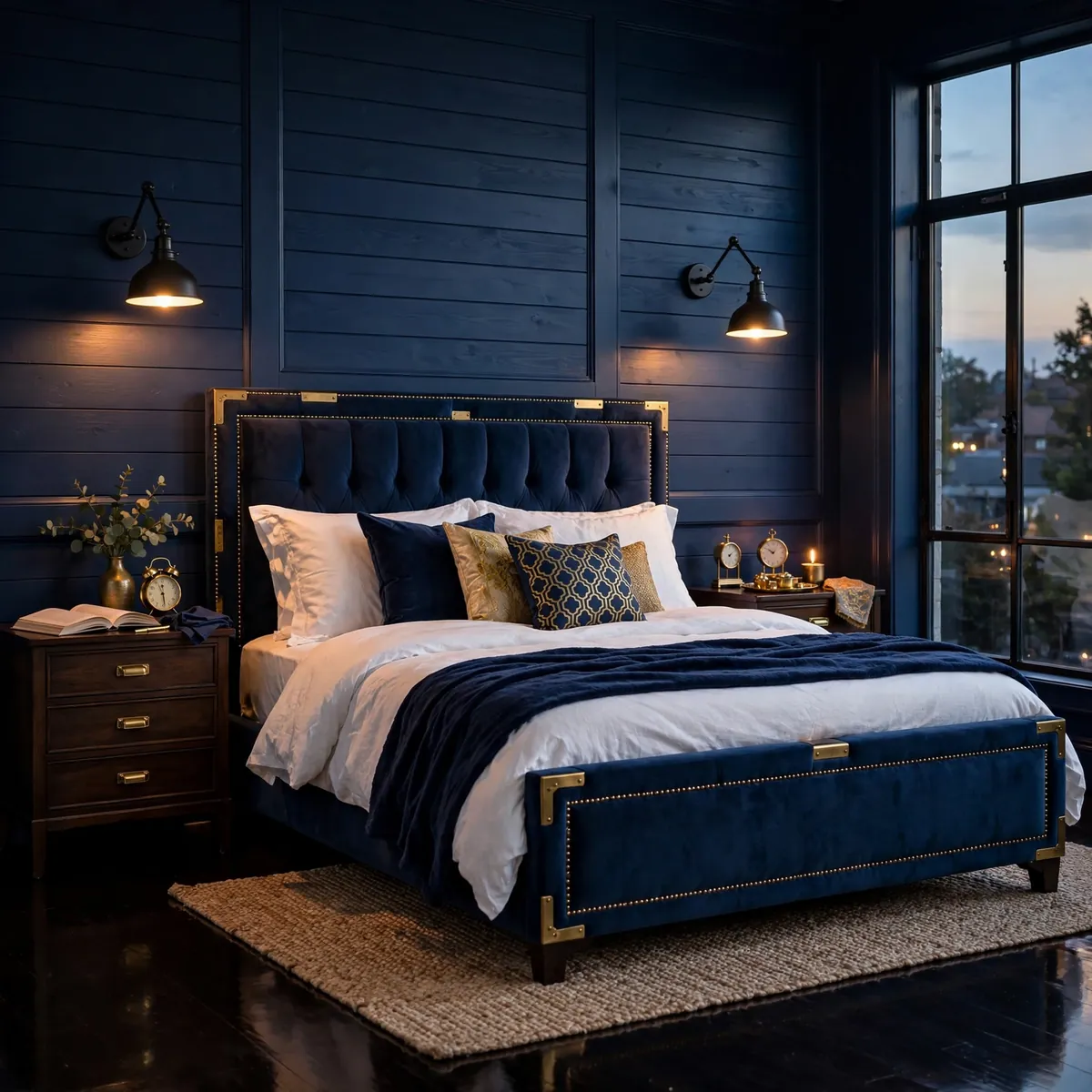
Wall sconces are the tidiest form of bedside lighting: they mount to the wall, keep cords hidden, and leave the entire nightstand clear. Swing-arm versions tilt and rotate, so the reading light lands exactly on your book and nowhere else.
Mount them at about the height of your eyes when you sit up in bed — close enough to reach, high enough to spread light across the pillow area. Up-and-down shades throw a soft wash on the wall that doubles as ambient light.
Deep-toned walls absorb light, so sconces earn their keep even more in darker rooms — the same layering logic works beautifully in moody bedroom decor ideas, where every fixture has to work harder to keep the room feeling lit rather than heavy.
Quick tips:
- Choose swing-arm sconces if you read in bed most nights.
- Mount at seated eye level, roughly 36 to 43 inches above the mattress.
- Pick up-down shades when you want wall wash plus reading light.
5. Put Dimmers on Every Switch
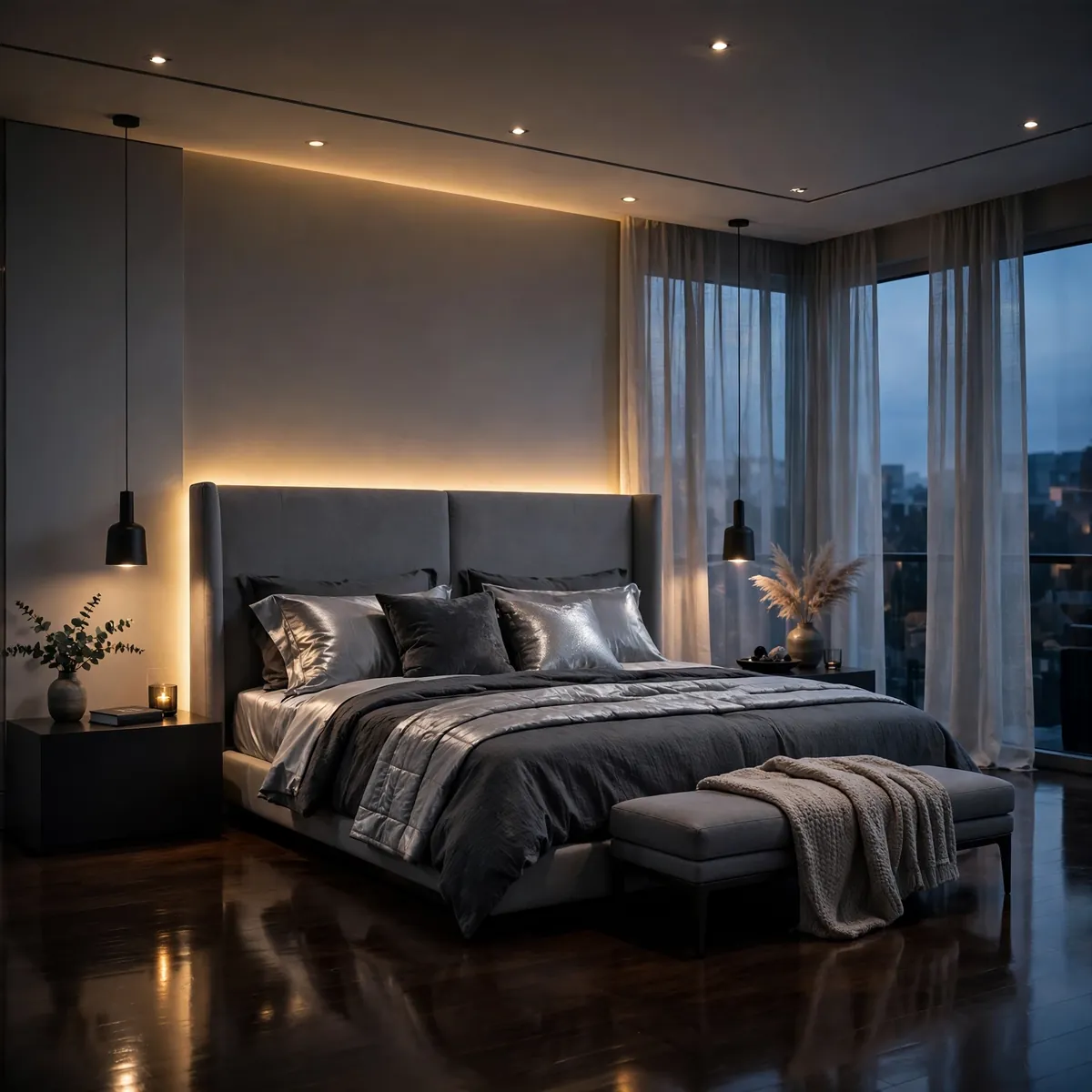
If there is one upgrade that changes how a bedroom feels, it is dimmers. A fixture that can drop to a soft glow in the evening and rise to full brightness for cleaning is effectively two fixtures for the price of a switch.
Dimmers matter most in the evening, when bright light fights your body’s wind-down. Dimming the room before bed helps the space signal that the day is ending — the exact transition a bedroom should support.
Use dimmers rated for your bulb type — LED-compatible dimmers for LED bulbs — so the light dims smoothly instead of flickering or buzzing at low levels.
Quick tips:
- Prioritize dimmers on the ceiling light and bedside lamps first.
- Match the dimmer to your bulb type to avoid flicker.
- Set a low evening scene so winding down becomes one tap, not a chore.
6. Choose Warm White Bulbs for Evening Calm
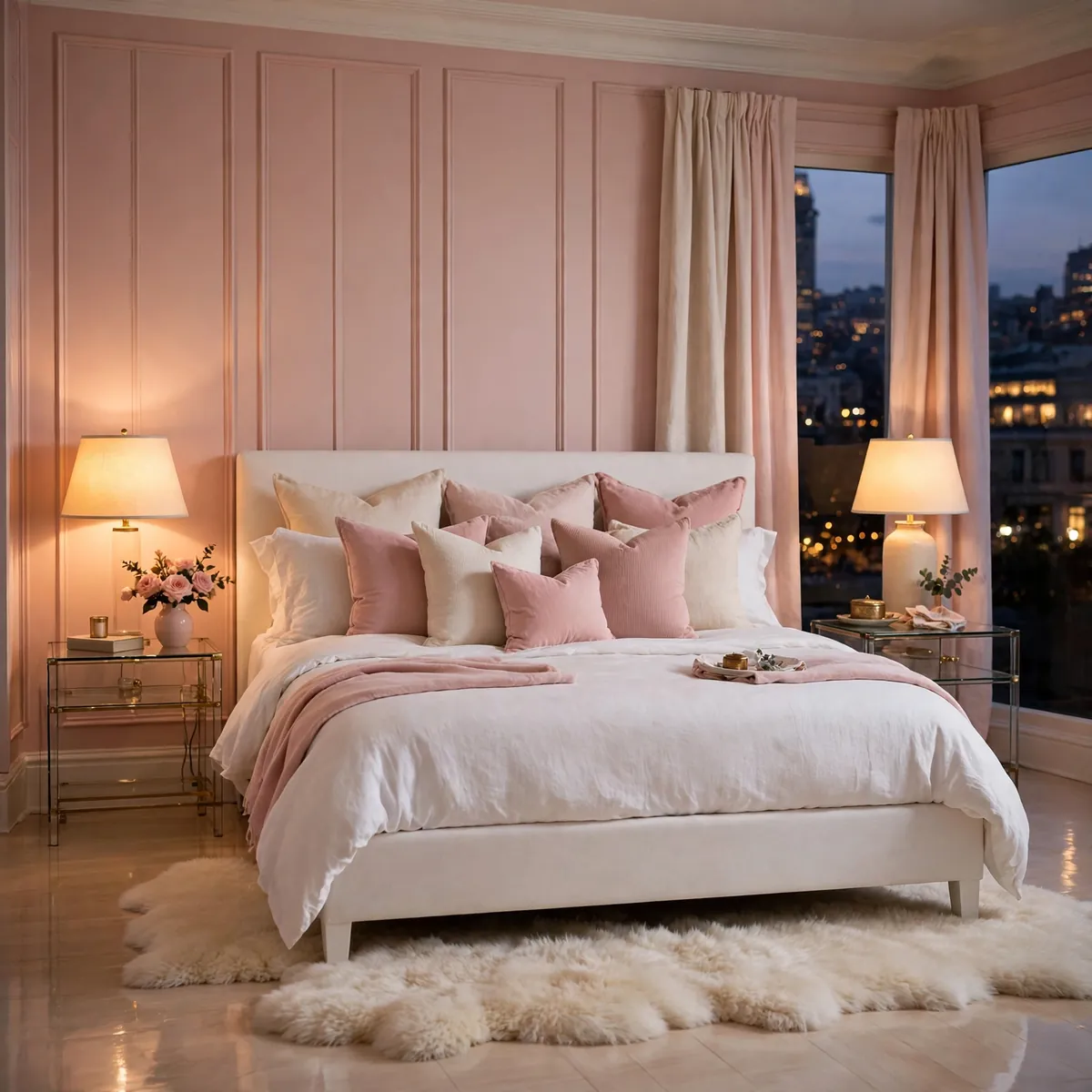
Bulb color shapes a bedroom’s mood as much as the fixtures do. Warm white bulbs (around 2700K to 3000K) cast a golden, candle-like glow that makes bedding look softer and walls look richer — while cool daylight bulbs can make the same room feel like an office.
Save cooler, brighter light for the dressing area if you need accurate color for outfits and makeup, and keep the bedside and ambient layers warm. That split gives you function where you dress and calm where you sleep.
Consistency counts: mixing warm and cool bulbs in the same sightline creates a visual clash that makes a room feel restless. When in doubt, buy warm and buy the same temperature for every bulb in the room.
Quick tips:
- Default to 2700K warm white for all bedside and ambient bulbs.
- Reserve cooler bulbs only for the dressing or vanity zone.
- Replace bulbs in matched pairs so both nightstands glow identically.
7. Style Classic Bedside Table Lamps
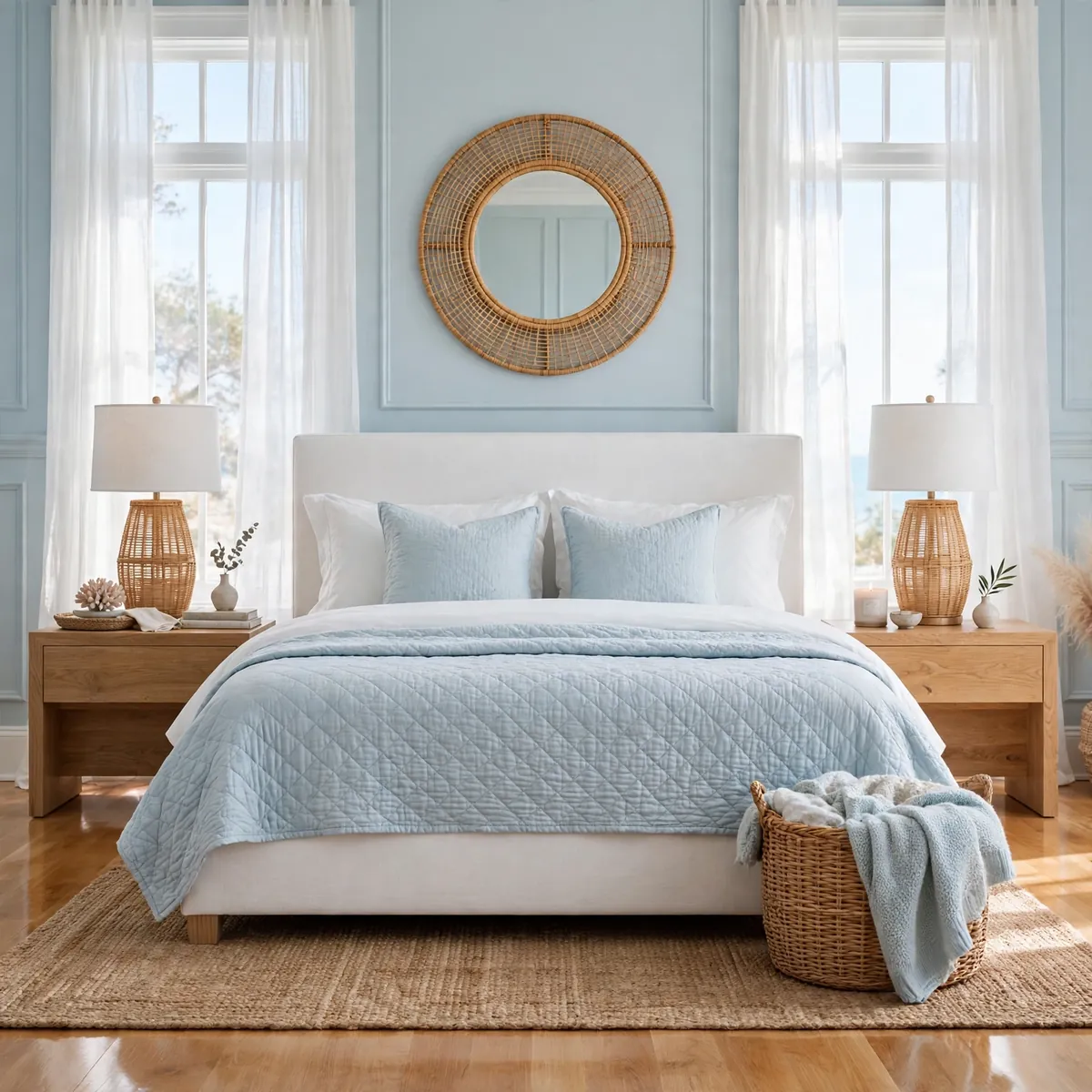
The humble bedside lamp remains the most-used light in most bedrooms, and it deserves as much styling attention as any statement fixture. A well-chosen lamp anchors the nightstand, frames the bed symmetrically, and puts a switch within arm’s reach.
Size the shade so its bottom sits at about shoulder height when you sit in bed — too tall and the bulb glares into your eyes, too short and the pool of light never reaches your book. Three-way or touch lamps add flexibility without extra switches.
Treat the lamp as decor: a woven, ceramic, or colored-glass base brings texture and personality to the bedside, so the lamp works as styling even when it is switched off.
Quick tips:
- Shade bottom at seated shoulder height keeps glare out of your eyes.
- Three-way bulbs give you reading, low, and off in one lamp.
- Choose a base material that echoes other textures in the room.
8. Add a Floor Lamp for a Reading Corner
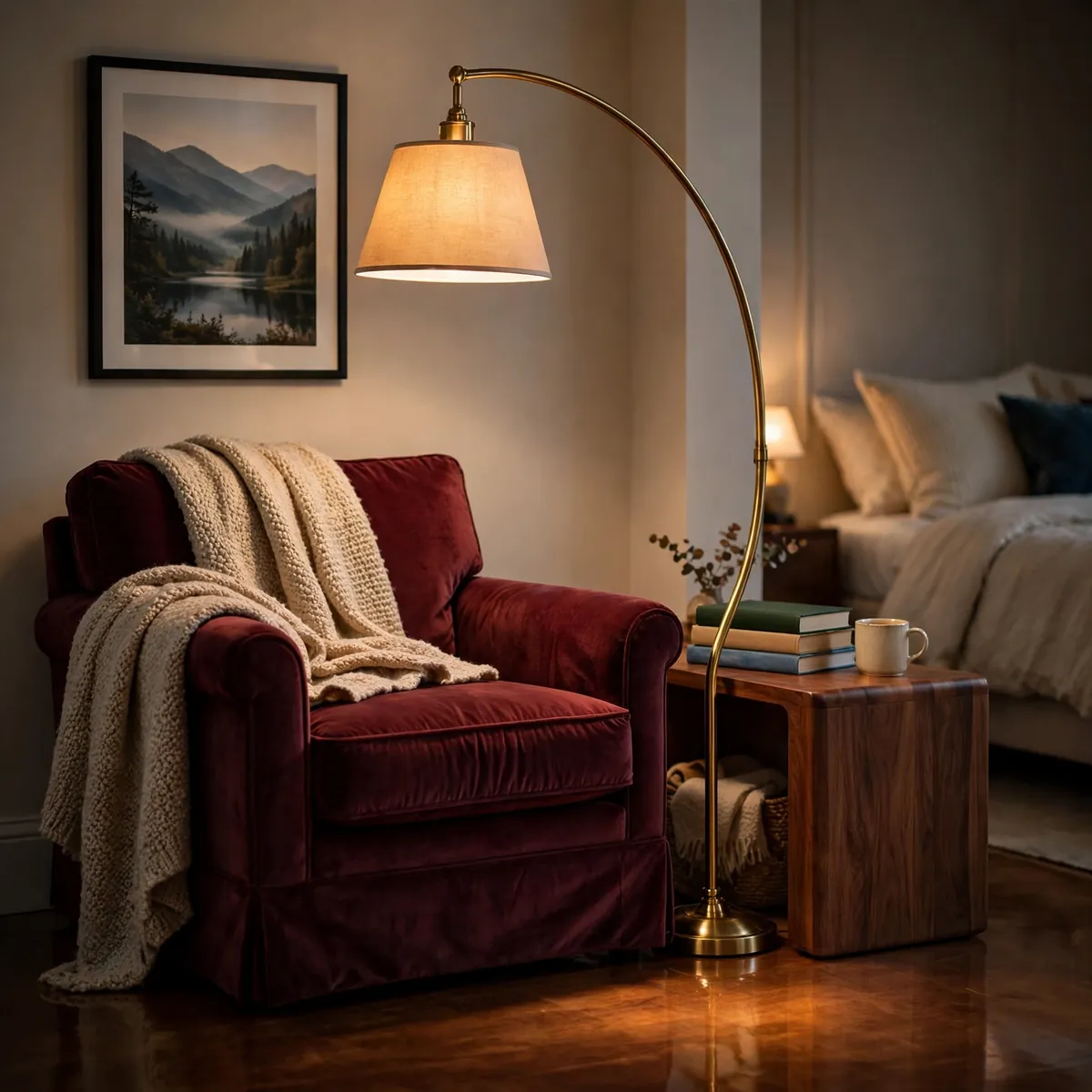
A bedroom reading corner only works if the light reaches it, and a floor lamp is the easiest way to get there — no wiring, no holes in the wall, and it moves when you rearrange. An arc or adjustable-arm floor lamp curves light exactly over a chair, making the corner genuinely usable after dark.
Look for a lamp with a directional head rather than a purely decorative torchiere, so the light lands on the page instead of bouncing off the ceiling. A heavy base keeps it stable on rugs and carpet.
Position the lamp behind or beside the chair, opposite your reading hand, so your own shadow never falls across the book.
Quick tips:
- Arc or adjustable-arm lamps beat fixed torchieres for reading.
- Place the lamp on your non-reading side to keep shadows off the page.
- Pair it with a side table so the corner feels like a destination.
9. Run LED Strips for Hidden Accent Glow
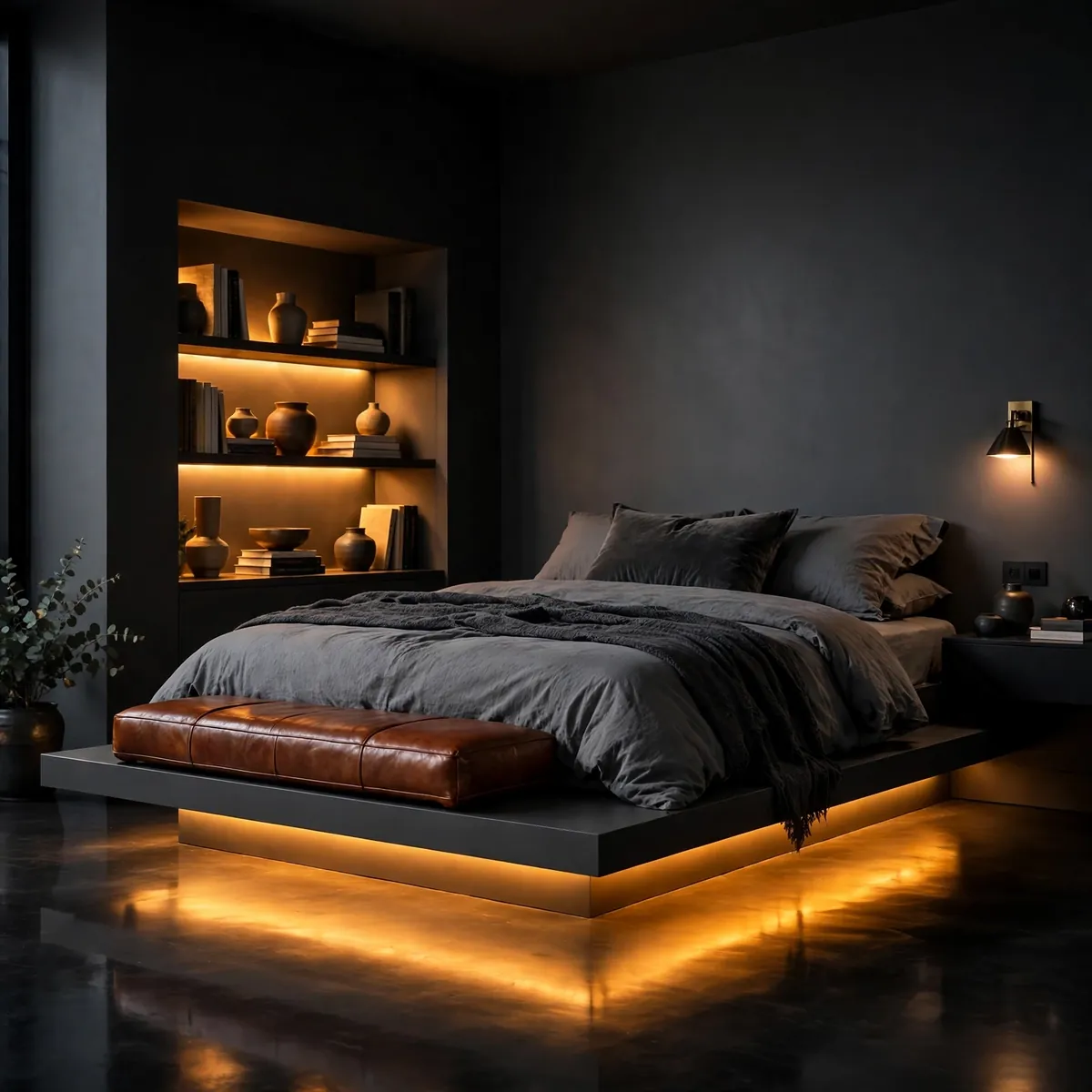
LED strips are the quietest way to add atmosphere: tucked under a floating bed frame, behind a headboard, or inside a ceiling cove, they produce a soft halo of light with no visible fixture. The room seems to glow from within, which reads as expensive and feels deeply calming.
Use warm white strips and hide the strip itself behind a lip or channel, so you see the wash of light but never the dotted line of diodes.
Under-bed strips double as practical night lighting — a soft line of light at floor level lets you cross the room in the dark without switching on anything bright.
Quick tips:
- Hide the strip so you see the glow, never the diodes.
- Warm white strips suit bedrooms; skip harsh cool tones here.
- Run a low strip under the bed as a built-in night light path.
10. Spotlight Art with Picture Lights
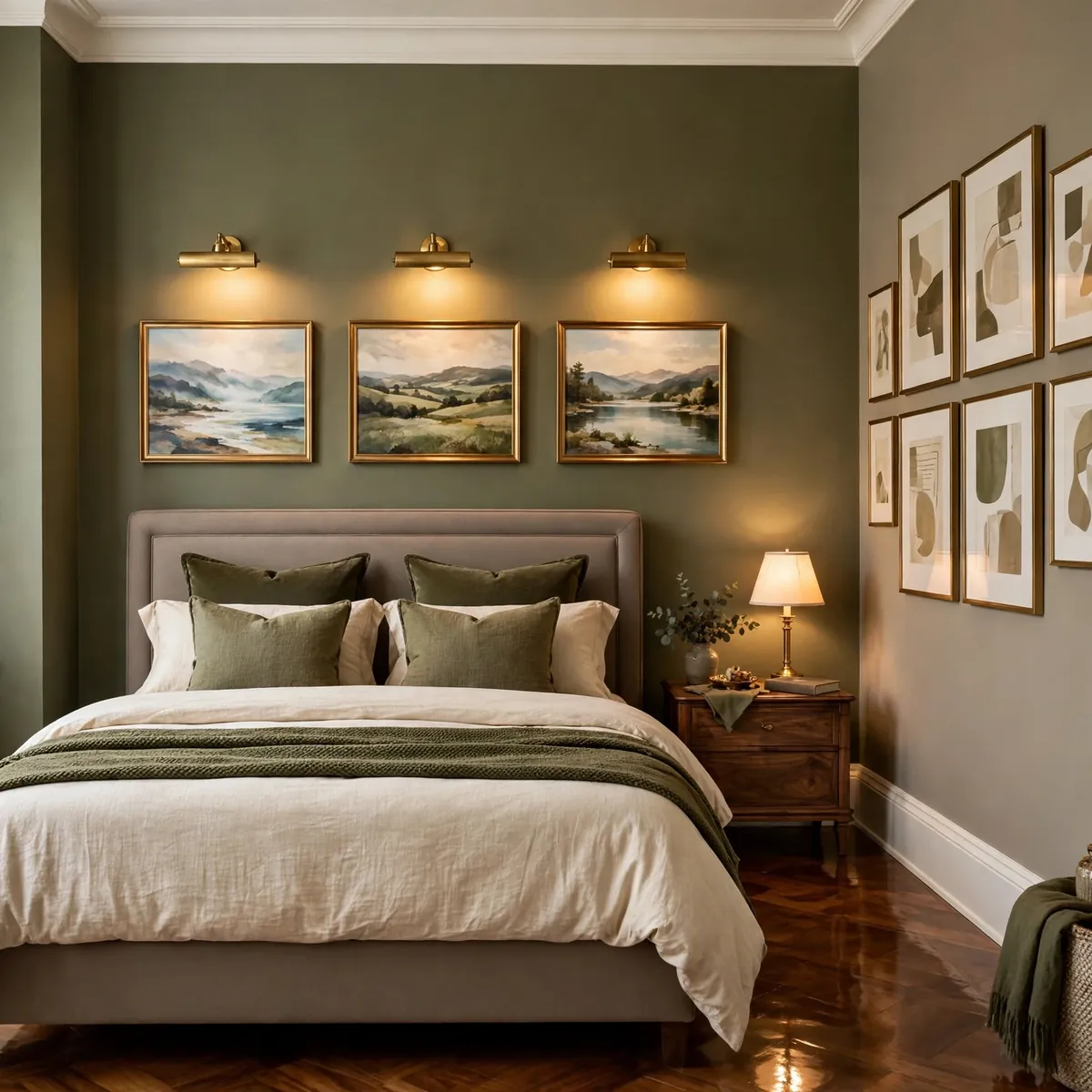
Art hung in a dim bedroom can disappear after sunset, which is a shame when the walls are part of the design. Slim brass or matte-black picture lights mounted above frames keep artwork visible at night and add a gallery-like finish that elevates the whole room.
Picture lights throw a focused wash downward, so they double as gentle ambient light near the bed — warm, low, and directed at the wall rather than into your eyes.
Battery-operated picture lights now run for months on a charge, so you can add them to rented rooms or walls where you would rather not wire anything.
Quick tips:
- Size the picture light to about half the width of the artwork.
- Warm light flatters art and suits the bedroom better than cool.
- Battery models make rentals and tricky walls easy.
11. Automate Moods with Smart Lighting
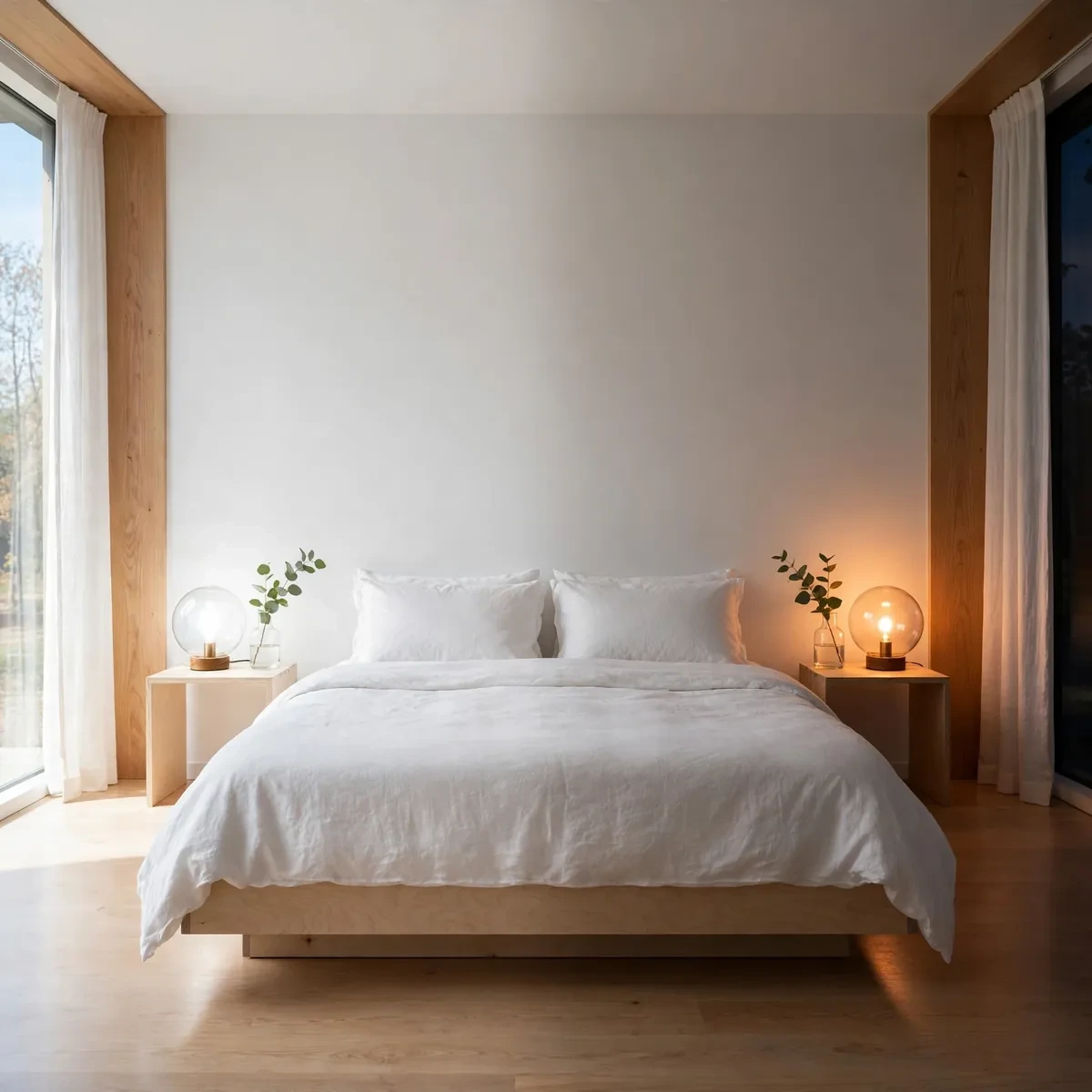
Smart bulbs and switches let the bedroom run on scenes instead of switches: bright and neutral for getting dressed, warm and dim for reading, nearly dark for sleep — all from a phone, a voice command, or a schedule that handles it for you.
The most useful trick is scheduling. A gradual brightening alarm feels far kinder than a blaring one, and an automatic dim-to-warm scene an hour before bedtime removes the temptation to leave harsh lights on all evening.
You do not need to go all-in: even two smart bedside bulbs — one per sleeper — transform how the room behaves at night.
Quick tips:
- Start with two smart bedside bulbs before rewiring anything.
- Schedule a dim-to-warm scene for the hour before bedtime.
- Try a gradual brightening alarm for gentler mornings.
12. Light the Closet and Dressing Corner
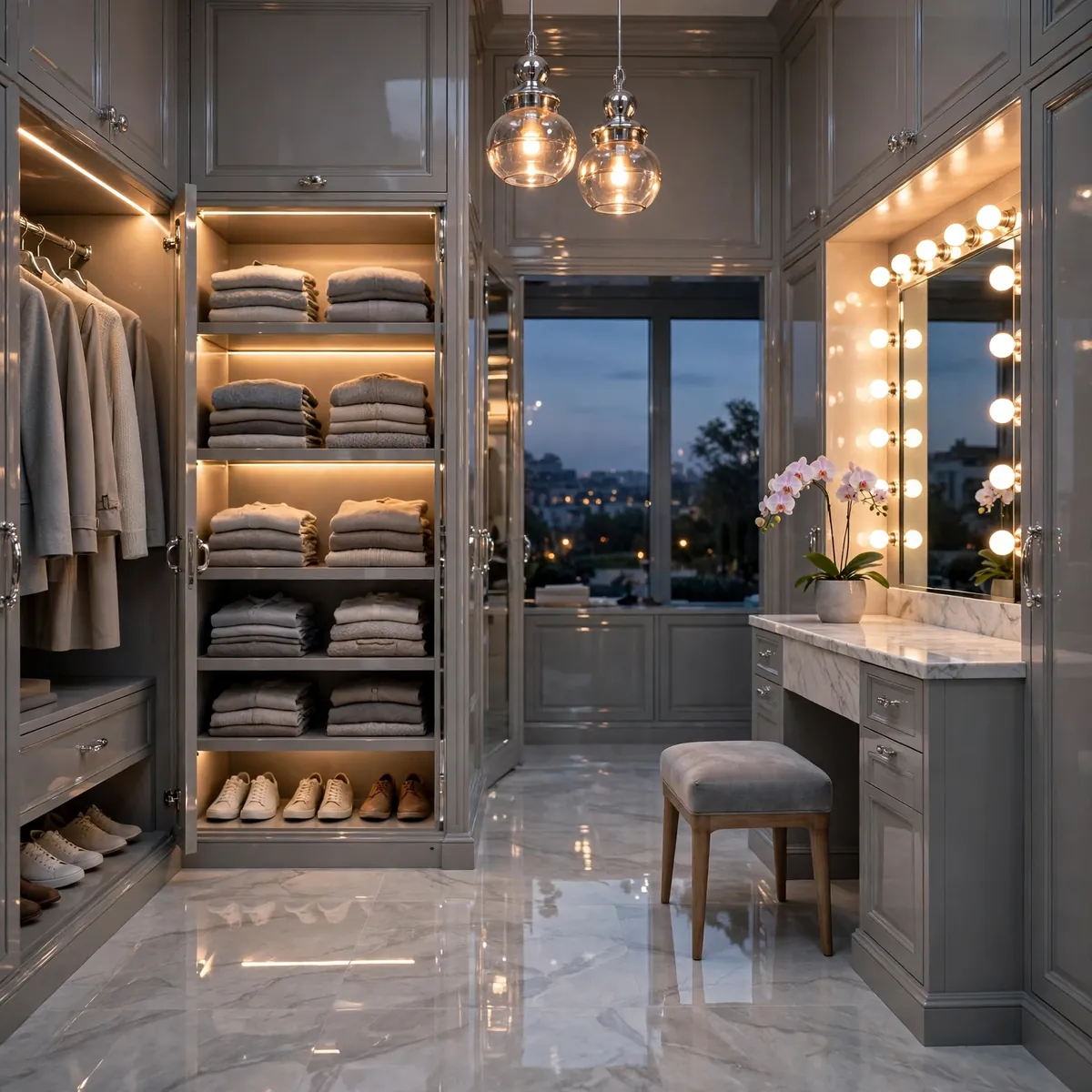
The dressing area is where bedroom lighting gets functional. A dark closet forces you to drag clothes into the bedroom’s light to see true colors, and a dim vanity makes makeup and grooming a guessing game.
Motion-sensor strip or puck lights inside wardrobes solve the closet problem for very little money — doors open, clothes light up, and you see actual colors before you dress. At the vanity, flank the mirror with lights on both sides rather than a single overhead, so your face is lit evenly without harsh shadows.
This is the one zone where slightly brighter, neutral-toned light earns its place; keep the bedroom’s sleeping areas warm and dim, and let the dressing corner be the room’s practical workhorse.
Quick tips:
- Motion-sensor lights inside wardrobes show true clothing colors.
- Flank vanity mirrors on both sides instead of lighting from above.
- Keep this zone brighter and neutral; keep sleeping zones warm and dim.
Frequently Asked Questions
What type of lighting is best for a bedroom?
The best bedroom lighting layers three types: ambient light (a ceiling fixture) for general brightness, task light (bedside lamps, sconces) for reading and dressing, and accent light (LED strips, picture lights) for mood. Use warm bulbs and dimmers so the same room shifts from bright mornings to calm evenings.
What color light is best for a bedroom?
Warm white light, around 2700K to 3000K, is the best choice for bedrooms. It creates a cozy, relaxing glow that suits winding down at night. Cooler daylight tones can feel harsh and stimulating, so reserve them for the dressing or vanity area where you need clear, accurate light.
Are LED lights good for bedrooms?
Yes. LEDs are energy-efficient, long-lasting, and widely available in warm color temperatures and dimmable versions, which makes them ideal for bedrooms. Pair them with LED-compatible dimmers so they dim smoothly to a low glow at night.
Can you put a chandelier in a bedroom?
Yes, as long as the size and height suit the room. Keep the bottom of the chandelier at least seven feet above the floor, or hang it over the bed where nobody walks beneath it. Choose diffused shades or frosted bulbs to avoid glare, and add a dimmer for evening use.
How high should wall sconces be mounted beside the bed?
Mount bedside sconces at about seated eye level — roughly 36 to 43 inches above the top of the mattress. That height puts reading light where you need it without shining into your eyes, and keeps the switch or pull within easy reach from the pillow.
Conclusion
Bedroom lighting works best when it is planned as a system, not chosen fixture by fixture. Decide what each part of the room needs to do, assign ambient, task, and accent light to those jobs, then give yourself a way to dim and warm everything as the evening unfolds. Warm bulbs, separate controls, and at least one hidden glow line will do more for the room’s feel than any single expensive fixture.
Start with the layer you are missing — most bedrooms only have the ceiling light — and add the rest one piece at a time.