24 Stunning Christmas Tree Decorating Ideas: A Step-by-Step How-To Guide for a Designer Tree
Christmas tree decorating ideas work best as a step-by-step method, not a pile of ornaments. The secret is the layering order: pick your spot, fluff the branches, add lights first, then ribbon, then ornaments from large to small, and finish with a topper and a tree skirt. Follow that order and any tree — real or artificial, tall or slim — looks full, balanced and professionally finished.
This guide walks you through all 24 steps in order, with the exact quantities designers use: about 100 lights, 20 ornaments, and 9 feet of ribbon per foot of tree height. The 2026 themes woven through the steps — velvet bows, heritage red, gingerbread, sage and pearl, and woodland — keep the tree current without a full redecoration. And once the tree is dressed, these Christmas tree skirt ideas show how to finish the base beautifully.
Christmas Tree Decorating Ideas: Key Takeaways
What is the correct order to decorate a Christmas tree? Fluff the branches, add lights first, then ribbon or garland, then ornaments from large to small, then picks and the topper, and finish with a tree skirt.
How many lights and ornaments do you need? Plan on about 100 lights, 20 ornaments, and 9 feet of ribbon per foot of tree height — so a 7-foot tree needs roughly 700 lights and 140 ornaments.
What makes a tree look like a designer decorated it? Lights woven deep inside the branches, ornaments placed in loose triangles, mixed sizes, and one clear color story: two colors plus a metallic.
What are the big 2026 Christmas tree themes? Velvet bows, heritage red, gingerbread, sage and pearl, and woodland — each one works with the same layering order in this guide.
How Do You Layer a Christmas Tree in the Right Order?
Every layer goes on in a fixed order because each one needs access to the bare branches. Lights go in first so wires hide inside the tree, ribbon next because it covers large areas, then ornaments from large to small.
| Step | What goes on | Why it goes there |
|---|---|---|
| 1 | Fluffed branches | Fullness comes before anything else |
| 2 | Lights | Wires hide inside the tree before ornaments cover them |
| 3 | Ribbon or garland | Large shapes set the color story early |
| 4 | Large ornaments | Deep placement creates volume and depth |
| 5 | Medium and small ornaments | Fill gaps and add sparkle at the tips |
| 6 | Picks and sprays | Texture and color fill the last bare spots |
| 7 | Topper and tree skirt | The crown and the base finish the look |
1. How Do You Pick the Right Spot for Your Christmas Tree?
Pick a spot with at least 6 inches of clearance above the tree for the topper, a power outlet within one strand length, and enough floor space for the widest branches plus a skirt.
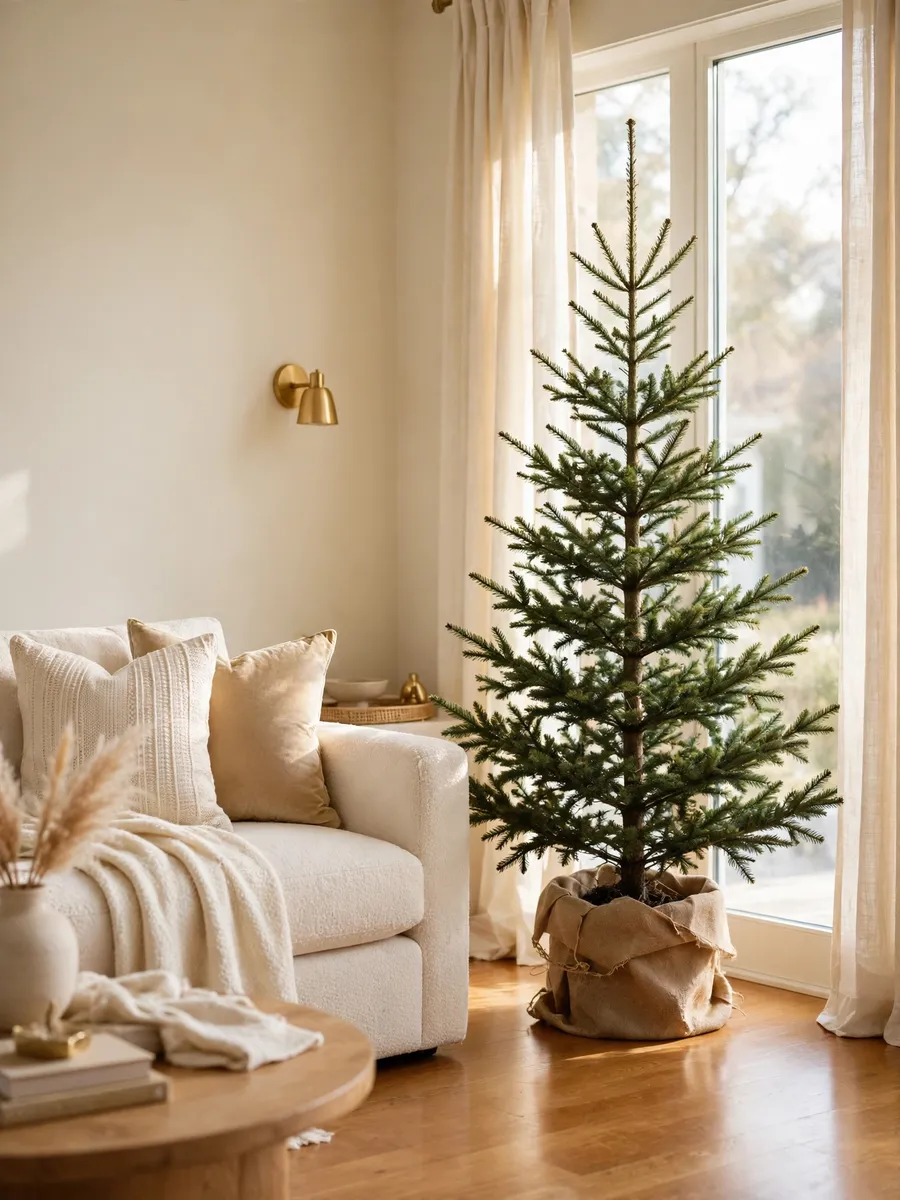
Stand where guests will see the tree first — usually opposite the main sofa or beside the fireplace. A concrete example: a 7-foot tree needs a 5-foot-wide floor patch, so measure the widest branches first and move one side table out of the way.
Quick tips
- Keep the tree away from radiators and heat vents so a real tree dries out slower.
2. How Do You Fluff an Artificial Tree So It Looks Full?
Fluff an artificial tree by separating every branch tip and bending tips in three directions — some up, some down, some straight out — working from the bottom up, one section at a time.
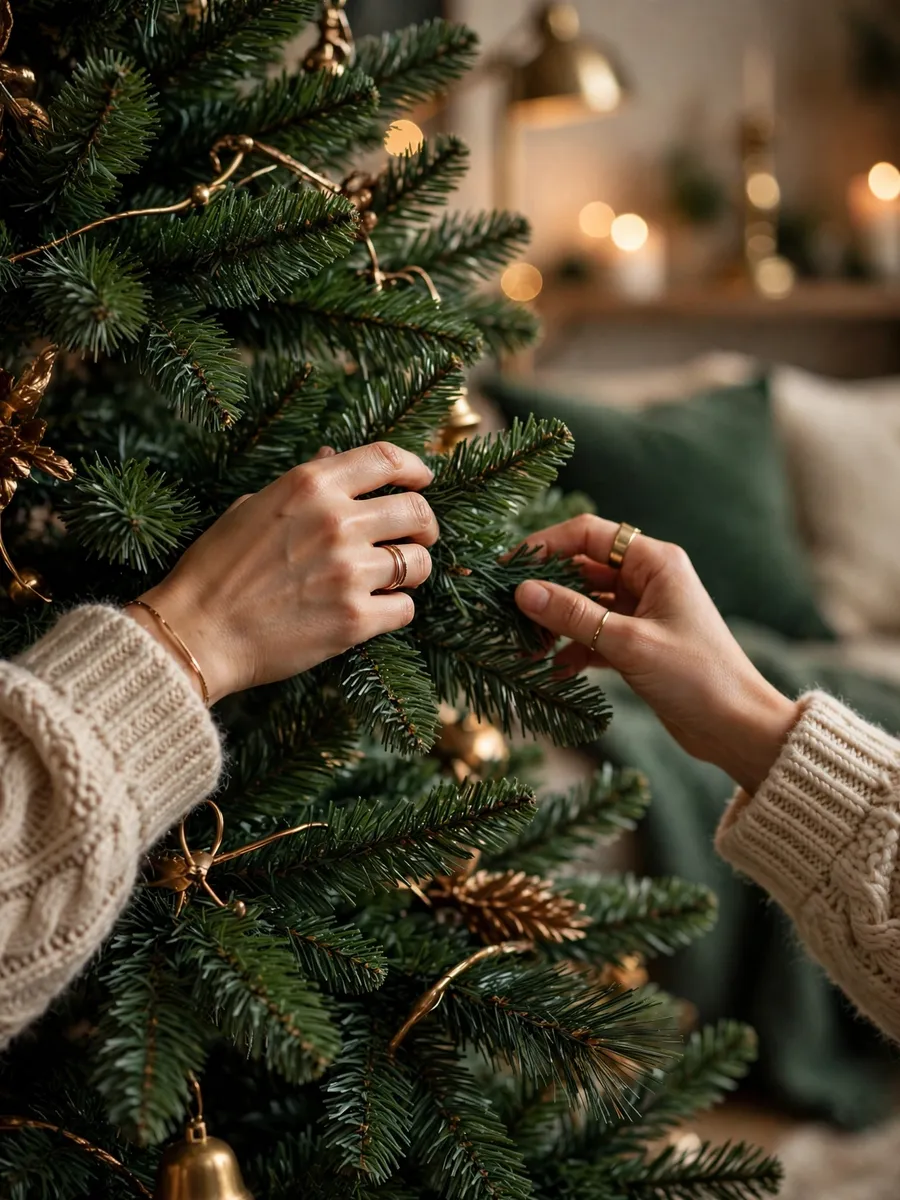
Start at the lowest tier and pull each branch outward from the trunk, then fan the individual tips like fingers so no two point the same way. A concrete example: on a 7.5-foot tree, allow a full hour for fluffing — separating the tips on just the bottom two tiers makes the tree look about 30 percent fuller.
Quick tips
- Wear thin gloves to protect your hands from stiff PVC needles.
3. How Many Lights Does Your Tree Actually Need?
A classic tree needs about 100 lights per foot of height, so a 6-foot tree takes 600 lights and a 7-foot tree takes 700; go to 150 per foot for a bright, designer glow.
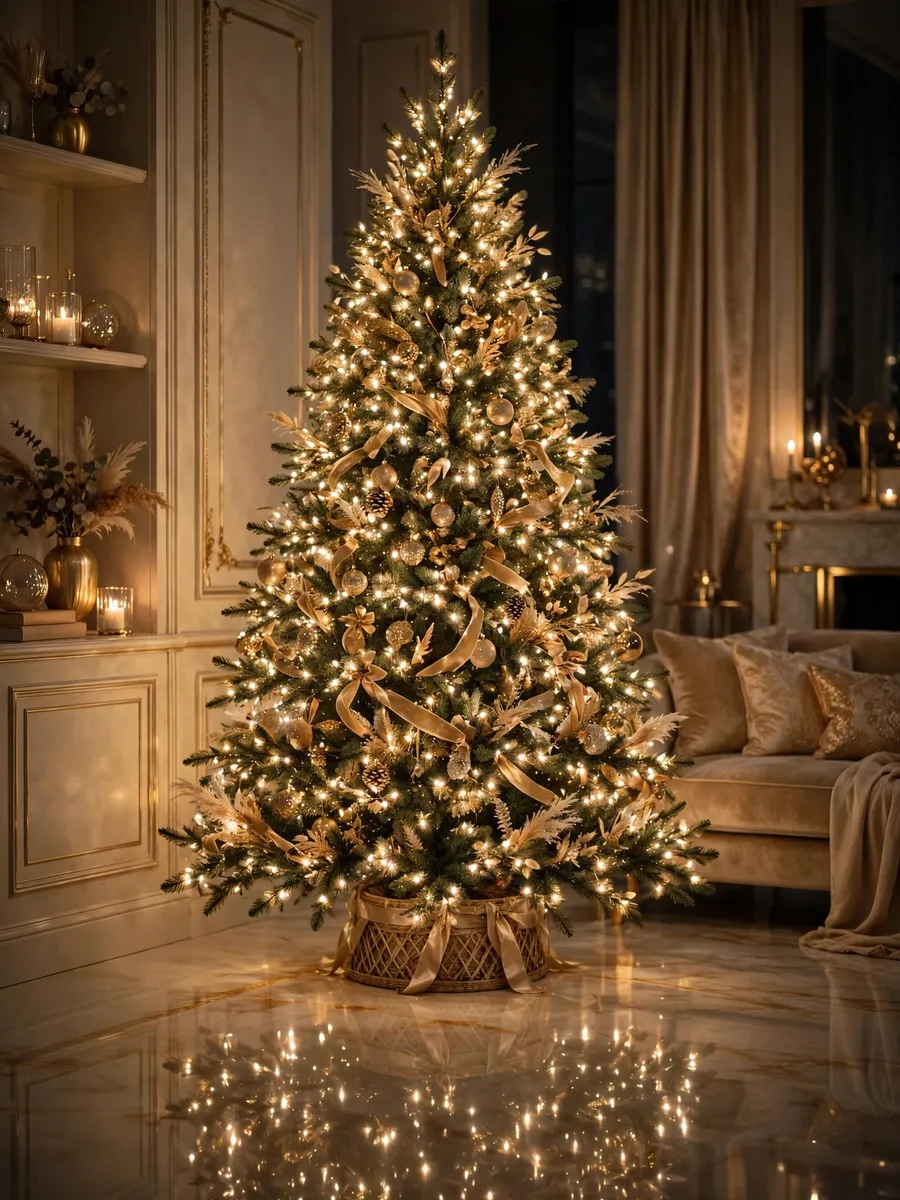
Count by height and width together: slim trees need fewer lights because they have less surface. A concrete example: a 7.5-foot full tree glows beautifully with 750 warm white mini lights, while the same height in a slim profile needs only about 550.
Quick tips
- Buy one extra strand so a dead section never leaves a dark patch.
- Warm white LEDs suit most rooms; cool white can look clinical at home.
4. How Do You String Lights So They Glow from Inside?
Weave lights from the trunk outward along each branch to the tip and back, working in vertical wedges from top to bottom, so some bulbs sit deep inside the tree.
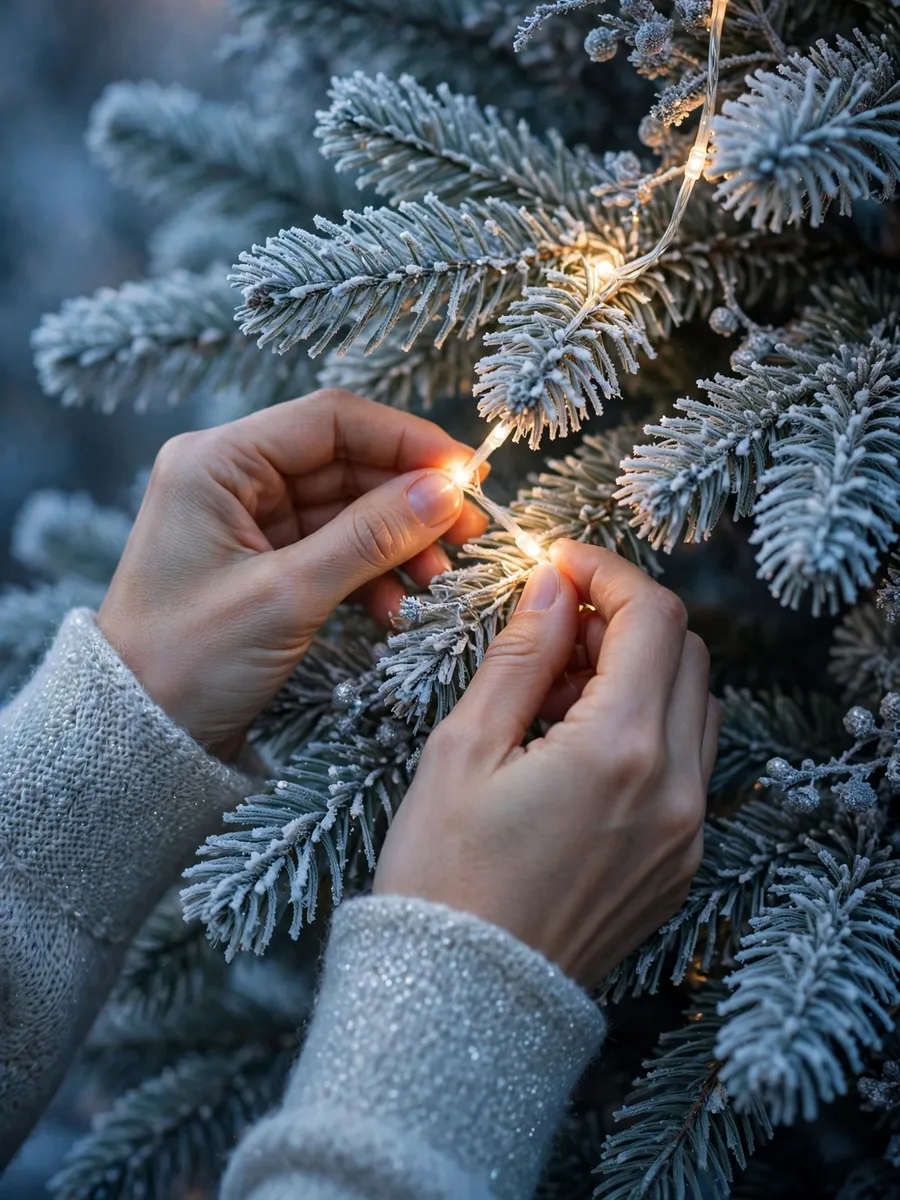
Start at the top with the plug end of your last strand reaching the outlet at the bottom, and push part of every strand toward the trunk. A concrete example: on a 7-foot tree, divide it into four vertical wedges and light one at a time — the tree glows from within instead of looking like a striped barber pole.
Quick tips
- Plug strands in as you go and check from across the room for dark pockets.
- Keep the male plug end at the bottom so it reaches the outlet easily.
5. How Do You Test Your Lights Before They Go on the Tree?
Test every strand by plugging it in on the floor first, checking for dead bulbs and broken fuses, and replace any failed bulb before the strand touches a branch.
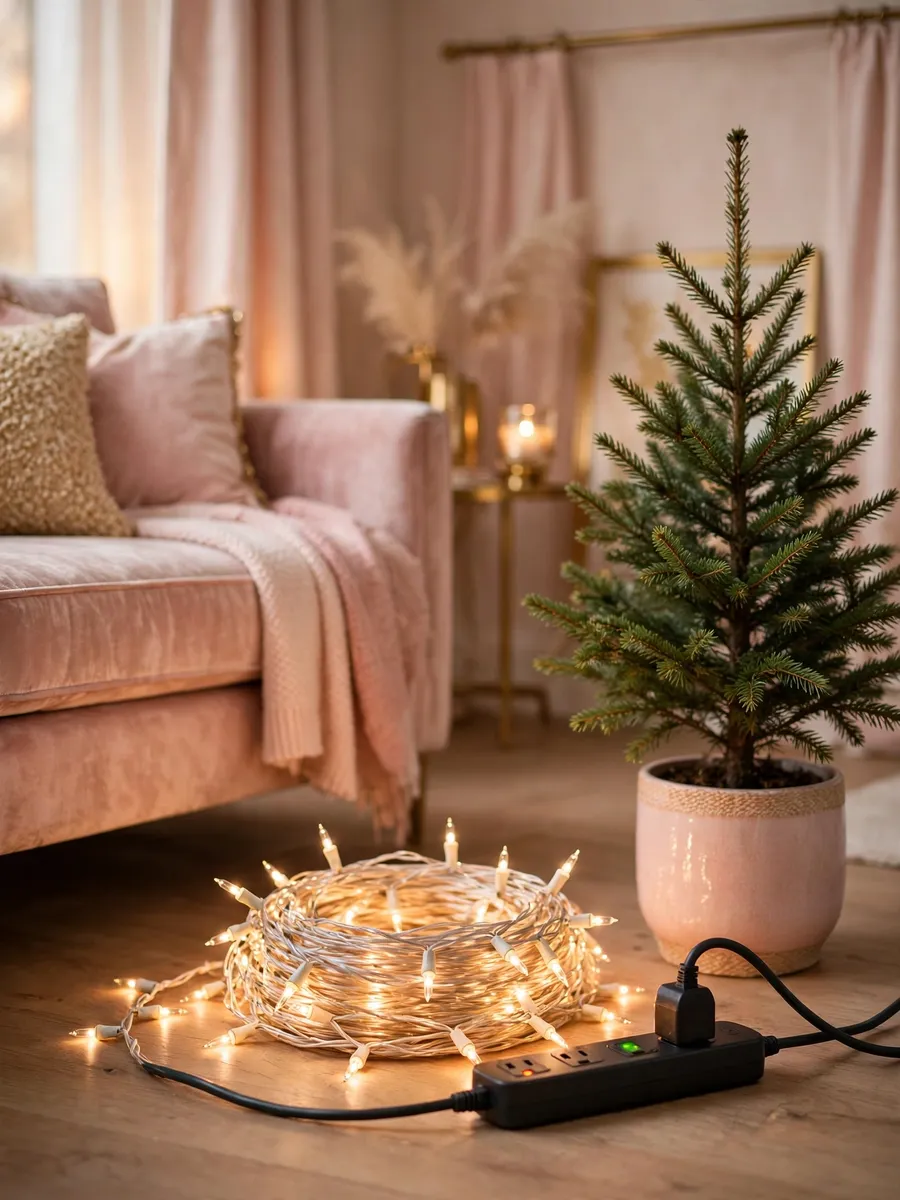
Untangle each strand on a clear floor, plug it in, and check for hot spots or loose sockets. A concrete example: one strand that looked fine in the box had three dead bulbs in the middle — found on the floor in two minutes, it would have taken twenty minutes to find on the tree.
Quick tips
- Keep a small bag of spare bulbs and fuses with your light box.
6. How Do You Choose a Color Story for Your Tree?
Choose two main colors plus one metallic, and use that trio for every layer — ribbon, ornaments, picks, and topper — so the tree reads as designed instead of accumulated.
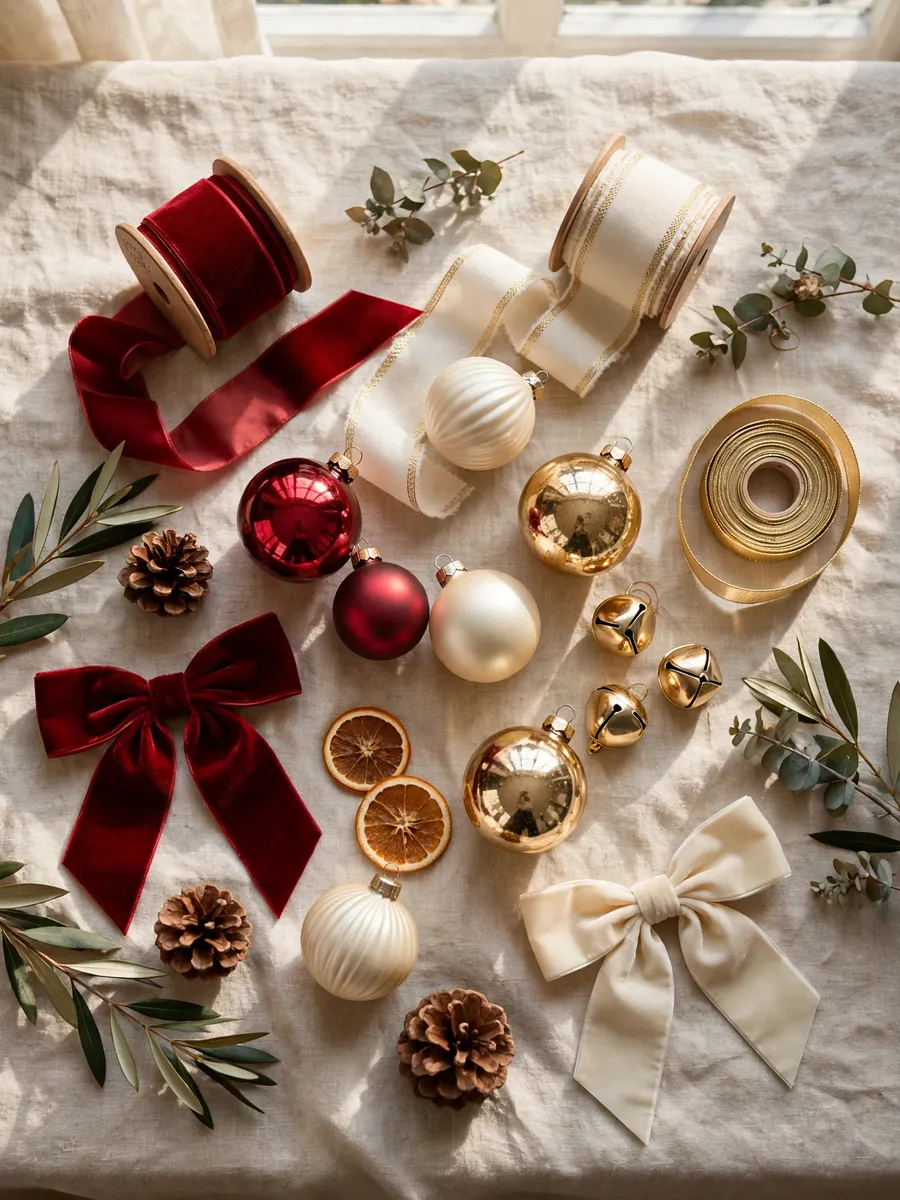
Lay your ribbon, three ornaments, and one pick side by side on a table before you start; if they look good together there, they will look good on the tree. A concrete example: deep red, forest green, and brushed gold makes a classic heritage tree, while sage, pearl white, and silver makes the calm 2026 sage and pearl look.
Quick tips
- Limit yourself to three colors — a fourth one usually turns the tree busy.
7. How Do You Put Ribbon on a Christmas Tree Like a Designer?
Use wired ribbon in vertical cascades: cut lengths from top to bottom, tuck the ribbon into branches every 8 to 12 inches, and let it fall in loose, gentle waves.
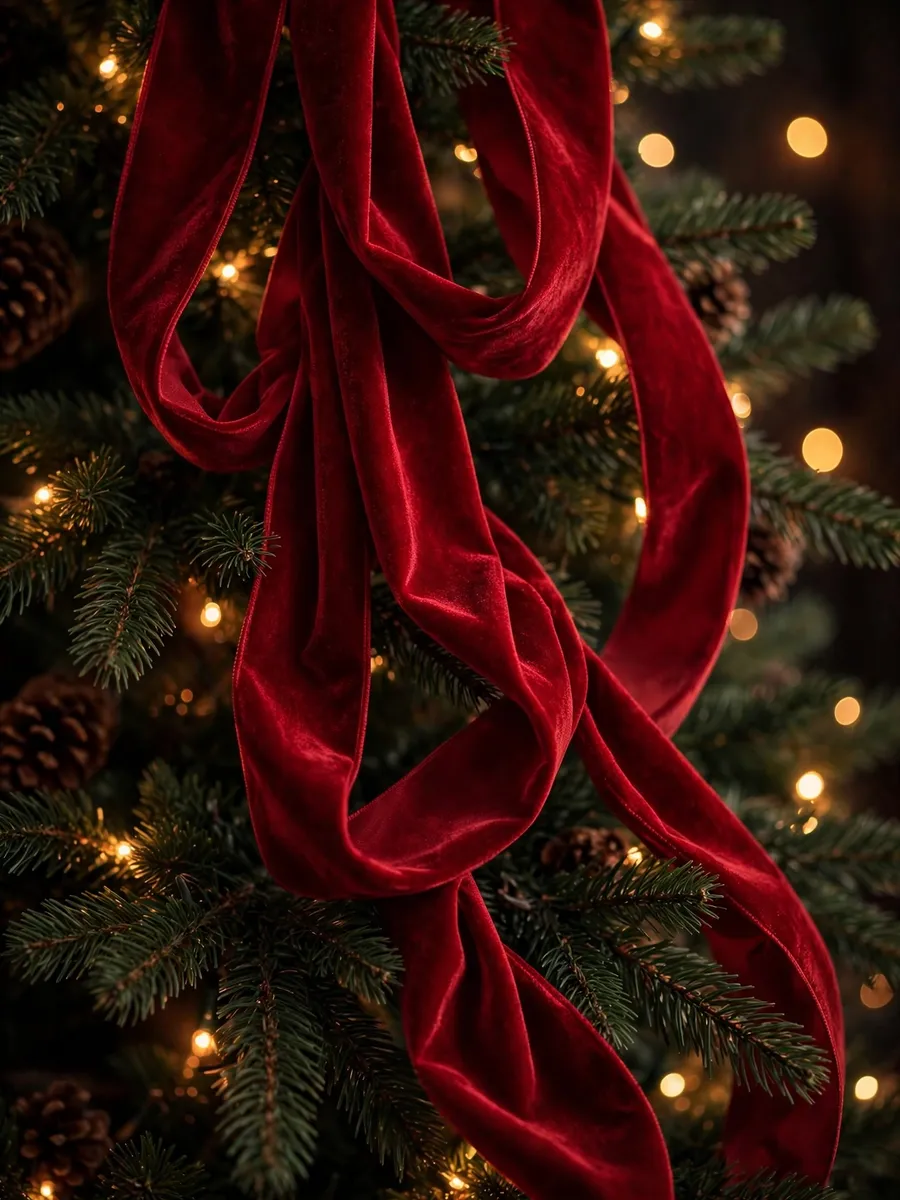
Wired ribbon holds its shape, so you can shape each cascade into soft billows instead of flat stripes. A concrete example: on a 7-foot tree, four cascades of 2.5-inch crimson velvet ribbon, each tucked in at four points, give the 2026 velvet-bow look without tying a single bow.
Quick tips
- Cut ribbon into separate lengths — one long spiral is harder to control.
8. How Do You Layer Garland Without Hiding the Lights?
Drape garland in loose swags after the lights, leaving gaps between each swag so light shows through, and weave some sections deeper into the branches.
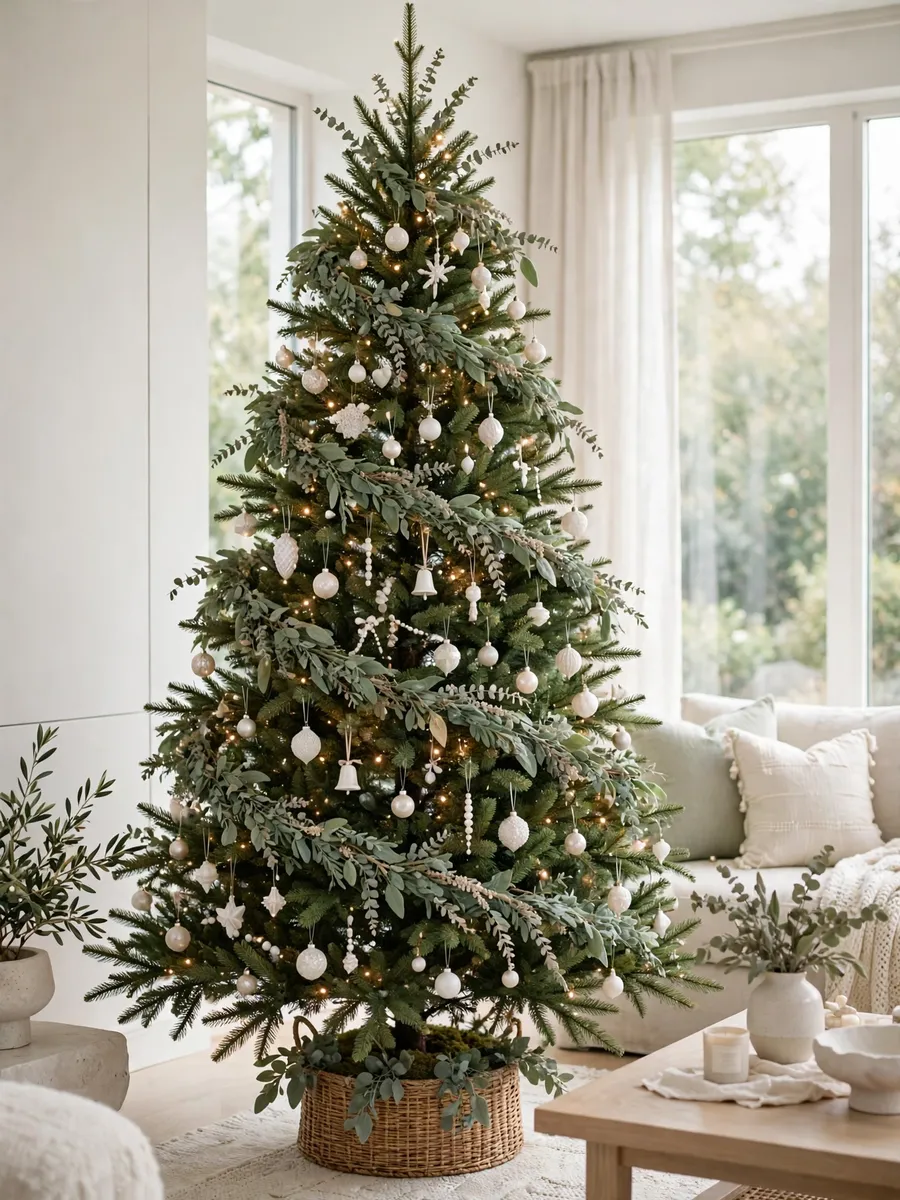
Start at the top and work down in a gentle spiral, resting the garland on branch tips rather than wrapping it tight. A concrete example: a sage beaded garland draped in three wide swags around a 7-foot tree adds soft color while the warm white lights still shine through the gaps.
Quick tips
- Use garland sparingly on a slim tree — heavy garland flattens its shape.
9. How Do You Hang Large Ornaments First for Depth?
Hang the largest ornaments first, placing them slightly inside the branches rather than on the tips, spaced evenly around the tree at different heights.
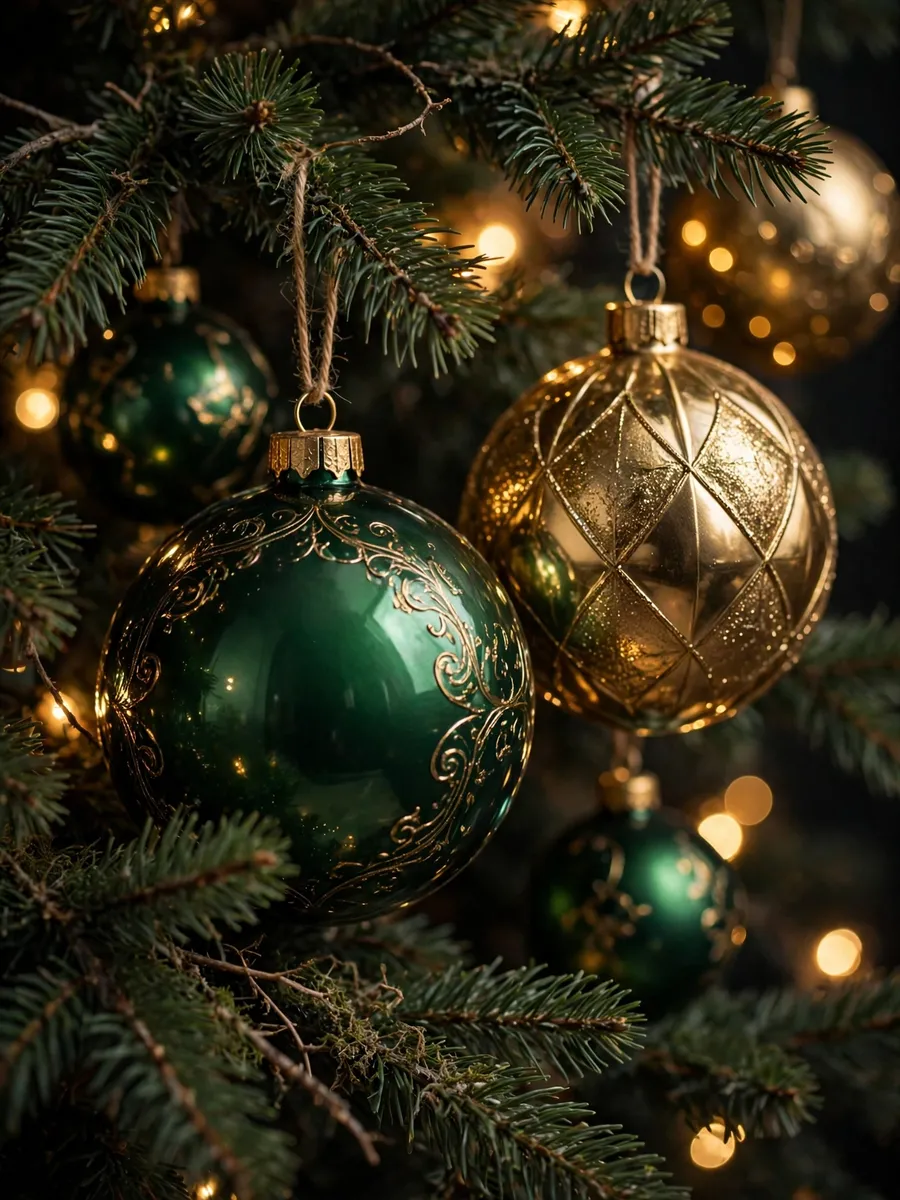
Large ornaments set the structure of the tree, so spread 12 to 18 of them — about three per foot of height — before anything smaller goes on. A concrete example: six large emerald baubles tucked deep into the middle branches of a 7-foot tree make it look twice as full, because the eye sees color at several depths.
Quick tips
- Use ornament hooks, not string, so heavy ornaments stay put.
10. How Do You Place Ornaments in Triangles for Balance?
Place matching ornaments in loose triangles — one high, one low on the opposite side, one in the middle — so the eye travels around the tree instead of landing on one cluster.
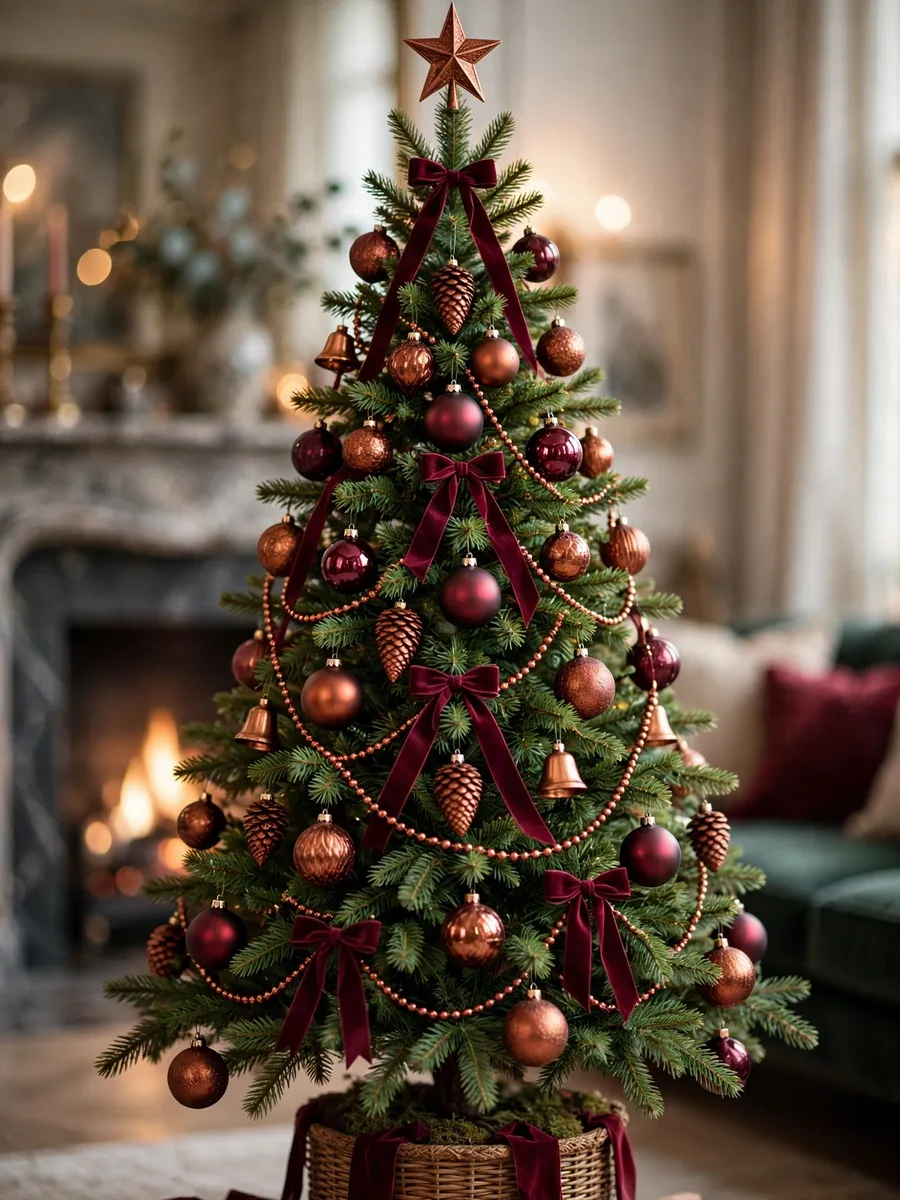
Pick your three most eye-catching ornaments and set them as the first triangle, then repeat the pattern with the next set. A concrete example: three burgundy glass baubles — one near the top left, one mid-right, one low left — balance a 7-foot tree so no side looks heavier.
Quick tips
- Step back after each triangle to check the balance before adding more.
11. How Do You Tuck Ornaments Deep Inside the Branches?
Push small and medium ornaments toward the trunk on short hooks, so color glows from inside the tree instead of sitting only on the outer tips.
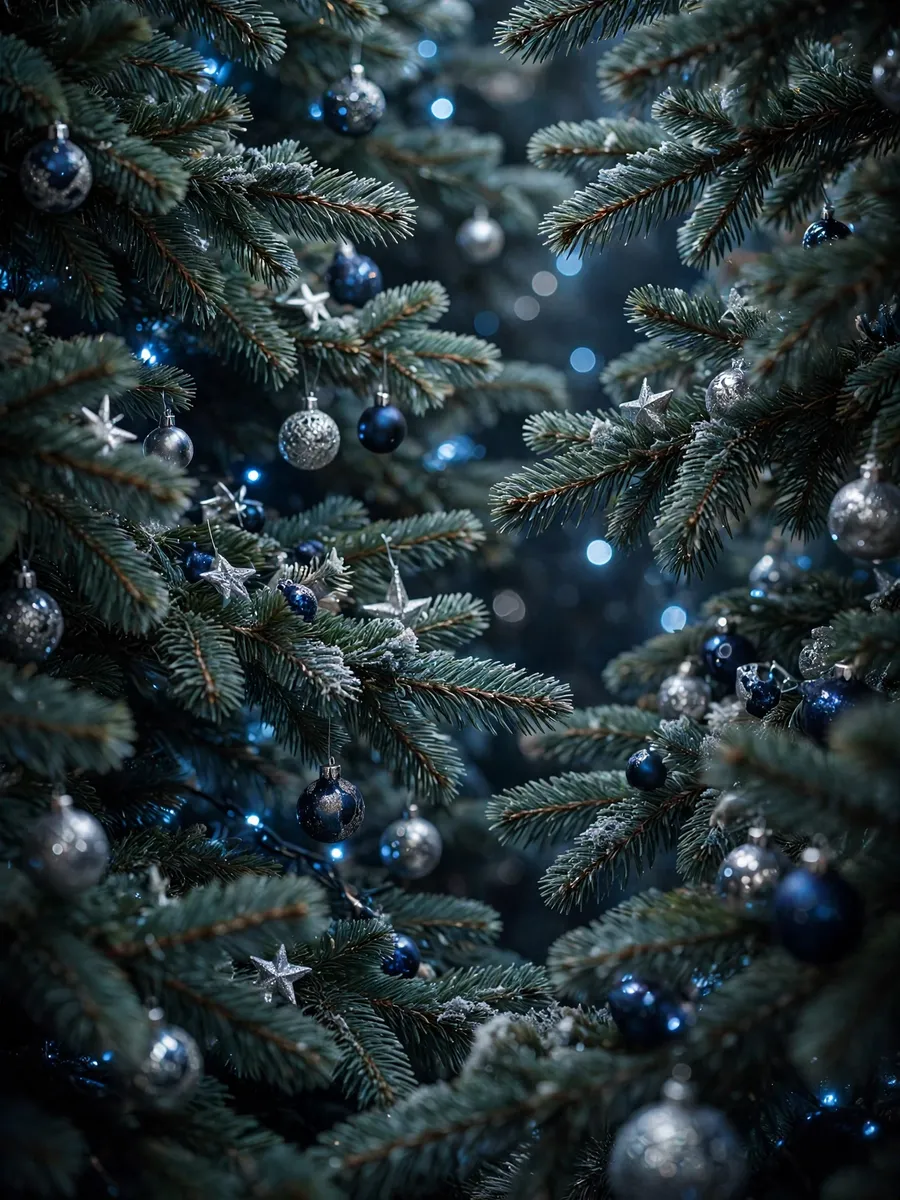
Interior ornaments are what make a tree look expensive: they catch the lights and create layers the eye can fall into. A concrete example: a dozen small silver balls tucked deep into a midnight-blue tree catch the warm lights and make the whole tree shimmer from across the room.
Quick tips
- Use short wire hooks so deep ornaments do not dangle out of place.
12. How Do You Mix Ornament Sizes for a Professional Look?
Mix three sizes in roughly this ratio per foot of height: 3 large, 7 medium, and 10 small ornaments, so the tree has rhythm instead of one flat layer of same-size balls.
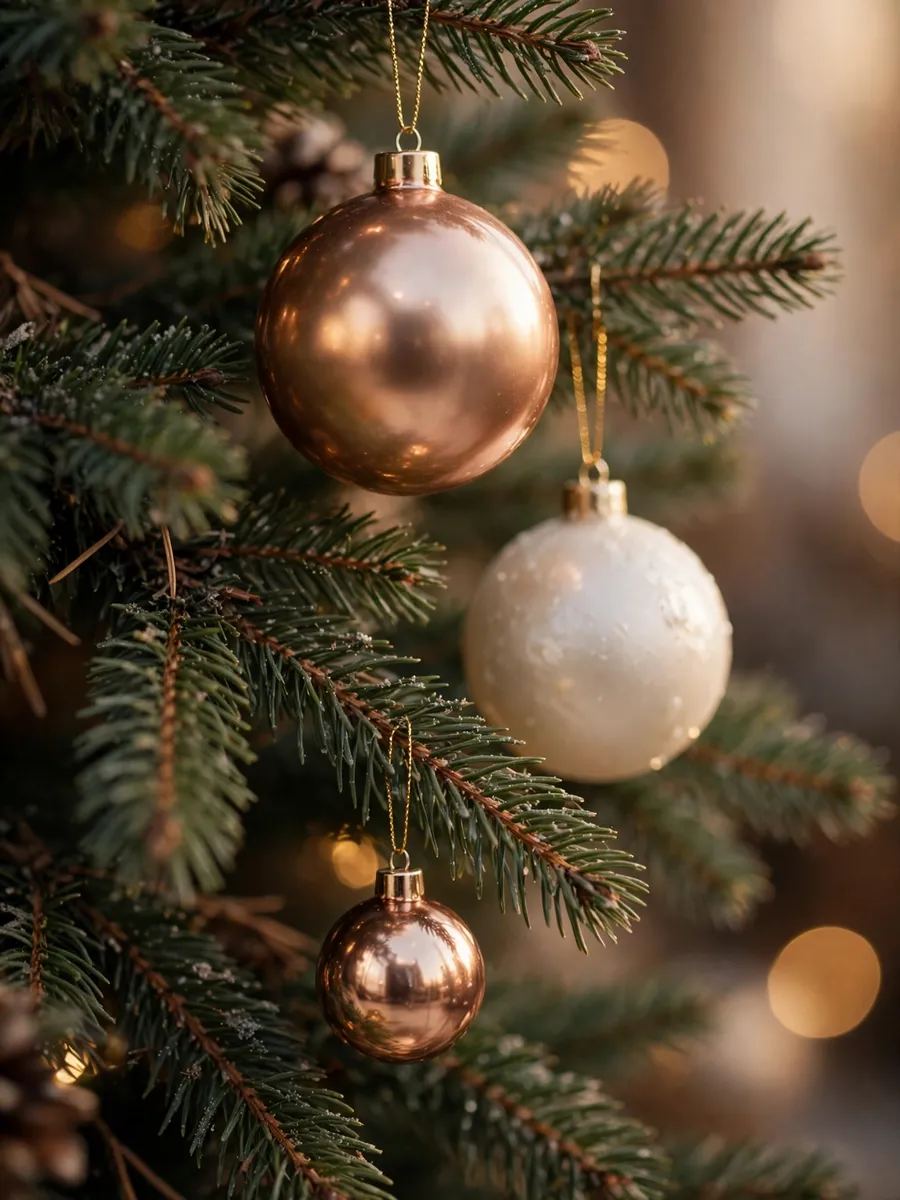
Large ornaments anchor the tree, medium ones fill the middle, and small ones sparkle at the tips. A concrete example: on a 6-foot tree, 18 large, 42 medium, and 60 small ornaments in rose gold and ivory fill every gap without any one size taking over.
Quick tips
- Buy ornaments in sets of mixed sizes to get the ratio right.
13. How Do You Add Velvet Bows for the 2026 Look?
Tie plush velvet bows in one color and clip them to branch tips throughout the tree, spacing them evenly so they read as a pattern, not a pile.
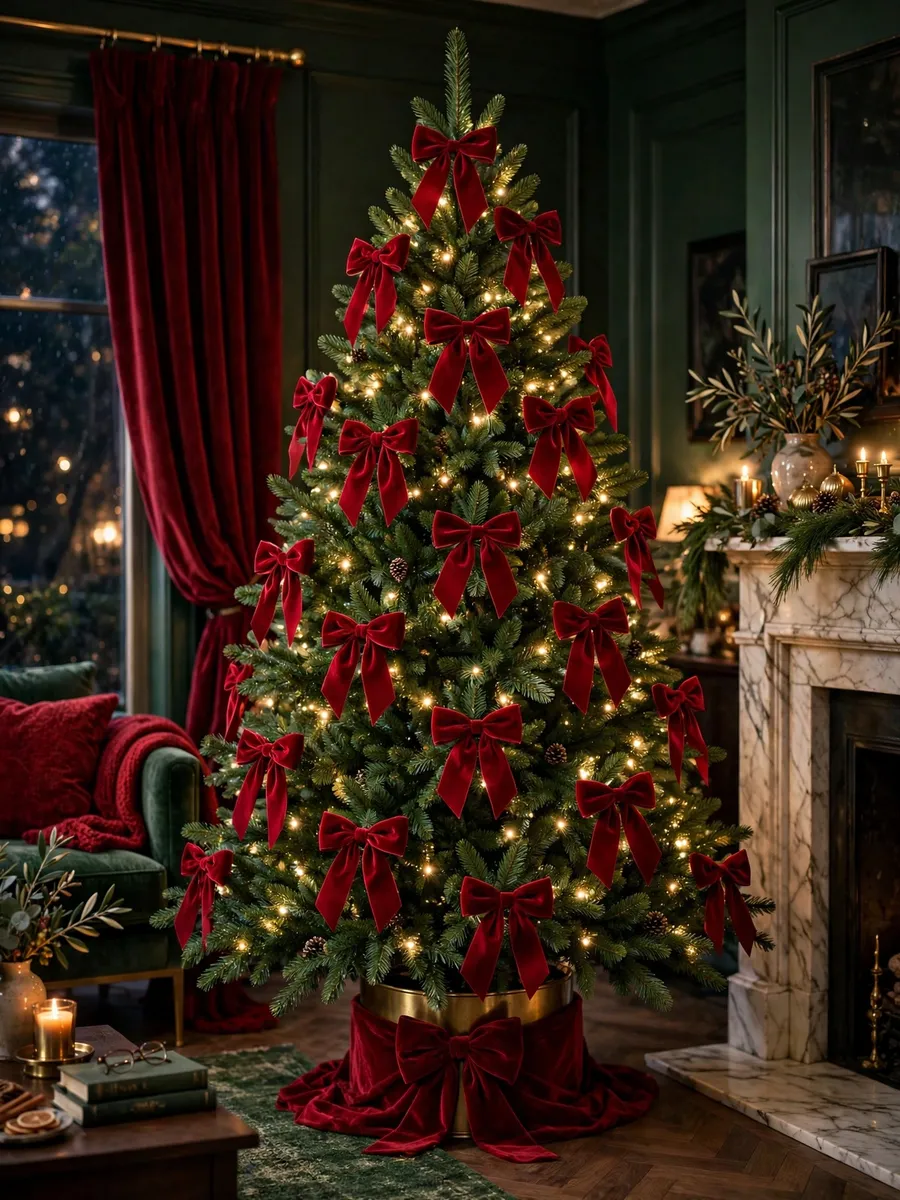
Velvet bows are the defining 2026 tree detail because the matte fabric contrasts with glossy baubles and warm lights. A concrete example: twelve crimson velvet bows, each about 4 inches wide, clipped to the branch tips of a green tree with gold baubles, give the whole tree a soft, tailored finish in fifteen minutes.
Quick tips
- Use pre-tied bows with wire backs for a neat, consistent shape.
14. How Do You Style a Heritage Red Christmas Tree?
Build a heritage red tree on deep red, forest green, and antique gold, with tartan ribbon, classic glass baubles, and a few brass or wooden ornaments for warmth.
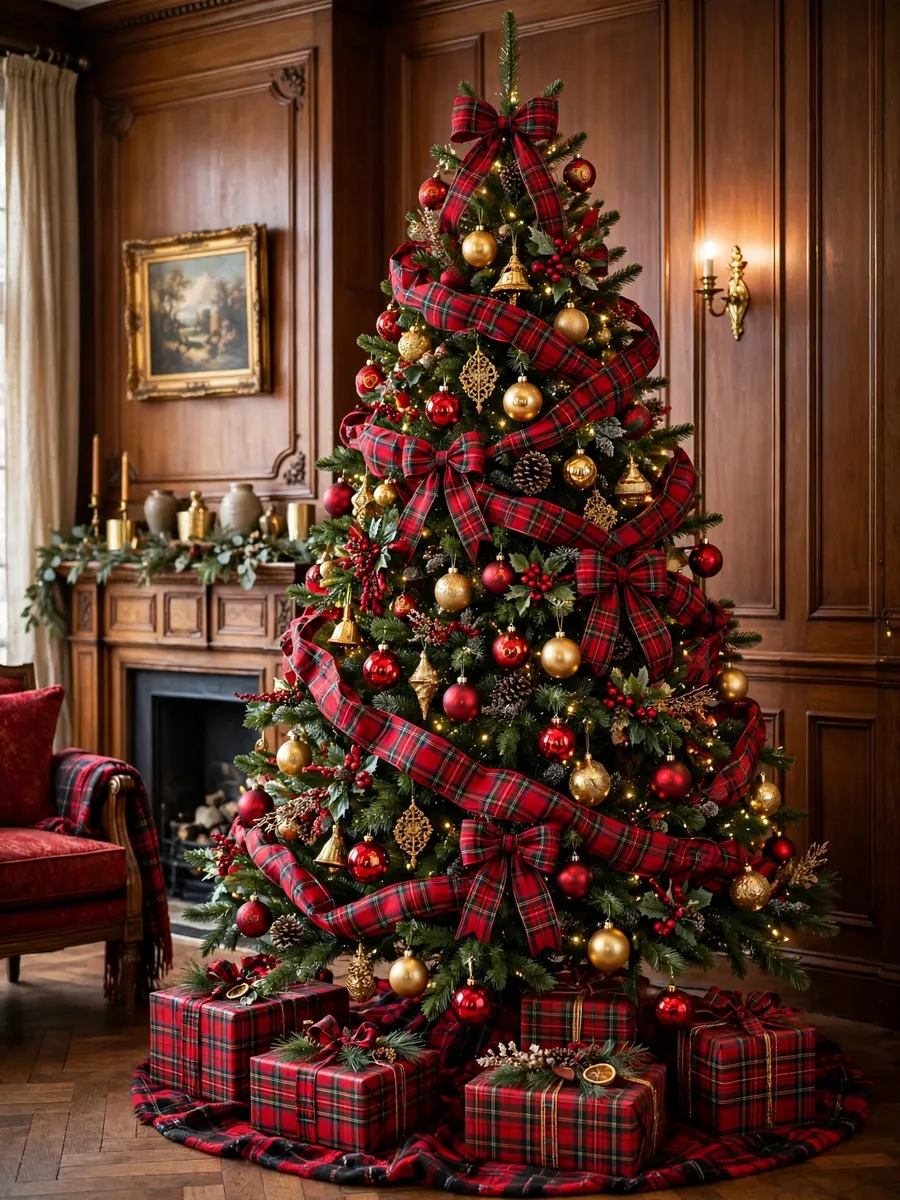
Heritage red works because it leans on traditional shapes — round baubles, a star topper, plaid — rather than novelty pieces. A concrete example: a red and tartan tree in a wood-paneled living room, with a brass star on top and a plaid skirt at the base, looks like it has been decorated that way for decades.
Quick tips
- Add one plaid element only — ribbon or skirt — so the pattern does not fight itself.
15. How Do You Create a Gingerbread Christmas Tree?
Decorate a gingerbread tree with warm browns, cream, and white — cookie ornaments, cinnamon sticks, candy canes, and faux icing details — over warm white lights.
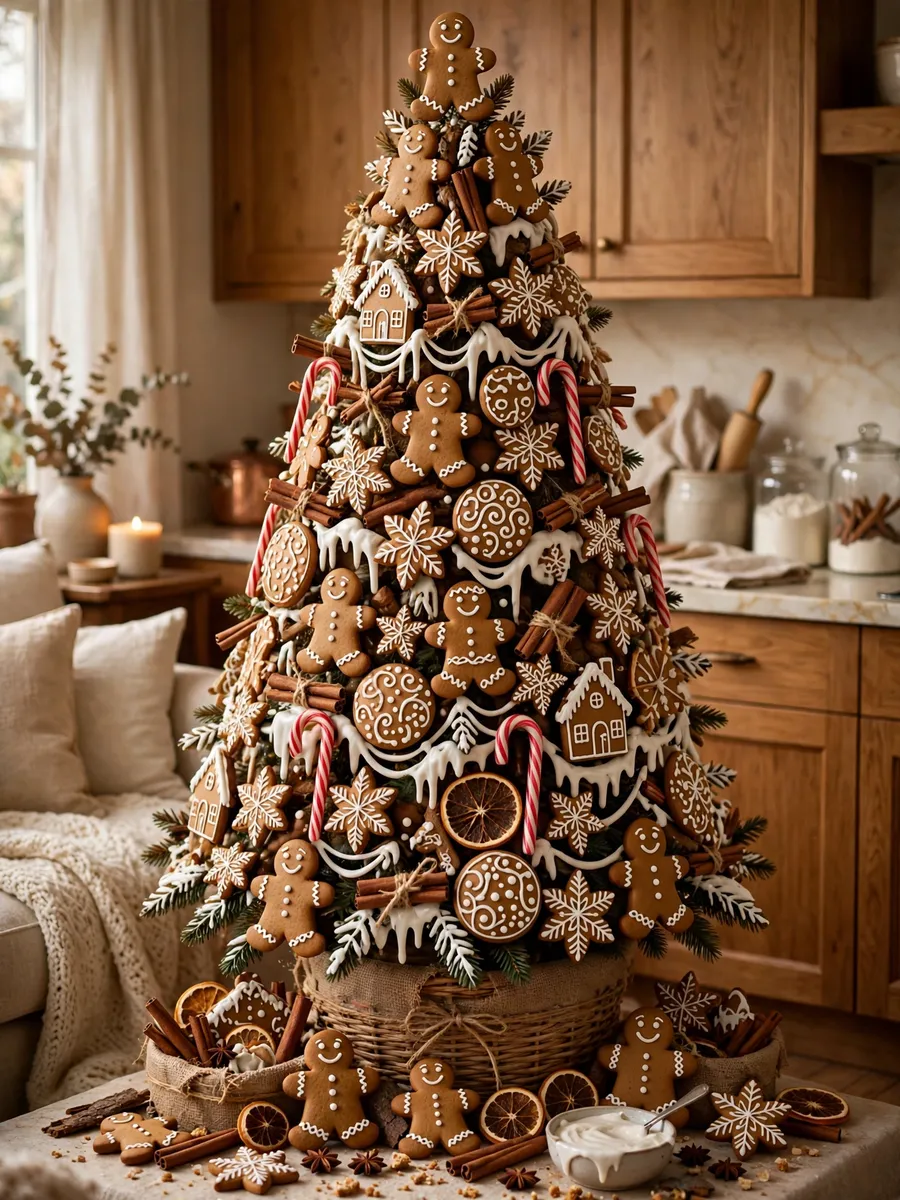
The gingerbread look comes from edible-looking details, so cluster cookie ornaments in groups of three and add striped candy canes for contrast. A concrete example: a tree dressed with gingerbread men, cinnamon stick bundles tied with twine, and cream pom-pom garland looks like a bakery window, especially beside a kitchen.
Quick tips
- Use shatterproof cookie ornaments low on the tree where kids can reach them.
16. How Do You Decorate a Sage and Pearl Christmas Tree?
Pair sage green ornaments and ribbon with pearl white baubles and soft silver, keeping every finish matte or satin so the tree stays calm and elegant.
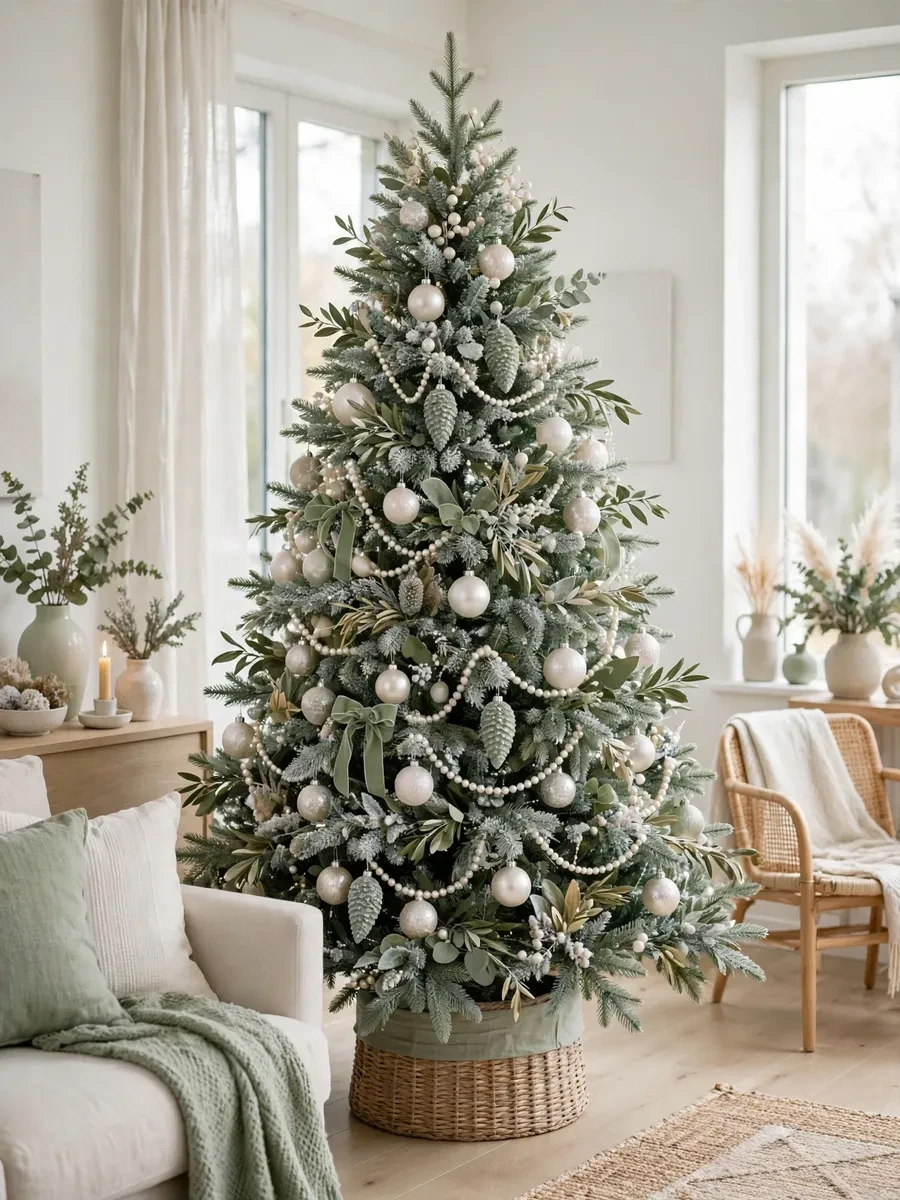
Sage and pearl is the quietest 2026 theme, so restraint is the whole technique — fewer ornaments, more breathing room, and soft light. A concrete example: a slim tree in a bright Scandinavian living room, dressed with sage baubles, pearl garland, and frosted eucalyptus picks, feels serene next to pale wood furniture.
Quick tips
- Skip glitter here — it breaks the soft, matte mood.
17. How Do You Build a Woodland Christmas Tree?
Layer natural textures — pinecones, wooden ornaments, dried orange slices, moss, and burlap ribbon — over warm lights, with no more than one metallic accent.
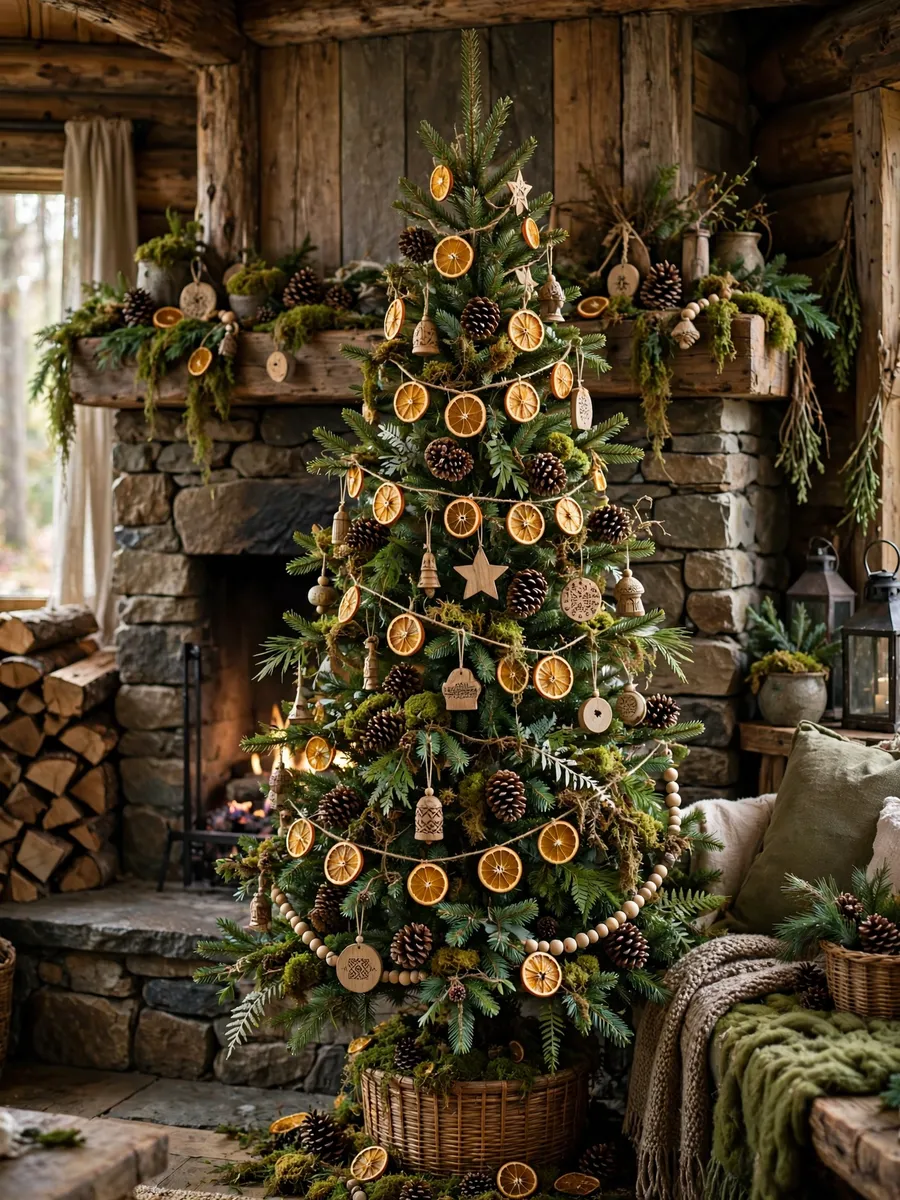
A woodland tree should look gathered, not bought, so mix handmade and natural pieces with a few store-bought anchors. A concrete example: a tree in a cabin living room with pinecone clusters, wooden stars, dried orange slices, and a burlap ribbon cascade looks right beside a stone fireplace.
Quick tips
- Wire pinecones to branches instead of gluing them — they hold better.
18. How Do You Add Picks, Berries and Greenery Sprays?
Push picks and sprays into bare spots at a slight upward angle, pointing outward like branches, so they fill gaps and add texture without flattening the tree.
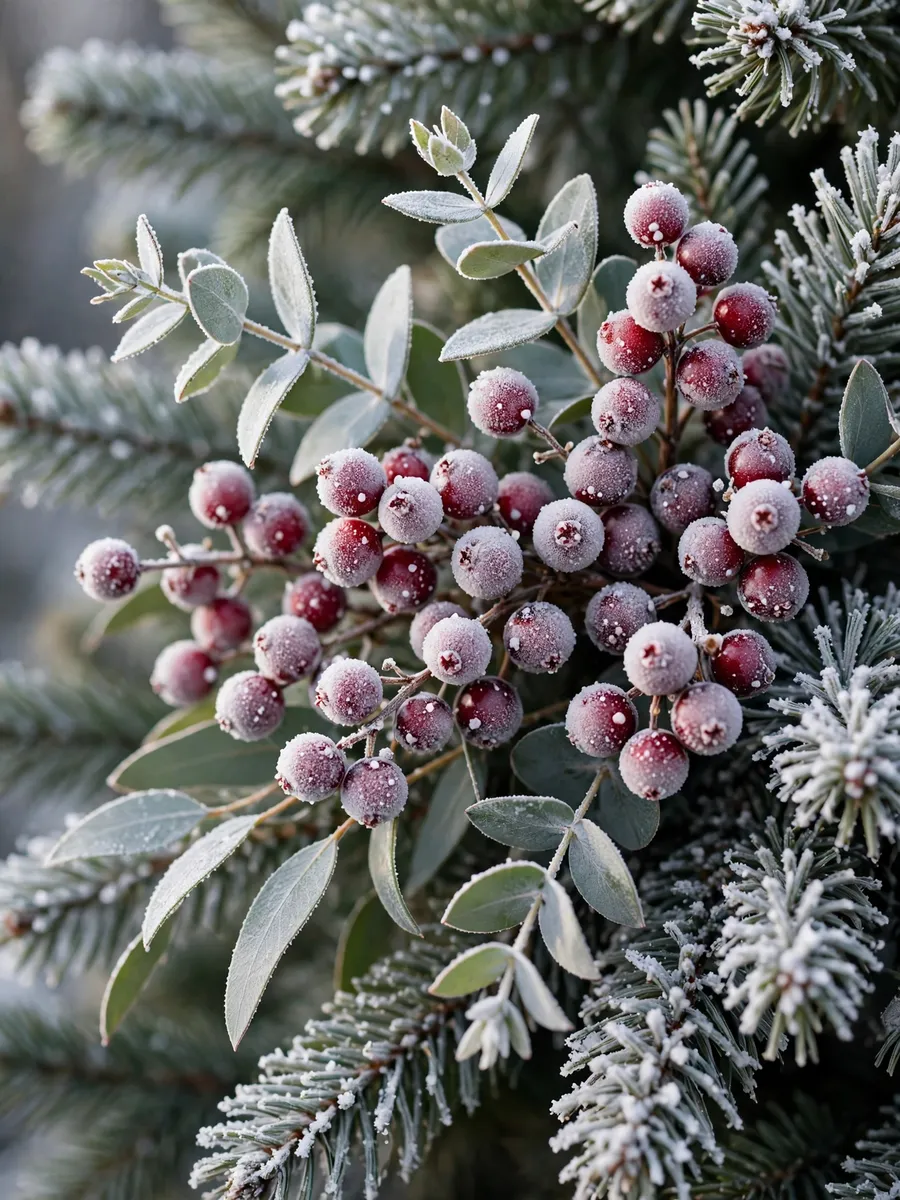
Picks are the fix for thin patches: one frosted berry spray can cover a gap that ten small ornaments cannot. A concrete example: three cranberry berry picks tucked into a bare patch on the lower right of a tree, with a eucalyptus spray above them, turn the tree’s weakest side into its prettiest.
Quick tips
- Use 6 to 12 picks for a subtle look, 12 to 24 for a styled, layered tree.
19. How Do You Place Heirloom Ornaments So They Stay Safe?
Hang heirloom ornaments at eye level on sturdy inner branches, using wire hooks looped twice, in spots where they are visible but out of reach of pets and small children.
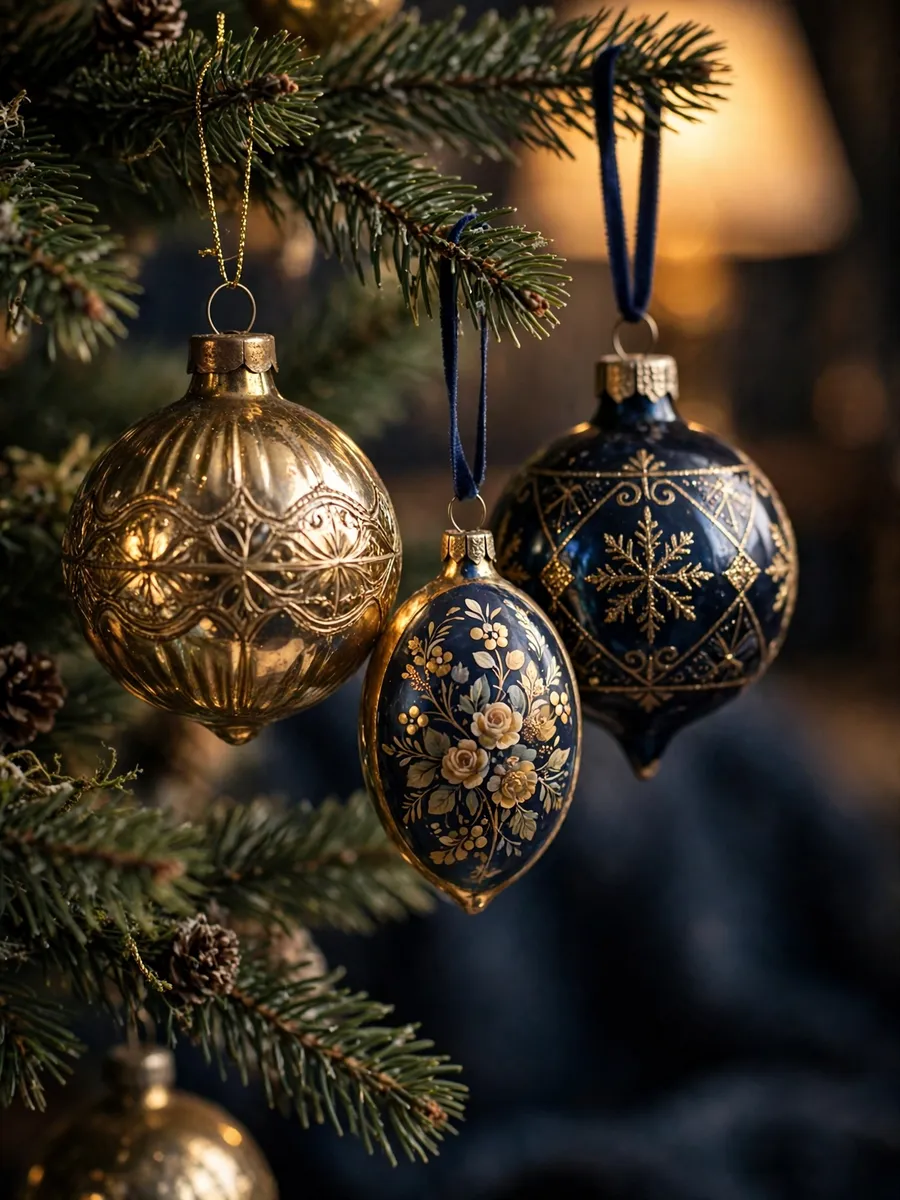
Sentimental pieces deserve the best seats on the tree — the front, at eye level — but also the safest branches. A concrete example: a hand-painted glass bauble from a grandmother, hung on a thick inner branch with a double-looped wire hook, sits where everyone sees it and no pet can reach it.
Quick tips
- Hang heirlooms last, after the tree is balanced, so they get the best spots.
20. How Do You Choose and Secure the Perfect Tree Topper?
Choose a topper that matches your color story and weighs less than the top branch can hold, then secure it with a wire tie to the trunk or a support rod.
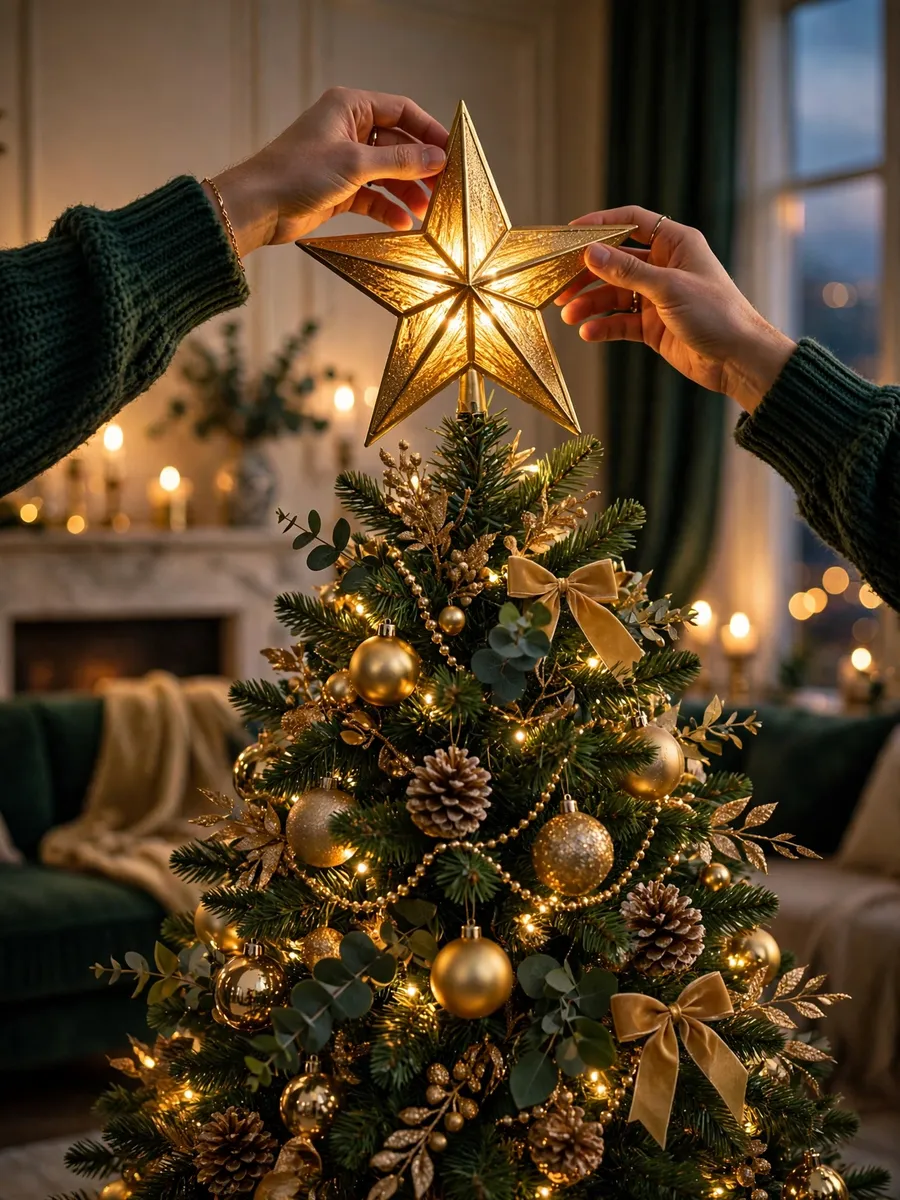
A topper placed before the final ornaments lets you balance the crown — put it on, step back, then adjust the ornaments around it. A concrete example: a large gold star wired to the top branch of a 7-foot tree, with the topmost baubles arranged just below it, crowns the tree without leaning.
Quick tips
- Measure your ceiling first — leave 6 to 12 inches above the topper.
21. How Do You Decorate a Small or Slim Christmas Tree?
Decorate a small or slim tree with fewer, smaller ornaments — about 10 ornaments per foot — lighter ribbon, and vertical cascades that follow its narrow shape.
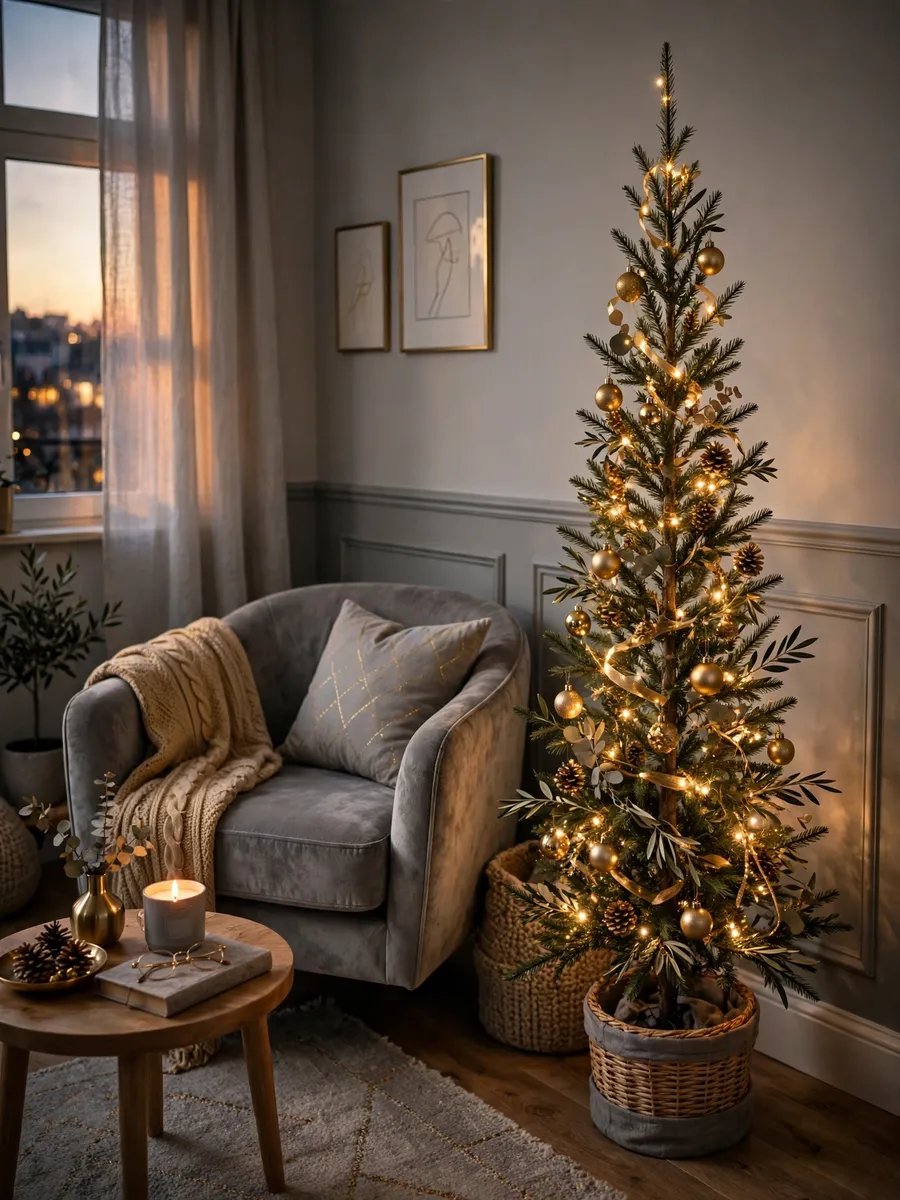
Slim trees need less of everything because their surface is smaller, so scale the quantities down by roughly half. A concrete example: a 6-foot pencil tree in a small apartment, dressed with 60 small gold and grey ornaments, one narrow ribbon cascade, and 350 lights, looks full without overwhelming the room.
Quick tips
- Skip garland on a pencil tree — it swallows the narrow silhouette.
22. How Do You Keep a Real Tree Fresh All Season?
Cut half an inch off the trunk before placing it in water, then keep the stand filled daily — a tree drinks about a quart of water per inch of trunk diameter.
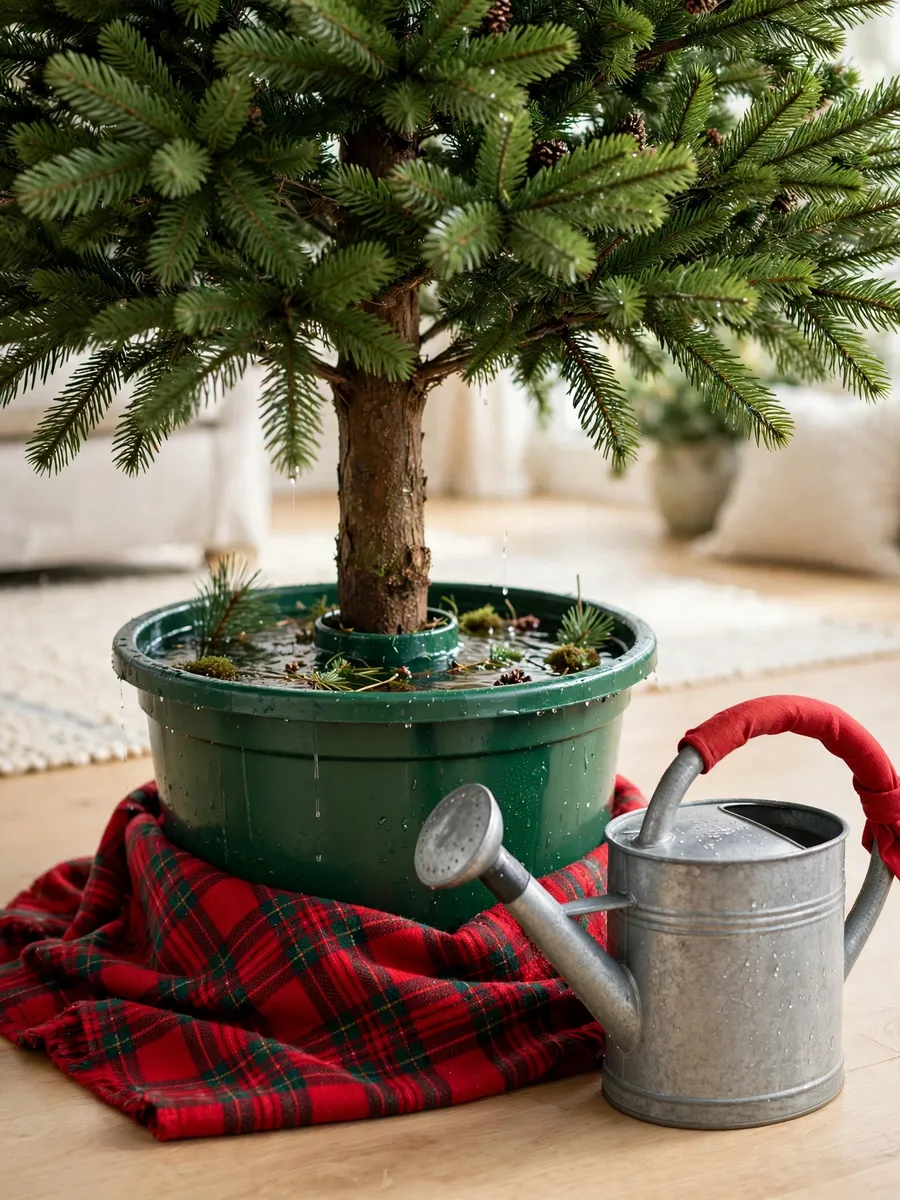
A fresh cut opens the trunk so it can drink, and daily water keeps the needles flexible and the branches strong enough to hold ornaments. A concrete example: a 7-foot Fraser fir in a water-holding stand, topped up every morning, stayed fresh and green from the first weekend of December through Christmas Day.
Quick tips
- Check the water every morning — a dry stand seals the trunk in hours.
23. How Do You Finish the Base with a Tree Skirt or Collar?
Cover the stand with a skirt or collar that is at least 6 inches wider than the tree’s base, choosing a fabric or material that matches your color story.
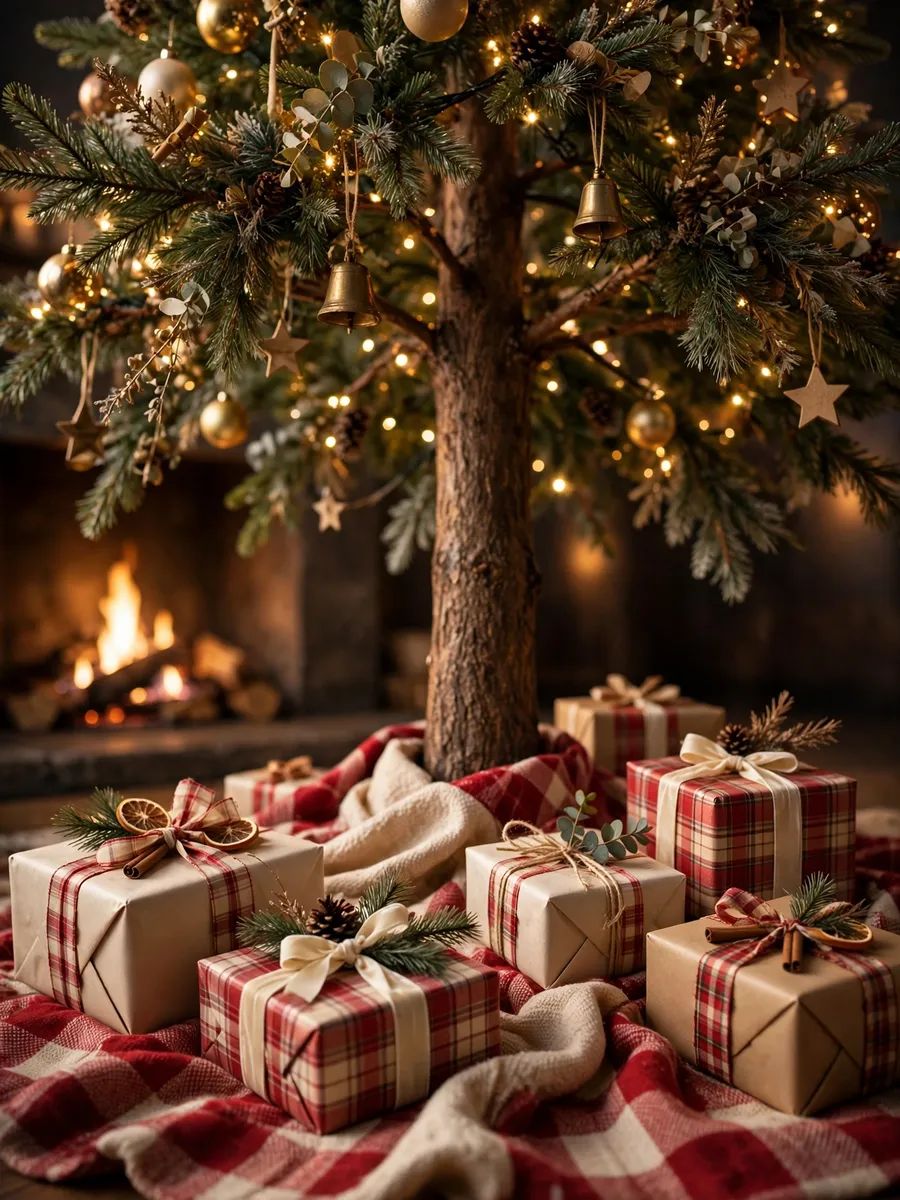
The base is the last thing to dress because you need the stand accessible while you decorate. A concrete example: a red and cream plaid skirt under a heritage red tree, with wrapped presents arranged in a loose ring on top, turns the stand from an eyesore into part of the display.
Quick tips
- A woven basket collar suits a woodland or rustic tree; a fabric skirt suits a classic one.
24. How Do You Style the Whole Room Around Your Tree?
Echo the tree’s color story in the room — a matching garland on the mantel, cushions in one tree color, and warm lamps — so the tree feels part of the room, not dropped into it.
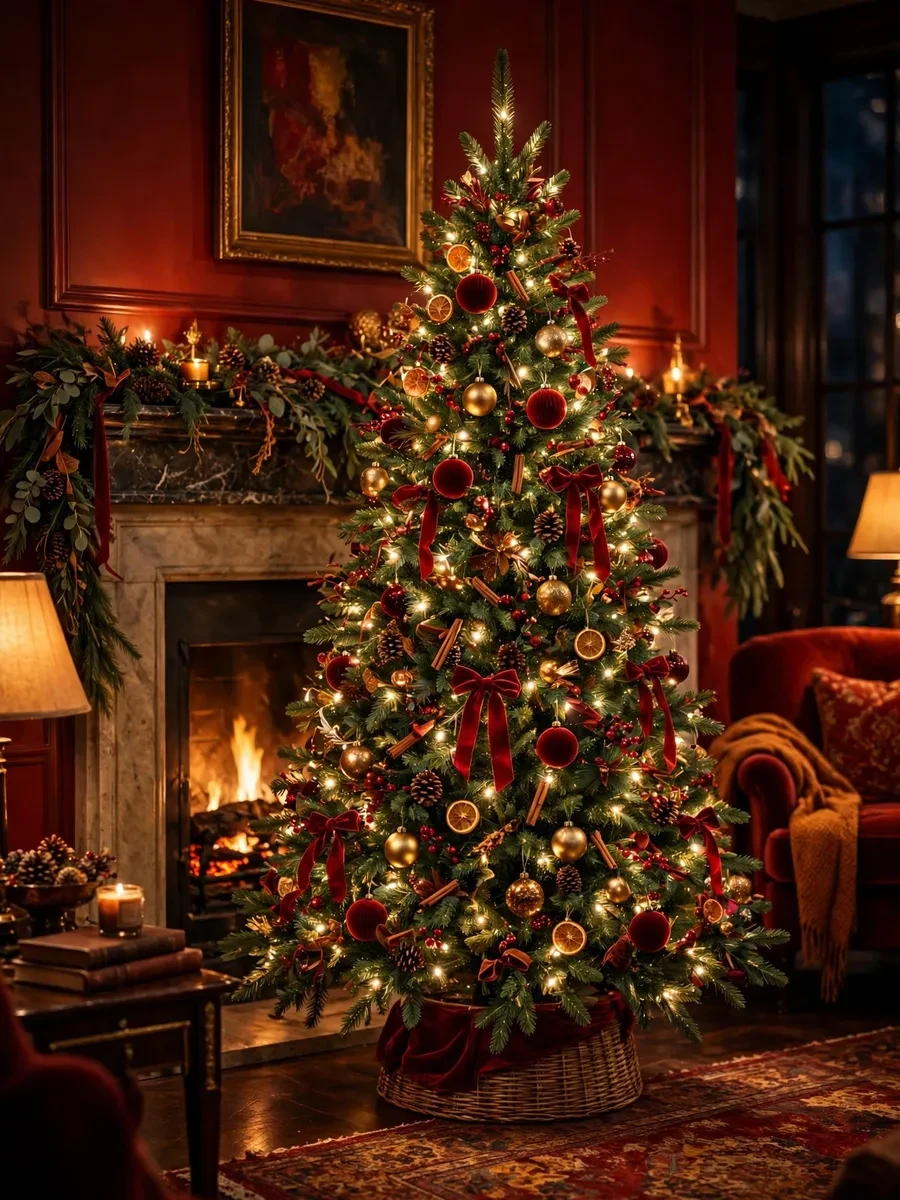
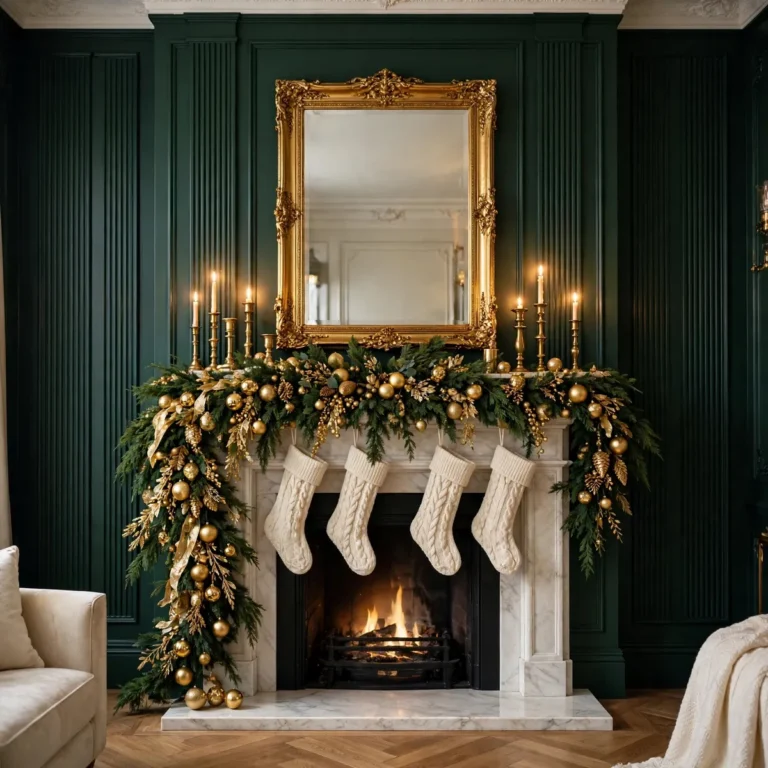
The tree is the centerpiece, so the room should support it with one or two repeats of its palette. A concrete example: a heritage red tree beside a fireplace dressed with the same red ribbon and greenery — these Christmas mantel decor ideas show how the mantel and tree can share one look — plus two red cushions on the sofa, ties the whole living room together.
Quick tips
- Repeat only one tree color in the room, not all three.
Christmas Tree Decorating Ideas: Frequently Asked Questions
What is the correct order to decorate a Christmas tree?
Fluff the branches, add lights, install ribbon or garland, hang ornaments from large to small, add picks, place the topper, and finish with a tree skirt or collar. Lights go on first so their wires hide inside the tree, and ribbon goes on before ornaments because it covers the largest areas.
Should ribbon go before ornaments?
Yes. Ribbon and garland generally go on before ornaments because they occupy larger portions of the tree, and it is much easier to weave ribbon through bare branches than around a tree already full of ornaments.
When putting lights on a Christmas tree, should you start at the top or the bottom?
Most decorators find it easier to start at the bottom and work up, weaving lights from the trunk out to the branch tips and back. Starting at the top also works if the plug end finishes at the outlet — the key is working in vertical sections, not spiraling around the outside.
How many lights do I need for a Christmas tree?
Plan on about 100 lights per foot of tree height for a classic look — 600 for a 6-foot tree and 700 for a 7-foot tree. For a brighter, designer glow, go to 150 per foot.
How many ornaments do I need for a Christmas tree?
Plan on 10 to 20 ornaments per foot of height, depending on their size and how full you like the tree. A 6-foot tree needs roughly 60 to 120 ornaments, a 7.5-foot tree about 75 to 150, and a 9-foot tree 350 to 450.
How do you make a Christmas tree look fuller?
Fluff and separate every branch to create volume, weave lights deep into the interior for depth, hang large ornaments inside the branches, and fill gaps with picks and greenery. A 7.5-foot tree should have at least 1,000 to 1,400 tips to look convincingly full.
Conclusion
A beautiful Christmas tree is not about buying more ornaments — it is about decorating in the right order. Fluff first, light from the inside out, ribbon before ornaments, large pieces deep and small ones at the tips, and finish with a topper and a skirt. Use these 24 Christmas tree decorating ideas step by step, pick a 2026 theme that suits your home, and your tree will look like a designer decorated it.