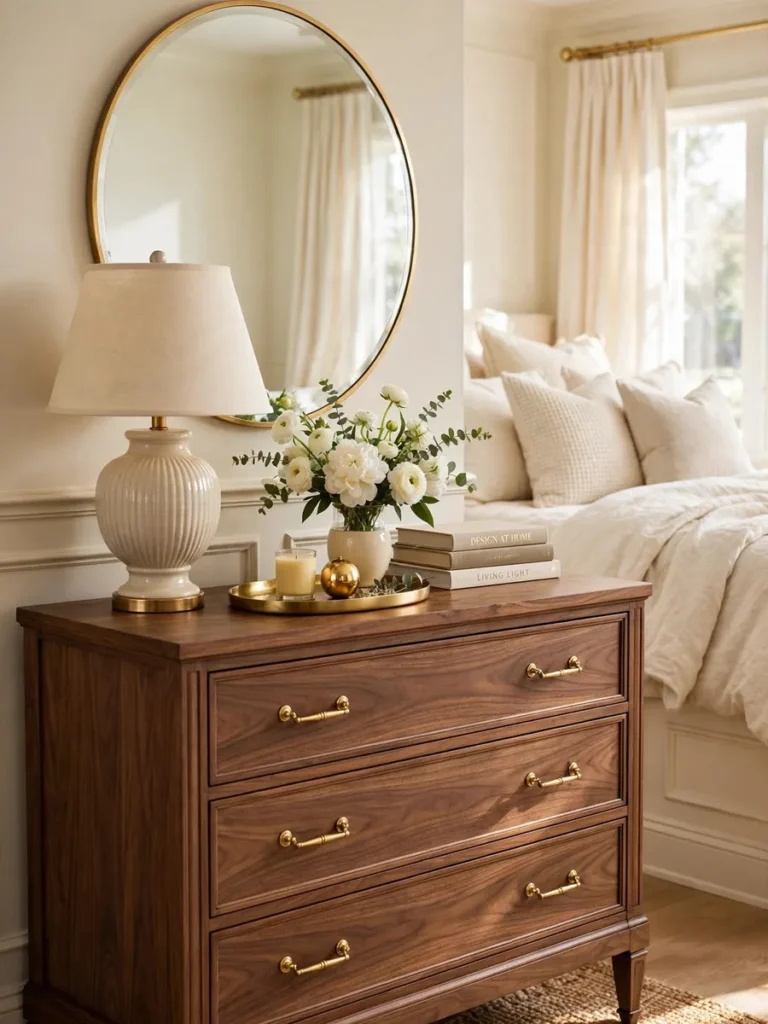
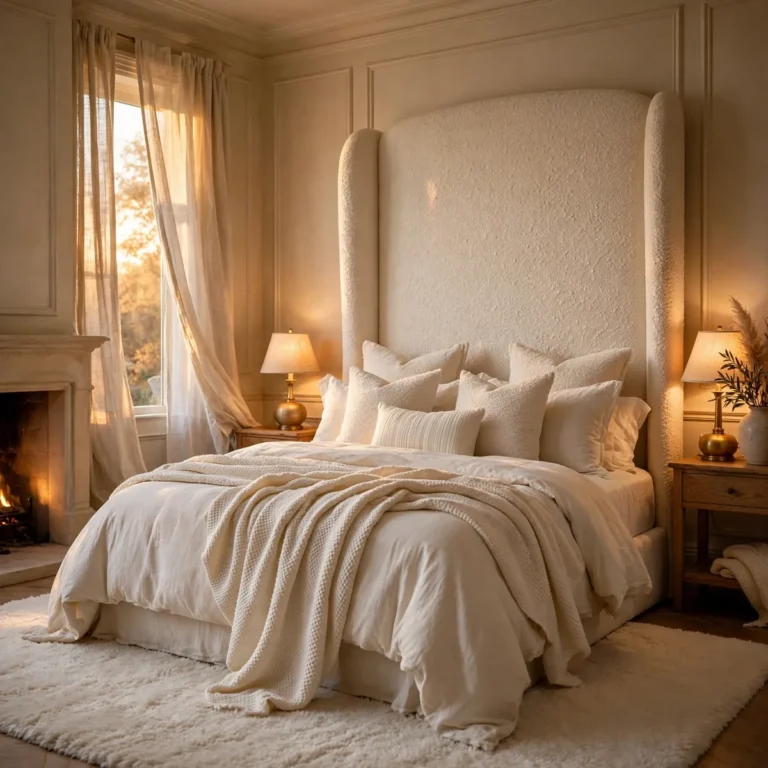
24 Coastal Bedroom Ideas for a Breezy Seaside Retreat
A coastal bedroom works when it feels like the shore on a calm morning — light, airy, and a little bit sun-bleached. The best coastal bedroom ideas skip the themed souvenirs and lean on the things the coast actually gives you: pale wood, soft linen, woven textures, and colors borrowed from sand, sea, and sky. Whether your bedroom faces the ocean or a city street, the same approach works. Start with a light base, add one or two ocean colors, and let natural materials do the decorating. A shiplap or limewash wall can set the tone fast, and if you want more wall inspiration, these bedroom accent wall ideas pair well with the pale, textured finishes below.
This guide starts with the colors and materials that make the look feel real, compares the three coastal styles worth knowing, and then walks through 24 ideas you can use one at a time.
Key Takeaways
What makes a coastal bedroom feel like the coast instead of a beach theme?
Natural materials and a restrained palette do the work. Pale wood, linen, rattan, and jute create the feeling, while one ocean color ties the room together. Skip shell mirrors, script signs, and anything that spells out the theme.
What is the easiest way to start?
Change the bedding first. White or pale blue washed linen, two textured cushions, and a light throw will shift the whole room before you touch a wall.
Which coastal style is best for a small bedroom?
Modern neutral coastal, because it uses the fewest colors and the least visual clutter. A pale base, one accent color, and woven textures keep a small room feeling open instead of crowded.
Can a coastal bedroom still feel warm in winter?
Yes. Layer a wool throw over linen bedding, add a warm wood nightstand, and use warm lighting. The palette stays pale, but the textures get heavier and the light gets warmer.
What Colors Define a Coastal Bedroom?
Ocean blue, sandy beige, and crisp white define a coastal bedroom, with sea-glass green and soft grey as supporting tones. One deep color anchors the room, while pale neutrals keep it light and airy.
The palette works because it copies the shore directly. White stands in for bright sand and sun-bleached wood, sandy beige warms the floor and the bedding, and blue carries the water and the sky. Sea-glass green and soft grey sit between the two, so they are useful when blue feels too strong or white feels too cold. Keep it simple: about two-thirds pale, one-third mid-tone, and a small touch of the deepest color.
Where people go wrong is adding too many colors at once. A navy wall, a teal throw, aqua cushions, and a coral vase all fight each other, and the room stops feeling calm. Choose one ocean color per room and let the neutrals repeat it in lighter and darker versions. If you love both blue and green, pick a blue-green like sea-glass as the single accent and build everything else around it.
Which Materials Make a Coastal Bedroom Feel Authentic?
Linen, rattan, jute, pale wood, and weathered driftwood make a coastal bedroom feel authentic, because each one looks and feels like something found near the sea. Smooth, shiny, or plastic surfaces break the spell.
Start with the bed. Washed linen bedding wrinkles softly and breathes well, which is exactly the relaxed look the style needs. Under it, a jute or seagrass rug adds texture underfoot without a pattern fighting the bedding. Rattan works best in one or two pieces, because too much turns the room into a basket. Pale woods like white oak and ash keep the room bright, while a single driftwood-toned piece adds age and character.
| Style | Palette | Materials | Mood |
|---|---|---|---|
| Classic coastal | Navy, crisp white, natural sand | Shiplap, rope details, striped cotton | Fresh, breezy, nautical |
| Coastal grandmother | Soft blue, cream, pale sage | Slipcovered linen, gingham, porcelain | Soft, elegant, lived-in |
| Modern neutral coastal | Warm greige, ivory, pale oak | Bouclé, matte wood, plain linen | Calm, minimal, refined |
Classic coastal is the most traditional, and it suits a room with strong light. Coastal grandmother is softer and more layered, with slipcovers and vintage-style pieces that make the room feel collected over time. Modern neutral coastal is the quietest option, and it is the best choice when you want the coast as a feeling rather than a look. Whichever you choose, keep the materials honest — real linen, real wood, real woven fibers — because the style falls apart the moment a material looks fake.
How Do You Keep a Coastal Bedroom From Looking Like a Theme?
Keep a coastal bedroom from looking like a theme by using restraint: one ocean reference per room, natural materials instead of souvenirs, and colors taken from sand and sea rather than from a gift shop.
The 2026 direction is clear — the coast as a feeling, not a theme. That means no shell mirrors, no script signs, and no anchors, starfish, or sailboats arranged on a shelf. A single oversized ocean photograph counts as art, because it shows the sea instead of spelling it out. The same rule applies to color. A deep navy wall is a design choice. A navy wall plus striped everything plus a rope mirror is a costume.
Restraint also saves money, because the best coastal bedroom ideas for a tight budget are the quiet ones. A limewash finish on one wall, a linen duvet, and a woven basket cost less than a shelf full of themed objects and look better for longer. When you are tempted to add one more coastal object, ask whether the room would still read as coastal without it. If the answer is yes, leave the object out.
1. Whitewashed Shiplap Walls
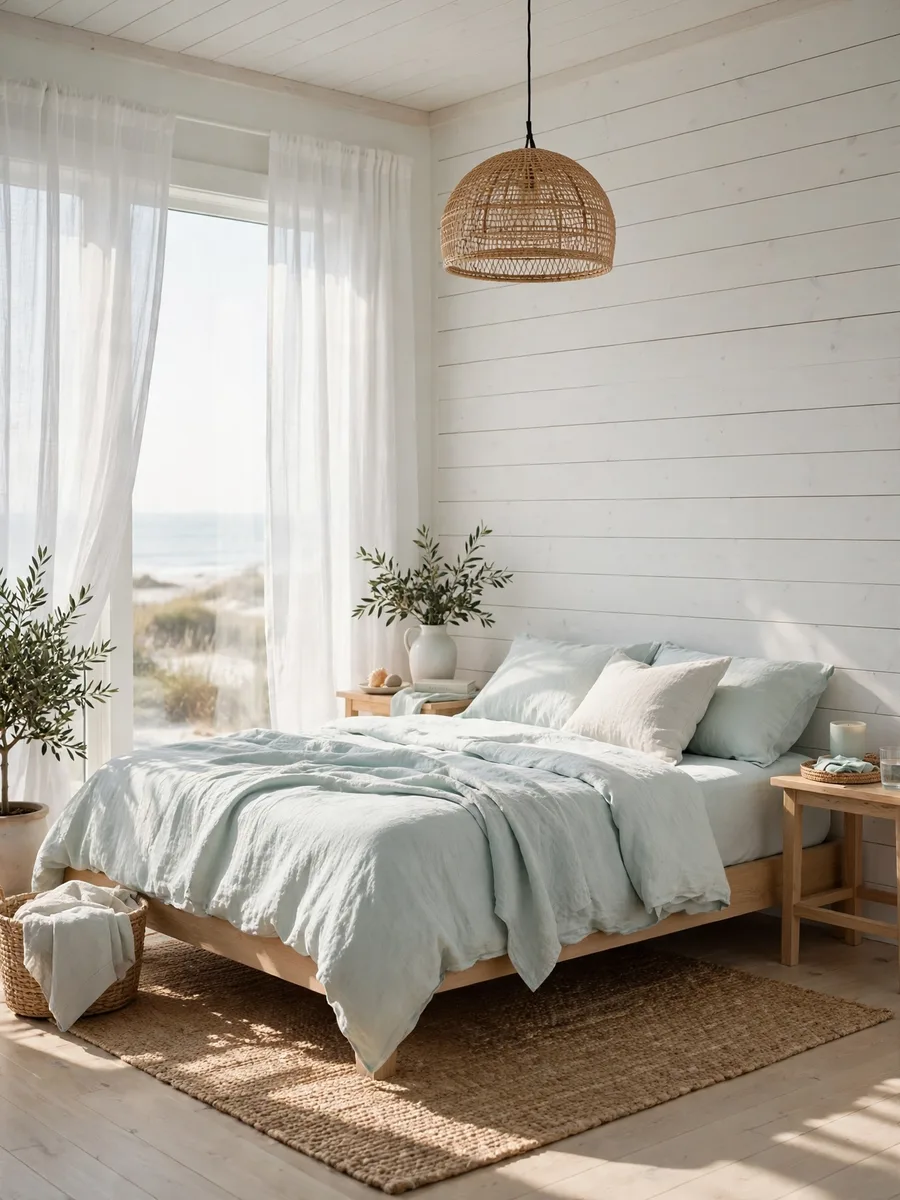
Whitewashed shiplap gives a bedroom a coastal base. The horizontal boards add texture without pattern, and the whitewash lets the wood grain show through, so the wall feels warm instead of flat. Paint it a soft white with a hint of grey, then keep the bedding pale aqua linen and the floor light wood so the wall stays the focus.
Quick tips:
- Run the shiplap behind the bed only if a full room feels like too much.
- Choose a matte finish so the boards look sun-bleached, not glossy.
2. A Deep Ocean-Blue Accent Wall
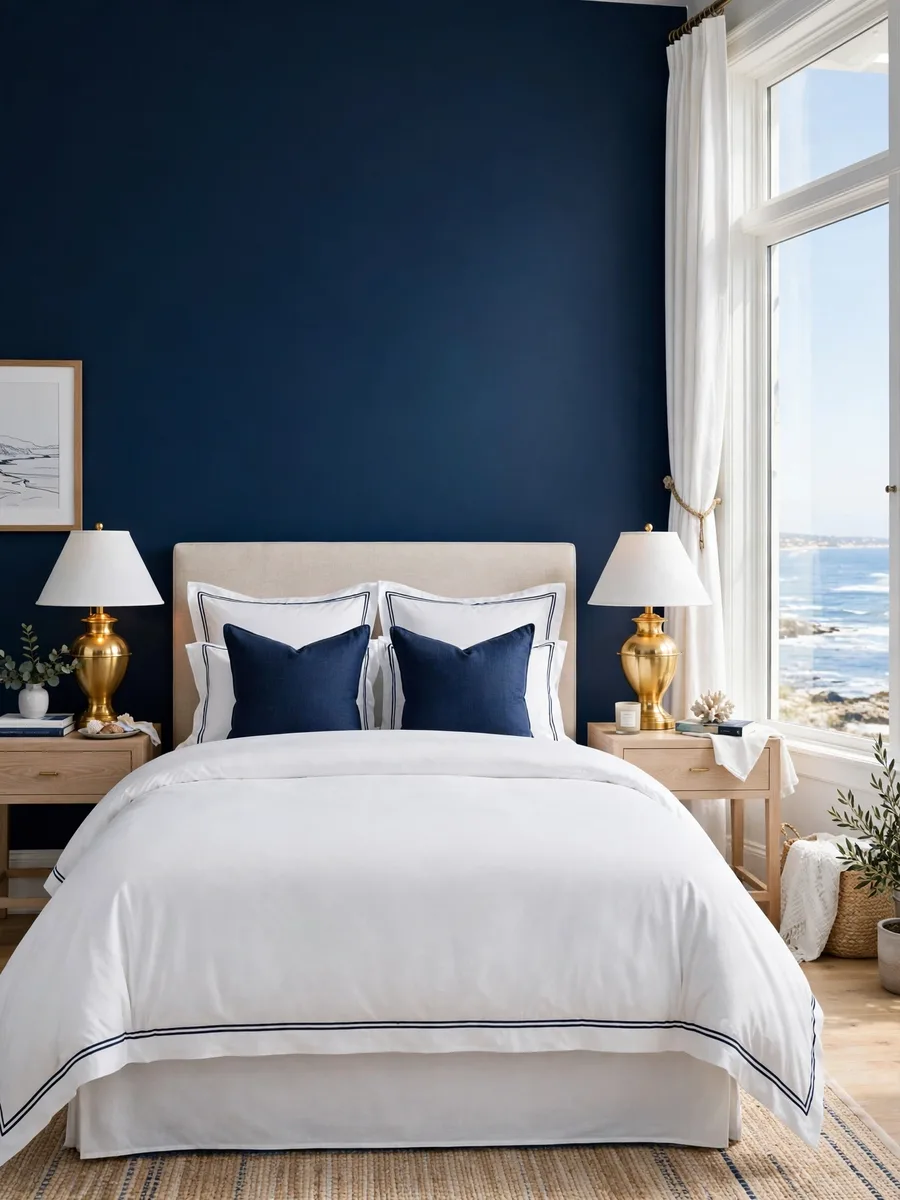
One deep blue wall behind the bed gives the room depth. A shade like navy or deep ocean blue works like a headboard, framing the bed and making white bedding look even crisper. Brass bedside lamps and a pale oak nightstand keep the blue calm and grown-up.
Quick tips:
- Paint only the wall behind the bed and keep the rest white.
- Repeat the blue in two small places, like cushion piping and a throw.
- Use warm lamp light so the blue does not turn cold at night.
3. Sandy Beige and Cream Bedding
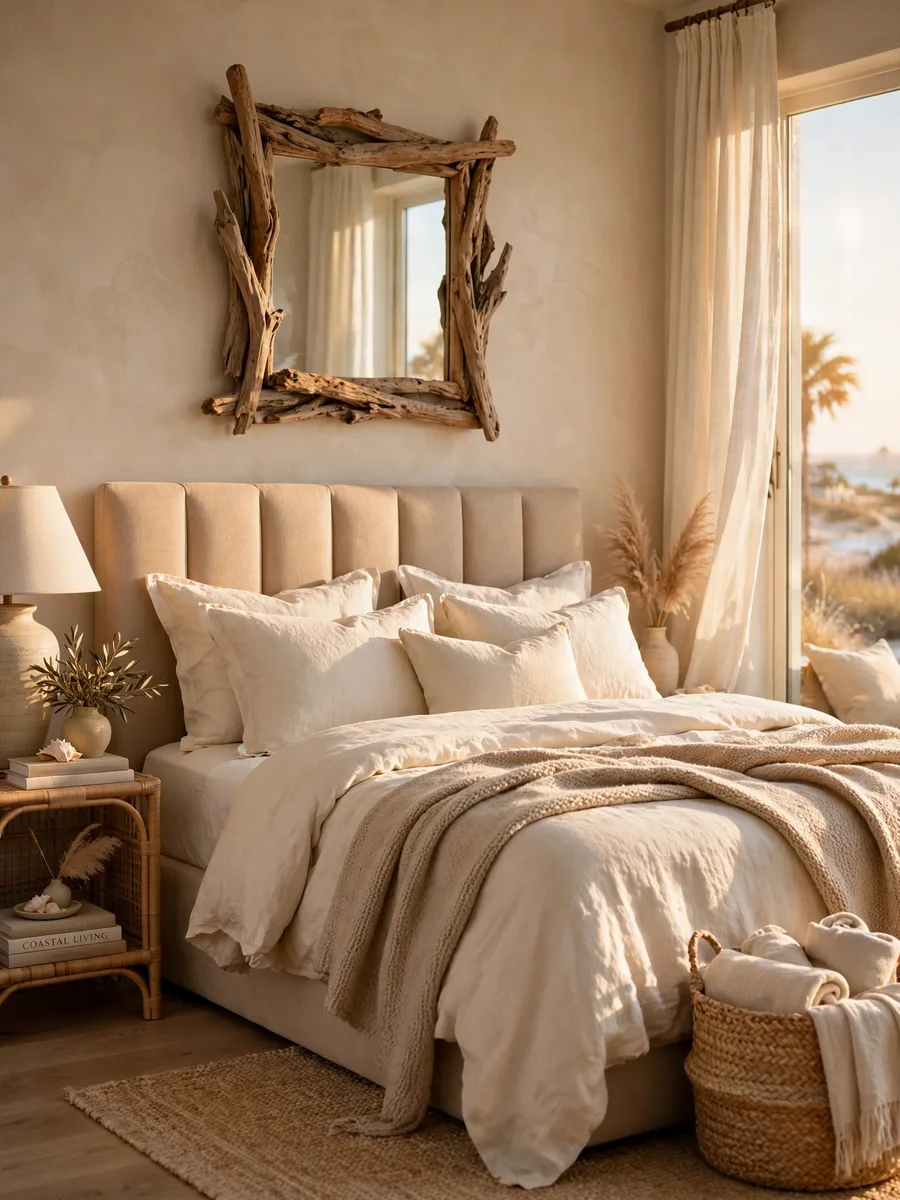
Sandy beige and cream bedding makes the bed feel like a dune at sunrise. A sand-colored headboard grounds the look, while cream linen sheets and a beige wool throw keep it soft. A driftwood-framed mirror opposite the window bounces the afternoon light around.
Quick tips:
- Mix two beige tones so the bed does not look flat.
- Pick a wool or cotton throw instead of a shiny one.
4. A Rattan Cane Headboard
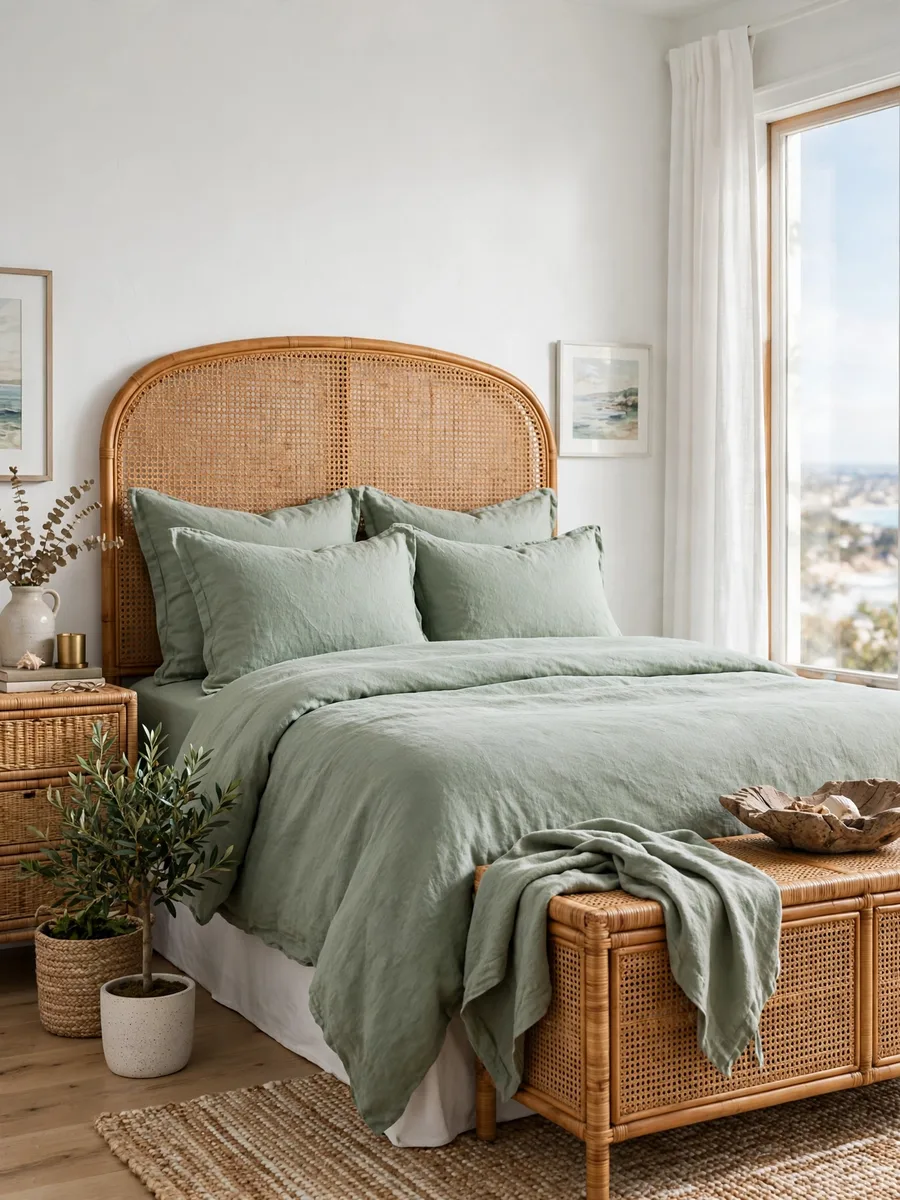
A rattan cane headboard adds the woven texture a coastal room needs, in a single piece. The honey-toned cane looks best against white walls with sage green linen bedding, which softens the rattan and keeps it from feeling too yellow. A woven bench at the foot of the bed echoes the headboard.
Quick tips:
- Let the headboard be the only large rattan piece in the room.
- Pair it with plain linen so the weave stays visible.
- Dust the cane with a soft brush to keep it looking fresh.
5. Weathered Driftwood Furniture
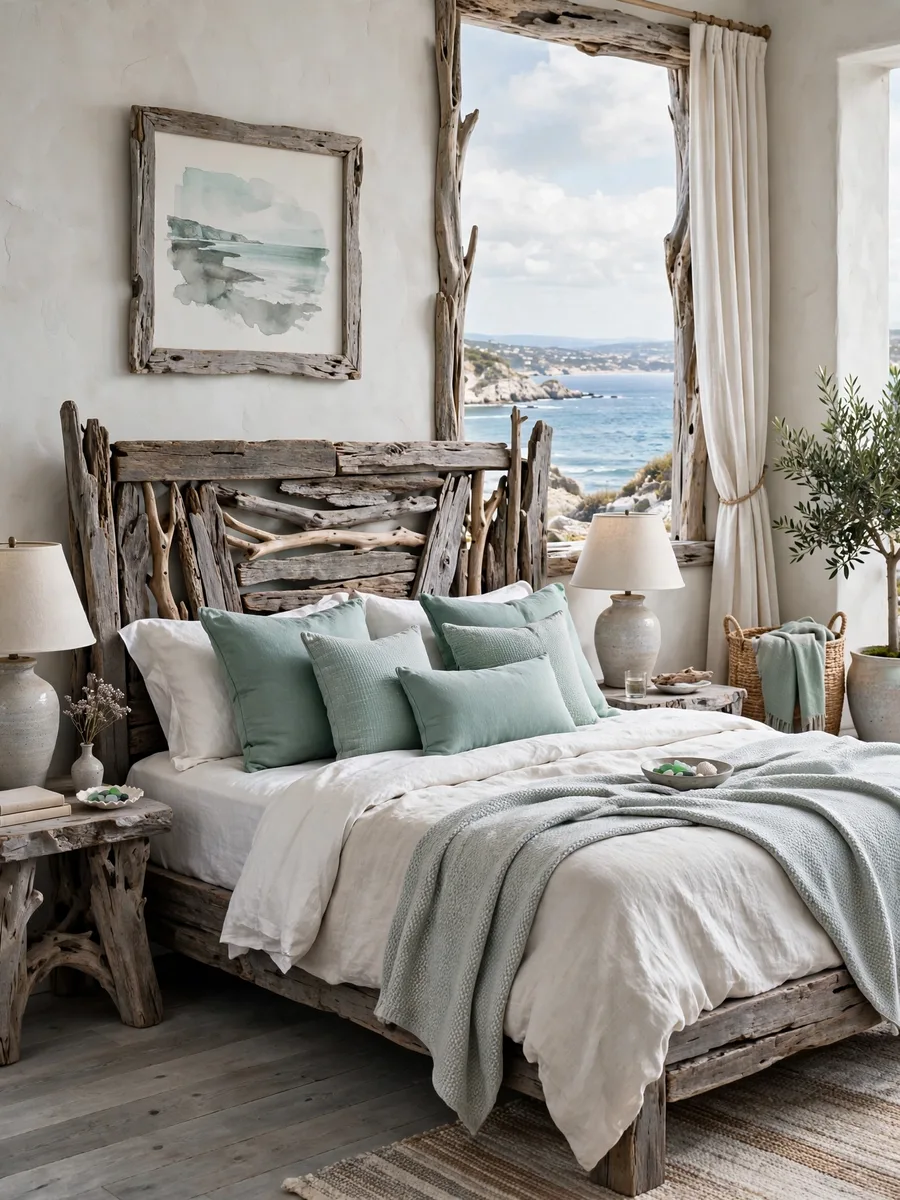
Weathered driftwood furniture brings the age and softness of wood that has spent years by the sea. A reclaimed driftwood bed frame in grey-brown tones looks right with seafoam cushions and washed white linen, because the grey and the green share the same muted quality. Keep the floor pale and the walls plain so the wood can carry the room.
Quick tips:
- Use one driftwood piece as the anchor and keep other wood pale.
- Seal reclaimed wood so it stays smooth and splinter-free.
6. Coastal Grandmother Bedding
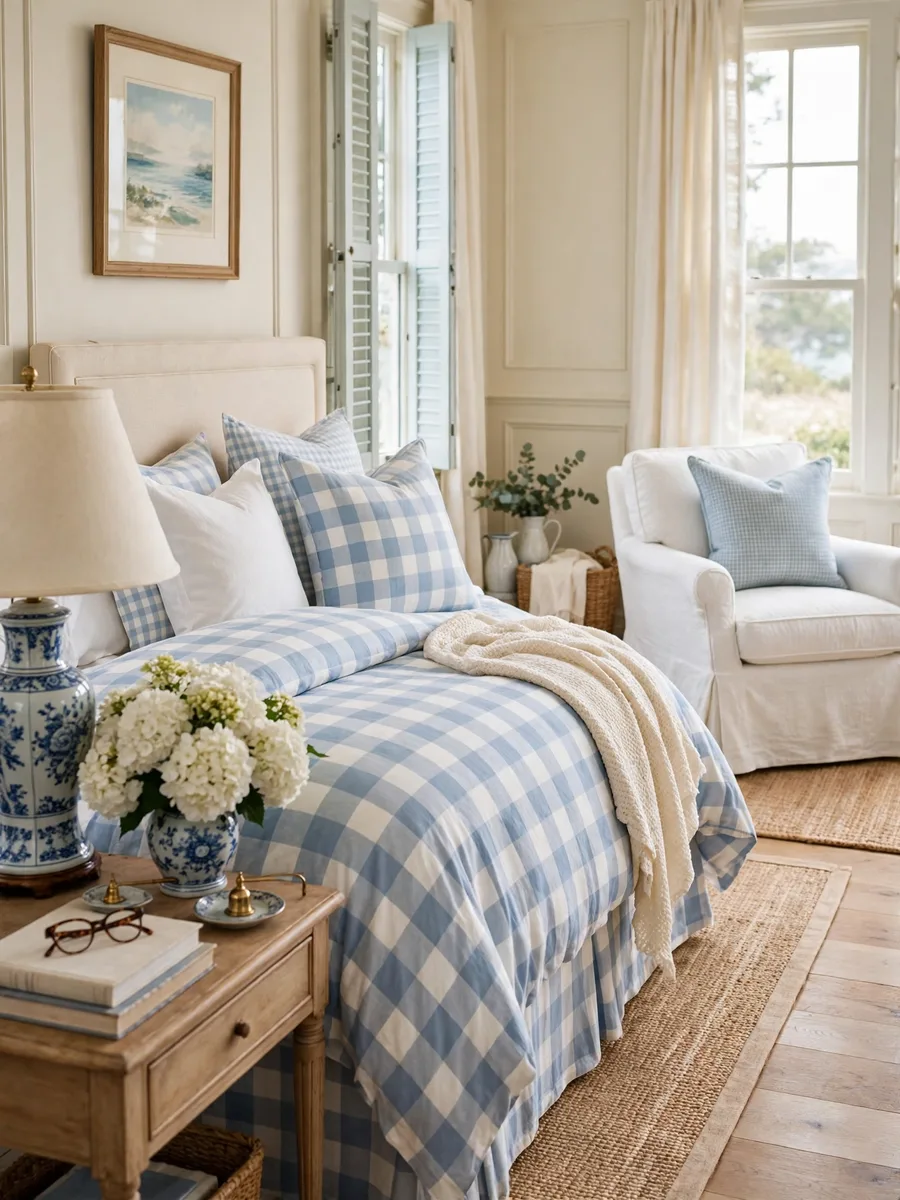
Coastal grandmother style is the softest version of the look, and the bedding is where it shows. Blue and white gingham on the duvet, a white slipcovered armchair in the corner, and a blue-and-white porcelain lamp on the nightstand make the room feel collected and comfortable. White hydrangeas on the nightstand finish the look without clutter.
Quick tips:
- Keep the pattern to one piece, usually the duvet or the cushions.
- Choose washed cotton or linen so the gingham feels soft, not stiff.
- Add one vintage-style piece, like the porcelain lamp, for character.
7. A Modern Neutral Coastal Palette
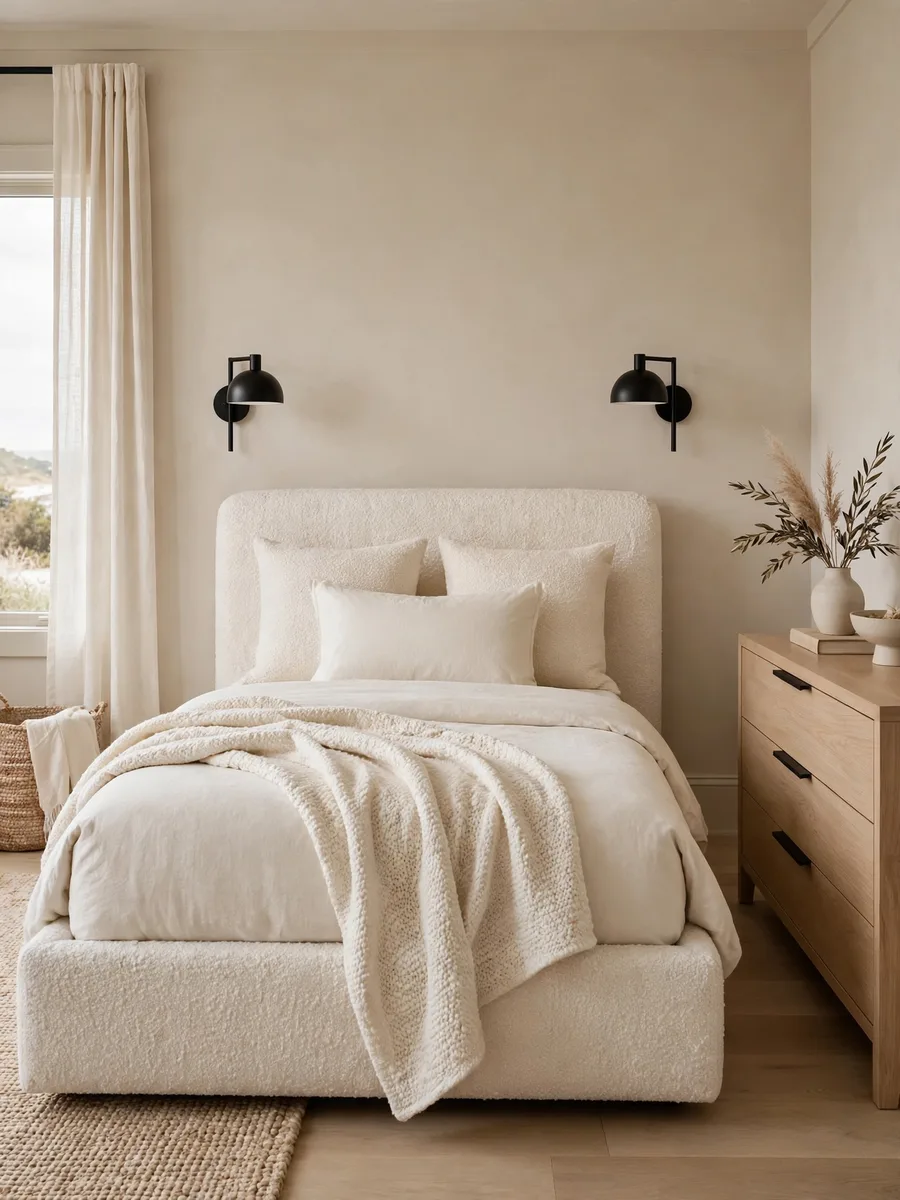
A modern neutral coastal palette drops the bright blue and lets warm greige, ivory, and pale oak do the work. An ivory bouclé bed against a greige wall feels calm and expensive, while matte black sconces keep the room from looking washed out. A low light-oak dresser and a cream throw complete the look without a single themed object.
Quick tips:
- Test greige paint in daylight and lamplight before committing.
- Mix matte and soft textures so the neutrals do not look flat.
8. A Seagrass Rug Under the Bed
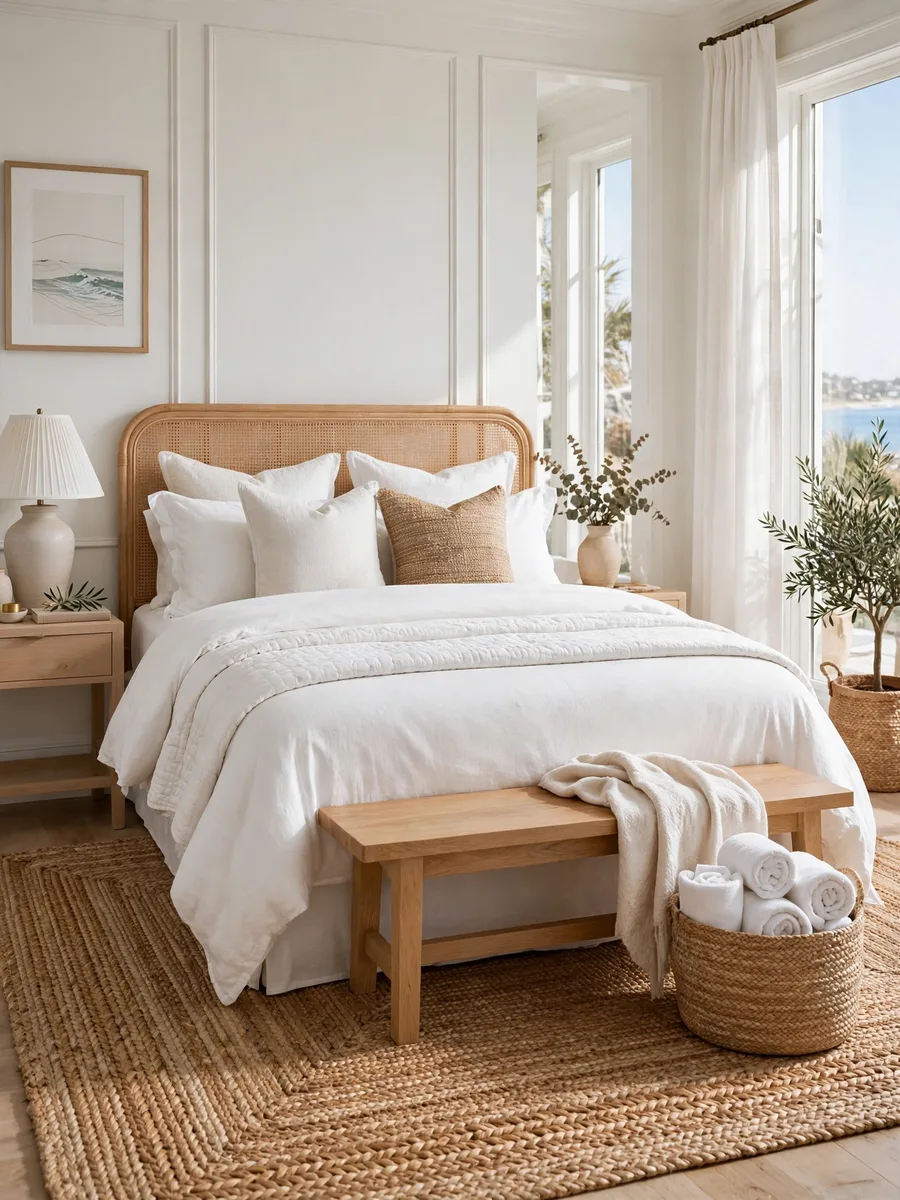
A seagrass rug under the bed grounds a coastal bedroom the way a sandy floor grounds a beach house. The warm tan weave adds texture underfoot, and it looks right with plain white bedding because the rug carries all the pattern the room needs. Leave at least 45 centimetres showing on each side so the texture is visible when you walk in.
Quick tips:
- Choose a rug big enough to extend past the bed on three sides.
- Vacuum without a beater bar so the weave stays intact.
- Layer a small soft rug on top if bare feet want something gentler.
9. A Woven Pendant Light
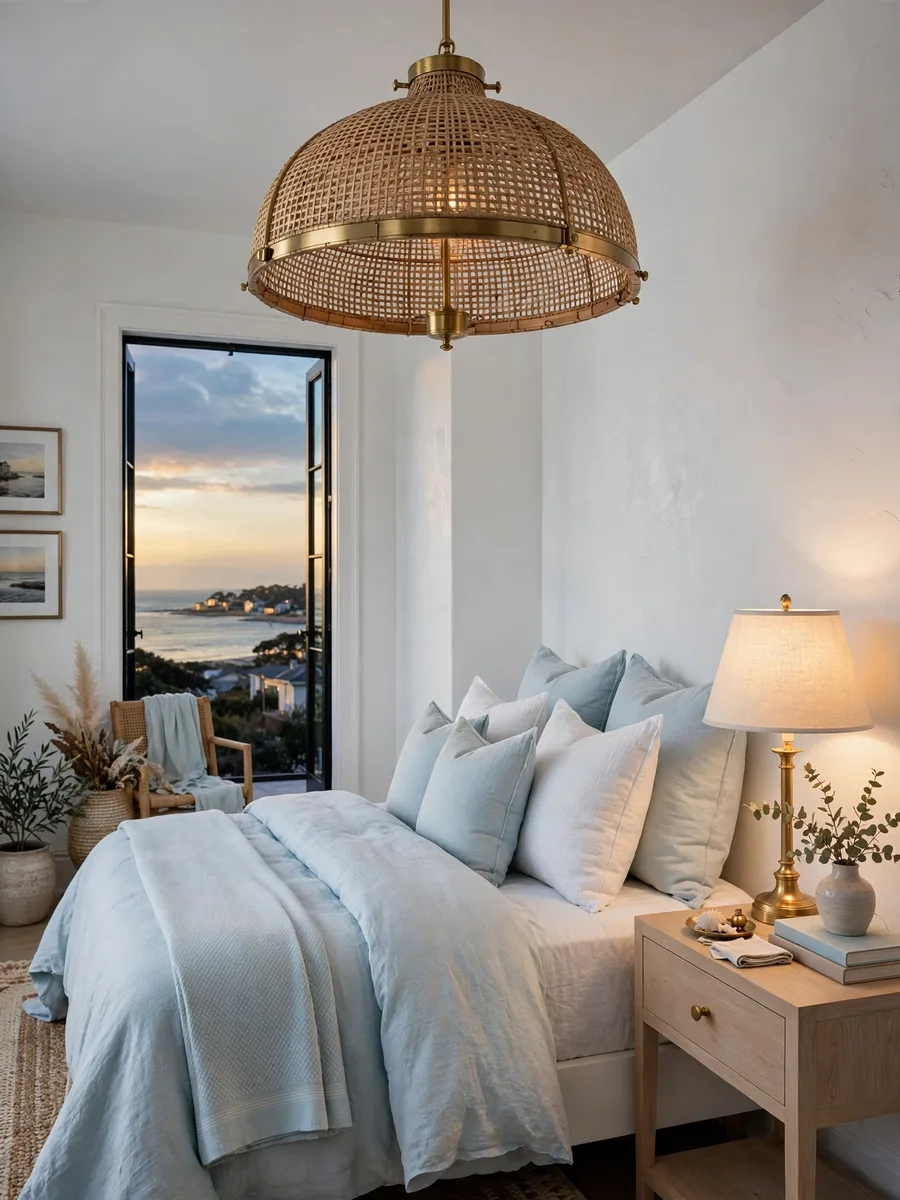
A woven pendant light changes a coastal bedroom more than most furniture does, because it hangs at eye level when you walk in. A large rattan shade with warm brass details casts a soft glow over pale blue bedding and makes the ceiling feel lower and warmer. Hang it low enough to see the weave, high enough to clear the bed.
Quick tips:
- Size the shade to about one-third of the bed width.
- Use a warm bulb so the light stays golden, not white.
10. One Oversized Ocean Photograph
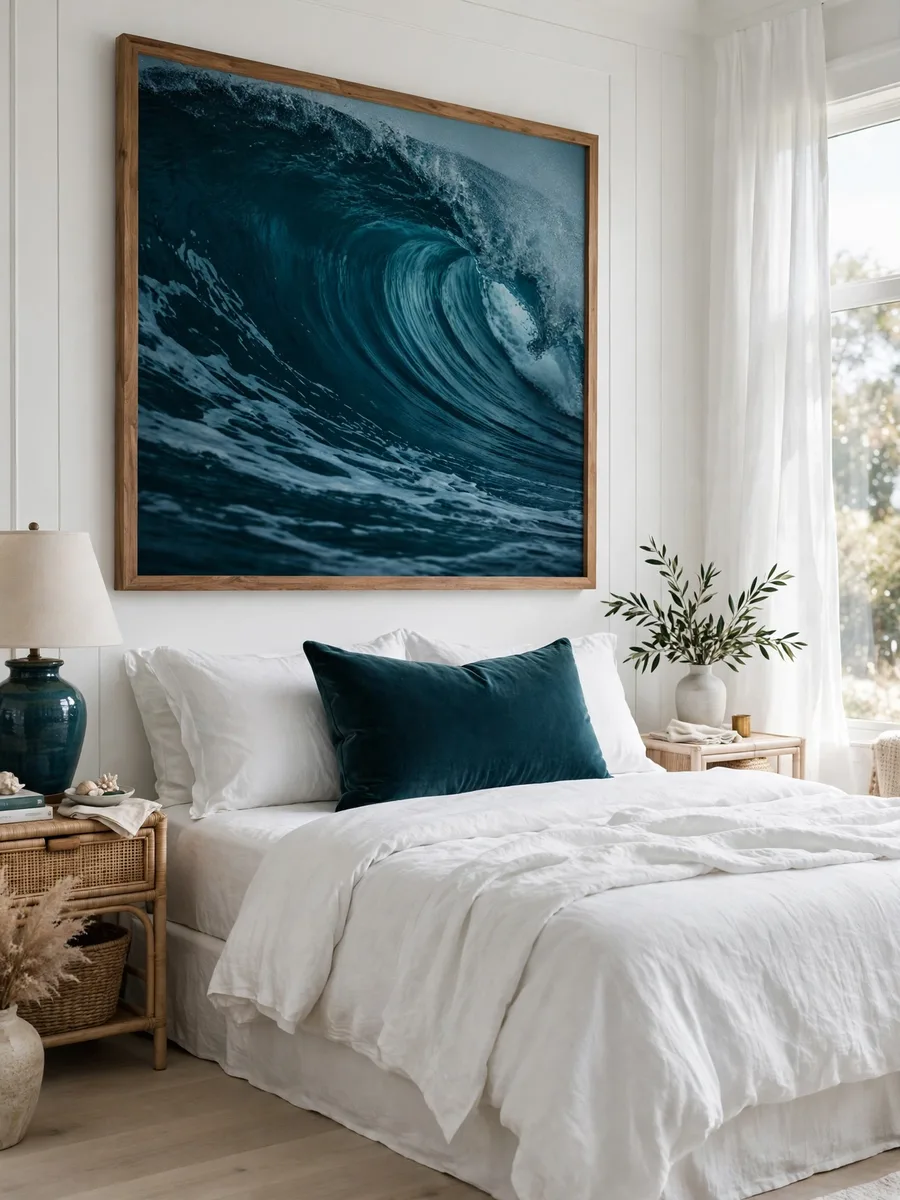
One oversized ocean photograph above the bed does what a shelf of beach objects cannot: it shows the sea. A large framed wave in deep teal gives the room a single strong image, while white linen bedding and a teal velvet cushion pick up its color without repeating it. Keep the frame simple and pale so the photograph holds the attention.
Quick tips:
- Hang the photograph so its width is about two-thirds of the bed.
- Choose a real photograph, not a painted or printed imitation.
- Leave the other walls plain so the image stays the focal point.
11. Sea-Glass Accents
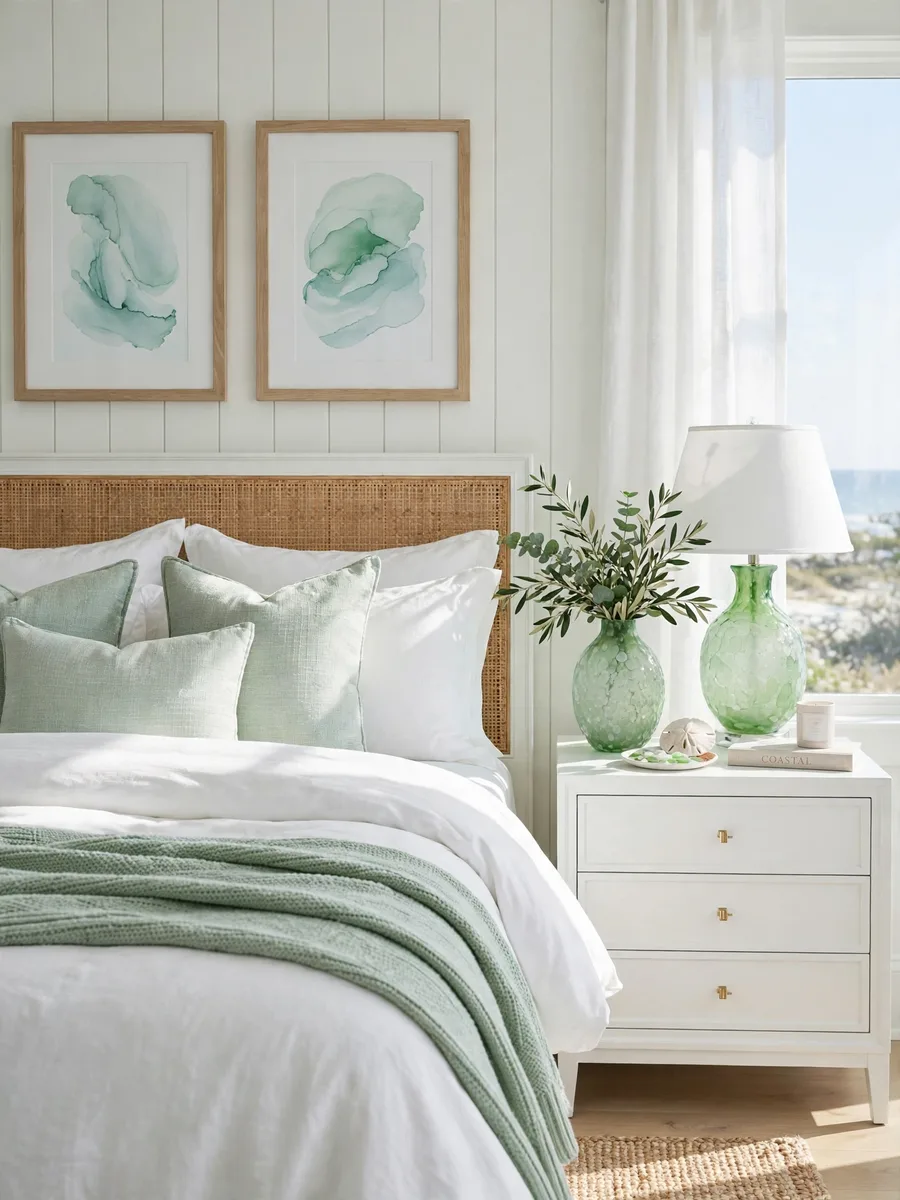
Sea-glass accents are the gentlest way to bring green into a coastal bedroom. A pale green glass lamp and a matching vase on a white nightstand catch the light the way real sea glass does, and a pale green throw on white bedding repeats the color softly. The effect is calm, and it works in rooms where blue feels too strong.
Quick tips:
- Use real glass, not plastic, so the color glows in the light.
- Limit the green to three small pieces so it stays an accent.
12. Layered Linen Bedding

Layered linen bedding is the heart of a relaxed coastal bedroom. A dusty blue linen duvet, a white linen top sheet folded back, and a linen throw at the foot of the bed create depth without pattern, and the natural wrinkles make the bed look slept-in and inviting. A woven wall hanging adds texture without competing with the linen.
Quick tips:
- Layer three pieces: sheet, duvet, and a folded throw.
- Wash linen before first use so it softens properly.
- Iron nothing; the wrinkles are part of the look.
13. Classic Navy and White Stripes
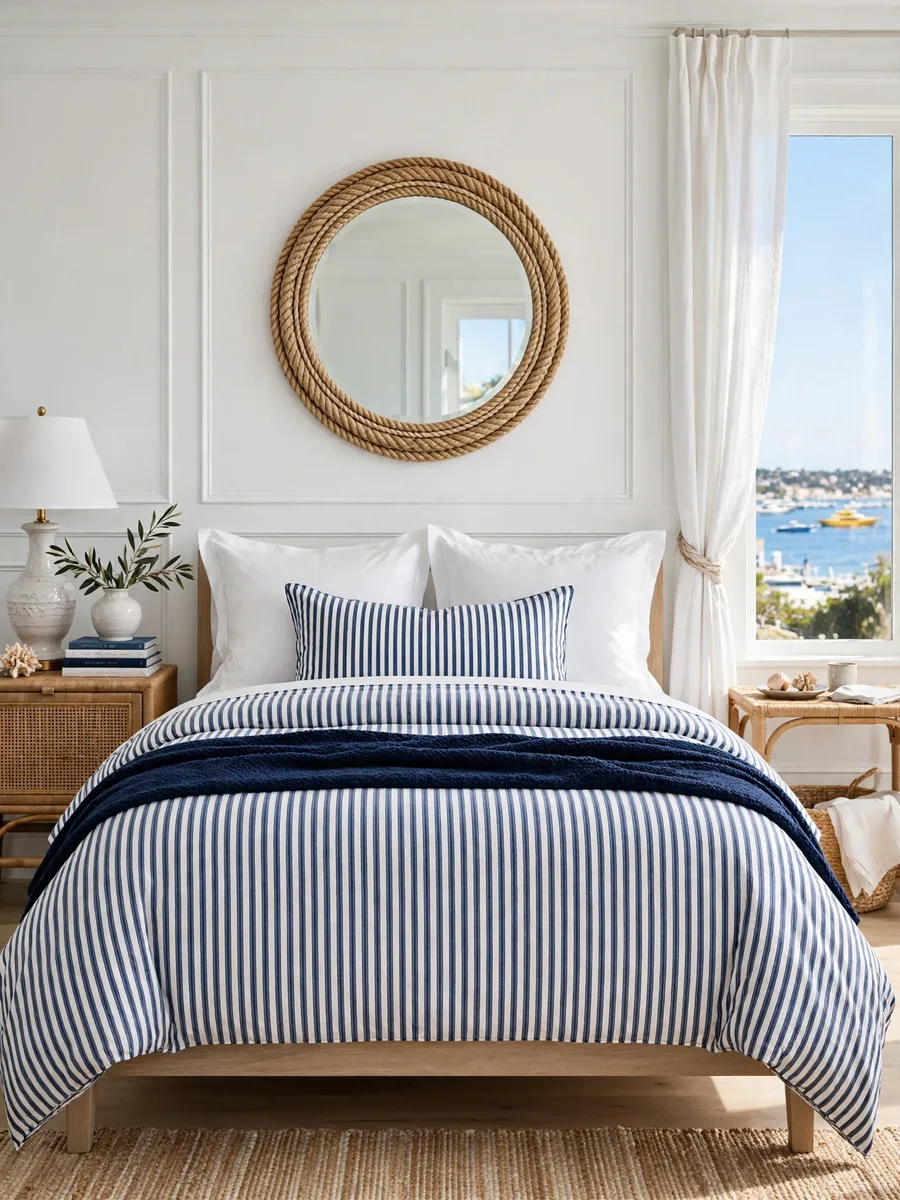
Classic navy and white stripes are the oldest coastal pattern, and they still work when they are used sparingly. Striped bedding with a navy lumbar cushion reads as crisp and nautical, while white walls and a rope-detail mirror keep the room light. Stop at one striped piece, because stripes on the bed, curtains, and cushions all at once turn the room into a uniform.
Quick tips:
- Use stripes on the bedding or the cushions, never both.
- Choose a medium-width stripe so it looks tailored, not busy.
14. Pale Oak Furniture
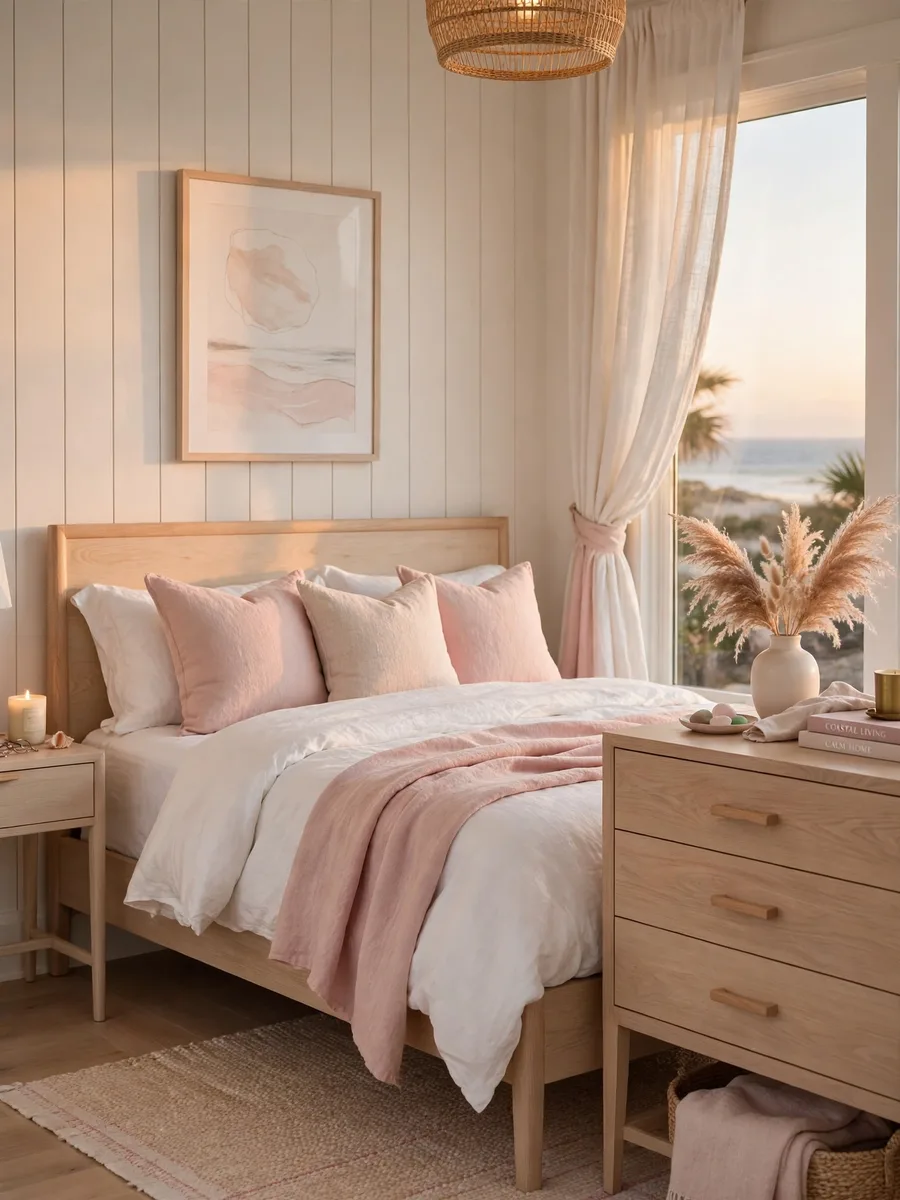
Pale oak furniture keeps a coastal bedroom bright while adding the warmth that white walls alone cannot. A light oak bed frame and dresser look right with blush pink linen cushions and white bedding, because the pink warms the oak and the oak grounds the pink. Dried pampas grass on the dresser adds height without color.
Quick tips:
- Keep the oak finish pale and matte, not orange or glossy.
- Repeat the wood tone in two pieces for a settled look.
- Use blush as the only pink so the room stays calm.
15. Soft Coral Accents
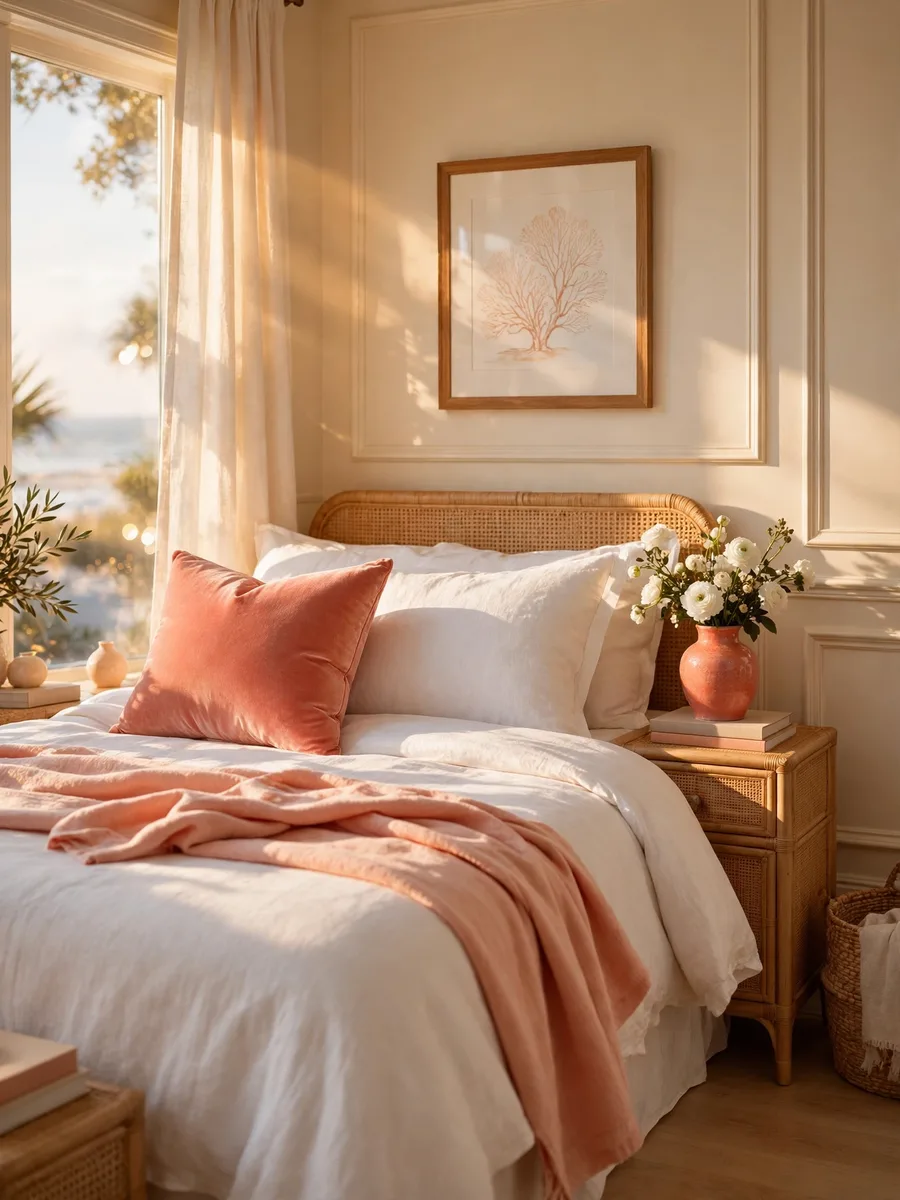
Soft coral accents warm up a coastal bedroom the way a sunset warms the shore. A coral velvet cushion and a peach throw over white linen add color without shouting, and a coral vase with white flowers repeats the tone at a smaller scale. Warm cream walls hold the whole palette together.
Quick tips:
- Use coral in soft, muted tones rather than bright orange-pink.
- Keep the coral to cushions, a throw, and one small object.
16. Slate Blue and Weathered Wood
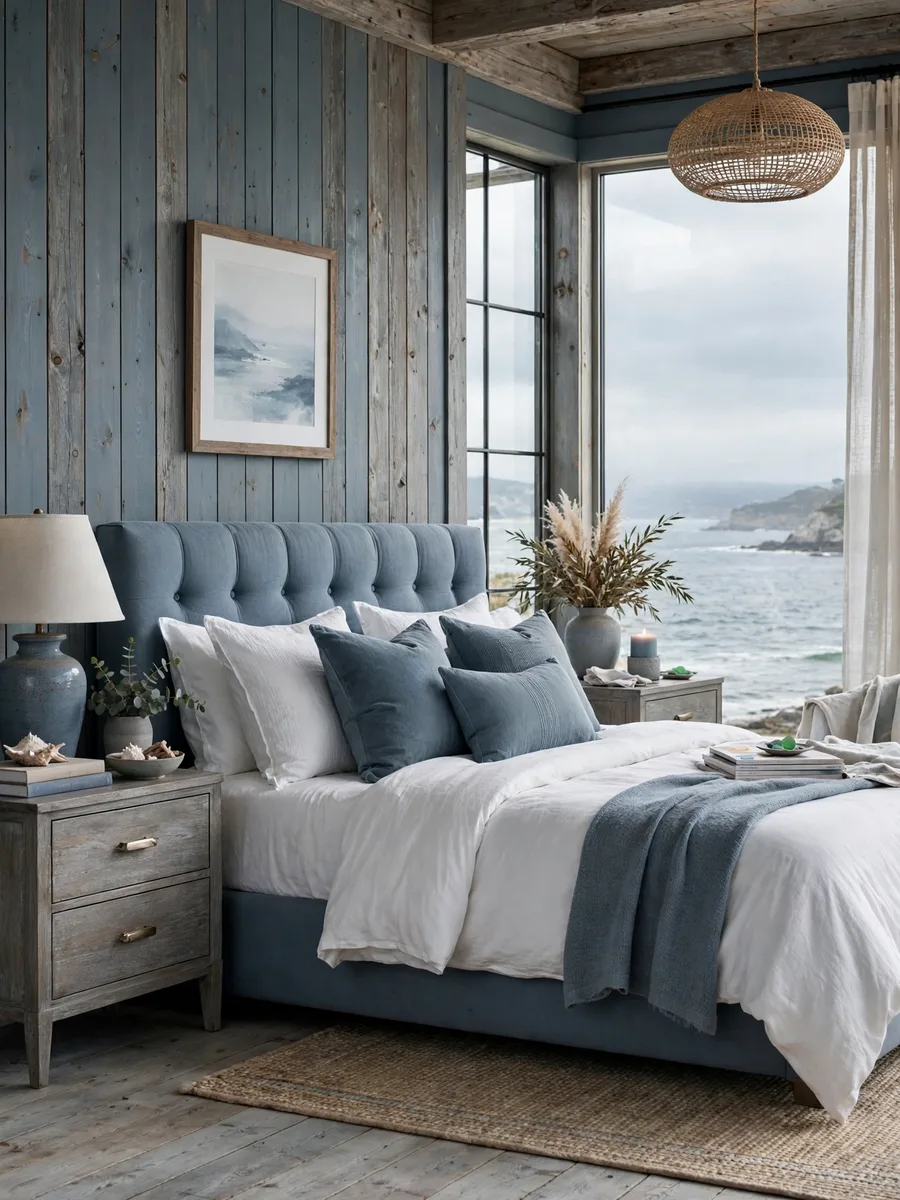
Slate blue and weathered wood make a coastal bedroom that feels like a grey-blue sea on a cloudy morning. A slate blue upholstered headboard sets the tone, grey-washed wood nightstands add age, and white bedding with slate blue cushions keeps the room from going dark. A large window matters here, because the grey-blue light from outside joins the palette.
Quick tips:
- Use slate blue on the headboard or the cushions, not on every wall.
- Keep the wood grey-washed so it matches the blue’s muted tone.
- Add a warm lamp to stop the grey-blue feeling cold at night.
17. Terracotta Touches

Terracotta touches give a coastal bedroom a Mediterranean warmth that blue alone cannot. A terracotta clay pot with a green plant, terracotta cushions on white linen bedding, and a terracotta throw add earth to a room that might otherwise feel too cool. Pale wood floors and warm sunlight complete the look.
Quick tips:
- Choose terracotta in a dusty, sun-baked tone rather than bright orange.
- Use it in three places: a pot, the cushions, and the throw.
18. Soft Lavender-Grey Tones
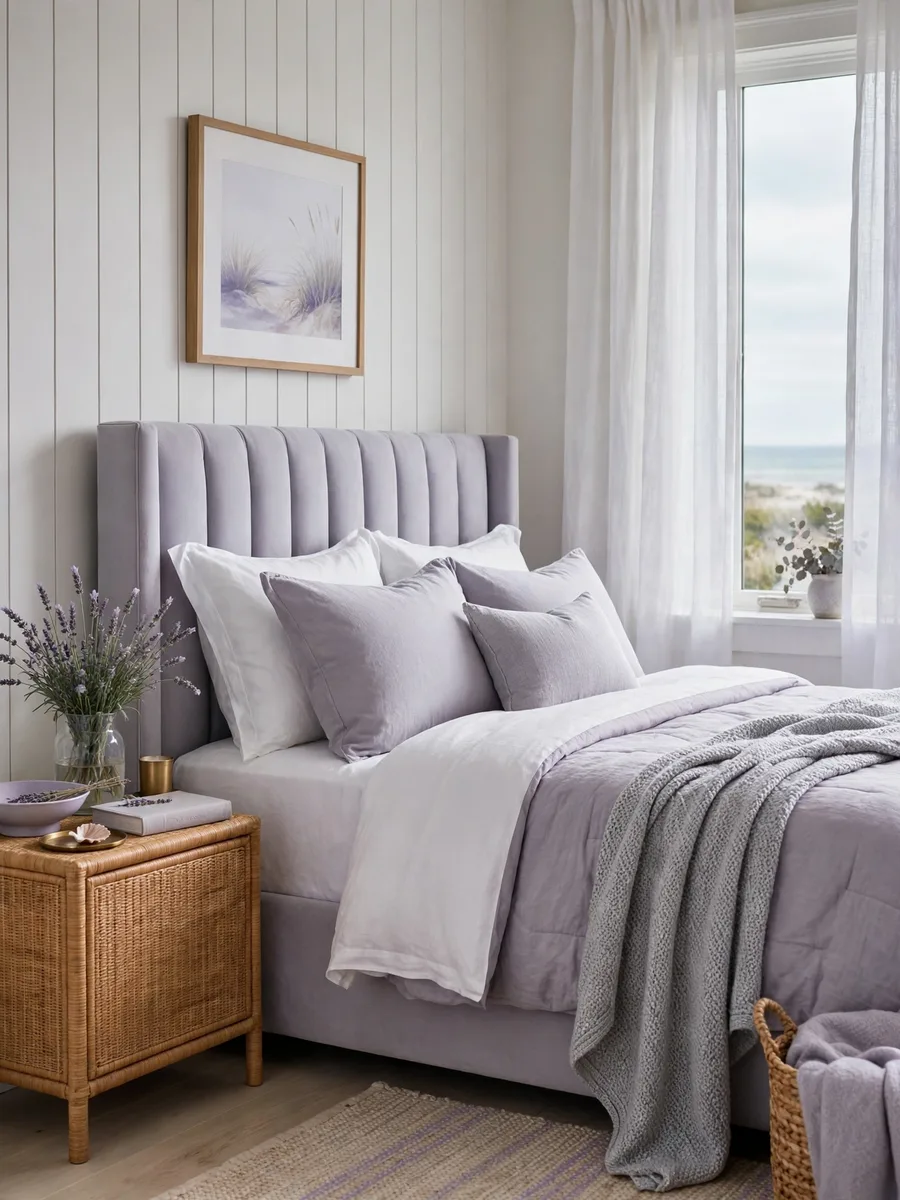
Soft lavender-grey tones are the quietest coastal palette, and they suit a bedroom that needs to feel calm above all else. A pale lilac-grey headboard, white and lilac-grey bedding, and a silver-grey throw create a cool, restful room, while a glass vase with lavender sprigs adds a gentle scent. Cool daylight suits this palette best.
Quick tips:
- Keep the lavender pale so it reads as grey, not purple.
- Use silver-grey metal details rather than gold for a cool finish.
- Add one green plant to stop the grey feeling flat.
19. Deep Emerald Green Accents
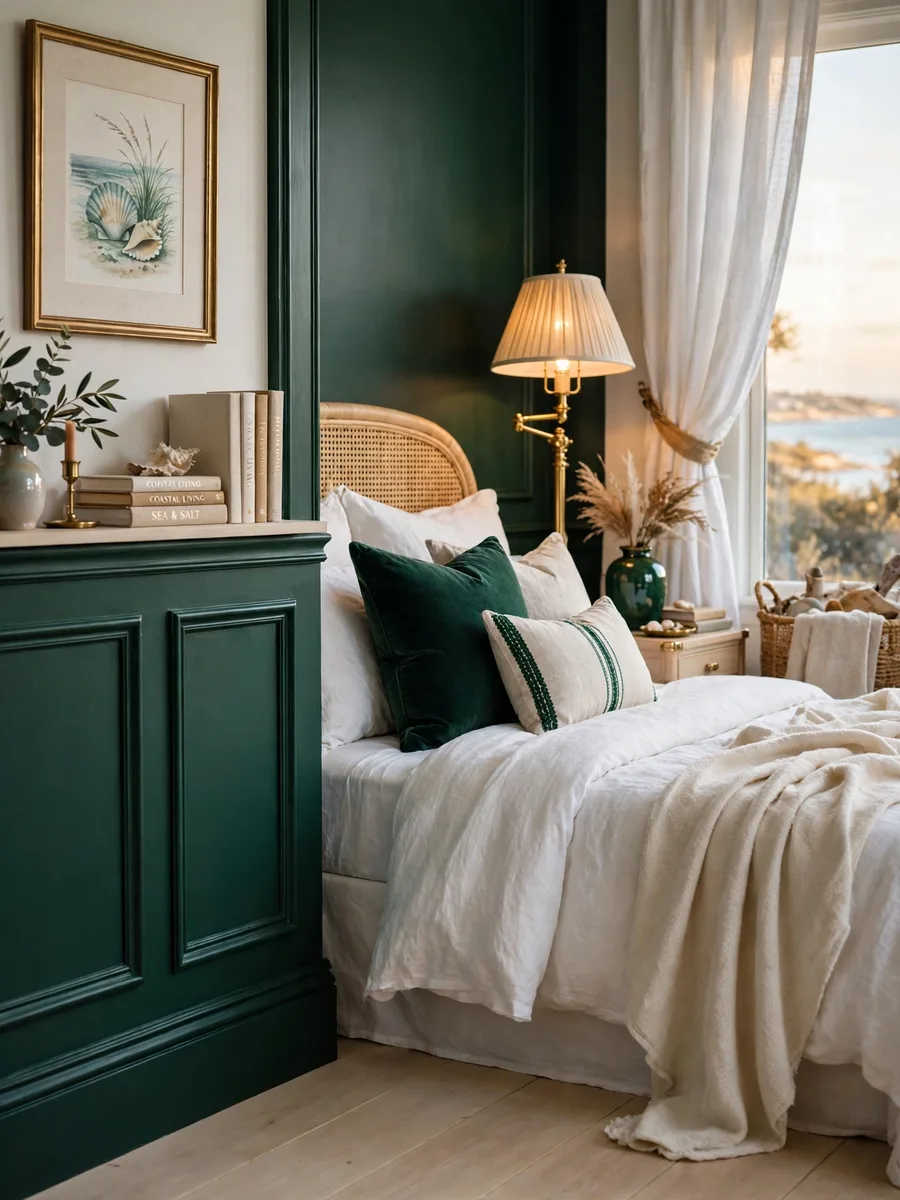
Deep emerald green accents bring the color of deep water into a coastal bedroom. An emerald velvet cushion and dark green painted wainscoting on one wall give the room weight, while a brass floor lamp and white linen bedding keep it bright and warm. The combination feels rich rather than beachy, which suits a more traditional house.
Quick tips:
- Use emerald on one wall or in the cushions, not everywhere.
- Pair it with brass, not chrome, for a warm finish.
20. Butter Yellow Accents
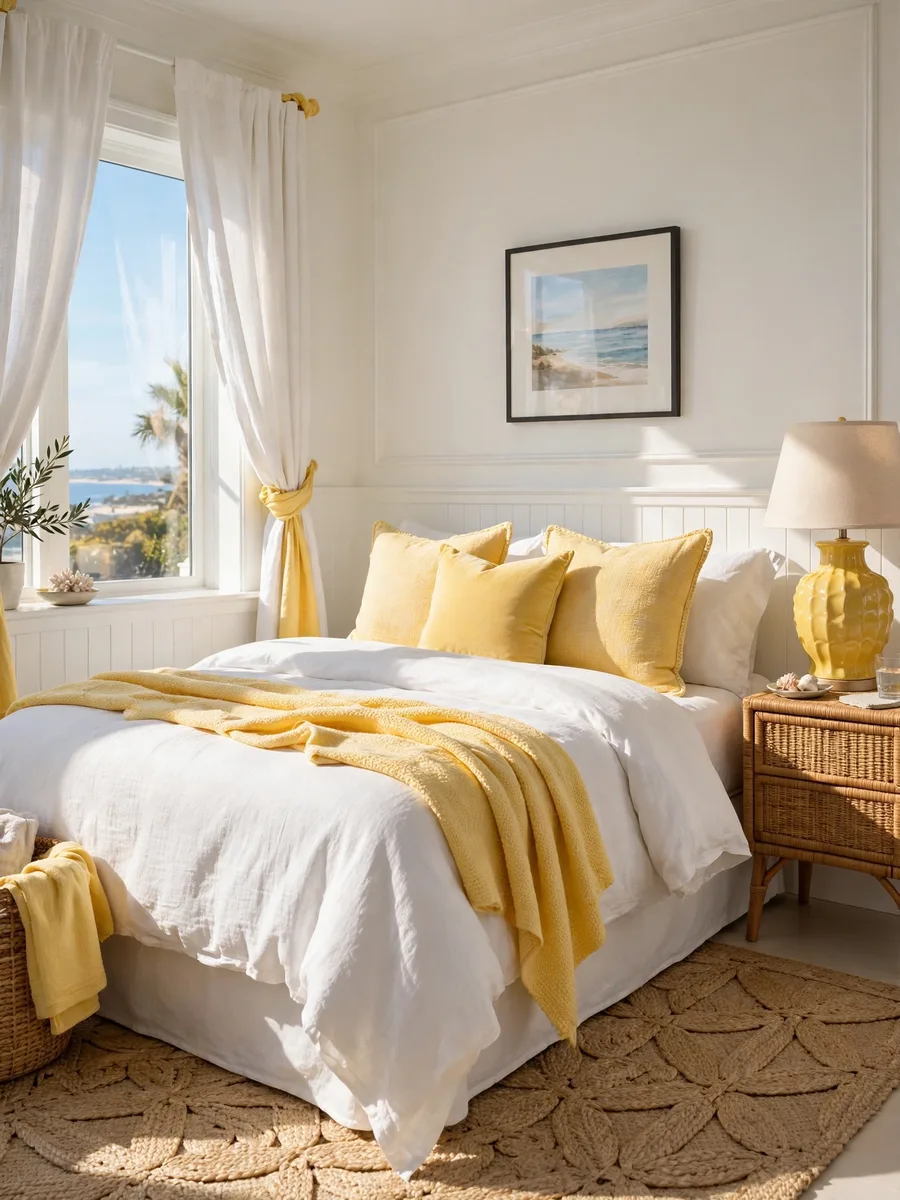
Butter yellow accents make a coastal bedroom feel like a sunny morning, even on a grey day. A butter yellow throw and cushions on white bedding and a yellow ceramic lamp add cheer without noise. The yellow works because it is soft and creamy, closer to sunlight than to a bright primary.
Quick tips:
- Choose butter yellow, not lemon, so the color stays soft.
- Keep the yellow to the bedding and one lamp.
- Balance it with white walls and pale wood floors.
21. A Moody Charcoal Coastal Bedroom
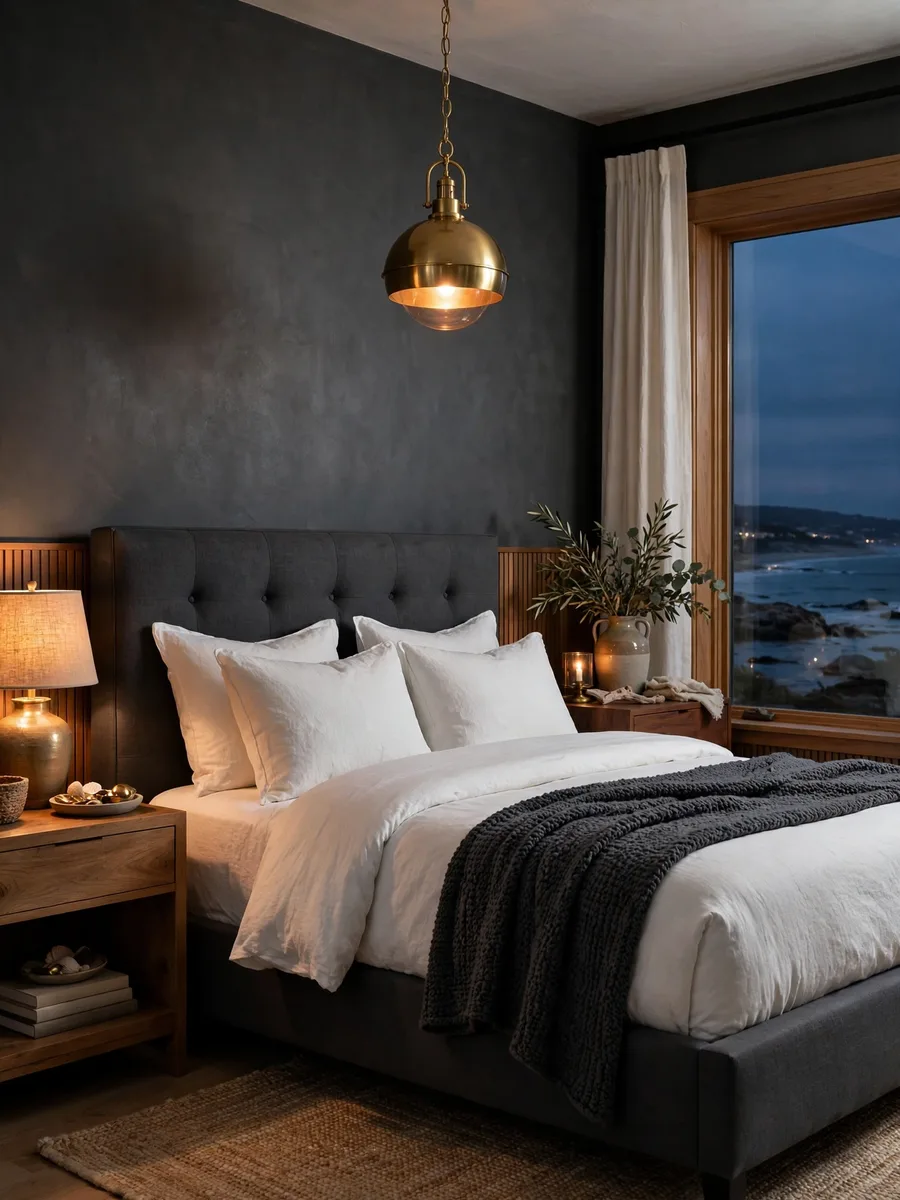
A moody charcoal coastal bedroom proves the style does not have to be pale. Charcoal grey walls, a charcoal bed, and white bedding with a charcoal throw create a room that feels like the sea at dusk, while warm wood and a brass pendant keep it welcoming. If you love this darker direction, these moody bedroom decor ideas show how deep colors and soft light work together in a bedroom.
Quick tips:
- Paint the walls charcoal but keep the ceiling white.
- Use warm lamp light, not cool daylight bulbs, after dark.
22. A Bright Aqua Accent Wall
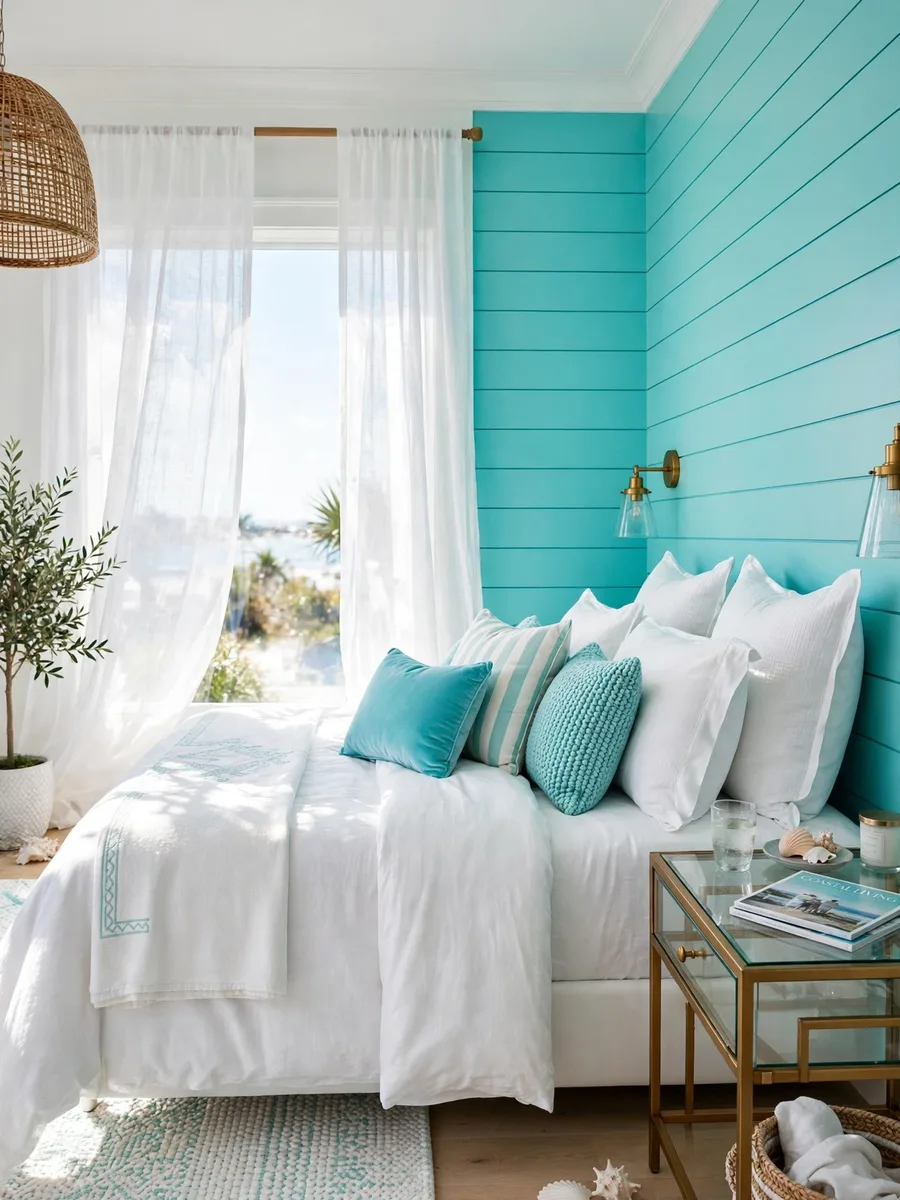
A bright aqua accent wall is the boldest choice in this list, and it works when the rest of the room stays quiet. Aqua shiplap behind the bed brings the color of shallow tropical water into the room, while white bedding with aqua cushions keeps it fresh. Sheer curtains let the daylight do the rest.
Quick tips:
- Test the aqua in daylight, because it brightens a lot in sun.
- Keep the other walls white and the floor pale.
- Use aqua in the cushions only, and nowhere else.
23. Rose Beige and Natural Wood
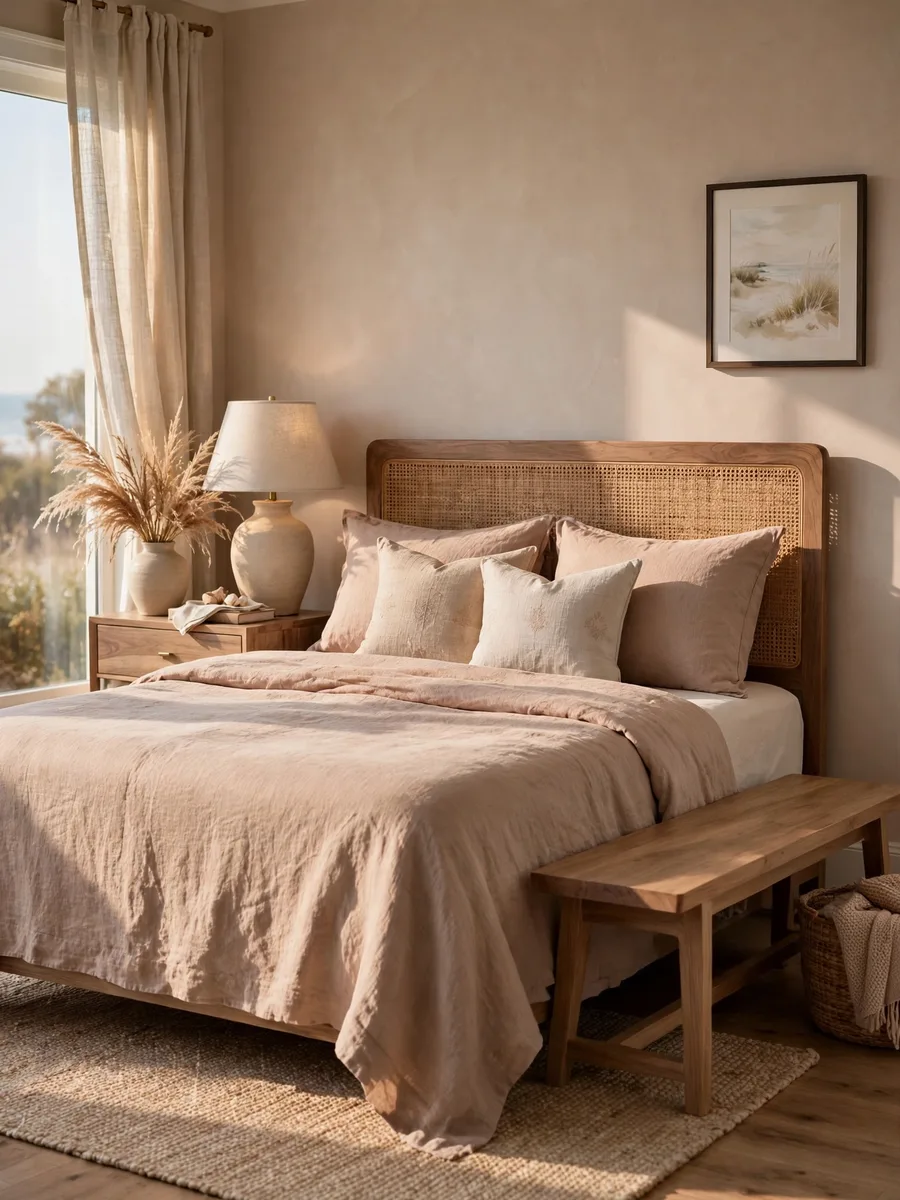
Rose beige and natural wood make a coastal bedroom that feels warm, soft, and a little bit romantic. A rose-beige linen bedspread, a light walnut bench, and a beige ceramic lamp create a palette between pink and brown, and it suits a room with warm afternoon light. Dried grasses in a vase add height and texture.
Quick tips:
- Keep the rose beige muted so it reads as a neutral.
- Use walnut or another warm wood, not pale ash, for contrast.
24. An All-White Layered Bedroom
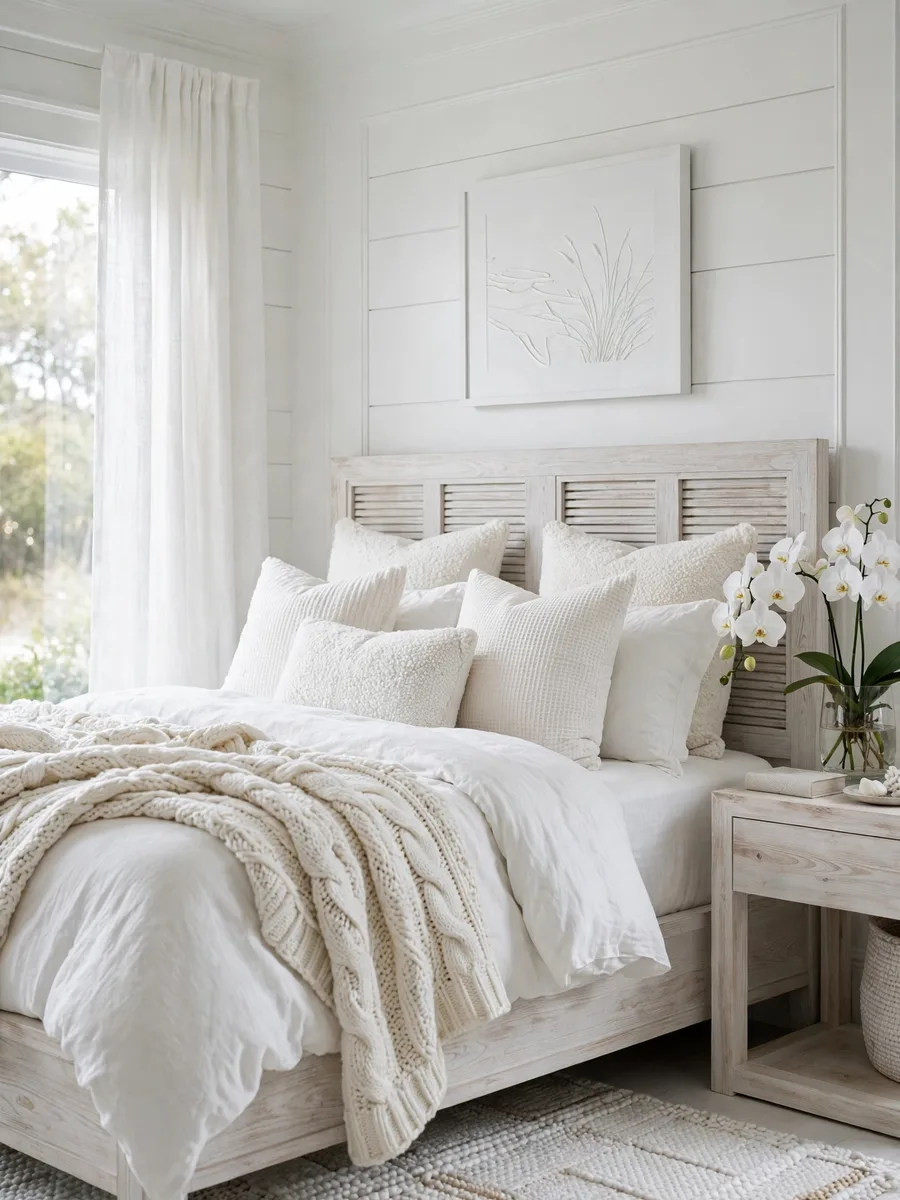
An all-white layered bedroom is the purest version of the coastal look, and it works only when the textures do the talking. White bouclé cushions, a white chunky knit throw, white linen bedding, and a whitewashed wood bed frame each add a different surface, so the room feels rich instead of empty. White orchids in a glass vase are the only decoration the room needs.
Quick tips:
- Mix at least four white textures so the room does not look flat.
- Use warm white, not bright white, so the room feels soft.
- Keep the floor pale wood for a little warmth underfoot.
Frequently Asked Questions
How can I make a coastal bedroom look grown-up and not kitschy?
Use natural materials and a restrained palette, and skip anything that spells out the theme. Pale wood, linen, rattan, and one ocean color make the room feel coastal, while shell mirrors and script signs make it feel like a gift shop. One piece of ocean art is enough.
What are the best colors for a coastal bedroom?
Ocean blue, sandy beige, and crisp white are the core colors, with sea-glass green and soft grey as support. Use about two-thirds pale neutrals, one-third mid-tone, and a touch of the deepest color. One ocean color per room keeps the palette calm.
How do I create a coastal bedroom in a small room?
Choose a modern neutral palette, keep the furniture low and pale, and use mirrors and sheer curtains to make the room feel bigger. One woven texture, like a seagrass rug or a rattan light, is enough. Avoid dark walls and heavy patterns.
Can I have a coastal bedroom without living near the beach?
Yes. The style comes from light, color, and natural materials, not from the location. A pale base, linen bedding, woven textures, and one ocean color work in a city flat just as well as in a beach house.
Which materials should I choose for a coastal bedroom?
Choose linen for bedding, rattan or jute for texture, and pale wood like white oak or ash for furniture. Weathered driftwood adds character in a single piece. Avoid plastic, shiny finishes, and fake wood.
Conclusion
A good coastal bedroom is a feeling before it is a look. Start with light, add one ocean color, and let linen, rattan, and pale wood carry the room. The 24 coastal bedroom ideas above all follow that same simple rule, so use one of them or combine a few for a room that feels calm, bright, and easy to live in. Pick the idea that fits your room best, make the change this weekend, and let the coast come to you.