





Dried Flower Arrangement Ideas for Fall Homes
The best dried flower arrangement ideas for fall start with botanicals that hold their color — dried hydrangeas, wheat, grasses, seed pods, and bare branches — built tallest-first in a heavy vase and placed where they’ll be seen but rarely touched. Done right, a single arrangement carries a room from September through November with no water, no wilting, and almost no maintenance. Below are the stems worth buying, how to arrange them like a stylist, and eight fall-specific ideas for every corner of the house.
Why Dried Botanicals Win Fall
Fresh flowers in October are a weekly expense and a weekly chore. Dried botanicals flip that: one purchase, one arranging session, and the decor is done for the season. Real dried flowers also have something faux stems can’t fake — irregular texture, papery translucency, and the soft faded tones (dusty rose, wheat gold, bark brown) that read as autumn without any orange plastic.
Faux has its place outdoors, where weather destroys the real thing. Indoors, dried wins on texture, cost per month, and the simple fact that it never needs dusting off a layer of factory sheen. The trade-off is fragility: dried stems snap if manhandled, so the golden rule is to style them once and then leave them alone.
The Best Dried Flowers and Grasses for Fall
Not all dried botanicals age equally. Some hold rich color for a year; others bleach to straw within weeks. Buy for the palette you want in November, not the one you see in the shop.

Dried Hydrangeas
The anchor of fall dried arrangements. Hydrangea heads dry into dusty rose, muted plum, sage, and parchment — colors that deepen rather than fade. Their full, cloud-like shape fills a vase fast, so three to five stems can carry an entire centerpiece. Handle them gently; the petals shed if brushed repeatedly.
Grasses, Wheat, and Cereal Stems
Wheat, oats, barley, and broom corn bring the harvest feel no other stem can. They are structural, inexpensive, and nearly indestructible once placed. Bunny tails (lagurus) add soft punctuation at a smaller scale — use them in odd-numbered clusters of five or seven rather than scattered singles.
Branches, Seed Pods, and Berries
Architectural height comes from branches: contorted willow, birch twigs, dried curly willow. Seed pods — poppy, nigella (love-in-a-mist), lotus pods — add sculptural interest at eye level. Dried berry clusters (pepper berries, tallow berries in cream or rust) give the small color hits that keep a neutral arrangement from looking flat.
Preserved Accents
Preserved eucalyptus, ruscus, and lavender behave like dried flowers but keep more color and flexibility. Eucalyptus is the workhorse filler: silvery-green, fragrant for the first weeks, and forgiving to arrange. A note on lavender — it is one of the few dried flowers that keeps a real scent.
How to Arrange Dried Flowers Like a Stylist
Dried stems are more rigid than fresh ones, which is actually an advantage: they stay where you put them. Work in groups of the same stem rather than alternating one-by-one — grouping reads intentional, alternating reads busy.

- Choose a heavy vase with a narrow neck. Weight matters more than looks; dried arrangements are top-heavy. Narrow necks hold stems upright without foam or frogs.
- Place the tallest structural stems first. Branches and tall grasses set the silhouette. Aim for the arrangement to be roughly one-and-a-half times the vase height.
- Add focal blooms in odd-numbered groups. Three hydrangea heads or five wheat bundles, clustered — not spread evenly like fence posts.
- Layer in texture at mid-height. Seed pods, berries, and bunny tails fill the gaps between focal flowers and structural stems.
- Step back and rotate. Dried arrangements are sculptural; check the silhouette from every angle, including the side guests will actually see.
- Secure sparingly. A little florist wire or tape at the binding point is enough. Over-handling is what breaks stems.
- Mist shedding plumes lightly with hairspray. One light pass tames pampas-style grasses without making them look lacquered.
Dried Flower Arrangement Ideas for Fall
1. The Entryway Statement Vase

Nothing says autumn arrived like a floor vase of tall branches by the front door. Use contorted willow or tall dried grasses at dramatic height, anchored by a few wheat stems at the base for warmth. Keep the palette to two tones — bark brown and wheat gold — so it reads sculptural rather than busy. This is the highest-impact, lowest-effort arrangement on this list.
2. The Dusty-Rose Hydrangea Centerpiece
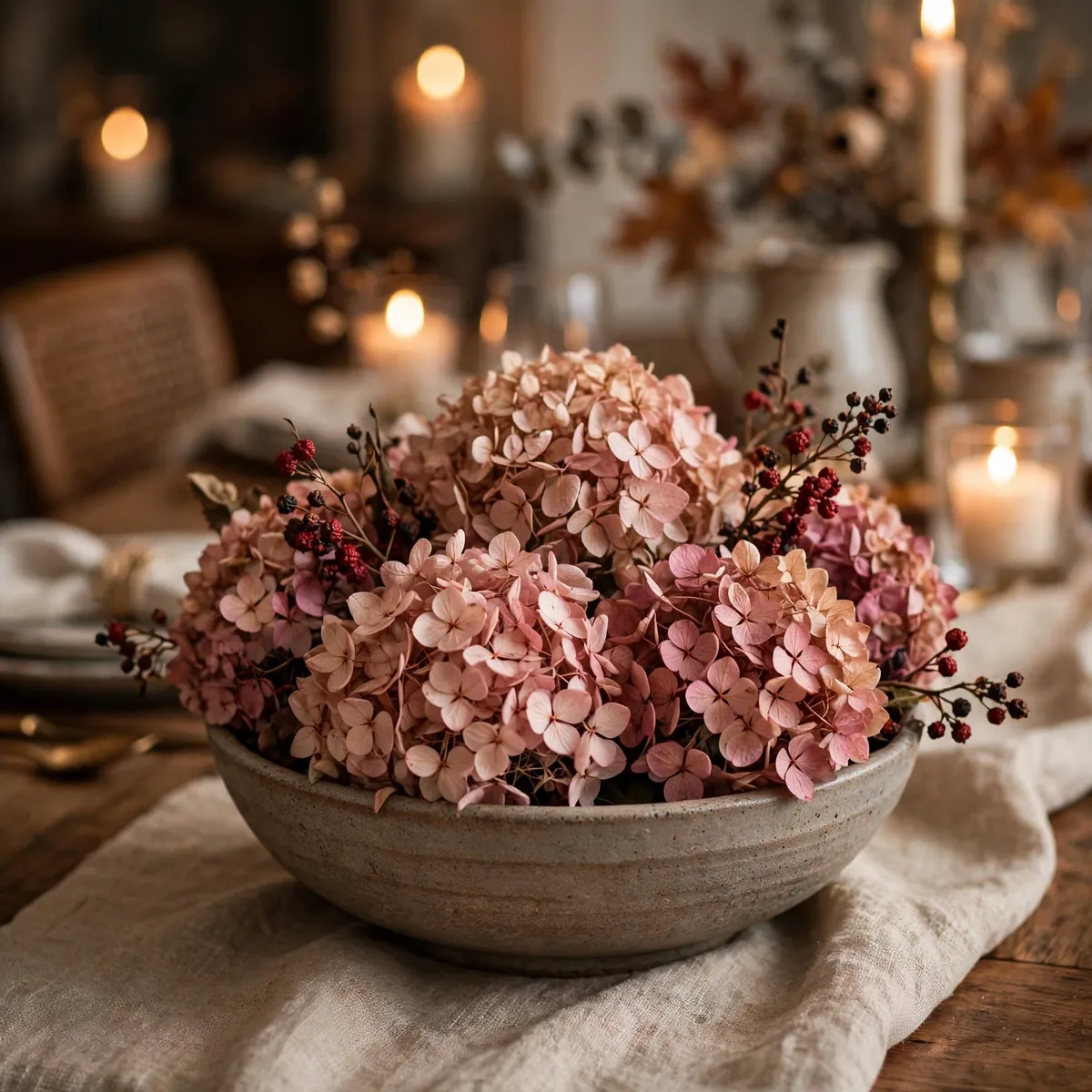
Five dried hydrangea heads in a low stoneware bowl make a dining centerpiece that lasts the whole season. Lean the stems so the blooms mound just above the rim — hydrangeas look best slightly spilling, not standing at attention. Tuck in three stems of dried berries for contrast. Because the arrangement sits low, conversation flows right over it.
3. Wheat Bundles on the Mantel

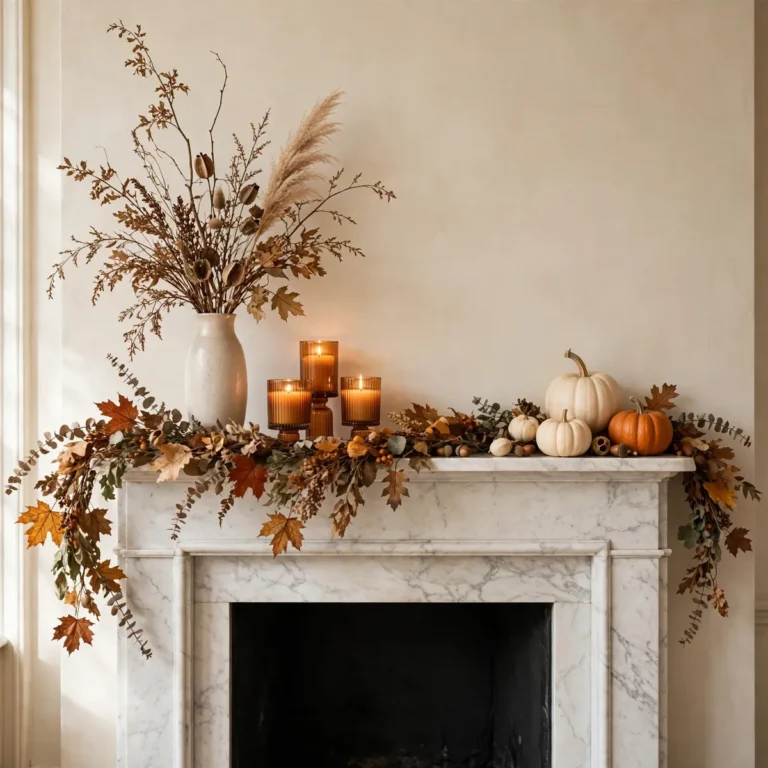
Tie wheat into hand-sized bundles with natural twine and lay them along the mantel, alternating directions so the heads overlap like shingles. Add one taller element — a branch or a cluster of bunny tails in a small vessel — at one end to break the horizontal line. Keep candles and fairy lights well away from the wheat; dried stems and open flame are a bad combination.
4. A Seed-Pod Wreath for the Door
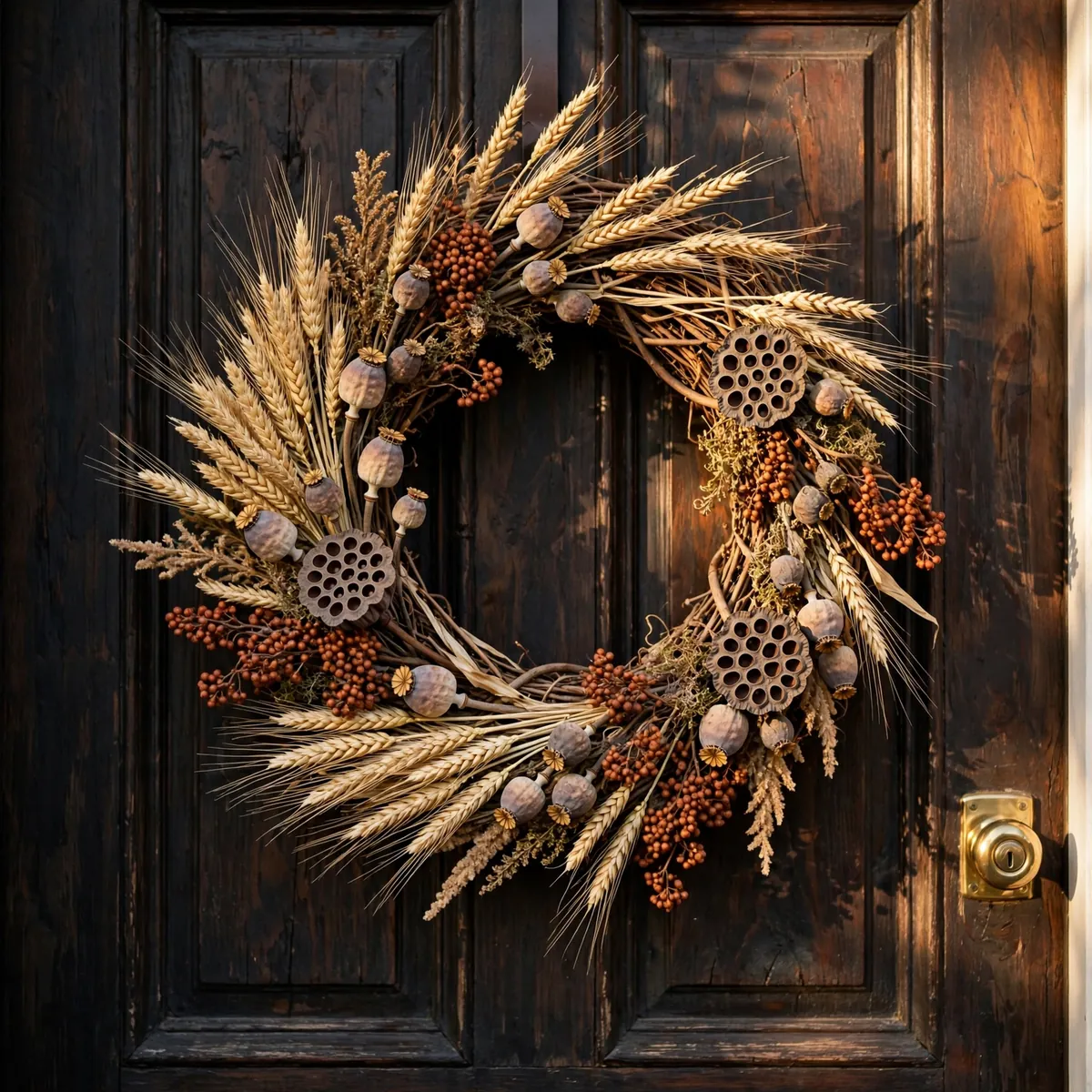
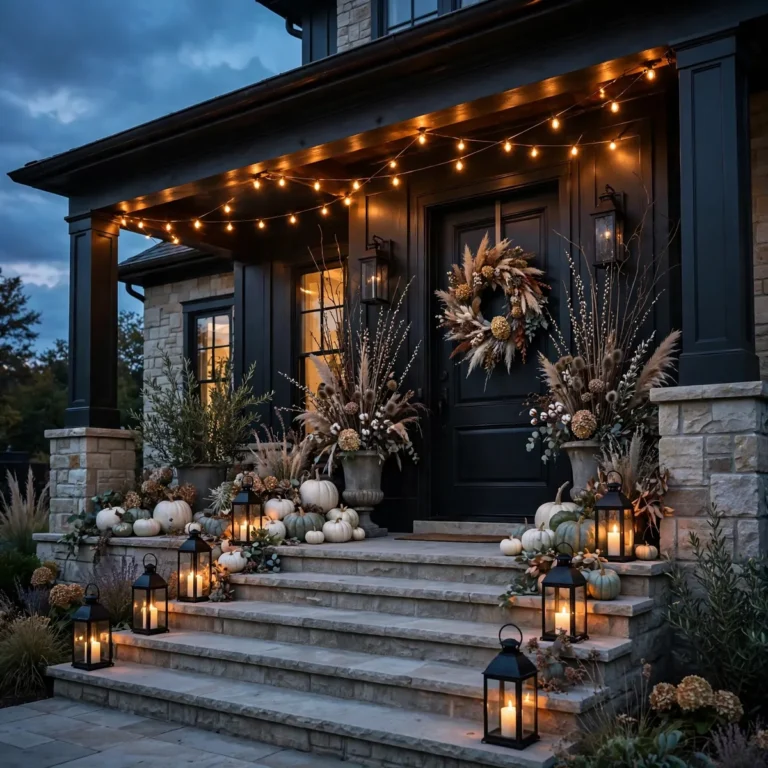
Start with a grapevine base and wire on groups of seed pods, wheat sheaves, and dried berries, working in one direction so every stem points the same way. Cover the mechanics with hydrangea heads or statice at the end. A seed-pod wreath survives wind and rain far better than a fresh one, and its browns and tans bridge straight into early winter.
5. The Low Tablescape With Grasses and Candlelight
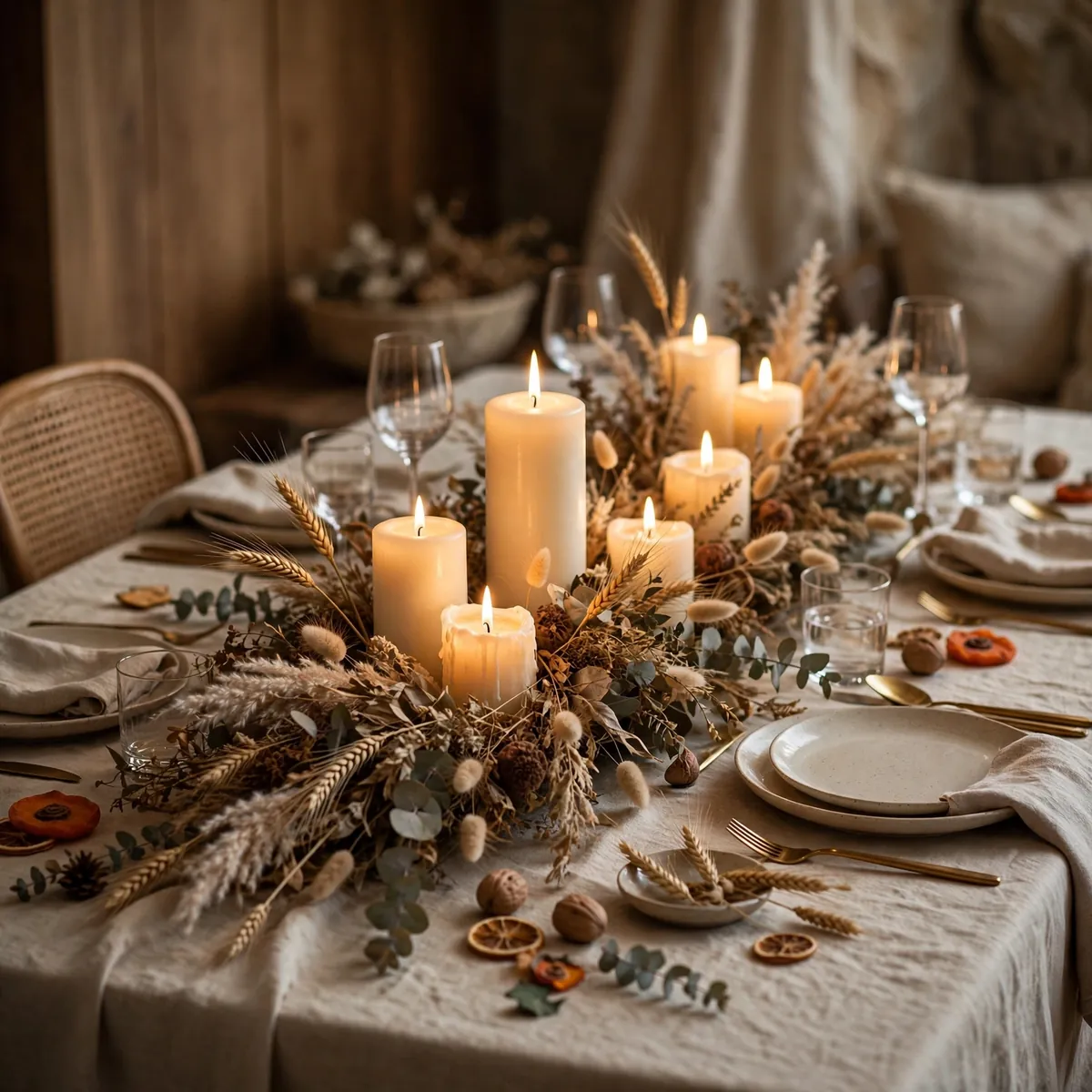
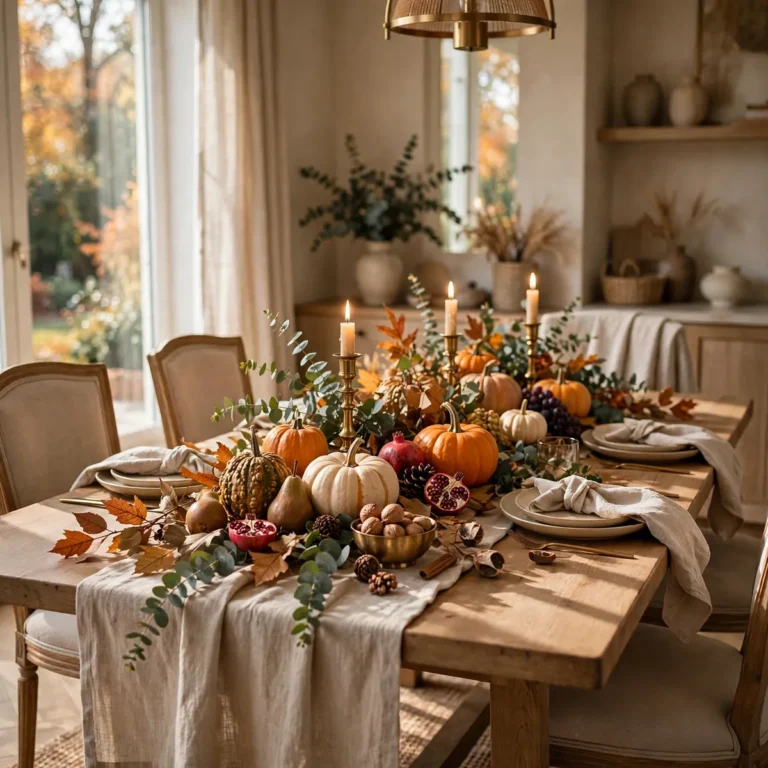
Run a loose garland of dried grasses, eucalyptus, and wheat down the center of the table, then nest pillar candles of varying heights inside it. The grasses catch candlelight beautifully and the whole thing takes ten minutes. For the rest of the table setting, see our fall table decor ideas — the dried garland is the anchor everything else builds on.
6. Bud-Vase Clusters
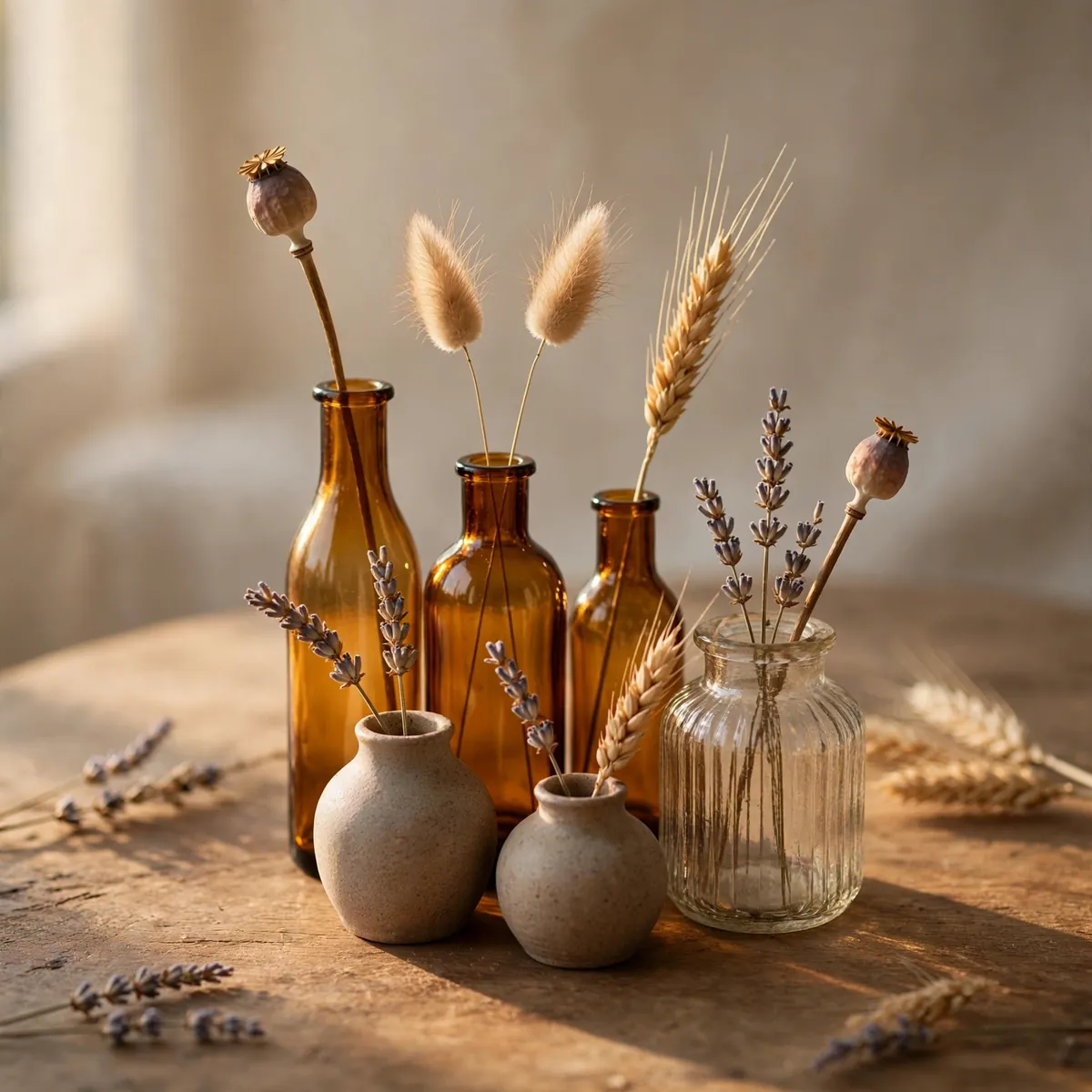
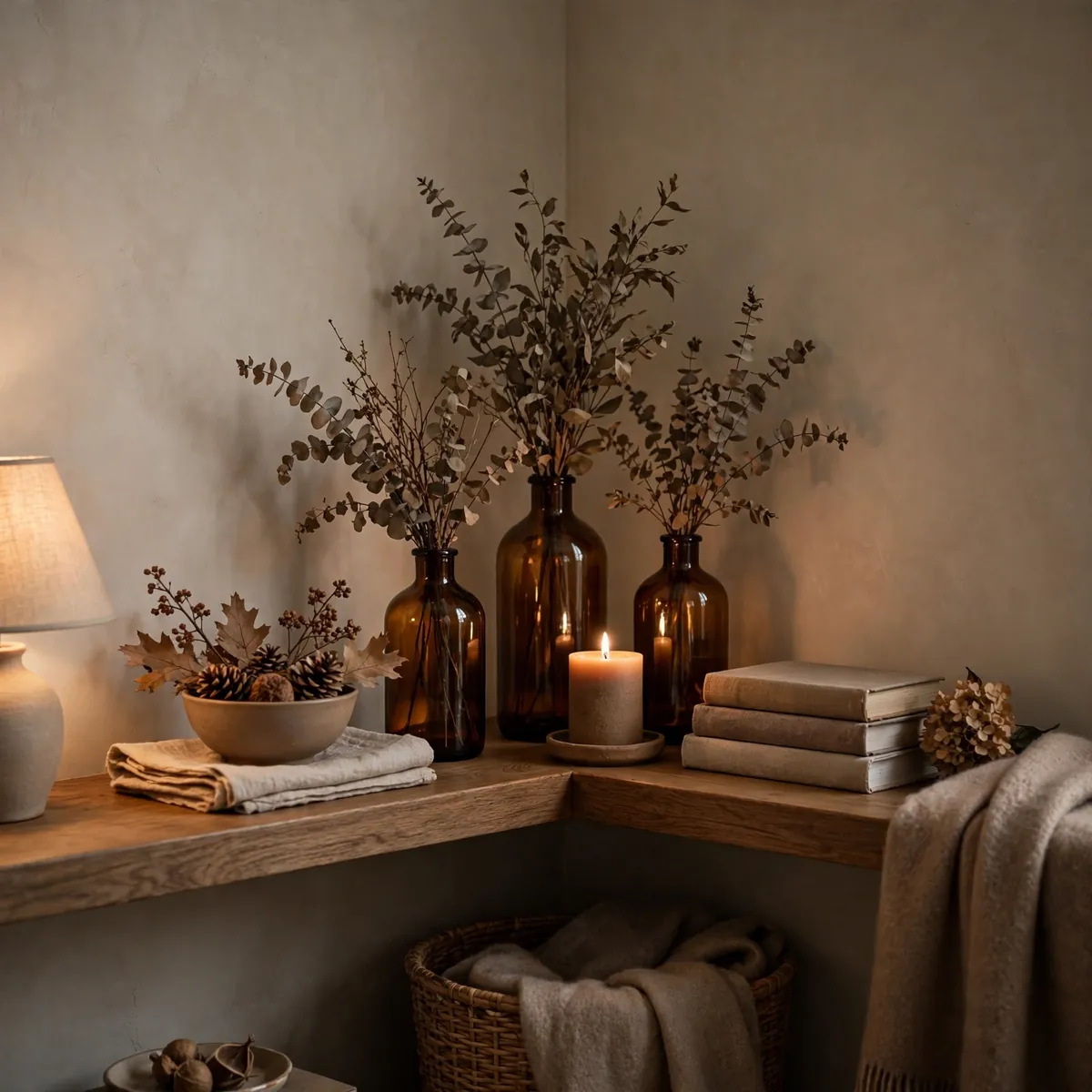
Instead of one large arrangement, group five to seven bud vases — amber bottles, small stoneware, a vintage jar — and put one or two stems in each. A single poppy pod in one, three bunny tails in the next, a wheat stem in the third. The cluster reads as one composition but each vase is trivial to refresh, and the low height never blocks sightlines.
7. A Hanging Branch Installation
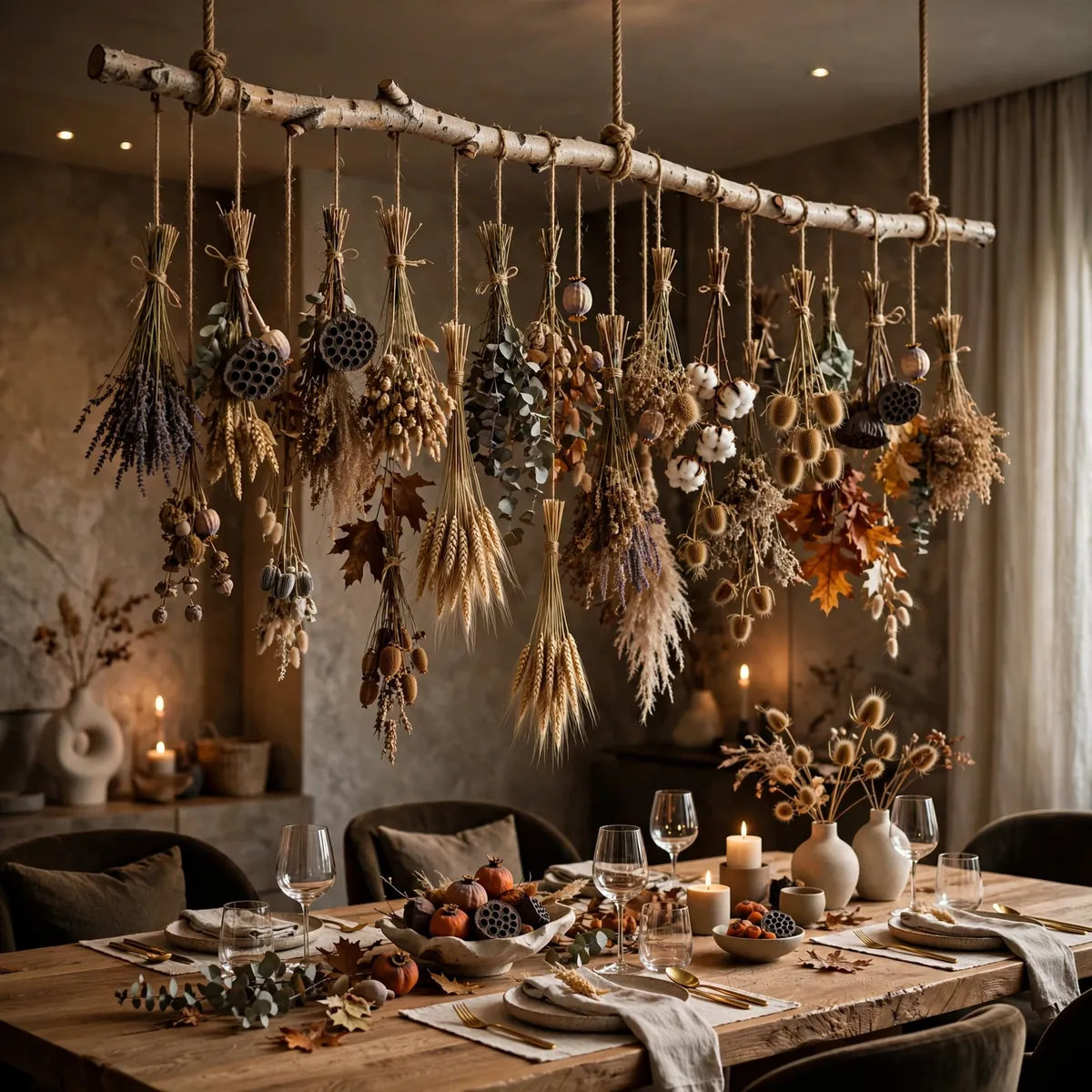
Suspend a sturdy horizontal branch from the ceiling with clear line or twine, then hang small tied bundles of dried flowers, grasses, and seed pods at varying lengths. It draws the eye up and makes a dining room feel designed rather than decorated. Hang it high enough to clear heads, and keep it away from ceiling fans and pendant lights.
8. The Small Brass-Tray Vignette
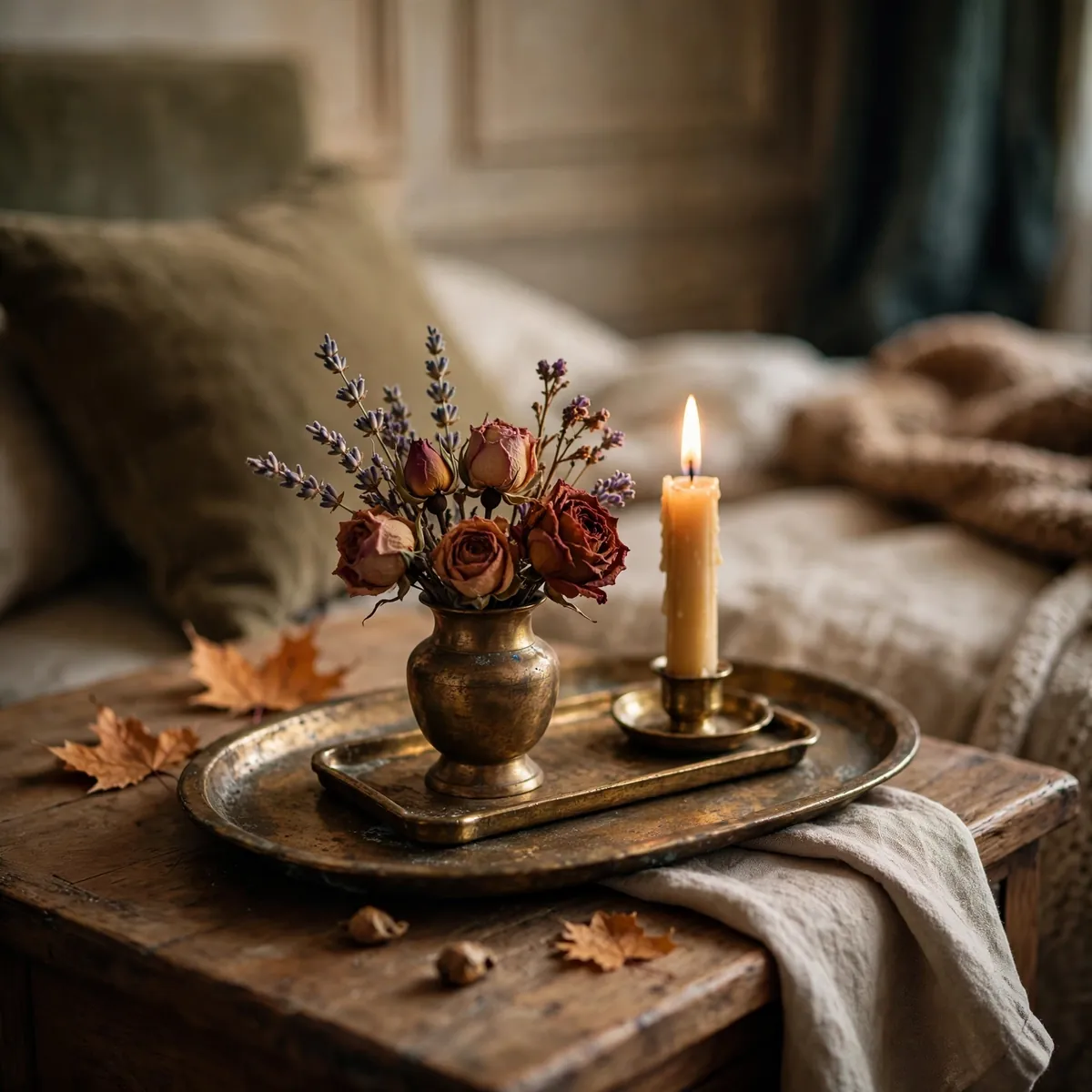
For shelves, nightstands, and bathrooms-with-windows (never steamy ones), shrink the whole concept: a brass or silver tray, one tiny vessel of dried roses and lavender, a candle. Dried flowers already carry so much texture that a small arrangement needs no competition — one little moment per surface is the entire trick.
Pampas Grass Alternatives That Behave Better
Pampas grass defined dried-flower decor for several years, but it has real drawbacks: the plumes shed constantly, the plant is invasive in several warm regions, and a full arrangement can overwhelm a normal-sized room. These alternatives give the same feathery height with fewer headaches.
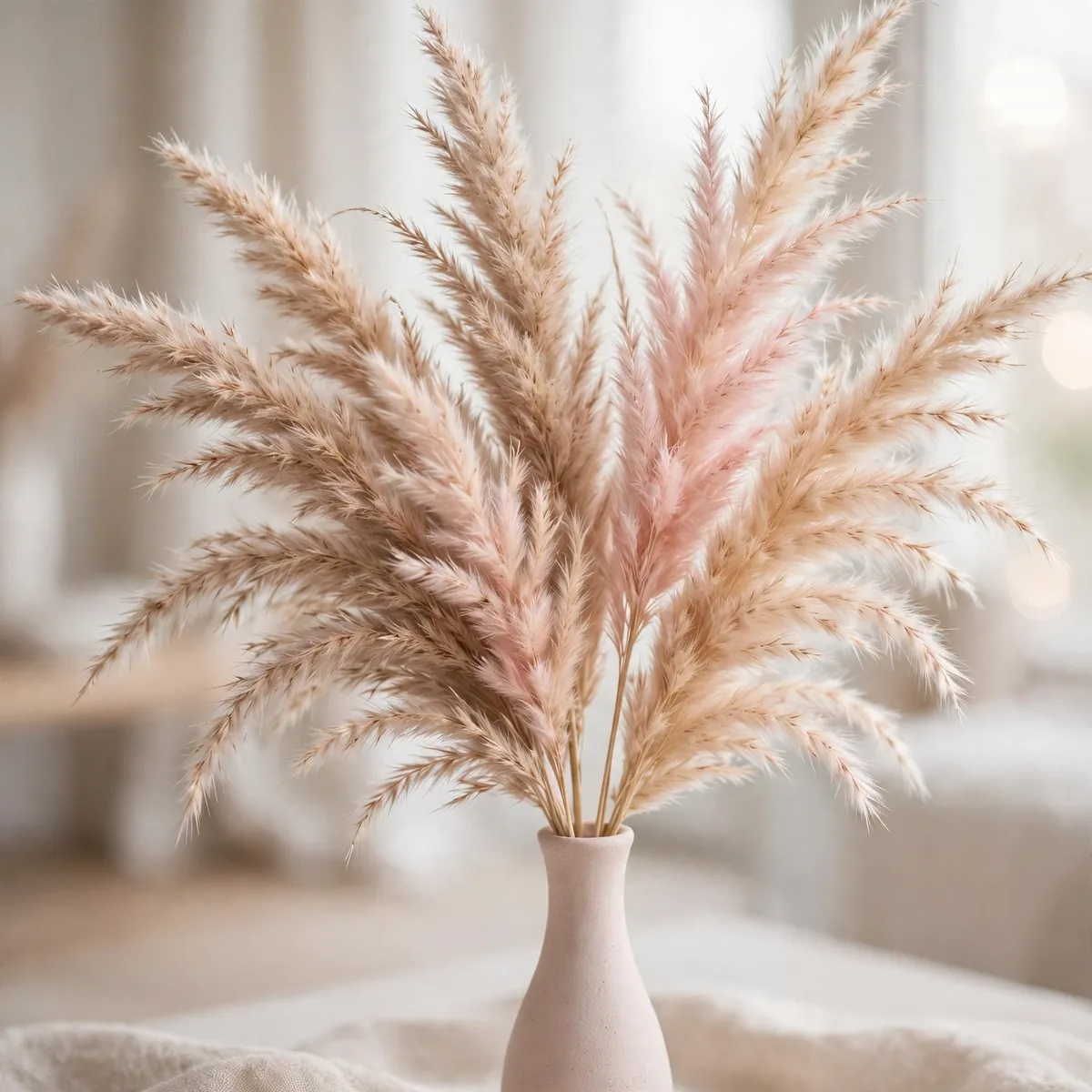
- Miscanthus plumes — feathery like pampas but finer-textured and far less prone to shedding. The best direct swap.
- Dried fountain grass — arching seed heads in wheat tones; holds its shape for months.
- Bunny tails en masse — the same softness at a smaller, more controllable scale. Twenty stems in a vase read as one cloud.
- Dried reeds and rushes — vertical, architectural, and essentially shed-proof.
If you already own pampas and love it, the hairspray trick plus placement away from walkways and vents solves most of the shedding problem.
How to Make Dried Arrangements Last
Dried flowers are low-maintenance, not no-maintenance. Four habits decide whether an arrangement looks good for three months or three years.
- Keep them out of direct sunlight. UV bleaches color fast — sometimes within weeks. Indirect light is fine; a sunny windowsill is not.
- Keep them dry. No water, no misting, and no humid rooms. Bathrooms, kitchens, and laundry areas will make stems droop or mold.
- Dust gently. A feather duster, a soft brush, or a hairdryer on its coolest, lowest setting. Delicate petals that can’t take it should simply be replaced.
- Handle as little as possible. Every touch risks a snap. When a single stem gives up, pull it and slot in a replacement — no need to rebuild the whole arrangement.
Frequently Asked Questions
How long do dried flower arrangements last?
At minimum, expect a full year. With the right conditions — out of direct sun, away from humidity and heat vents, dusted gently now and then — dried arrangements commonly last several years. Replace individual tired stems rather than the whole arrangement.
How do you keep dried flowers from shedding everywhere?
Give shedding plumes one light mist of hairspray, handle the arrangement as little as possible once styled, and place it away from walkways, vents, and ceiling fans. Some shedding is normal for grasses; choosing low-shed stems like miscanthus or bunny tails avoids the problem from the start.
Are dried flowers still in style?
Yes — they’ve moved well past the dusty-corner cliché. Current styling favors sculptural, neutral arrangements: tall grasses in ceramic vases, single-stem bud vases, and muted fall palettes. What looks dated is the dense, multicolor potpourri-bowl look, not dried flowers themselves.
Can you mix dried and fresh flowers in one arrangement?
You can, but keep the mechanics separate: dried stems must stay out of water. Either style them in adjacent vessels, or tuck fresh stems (in small water tubes) into a dried arrangement so only the fresh stems touch water. The contrast of textures is genuinely beautiful — just plan the water first.
Conclusion
Dried flower arrangement ideas are fall decorating at its most practical: choose botanicals that hold their color, build tallest-first in a heavy vase, style them where they won’t be touched, and keep them out of sun and humidity. Eight ideas, one afternoon of arranging, and the house is set through Thanksgiving. Start with the stems — hydrangeas, wheat, grasses, pods — and let the season do the rest.