12 Stunning Master Bedroom Decor Ideas That Turn Your Bedroom Into a Calm, Luxurious Retreat
Key Takeaways
What makes a master bedroom feel calm? Soft neutrals, layered warm light, and hotel-style bedding set the mood before any decor is added.
What is the fastest upgrade? Fresh white sheets, a folded throw at the foot of the bed, and two matching bedside lamps.
What rug size fits a king bed? A 9 by 12 foot rug leaves about 18 inches of soft floor on each side.
How do I add storage without clutter? Built-in wardrobes in the wall color keep everything hidden and the room feeling open.
These master bedroom decor ideas turn an ordinary bedroom into a calm, luxurious retreat without a full renovation. The secret is layering: soft color, warm light, generous textiles, and a few well-chosen pieces. Each idea works on its own, and together they build a room that feels finished, restful, and personal.
Start with the biggest surfaces, the walls, the bed, and the floor, then add light and texture. Small changes, like layered bedding or a rug that is actually large enough, make a bigger difference than a room full of small accessories. If you love deeper, moodier rooms, these ideas pair well with moody bedroom decor ideas for a richer evening feel.
How Can a Soft Neutral Palette Make Your Master Bedroom Feel Calm?
A soft neutral palette calms a master bedroom because warm whites, oatmeal, greige, and taupe lower visual noise, reflect gentle light, and let texture, rather than color, carry the interest.
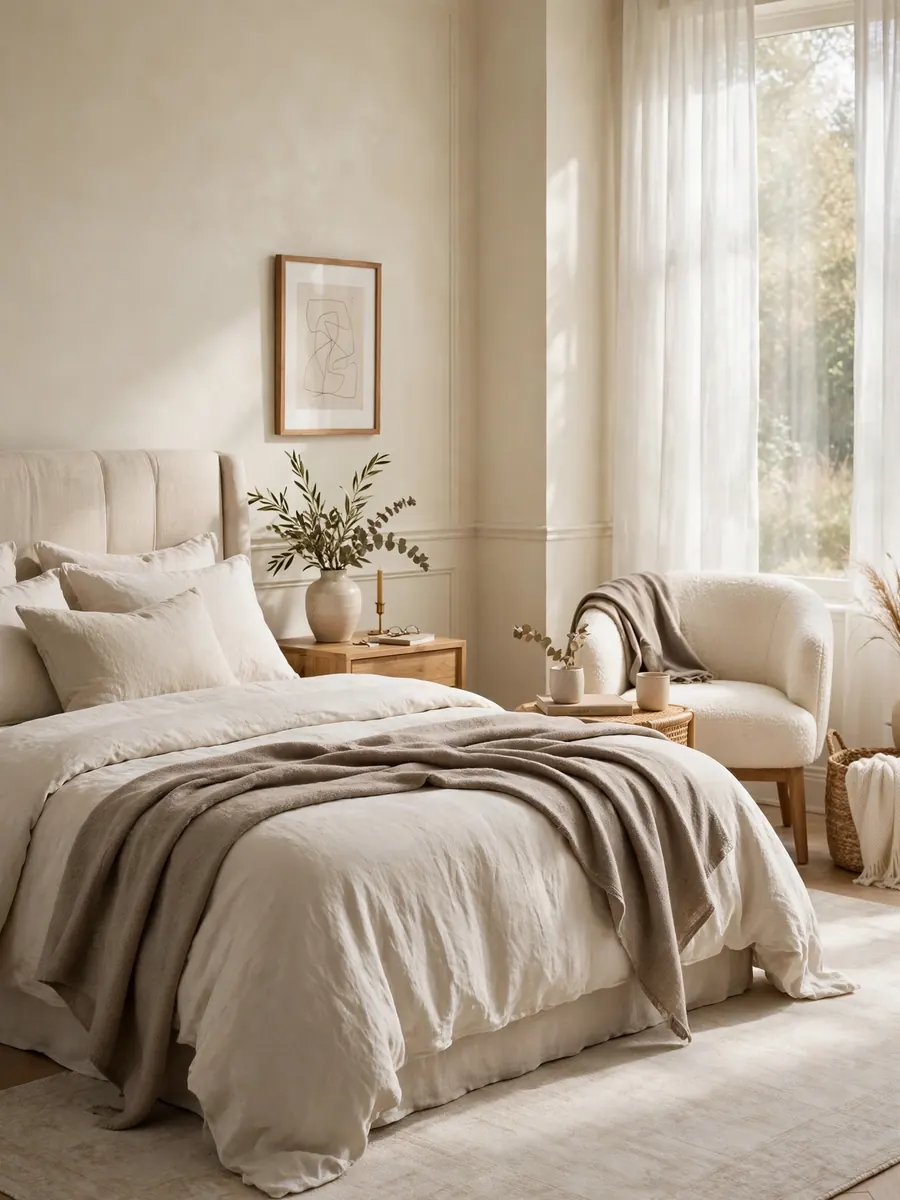
Pick three neutrals and repeat them through the room. Warm ivory walls, oatmeal linen bedding, and a taupe throw give the eye somewhere soft to rest. Add a fourth tone, like pale greige on the rug or the curtains, so the room does not look flat or washed out.
Concrete example: paint the walls warm ivory, dress the bed in oatmeal linen with two cream pillows, and lay a pale greige wool rug beside the bed. A taupe throw over the foot of the bed finishes the palette.
Quick tips
- Test paint in warm and cool daylight before you commit.
- Mix matte and soft textures so neutrals do not look dull.
- Keep wood tones warm to stop pale walls feeling cold.
Why Does a Statement Upholstered Bed Frame Change the Whole Room?
A statement upholstered bed frame changes the whole room because the bed is the largest piece of furniture, so its fabric, height, and color set the style for everything else around it.
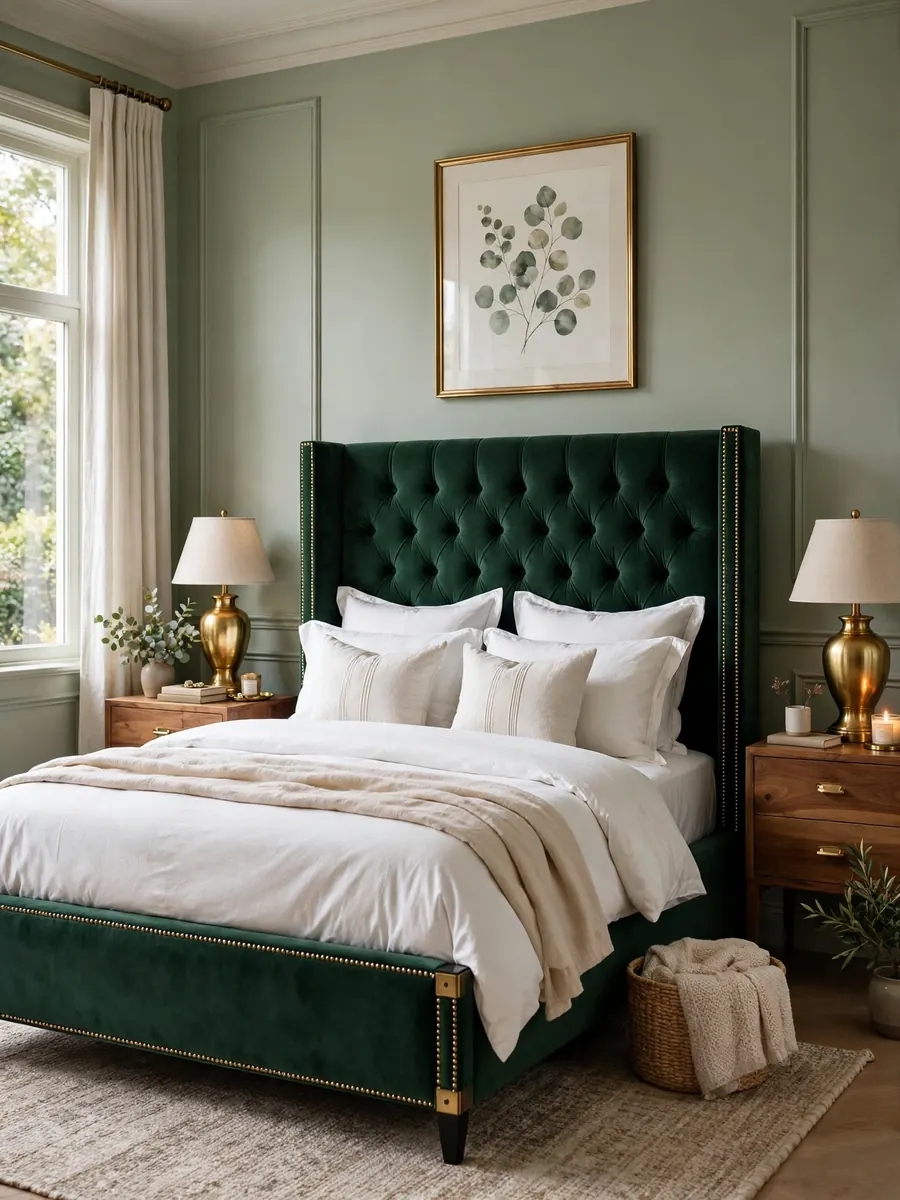
A tall headboard, around 55 to 60 inches high, gives the room instant structure and a comfortable backrest for reading. Velvet, boucle, or linen all work, but the frame should feel soft to the touch and look substantial from the door. Choose a color with confidence, then keep the bedding quieter.
Concrete example: a deep emerald velvet frame with brass nailhead trim, dressed with crisp white sheets and two sage green cushions, turns a plain room into a boutique hotel suite. Warm wood nightstands balance the rich green.
Quick tips
- Measure the headboard against your wall before ordering.
- Pick a fabric you can spot-clean easily.
- Keep wall art simple when the headboard is bold.
How Do You Layer Warm Lighting in a Master Bedroom?
Layer warm lighting in a master bedroom by combining three heights: soft ceiling light, mid-level bedside lamps, and low accent light, all in warm white around 2700K, so the room glows instead of glaring.
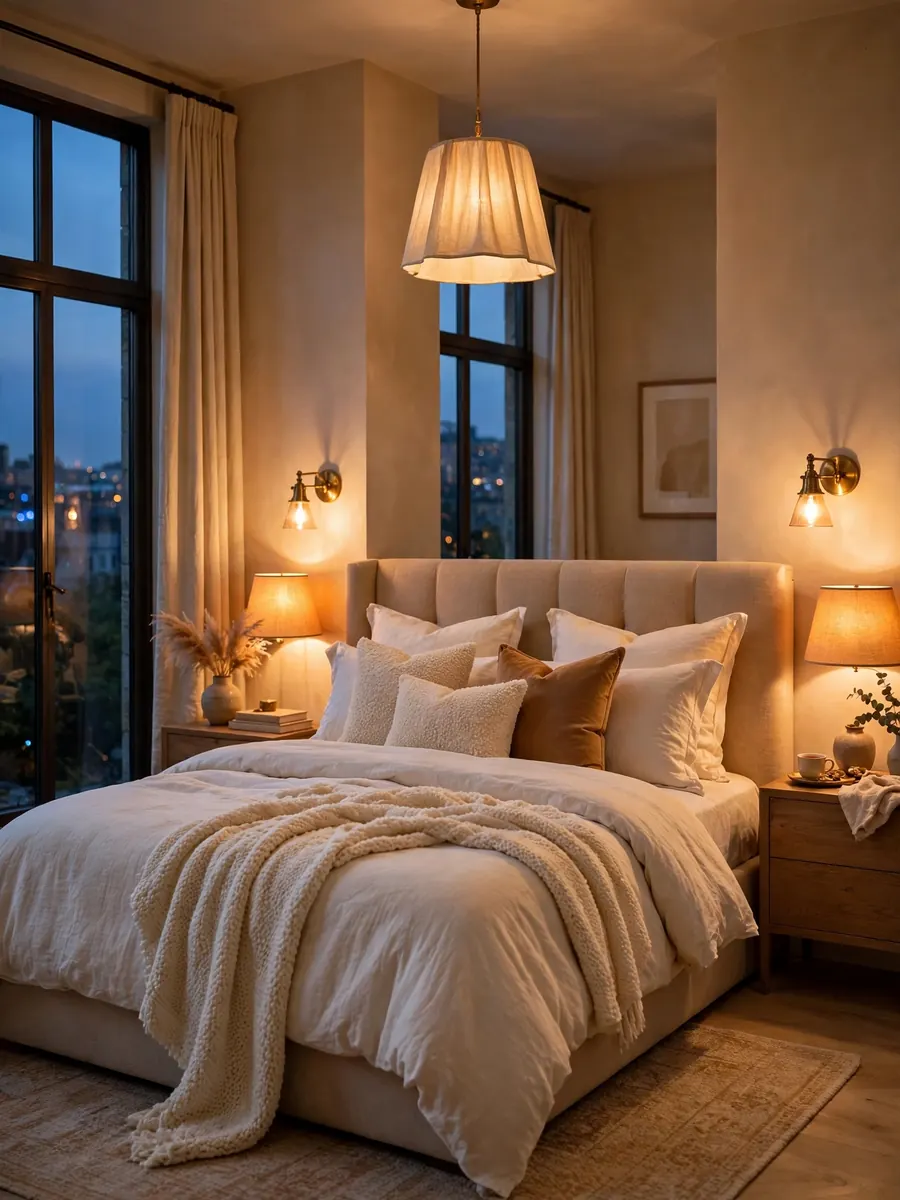
One ceiling light alone flattens a bedroom and casts hard shadows. Bedside lamps at shoulder height soften the walls, while a small sconce or a low lamp on the dresser fills the corners. A dimmer on the main light lets you drop the brightness in the evening.
Concrete example: hang a fabric pendant over the room, place two 24-inch ceramic lamps on the nightstands, and add a warm sconce above the reading chair.
| Layer | Height | Example | Job |
|---|---|---|---|
| Ceiling | High | Pendant or flush light | General light |
| Bedside | Mid | Table lamps | Reading and warmth |
| Accent | Low | Sconce or dresser lamp | Soft corners |
Quick tips
- Use warm white bulbs, around 2700K, everywhere.
- Match lamp heights on both sides of the bed.
- Add a dimmer to the ceiling light for evenings.
What Size Area Rug Works Best in a Master Bedroom?
An oversized plush area rug works best in a master bedroom when it extends at least 18 inches beyond each side of the bed, so your feet land on soft fibers, not cold floor, every morning.
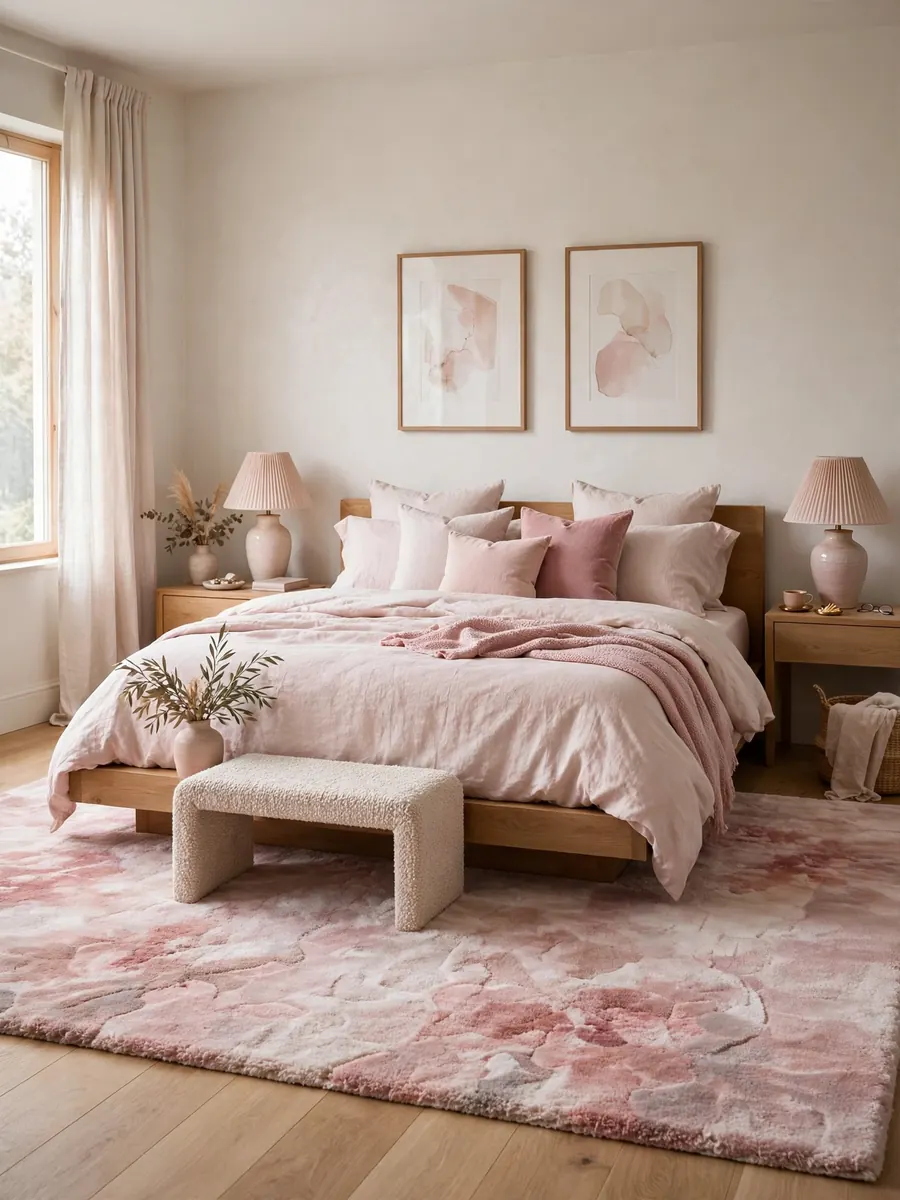
Most rugs sold for bedrooms are too small, and a small rug makes even a large room look unfinished. For a king bed, a 9 by 12 foot rug is the safe choice, while a queen bed suits an 8 by 10 foot rug. The rug should start just under the nightstands and run two-thirds of the way down the bed.
Concrete example: a dusty blush high-pile rug, 9 by 12 feet, sits under a low oak bed with blush linen bedding and two pale pink cushions. The rug pulls the bed, nightstands, and chair into one clear zone. For more sizing help, see our guide to bedroom rug ideas before you buy.
Quick tips
- Measure the floor, not just the bed, before ordering.
- Choose a low pile if you use a robot vacuum.
- Leave 12 inches of bare floor at the room edges.
How Do You Create Hotel-Style Layered Bedding at Home?
Hotel-style layered bedding comes from stacking crisp white sheets, a light duvet, a folded throw, and pillows in three sizes, so the bed looks plush, feels cool, and invites you to climb in.
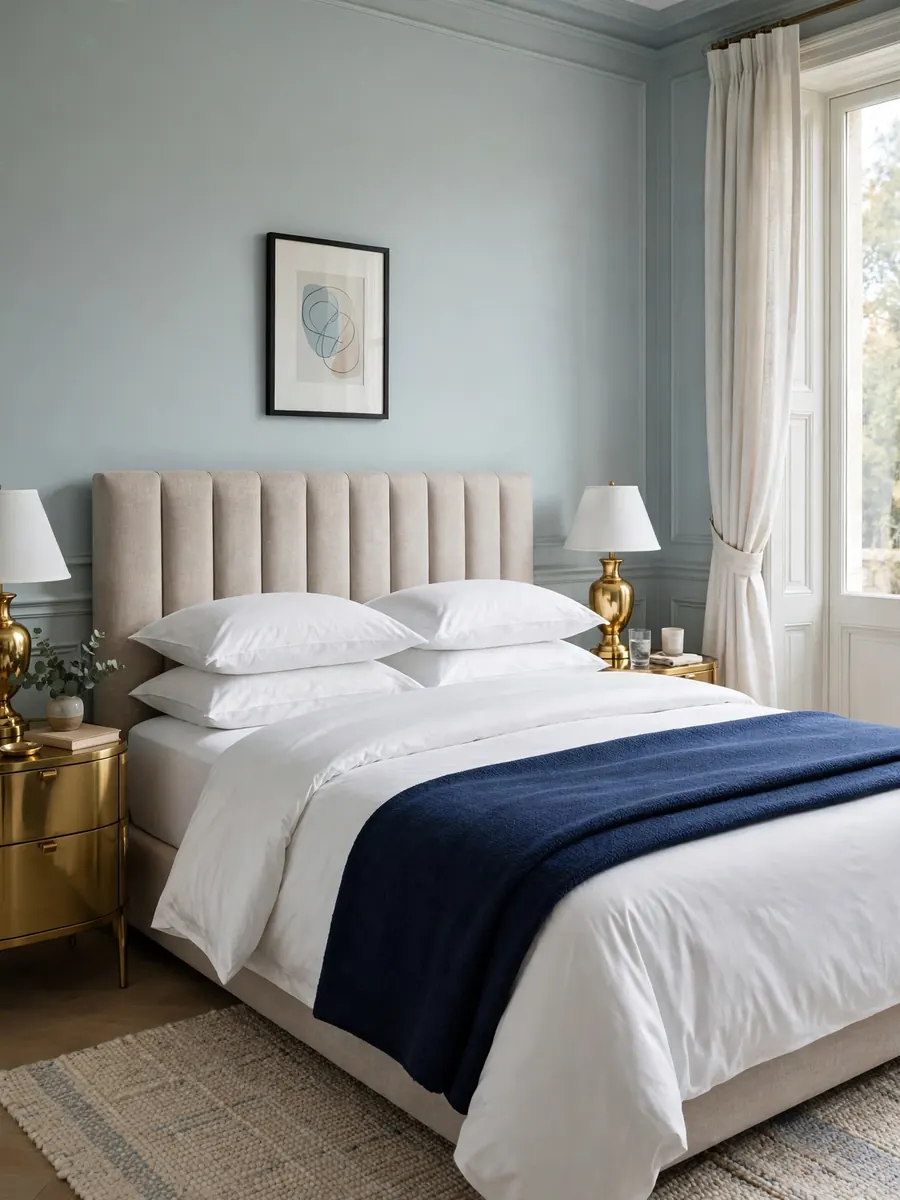
Start with a fitted sheet and a flat sheet in white cotton percale, then add a lightweight duvet folded back by about 12 inches. A throw in a soft accent color, folded across the foot, adds the color that hotels use so sparingly. Finish with two sleeping pillows, two standard pillows, and one small cushion in front.
Concrete example: white percale sheets, a white duvet folded to show the sheet edge, a navy throw across the foot, and three layers of pillows in white and pale blue-grey. The bed looks made by a housekeeper, yet it takes minutes to remake.
Quick tips
- Iron or steam the top fold for a crisp edge.
- Keep the throw color in the room’s palette.
- Wash bedding weekly so white stays bright.
How Do Natural Wood Tones Warm Up a Master Bedroom?
Natural wood tones warm up a master bedroom by adding grain, depth, and a honeyed glow that balances cool walls and white bedding, so the room feels grounded instead of stark.
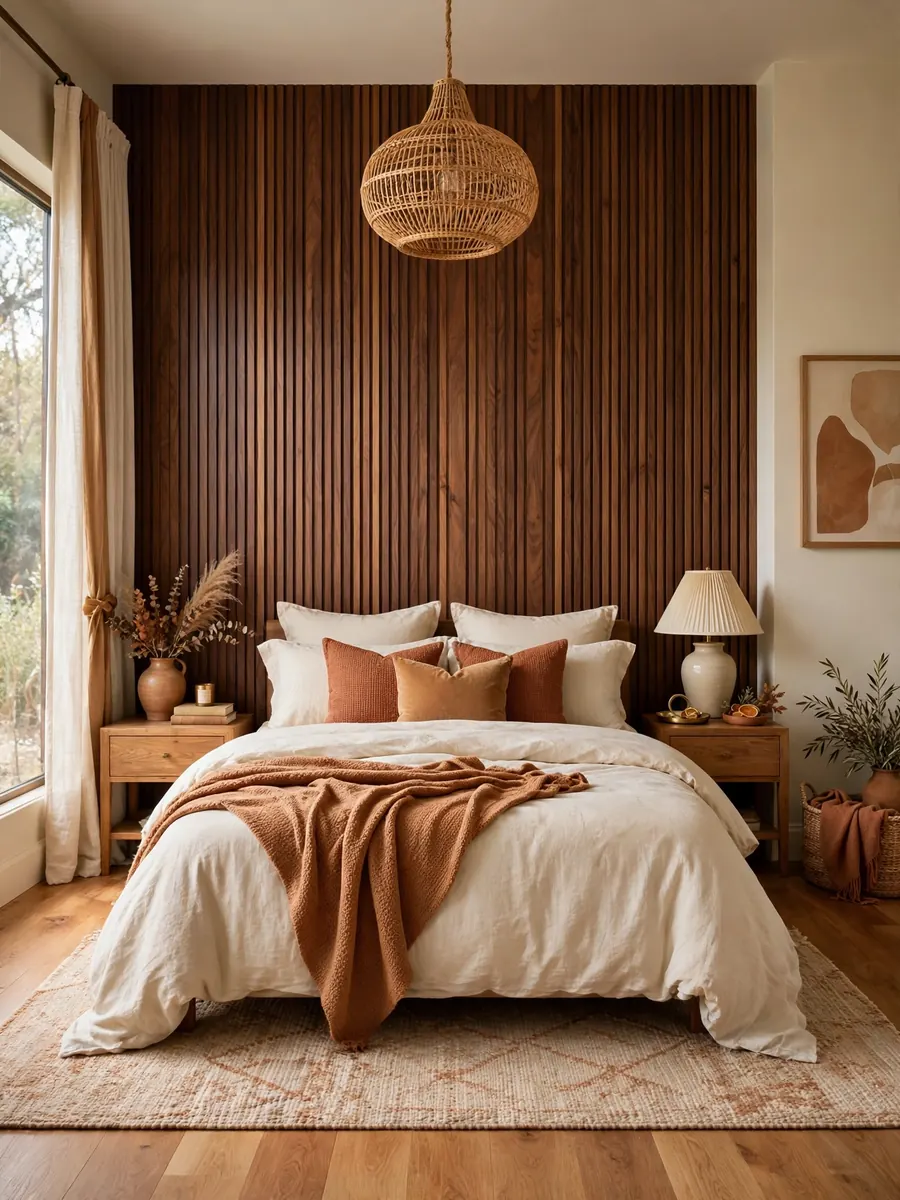
Wood works best in two or three finishes, not five. A walnut headboard wall, honey oak floors, and a rattan pendant give variety without clashing. Keep the wood tones in the same warm family, and let one darker piece, like a walnut bench or dresser, anchor the room.
Concrete example: a walnut slatted headboard wall behind a cream bed, honey oak flooring, a rattan pendant overhead, and terracotta cushions on the bed. The wood adds warmth and the terracotta ties the room together.
Quick tips
- Repeat the same wood tone at least twice.
- Mix grain directions for a relaxed, natural look.
- Oil wooden furniture once a year to keep it rich.
How Do You Create a Cozy Reading Nook in a Master Bedroom?
A cozy reading nook needs only a comfortable chair, a small light, and a surface for a book and a cup, placed near a window or in a quiet corner, so reading becomes a daily ritual.
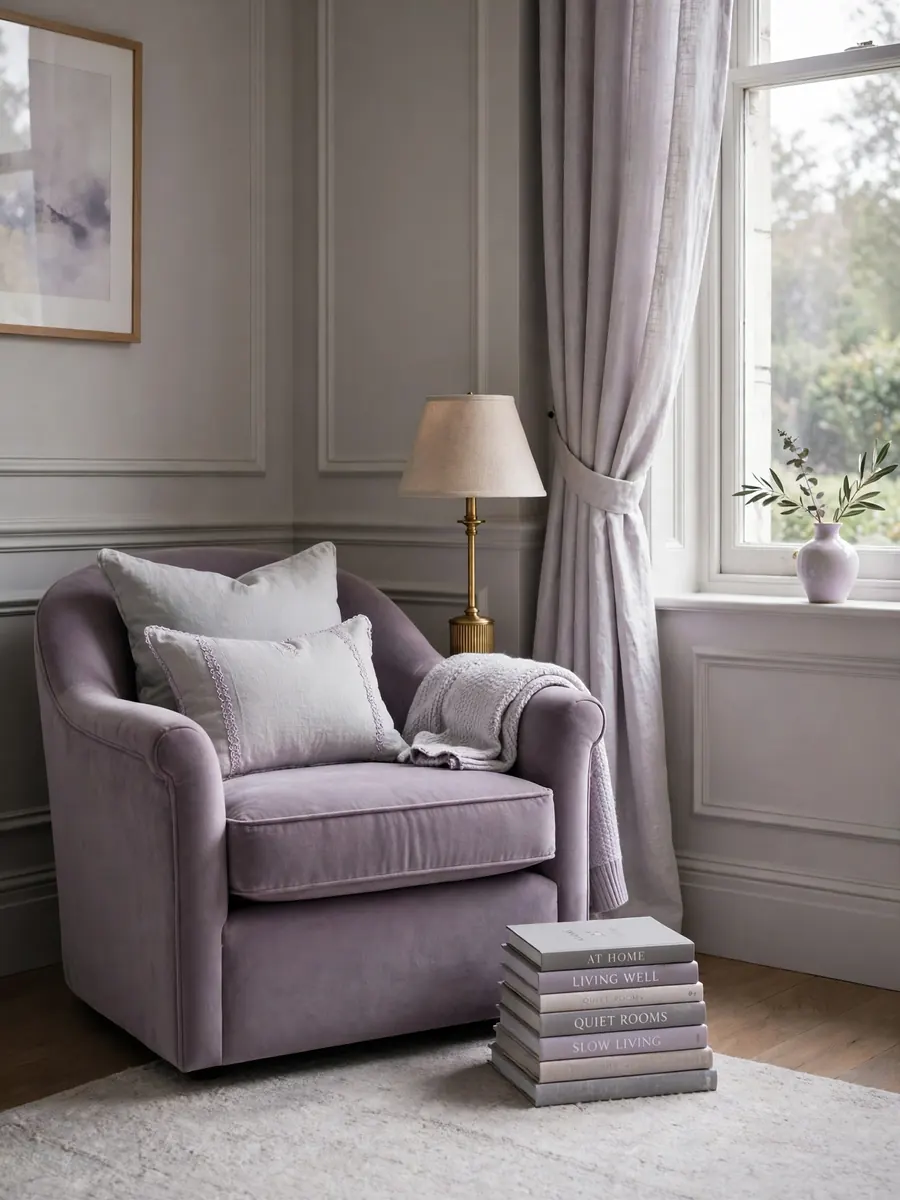
Choose an armchair you can sit in for an hour, with arms low enough to hold a book comfortably. A floor lamp with a warm bulb sits just behind the chair, and a small side table holds a book, reading glasses, and a cup of tea. A soft throw over the chair arm makes the spot look inviting even when it is empty.
Concrete example: a dusty lavender wing chair beside the window, a brass floor lamp behind it, a round oak side table, and a grey throw folded over one arm. The corner becomes the room’s quietest spot.
Quick tips
- Place the chair where daylight falls in the morning.
- Keep a small basket for books beside the chair.
- Add a cushion that supports your lower back.
Why Add a Bench at the Foot of the Bed?
A bench at the foot of the bed adds a useful seat, a place for tomorrow’s clothes, and a visual full stop that makes the bed feel finished and the room feel balanced.
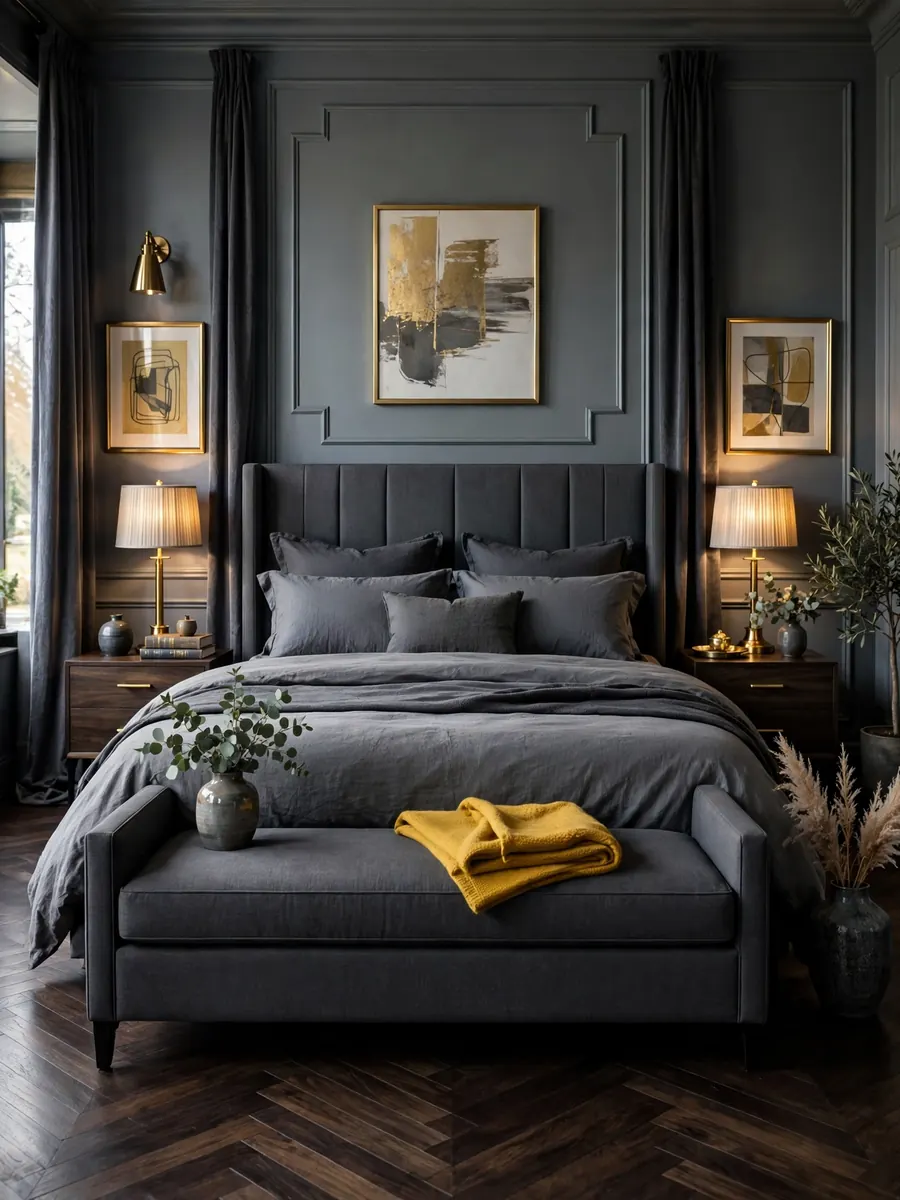
The bench should be slightly narrower than the bed, around 48 inches wide for a king, and about 18 inches high, so it matches the mattress height. Upholstered benches feel softer and quieter, while a wooden bench with a cushion suits a more rustic room. Leave at least 24 inches between the bench and the wall for easy walking.
Concrete example: a charcoal grey upholstered bench, 48 inches wide, at the foot of a king bed, with a folded mustard throw across one end. It holds clothes in the morning, seats you in the evening, and frames the bed all day.
Quick tips
- Measure the gap to the wall before you buy.
- Pick a bench you can sit on comfortably.
- Keep the throw color tied to the bedding.
How Can Mirrors Add Light and Depth to a Master Bedroom?
Mirrors add light and depth to a master bedroom by bouncing daylight across the room and doubling the view, which makes even a small bedroom feel brighter, taller, and more open.
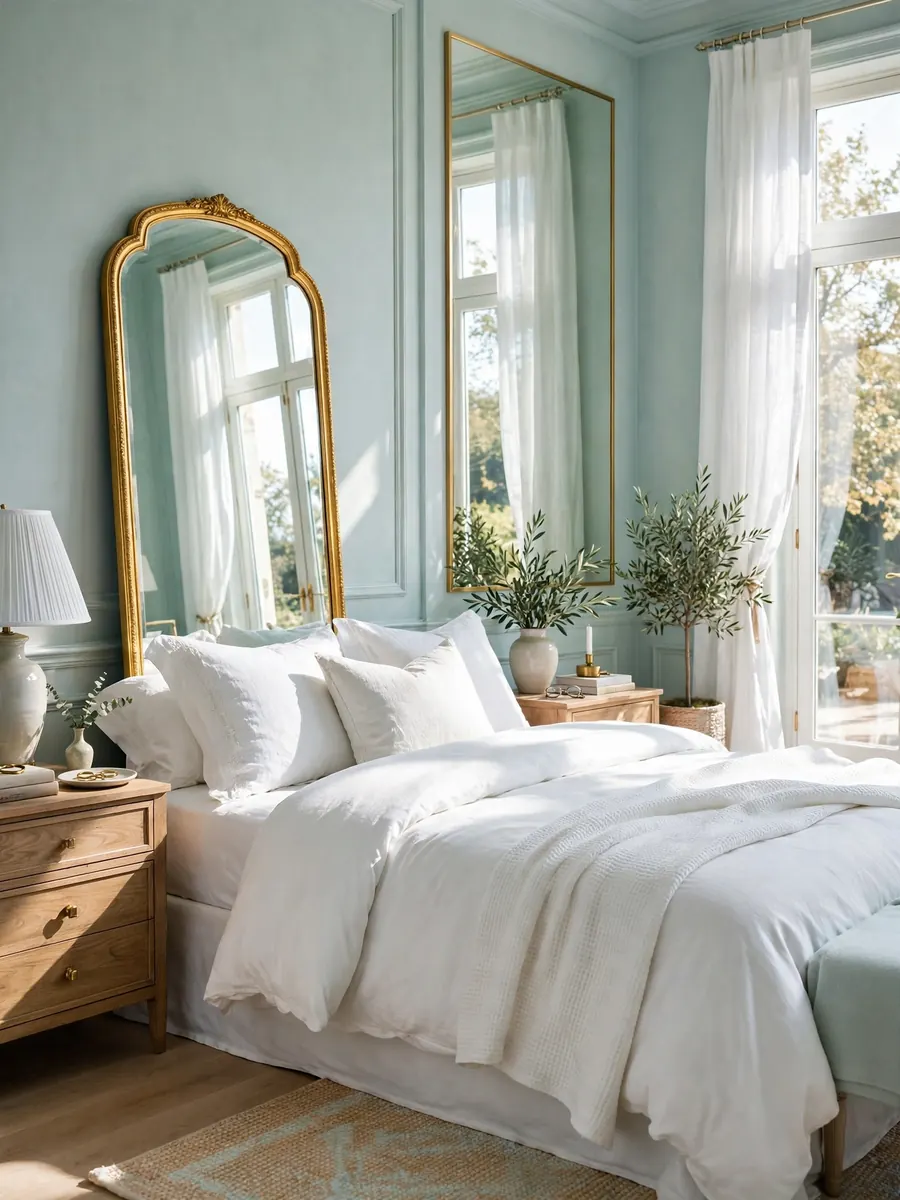
Hang or lean one large mirror, not a cluster of small ones, opposite a window or beside the bed. An arched mirror softens a room full of straight lines, while a round mirror suits a square dresser. The frame matters too: gold warms a pale room, while black adds crisp definition.
Concrete example: a 70-inch arched mirror with a slim gold frame leans against the wall beside the bed, facing the window. Morning light bounces off the glass, the room looks twice as wide, and the mirror doubles as a full-length check.
Quick tips
- Place mirrors where they reflect light, not clutter.
- Clean the glass weekly to keep the reflection bright.
- Keep the frame finish matched to other metals.
How Do Indoor Plants Soften a Master Bedroom?
Indoor plants soften a master bedroom by adding living green, gentle movement, and natural shapes that break up straight furniture lines and make the room feel fresh and cared for.
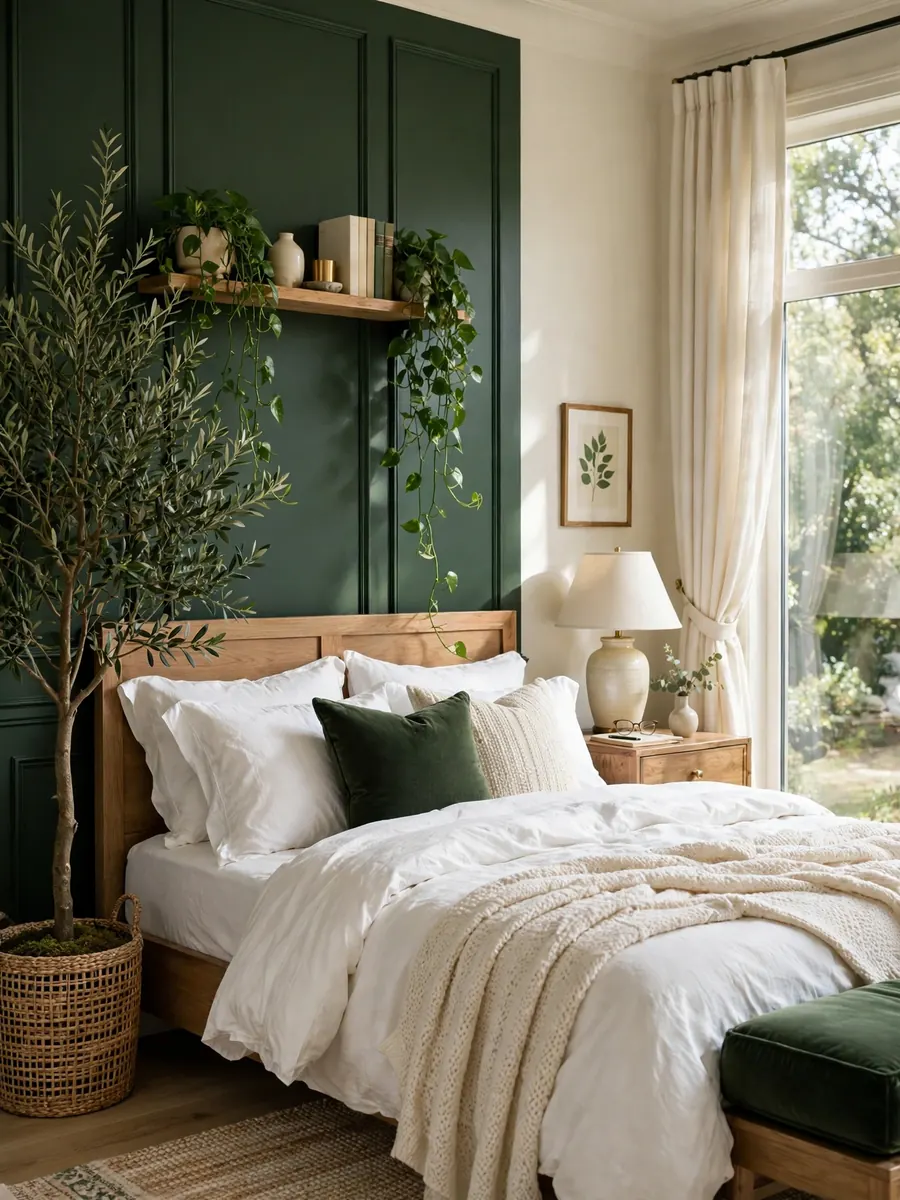
One large plant makes more impact than five small ones scattered around. An olive tree in a corner, a fiddle leaf fig by the window, or a trailing pothos on a shelf all suit bedrooms, as long as the plant gets the light it needs. Choose pots that match the room, cream ceramic or woven baskets, so the plant looks styled rather than accidental.
Concrete example: a six-foot olive tree in a cream ceramic pot stands in the corner by the window, while a small pothos trails from a shelf above the dresser. The deep green leaves contrast beautifully with white bedding.
Quick tips
- Pick plants that suit your room’s actual light.
- Water on a set day each week, not on impulse.
- Dust large leaves monthly so they stay glossy.
How Do You Style a Dresser Vignette in a Master Bedroom?
A styled dresser vignette works when you group three objects at different heights, a tall vase, a medium frame, and a low tray, so the dresser top looks intentional instead of cluttered.
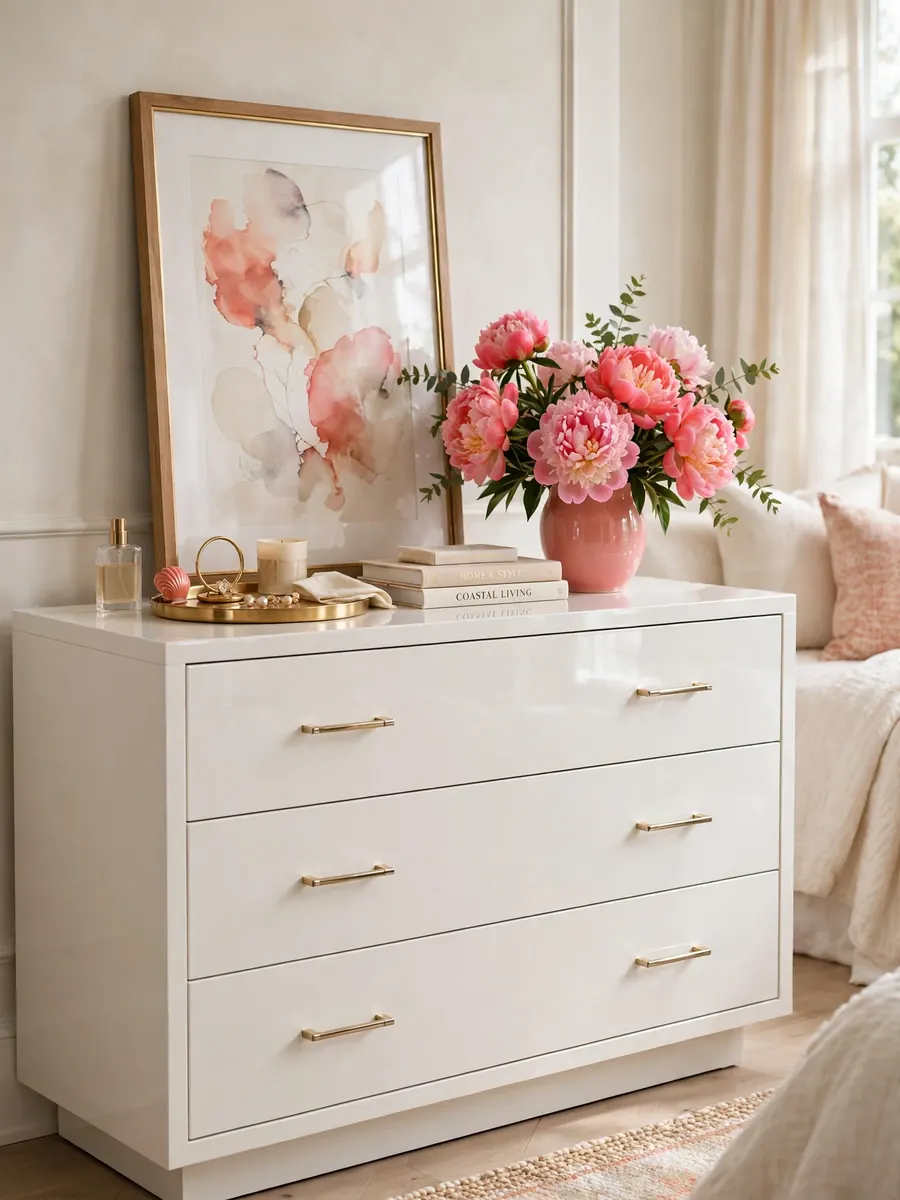
Start with the tallest piece at the back, usually a vase with fresh flowers or a framed print leaning on the wall. Add a medium piece in front, like a stack of two books or a small lamp, then finish with a low tray that holds a candle and a small dish for jewelry. Leave empty space on at least one-third of the surface.
Concrete example: on a white lacquer dresser, a coral vase of peonies stands at the back left, a gold-framed print leans beside it, and a brass tray with a candle and a small ceramic dish sits in front. The coral picks up the cushions on the bed.
Quick tips
- Use odd numbers, three or five objects, not four.
- Leave one-third of the surface empty.
- Swap flowers weekly for a fresh look.
How Do You Add Built-In Storage Without Crowding the Room?
Built-in storage stays invisible when wardrobes run floor to ceiling, use handleless doors, and match the wall color exactly, so the storage reads as architecture instead of furniture.
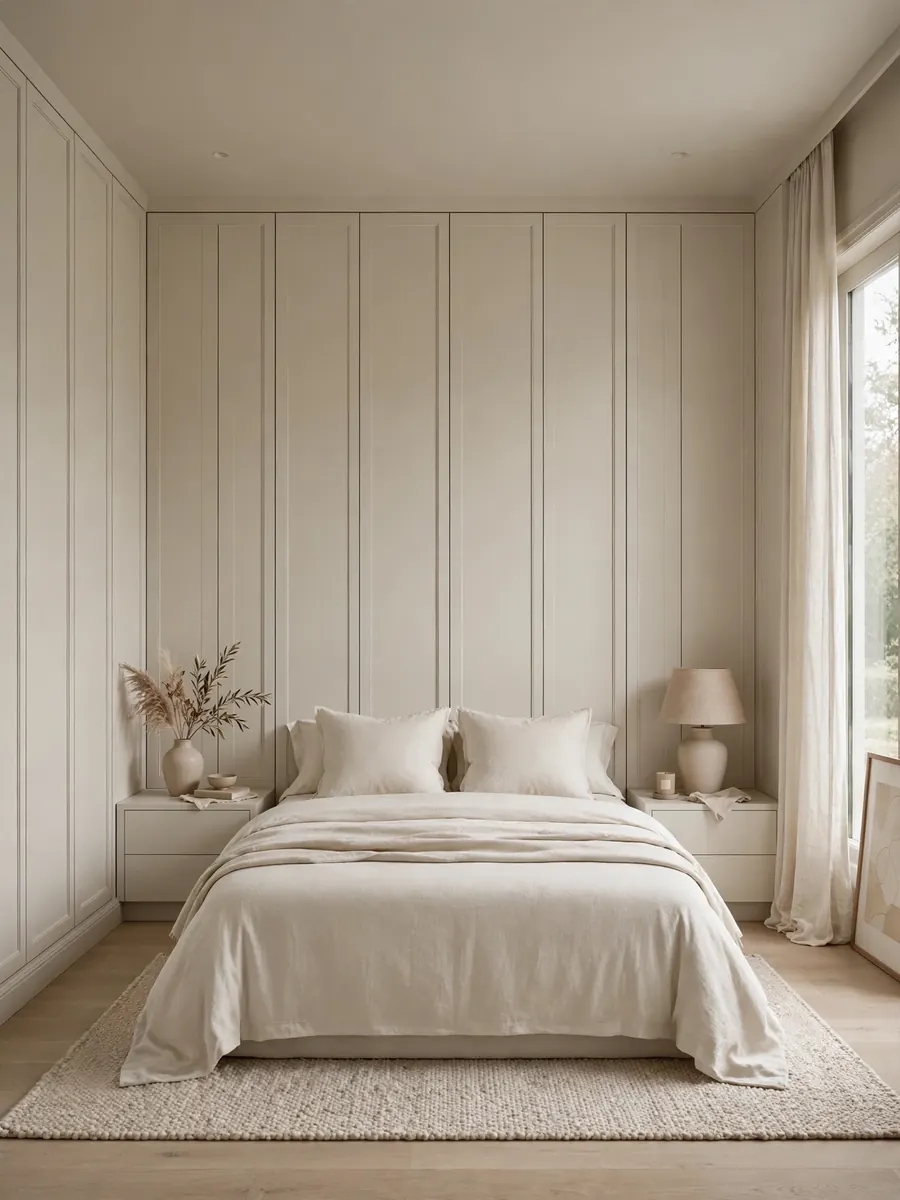
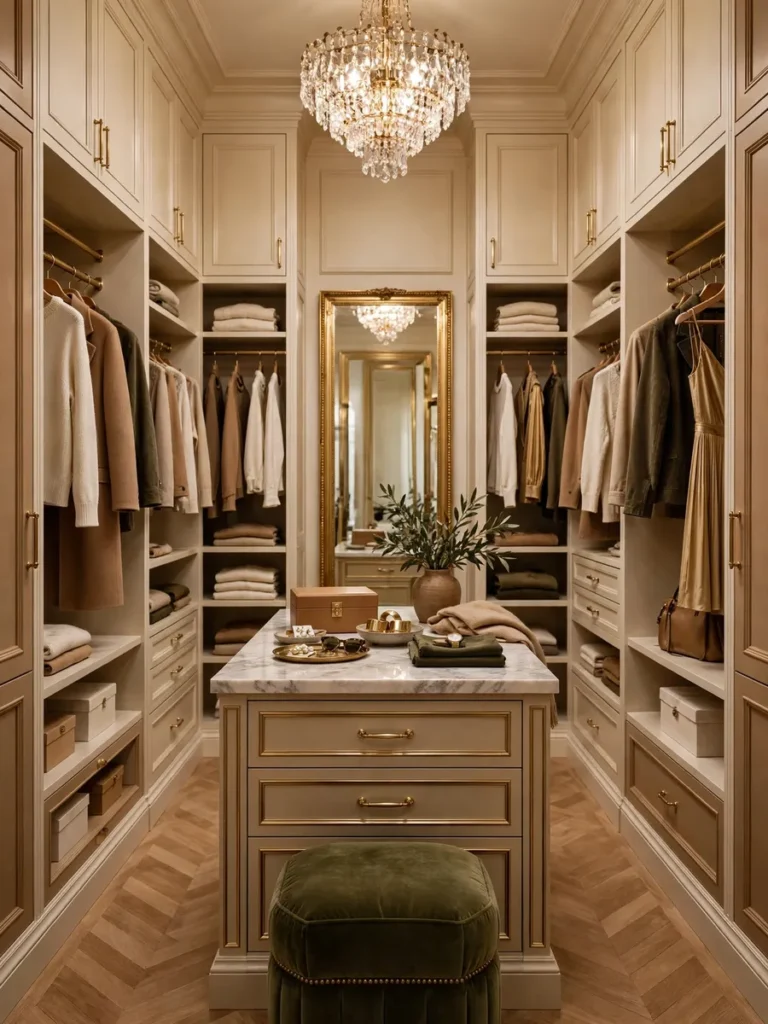
Plan the inside before the outside: hanging space for dresses and shirts, drawers for folded clothes, and a top shelf for bedding. Shallow drawers, around 16 inches deep, stop clothes from getting lost at the back. A full-length mirror on one door saves wall space and removes the need for a separate standing mirror.
Concrete example: pale beige floor-to-ceiling wardrobes run along one wall, painted the same warm beige as the wall, with push-to-open doors and no handles. Inside, one side holds hanging clothes and the other holds drawers and shelves, yet the room still feels open.
Quick tips
- Match wardrobe paint to the wall paint exactly.
- Add interior lighting so deep shelves stay useful.
- Keep one shelf free for bedding and spare pillows.
Frequently Asked Questions
What colors make a master bedroom feel calm?
Warm whites, oatmeal, greige, taupe, soft sage, and pale blue-grey make a master bedroom feel calm, because they reflect gentle light and lower visual noise. Use three neutrals as the base, add one soft accent like sage, and keep bold color to a throw or a cushion.
How do I make a master bedroom feel like a hotel?
Layer white cotton sheets, a folded duvet, and a throw, add two matching bedside lamps with warm bulbs, and keep surfaces mostly clear. Fresh flowers and a tidy dresser top complete the hotel feeling.
What size rug goes under a king bed?
A 9 by 12 foot rug is the best size under a king bed, because it leaves about 18 inches of rug on each side and at the foot. For a queen bed, an 8 by 10 foot rug works well. Measure the floor first.
How do I add storage without crowding a master bedroom?
Use floor-to-ceiling built-in wardrobes painted the same color as the walls, with handleless doors and well-planned interiors. Add under-bed drawers for out-of-season clothes.
Conclusion
These master bedroom decor ideas work because they layer the basics well: calm color, warm light, generous bedding, and storage that stays out of sight. You do not need to do all twelve at once. Start with the bed, add a large enough rug, then fix the lighting.
Pick the idea that solves your biggest frustration first, whether that is a cold floor, a dark corner, or a wardrobe that never closes. One good change makes the next one easier.