12 Effortless Nightstand Decor Ideas for a Beautiful Bedside
12 Effortless Nightstand Decor Ideas for a Beautiful Bedside
A great nightstand does two jobs at once: it looks styled, and it actually works. The sweet spot most designers land on is three to five items arranged at three different heights — a lamp, one medium-height piece, and one low piece — with a tray or small dish catching the things you use every night. That simple structure is why styled bedside tables always look calm even when they’re fully functional.
Whether your style leans classic, modern, or somewhere eclectic like our art deco bedroom ideas, these nightstand decor ideas work because they follow a few quiet rules about proportion, light, and restraint. Here are twelve ways to put them into practice.
1. Style by the Three-Height Rule: The Nightstand Decor Idea That Always Works
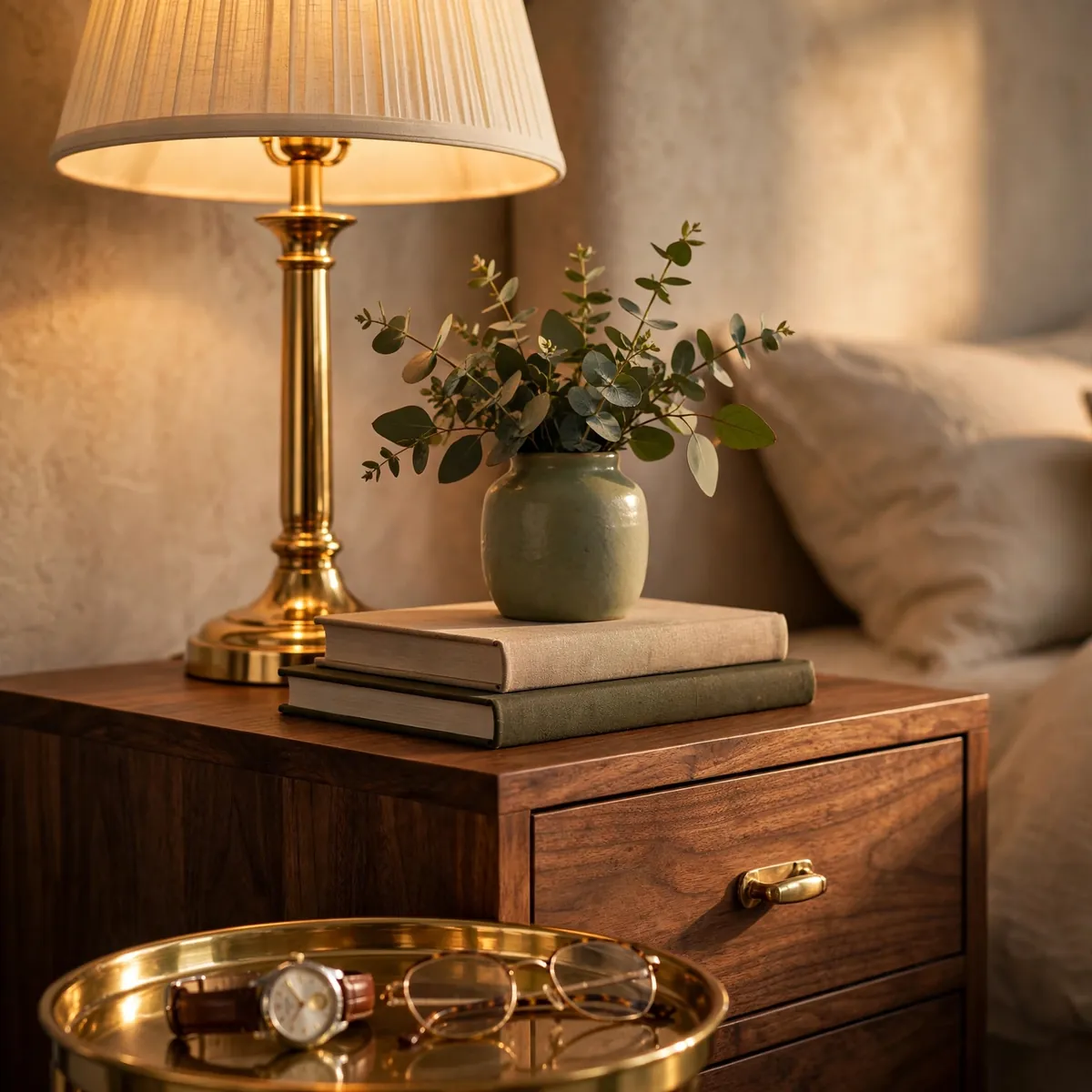
Most bedside tables that look “off” are flat. They have a lamp and nothing else, or three objects all the same height, and the eye slides right past. The fix is the three-height rule: one tall anchor, one medium piece, and one low accent.
Your lamp is the tall anchor — it usually sits in the back corner, farthest from where you get out of bed. A medium-height object goes beside it: a stack of books, a small vase, a framed print. The low accent sits toward the front: a tray, a dish, a folded cloth. This triangle of heights creates movement, and it works on any size table.
Quick tips:
- Keep the lamp base to about one-third of the tabletop width so it doesn’t swallow the surface.
- Place the tallest item in the back corner to avoid knocking it over when you reach for water at night.
- Step back after styling — if you see a clear staircase of heights, you’ve nailed it.
2. Layer Textures for a Collected Feel
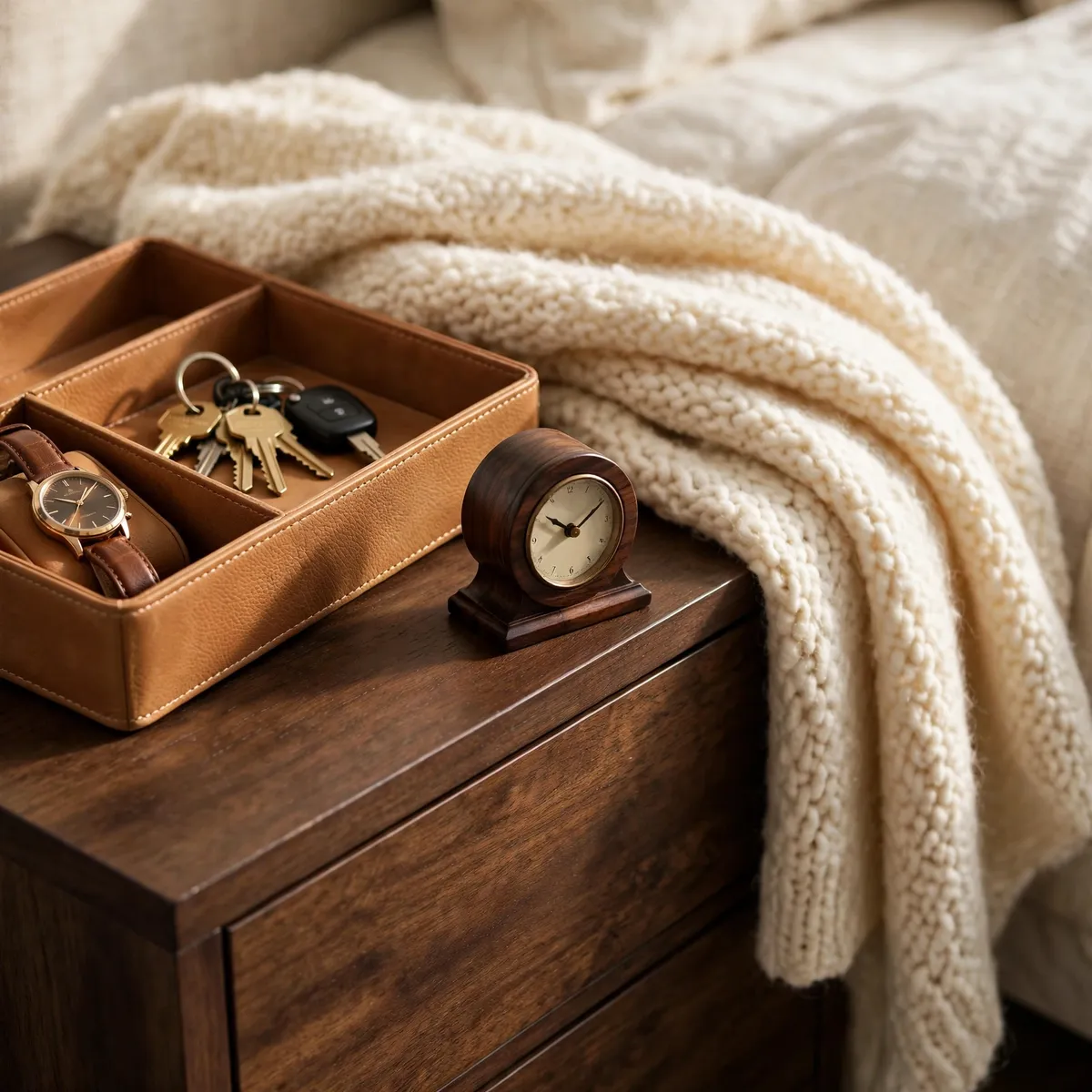
Nightstands that look expensive usually aren’t — they’re just textured. Mixing materials gives the eye more to enjoy: a leather valet tray, a folded wool throw over the corner, a wood clock, a ceramic dish. Texture does the decorative work so you need fewer objects.
The easiest formula is three textures from three families: something woven or soft (linen, wool, rattan), something hard and natural (wood, stone, marble), and something with shine (brass, glass, chrome). On a small table, keep the softest texture to one accent — a throw corner or a fabric tray liner — so it doesn’t swallow the surface.
Quick tips:
- A leather or fabric tray instantly softens a wood or metal nightstand.
- Drape, don’t fold: a casually folded throw over one corner looks styled, not staged.
- If everything is matte, add one reflective piece — brass, glass, or a mirror-backed frame.
3. Keep the Essentials in a Drop Zone
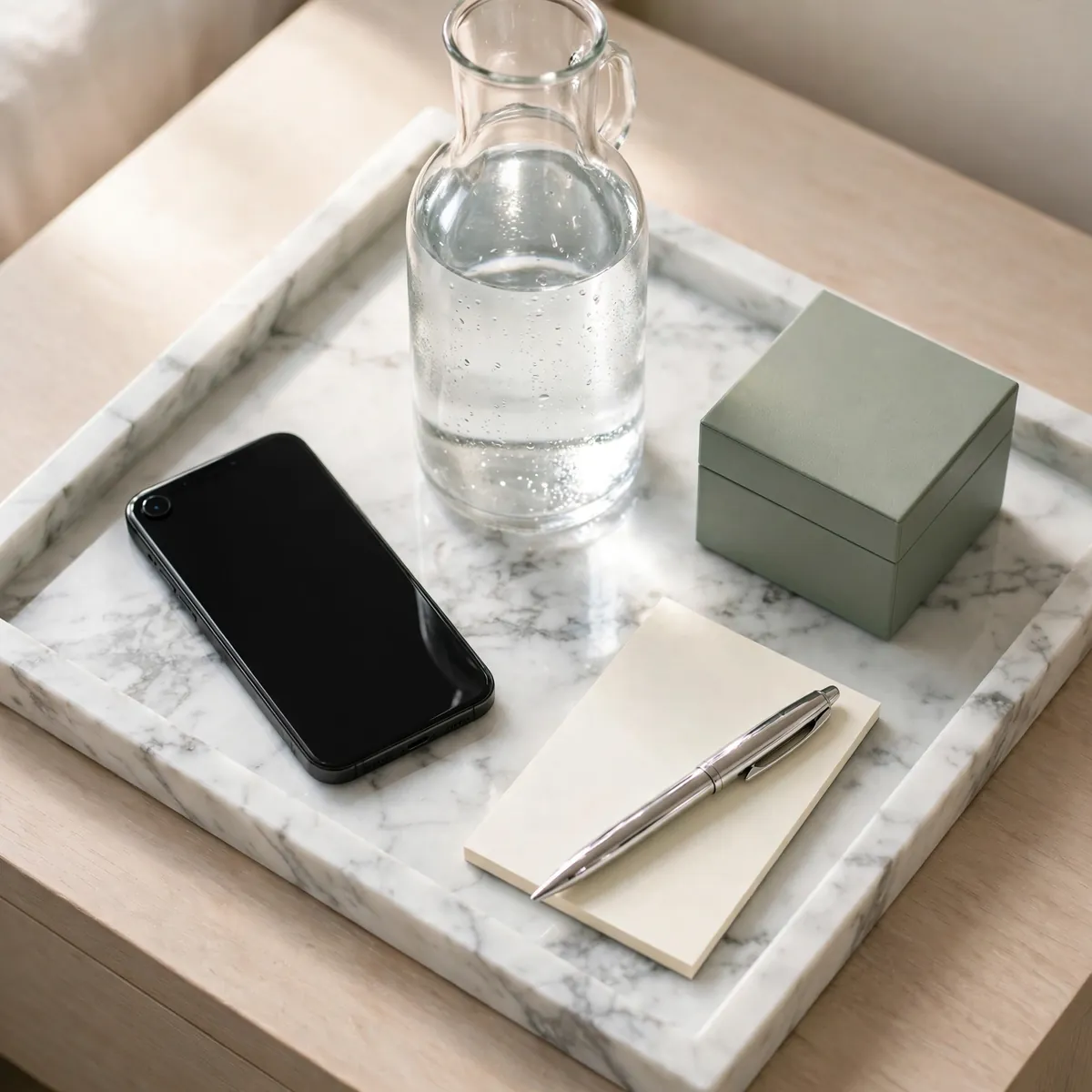
Phone, water, lip balm, medication, glasses — the nightstand is the hardest-working surface in the bedroom, and pretending otherwise is how it ends up looking like a junk drawer. Give your nightly essentials a defined home: one tray or small dish that acts as the “drop zone.”
Everything functional lives inside that boundary. Everything outside it is decorative. This one habit does more for a tidy nightstand than any styling trick, because it turns six scattered objects into one intentional cluster. A lidded box inside the tray hides the unpretty stuff — medication, earplugs — without burying it out of reach.
Quick tips:
- Size the tray to about a quarter of the tabletop — big enough for the essentials, small enough to look deliberate.
- Charge your phone here too: a short cable and a small charging pad beat a tangle of cords.
- If the table has a drawer, move half your “just in case” items into it and keep only tonight’s needs on top.
4. Style the Pair, Not Just One Side
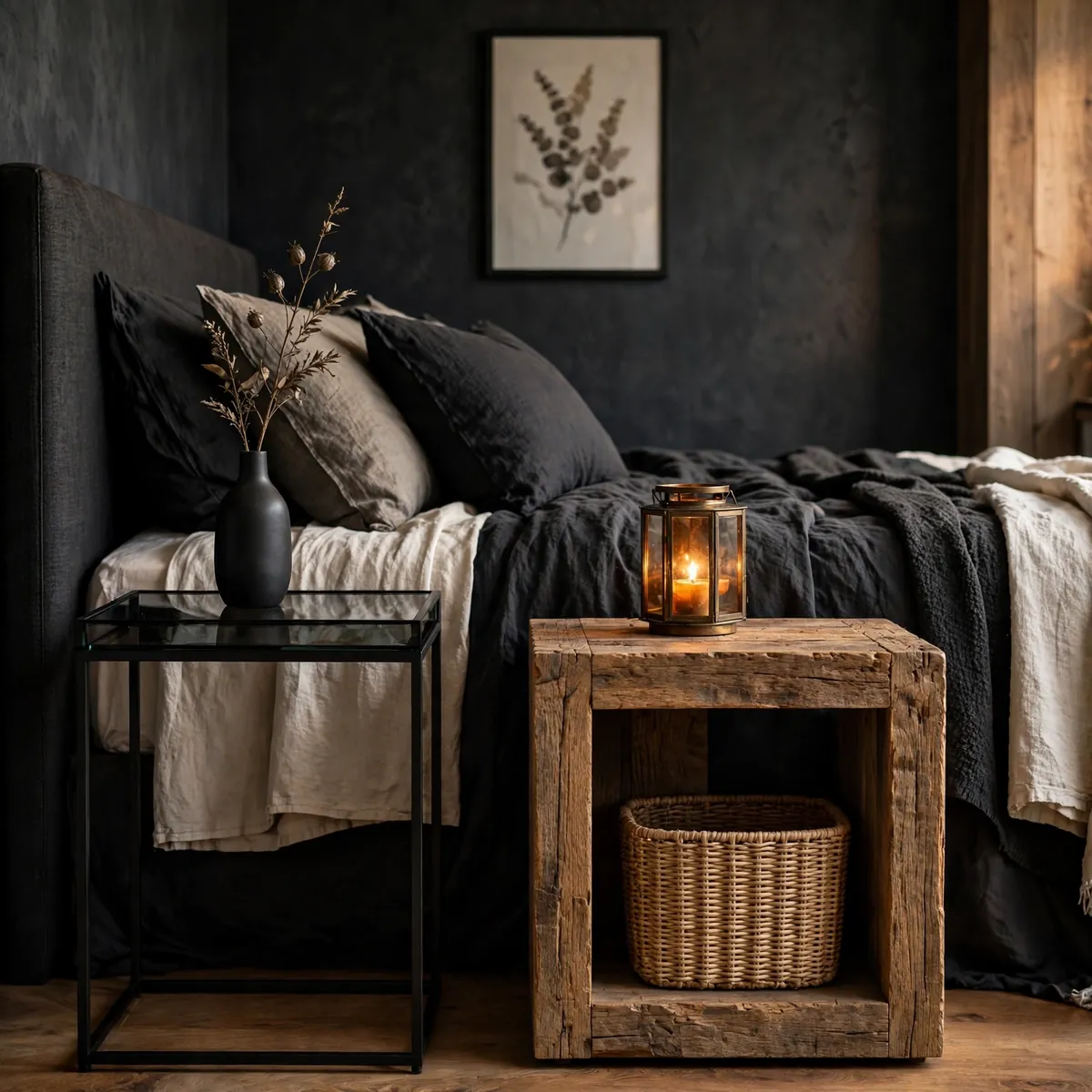
You don’t need matching nightstands. In fact, a mismatched pair — same height, different styles — looks more collected and personal than a catalog set. The trick is keeping them visually related: same wood tone, same metal finish, or the same lamp style on both sides.
Each side gets its own personality. One side can hold the reading setup — lamp, book stack, glasses — while the other carries the calmer version: a plant, a candle, a small tray. Keep the overall heights similar so the bed stays the visual anchor and neither side shouts louder than the other.
Quick tips:
- Match heights within a couple of inches; matching styles are optional.
- Repeat one element — lamp finish, tray material, or frame color — to tie the pair together.
- For couples, let each side reflect the person who uses it. It feels more like a real bedroom.
5. Build a Base From Books
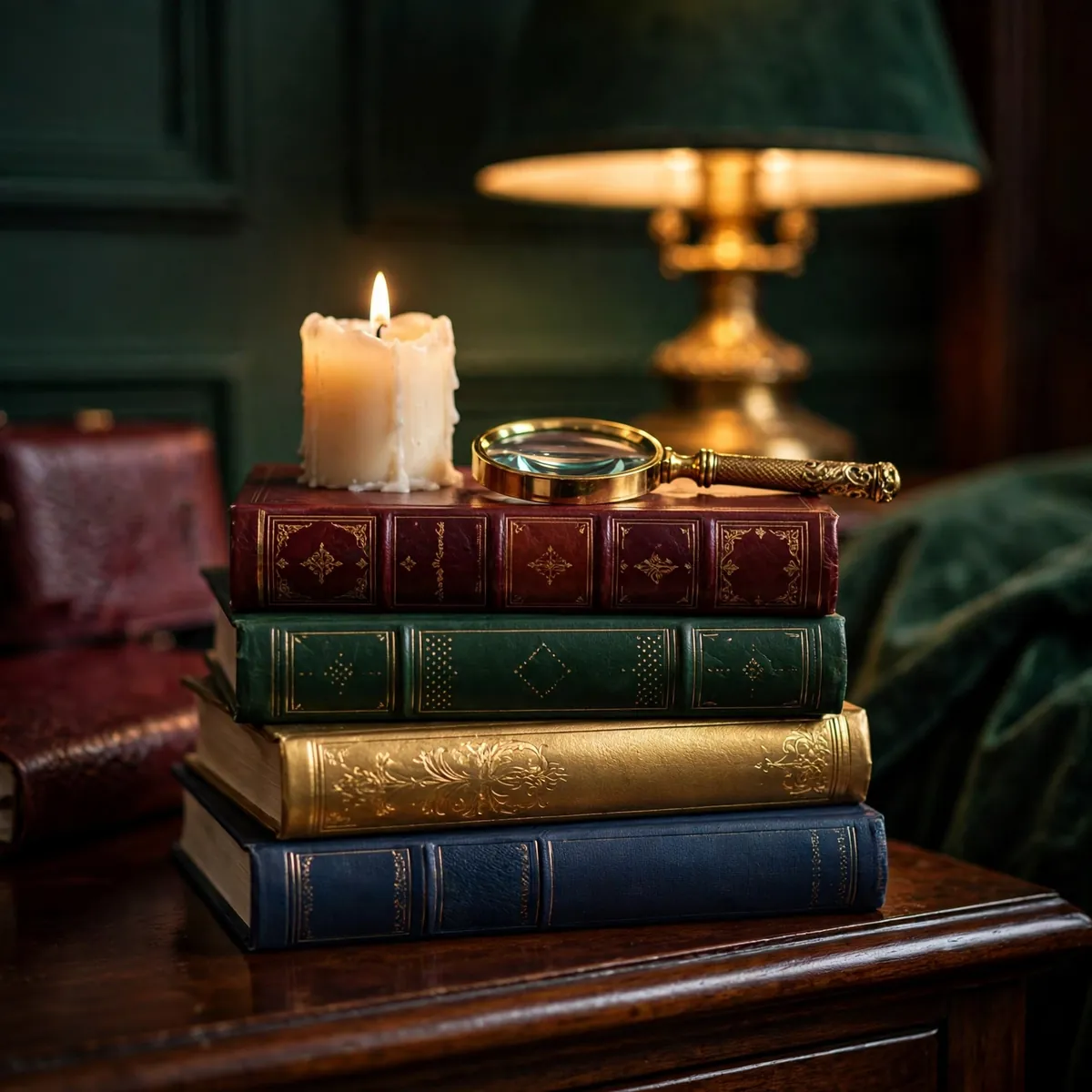
A short stack of books is the hardest-working styling prop on a nightstand. It adds height, introduces color, gives small objects a stage, and — unlike most decor — it’s honest about what the table is for.
Stack two to four hardcovers, largest on the bottom, and turn the spines so the most attractive ones face out. Then top the stack with one small object: a candle, a magnifying glass, a tiny vase. The books also solve the too-short-lamp problem instantly — set the lamp on the stack and it gains three inches of presence.
Quick tips:
- Stick to an odd number of books — it reads as styled rather than stored.
- Remove dust jackets for a cleaner, more collected look.
- The top book should be one you’re actually reading — guests notice, and it starts conversations.
6. Let a Statement Lamp Do the Talking
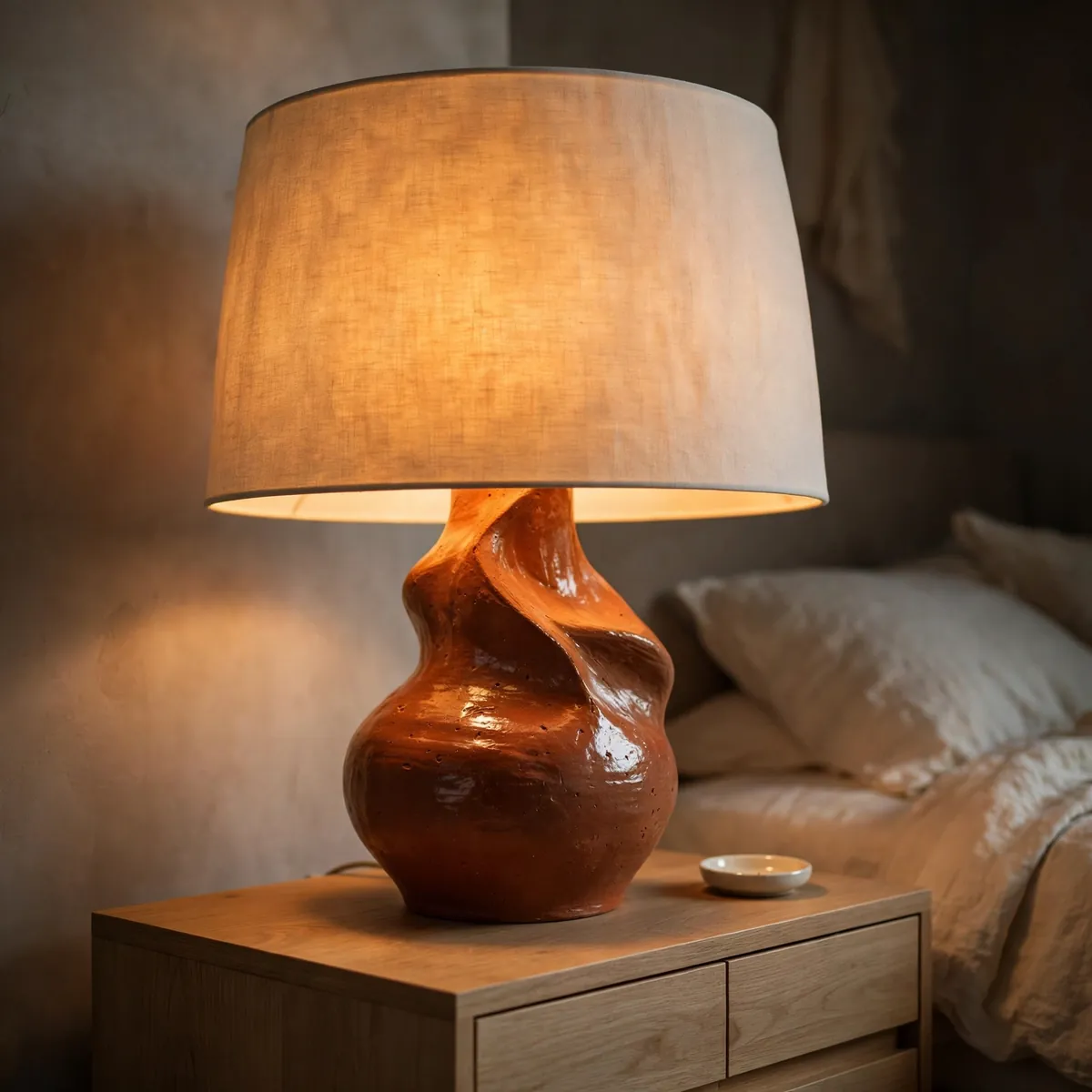
If you love one great object, let it carry the whole nightstand. A sculptural lamp — an interesting ceramic base, a fluted glass body, an oversized shade — is all the decoration a bedside table needs. When the lamp is the star, everything else should be quiet: a candle, a small dish, nothing more.
Getting the scale right matters more than the style. As a starting point, your nightstand top should sit roughly level with your mattress top, and the bottom of the lampshade should land around chin height when you’re sitting up in bed. That puts reading light where your eyes are and keeps the bare bulb out of your sightline. Shorter tables need taller lamps; chunky statement lamps suit deeper, wider tables. Avoid shades that flare wider than the table — they’ll snag elbows and look top-heavy.
Quick tips:
- Go oversized rather than undersized — a bold lamp on a small table looks intentional, never lost.
- Keep the shade fabric simple if the base is dramatic, or vice versa.
- Warm, dimmable bulbs (2700K or lower) make the whole bedroom feel calmer at night.
7. Corral Clutter With Layered Trays
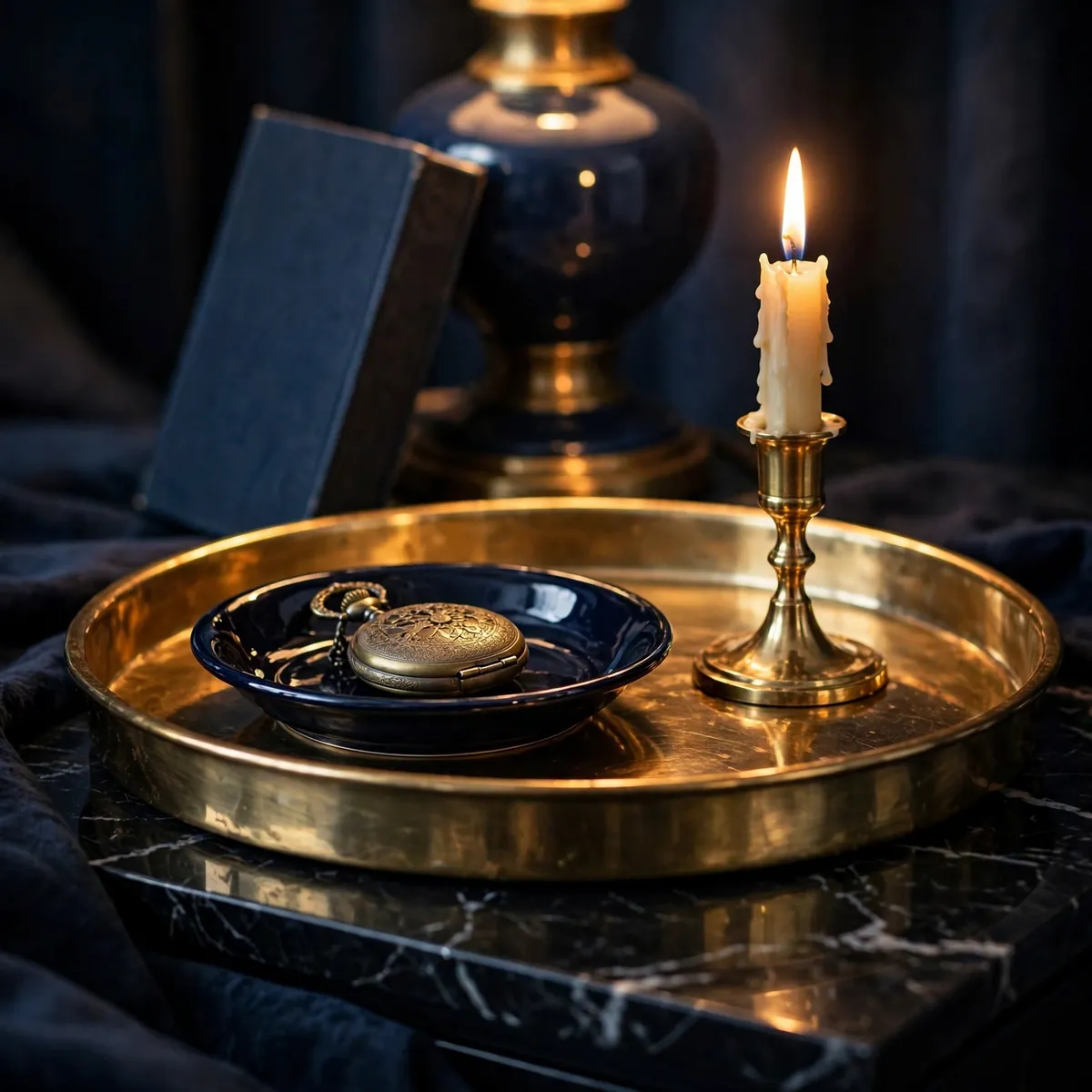
One tray organizes. Two trays, layered, look designed. Try a larger tray as the base with a smaller dish nested inside it — the big tray holds the category (everything you use at night), the small dish holds the subcategory (rings, watch, lip balm).
Quick tips:
- Choose trays in two different materials or finishes so the layering is visible.
- Keep the inner dish small enough that the outer tray still has breathing room around it.
- Round trays soften square tables; square trays add structure to round ones.
8. Add Something Living
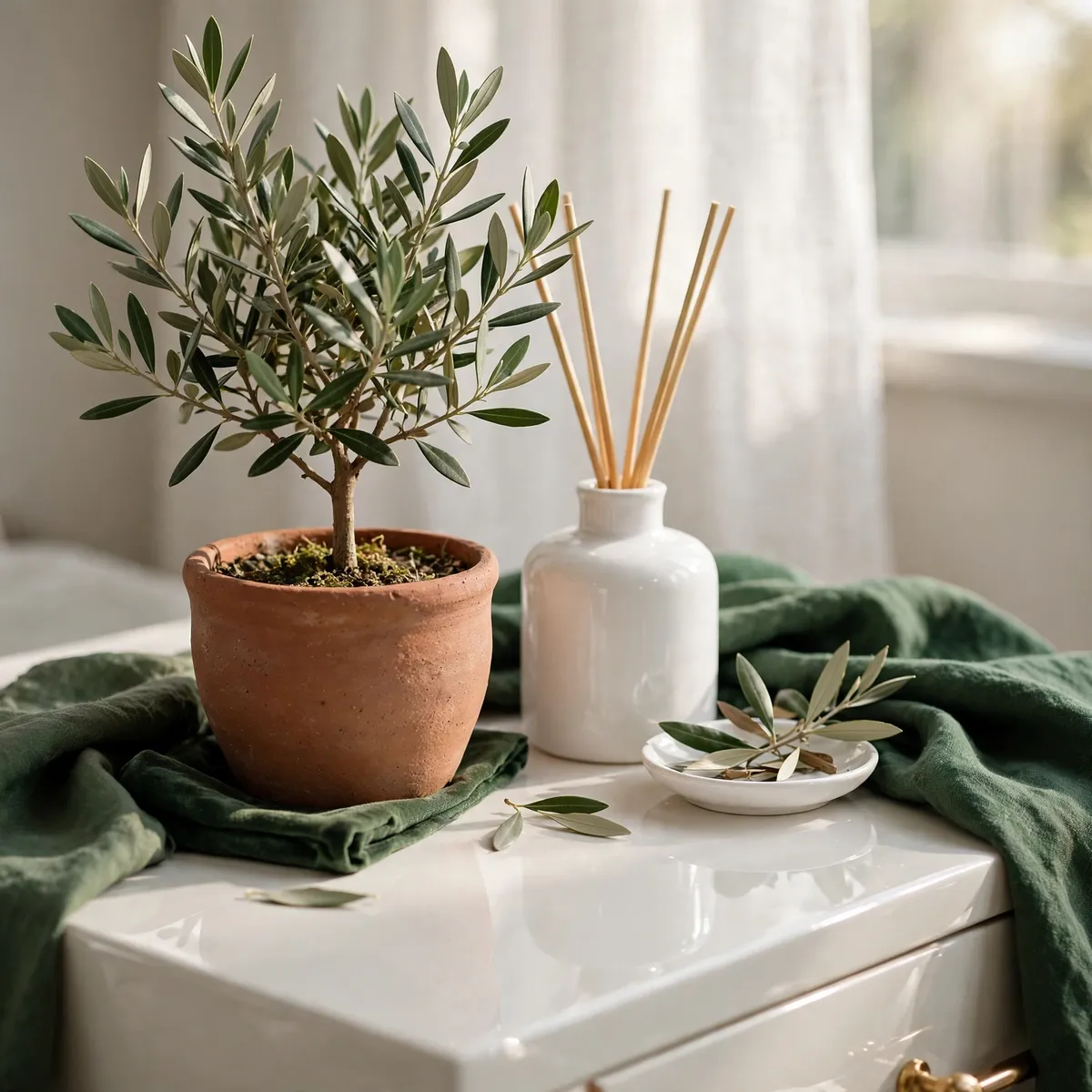
Every nightstand benefits from something organic. A small plant, a bud vase with fresh stems, or even a sprig of eucalyptus in a narrow bottle breaks up all the hard surfaces — wood, ceramic, metal, glass — with something soft and alive.
Pick forgiving plants — snake plants, pothos, ZZ plants, succulents — that tolerate low light. In a truly dark corner, fresh flowers or dried stems are a better bet than a struggling plant.
Quick tips:
- Scale the plant to the table — a 4-inch pot suits most nightstands.
- Narrow-neck bottles need water changes only once a week and never shed leaves.
- Set plants on a cork pad or small saucer to protect wood finishes from moisture rings.
9. Set an Evening Mood With Candlelight
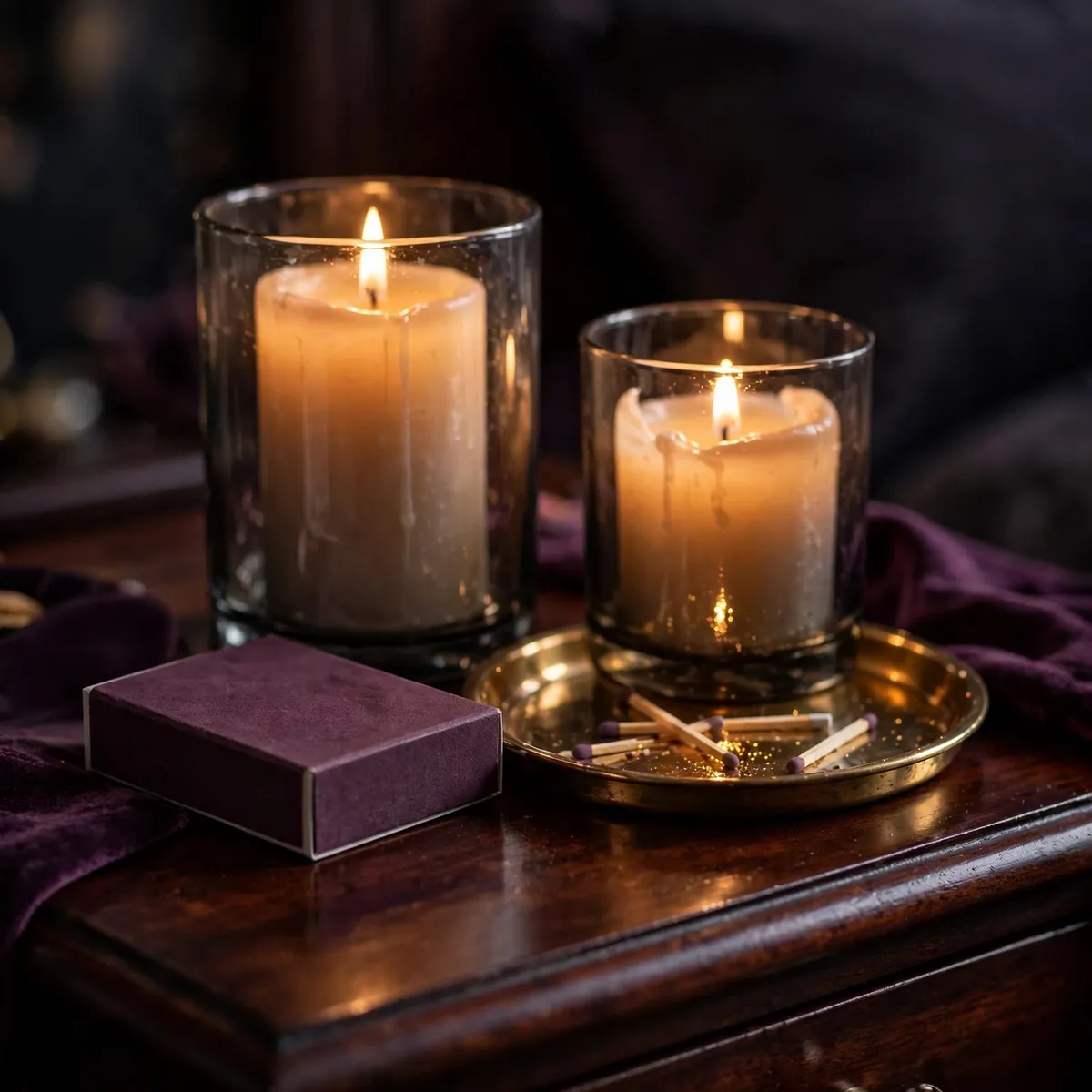
Overhead lighting is the enemy of a restful bedroom. A candle or two on the nightstand gives you a low, warm light source that signals your body it’s time to wind down — and it flatters every bedroom, whatever the style.
Use pillar candles at two different heights in glass hurricanes or smoked holders so the flames are shielded from drafts and bedding. A subtle scent — lavender, cedar, or something barely there — adds another layer without overwhelming a small room.
This low-glow approach is the same logic behind our moody bedroom decor ideas: dim, layered light does more for atmosphere than any paint color.
Quick tips:
- Two candles of different heights beat one lonely candle every time.
- Keep candles at least a hand’s width from the bed edge and away from curtains.
- Trim wicks to a quarter inch so they burn clean and don’t soot the wall above.
10. Layer in Something Personal
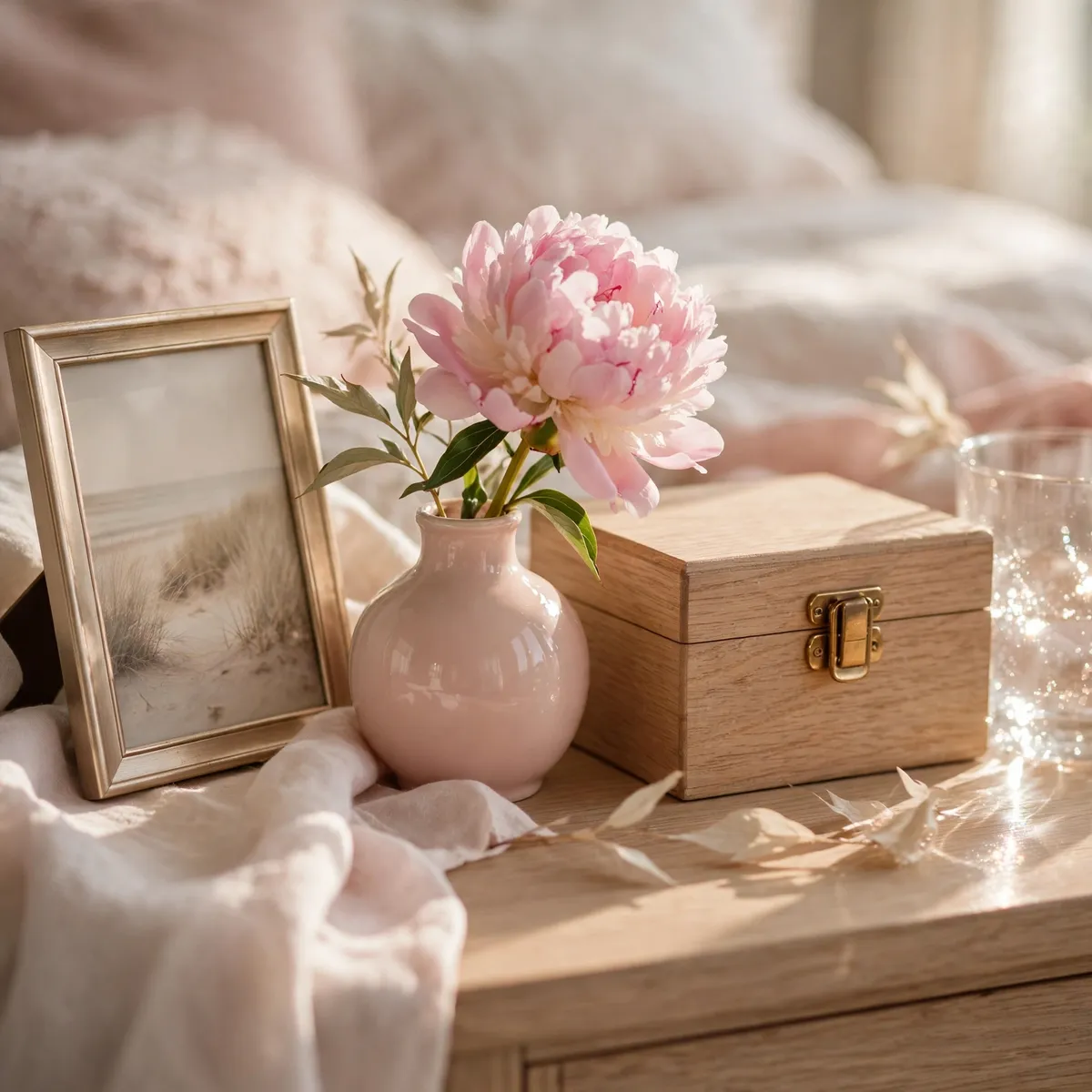
The nightstand is the most personal surface in your home — it’s the first thing you see in the morning and the last thing you see at night. One genuinely personal object does more for the feel of the room than any number of decorative filler pieces.
A small framed photo, a piece of travel art, a shell from a favorite beach — pick one, and give it a real spot instead of tucking it behind the lamp. Personal objects work best at medium height where they’re visible from bed without demanding attention.
Quick tips:
- One meaningful object, styled deliberately, beats a shelf of knickknacks.
- Small frames read better than large ones on a nightstand — 4×6 or 5×7 is usually right.
- Rotate the personal piece seasonally; it keeps the nightstand feeling fresh for almost no effort.
11. Free Up Space With a Wall Sconce
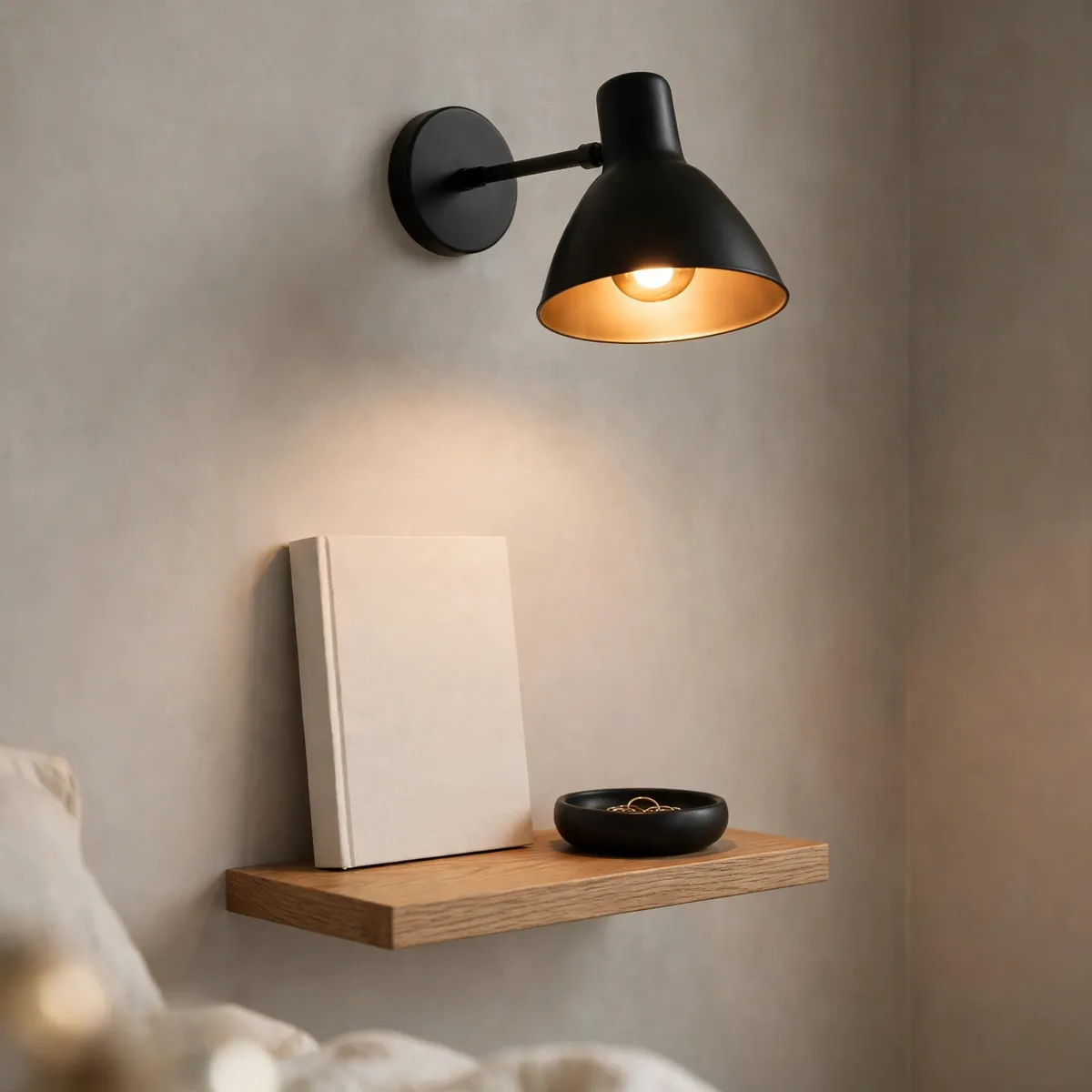
If your nightstand is genuinely tiny — a floating shelf, a stool, a narrow ledge — a table lamp may eat the entire surface. Move the light to the wall. A swing-arm sconce mounted just above and beside the nightstand frees every square inch of the tabletop for the things that actually need to sit on it.
Position the sconce so its shade lands about chin height when you’re sitting up. Plug-in sconces with fabric cords are renter-friendly; hardwired ones give the cleanest result.
Quick tips:
- Mount the sconce 12–18 inches above the tabletop so you can still reach the switch easily.
- A swing arm lets two people share one small table — pull it toward whoever is reading.
- Match the sconce finish to your drawer pulls or lamp hardware for a pulled-together look.
12. Do the Three-Item Edit
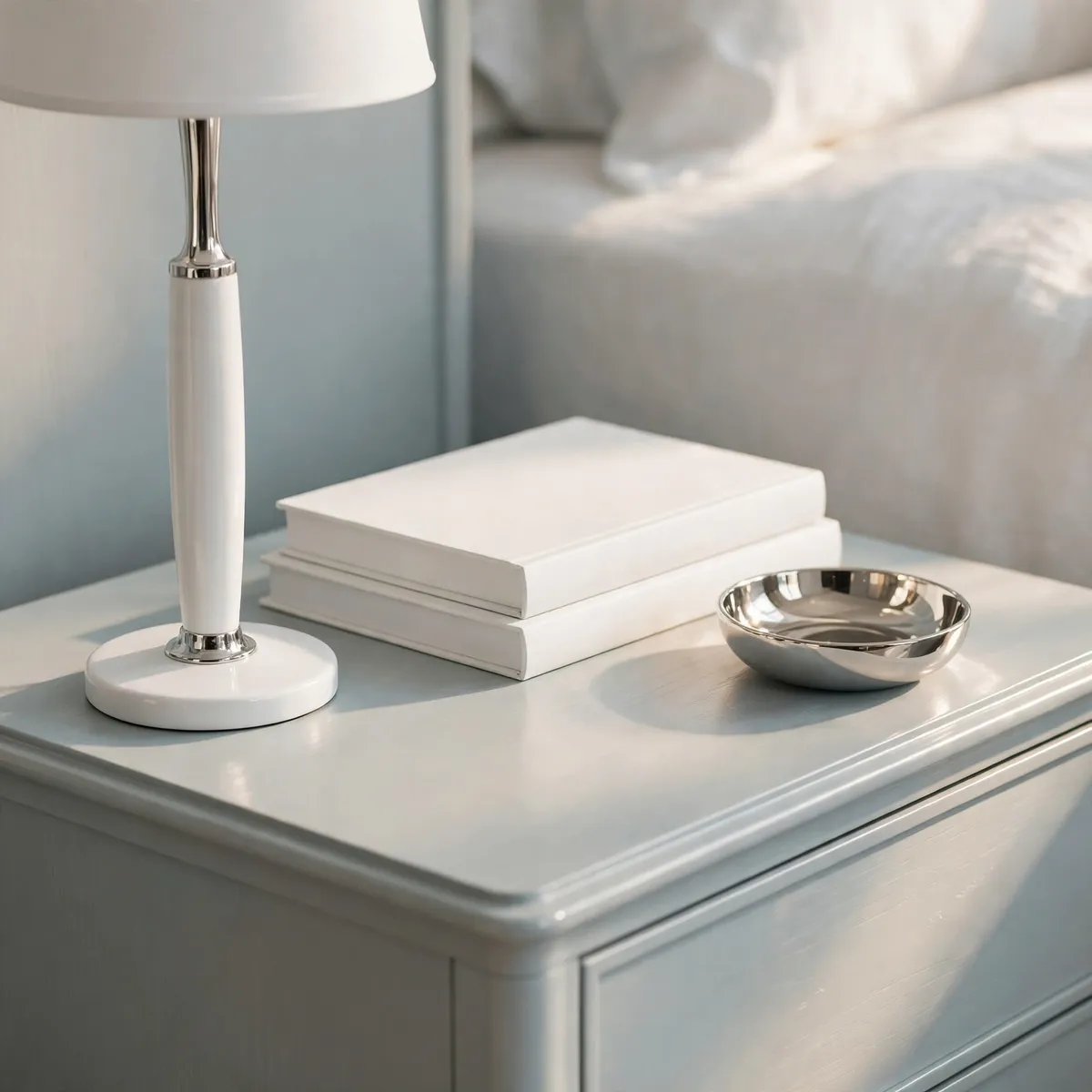
Sometimes the best nightstand decor idea is subtraction. Take everything off the table, then put back only three things: your light, your current book, and one beautiful object — a dish, a vase, a candle. Live with it for a week.
Most people never go back to the cluttered version. Negative space is a design element: it makes the three things you kept look more deliberate, makes the table easier to dust, and makes the whole bedroom feel calmer.
Quick tips:
- Remove everything first — editing an existing arrangement never works as well as starting from empty.
- Choose the three items in this order: light, something you use nightly, something you love looking at.
- If three feels too bare, add a fourth item — but only one, and only if the table still breathes.
Nightstand Decor FAQs
How many items should be on a nightstand?
Three to five items is the sweet spot for most nightstands: a lamp, a tray or dish for essentials, and one or two decorative pieces like books or a plant. The exact number depends on your table’s size — a larger table can hold a few more pieces, while a small one looks best with just three.
How tall should a bedside table be?
Aim for the nightstand top to sit roughly level with the top of your mattress, give or take a couple of inches. That keeps water, books, and your phone within easy reach without shoulder strain when you’re lying down.
How tall should a nightstand lamp be?
The bottom of the lampshade should sit around chin height when you’re sitting up in bed. In practice, most bedside lamps are 24–28 inches tall, but the right height depends on your table and mattress heights — measure from the tabletop up.
How do I keep my nightstand from looking cluttered?
Contain everything functional inside one tray or dish so loose items read as a single cluster, and limit the surface to three to five items total. Move “just in case” items into a drawer, and keep only what you actually use each night on top.
Conclusion
Beautiful nightstand decor isn’t about buying more objects — it’s about proportion, light, and giving everything a home. Start with the three-height rule, keep your nightly essentials in one drop zone, and let one or two personal pieces do the talking. Your bedside table is the smallest room you’re ever going to decorate; treat it like one, and the whole bedroom benefits.