12 Beautiful Sage Green Bedroom Ideas That Feel Calm, Fresh and Effortless
Sage green bedroom ideas work because sage is calm without being boring. It is a soft, grey-green that feels fresh in the morning and restful at night, and pairs easily with white, cream, wood, and brass. The best sage green bedroom ideas start with one clear choice, paint, bedding, or one accent wall, then build the rest around it with warm textures and simple furniture. A sage wall with crisp white bedding, a linen throw, and a light wood bedside table is often enough to change the whole mood of the room.
If you are deciding how much green to use, start small and add more only if the room still feels plain. Paint one wall behind the bed, try sage bedding for a week, or add sage cushions before you commit to all four walls. Sage can look greyer in a north-facing room and warmer in afternoon sun, so test first. For a bolder start, a single painted feature wall can anchor the scheme, and these bedroom accent wall ideas show how one strong wall can carry a room without overwhelming it.
Key Takeaways
What is the easiest way to start a sage green bedroom? Paint the wall behind the bed soft sage, then add white or cream bedding and light wood furniture.
What colours go best with sage green? Cream, white, light oak, brass, blush pink, terracotta, navy, and charcoal all work. Keep one main accent per room.
Does sage green suit a small bedroom? Yes, if you choose a pale sage with a light reflectance value above 50 and keep the ceiling and bedding white or cream.
How do I keep a sage bedroom from feeling cold? Add warm wood, warm-white bulbs around 2700K, and soft textures such as linen, wool, and velvet.
1. Sage Green Walls with Crisp White Bedding
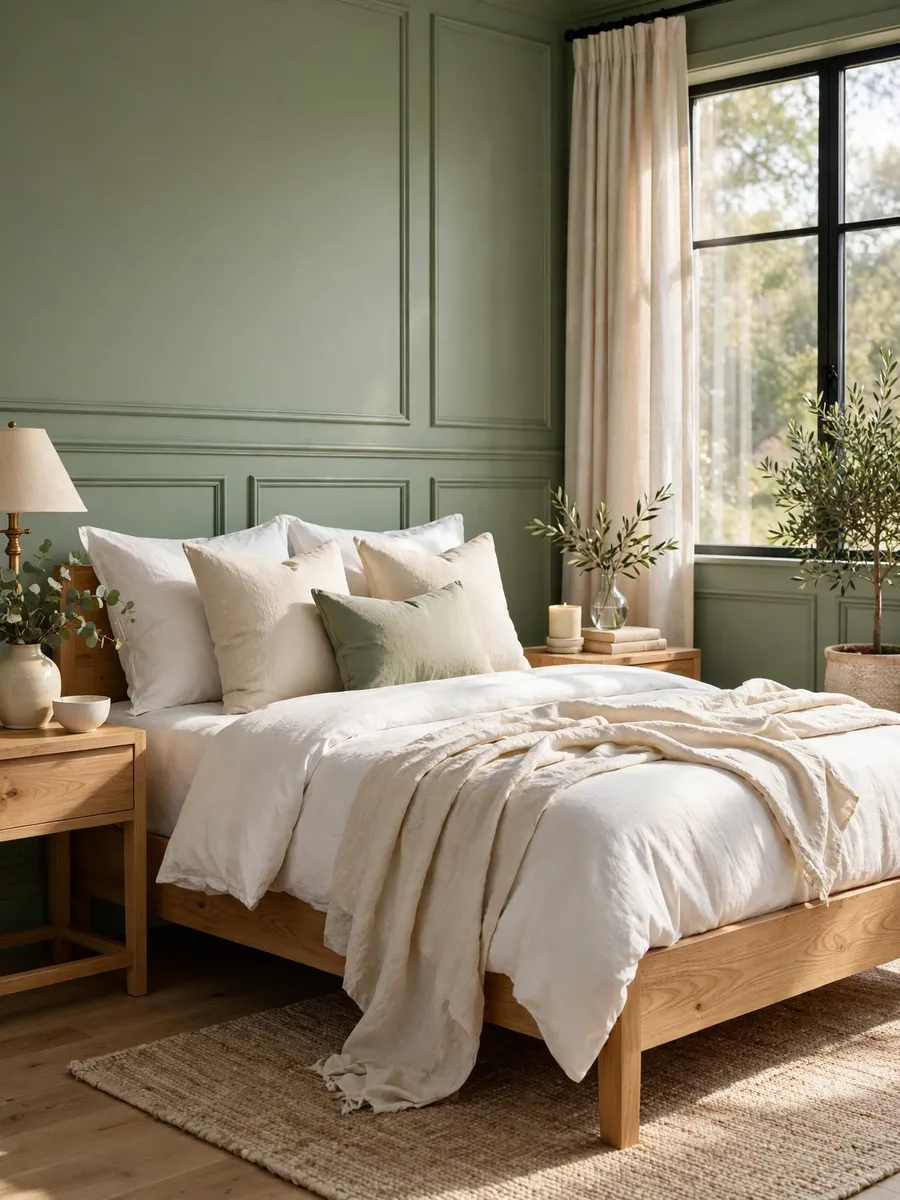
Painting the walls sage and dressing the bed in crisp white is the classic version of this look, and it works because the contrast is clean but never harsh. Try Sherwin-Williams Evergreen Fog SW 9130 or Benjamin Moore Saybrook Sage HC-114 in eggshell, which softens the colour and hides small marks. In a 12 by 14 foot bedroom, centre a queen bed with a light oak frame on the longest wall, add two 18-inch oak bedside tables with a small white lamp on each, and finish with a white percale duvet, two sage linen cushions, and a cream throw.
Quick tips
- Test a large swatch on two walls in morning and evening light.
- Choose an eggshell finish so the sage looks soft, not shiny.
- Keep the ceiling and skirting white to stop the green feeling heavy.
2. A Sage Upholstered Headboard with Brass Accents
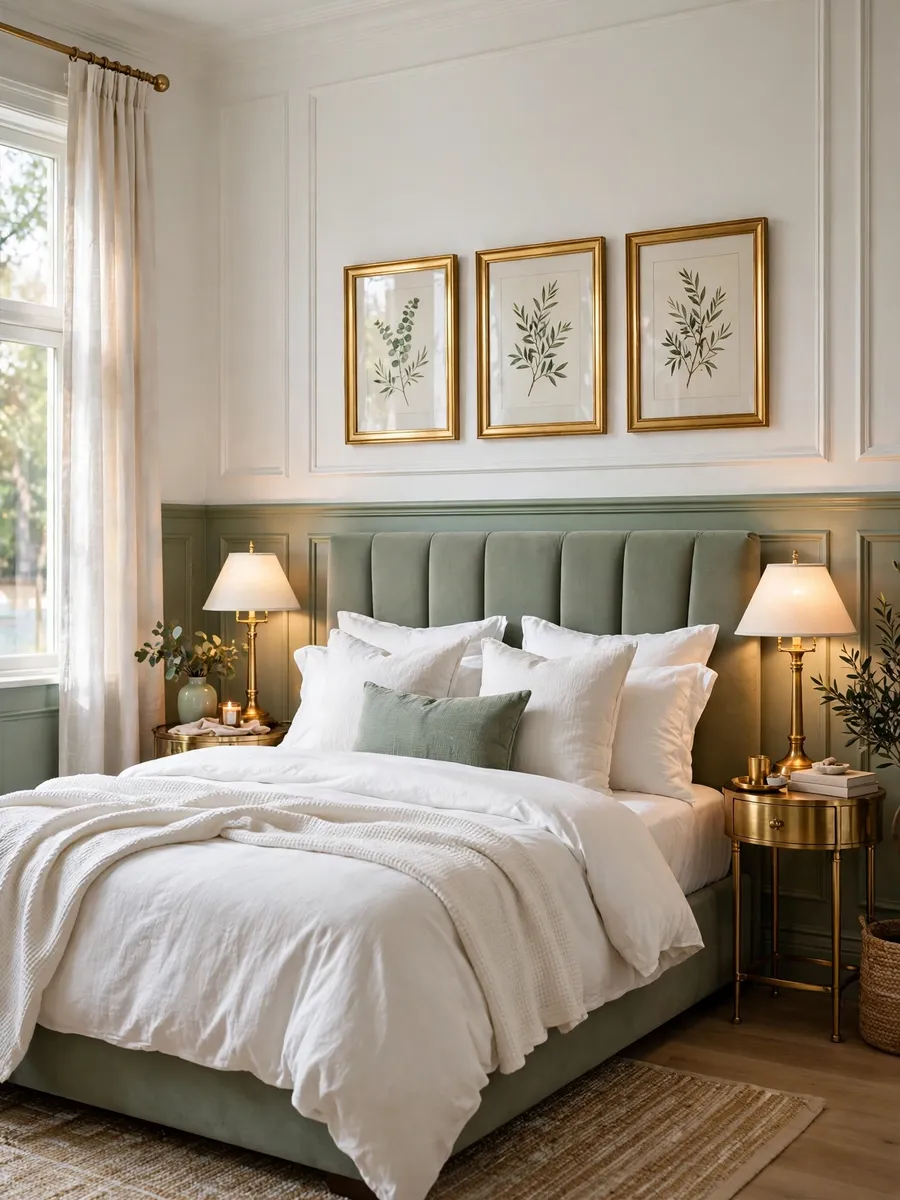
If you do not want to paint, a sage upholstered headboard gives you the same calm colour at bed height, where you see it most. Choose a tall headboard, at least 55 inches high, in sage linen or velvet, with white walls and white bedding so it becomes the focal point. Brass brings the warmth: a pair of 24-inch brass lamps with white linen shades on 20-inch bedside tables, plus brass drawer pulls. Hang one framed botanical print, about 24 by 30 inches, above the headboard.
Quick tips
- Pick a headboard at least as wide as the mattress so the bed looks framed.
- Use brushed or antique brass, not shiny chrome, for a warmer finish.
- Repeat the brass three times so it looks deliberate, not accidental.
3. Sage and Blush Pink for a Soft Romantic Bedroom
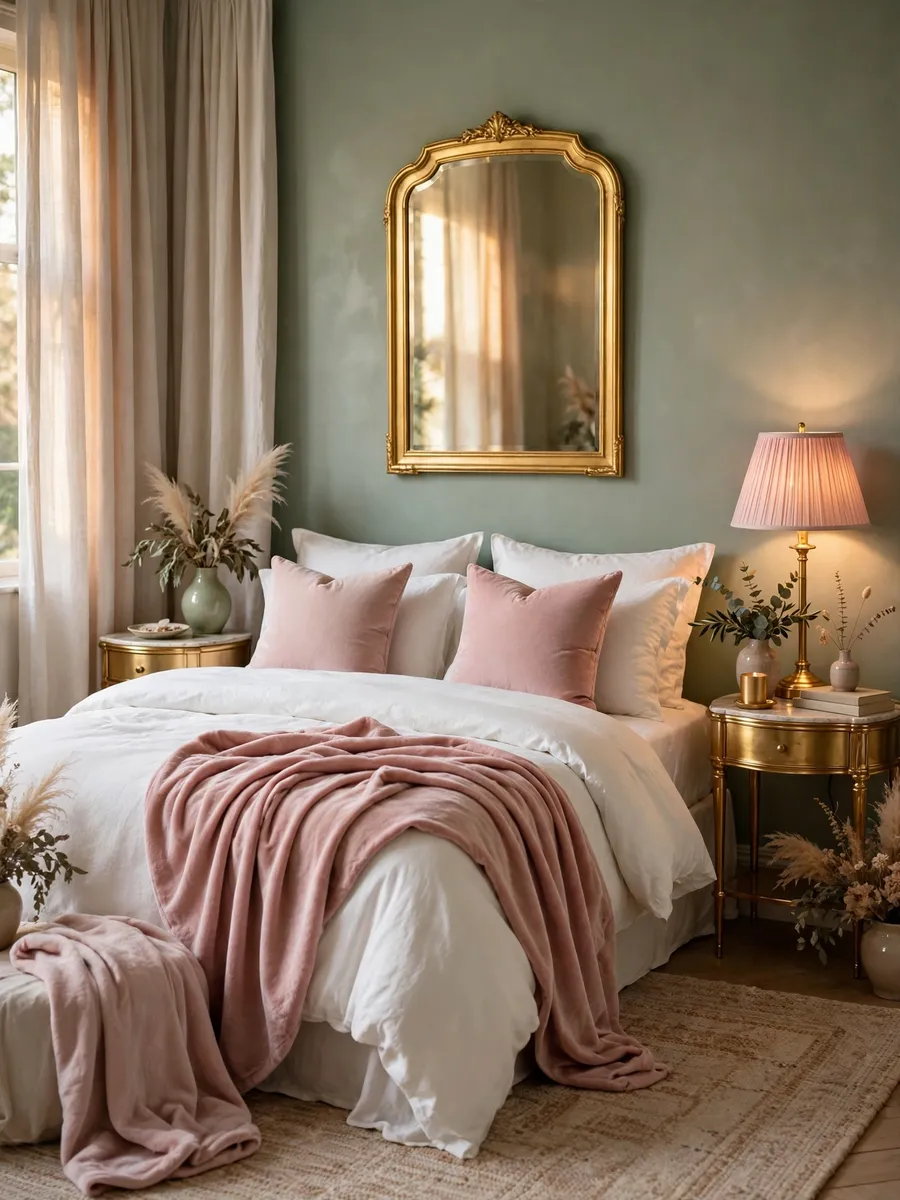
Sage and blush pink are a natural pair because the grey in sage calms the sweetness of the pink, and the pink warms the coolness of the green. Paint the walls a pale sage such as Farrow & Ball Lichen, then layer blush in textiles: two blush velvet cushions, 20 by 20 inches, a blush throw, and a blush pillowcase on one side of the bed. A 30-inch round gold-framed mirror above a light wood dresser and a small gold lamp add a gentle glow, and a vase of pale pink roses finishes the scheme.
Quick tips
- Keep blush in fabrics and flowers, not on the walls, so it is easy to change.
- Choose muted, dusty blush rather than bright bubblegum pink.
- Keep the pink to about one-fifth of the room so sage stays the main colour.
4. Sage with Charcoal and Matte Black for a Modern Edge
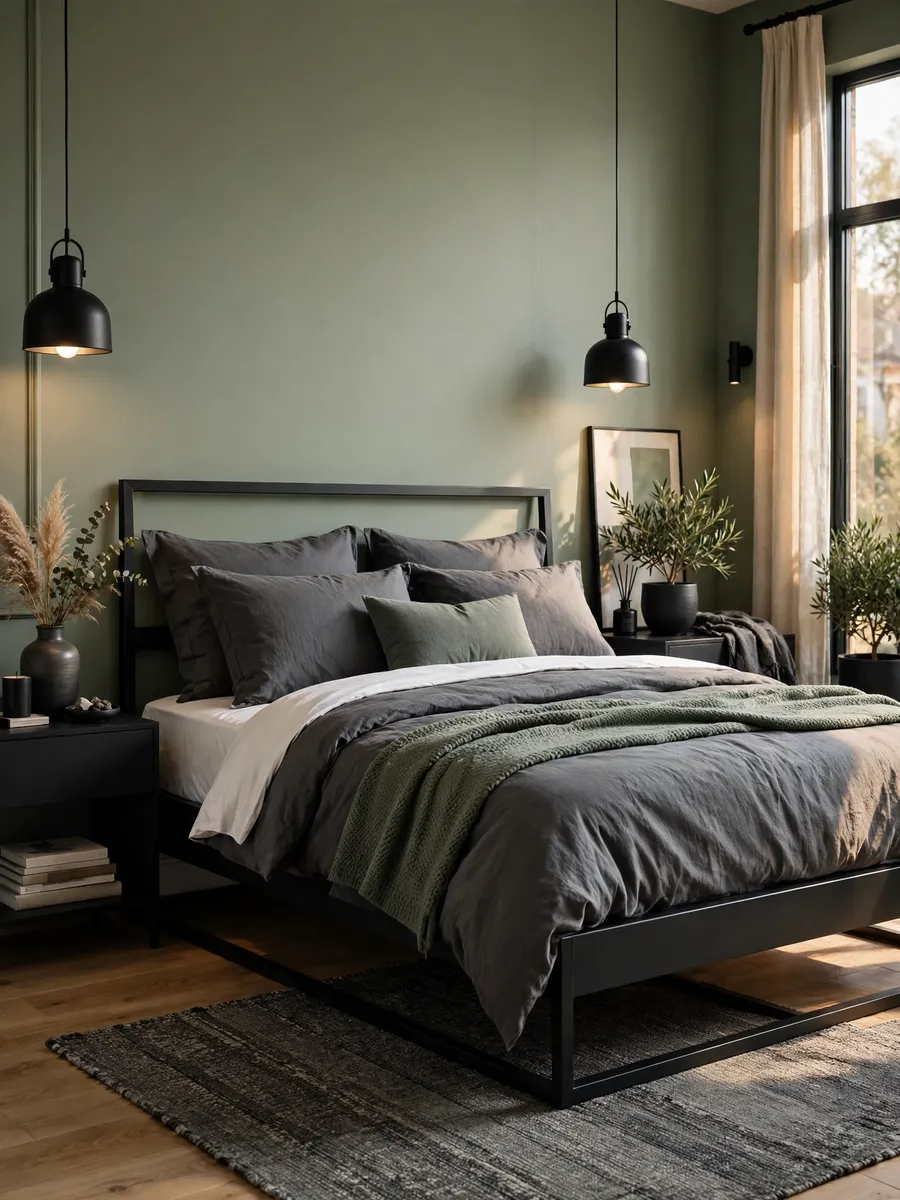
Sage does not have to be soft and traditional. Paired with charcoal and matte black, it becomes modern and structured, which suits a bedroom that needs a little drama without losing its calm. Paint the walls sage, then add charcoal in the bedding: a charcoal throw, two charcoal cushions, and a charcoal upholstered bench at the foot of the bed. Finish with matte black in a black metal bed frame, two black dome pendants hung 30 inches above the bedside tables, and slim black frames. Keep black to about one-tenth of the room. If you love deeper, moodier bedrooms, these moody bedroom decor ideas show how dark accents can add depth without making a room feel cold or closed in.
Quick tips
- Limit black to frames, lighting, and one furniture piece.
- Use charcoal in textiles, which are easy to swap, not fixed furniture.
- Keep bedding mostly white so dark accents have light to stand against.
5. Sage and Terracotta with Warm Walnut Wood
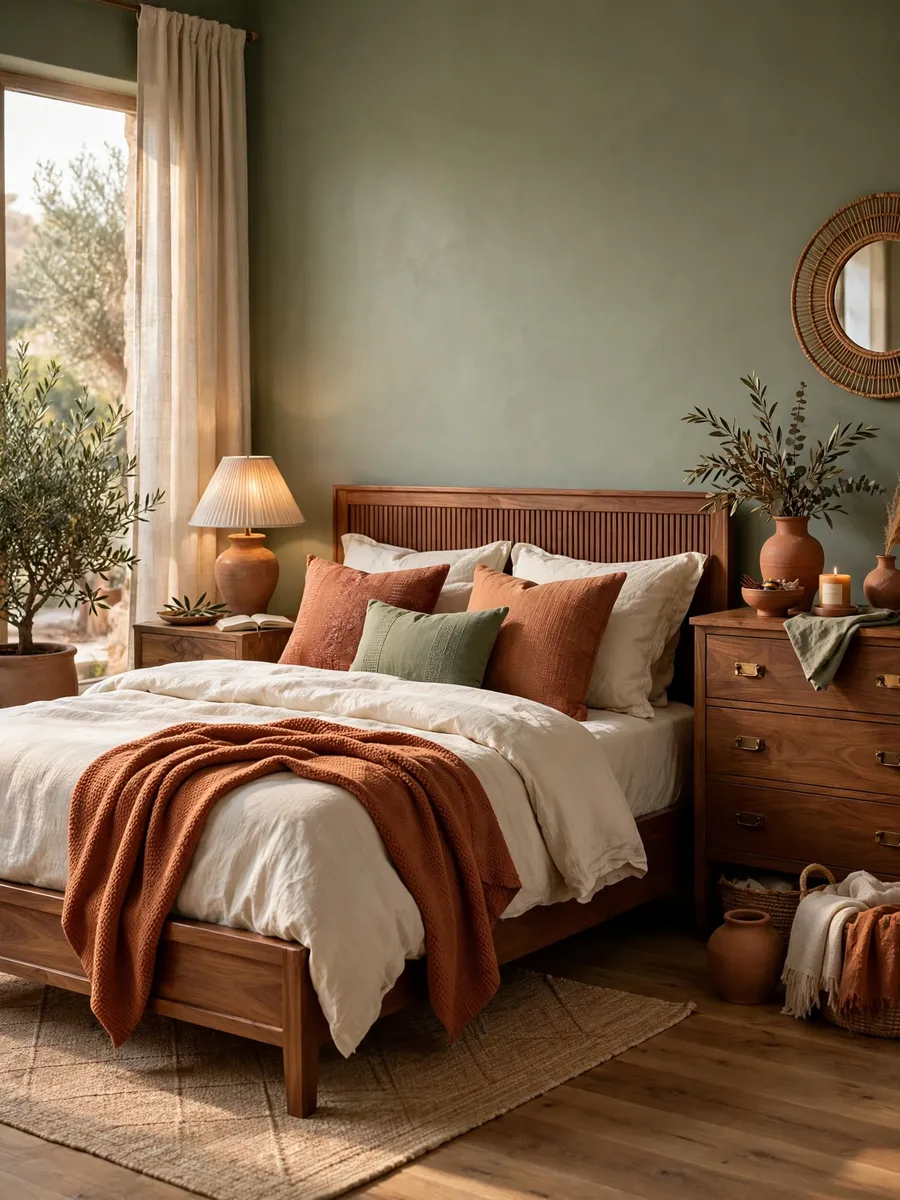
Terracotta warms sage in a way few other colours can, giving the room an earthy, Mediterranean feeling that suits both modern and rustic bedrooms. Start with sage walls in a shade like Behr Nature’s Gift, then bring in terracotta through two linen cushions, a terracotta throw, and a small terracotta pot holding an olive tree or a snake plant. Warm walnut wood grounds the scheme: a walnut platform bed, a walnut dresser, and walnut bedside tables. In a 13 by 15 foot bedroom, add cream linen bedding, a jute rug about 8 by 10 feet under the bed, and a walnut-framed print above the headboard.
Quick tips
- Repeat terracotta three times, in cushions, a throw, and a pot or vase.
- Choose walnut with visible grain to add warmth against the cool sage.
- Add one real plant to bring the earthy palette to life.
6. Sage and Navy Blue for a Classic Contrast
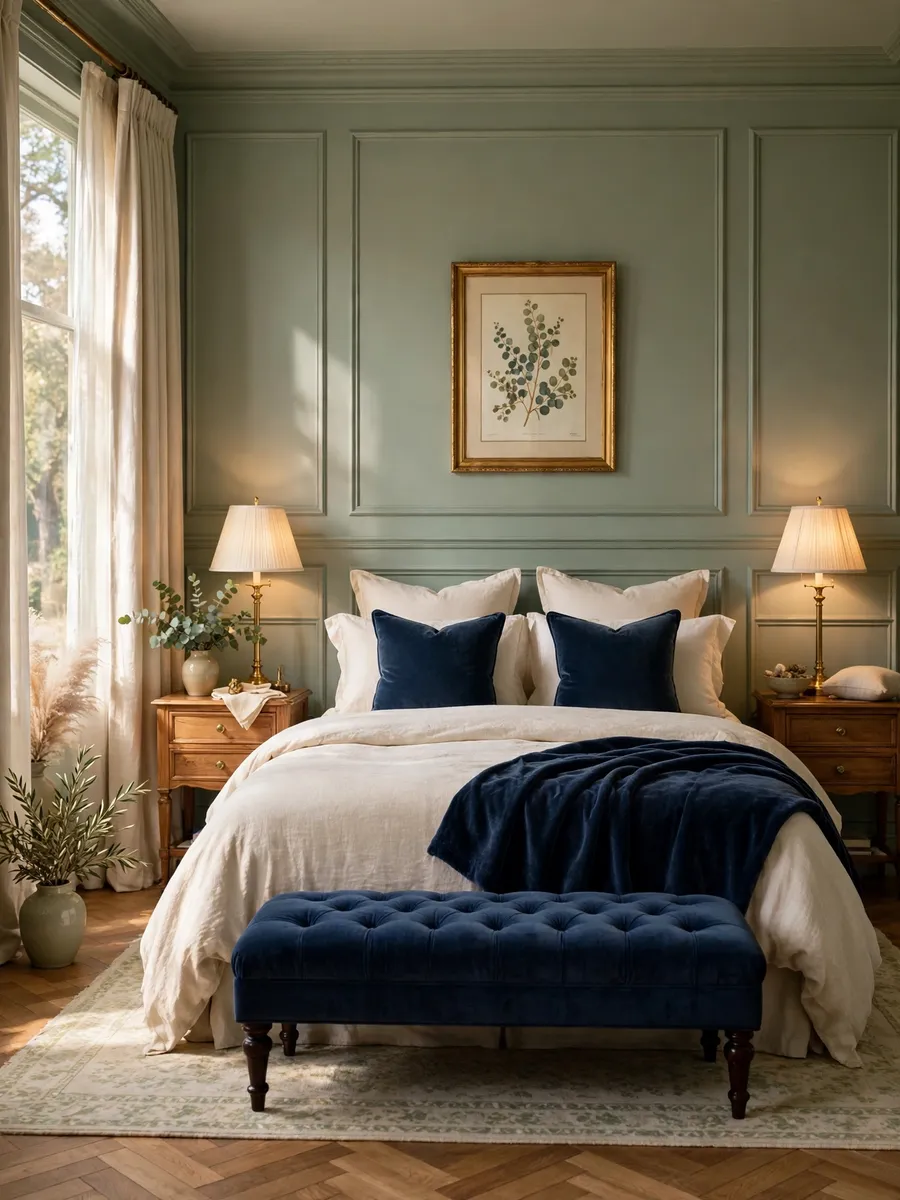
Navy blue gives sage a classic, tailored contrast that works beautifully in a bedroom shared by two people, because it keeps the soft green from feeling too gentle. Paint the walls sage, dress the bed in cream bedding, and add navy in a velvet cushion pair, a navy throw, and a navy bench about 48 inches wide at the foot of the bed. Cream bedding sits between the two colours and stops the navy feeling dark, while the sage keeps the navy from feeling formal. White lamps, a light wood dresser, and a striped navy and cream rug complete the scheme.
Quick tips
- Use cream bedding as a buffer between sage walls and navy accents.
- Keep navy to cushions, a throw, and one bench or curtain, not the walls.
- Choose deep navy, not bright royal blue, for a calm, classic result.
7. Sage and Lavender for a Dreamy Pastel Bedroom
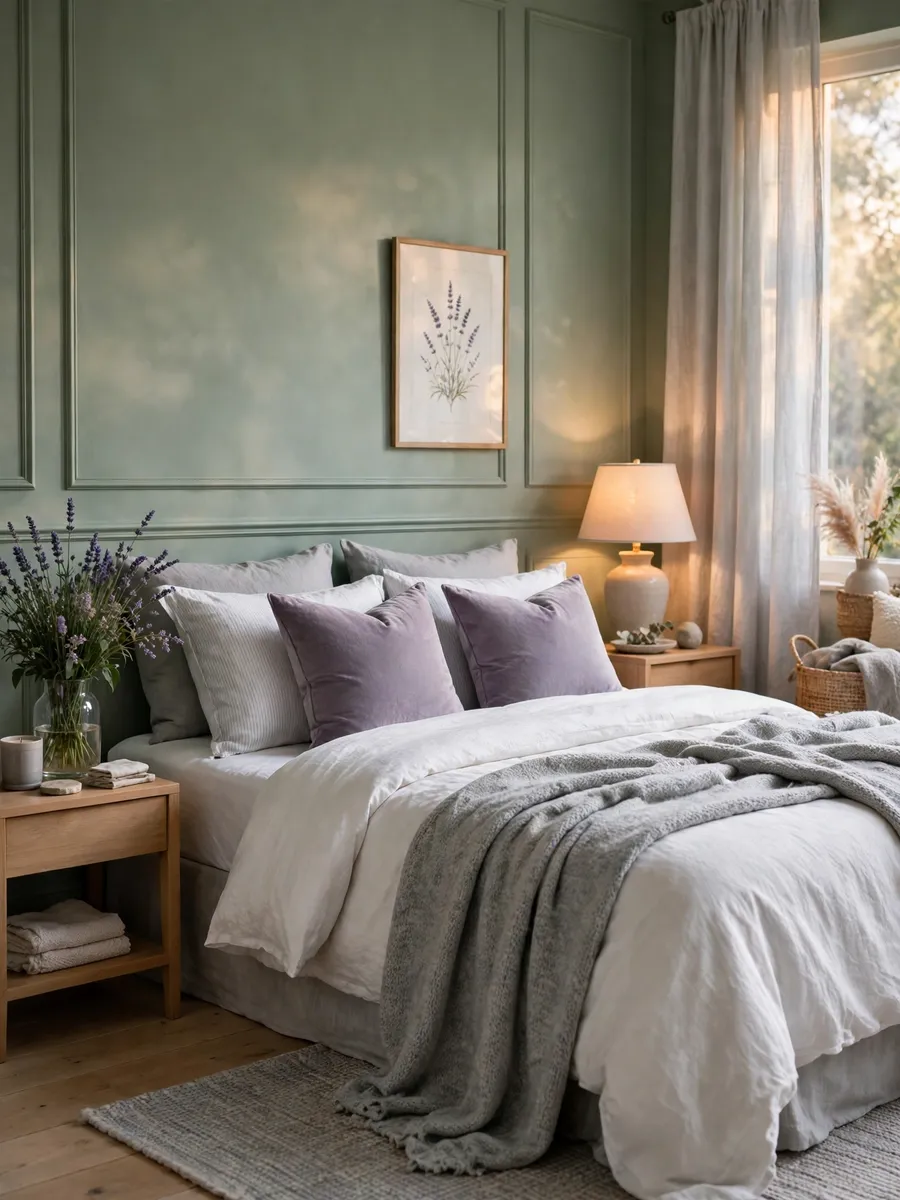
Sage and lavender sit close together on the colour wheel, so they blend gently, which makes this one of the most restful combinations here. Paint the walls a pale sage, then layer lavender through two linen cushions, a lavender throw, and a small bunch of dried lavender in a vase on the dresser. Soft grey bedding, a grey throw, and pale grey curtains sit between the two pastels and stop the room from looking washed out. Use a white or pale grey upholstered bed, white sheets, a soft grey duvet, a pale grey rug, and sheer white curtains that diffuse strong daylight.
Quick tips
- Keep both pastels pale and muted so neither colour shouts.
- Use soft grey bedding to give the pastels something to rest against.
- Add dried or fresh lavender for colour, texture, and a gentle scent.
8. Sage with Mustard Yellow and Rattan
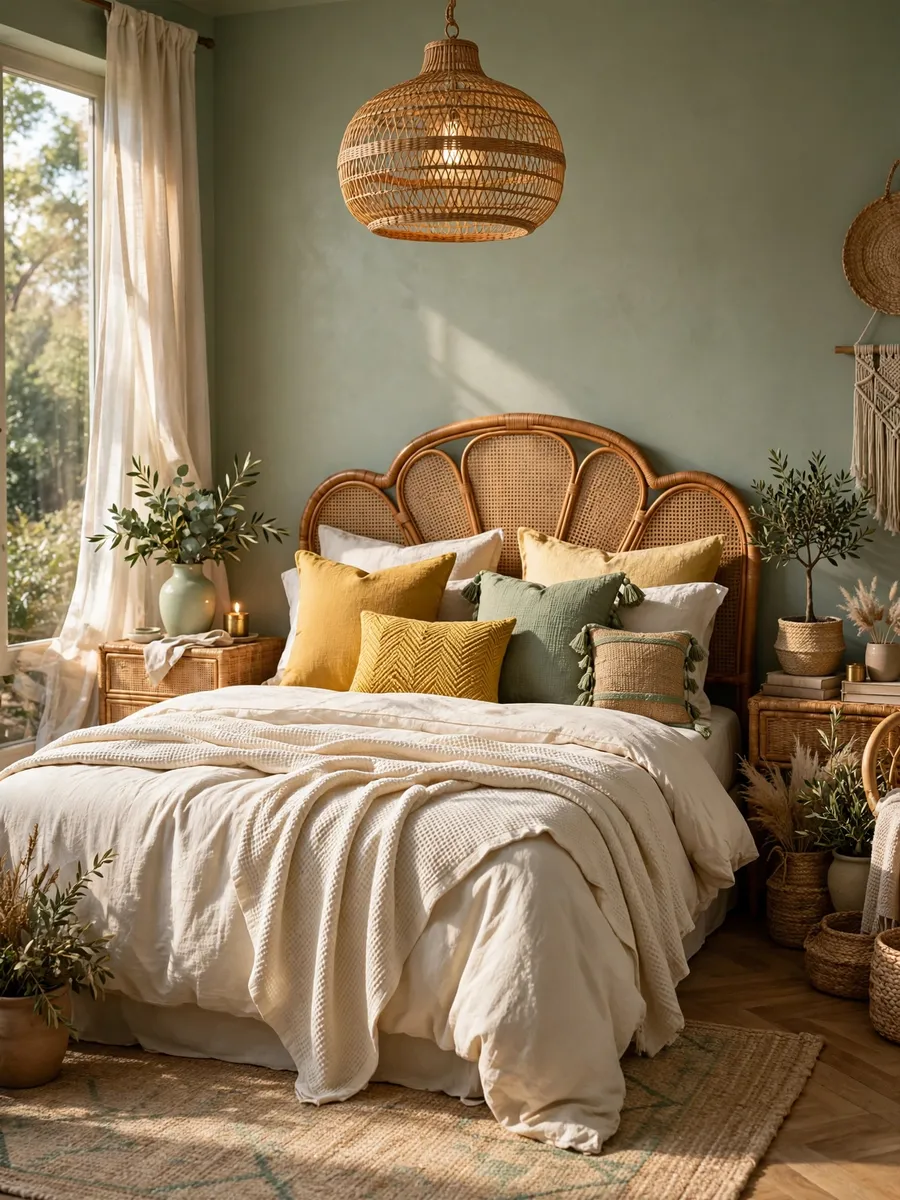
Mustard yellow is the sunny lift that stops a sage bedroom feeling too quiet, and rattan adds relaxed, natural texture that keeps the combination warm rather than loud. Paint the walls sage, then add mustard in two velvet cushions measuring 20 by 20 inches and a mustard throw draped over one corner of the bed. Bring in rattan through a headboard about 60 inches wide, a rattan pendant hung 36 inches above a bedside table, and a woven basket around 18 inches tall beside the dresser. Cream bedding and a jute rug keep the yellow from taking over.
Quick tips
- Keep mustard in small textile accents so it lifts the room without dominating it.
- Repeat rattan twice, in the headboard and a light or basket.
- Use cream bedding to calm the contrast between sage and mustard.
9. Deep Sage and Forest Green Layering
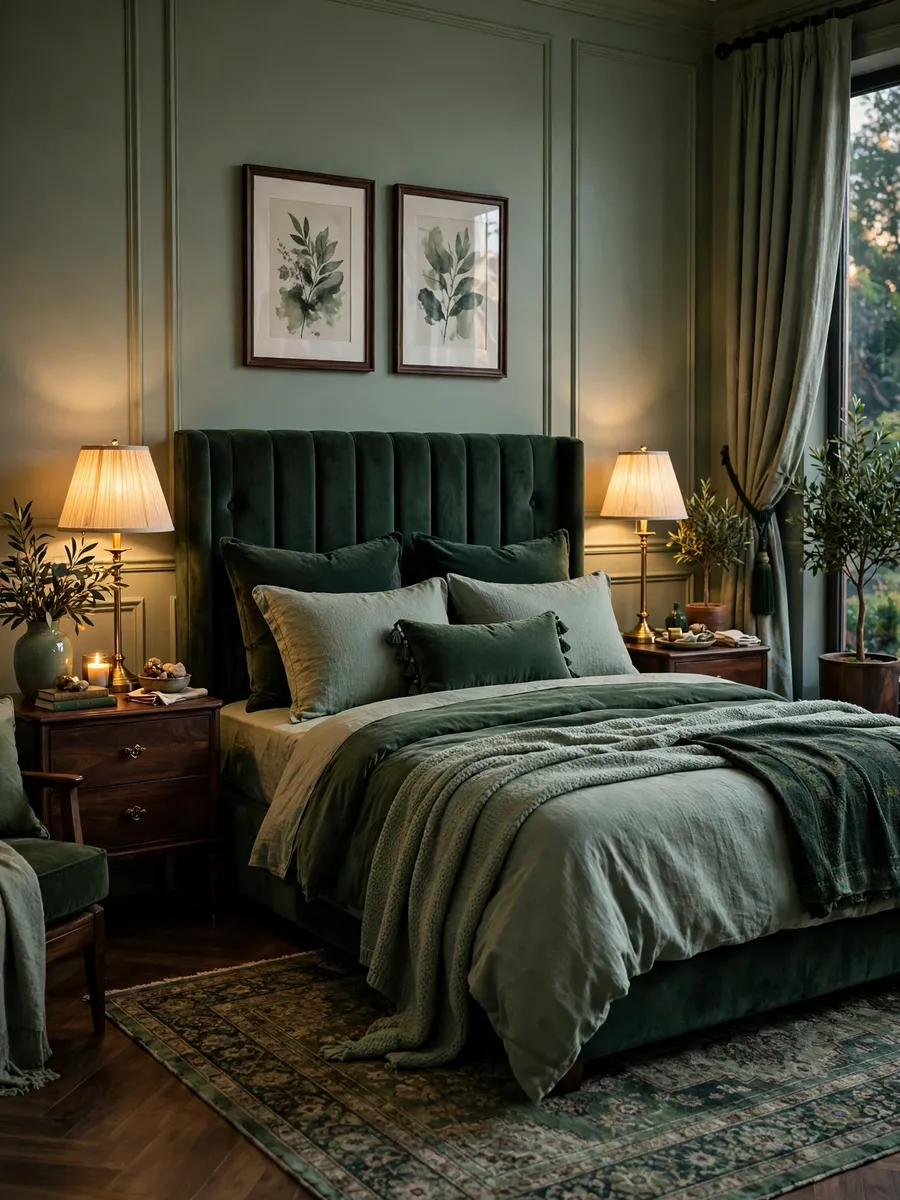
Layering sage with a deeper forest green creates a rich, cocooning bedroom that still feels calm, because both colours come from the same green family. Paint the walls in Benjamin Moore Saybrook Sage HC-114, then add depth with a forest green velvet headboard about 58 inches tall, forest green cushions, and a sage throw over cream linen bedding. A dark walnut dresser, about 60 inches wide, sits opposite the bed with a round mirror above it, and a potted fern adds a living green accent. Two walnut lamps with cream shades and warm-white bulbs around 2700K keep the deep greens glowing after dark.
Quick tips
- Layer two greens from the same family so the room feels rich, not mismatched.
- Use warm-white bulbs around 2700K to keep deep greens glowing at night.
- Keep bedding cream or white so dark greens have light to stand against.
10. Sage and Ivory with Silver for a Light Luxury Look
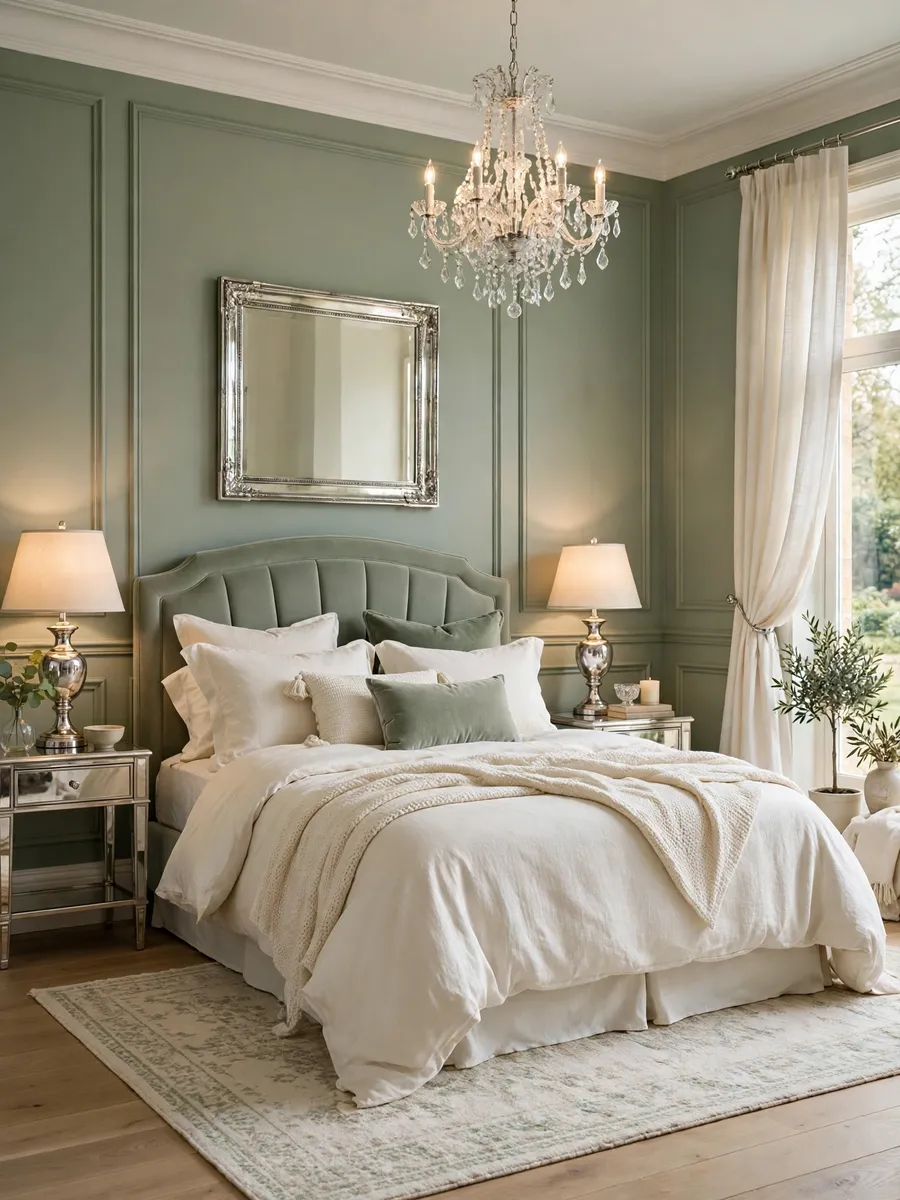
Sage with ivory and silver is the lightest, most elegant version of this palette, and it suits a bedroom that should feel airy and a little luxurious. Paint the walls a very pale sage, dress the bed in ivory linen, and add silver through a mirror about 36 inches tall above a white dresser, silver lamp bases, and a thin silver frame. A crystal or glass chandelier, about 20 inches wide, adds sparkle without another colour, and a pale ivory rug softens the floor. Keep the silver brushed or satin, not polished, so it reads as soft luxury.
Quick tips
- Choose pale sage so the ivory bedding and silver accents stay visible.
- Use brushed or satin silver, not polished chrome, for a softer finish.
- Add one statement light, such as a small chandelier, for a luxury touch.
11. Sage and Dusty Rose with Natural Linen
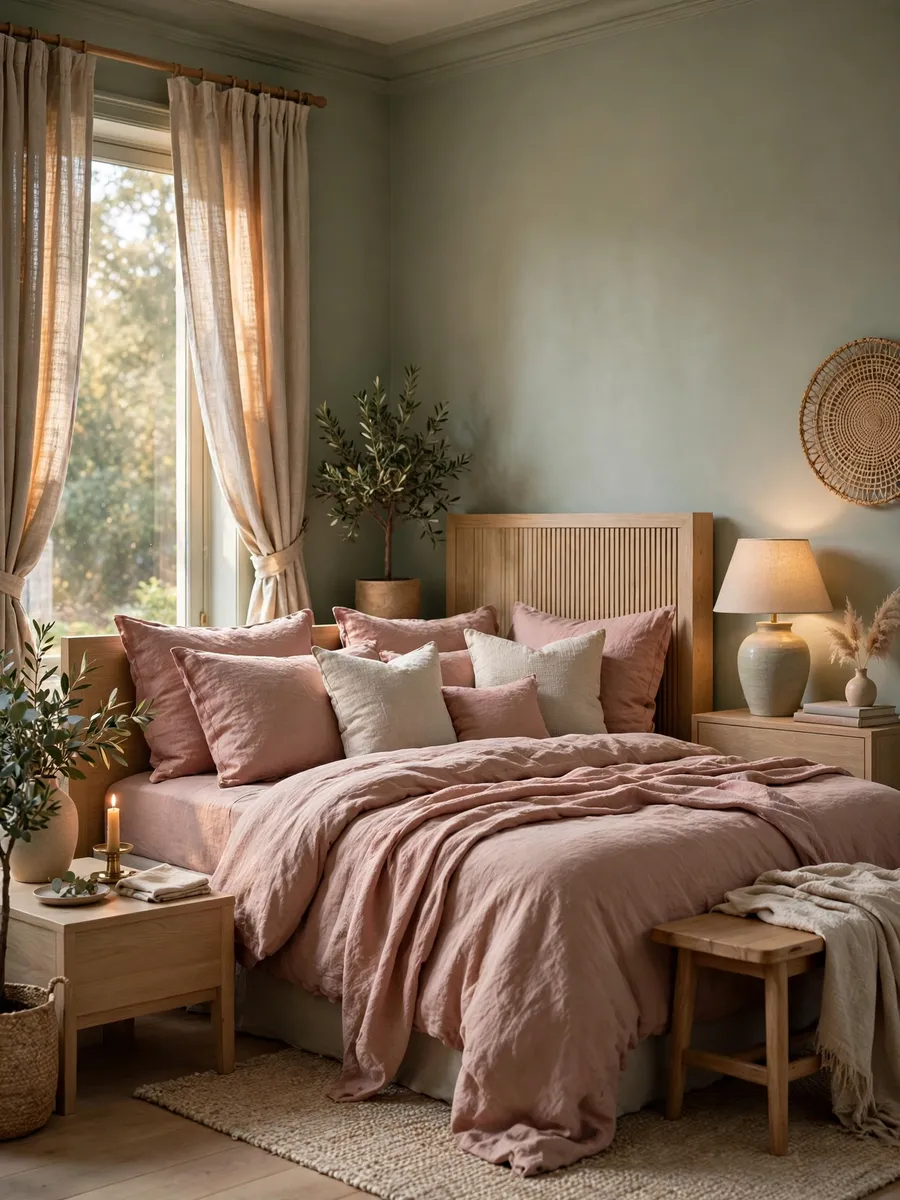
Dusty rose linen is the softest partner for sage, and natural linen ties the two together with texture that feels relaxed and lived-in. Paint the walls sage, hang natural linen curtains that fall to the floor, and dress a light oak bed in dusty rose linen bedding with a natural linen throw and two linen cushions. A seagrass rug and a vase of dried eucalyptus add a gentle green echo of the walls. Leave 30 to 36 inches of walking space around the bed, and choose a dusty rose with a grey undertone so it harmonises with the sage.
Quick tips
- Choose dusty rose with a grey undertone so it sits calmly next to sage.
- Use natural linen curtains that reach the floor for a relaxed, finished look.
- Leave 30 to 36 inches of walking space around the bed.
12. Sage with Caramel Leather and Cream
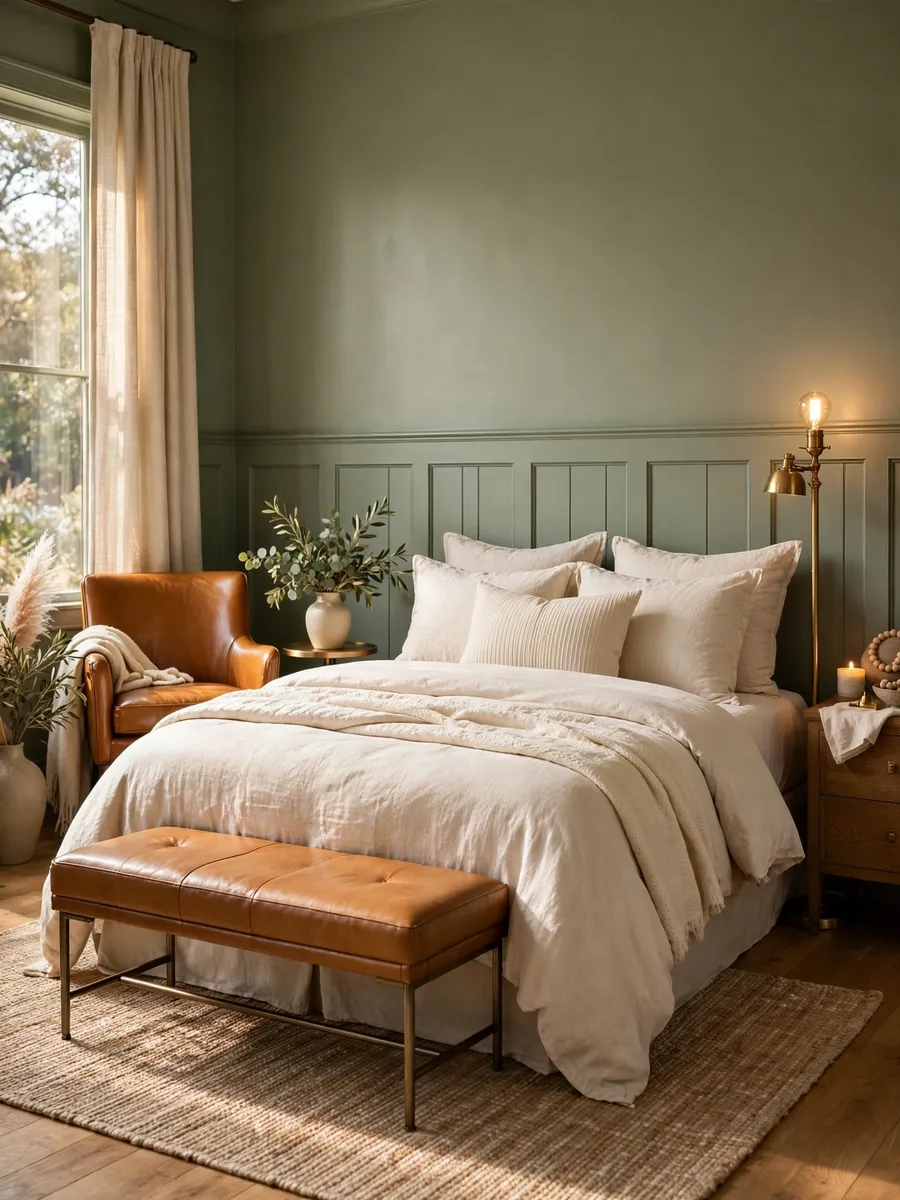
Caramel leather adds warmth and a tailored, grown-up feeling to sage, a good choice for a bedroom that doubles as a reading corner. Paint the walls sage, dress the bed in cream bedding, and add caramel leather through an accent chair about 30 inches wide in one corner near the window and a leather bench about 48 inches wide at the foot of the bed. A brass floor lamp, a small light wood side table, and a cream wool throw over the chair arm complete a corner for reading before bed, and a cream rug under the chair makes it feel used.
Quick tips
- Place the leather chair near a window so it becomes a real reading spot.
- Use cream bedding to keep the caramel leather from making the room feel dark.
- Add a brass lamp and a wood side table to complete the corner.
Frequently Asked Questions
What colours go with sage green in a bedroom?
Cream, white, warm grey, blush pink, and natural wood are the easiest partners for sage green in a bedroom. For warmth, add terracotta, mustard, or caramel leather, and for contrast, add navy, charcoal, or matte black. Repeat one main accent three times, in cushions, a throw, and one larger piece, so the scheme looks deliberate.
Is sage green good for a small bedroom?
Yes, sage green can work well in a small bedroom because it is a muted mid-tone, softer than stark white. Choose a pale sage with a light reflectance value above 50, keep the ceiling and bedding white or cream, and use sage on one accent wall if the room gets little light. Avoid dark sage on all four walls in a small, dim room.
What is the best sage green paint colour for a bedroom?
There is no single best shade, because the right choice depends on your light, but popular choices include Sherwin-Williams Evergreen Fog SW 9130, Benjamin Moore Saybrook Sage HC-114, and Farrow & Ball Lichen. Test a large swatch in morning and evening light. A warm undertone suits a cool, north-facing room, while a greyer sage suits a bright, sunny room.
How do I stop a sage green bedroom feeling too cold?
Add warm wood, warm-white bulbs around 2700K, and soft textures such as linen, wool, and velvet. Brass or gold accents, a caramel leather chair, or terracotta cushions also warm a grey-green quickly. A sage with a blue-grey base reads cooler than one with a warm yellow base, so a warmer shade or lighting usually fixes it.
Should the trim be white with sage green walls?
White trim is the simplest choice, because crisp white skirting, doors, and window frames sharpen sage walls and keep the room bright. It does not have to be white, though: a pale green-grey or cream trim, or sage trim in the same colour as the walls, can look softer and more modern.
Conclusion
Sage green is one of the easiest bedroom colours to live with because it is calm, flexible, and forgiving. Start with one clear change, a sage wall, sage bedding, or a sage headboard, then add one accent colour and warm textures. Test your paint in your own light, keep the bedding light, and repeat your accent three times. Any of these twelve ideas can turn a plain bedroom into a calm, fresh space that feels like home every morning.