12 Stunning Thanksgiving Table Setting Ideas That Make Every Guest Feel Special
Thanksgiving table setting ideas work best when each place feels layered, personal, and easy to eat from: a charger under the dinner plate, a salad plate on top, a folded linen napkin with a ring, flatware in the order it will be used, and a water glass plus a wine glass. Build upward in thin layers, keep the centerpiece low, and finish every place with a name card.
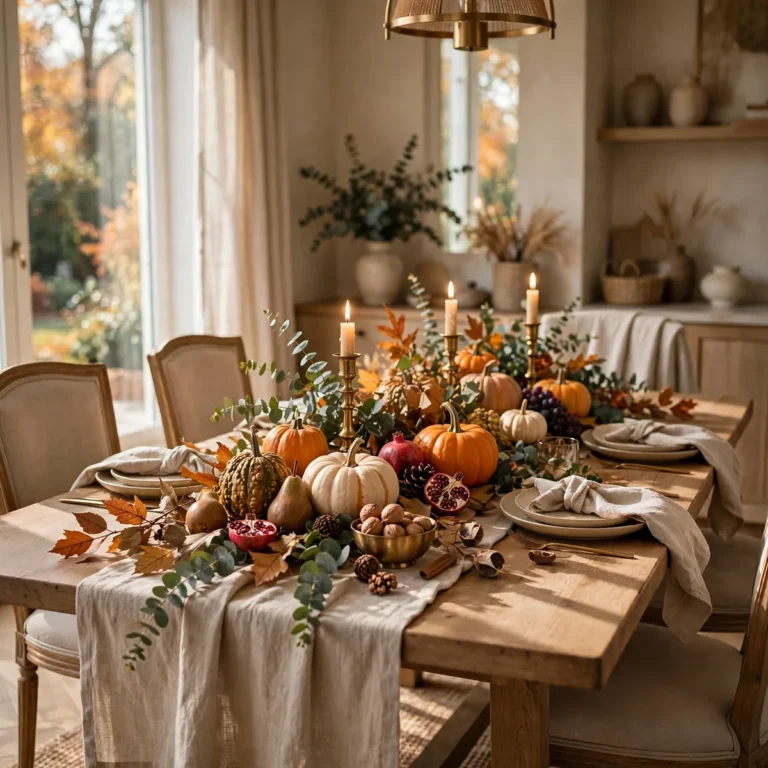
A beautiful place setting and a beautiful table are two different jobs, and they work best together. If you are still deciding the look of the whole table, start with Thanksgiving table decor ideas for the big picture, then use the twelve settings below to dress each seat.
Key Takeaways: Thanksgiving Place Settings at a Glance
Q: What goes into a layered Thanksgiving place setting? A: A placemat or charger, a dinner plate, a salad plate on top, a folded napkin, flatware in use order, a water glass, and a name card — thin layers so the place looks full without feeling cluttered.
Q: How do you keep a Thanksgiving table easy to eat at? A: Keep the centerpiece under twelve inches tall, leave about twenty-four inches of elbow room per guest, and put nothing fragile or tall in front of anyone’s plate.
Q: Do place settings need to match exactly? A: No. Matching plates with mixed glasses, or matching flatware with varied napkin rings, looks more collected than a matched set — as long as one color or metal repeats at every seat.
Q: What is the easiest way to make each guest feel welcome? A: A handwritten name card. It costs almost nothing, takes two minutes per guest, and it is the detail people remember long after the meal.
Q: How far ahead can you set the Thanksgiving table? A: Set the full table the night before, except for fresh flowers, candles, and anything edible. Cover it lightly with a clean sheet if you have pets or small children.
1. How Do You Layer a Thanksgiving Place Setting?
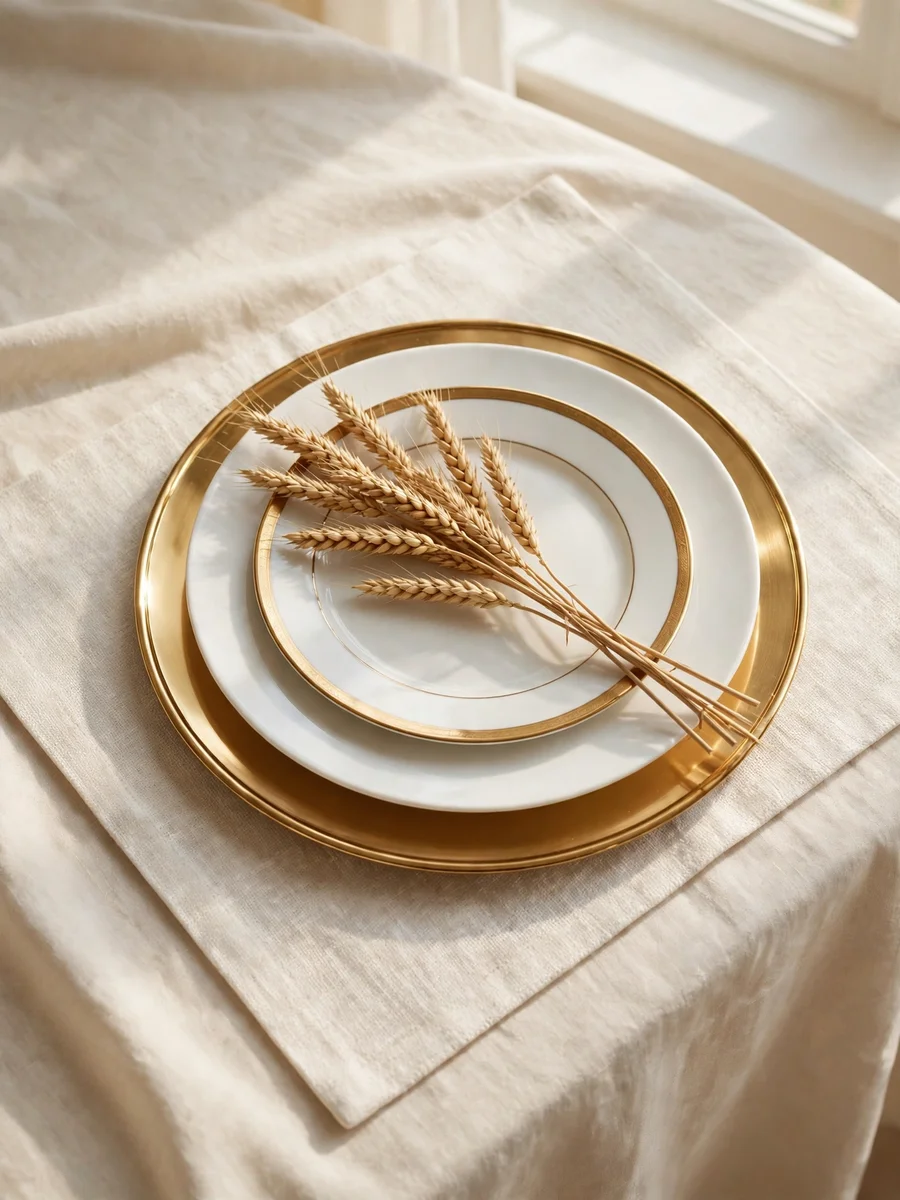
Layer from the bottom up: a charger or placemat first, then the dinner plate, then the salad plate on top, with the napkin folded on the salad plate or tucked to the left of the forks.
The charger is the frame of the whole setting. It stays on the table through the main course, so choose one sturdy enough to hold a hot plate without wobbling.
For example, set an ivory placemat, a thin gold charger, a white dinner plate, and a smaller gold-rimmed salad plate, then rest a sprig of dried wheat across the top. The wheat costs pennies and ties the layer together.
Quick tips:
- Let each layer show by about half an inch.
- Remove the salad plate before the main course.
- Use a soup bowl on the dinner plate when serving soup.
2. What Napkin Fold Works Best for Thanksgiving?
A simple pocket fold or a loose roll through a napkin ring works best: both hold their shape for hours and leave room for herbs or a menu card. Skip tall standing folds — they block sightlines and topple easily.
Cloth napkins are worth the effort here, even if you use paper the rest of the year. Linen or cotton in a warm solid — terracotta, cream, or deep rust — softens the hard edges of plates and flatware.
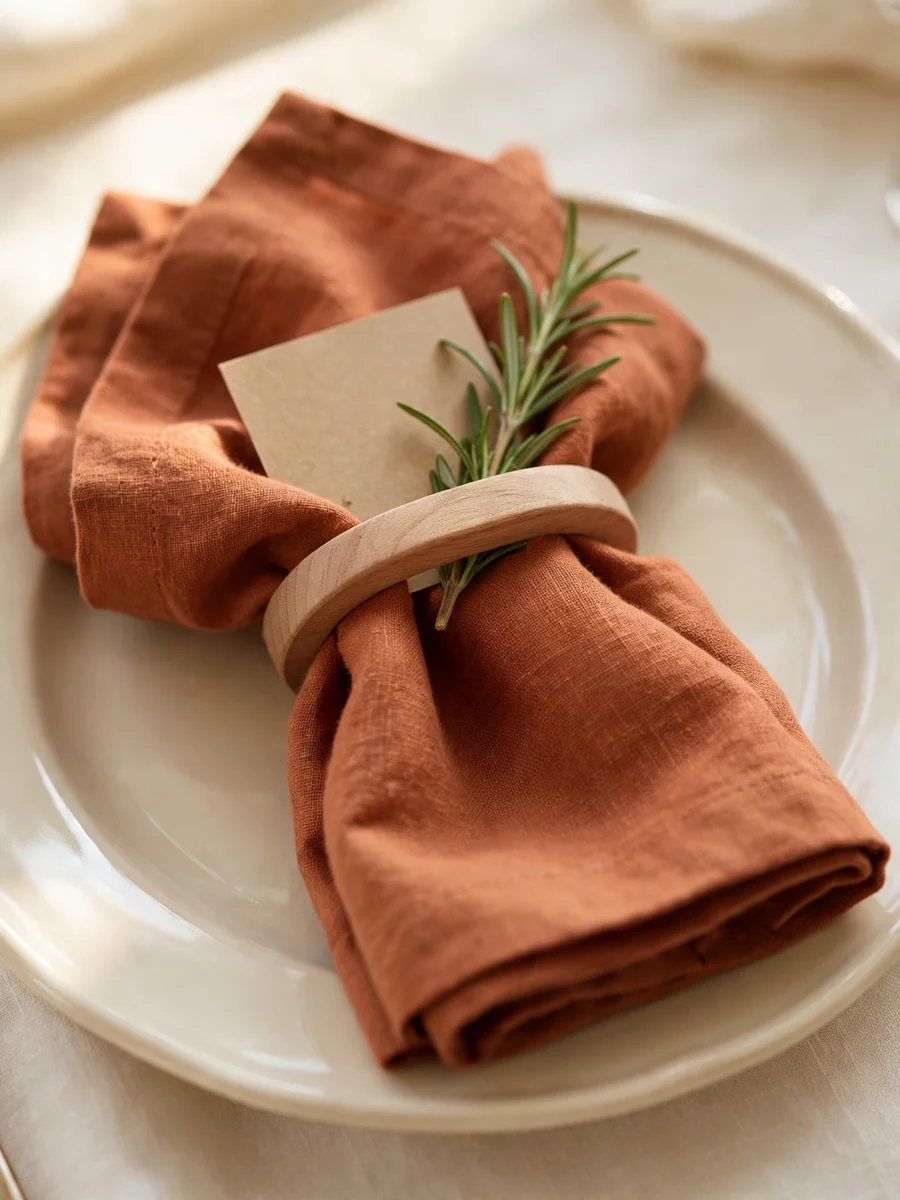
For example, fold a terracotta linen napkin into a flat pocket, slide it through a plain wooden ring, and tuck a sprig of fresh rosemary and a small kraft place card inside. The rosemary smells wonderful when guests pick the napkin up.
Quick tips:
- Fold napkins the night before so the morning is calm.
- Place the napkin on the salad plate or left of the forks.
- Keep one spare napkin per four guests for spills.
3. How Low Should a Thanksgiving Centerpiece Be?
Keep a Thanksgiving centerpiece under twelve inches tall so guests can see and talk across the table. Build it long and low: a linen runner down the middle, with candles, greenery, and small pumpkins spread along it.
Sit in a chair and look across the table before guests arrive — if you cannot see the person opposite, the centerpiece is too tall. For more low styles, browse Thanksgiving centerpiece ideas and pick one that matches your place settings.
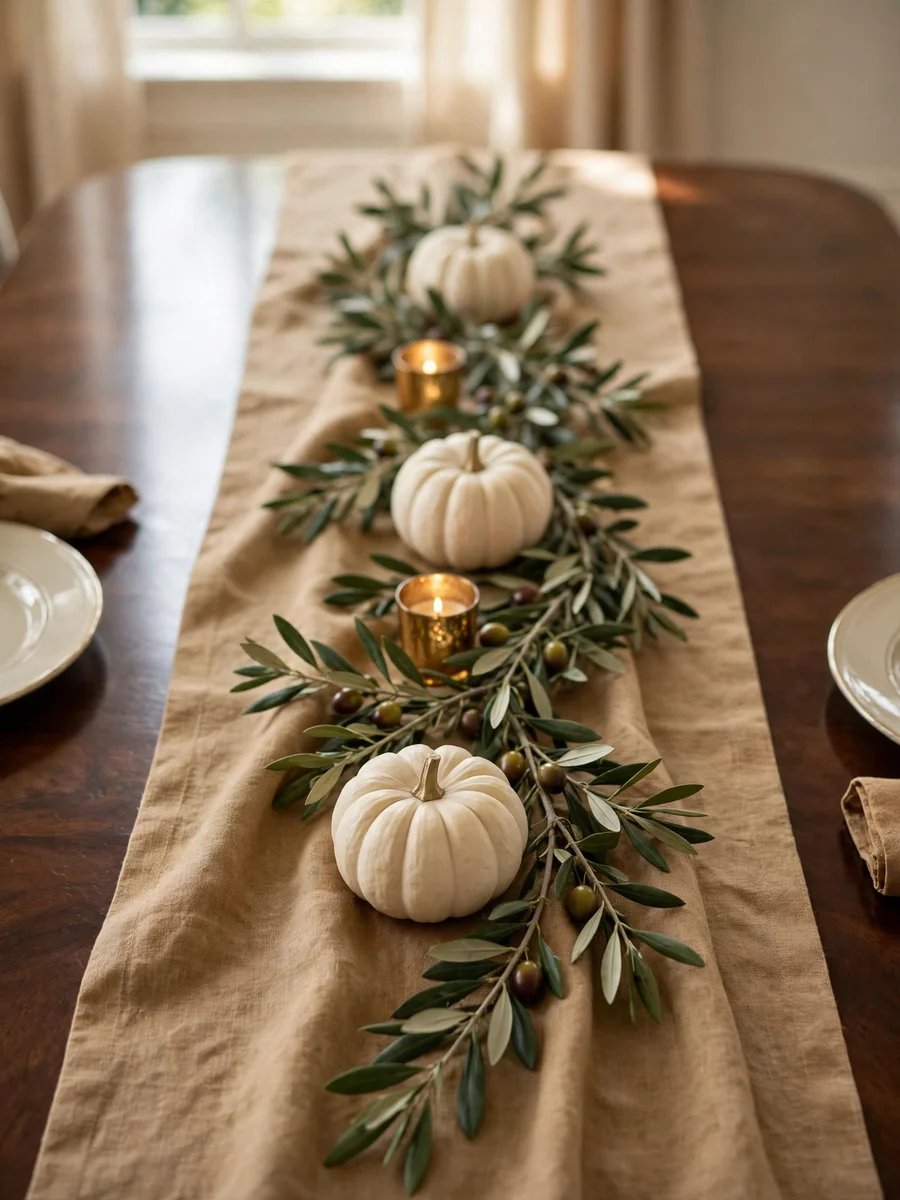
For example, lay a camel linen runner down the center, add olive branches, three small white pumpkins a foot apart, and a few brass votives between them. The arrangement is about six inches high and can be pushed aside if a dish needs the space.
Quick tips:
- Test the sightline by sitting down before guests arrive.
- Keep candles at least a foot from anything flammable.
- Leave the ends of the table clear for serving dishes.
4. How Do You Make Thanksgiving Name Cards?
Fold a small piece of kraft card in half, write each guest’s name by hand, and prop it against the water glass or tuck it into the napkin fold. One card takes about two minutes.
Name cards do more than assign seats — they tell guests they were expected. Seat people who love talking next to each other, put children near an adult they adore, and keep the cook at the end nearest the kitchen.
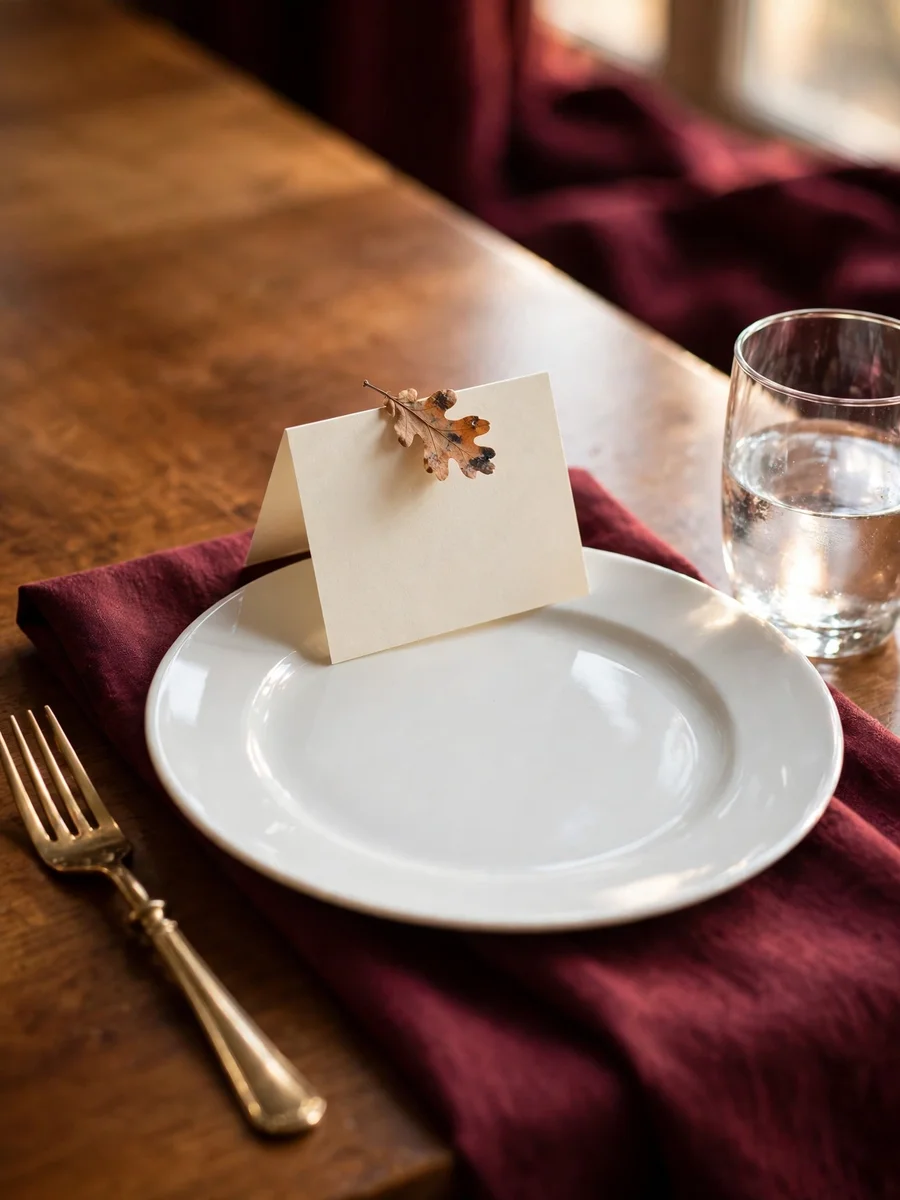
For example, cut cream cardstock into three-inch squares, fold them into tents, write each name in burgundy ink, and rest a tiny dried oak leaf on top. Place the card just above the dinner plate, slightly to the right.
Quick tips:
- Write names the night before — never during the cooking rush.
- Use first names only for a relaxed family meal.
- Keep a few blank cards ready for surprise guests.
5. Where Does the Flatware Go at Thanksgiving?
Place flatware in use order, working from the outside in: salad fork far left, dinner fork beside the plate, knife on the right with the blade facing the plate, and spoons right of the knife.
Thanksgiving is the one meal where mixing metals looks deliberate rather than careless. Brass or gold flatware warms up white plates beautifully, while matte black or brushed steel suits a modern table.
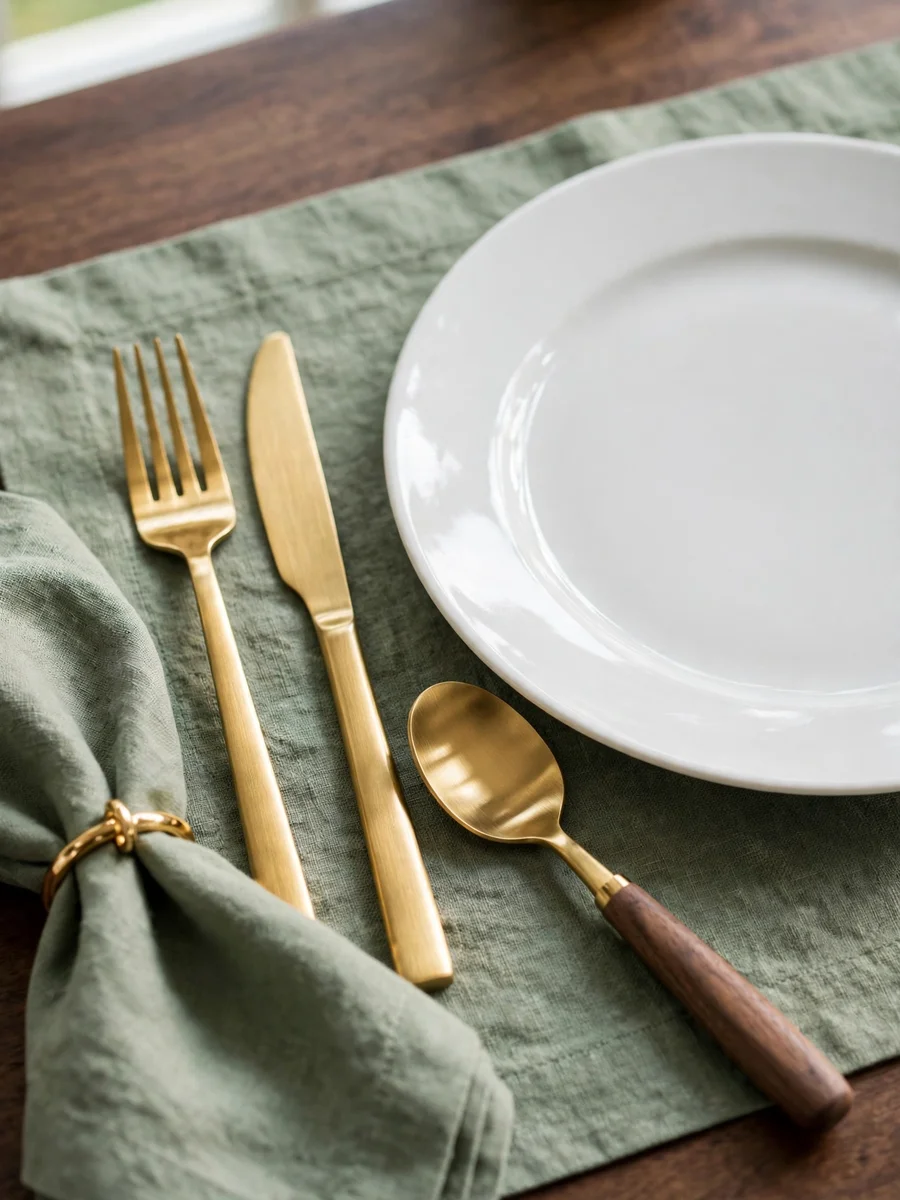
For example, set brushed gold flatware beside sage green linen placemats, with walnut-handled serving pieces at the center. The gold repeats in the napkin rings and votive holders, so the warm metal feels like a plan.
Quick tips:
- Blades always face the plate.
- Set only the flatware the meal actually needs.
- Polish flatware the night before to avoid water spots.
6. How Many Glasses Do You Need per Place Setting?
Two glasses cover a Thanksgiving meal: a water glass and a wine glass. Place the water glass above the knife and the wine glass slightly to its right. A third glass is only needed for a toast.
Glassware is an easy place to add character without spending much. Vintage-style goblets in amber or smoky blue look wonderful beside plain white plates.
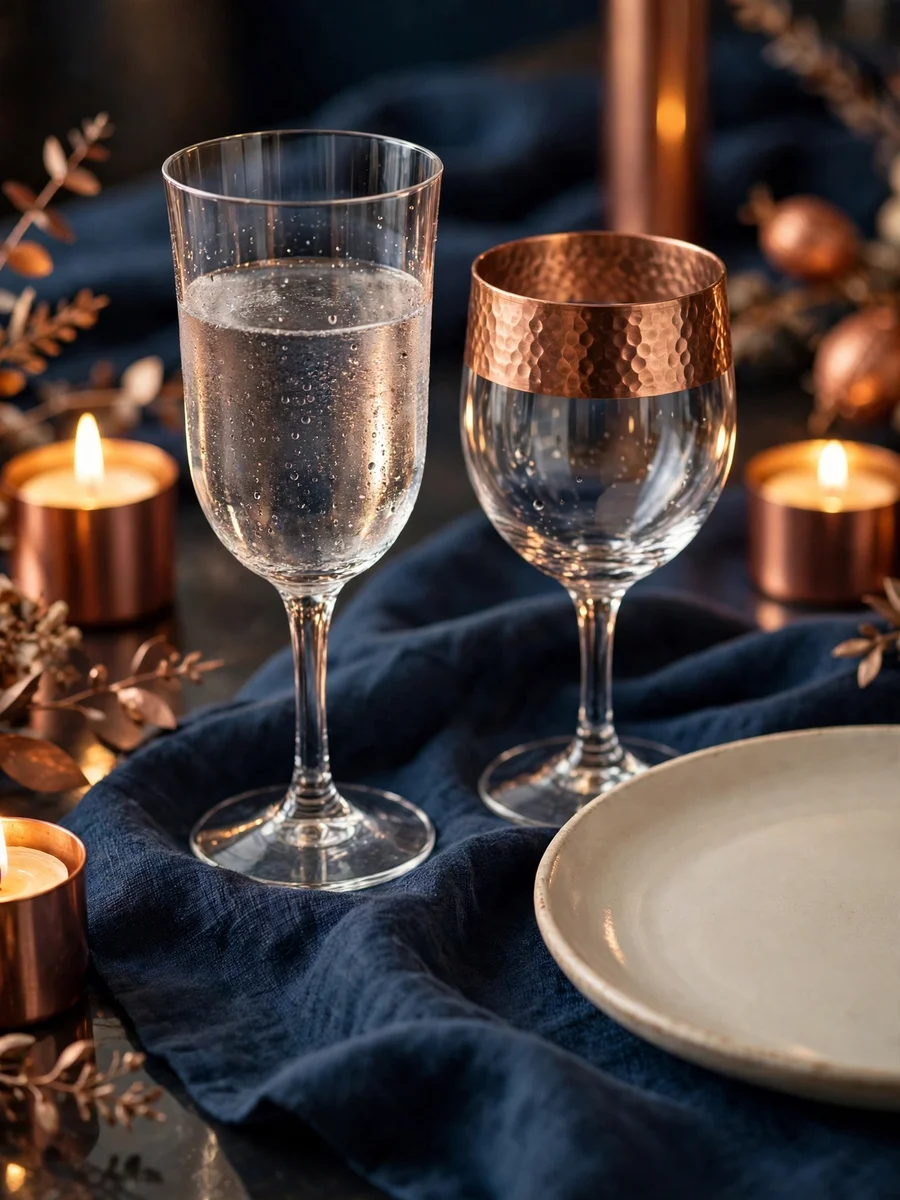
For example, pair a tall clear water goblet with a shorter copper-rimmed wine glass at each place, set against a navy linen runner and cream plates. The copper rims catch the candlelight, and the two heights stop the table looking like a boxed set.
Quick tips:
- Fill water glasses before guests sit down.
- Polish glass rims so they are free of marks.
- Offer sparkling cider for guests who skip wine.
7. What Goes Under the Plate at Thanksgiving?
A woven placemat, a linen placemat, or a full table runner goes under the plate — something with texture that protects the table and frames each setting. Placemats define individual places best, while a runner suits a long table.
Texture matters more than pattern here. A chunky woven placemat in natural jute, a soft washed-linen one in blush, or a velvet runner in deep plum each change the mood of the same white plates completely.
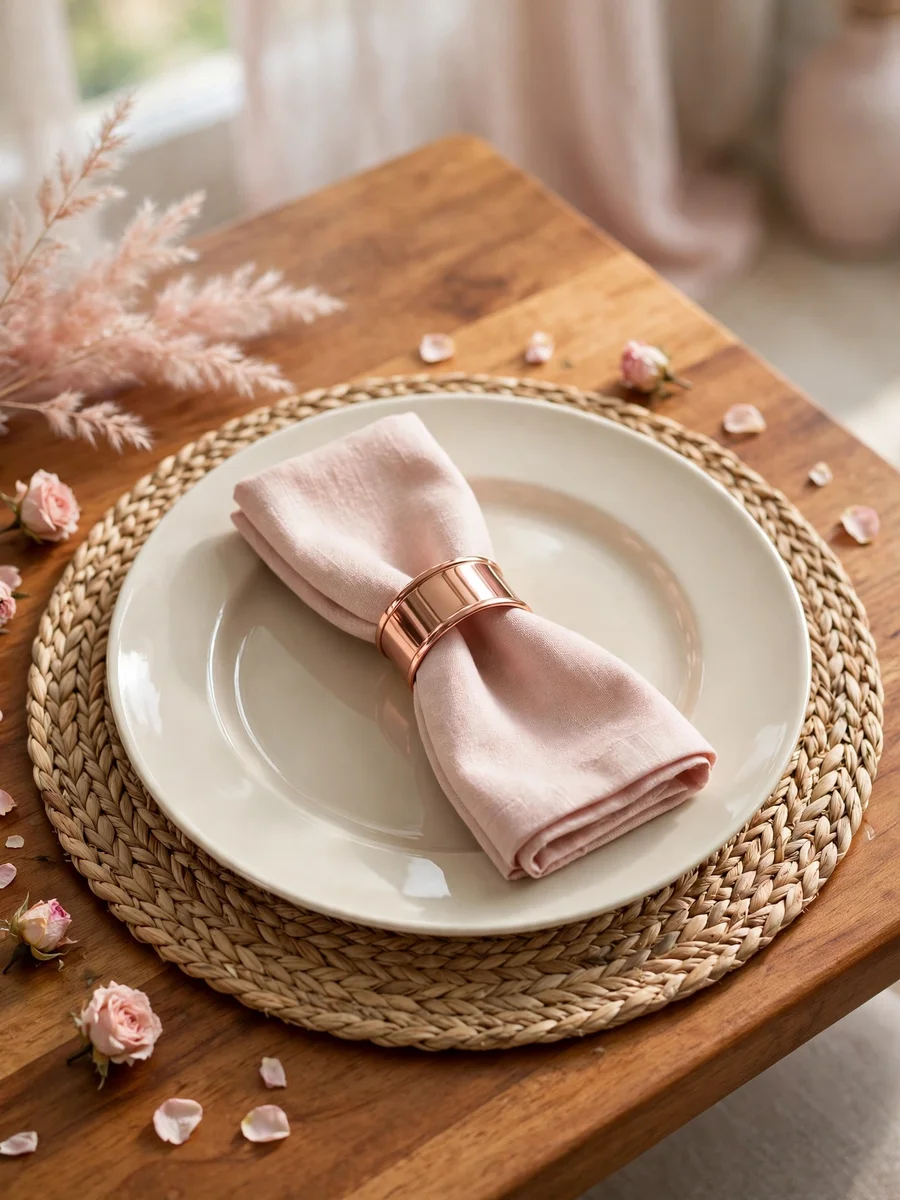
For example, use round woven seagrass placemats under cream dinner plates, with blush linen napkins and small gold napkin rings on top. The natural weave warms the blush, and the round shape softens a long rectangular table.
Quick tips:
- Placemats should be larger than the charger by about an inch.
- Skip tassels and fringe near the plate edge.
- Wipe woven placemats with a damp cloth after the meal.
8. How Do You Add Candlelight to a Thanksgiving Table?
Add candlelight with short pillars or votives in sturdy holders, spaced along the table center and kept well away from napkins, greenery, and sleeves. Tapers in brass suit formal tables; chunky pillars in glass hurricanes suit family tables.
Candlelight is the cheapest way to make an ordinary table feel like an occasion, but safety comes first. Use unscented candles so the scent never competes with the food, trim wicks to a quarter inch before lighting, and never leave the table while candles are burning.
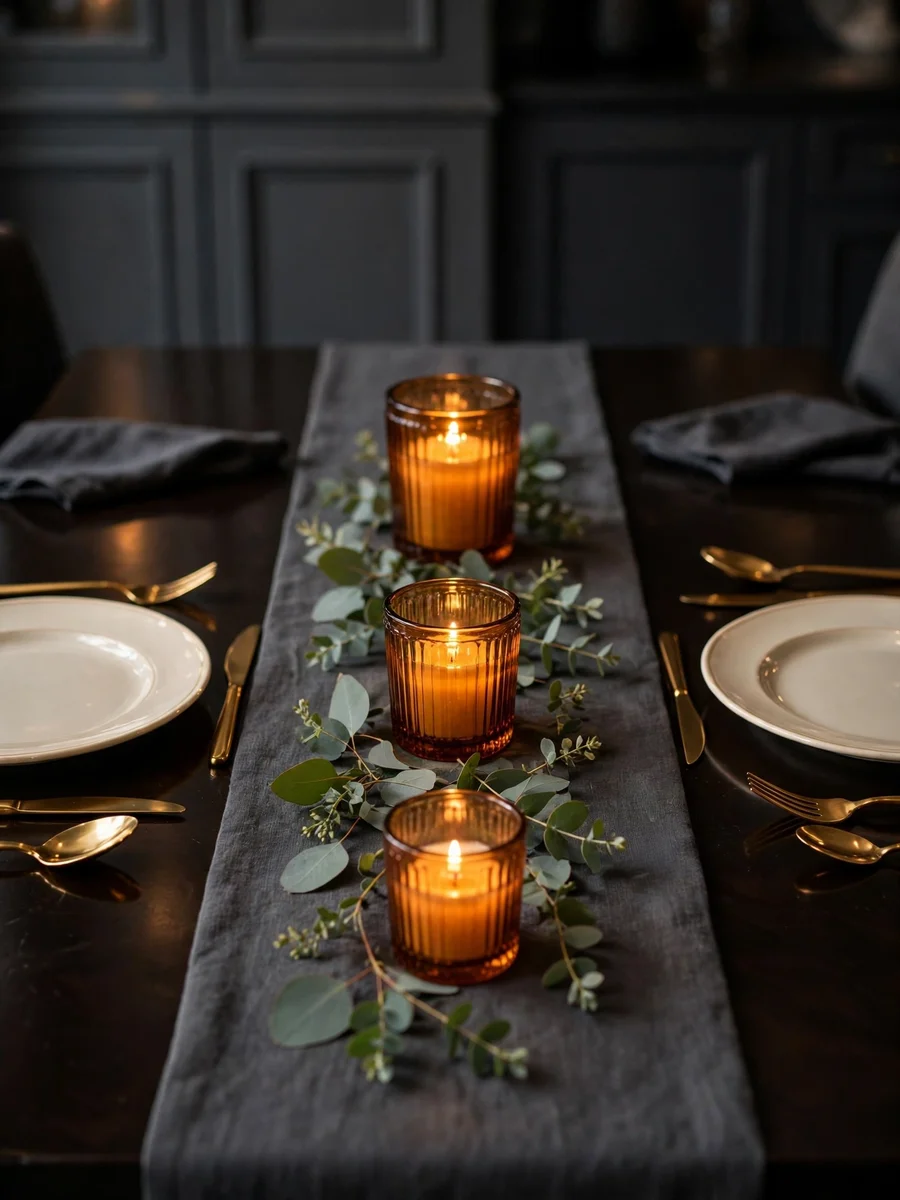
For example, place three amber glass votives of different heights down the center of a charcoal linen runner, with a few sprigs of eucalyptus between them. The amber glass glows warm against the dark linen, and the varying heights look collected rather than lined up.
Quick tips:
- Use unscented candles near food.
- Trim wicks before lighting for a clean flame.
- Keep a small tray under each candle to catch wax.
9. How Do You Use Natural Elements at Each Place?
Use one natural element at each place — a mini pumpkin, a sprig of herbs, or a dried leaf — on the salad plate or by the name card. One per place is enough; more looks like a craft project.
Natural touches work because they are free or nearly free and they smell like the season. Gather oak leaves, pinecones, and small gourds a few days ahead and let them dry on a tray.
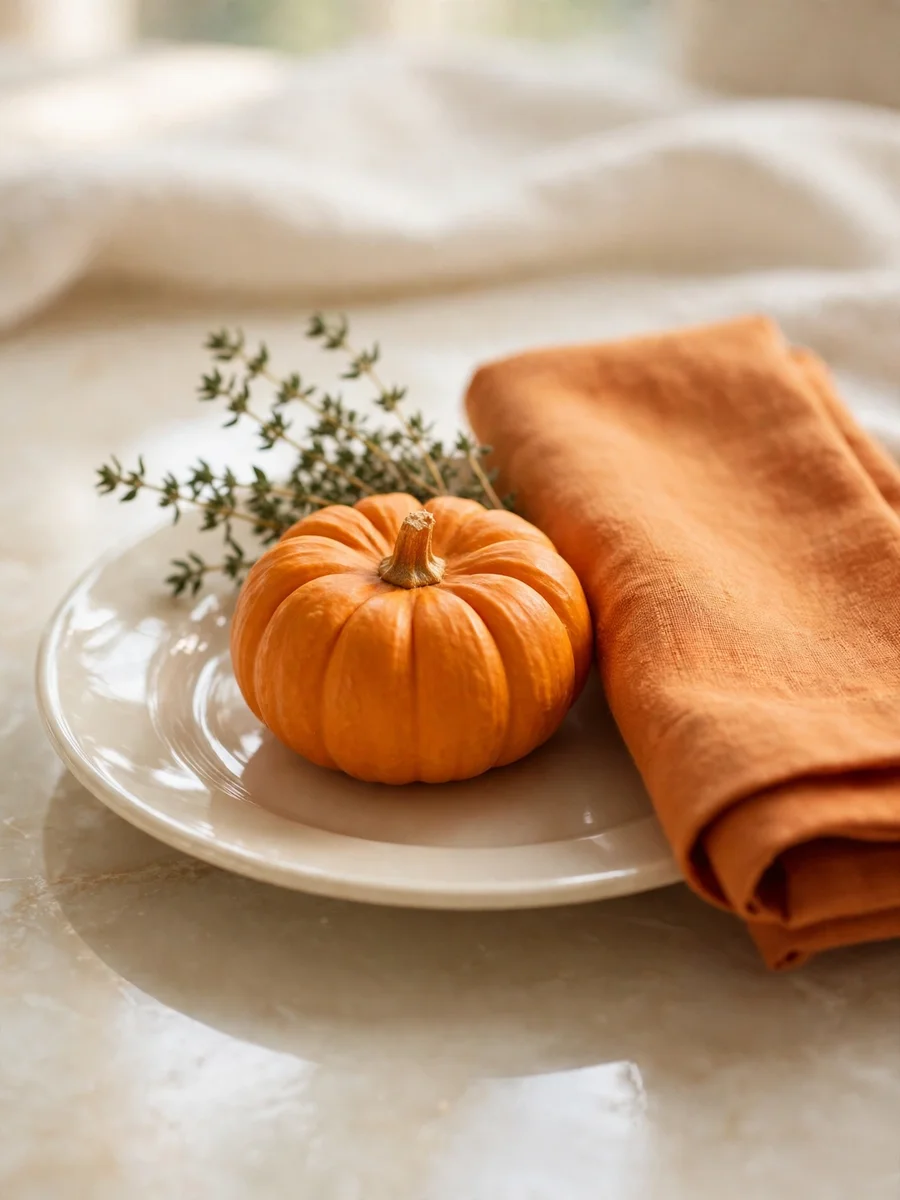
For example, rest a tiny orange pumpkin on each salad plate with a sprig of fresh thyme tucked behind it, over cream plates and a pumpkin-orange napkin. Guests can take the pumpkin home as a favor, and the place costs less than a dollar.
Quick tips:
- One natural element per place — no more.
- Gather leaves and gourds a few days ahead to dry.
- Skip anything that sheds into the food.
10. How Do You Set a Thanksgiving Table for a Crowd?
Keep every place identical and simple: the same plates, napkin fold, and glass at every seat, with one repeated color tying them together. Simplicity scales — fussy details for six guests become chaos for sixteen.
For a big group, push two tables together and use a single long runner to make them read as one table. Mix and match chairs without apology, but keep the place settings uniform so the table still feels planned.
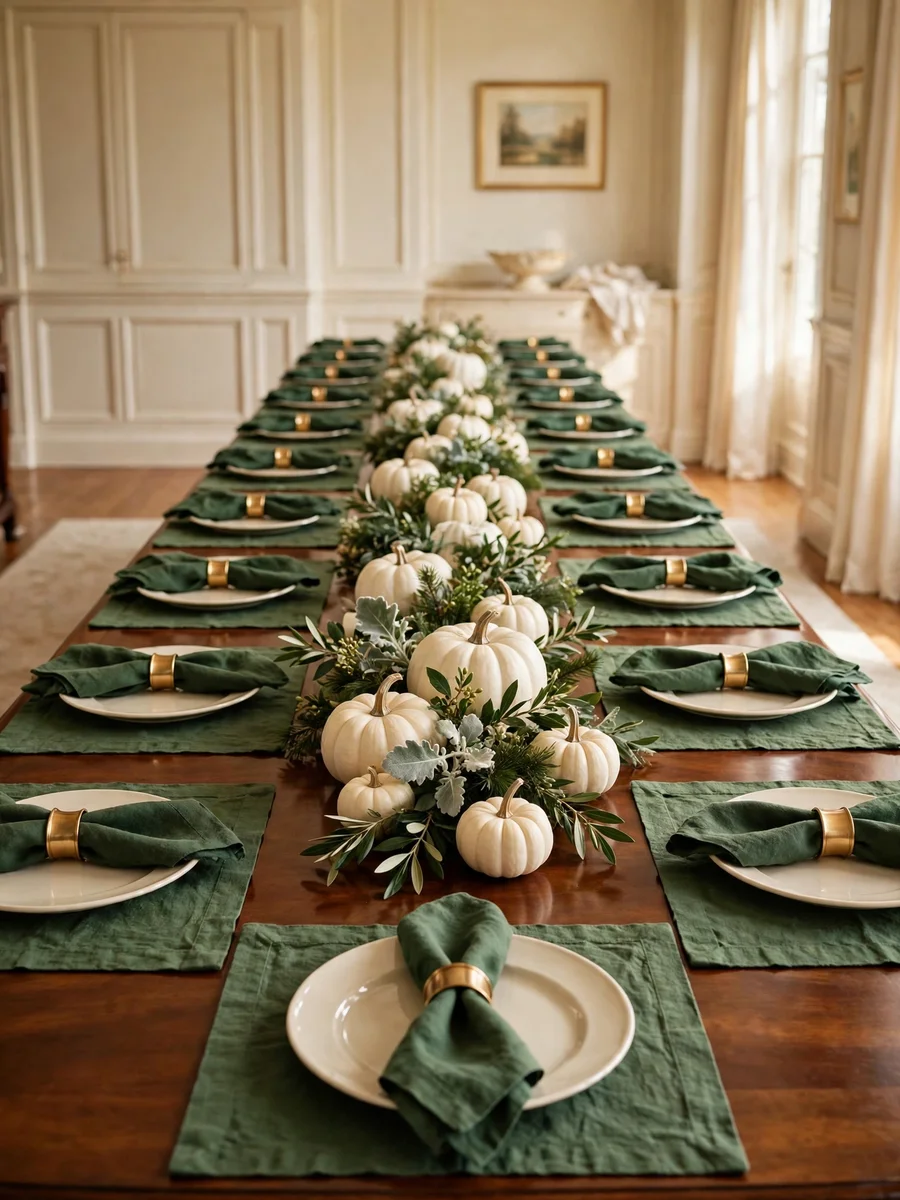
For example, seat fourteen at a long table with forest green linen placemats, cream plates, and a single brass napkin ring at every place. Down the center, run a line of white pumpkins and greenery with no tall pieces, so conversation flows the whole length.
Quick tips:
- Keep every place identical when seating more than ten.
- Use a drinks station so the table stays clear.
- Allow twenty-four inches of elbow room per guest.
11. What About the Dessert and Coffee Setting?
Plan dessert and coffee as a second, simpler layer: clear the salad and dinner plates, bring in a small dessert plate and fork, and set a coffee cup and saucer to the upper right. Clearing first makes it feel fresh.
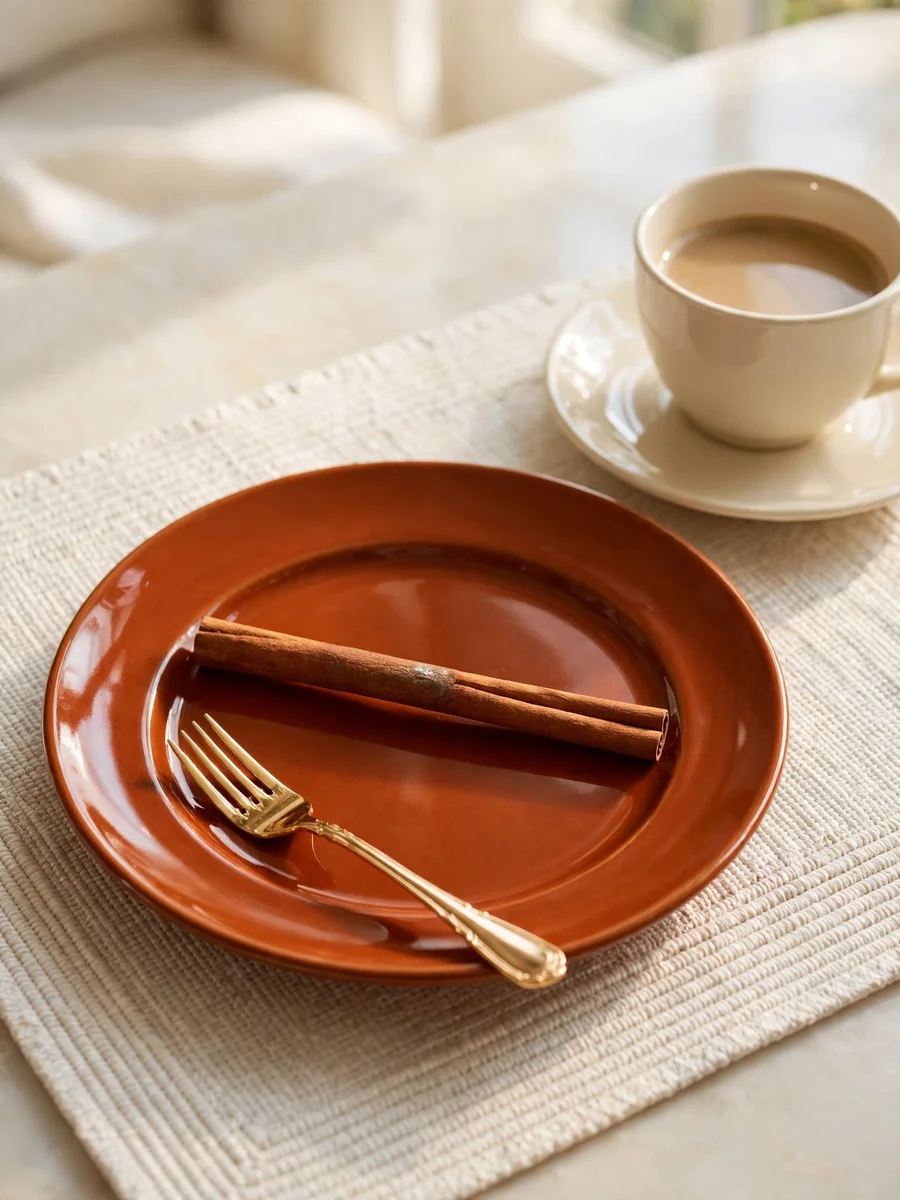
This is the moment to switch the mood slightly — a smaller plate, a different napkin, a tiny sprig of something fresh. One small change, like a rust-colored dessert plate over the same ivory placemat, signals the meal has moved into its sweet ending.
For example, after clearing the main plates, set a rust ceramic dessert plate with a small gold dessert fork at each place, plus a cream coffee cup and saucer at the upper right. Add a single cinnamon stick across the plate — it smells like pie before the pie arrives.
Quick tips:
- Clear main-course plates before bringing dessert plates.
- Keep coffee cups small so they fit the place.
- Serve dessert from a sideboard to keep the table calm.
12. What Finishing Touches Make a Thanksgiving Table Feel Complete?
Three finishing touches complete a Thanksgiving table: a small menu card at each place, a take-home favor, and one shared detail everyone notices — like a gratitude jar in the middle. They turn a well-set table into a memorable one.
The menu card is the most useful of the three: guests with allergies can read it before the dishes arrive, and it makes the meal feel considered. The favor can be a small bag of spiced nuts or a single wrapped chocolate tied with twine.
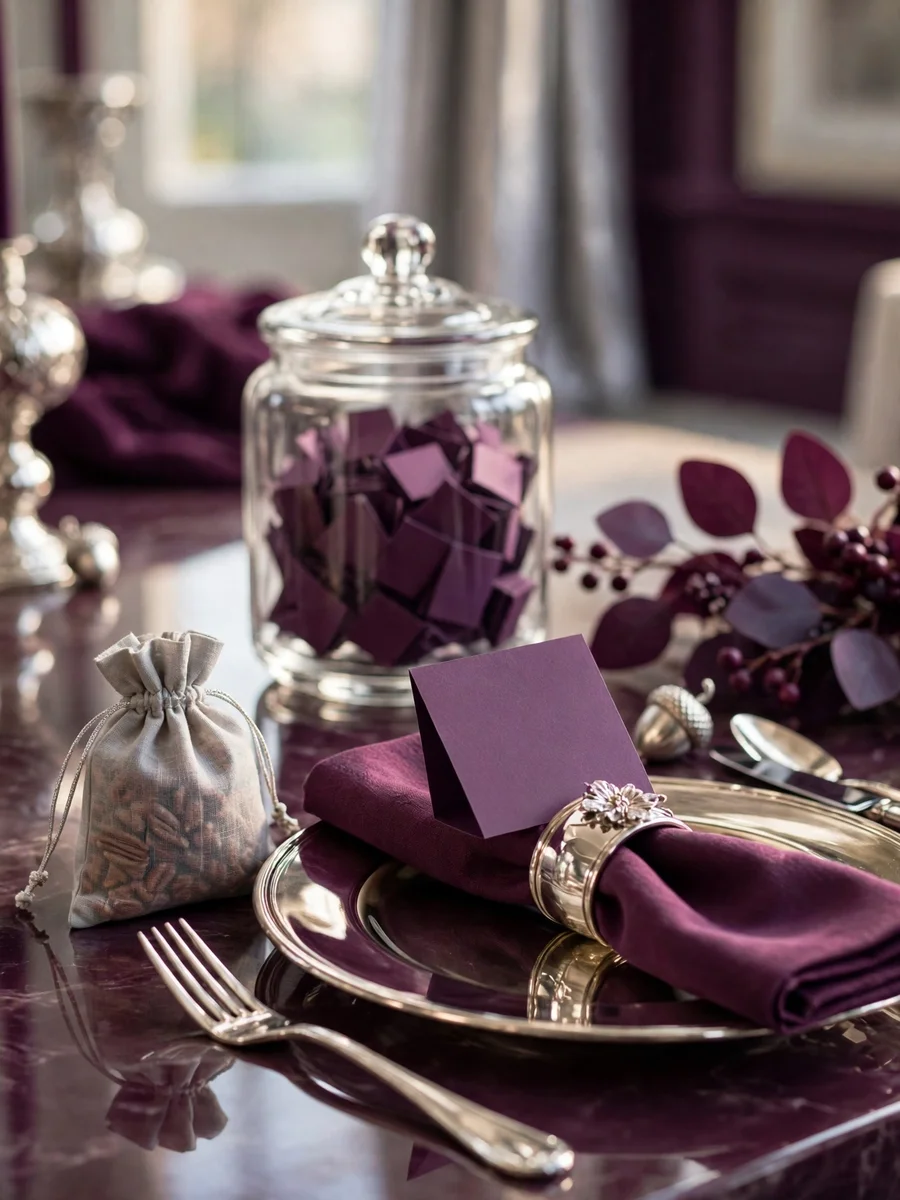
For example, tuck a small plum-colored menu card into each napkin ring, set a tiny muslin bag of spiced pecans beside it, and place a glass gratitude jar with silver-tied paper slips at the center. The plum and silver palette repeats at every seat.
Quick tips:
- Print menu cards early and check them for allergies.
- Keep favors small enough to sit beside the plate.
- Read a few gratitude notes aloud before dessert.
What is the correct order of a Thanksgiving place setting?
Work from the outside in and the bottom up: placemat or charger, dinner plate, salad plate on top, napkin on the salad plate or to the left, forks left, knife and spoons right, water glass above the knife.
How many plates do you need per person at Thanksgiving?
Three plates per person cover the meal: a dinner plate, a salad plate, and a dessert plate, plus a charger underneath if you use one. Soup needs a bowl instead of a salad plate.
What color napkins go with a Thanksgiving table?
Warm solids work best: terracotta, rust, cream, burgundy, olive, or deep gold. Match the napkin to one color already on the table — the runner, the plates, or the centerpiece.
How do you set a Thanksgiving table for a small space?
Skip the charger, use a slim placemat instead of a wide one, and keep the centerpiece to a single low runner of greenery with votives. Stack the salad plate on the dinner plate first.
Can you mix metals and patterns in a Thanksgiving place setting?
Yes, if one element stays constant. Mix gold flatware with brass candle holders and keep the plates plain, or mix a patterned salad plate with solid dinner plates. Repeat one metal at every place so the mix looks chosen.
Conclusion
The best thanksgiving table setting ideas are the ones guests barely notice while eating — and remember fondly afterward. Layer the plates, fold the napkin with care, keep the centerpiece low, and write the name cards by hand. Set the table the night before, light the candles just before everyone sits down, and then stop fussing: a table set with thought lets the food and the conversation do the rest.