Toddler Girl Bedrooms That Feel Personal Instead Of Perfectly Matched And Staged
A toddler’s bedroom should feel like a little world made for her—not a showroom where every pillow, basket, and color has been forced to match. The best toddler girl bedrooms leave room for imagination while still giving parents the practical storage, safety, and flexibility a growing child needs.
You do not need a dramatic renovation to create that feeling. A thoughtful bed, one memorable wall treatment, reachable storage, soft lighting, and a few details that reflect her personality can completely change the room. The ideas below focus on designs that feel warm, playful, personal, and easy to live with rather than perfectly staged.
Start With A Bedroom Color Story That Can Grow With Her
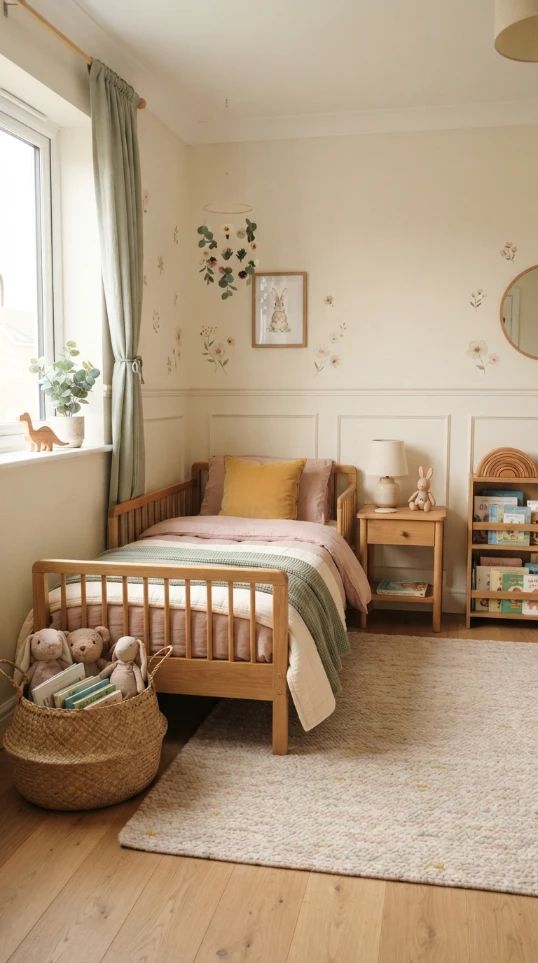
Pink can absolutely belong in a toddler girl bedroom, but it does not have to be the only color in the room. Start with two or three connected shades, such as dusty rose with cream and sage, lavender with warm white and honey, or peach with muted blue and natural wood.
Use the strongest shade on one wall, the bedding, or a small piece of furniture instead of covering every surface. This creates personality without making the room difficult to update later. Natural wood, woven baskets, and warm white curtains also give bright colors somewhere to rest.
Make The Bed The Little Focal Point
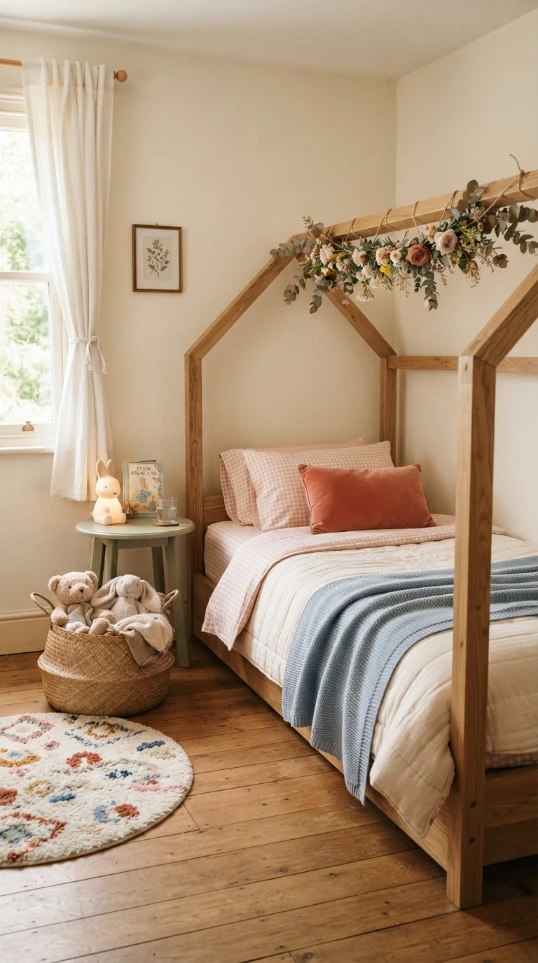
A toddler bed can be more than a place to sleep. A simple house-frame bed, rounded headboard, low canopy, or softly curved wooden frame can give the room an instant identity without requiring a complicated theme.
Keep the bedding relatively simple when the frame is decorative. A small floral print, subtle stripe, or soft gingham works well because it adds pattern without competing with the bed itself. For safety, keep decorative cords and loose accessories away from areas where a young child can pull or become tangled in them.
Turn One Wall Into Her Own Little Story
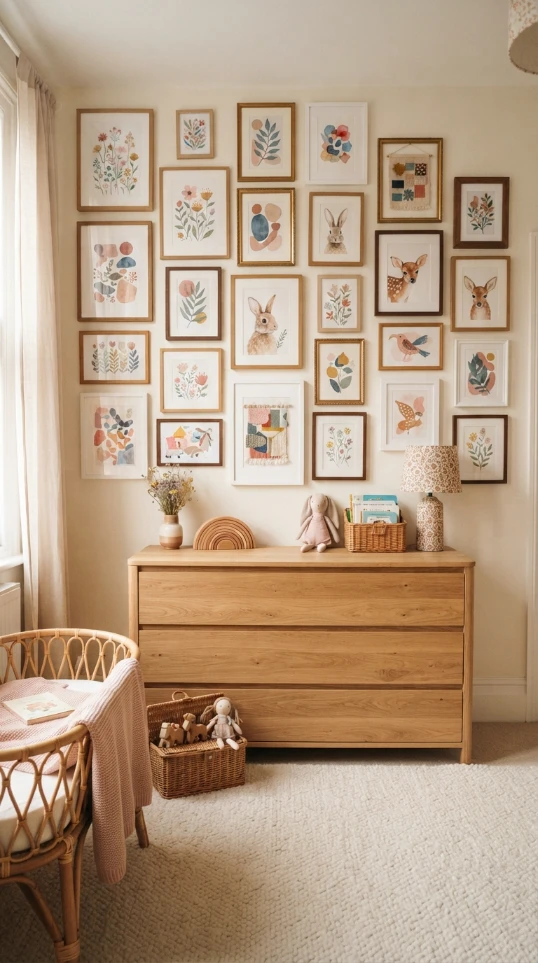
Instead of decorating every wall, give one wall the job of telling the room’s story. A painted rainbow, garden-inspired mural, soft arches, tiny stars, clouds, butterflies, or removable wallpaper can become the visual anchor.
The key is to choose one clear direction. If the wall already has a strong mural, let the furniture and textiles stay calmer. This makes the room feel intentional while still giving a toddler plenty of visual interest.
Create A Reading Corner That Fits A Toddler
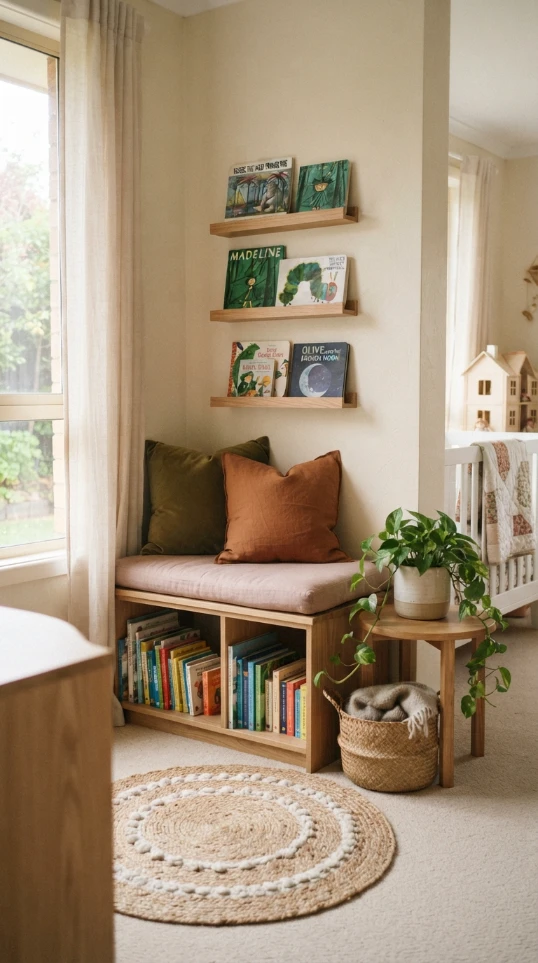
A reading corner can make an unused part of the bedroom feel purposeful. Place a low bookshelf beside a small floor cushion, child-sized chair, or padded bench. Keep favorite books on the lower shelves so they are easy to reach without help.
A small rug can define the corner without taking over the room. Add one soft lamp with a secure placement and enough light for shared reading. The goal is not to create a miniature library; it is to give her a comfortable place where books become part of the everyday room.
Use Low Storage So The Room Feels More Personal
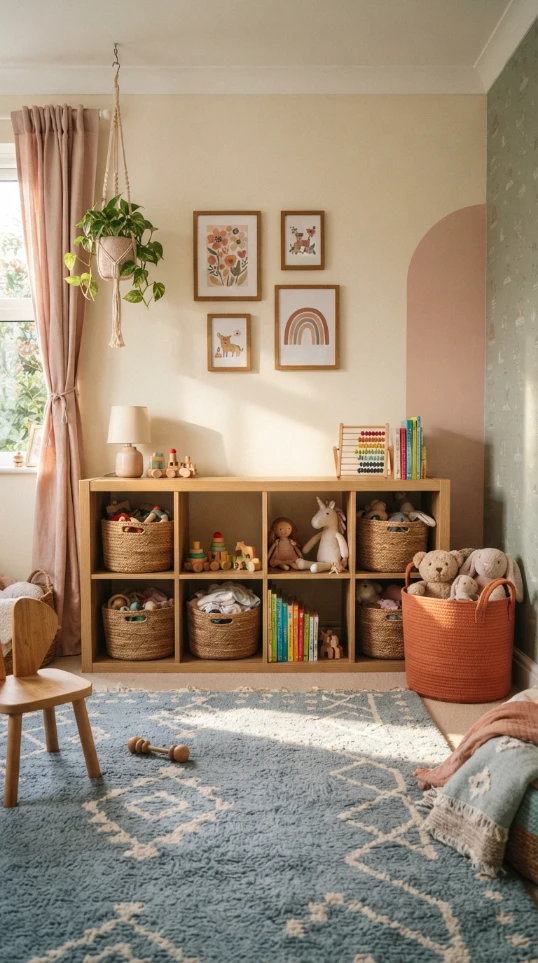
Storage works better in toddler spaces when some of it is actually designed around the child’s height. Low cubbies, open baskets, and shallow book ledges allow her to see where things belong and participate in putting them away.
Keep frequently used toys in the easiest-to-reach zones and reserve higher storage for items that need adult supervision. Matching every basket is not necessary. A combination of natural wicker, canvas bins, and painted wood can feel much more collected and personal.
Display Her Real Artwork Instead Of Generic Decor
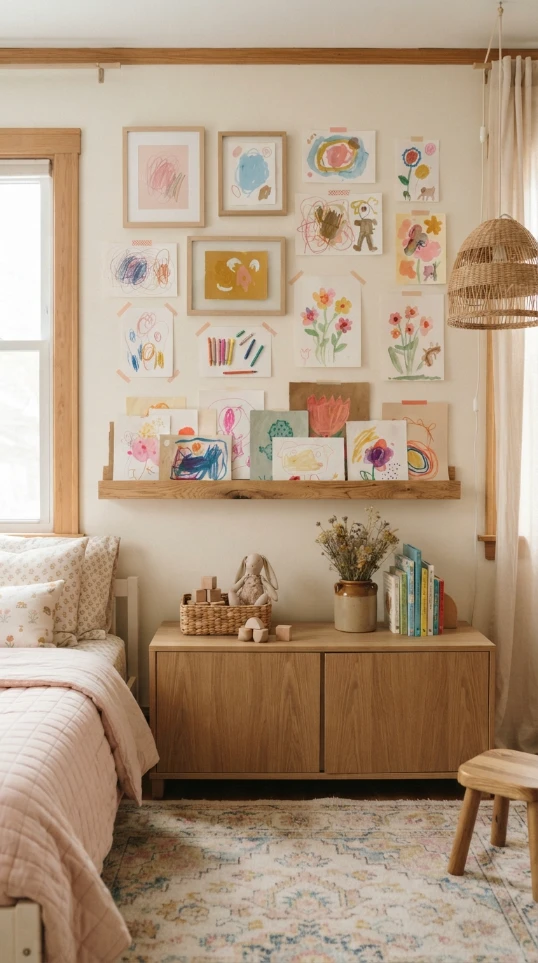
One of the easiest ways to make a toddler bedroom feel genuinely hers is to display something she actually made. Frame a few drawings, paintings, paper shapes, or simple crafts and rotate them as her interests change.
A small picture ledge makes this especially easy because you can switch artwork without putting new holes in the wall. Keep the frames visually related—perhaps all natural wood or all soft white—so the changing artwork still feels connected to the room.
Add A Soft Canopy Without Turning The Room Into A Theme
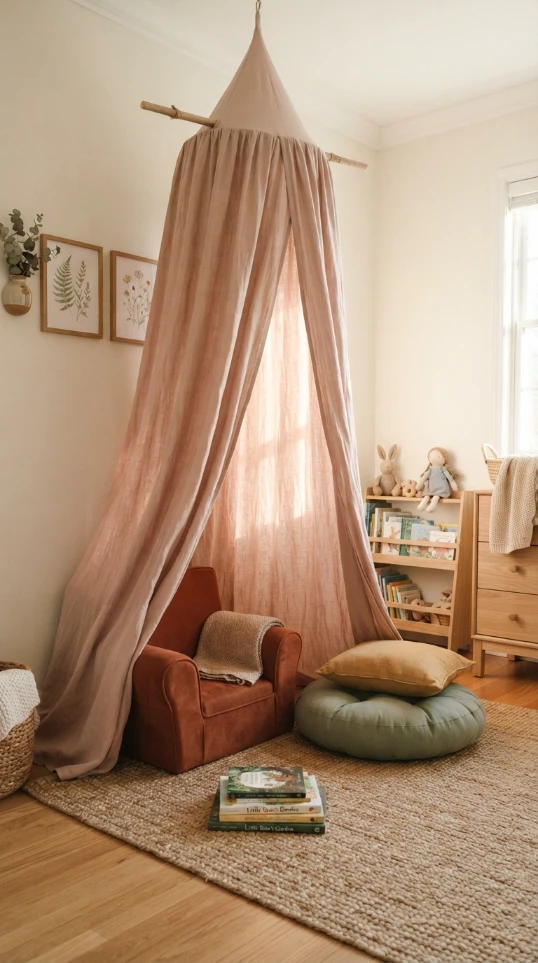
A canopy can create a cozy sleeping or reading zone without making the bedroom feel like a costume set. Choose a simple fabric canopy in cream, blush, muted lavender, or another shade already present in the room.
Let the fabric be the main feature and skip excessive decorations around it. A soft canopy paired with a plain bed, a small rug, and a few books can feel magical while remaining calm enough for everyday use.
Bring In Flowers And Nature Through Small Details
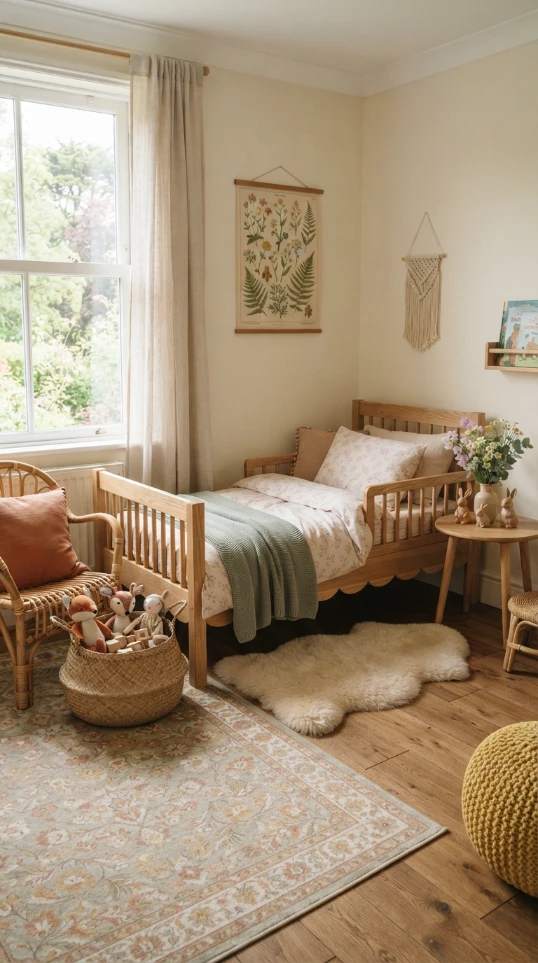
Nature-inspired decor gives toddler girl bedrooms a gentle, cheerful quality. Instead of covering the entire room in flowers, repeat botanical shapes in two or three places: a small floral pillow, framed botanical print, flower-shaped rug, or garden-inspired wall art.
Natural materials help balance the sweetness. Rattan, cotton, linen, light wood, and woven baskets add texture and keep the room from becoming visually flat. If you use real plants, choose child-safe varieties and place them where they cannot be pulled down or reached easily.
Mix Patterns Instead Of Buying A Perfect Matching Set
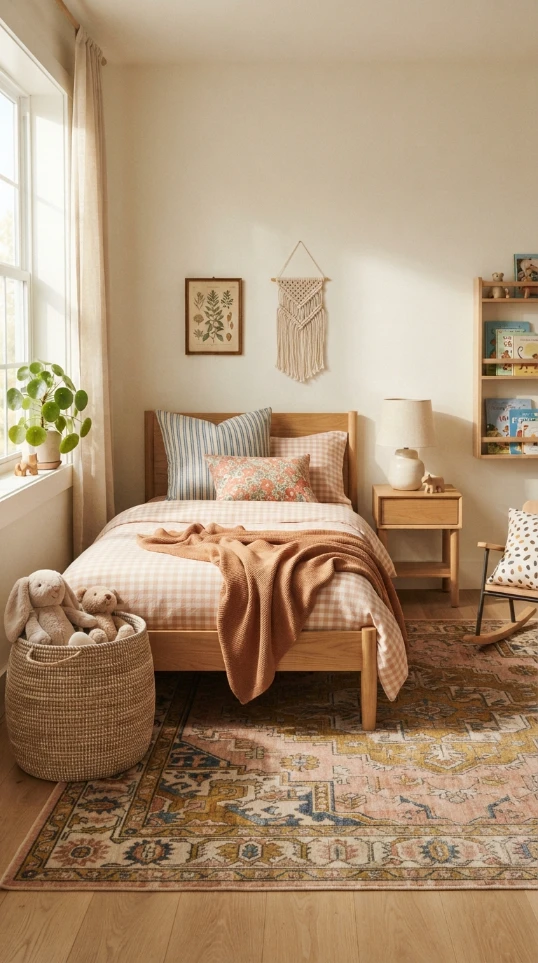
Perfectly coordinated bedding and curtains can make a room look polished, but mixing a few patterns often creates more personality. Try one larger pattern with two quieter ones—for example, floral bedding, a narrow stripe on the curtains, and a tiny check on a cushion.
Keep the colors connected even when the patterns differ. Repeating one shade across the room gives the eye a thread to follow and prevents the design from feeling accidental.
Choose Lighting That Makes The Room Feel Warm
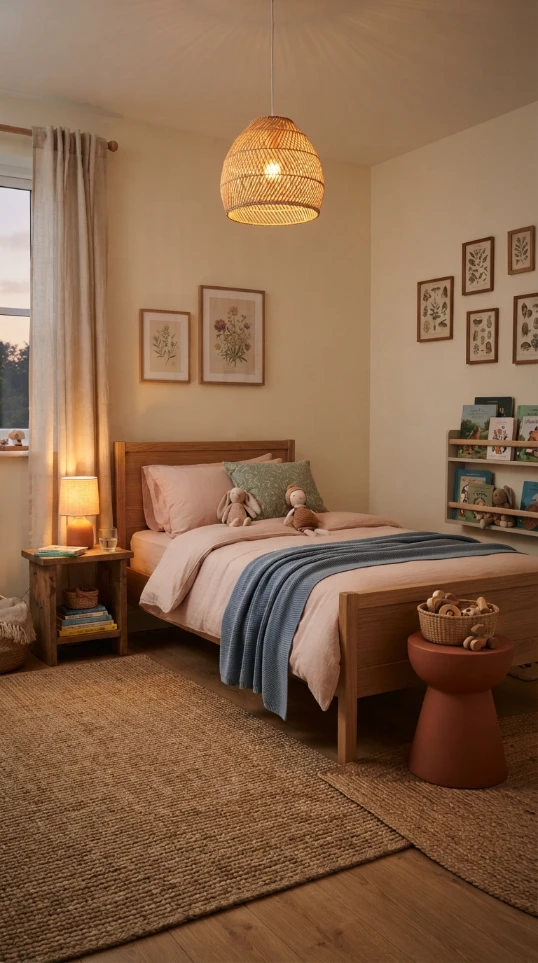
Lighting changes the mood of a child’s bedroom more than many decorative accessories. Use soft general lighting and add a smaller lamp for reading or a calming bedtime glow where appropriate.
Look for rounded, simple fixtures that complement the room rather than competing with the bed or wall treatment. Any cords, bulbs, and fixtures should be installed and positioned with age-appropriate safety in mind.
Give Her A Small Spot For Dress-Up And Pretend Play
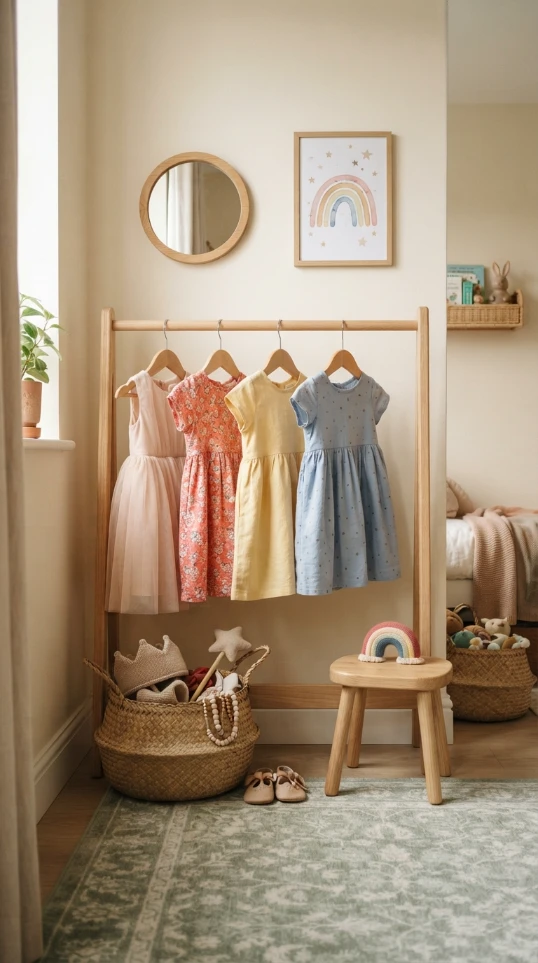
Toddlers need spaces that support play, not only spaces that look pretty. A low rail for a few dress-up pieces, a small mirror securely mounted at an appropriate height, or a basket for pretend-play accessories can turn an empty corner into a useful activity zone.
Keep the selection edited rather than filling the entire area with toys. A few favorite pieces displayed openly can become part of the room’s decoration while the rest stays organized in a nearby basket or cabinet.
Use Personalized Details That Can Change Over Time
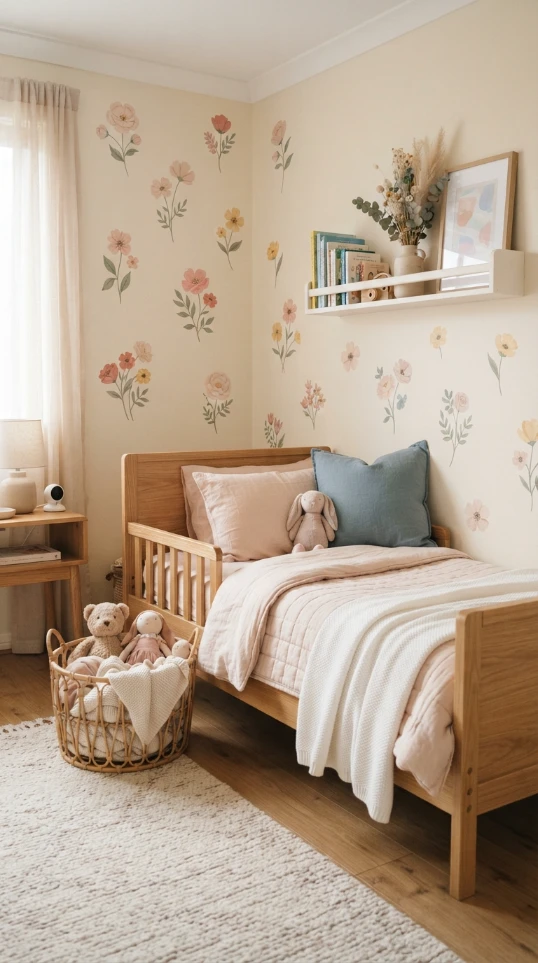
Personalization does not have to mean permanently painting her name across the wall. A framed initial, favorite color, rotating artwork, custom cushion, or small collection of meaningful objects can make the room feel individual without locking it into one age.
This approach is especially useful because toddler preferences change quickly. Build the room around flexible basics and let the smallest details carry the personality. When her interests change, you can update a few accessories instead of redesigning the entire bedroom.
Keep The Room Beautiful By Leaving Some Space Quiet
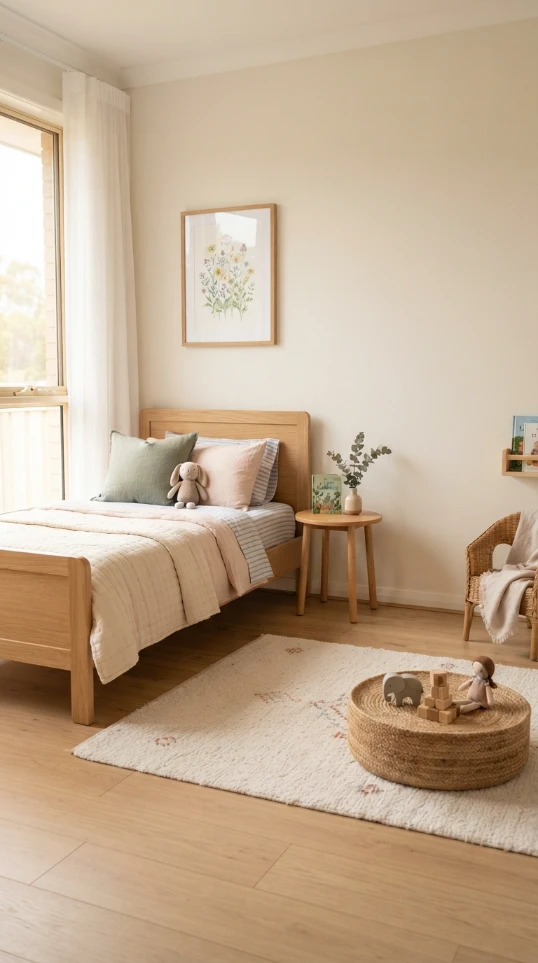
The most successful toddler girl bedrooms are not necessarily the ones with the most decoration. A strong focal wall, a special bed, a reading corner, and thoughtful storage may be enough. Empty wall space and clear floor space give the room breathing room and make the meaningful pieces stand out.
If you are also planning another child’s bedroom, our guide to designing a toddler boy room without making it look childish offers another useful approach to creating a room around personality rather than a rigid theme.
For broader ideas about making a room feel intentional through contrast and lighting, you can also look at our guide to moody living room ideas and adapt the same design principle of balancing strong focal points with quieter surrounding elements.
Final Thoughts
The best toddler girl bedrooms feel like they belong to a real child. They can be pretty without being precious, colorful without becoming overwhelming, and organized without looking overly staged.
Start with one strong idea—a beautiful bed, a playful wall, a reading corner, or a color story—and build around it slowly. Leave space for artwork, favorite books, changing interests, and the little objects that make childhood feel real. A room does not need to be perfectly matched to feel beautifully considered.