Walk-In Closet Ideas: 12 Beautiful Designs That Make Getting Dressed Feel Luxurious
A beautiful walk-in closet changes the way your whole morning feels. Instead of digging through a cramped wardrobe, you step into a calm, organized room where everything is visible, easy to reach, and ready to wear. These walk-in closet ideas cover the practical side as well as the pretty side: smart layouts, honest measurements, flattering lighting, and tidy storage for shoes, bags, and jewelry.
Before you buy a single rail or shelf, start with what you actually own. Count your dresses and coats, shirts and trousers, shoes and bags, then measure the room and plan storage around those numbers, not a picture you saw online. The same space-smart thinking works in the bedroom itself, and these small bedroom ideas will help you borrow light and floor space from the room next door.
Key Takeaways
What is the smallest size for a walk-in closet? A single-person closet can work from around four feet by four feet, but it will feel tight. For comfortable everyday use, aim for at least five feet by seven feet.
How high should closet rods be? As a general planning guide, a double-hang setup places the lower rod at about 40 inches and the upper rod at about 80 inches. A single long-hang rod for dresses and coats usually sits at about 66 to 72 inches.
Does a walk-in closet need an island? Only if the room is wide enough. Allow at least 36 inches of clear walkway on each side, which generally means the closet needs to be around eight feet wide.
How deep should closet shelves be? Hanging clothes need about 22 to 24 inches of depth so garments do not brush the wall. Folded clothes sit comfortably on shelves around 12 to 16 inches deep.
Can a small walk-in closet feel luxurious? Yes. Consistent finishes, warm lighting, matching hangers, and one beautiful detail — a mirror, a rug, or a brass rail — make a small closet feel like a boutique, even on a modest budget.
1. How Do You Plan a Walk-In Closet Layout That Actually Works?
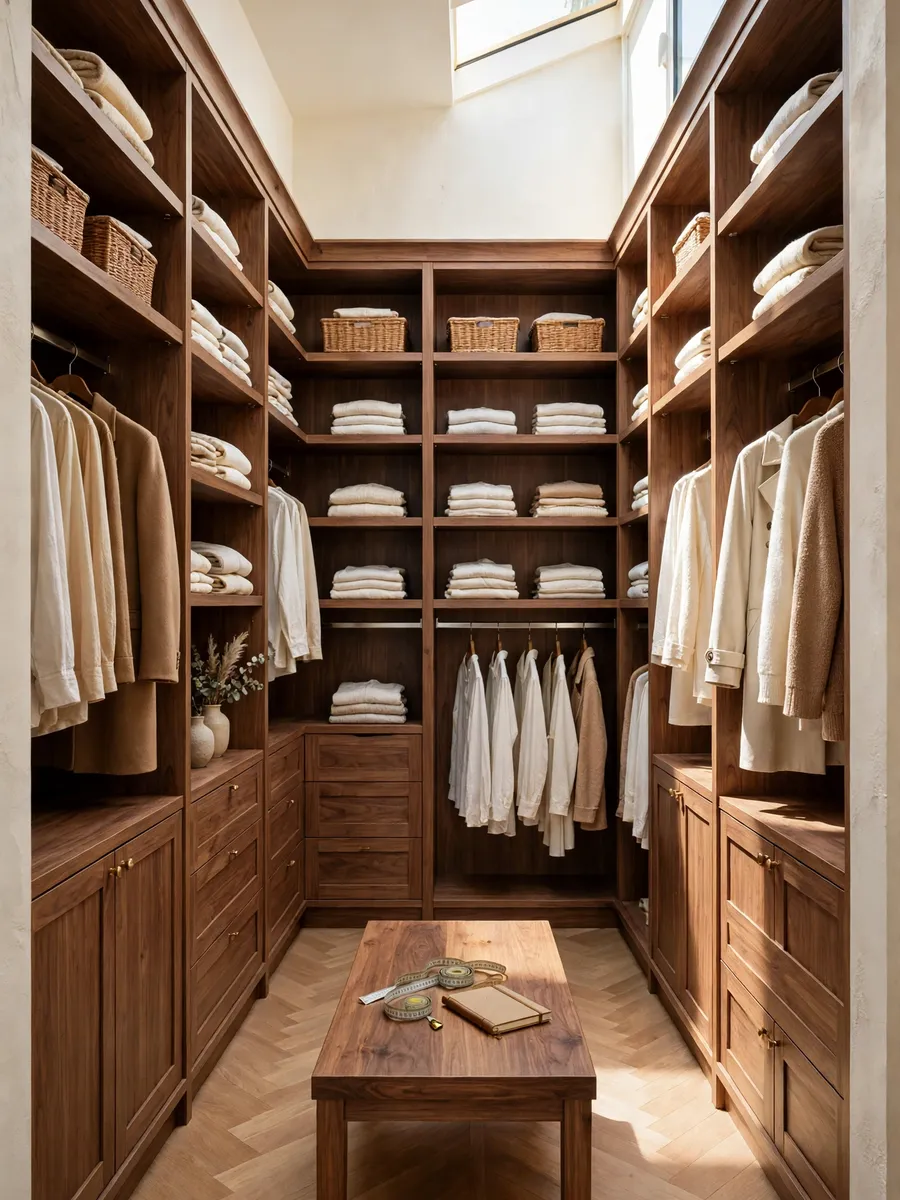
Every good closet starts on paper, not in a shop. Measure each wall, note the door swing, then sketch where the hanging, shelving, and drawers will go. First, count what you store: long items apart from short ones, folded clothes apart from shoes — those counts decide how much of each storage type you need.
Picture a couple planning a shared closet in a spare bedroom corner. They count 40 shirts, 25 pairs of trousers, eight long dresses, and 30 pairs of shoes, then sketch a U-shaped layout: double-hang on one wall, long-hang on another, shoe shelves on the third.
Quick tips:
- Measure the door swing first — it decides which wall holds deep storage.
- Keep everyday items at eye level and out-of-season pieces up high.
- Leave a clear walkway of at least 24 inches.
2. Why Does Double-Hang Storage Double Your Closet Space?
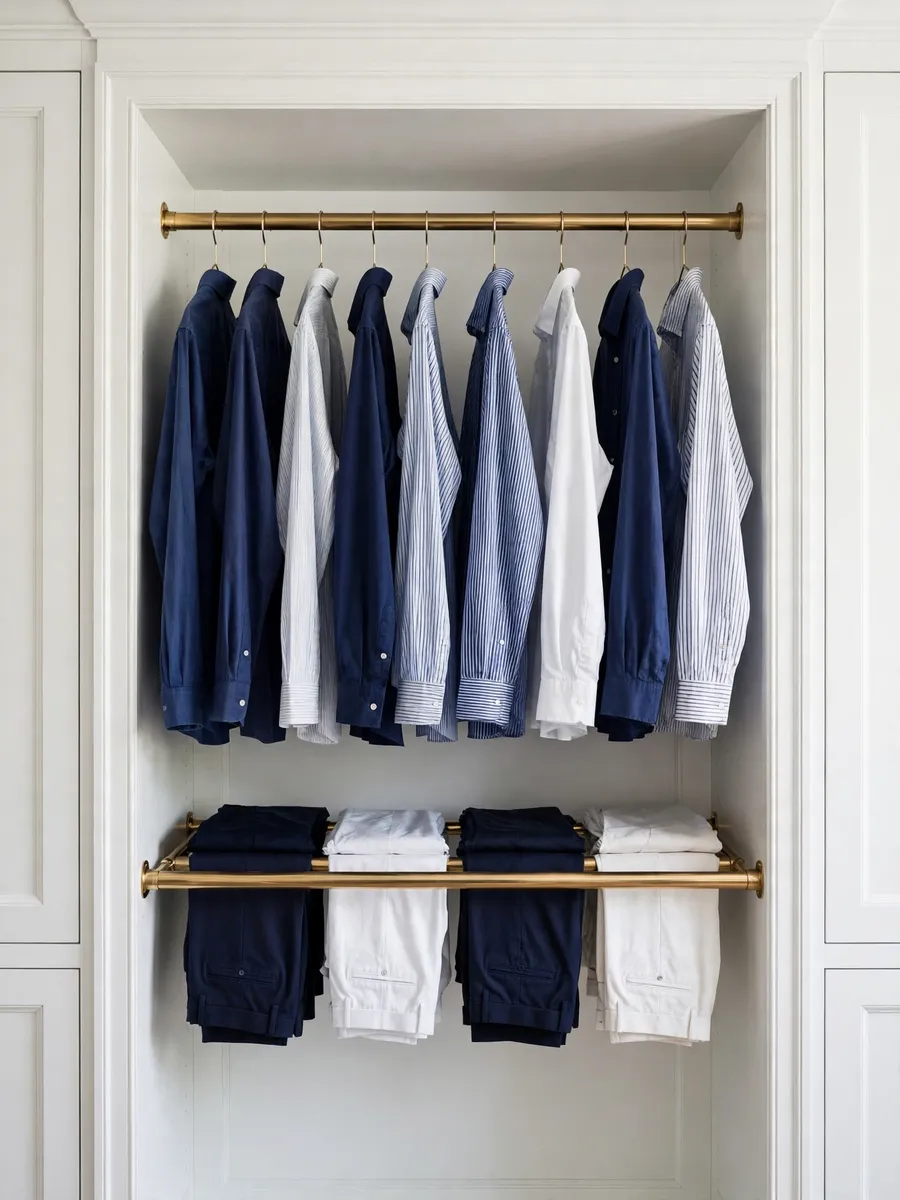
Double-hang storage is the biggest capacity gain in any walk-in closet, because most of what we wear is short: shirts, blouses, jackets, skirts, and trousers all hang happily in half the height of a dress or coat. Stack two rods on one wall and a run that held 20 garments suddenly holds 40.
Try it on one wall: fit a lower rod at about 40 inches and an upper rod at about 80 inches, then hang shirts on top and trousers below. In a three-foot-wide section you gain a whole second row of everyday clothes, while dresses and coats move to the long-hang wall.
Quick tips:
- Reserve two-thirds of hanging space for double-hang.
- Use slim, matching hangers so clothes sit evenly.
- Keep the lower rod high enough for trousers to clear the floor.
3. How Do You Build a Shoe Wall That Stays Tidy?
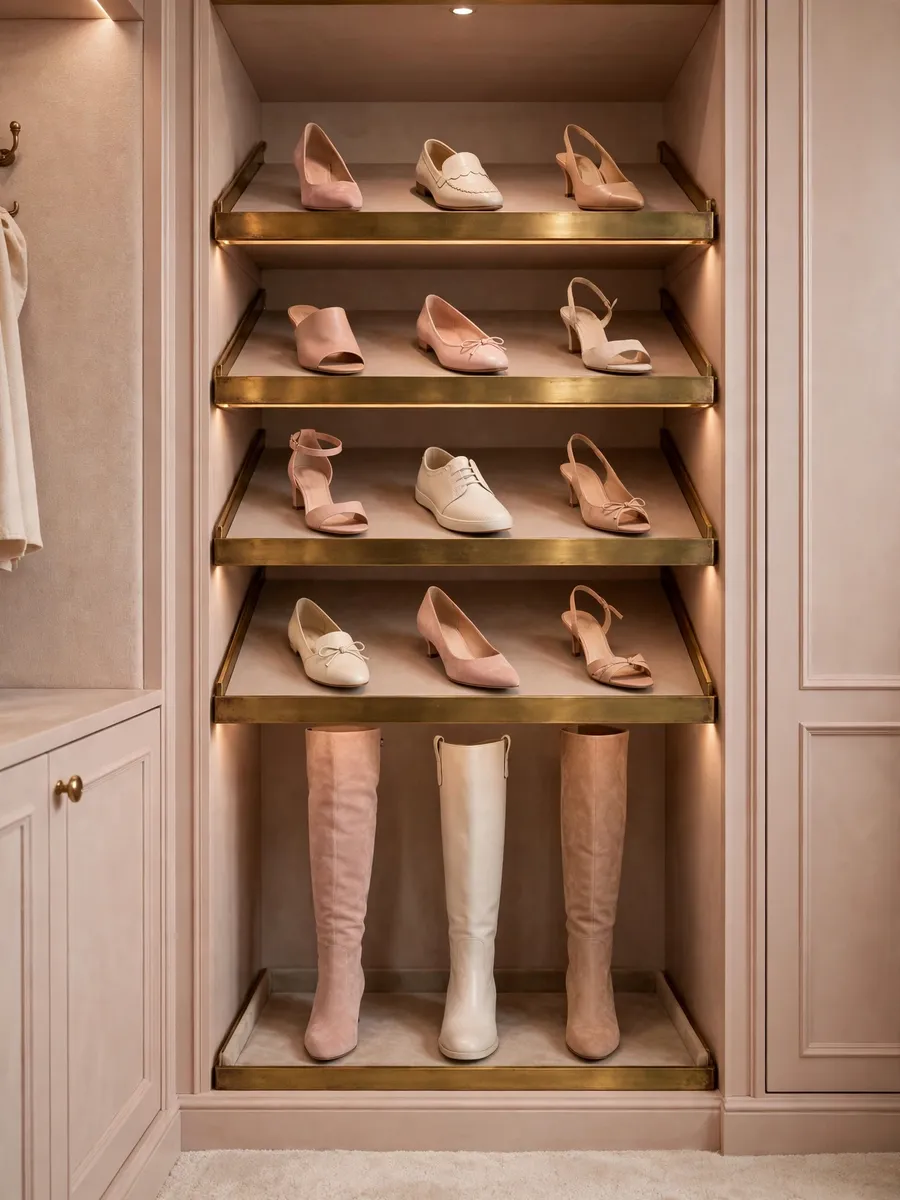
Shoes are the fastest way for a closet to look messy, because pairs are bulky, uneven, and constantly coming and going. A shoe wall gives every pair a visible home: slanted shelves for everyday shoes, flat shelves for boots, and a low area near the door for the pair you wear most.
Imagine one wall fitted with five slanted shelves in warm oak, each holding four pairs toe-out, with tall boots upright on the bottom shelf. The shoes you wear weekly sit at eye level, party heels go higher up, and the floor stays clear.
Quick tips:
- Angle shelves so shoes are visible and easy to grab.
- Keep one empty shelf so new pairs always have a home.
- Store tall boots upright with boot shapers.
4. Is a Center Island Worth It in a Walk-In Closet?
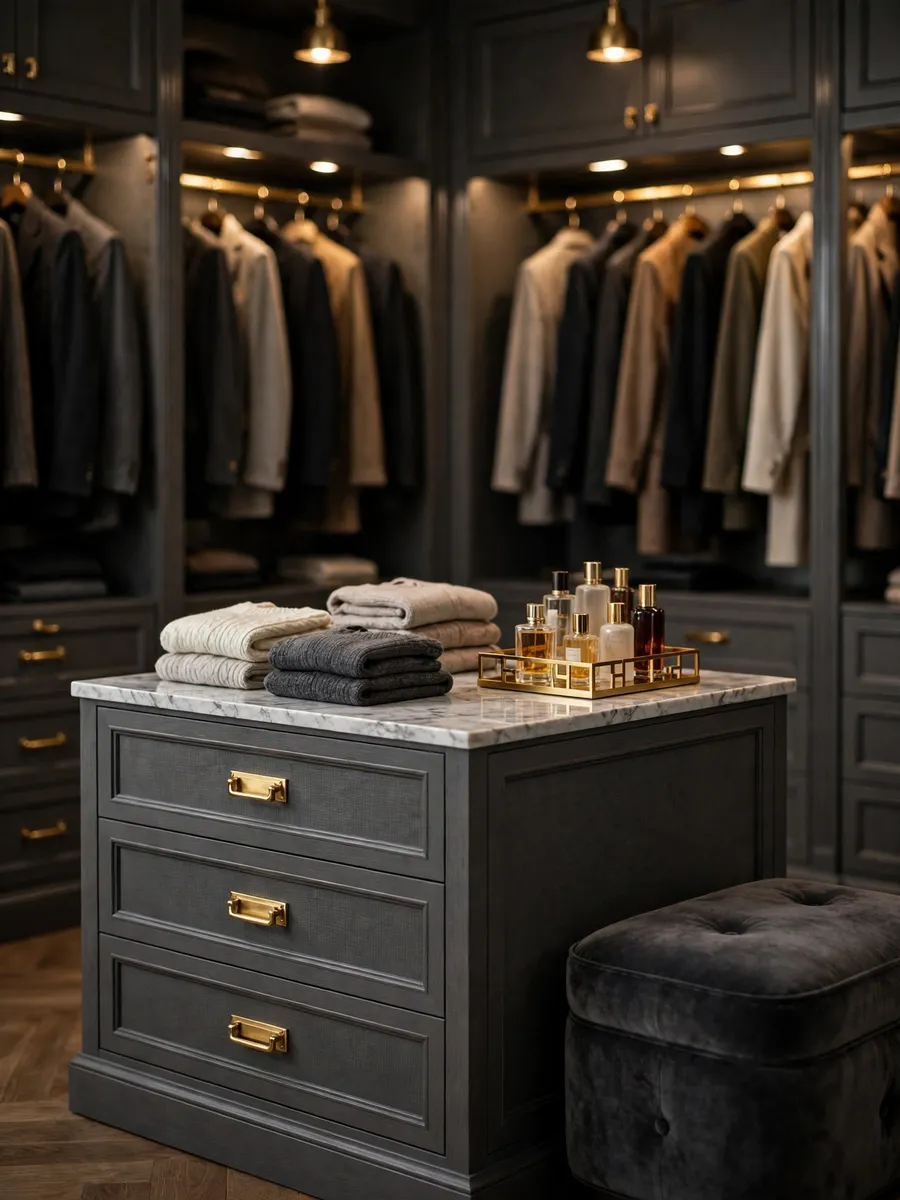
A center island is the feature closet owners praise most — and the one they most regret forcing into a room that is too small. At its best, it gives you a folding surface, drawers for accessories, and a visual anchor that makes the room feel like a boutique. At its worst, it turns the walkway into a squeeze.
Take a closet about ten feet wide: a slim island in the middle, roughly two feet deep, leaves generous walkways on both sides and still holds six drawers. A velvet ottoman at one end gives you somewhere to sit, and a small tray keeps perfume and a watch within reach.
Quick tips:
- Allow 36 inches of clear walkway on each side.
- Choose an island with drawers to hide clutter.
- If the room is too narrow, use a small bench instead.
5. Open Shelving or Closed Cabinets — Which Suits Your Closet?
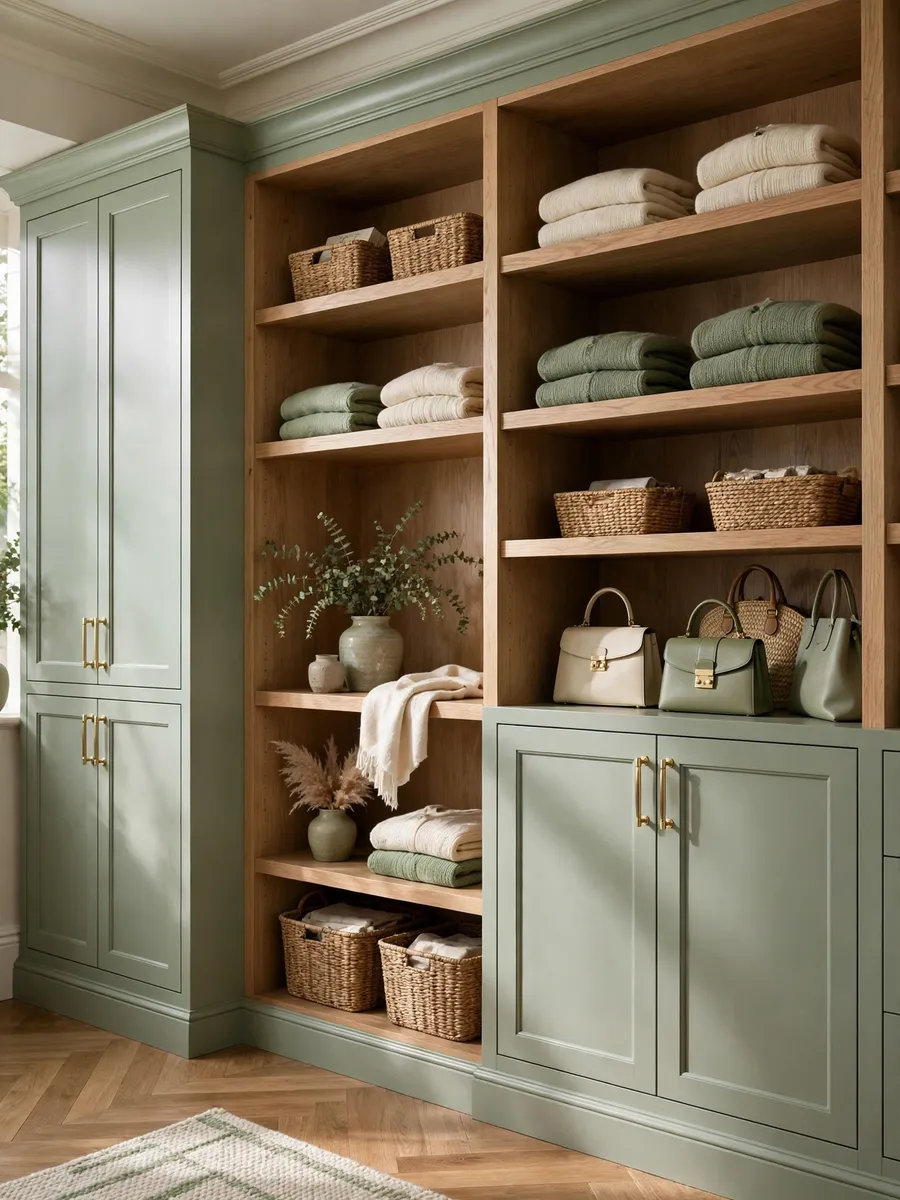
Open shelving and closed cabinets both belong in a walk-in closet, and the best rooms mix the two on purpose. Open shelves make folded knits, bags, and shoes easy to see and grab, so you actually wear what you own — but they demand tidiness. Closed cabinets hide the rest.
Picture a closet where the middle wall is open — folded jumpers in neat stacks, handbags lined up like a display, baskets for scarves — while the far wall is plain cabinet doors hiding everything else. The open section looks boutique-like; the closed section hides the chaos.
Quick tips:
- Put open shelves where you want to see things, closed doors where you hide them.
- Use matching baskets on open shelves to group small items.
- Choose glass fronts for display, solid fronts for everyday storage.
6. How Does the Right Lighting Transform a Walk-In Closet?
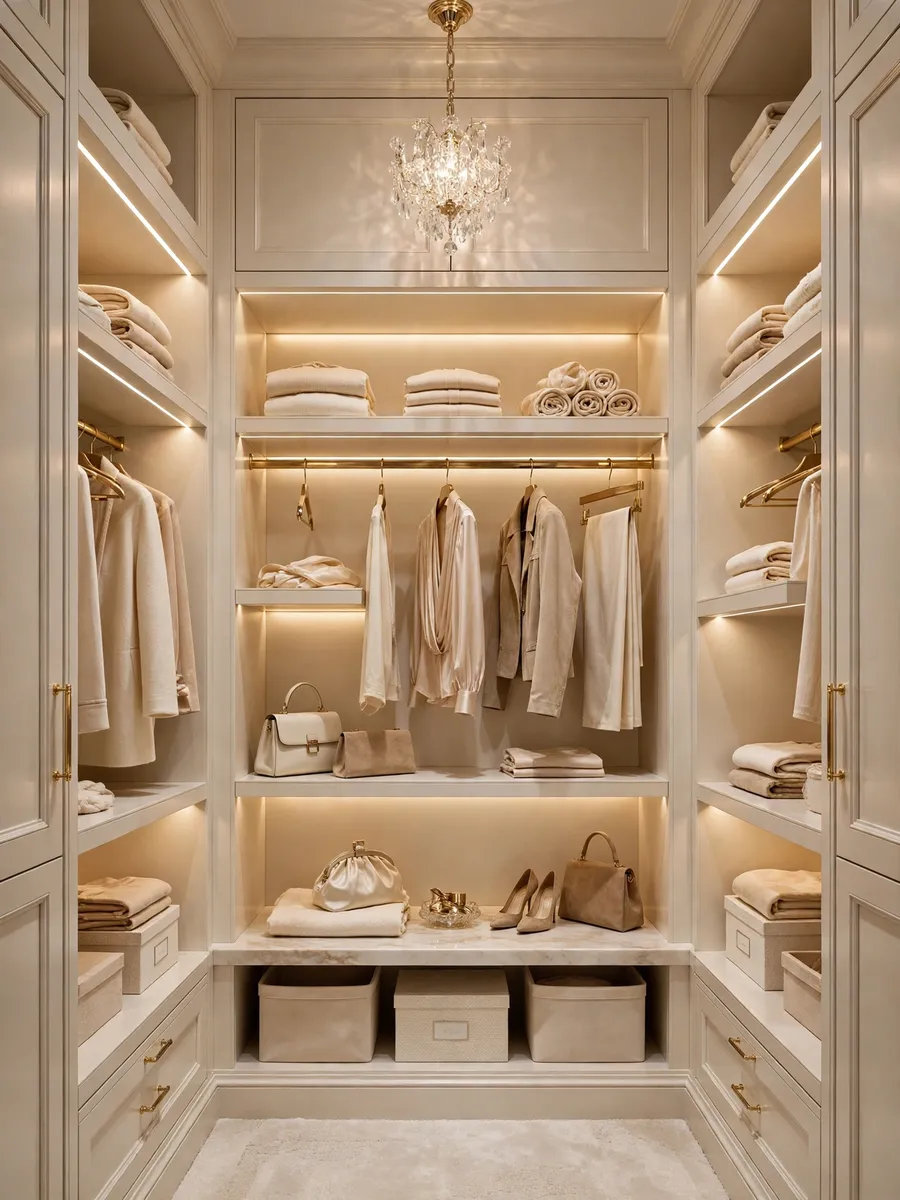
Lighting is what separates a closet from a dressing room. A single bare bulb flattens colours, casts shadows inside every shelf, and makes navy look black and cream look grey. Layered lighting fixes that: a warm ceiling light, slim LED strips under each shelf, and a soft glow inside drawers.
Imagine a closet where warm LED strips glow beneath every shelf, a small chandelier hangs over the center, and a motion sensor switches everything on as you open the door. Clothes look true to colour, the mirror shows your outfit honestly, and the room feels calm and expensive.
Quick tips:
- Choose warm white light, around 2700 to 3000 Kelvin.
- Add LED strips under shelves to remove shadows.
- Use motion sensors so lights switch on as you walk in.
7. Where Should the Mirror Go in a Walk-In Closet?
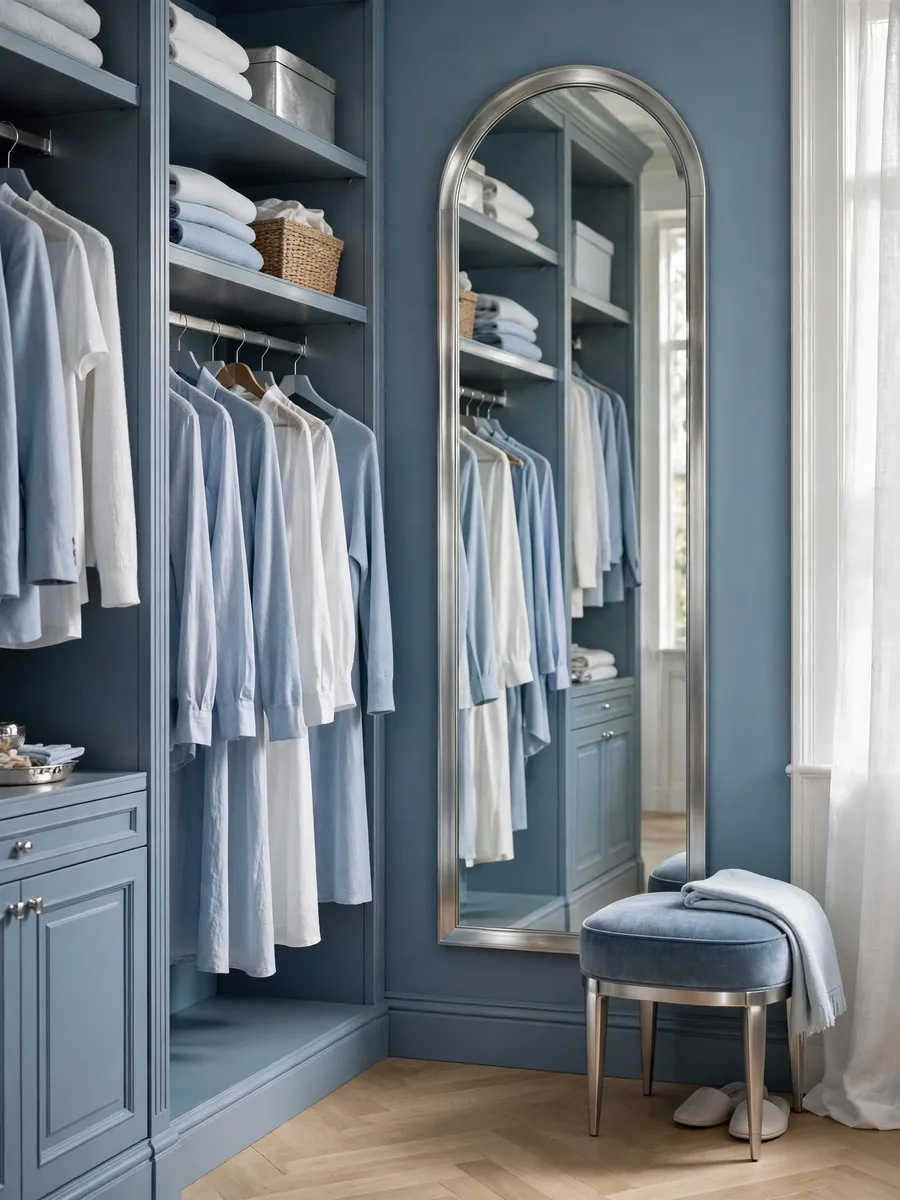
The mirror is the hardest-working object in a walk-in closet, and its position decides whether getting dressed feels easy or awkward. The best spot is usually the end wall or the back of the door, where you can step back to see your whole outfit. A mirror over a hanging rail is wasted, and one facing a window can glare badly.
Take a narrow closet with a mirror on the end wall, opposite the door, framed in slim brushed brass. You walk in, turn, and see yourself head to toe in one glance. A small stool lets you sit to try shoes, and the mirror doubles the sense of space.
Quick tips:
- Mount the mirror where you can step back three feet to see your outfit.
- Choose a full-length mirror, around 60 inches tall.
- Keep it clear of window glare and harsh spotlights.
8. How Do You Display Jewelry and Accessories Beautifully?
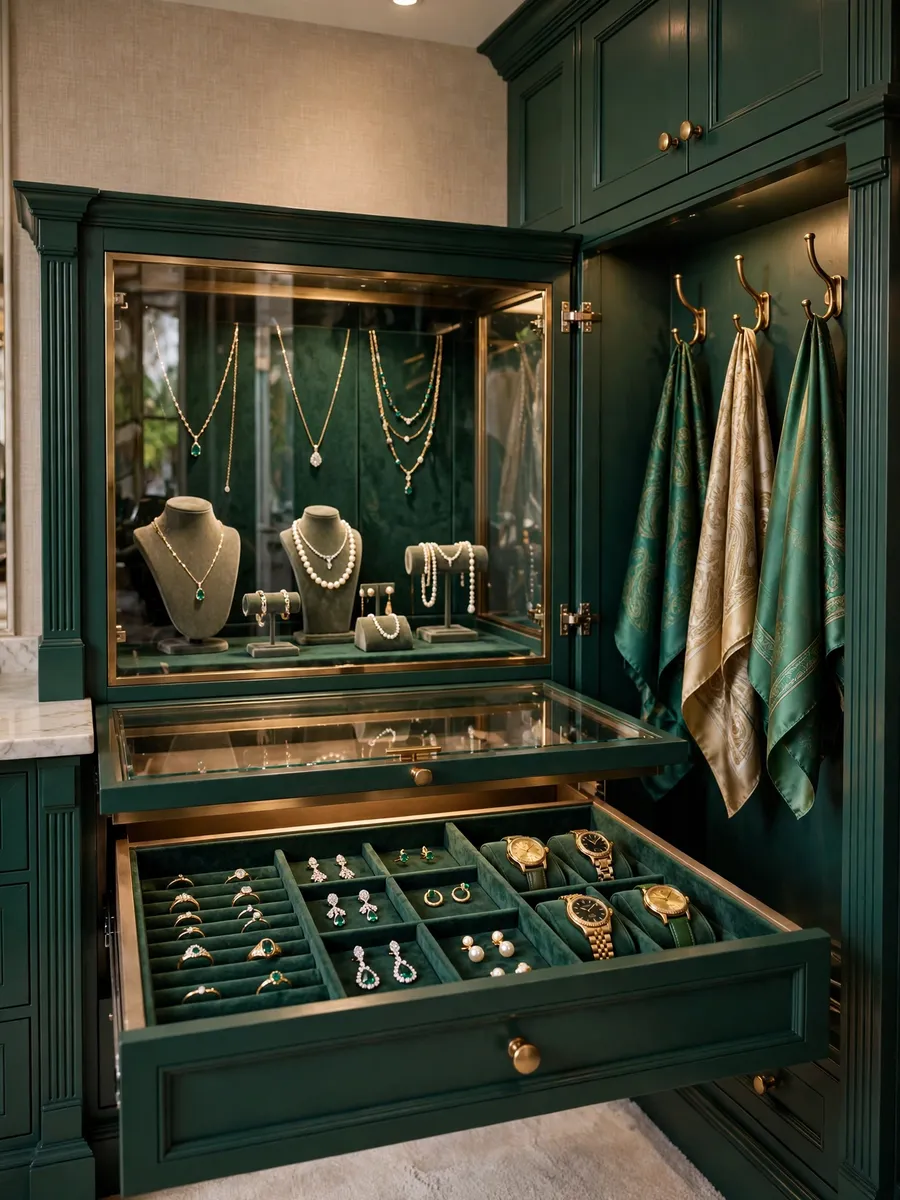
Jewelry and accessories are small, valuable, and endlessly easy to lose — so they deserve their own storage instead of a tangled drawer. Shallow velvet-lined trays keep necklaces flat and untangled, divided drawers hold rings and earrings apart, and hooks keep belts, scarves, and bags visible and within reach.
Picture a top island drawer lined in deep green velvet, divided into small squares: earrings in one row, rings in another, watches in cushioned slots. Above it, a glass-topped case holds your three favorite necklaces, and brass hooks hold scarves by colour. Choosing accessories takes seconds, not minutes.
Quick tips:
- Line drawers with velvet to protect jewelry and stop sliding.
- Hang necklaces or lay them flat — never toss them in a pile.
- Keep everyday pieces near the mirror, special ones higher up.
9. How Do You Rotate Seasonal Clothes Without Chaos?
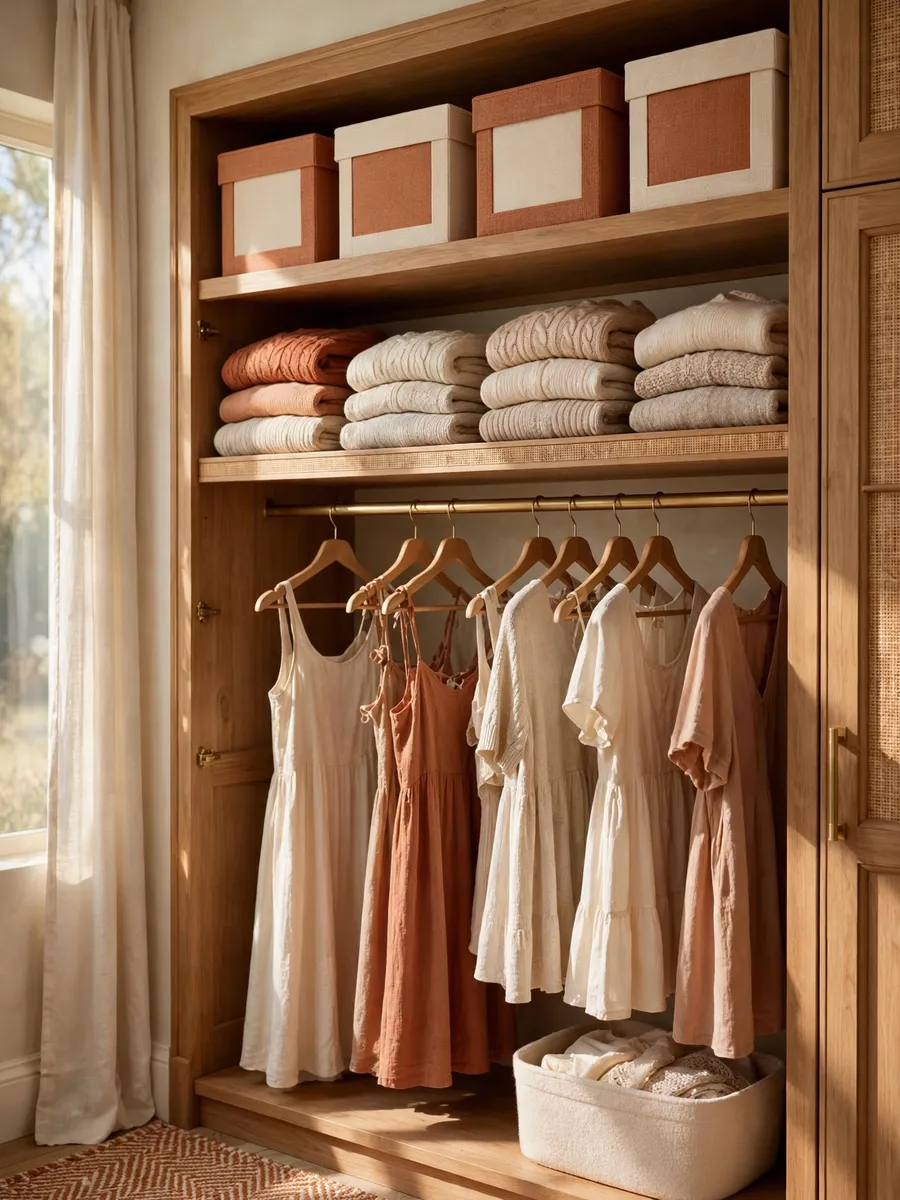
A closet that holds every season at once is always half full of clothes you cannot wear. Rotating seasonally keeps only the current wardrobe in reach — but it only works if the system is simple enough to repeat twice a year. Give out-of-season clothes a permanent home, so the swap means moving boxes, not rethinking the room.
Try this routine: keep four labeled boxes on the top shelf — heavy knits, summer dresses, coats, and holiday clothes. When the season changes, swap the boxes down and the current clothes up, and use the moment to let go of anything that no longer fits. The job takes an afternoon, and the closet feels new again.
Quick tips:
- Label every box clearly so you can find things without opening them.
- Use breathable fabric boxes for natural fibers.
- Rotate accessories too — swap heavy scarves for light ones.
10. What Are the Best Walk-In Closet Ideas for a Small Space?
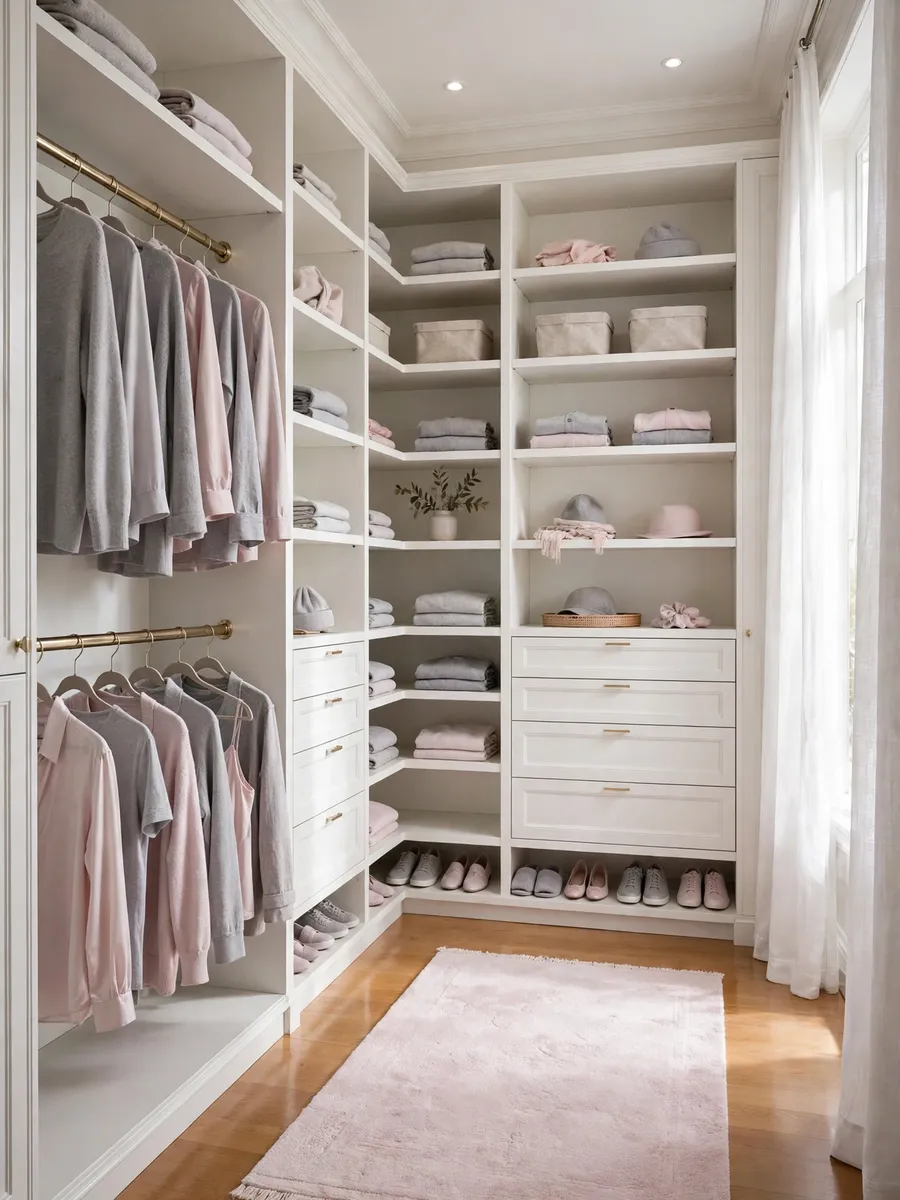
Small walk-in closets reward cleverness more than money, because every inch has to earn its place. The formula is simple: take storage to the ceiling, use every wall, and choose slim solutions over bulky furniture. A single-wall or L-shaped layout works best, with double-hang on the longest wall and hooks on the door for tomorrow’s outfit.
Imagine a closet just five feet by seven feet, with white floor-to-ceiling shelving on two walls, a double-hang rail on the third, and a narrow shoe rack along the base. A pale rug softens the floor, a mirror on the door makes the room feel twice as big, and nothing is wasted.
Quick tips:
- Run shelving to the ceiling and keep a step stool inside.
- Skip the door or use a curtain to free up swing space.
- Use one light colour on walls and shelving.
11. Which Colours and Materials Make a Closet Feel Luxurious?
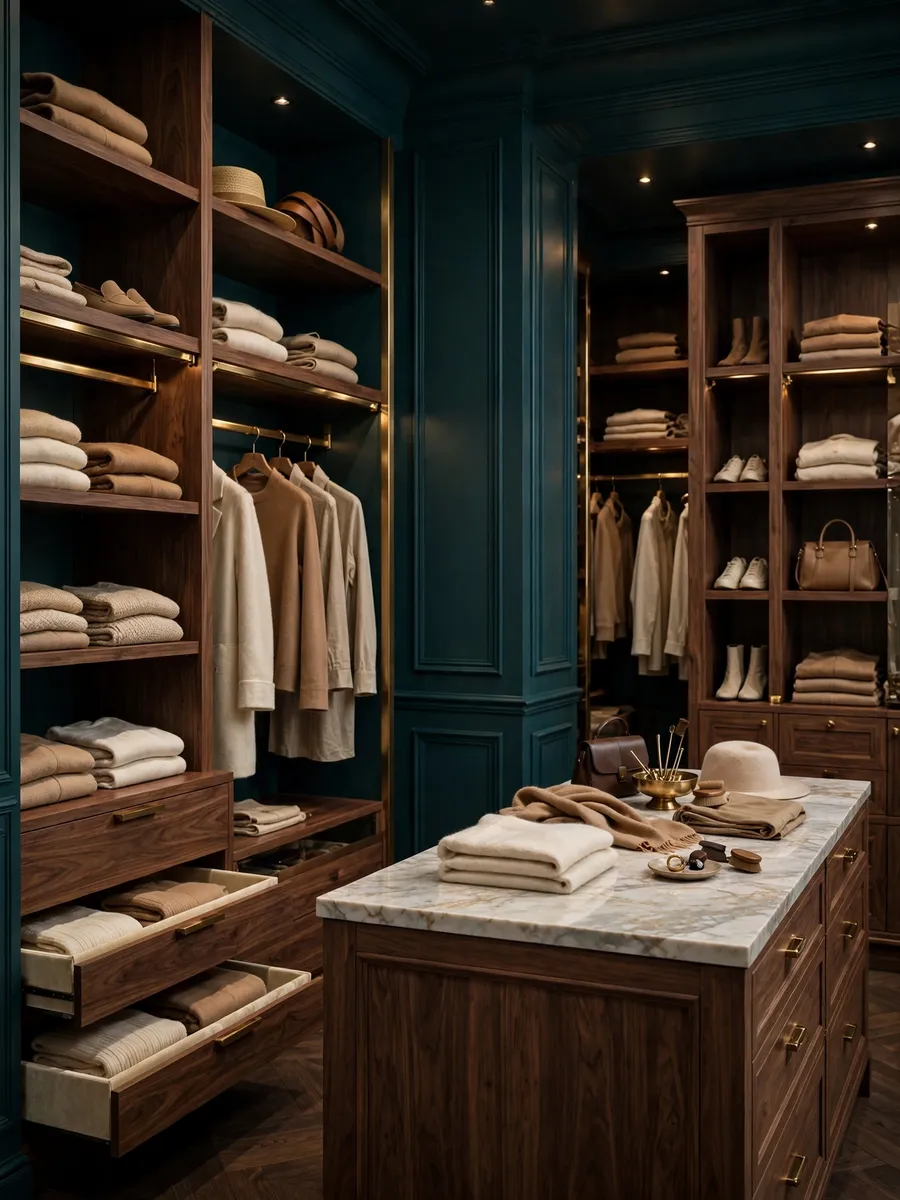
Luxury in a closet is about consistency more than expensive materials: one calm palette, repeated finishes, and textures that feel good to touch. Warm woods — oak, walnut, or honey stain — bring warmth white shelving cannot match, while deep charcoal, forest green, or navy paint turns an ordinary closet into a moody boutique. A soft rug and brass rails complete the feeling, and a feature wall behind the shelves can echo the drama of these bedroom accent wall ideas on a smaller, more intimate scale.
Picture a closet in deep teal with walnut shelves, brass rails, and cream velvet drawer linings: dark walls make light clothes glow, the wood warms the room, and a marble-topped island catches the light. It feels like a private boutique, yet the materials are straightforward — paint, wood, brass, and fabric — repeated with discipline.
Quick tips:
- Pick one three-colour palette and repeat it everywhere.
- Mix one warm wood with one metal finish, brass or matte black.
- Use matching wood or velvet hangers so rails look calm.
12. How Can You Upgrade a Walk-In Closet on a Small Budget?
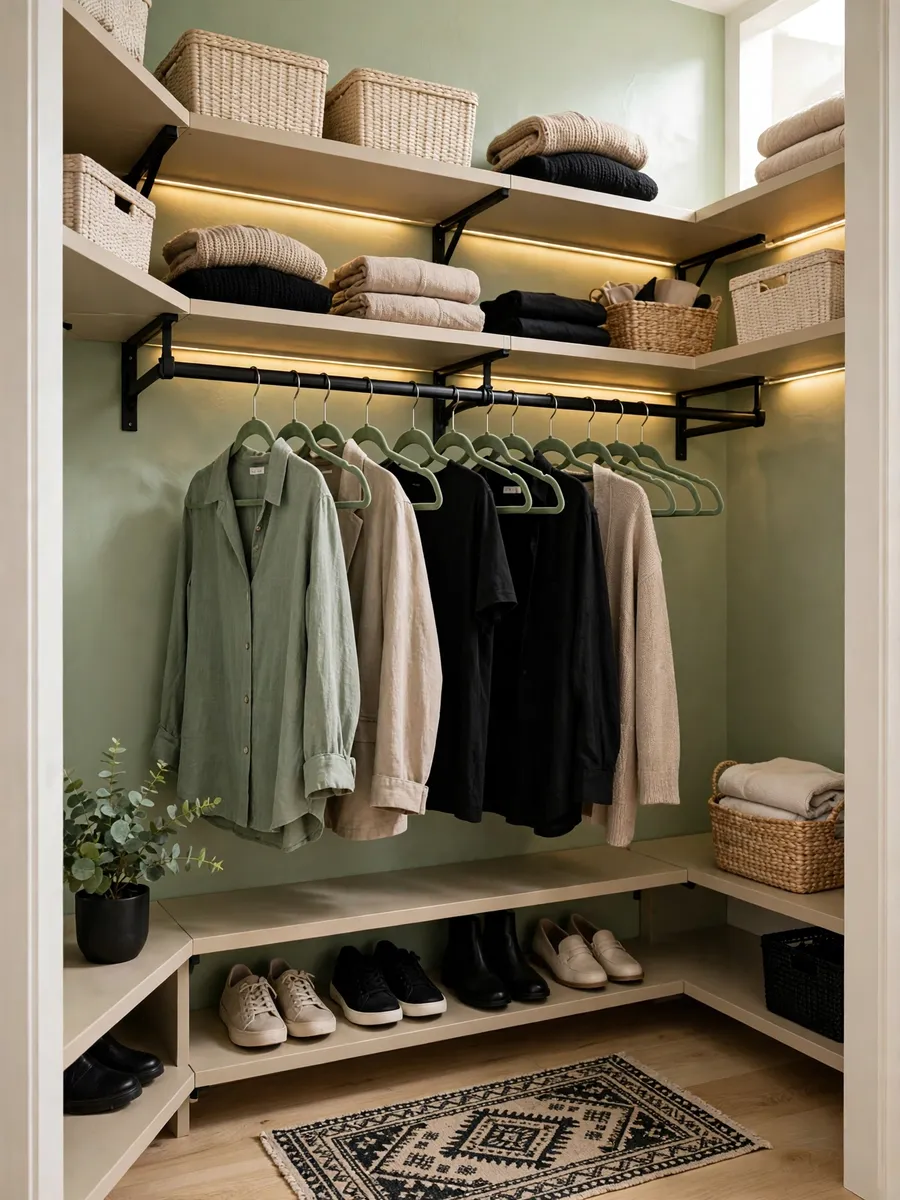
You do not need a custom build to make a walk-in closet feel new. The highest-impact upgrades are also the cheapest: matching hangers, a fresh coat of paint, battery-powered LED strips, and a rug. Together they cost a fraction of new joinery, yet they change how the room feels every morning — because a closet that looks intentional feels luxurious.
Take a plain white closet with mismatched hangers and a bare bulb: swap every hanger for slim velvet ones in one colour, paint the back wall soft sage green, stick LED strips under the shelves, and lay a small patterned rug on the floor. Add a thrifted brass mirror and matching baskets, and the room looks professionally designed.
Quick tips:
- Start with matching hangers — the cheapest, biggest-impact change.
- Paint one wall a calm colour instead of the whole closet.
- Add battery LED strips first; they need no electrician.
Frequently Asked Questions
What is the minimum size for a walk-in closet?
A common rule of thumb is four feet by four feet for a single user, but at that size the space is often impractical. For a comfortable closet, especially off a primary bedroom, aim for at least five feet by seven feet, with room to stand, turn, and reach every rail.
How much does it cost to build a walk-in closet?
Costs vary widely with size and finish. As a general guide, a basic prefabricated system for a small walk-in can run from around one thousand to three thousand dollars, while custom designs for a primary bedroom often range from five thousand to twenty thousand dollars or more.
How high should closet rods be?
For a double-hang setup, a useful planning guide is a lower rod at about 40 inches and an upper rod at about 80 inches. A single long-hang rod for dresses and coats usually sits at about 66 to 72 inches, and adjustable rods let heights change with your wardrobe.
Can a walk-in closet have an island?
Yes, if the room is wide enough. Plan on at least eight feet of width and 36 inches of clear walkway on each side of the island. In a narrower closet, a slim bench gives you a folding surface without blocking the walkway.
How deep should a walk-in closet be?
Hanging clothes need about 22 to 24 inches of depth so garments clear the wall and the door. Shelves for folded clothes work well at around 12 to 16 inches deep, and the walkway through the middle should stay at least 24 inches clear.
Conclusion
The best walk-in closet ideas are the ones that fit your clothes, your space, and the way you actually get dressed. Start by measuring and counting what you own, build the layout around those numbers, light it warmly, and finish with one beautiful detail that makes you smile every morning. Thoughtful planning turns any closet into a calm, luxurious space that gives you back time, every single day.