12 Brilliant Laundry Room Organization Ideas That Make Laundry Day Faster, Calmer and Effortlessly Tidy
Laundry room organization ideas work best when every item has one clear home and every step follows the same path: sort, wash, dry, fold, and put away.
The simplest way to organize a laundry room is to clear out what does not belong, create zones for sorting, washing, folding, and drying, keep daily supplies within arm’s reach of the washer, and use labeled baskets, shelves, and hooks so nothing lands on the floor or the machines.
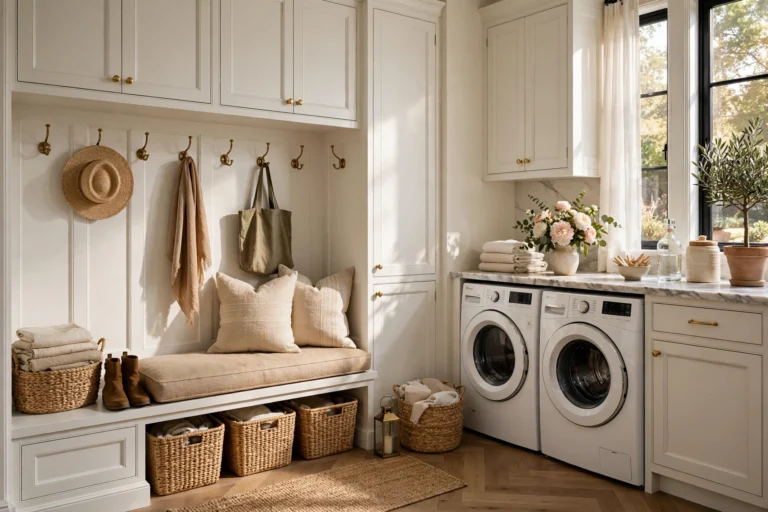
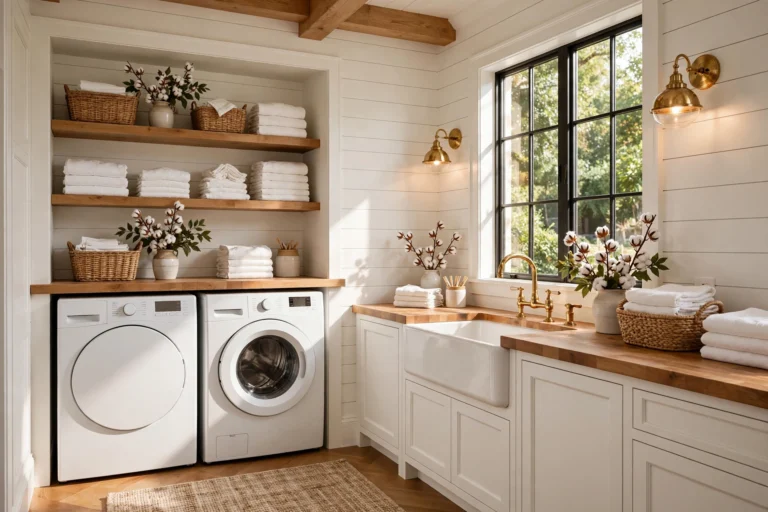
A tidy laundry room is not about matching containers. It is about removing friction. When detergent is easy to reach, dirty clothes are already sorted, and clean clothes have a place to wait, laundry stops piling up. If you are also refreshing the look of the space, these laundry room decor ideas pair beautifully with the storage systems below.
Key Takeaways
What is the best way to organize a laundry room? Give every task its own zone, keep daily supplies near the washer, and store the rest in labeled baskets and bins.
How do I organize a small laundry room? Use the walls and the space above the machines, add a slim rolling cart, and keep only daily supplies in the room.
What should every laundry room have? Sorted hampers, detergent and stain supplies near the washer, a folding surface, a drying spot, and a basket for clean clothes waiting to be put away.
How do I keep a laundry room tidy? Empty it once, label every container, and finish each load completely, because half-finished laundry creates most of the mess.
1. How Can I Sort Laundry Without Piles on the Floor?
Use three labeled hampers for lights, darks, and delicates or towels, placed where dirty laundry naturally enters the room, so sorting happens the moment clothes arrive instead of on wash day.
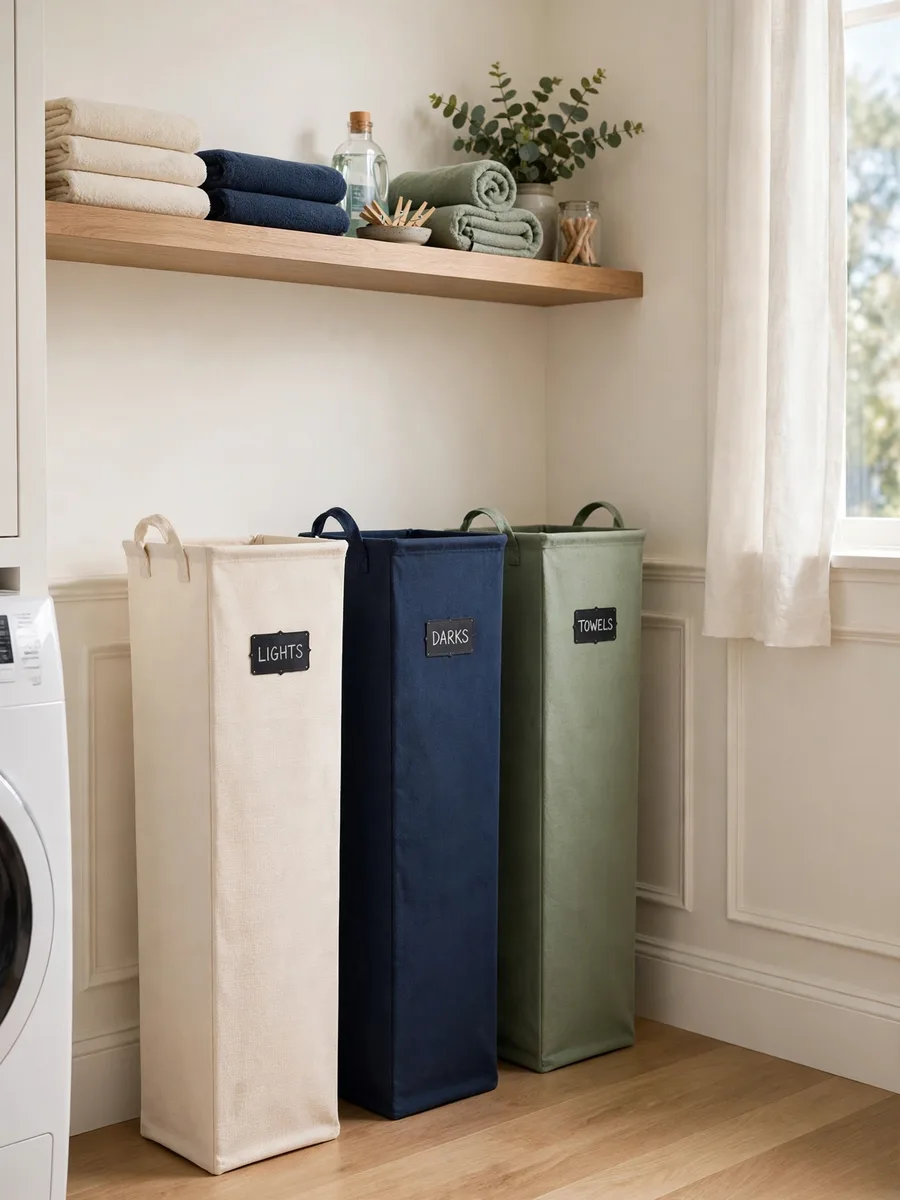
Floor piles form when sorting is left until wash day, so clothes get touched twice. A row of three slim hampers changes that: each person drops clothes into the right hamper, and when one is full, that load is ready to wash.
For example, a family of four uses cream, navy, and sage canvas hampers labeled Lights, Darks, and Towels.
Quick tips:
- Keep a mesh bag in the delicates hamper for socks.
- Empty a hamper when full so clothes never spill out.
- Place hampers near the door so sorting happens on the way in.
2. What Is the Best Storage Above the Washer and Dryer?
Open shelving above the machines with labeled baskets is the best storage there, because it keeps detergent, stain remover, and dryer sheets visible and reachable while hiding visual clutter inside the baskets.
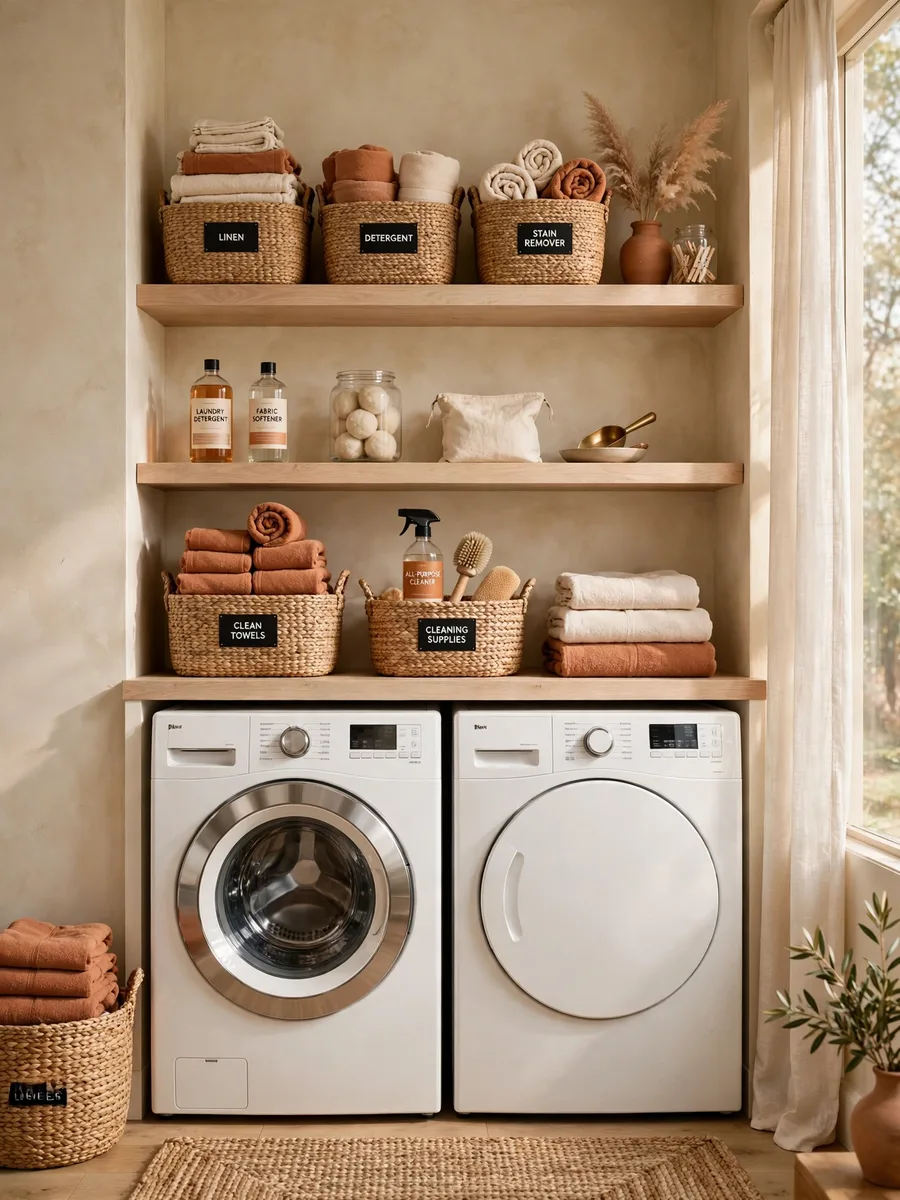
Among laundry room organization ideas, the wall above the machines is often wasted on a single high shelf, yet two or three open shelves turn it into the room’s main supply station. Baskets make open shelves work: each one holds a category, and you pull the whole basket down instead of reaching for bottles.
For example, two white oak shelves above a white front-load pair hold four woven seagrass baskets labeled Detergent, Stain Care, Drying, and Extras.
Quick tips:
- Measure the tallest bottle before fixing the lowest shelf.
- Keep daily supplies low, backups higher up.
- Leave a little empty space so baskets slide out easily.
3. How Do I Create a Folding Station in a Small Laundry Room?
Add a countertop over front-load machines, or a wall-mounted fold-down table in a tight room, so folding happens on a flat surface right next to the dryer instead of on a bed or the dining table.
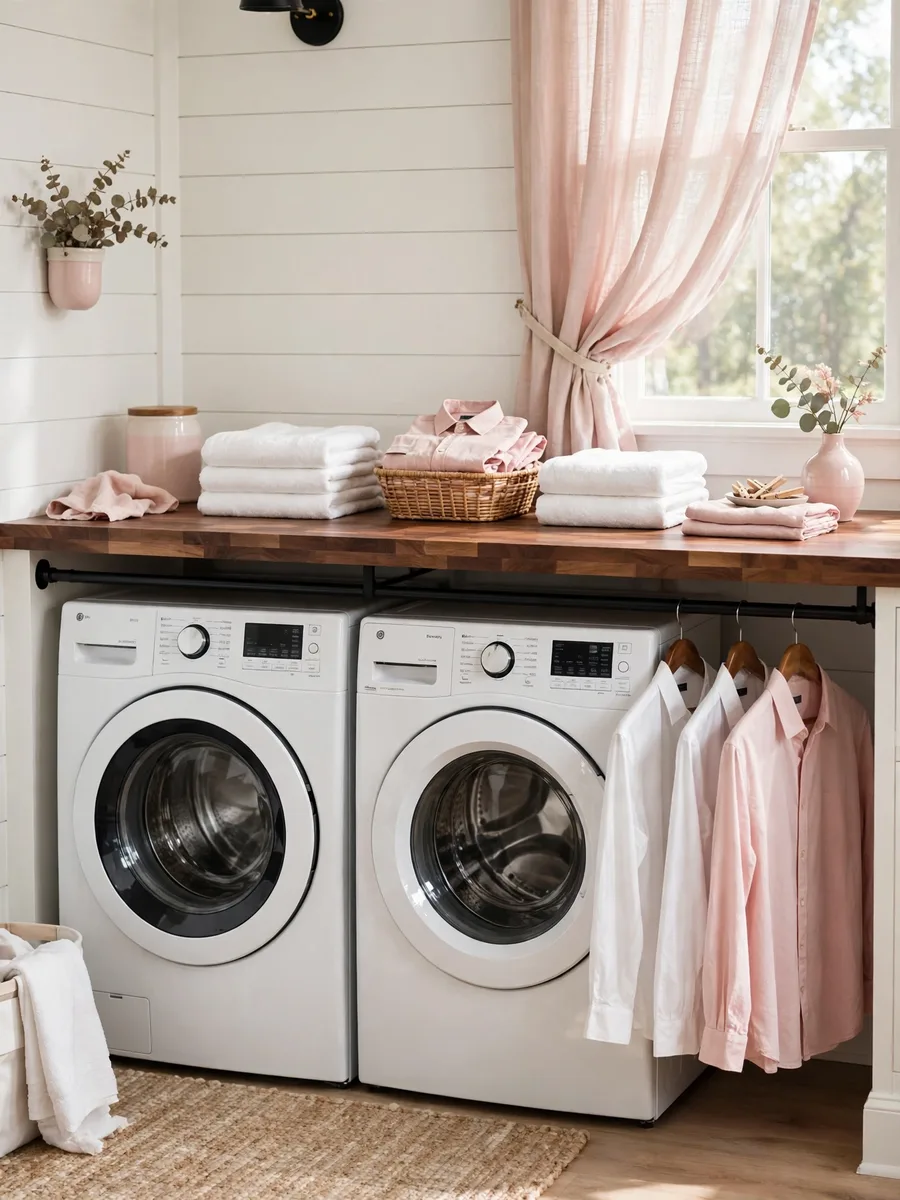
Clean laundry without a folding surface becomes a pile, and piles become wrinkles and forgotten loads. Over front-load machines, a butcher block, laminate, or quartz countertop creates a wide work surface with no extra floor space.
For example, a warm walnut butcher-block countertop runs across a white front-load pair, with folded towels at one end and a hanging rod underneath for shirts from the dryer.
Quick tips:
- Keep the folding surface clear between loads so it is always ready.
- Fold from the dryer while clothes are warm to reduce wrinkles.
- Add a small basket on the counter for items that need ironing later.
4. How Can I Use the Narrow Gap Beside the Washer?
Slide a slim rolling cart into the gap beside the washer or dryer to store detergent, stain remover, and small supplies in space that would otherwise hold nothing at all.
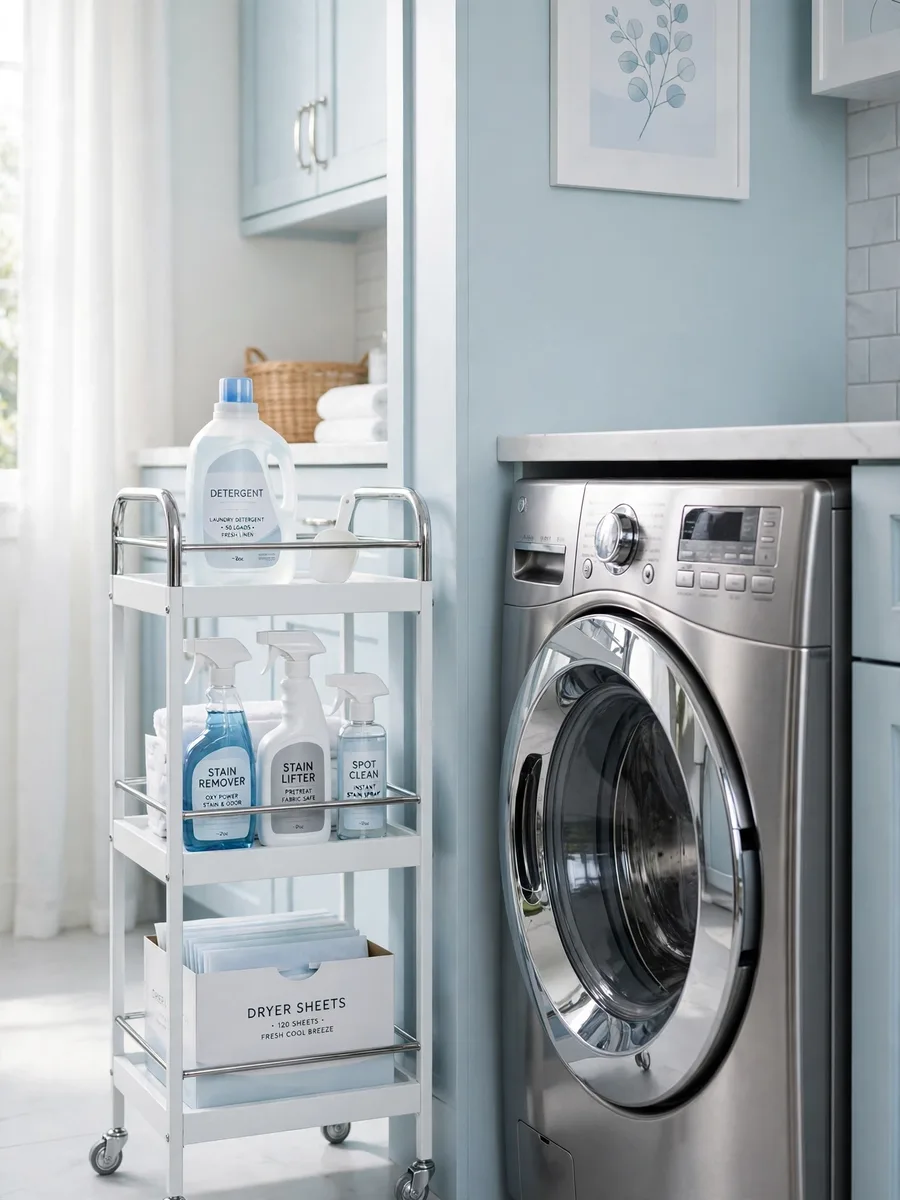
Almost every laundry room has a wasted gap a few inches wide between the washer and the wall, or between the two machines. A slim rolling cart, usually six to eight inches wide, fits it perfectly and rolls out for easy reach.
For example, a white three-tier cart sits in a seven-inch gap beside a stainless steel washer, holding detergent on top, stain sprays in the middle, and dryer sheets below.
Quick tips:
- Measure the gap before buying, including hoses and trim.
- Keep heavy bottles on the lowest tier so the cart stays stable.
- Choose a cart with a handle so it pulls out easily with one hand.
5. Where Should Small Laundry Tools Live?
Mount a pegboard or a row of hooks on an open wall to hold lint rollers, mesh bags, drying racks, brushes, and hangers, so small tools stay visible and off every flat surface.
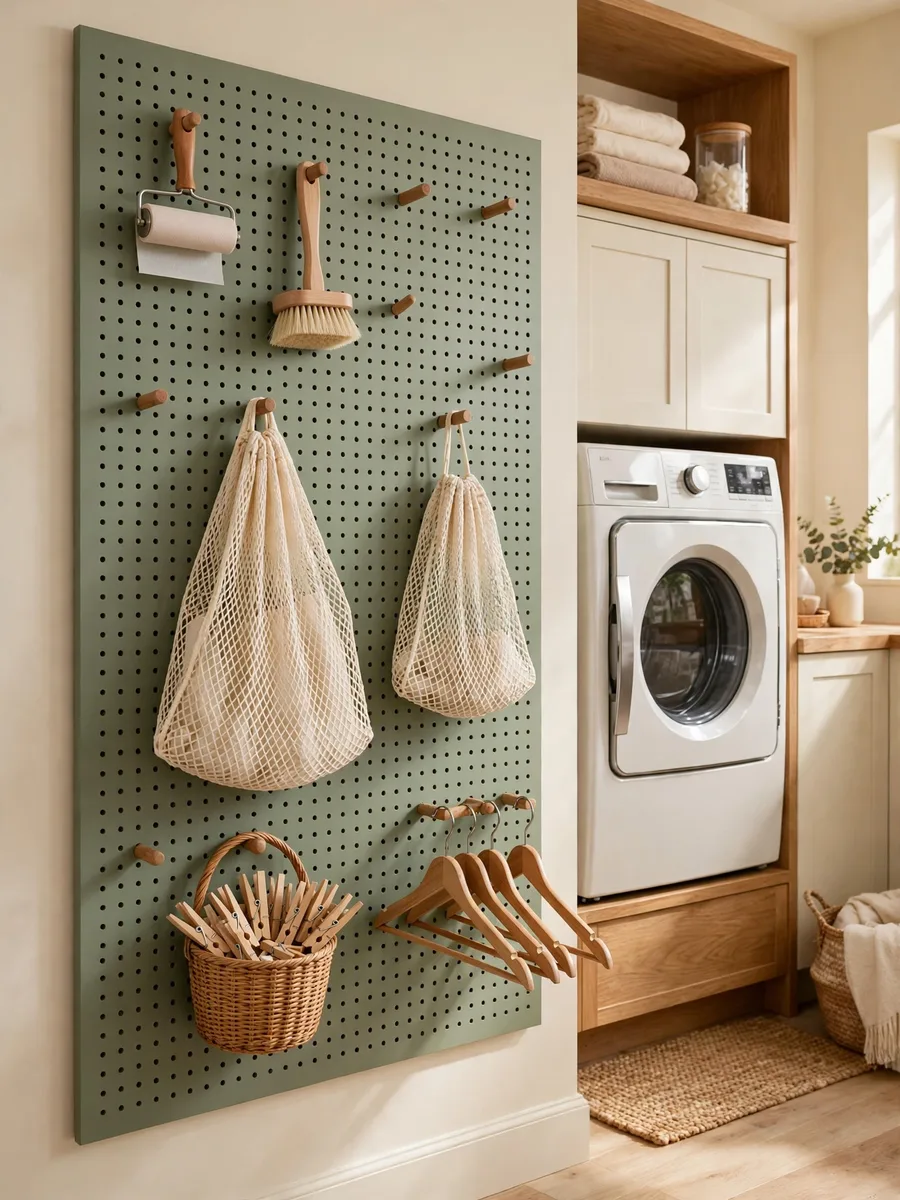
Small tools create the most clutter because they have no natural home. A lint roller ends up on the counter, hangers pile on the dryer, and mesh bags get stuffed behind the detergent. A pegboard adapts as needs change, with hooks, small baskets, and clips that can be moved.
For example, a sage-green pegboard beside the dryer holds a lint roller, a stain brush, three mesh bags, clothespins, and wooden hangers.
Quick tips:
- Hang mesh bags empty so they are easy to grab before a load.
- Keep spare hangers on the pegboard for clothes from the dryer.
- Label the pegboard basket for clothespins and small items.
6. Should I Decant Detergent Into Matching Containers?
Decant detergent, pods, and scent beads into labeled, airtight containers only if it helps you measure accurately and reach supplies faster; otherwise keep the original packaging and label the shelf instead.
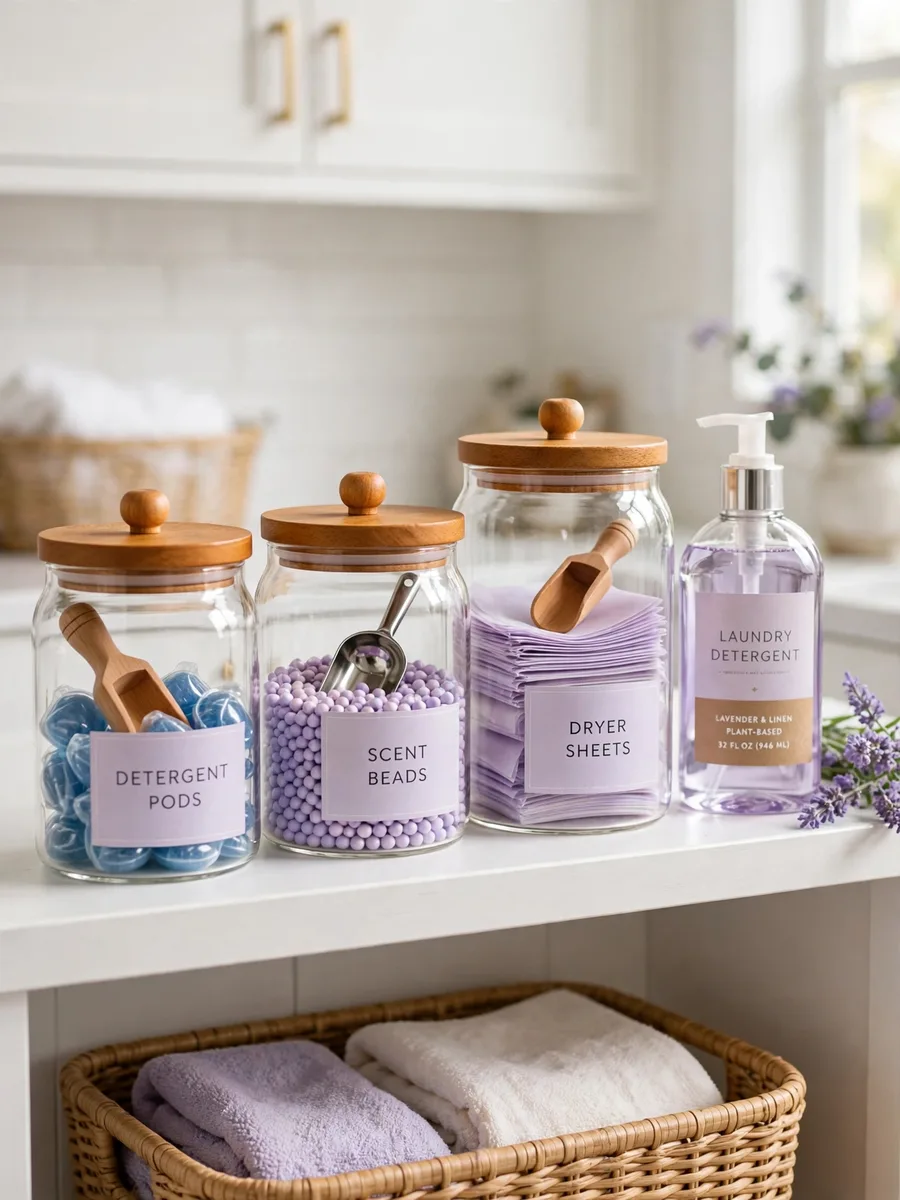
Matching containers look beautiful, but they are only worth it if they make laundry easier. Decanting helps when a large bottle is heavy to lift, pods spill from a torn bag, or scent beads are hard to pour.
For example, three clear glass jars with wooden lids sit on a white shelf, labeled Detergent Pods, Scent Beads, and Dryer Sheets, each with a small scoop on top.
Quick tips:
- Label every decanted container with the product name and any safety warning.
- Keep original packaging until a jar is empty, in case you need instructions.
- Refill jars only when they are nearly empty to avoid stale or spilled product.
7. Where Do Hang-Dry Clothes Go?
Give hang-dry clothes a dedicated spot, such as a pull-out drying rod under a shelf, a wall-mounted accordion rack, or a folding drying rack, so wet delicates never drape over chairs or the top of the dryer.
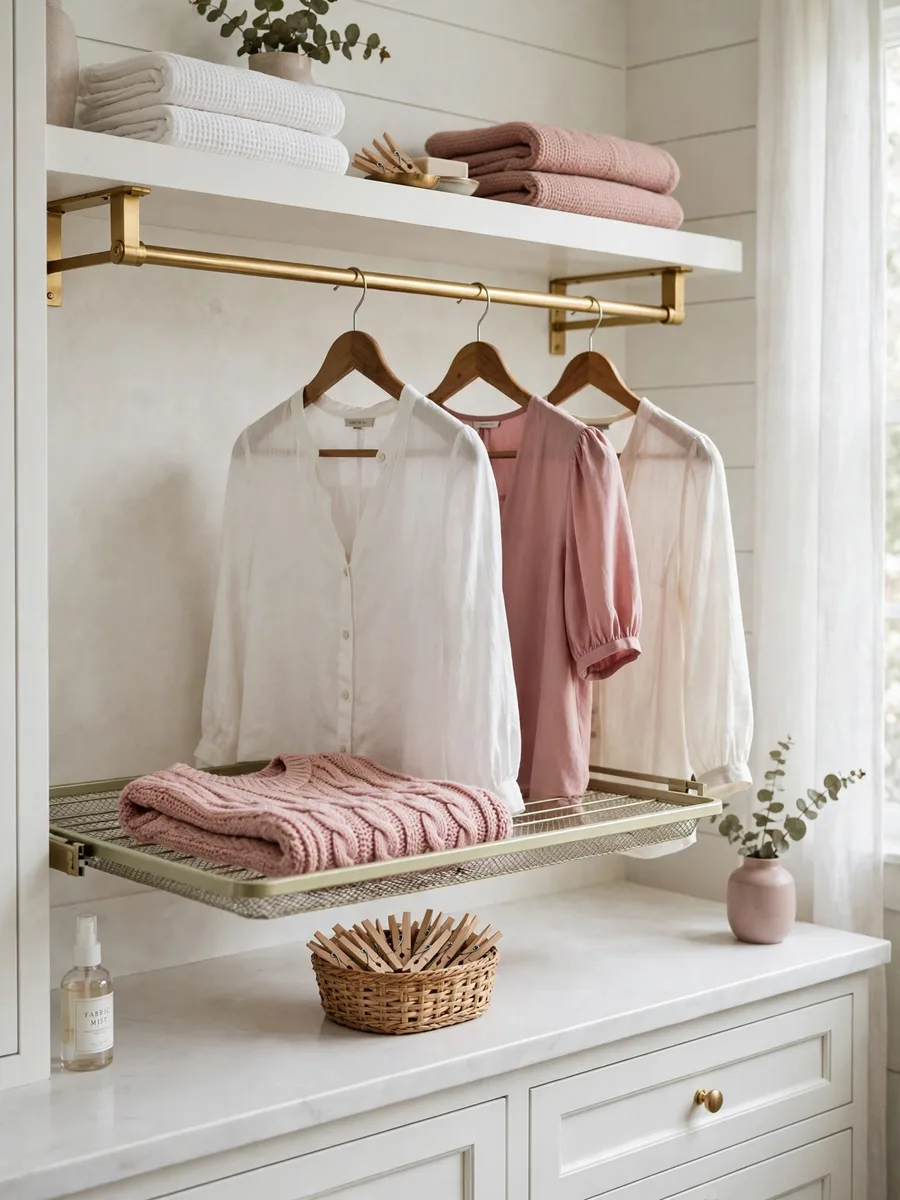
Delicates, activewear, and anything that should not go in the dryer needs a drying place, and without one it spreads across the house. A pull-out rod under a shelf is the tidiest solution for a small room because it extends only when needed and slides away when empty.
For example, a brass pull-out rod extends from beneath a white shelf, holding three blouses on wooden hangers, with a knit sweater on a mesh rack below.
Quick tips:
- Hang shirts on hangers so they dry with fewer wrinkles.
- Leave space between items so air moves freely around them.
- Return the rod or rack to its closed position once clothes are dry.
8. How Do I Stop Losing Socks and Small Items?
Create a small-items station with mesh laundry bags, a labeled lost-sock basket, and a sock clip system, so socks and delicates go into the wash together and come out together.
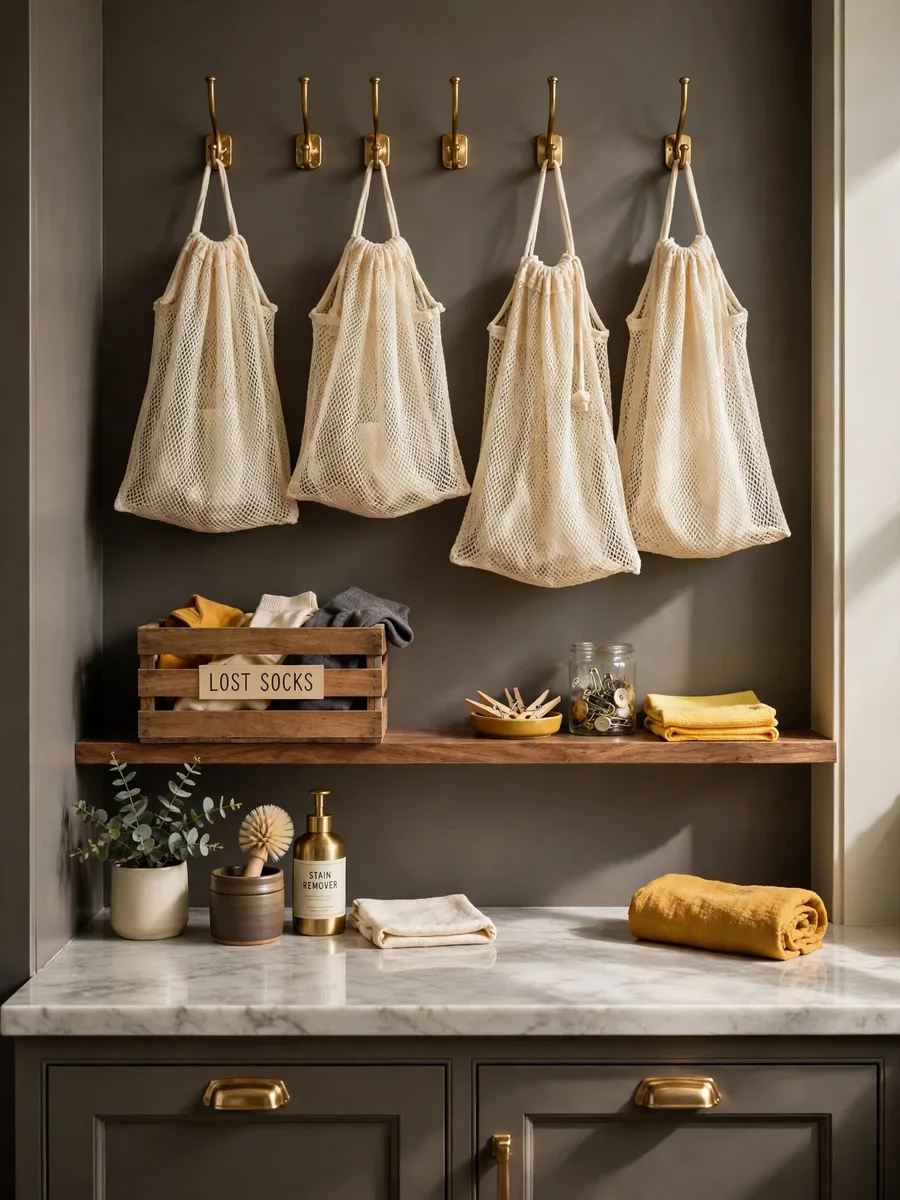
Lost socks are rarely lost in the machine. They are lost between the hamper, the washer, the dryer, and the folding pile, because small items have no container of their own. A mesh bag for each person, or one bag per load, keeps socks, baby clothes, and delicates together through the whole cycle.
For example, a wooden crate labeled Lost Socks sits beside three cream mesh bags on hooks, each tagged with a family member’s name.
Quick tips:
- Zip mesh bags closed before washing so small items stay inside.
- Check pockets before loading; most lost items start there.
- Empty the lost-sock basket weekly and donate unmatched singles after a month.
9. Where Should the Iron and Steamer Live?
Set up a compact ironing and steaming station with a fold-down ironing board, a wall hook for the iron, and a small basket for spray starch, so pressing clothes takes minutes and the board never leans in a corner.
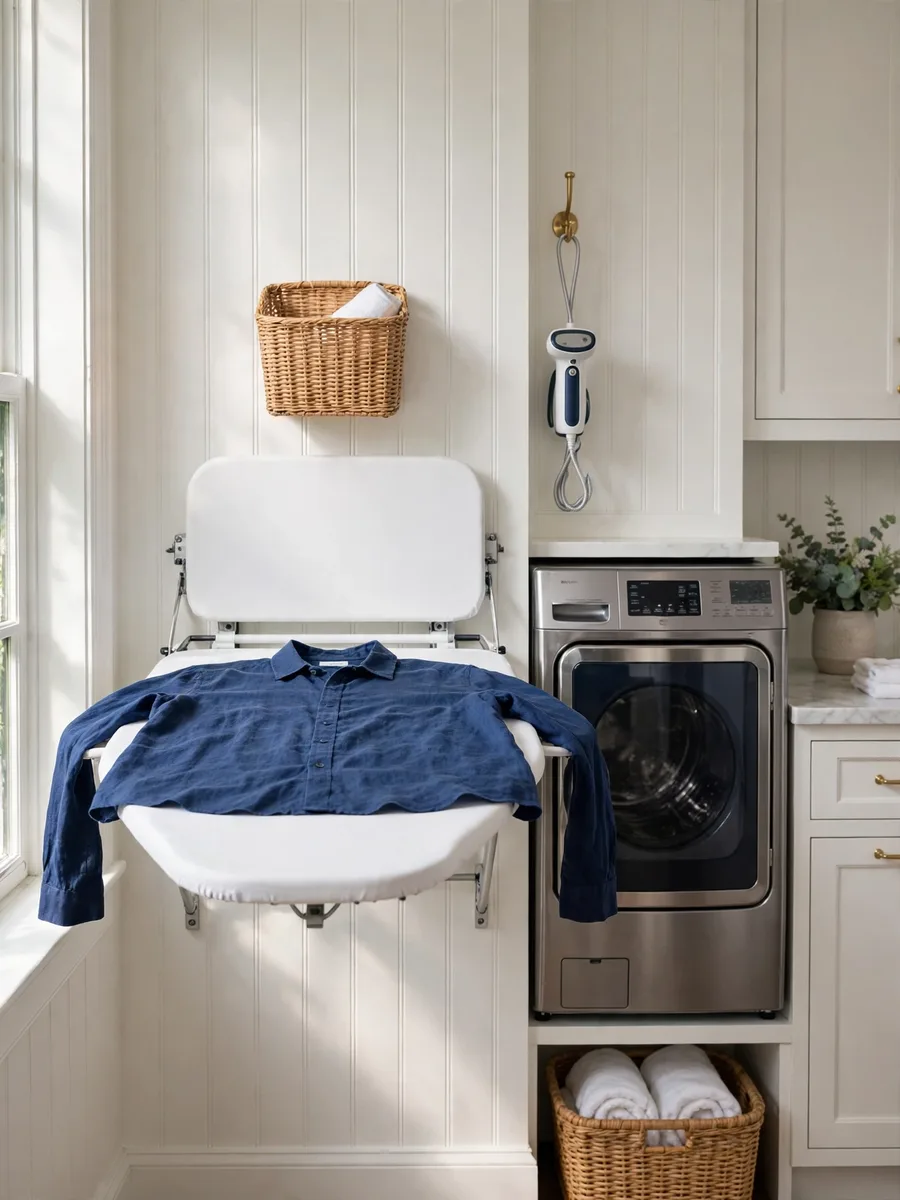
An ironing board leaning against the wall falls over, blocks the door, and makes ironing feel like a chore before it starts. A wall-mounted fold-down board, or one that slides out from a drawer, appears only when needed and disappears when the job is done.
For example, a white fold-down board is mounted beside the dryer, with a navy linen shirt laid flat and a compact steamer hanging from a hook beside it, plus a small rattan basket of spray starch on the shelf above.
Quick tips:
- Press clothes while slightly damp for the smoothest result.
- Keep a heat-resistant mat under the iron when it rests between passes.
- Store the iron upright once cool so it is ready and safe to grab.
10. How Do I Separate Laundry Products From Cleaning Supplies?
Keep laundry products and household cleaning supplies in separate labeled zones, with cleaning products in a closed cabinet or high basket, so nothing gets mixed up and children cannot reach anything unsafe.
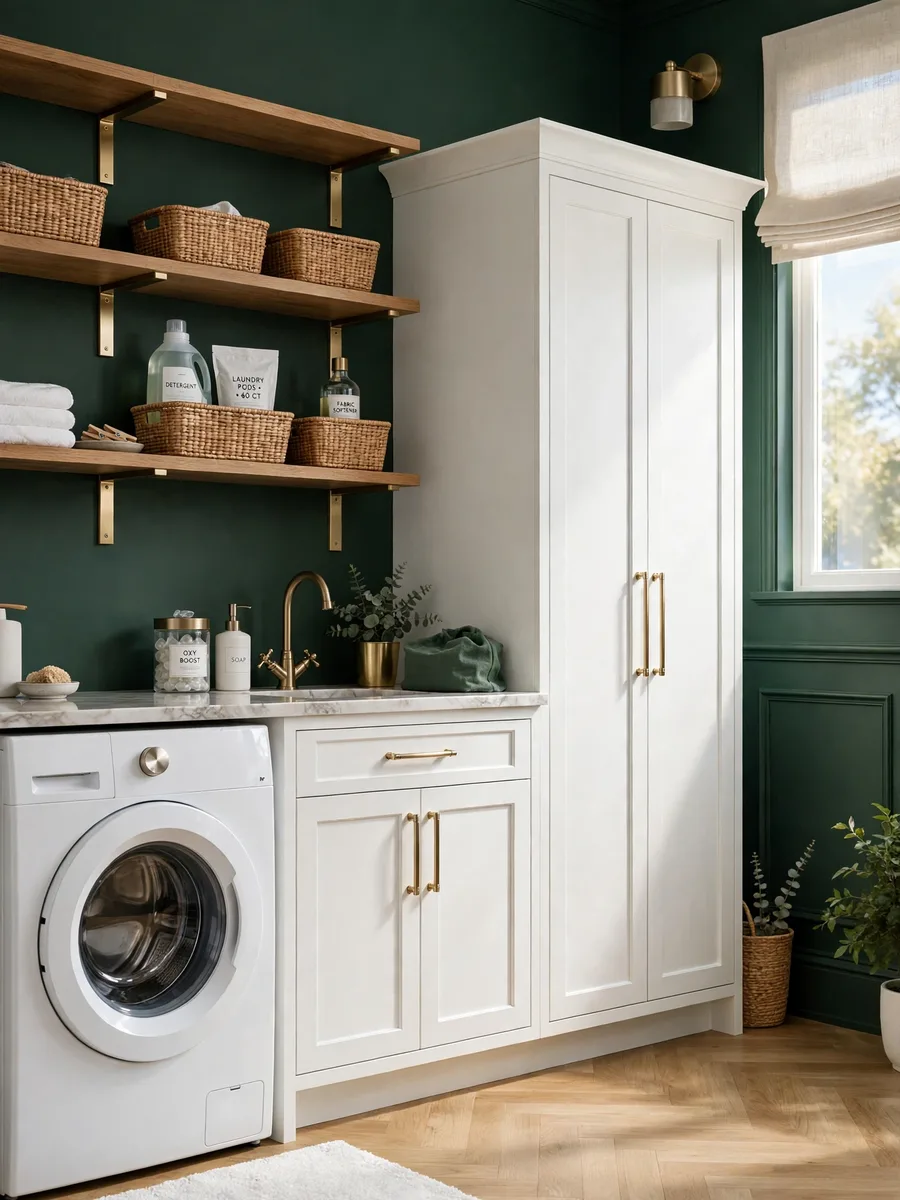
Laundry rooms often become home to every cleaning product in the house, and that is where confusion starts. Bleach, all-purpose spray, and floor cleaner sit beside detergent, bottles look alike, and the wrong product ends up in the wrong place. Give laundry products the prime spot near the washer, and give cleaning supplies their own shelf, cabinet, or caddy elsewhere.
For example, open shelves above the washer hold detergent in woven baskets, while a tall white cabinet on the opposite wall holds cleaning sprays, sponges, and gloves behind closed doors, each shelf labeled Cleaning, Floors, and Bathroom. The same zone habit works beyond the laundry room, and a tidy storage system like these pantry organization ideas shows how grouping by use keeps a busy household space easy to navigate.
Quick tips:
- Never store cleaning chemicals above laundry products where a leak could drip down.
- Keep a small caddy ready for supplies you carry around the house.
- Check labels monthly and remove anything expired or nearly empty.
11. Where Do I Store Linens and Seasonal Items?
Store linens, seasonal clothes, and backup supplies in labeled bins on the highest shelves or in a nearby closet, keeping only the current season and daily items in the laundry room itself.
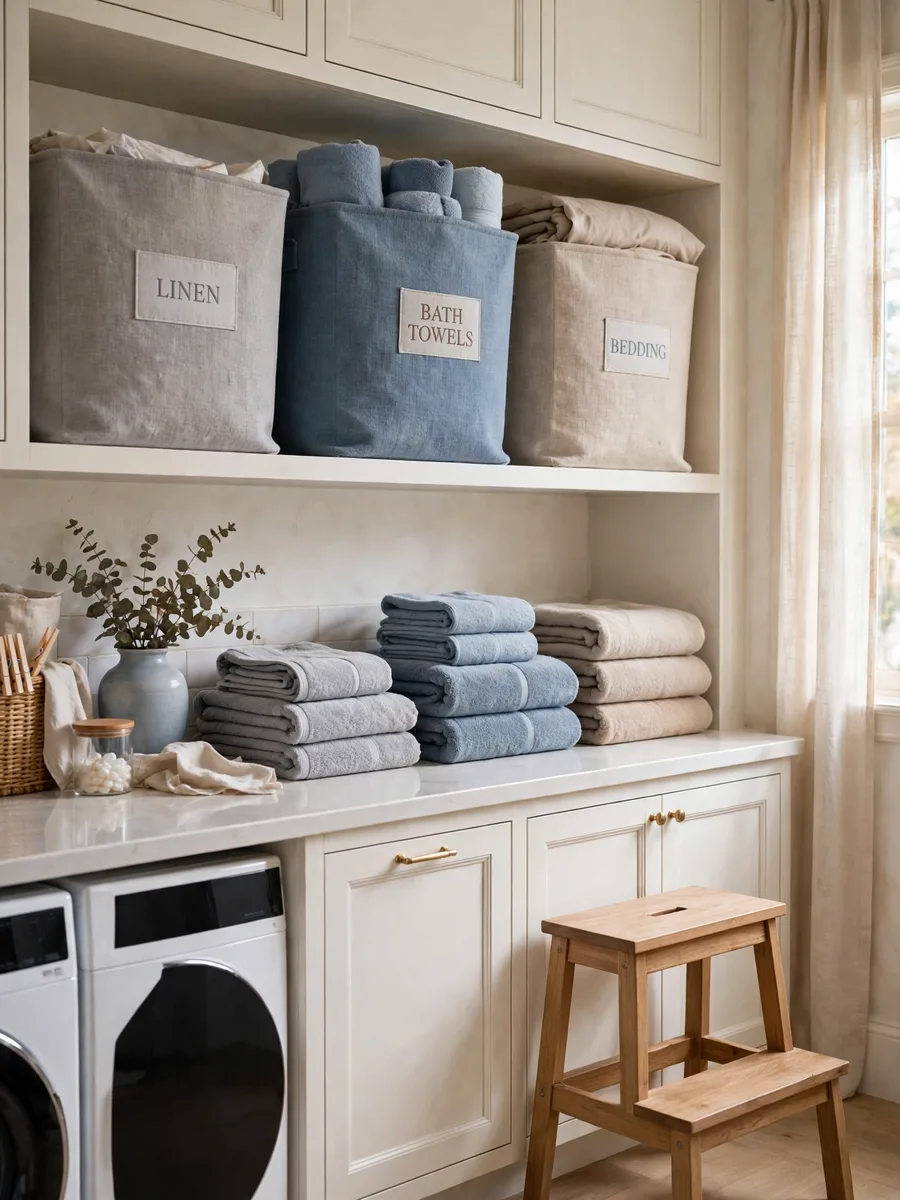
High shelves are perfect for things you need rarely, and terrible for things you need daily. That makes them the right home for spare sheet sets, seasonal blankets, beach towels, and backup detergent, all of which would crowd the prime shelves if stored lower down.
For example, three large linen bins in soft grey, dusty blue, and warm beige sit on the top shelf, labeled Guest Sheets, Winter Blankets, and Beach Towels, with a small step stool hanging on the wall nearby.
Quick tips:
- Use clear bins or large labels so contents are visible below.
- Keep a small step stool in the room for safe access to high shelves.
- Review seasonal bins twice a year and donate what no longer gets used.
12. How Do I Keep the Laundry Room Organized Long Term?
Finish every load completely, return every item to its labeled home, and run a ten-minute weekly reset, because a laundry room stays organized through small daily habits, not through one big tidy-up.
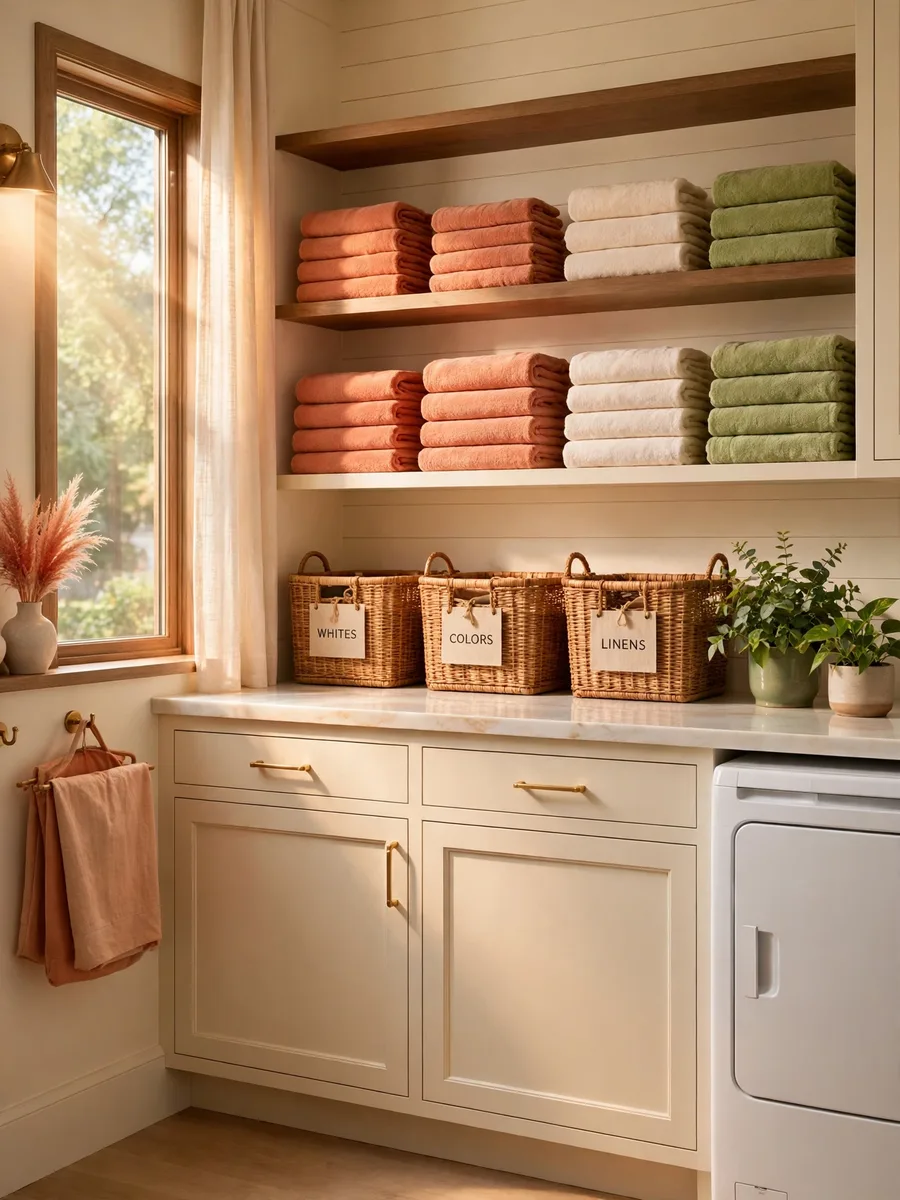
Even the best laundry room organization ideas fail when laundry is left half-finished. A load washed but not dried, dried but not folded, or folded but not put away creates a pile, and piles invite more piles.
For example, a Sunday evening reset takes ten minutes: the countertop is wiped clear, three folded towel stacks are returned to their shelf, the detergent basket is refilled from the backup bottle stored up high, and two single socks are matched from the lost-sock crate.
Quick tips:
- Set a dryer timer so loads never sit and wrinkle.
- Do the weekly reset on the same day each week so it becomes a habit.
- If a container stays empty for a month, remove it and simplify the system.
Frequently Asked Questions
How do I organize a small laundry room?
These laundry room organization ideas start with removing everything that does not belong, then using the walls and the space above the machines for shelves and hooks. Add a slim rolling cart, keep only daily-use products in the room, and move backups to higher shelves or another closet.
What should I keep in my laundry room?
Keep detergent, stain remover, dryer sheets or dryer balls, mesh laundry bags, hangers, a lint roller, and hampers. Add a folding surface and a drying spot if space allows, and store backups and cleaning products separately.
How do I organize laundry supplies?
Group supplies by use, such as washing, stain care, and drying, and store each group in its own labeled basket above the washer. Keep daily supplies at eye level, move backups higher up, and decant only products easier to measure from a jar or pump bottle.
How do I sort laundry?
Sort laundry into lights, darks, and delicates or towels using labeled hampers, and wash each group separately. Check pockets and care labels, wash similar fabrics together, and use mesh bags for socks and delicates.
Where should dirty laundry go?
Dirty laundry should go straight into labeled hampers in the laundry room or bedrooms, sorted by lights, darks, and towels. Hampers near where clothes come off make sorting automatic and stop floor piles.
How can I make a laundry room look tidy?
Hide clutter in labeled baskets, keep countertops clear between loads, and use coordinated containers for visible items. A consistent palette, closed storage for cleaning products, and a weekly ten-minute reset keep the room tidy.
Conclusion
Laundry room organization ideas work when they match real laundry habits, not when they look perfect in a photo. Start with the system that solves your biggest frustration, whether that is floor piles, missing supplies, or nowhere to fold, and add the next idea only when the first one is working. With labeled hampers, reachable supplies, a folding surface, a drying spot, and a short weekly reset, laundry day becomes faster and far less stressful, one finished load at a time.