12 Gorgeous Hallway Runner Ideas That Make a Narrow Hall Feel Grand
These hallway runner ideas turn the most walked-over strip of floor in your home into a designed moment. A good runner stretches a narrow hall, adds color and pattern, protects hardwood from muddy shoes.
Measure your hall at its narrowest point, then subtract eight to twelve inches to find your runner width. A 36 to 42 inch wide hall usually takes a 24 to 30 inch wide runner, leaving three to six inches of bare floor on each side. For length, cover about 80 to 90 percent of the run and leave four to six inches of floor showing at each end. If you are planning the whole corridor, not just the floor, these hallway decor ideas will help you pair the runner with art, lighting, and slim furniture that fits the same narrow space.
Key Takeaways
What size runner fits a narrow hallway?
For a hallway 36 to 42 inches wide, choose a runner 24 to 30 inches wide and 8 to 10 feet long, with three to six inches of floor showing on each side.
How long should a hallway runner be?
A runner should cover roughly 80 to 90 percent of the hallway length, stopping four to six inches short of the baseboard at each end.
Can you wash a hallway runner?
Many modern runners are machine washable, especially flat-weave polyester and cotton styles. Wash on a gentle cold cycle, air dry flat, and keep a non-slip pad underneath.
Should the runner pattern run lengthwise or across the hall?
Patterns that run lengthwise stretch the hall and make it feel longer, while bold stripes across the width can make a very long hall feel shorter and wider.
What is the best material for a busy hallway?
Low-pile wool, flat-weave cotton, jute, and washable synthetics hold up best under daily traffic.
1. How Can a Vintage Persian-Style Runner Warm Up a Plain Hall?
A faded vintage Persian-style runner brings instant warmth and history to a plain white hall, and its busy pattern hides muddy footprints better than any solid rug. Choose washed reds, terracotta, and soft navy in a low wool pile.
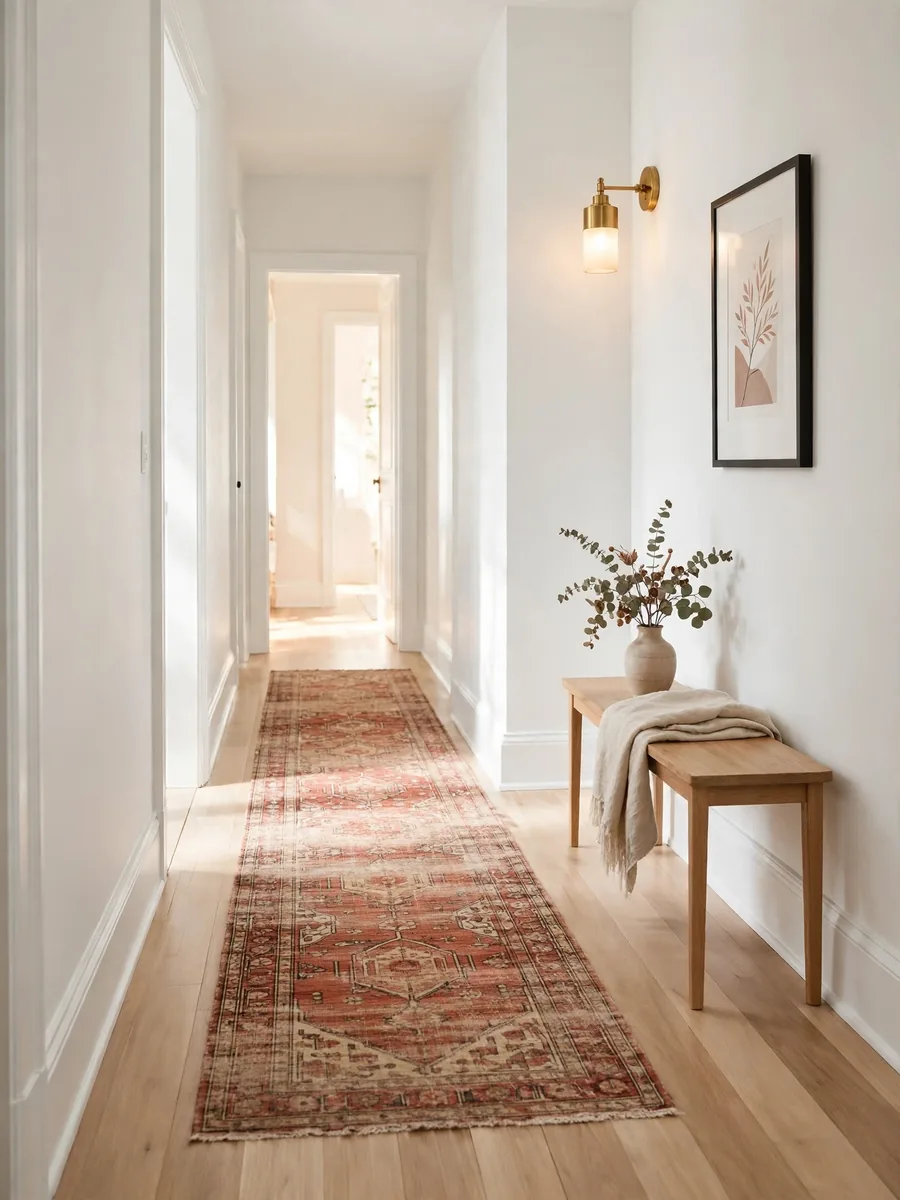
Picture a 2.5 by 10 foot runner in faded brick red and cream over pale oak boards, with white walls and one brass wall light. A concrete example is a 1930s hallway where the runner picks up the rust color of a brick fireplace visible through the living room doorway, tying two rooms together.
Quick tips:
- Pick a faded pattern to hide dirt between cleans.
- Match one runner color to a nearby room.
- Use a thin felt pad to stop sliding on hardwood.
2. Will a Bold Black-and-White Geometric Runner Make a Hall Feel Wider?
Yes, a bold black-and-white geometric runner can make a narrow hall feel wider, because strong graphic shapes pull the eye across the floor instead of down its length. Pick a diamond or checkerboard pattern in crisp black and warm white.
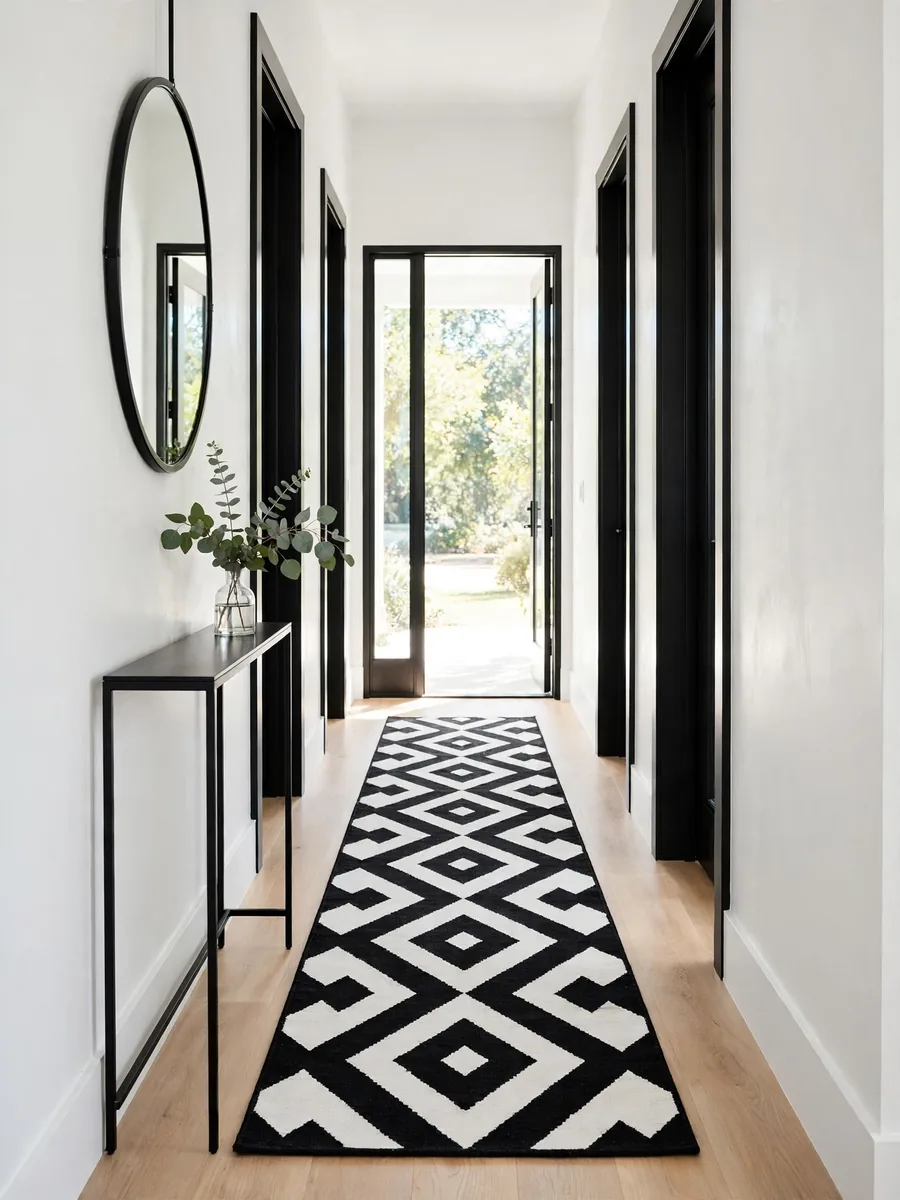
Try a 2 by 8 foot runner with large black diamonds on a cream ground, in a hall with white walls, black door frames, and a round black-framed mirror. A concrete example is a modern apartment entry where the diamonds echo the black grout lines of the kitchen tiles just around the corner.
Quick tips:
- Choose large shapes, since tiny patterns blur into grey.
- Repeat the black once more, in a frame or light fitting.
- Vacuum weekly to keep the white areas bright.
3. Can a Soft Sage Green Runner Make a Dark Hall Feel Calm?
A soft sage green runner can calm a dark hall, because green sits between warm and cool and reads as fresh even in low light. Choose a botanical leaf pattern in sage, cream, and soft stone, paired with warm wood.
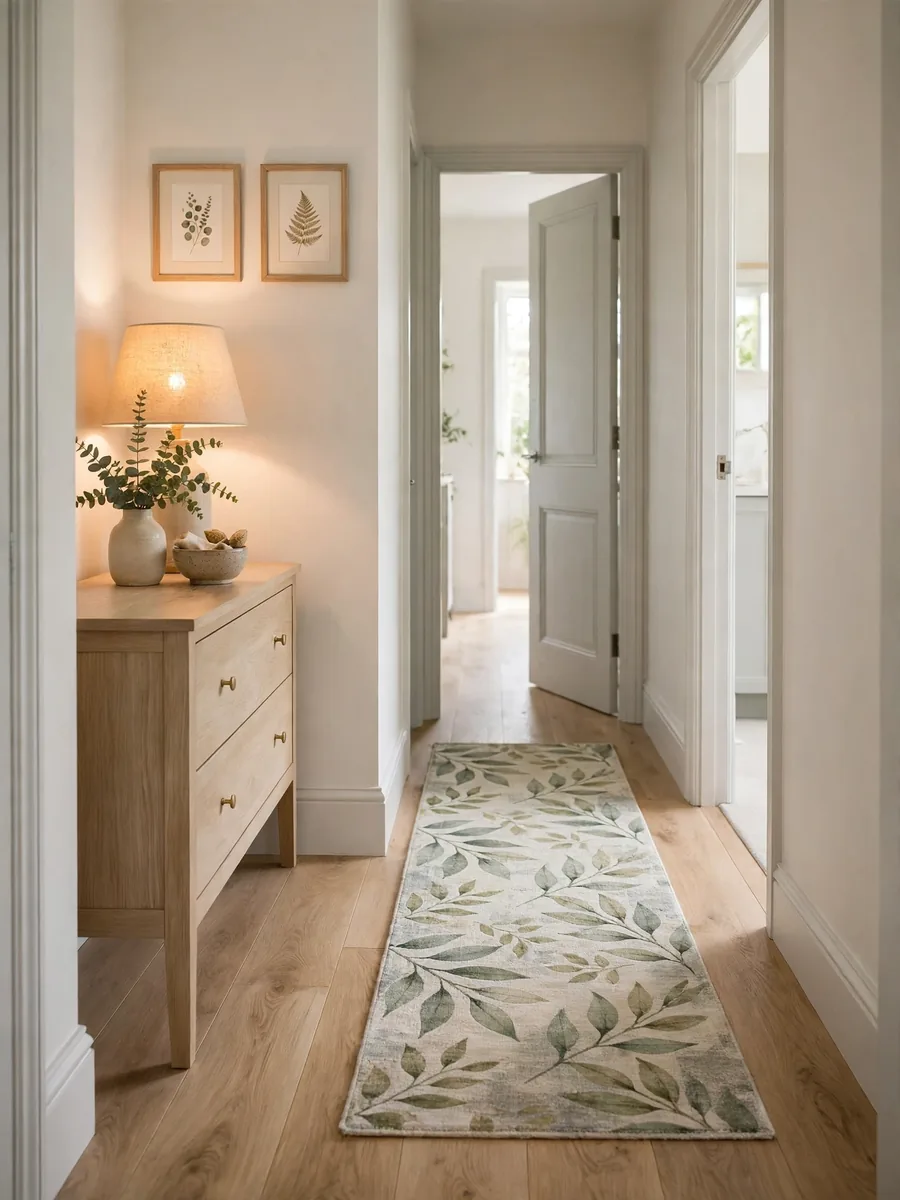
Imagine a 2.5 by 9 foot runner in muted sage with a delicate cream leaf trail, running past a pale oak console and a linen shade lamp. A concrete example is a family home where the sage runner picks up the green of the garden visible through the glass back door, so the hall feels like a bridge between indoors and outdoors.
Quick tips:
- Layer sage with warm wood, not grey.
- Pick a pattern with cream so the green never looks flat.
- Use a warm bulb, around 2700K, after dark.
4. Why Does a Classic Navy Runner Suit a Traditional Home So Well?
A classic navy runner suits a traditional home because navy is deep enough to ground a long hall, yet neutral enough to sit beside wood, brass, and cream. Choose a border pattern in navy, ivory, and a touch of gold.
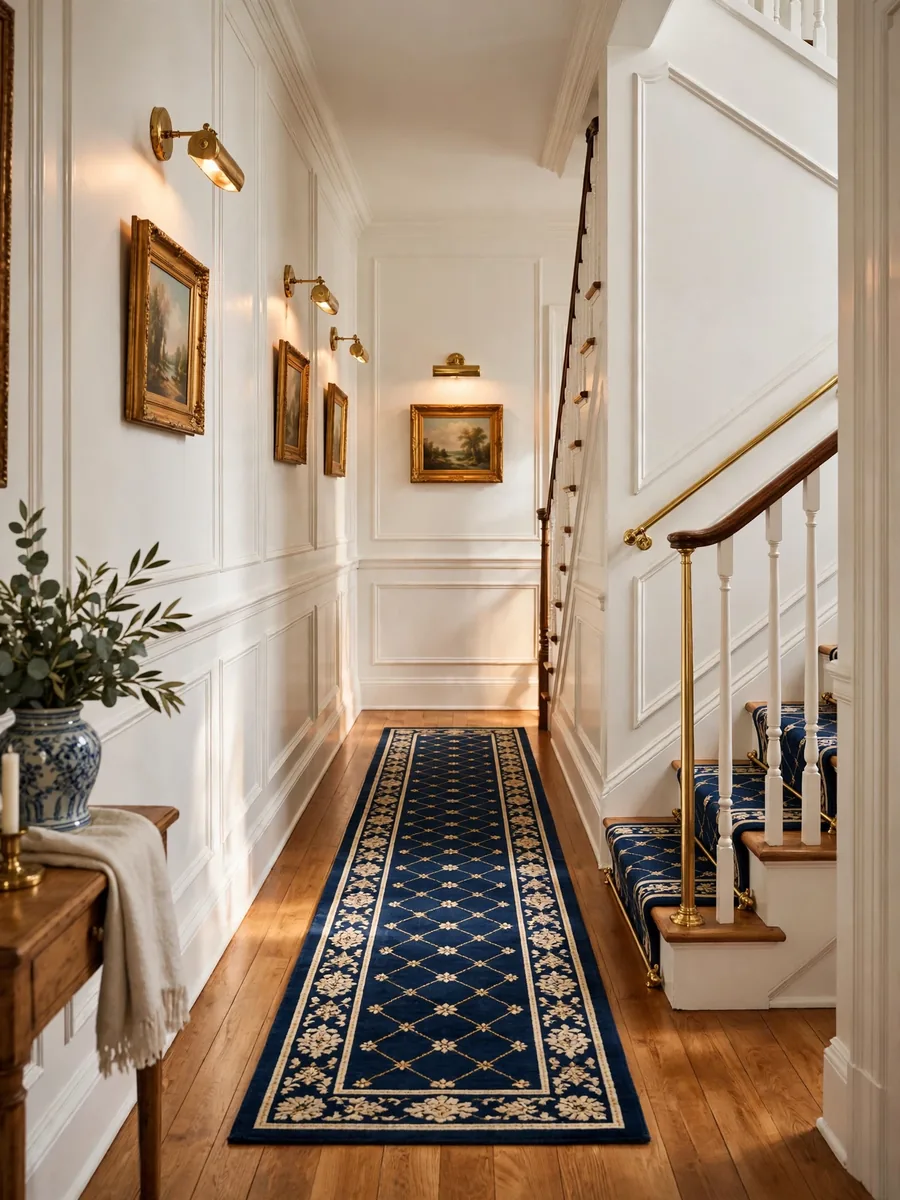
Picture a 2.5 by 12 foot navy runner with an ivory border and a small gold motif, over honey-toned floorboards with panelled walls and brass picture lights. A concrete example is a Georgian-style hallway where the runner runs from the front door to the staircase, and a brass stair rod echoes the gold in the border.
Quick tips:
- Let navy be the darkest color, then repeat it once.
- Choose a wool blend for softness and long life.
- Shake the runner outside monthly to keep it rich.
5. Is a Natural Jute Runner the Best Choice for a Relaxed Coastal Hall?
A natural jute runner is one of the best choices for a relaxed coastal hall, because its warm sandy texture softens hard floors and suits bare feet, baskets, and pale wood. Choose a tightly woven jute runner in honey beige.
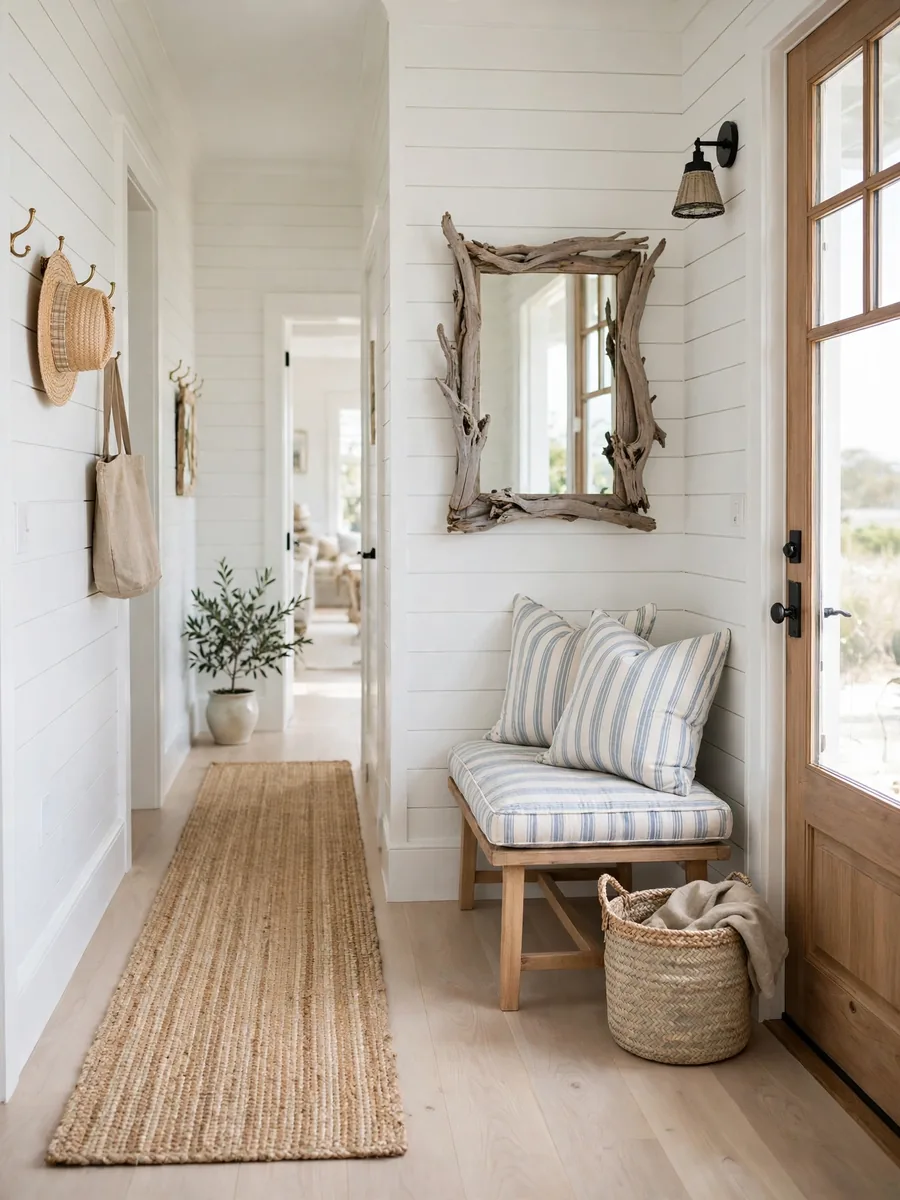
Try a 2.5 by 8 foot jute runner in a hall with white shiplap walls, a woven seagrass basket by the door, and a driftwood-framed mirror. A concrete example is a beach cottage entry where the jute runner leads past a bench with striped linen cushions, and the whole space reads breezy even on a grey day. If your entry also needs a drop zone, these small entryway decor ideas show slim storage that fits beside a runner without blocking the walking line.
Quick tips:
- Use a rug pad, since jute can shed and slide.
- Keep jute away from damp spots and standing water.
- Vacuum without a beater bar to protect the fibers.
6. How Do You Style a Blush Pink Runner Without Making a Hall Look Too Sweet?
You style a blush pink runner by pairing it with grown-up materials like walnut, black metal, and cream linen, so the pink reads as warm and modern rather than sweet. Choose an abstract pattern in blush, terracotta, and soft grey.
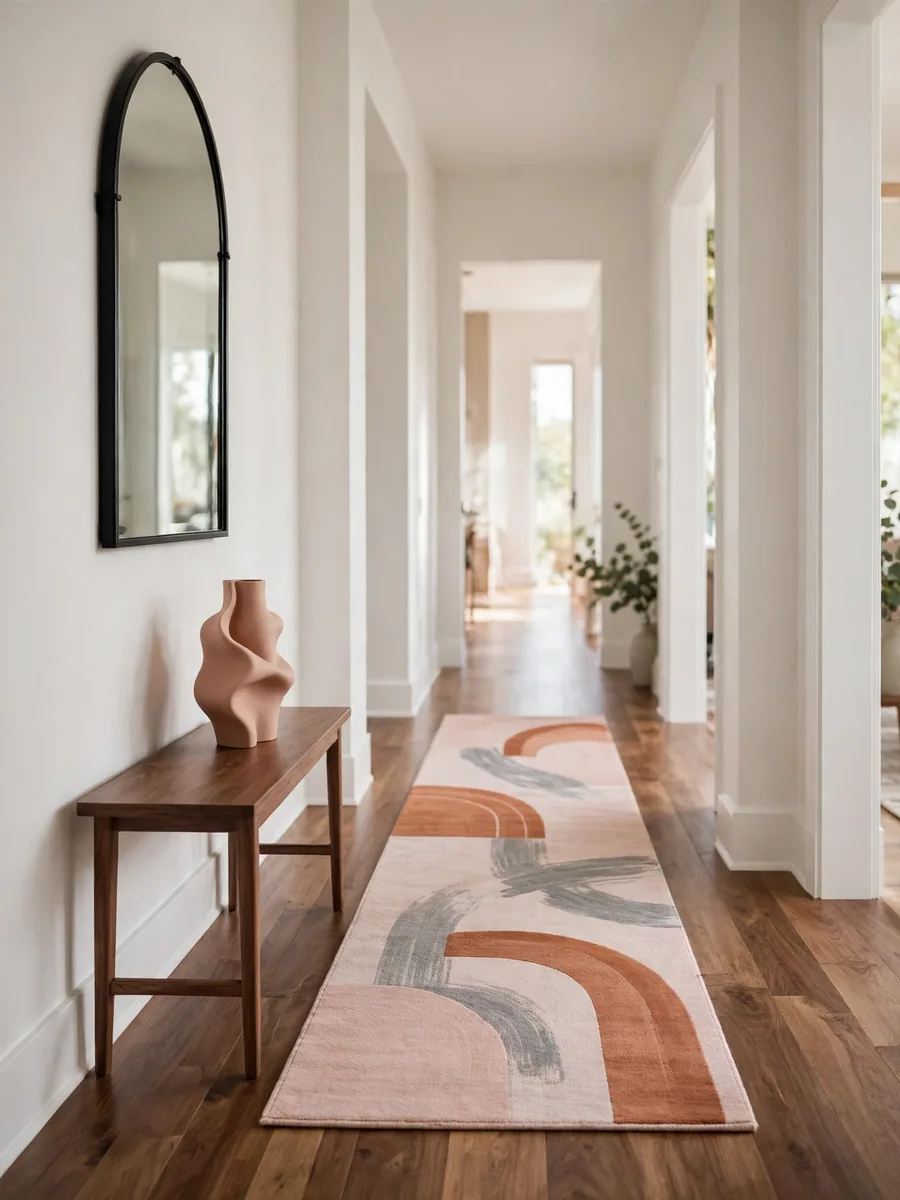
Imagine a 2 by 9 foot runner with soft blush brushstrokes and terracotta arcs, in a hall with walnut floorboards, a black-framed arched mirror, and a single sculptural vase. A concrete example is a young couple’s flat where the blush runner echoes the pink in a living room cushion visible through the open doorway, linking the two spaces.
Quick tips:
- Balance blush with one dark element, like walnut wood.
- Pick a washable style for the main route from the door.
- Keep wall art simple so the pattern stays the focus.
7. Can a Charcoal Grey Runner Make a Minimal Hall Feel Luxurious?
A charcoal grey runner can make a minimal hall feel luxurious, because a deep flat color adds depth and makes pale walls and floors look deliberately contrasted. Choose a plain or subtly textured charcoal runner in low-pile wool.
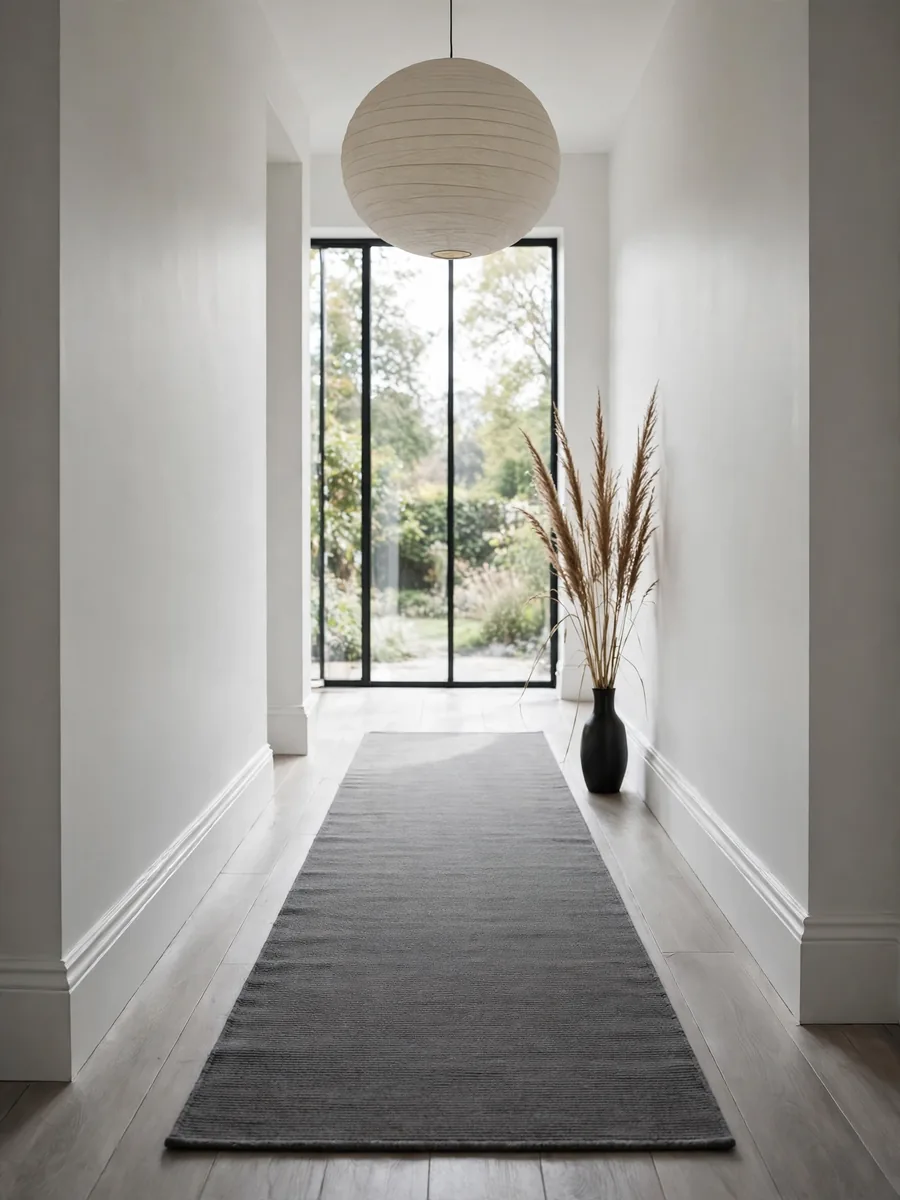
Picture a 2.5 by 10 foot charcoal runner with a fine ribbed texture, through a hall with white walls, light grey floorboards, and one oversized paper pendant light. A concrete example is a new-build home where the runner leads the eye straight to a floor-to-ceiling window at the far end, so the hall feels like a gallery corridor.
Quick tips:
- Keep the runner plain so texture carries the interest.
- Use warm lighting to stop charcoal looking cold.
- Leave bare floor at each side so the strip feels framed.
8. Will an Emerald Green Runner Add Drama to a Plain White Hall?
An emerald green runner adds drama to a plain white hall, because jewel green is rich enough to act as the room’s main color without needing painted walls. Choose deep emerald with a gold and cream motif, paired with brass.
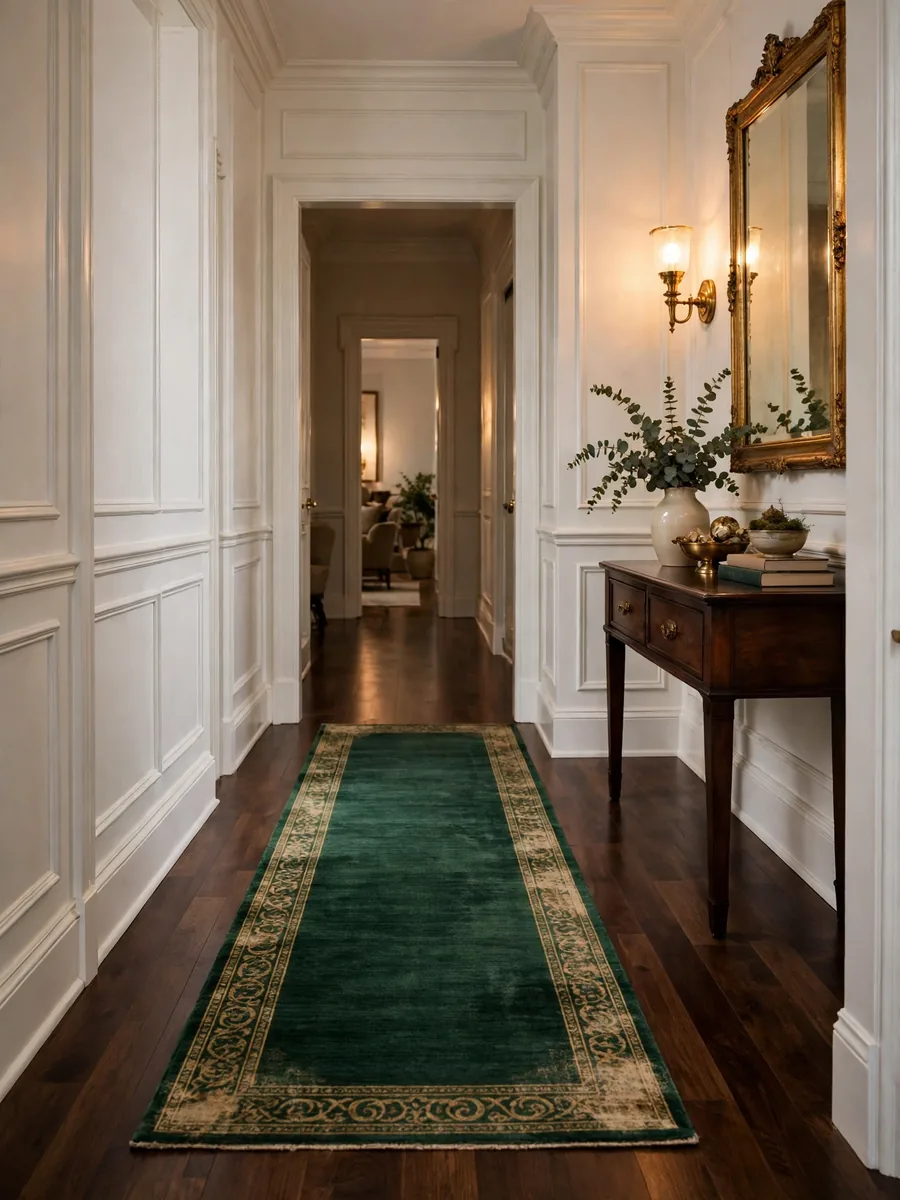
Try a 2.5 by 11 foot emerald runner with a faded gold border, over dark walnut boards with white walls, a brass wall sconce, and a gilt-framed mirror. A concrete example is a Victorian terrace where the emerald runner picks up the green velvet of the living room sofa glimpsed through the doorway, so the color flows from hall to living room.
Quick tips:
- Repeat emerald once, in a cushion or plant pot.
- Choose a low pile so the pattern stays crisp.
- Polish brass nearby, since brass flatters emerald.
9. How Can Sunny Stripes Brighten a Hall With No Windows?
Sunny stripes brighten a windowless hall by adding warmth and movement, and stripes that run lengthwise also stretch the space visually. Choose cream and mustard yellow stripes on a low-pile cotton runner.
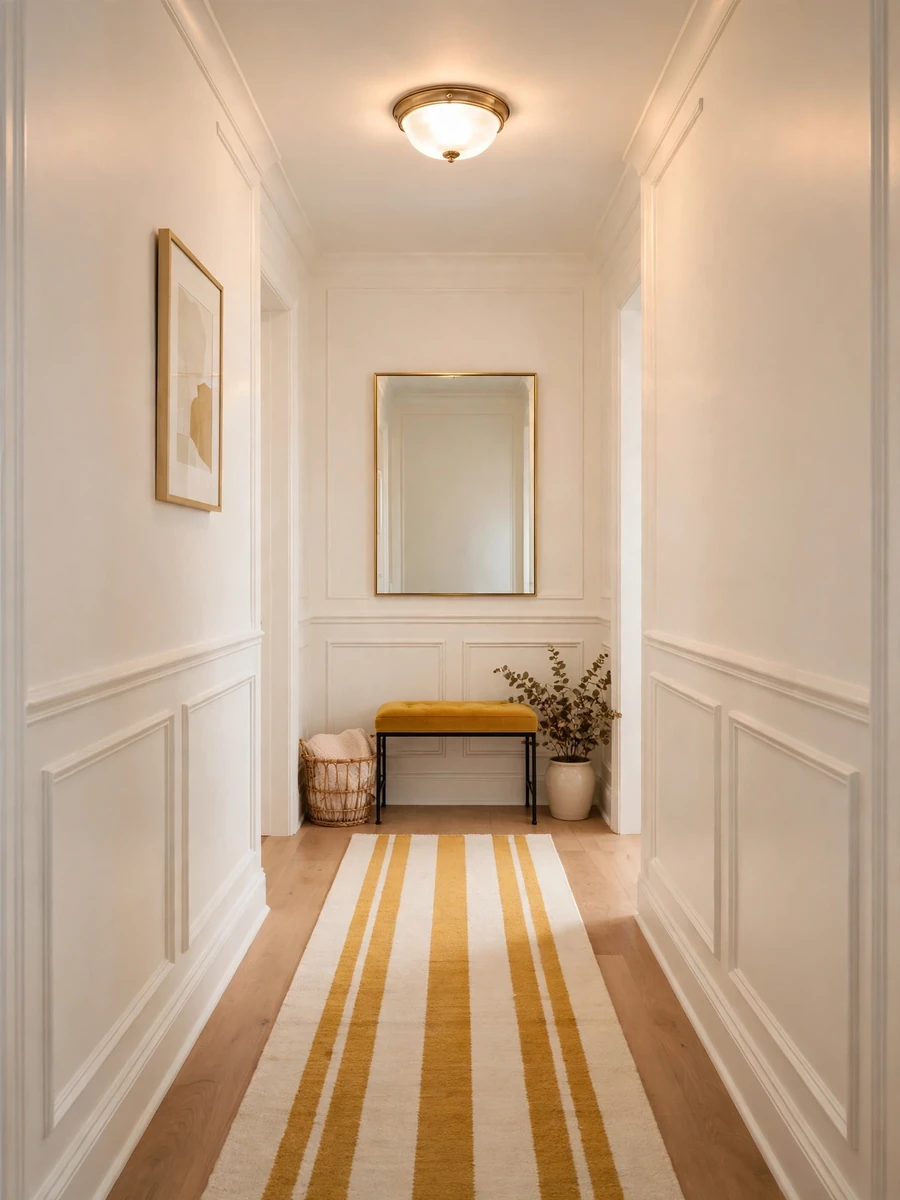
Imagine a 2 by 8 foot runner in cream with wide mustard stripes, through a windowless hall lit by a warm flush-mount light and a mirror that bounces light from the living room. A concrete example is a basement-level flat where the striped runner, a mustard cushion on a slim bench, and a cream linen curtain at the far doorway make a dark corridor feel cheerful.
Quick tips:
- Run stripes lengthwise to stretch the hall.
- Use washable cotton, since windowless halls show dust.
- Add a mirror at the far end to double the light.
10. What Happens When You Layer Two Runners in a Long Hall?
Layering two runners in a long hall creates a collected look and solves the problem of a hall longer than any stock runner. Lay a wide neutral jute runner as the base, then center a narrower patterned runner on top.
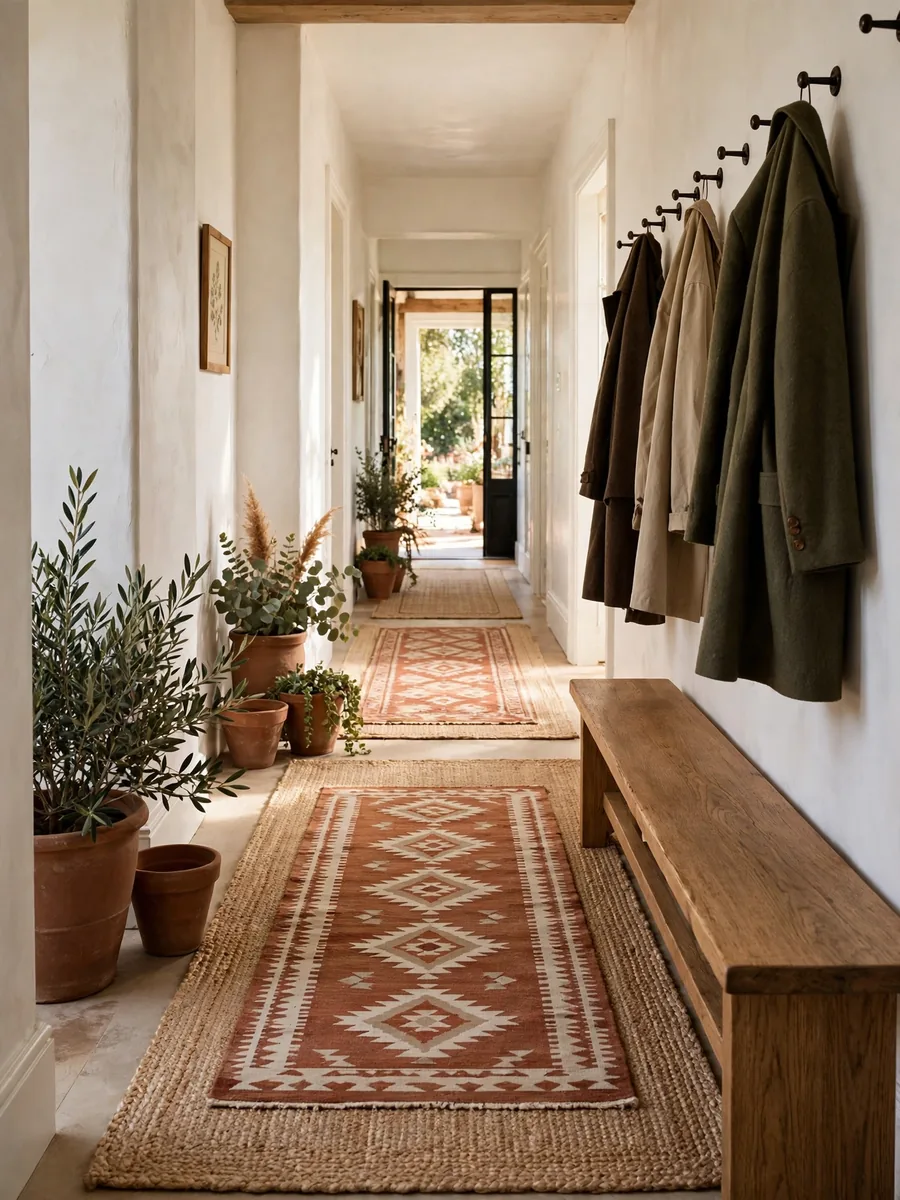
Picture a 3 by 14 foot natural jute base with a 2 by 12 foot terracotta and cream patterned runner layered on top, in a hall with warm white walls, terracotta pots, and a long oak bench. A concrete example is a farmhouse hallway where the layered runners run past peg hooks holding coats and hats, and the terracotta pattern picks up the brick porch outside.
Quick tips:
- Keep the base plain and the top runner patterned.
- Leave three inches of base showing on each side.
- Use rug tape so the top runner stays centered.
11. Can a Deep Plum Runner Make a Hall Feel Rich on a Budget?
A deep plum runner can make a hall feel rich on a budget, because plum reads as luxurious and hides wear, yet costs no more than any other dyed wool runner. Choose a tone-on-tone pattern in burgundy and soft rose.
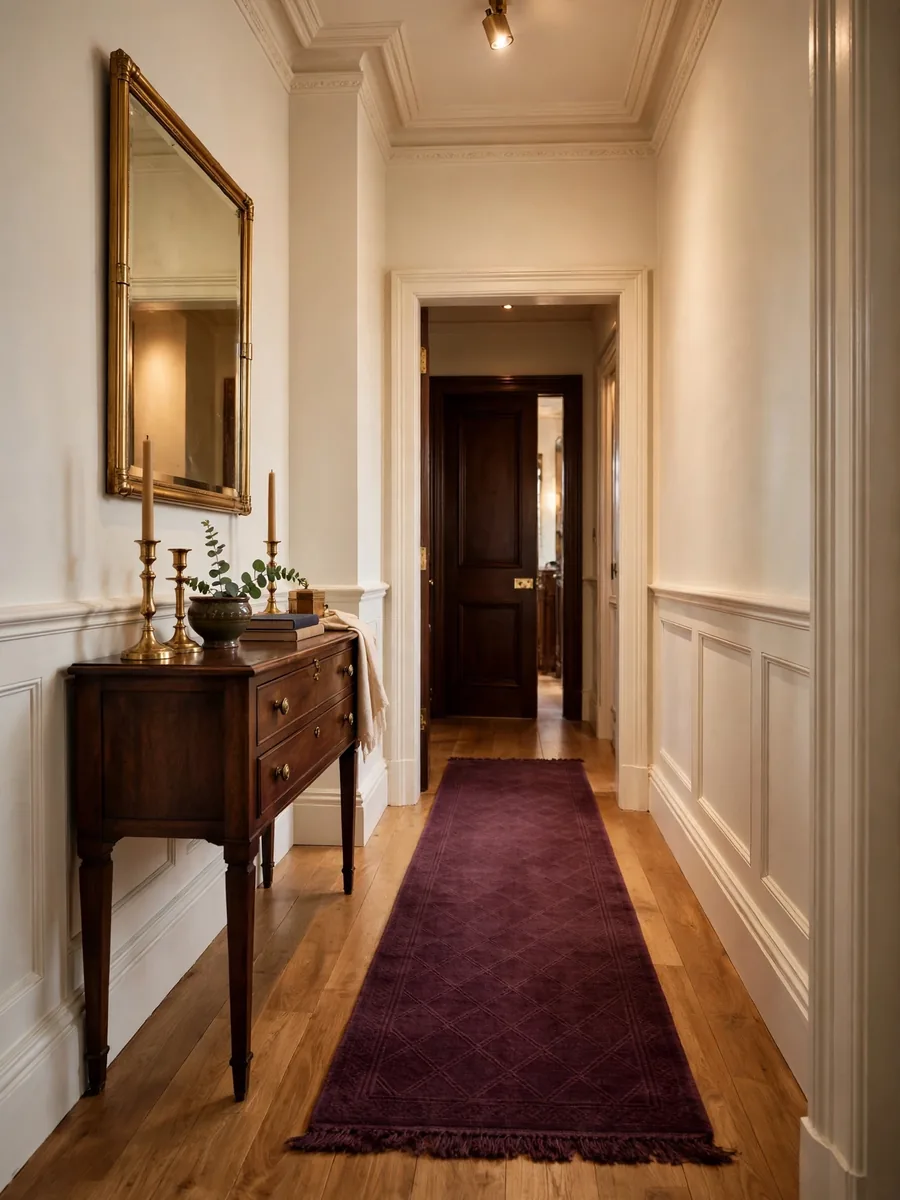
Try a 2.5 by 9 foot plum runner with a faint diamond texture, over medium oak boards with cream walls, a dark wood console, and a brass-framed mirror. A concrete example is a rented flat where the plum runner, a secondhand dark wood console, and two thrifted brass candlesticks transform a tired magnolia hall for under the cost of one new armchair.
Quick tips:
- Pair plum with brass or gold to warm the purple tones.
- Choose a tone-on-tone pattern to hide footprints.
- Keep wall art light so the dark floor never overwhelms.
12. Is a Light Blue Washable Runner the Smartest Pick for a Family Hall?
A light blue washable runner is a smart pick for a family hall, because it looks coastal, hides dust, and can go into the washing machine after muddy shoes. Choose a blue and white weave with a non-slip backing.
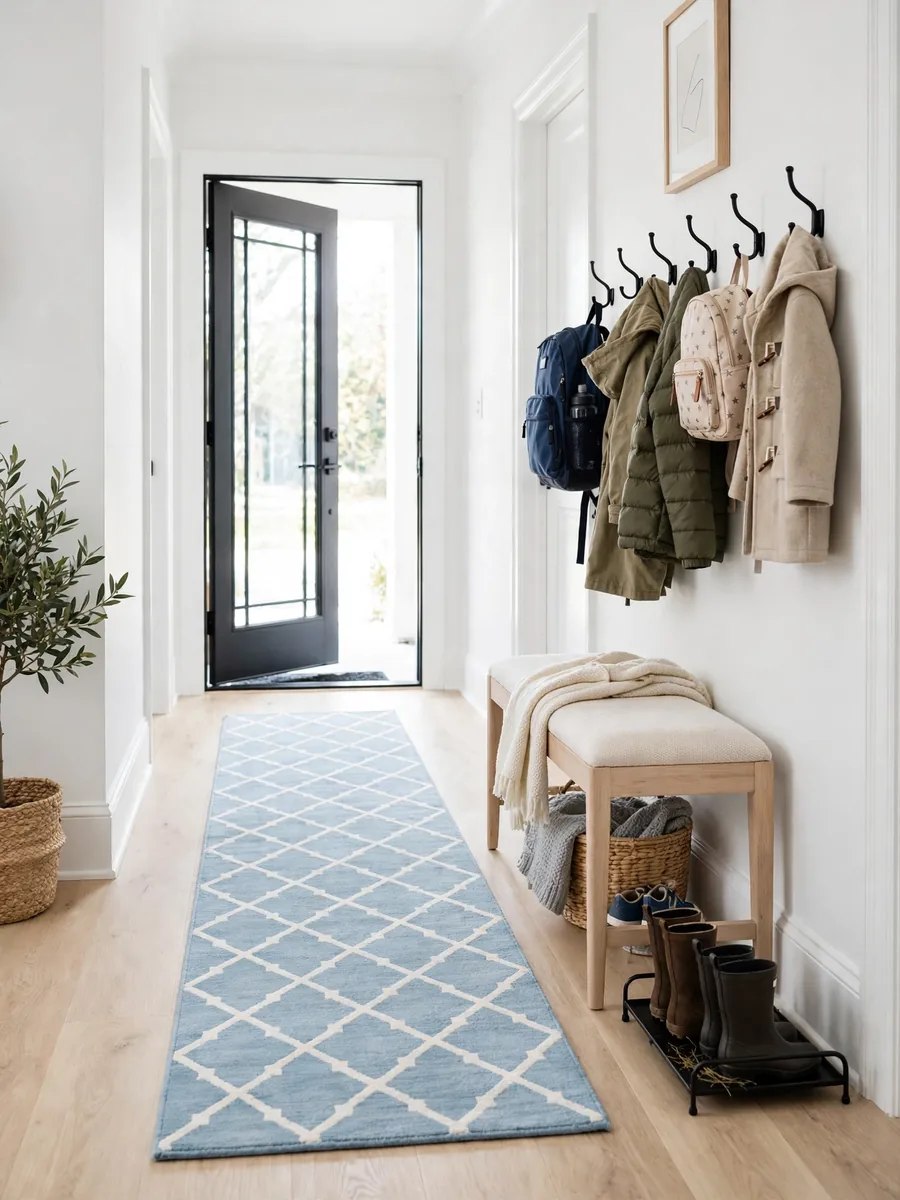
Imagine a 2.5 by 10 foot runner in soft sky blue with a white trellis pattern, running past white walls, a pale wood bench, and hooks holding school bags and coats. A concrete example is a busy family home where the runner is washed every two weeks on a gentle cold cycle, air dried flat overnight, and back in place by breakfast, with a spare ready to swap in.
Quick tips:
- Buy two identical runners so one is always ready.
- Wash on a gentle cold cycle and air dry flat.
- Choose a pattern with white to hide light dust.
Hallway Runner Ideas: Sizing at a Glance
| Hallway width | Runner width | Runner length | Best for |
|---|---|---|---|
| Under 36 inches | Skip a runner | Small door mat only | Very narrow halls and rented flats |
| 36 to 42 inches | 24 to 30 inches | 8 to 10 feet | Most standard hallways |
| 42 to 48 inches | 30 to 33 inches | 10 to 12 feet | Comfortable family halls |
| Over 48 inches | 36 to 42 inches | 12 feet or custom | Wide halls and grand entries |
Leave three to six inches of bare floor on each side, and four to six inches at each end. If your hall is longer than 14 feet, a custom-length runner usually looks better than two stock runners pushed end to end, because the join always shows.
Frequently Asked Questions
What size runner do I need for a hallway?
Measure the hallway width at its narrowest point, then subtract eight to twelve inches to find the runner width. For length, cover about 80 to 90 percent of the run and leave four to six inches of floor showing at each end.
How long should a hallway runner be?
A hallway runner should cover most of the walkway without touching either end wall. In a standard 10 foot hall, an 8 foot runner centered in the space leaves about 12 inches of bare floor at each end.
Can you wash a hallway runner in the washing machine?
Many hallway runners can be washed in a machine, but only if the care label says so. Washable flat-weave runners usually go on a gentle cold cycle with mild detergent, then air dry flat.
Should a hallway runner be wider than the door?
No, a hallway runner should be narrower than the hallway itself, with bare floor showing on each side. A runner that is wider than the doorway looks cramped and can catch on the door frame.
How do I stop a hallway runner from sliding?
Use a non-slip rug pad cut slightly smaller than the runner, and add rug tape at the corners if the hall gets heavy traffic.
Can I use two runners in one long hallway?
Yes, you can use two identical runners in a very long hallway, with a small gap of bare floor between them so the join looks deliberate. A single custom-length runner usually looks cleaner.
Conclusion
These hallway runner ideas all start from the same simple truth: measure first, then choose the color and pattern that fixes what your hall actually needs. A vintage Persian-style runner warms a plain hall, a bold geometric widens a narrow one, a washable blue runner survives family life, and a layered pair solves a hall longer than any stock size.