30 Brilliant Home Gym Ideas to Build Your Dream Workout Space at Home
The best home gym ideas start with the space you already have, not the equipment you want to buy. A spare room, a garage corner, or even a six-by-six-foot nook can become a workout space that fits the way you train, as long as the floor, light, and layout are planned before anything is ordered.
This guide covers 30 ideas, from a folding rack in a rented apartment to a full garage lifting zone and a calm yoga corner. A sage green wall, for example, borrows the calm palette you will find in our green living room ideas and makes a small room feel settled.
Key Takeaways
What is the first step in building a home gym? Measure the floor area and the ceiling height, then tape out each machine’s footprint with its clearance before buying.
How much space do I need? A six-by-eight-foot corner covers dumbbells, a bench, and a mat, while a rack and barbell need closer to eight by ten feet.
What flooring should I choose? Thick rubber suits strength training, foam tiles suit stretching, and a platform protects the floor under heavy drops.
What equipment should I buy first? Adjustable dumbbells, a bench, a mat, and resistance bands cover most workouts, and a rack or cardio machine comes after those basics.
How Do I Turn a Spare Room Into a Home Gym?
Remove the bulky furniture, lay protective flooring, add one mirror wall and wall-mounted storage, and keep a clear six-by-four-foot rectangle in the middle for floor work.
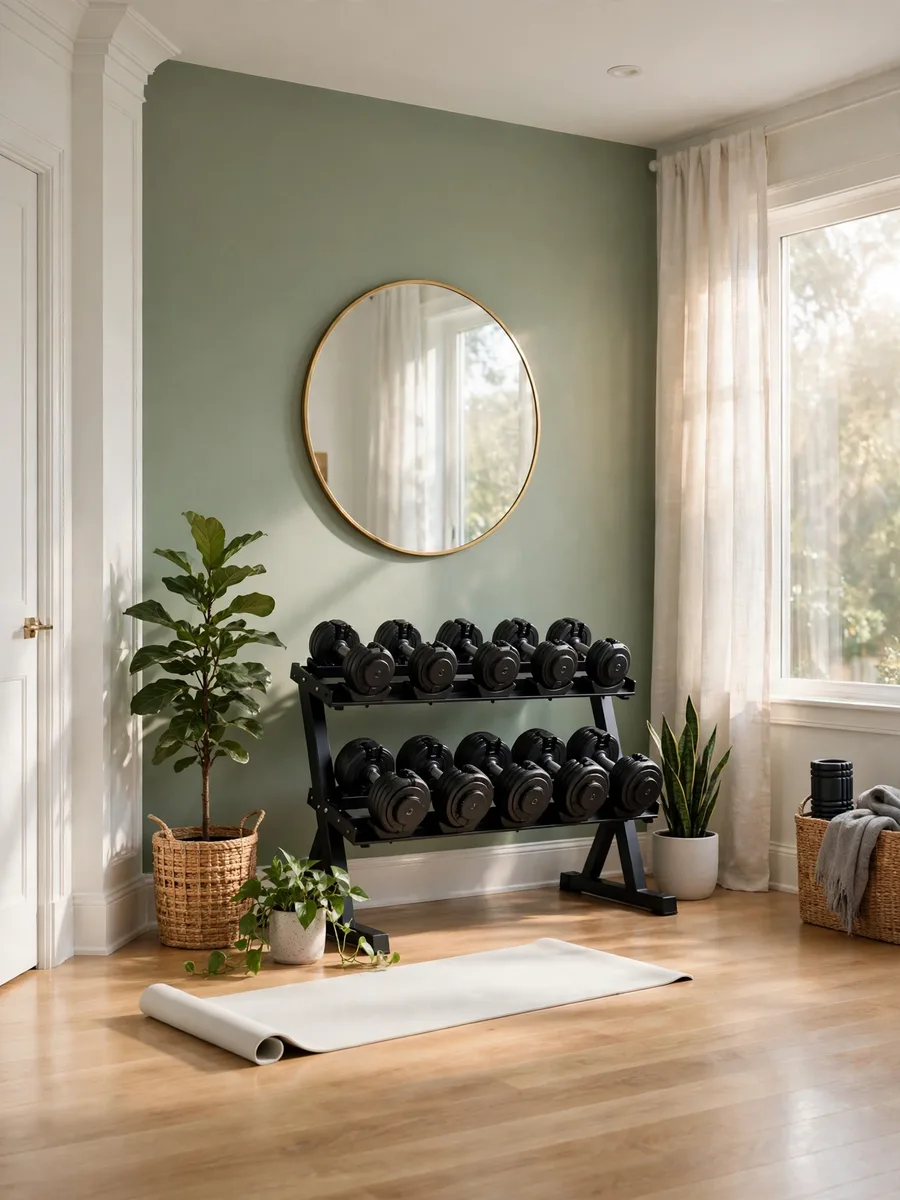
A spare bedroom works because it has a door you can close. For example, a homeowner who cleared a guest room kept only a bench, a rack, and a mat.
Quick tips:
- Use the closet for bands and towels.
- Keep the mirror where you face during lifts.
How Can I Build a Garage Gym for Heavy Lifting?
Cover the concrete with thick rubber mats, put a squat rack against the back or side wall, and plan for heat, cold, and airflow, because a garage gym is still a garage.
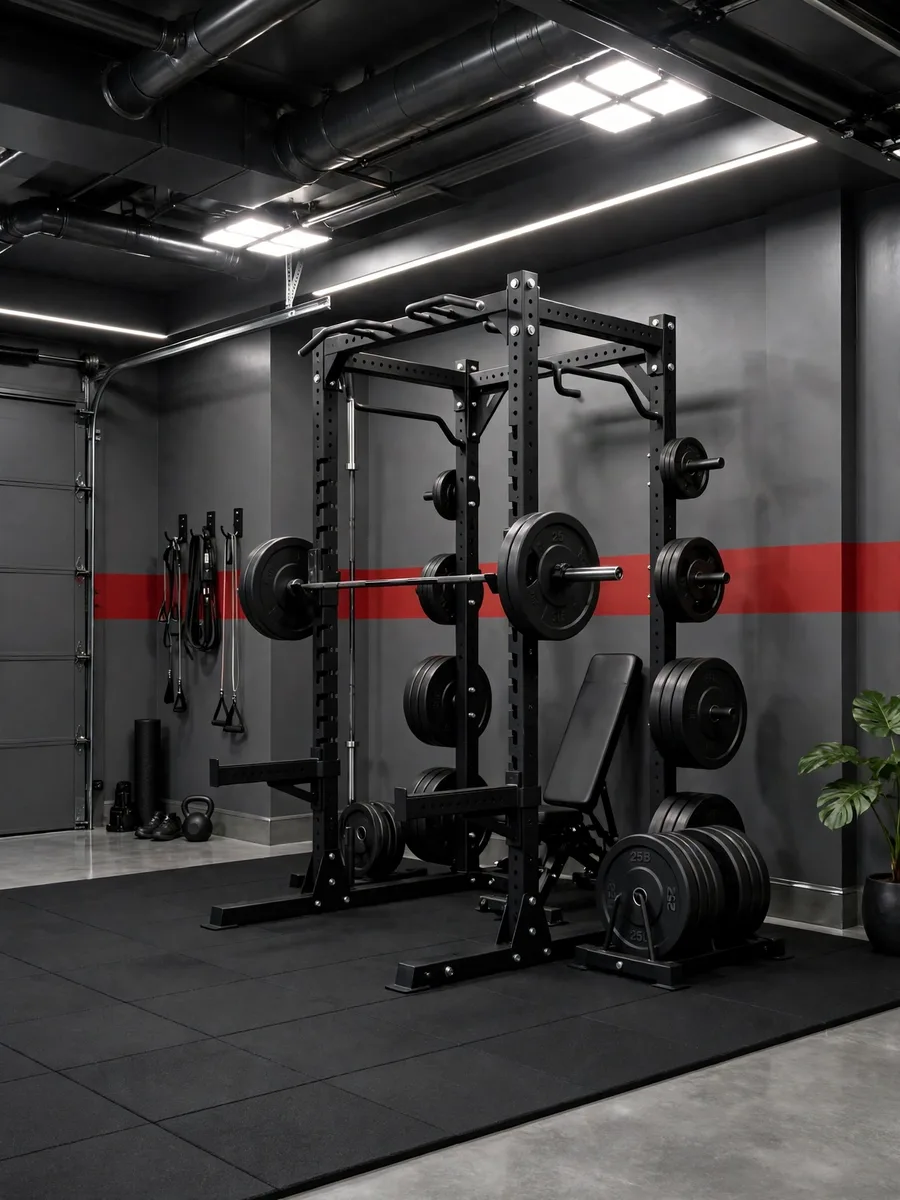
Garages suit heavy lifting because the floor is solid and the ceiling is usually high. For example, a lifter in a one-car garage keeps the rack, bench, and plates along one wall.
Quick tips:
- Tape a ten-foot line before buying a barbell.
- Store plates on wall pegs, never in the walkway.
What Is the Best Small Home Gym Setup for an Apartment?
Choose equipment that folds, stacks, or hangs: adjustable dumbbells, a folding bench, resistance bands, and a mat, all stored in one corner so the room returns to normal after a workout.
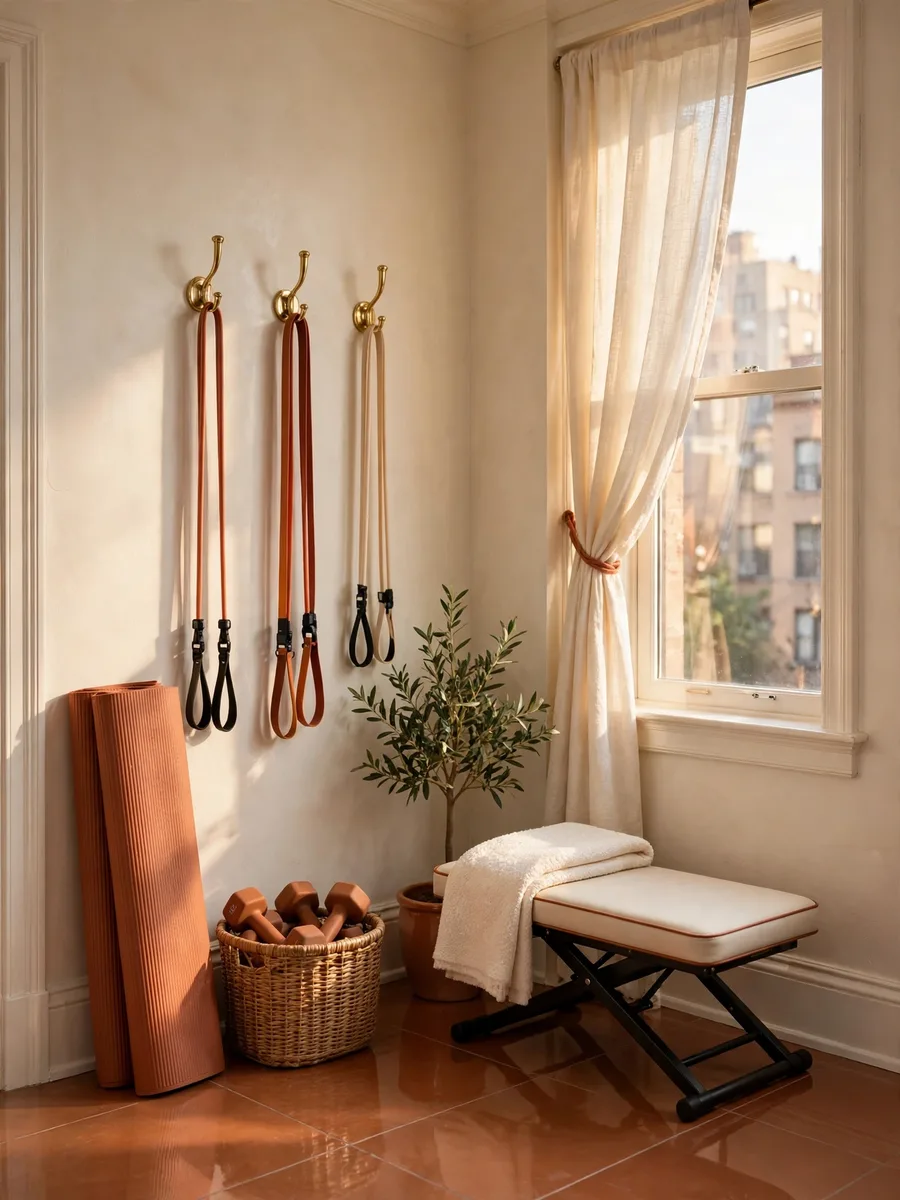
Small spaces reward discipline, because every piece of equipment has to earn its floor space. For example, a renter in a one-bedroom flat keeps dumbbells in a basket, bands on hooks, and a mat rolled in the corner.
Quick tips:
- Pick adjustable dumbbells, not a full rack of pairs.
- Use a folding bench that stores upright.
How Do I Convert a Basement Into a Workout Space?
Fix damp and lighting first, then lay rubber flooring, add a mirror panel, and zone the room into strength, cardio, and stretching areas so one open basement serves every kind of session.
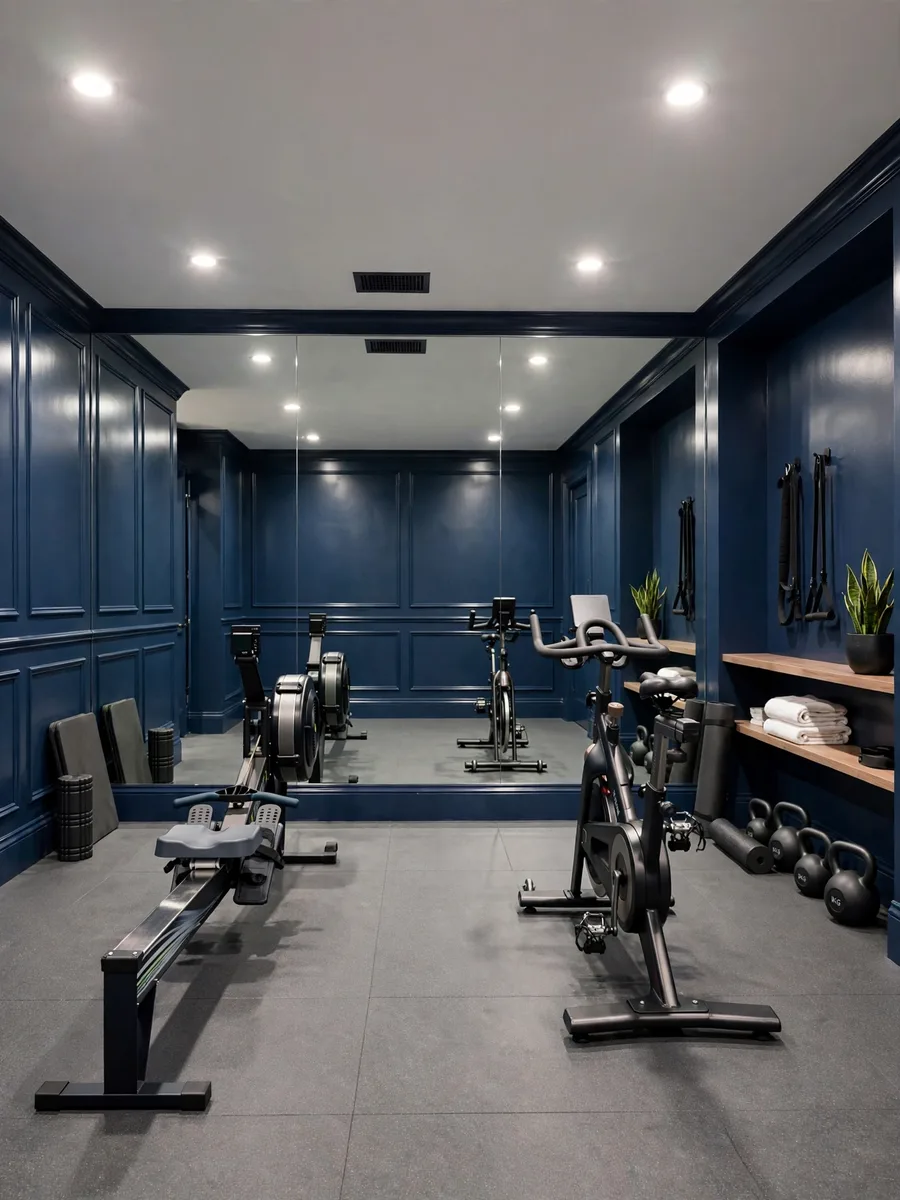
Basements offer space and privacy, but they need bright light and dry air to feel welcoming. For example, a family that converted half a basement kept the rower and bike near the stairs for airflow.
Quick tips:
- Check for damp before laying any flooring.
- Add a fan even if the room feels cool.
Where Should I Put Cardio Equipment in a Home Gym?
Place treadmills, bikes, and rowers near a power outlet and fresh air, with the clearance the manufacturer asks for, and keep them out of the strength zone.
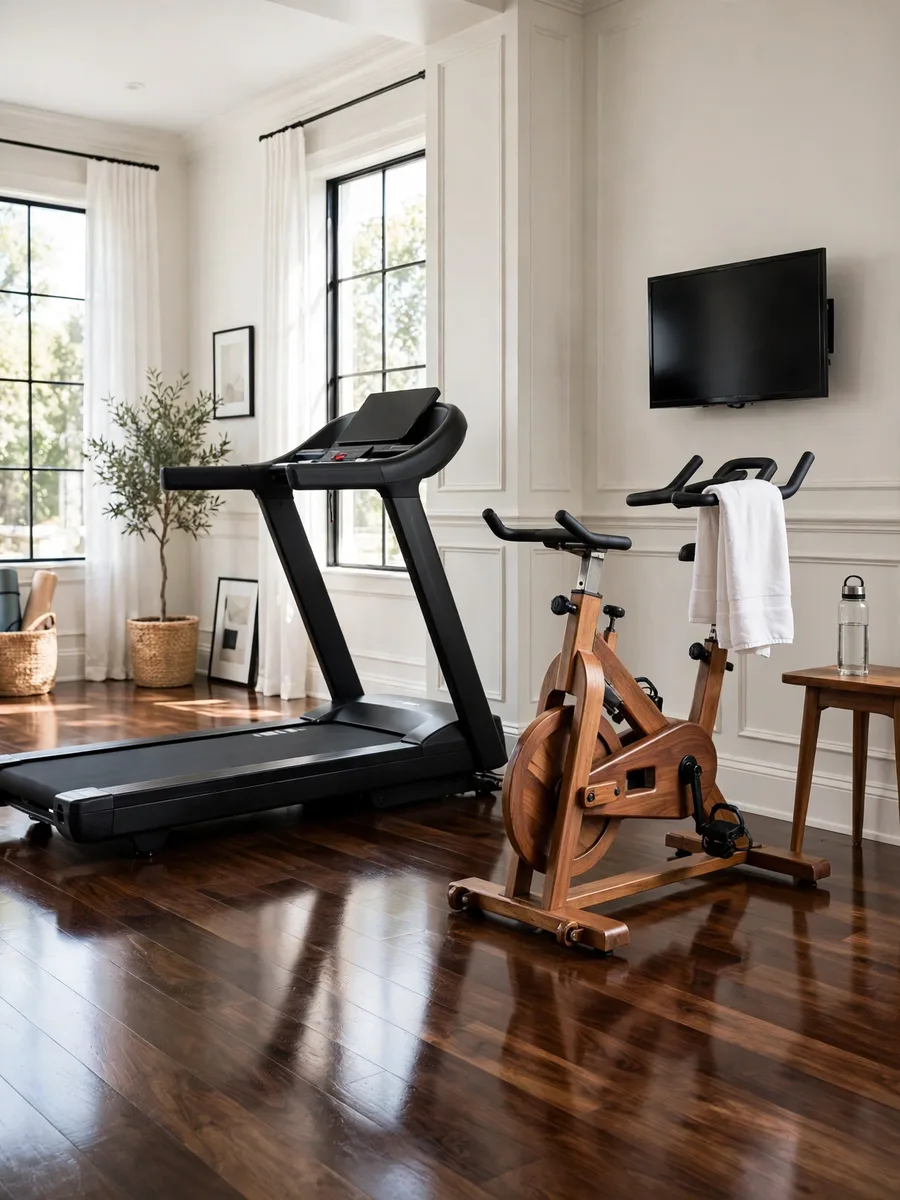
Cardio machines are the noisiest pieces of equipment in a home gym, so they deserve their own corner. For example, a runner who placed a treadmill facing a window found long sessions far easier than staring at a blank wall.
Quick tips:
- Leave the clearance the manual asks for.
- Use a mat under the machine to cut noise.
How Do I Set Up a Strength Zone With a Power Rack?
Put the rack against a solid wall with three feet of clear space on each side for loading plates, a bench inside or beside it, and thick rubber flooring underneath.
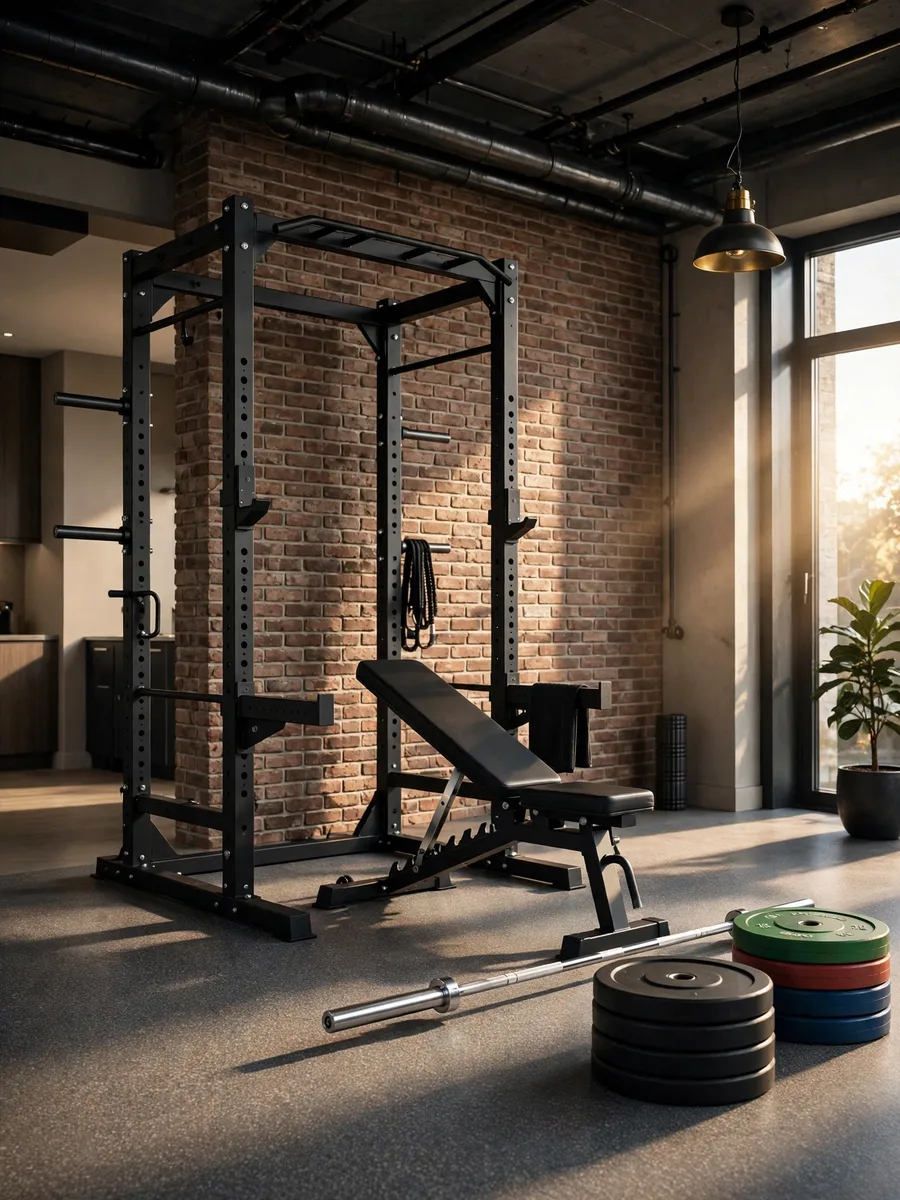
A power rack is the centrepiece of a serious strength setup, and it needs room to work safely. For example, a lifter who taped the rack footprint on the floor first realised the bench needed to shift six inches.
Quick tips:
- Measure ceiling height at the lowest beam.
- Store the bar on the rack, never in a corner.
How Can I Create a Yoga and Pilates Corner at Home?
Choose a quiet corner with soft light, a thick mat, and a small shelf for blocks, straps, and a foam roller, and keep the floor clear.
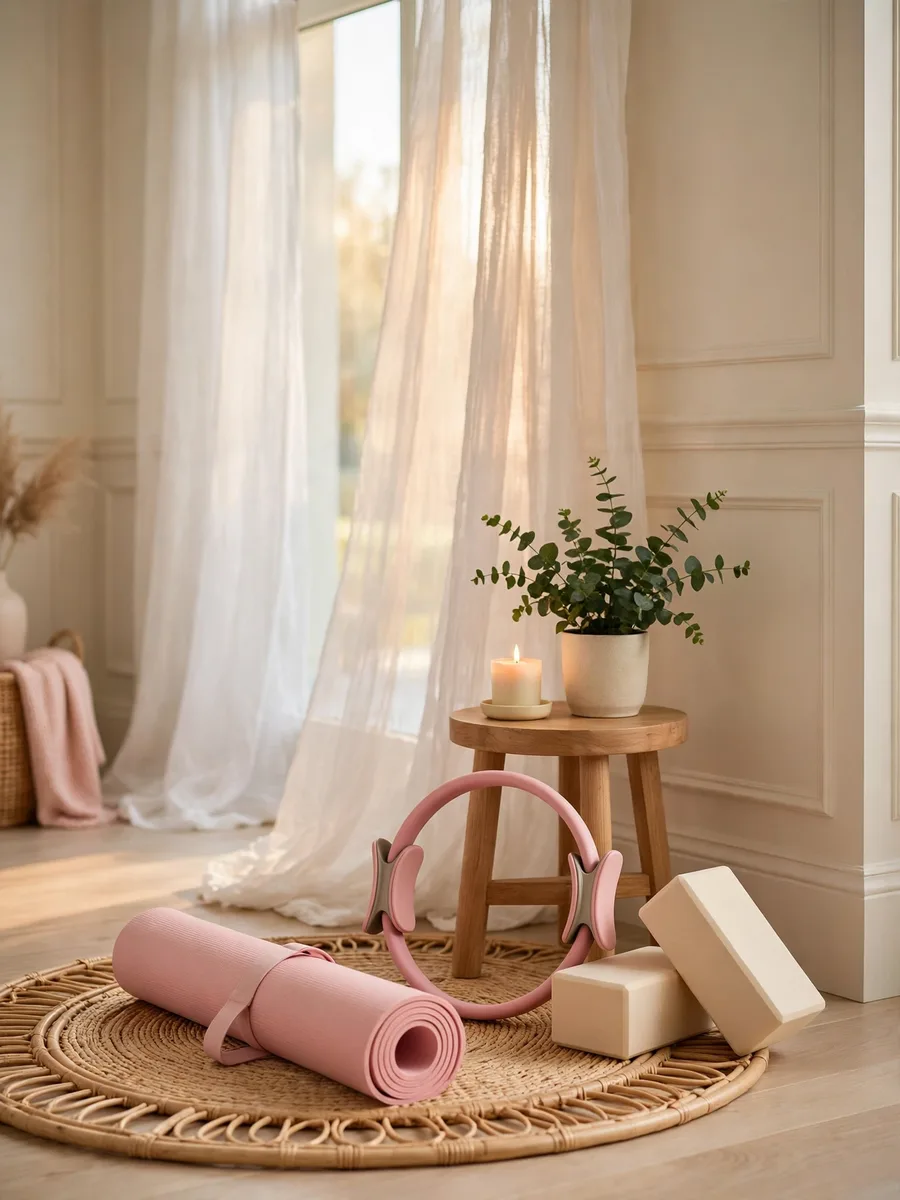
A yoga corner needs very little equipment, but it needs the right feeling. For example, a Pilates fan who set up a corner by a bedroom window now starts every morning there.
Quick tips:
- Keep the mat unrolled and ready to use.
- Store blocks and straps in one basket.
What Flooring Works Best for a Home Gym?
Thick rubber suits heavy weights, foam tiles suit stretching and bodyweight work, and vinyl plank suits a room that must still look like a living space.
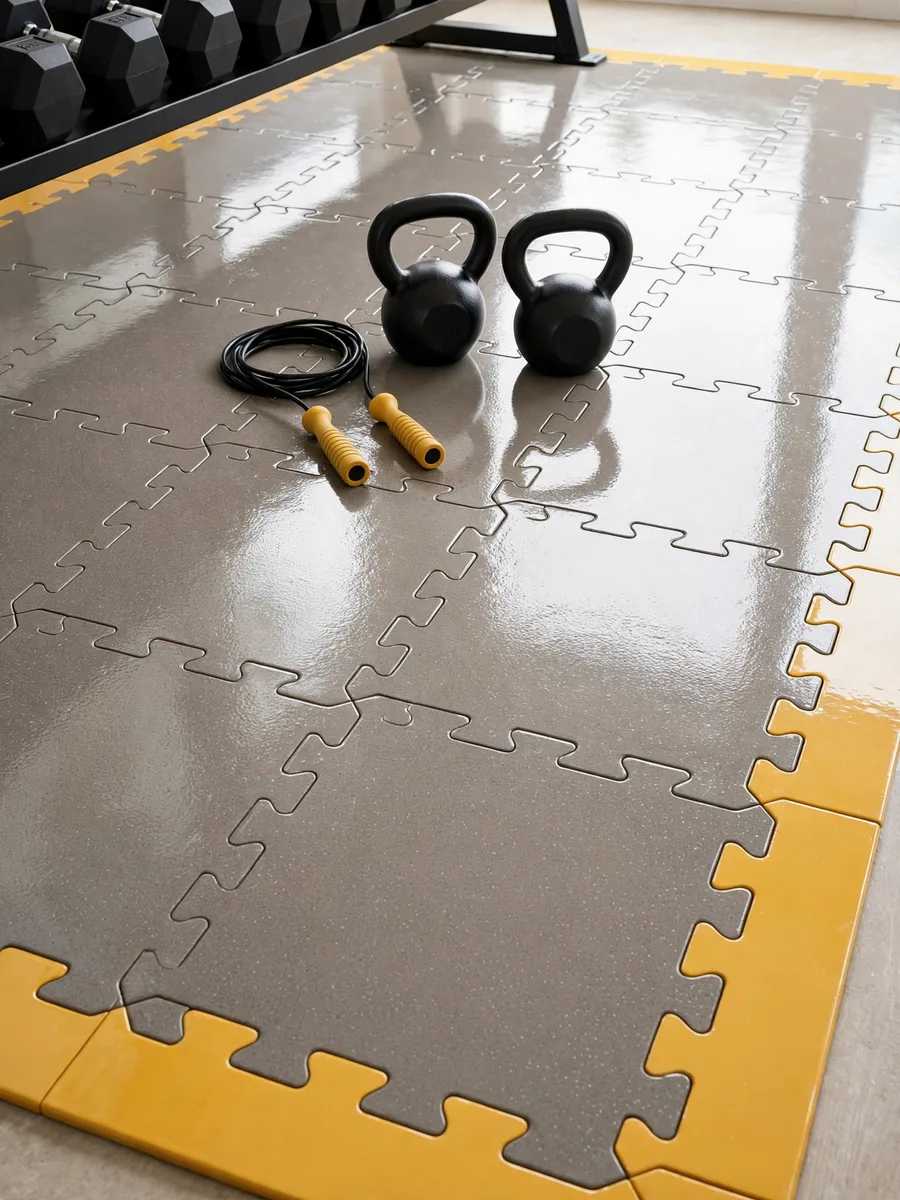
Flooring is the one choice that affects every workout, because it protects the floor and cushions joints. For example, a home gym owner who laid rubber tiles under the rack and foam tiles in the stretching corner got the best of both surfaces.
Quick tips:
- Use thicker rubber under racks and heavy drops.
- Air new rubber mats outside for a day first.
| Flooring | Best for | Cost level | Notes |
|---|---|---|---|
| Rubber tiles | Strength training | Medium | Durable, grippy, easy to replace one tile |
| Rubber rolls | Large rooms, garage gyms | Medium | Few seams, heavy to move, great coverage |
| Foam tiles | Yoga, stretching, bodyweight | Low | Soft and light, not suited to heavy weights |
| Vinyl plank | Multi-use rooms | Medium to high | Looks like a living space, needs a mat under weights |
| Carpet tiles | Low-impact, budget rooms | Low | Warm underfoot, harder to clean after sweaty sessions |
Do I Need a Mirror Wall in My Home Gym?
A mirror wall helps you check form during squats, presses, and stretches, and it reflects light so a small or dark room feels larger.
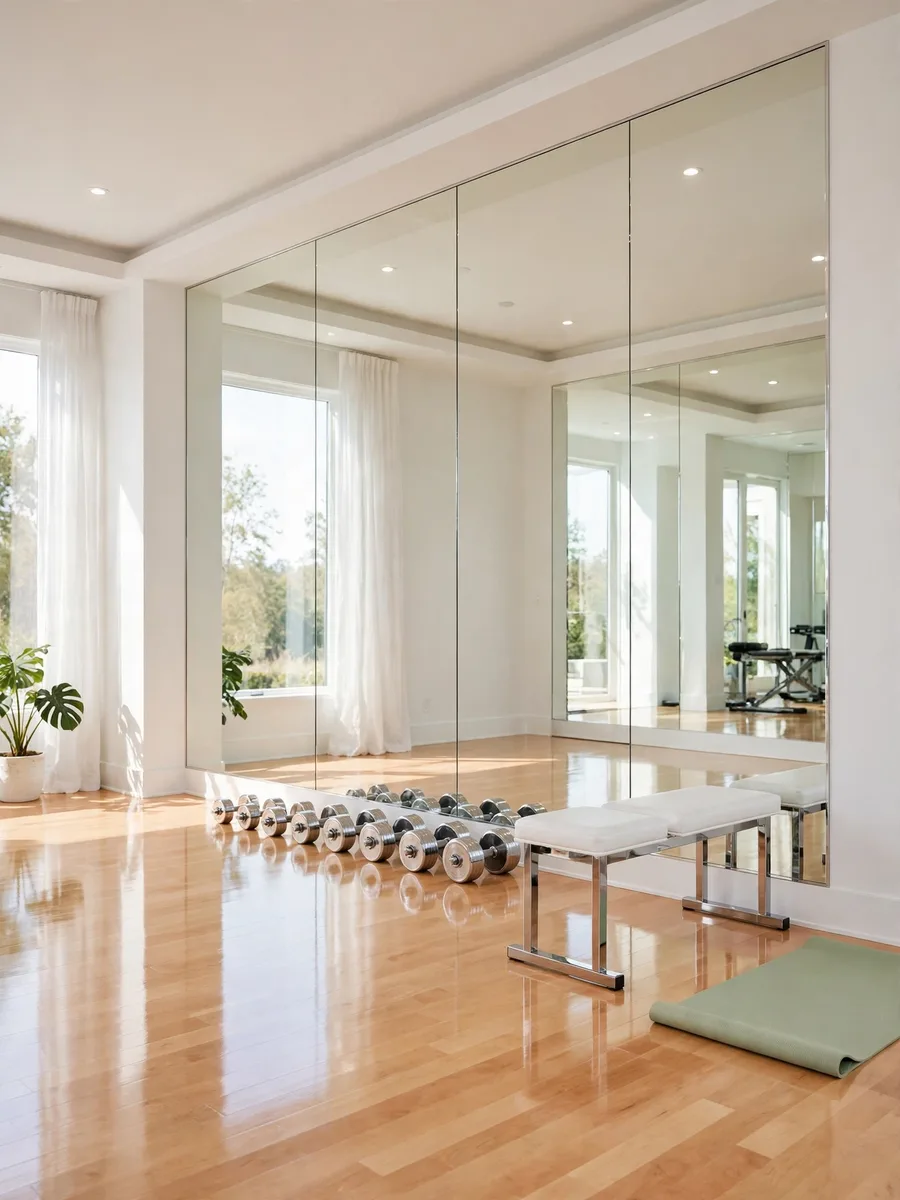
Mirrors are not about vanity; they are a training tool and a lighting trick in one. For example, a lifter who added two large panels to a basement wall found the room felt twice as bright.
Quick tips:
- Mount mirrors with proper fixings, never adhesive alone.
- Cover the wall you face most during training.
How Does a Wall-Mounted Folding Rack Save Space?
A folding rack bolts to the wall and swings out for training, then folds flat when the session ends, which frees the whole floor for other uses and suits garages and shared rooms.
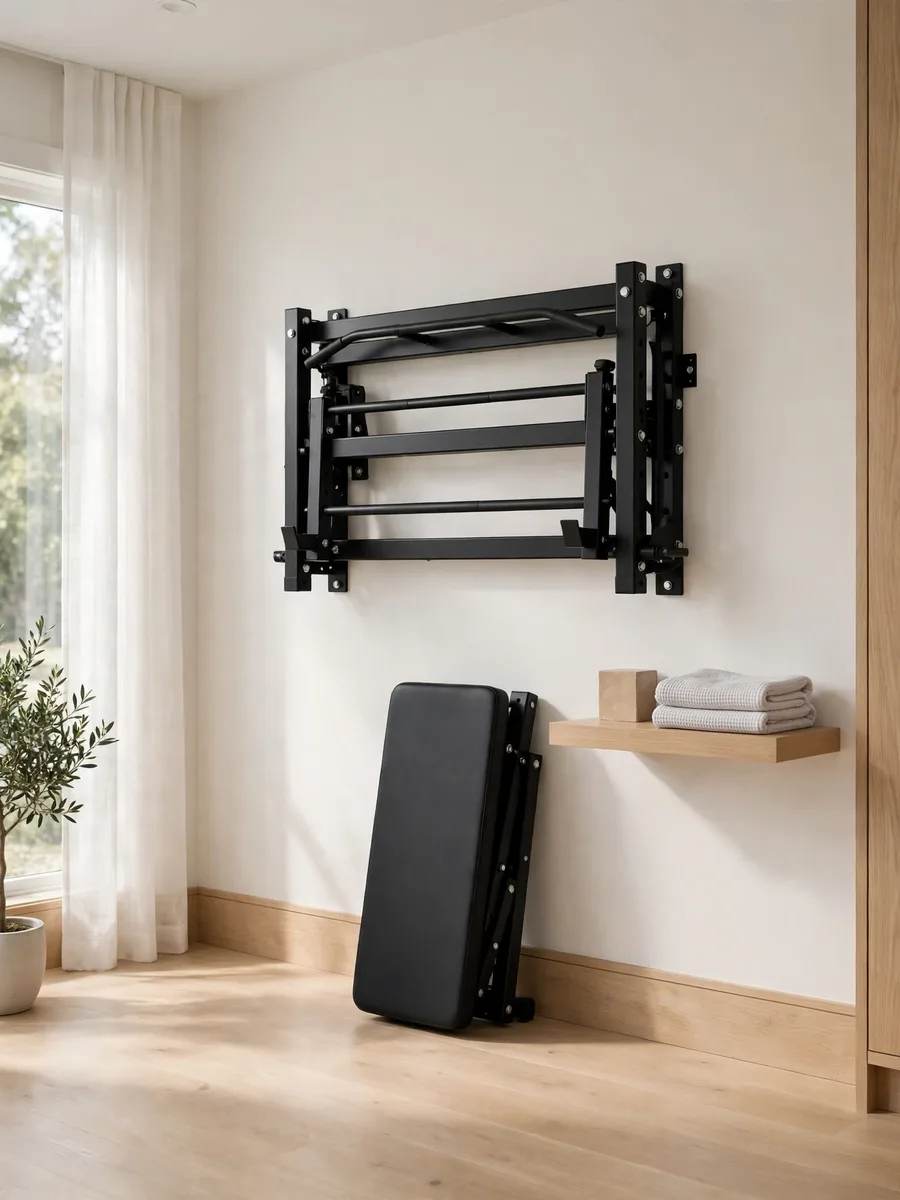
Folding racks are the best compromise when a room must serve two purposes. For example, a couple who share a garage with a car fold the rack flat after every session.
Quick tips:
- Fix the rack into studs or masonry, never plasterboard.
- Keep the bench on wheels so it moves in seconds.
Are Adjustable Dumbbells Worth It for a Home Gym?
Adjustable dumbbells replace a whole rack of fixed pairs with one set, which saves floor space and money, and they suit most home workouts from light toning to heavy pressing.
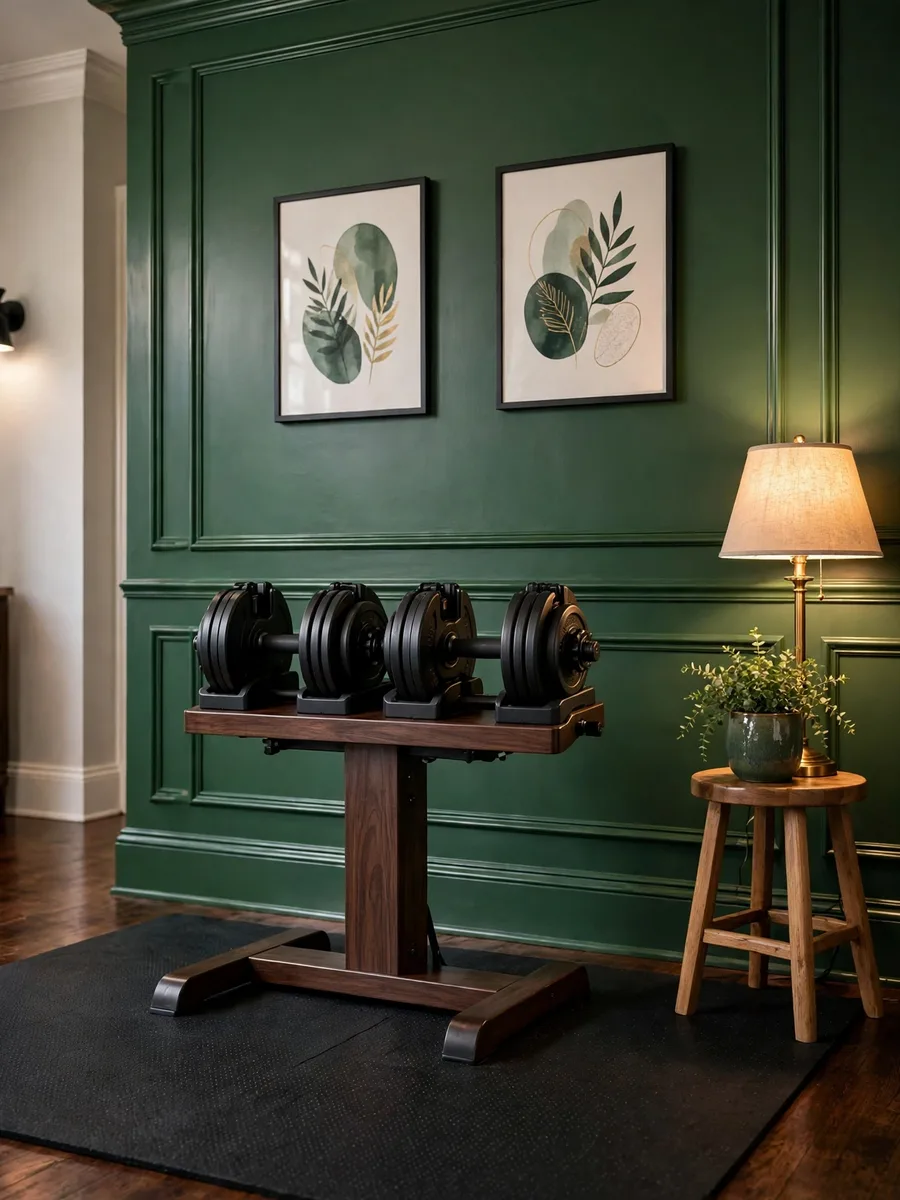
A full set of fixed dumbbells takes up a long rack and costs far more than most people expect. For example, a home gym owner who swapped twelve pairs for one adjustable set freed an entire wall for a stretching mat.
Quick tips:
- Choose a range that covers your heaviest lift.
- Store them on a stand at waist height.
Can a Home Office and a Gym Share One Room?
Divide the room into two clear zones with a rug, a shelf, or a screen, keep cardio and office gear apart, and store gym equipment in closed storage so the room still works for focused work.
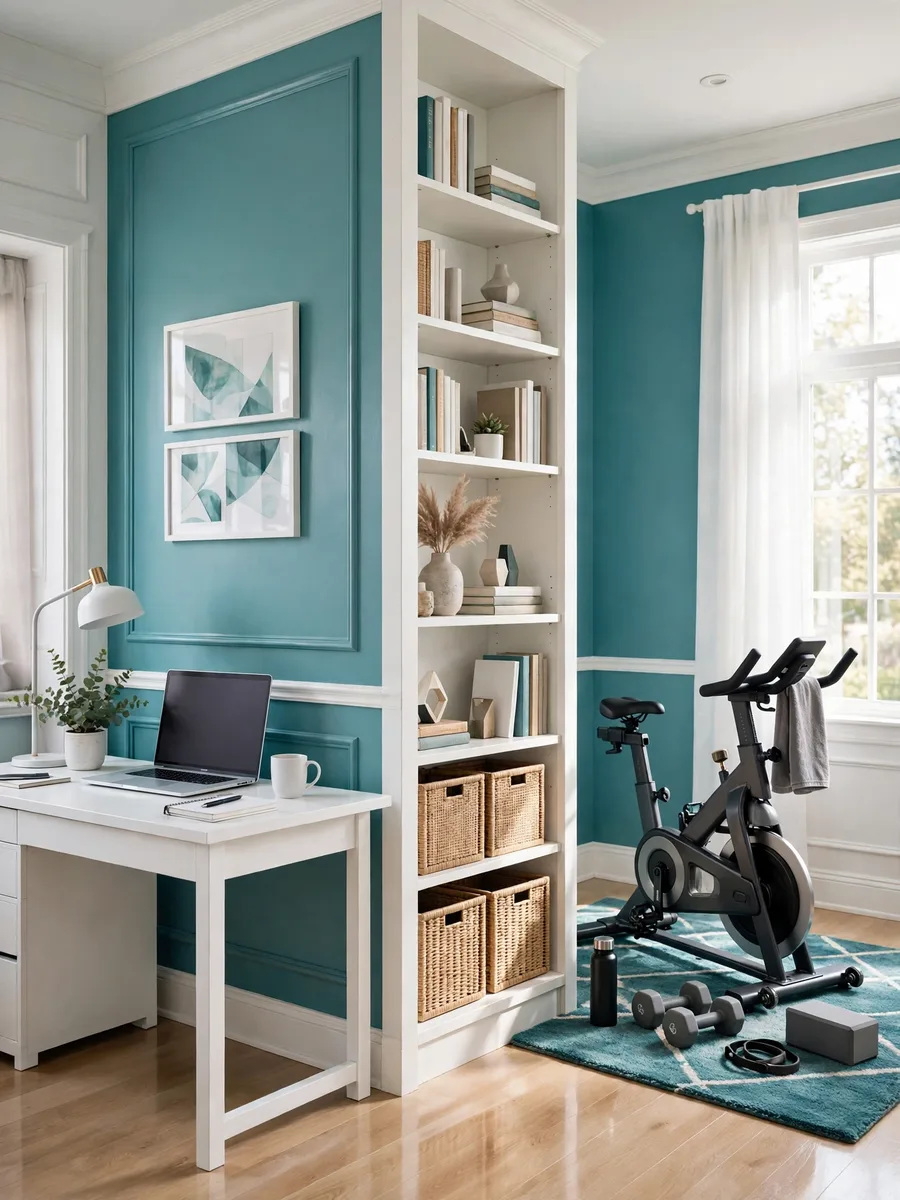
Working from home made the office-gym combination common, and it works when the two zones stay visually separate. For example, a remote worker who put a bookshelf between the desk and the bike found it far easier to switch off work.
Quick tips:
- Use a rug or screen to mark the gym zone.
- Keep gym gear out of sight during work hours.
How Do I Build a Home Gym on a Tight Budget?
Start with a mat, resistance bands, a jump rope, and a secondhand bench, then add adjustable dumbbells and a pull-up bar.
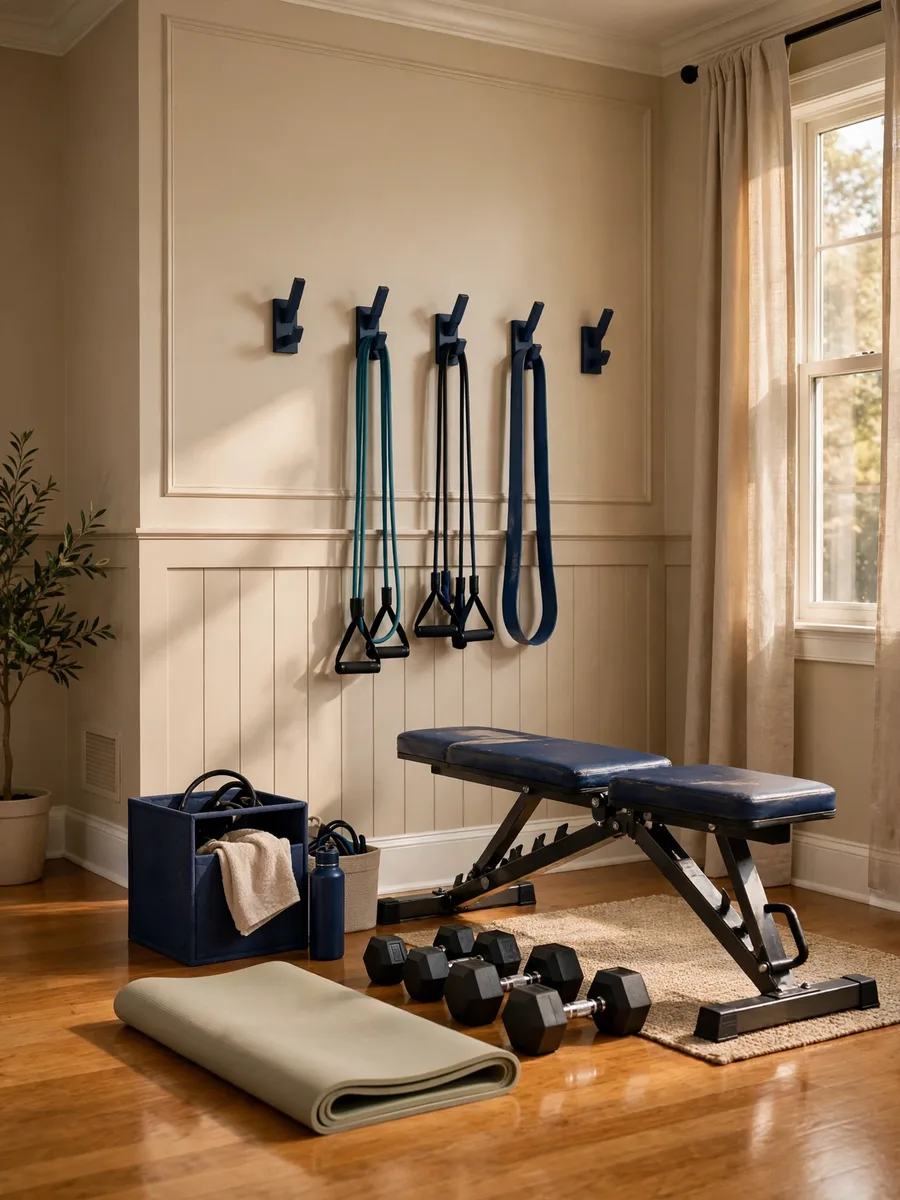
A useful home gym does not need a big spend to begin. For example, a beginner who started with bands, a mat, and a used bench trained for three months before buying dumbbells.
Quick tips:
- Buy used benches and plates, new bands and mats.
- Add one piece of equipment at a time.
What Makes a Luxury Home Gym Feel Like a Spa?
Warm wood, soft lighting, a sauna or steam corner, fresh towels, and a water station turn a training room into a retreat.
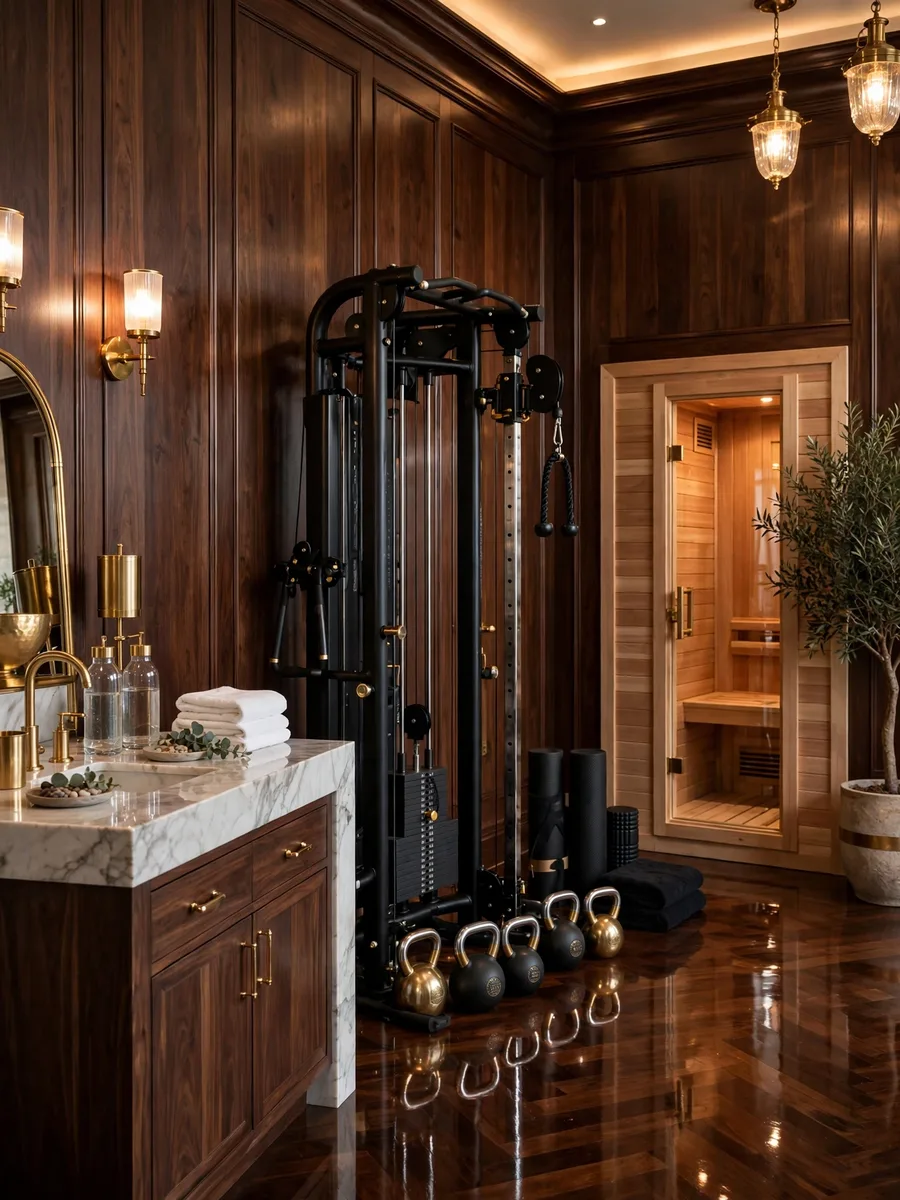
A luxury gym feels different the moment you walk in, and the difference comes from materials and care rather than size. For example, a homeowner who added a small sauna beside the cable machine now ends every session with ten quiet minutes in the heat.
Quick tips:
- Use warm wood and brass for a spa feeling.
- Keep towels rolled and visible, like a hotel.
Can I Put a Gym in the Attic?
An attic gym works when the floor is strong enough, the ceiling clears your tallest lift, and there is a window or fan for air.
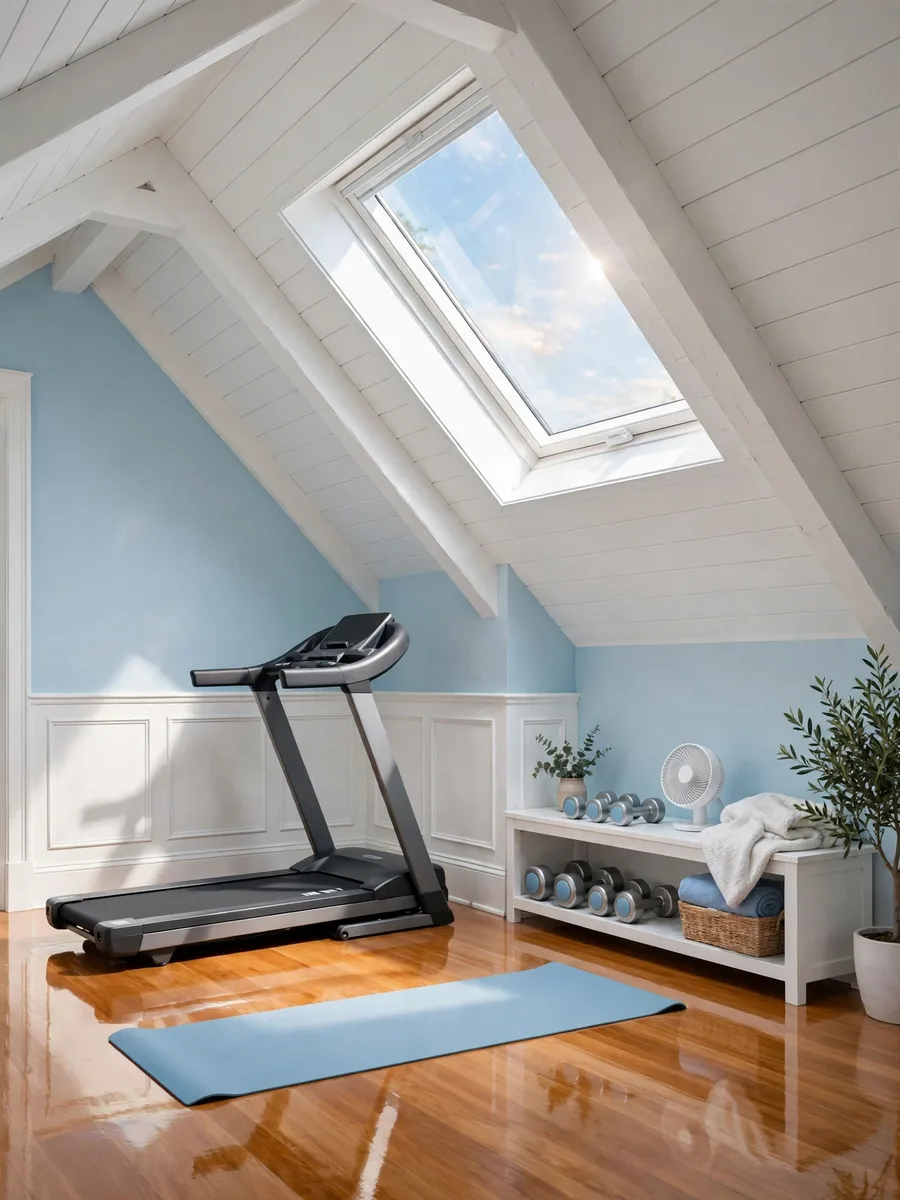
Attics make charming gyms, with skylights and sloped ceilings that feel cosy rather than cramped. For example, a homeowner who checked the floor joists first placed a compact treadmill and a mat in the attic.
Quick tips:
- Check floor strength before moving heavy gear up.
- Keep heavy lifting on the ground floor.
Is a Backyard Shed a Good Place for a Gym?
A shed gym works when it is insulated, dry, and wired for light and power, because a garden building gives total privacy and keeps noise out of the house.
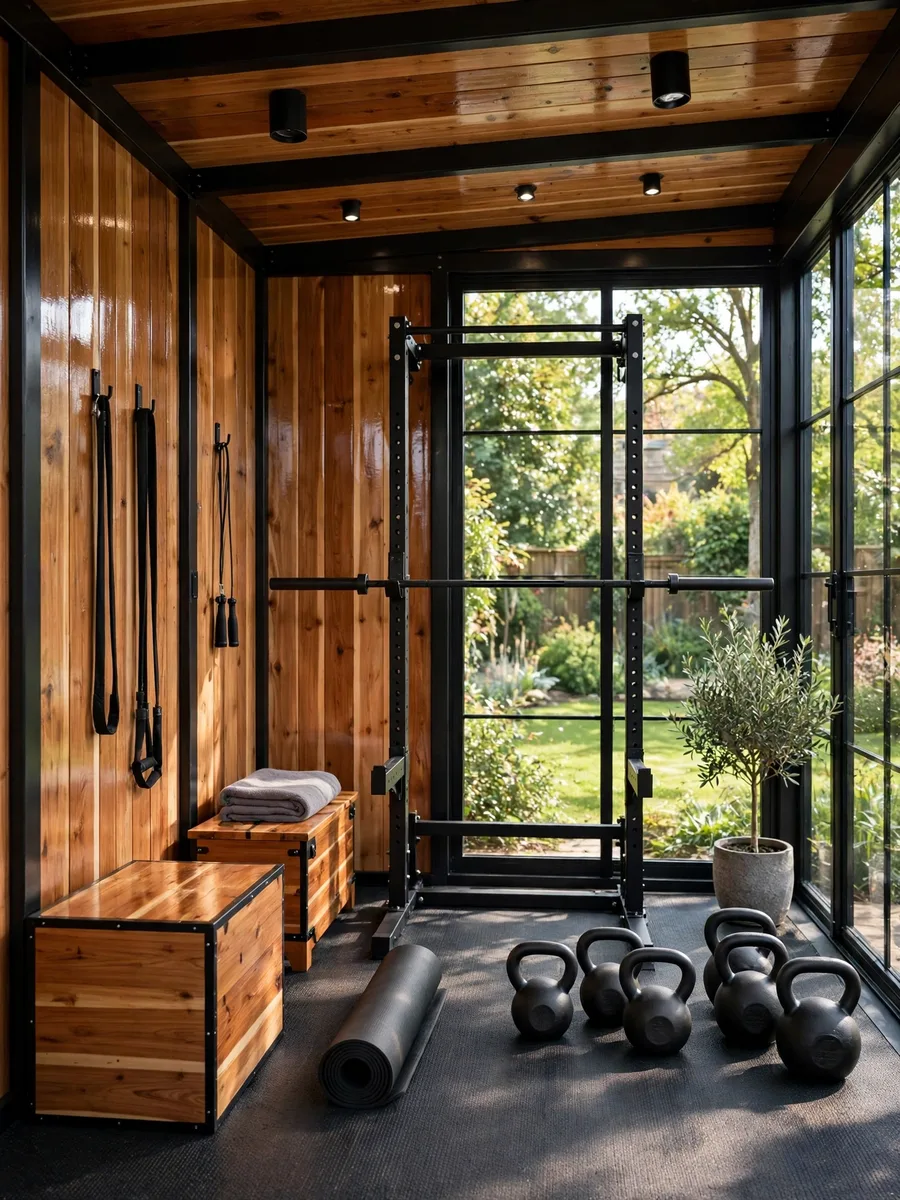
A shed or garden room is one of the most appealing gym locations, since it separates training from the house completely. For example, a family that insulated their garden shed and added a heater now trains there all year.
Quick tips:
- Insulate walls and roof before buying equipment.
- Add proper lighting and at least one outlet.
How Do I Set Up a Kettlebell Nook in a Small Space?
A kettlebell nook needs only a four-by-four-foot mat, a small rack for three or four bells, and a clear swing path, which makes it one of the most compact strength setups you can build.
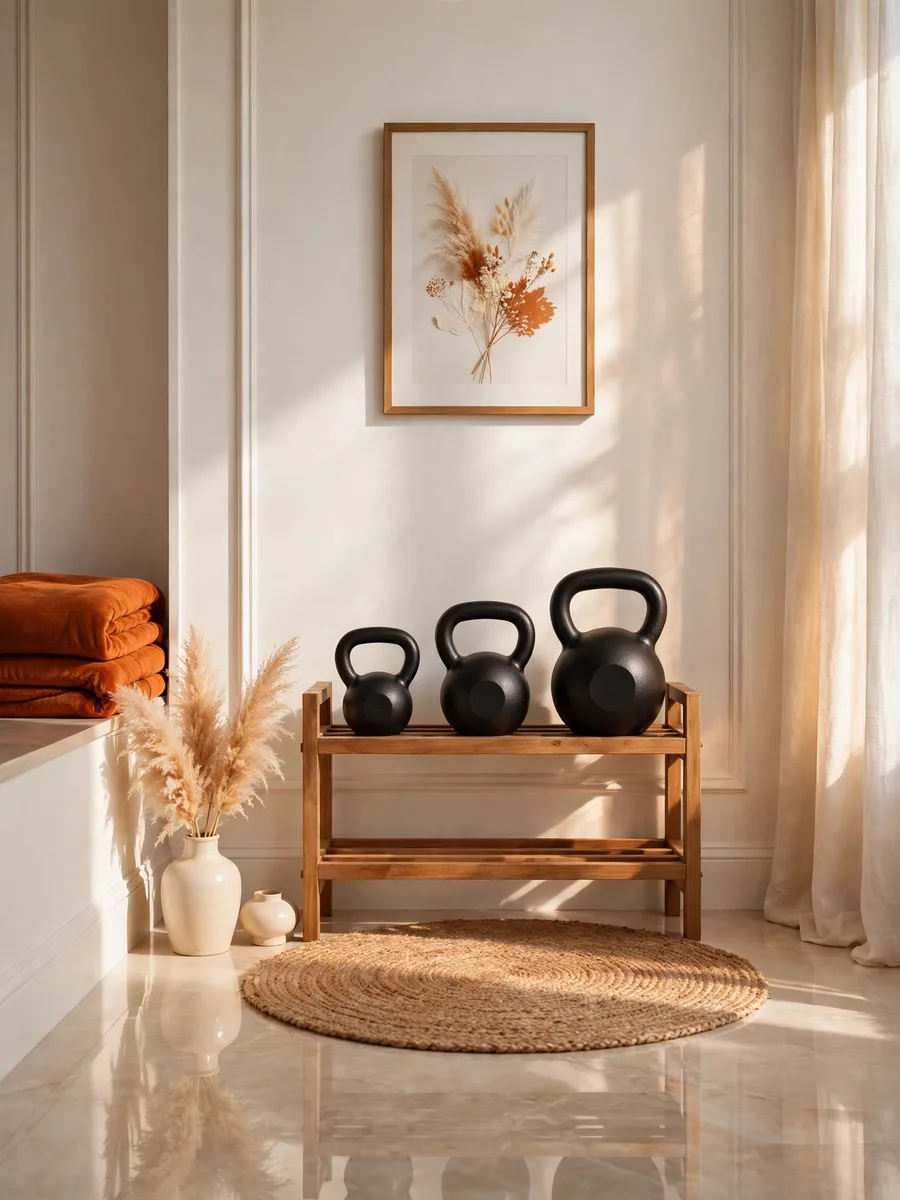
Kettlebells train strength, cardio, and mobility in one tool, and they store neatly on a low wooden rack. For example, a flat dweller who set up a kettlebell nook beside a window trains in twenty minutes most mornings.
Quick tips:
- Start with three bells: light, medium, heavy.
- Keep the swing path completely clear.
Where Do I Stretch and Cool Down in a Home Gym?
Set aside a quiet corner with a thick mat, a foam roller, a strap, and a low shelf for towels, away from the rack and the cardio machines.
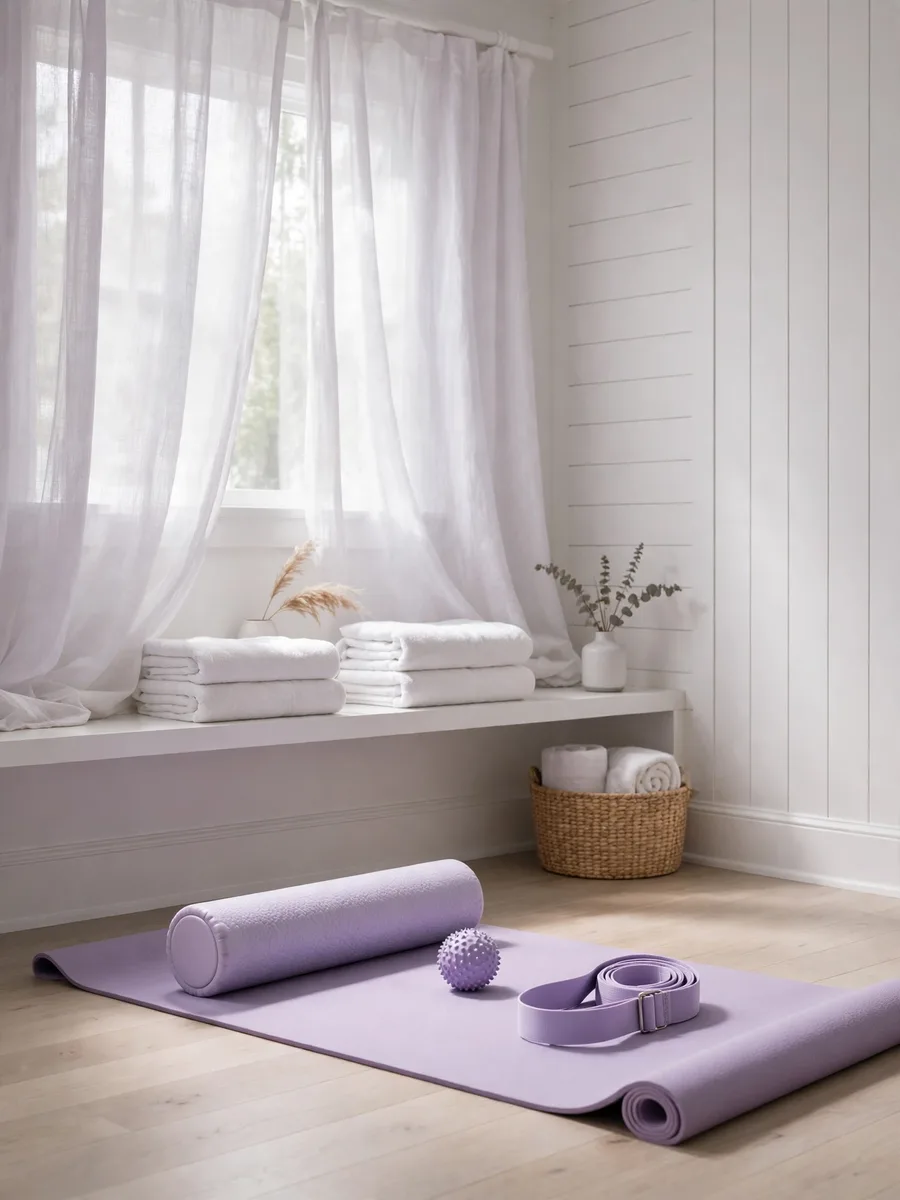
Stretching gets skipped when it has no home, so give it a corner that feels inviting. A lavender mat, a foam roller, and a strap on a low white shelf are all it takes, and a low-pile rug under the mat softens the corner further, with the layering tricks in our bedroom rug ideas working just as well here as they do beside a bed. For example, a runner who built a stretching corner with a roller and a strap now cools down after every run.
Quick tips:
- Keep the roller and strap visible, not boxed away.
- Use a thicker mat for floor stretches.
How Do I Keep Gym Equipment Organized?
Give every item a fixed home on the wall or a shelf, use a pegboard for bands and ropes, and return equipment to its spot after each session.
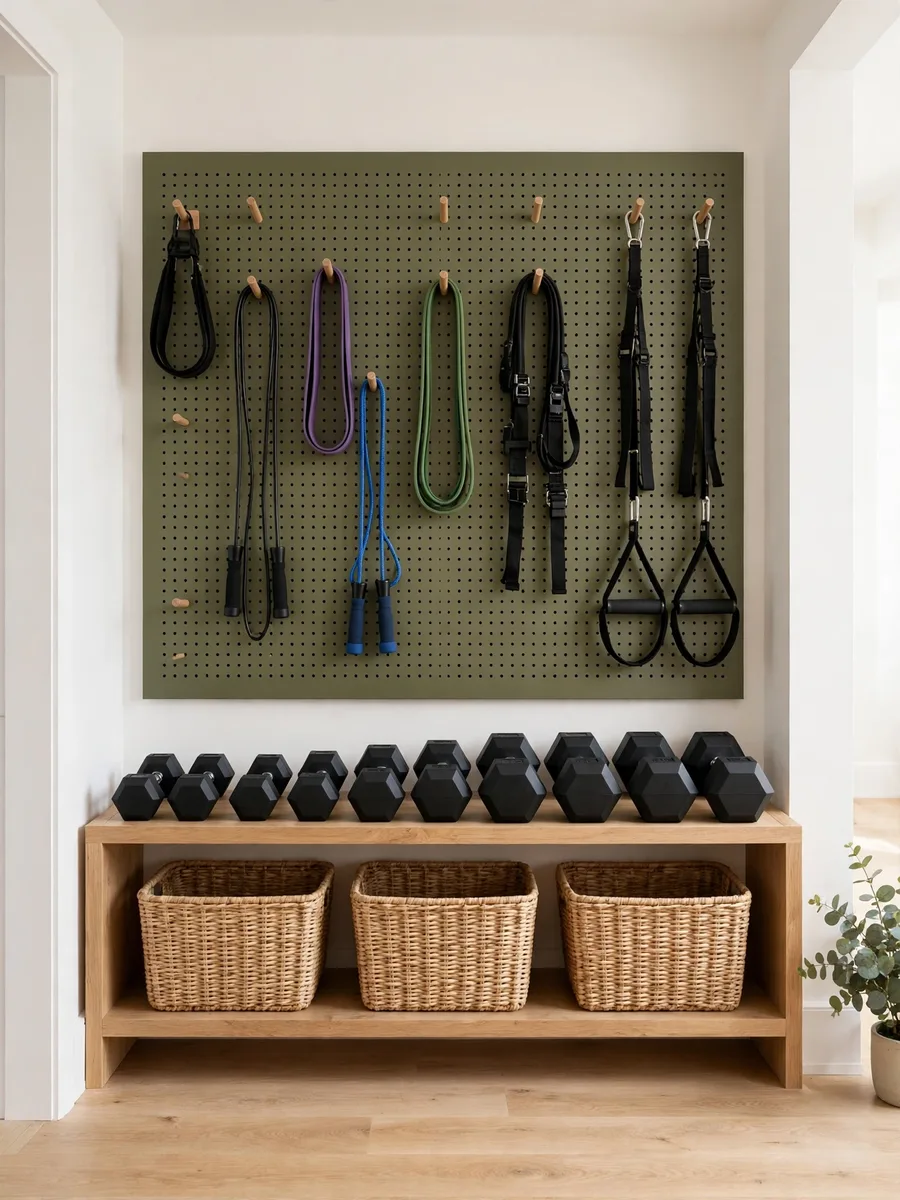
Clutter is the quiet enemy of a home gym, since tripping over plates and hunting for bands kills motivation fast. For example, a gym owner who labelled every basket and peg found that tidying took two minutes after a session.
Quick tips:
- Label baskets so everyone puts things back.
- Hang light items, store heavy items low.
What Lighting Works Best in a Home Gym?
Bright, even light suits training, while warm dimmable light suits yoga and cool-downs, so combine ceiling LEDs with a warm lamp or strip light and use natural daylight wherever the room allows it.
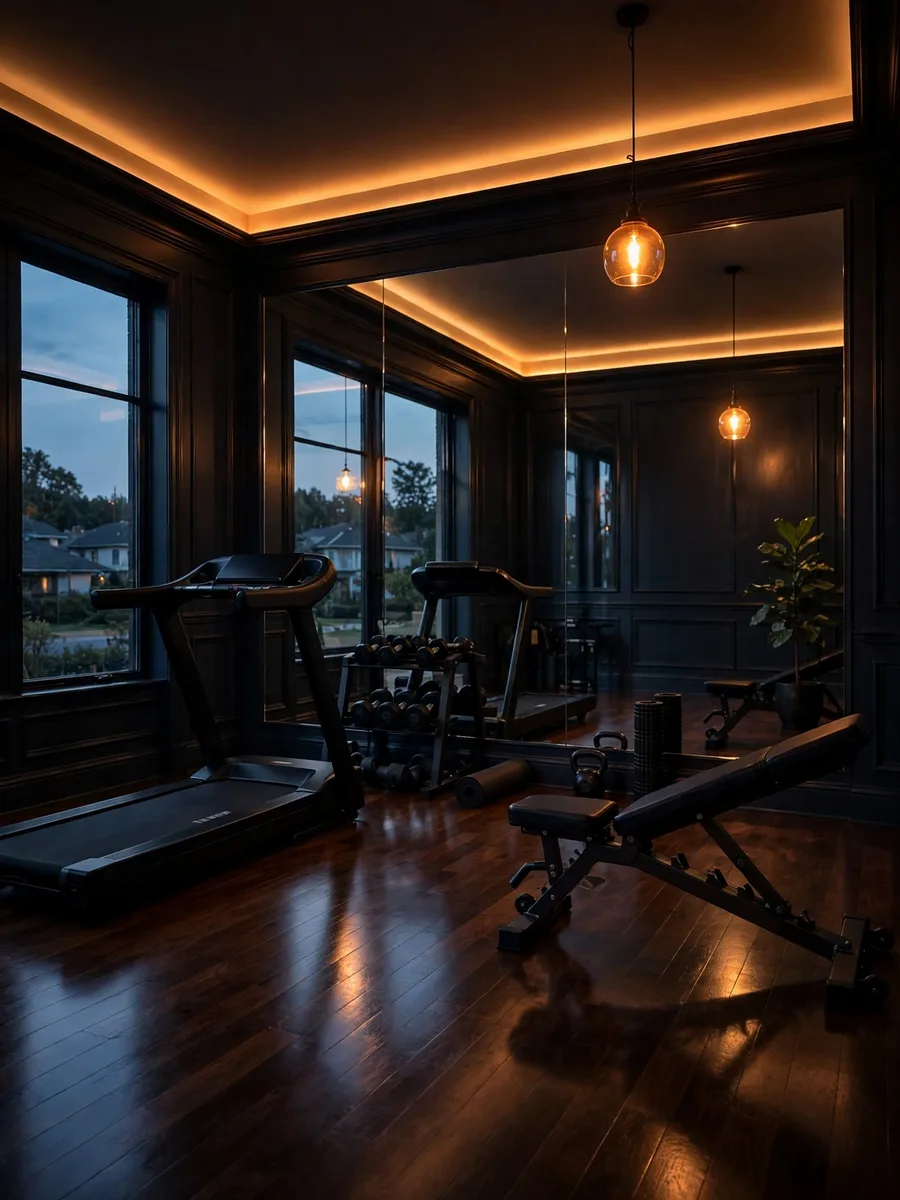
Lighting changes how a gym feels more than almost any other single choice. For example, a garage gym owner who swapped one bulb for two bright LED panels and a warm strip light found evening sessions far more inviting.
Quick tips:
- Use bright LEDs for lifting and cardio.
- Add a dimmer or warm lamp for yoga.
How Do I Keep a Home Gym Cool and Fresh?
Open a window or door, run a ceiling or standing fan, and add an air purifier or dehumidifier, because moving air matters more than cold air.
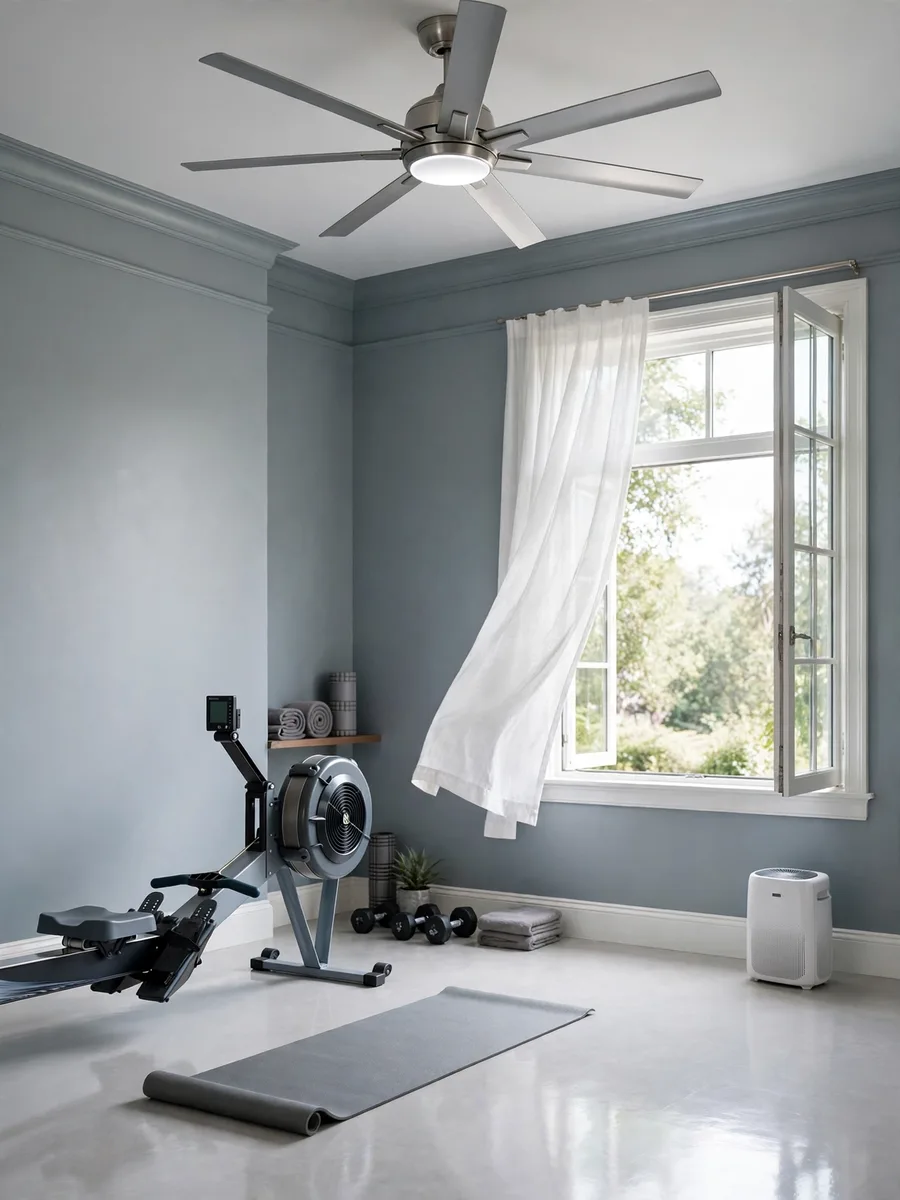
Garages and basements trap heat and sweat, so ventilation deserves the same attention as flooring. For example, a basement gym owner who added a fan and a dehumidifier found the room stopped smelling of rubber within a week.
Quick tips:
- Run the fan before the session starts.
- Keep a window cracked open when the weather allows.
Should I Add a TV to My Home Gym?
A wall-mounted TV suits cardio and guided classes, as long as it sits at eye level from the machine and does not distract you during heavy lifts.
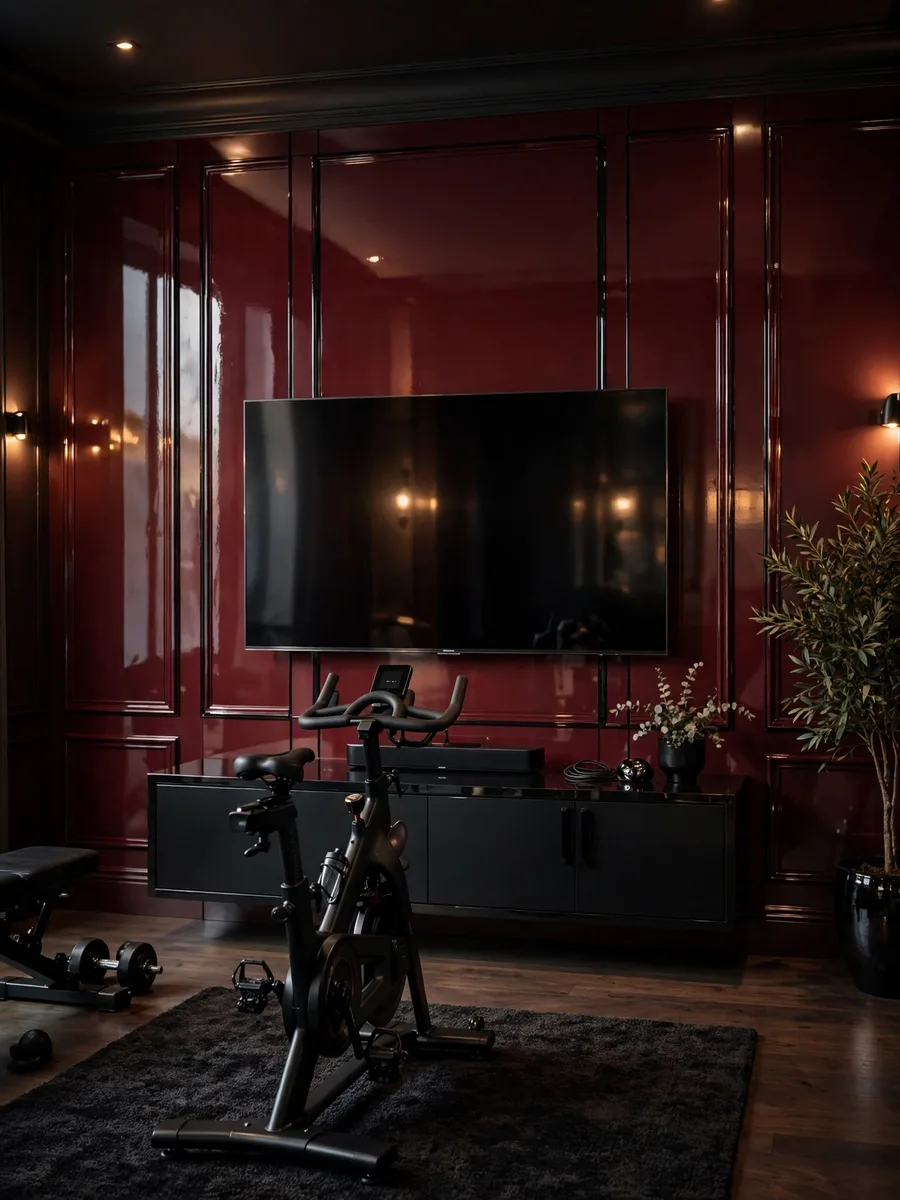
A TV turns long cardio sessions into something to look forward to. For example, a cyclist with a TV in front of a stationary bike now rides three times a week.
Quick tips:
- Mount the TV at eye level from the machine.
- Use it for classes and cardio, not heavy lifts.
What Should a Recovery Corner Include?
A recovery corner needs a foam roller, a massage ball or gun, a bench or mat for stretching, and cold water or a plunge tub if space allows.
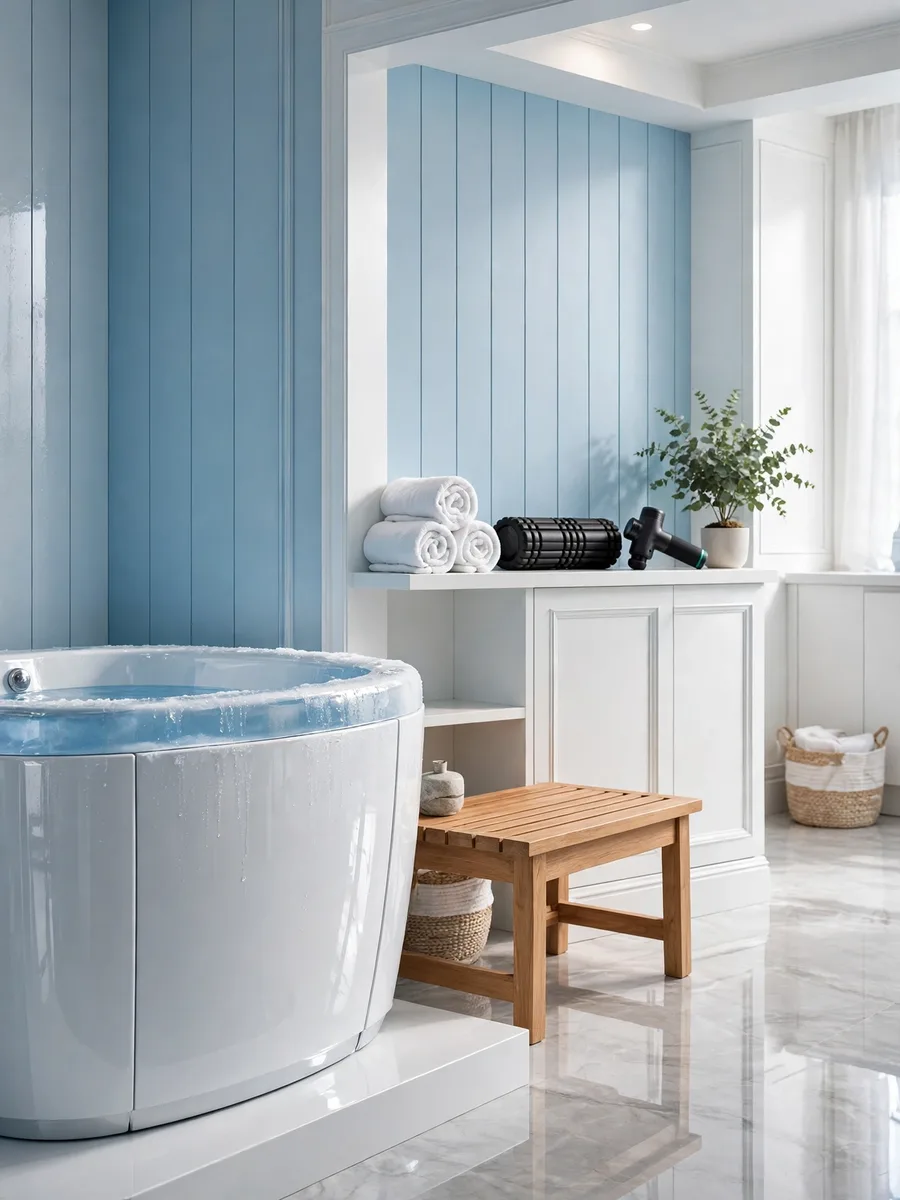
Recovery corners are becoming common in home gyms, and they work best when they feel calm and spa-like. For example, a lifter who added a small recovery corner with a roller and a cold shower routine found sore mornings far less common.
Quick tips:
- Keep recovery tools together in one spot.
- Use the corner for five minutes after every session.
How Do I Make a Home Gym Work for the Whole Family?
Give each person a zone or a storage bin, keep heavy weights out of children’s reach, and add fun, safe items like an agility ladder and light dumbbells so the room welcomes every age.
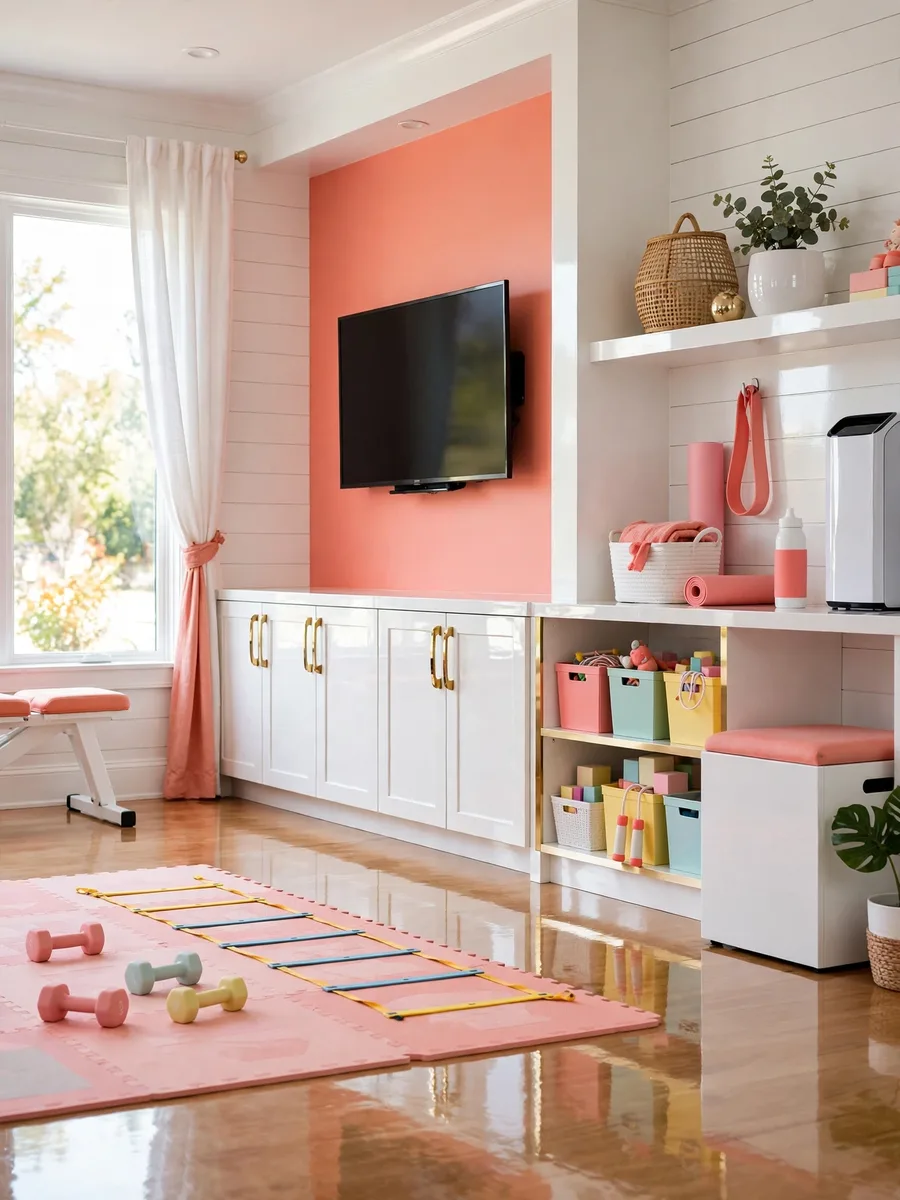
A family gym needs clear rules and clear storage more than it needs extra equipment. For example, a family that gave each child a labelled bin and a small agility ladder found the gym became the busiest room in the house on weekends.
Quick tips:
- Store heavy weights where small children cannot reach.
- Give each person a labelled bin.
How Do I Design a Pilates Reformer Corner?
A reformer needs a flat, level floor, about eight feet of length, and clear space around it for the carriage to move, plus a mirror nearby.
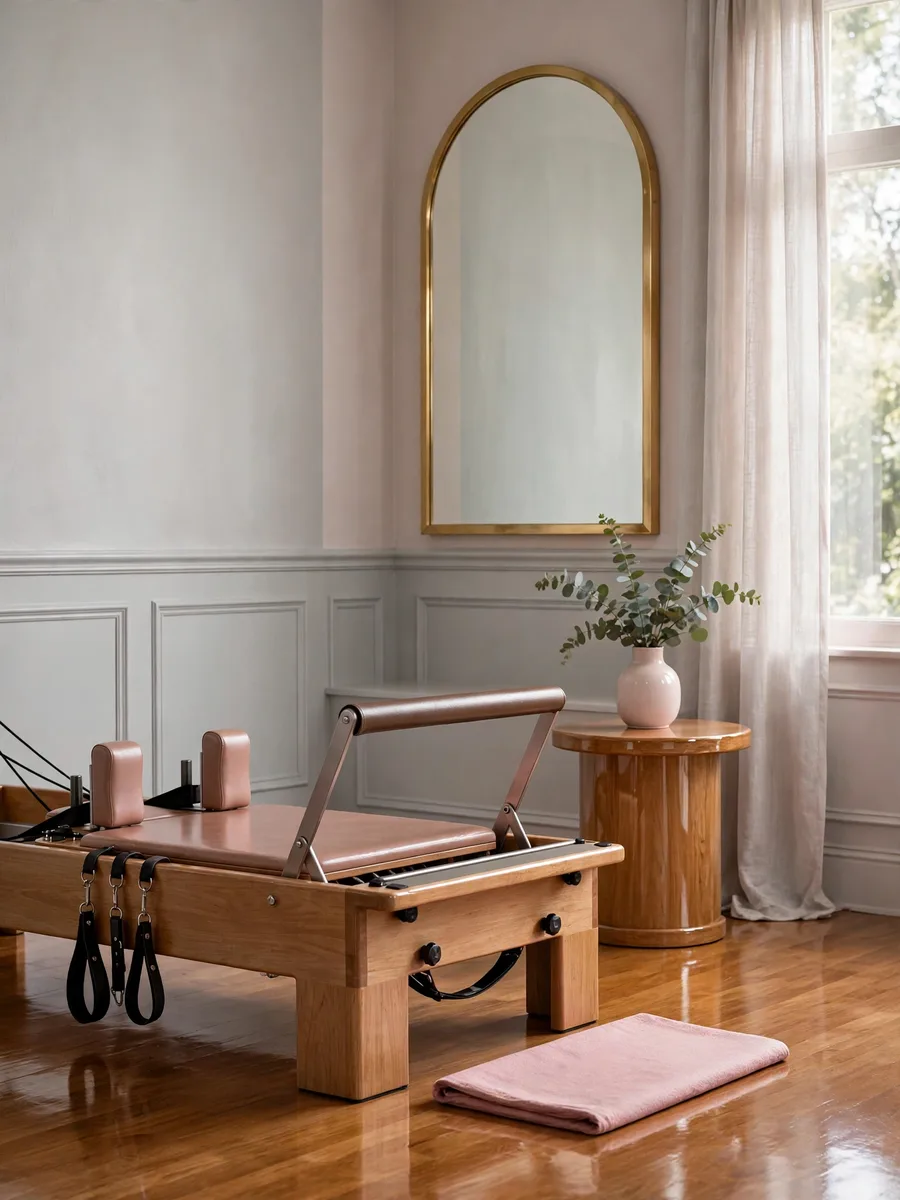
A Pilates reformer is a beautiful piece of equipment, and it deserves a corner designed around it. For example, a Pilates practitioner who placed a wooden reformer by a bright window now trains at home four mornings a week.
Quick tips:
- Measure the reformer plus its full carriage travel.
- Keep the floor flat and free of rugs under the machine.
Where Do I Put a Punch Bag in a Home Gym?
Hang a punch bag from a solid ceiling joist or a free-standing frame, with clear space on all sides for movement, and never hang it from a plasterboard ceiling or a weak beam.
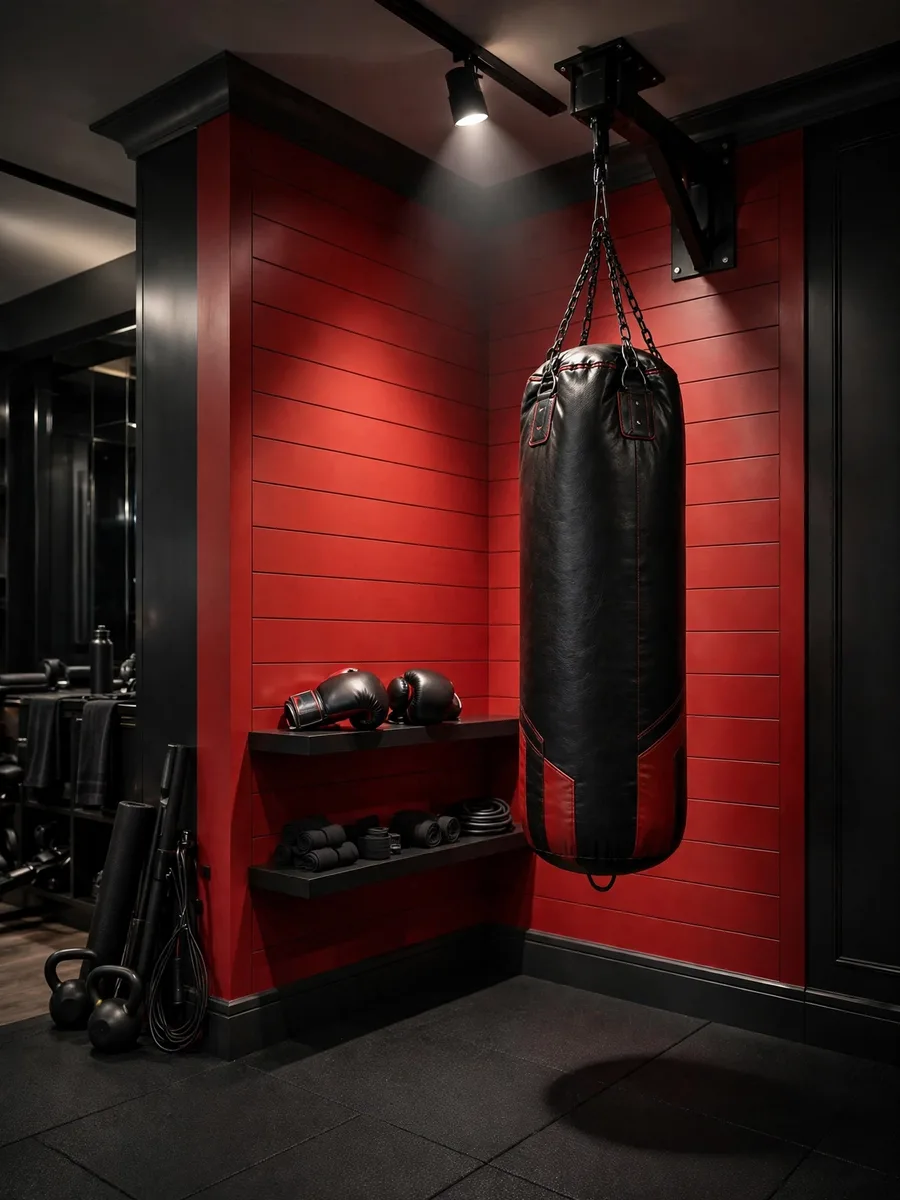
A punch bag brings boxing and cardio into a home gym, but it needs a fixing that can take real force. For example, a boxer who mounted a bag on a free-standing frame in a garage corner trains footwork there three evenings a week.
Quick tips:
- Check the mount rating before hanging any bag.
- Leave space for the bag to swing safely.
What Is the Best Fold-Away Cardio Option for Small Homes?
A folding treadmill or a compact bike that stores upright suits small homes best, because it gives real cardio training and then disappears against a wall when the session ends.
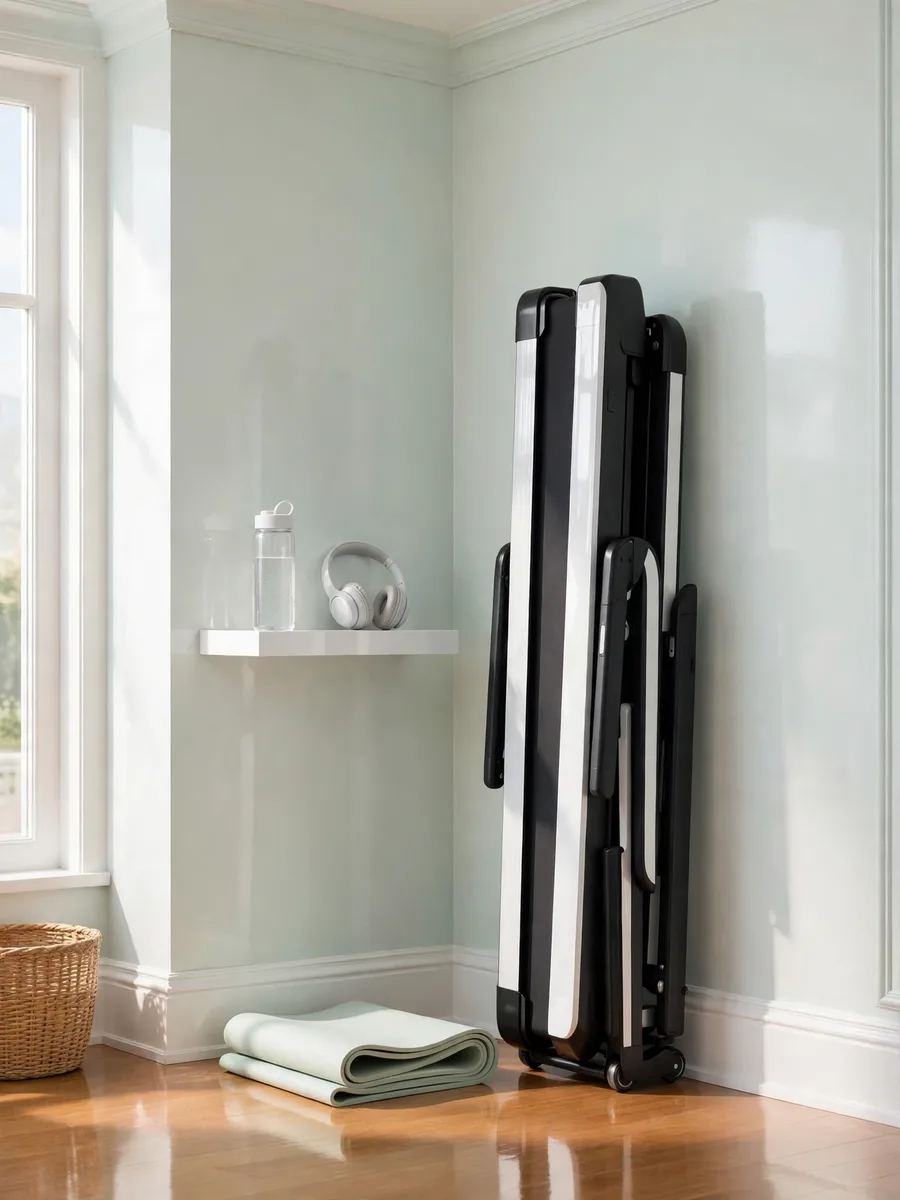
Fold-away cardio is the answer for homes where a permanent machine would dominate the room. For example, a flat dweller who folds a treadmill upright after every walk now gets daily steps at home.
Quick tips:
- Check the folded size before buying.
- Keep the power outlet close to the storage spot.
Is a Smart Fitness Mirror Worth the Money?
A smart mirror suits people who follow guided classes and want form feedback in a small space, but a plain mirror and a tablet give most of the same benefit.
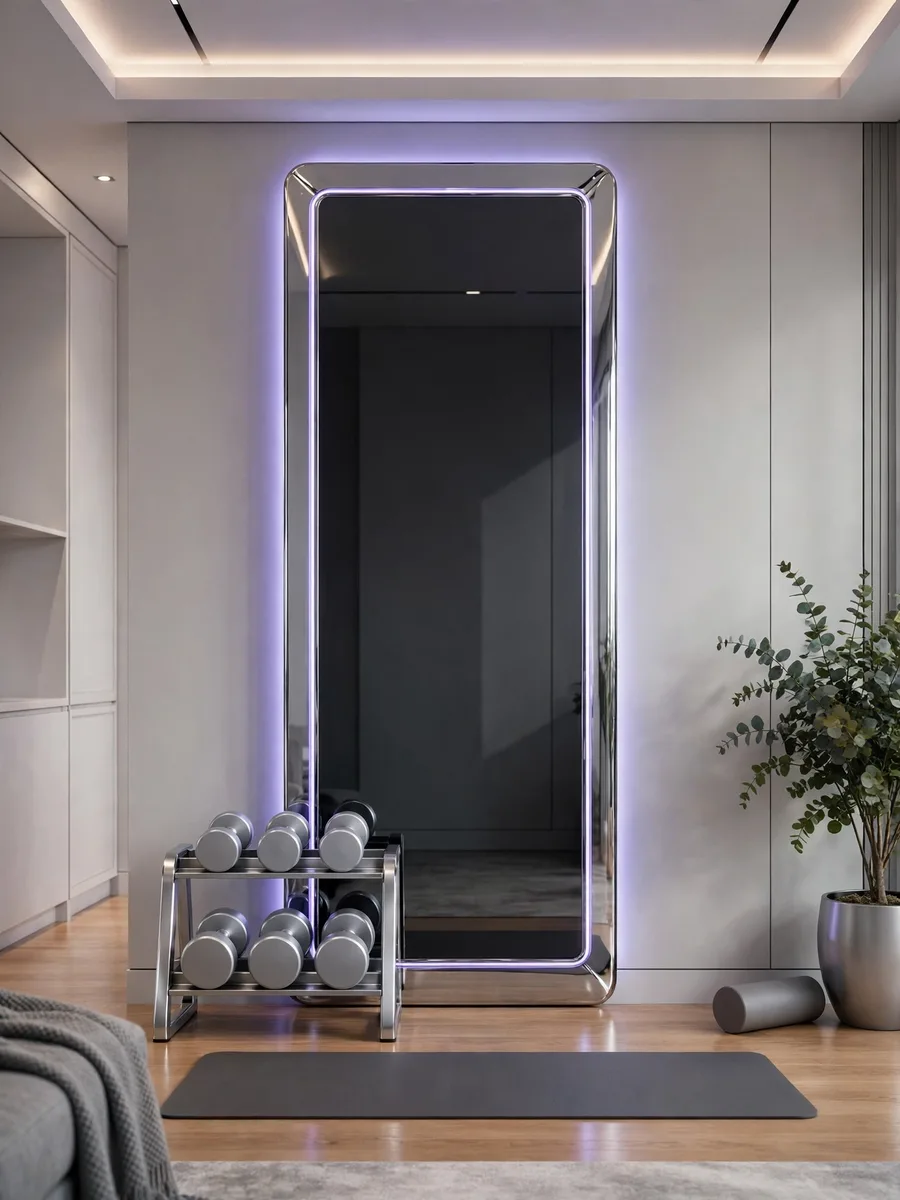
Smart mirrors combine a mirror, a screen, and guided classes in one slim panel, which makes them attractive for small rooms. For example, a home gym owner who tried a smart mirror at a friend’s house decided a tablet and a large mirror gave them everything they needed.
Quick tips:
- Try the classes on a tablet before buying a mirror.
- Count the monthly subscription in the real cost.
How Much Open Floor Space Does a Home Gym Need?
Keep at least a six-by-four-foot rectangle completely clear for warm-ups, stretching, and bodyweight work, and protect it fiercely, because an open floor is the most-used area in any home gym.
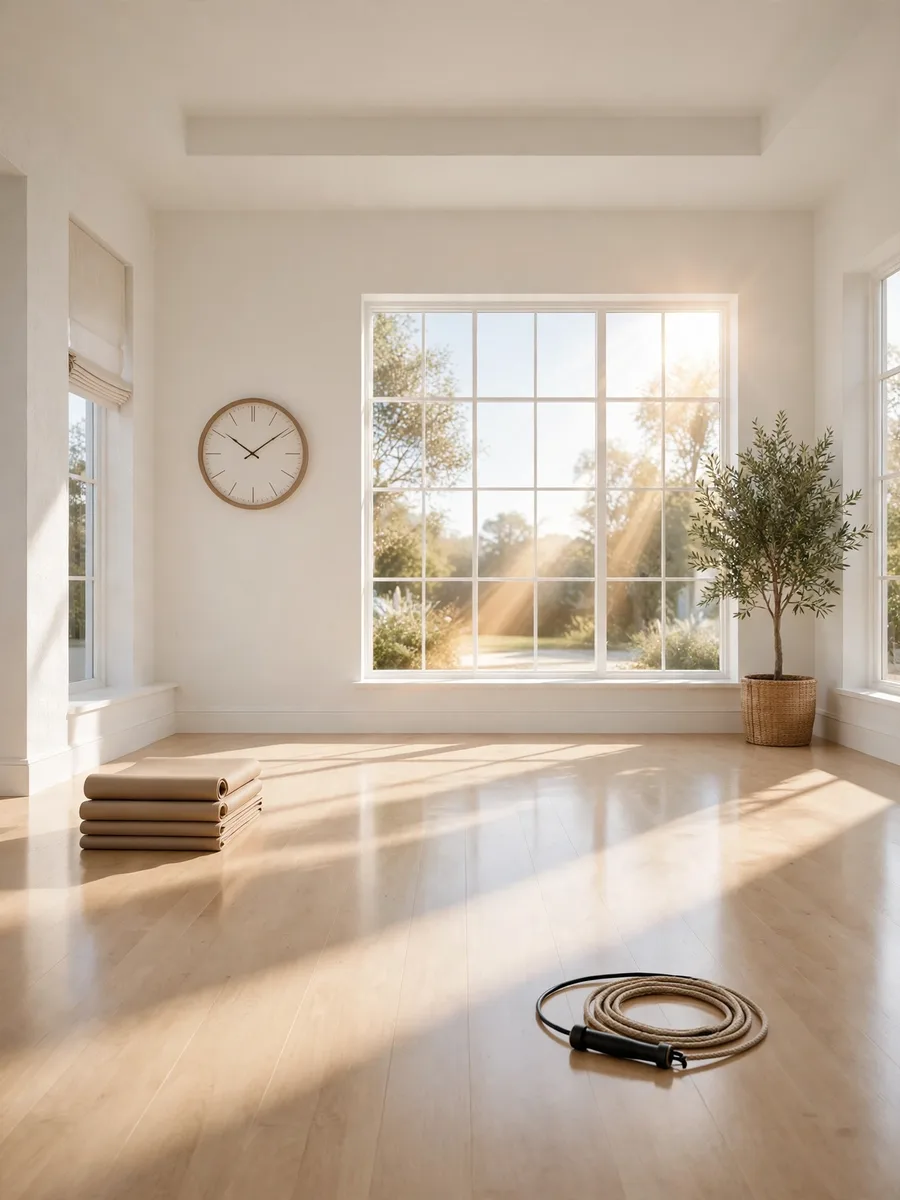
Open floor space is easy to lose and hard to get back, since every new piece of equipment wants to live there. For example, a home gym owner who taped a rectangle on the floor and refused to store anything inside it found warm-ups finally became a habit.
Quick tips:
- Mark the open zone with a rug or tape.
- Never store equipment inside the open rectangle.
How Do I Give a Home Gym a Boutique Hotel Feel?
Use rich colour, brass details, matching storage, and hotel-style touches like rolled towels and soft lighting, because a boutique feel comes from consistent styling.
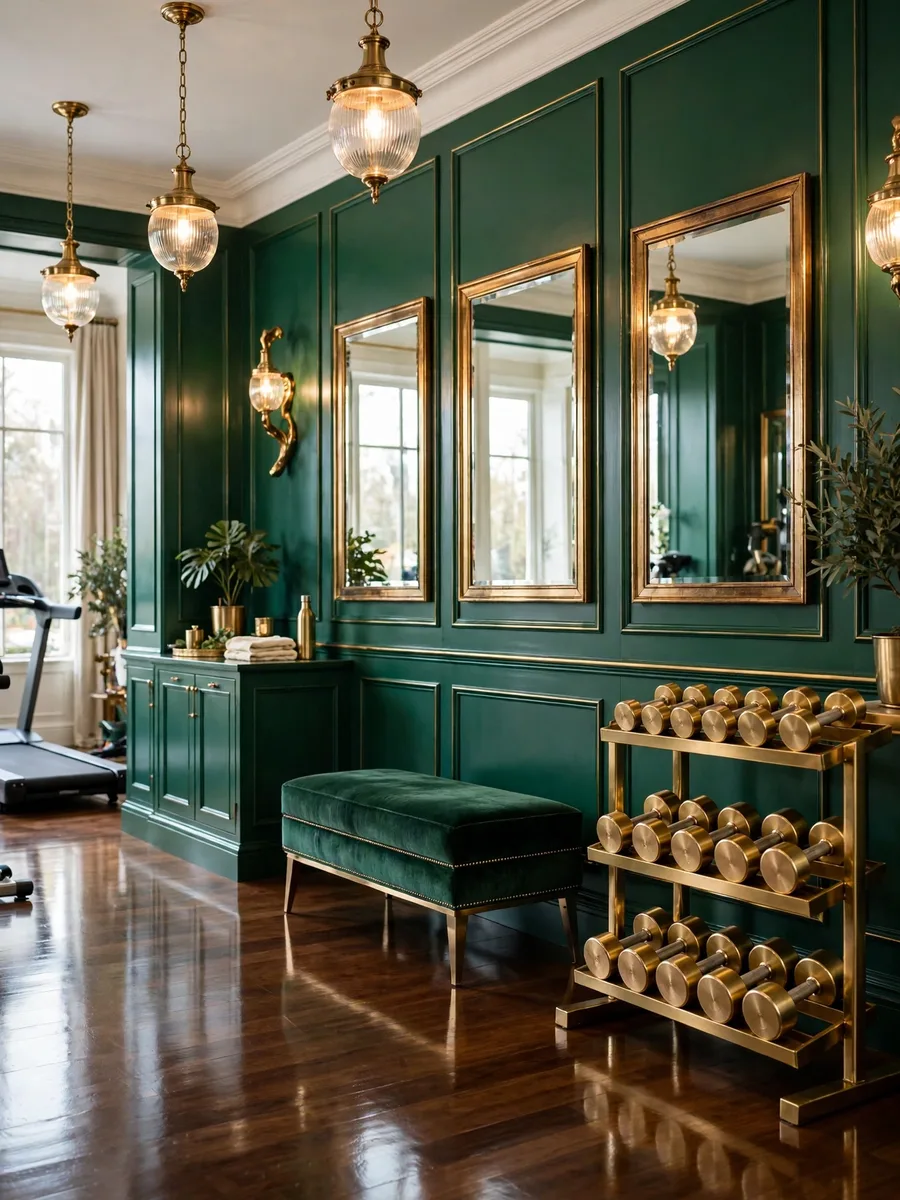
A boutique hotel gym feels special because every detail matches, from the emerald walls to the gold dumbbell rack and the brass-framed mirrors. For example, a homeowner who repainted a spare room emerald and added brass mirrors found the room felt like a private club.
Quick tips:
- Pick two colours and one metal, then repeat them.
- Match baskets, towels, and storage for a styled look.
Frequently Asked Questions
How much space do I need for a home gym?
A corner of about six by eight feet covers adjustable dumbbells, a bench, and a mat, which is enough for most general fitness training. A power rack with a barbell needs closer to eight by ten feet.
What is the best flooring for a home gym?
Thick rubber tiles or rolls are the best all-round choice, because they protect the floor, grip well, and handle dropped weights. Foam tiles suit yoga and stretching.
How much does a home gym cost?
A starter setup with a mat, bands, and adjustable dumbbells can be built for a modest budget, especially with secondhand benches and plates. A full garage conversion costs the most, so start small and add equipment as your training settles.
Can I build a home gym in a small apartment?
Yes, a small apartment suits a compact setup with adjustable dumbbells, a folding bench, resistance bands, and a mat, all stored in one corner.
Do I need mirrors in my home gym?
Mirrors are not essential, but they help you check form during lifts and stretches, and they reflect light so small or dark rooms feel larger.
What equipment should I buy first for a home gym?
Buy adjustable dumbbells, a bench, a mat, and resistance bands first, because they cover strength, mobility, and cardio warm-ups in very little space. Add a pull-up bar next.
Conclusion
The best home gym ideas are the ones that fit your space, your training, and your budget, and then get used every week. Start by measuring the room and choosing the floor, then buy versatile basics before adding a rack or a cardio machine. A home gym that is easy to use is a home gym that works.