15 Home Office Ideas That Quietly Improve Focus and Style
A home office can look beautiful and still make everyday work feel harder than it needs to be. The desk may be stylish, the shelves may be perfectly arranged, and the room may photograph beautifully, yet poor lighting, awkward storage, or too much visual noise can leave you restless by midday. For another way to create visual order at home, see our guide to modern ceiling design.
The most useful home office ideas solve those quiet problems first. They make the desk easier to use, keep essentials close without covering every surface, and give your eyes enough calm space to rest. The result is a room that feels personal while still supporting real work, study, planning, or creative projects.
Below are 15 practical directions inspired by the design logic behind the competitor reference, but developed specifically for a Homesifying reader. Each idea focuses on a different visual or functional choice you can adapt to your own room.
1. Warm Wood Desk With Clean Technology

A warm wood desk can soften the hard visual presence of a monitor, keyboard, speakers, and other equipment. Choose a simple oak, walnut, or medium wood finish, then keep the technology visually grouped instead of scattered across the surface.
Use a small desk lamp, one useful accessory, and a restrained cable setup. I have noticed that a workspace feels calmer when the eye can quickly identify the desk, screen, and storage instead of searching through a collection of small objects.
This is one of the easiest home office ideas to adapt because the basic formula works in both large rooms and compact corners.
2. Soft Green Workspace With Natural Light

Bring a little nature into the work area with a leafy plant, pale wood, and a soft green accent. Position the desk near a window when practical, but avoid placing the monitor directly where strong daylight creates glare.
A single large plant can create more visual impact than several tiny pots. Pair it with cream walls, natural textures, and simple storage for a workspace that feels fresh without becoming busy.
3. Cozy Corner Office With Layered Texture
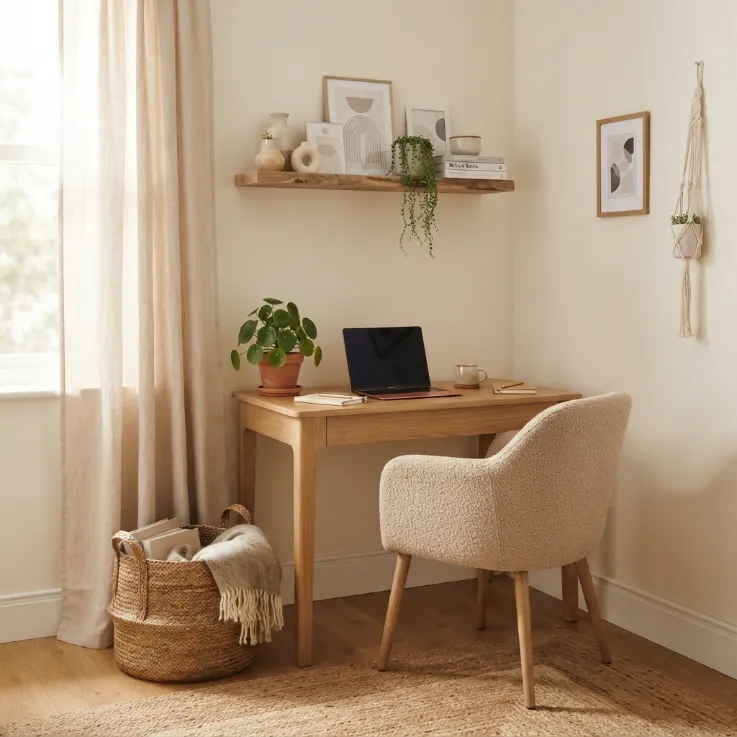
A corner does not have to feel like leftover space. A compact desk, woven basket, textured chair, and small wall shelf can turn an unused area into a comfortable work zone.
Keep the palette close to two or three related neutrals. Then add texture through wood, linen, rattan, or a small rug. The room will feel cozy without relying on excessive decoration.
4. Built-In Library Wall Around the Desk
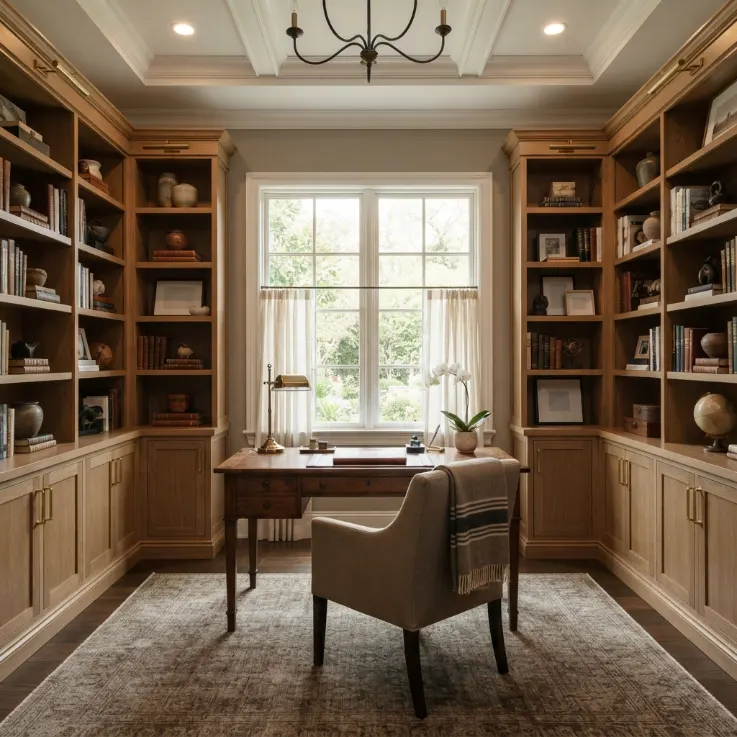
If you have a full wall available, frame the desk with bookcases or built-in shelving. Symmetry gives the workspace a strong architectural presence, while books and a few decorative objects add personality.
You do not need expensive custom cabinetry. Two matching bookcases can create a similar visual structure. Leave some shelf space empty so the wall does not become a solid block of objects.
5. Moody Office With Warm Lighting
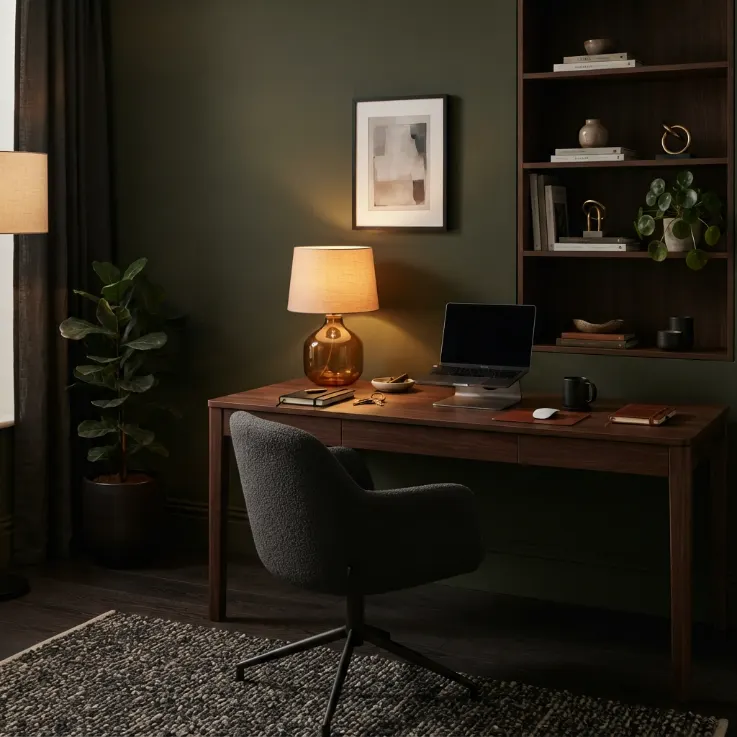
Dark colors can create an intimate office, especially in a room that is naturally bright. Try deep olive, charcoal, espresso, or muted brown on one wall rather than darkening every surface.
Warm lighting becomes especially important here. Combine a desk lamp with soft ambient lighting so the room remains comfortable after sunset. Keep the desk relatively clear because dark rooms can feel visually heavy when too many objects compete for attention.
6. Airy Office With Plenty of Negative Space

One of the most useful home office ideas is also one of the simplest: leave some areas intentionally empty. Negative space gives furniture room to breathe and makes a small workspace appear less crowded.
Use a light wall color, a streamlined desk, and storage that hides the less attractive essentials. You do not need to fill every wall with art. A single framed print can sometimes have more impact than a gallery wall.
7. Floating Desk for a Small Room
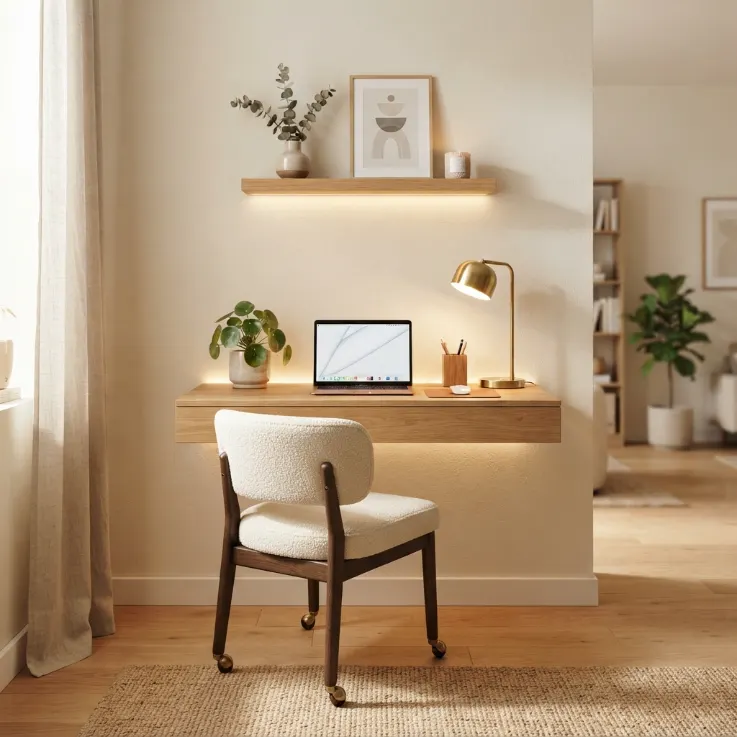
A wall-mounted or floating desk keeps more of the floor visible, which can make a compact room feel surprisingly open. This works particularly well in bedrooms, hallways, and small apartments.
Add a slim chair that can slide completely underneath the desk. Use a narrow shelf above it for notebooks and everyday supplies. The key is to keep the wall arrangement intentional rather than turning it into a storage pile.
8. Neutral Workspace With One Strong Accent
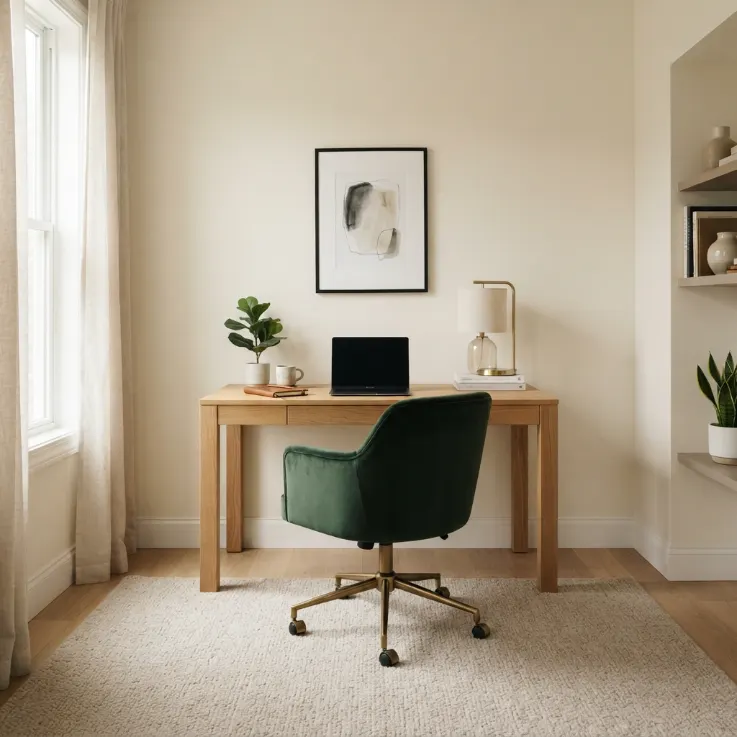
Start with a neutral foundation, then choose one accent that gives the room character. It could be a deep green chair, a terracotta lamp, a black-framed artwork, or a warm wood cabinet.
This approach makes decorating easier because you are not trying to coordinate many unrelated colors. Repeat the accent once or twice elsewhere in the room for a subtle connection.
9. Rustic Corner Desk With Character
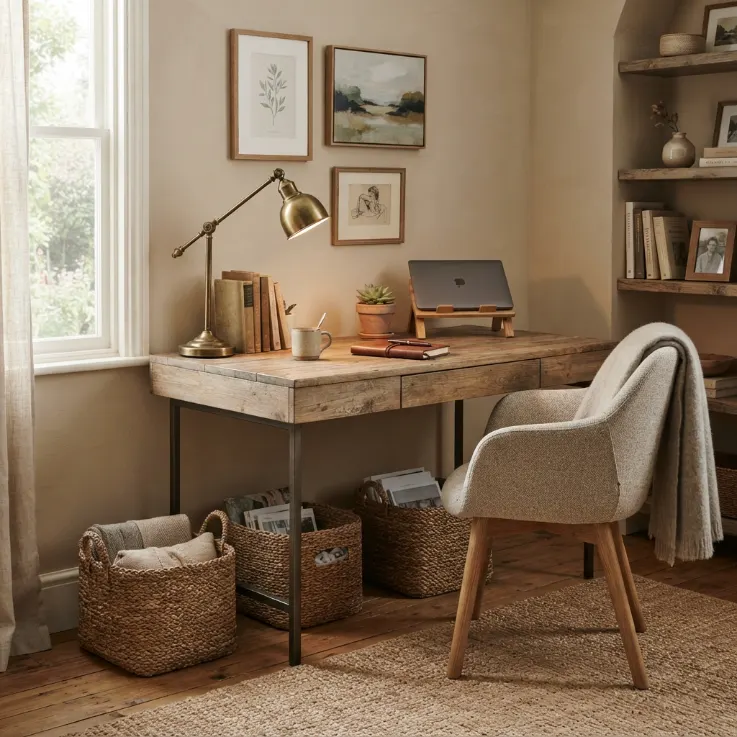
If you prefer a lived-in atmosphere, use a slightly weathered wood desk with simple metal or wood details. A woven basket, vintage-inspired lamp, and framed artwork can add warmth without making the workspace feel themed.
Keep the functional elements modern. A comfortable ergonomic chair and organized charging area can sit comfortably beside rustic finishes. The contrast makes the room feel collected rather than staged.
10. Botanical Desk Wall for a Calmer Feel
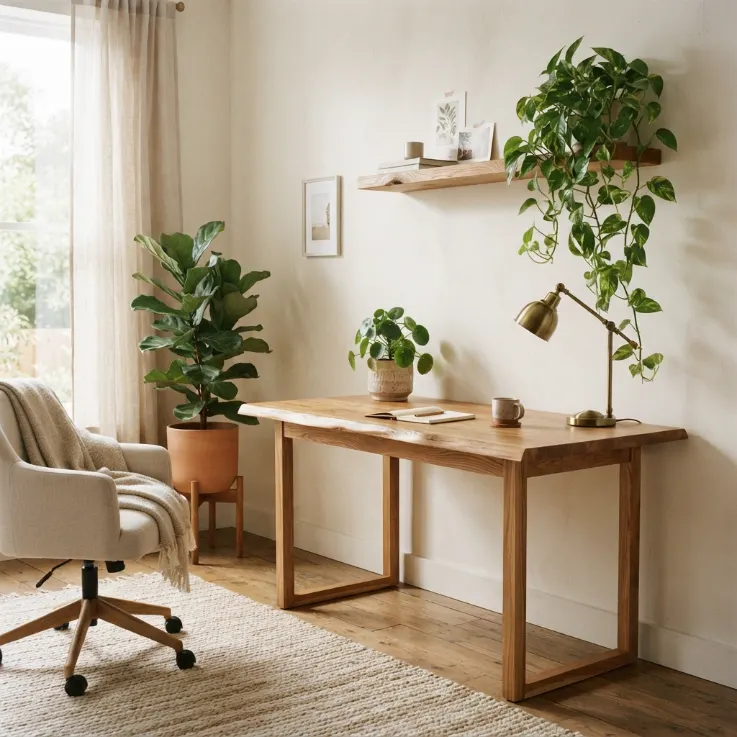
Plants can become part of the visual architecture of an office. Instead of scattering them across the desk, create a small plant grouping on a nearby shelf or cabinet.
Use one trailing plant, one medium leafy plant, and one smaller pot at different heights. This creates movement while leaving your actual work surface clear. Natural wood and off-white walls make the greenery stand out without needing bright decor.
11. Soft Contemporary Office With Curved Details

Modern offices can sometimes feel too rigid because desks, shelves, monitors, and storage all rely on straight lines. Introduce a curved chair, rounded lamp, circular mirror, or soft-edged rug to break up the geometry.
The contrast does not need to be dramatic. One curved element can make a highly structured room feel more welcoming. This is particularly useful if your furniture already has a strong modern profile.
12. Hidden Storage That Keeps the Desk Clear
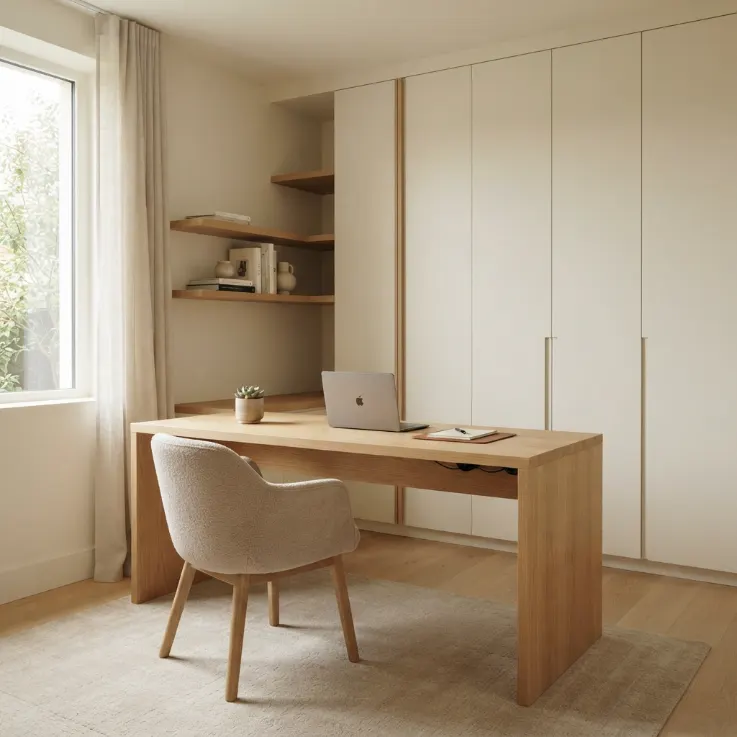
Good storage should reduce visual decisions, not create more of them. Closed drawers, baskets, cabinets, and boxes can hide paperwork, cables, stationery, and equipment that you do not need to see all day.
Keep the items you use constantly within easy reach. Everything else can move behind a door or into a drawer. In my experience, a clear desk is easier to maintain when the room has a specific home for the unattractive little things.
13. Window-Facing Desk With Controlled Glare
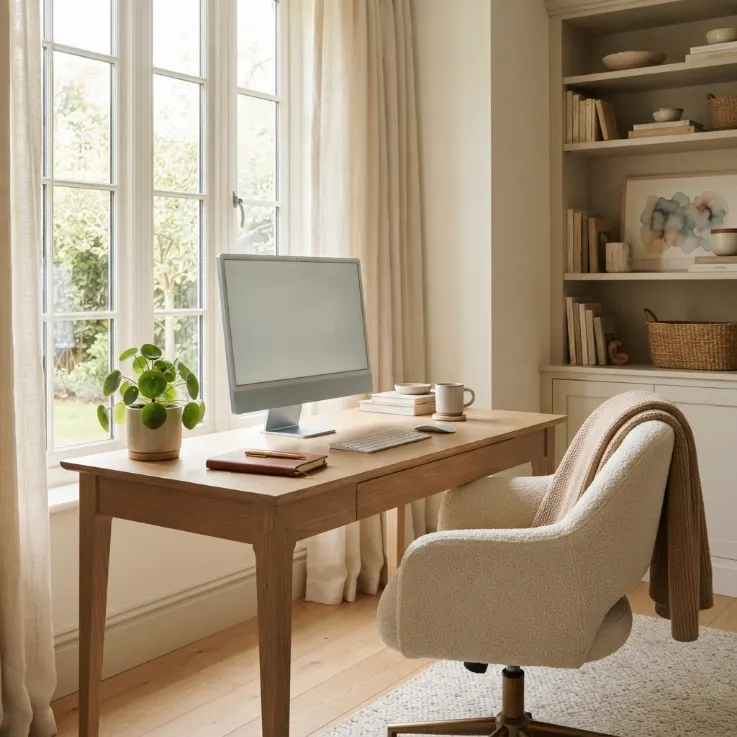
A desk near a window can give you natural daylight and a pleasant outdoor view, but placement matters. If sunlight hits your screen directly, use curtains, blinds, or a slightly angled desk position to control glare.
Keep the window area visually simple. A plant, small lamp, or understated curtain can frame the workspace without blocking the light that makes the room feel open.
14. Creative Office With a Dedicated Inspiration Zone

If your work involves writing, design, crafts, planning, or content creation, give inspiration its own zone. A corkboard, pinboard, narrow picture ledge, or small gallery can hold references without spreading across the entire desk.
Keep the main work surface practical. Your inspiration wall can be expressive, but it should still have boundaries. When everything becomes an inspiration object, nothing gets your attention for long.
15. Flexible Workspace That Can Change With You

The strongest home office ideas are not only attractive on the day you finish decorating. They continue to work when your routine changes. Choose furniture that can move, storage that can adapt, and lighting that works for different tasks.
A small desk may be enough today but not next year. A spare chair can become useful for reading or meetings. A shelf can hold office supplies now and books later. Designing for change helps the room remain useful instead of becoming another project you quickly outgrow.
How to Choose the Right Home Office Style for Your Room
Start with the way you actually work rather than the style you saved most often on Pinterest. If you spend long hours at a computer, prioritize comfortable seating, appropriate screen placement, and useful task lighting. If you mostly write, read, or plan, you may need more open desk space and less equipment.
Next, look at the room itself. Natural light, wall length, floor area, existing furniture, and storage options should influence the design. A beautiful setup that blocks a doorway or leaves nowhere for paperwork will become frustrating quickly.
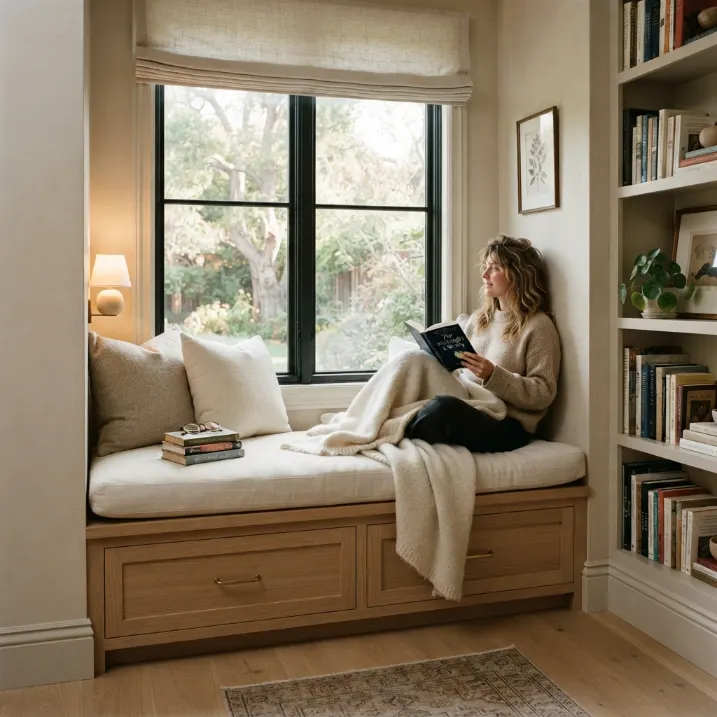
Finally, choose a visual direction that supports the feeling you want. Warm wood can make a technology-heavy office feel softer. Light colors can make a small room feel more open. Darker tones can create a focused, intimate atmosphere when lighting is handled carefully. If your workspace shares a room with a reading area, our reading nook ideas can also help you plan the surrounding space.
FAQs About Home Office Ideas
What makes a home office feel more productive?
A useful layout, comfortable seating, suitable lighting, organized storage, and limited visual distractions can make a workspace easier to use. The right combination depends on your work habits and the room available.
How can I make a small home office look stylish?
Choose furniture with a slim profile, keep the floor visually open, use vertical storage, and limit the number of decorative objects. A consistent color palette can also make a small office feel more intentional.
What colors work well for a home office?
Warm whites, beige, soft gray, muted green, natural wood, and restrained earthy tones are versatile choices. You can add stronger color through a chair, artwork, rug, or lamp rather than painting the entire room.
How do I keep my desk from becoming cluttered?
Give frequently used items a permanent place and store everything else in drawers, cabinets, or labeled baskets. Keep decorative objects limited so the desk remains a working surface rather than another storage area.
Should my home office desk face the window?
It can work well if you can control glare and avoid awkward screen reflections. If direct sunlight hits the monitor, angle the desk or use window coverings to soften the light.
Conclusion
The best home office ideas are not about creating a room that looks perfect for one photograph. They are about making everyday work feel more comfortable, organized, and visually calm.
Start with the problem your current workspace creates. Maybe the desk gets cluttered, the lighting feels harsh, the room looks cold, or there is simply not enough storage. Solve that issue first, then layer in materials, color, artwork, plants, and personal details.
A thoughtful office can still be beautiful. More importantly, it can make your daily routine feel easier. That is the kind of design worth saving, using, and living with.