15 Reading Nook Ideas That Make Any Corner Feel Cozy and Intentional
A reading corner can be beautiful, but the best reading nook ideas do more than look good in a photo. They make it easier to sit down, reach for a book, settle in, and stay there for a while. That small difference is what separates a pretty corner from a space you actually use.
A successful reading nook does not need a large room or expensive built-ins. A quiet corner beside a window, an unused wall, the end of a bedroom, or even a wide hallway can work. The key is to combine comfortable seating, useful light, reachable storage, and a few details that make the area feel like it belongs there.
In my experience, the most inviting nooks are not overloaded with decor. They have a clear purpose, a comfortable seat, and enough warmth to make reading feel like a natural part of the day. These 15 ideas focus on those details while keeping the look stylish enough for a Pinterest-worthy home.
1. Create a Window Seat Reading Nook
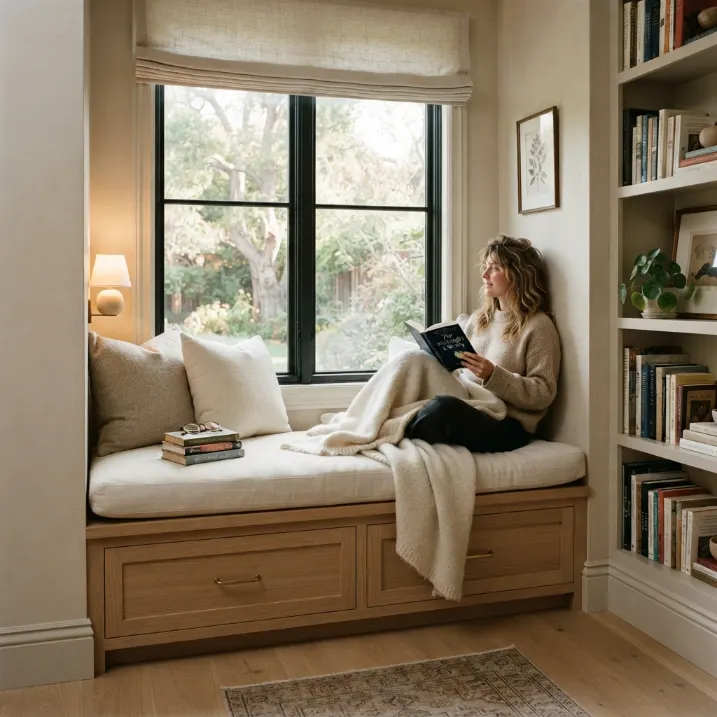
A window seat is one of the easiest ways to give a reading nook a natural focal point. Daylight makes the area feel open during the day, while the view gives your eyes a pleasant break from the page.
If you have a deep windowsill or enough wall space beneath a window, add a cushioned bench with two or three supportive pillows. Built-in drawers underneath can store books, blankets, or magazines without adding visual clutter.
Choose a cushion deep enough for comfortable sitting rather than treating the bench as decoration. A linen Roman shade or simple woven blind can soften the window while keeping the nook bright.
2. Turn an Empty Corner Into a Cozy Reading Spot
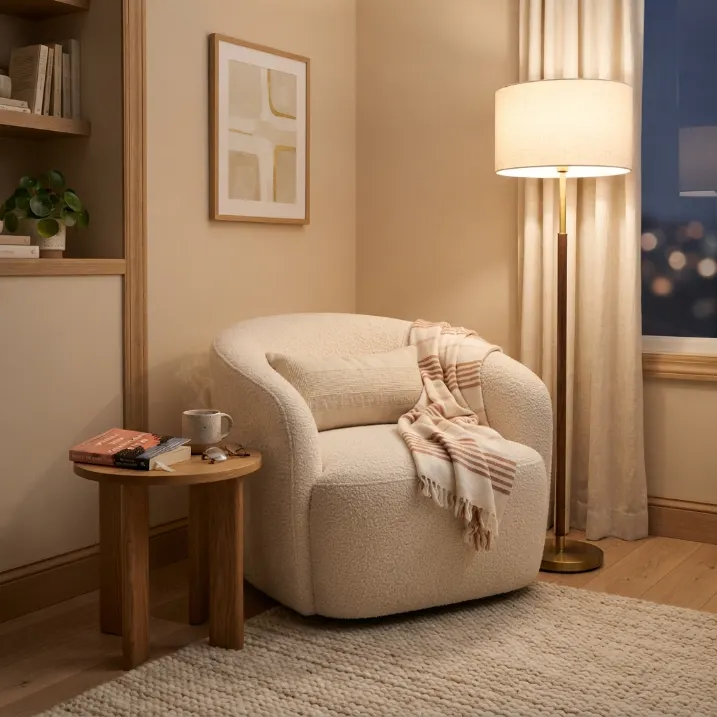
You do not need a dedicated room for a reading nook. An empty corner can become useful with a comfortable armchair, a small side table, and one warm floor lamp.
Look for a chair with proper back support and enough depth to change positions. A small round table works especially well because it gives you room for a book, tea, glasses, or a small lamp without taking over the corner.
Keep the surrounding floor relatively open. Too many accessories can make a small corner feel crowded instead of restful.
3. Build a Reading Nook Under the Stairs

The awkward space beneath a staircase can become one of the most memorable reading nook ideas in the home. The sloping ceiling naturally creates a sense of enclosure, which can make the area feel private and comfortable.
A custom bench is ideal if the dimensions allow it. Add drawers below the seat and narrow shelves along the wall for books. If a built-in is not practical, use a compact lounge chair that fits beneath the lowest part of the stairs.
Warm lighting is especially important here. A wall sconce or adjustable lamp can provide focused light without taking up valuable floor space.
4. Add a Small Library Wall Behind the Chair
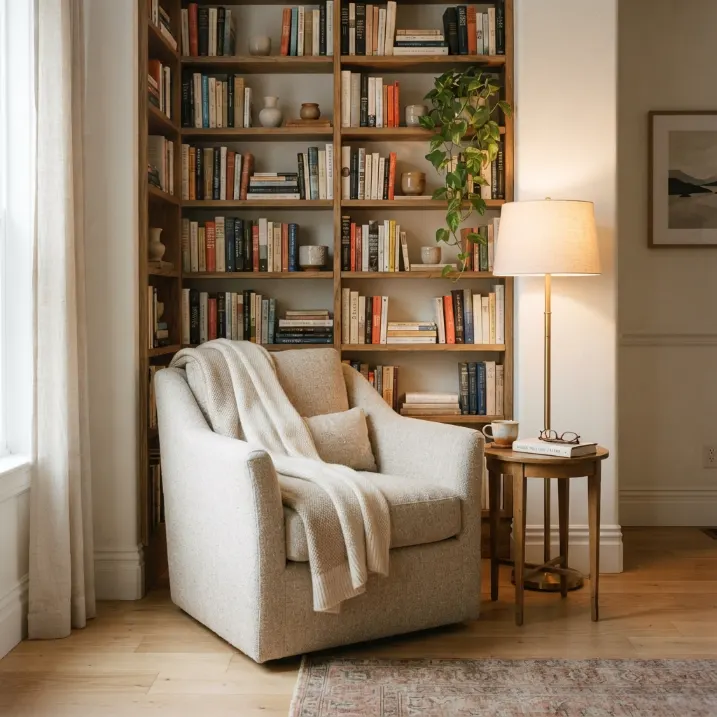
A bookcase can make a reading nook feel intentional while keeping your favorite books within reach. Even a narrow shelving unit can create a strong visual backdrop.
Arrange books with a mixture of vertical and horizontal stacks, then leave some open space between groups. A few ceramic objects, framed prints, or small plants can break up the rows without turning the shelf into a display cabinet.
For a calmer look, use wood shelving with neutral walls and natural textures. The result feels collected rather than overly decorated.
5. Design a Japandi-Inspired Reading Nook
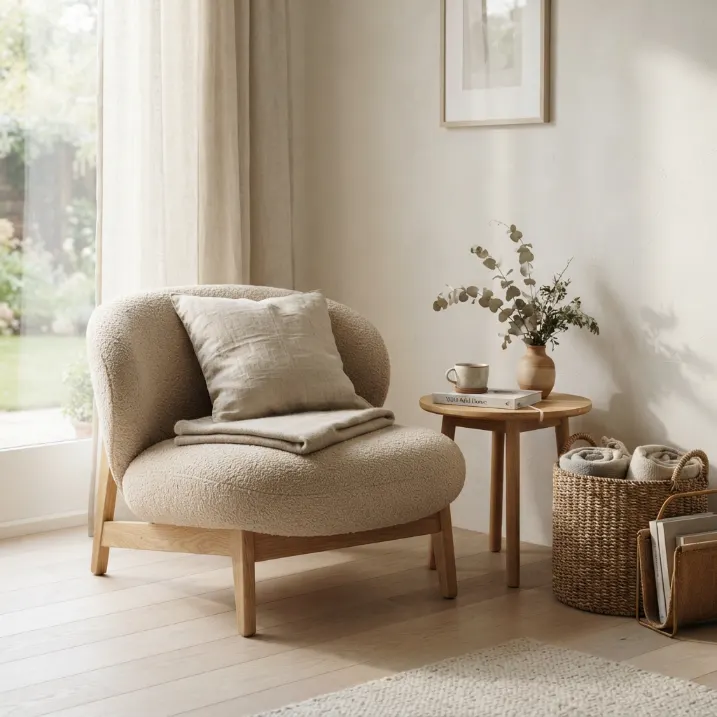
If your home leans toward warm minimalism, a Japandi reading nook can create a particularly calm atmosphere. Keep the palette restrained with soft beige, warm white, muted brown, and natural wood.
Choose furniture with simple shapes and visible natural materials. A low wooden side table, woven basket, linen cushion, and softly curved chair can provide enough texture without creating visual noise.
For more ideas on this design language, see our Japandi living room ideas, especially the sections on natural materials and warm neutral palettes.
6. Use an Arched Alcove for Extra Character
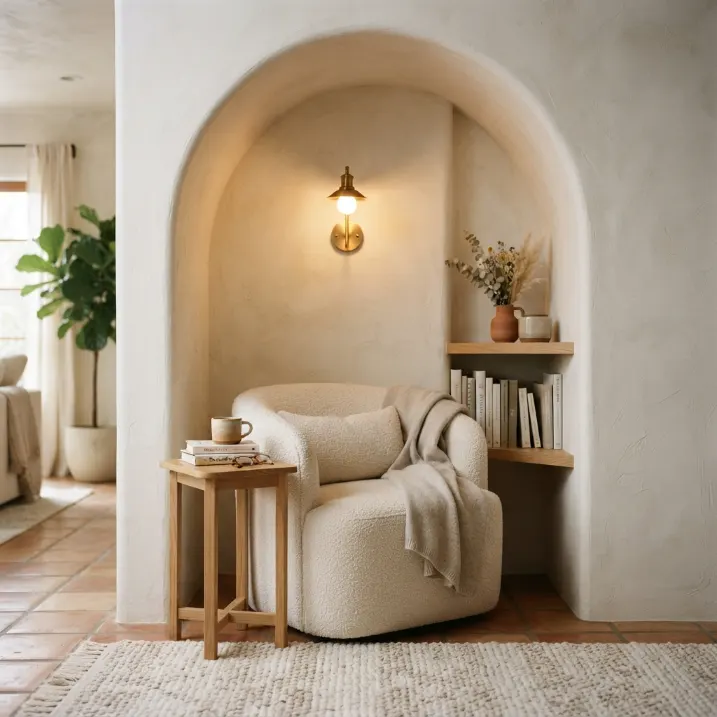
An arched opening can give a reading nook a clear boundary without making it feel closed off. If your home already has an alcove, emphasize its shape with paint, wood trim, or a simple built-in shelf.
Place a compact lounge chair or bench inside the opening and use a small pendant or wall light above it. Keep the accessories restrained so the architectural shape remains the main feature.
A soft rug beneath the chair can visually separate the nook from the rest of the room, which is useful in open layouts.
7. Make a Bedroom Reading Nook Beside the Bed
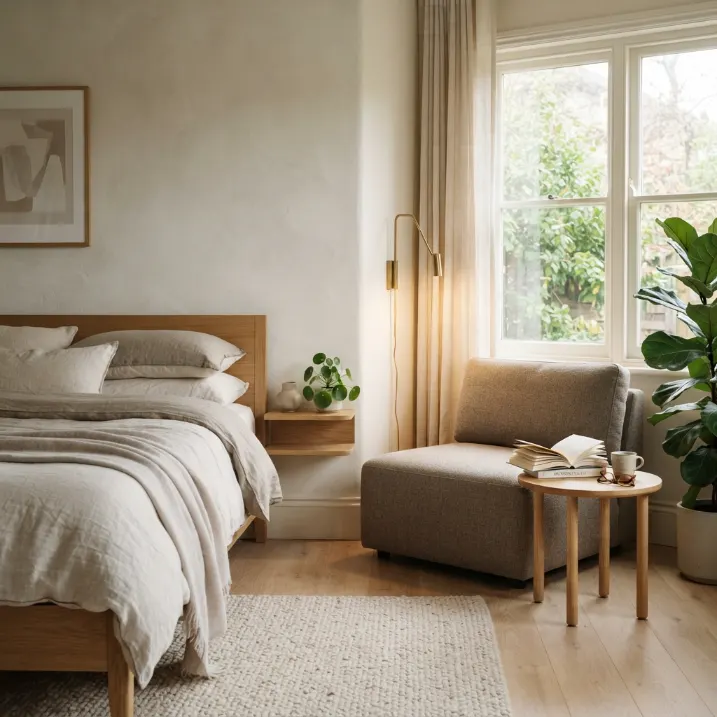
A bedroom often has a small unused area near a window, dresser, or empty wall. Instead of filling it with another storage piece, consider making it a dedicated reading spot.
A compact upholstered chair, narrow table, and adjustable lamp are enough. Keep the colors related to the bedding so the nook feels connected to the room rather than added afterward.
If you prefer a clean bedroom with fewer visual distractions, our minimalist bedroom ideas can help with keeping furniture and accessories purposeful.
8. Create a Reading Nook With a Built-In Bench
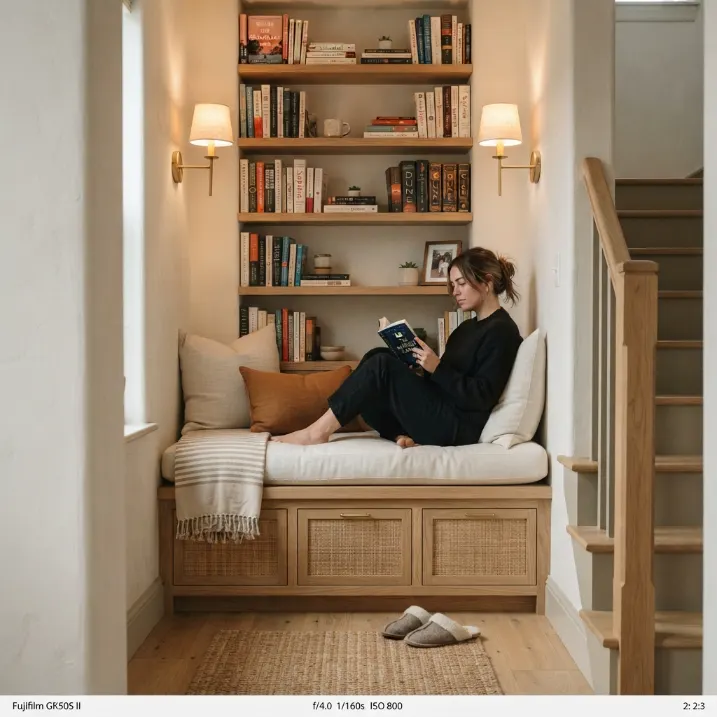
A built-in bench can make a narrow wall much more useful. It also gives you an opportunity to combine seating and storage in one piece of furniture.
Before choosing the cushion, think about how you actually sit. A bench that looks sleek but has little depth will not be comfortable for a long reading session. Add a supportive back cushion if the bench is intended for regular use.
Use drawers or lift-up storage below the seat for blankets and books. This keeps everyday items close without leaving piles on the floor.
9. Bring Plants Into a Garden-Facing Reading Corner
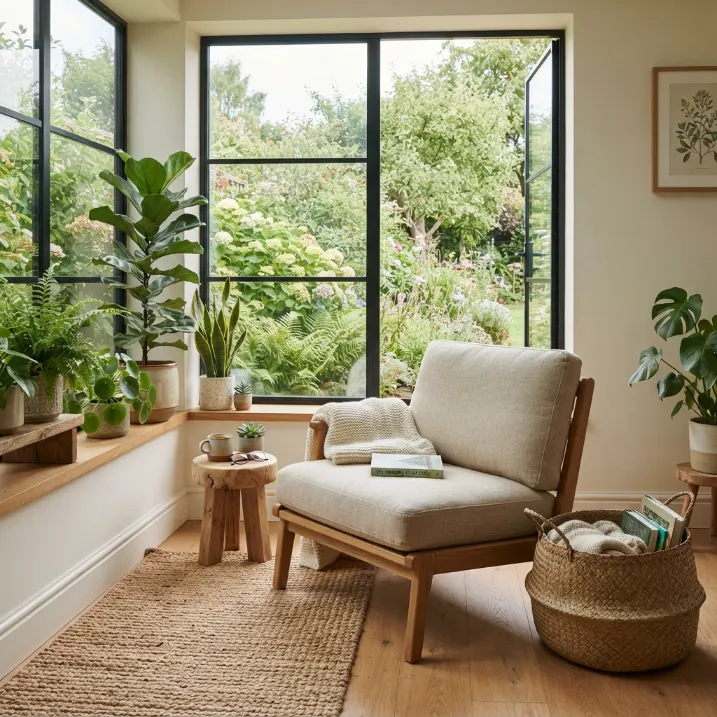
If your favorite window looks toward a garden, use that view as part of the design. Place a low chair near the glass and add a few plants around the perimeter rather than blocking the window.
Different leaf shapes and heights create visual interest. A woven basket, wooden stool, or natural fiber rug can reinforce the connection with the outdoors.
Do not overcrowd the area with greenery. The goal is to frame the view, not hide it.
10. Create a Moody Reading Nook With Deep Color

Dark walls can make a reading nook feel intimate and cocoon-like. Deep olive, charcoal, muted navy, or warm brown can work beautifully when balanced with soft upholstery and good lighting.
If the nook is small, use layered lighting so the darker color does not make the space feel flat. A wall light for reading and a softer ambient light nearby can create flexibility.
Keep the furniture simple. One comfortable chair, a small table, and a few books are often enough to make the darker palette feel intentional.
11. Use a Floor Cushion for a Flexible Reading Nook

A floor cushion is a practical option for homes where a permanent chair would take up too much room. It can work especially well in a bedroom, playroom, home office, or quiet corner.
Choose a thick cushion with enough support for the way you plan to sit. Add a small back cushion and a low table for books and drinks.
This approach also makes the nook easy to change later. The cushion can be moved when you need the floor for another activity.
12. Make a Small Reading Nook Feel Bigger With Light Colors

Small spaces benefit from a simple visual palette. Warm whites, pale beige, light oak, and soft gray can reflect available light and keep the area feeling open.
Instead of adding lots of small decorations, focus on texture. A woven rug, linen cushion, wood table, and knitted throw can create depth without making the corner look busy.
One of the most useful reading nook ideas for a small home is to let the seating be the main feature and keep everything around it visually quiet.
13. Add a Reading Nook to a Home Office

A home office does not have to be dedicated entirely to work. A small lounge chair in one corner can create a clear place for reading, thinking, or taking a short break.
Keep the reading chair visually separate from the desk. A small rug can help define the zone, while a separate lamp makes the purpose of the chair obvious.
This arrangement is especially useful in compact rooms because one space can support different routines without needing another room.
14. Create a Cozy Reading Nook With Layered Lighting

Lighting can decide whether a reading nook is genuinely useful after sunset. Start with a focused reading light, then add softer ambient light if the room needs more warmth.
An adjustable floor lamp is flexible because you can direct the light toward the page. A wall sconce works well beside a built-in bench, while a small table lamp suits an armchair arrangement.
Choose warm bulbs rather than very cool light. The goal is clear enough illumination for reading without making the corner feel like a workspace.
15. Design the Nook Around Your Real Reading Habits
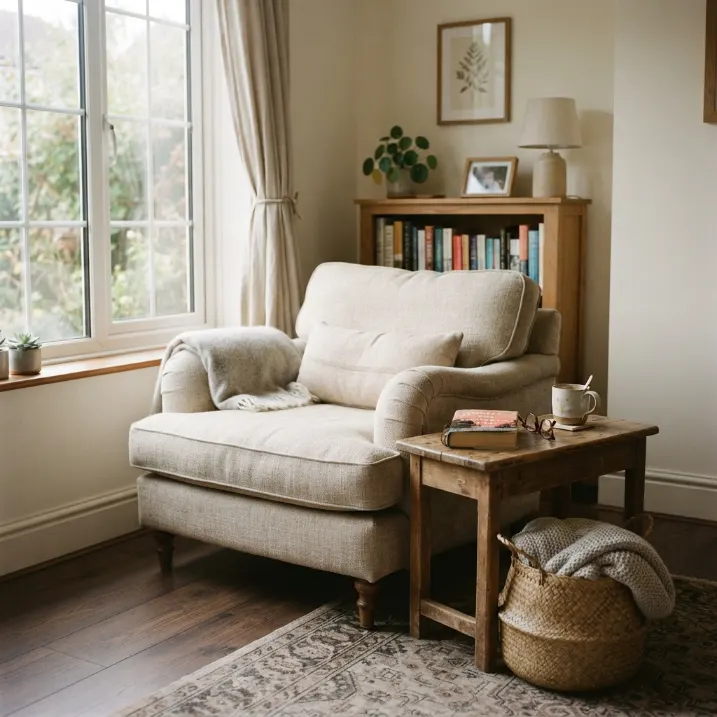
The most successful reading nook is designed around the way you actually live. If you usually read with tea, leave space for a stable side table. If you switch between books, add reachable shelving. If you read mostly at night, prioritize the lamp before the decorative details.
Think about where your phone, glasses, blanket, and current book will go. These small decisions remove friction and make the nook easier to use every day.
In my experience, comfort should be solved before styling. Once the seat, lighting, and storage work properly, a few personal details can make the space feel complete without trying too hard.
FAQs About Reading Nook Ideas
What do you need for a simple reading nook?
Start with a comfortable chair or bench, a suitable reading light, and a small surface for your book or drink. Add a rug, throw, or cushion only if they improve comfort or define the area.
Where is the best place for a reading nook?
A quiet corner near a window is often a strong choice because it combines natural light with a pleasant view. An unused bedroom corner, under-stairs area, home office corner, or wide hallway can also work.
How can I make a reading nook comfortable for long sessions?
Choose seating with good back support and enough depth to change positions. Add a supportive cushion, keep a side table within reach, and use focused lighting that does not strain your eyes.
How do you make a small reading nook look stylish?
Keep the palette simple and use texture instead of lots of accessories. A well-shaped chair, warm lamp, small rug, natural wood, and a few favorite books can create a polished look without crowding the space.
Conclusion
The best reading nook ideas are built around real comfort rather than decoration alone. A beautiful chair means little if the lighting is poor, the table is too far away, or there is nowhere to put the book you are reading.
Start with the location, then solve seating, light, and storage. After those basics work, add the textures, colors, plants, artwork, and personal pieces that make the corner feel like yours.
Whether you have a generous window seat or only one unused corner, a thoughtful reading nook can give an ordinary part of your home a clear purpose. Keep it comfortable, keep it practical, and design it for the way you actually want to spend time there.