Rooms With Plants: 18 Stylish Ideas for a Calmer, Greener Home
A beautiful home does not need a plant in every empty corner. The rooms that look most inviting usually use greenery with purpose. A tall plant can soften a hard furniture line, a trailing vine can draw attention upward, and a small cluster can make an overlooked shelf feel alive.
That is the real appeal of rooms with plants. Greenery adds color, texture, movement, and a natural sense of warmth without requiring a major renovation. The trick is choosing the right scale, placement, container, and light for each room.
Below are 18 practical ideas you can adapt to apartments, family homes, small rooms, and open plan spaces. Each one focuses on a design problem and a simple way to solve it with plants.
1. Anchor an Empty Living Room Corner With One Tall Plant

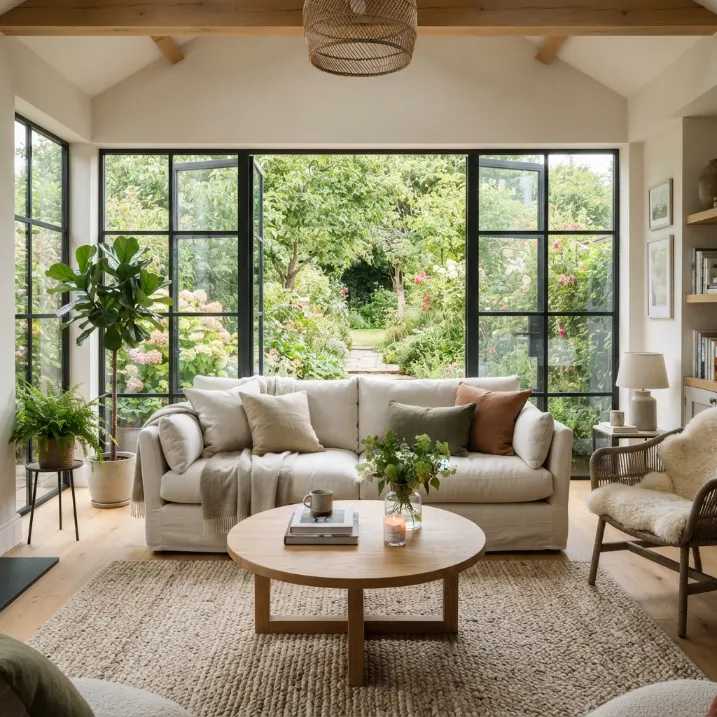
An empty corner can make a living room feel unfinished. Instead of filling it with several small accessories, try one tall plant with a strong silhouette.
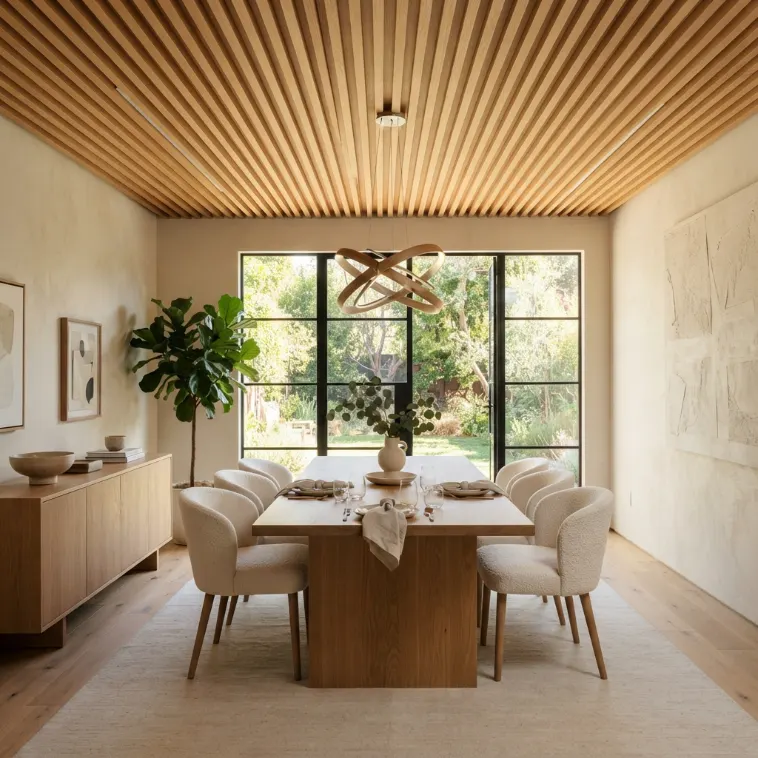
A fiddle leaf fig, rubber plant, bird of paradise, or another upright variety can create a visual anchor beside a sofa, cabinet, or reading chair. Choose a planter that relates to the room’s existing materials, such as ceramic with stone, wood with rattan, or matte finishes with simple modern furniture.
In my experience, one well-scaled floor plant often looks more intentional than a collection of tiny pots scattered around the same corner.
2. Create a Soft Plant Wall Behind the Sofa
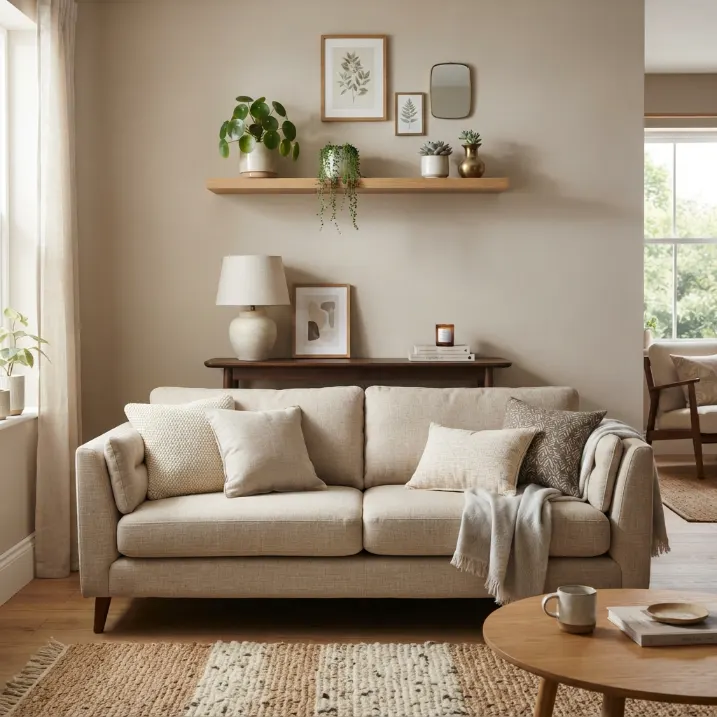
The wall behind a sofa is often difficult to decorate without making the room feel busy. A few plants can add depth while keeping the main furniture simple.
Use a narrow console, floating shelf, or plant stand to create different heights. Combine one medium plant with two smaller plants rather than filling the entire wall. Leave visible wall space between them so the arrangement can breathe.
This works especially well in neutral living rooms because green foliage becomes a natural source of color.
3. Use Hanging Plants to Make Low Ceilings Feel Taller
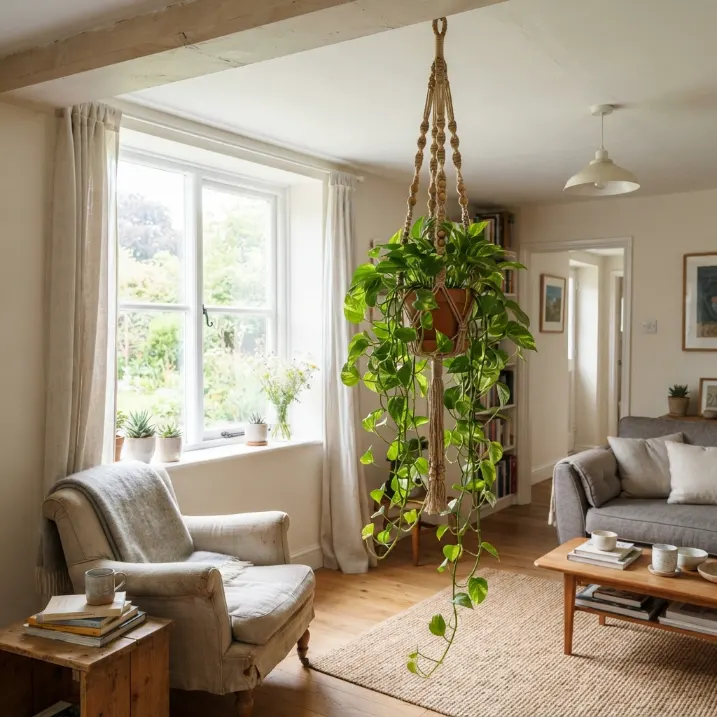
Low ceilings can make a room feel visually compressed. Hanging plants help shift attention upward.
Place one trailing plant near a window, doorway, or high shelf. Let the stems fall naturally instead of trimming them into a rigid shape. Plants with cascading foliage can introduce movement while using almost no floor space.
Keep the hanging height practical. You should still be able to water and maintain the plant without turning the setup into a daily obstacle.
4. Turn a Bedroom Window Into a Green Focal Point

Windows already attract attention because of natural light. A bedroom can feel much more connected to the outdoors when greenery is placed nearby.
Try a medium floor plant beside the window, a small plant on the sill, or a narrow stand with several light-loving varieties. Keep the glass mostly clear so the plants frame the view rather than block it.
For more bedroom inspiration, you can also explore these Japandi bedroom ideas for calm layouts and natural textures.
5. Add Plants to a Small Bathroom Without Creating Clutter

Bathrooms often have useful humidity but limited floor area. That makes shelves, window ledges, and narrow corners valuable planting spots.
Choose varieties suited to the available light and moisture. A small fern near a bright window or a compact trailing plant on a shelf can add softness to tile, glass, and metal surfaces.
Avoid blocking ventilation, shower access, mirrors, or storage doors. The plant should improve the room without making the daily routine harder.
6. Build a Calm Reading Nook With Layered Greenery
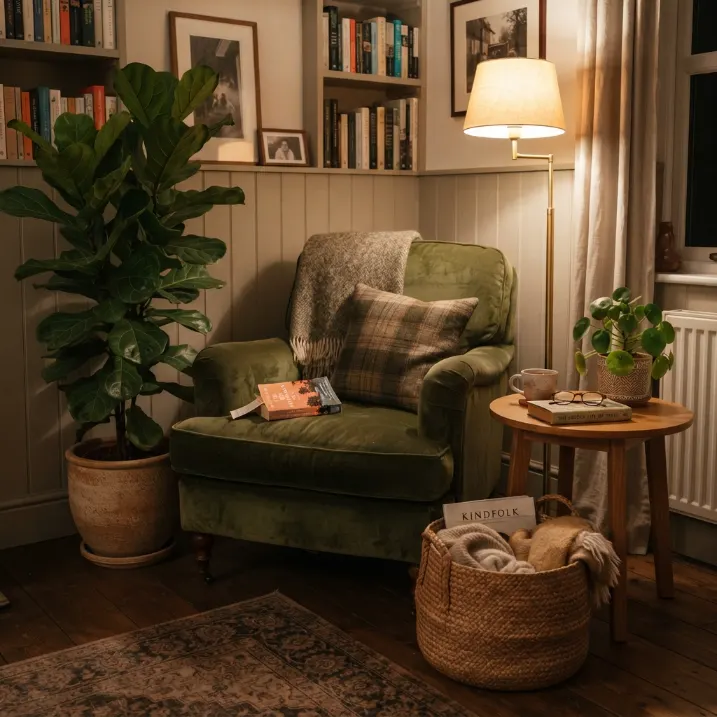
A reading corner can become a quiet retreat with just two or three plants. Place one taller plant behind the chair and a smaller one on a nearby table or shelf.
Use warm wood, woven baskets, soft fabric, and neutral pots to create a relaxed combination. The plants add organic shapes that contrast nicely with straight shelves and furniture.
If you are building a dedicated reading corner, these reading nook ideas can help with the overall layout.
7. Use a Large Plant to Divide an Open Plan Room
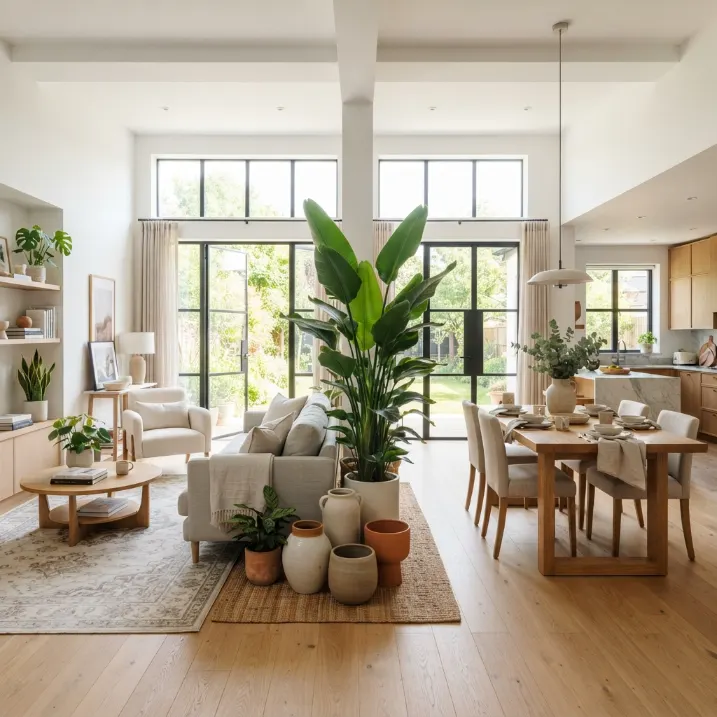
Open plan homes can sometimes feel like one large room without clear zones. A large plant can create a visual boundary without adding a wall.
Place a tall plant or a group of planters between the living and dining areas. Keep the furniture visible so the space remains open, but use greenery to signal where one zone ends and another begins.
This approach works best when the plant grouping is substantial enough to register from across the room.
8. Style a Kitchen Shelf With Useful Greenery
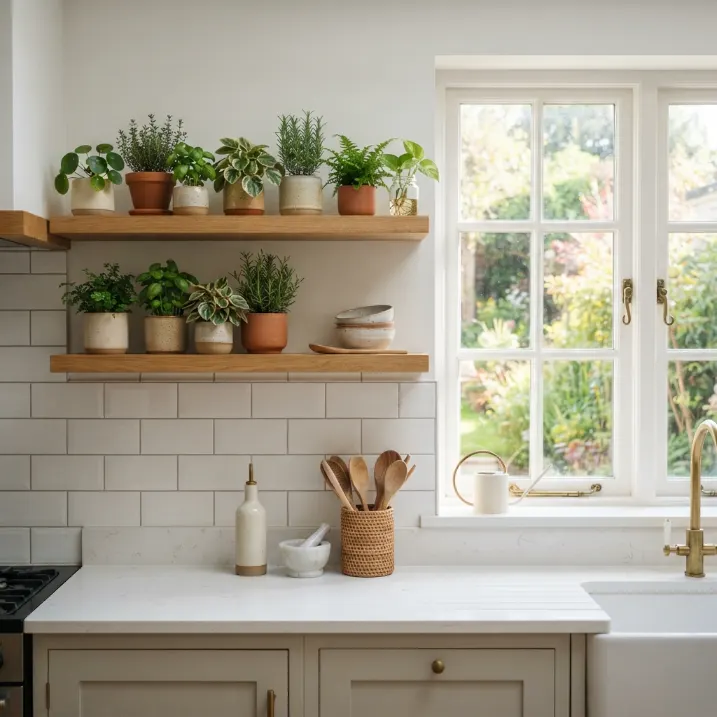
Kitchen plants can be beautiful and practical at the same time. Small herbs, compact foliage, and simple potted plants can soften cabinets and open shelves.
Keep the arrangement close to natural light and away from heat sources that could damage the foliage. Use matching or coordinated pots if your kitchen already has several materials competing for attention.
A few plants are enough. Leaving part of the shelf open keeps the kitchen functional and prevents the display from looking crowded.
9. Frame a Doorway With Trailing Plants
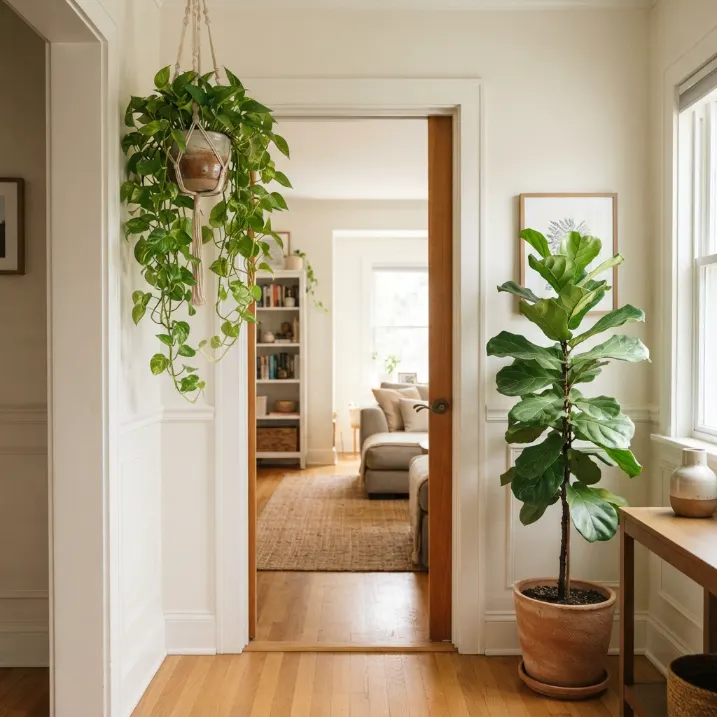
Doorways create strong architectural lines. Trailing plants can soften those lines and make the transition between rooms feel more natural.
Try a hanging planter near the top corner of the doorway or place a tall plant just outside the opening. The goal is to frame the passage without narrowing it.
As the plant grows, its shape will change, so leave enough clearance for stems to develop naturally.
10. Give a Minimal Room One Strong Green Focal Point
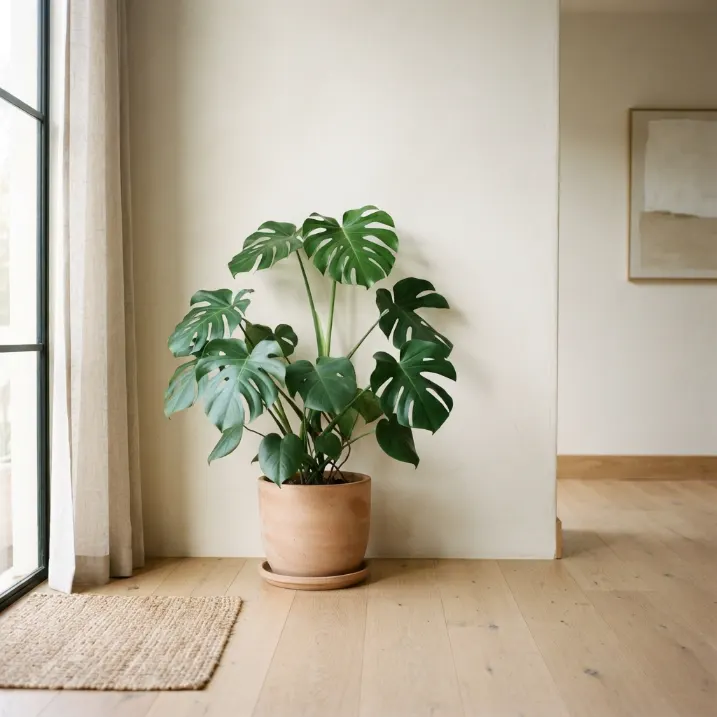
Minimal rooms do not need many plants. In fact, one striking plant can have more impact than a collection of small ones.
Choose a plant with distinctive leaves and give it plenty of negative space. A simple pot against a warm white, beige, clay, or soft gray wall can create a clean focal point.
This is one of the easiest ways to create rooms with plants without losing a minimalist aesthetic.
11. Mix Plant Heights for a More Natural Arrangement

Plants placed at exactly the same height can look flat. A better arrangement usually includes low, medium, and tall elements.
For example, place a small plant on a stack of books, a medium plant on a stool, and a taller plant directly on the floor. The different levels create rhythm and make a small collection feel more intentional.
Keep the tallest element toward the back when possible so every plant remains visible.
12. Match Planters to the Room Instead of Matching Every Plant

You do not need identical pots to create a cohesive display. What matters more is repeating a material, shape, or color.
Try warm ceramic pots in slightly different sizes, natural woven baskets, or simple stone-colored containers. This creates variation without visual noise.
In my experience, the container often determines whether a plant arrangement looks like part of the interior or simply like a collection of plants brought home from different places.
13. Use Greenery to Soften a Dark Furniture Group
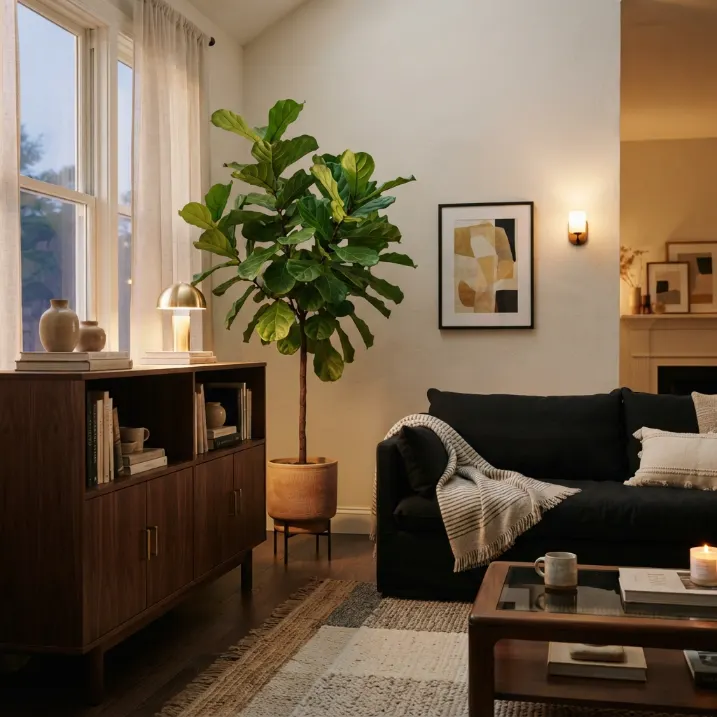
Dark wood, black furniture, and deep upholstery can make a room feel visually heavy. Green foliage introduces a lighter organic element without changing the main furniture.
Place a plant beside a dark cabinet, next to a black sofa, or near a deep-toned media unit. Choose foliage with a clear shape so it stands out against darker surfaces.
Warm lighting will make the combination feel even more inviting in the evening.
14. Create a Plant Cluster Around a Sunny Window
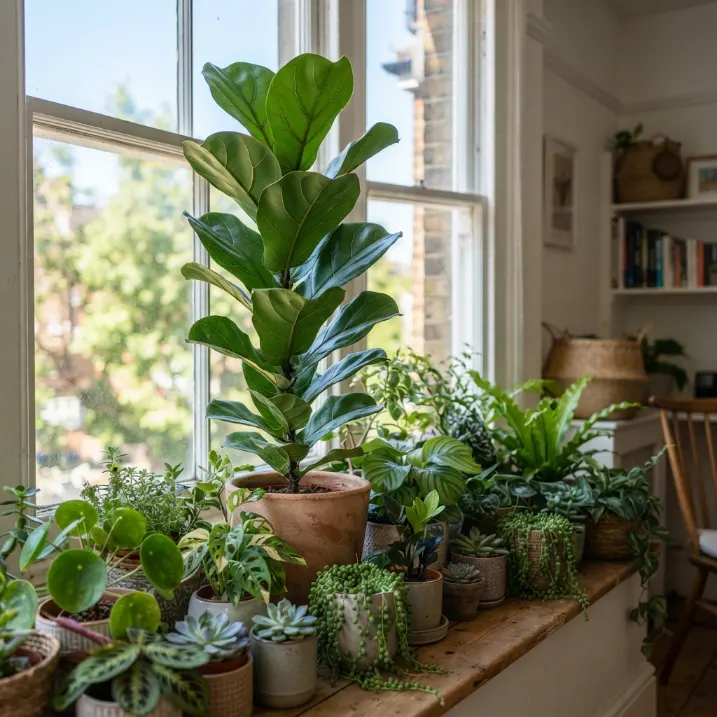
If one area of your home gets excellent natural light, it can become a dedicated plant zone.
Start with one larger plant and add smaller varieties around it. Keep the arrangement slightly uneven so it feels organic rather than perfectly measured.
Before copying a photo from Pinterest, check whether the plants you like can handle your actual light conditions. Good styling starts with plants that can realistically thrive in the room.
15. Add Greenery to a Console Table for an Instant Refresh

A console table can look bare when it has only a lamp and a few decorative objects. A small plant adds height, color, and a softer shape.
Place the plant toward one side and balance it with a lamp, framed artwork, books, or a bowl on the other. Avoid placing everything in the center.
This simple arrangement works in entryways, living rooms, hallways, and dining spaces.
16. Combine Plants With Natural Textures
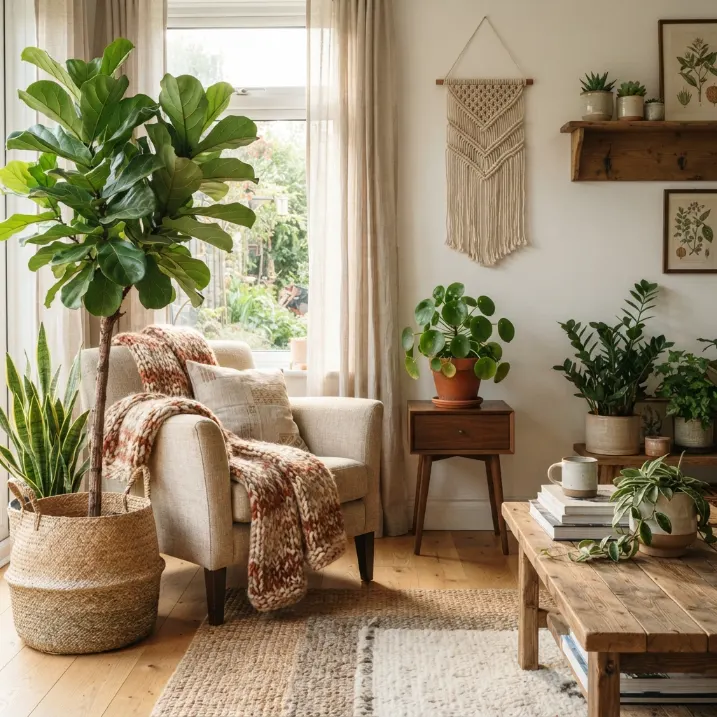
Greenery looks especially natural beside materials such as wood, linen, rattan, jute, stone, and terracotta.
If your room already contains several plants, use these materials to create visual connection rather than adding more color. A woven basket under a floor plant or a wooden stand beneath a small pot can make the arrangement feel warmer.
For another natural decorating direction, take a look at these Japandi living room ideas, where simplicity and organic materials work together.
17. Keep Plant Styling Light in a Small Apartment

Small homes benefit from plants that use vertical space rather than spreading across walkways.
Use wall shelves, hanging planters, slim plant stands, and windowsills. Choose one or two larger plants instead of filling every available surface with small pots.
Always protect walking paths and access to doors, drawers, and windows. A beautiful room still needs to function comfortably.
18. Let One Plant Zone Become the Room’s Signature
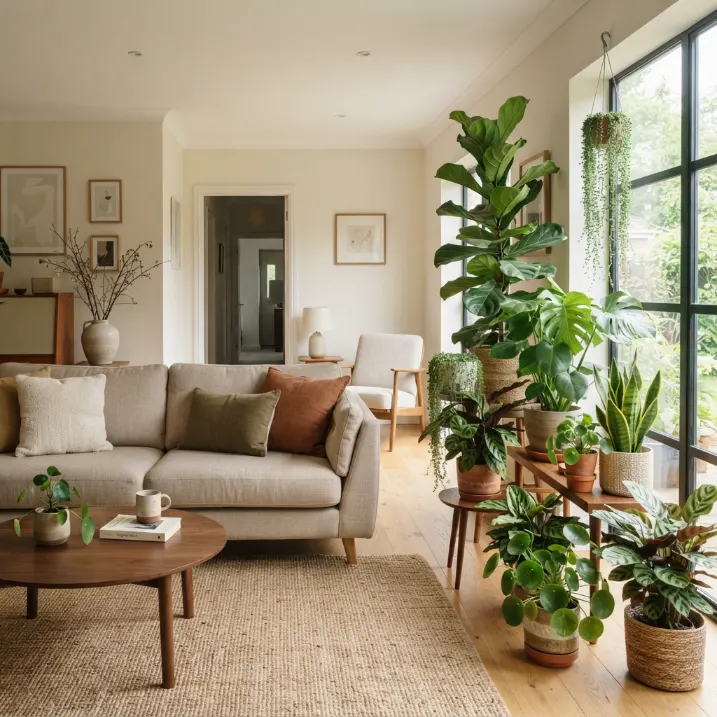
The strongest plant-filled interiors often have a clear focal area. Instead of decorating every room equally, choose one spot that receives the most attention.
It could be the corner beside your sofa, a bright kitchen window, a bedroom reading chair, or an entryway console. Build the arrangement around that area and allow the rest of the room to stay quieter.
This approach gives rooms with plants a sense of direction. The greenery becomes part of the home’s visual identity instead of a collection of unrelated accessories.
How to Choose the Right Plants for Your Room
Good plant styling begins with the conditions you actually have. Look at natural light first, then consider humidity, temperature, maintenance time, and available space.
A bright window may suit sun-loving plants, while a darker corner may require a more tolerant variety or a different decorating solution. Read the care requirements before buying a plant simply because it looks good in a photograph.
Also consider how large the plant will become. A small nursery plant can eventually become a major part of the room’s composition. Leave enough space for growth instead of designing around its current size alone.
Common Plant Styling Mistakes to Avoid
The most common mistake is adding plants simply because a surface feels empty. Empty space is not always a problem. Sometimes it is what makes the rest of the room look intentional.
Another mistake is ignoring scale. A tiny plant beside a large sectional can disappear, while an oversized plant in a narrow hallway can become an obstacle.
Do not forget maintenance either. Dead leaves, dry soil, and neglected plants can quickly make an otherwise beautiful room look untidy. Choose a routine that fits your lifestyle.
Frequently Asked Questions About Rooms With Plants
How many plants should I put in one room?
There is no fixed number that works for every room. Start with the size of the space, available light, and the visual weight of your furniture. One large plant can be enough for a small room, while a larger open space may support several plants arranged in clear zones.
Where should plants be placed in a living room?
Good locations include empty corners, beside sofas, near bright windows, on shelves, and around open-plan transition areas. Keep plants away from walkways and make sure their light requirements match the location.
How can I make rooms with plants look stylish instead of cluttered?
Use different plant heights, repeat a few planter materials, and leave negative space around the greenery. It also helps to give each plant a clear purpose, such as filling a corner, framing furniture, or adding height.
Can plants work in a minimalist home?
Yes. Minimal interiors often benefit from one or two plants with strong shapes. Choose simple containers and give the greenery enough empty space around it so the room keeps its clean appearance.
What should I consider before buying plants for my home?
Check natural light, humidity, temperature, available space, pet safety if relevant, and how much maintenance you can realistically provide. A plant that fits your lifestyle will usually look better over time than one chosen only for its appearance.
Conclusion
Rooms with plants feel most successful when greenery is treated as part of the design rather than an afterthought. The right plant can anchor a forgotten corner, soften a hard wall, divide an open space, or add life to a quiet shelf.
You do not need a jungle to create a home that feels connected to nature. Start with one room, choose a few plants that suit its conditions, and give each one enough space to be appreciated.
The best arrangements are practical as well as beautiful. When the plants fit the light, scale, layout, and rhythm of your home, the result feels natural rather than forced.