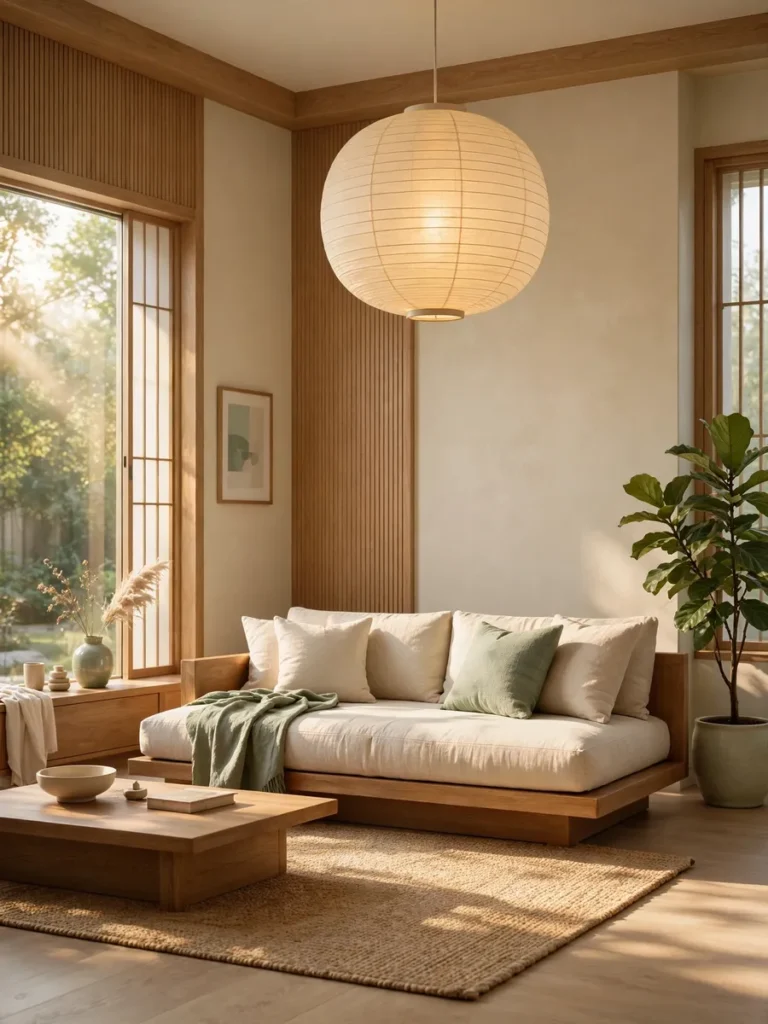
Japandi Living Room: 15 Calm, Stylish Ideas for a Warm Modern Home
A great Japandi Living Room does not need a long list of expensive furniture or perfectly empty shelves. It works because the room feels balanced. Natural wood brings warmth, simple shapes keep the eye calm, and soft textures make minimalism comfortable enough for everyday life.
The best rooms in this style also solve practical problems. They leave walking space open, make small rooms feel less crowded, and give everyday objects a clear place to live. That is why Japandi can feel peaceful without looking plain.
If your living room feels busy even after you tidy it, these ideas can help you edit the room without making it cold. Each one focuses on a design choice you can actually use, whether you are starting from scratch or refreshing the furniture you already own.
1. Start With a Warm Neutral Japandi Foundation
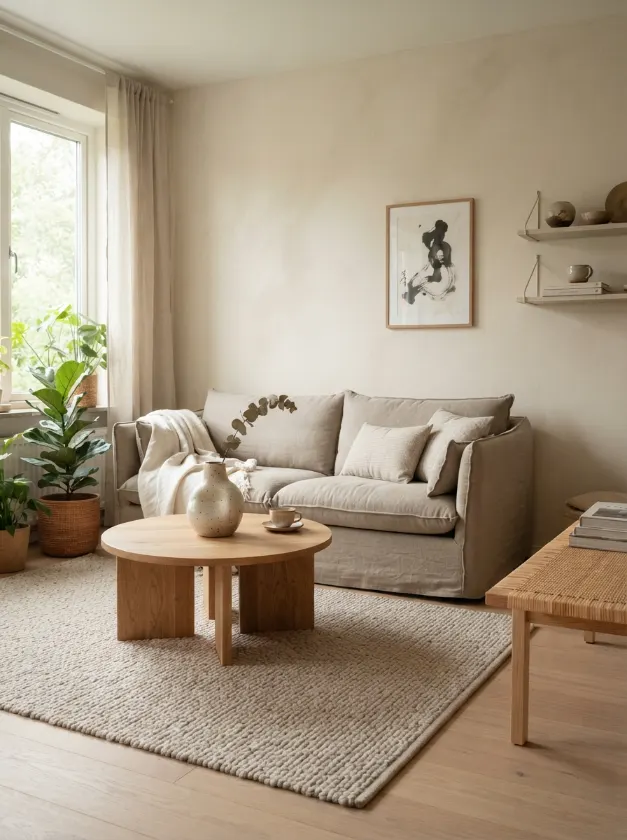
Begin with a quiet palette of warm white, oatmeal, beige, soft taupe, light oak, or muted brown. These colors give the room a gentle base without making every surface look identical.
One mistake I have seen often is choosing a very bright white for every wall and then trying to add warmth with accessories. The result can feel sharper than expected. A slightly warmer wall color gives wood, linen, wool, and ceramics a softer background.
Keep the main surfaces simple, then let texture create the variation. A linen sofa, woven rug, oak table, and matte ceramic vase can all sit in a similar color family while still looking interesting.
2. Choose Low Furniture That Gives the Room Breathing Space
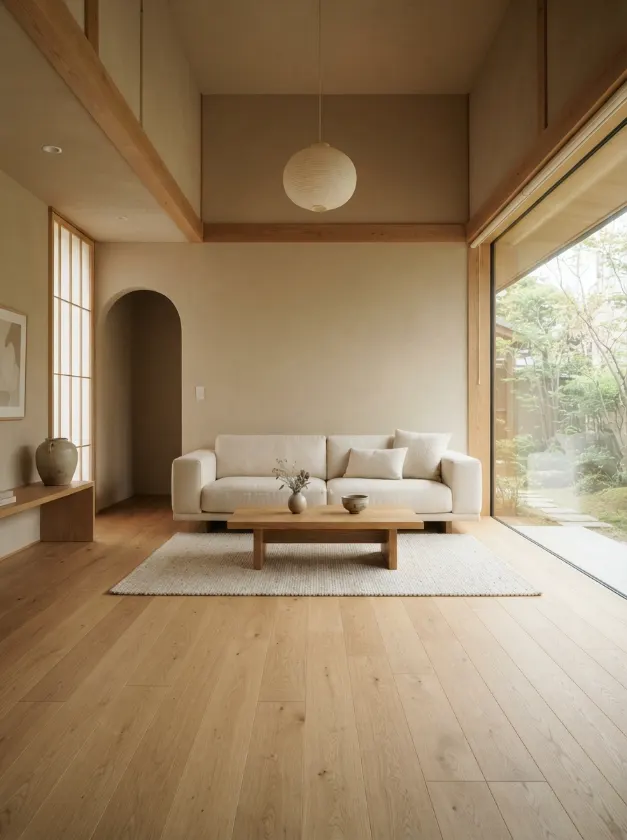
Low-profile furniture is one of the easiest ways to create a grounded Japandi feeling. Look for sofas with a lower seat, simple legs, and a clean silhouette. Pair them with a coffee table that does not visually overpower the seating.
Spacing matters just as much as the furniture itself. Avoid pushing every piece tightly together. Leave enough room around the sofa and table for movement so the layout feels open rather than carefully squeezed into place.
For a small living room, this approach can be especially useful. A lower visual line can make the upper part of the room feel more open while keeping the furniture practical.
3. Mix Japanese Simplicity With Scandinavian Warmth
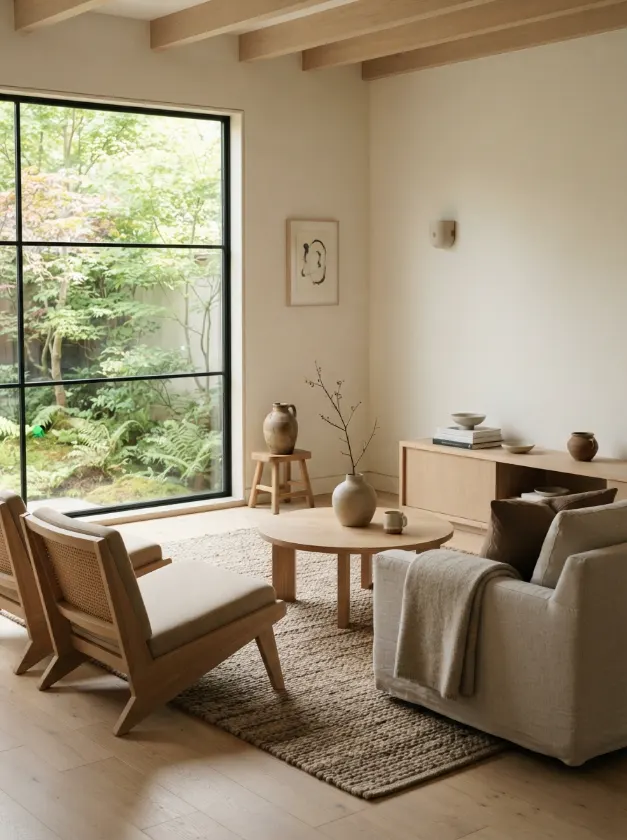
Japandi works because two design traditions meet without one completely taking over. Japanese interiors contribute restraint, natural materials, and appreciation for empty space. Scandinavian design adds softness, comfort, practical furniture, and a welcoming atmosphere.
You can reflect that balance with a simple wood cabinet, a comfortable upholstered sofa, a handmade-looking ceramic piece, and a soft rug. The goal is not to make the room look traditionally Japanese or traditionally Scandinavian. It is to create a calm middle ground.
If you already own modern furniture, you may not need to replace it. Try removing pieces that rarely serve a purpose and adding a few natural textures instead.
4. Let Natural Wood Become the Visual Anchor
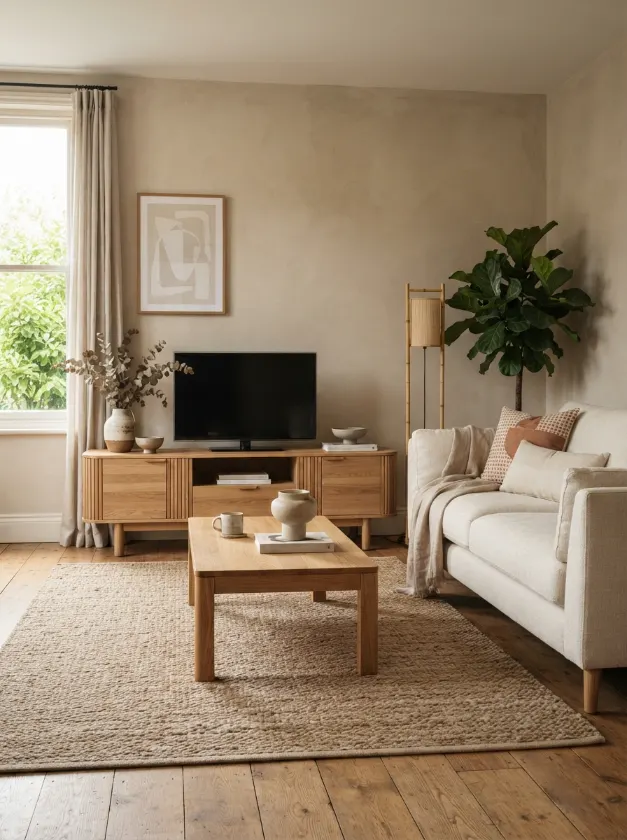
Wood gives a Japandi living room much of its warmth. Oak, ash, walnut, and other natural-looking finishes can work well, depending on the palette of the room.
Choose one or two main wood tones rather than mixing many finishes without a plan. A wood coffee table can echo a console, shelving, or small side table. Slight differences are fine and can make the room feel more collected.
In my experience, wood looks especially inviting when it is paired with matte fabrics instead of lots of glossy surfaces. The contrast feels natural and keeps the room from becoming visually flat.
5. Use Curved Shapes to Soften Clean Lines
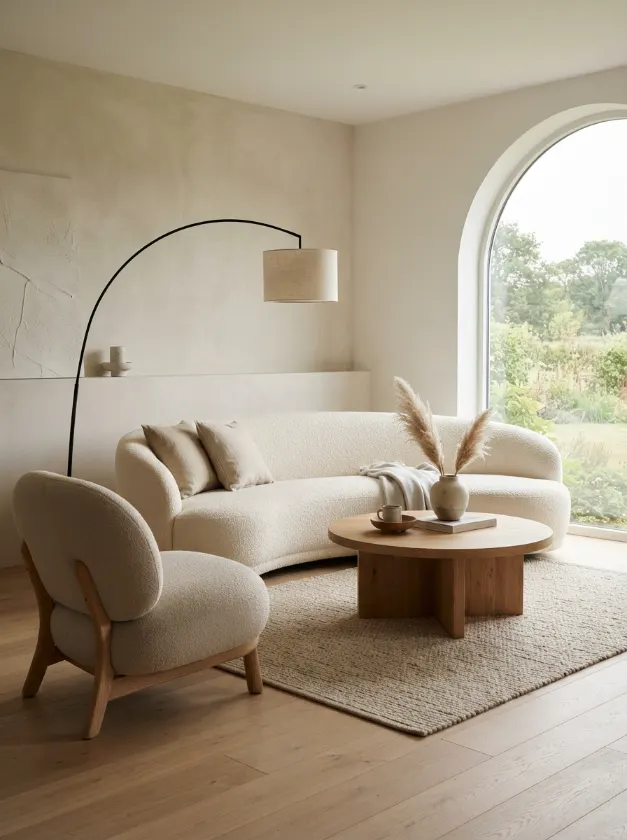
Minimal rooms can sometimes become too straight and rigid. Rounded furniture helps solve that problem without adding clutter.
Try a softly curved sofa, round coffee table, arched floor lamp, circular mirror, or rounded ceramic object. You do not need all of them. One or two curved elements are often enough to soften a room full of rectangular architecture.
Curves also help guide the eye around the space. They can make a seating arrangement feel more relaxed and conversational, especially in an open-plan home.
6. Build a Japandi Living Room Around Texture
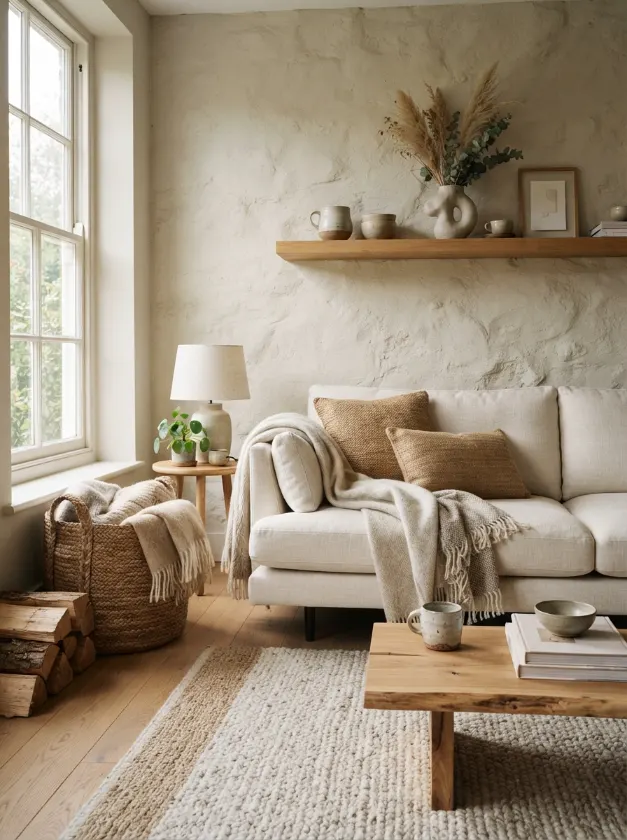
Texture is what keeps a neutral room from looking unfinished. Instead of adding more colors, layer materials that feel different to the touch.
Think linen curtains, a wool or jute rug, boucle or cotton upholstery, unfinished-looking wood, woven baskets, stone, and handmade ceramics. Each material adds a small amount of visual interest while keeping the palette restrained.
A useful rule is to repeat a texture at least twice. For example, if you use woven material in a basket, echo it with a textured rug or natural fiber cushion. Repetition creates a connection between separate areas of the room.
7. Make Lighting Soft, Warm, and Layered
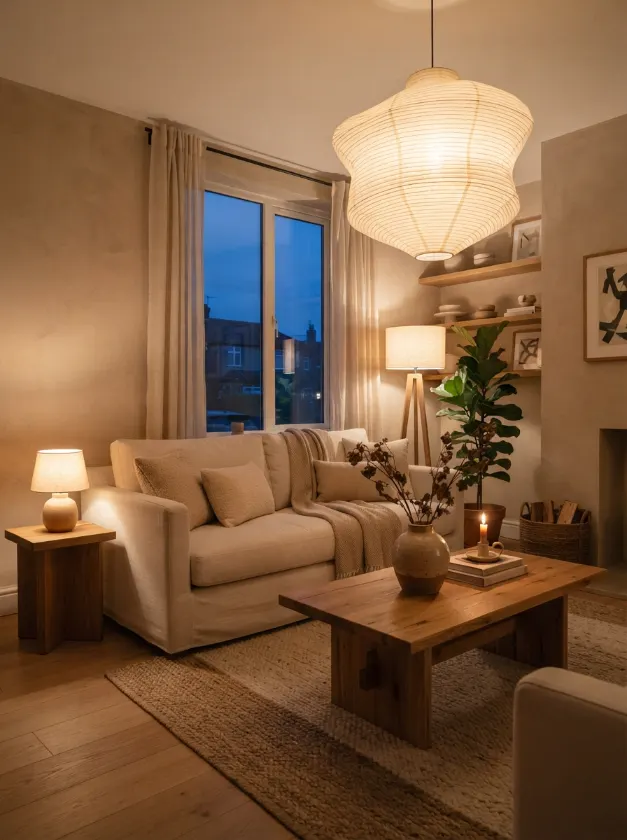
Lighting can completely change how a Japandi room feels after sunset. A single bright ceiling fixture often makes a calm room feel much more ordinary.
Use several light sources at different heights. A floor lamp beside the sofa, a small table lamp on a console, and a soft ceiling fixture can create depth without filling the room with decoration.
Warm bulbs usually suit this style better than very cool white light. Look for shades and fixtures made from paper, linen, wood, or other matte materials when possible. The light should support the room rather than become the loudest feature.
8. Keep the Walls Quiet but Never Boring
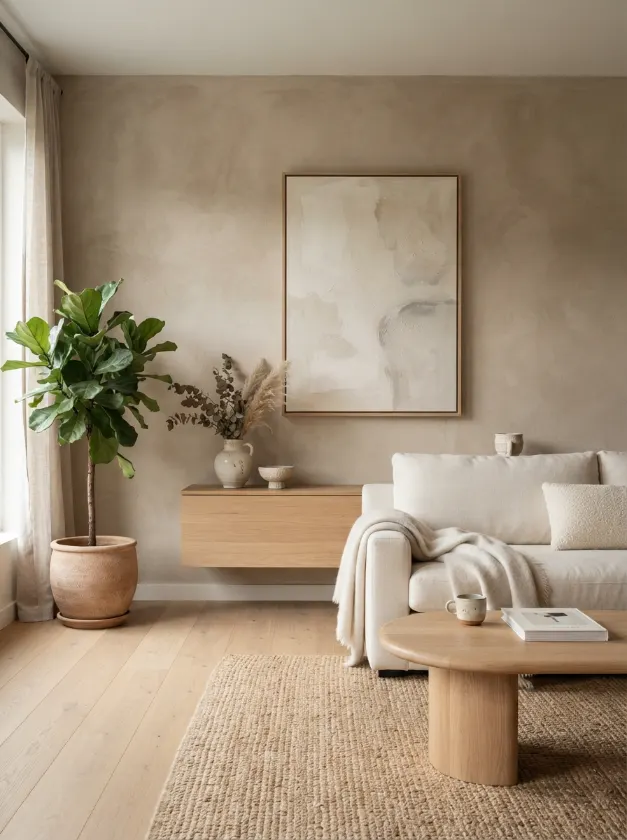
Japandi walls do not have to be completely empty. The trick is to choose fewer pieces with more intention.
A large neutral artwork, simple botanical print, textured plaster finish, slim wood slats, or understated mirror can give a wall character without making it feel crowded. Keep the frame colors close to the existing wood or neutral palette.
For a small living room, one larger piece can often work better than a gallery wall packed with small frames. It creates a clear focal point while preserving the visual calm that makes the style recognizable.
9. Create a Calm Focal Point Instead of a Cluttered Feature Wall
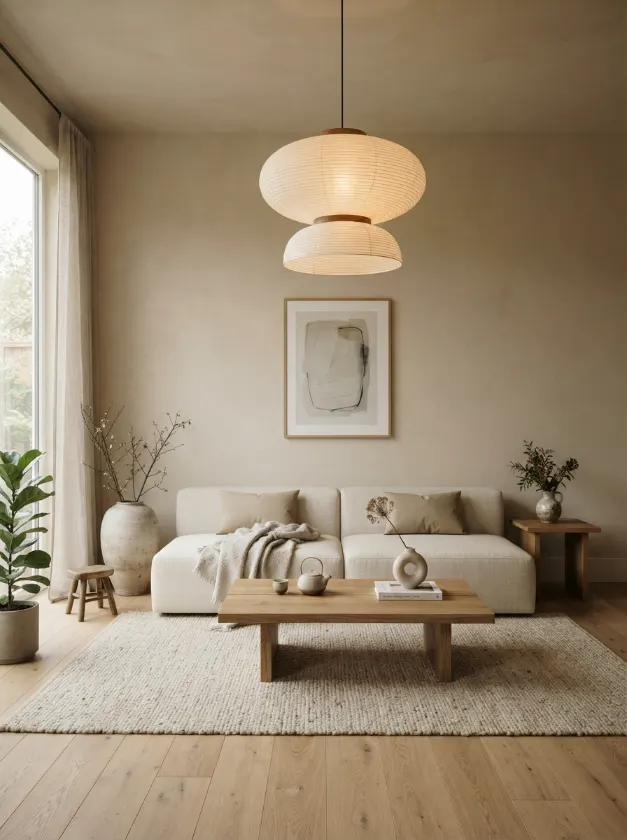
Every living room needs somewhere for the eye to rest. In Japandi design, that focal point is usually quiet rather than dramatic.
A sculptural pendant, beautiful wood cabinet, stone fireplace, large artwork, or carefully styled coffee table can provide enough interest. Let one element lead, then allow the surrounding pieces to support it.
If you have a television as the main focal point, soften the area with a low wood media console, restrained styling, and hidden storage. This keeps technology practical without letting it dominate the room.
10. Use Greenery as a Natural Accent
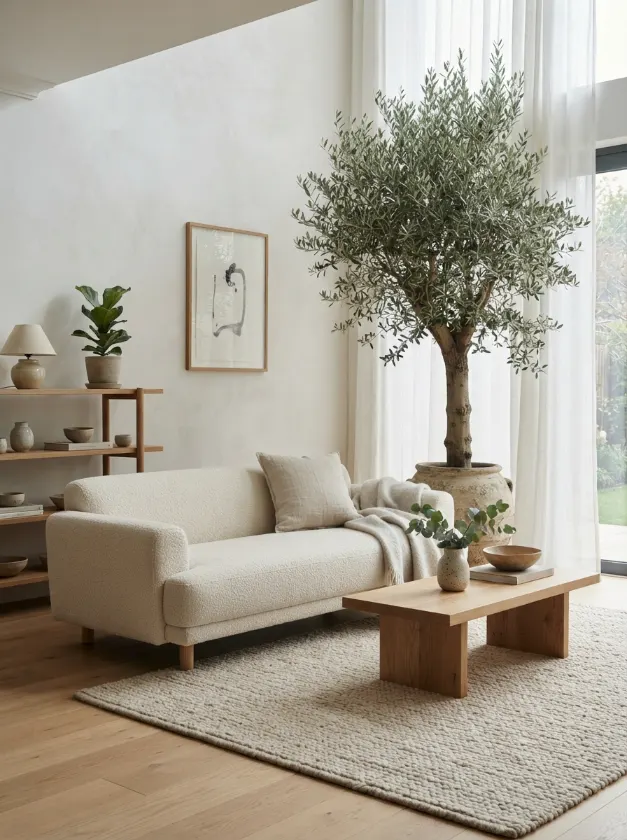
Plants work beautifully with the natural materials used in Japandi interiors. They add life and a small amount of organic movement without requiring a new color scheme.
Choose a few plants with simple forms rather than filling every corner. An olive tree, sculptural houseplant, branch arrangement, or small bonsai-style plant can work depending on your light and maintenance routine.
Place greenery where it helps balance the composition. A tall plant can soften an empty corner, while a smaller plant can bring life to a shelf or side table. Always choose plants that suit the actual light conditions in your room.
11. Hide Everyday Clutter With Intentional Storage
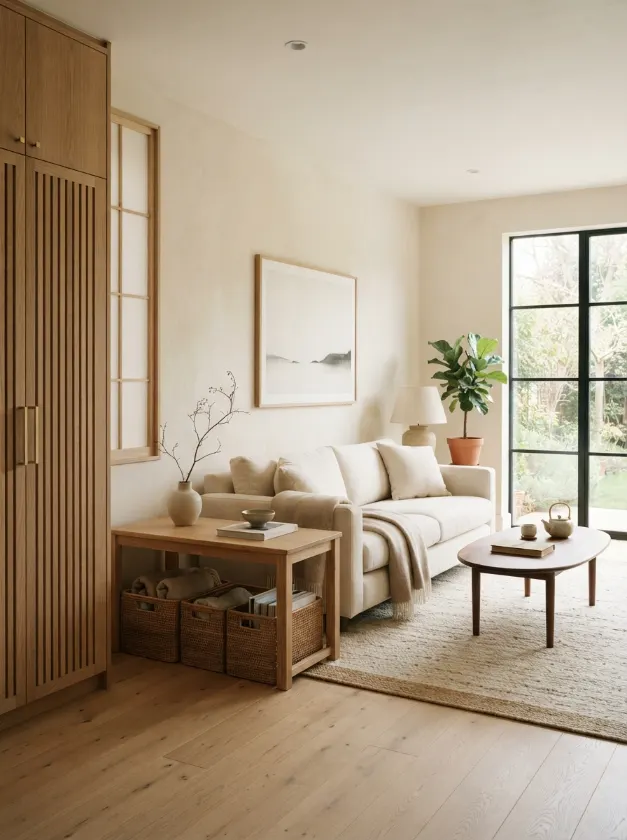
A calm room becomes difficult to maintain if everything is left in plain sight. Japandi design benefits from storage that makes daily tidying easy.
Look for closed wood cabinets, simple baskets, storage ottomans, or low consoles. Keep frequently used items accessible, but give smaller objects a designated home.
This is where the style becomes practical rather than simply beautiful. If you can put a remote, blanket, toy, book, or charger away in seconds, the room is much more likely to stay visually calm during a normal week.
12. Add Contrast Without Losing the Soft Mood
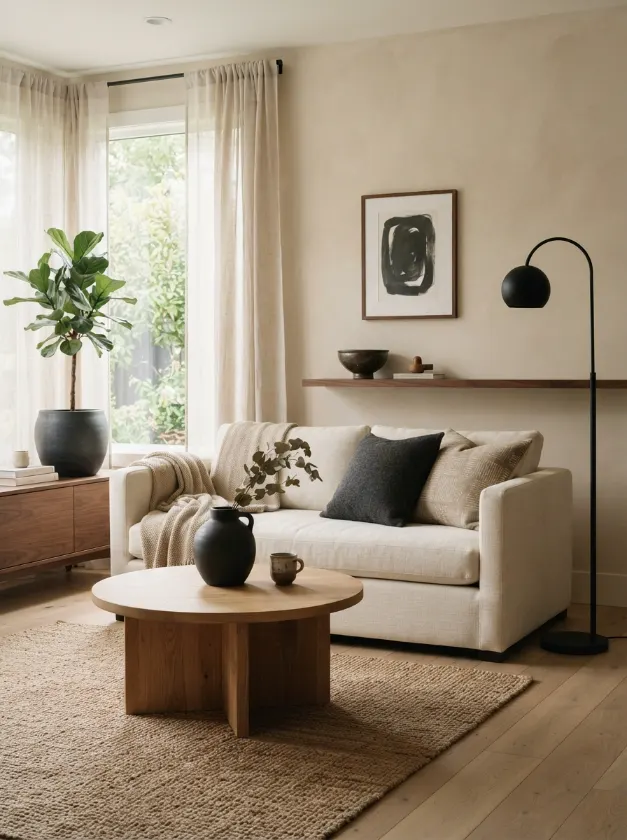
A room made entirely from pale beige can sometimes feel washed out. Small amounts of contrast give the design definition.
Try charcoal, soft black, deep walnut, muted green, or a darker brown in carefully chosen places. A black lamp base, dark picture frame, or deep-toned cushion may be enough.
The key is proportion. Strong contrast should act like punctuation, not become the entire sentence. Repeat a darker tone in two or three small areas so it feels connected to the rest of the room.
13. Style Shelves With Fewer, Better Pieces
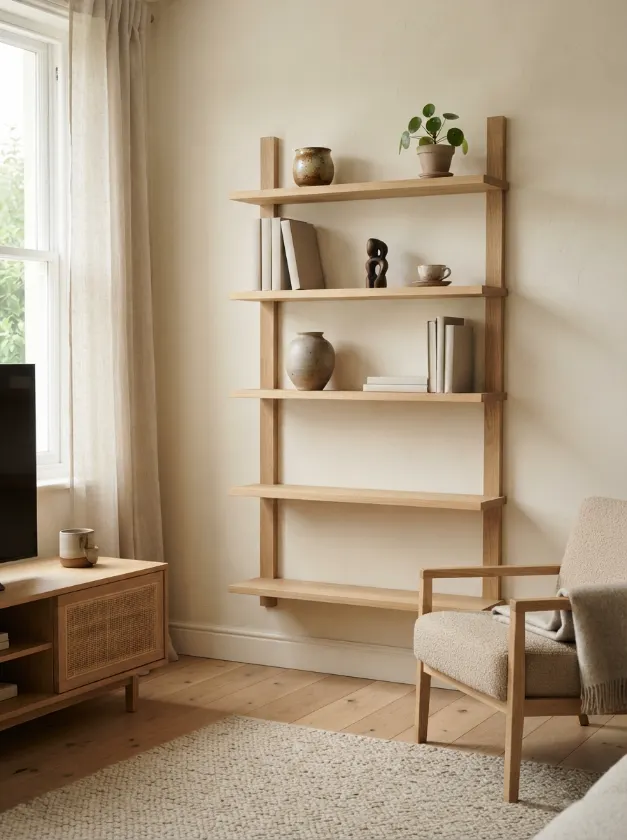
Open shelving can either support a Japandi aesthetic or quickly destroy it. The difference is usually how much you place on the shelves.
Start by leaving empty space. Then add a small stack of books, a ceramic vessel, a wooden object, a plant, or one meaningful decorative piece. Vary the heights but keep the color palette related.
I have found that styling shelves in small groups works better than spreading tiny objects across every inch. The negative space between objects becomes part of the design.
14. Make the Seating Comfortable Enough for Real Life
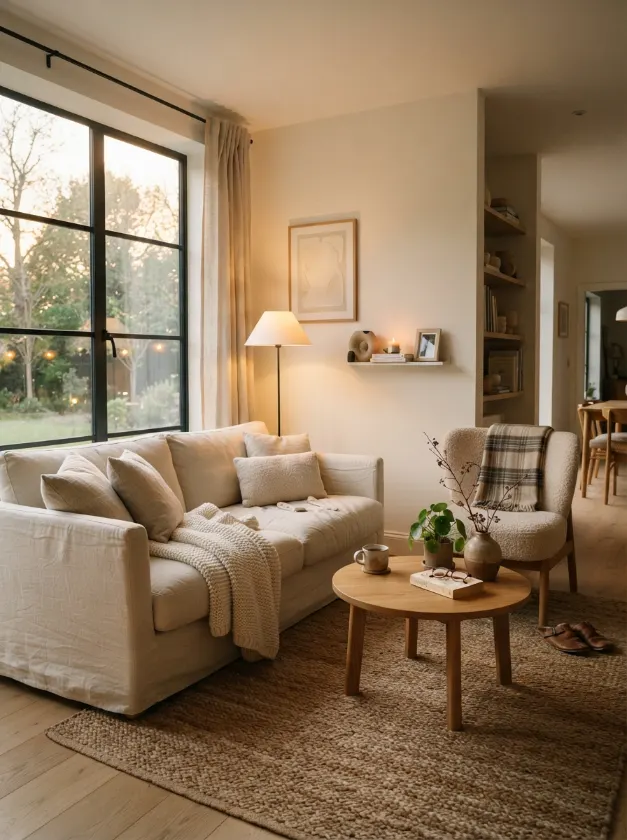
A stylish living room still needs to work on an ordinary evening. Choose seating that supports the way your household actually uses the room.
If you read, make space for a good lamp and a comfortable chair. If family and friends gather often, create an arrangement that encourages conversation. If the room is small, consider a compact sofa with one flexible accent chair instead of forcing in too many seats.
Comfort does not require visual clutter. Soft cushions, a textured throw, and supportive upholstery can provide warmth while keeping the overall composition simple.
15. Let Your Japandi Living Room Feel Lived In
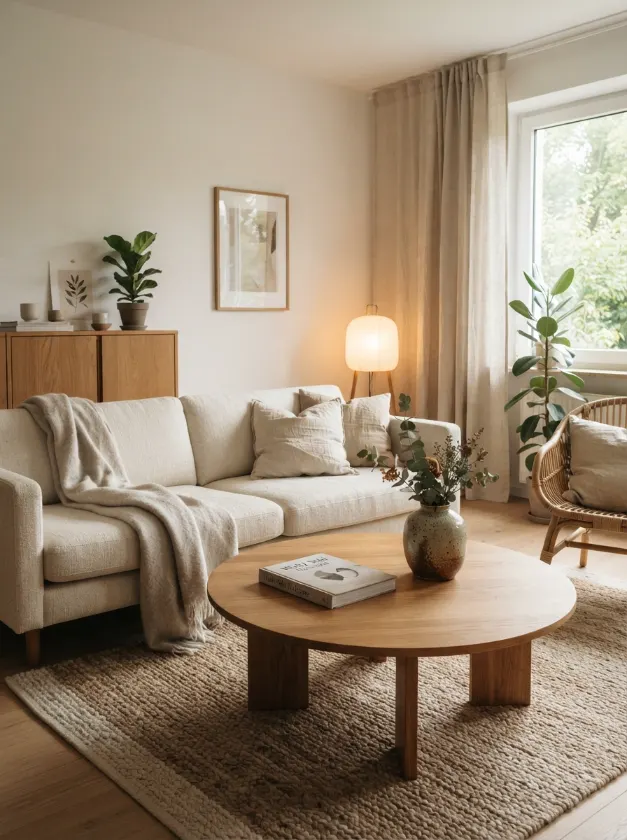
The final lesson is perhaps the most useful: a Japandi living room does not need to look untouched. It needs to feel intentional.
Leave a book on the coffee table. Keep a soft throw within reach. Display one object that has personal meaning. Let the room show small signs of everyday life while keeping the larger composition calm.
If you want more room-by-room inspiration, you can also explore our Japandi bedroom ideas, Japandi bathroom ideas, and Japandi dining room ideas for ways to carry the same design language through the rest of your home.
The most successful Japandi rooms are not defined by having the fewest possessions. They are defined by thoughtful choices. Choose natural materials, protect empty space, soften hard lines, layer useful textures, and make comfort part of the plan. That is what makes a room feel calm on Pinterest and still work beautifully when real life happens.
Frequently Asked Questions
What is a Japandi living room?
A Japandi living room combines Japanese-inspired simplicity with Scandinavian warmth. It typically uses natural materials, neutral colors, clean forms, comfortable furniture, and intentional negative space.
What colors work best in a Japandi living room?
Warm whites, beige, oatmeal, taupe, soft gray, natural wood, muted green, brown, and small amounts of black are common choices. The overall palette usually stays restrained and nature inspired.
How do I make a small living room look Japandi?
Use low-profile furniture, keep the center of the room open, choose multifunctional storage, limit decorative objects, and use warm neutral colors. A large mirror or simple vertical element can also help the room feel more open.