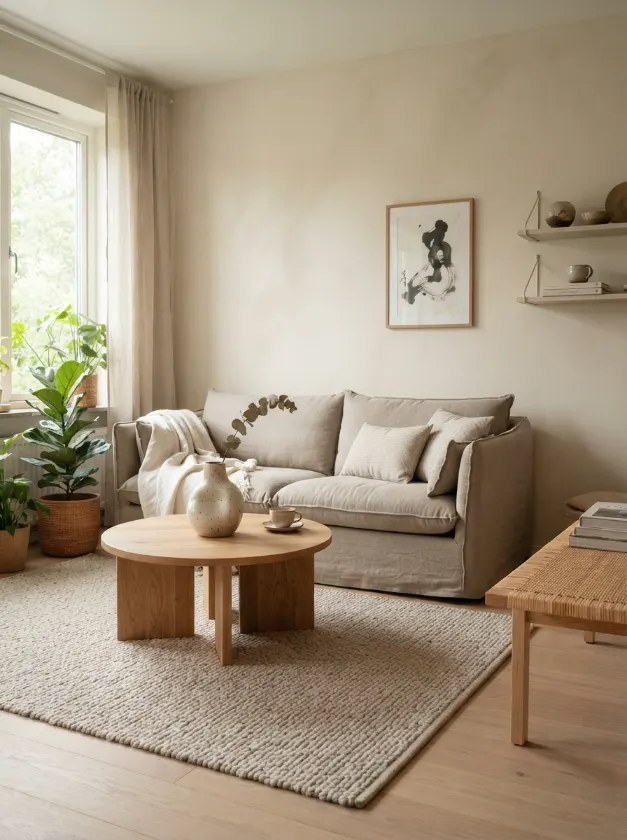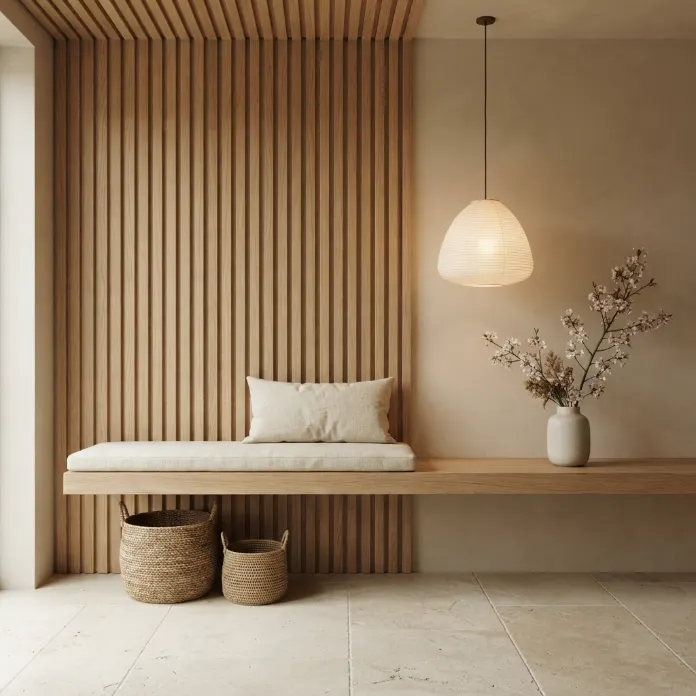
10 Brilliant Japandi Dining Room Ideas That Make Neutral Palettes Feel Alive
A dining room can feel peaceful without feeling plain. That balance is exactly what makes a Japandi dining room so appealing: Japanese simplicity meets Scandinavian warmth, creating interiors that feel refined, comfortable, and easy to live with. Instead of filling the room with decoration, Japandi design relies on natural materials, thoughtful proportions, soft lighting, and a restrained palette.
The key is not simply choosing beige furniture and calling it Japandi. A successful room needs contrast, texture, organic shapes, and enough visual breathing space to keep the neutral scheme interesting. Warm oak, walnut, woven fibers, handmade ceramics, linen, greenery, and sculptural lighting can all add character without creating clutter.
The ideas below show how to build that balance in a Japandi dining room in different ways, from dramatic dark wood and curved chairs to compact breakfast nooks and architectural wall details.
1. Layer Warm Wood With Natural Texture
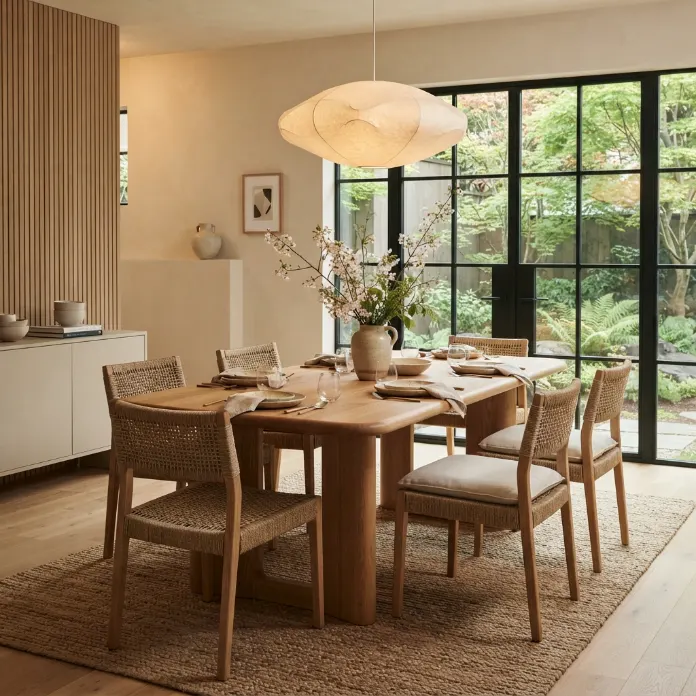
One of the easiest ways to create a welcoming Japandi dining room is to build the foundation around warm wood. Choose an oak or medium-toned wood dining table, then repeat a related undertone through the chairs, flooring, shelving, or a slatted feature wall.
Texture keeps the neutral palette from looking flat. Pair smooth timber with woven chairs, a jute or wool rug, matte ceramic dishes, and a linen runner. The materials should feel related rather than perfectly matched.
A round table works especially well when the room has strong vertical lines. Its softer silhouette balances slatted walls, straight shelving, and angular architecture. Finish the arrangement with one simple pendant centered above the table.
2. Keep the Furniture Sculptural and the Styling Minimal
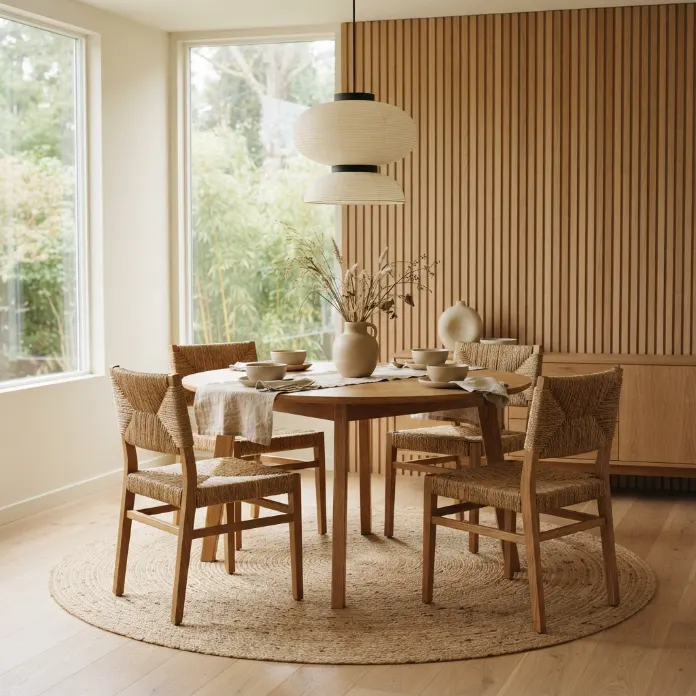
A Japandi dining room does not need a lot of accessories to have personality. Start with a substantial wood table that has a beautiful grain or softly rounded edges. Then choose dining chairs with a lighter visual profile so the table remains the anchor.
For the walls, one oversized abstract artwork can create enough movement without turning the room into a gallery. On the table, use only a few useful decorative pieces: a low ceramic bowl, a small vase, or a simple branch arrangement.
The goal is visual calm with enough shape variation to hold attention. Leave some surfaces intentionally open. Negative space is part of the design, not a sign that the room is unfinished.
3. Make the Pendant Light the Focal Point
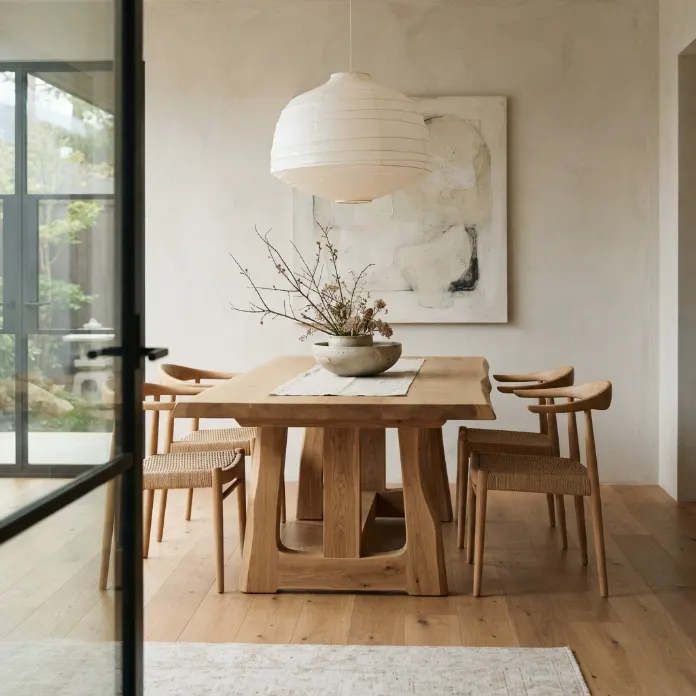
Lighting can change the entire character of a Japandi dining room. In a well-planned Japandi dining room, lighting should support the table rather than compete with it. Instead of using several competing fixtures, choose one sculptural pendant that gives the dining table a clear visual center.
Paper, linen, woven fiber, and softly shaped plaster fixtures all suit the style. Look for rounded forms or natural finishes that diffuse light rather than producing a sharp glare. Warm white bulbs around 2700K can create a comfortable evening atmosphere.
Keep the rest of the room quiet. A pale wood table, neutral chairs, a linen textile, and a small amount of greenery allow the pendant to stand out. This approach works particularly well when the room has a high ceiling or an interesting view above the table.
4. Balance Dark Wood With Cream and Soft Curves

Japandi design does not have to be pale. A dark walnut or smoked-oak dining table can give the room more depth while still feeling calm when surrounded by lighter elements.
Try pairing the darker table with cream walls, pale flooring, and curved boucle or upholstered chairs. A vertical wood panel behind the table can echo the timber while a large neutral artwork adds scale.
The important part is controlling the contrast. Let one or two darker elements carry visual weight, then give the rest of the room plenty of light space. Rounded furniture is especially helpful because it softens the stronger presence of dark wood.
5. Use Architectural Details to Add Warmth

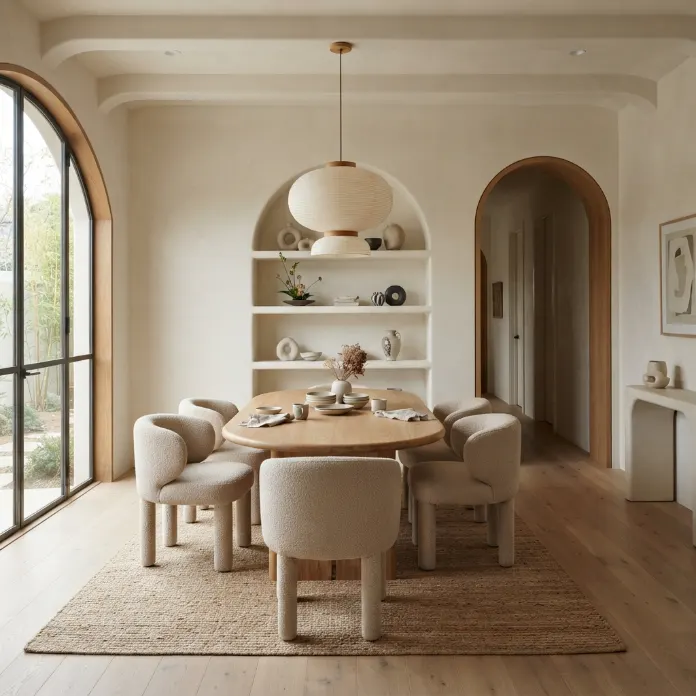
If your dining area has beams, an arched cabinet, built-in shelving, or a large window, let those features become part of the design rather than covering them with decoration.
Natural architecture fits beautifully with Japandi principles because it gives the room character without adding visual clutter. Keep furniture simple and use textiles to soften harder surfaces. Sheer curtains can filter daylight while preserving an airy feeling.
A pale oak table, woven seating, handmade ceramics, and a neutral rug can be enough. When the architecture is already expressive, restraint elsewhere makes the entire room feel more considered.
6. Introduce Rich Green Through Built-In Storage
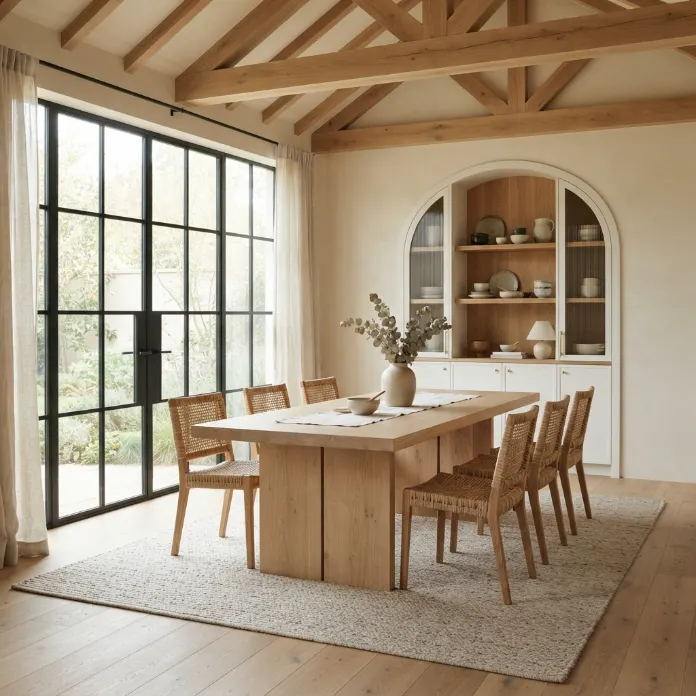
Neutral rooms can still benefit from color. This is especially useful when you want a Japandi dining room to feel personal rather than overly uniform. A muted rich green cabinet or built-in storage wall creates a strong focal point while keeping the overall mood grounded and natural.
Use the green on one substantial feature rather than spreading it across every surface. Then repeat tiny touches of the same family through dining chairs, a vase, artwork, or foliage.
Warm wood is an excellent partner because it prevents the green from feeling too cool. Woven pendant lights and open shelving can also break up a large cabinet wall, making storage feel like part of the room’s composition.
7. Turn a Small Corner Into a Cozy Dining Nook
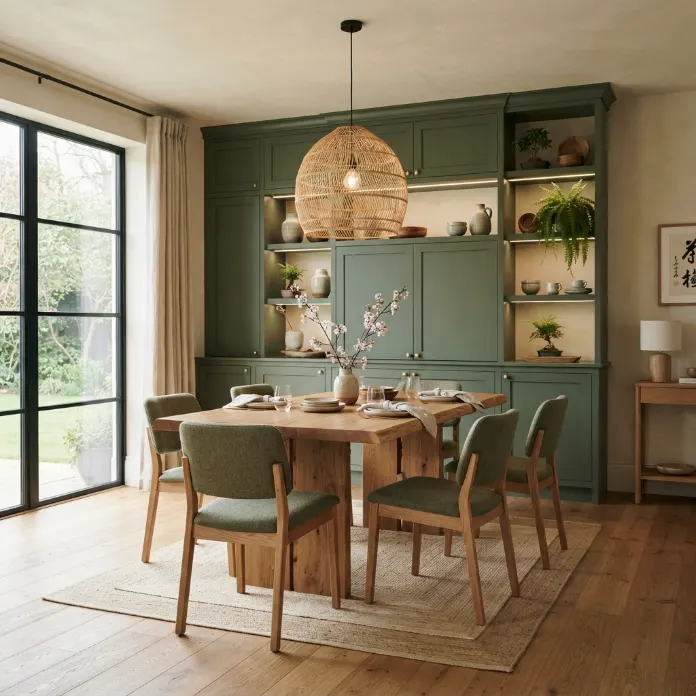
A Japandi dining room does not need a large footprint. A built-in bench can transform a compact corner into a comfortable dining zone while keeping the floor area open.
Choose a small round or softly rectangular table and tuck one side against the bench. Add neutral cushions in linen, cotton, or textured fabric for comfort. A single pendant above the center of the table gives the nook its own identity.
For a more finished look, use soft green or warm neutral paneling behind the bench. Keep the tabletop lightly styled so the compact area never feels crowded. This is a practical way to combine seating, storage, and atmosphere in one small space.
8. Bring in Woven Materials and Living Greenery
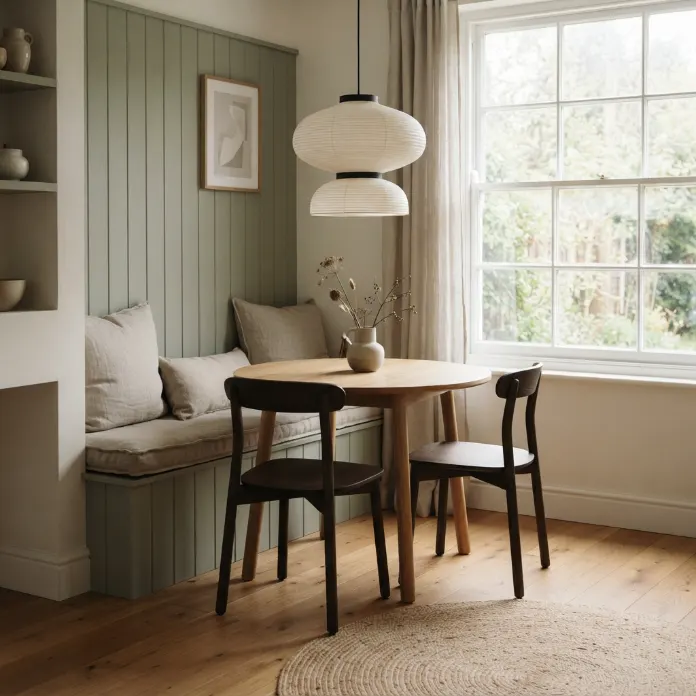
Natural materials are central to a welcoming Japandi dining room. Rattan, cane, jute, seagrass, linen, and unfinished or lightly finished wood can add visual interest without requiring bold colors.
Start with one woven pendant or a pair of woven dining chairs. Then add a natural-fiber rug and a few ceramic pieces with handmade-looking surfaces. A leafy plant near a window introduces another layer of organic texture.
Black metal can be used sparingly for contrast, such as on table legs, a slim frame, or a small wall light. The result feels warm and contemporary while keeping the palette restrained.
9. Repeat Curves Through the Walls and Furniture

Curves are a useful way to soften a dining room filled with straight architectural lines. Consider an oval table, arched shelving, a rounded mirror, or a curved wall niche.
The trick is repetition. When a curved feature appears in more than one place, the room feels connected rather than randomly decorated. For example, an oval table can echo an arched cabinet behind it while a rounded pendant reinforces the same visual language.
Keep the colors tonal and let texture provide most of the variation. This makes the room feel sophisticated without relying on a long list of decorative objects.
10. Build a Symmetrical Layout With Layered Wood Tones
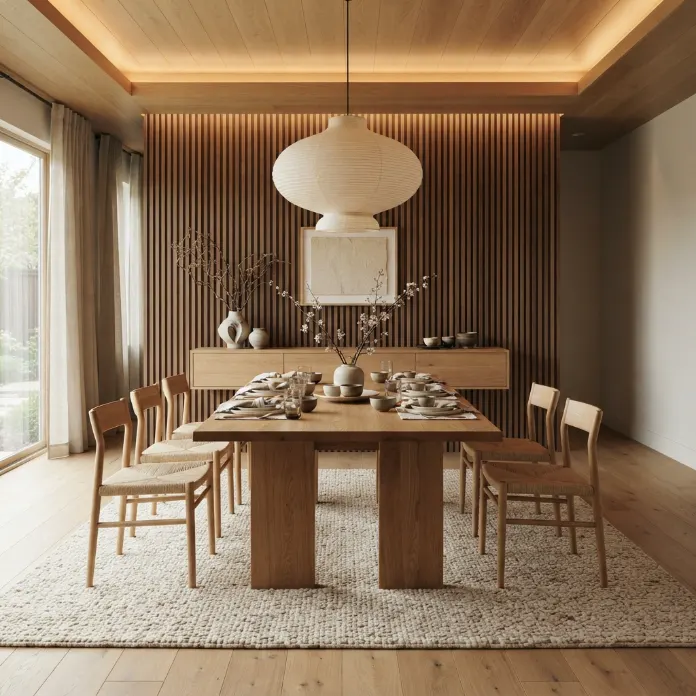
When you are unsure how to arrange a dining room, start with symmetry. Center the table, align the pendant above it, and keep the chairs evenly spaced. This creates an immediate sense of order.
You can then add warmth through different wood textures rather than introducing many colors. A slatted wall, oak table, woven chairs, and a warm wood console can work together when their undertones are compatible.
Use a rug to define the dining zone, making sure it extends comfortably beyond the chairs. Finish with one sculptural light and a small centerpiece. The room should feel organized but not rigid.
How to Keep a Japandi Dining Room From Feeling Too Plain
The secret to a successful Japandi dining room is variation within restraint. If every surface is the same shade of beige and every piece has the same finish, the room can lose its character.
Instead, create contrast through material, shape, scale, and light. Pair matte ceramics with smooth wood, a chunky table with lightweight chairs, soft linen with woven fibers, and a pale wall with one darker architectural feature.
Also pay attention to the way the room functions. Keep walking paths clear, choose chairs that are comfortable for longer meals, and make sure the lighting works for both daytime and evening use. Japandi is at its strongest when beauty and practicality support each other.
Final Word
The most inviting Japandi dining rooms feel calm because every element has a reason to be there. Warm wood brings natural character, curved furniture softens the composition, woven materials add texture, and carefully chosen lighting gives the room atmosphere.
You do not need a large budget or a completely neutral home to create the look. Start with a simple dining table, establish a warm material palette, add one memorable light fixture, and introduce texture through rugs, textiles, ceramics, and greenery. Then stop before the room becomes crowded.
That balance between simplicity and warmth is what makes a Japandi dining room feel timeless. That balance between simplicity and warmth is what gives Japandi interiors their lasting appeal.