17 Stunning Japandi Bathroom Ideas for a Calmer, Spa-Like Home
A bathroom can be practical without feeling purely practical. Japandi design takes that idea seriously by combining Japanese restraint with Scandinavian warmth, creating rooms that feel quiet, tactile, and easy to live with. The look is built around natural materials, soft neutrals, simple shapes, useful storage, and enough open space for the eye to rest.
The most successful Japandi bathroom ideas are not about filling a room with beige accessories. They are about choosing fewer elements and making each one count. Think warm oak beside stone, softly rounded ceramics, handmade-looking finishes, linen textiles, greenery, and lighting that feels gentle rather than clinical.
Below are 17 ways to bring that calm, refined character into a bathroom, whether you are planning a full renovation or simply changing a few details.
1. Start With a Warm, Quiet Neutral Palette

Begin with a restrained palette of warm white, oatmeal, sand, mushroom, light taupe, and soft greige. These colors create a relaxed backdrop while allowing wood and stone to become part of the visual story.
For stronger contrast, add charcoal or muted brown in small amounts. Avoid using too many competing shades. One base neutral, one wood tone, and one darker accent are often enough for convincing Japandi bathroom ideas.
2. Pair Light Oak With Natural Stone
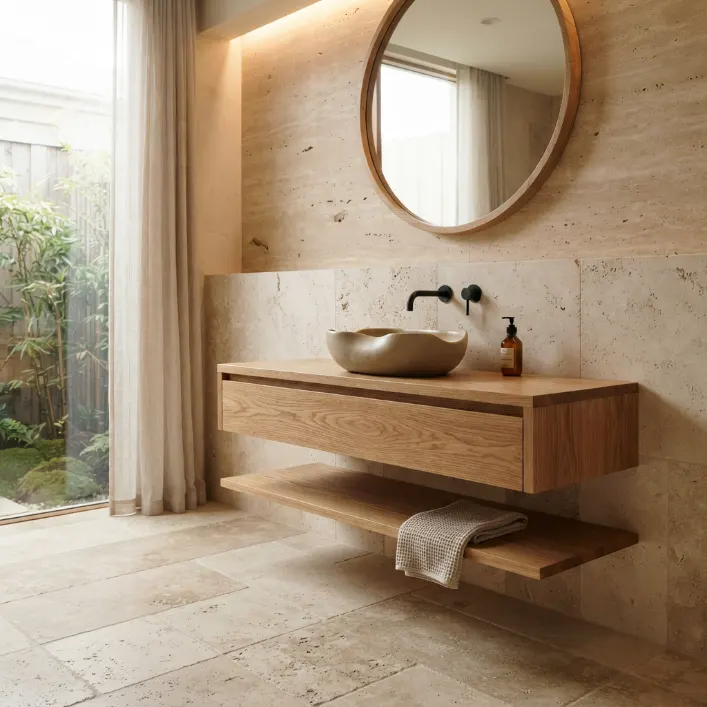
Warm oak immediately softens the harder surfaces normally found in a bathroom. Combine an oak vanity with limestone, travertine, pale porcelain, or a softly textured stone-look tile.
The important detail is balance. Let the wood bring warmth while the stone provides weight and visual calm. This combination works especially well when hardware stays simple and finishes are matte.
3. Choose a Floating Vanity With Clean Lines

A floating vanity creates more visible floor area, which can make a bathroom feel lighter and more spacious. Choose flat-front doors, minimal hardware, and a natural wood or warm neutral finish.
Keep the countertop visually quiet. A single basin, simple faucet, and carefully edited styling can create the uncluttered character that makes Japandi bathroom ideas feel so peaceful.
4. Soften the Room With Rounded Shapes

Japandi spaces often balance straight architectural lines with gentle organic curves. A rounded mirror, oval basin, curved stool, or softly shaped pendant can prevent a minimalist bathroom from feeling rigid.
You do not need curves everywhere. One or two rounded features are enough to create contrast and make the room feel more welcoming.
5. Make a Freestanding Tub the Focal Point

If your floor plan allows it, a simple freestanding tub can become the visual anchor. Look for sculptural but understated forms in white, warm stone, or matte finishes.
Give the tub breathing room instead of surrounding it with accessories. A small wooden stool, one branch in a ceramic vessel, and soft lighting can be all the styling it needs.
6. Use Large-Format Stone-Look Surfaces
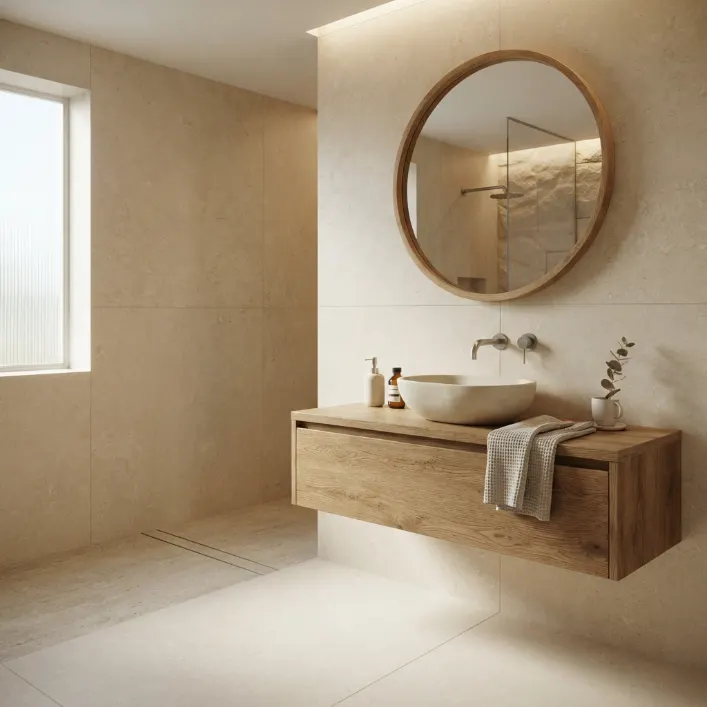
Fewer grout lines create a cleaner visual field and help walls and floors feel more continuous. Large-format porcelain in limestone, travertine, or warm concrete tones can provide this effect without demanding constant maintenance.
Choose surfaces with subtle variation rather than dramatic veining. The goal is texture and depth without turning the walls into the loudest feature.
7. Add a Walk-In Shower With Clear Glass
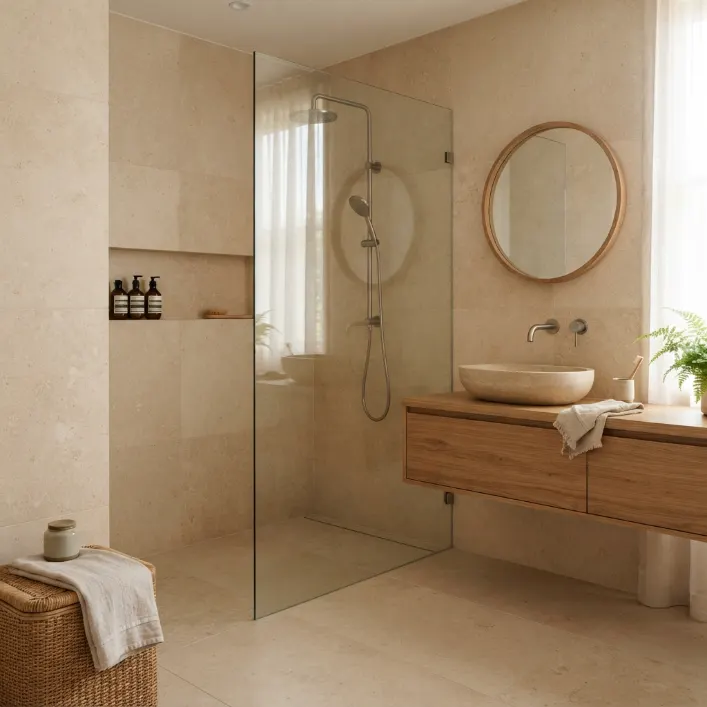
A frameless or minimally framed glass shower keeps the room visually connected. This is especially useful in smaller bathrooms because the eye can travel through the entire space instead of stopping at a heavy enclosure.
Inside the shower, use one consistent material palette and add a recessed niche for everyday products. Hidden storage supports the calm appearance that defines good Japandi bathroom ideas.
8. Bring in a Small Amount of Greenery

Plants add life to an otherwise restrained palette. Choose varieties that suit the bathroom’s light and humidity, then keep the display edited rather than turning the vanity into a jungle.
A tall plant in a textured floor planter, a small branch in a ceramic vase, or a single trailing plant can introduce the natural connection associated with Japanese interiors.
9. Layer Warm Lighting Instead of Using One Bright Fixture

Lighting can change the entire mood of a bathroom. Combine soft ceiling illumination with wall sconces, mirror lighting, or a discreet under-vanity glow.
Choose warm color temperatures where practical, while keeping task lighting bright enough for grooming. The best Japandi bathroom ideas use lighting to create atmosphere without sacrificing function.
10. Use Handmade-Looking Ceramics

Perfectly uniform accessories can make a minimalist bathroom feel overly manufactured. Introduce subtle character through ceramic cups, trays, soap dishes, or vessels with gentle irregularity.
Look for chalky whites, earthy beige, stone gray, and muted clay tones. The finish should feel tactile and considered rather than glossy and decorative.
11. Build a Calm Open-Shelf Moment

Open shelving works when it is intentionally edited. A slim oak shelf can hold folded towels, a small vessel, and one or two attractive everyday objects.
Leave empty space between items. That negative space is part of the design, not wasted storage. If the shelf becomes crowded, move functional extras into closed cabinetry.
12. Add a Wooden Bath Stool
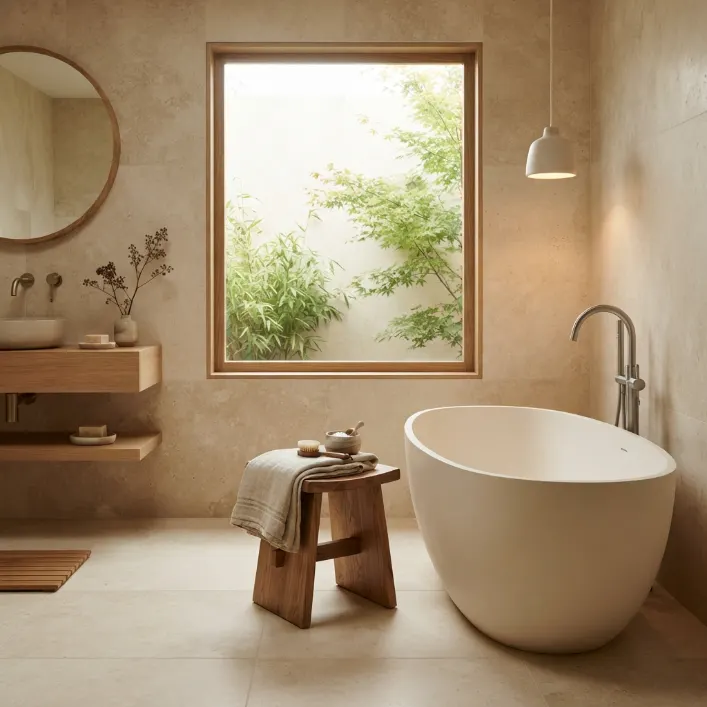
A simple wooden stool is one of the easiest ways to introduce warmth. It can sit beside the tub, hold a towel, or provide a temporary surface for bath essentials.
Choose a compact stool with a natural grain and a simple silhouette. It should look useful first and decorative second, which fits the practical spirit behind Japandi bathroom ideas.
13. Keep Hardware Soft and Understated

Hardware should support the room rather than compete with it. Brushed nickel, aged brass, matte black, or warm bronze can all work when repeated consistently.
For a softer result, brushed finishes usually blend more quietly than highly polished chrome. Repeat the same finish across faucets, cabinet pulls, lighting, and small accessories.
14. Create a Spa-Like Towel Station

Textiles bring softness into a room dominated by hard surfaces. Choose thick cotton or linen towels in cream, oatmeal, warm gray, or muted olive.
Fold them neatly on an open shelf or roll a few beneath a vanity. A small wooden ladder or low basket can also provide storage without introducing visual clutter.
15. Use a Tiled Niche as a Quiet Design Detail
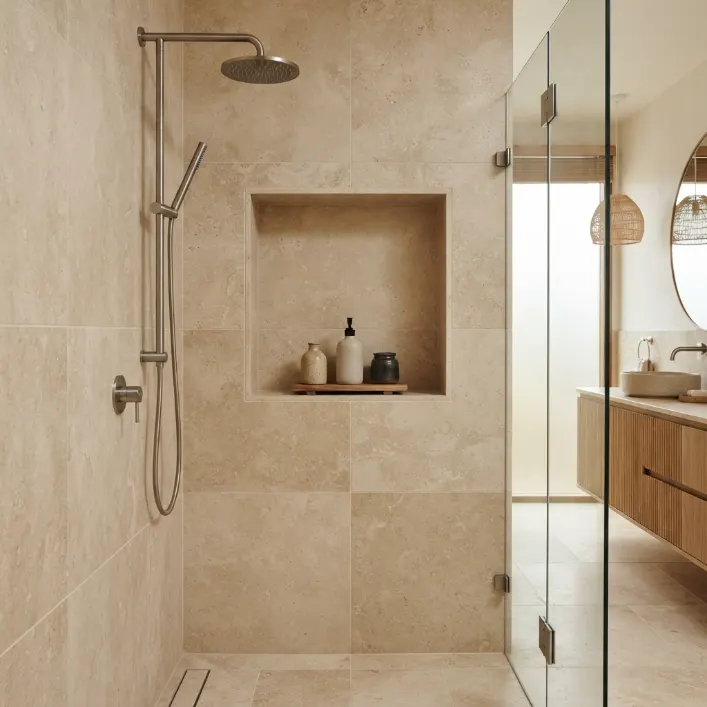
A recessed niche can be both practical and architectural. Instead of treating it as an afterthought, use it to reinforce the room’s material palette.
For example, continue the shower tile into the niche or choose a complementary stone. Keep bottles limited and use matching containers when possible so the niche looks intentional rather than busy.
16. Let Natural Light Become Part of the Design

If you have a window, treat natural light as one of the room’s main materials. Keep window treatments simple and choose finishes that look beautiful in changing daylight.
Sheer linen, textured glass, or a discreet privacy film can preserve brightness while protecting privacy. A connection to greenery outside can make the room feel even more restorative.
17. Finish With One Meaningful Organic Accent

The final layer should not be a pile of accessories. Choose one memorable organic detail: a sculptural branch, a stone vessel, a handmade tray, a woven basket, or a piece of understated nature-inspired art.
This is where the room gains personality without losing restraint. The strongest Japandi bathroom ideas leave enough visual quiet for one beautiful detail to matter.
How to Make a Japandi Bathroom Feel Expensive Without Overdecorating
Luxury in this style comes from proportion, materials, and consistency rather than quantity. Repeat a small number of finishes, keep storage organized, and allow important features to breathe.
- Use two or three core materials throughout the room.
- Repeat one metal finish instead of mixing several.
- Choose fewer accessories with better texture and shape.
- Keep countertops mostly clear.
- Use warm lighting to soften stone, tile, and cabinetry.
- Let wood grain, ceramic texture, and natural stone provide visual interest.
Common Mistakes to Avoid
Japandi can lose its character when it becomes a collection of unrelated neutral products. Too much beige without texture can feel flat, while too much black can overpower the softness of the room.
Avoid filling every shelf, using several wood tones, or adding decorative objects simply because there is an empty surface. The room should feel considered, not staged. Practical storage, natural materials, and calm proportions matter more than following every trend.
Final Word
The appeal of Japandi bathroom ideas comes from their ability to make everyday routines feel calmer without making the room impractical. Warm wood, stone, soft light, organic shapes, and thoughtful storage work together to create a bathroom that feels grounded and timeless.
You do not need a huge renovation to bring that feeling home. Start with one change that has a strong visual impact, such as a wood vanity, rounded mirror, warmer lighting, or natural stone-look surface. Build from there, keep the palette controlled, and leave enough space for the room to breathe.