18 Japandi Kitchen Ideas That Fix Common Modern Kitchen Problems
A modern kitchen can have beautiful cabinets, expensive finishes, and plenty of storage and still feel strangely tiring. Too many visible appliances, competing materials, harsh lighting, and crowded counters can make a room feel busy before the day even starts.
That is where the Japandi kitchen approach feels different. It brings together Japanese restraint and Scandinavian warmth, using natural materials, practical storage, soft contrast, and thoughtful empty space. The result is not a cold minimalist room. It is a kitchen that feels calm, useful, and comfortable enough for everyday life.
In my experience, the most successful Japandi spaces are not the ones with the most decorations. They are the ones where every visible choice has a reason. The following ideas focus on that balance, so you can borrow the principles without making your kitchen look like a showroom.
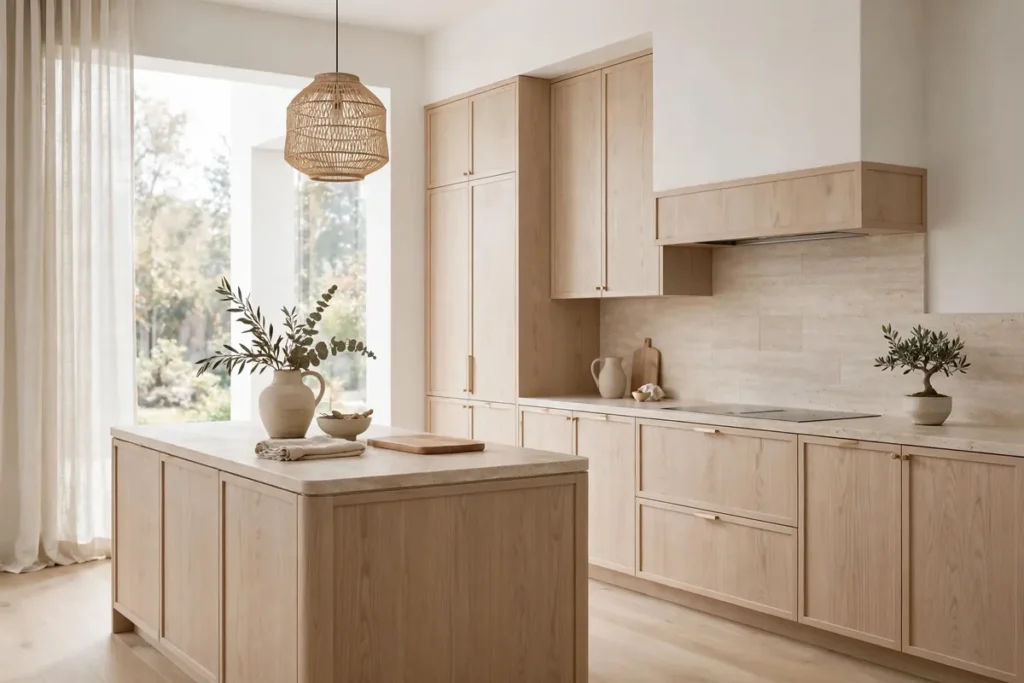
1. Warm Oak Cabinets With a Quiet Stone Countertop
Warm oak is an easy starting point because it adds natural character without needing a complicated color scheme. Pair it with a cream, beige, or softly veined stone countertop for gentle contrast.
Keep the backsplash restrained so the grain of the wood remains visible. A handmade ceramic bowl or wooden cutting board can add small touches of personality while the larger surfaces stay calm.

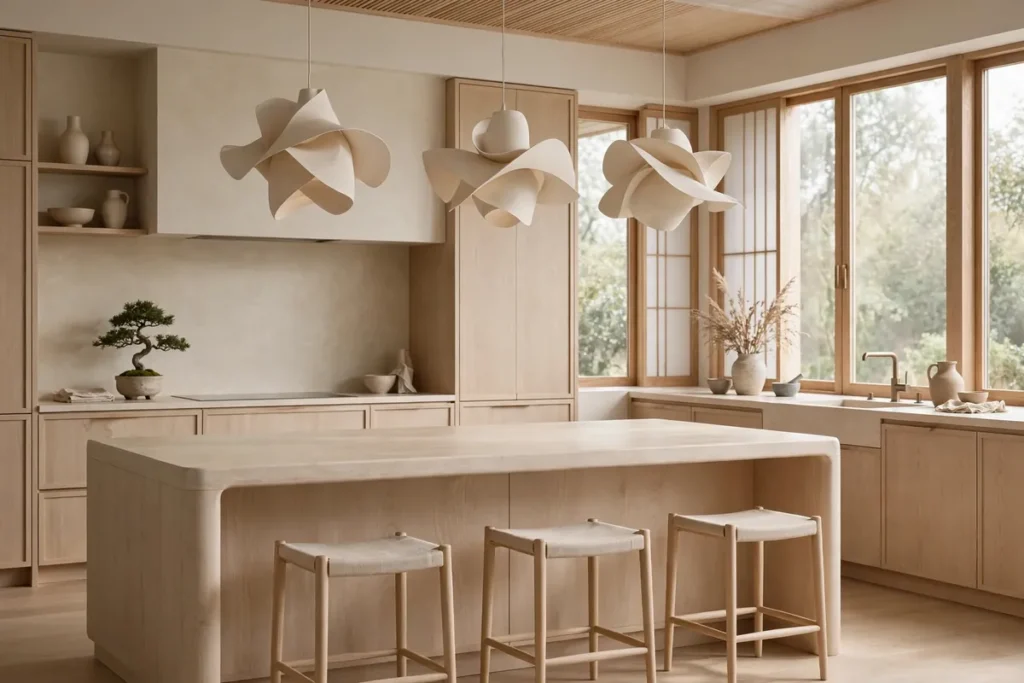
2. A Rounded Island That Softens the Room
Many modern kitchens are built around straight lines. A gently rounded island introduces a softer shape and makes the room feel more relaxed.
Try a curved stone, plaster, or microcement base with warm wood nearby. Keep stools simple and leave enough circulation space around the island. The shape should feel architectural, not decorative.
3. One Main Wood Tone Throughout the Kitchen
Mixing several wood tones can make a minimalist kitchen feel fragmented. Choose one dominant tone for the cabinets and repeat it on a shelf, breakfast bench, or nearby furniture.
You can still add variation through grain and texture. Just keep the undertones related. This small decision can make a kitchen feel much more cohesive.
4. A Warm Neutral Palette Instead of Stark White
Bright white can sometimes make a minimalist kitchen feel hard and clinical. Warm white, ivory, oatmeal, taupe, and soft greige create a gentler foundation.
Use the palest shade on walls or large surfaces, then bring in slightly deeper neutrals through cabinetry, stools, rugs, and ceramics. The subtle changes give the room depth without adding visual noise.
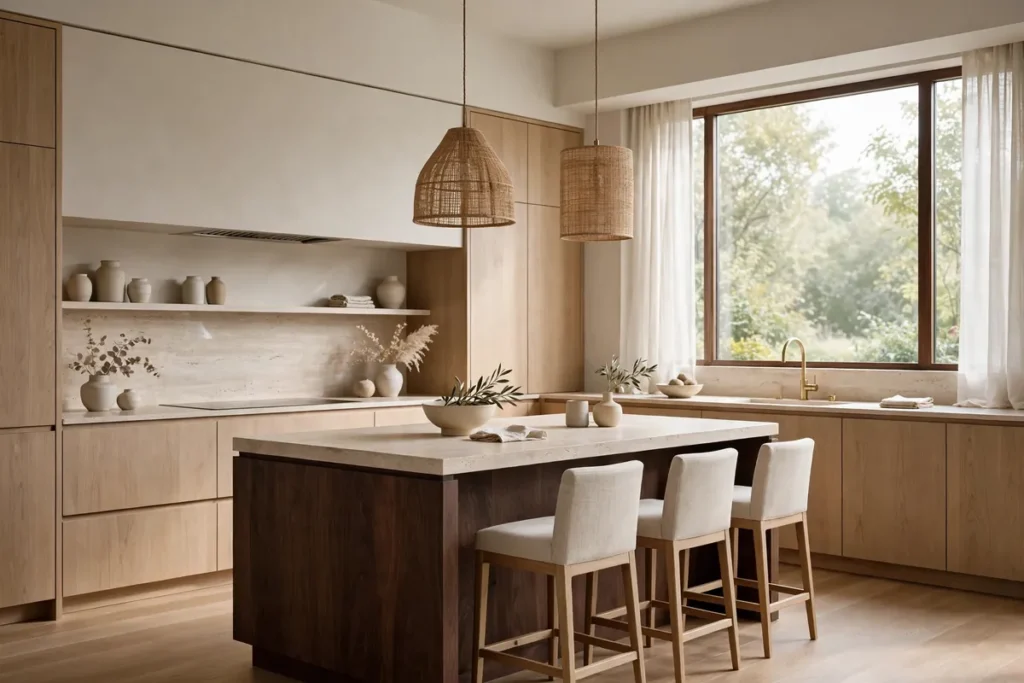
5. Slatted Wood for Controlled Texture
Vertical wood slats can add rhythm without introducing a loud pattern. They work especially well on an island face, pantry door, partial wall, or ceiling detail.
Because the slats already provide texture, keep nearby surfaces smooth. A warm strip of concealed lighting can also highlight the wood after dark.

6. A Built-In Breakfast Nook
An unused corner can become one of the most useful parts of the kitchen with a built-in bench. Match the bench cabinetry to the main kitchen wood so it feels like part of the original plan.
Add a linen cushion and a small round table. In a smaller home, use the bench for hidden storage. It gives the kitchen another purpose without adding bulky furniture.
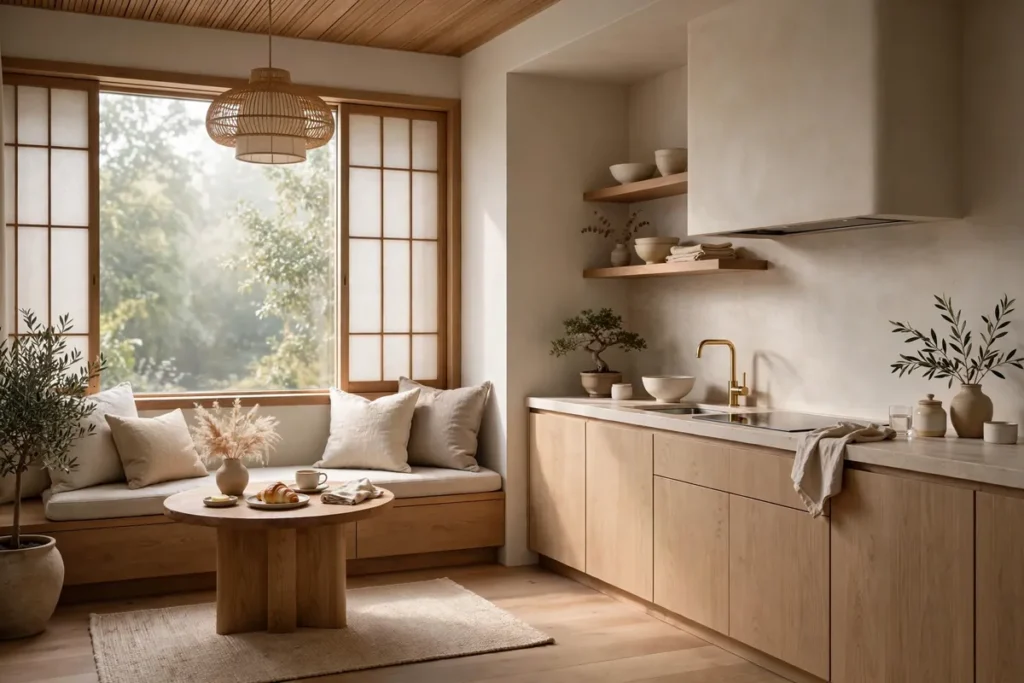
7. Paper or Linen Pendant Lighting
Lighting changes how every material in a kitchen looks. Paper lanterns, linen pendants, and softly diffused globe lights bring an airy warmth that suits the Japandi aesthetic.
Place pendants at a consistent height over the island or dining area and choose warm bulbs. A dimmer is especially useful because the room can shift from bright work space to relaxed evening setting.

8. Mostly Closed Storage With a Small Open Display
Open shelving looks attractive in photos, but too much of it can quickly become visual clutter. Use closed cabinets for most storage and reserve one or two shelves for objects you use and enjoy seeing.
Stack a few neutral ceramics, a wooden board, or simple glassware with plenty of breathing room around them. The empty shelf space is part of the composition.

9. A Softly Textured Ceramic Backsplash
A backsplash does not need a bold pattern in a Japandi kitchen. Handmade-look ceramic, lightly irregular tile, or a softly textured rectangular tile can provide just enough variation.
Choose cream, sand, clay, or warm gray so the backsplash supports the wood and stone rather than competing with them. Subtle texture becomes especially noticeable when daylight moves across the wall.

10. One Large Organic Plant Instead of Many Small Decorations
Greenery can bring life into a Japandi kitchen without adding a collection of decorative objects. A mature olive tree, tall leafy plant, or simple branch arrangement can become the organic focal point.
One substantial element often looks more intentional than several tiny pots scattered across the counters. Place it where natural light can show its shape and leave enough room around it.

11. Microcement or Soft Concrete for Gentle Contrast
Concrete can feel cold when it is surrounded by sharp lines and bright white finishes. Against warm oak, linen, natural stone, and soft lighting, it takes on a much calmer character.
Use microcement or concrete on one major feature, such as an island, floor, or backsplash. Limiting the material keeps the room grounded without making it feel industrial.

12. Concealed Appliances for a Cleaner Sightline
A large part of visual calm comes from reducing the number of separate objects the eye has to process. Integrated refrigerators, appliance garages, concealed hoods, and cabinetry-fronted dishwashers can help.
You do not need to hide everything. Start with the appliances that create the biggest visual interruption. Even one clean appliance wall can make the kitchen feel more settled.
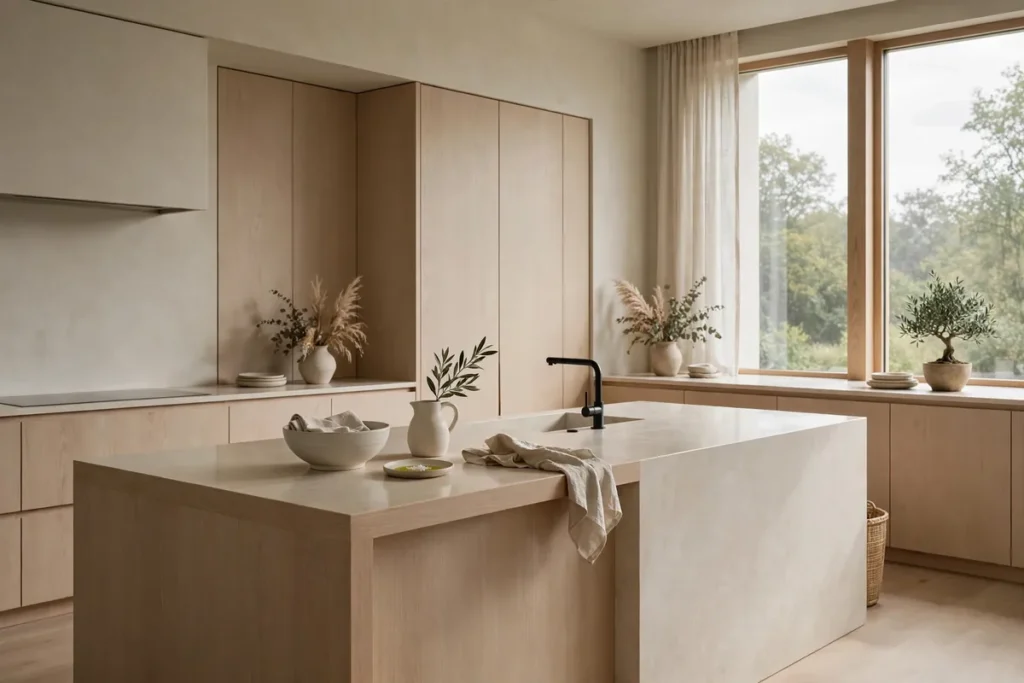
13. Low-Contrast Cabinet Hardware
Hardware in a Japandi kitchen should support the cabinetry instead of becoming the first thing you notice. Slim pulls, integrated handles, and small knobs work well with simple cabinet fronts.
Brushed brass, aged bronze, black, or a finish close to the cabinet color can all work. Repeat the chosen metal in only a few places, such as the faucet and pendant fittings.

14. Layered Lighting Instead of One Bright Ceiling Fixture
A single bright ceiling light can flatten wood, stone, and textured surfaces. Layer daylight with pendant lighting, under-cabinet illumination, and a softer ambient source.
Warm light in the 2700K to 3000K range can make natural materials feel richer. In a Japandi kitchen, lighting should help you work comfortably while also revealing the texture that makes the room special.
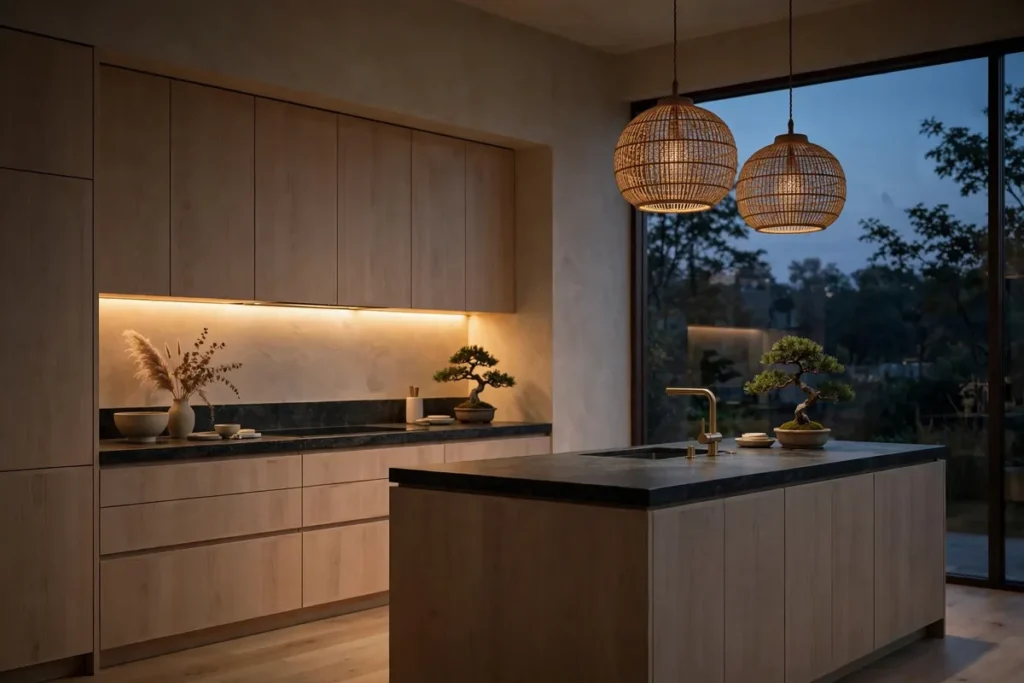
15. A Window View That Becomes Part of the Design
If the kitchen faces a garden, courtyard, balcony, or terrace, let that view contribute to the room. Simple planting outside can become a natural extension of the interior palette.
Even a small window can create this connection. A few plants, timber details, or natural stone near the opening can make the boundary between indoors and outdoors feel softer.
16. Minimal Counter Styling With Useful Objects
Counters are often where a calm kitchen starts to lose its balance. Instead of filling every surface, choose a few practical objects with beautiful shapes.
A ceramic vessel, stone bowl, wooden cutting board, linen towel, or simple coffee station can be enough. Group related objects together and leave large areas clear for actual preparation.
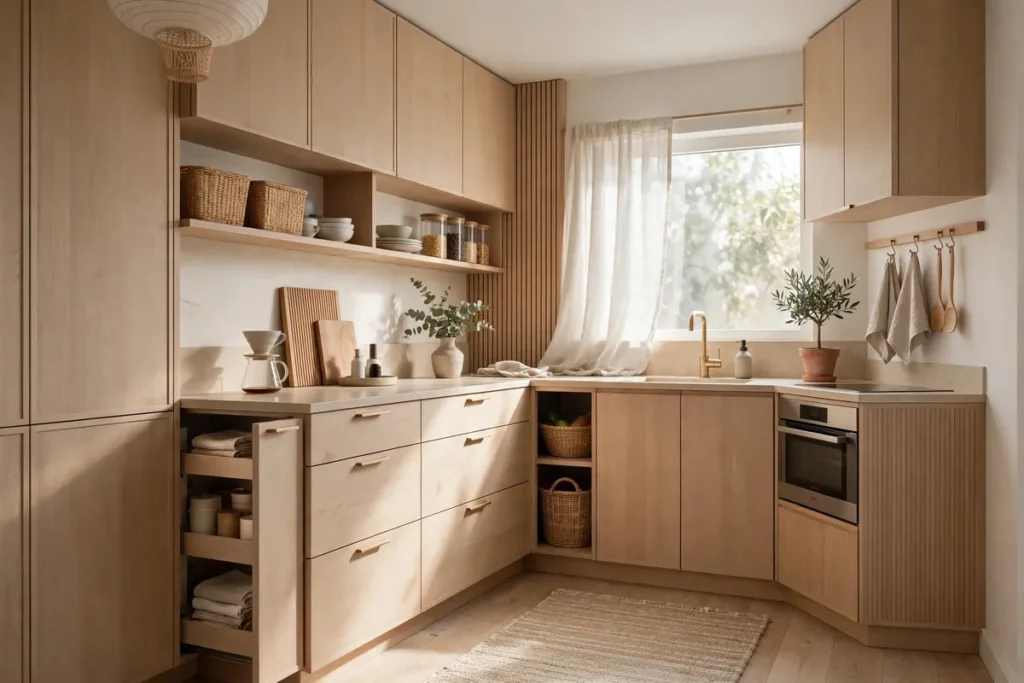
17. Natural Textiles and Handmade Ceramics
Soft textiles can keep a minimalist kitchen from feeling overly hard. Linen tea towels, woven seat cushions, cotton runners, and simple handmade ceramics introduce tactile variation.
Choose a restrained color family rather than collecting every neutral shade. The small irregularities of handmade pieces can make the room feel personal without creating clutter.

18. Connect the Kitchen to the Rest of the Home
A Japandi kitchen feels more intentional when its materials relate to nearby rooms. Repeat a wood tone, warm neutral, natural textile, or simple ceramic finish in the dining and living areas.
For more ideas in the same design language, see our Japandi living room ideas, Japandi bedroom ideas, and Japandi bathroom ideas. Repeating a few details across rooms helps the home feel connected rather than themed.

How to Keep a Japandi Kitchen From Looking Too Plain
The easiest answer is texture, not more decoration. If the kitchen feels flat, look at the materials first. Combine wood grain, stone, plaster, linen, woven fibers, matte ceramics, and softly finished metal.
Proportion matters too. A large pendant, curved island, tall plant, textured backsplash, or sculptural stool can give the room a focal point. The goal is controlled contrast: smooth beside textured, light beside medium, straight beside curved.
How to Plan the Look Before You Buy Anything
Start planning a Japandi kitchen with the largest surfaces. Pick the main wood tone, then choose a warm neutral for the walls and cabinetry. Add one mineral material such as stone or microcement, followed by a small amount of metal and natural texture.
Before adding accessories, stand at the main entrance and look across the room. If your eye jumps from one object to another, remove a few. A well-planned Japandi kitchen should feel complete without needing a crowded countertop.
FAQs About Japandi Kitchens
What is a Japandi kitchen?
A Japandi kitchen combines Japanese simplicity with Scandinavian warmth. It usually uses natural wood, warm neutrals, practical storage, simple shapes, soft lighting, and carefully limited decoration.
What colors work best in a Japandi kitchen?
Warm white, ivory, beige, taupe, oatmeal, soft gray, muted green, charcoal, and natural wood tones work well. The palette usually feels more cohesive when contrast is gentle rather than dramatic.
Can a small kitchen have a Japandi style?
Yes. Small kitchens can benefit from the style because it favors clear surfaces, useful storage, limited materials, and visual breathing room. Use one main wood tone and keep open shelving selective.
What materials are common in Japandi kitchens?
Natural wood, stone, ceramic tile, plaster, linen, woven fibers, matte metals, and concrete or microcement are common choices. The focus is on tactile materials that look better through simple, restrained use.
How do I make a Japandi kitchen feel warm?
Use warm wood, creamy neutrals, natural textiles, soft lighting, handmade ceramics, and a few organic shapes. Avoid relying only on bright white and glossy surfaces because they can make the room feel colder.
Conclusion
The appeal of a Japandi kitchen is not simply the neutral palette or beautiful wood cabinetry. It is the way the room works as a whole. Storage reduces visual noise, natural materials add warmth, lighting creates atmosphere, and useful objects bring personality.
You do not need to renovate everything at once. Start with one change that improves both appearance and function, such as simplifying the counter, warming the lighting, choosing one wood tone, or improving storage. Then build from there.
The best result is a kitchen that looks calm in a photo but feels even better on an ordinary morning. That balance of beauty, usefulness, and breathing room in a Japandi kitchen is what makes the style worth bringing into a real home.