15 Stunning Cat Wall Ideas That Turn Empty Walls Into Stylish Cat Spaces
A cat wall can be much more than a collection of shelves screwed into a blank wall. Done well, it gives your cat room to climb, perch, scratch, rest, and watch the household while also becoming part of the decor.
That is the idea behind these cat wall ideas. Instead of treating vertical space as an afterthought, each setup uses shape, spacing, texture, and placement to make the cat area feel intentional. The best part is that you do not need a huge room or a designer budget. You can build a small climbing route from a few well chosen pieces and expand it as you learn what your cat actually enjoys.
1. Build a Simple Floating Shelf Climbing Route

Floating shelves are one of the easiest ways to start a cat wall. Place three or four shelves at different heights so your cat can move upward rather than jumping from one extreme height to another.
Use sturdy wood with rounded edges and vary the shelf lengths slightly. A longer shelf near the top can become a comfortable viewing perch, while a smaller shelf below can act as a stepping point.
For a calmer look, keep the shelves in one wood finish and let the wall color stay quiet. This makes the setup feel closer to built-in furniture than pet equipment.
2. Mix Shelves With an Enclosed Cat Hideaway

Climbing is only half the appeal of vertical space. Many cats also want somewhere enclosed where they can rest without being disturbed.
Add a wooden box or small wall-mounted cubby near the upper part of the route. Give it one entrance and enough interior room for your cat to turn around comfortably.
A mix of open perches and one private retreat creates a more useful cat wall because it supports different moods. Your cat can watch the room from a shelf, then disappear into the cubby when it wants quiet.
3. Add a Sisal Scratching Panel

A scratching surface can make a cat wall much more practical. Instead of placing a separate scratching post in the middle of the room, mount a sisal panel vertically beside the climbing route.
Choose thick sisal and attach it securely to a solid backing board. Position it where your cat naturally stretches, such as near a favorite resting area or along the route to a higher perch.
I have found that combining scratching and climbing in one zone helps a pet area feel less scattered. It also gives the wall a clear visual purpose.
4. Create a Curved Cat Walkway

Straight shelves are practical, but a curved walkway can make a cat wall look much more like a custom architectural feature.
A gently curved wooden ramp or wave shaped climbing board creates movement across the wall. Wrap selected sections with sisal so your cat has secure grip points.
Keep the curve broad rather than sharply bent. Your cat should be able to walk and turn naturally without feeling squeezed into a narrow path.
5. Use Hexagon Cat Wall Shelves
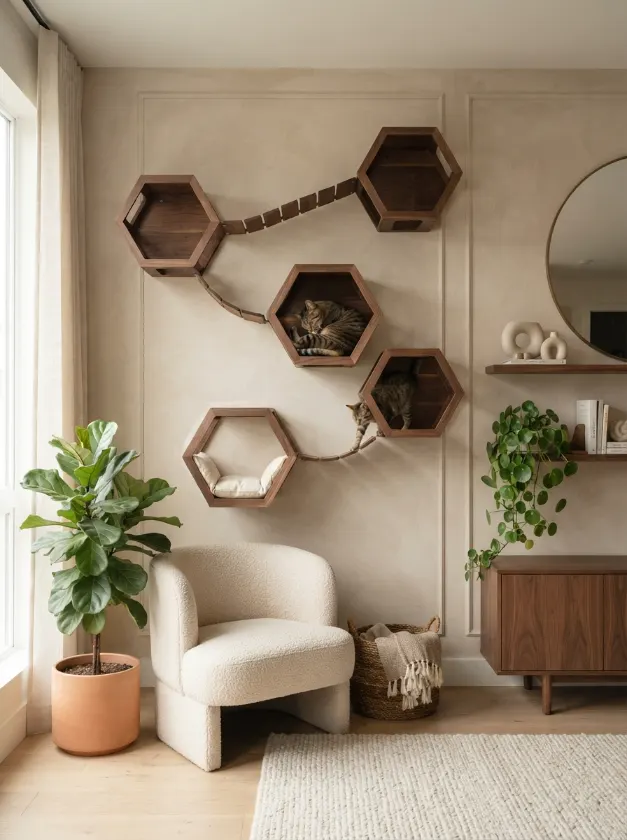
Geometric shelves can give a cat wall a polished, modern appearance. Hexagons work particularly well because several units can be arranged into an attractive pattern.
Use a few open hexagon boxes as perches and add one or two with soft cushions inside. Repeating the same shape helps the wall feel intentional instead of visually random.
Natural oak, walnut, matte black, and warm white all work well depending on the rest of your room. If the wall already has strong artwork or pattern, keep the cat furniture simpler.
6. Turn a Window Wall Into a Cat Lookout
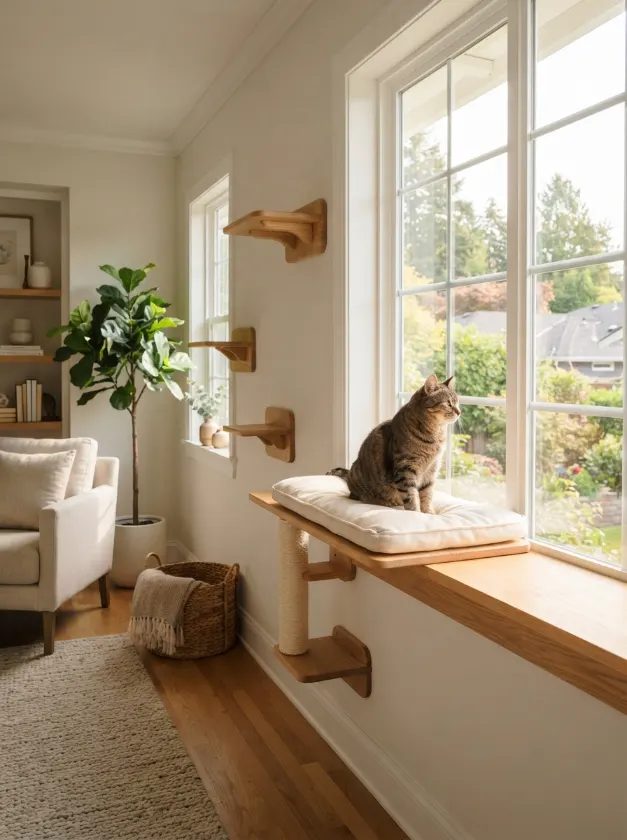
A window can make an excellent destination for a cat climbing wall. Cats often enjoy watching birds, people, trees, and changing light, so a comfortable perch beside a window can become the most popular part of the entire setup.
Build the route toward the window instead of blocking the glass. A wide top shelf with a washable cushion gives your cat a place to settle while keeping the lower walking area clear.
Check the temperature and sunlight before choosing the exact position. A sunny perch can be wonderful for part of the day, but your cat should always have access to shade and a cooler resting spot.
7. Make a Minimalist Cat Wall for a Small Room

Small homes do not need a large cat tower taking up valuable floor space. A wall-mounted system can move much of the activity upward while leaving the floor open.
Try a narrow arrangement of three shelves, one scratch panel, and one small hammock. Keep the pieces close enough for easy movement but not so close that the route becomes boring.
In a compact room, visual consistency matters. One wood tone and one neutral fabric color can make several individual pieces read as a single furniture system.
8. Combine a Cat Wall With Your Gallery Wall

Your cat’s furniture does not have to live in a separate visual category. You can place shelves, framed art, and decorative objects together if the composition has enough breathing room.
Use the cat shelves as larger structural elements and place smaller artwork around them. Keep fragile objects away from jumping paths and avoid anything that could fall onto the cat.
This approach works especially well if you already enjoy layered wall decor. For another way to arrange decorative objects on a wall, see our plate wall ideas.
9. Design a Rustic Branch Style Cat Wall
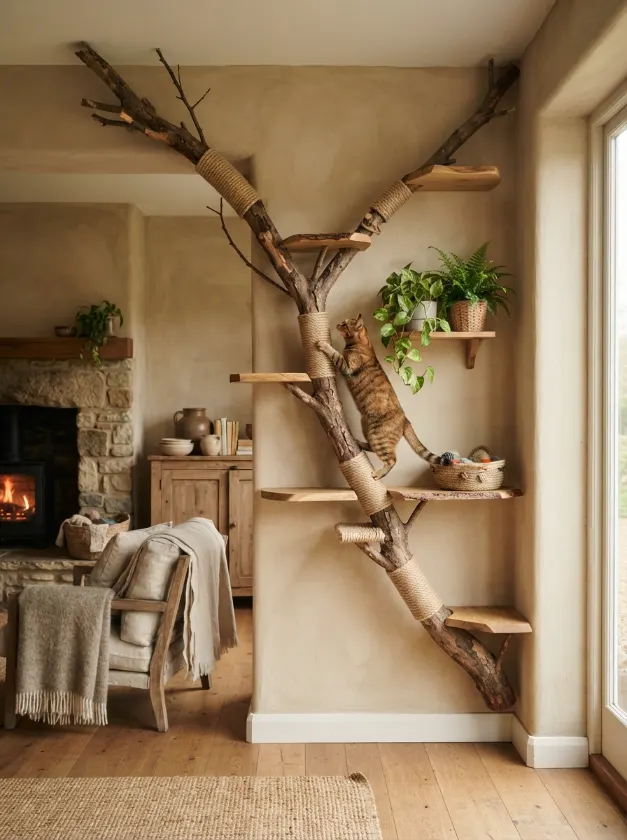
For homes with rustic, cottage, or earthy interiors, natural branches can bring an organic quality to the climbing route.
Use properly cleaned, dry, structurally sound branches as visual supports rather than relying on them alone for weight bearing. Combine them with securely mounted wooden platforms and sisal wrapped sections.
The key is restraint. One or two natural branches can look beautiful. Too many can make the wall feel like a theme installation instead of part of the room.
10. Build a Cozy Cat Wall With Soft Resting Spots

Some cats love climbing but spend even more time sleeping. Make room for both activities by adding washable cushions, felt pads, or fabric covered platforms at different levels.
Choose fabrics that can be removed and cleaned easily. A neutral boucle, canvas, cotton, or linen look can blend with home decor while still feeling comfortable.
Place the softest resting spot at a quieter level of the wall. Your cat may use the lower platforms for movement and choose the higher one when it wants to relax undisturbed.
11. Use a Rope Bridge for Extra Movement

A rope bridge adds a different texture and movement pattern to a vertical cat wall. It can connect two shelf sections or lead from one climbing zone to another.
Use thick, durable rope and secure every connection point. Keep the bridge short at first, especially if your cat is cautious about unstable surfaces.
A rope bridge can also become a visual feature. Natural rope against warm wood creates a relaxed look that works with rustic, coastal, bohemian, and casual interiors.
12. Turn a Hallway Into a Vertical Cat Highway

A hallway can be wasted wall space, but it can also become a long climbing route. Shallow shelves on one wall can give your cat a path without taking over the walking area below.
Keep the shelves narrow enough that people can pass comfortably. If the hallway is dark, small warm white lights under selected shelves can make the area easier to navigate while adding atmosphere.
Do not cover every inch of the wall. A few well spaced levels usually look more intentional and give the cat enough variety without making the hallway feel crowded.
13. Create a Budget Friendly DIY Cat Wall

You do not need custom furniture to make a useful cat wall. Plain wooden boards, affordable brackets, sisal rope, and simple fabric cushions can create the foundation.
Sand every wooden edge carefully. Check boards for cracks and test every bracket before allowing your cat to use the structure. If you are using secondhand wood, make sure it is clean, stable, and free from exposed nails, splinters, or unsafe treatments.
Start with one climbing section rather than buying everything at once. You can add pieces after seeing which height, texture, and perch style your cat prefers.
14. Match the Cat Wall to Your Home’s Interior Style

A cat wall feels more successful when its materials repeat something already present in the room. In a warm modern home, natural wood and cream fabric may be enough. In a darker interior, walnut and charcoal accents can connect the cat area to the rest of the furniture.
For a retro room, consider rounded shelves and warm timber. For a minimalist space, use fewer pieces with cleaner silhouettes. If you love layered interiors, mix wood, rope, fabric, and one carefully chosen accent color.
The goal is not to hide the fact that the wall belongs to your cat. It is to make the cat furniture feel like it belongs in your home.
15. Plan the Wall Around How Your Cat Actually Moves

The most beautiful cat wall is not useful if your cat refuses to use it. Watch your pet for a few days before finalizing the layout. Notice whether it prefers high places, enclosed corners, windows, soft cushions, scratch surfaces, or quick routes across the room.
Then build around those habits. A timid cat may prefer shorter jumps and enclosed beds. An energetic cat may enjoy bridges, ramps, and several levels. A senior cat may need wider shelves and gentler transitions.
Mount every major component into suitable structural support, check weight limits, and inspect the hardware regularly. Avoid loose cords, unstable objects, toxic plants, sharp corners, and decorative pieces that can fall.
Frequently Asked Questions About Cat Wall Ideas
Are cat walls better than cat trees?
Neither is automatically better. A cat wall saves floor space and can be designed around a room, while a cat tree is easier to move and usually requires less installation. The right choice depends on your space, your cat’s habits, and how permanent you want the setup to be.
How high should a cat wall be?
There is no single height that works for every cat. Build a route with comfortable step distances and provide a safe way down. For older or less agile cats, use wider platforms and gentler transitions rather than focusing on maximum height.
How do I make a cat wall look stylish?
Repeat materials, colors, or shapes from the surrounding room. Natural wood, neutral fabric, and simple silhouettes are easy to blend with many interiors. Consistent spacing also helps separate pieces look like one designed system.
Can I make cat wall shelves myself?
Yes. Simple shelves and scratching panels can be DIY projects, but structural safety matters. Use appropriate wall anchors or studs, sturdy materials, rounded edges, and secure hardware. Test each platform before your cat climbs on it.
What should I put on a cat wall?
A useful setup can include climbing shelves, a scratching surface, a comfortable perch, an enclosed hideaway, a ramp, or a short bridge. Choose pieces based on what your cat already enjoys rather than trying to include every possible feature.
Conclusion
The best cat wall ideas do two jobs at once. They give your cat useful vertical territory while making the room feel considered and comfortable for the people living in it.
You can start with just three shelves and a scratching panel, then build outward as you learn what your cat prefers. Keep the route safe, use materials that suit your interior, and leave enough open space for natural movement.
A cat wall does not need to dominate a room to be useful. With thoughtful placement and a few well chosen pieces, an empty wall can become one of the most practical and personal features in your home.