15 Houseplants Corner Aesthetic Ideas for a Lush, Stylish Home
A good plant corner can do more than fill an empty spot. It can soften a hard wall, add height to a quiet room, bring color into a neutral palette, and make a home feel lived in without looking cluttered. That is why the houseplants corner aesthetic has become such a useful decorating idea for bedrooms, living rooms, entryways, and even small apartments.
The best plant corners are not simply collections of pots. They use height, texture, light, furniture, and a little breathing room. I have noticed that the most convincing setups usually have one clear focal plant, a few supporting pieces, and enough empty space for every leaf to stand out.
Below are 15 practical ideas inspired by the strongest visual principles in the reference article, but developed as original Homesifying ideas. Each one gives you a clear starting point you can actually recreate at home.
1. Let a Dark Wall Make Greenery Stand Out

A deep olive, charcoal, navy, or warm brown wall can make green foliage look richer. The contrast gives broad leaves a stronger outline and makes a simple plant feel like part of the room’s architecture.
Try placing one tall fiddle leaf fig, rubber plant, or bird of paradise against the wall. Add a light ceramic planter and a small round mirror nearby to bounce natural light back into the corner.
Keep the rest of the styling restrained. One large plant usually has more impact than several small pots competing for attention.
2. Build a Sunlit Window Plant Corner
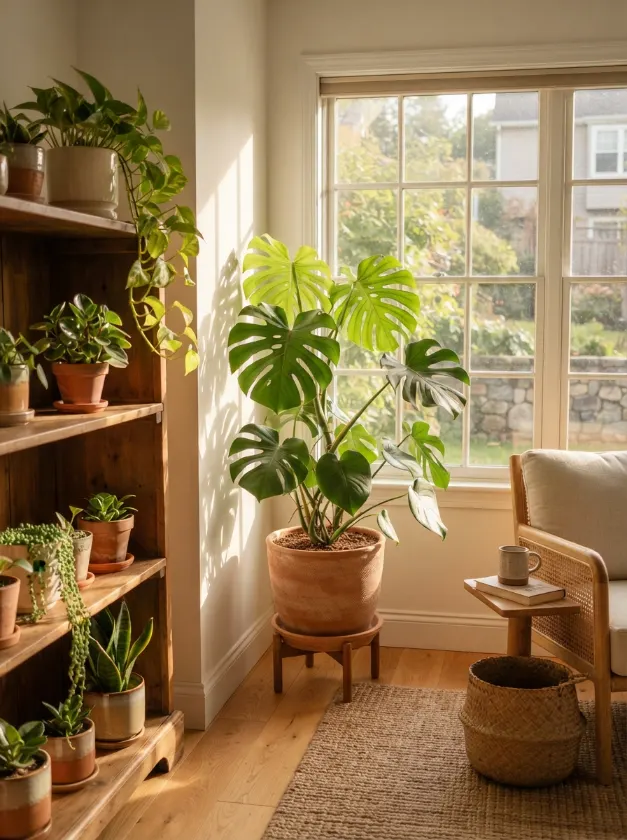
A bright window is already a natural display area, so you do not need complicated furniture. Start with a plant that suits the available light, then add two smaller plants at different heights.
A monstera can become the focal point while a small pothos and peperomia add texture around it. Terracotta, cream ceramic, or natural stone planters keep the arrangement relaxed.
Check the light before choosing plants. A beautiful corner will not stay beautiful if the plants are struggling because the location does not match their needs.
3. Use Floating Shelves for a Small Corner
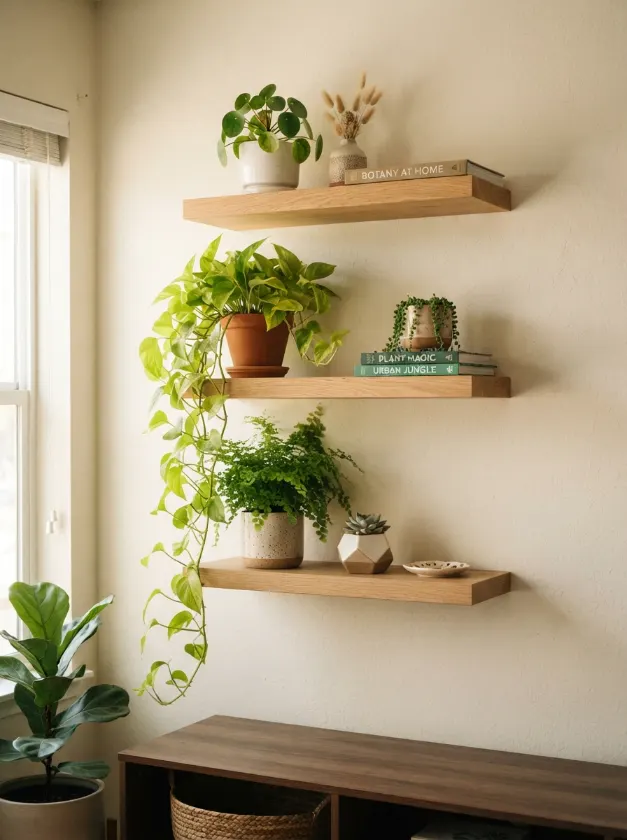
Small rooms benefit from vertical styling. Floating shelves take up almost no floor space and let you create a layered plant display on an otherwise unused wall.
Place the largest plant on the lower level and use smaller plants above it. Let one trailing pothos or philodendron spill gently over an edge so the arrangement does not look like a row of identical pots.
Leave some shelf space empty. A small ceramic object or a favorite book can break up the greenery and make the display feel personal.
4. Turn a Built-In Nook Into a Green Display
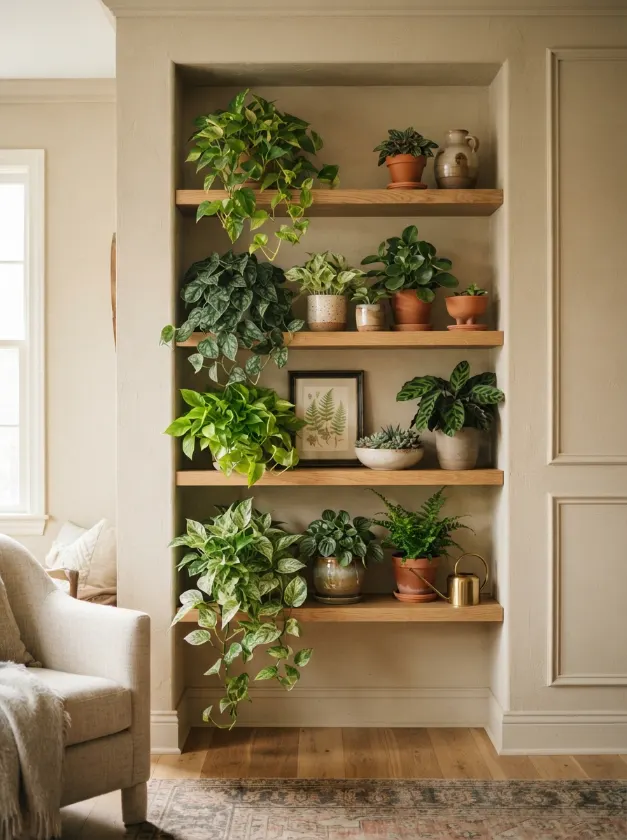
If your home has an alcove, recessed shelf, or awkward niche, plants can give that forgotten area a purpose. The key is to work with the height of the space instead of filling every inch.
Put trailing varieties on the highest shelf and shorter plants lower down. Mix leaf shapes so the display has movement rather than one repeated silhouette.
A neutral background works especially well because it lets the foliage become the visual feature.
5. Choose a Sculptural Plant Stand
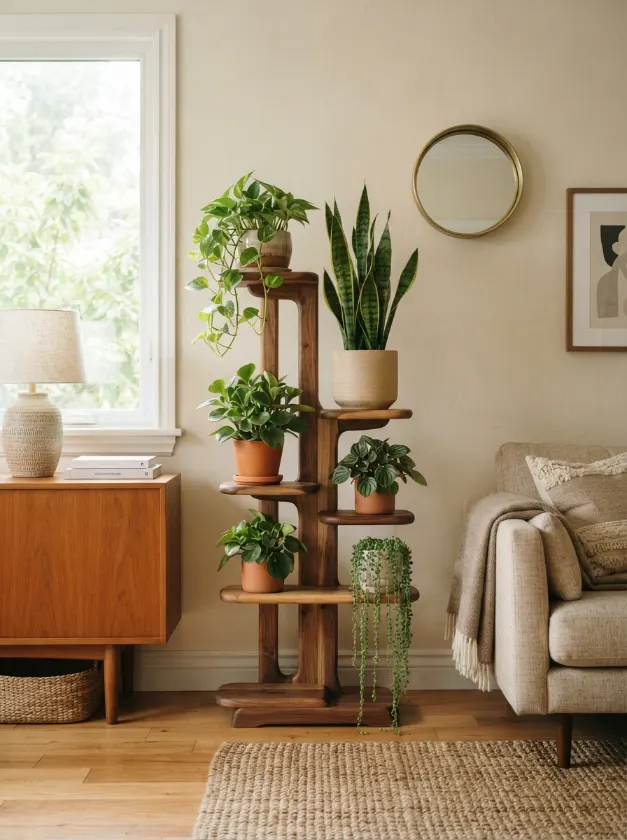
A plant stand can be more than something that raises a pot off the floor. Look for a piece with curved shelves, staggered levels, or an interesting wooden frame.
Use each level for a different plant size. A snake plant can sit beside a rounded peperomia, while a trailing plant softens the upper edge.
If the stand already has a strong shape, keep the pots simple. The furniture should support the plants rather than compete with them.
6. Create a Floor-Level Plant Cluster
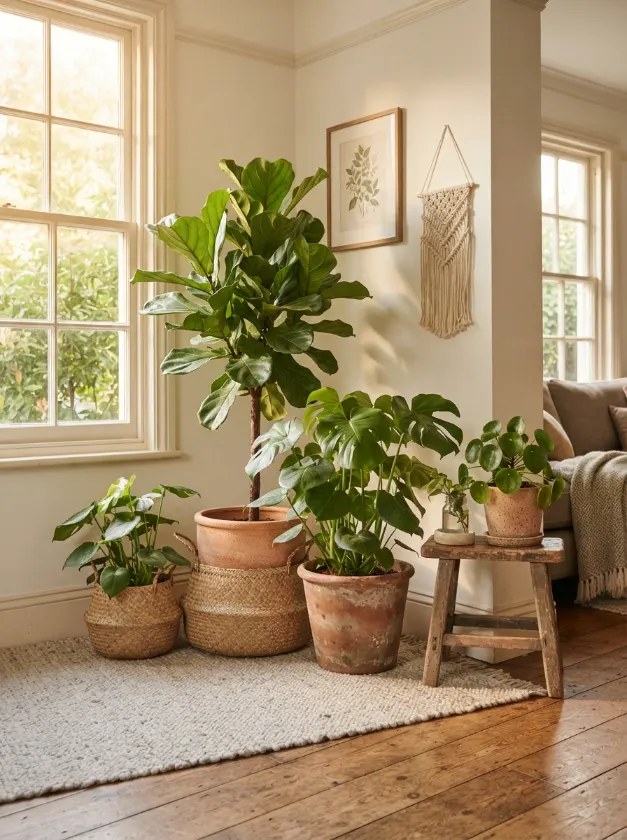
Not every plant needs to sit on a shelf. Large floor plants can anchor an empty corner and make a room feel taller when their leaves rise toward the ceiling.
Try combining one tall plant with a medium plant and a smaller pot placed on a low stool. Woven baskets are useful for covering plain nursery pots while adding natural texture.
This arrangement works particularly well beside a sofa, reading chair, or empty bedroom corner where you want softness without adding another piece of bulky furniture.
7. Hang One Trailing Plant From the Ceiling
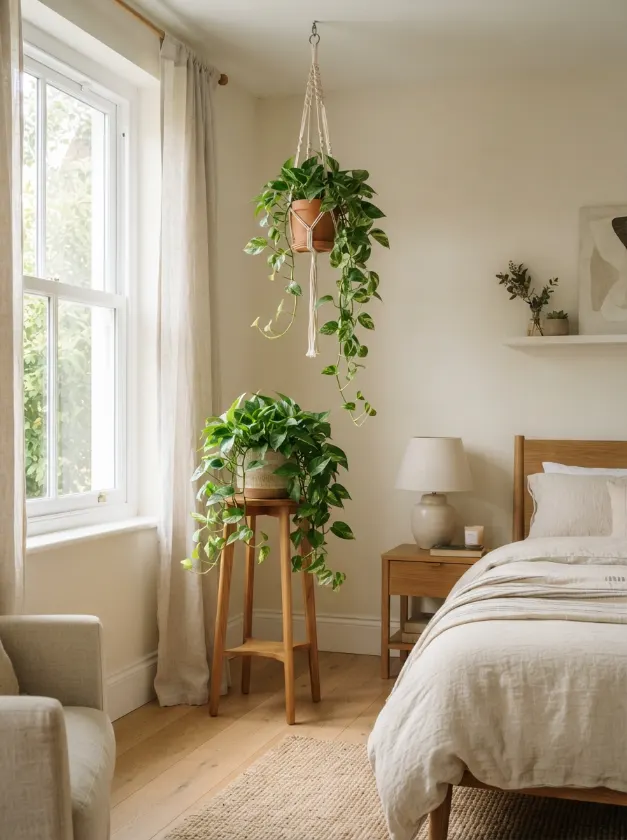
A single hanging plant can draw the eye upward and make a compact corner feel more layered. Pothos, string of hearts, spider plants, and some philodendrons can work beautifully depending on your light.
Use a sturdy ceiling hook that can safely support the planter’s weight after watering. Keep the hanging height intentional. The plant should feel connected to the furniture or display beneath it rather than floating randomly.
One hanging plant is often enough. Adding several can quickly make a small room feel visually busy.
8. Make the Corner Shelf Part of the Design
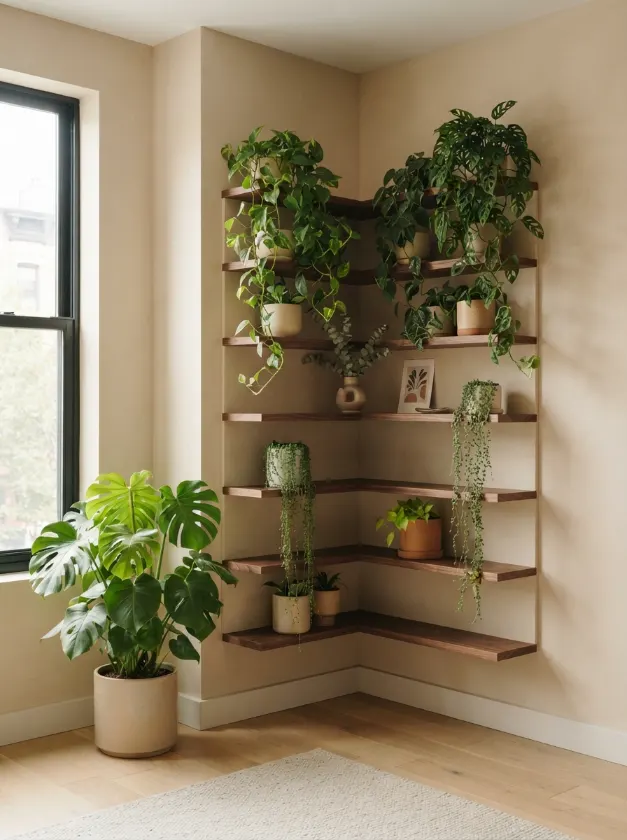
Instead of treating shelving as a plain storage solution, choose a corner unit with an architectural shape. Rounded shelves, ladder-style frames, or angled wood details can give the plant arrangement more personality.
Let a few vines follow the edges naturally. This creates a connection between the furniture and the foliage.
For a calmer look, repeat one material such as oak, walnut, bamboo, or black metal throughout the display.
9. Use Colorful Planters as Small Accents
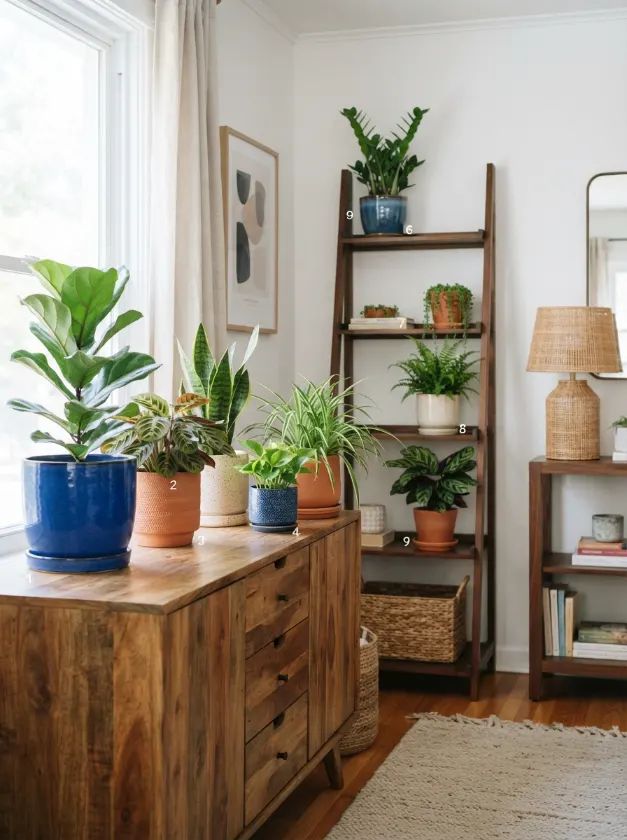
If your room is mostly cream, beige, white, or wood tones, colorful planters can introduce personality without requiring a permanent wall color change.
Choose one accent shade and repeat it two or three times. Cobalt blue, muted green, terracotta, or warm mustard can work beautifully with leafy plants.
Do not make every pot the same color. A mixture of the accent shade with white, stone, or terracotta keeps the arrangement relaxed.
10. Layer Plants Beside a Reading Chair
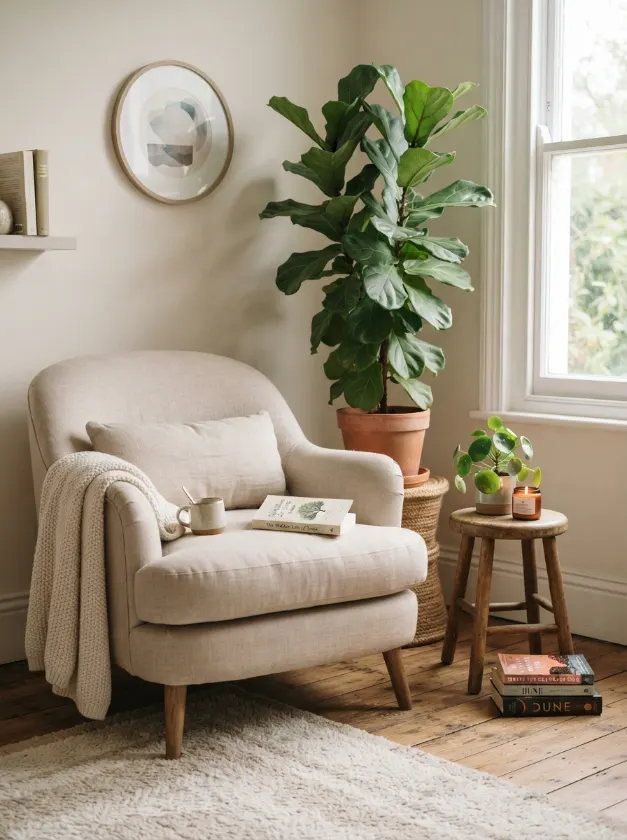
An empty corner beside a comfortable chair is an easy place to build a plant moment. Start with one taller plant behind the chair, then add a smaller pot on a wooden stool or side table.
The combination of soft upholstery, natural wood, and greenery creates a quiet reading atmosphere without needing much decoration.
I especially like this approach for bedrooms because the plants add visual interest while keeping the rest of the room calm.
11. Mix Leaf Shapes Instead of Matching Plants
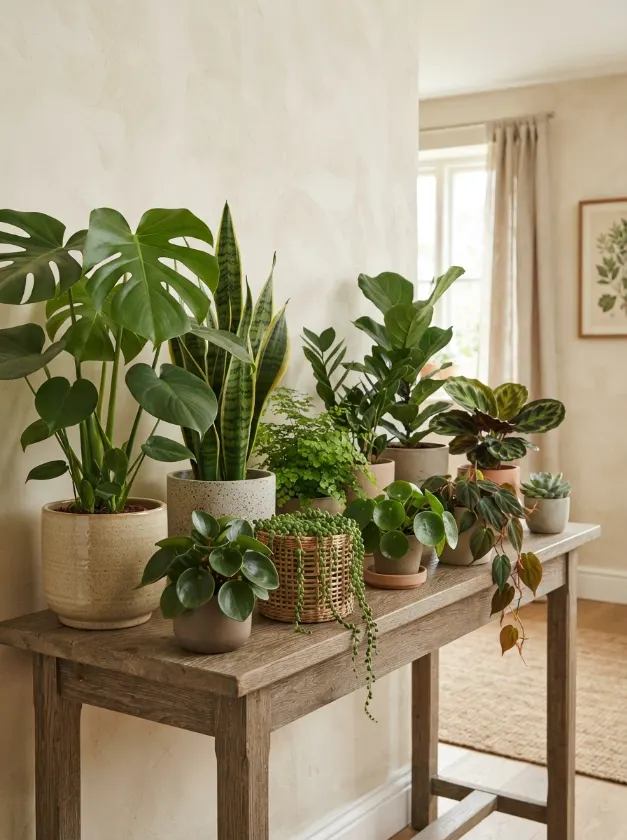
A plant corner becomes more interesting when the leaves have different silhouettes. Pair broad monstera leaves with narrow snake plant leaves, rounded peperomia foliage, or delicate trailing vines.
This variety creates contrast without relying on bright colors or excessive accessories.
When choosing plants, think about shape first and color second. Several different shades of green can look intentional when the leaf forms are clearly different.
12. Add a Mirror Behind the Plants
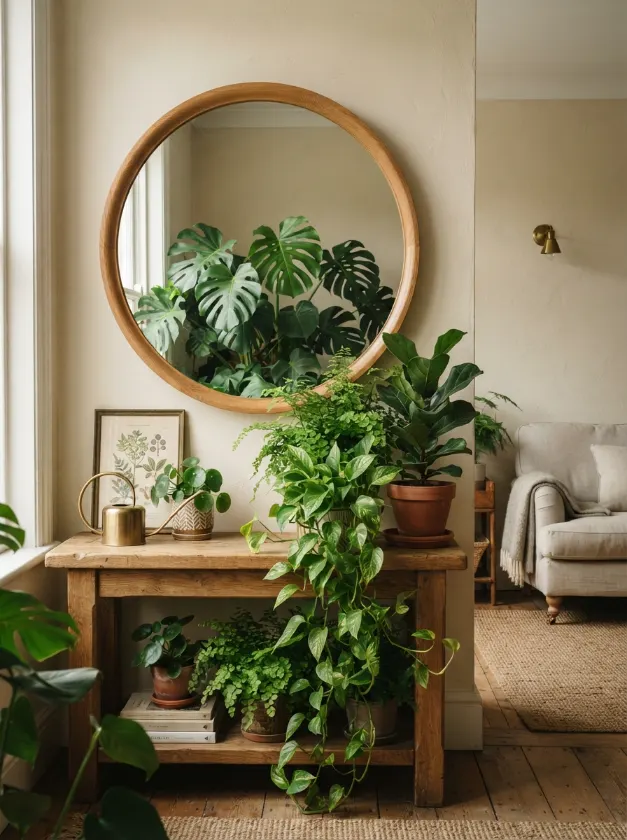
A mirror can make a compact plant corner feel brighter and deeper. Place it behind or beside the tallest plant so it reflects foliage rather than an empty wall.
Round mirrors work well with leafy shapes because their soft outline balances the natural irregularity of the plants. A simple wood or brass frame can also connect the corner to existing furniture.
Avoid placing the mirror where direct sunlight could create unwanted glare or excessive heat for nearby plants.
13. Combine Plants With Natural Textures
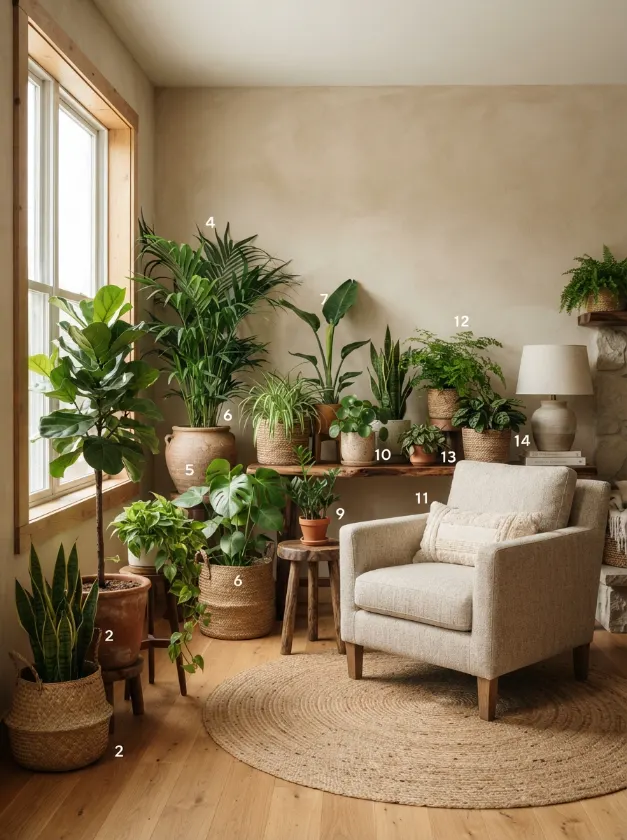
Plants already bring a natural element into a room, but pairing them with wood, rattan, linen, jute, stone, and terracotta can make the whole corner feel more cohesive.
Try a woven basket around a large floor plant, a wooden stool for a smaller pot, and a linen chair nearby. The result feels warm without needing many decorative objects.
Natural textures also work especially well in neutral interiors where you want depth without adding a lot of color.
14. Keep One Corner Almost Wild
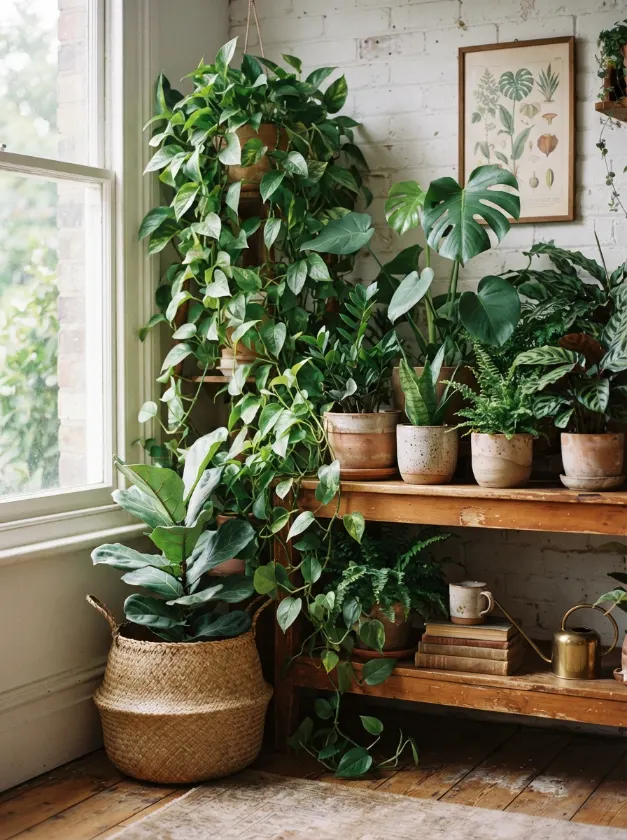
Not every plant display needs to look perfectly arranged. A slightly relaxed corner can feel more authentic because the plants appear to belong there rather than being placed only for decoration.
Let one vine trail longer than another. Allow leaves to overlap slightly. Keep one or two imperfect pots if they have character.
The goal is not mess. It is controlled natural movement. Give the plants enough space to grow while keeping the surrounding furniture and accessories simple.
15. Give the Corner One Clear Focal Plant
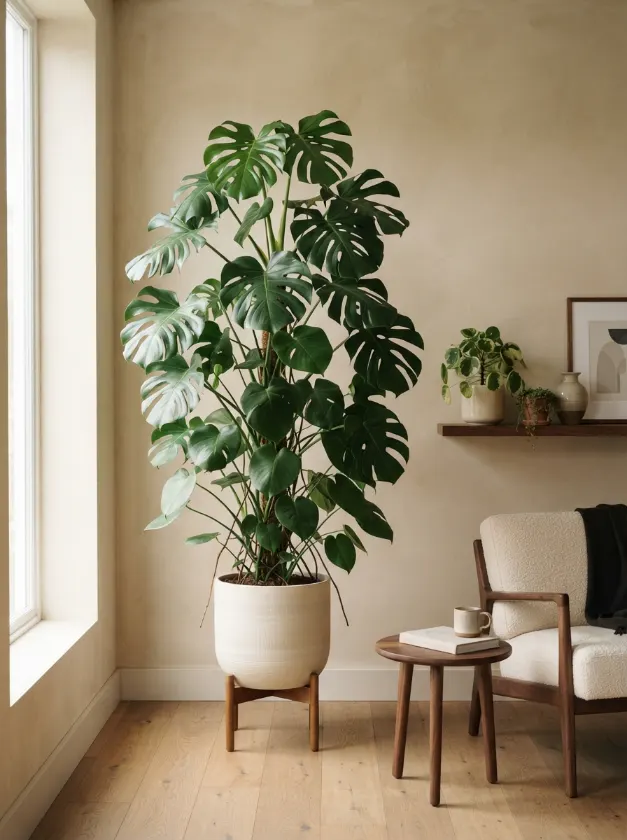
The easiest way to avoid a cluttered plant corner is to choose a hero plant first. It might be a tall fiddle leaf fig, dramatic monstera, rubber plant, olive tree, or another variety suited to your home’s conditions.
Build everything else around it. Smaller plants should support the main shape rather than compete with it. Use different heights, but keep the largest visual weight in one clear area.
This simple rule makes the houseplants corner aesthetic feel intentional even when the room contains only three or four plants.
Frequently Asked Questions About a Houseplants Corner Aesthetic
How many plants should I put in one corner?
There is no fixed number. For a small corner, start with one focal plant and one or two smaller plants. Larger rooms can handle more, especially when the plants are spread across different heights.
What is the best place for a houseplant corner?
Choose a location based on the light requirements of your plants. A bright window works for many light-loving varieties, while lower-light plants may suit a different part of the room. Avoid choosing a location only because it looks good in a photo.
How do I make a plant corner look stylish instead of cluttered?
Use different heights, repeat one or two materials, and leave some empty space. A clear focal plant also helps prevent the arrangement from looking random.
Can I create a houseplant corner in a small apartment?
Yes. Use wall shelves, narrow plant stands, hanging planters, and windowsills to move the display upward. This keeps valuable floor space open.
Which planters look best for a natural plant corner?
Terracotta, ceramic, stone-look, woven, and simple wood-toned planters are versatile choices. Mixing two or three finishes usually looks more natural than buying a completely matching set.
Final Thoughts
A beautiful plant corner does not require a large room, an expensive collection, or perfect styling. It needs a good focal point, suitable light, a little height variation, and enough space for the plants to look like part of the home.
Start with one forgotten corner. Choose one plant you genuinely love, then add only what helps it look its best. Over time, the corner can grow with you, just as the plants do.
For more ideas for making everyday rooms feel personal and inviting, take a look at our Nancy Meyers home aesthetic ideas and post modern interior design ideas.