24 Serene Japandi Living Room Ideas for a Calm, Beautiful Home
Japandi living room ideas blend Japanese calm with Scandinavian warmth to create a space that feels peaceful, practical, and quietly beautiful. The style pairs low furniture, natural materials such as light oak, rattan, linen, and stone, and a muted earthy palette with plenty of open space. If your living room feels crowded or restless, these 24 ideas will show you how to strip it back without making it feel empty.
The secret is restraint with warmth: every piece earns its place, every surface breathes, and every texture invites touch. The same approach suits compact homes, and our guide to small living room ideas pairs well with the low furniture below. Start with one change and add more only when the room asks for it.
Key Takeaways
What is Japandi style? Japandi blends Japanese minimalism with Scandinavian comfort. It pairs wabi-sabi, the Japanese appreciation of natural imperfection, with hygge, the Scandinavian feeling of cozy warmth at home.
What colors work best in a Japandi living room? Warm neutrals lead: creamy whites, soft greige, sand, and mushroom, layered with light wood and grounded by a touch of charcoal or black. Muted sage, clay, and stone add depth without noise.
Can Japandi work in a small living room? Yes, it suits small rooms well. Low furniture, pale colors, and clear floor space make ceilings feel higher, while closed storage keeps clutter out of sight.
How do I keep a Japandi room from feeling cold? Warmth comes from texture, not more objects. Layer linen, wool, rattan, and wood, use warm lighting at several heights, and add one plant so the room feels lived in, not staged.
1. How Do You Start With a Warm, Quiet Palette?
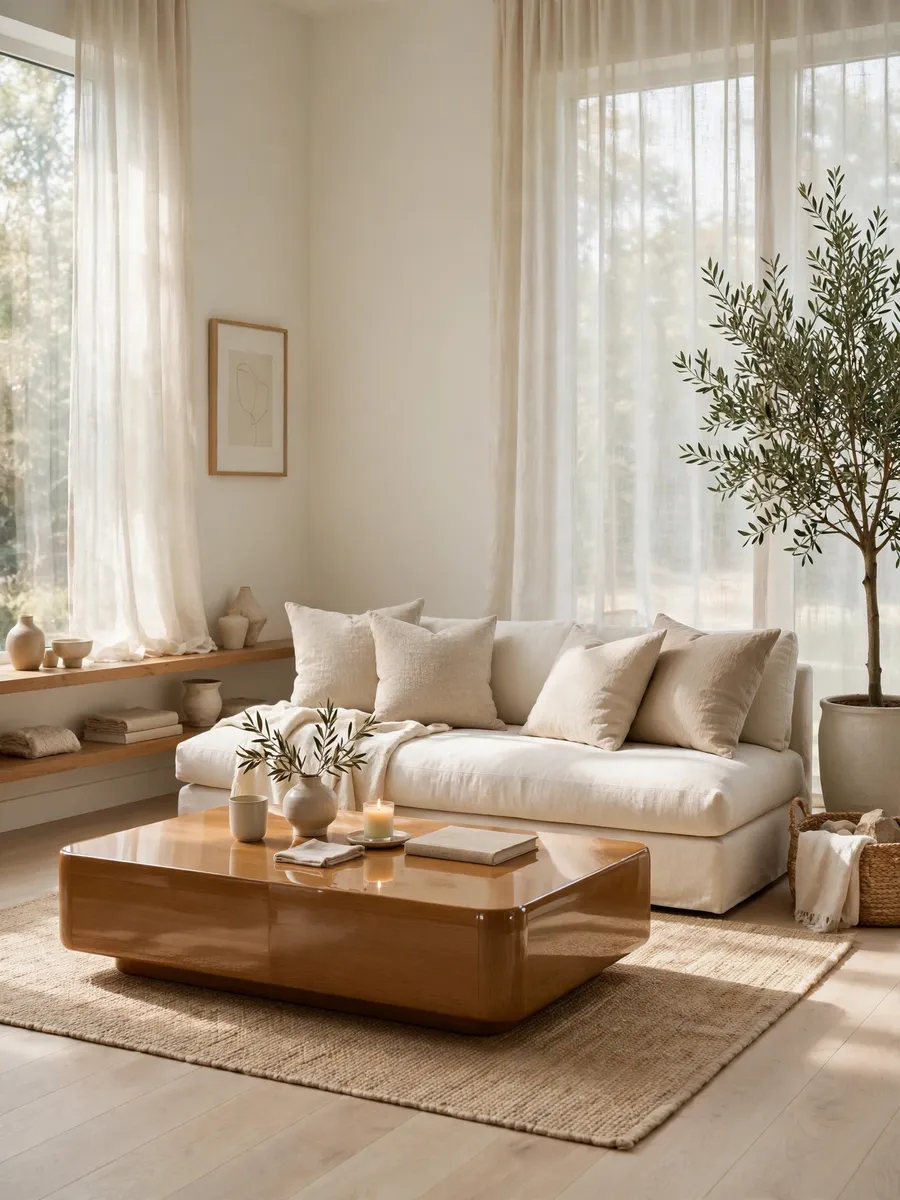
A Japandi living room starts on the walls. Choose a warm white or soft greige rather than a stark cool white, because warm undertones make wood and linen look richer and the room feel softer. Keep the palette to three tones at most: one warm neutral, one soft earth tone, and one dark accent.
For example, paint the walls a creamy warm white, add a sand-colored linen sofa, and ground the seating area with a charcoal wool throw folded over one arm. Repeat the dark tone once more, perhaps in a black picture frame or a ceramic vase, so it feels intentional.
Quick tip: Test paint swatches on two walls and check them in morning and evening light before committing.
2. Why Should the Sofa Sit Low?
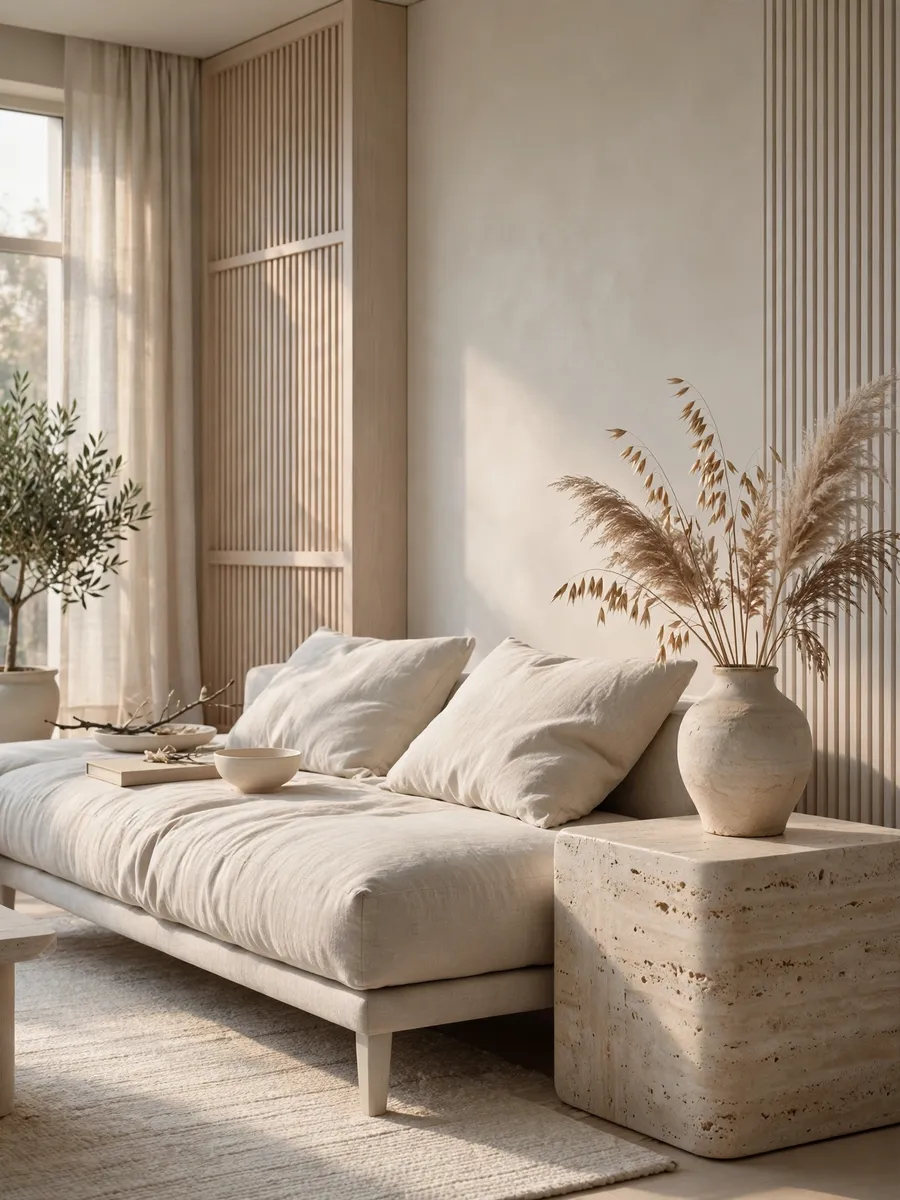
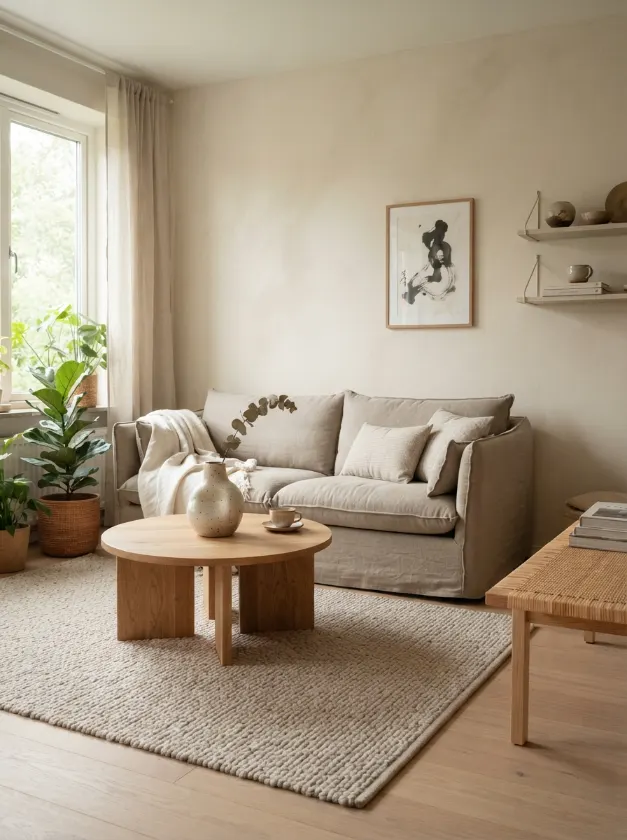
Low furniture is one of the clearest Japandi signatures. A low-profile sofa with short wooden legs or a floor-level frame makes the ceiling feel higher and the room feel grounded. Look for clean lines, no tufting or rolled arms, and upholstery in natural linen or cotton in cream, stone, or oatmeal.
For example, a low oak platform sofa in natural linen with a single hand-thrown ceramic vase on a travertine side table sets the tone for the entire room. The sofa invites you to sink in, while the bare side table keeps the eye moving. If you love the look of minimalist living room ideas, a low sofa is the single easiest place to start.
Quick tip: Keep the sofa seat height around 15 to 17 inches for a relaxed, floor-hugging feel.
3. How Do You Mix Light and Dark Wood?
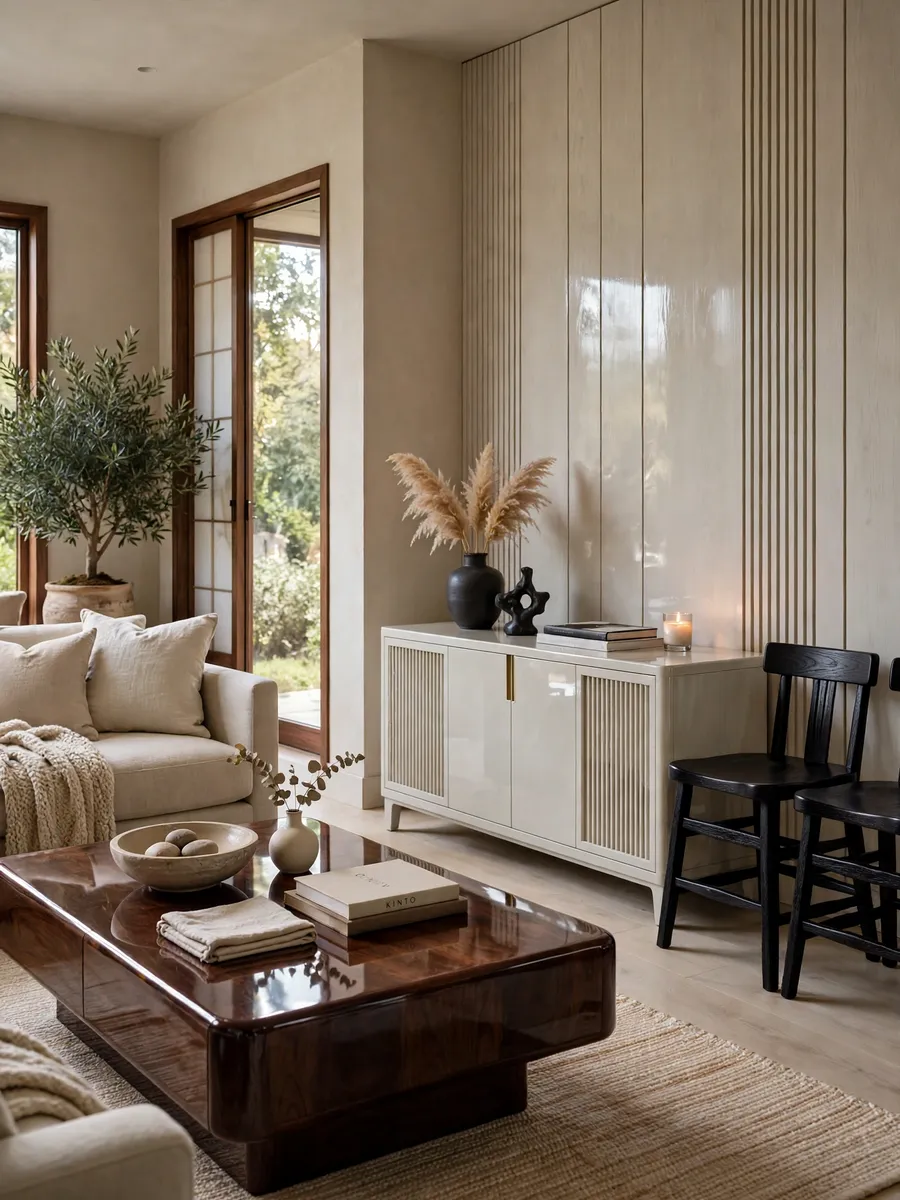
Japandi rooms rarely use a single wood tone. Pairing pale oak or ash with a few darker walnut pieces creates depth and stops the room from looking flat and washed out. The trick is contrast with intent: let one tone dominate and use the other as an accent.
For example, choose a pale ash media console as the largest wood piece, then add a dark walnut coffee table and two black-stained oak stools tucked beneath it. The dark pieces read as punctuation marks against the pale wood. Keep the grain visible, since Japandi celebrates wood as it is.
Quick tip: Use two wood tones, never four or five, or the mix starts to look accidental.
4. What Makes a Solid Wood Coffee Table the Focal Point?
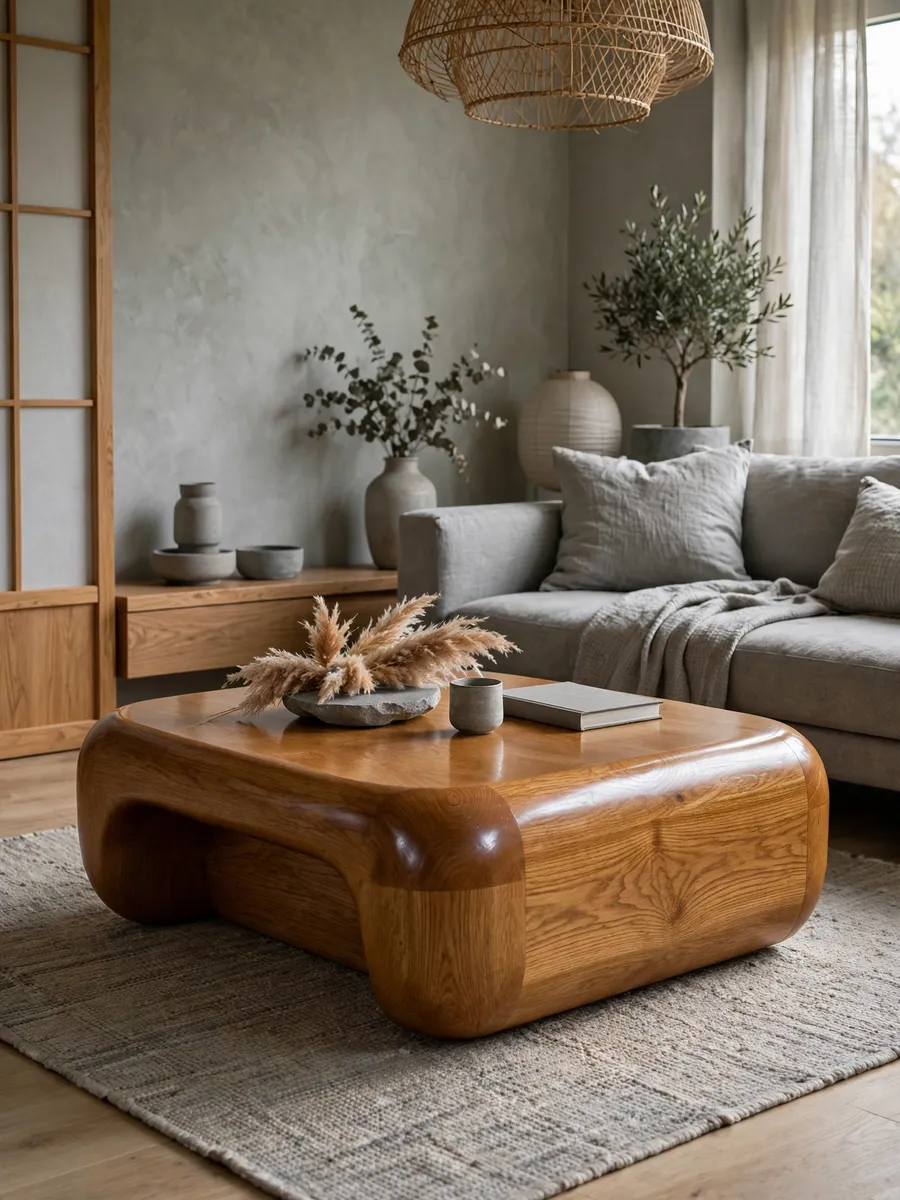
In many Japandi rooms the focal point is a piece of furniture rather than a piece of art. A solid wood coffee table with a sculptural shape, a live edge, or a beautifully grained top gives the eye somewhere to rest and does much of the decorating on its own.
For example, a low rectangular table in honey-toned oak with softly rounded corners, styled with only a small stone tray and a single sprig of dried pampas grass, looks complete without extra decoration. Choose a table 14 to 16 inches high so it sits just below the sofa seat.
Quick tip: Leave at least half of the tabletop empty so the wood itself stays visible.
5. How Does a Natural Fiber Rug Ground the Room?
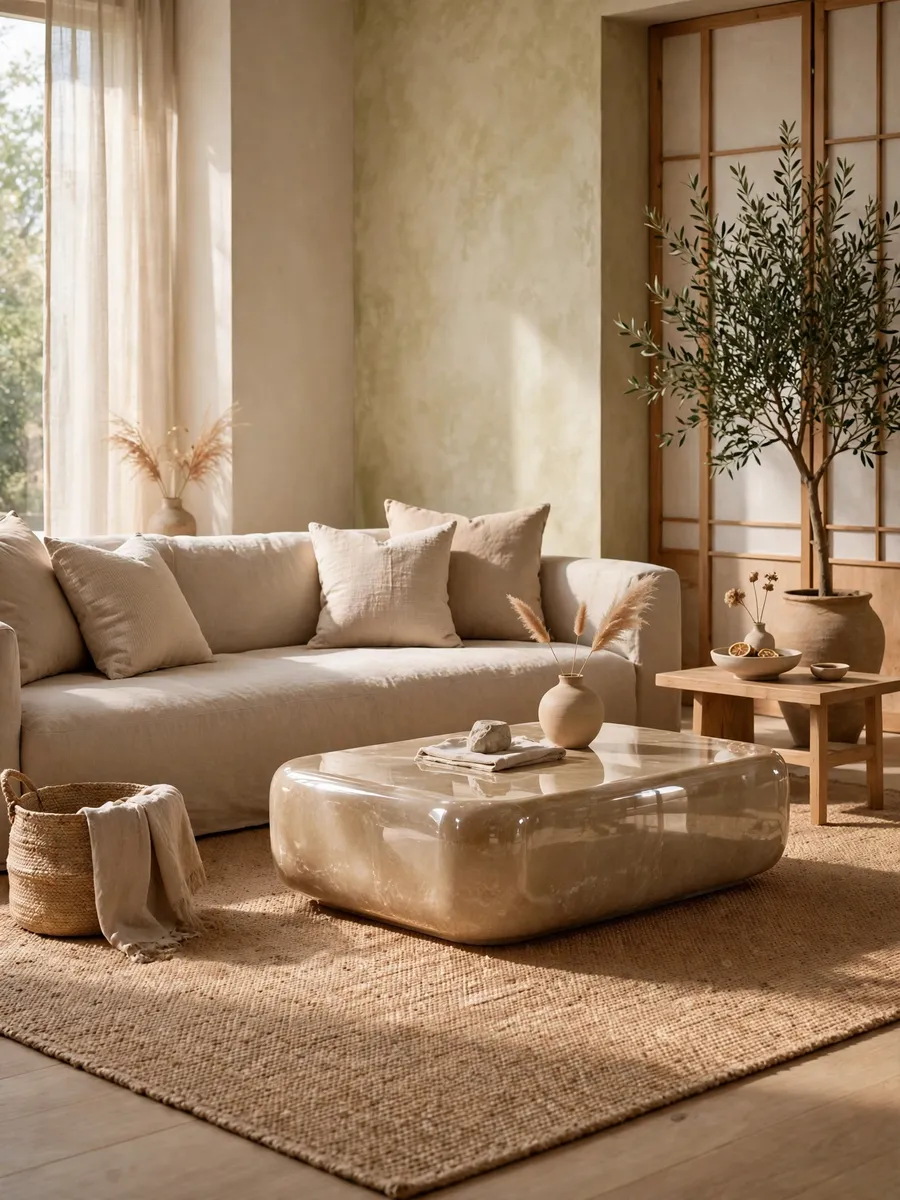
A natural fiber rug anchors the seating area and adds warmth underfoot without adding pattern or color noise. Jute, seagrass, sisal, and wool in sandy, undyed tones all work, and their coarse texture contrasts beautifully with smooth wood and soft linen.
For example, a large flat-weave jute rug in a warm sand tone, sized so the front legs of the sofa and both armchairs rest on it, pulls the whole seating group together. Layer a smaller wool rug on top for extra comfort in the center.
Quick tip: Size the rug so it extends at least 8 inches beyond each side of the sofa.
6. Why Choose a Paper or Rattan Pendant Light?
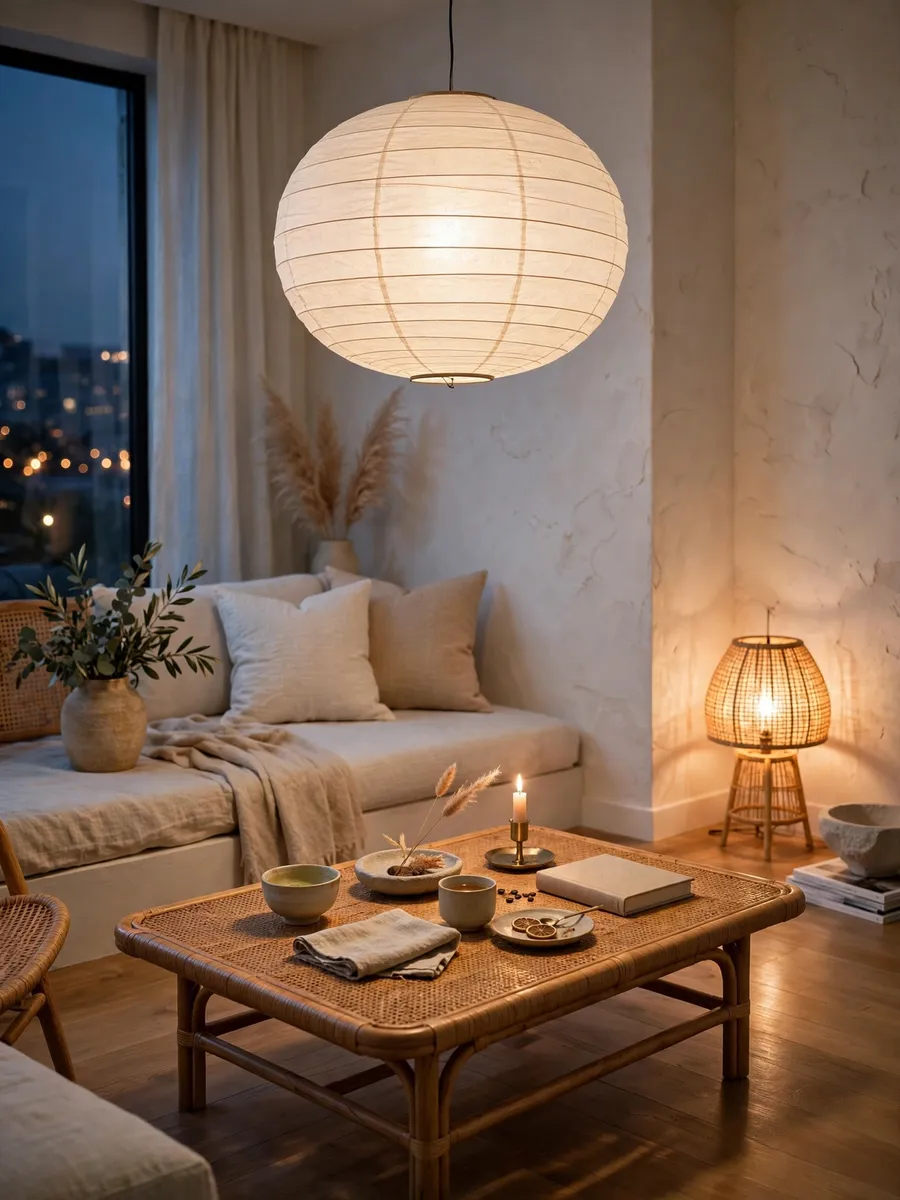
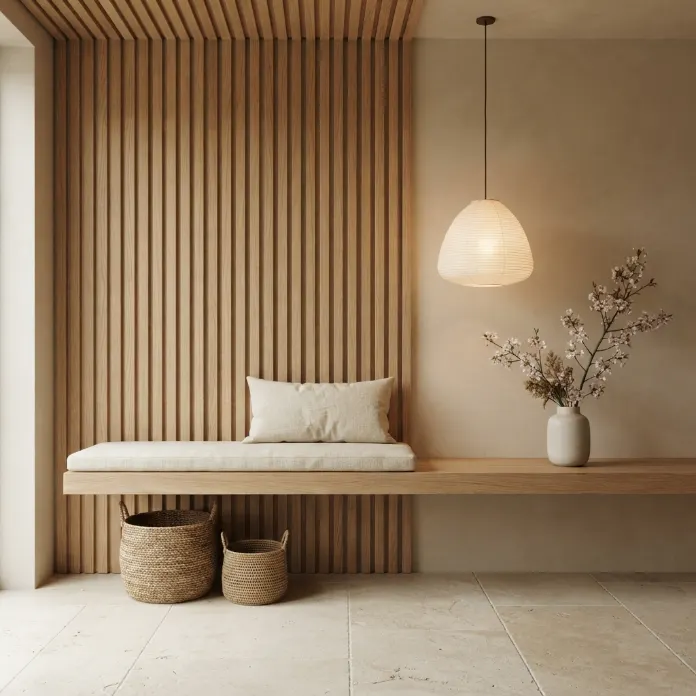
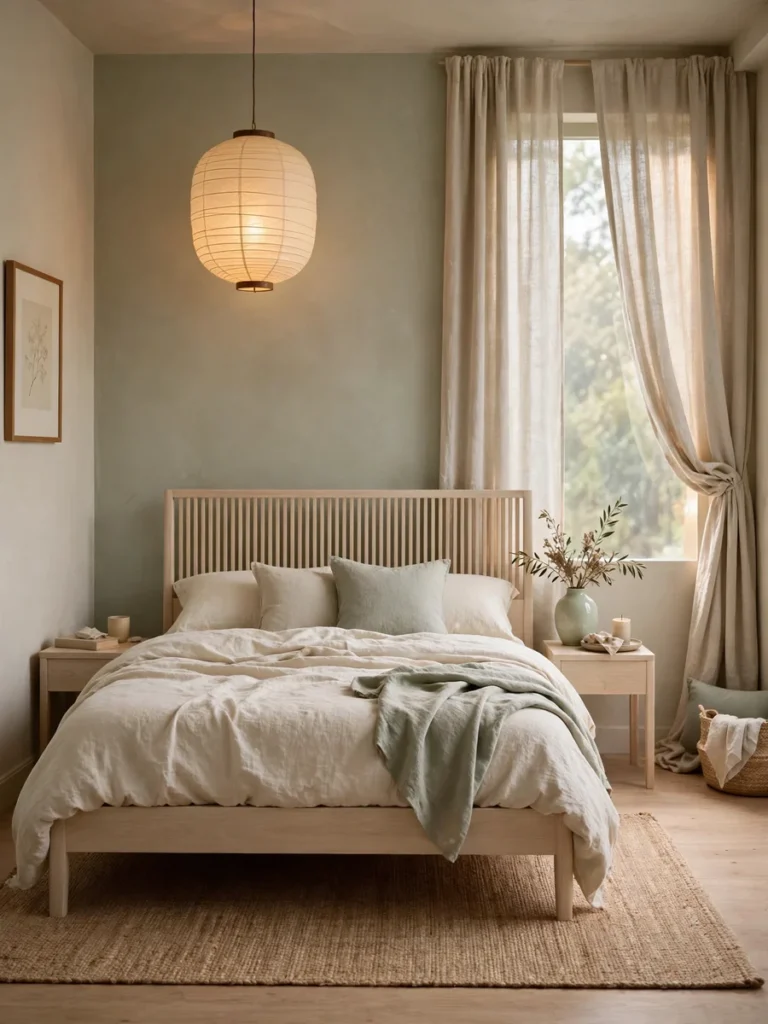
Lighting sets the mood in a Japandi living room, and a paper or rattan pendant is the classic choice. The shade diffuses light softly, casts gentle shadows, and adds a sculptural shape overhead without any glare or visual weight.
For example, a large round rice-paper lantern pendant in warm white, hung low over the coffee table, glows like a soft moon in the evening. Pair it with a small rattan floor lamp in the corner so light comes from two heights instead of one harsh ceiling source.
Quick tip: Use warm bulbs around 2700K so the light stays golden, never cold or blue.
7. How Do Linen Curtains Soften the Room?
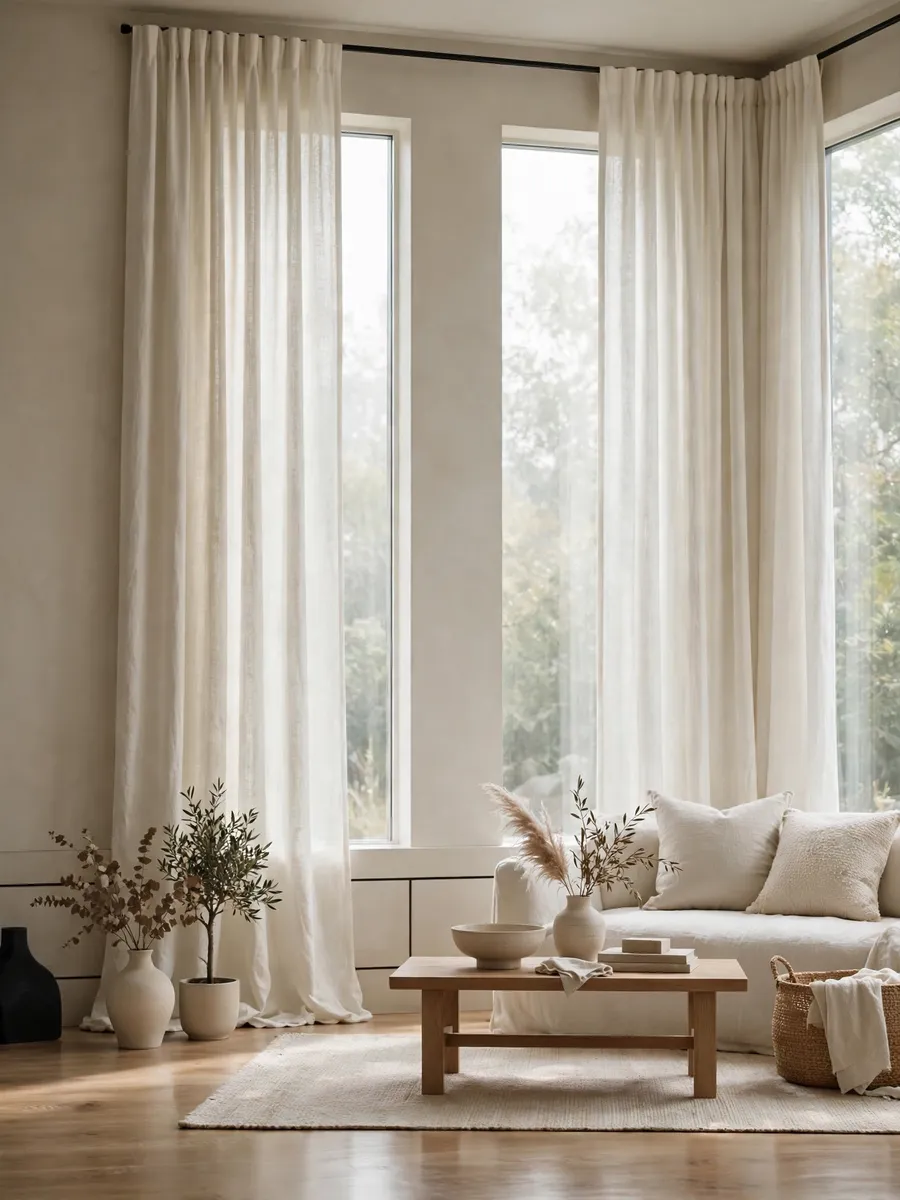
Linen curtains soften hard window edges, filter daylight into a gentle glow, and add a quiet fabric texture that bare windows lack. In a Japandi room they should hang simply, with no tiebacks, swags, or heavy hardware.
For example, floor-length curtains in washed ivory linen on a slim matte black rod, hung a few inches above the window frame, let daylight through while keeping the room private. The fabric moves slightly with the air, adding life to an otherwise still room.
Quick tip: Choose unlined linen for a soft filtered glow, and lined linen only if you need real privacy at night.
8. How Do You Layer Textures Without Adding Clutter?
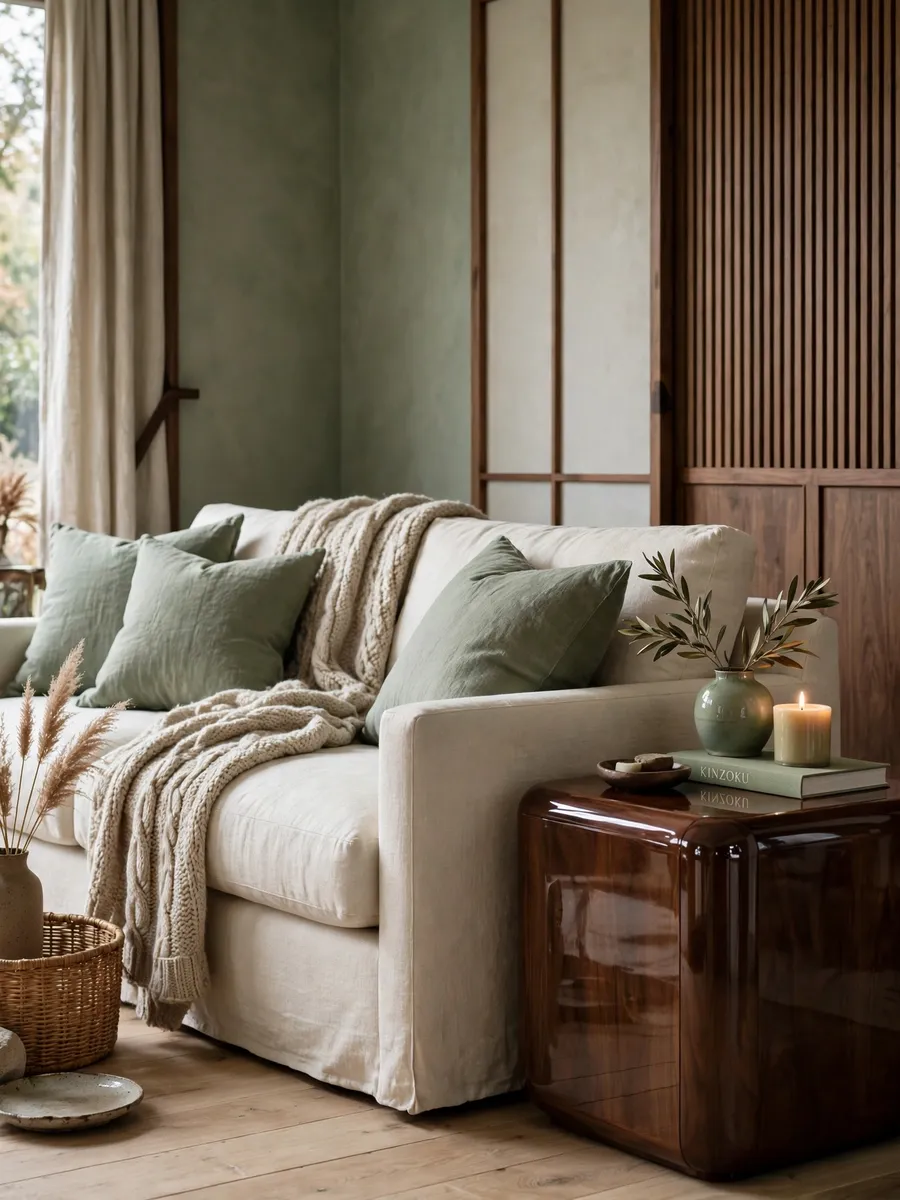
Texture is how a Japandi room stays cozy while staying minimal. Instead of adding more objects, upgrade the surfaces you already have: a nubby wool throw, a slubbed linen cushion, a smooth stone tray, and a rough woven basket all add feeling without adding visual noise.
For example, dress a plain cream sofa with two sage-green linen cushions, one chunky knit wool throw in oatmeal, and a walnut side table holding a single ceramic cup. Each texture differs, yet the colors stay in one quiet family, so the sofa feels inviting rather than decorated.
Quick tip: Limit cushions to two or three per sofa, and mix no more than three textures in one seating area.
9. Why Are Handcrafted Ceramics Worth the Space?
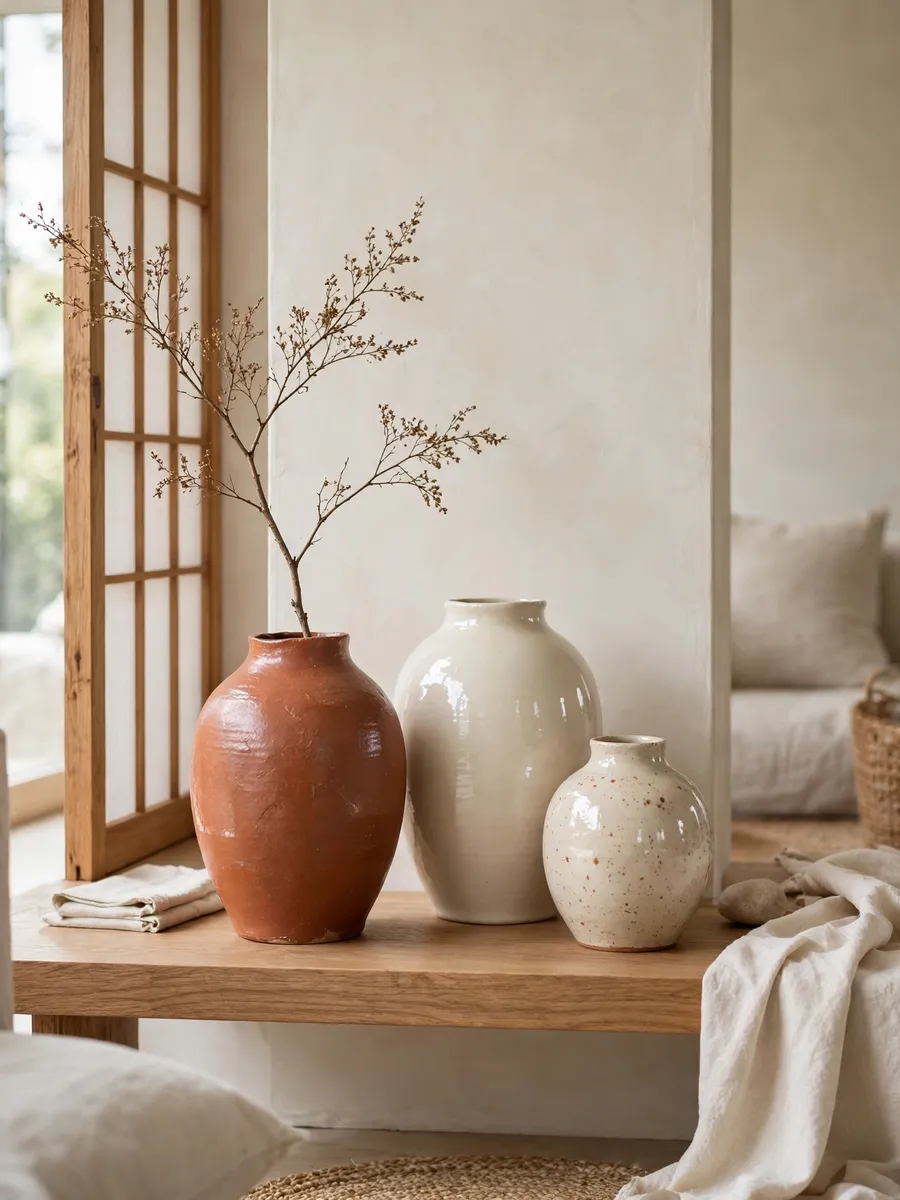
Handcrafted ceramics bring the wabi-sabi heart of Japandi into the room. A slightly uneven vase, a bowl with a visible throwing ring, or a cup with a speckled glaze shows the hand that made it, and that small imperfection is exactly what makes the room feel human.
For example, place a tall terracotta vase with a single dried branch on a low oak shelf, and set a small cream stoneware bowl beside it holding nothing at all. The empty bowl is a deliberate pause, a moment of stillness that Japandi design values as much as any object.
Quick tip: Display ceramics in odd numbers, one or three, and give each piece breathing room.
10. Which Plants Suit a Japandi Living Room?
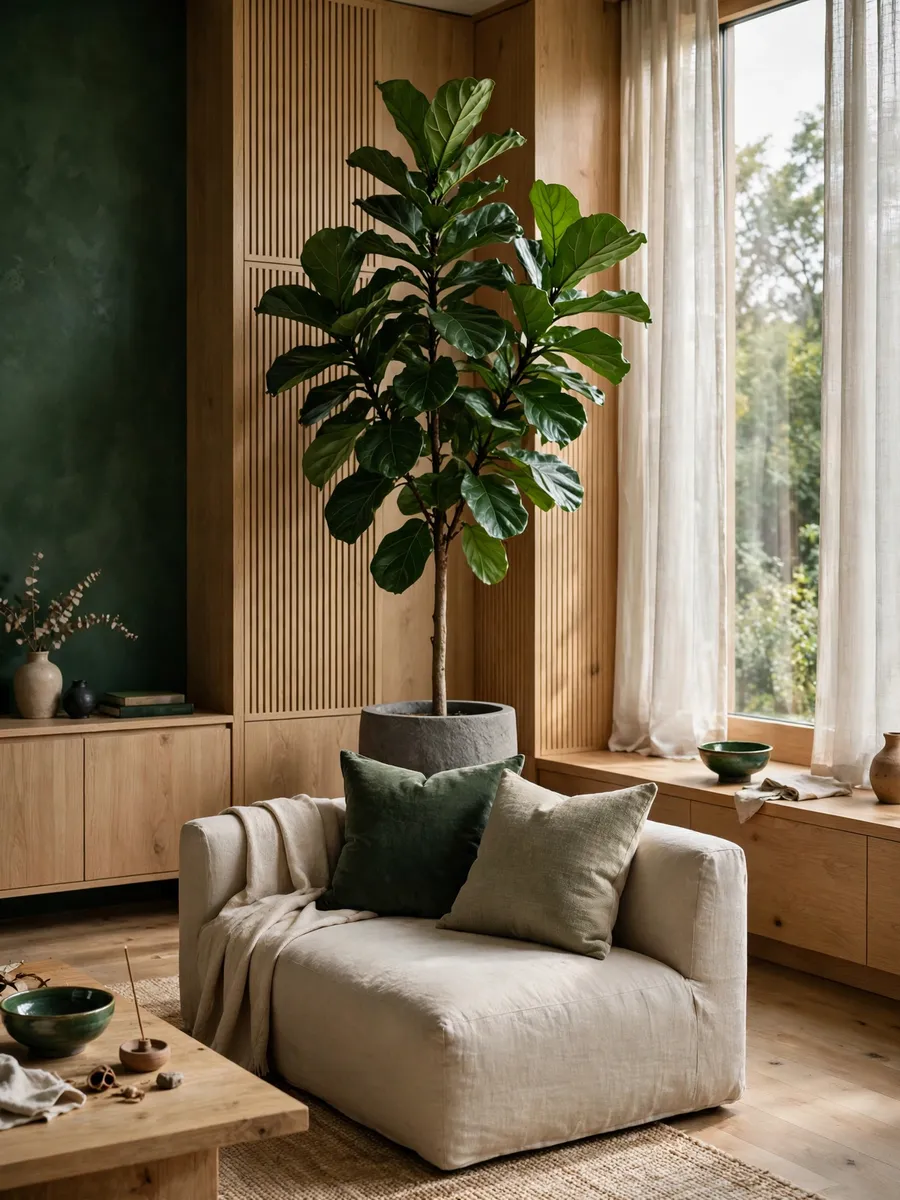
Plants are the living layer of a Japandi room, but the style favors one strong sculptural plant over a crowd of small ones. A fiddle-leaf fig, an olive tree, or a snake plant in a simple stone or ceramic pot adds height, color, and life without breaking the calm.
For example, a tall fiddle-leaf fig in a matte stone planter stands in the corner behind a low armchair, its broad green leaves catching the window light. One plant this size does more than five small pots scattered around, and it is far easier to care for.
Quick tip: Keep pots plain and matte, and lift them onto wooden coasters to protect the floor.
11. How Can a Shoji Screen Divide the Room?
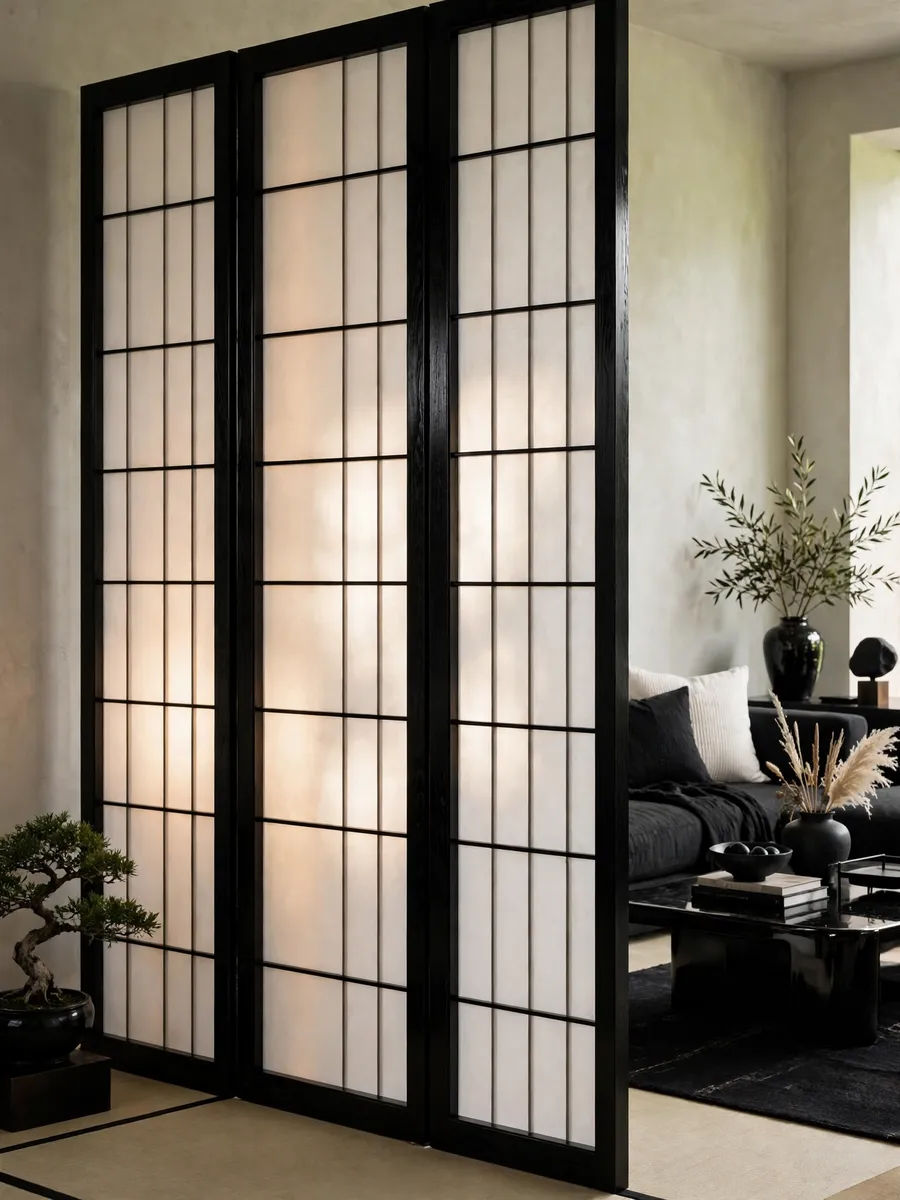
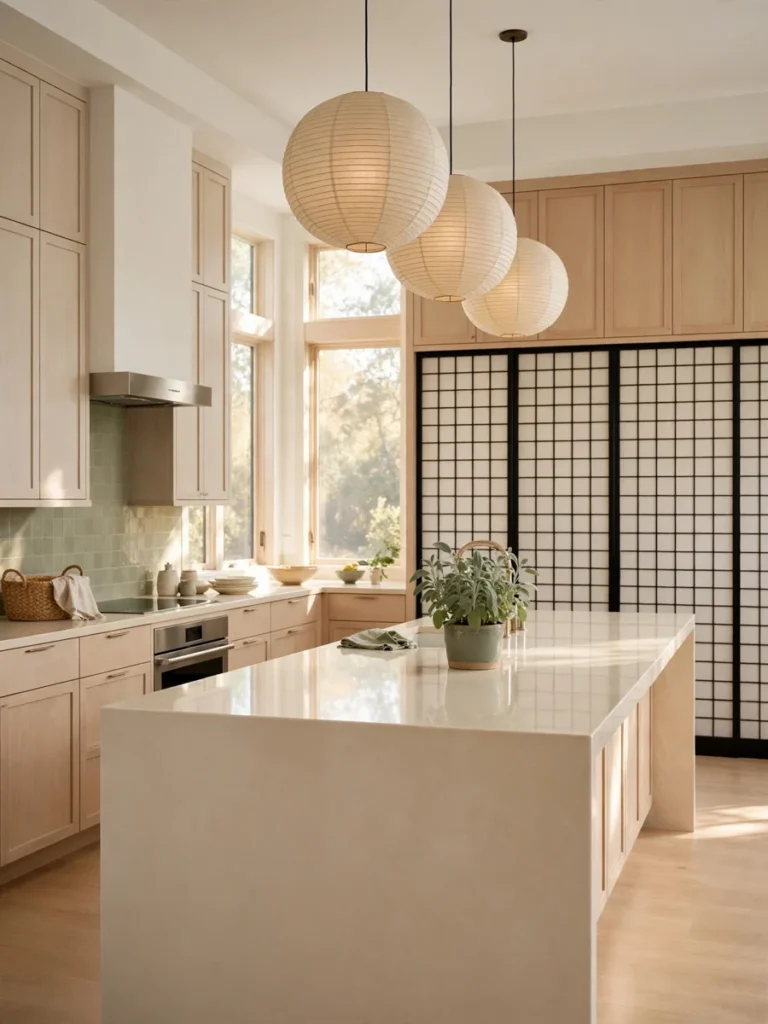
A shoji screen is one of the most Japanese elements you can bring into a living room. Its grid of dark wood and translucent paper divides space without blocking light, so it can carve out a reading corner or hide a work desk while the room still feels open.
For example, a three-panel shoji screen in black-stained wood with warm white paper stands between the sofa and a small desk nook, turning one long room into two calm zones. Light passes through the paper, so the desk side never feels dark.
Quick tip: Use a freestanding screen rather than a fixed partition so you can move it as the room changes.
12. What Is Wabi-Sabi, and How Do You Show It?
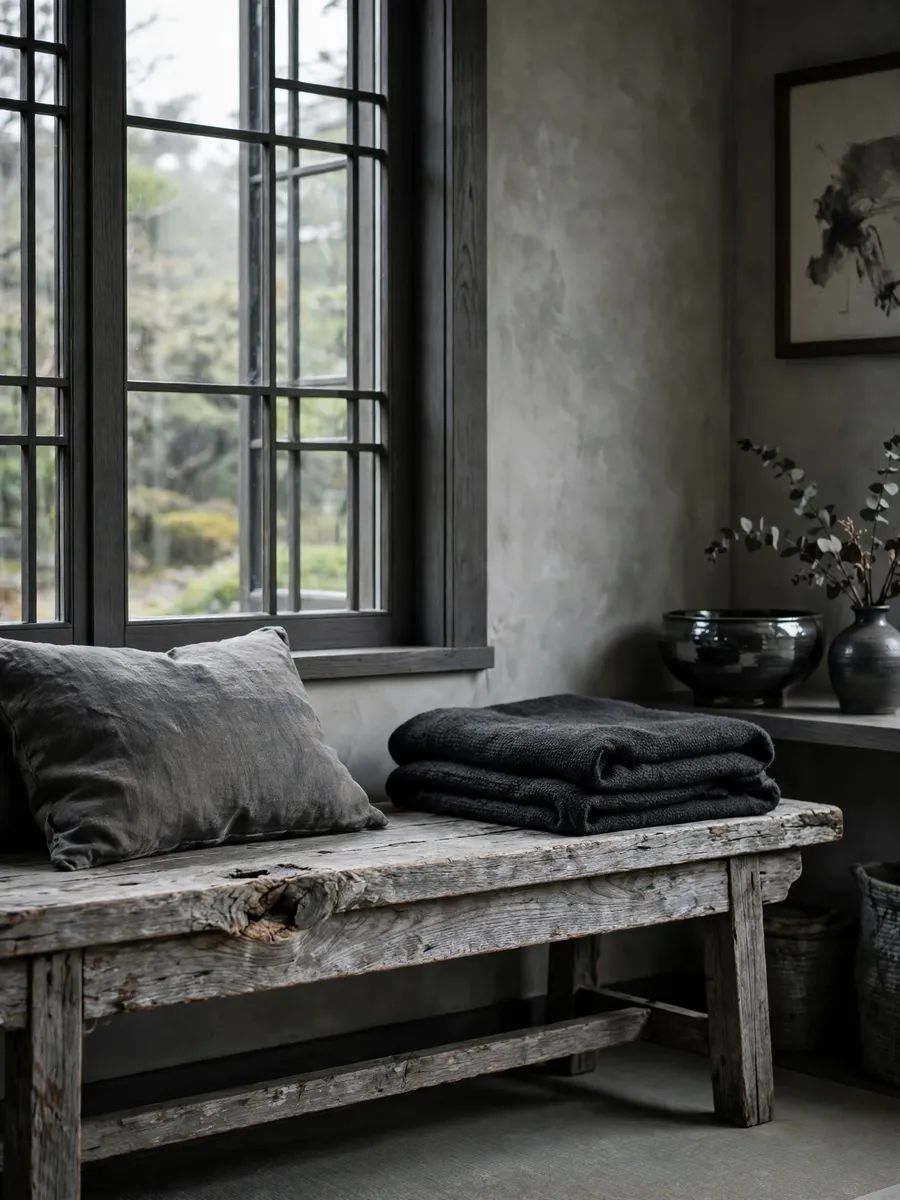
Wabi-sabi is the Japanese idea of finding beauty in imperfection, age, and natural wear. In a living room it means keeping the piece with the scratch, the crack, or the uneven grain instead of replacing it, and letting those marks tell the room’s story.
For example, a weathered oak bench with a visible knot and a faded patch where hands have rested for years sits beneath the window, holding a folded charcoal throw and a worn linen cushion. It is not damaged; it is seasoned, and it gives the room a soul new furniture cannot fake.
Quick tip: Choose one wabi-sabi piece per room, or the effect turns into clutter.
13. How Does Closed Storage Keep the Calm?
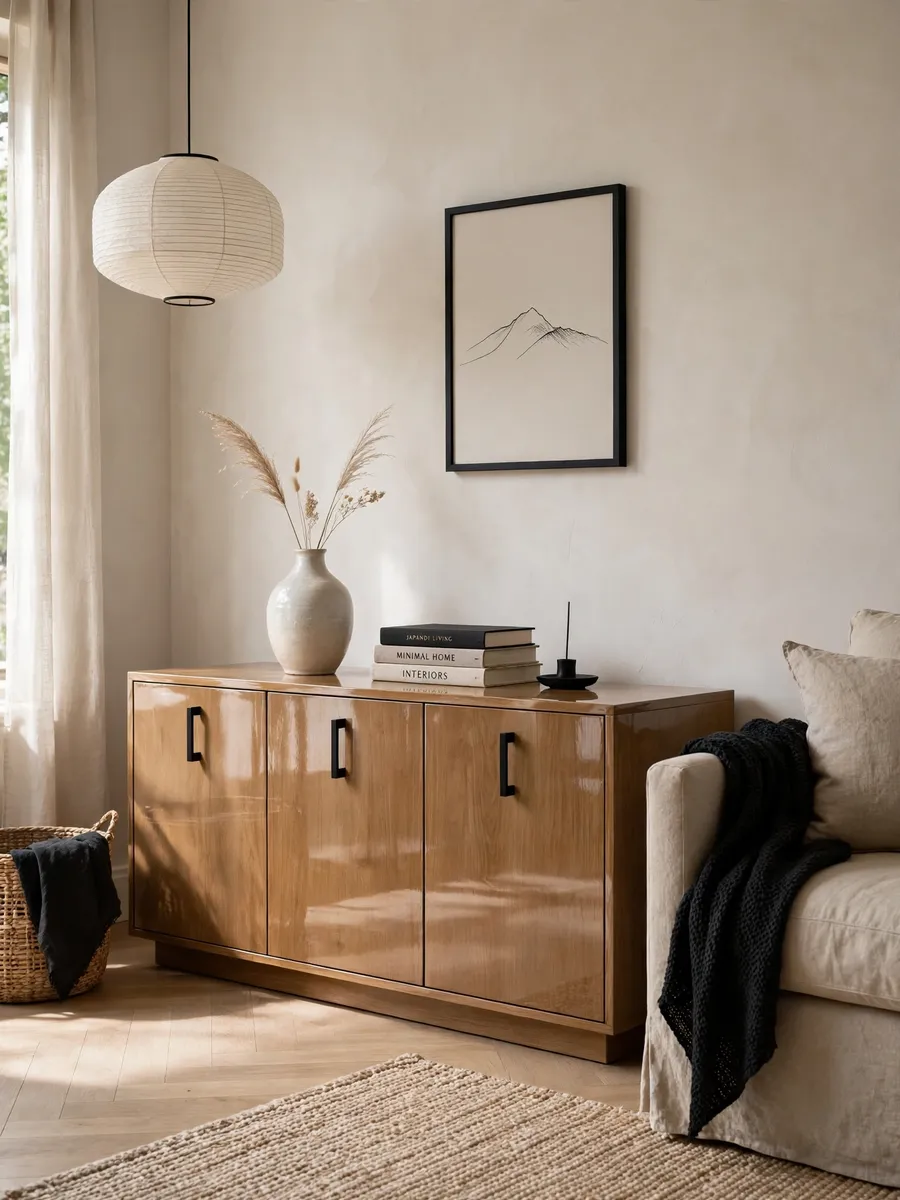
Visible clutter is the enemy of a Japandi living room, so storage should be closed, low, and quiet. A long low cabinet with plain doors hides remotes, chargers, games, and everyday mess, leaving only a few chosen objects on display.
For example, a low oak sideboard with matte black handles runs along one wall, holding board games and blankets inside while its top carries just one ceramic vase and a small stack of books. Everything else stays behind the doors, and the room stays serene even on a busy day.
Quick tip: Give every loose item a home inside closed storage before buying any new decor.
14. Why Add Floor Cushions and a Tatami Corner?
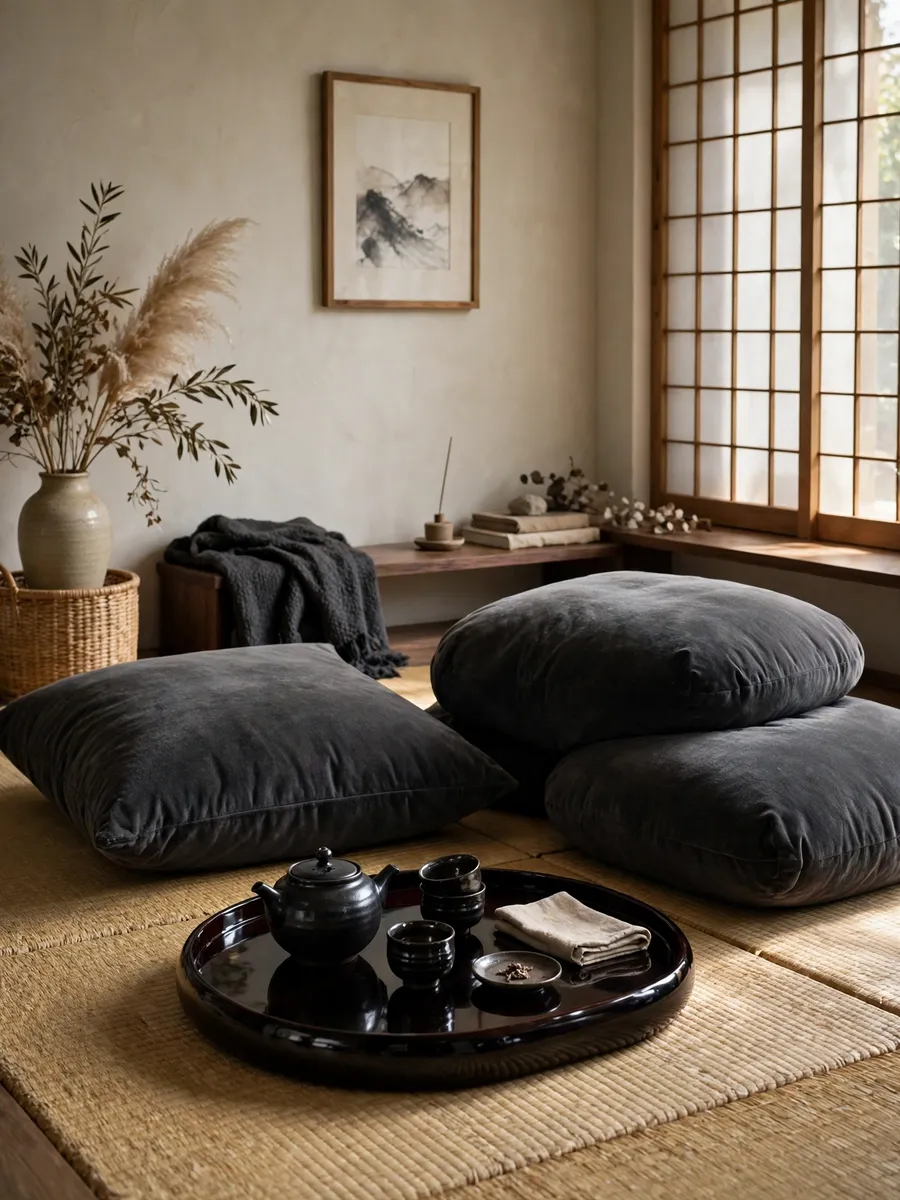
Floor seating is a direct gift from Japanese homes, and it makes a living room feel relaxed and flexible. A tatami mat or a thick woven rug with a few large floor cushions creates a second seating zone for reading, tea, or conversation.
For example, a corner with a natural straw tatami mat, two oversized charcoal floor cushions, and a low lacquered tray holding a teapot turns an unused corner into the most loved spot in the house. Guests naturally drift there.
Quick tip: Choose cushions with removable, washable linen covers in dark tones that hide wear.
15. How Do Stone Accents Add Quiet Luxury?
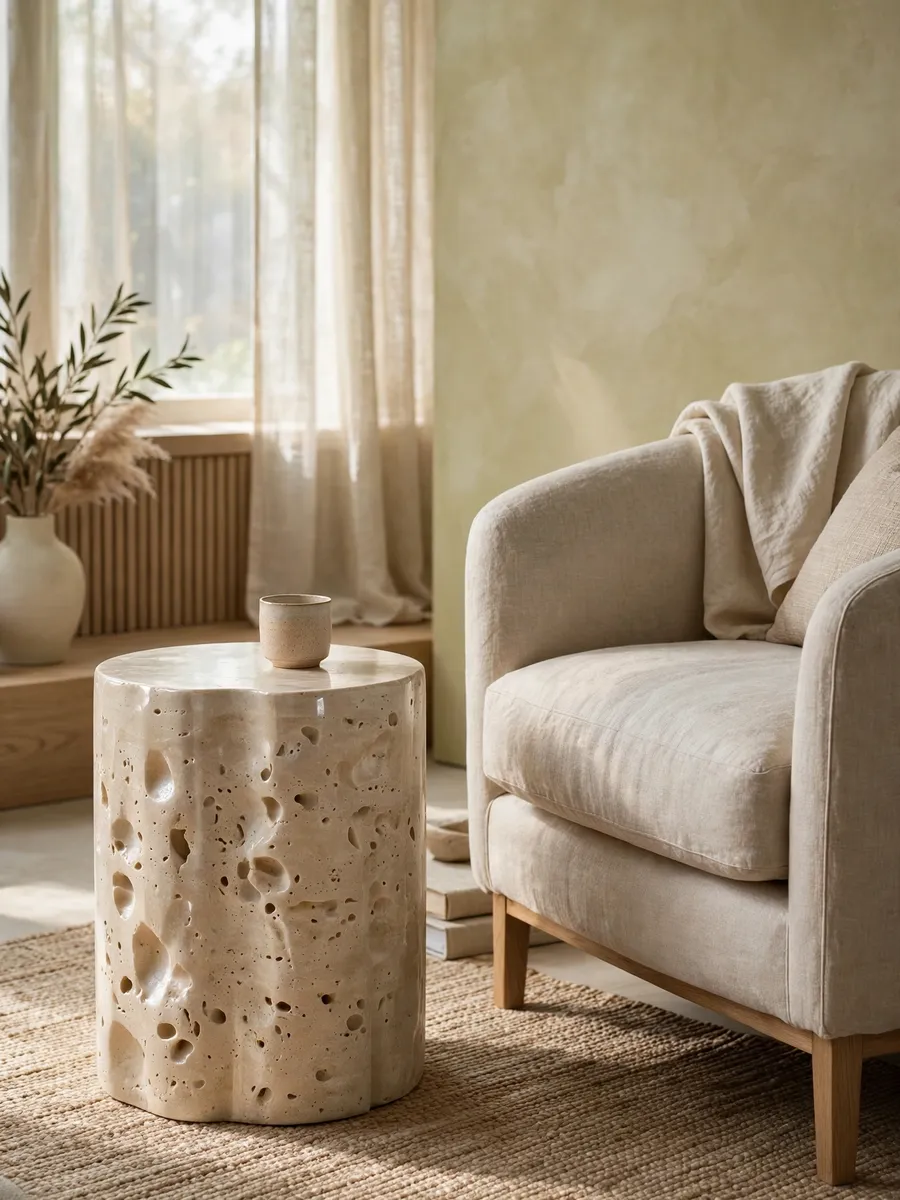
Stone brings a cool, solid, grounding energy that balances all the soft wood and fabric in a Japandi room. Travertine, marble, and slate work best in small doses: a side table, a tray, a vase, or a hearth, never a whole wall of it.
For example, a travertine side table with a softly pitted surface stands beside a linen armchair, holding a small ceramic cup and a folded pair of reading glasses. The stone feels cool to the touch and looks quietly expensive, yet it asks for no attention.
Quick tip: Mix one stone finish with wood rather than pairing two polished stones together.
16. What Kind of Wall Art Works in Japandi Style?
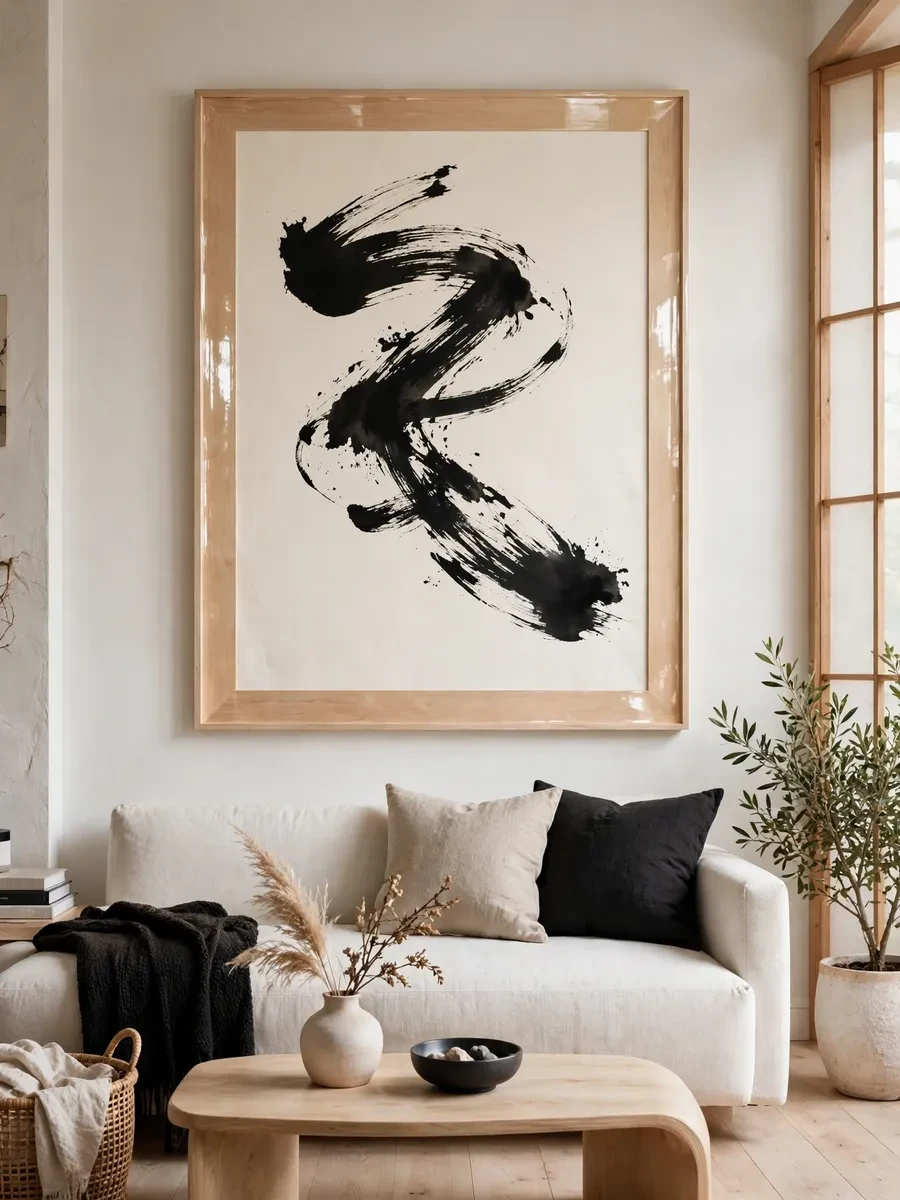
Japandi wall art is minimal, abstract, and often inspired by nature: a single ink brushstroke, a soft landscape, or a textured plaster piece in muted tones. One large artwork beats a gallery wall, because the empty wall around it is part of the design.
For example, a large framed print of a single black ink brushstroke on warm white paper hangs alone above the sofa, its frame in pale natural wood. The wall breathes around it, and the room feels like a gallery rather than a showroom.
Quick tip: Hang art at eye level with at least 12 inches of empty wall on each side.
17. How Do You Layer Warm Light at Different Heights?
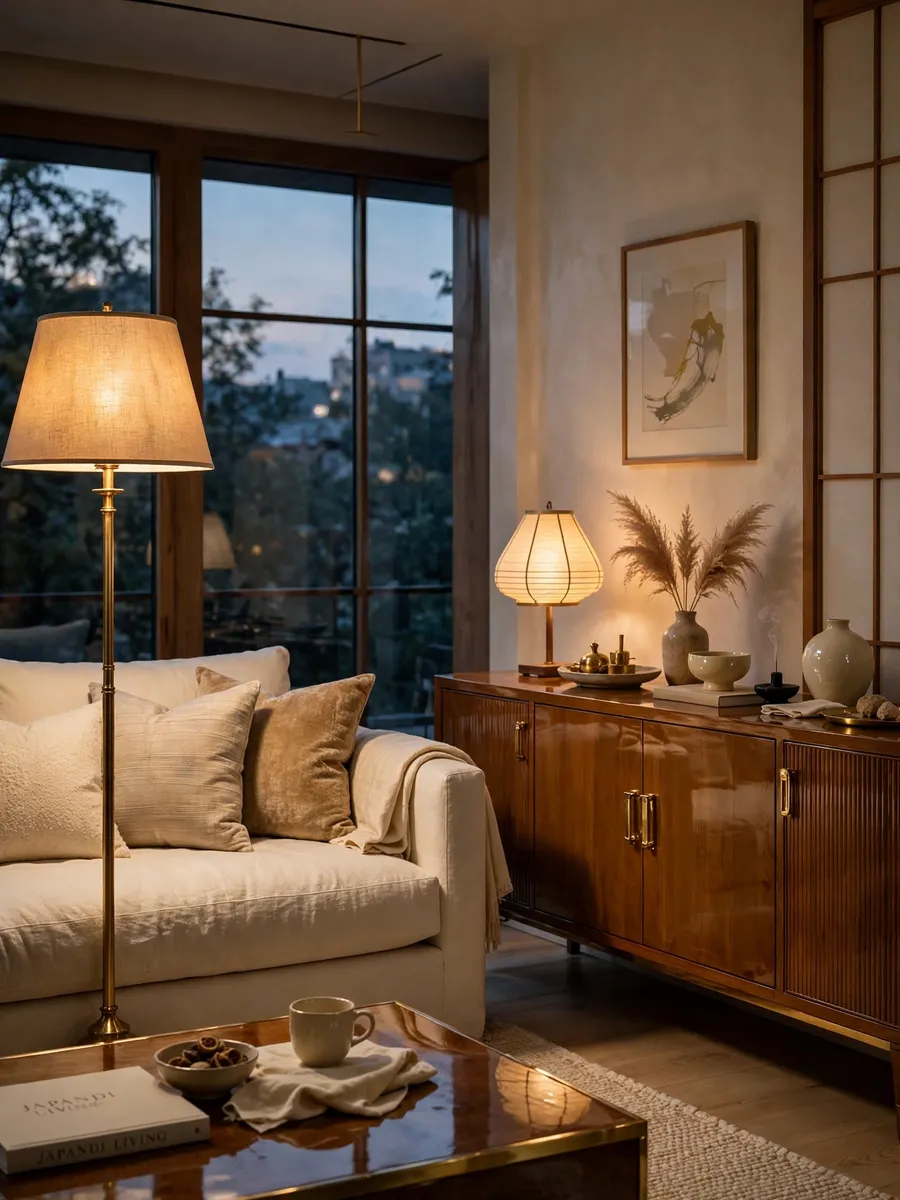
Japandi lighting comes from several small, warm sources instead of one bright ceiling light. A pendant, a floor lamp, and a table lamp at different heights create pools of golden light that make the room feel intimate after dark.
For example, a brass and linen floor lamp glows beside the sofa, a small paper table lamp sits on the sideboard, and the pendant above the coffee table is dimmed low. Together they wrap the room in warmth.
Quick tip: Put every lamp on a dimmer, or use smart bulbs, so the mood can shift from day to evening.
18. Why Does a Rattan Accent Chair Belong Here?
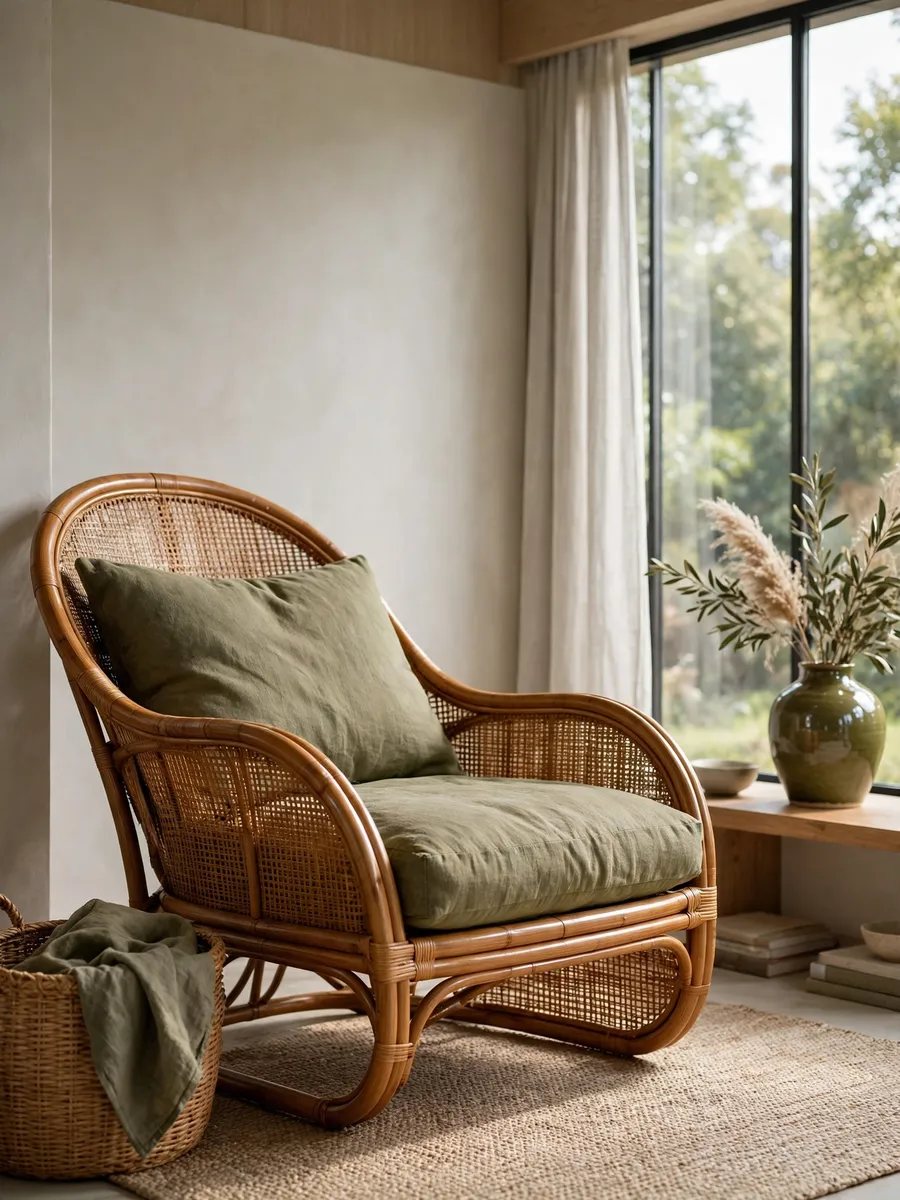
A rattan accent chair adds woven texture and a light, airy shape that a solid upholstered chair cannot. Its open weave lets light pass through, so it never feels heavy, and its natural honey tone warms up a pale room.
For example, a curved rattan lounge chair with a thick olive-green linen cushion sits angled toward the window, with a small woven basket of magazines at its feet. It is the chair everyone reaches for first.
Quick tip: Keep rattan out of direct damp or steamy spots, and dust the weave with a soft brush.
19. How Do Floating Shelves Stay Minimal?
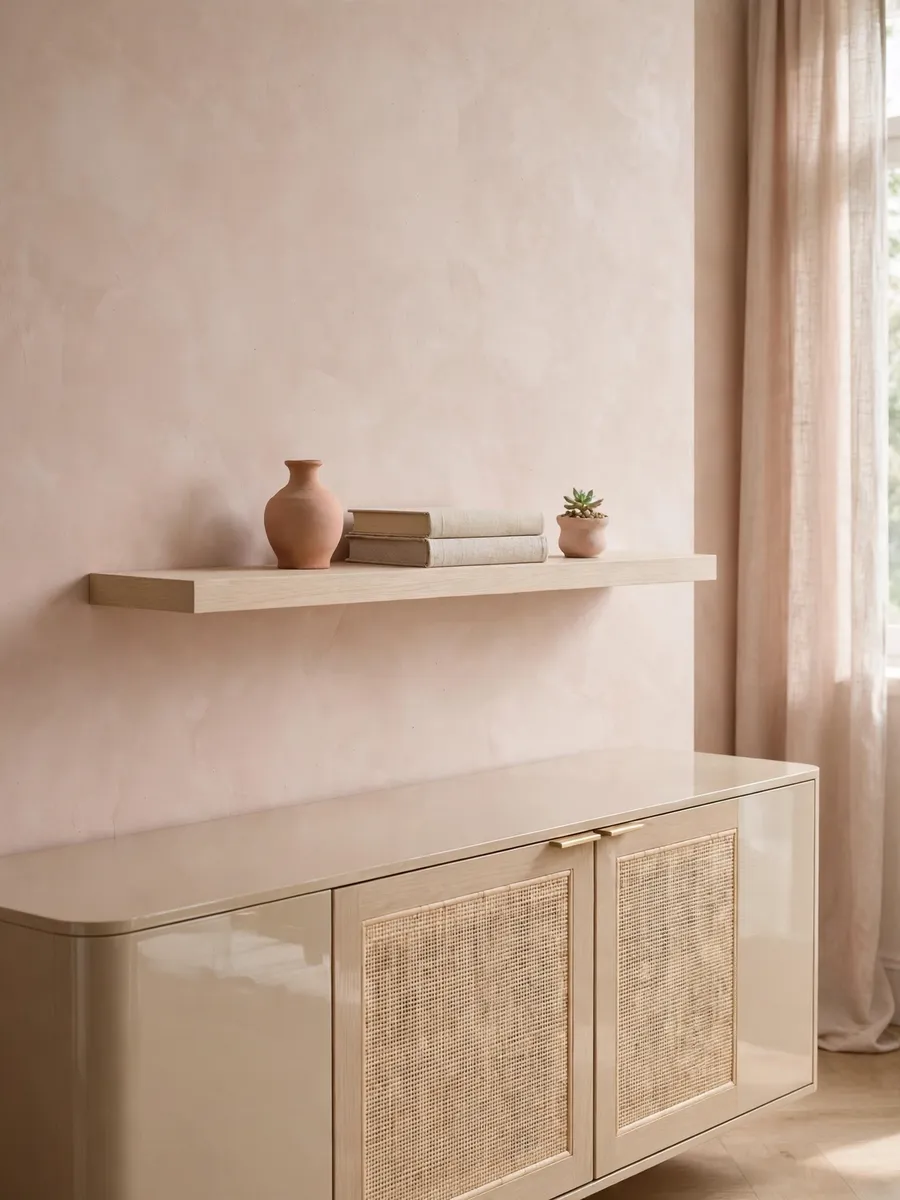
Floating shelves work in a Japandi room only when they stay nearly empty. One or two shelves in light wood, holding a handful of chosen objects with generous space between them, add display room without adding visual weight.
For example, a single pale oak shelf above the sideboard holds three things: a small clay vase, a stack of two linen-bound books, and a tiny potted succulent in a stone pot. The rest of the shelf is bare, and that emptiness makes the three objects feel special.
Quick tip: Follow the one-third rule: fill only one third of a shelf and leave the rest empty.
20. Can Boucle Make Japandi Feel Softer?
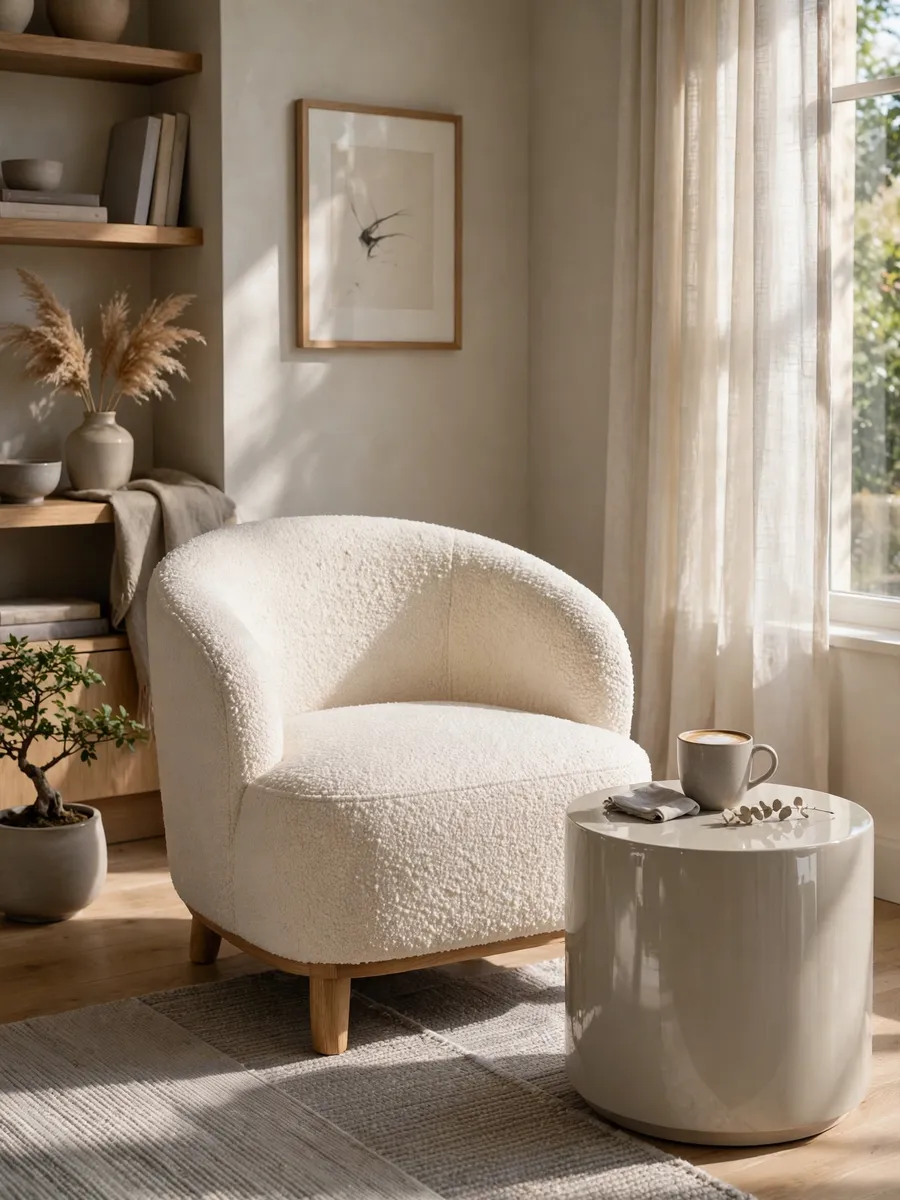
Boucle is the softest texture in the Japandi palette, and a single boucle piece can warm up a room that feels too hard or too plain. Its nubby, cloud-like surface invites touch, and in cream or warm grey it stays firmly inside the muted palette.
For example, a cream boucle accent chair with a curved back and short oak legs sits in the corner by the window, paired with a small round side table in pale ash. It turns a cold corner into the coziest seat in the room.
Quick tip: Use boucle on one piece only, or the texture starts to dominate the room.
21. How Do You Make a Small Living Room Japandi?
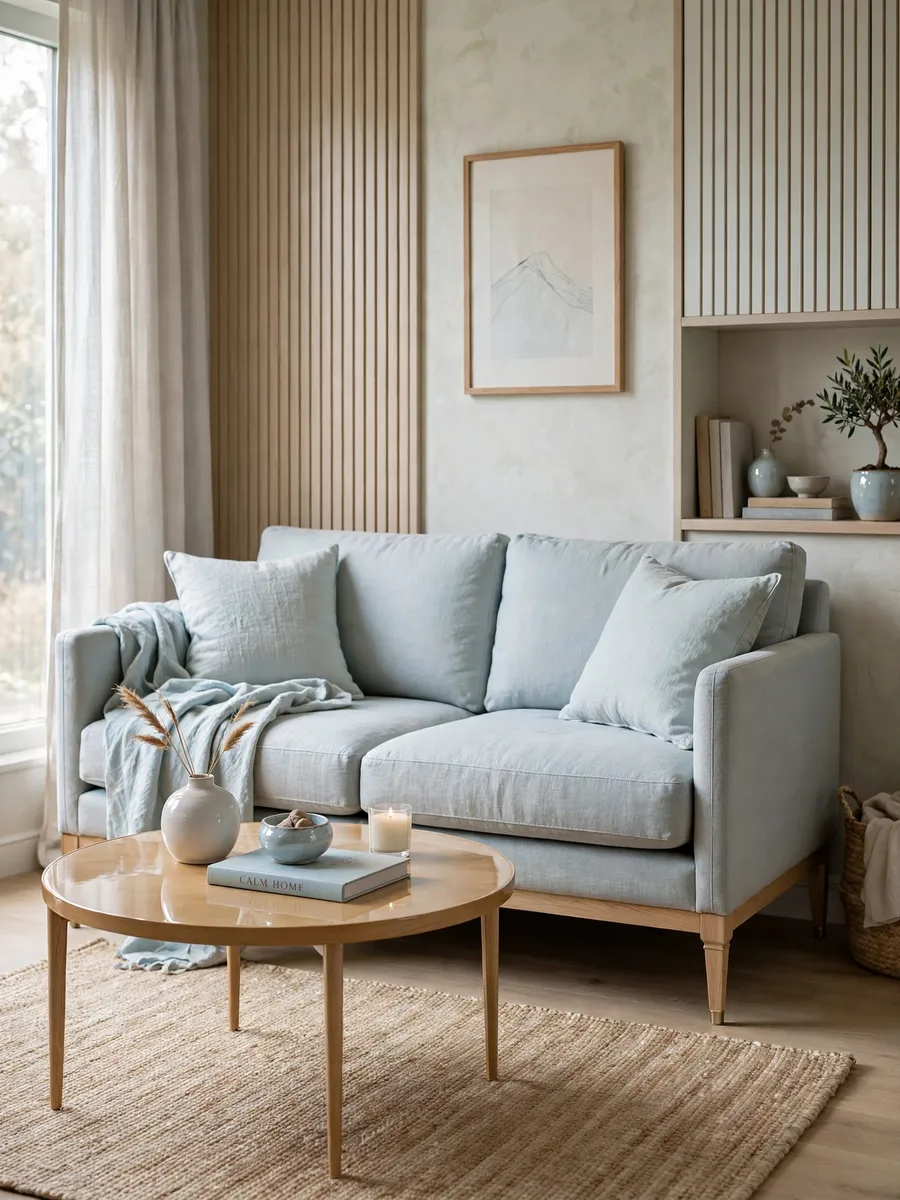
Japandi suits small living rooms because its two main moves, low furniture and empty space, make a room feel bigger. An apartment-size sofa, a slim coffee table, and visible floor around the furniture trick the eye into seeing more space than there is.
For example, a compact two-seater sofa in pale blue-grey linen, just 72 inches wide on raised oak legs, faces a slim round coffee table, with a light jute rug underneath and one small print on the far wall. The room feels open, calm, and far larger than its measurements suggest.
Quick tip: Choose furniture on legs so you can see floor beneath it, which instantly adds visual space.
22. Should You Add a Dark Accent Wall?
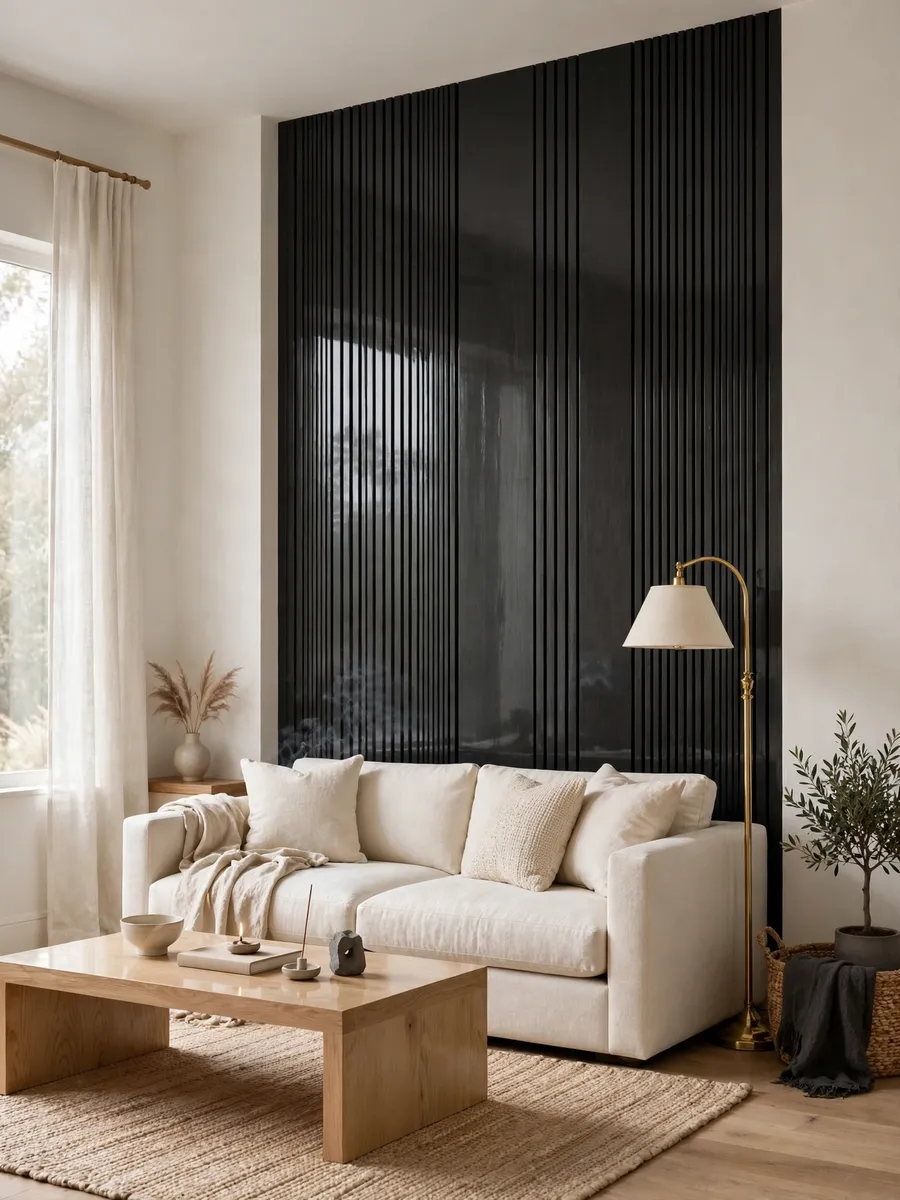
A single dark wall can give a pale Japandi room the depth it needs, as long as it stays the only dark surface in the room. Charcoal, deep slate, or dark moss green behind the sofa creates a backdrop that makes light wood and cream linen glow.
For example, a charcoal accent wall behind a cream linen sofa, with a light timber coffee table and a single brass floor lamp in front of it, turns the seating area into a warm cocoon. The other walls stay warm white, so the room never feels dark or closed in.
Quick tip: Paint the wall behind the sofa, never the wall with the windows, or you will lose daylight.
23. How Do You Create a Japandi Reading Nook?
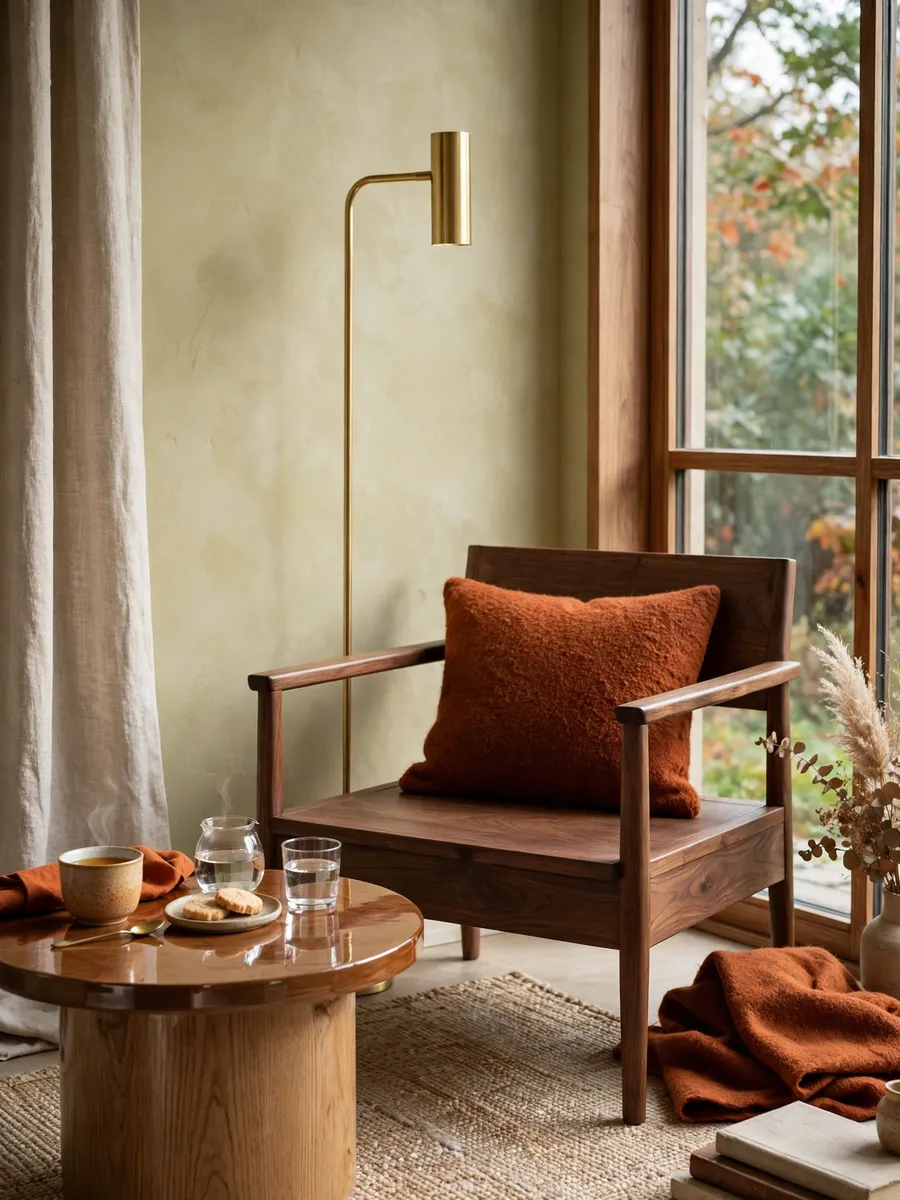
A reading nook is the coziest corner a Japandi living room can offer, and it needs only four things: a comfortable chair, a light, a small table, and a throw. Tucked beside a window, it becomes a quiet retreat inside the larger room.
For example, a low walnut armchair with a rust-colored wool cushion sits beside the window, a slim brass reading lamp arcs over its shoulder, and a small oak side table holds a cup of tea and two books. It is a whole world in four square feet.
Quick tip: Keep the nook facing the room, not the wall, so it feels connected rather than hidden away.
24. How Do You Warm Japandi Up for Autumn?
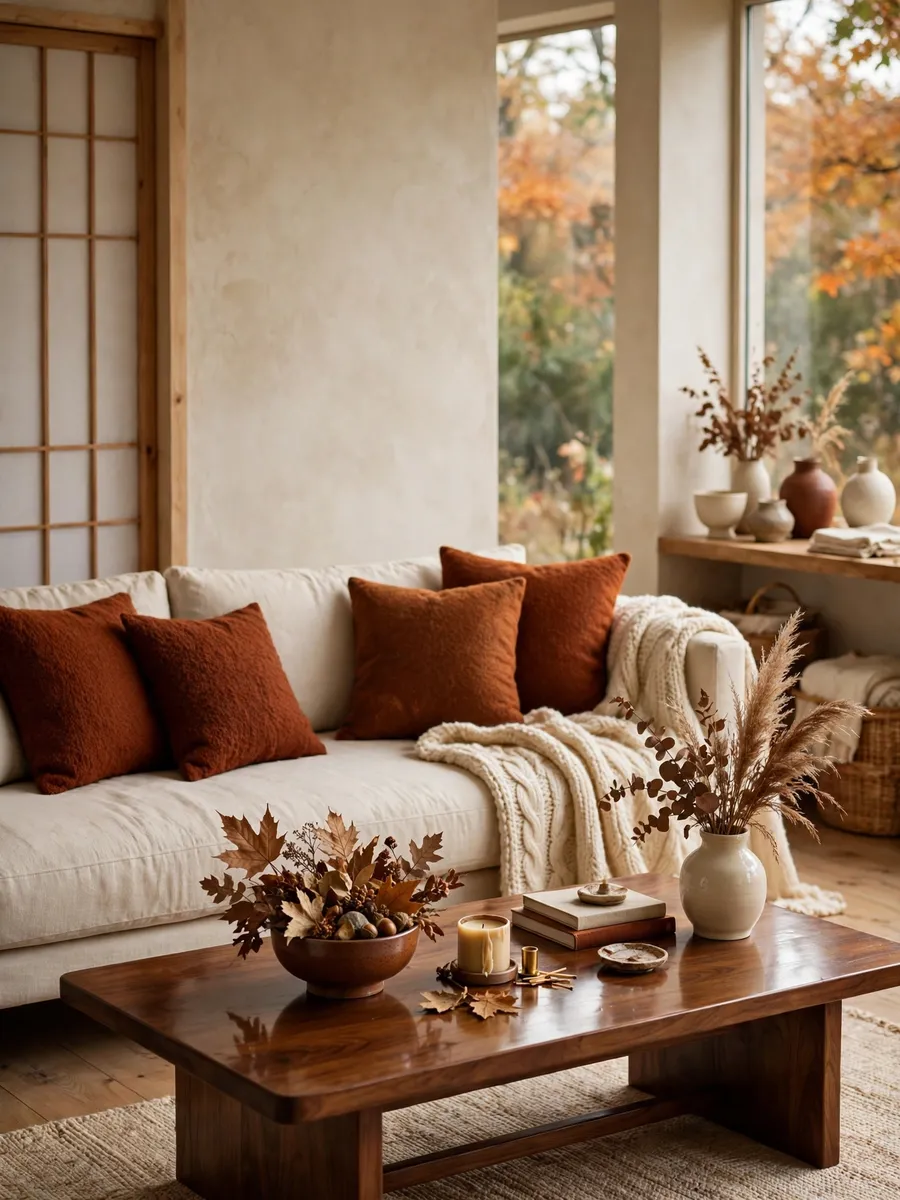
Japandi is not a summer-only style. As the seasons turn, a few warmer accents, deeper earth tones, and heavier textures keep the room feeling seasonal without breaking its calm. The structure stays the same; only the layers change.
For example, swap the pale linen cushions for burnt sienna and deep rust wool ones, add a thick cream knit throw over the sofa arm, and place a small ceramic bowl of dried leaves and pinecones on the coffee table. The room still reads Japandi, but now it reads autumn too.
Quick tip: Change only textiles and one or two small objects per season, never the furniture.
Frequently Asked Questions
What is Japandi style?
Japandi blends Japanese minimalism with Scandinavian comfort. It pairs wabi-sabi, the Japanese appreciation of natural imperfection, with hygge, the Scandinavian feeling of cozy warmth, in a calm room of natural materials, muted colors, and low furniture.
How do you make a small living room Japandi?
Start with a low, apartment-size sofa in pale linen, a slim coffee table, and a natural fiber rug, with warm white walls. Use closed storage to hide clutter, choose furniture on legs so the floor stays visible, and leave one wall mostly bare. These moves make a small room feel larger and calmer.
What colors are used in a Japandi living room?
The palette is built on warm neutrals such as creamy white, soft greige, sand, and mushroom, layered with natural wood tones in oak, ash, and walnut. A little charcoal or black adds contrast, while muted sage, clay, and stone bring gentle color. Bright colors and cool whites are best avoided.
How do I make my Japandi living room feel cozy without adding clutter?
Add warmth through texture rather than more objects. Layer linen cushions, a wool throw, a woven rug, and warm lighting at different heights, and add one sculptural plant. Each surface feels richer, yet nothing new sits on the shelves, so the room stays calm and clutter-free.
What plants pair best with a Japandi living room?
Structural plants with one strong form work best: a fiddle-leaf fig, an olive tree, or a snake plant in a plain stone or ceramic pot. Avoid busy ferns and flowering plants, which fight the calm. One tall plant in a corner does more than several small pots scattered around.
What is the difference between Japandi and Scandinavian style?
Scandinavian style accepts more color, pattern, and decoration, while Japandi is stricter and quieter. The Japanese half removes excess color and pattern, adds negative space, and brings wabi-sabi imperfection and low, floor-hugging furniture. Japandi is Scandinavian warmth with Japanese restraint.
Conclusion
Japandi living room ideas ask for less and give back more: less clutter, less color noise, and less furniture, in exchange for a room that feels calm, warm, and genuinely restful. Start with the palette and the sofa, add one handcrafted piece and one plant, and let the room grow slowly. Your living room need not be perfect to feel peaceful; it only needs to be honest, natural, and yours.