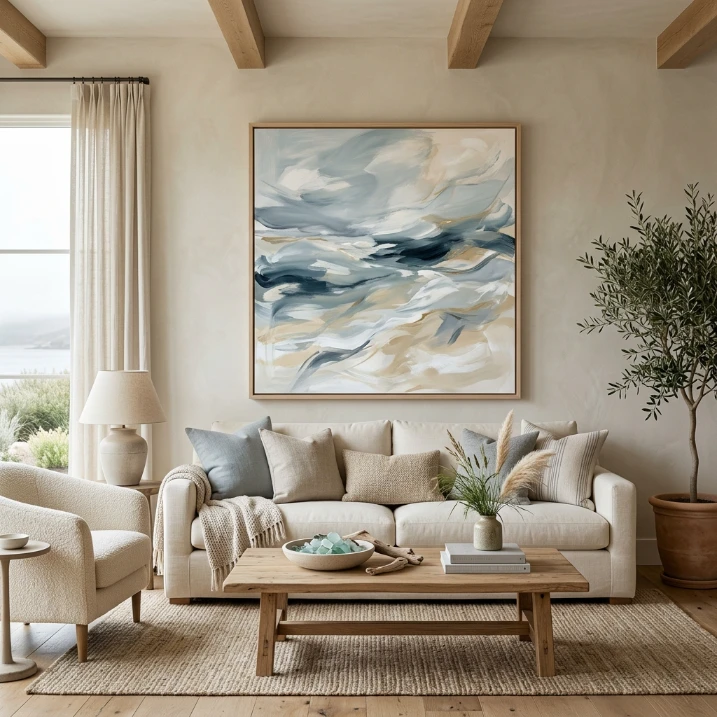
26 Minimalist Living Room Ideas That Make Your Home Feel Calm, Warm and Beautiful
Minimalist living room ideas work best when you keep only what earns its place, choose one calm palette, and let light and texture do the decorating. A minimalist living room is not an empty room. It is a warm, uncluttered space with a comfortable sofa, a rug that fits the seating area, three layers of soft light, and a few well-chosen pieces that make daily life easier. If your room feels small or crowded, these small living room ideas pair well with the same calm approach, because the same rules about scale, light, and hidden storage apply in a compact space too.
Key Takeaways
What is a minimalist living room? A minimalist living room is a calm, uncluttered room built around a few quality pieces, one warm neutral palette, clear walkways, and hidden storage, with texture and light adding warmth.
How do I make a minimalist living room feel warm? Layer wool, linen, wood, and soft light in warm tones. A wool rug, linen cushions, a timber coffee table, and lamps at 2700K add warmth without adding clutter.
What should I remove first? Start with duplicate decor, small ornaments on every surface, and furniture that blocks walkways. Keep the pieces you use every day and store the rest out of sight.
How many colours should a minimalist living room have? Three at most. Use one dominant neutral for about 70 percent of the room, a second tone for about 20 percent, and one accent for the remaining 10 percent.
1. How Do You Plan the Layout Before Buying Anything?
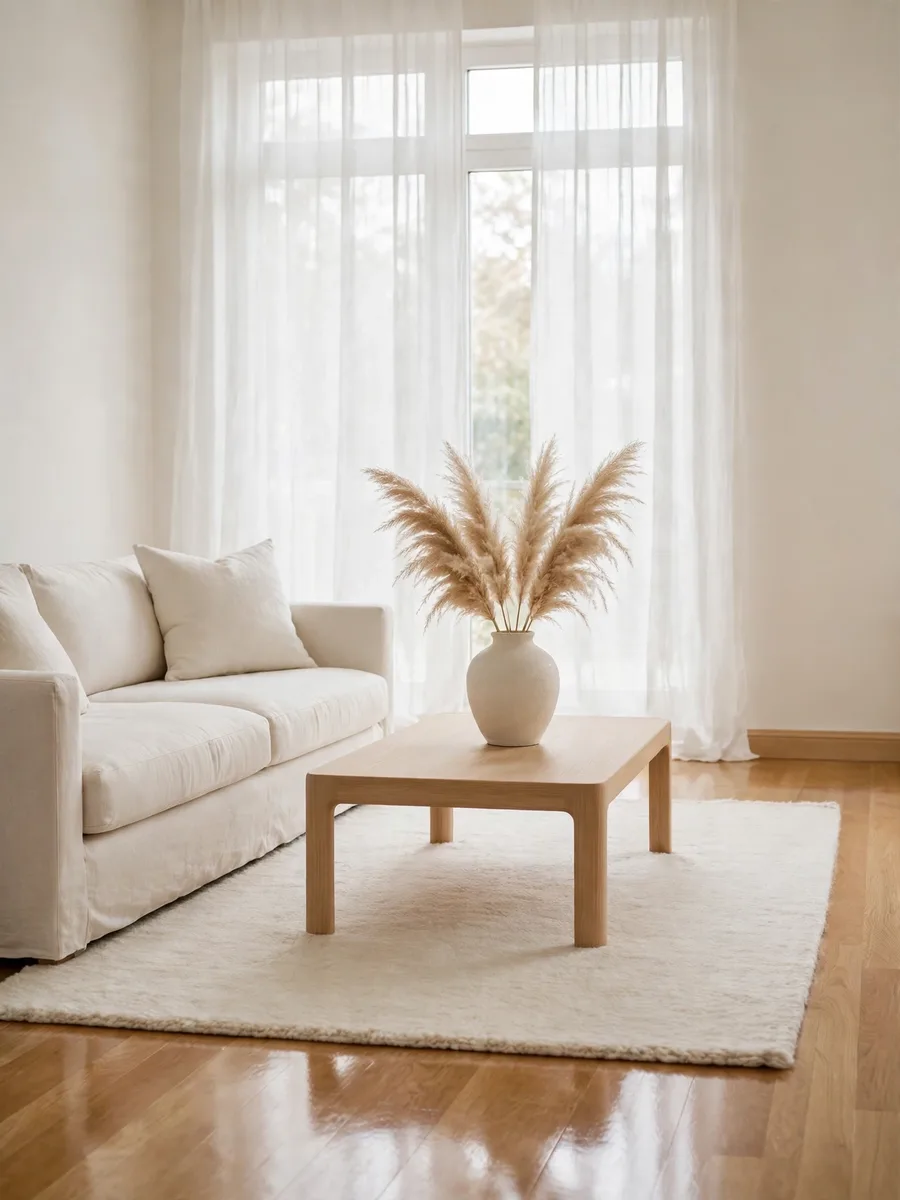
Plan the layout before you buy anything, because furniture that fits the room always looks calmer than furniture that fights it. Place the sofa first, facing the best view or the fireplace, then add one chair only if the conversation area still feels open. Leave 30 to 36 inches clear for the main paths through the room.
For example, in a 12 by 15 foot room, a three-seat sofa on the long wall, a slim coffee table in the centre, and one angled armchair leave the doorway clear and the room easy to cross.
Quick tip: Tape the outline of each large piece on the floor with painter’s tape and live with the outlines for a day before you order anything.
2. What Is the Easiest Warm Neutral Palette to Start With?
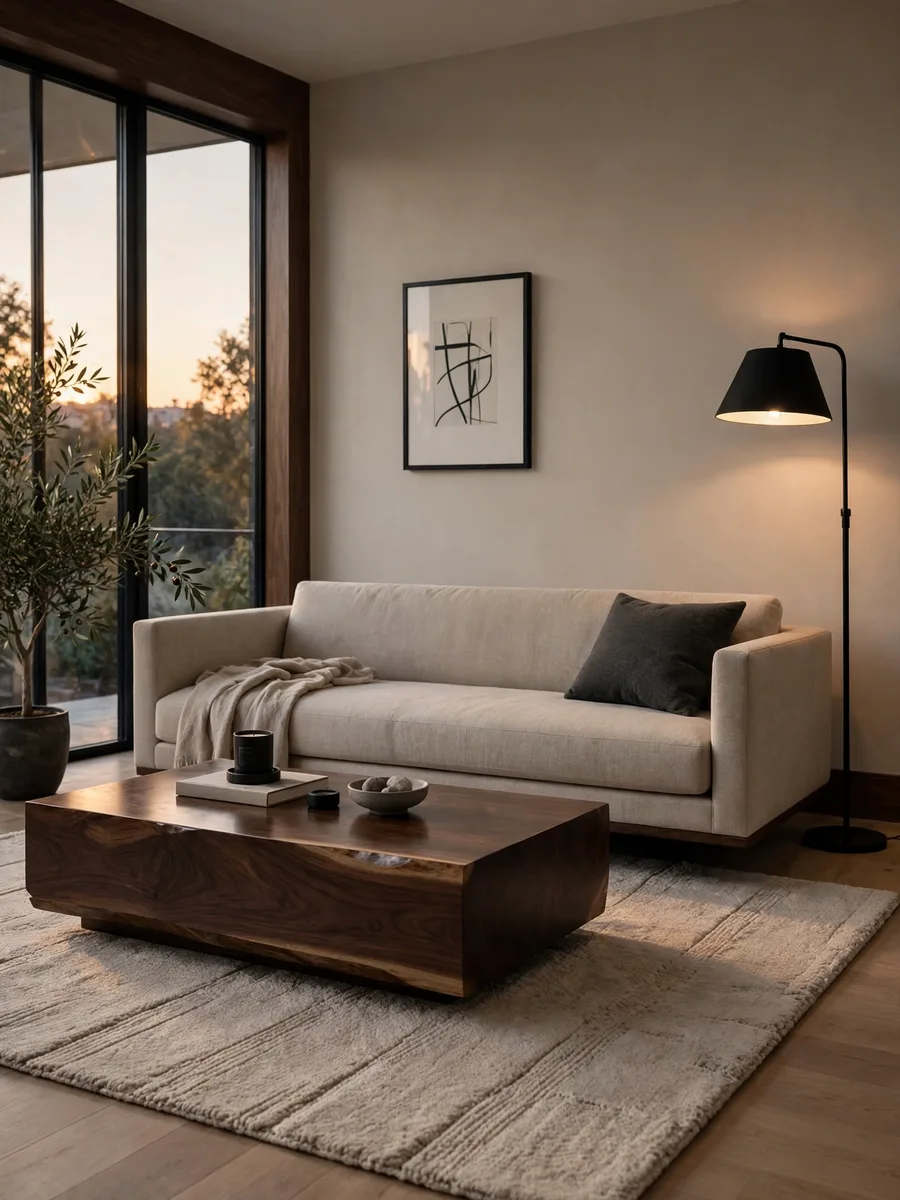
The easiest warm neutral palette starts with warm white walls, greige upholstery, and walnut wood. Pick one dominant neutral and stay inside its family, so the walls, sofa, and rug all share the same warm undertone.
For example, warm white walls and a greige sofa, a walnut coffee table and a taupe rug, with black picture frames as the only dark accent, follow that balance.
Quick tip: Hold paint, fabric, and wood samples together in daylight before you commit, because undertones that clash in the shop will clash on the wall too.
3. How Do You Choose a Sofa That Fits a Minimalist Room?
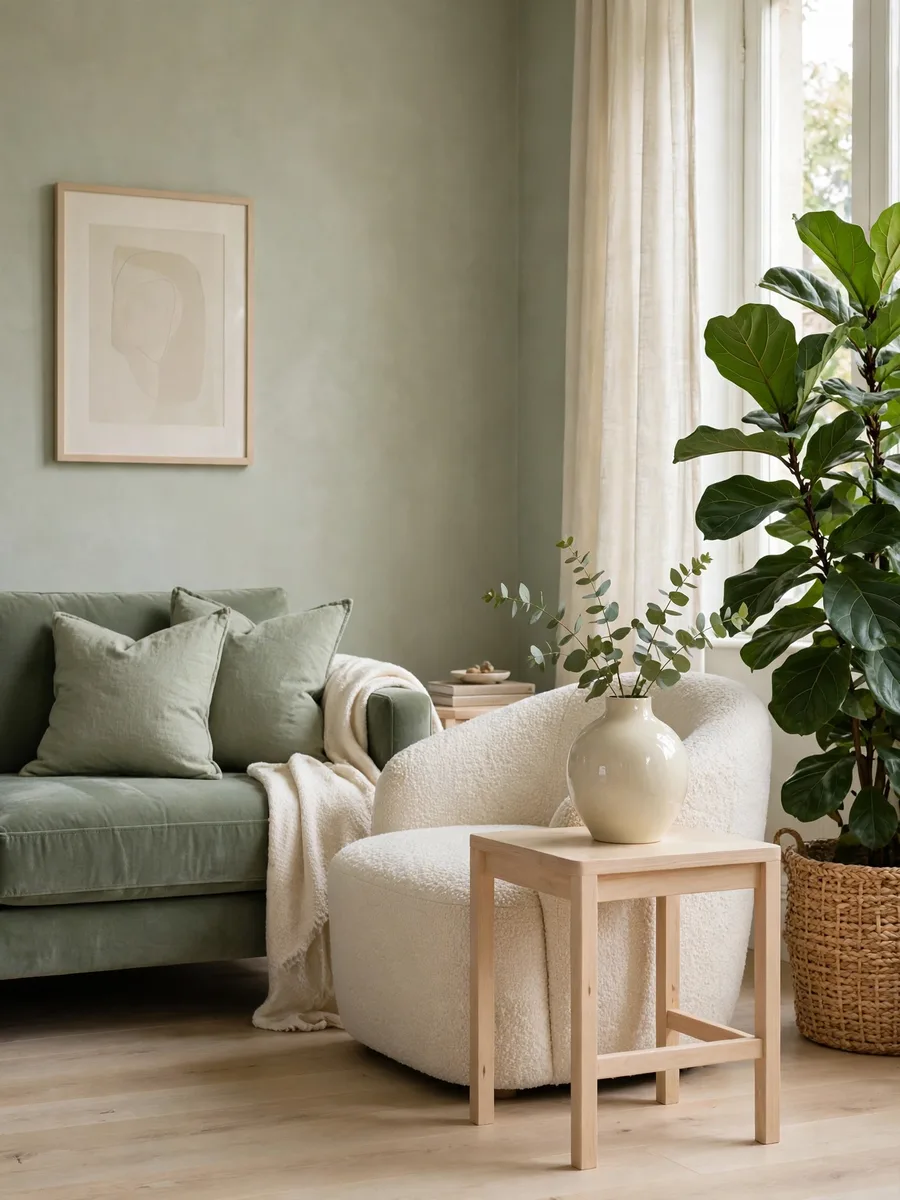
Choose one quality sofa instead of several small seats, because fewer, larger pieces read calmer than a crowd of small ones. Low-profile designs keep sightlines open and make the ceiling feel higher.
For example, a three-seat linen sofa with slim oak legs and two plain cushions gives a family room comfort without visual noise.
Quick tip: If the sofa back rises above the window sill, it is too tall for the wall, so choose a lower back and let the light in.
4. Why Does Low-Profile Furniture Make a Room Feel Bigger?
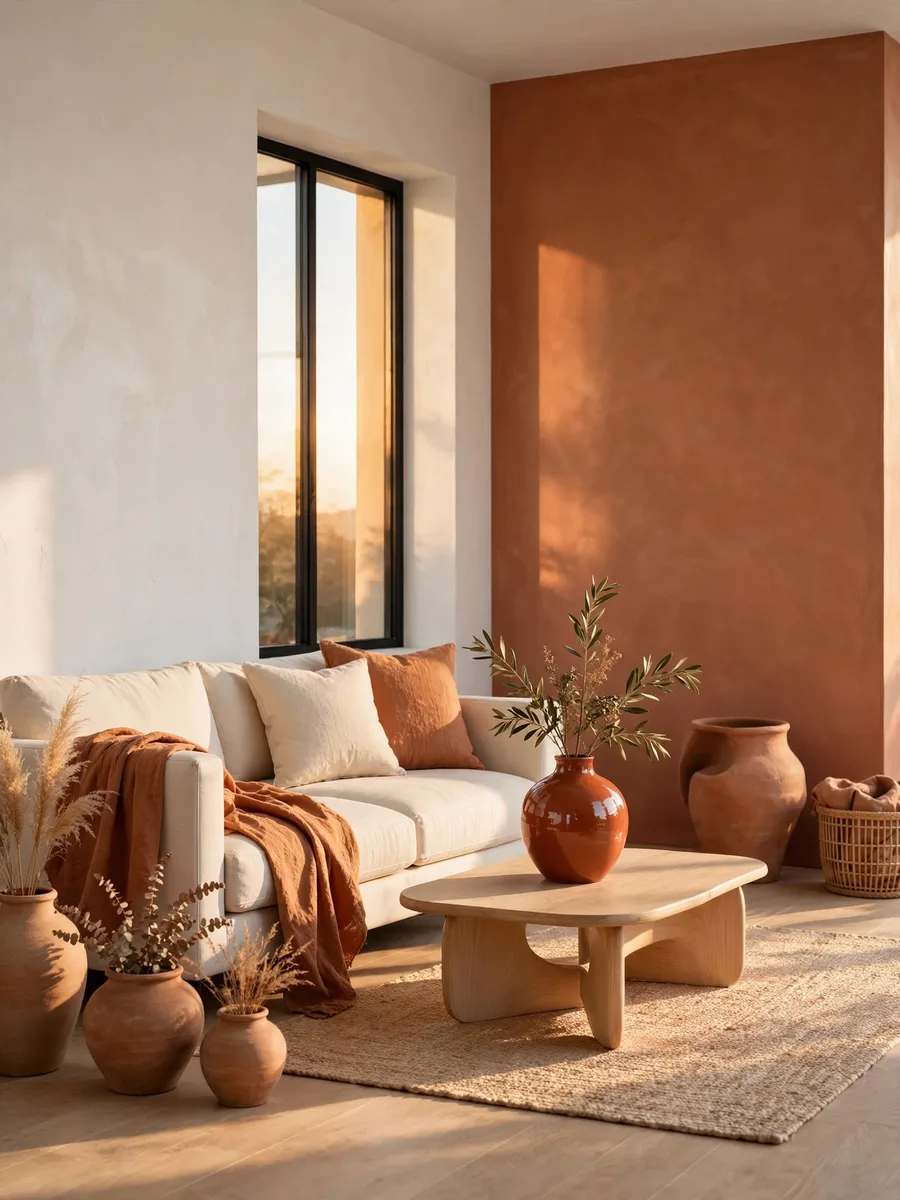
Low-profile furniture makes a room feel bigger because it leaves more wall and window visible above it. The result is a calmer room that still holds everything you need.
For example, a low linen sofa, a coffee table at seat height, and a single low credenza under the television keep the whole wall calm and easy to read.
Quick tip: Leave at least a hand’s width of wall visible above the tallest piece in the room so the ceiling line stays clear.
5. What Size Rug Does a Minimalist Living Room Need?
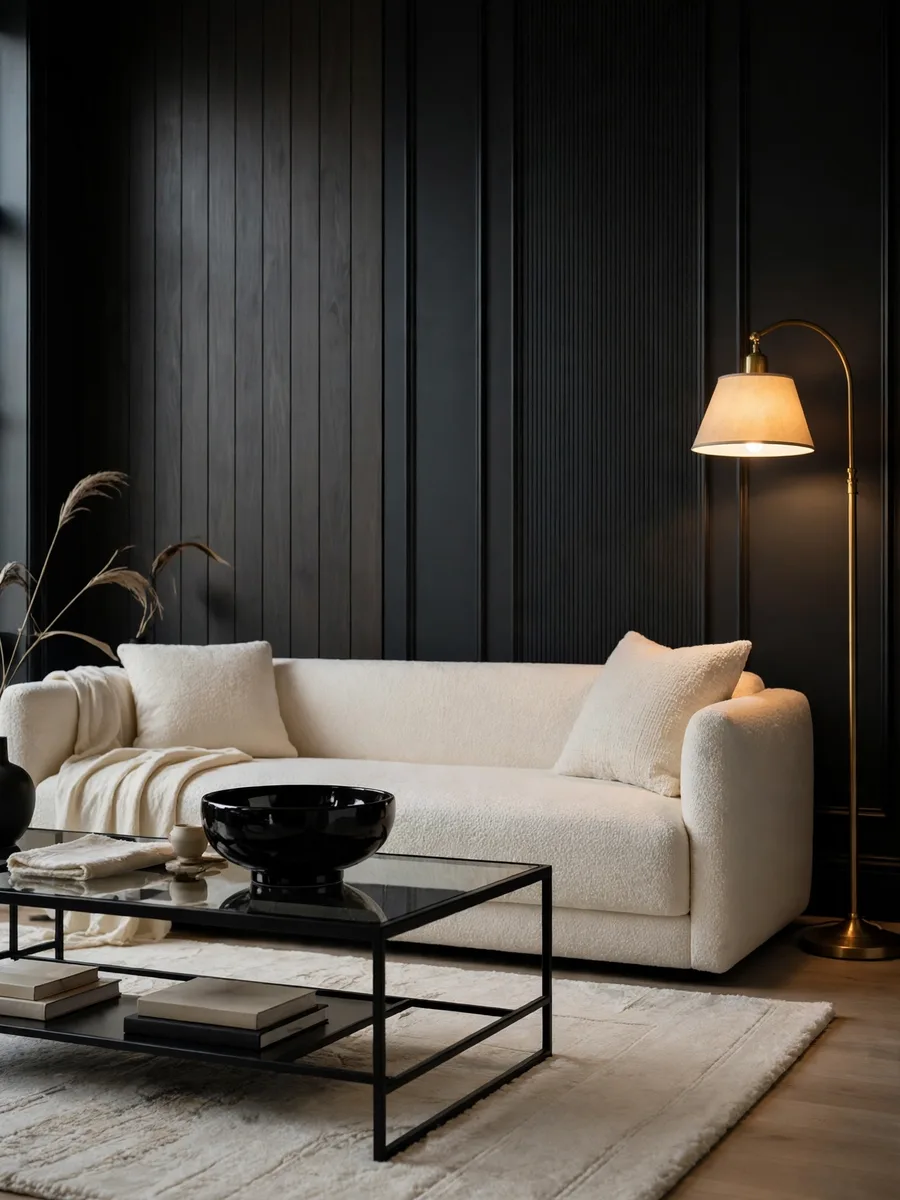
A minimalist living room needs a rug large enough for at least the front legs of every seat to sit on it. In most living rooms, an 8 by 10 foot rug suits a three-seat sofa, and a 9 by 12 foot rug suits a larger seating group.
A flat-weave wool rug in a warm neutral adds texture without pattern noise. These living room rug ideas show how the right size and texture can anchor a calm seating area without adding colour or pattern clutter.
Quick tip: If you are between sizes, choose the larger rug, because a rug that is slightly too big always looks better than one that is slightly too small.
6. How Do You Create One Strong Focal Point?
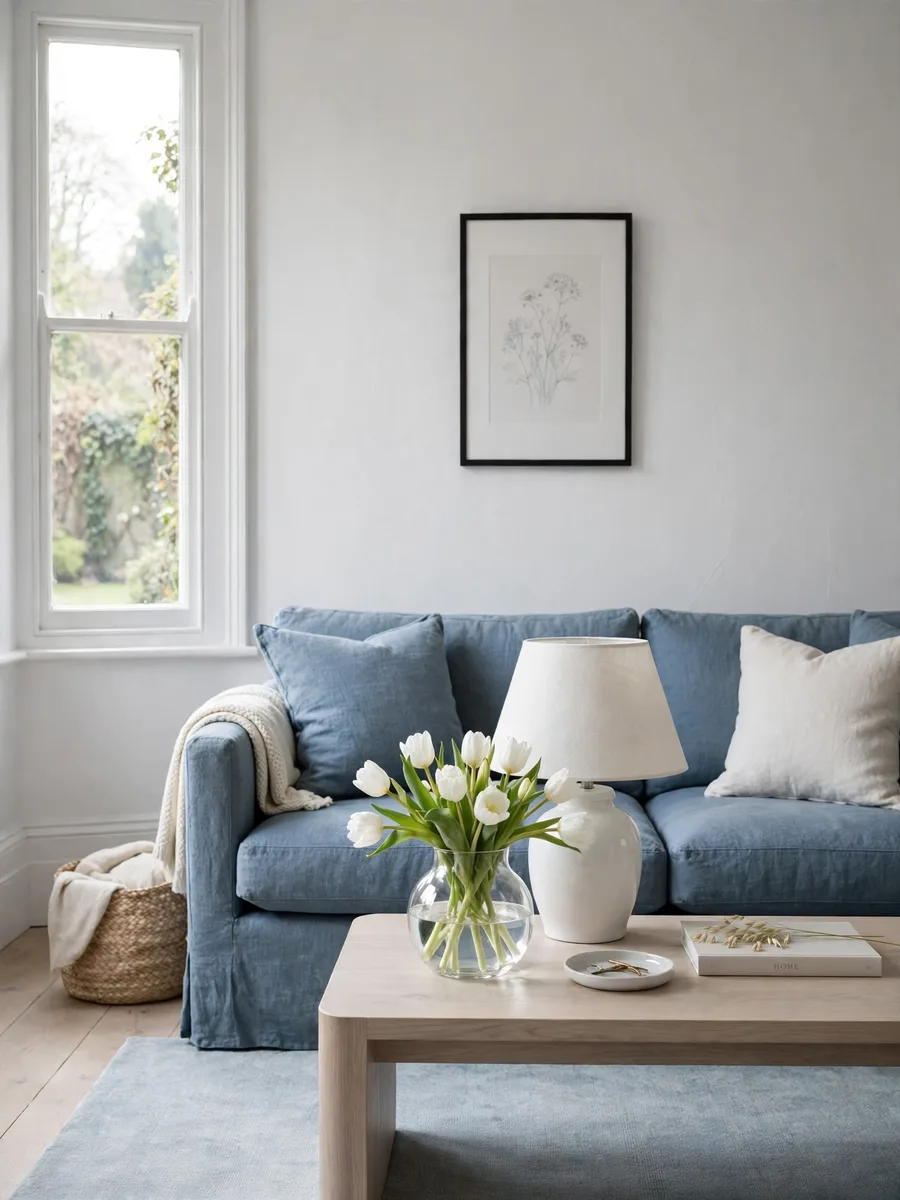
Create one strong focal point and let everything else support it, because a room with three competing features feels busy even when it is tidy. Choose the feature you look at first when you enter the room and build the seating around it.
For example, a single oversized landscape print above a low oak console, with nothing else on that wall, gives the eye a clear place to rest.
Quick tip: Stand in the doorway and check what you notice first. If two things compete for attention, remove or shrink one of them.
7. How Can Natural Light Do Most of the Decorating?
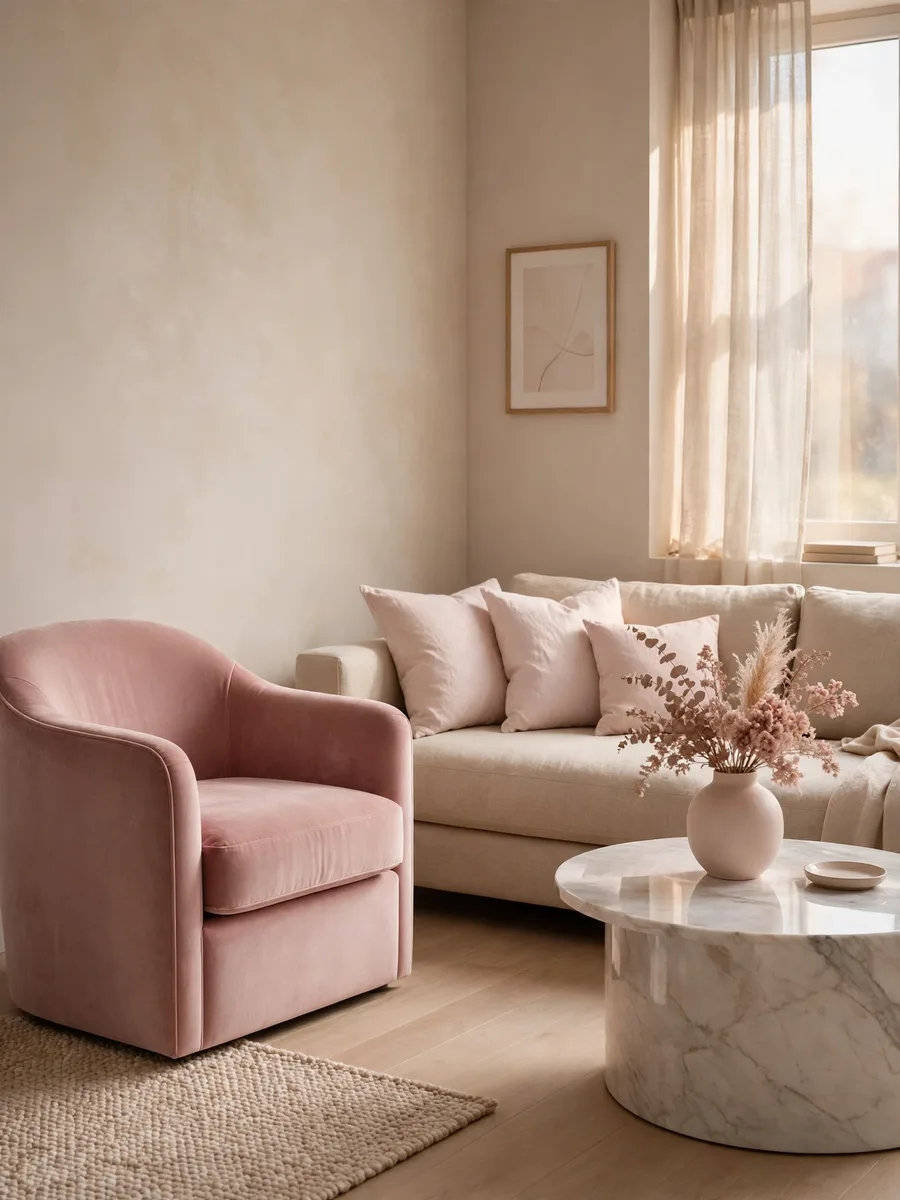
Natural light can do most of the decorating in a minimalist room, because sunlight adds warmth and depth that no ornament can copy. Keep the window wall free of tall furniture so daylight reaches deep into the room.
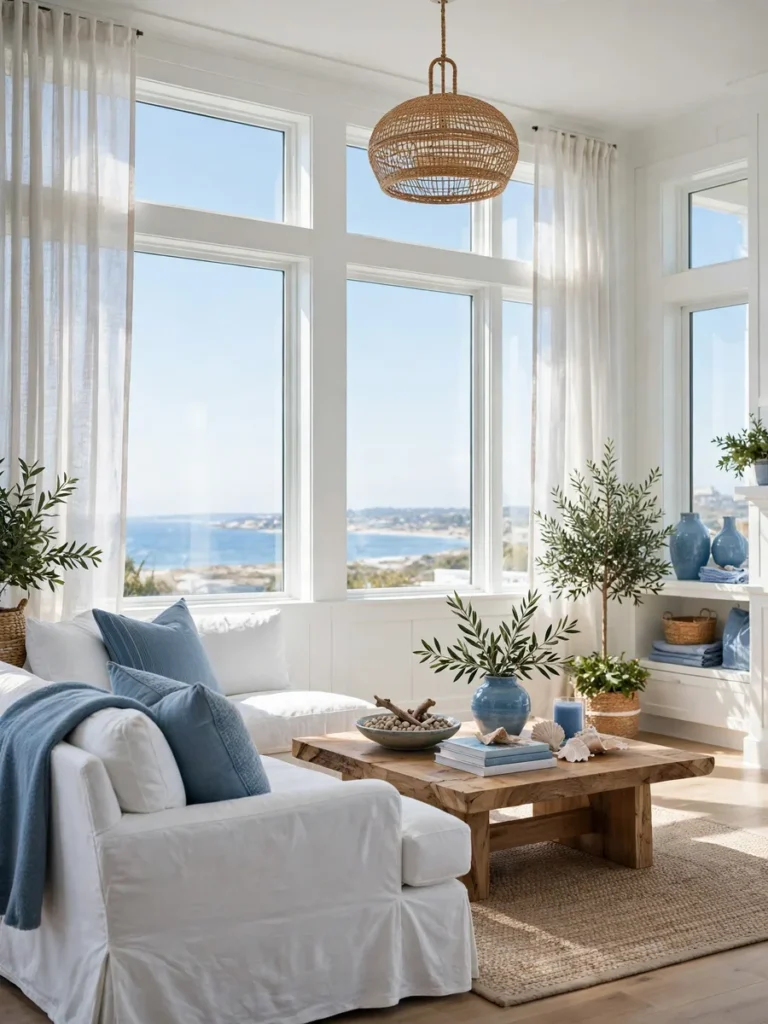
For example, a tall window dressed with sheer white linen, a pale oak floor, and a single low sofa let morning light wash across the rug and freshen the room.
Quick tip: Wash the inside and outside of the windows and remove one layer of curtain before you buy anything new, because clean glass alone can brighten a room.
8. What Is the Three-Layer Lighting Rule?
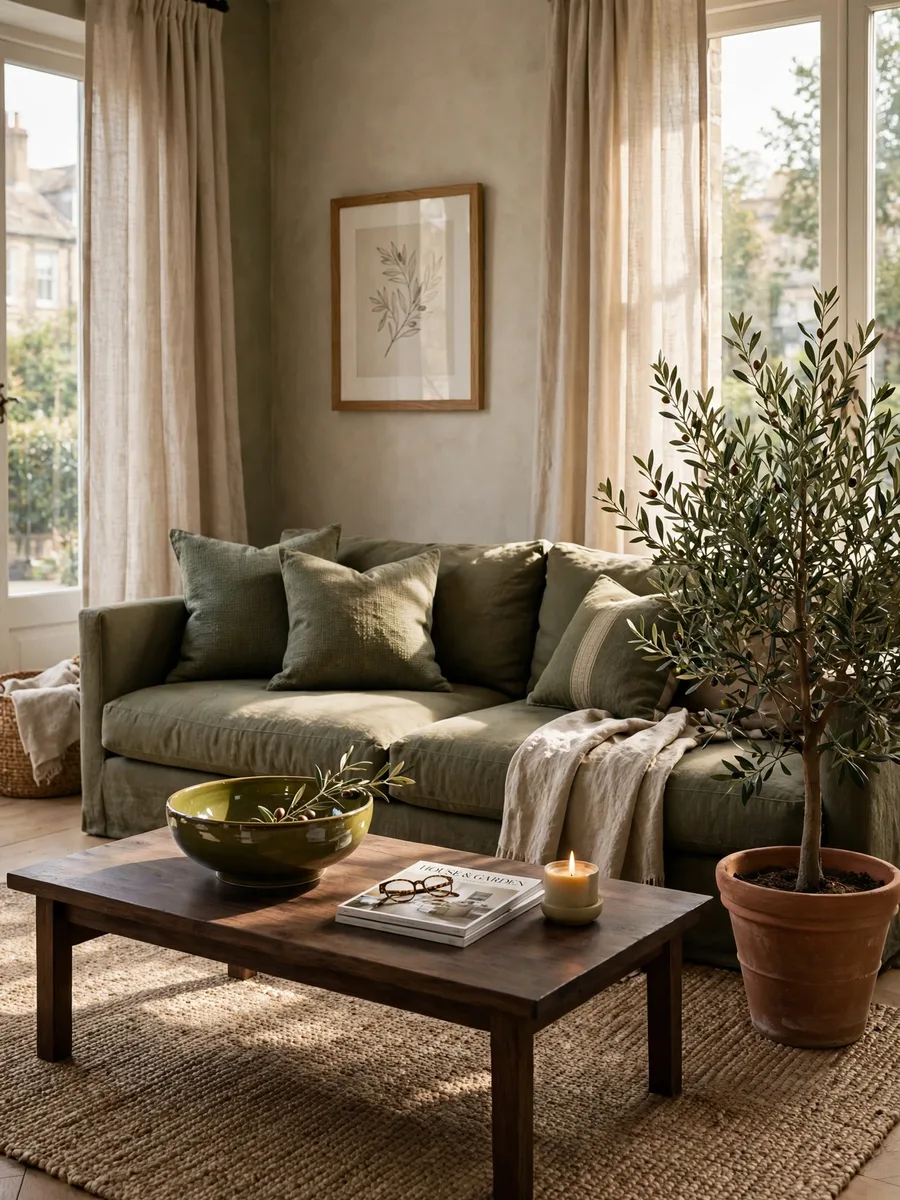
The three-layer lighting rule means a minimalist room needs ambient light, task light, and accent light, not one bright ceiling fixture. Put each layer on a dimmer so the room can shift from bright daytime to soft evening light. Ambient light comes from the ceiling, task light from a lamp beside each reading seat, and accent light highlights art or a shelf.
For example, a dimmable ceiling light, a brass floor lamp beside the sofa for reading, and a small picture light over the artwork give the room three moods.
Quick tip: If the room feels harsh at night, turn off the ceiling light and use only the lamps, because low warm light is what makes a spare room feel cosy.
9. How Do You Add Interest Without Adding Colour?
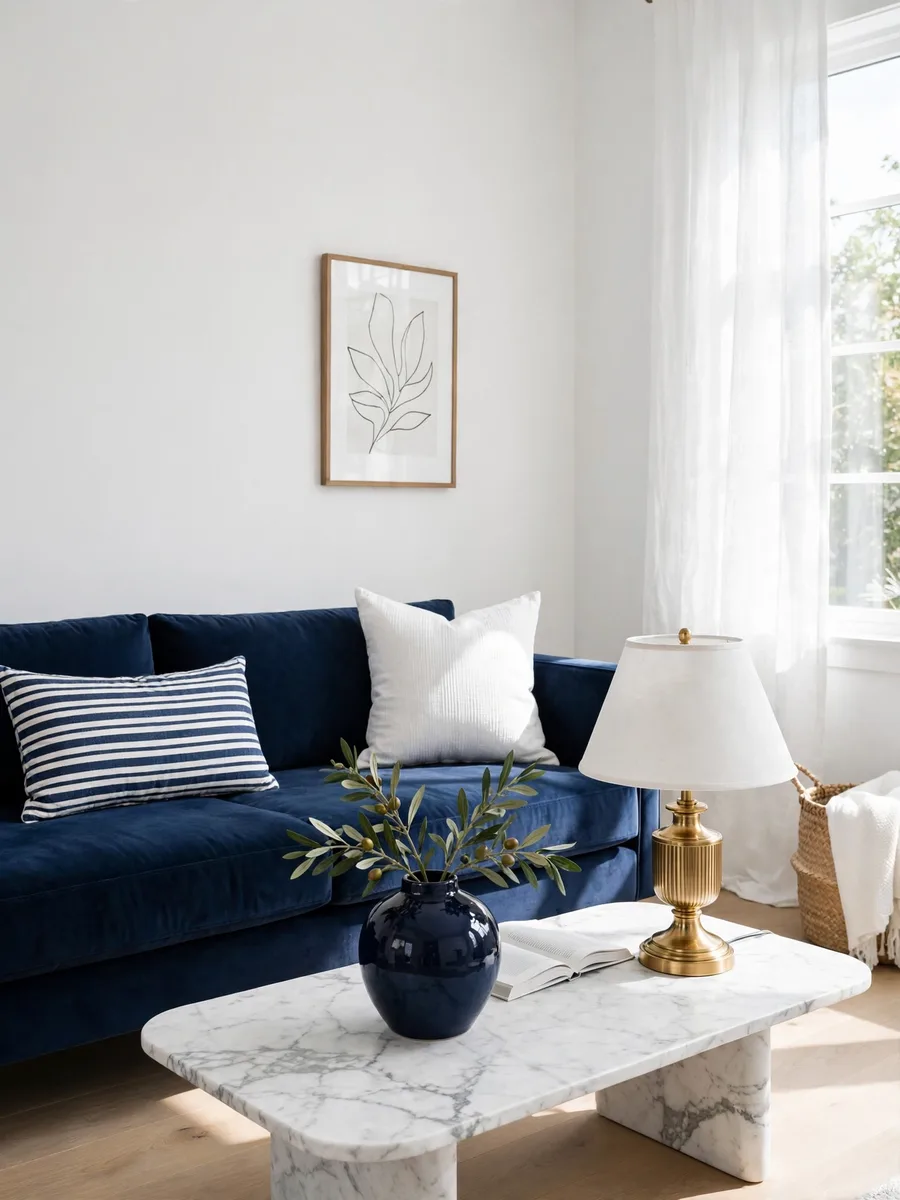
Add interest through texture instead of colour, because texture gives the eye something to notice without breaking the calm palette. Each material adds depth while the colour stays quiet.
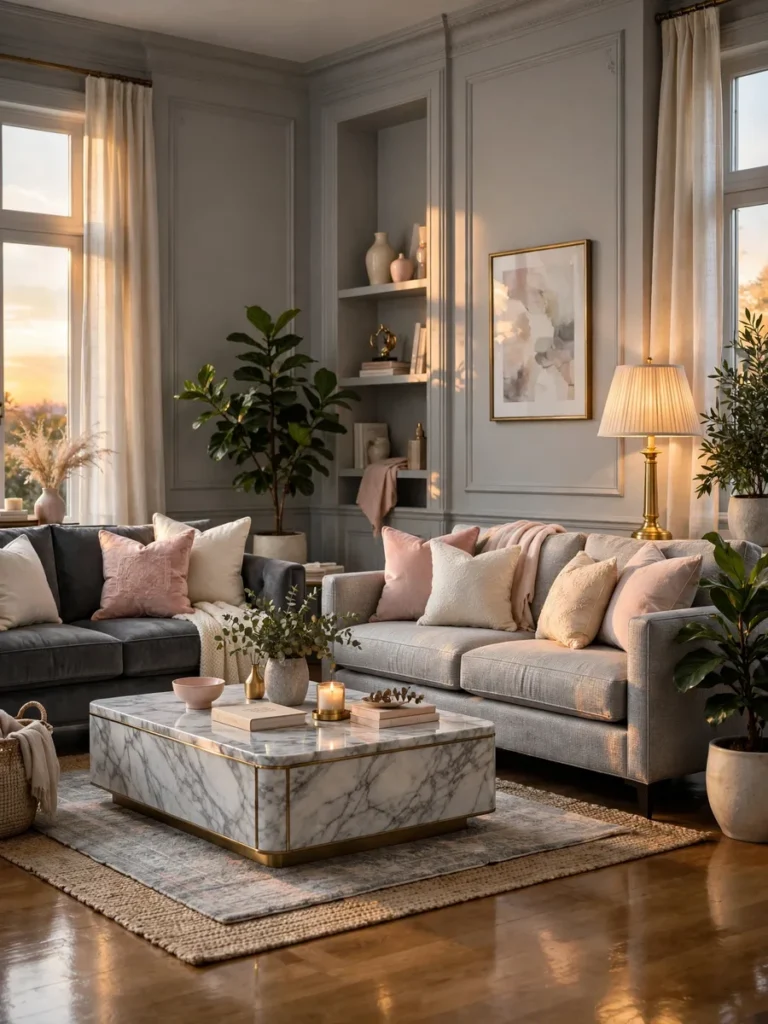
For example, a linen sofa, a wool rug, a honed stone coffee table, and a woven basket hold the room together, while one velvet cushion adds soft contrast.
Quick tip: Touch each new piece before you buy it. If it feels the same as everything else in the room, choose a different material.
| Element | Minimalist approach | Cluttered approach |
|---|---|---|
| Colour | One warm neutral family, three colours at most | Many bright colours competing on every wall |
| Furniture | Fewer, larger pieces with visible legs | Many small pieces filling every corner |
| Surfaces | Clear tops with one or two objects | Every surface covered with ornaments |
| Storage | Closed doors hiding daily clutter | Open shelves with no clear home for things |
| Lighting | Three warm layers on dimmers | One harsh ceiling light |
10. Where Does Everything Go in a Minimalist Living Room?
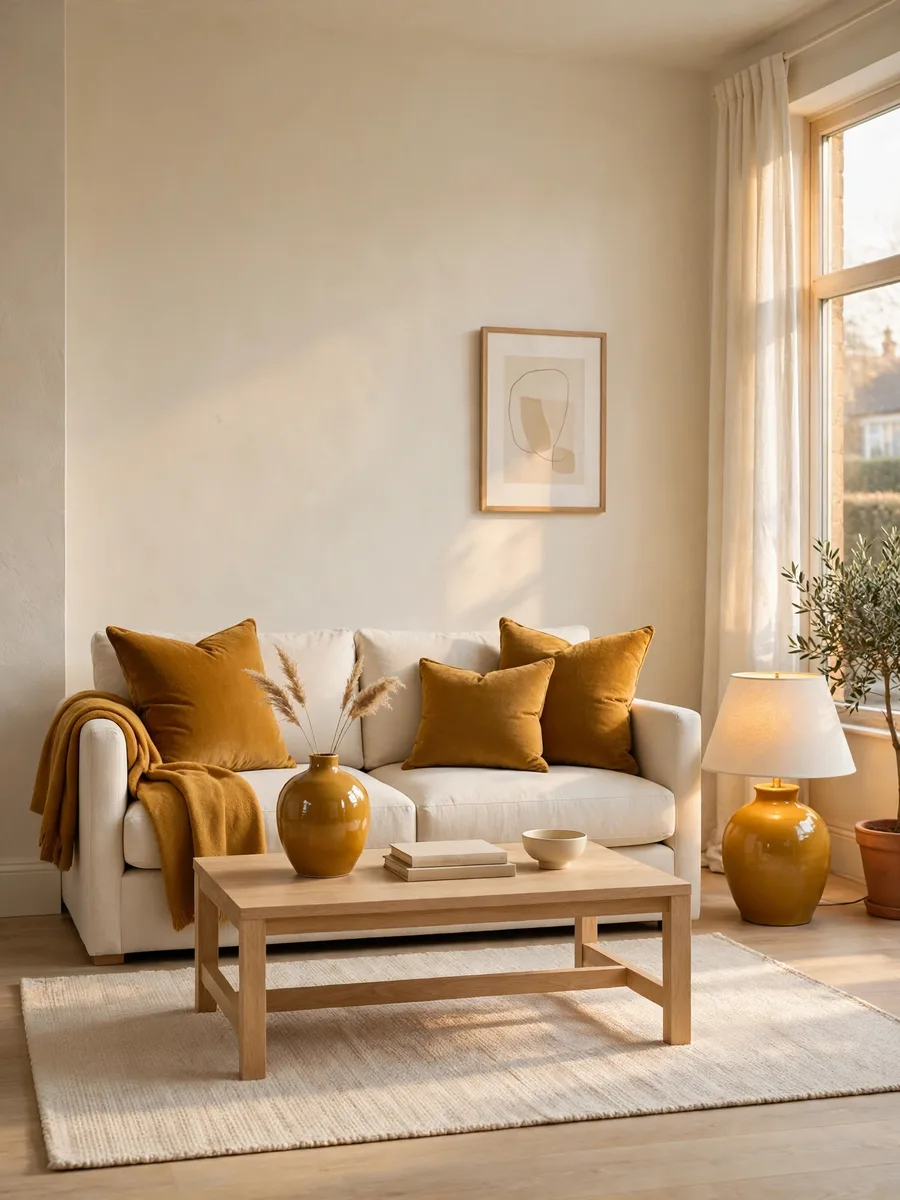
Everything in a minimalist living room needs a closed home, because open piles undo the calm faster than any colour choice. When each item has a place, clearing the room takes minutes instead of an afternoon.
For example, a low walnut credenza with two doors can hide the television box, controllers, and chargers while the top stays clear except for one vase.
Quick tip: Label the inside of one drawer for chargers and remotes, because a named home stops small items drifting onto every surface.
11. Which Multi-Functional Pieces Save the Most Space?
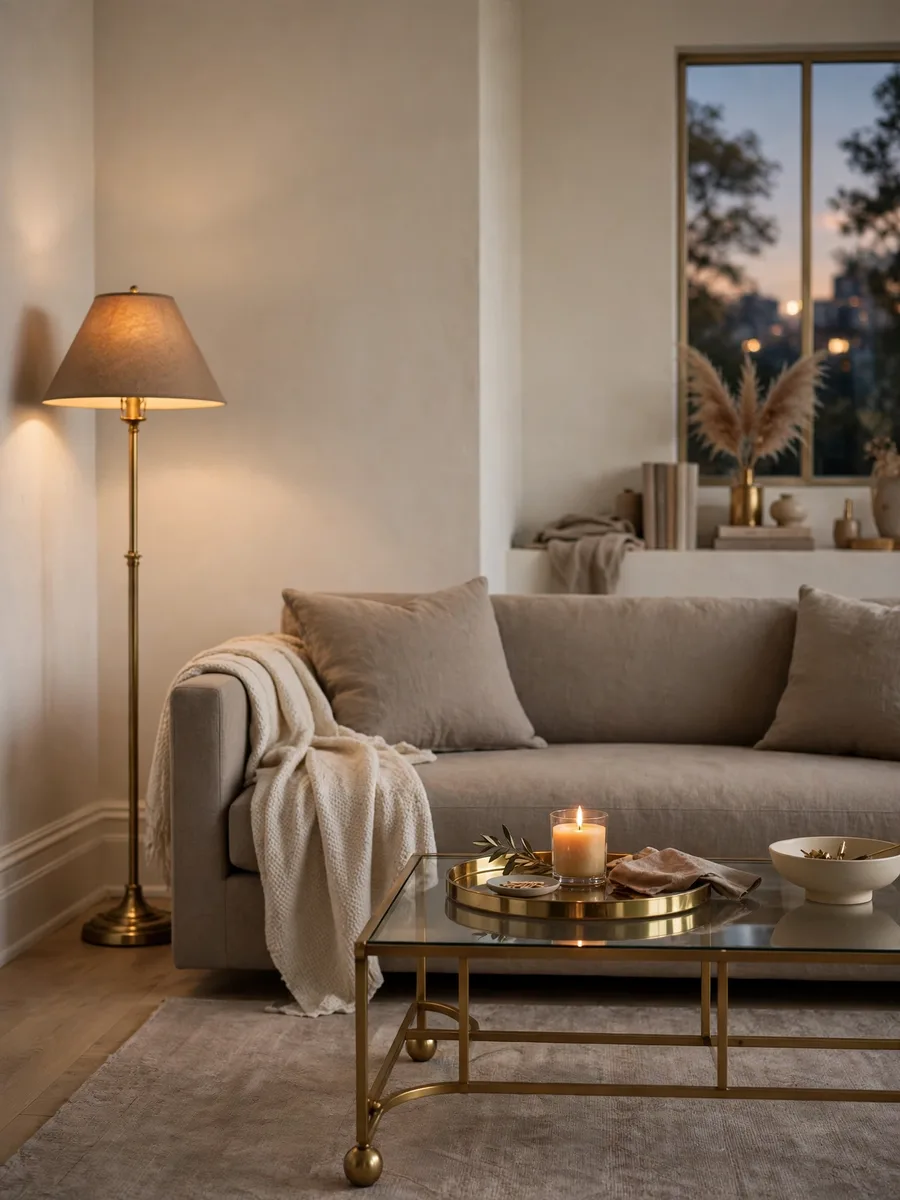
Multi-functional pieces save the most space when each one replaces two single-purpose items. A coffee table with a lift top works as a desk for laptop evenings. A sofa bed or a sleeper chair gives guests a bed without a spare room.
For example, a rectangular ottoman in the same linen as the sofa, with a tray on top for cups, replaces a coffee table and a blanket basket, and moves aside as an extra seat.
Quick tip: Buy the multi-functional piece only if you will use both functions weekly, because a clever feature you never use is still clutter.
12. Why Does One Large Artwork Beat a Gallery Wall?
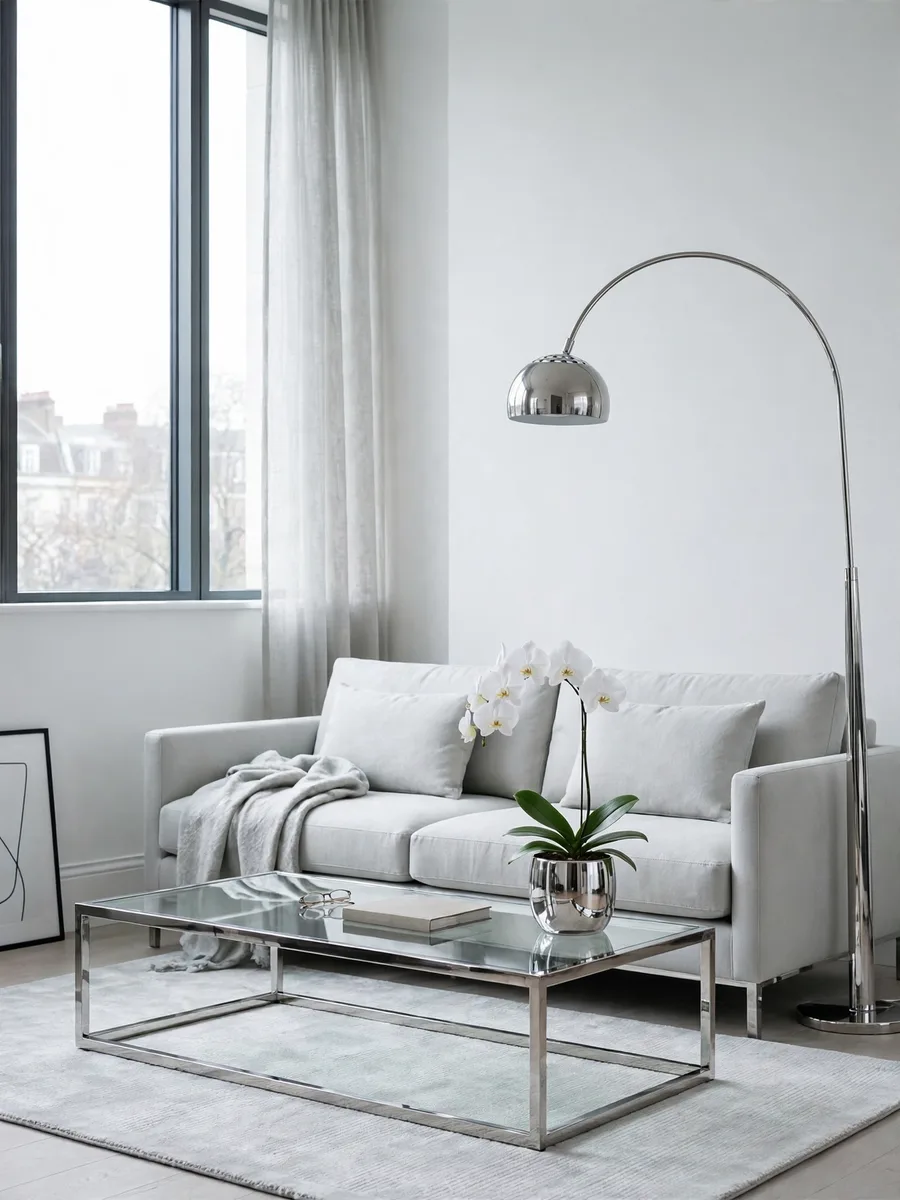
One large artwork beats a gallery wall in a minimalist room because a single image gives the eye one calm place to rest. Choose art you genuinely like, in tones that match the palette.
For example, a single large abstract print in warm beige and soft black above a low console, framed in thin black wood, fills the wall without anything beside it.
Quick tip: Photograph the wall with your phone before you hang anything, because the camera shows gaps and crooked lines your eyes miss.
13. Can One Statement Plant Warm Up a Minimalist Room?
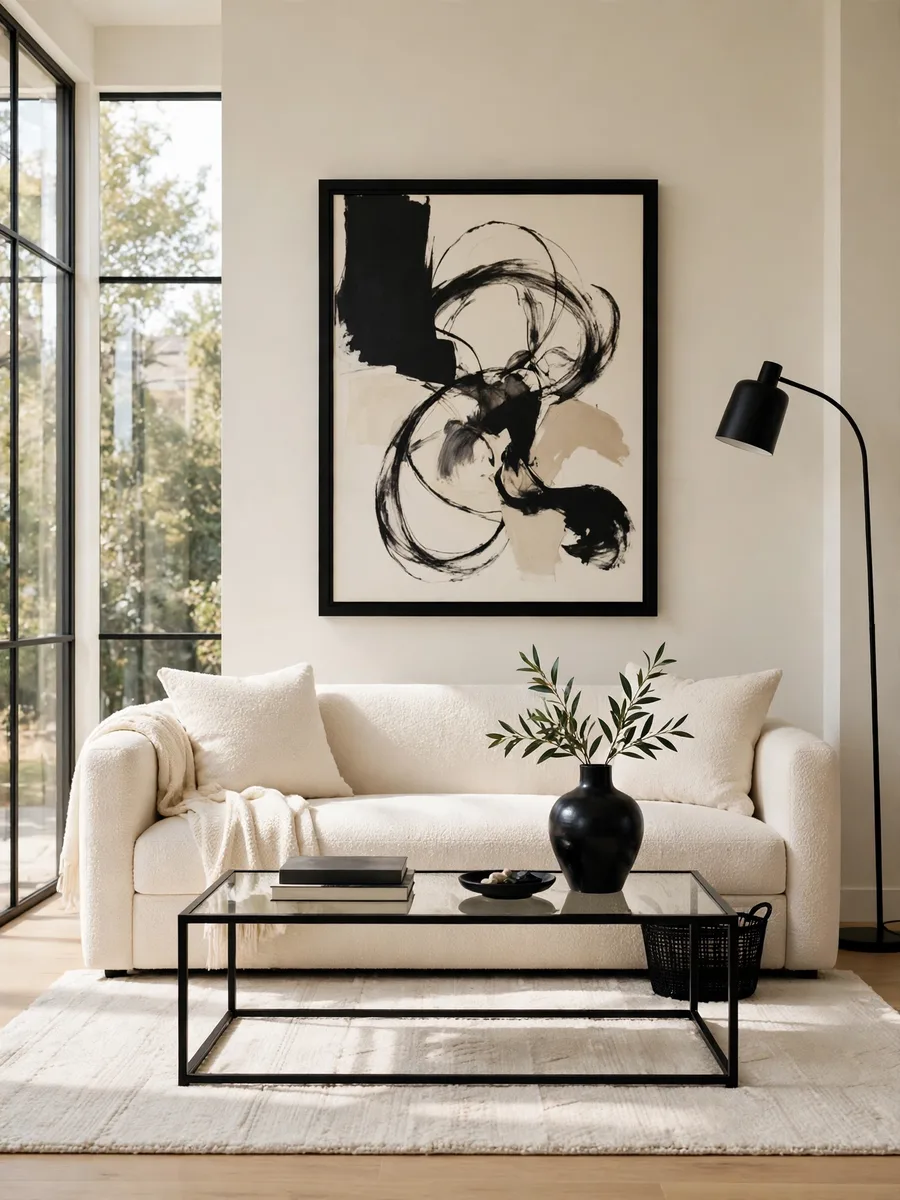
One statement plant can warm up a minimalist room, because a living green shape softens straight lines and pale walls without adding objects. A single plant reads as intentional, while many small pots read as clutter.
For example, a five-foot olive tree in a matte cream pot beside the sofa adds height, colour, and life while the rest of the room stays calm.
Quick tip: Water on a fixed weekday and wipe the leaves monthly, because a dusty or drooping plant breaks the calm faster than an empty corner.
14. How Much Empty Space Should You Leave on Purpose?
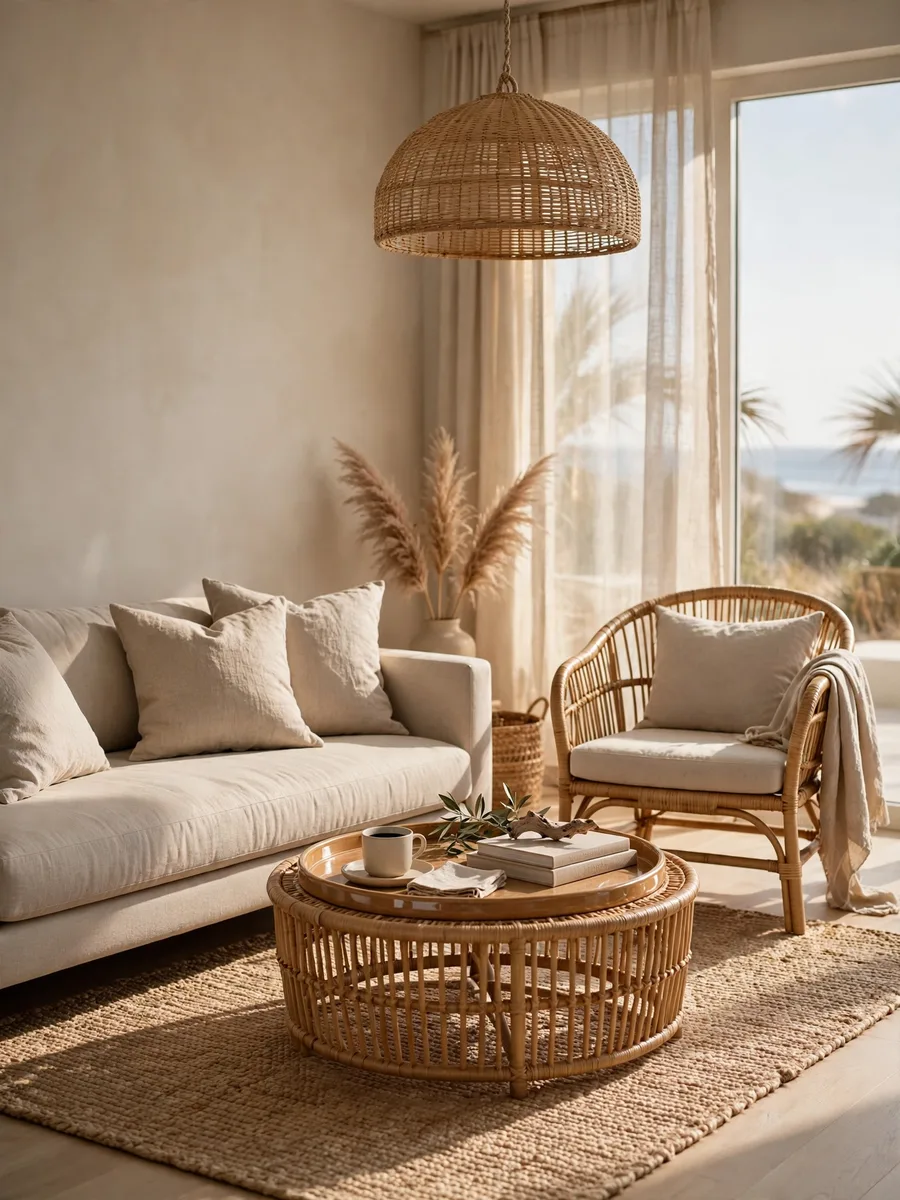
Leave empty space on purpose, because negative space is what makes a minimalist room feel calm instead of bare. A room that is full to the edges feels busy no matter how tidy it is.
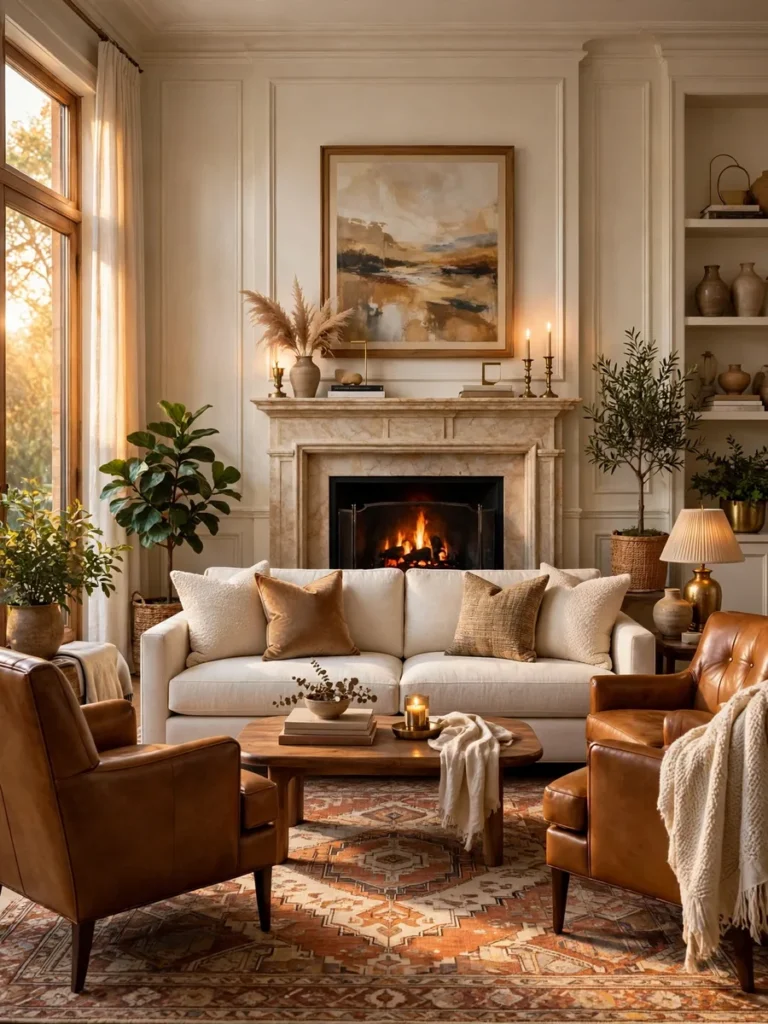
For example, a clear stretch of wall beside the fireplace, with only the sofa and a floor lamp in front of it, makes the fireplace feel grander and the room larger.
Quick tip: If a surface feels bare, wait a week before adding anything, because most bare spots feel normal once your eye adjusts.
15. How Do Warm Woods Keep a Pale Room From Feeling Cold?
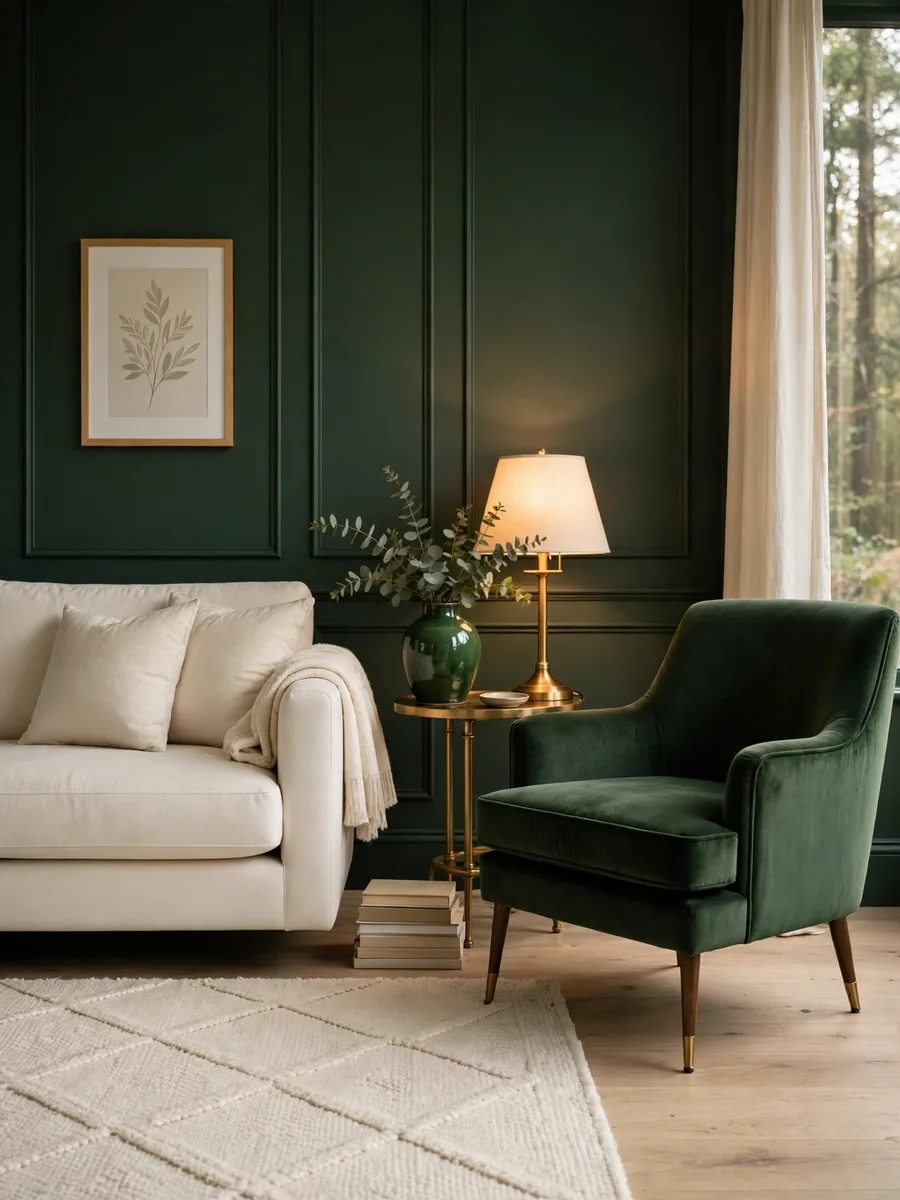
Warm woods keep a pale room from feeling cold, because timber adds colour, grain, and warmth that white walls cannot. Wood grain also adds texture without pattern.
For example, a walnut coffee table, a light oak side table, and a wool rug in warm cream work together, while a linen throw over the sofa arm softens the wood.
Quick tip: Choose wood with a matte or satin finish, because high gloss on every piece can make a calm room feel like a showroom.
16. What Are the Coffee Table Rules That Actually Matter?
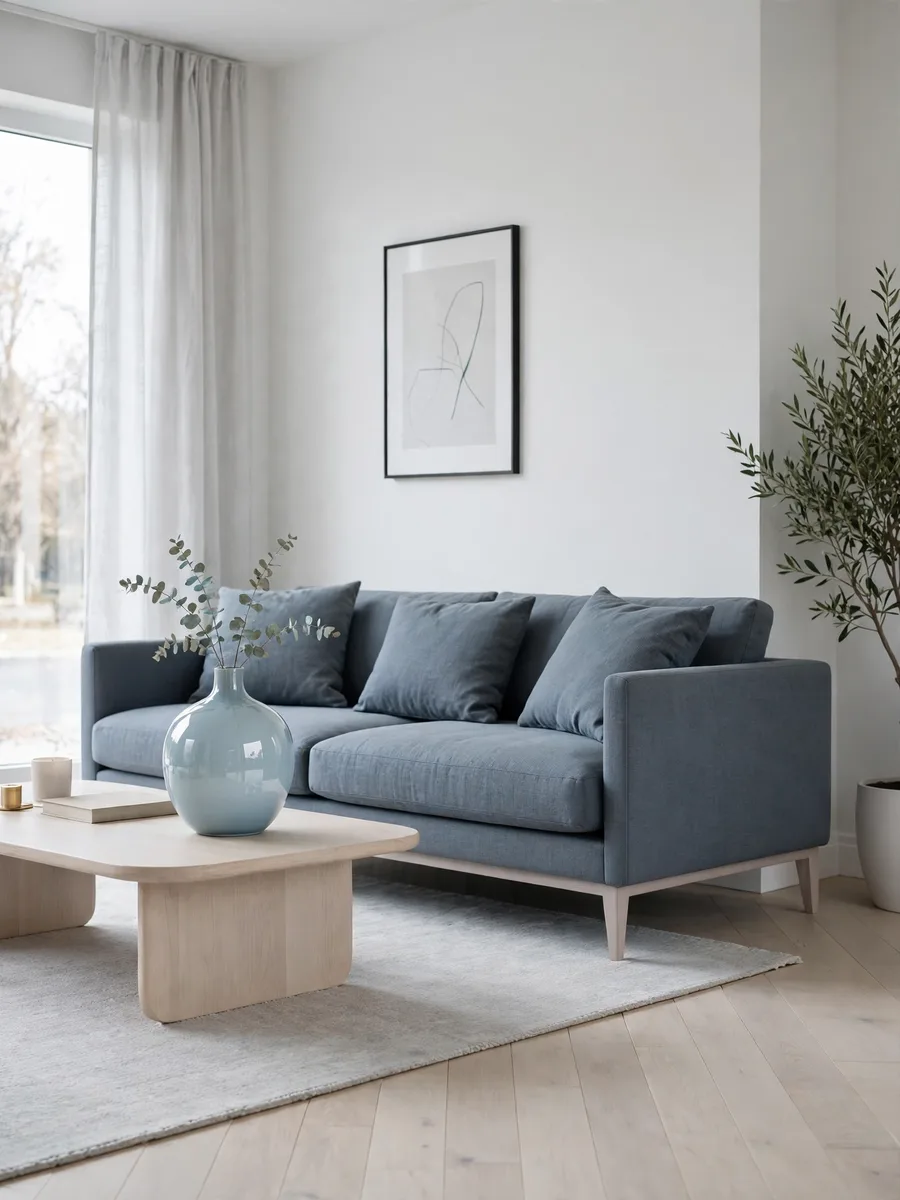
The coffee table rules that matter are size, height, and clearance. Those three numbers keep the table useful without crowding the seating area. Choose a table about two-thirds the length of the sofa, at seat height, with 14 to 18 inches between the sofa and the table edge.
For example, a rectangular oak table two-thirds the length of a three-seat sofa, with one book and one small vase on top, leaves room for cups and still looks calm.
Quick tip: Sit on the sofa and reach for an imaginary cup before you buy, because a table that is too far away or too low will annoy you every day.
17. How Does the One-In-One-Out Rule Stop Clutter Coming Back?
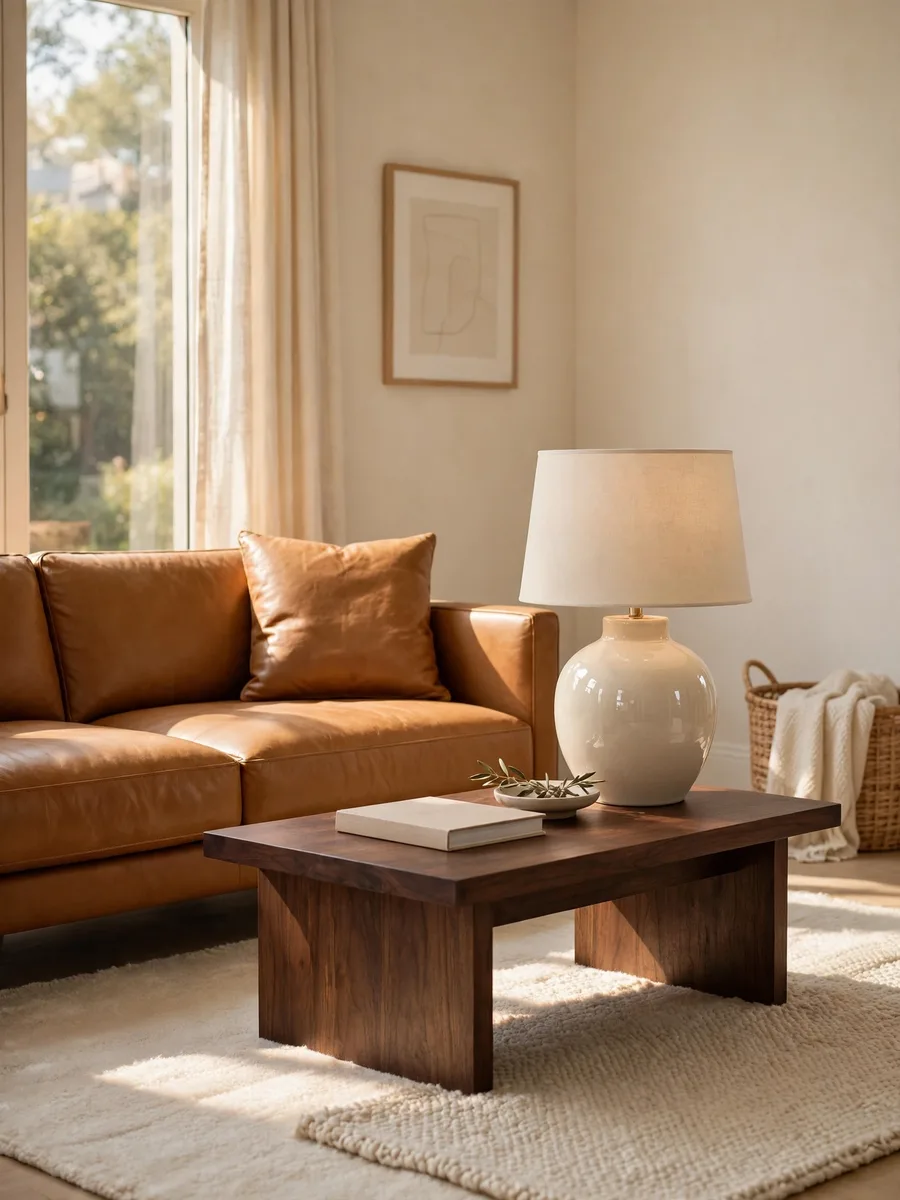
The one-in-one-out rule stops clutter coming back, because every new item has to replace an old one. When a new book arrives, an old book goes to another room or out of the house. The rule works because it limits the total number of objects instead of relying on willpower.
For example, buying a new throw means the oldest throw moves out the same afternoon, so the sofa never gains a third layer it does not need.
Quick tip: Write the rule on a note inside the cupboard where spare cushions live, because the decision is easiest at the moment the new item arrives.
18. How Do You Make a Minimalist Sofa Feel Cosy?
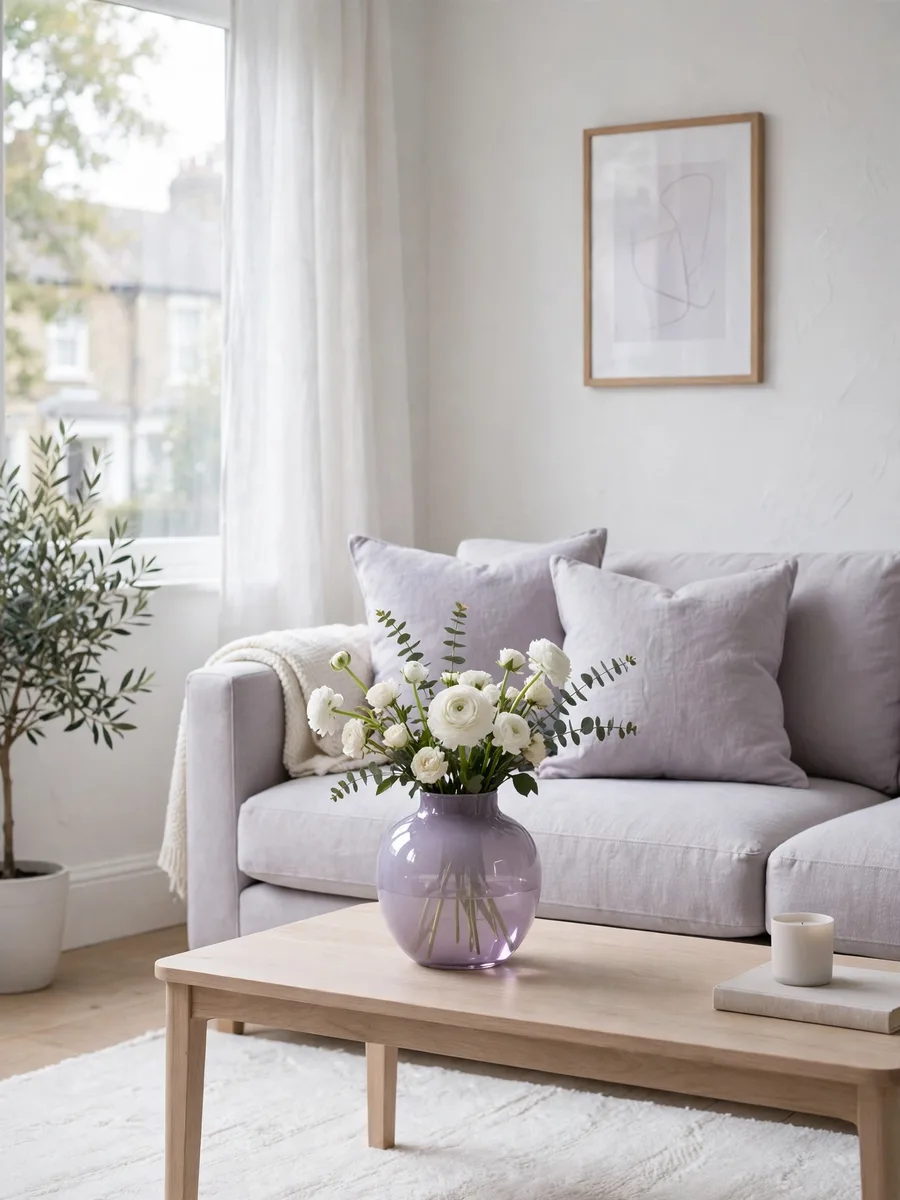
Make a minimalist sofa feel cosy with soft textiles, not more objects. Cosiness comes from texture and warmth, so a room can feel inviting with very few pieces.
For example, a cream linen sofa with two oatmeal linen cushions and a folded charcoal wool throw on one arm feels warm and lived in with only three textiles.
Quick tip: Fold the throw neatly over one arm instead of draping it across the whole sofa, because a tidy fold looks calm and stays ready to use.
19. Why Do a Few Black Accents Sharpen a Pale Room?
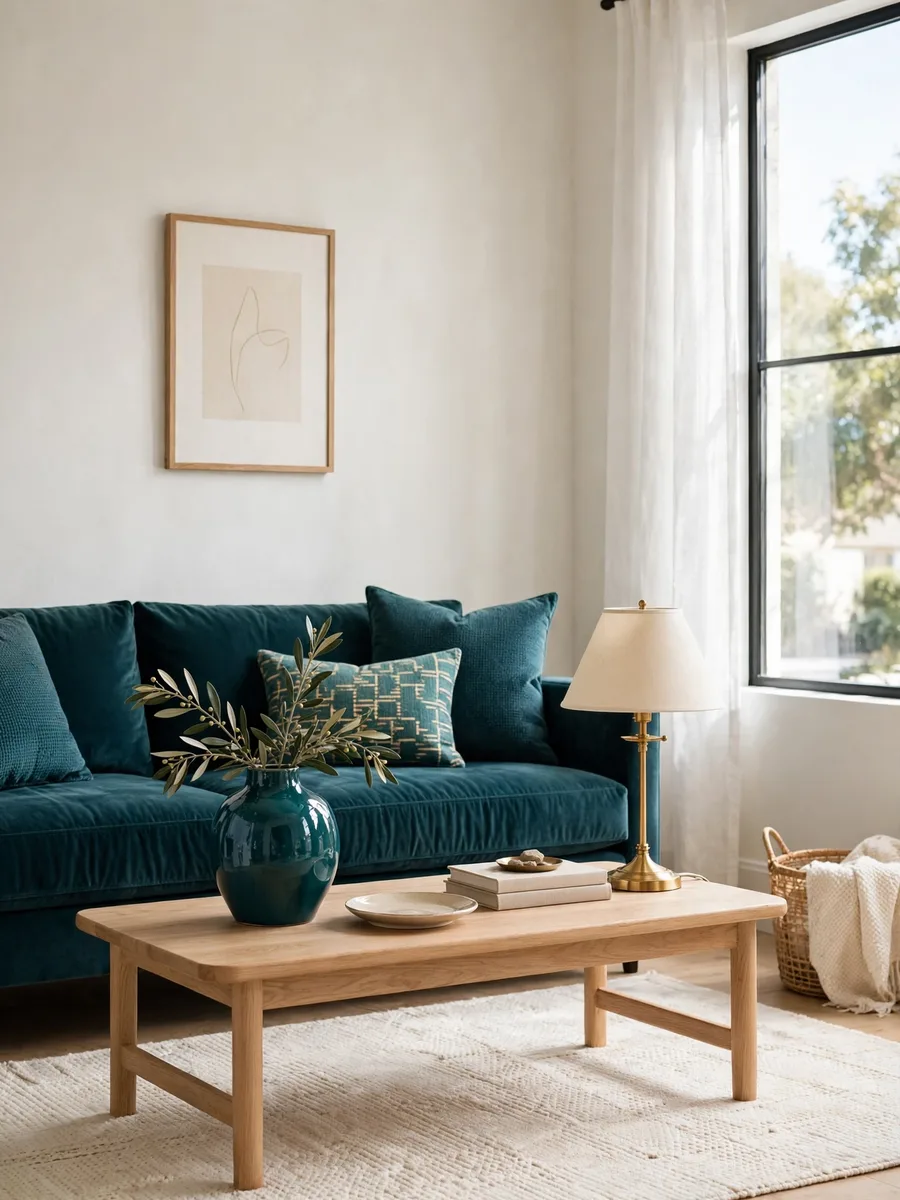
A few black accents sharpen a pale room, because a small amount of dark contrast stops warm neutrals from blurring together. The key is restraint, so the black reads as a deliberate line rather than a second colour scheme.
For example, a black picture frame above the sofa, a black floor lamp base beside the armchair, and a black ceramic bowl on the coffee table tie the room together.
Quick tip: Step back and squint at the room. If the black spots form a loose triangle, the balance is right.
20. How Do You Mix Stone, Linen, and Wool Without Clutter?
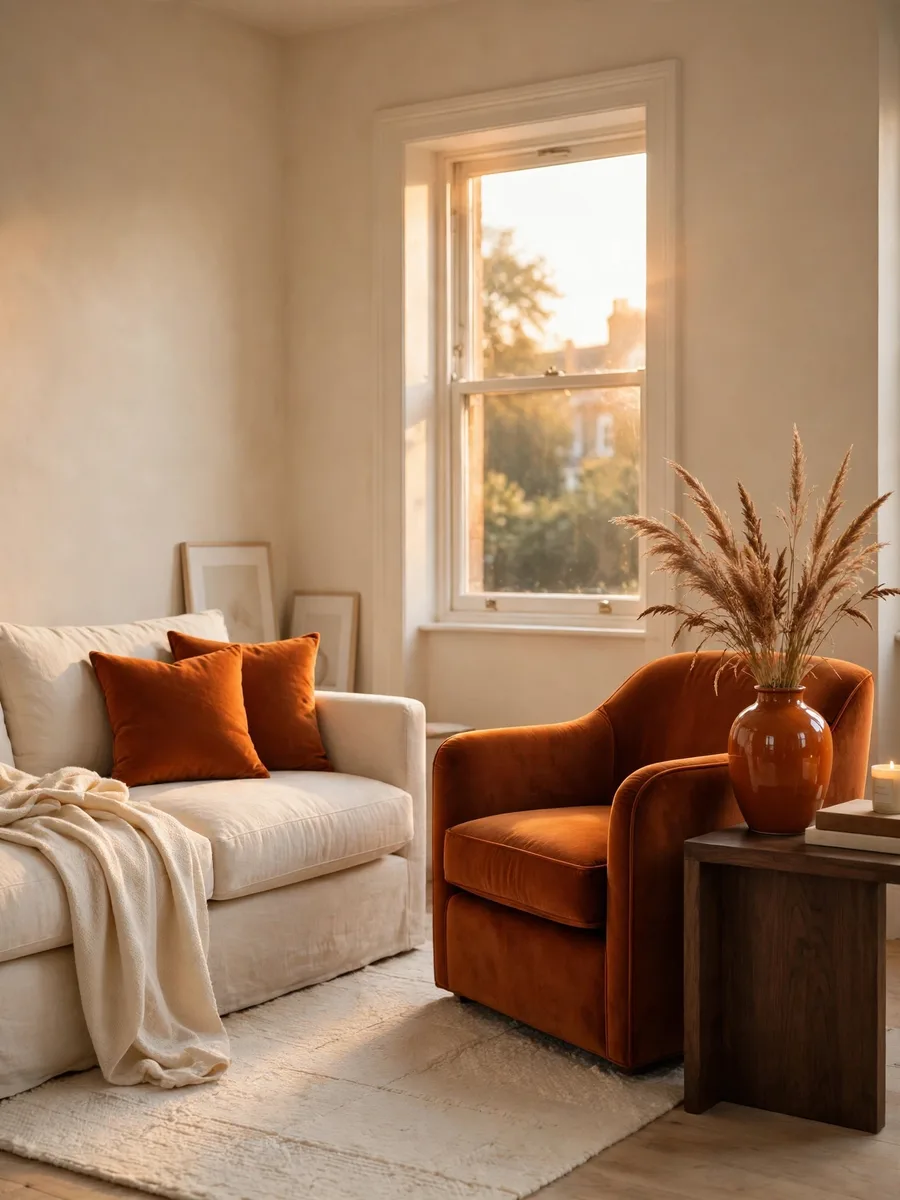
Mix stone, linen, and wool by giving each material one clear job, because materials that compete for attention make a room feel busy. Each surface then has its own texture and its own place.
For example, a cream linen sofa, a cream wool rug with a visible weave, and a pale honed stone coffee table share one warm tone, while each texture feels different.
Quick tip: Run your hand across each surface in the seating area. If two feel identical, swap one for a rougher or smoother material.
21. How Do You Keep a Television Wall Minimal?
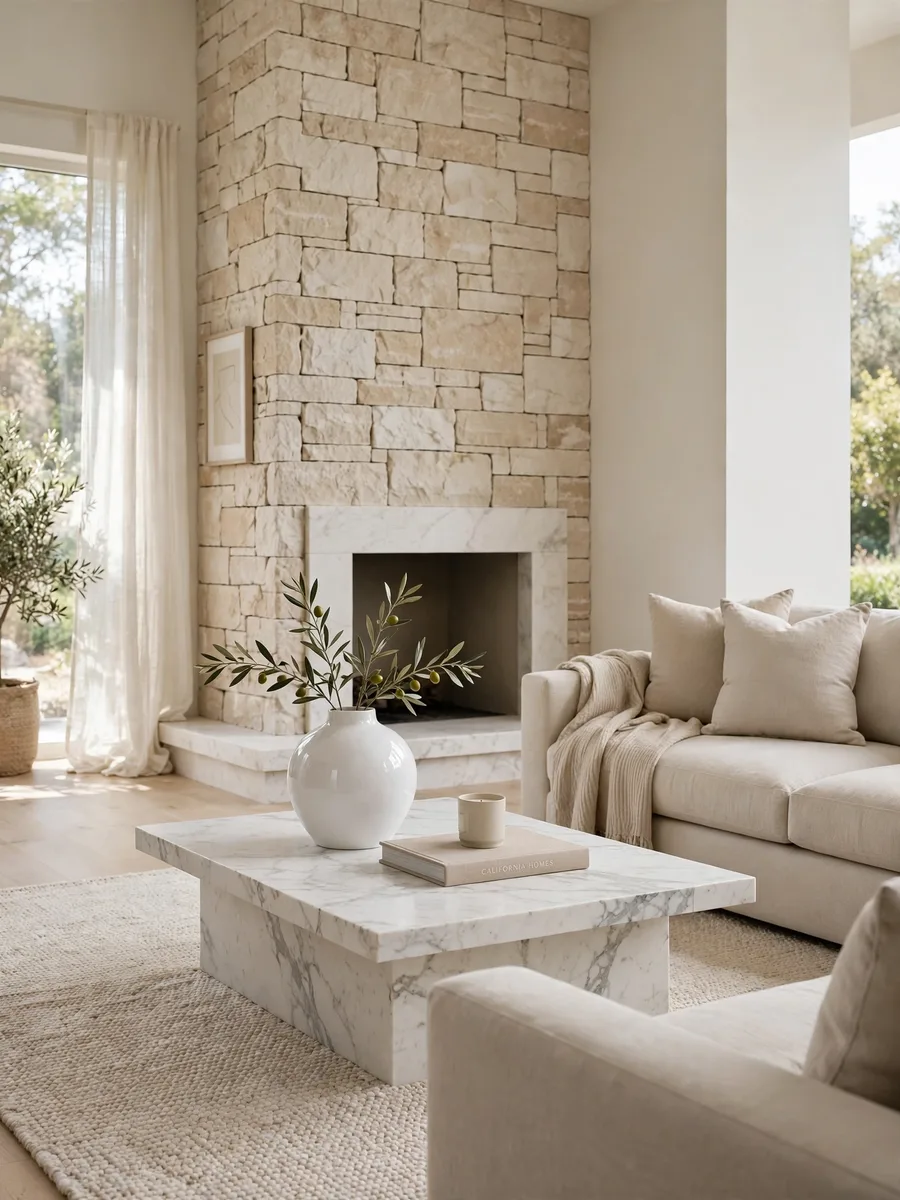
Keep a television wall minimal by treating the screen as one dark rectangle that needs a calm frame, not a wall of gadgets. The wall then reads as one clean shape. Mount the television at eye level when seated and hide the cables, with a low closed console beneath it for boxes and controllers.
For example, a television mounted above a low walnut console, with all cables hidden and only a small vase on top, looks tidy even when the television is on.
Quick tip: Turn the television off and look at the wall. If cables, boxes, or remotes are visible, hide one thing at a time until the wall reads as a single panel.
22. How Do You Style Open Shelving Without Filling It?
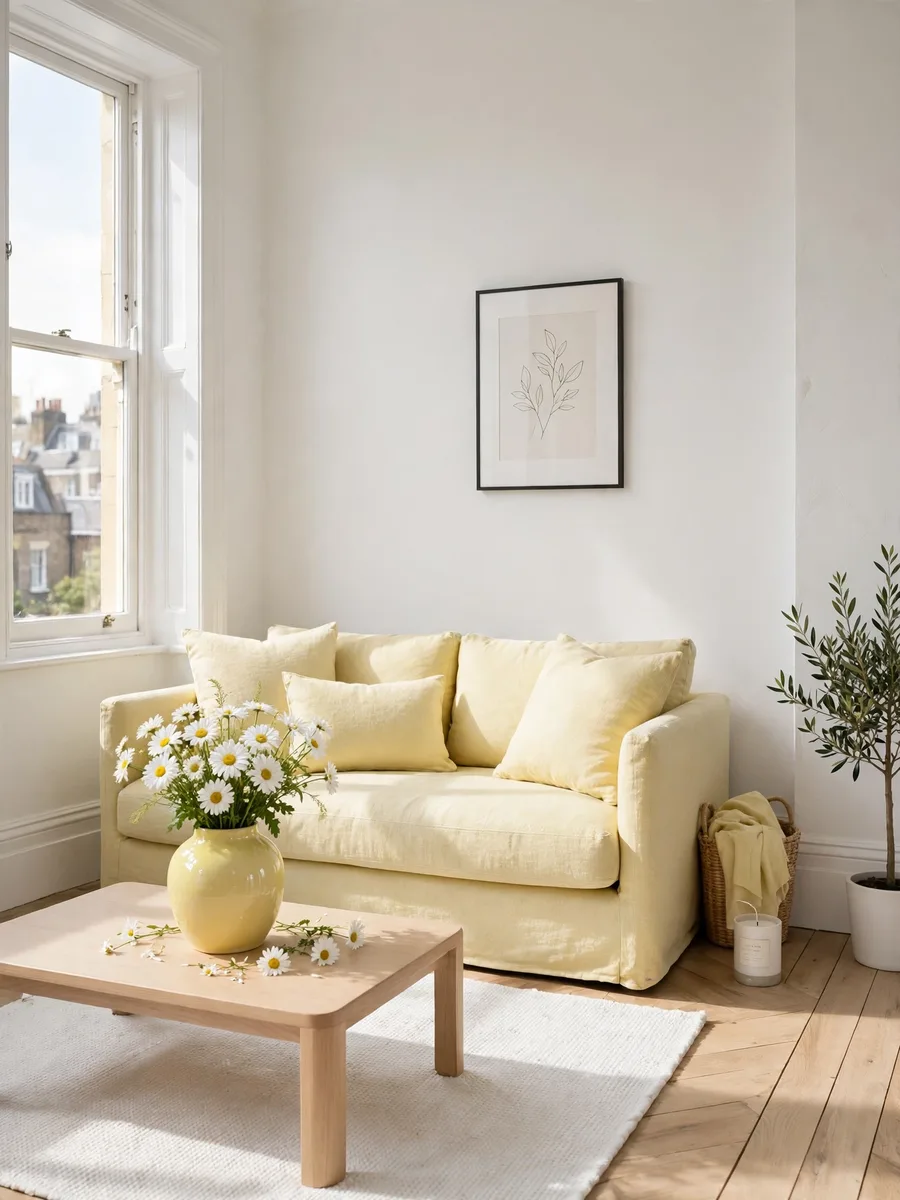
Style open shelving by leaving most of it empty and grouping the few objects you keep. Books work best in small stacks with their spines aligned, not spread across the whole shelf.
For example, a low stack of three linen-covered books, a small ceramic vase, and a framed photograph on one shelf, with the shelf below left empty, looks curated.
Quick tip: Remove everything from the shelf, then add back only the pieces you would miss tomorrow, because the empty shelf is the starting point.
23. How Do You Add Just One Colour Accent?
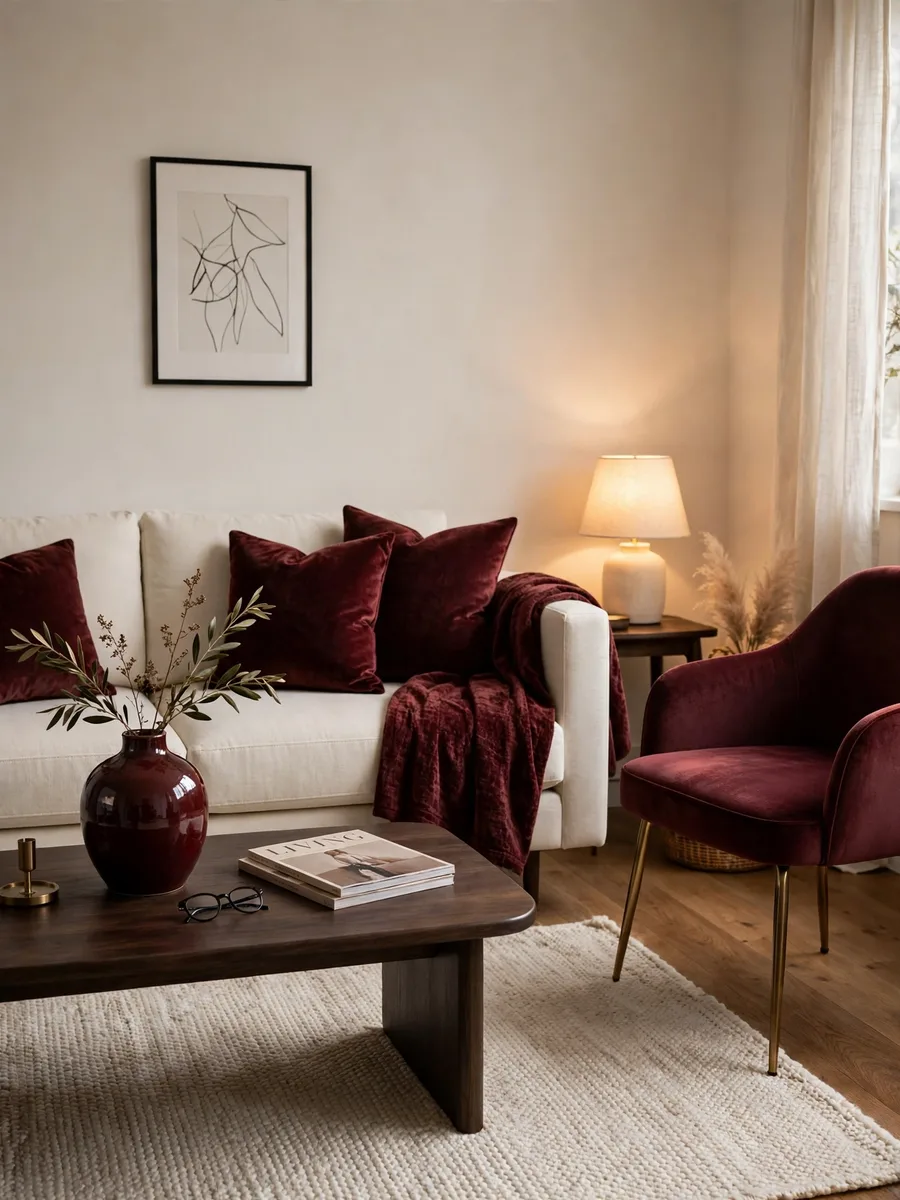
Add just one colour accent by choosing a muted tone and repeating it in two or three small places. Muted tones work better than bright ones, because they sit quietly beside warm neutrals.
For example, two sage linen cushions on a cream sofa and a small sage ceramic vase on the coffee table add colour in three small touches, while the rest stays neutral.
Quick tip: Photograph the room and check the accent colour appears in the photo only two or three times, because more than that turns an accent into a theme.
24. How Do You Keep a Small Living Room Minimalist?
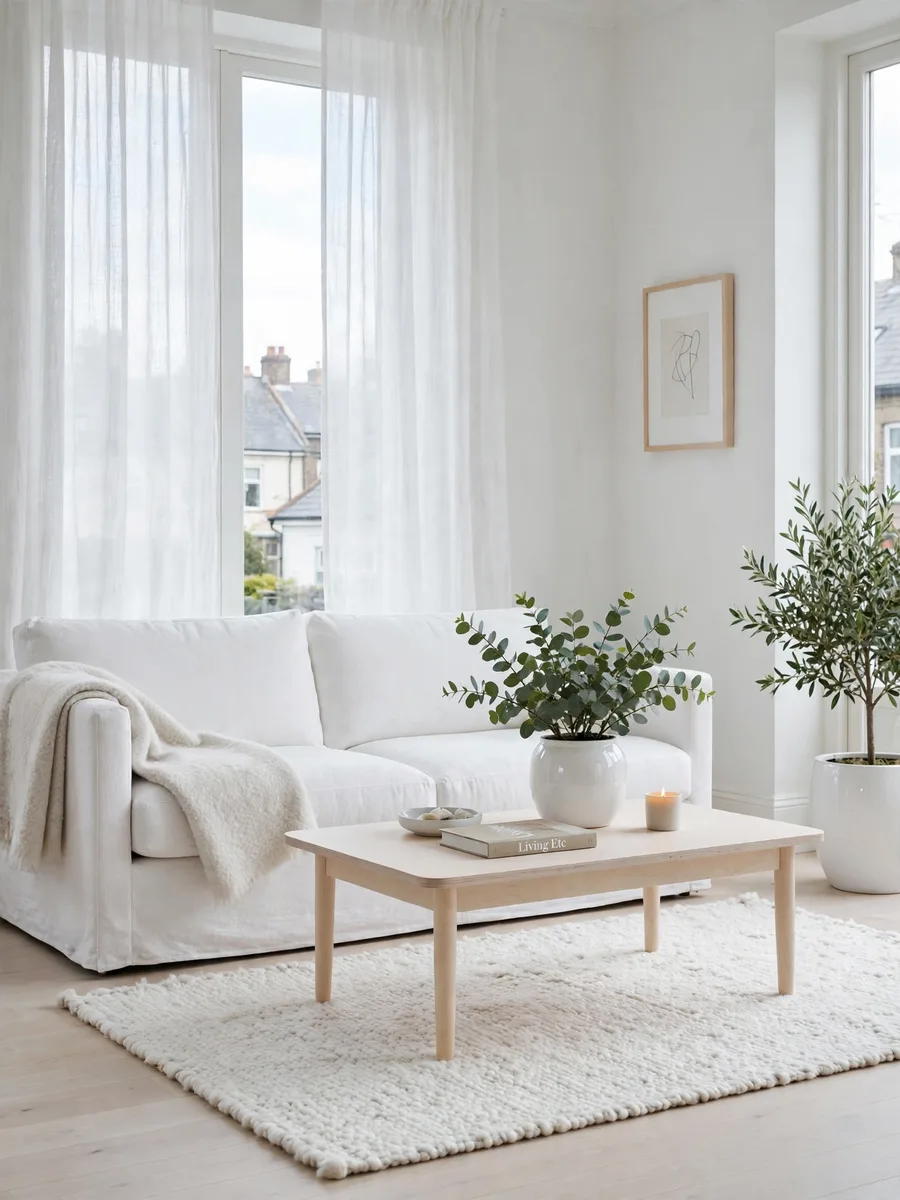
Keep a small living room minimalist by choosing fewer pieces and letting the floor show. Visible floor reads as more space, even when the room is the same size.
For example, in a compact flat, a two-seat sofa with slim legs, a round glass coffee table, and a single wall-mounted shelf leave the centre of the room open.
Quick tip: Measure the walkway from the door to the sofa. If it is under 30 inches, remove one piece of furniture before you add anything else.
25. Why Should You Keep the Floor Visible Under Furniture?
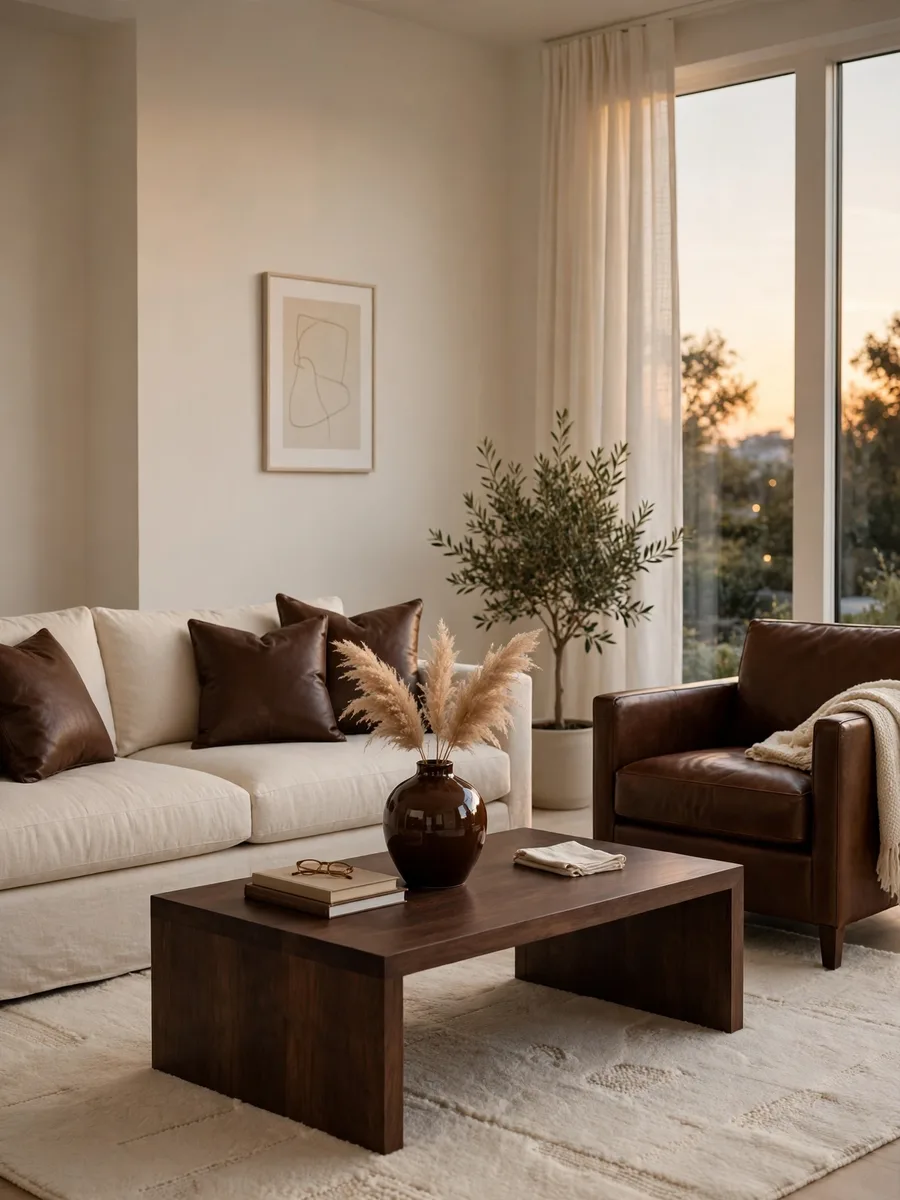
Keep the floor visible under furniture, because a line of floor beneath a sofa or chair makes the room feel lighter and larger. The effect is strongest in small rooms, where every inch of visible floor counts.
For example, a sofa on six-inch oak legs, a coffee table on slim legs, and a rug that stops short of the wall leave a clear border of floor around the seating area.
Quick tip: Vacuum under the sofa weekly, because visible floor only helps when it is clean and clear.
26. What Is the Five-Minute Daily Reset That Keeps It Minimal?
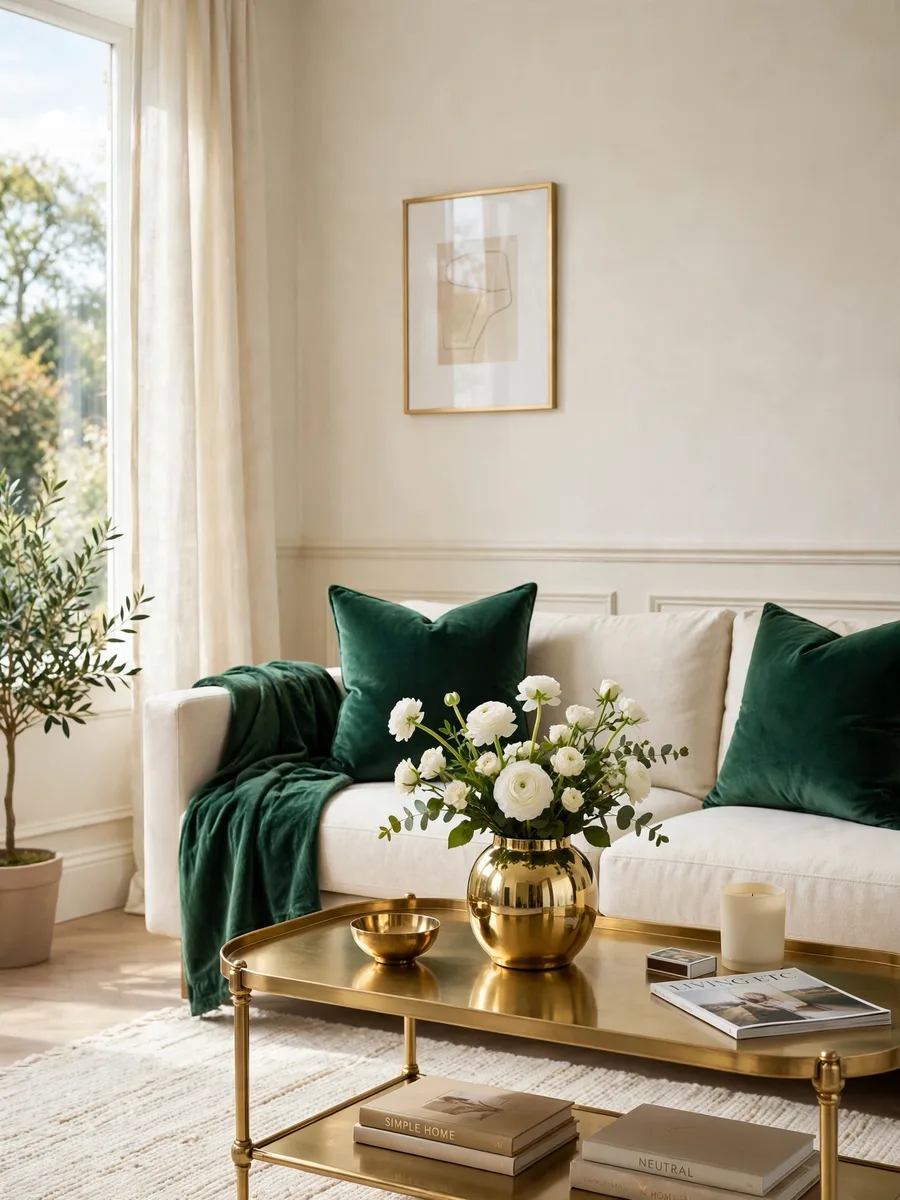
The five-minute daily reset keeps a minimalist room minimal, because small daily tidy-ups stop clutter from building into a weekend job. The room then starts each morning calm.
For example, at nine each evening, one person clears the coffee table, folds the throw, and returns the remote to its drawer, while the other fluffs the cushions.
Quick tip: Do the reset before you sit down for the evening, because a tidy room makes the rest of the evening feel calmer.
Frequently Asked Questions
How do I make a minimalist living room feel warm and cozy?
Layer wool, linen, and warm wood, then add lamps at about 2700K. A wool rug, linen cushions, a knit throw, and soft light make a spare room feel inviting without extra decoration.
What are the best colors for a minimalist living room?
Warm whites, soft greige, warm taupe, and oat work best. Keep three colours at most: one dominant neutral for about 70 percent, a second tone for 20 percent, and one muted accent for 10 percent.
How do I make a small living room look minimalist?
Choose a slim sofa with exposed legs, one armless chair, and a round coffee table. Keep the floor clear, use closed storage, and let light in with sheer curtains.
Can minimalist living rooms be cozy?
Yes. Cosiness comes from texture, warmth, and soft light rather than clutter. A wool rug, linen cushions, a folded throw, and warm lamps make a spare room feel inviting.
How do I add personality to a minimalist space?
Choose a few meaningful pieces, such as one large artwork, a handmade vase, or books you actually read. Limit them to a few well-placed pieces so each one stands out.
How do I maintain a clutter-free living room?
Give every item a closed home, follow one-in-one-out for new purchases, and do a five-minute reset each evening. Hidden storage plus a daily tidy-up keeps the room calm.
What is the best floor color for a minimalist living room?
Light wood, pale oak, and white-washed floors work best, because they reflect light and feel airy. Warm them with a large natural fibre rug that fits under the front legs of every seat.
Conclusion
Minimalist living room ideas work when the room stays calm, warm, and easy to live in. Start with the layout, choose one warm palette, size the sofa and rug to the room, and hide daily clutter behind closed doors. Then add texture, soft light, and one personal touch at a time, because a minimalist living room grows calmer one good decision at a time.