The New Coastal Living Room Look Is Less “Beach House” and More Collected Calm
Why The New Coastal Living Room Feels More Collected Than Themed
The Coastal Living Room Look has moved far beyond the familiar combination of blue stripes, seashells, and obvious beach accessories. The newer approach is quieter and more layered. It uses natural materials, softened colors, relaxed furniture, and a few meaningful details to create a room that feels connected to the coast without looking like a vacation rental.
The biggest shift is that the room starts with atmosphere rather than decoration. Linen, pale wood, woven fibers, stone, cotton, and aged finishes create the foundation. Color then comes in gently through faded blue, sea glass green, warm sand, chalky white, or muted navy. Our blue and white living room ideas show how quietly this palette can sit across different layouts.
Start With A Warm Sand-And-Cream Foundation
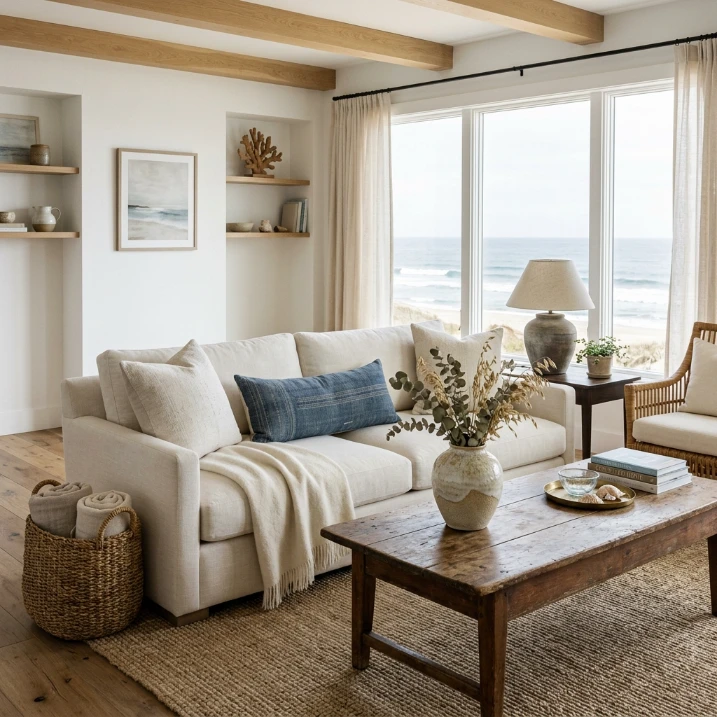
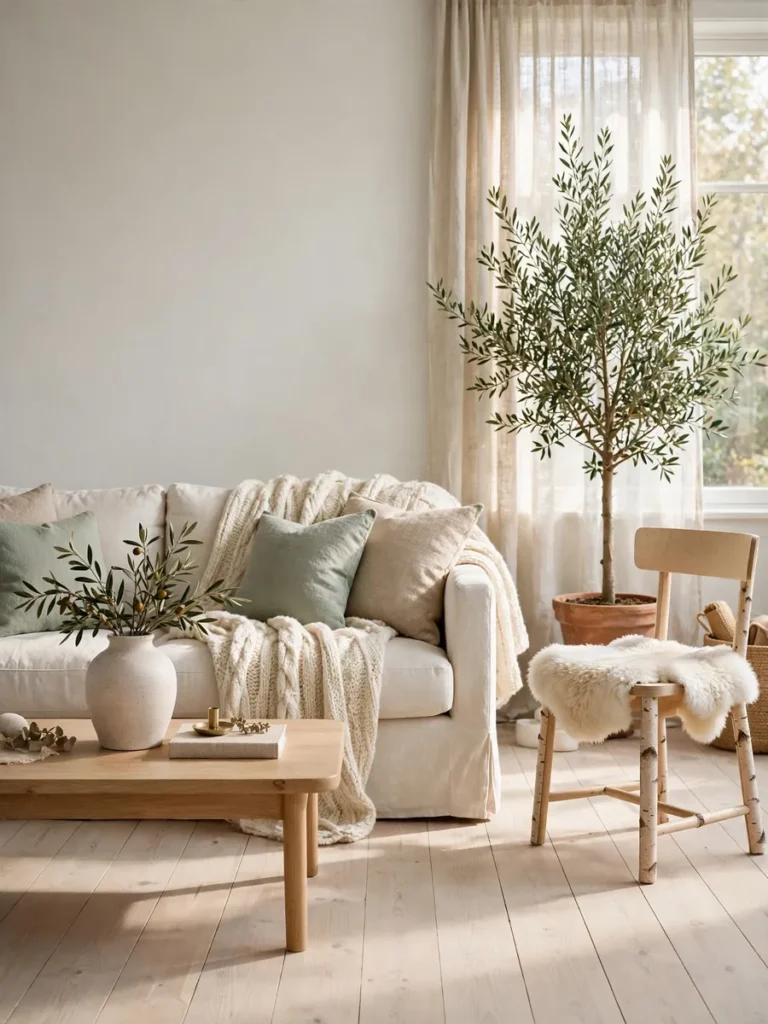
A coastal room becomes much easier to style when the largest surfaces stay quiet. Think warm white walls, creamy upholstery, light oak, natural jute, and soft beige textiles rather than a room filled with bright white and icy blue.
This warmer base gives the room visual softness and makes small coastal references feel intentional. A pale linen sofa can sit beside a weathered wood table, while a textured rug adds another layer underfoot.
Use Faded Blue Like A Quiet Accent
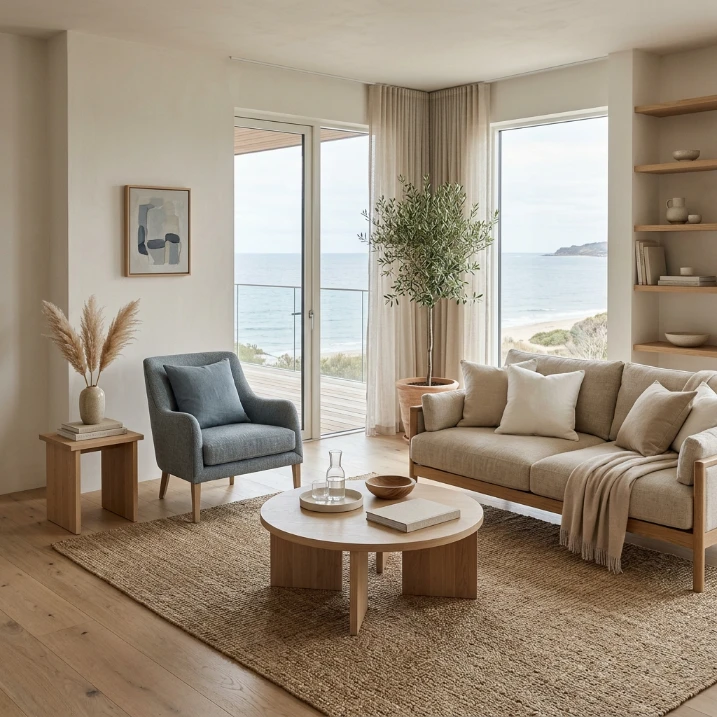
Blue still belongs in a Coastal Living Room Look, but it does not need to dominate. Muted blue-gray, washed denim, dusty aqua, and soft slate bring an ocean feeling without turning the room into a nautical theme.
Repeat one blue tone in two or three places. A blue-gray accent chair, a small piece of artwork, and a pair of cushions can create enough continuity. Keeping the blue slightly dusty rather than highly saturated makes the room feel more sophisticated.
Let Natural Wood Give The Room Its Character
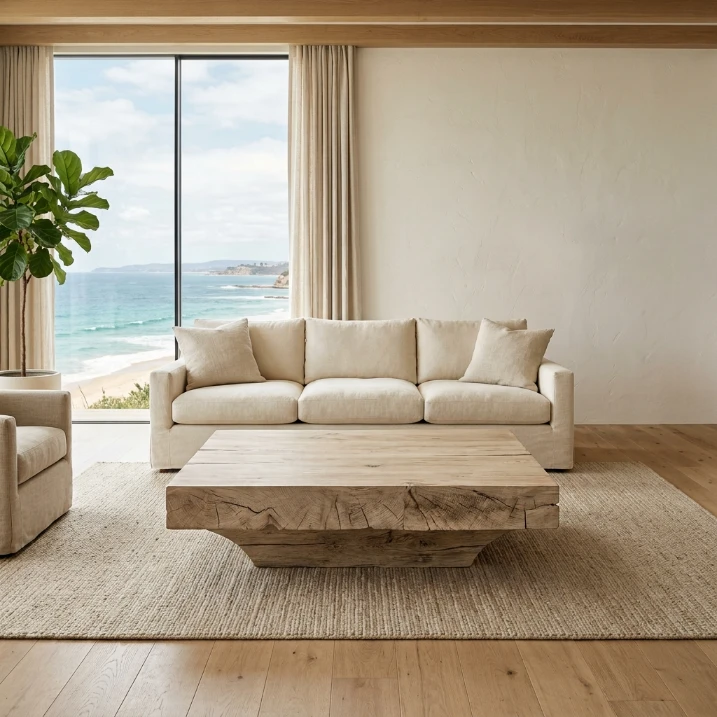
Wood is one of the easiest ways to make coastal interiors feel grounded. Instead of choosing matching furniture sets, combine two or three related wood finishes. Pale oak can work with lightly weathered timber, while a darker reclaimed piece can provide contrast.
A chunky wood coffee table, slatted cabinet, exposed beam, or simple console can become the room’s strongest natural feature. Look for visible grain and matte finishes rather than highly polished surfaces.
Choose Curved Furniture To Soften A Clean Layout
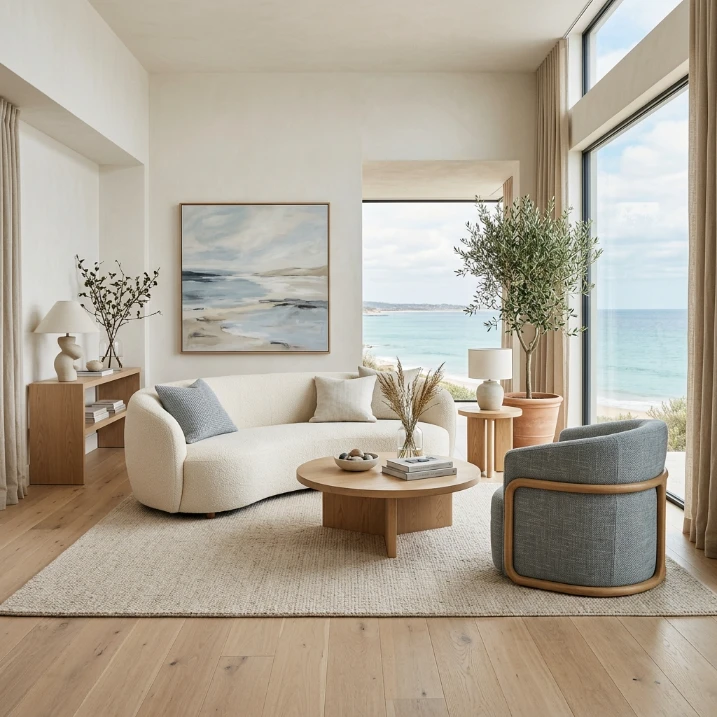
Coastal rooms benefit from shapes that feel easy and relaxed. A rounded coffee table, curved lounge chair, softly shaped sofa, or circular ottoman can break up the straight lines created by walls, windows, shelving, and rectangular rugs.
This is particularly useful in modern homes where the architecture may feel crisp. Curves introduce a softer rhythm without requiring additional decoration.
Make One Organic Piece The Focal Point
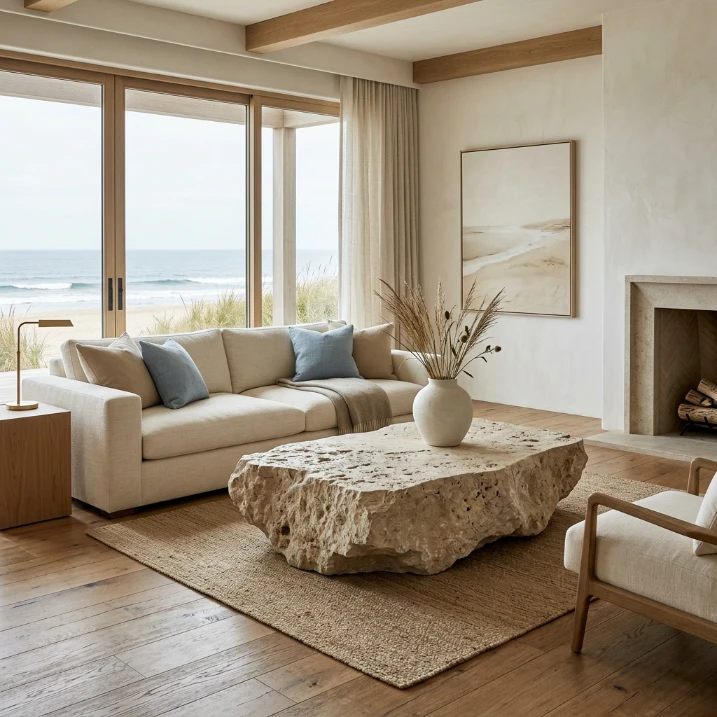
Rather than filling shelves with small beach-themed accessories, choose one substantial natural element. It might be a sculptural wood coffee table, a large woven pendant, an oversized ceramic vessel, or an irregular stone side table.
One strong organic feature gives the eye somewhere to settle. In the new coastal living room, a single sculptural natural piece replaces the old shelf-full of beach decor — that restraint is what makes the room feel collected instead of themed.
Bring In Woven Texture At More Than One Level
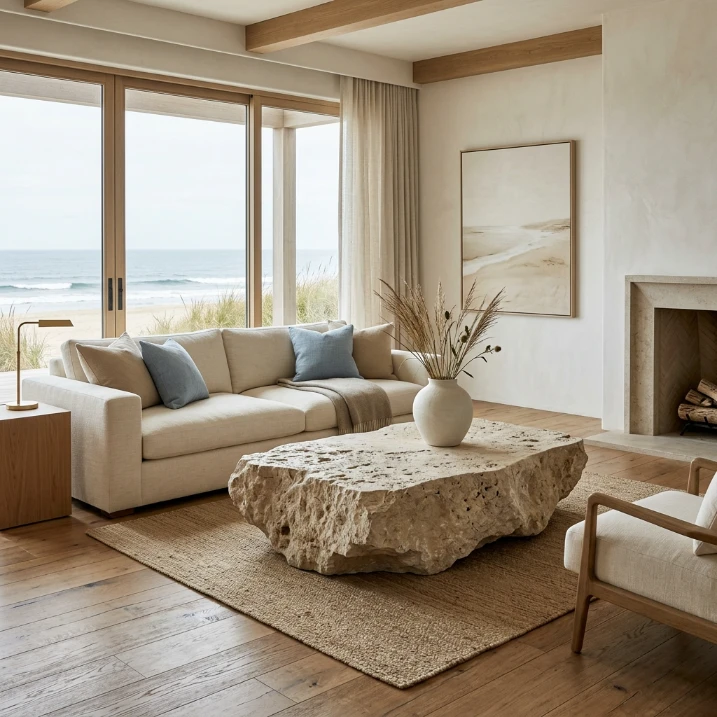
Woven materials add the relaxed texture that many coastal rooms need. Rattan chairs, cane cabinet doors, jute rugs, woven baskets, seagrass shades, and rope-inspired details can all work, but the key is distribution.
Try placing one woven element near the floor, one around the seating area, and another higher up. A jute rug, rattan accent chair, and large woven pendant can create a connected material story.
Keep Coastal Artwork Abstract And Personal
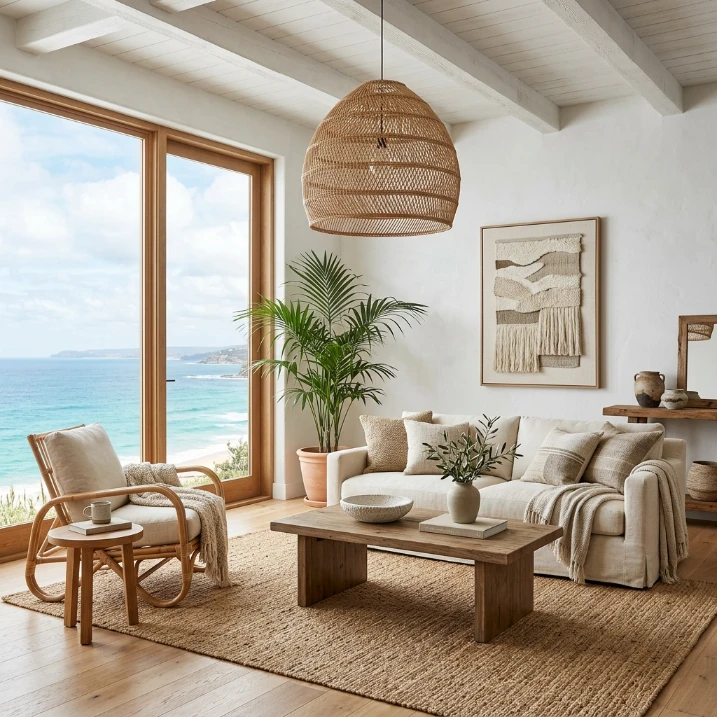
Artwork can suggest the coast without showing a beach in every frame. Look for abstract pieces inspired by water movement, sandy landscapes, cloudy skies, shells, weathered surfaces, or soft horizon lines.
Personal photographs, vintage finds, and artwork from local artists can make the room feel collected over time. The coastal story becomes stronger when the room looks like someone’s home rather than a showroom built around one theme.
Use Greenery To Break Up Pale Neutrals
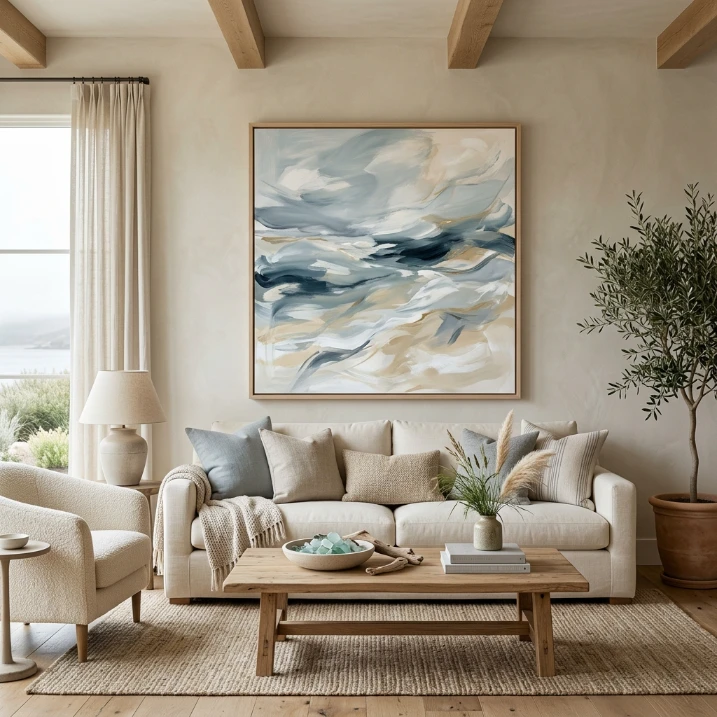
Coastal interiors can become too beige if every surface follows the same sandy palette. Greenery adds a fresh organic contrast without taking the room away from its calm direction.
Anchor one large plant in an empty corner, or cluster three small plants of different heights around the seating area for a more collected look. Olive trees, palms, rubber plants, and trailing varieties can work depending on the light available in your room.
Give The Windows A Light, Relaxed Treatment
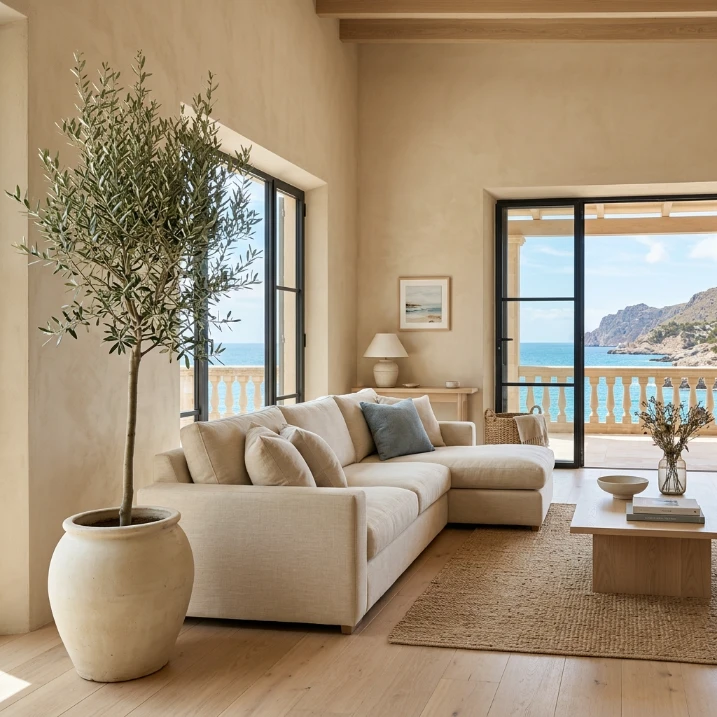
Natural light is especially important to a coastal living room because it makes pale textures and warm neutrals look brighter. Sheer linen curtains can soften large windows without blocking daylight, while woven shades provide privacy and texture.
Hang curtains close to the ceiling — mount the rod about 4–6 inches above the window frame — and let them fall generously toward the floor to make the room feel taller. Avoid heavy treatments when the architecture and privacy needs allow the windows to remain visually open.
Add A Touch Of Navy For Tailored Contrast
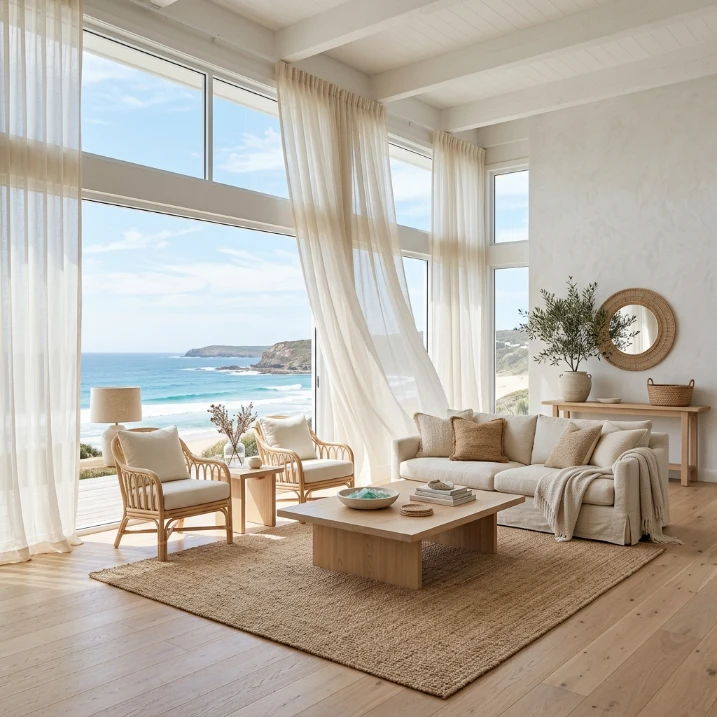
If your room feels too pale, navy can provide structure. Use it carefully through a striped cushion, dark blue artwork, a small accent chair, or a pair of lamps.
Navy works especially well against cream, light oak, natural linen, and warm white. A good rule of thumb: three navy accents in one zone read as intentional; the same three scattered across the room read as noise.
Mix Old, New, And Handmade Pieces
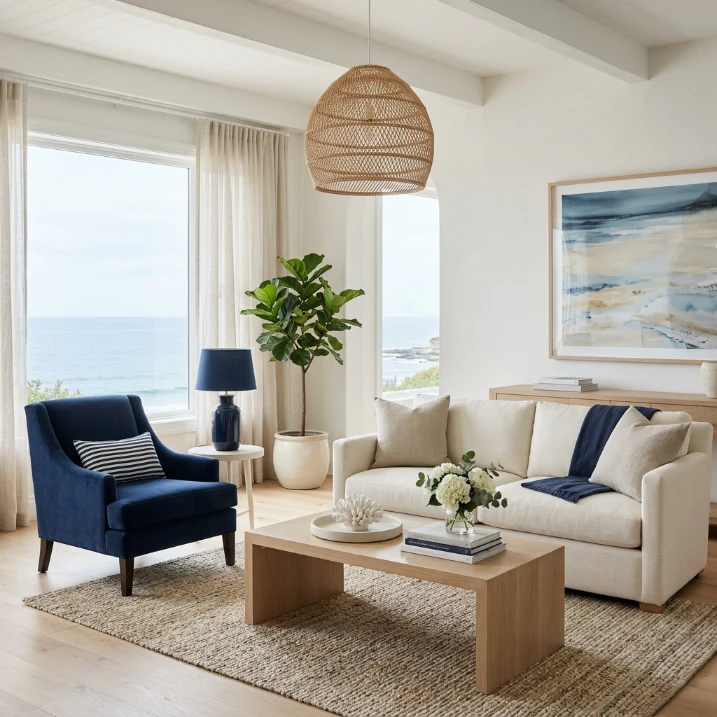
The most convincing Coastal Living Room Look rarely comes from buying an entire matching collection. Combine a newer sofa with an older wood table, a handmade ceramic bowl, a vintage lamp, or an imperfect woven basket.
When combining pieces, repeat one or two common qualities such as warm wood, natural fibers, soft blue, or rounded shapes. That connection keeps the room cohesive even when the furniture comes from different places.
How To Keep A Coastal Living Room Calm Instead Of Empty
Calm does not mean removing everything from the room. It means giving each piece enough space to be noticed. Start with the sofa, rug, coffee table, lighting, and one or two large decorative elements. Then add smaller details only where the room actually needs them.
Texture is especially helpful when you want a restrained room to feel finished. A linen cushion, nubby throw, ceramic vase, woven basket, and natural wood surface can create plenty of visual interest without adding loud colors.
Final Thoughts On The New Coastal Living Room Look
The modern Coastal Living Room Look is less about proving that a room is near the ocean and more about creating the feeling of ease associated with it. Warm neutrals, washed blues, natural wood, woven textures, comfortable furniture, greenery, and meaningful objects can create that atmosphere without relying on obvious beach symbols.
Choose a calm foundation, add a few organic materials, introduce color slowly, and leave enough open space for the room to breathe. When every item does not have to announce coastal style, the overall design feels more personal, timeless, and genuinely comfortable.