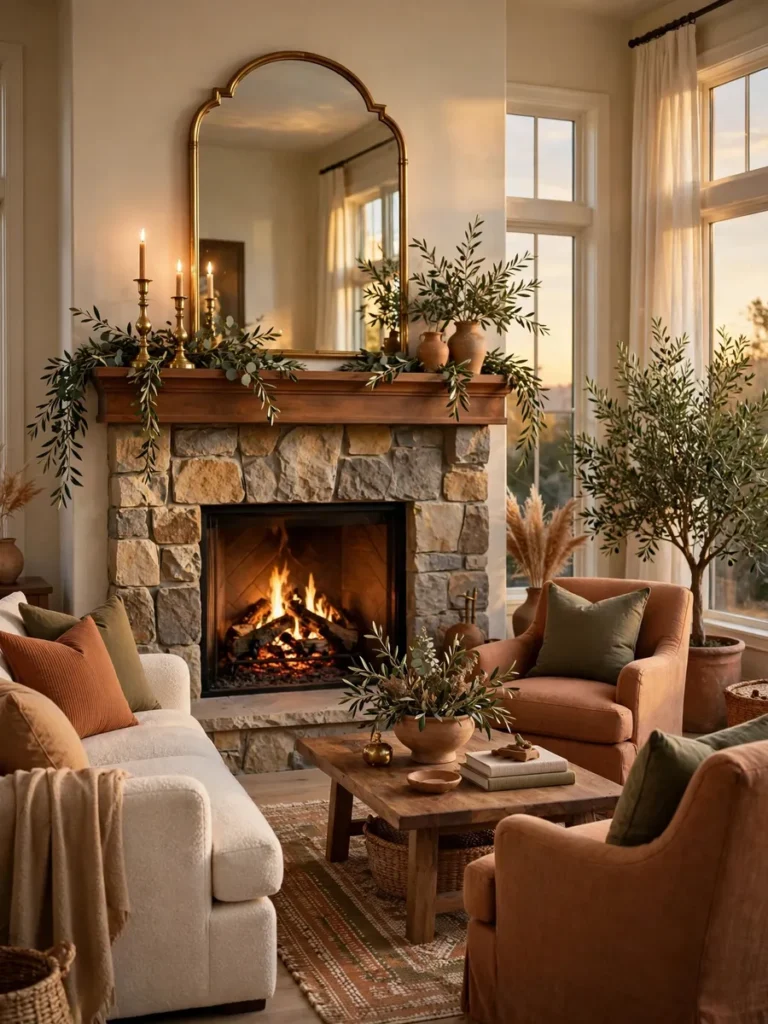
Tuscan Living Rooms That Master Warmth Without Looking Dated
Tuscan living rooms have a particular kind of warmth: sun-washed walls, natural wood, aged stone, soft linen, earthy color, and furniture that invites people to stay. At its simplest, the look is a warm, rustic-but-edited take on the Mediterranean villa — natural materials first, themed decoration nowhere. But the look can easily become heavy if every traditional detail is added at once. The more successful approach is to borrow the atmosphere of the Italian countryside while keeping the room comfortable, edited, and current.
Instead of treating Tuscan style as a checklist of arches, dark wood, terracotta, and ornate accessories, build the room around a few strong materials and a calm palette. Then add contrast through shape, texture, greenery, and lighting. These Tuscan living room ideas show how to create that relaxed Mediterranean character without making your home feel stuck in another decade. If you want even more takes on the same warm look, our companion guide to Tuscan living room ideas covers additional designs and layouts.
Start With A Sun-Warmed Neutral Palette
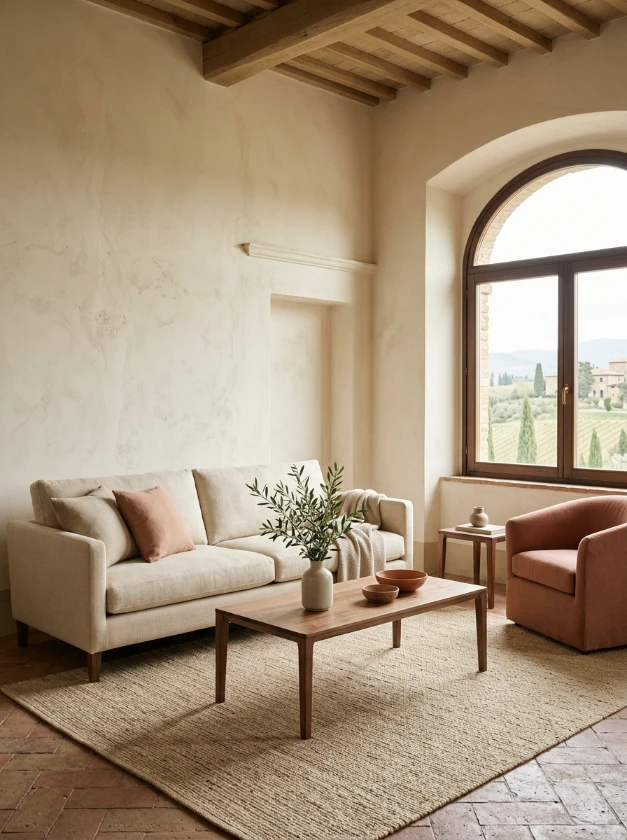
The easiest way to establish a Tuscan mood is through color. Begin with warm ivory, creamy beige, sand, mushroom, muted clay, or soft ochre rather than cool gray or stark white. These shades make natural materials look richer and give the room the soft, sunlit quality associated with Mediterranean homes.
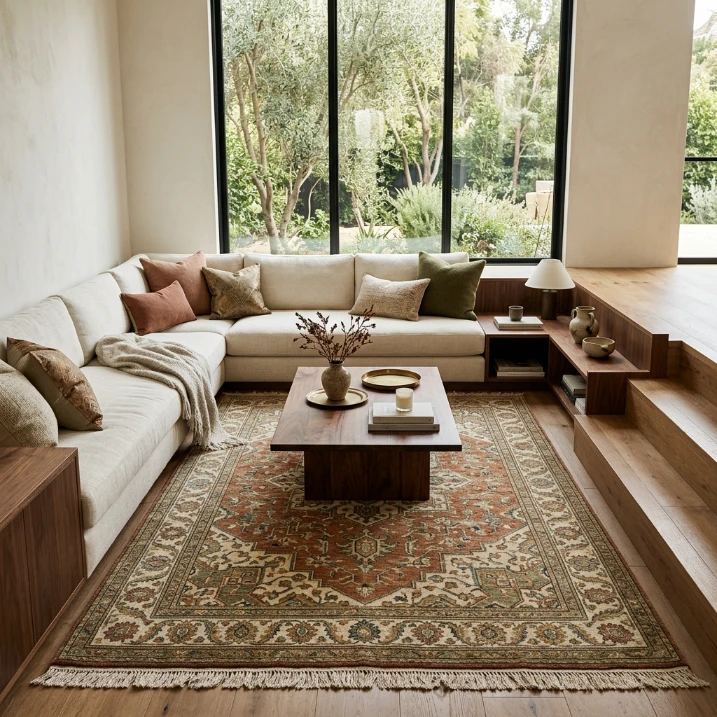
Use one deeper earth tone as an anchor. Tobacco brown, olive green, terracotta, or warm walnut can appear in a sofa, rug, wood furniture, artwork, or a few accessories. Keeping the palette restrained lets the architecture and texture carry the visual interest.
Let Aged Stone Become The Room’s Main Character
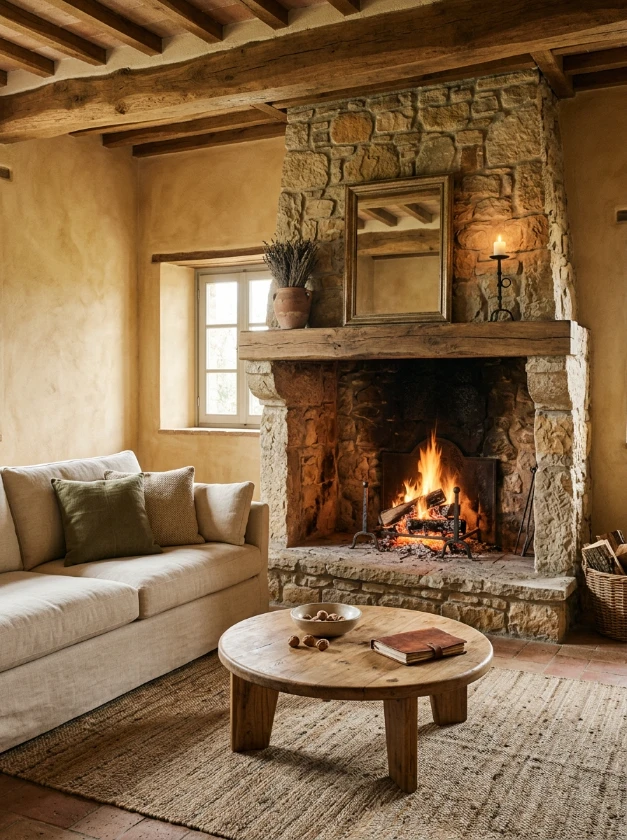
A stone fireplace or textured stone wall can instantly give a living room Tuscan character. You do not need to cover every wall. One substantial stone feature is often enough to create the sense of age and permanence that makes the style feel authentic.
Pair rough stone with softer pieces such as a linen sofa, rounded coffee table, woven rug, or upholstered accent chair. The contrast matters: hard architectural texture feels welcoming when it is surrounded by comfortable materials.
Warm Wood Beams Add Structure Without Heavy Ornament
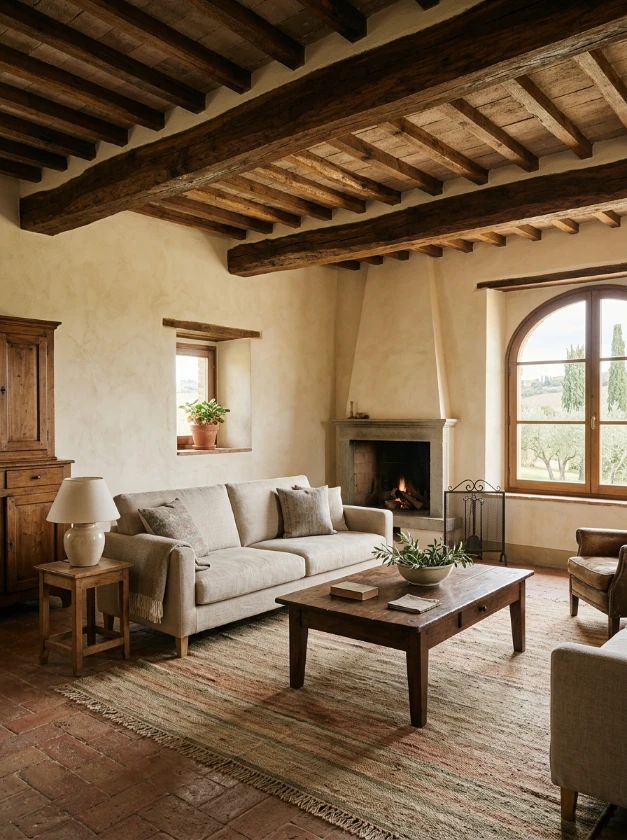
Exposed ceiling beams are one of the strongest architectural details for a Tuscan living room, but they work best when the rest of the room stays relatively calm. Choose natural or medium-to-dark wood with visible grain instead of highly polished finishes.
If your home has no beams, echo the idea with a substantial wood coffee table, console, shelving, or ceiling detail. Repeating the same wood tone in two or three places creates continuity without making the furniture look like a matching set.
Choose Linen And Tactile Upholstery
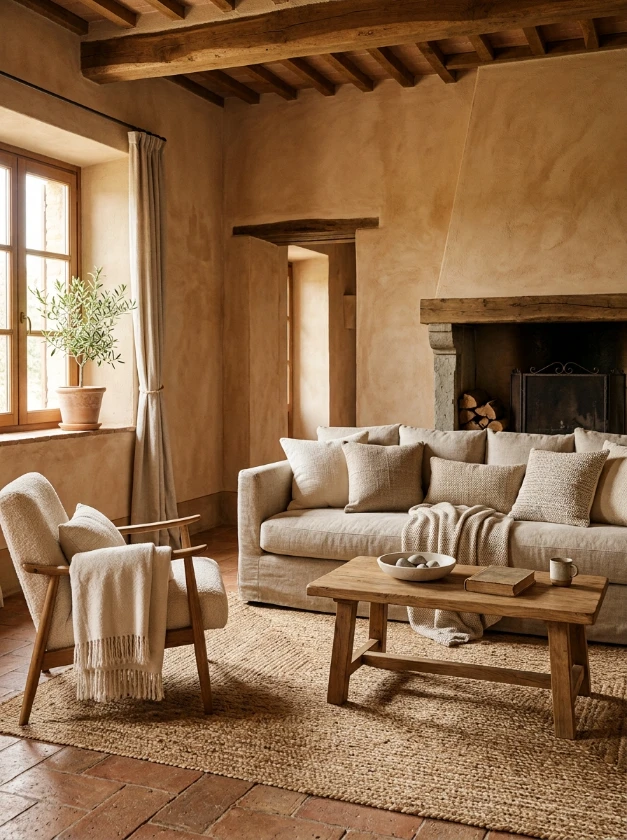
Tuscan rooms should feel comfortable before they feel formal. Linen, cotton, brushed upholstery, woven fibers, and softly textured rugs bring that relaxed quality into the seating area. A large cream or oatmeal sofa is a dependable foundation because it allows warmer accents to change with the seasons.
Layer a few cushions in clay, olive, muted rust, or natural stripe patterns. Avoid making every fabric identical. Slight differences in texture make a neutral room feel collected rather than flat.
Use Terracotta In Small, Intentional Doses
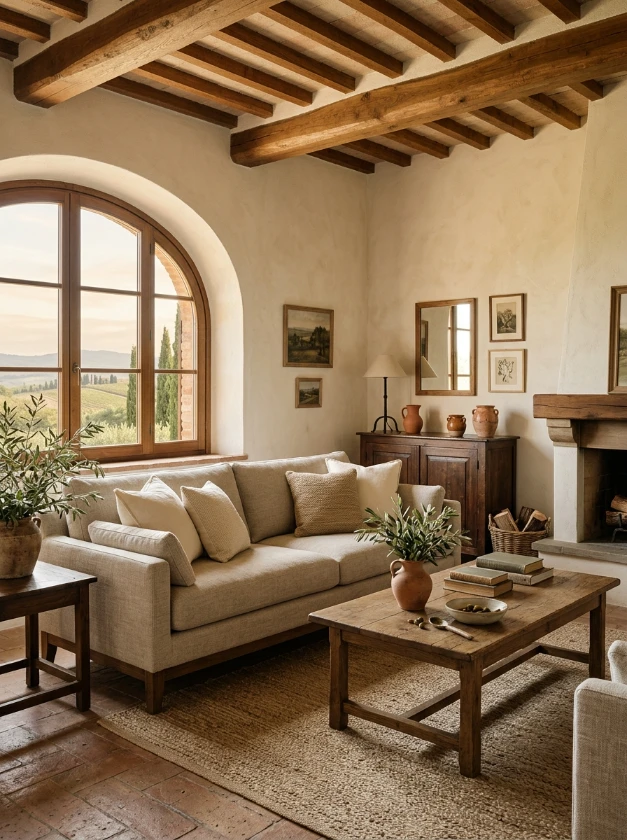
Terracotta is closely associated with Mediterranean interiors, but too much of it can make a room feel themed. Use it where it has visual purpose: a pair of pottery vessels, a low planter, a textured rug pattern, a floor tile border, or a single accent chair — repeated in at least two spots so it reads as a deliberate accent, not a stray object.
The strongest combinations usually place terracotta beside creamy plaster tones, natural wood, olive greenery, and aged metal. That mix feels warm and grounded without turning the room orange.
Build A Cozy Seating Arrangement Around Conversation
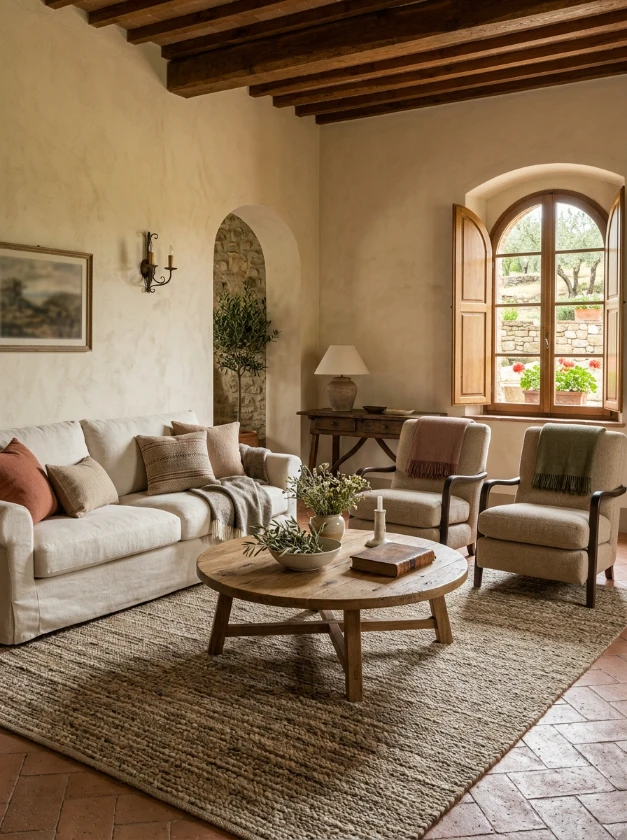
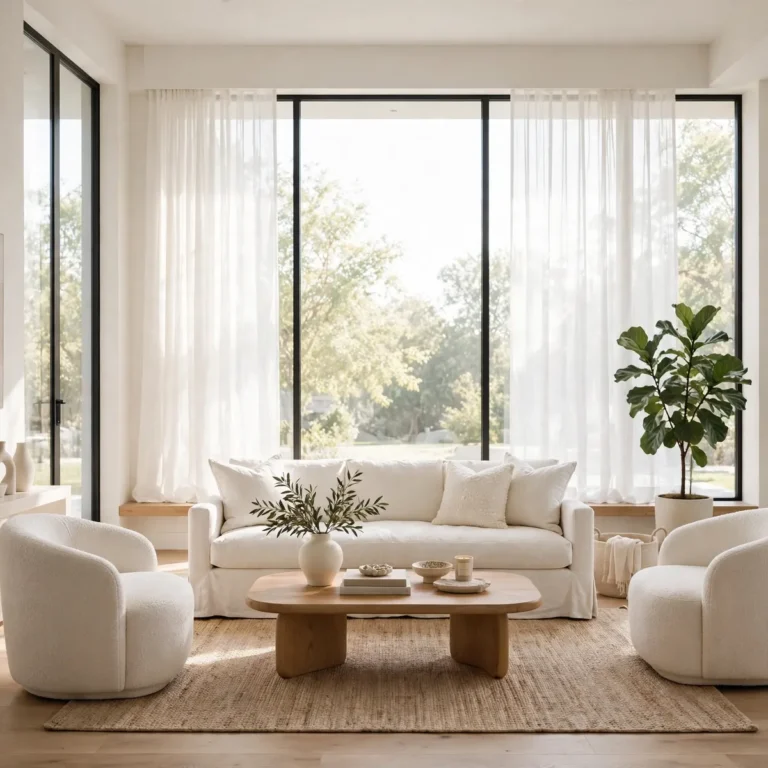
A Tuscan living room should feel like a place where people naturally gather. Instead of pushing every piece against the walls, float the furniture to create a central seating zone around a coffee table. A sofa can face two lounge chairs, while a second chair or small bench completes the conversation area.
In a large room, use rugs and lighting to define separate zones. This makes a spacious floor plan feel intimate while preserving the generous proportions that suit Tuscan architecture.
Soften Arches With Curved Furniture
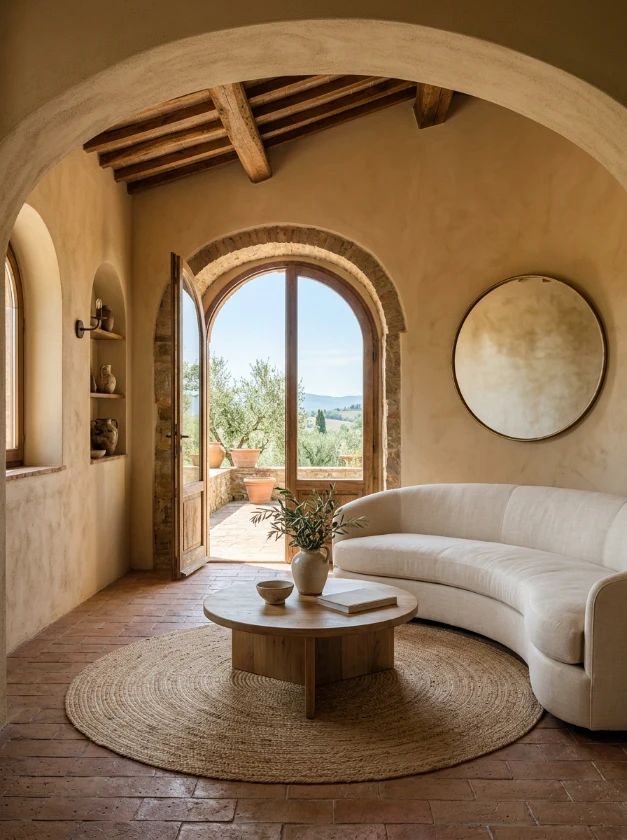
Arched doorways, windows, niches, and mirrors naturally fit the Tuscan vocabulary because curves soften strong architectural lines. If your home already has arches, keep the furniture simple enough to let them stand out.
For rooms without architectural curves, introduce the same feeling through a round coffee table, curved sofa, barrel chair, circular mirror, or softly shaped lamp. One or two curved forms can make a room feel noticeably more relaxed.
Make Olive Green The Quiet Accent
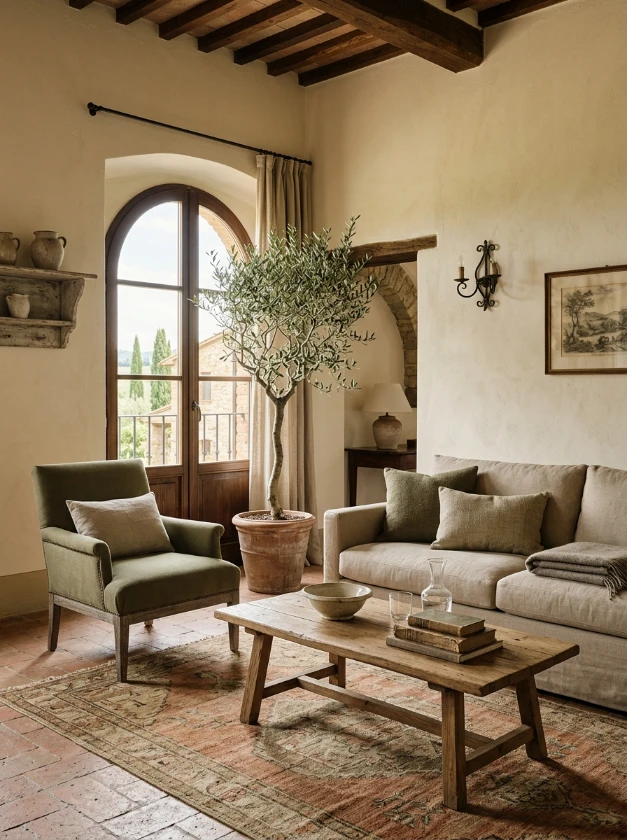
Olive green brings the landscape indoors without overpowering the warm neutral foundation. It works especially well through living plants, olive branches, cushions, artwork, or a painted cabinet.
Keep the green muted rather than bright. The goal is to suggest olive groves and natural foliage, not create a green-themed room. A few organic shapes are usually more convincing than many decorative objects.
Layer Lighting For A Golden Evening Glow
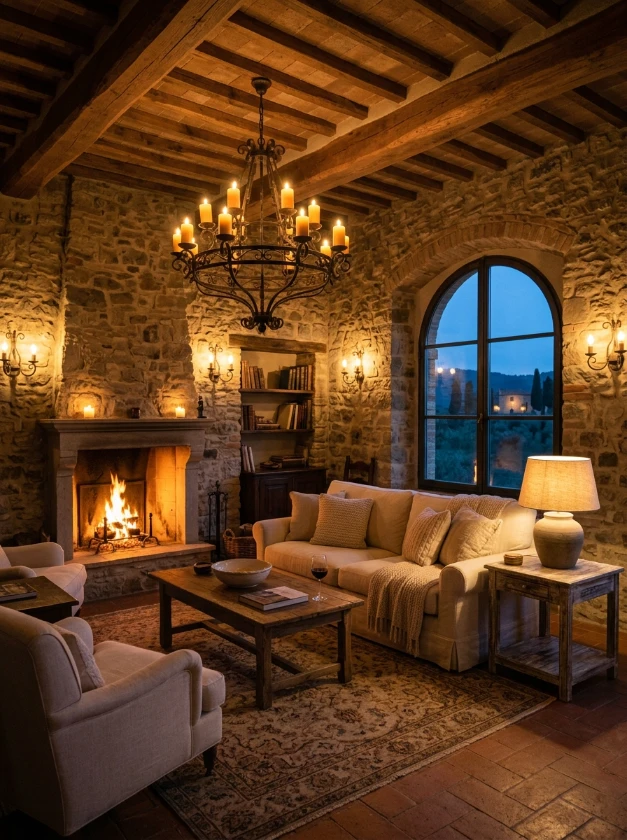
Lighting can completely change a Tuscan living room after sunset. Combine a central pendant or chandelier with table lamps, wall sconces, floor lamps, and soft accent lighting. Choose warm bulbs (2700K or lower) so wood, stone, linen, and plaster retain their rich tones.
Place lighting at different heights. A low lamp beside a sofa, a wall light near artwork, and a pendant over the seating zone create depth that one ceiling fixture cannot provide. This layered approach also keeps a large room from feeling stark at night.
Mix Old-World Details With Cleaner Furniture
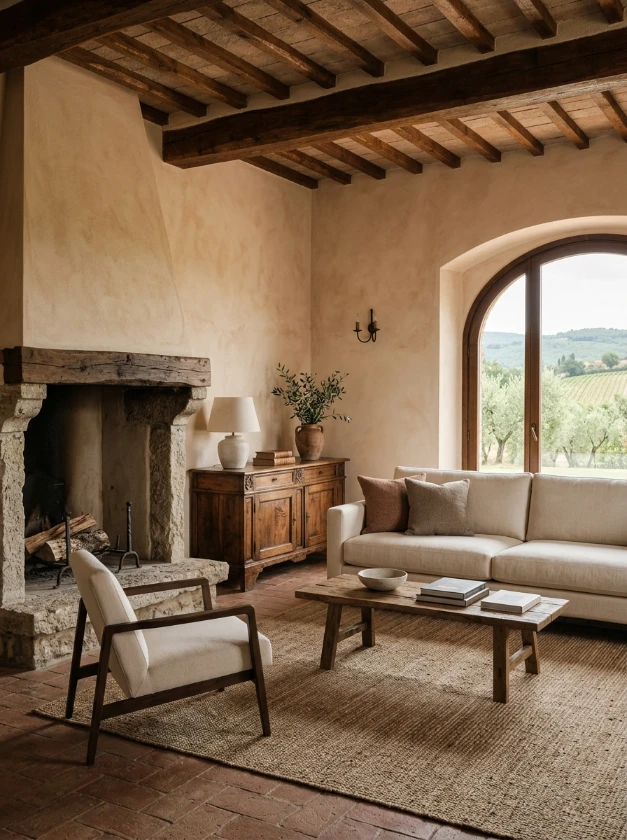
A fresh Tuscan living room does not need ornate furniture everywhere. In fact, pairing an aged architectural element with simpler silhouettes can make the whole space feel more current. Try a streamlined sofa beside an antique-style console, or a clean-lined chair near a weathered wood table.
This contrast prevents the room from becoming a historical recreation. The architecture can provide the old-world character while the furniture keeps everyday life comfortable and visually lighter.
Keep Decor Collected Rather Than Crowded
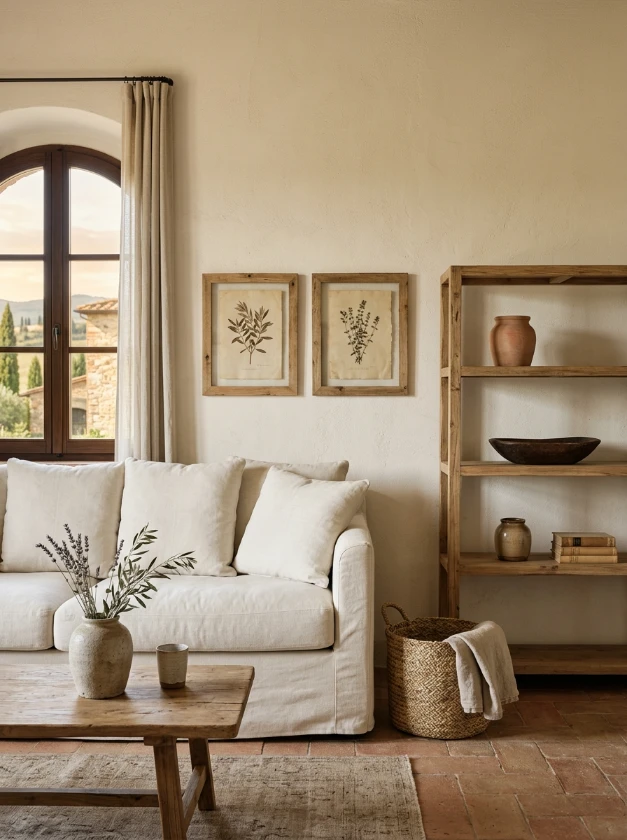
Tuscan style benefits from objects that look useful, inherited, handmade, or connected to the landscape. Ceramic vessels, woven baskets, framed botanical art, wooden bowls, stone objects, and a few books can add personality without filling every surface.
Leave some shelves and tabletops partially empty. Negative space gives substantial materials room to breathe and makes individual pieces feel more intentional.
Create A Modern Tuscan Living Room With Contrast
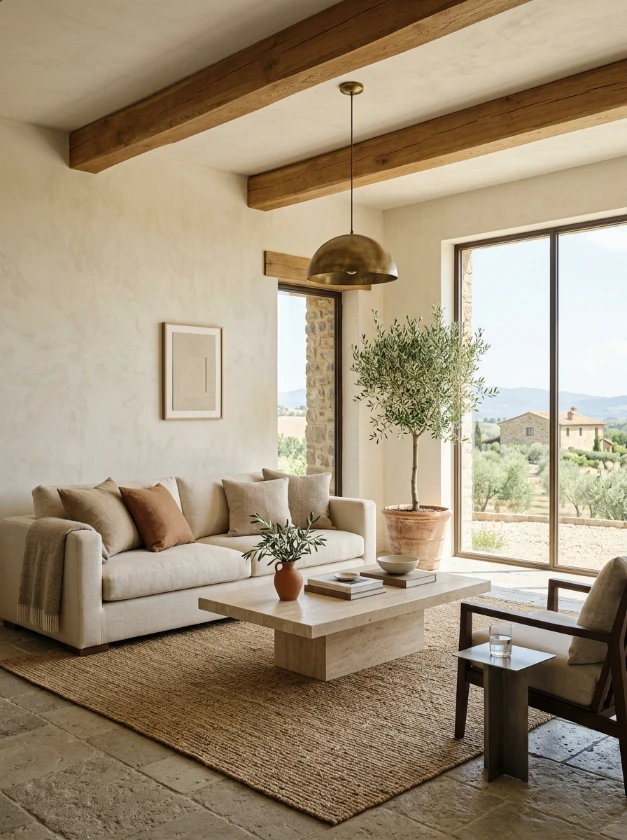
For a more contemporary interpretation, keep the walls light and the furniture low-profile while using just a few traditional references. A plaster-look wall, warm wood, stone coffee table, linen sofa, olive tree, and aged brass light can establish the style without requiring ornate details.
Black or dark bronze can also be used sparingly to sharpen the palette. A slim metal window frame, simple picture frame, or sculptural light can add definition while the earthy materials keep the room warm.
Bring The Outdoors Into The Seating Area
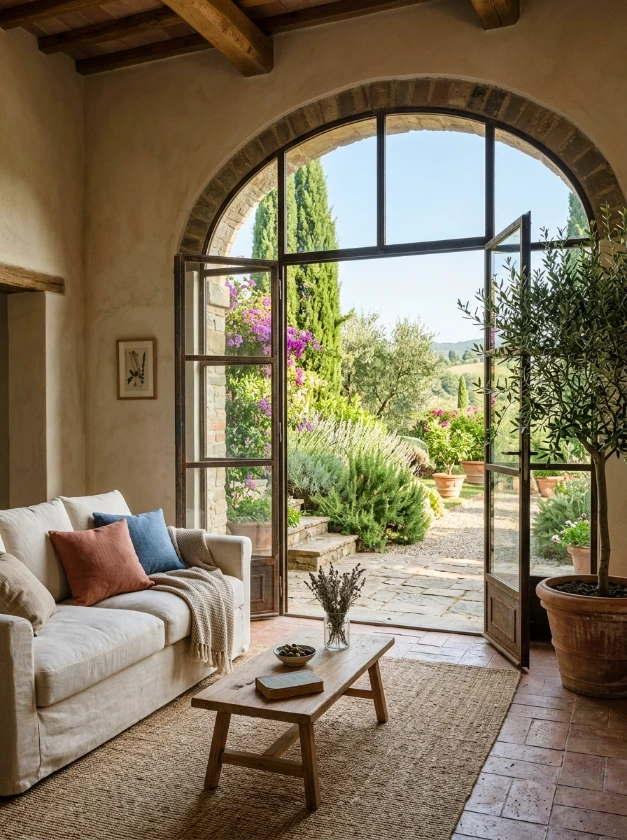
Tuscan interiors feel strongest when the living room has a relationship with nature. Position seating toward a garden view when possible, keep windows visually open, and use natural greenery to connect indoor and outdoor spaces.
Large potted plants, olive trees, herbs, and branches can work beautifully when the room has enough natural light. Choose plants for the actual conditions of the space rather than using greenery only as decoration.
Use One Statement Piece Instead Of Many Trendy Accents
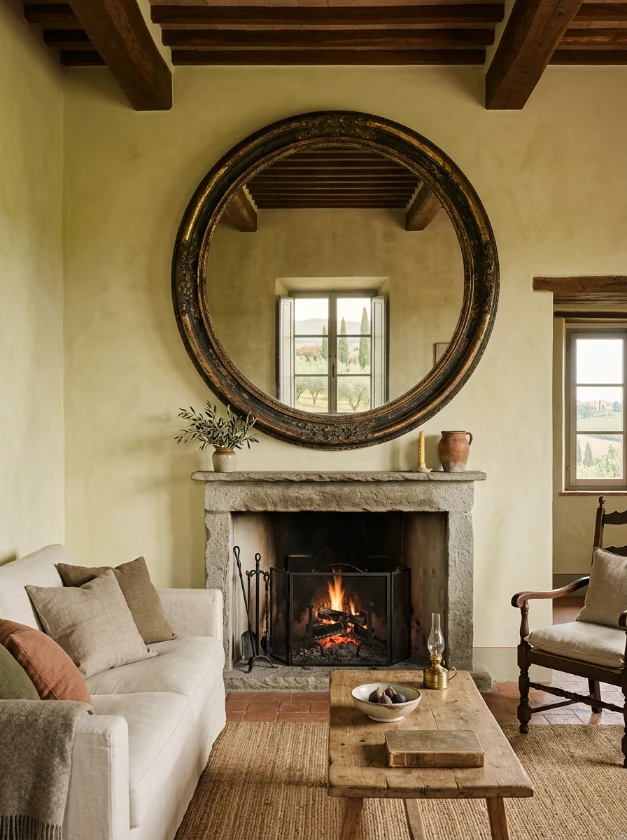
A dramatic fireplace, oversized mirror, sculptural chandelier, antique cabinet, or large landscape artwork can give the room a memorable focal point. Once that piece is established, let the surrounding furniture and accessories support it.
This is one of the easiest ways to keep Tuscan living rooms from looking dated. Timeless materials become the foundation, while one distinctive feature supplies personality.
Final Thoughts
The most inviting Tuscan living rooms are not built by buying a room full of themed decor. They come from warm color, natural materials, comfortable furniture, layered lighting, and a relaxed connection to the outdoors. Start with the elements that will last—stone, wood, linen, plaster-like finishes, and earthy tones—then add a few personal pieces that make the room feel lived in.
If you want a Tuscan look that still feels fresh years from now, aim for balance. Let rustic materials provide character, keep the composition edited, and use modern shapes where they make the room easier to live with. The result should feel warm, grounded, and quietly elegant rather than like a reproduction of an old Italian villa.