The Retro Living Room Comeback Nobody Saw Getting This Good
The Retro Living Room Comeback is less about recreating one decade and more about bringing back the warmth, character, curves, texture, and confident color that made older interiors memorable. The modern version feels comfortable rather than theatrical. It combines vintage-inspired furniture with practical layouts, contemporary comfort, and a small number of carefully chosen nostalgic details.
A retro living room works best when the room has a clear visual rhythm. Repeat a few colors, echo curved shapes, mix wood with soft upholstery, and give bold pieces enough quiet space around them. You do not need every object to look vintage. In fact, modern pieces often make the nostalgic elements feel fresher.
Start With One Curved Statement Sofa

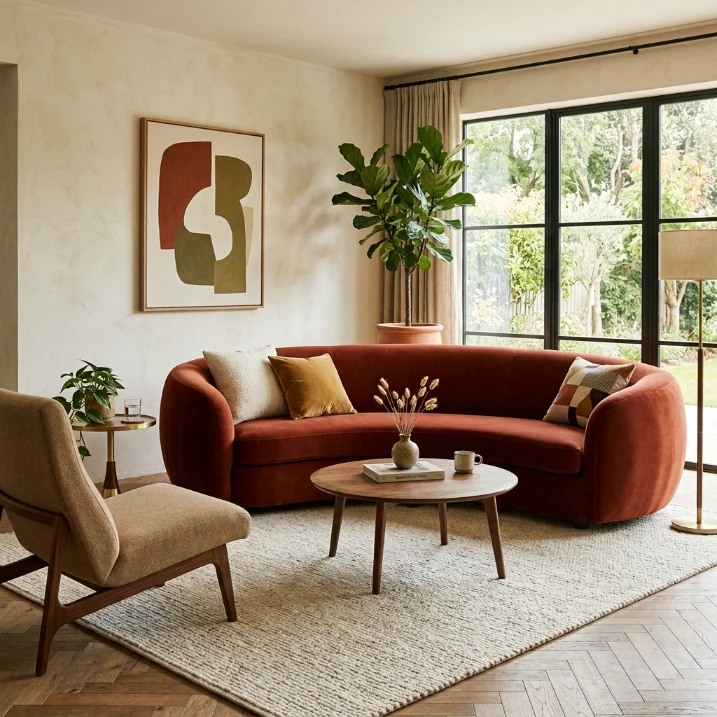
A curved sofa can establish the mood faster than a collection of small accessories. Look for rounded arms, a low profile, soft corners, or sculptural cushions. Rust, olive, caramel, cream, and muted teal are especially easy to build around.
Keep the supporting furniture simpler. A round coffee table, one compact lounge chair, and a textured rug can make the sofa feel intentional without turning the room into a themed set. Curves are also useful in open rooms because they soften the strong lines of modern architecture.
Use Walnut To Add Instant Warmth
Walnut is one of the strongest materials for a retro-inspired living room. Bring it in through a media console, sideboard, shelving, coffee table, or a limited panel feature. There is no need to cover every wall in wood.
Pair warm walnut with cream upholstery and one earthy accent shade. Olive, tobacco, mustard, rust, and dusty teal sit naturally beside darker wood. Add a woven textile or stone surface so the room has enough material contrast.
Let A Geometric Rug Connect The Room

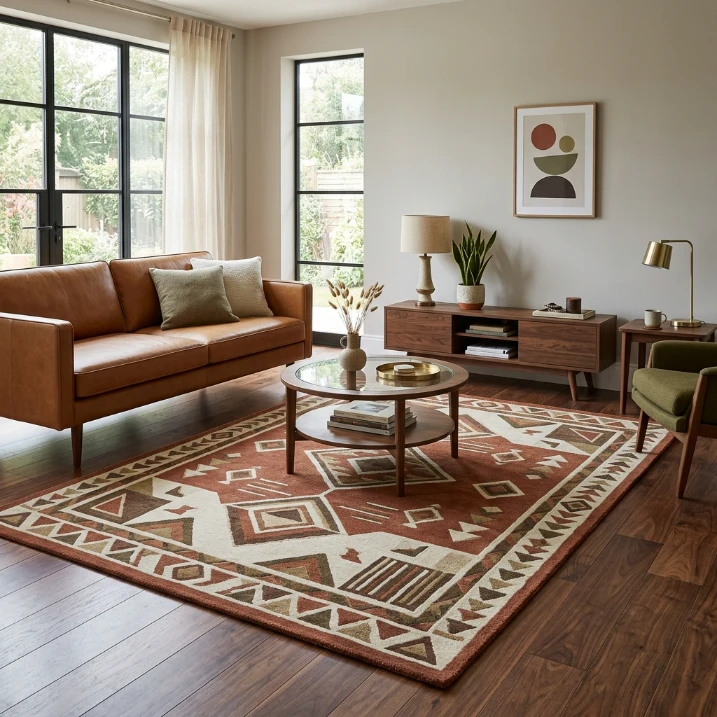
A geometric rug can provide the graphic energy associated with retro interiors while keeping the walls calm. Choose a design that uses two or three colors already present in the room. This makes the rug feel connected to the furniture rather than added as an afterthought.
If the pattern is strong, keep the sofa and curtains quieter. In a smaller room, a medium-scale pattern usually creates enough personality without making the floor feel visually crowded.
Make Lighting Part Of The Decor
Retro-inspired lighting is both functional and sculptural. Globe pendants, mushroom lamps, arc floor lamps, rounded sconces, and clustered glass shades can all reinforce the look.
Use warm light to bring out walnut, brass, velvet, and earthy colors. Layer a ceiling fixture with a floor or table lamp so the room still feels atmospheric after sunset. A beautiful fixture should add character even when it is switched off.
Build A Muted Seventies Color Palette
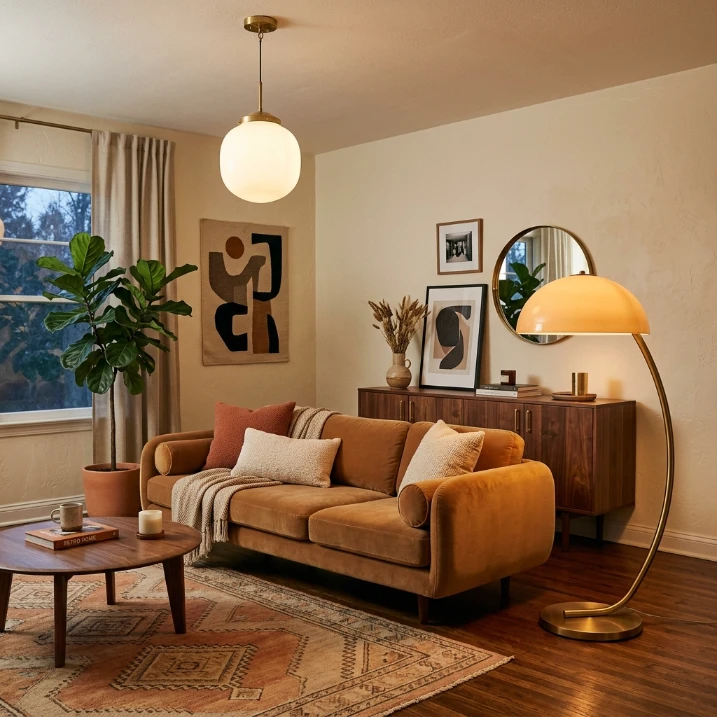
Retro color does not have to be bright. Burnt orange with cream, olive with walnut, mustard with brown, and dusty teal with terracotta create warmth without becoming overwhelming.
Choose one dominant shade, one supporting shade, and a neutral. Repeat them through upholstery, artwork, cushions, ceramics, and the rug. Repetition gives a colorful room structure.
Mix Vintage Shapes With Modern Simplicity

The easiest way to keep retro decor current is to combine nostalgic silhouettes with cleaner contemporary pieces. A sculptural chair can sit beside a simple sofa. A rounded coffee table can balance a straight media unit. An arched lamp can bring personality without adding another decorative object.
This approach also makes decorating easier over time. Keep major purchases versatile and add character through one distinctive chair, lamp, mirror, or side table.
Create A Personal Retro Gallery Wall

Artwork can carry the nostalgic mood without changing the architecture. Consider abstract prints, botanical artwork, graphic shapes, vintage travel-inspired pieces, or framed textiles.
Rather than filling an entire wall, build a balanced cluster around one larger piece. Repeat one or two room colors inside the artwork so the collection feels connected to the furniture.
Give A Record Player Its Own Moment

A record player or music console can become a genuine design feature. Place it on a walnut cabinet with a small vinyl collection and a few useful objects. Leave open space around the equipment so the arrangement does not become cluttered.
The best retro details are things you actually use. A music corner feels more convincing when it is functional instead of being staged only for appearance.
Use Plants To Soften Retro Geometry
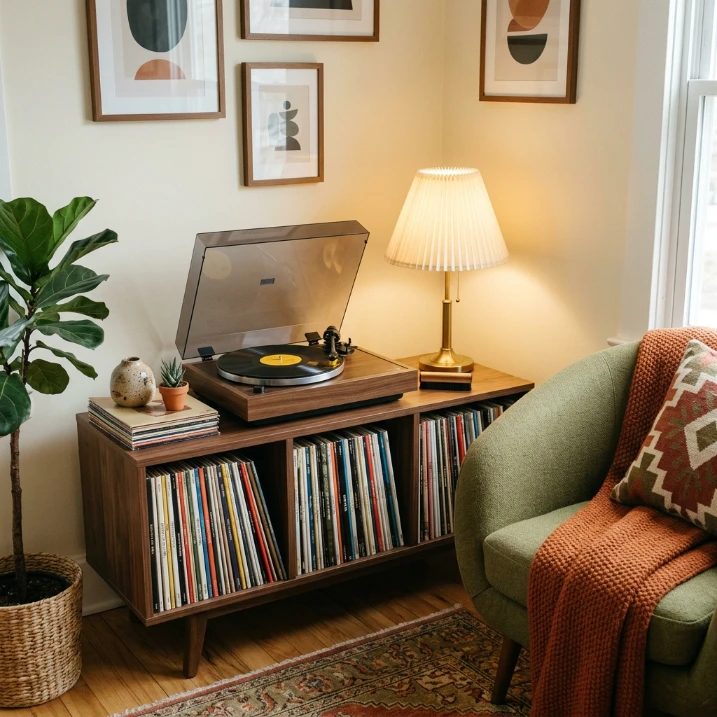
Plants balance the harder lines of wood furniture, patterned rugs, and sculptural lamps. A tall plant beside the sofa can add height, while a trailing plant on a shelf creates movement.
Choose planters that belong to the palette. Terracotta, cream ceramic, natural stone, and aged metal work especially well with warm retro interiors.
Build A Small Vintage Reading Corner
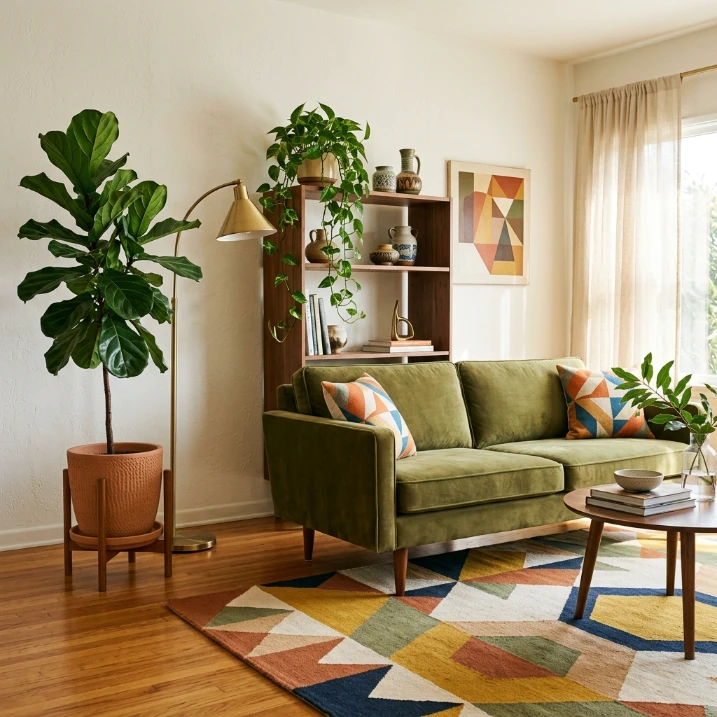
A lounge chair, warm floor lamp, and small round side table can create a relaxed reading corner without requiring a large room. Velvet, leather, boucle, and textured upholstery all work depending on the surrounding furniture.
This is an easy place to introduce a stronger vintage-inspired piece while keeping the main seating area more contemporary.
Try One Retro Accent Wall

For more drama, use geometric wallpaper, painted arches, wood slats, or a graphic mural on one wall. Keep the other surfaces calmer so the feature has a clear role.
Repeat at least one accent-wall color somewhere else in the room. A rust sofa can echo a warm mural, while a cream rug can connect the wall treatment to the rest of the space.
Balance Brass With Glass And Natural Texture
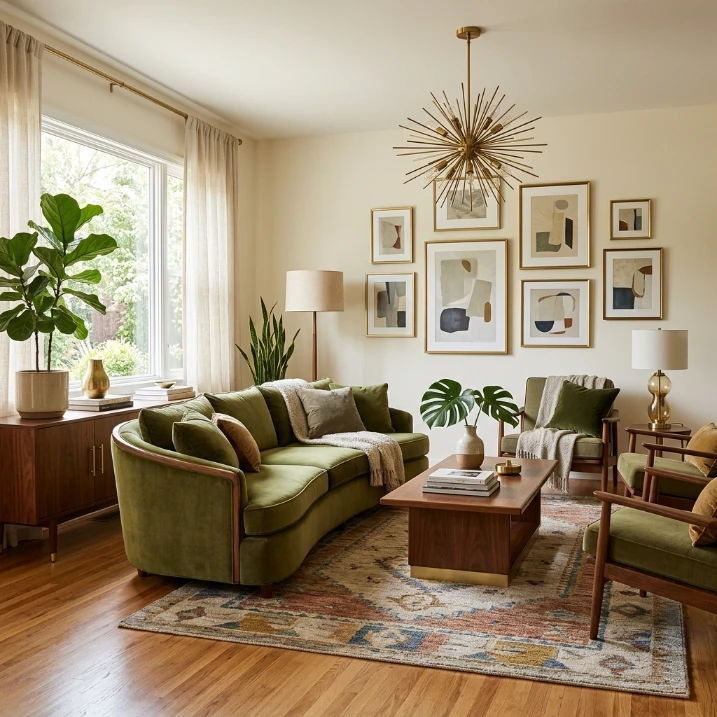
Material contrast keeps a retro room layered. Brass adds warmth, glass keeps the center visually light, and wool, jute, linen, or woven materials provide softness.
Repeat important finishes when possible. A brass lamp can connect with a brass-framed artwork, while wood can appear again in a side table or shelving. This small repetition makes the room feel deliberately assembled.
Keep The Room Comfortable First
The strongest Retro Living Room Comeback feels inviting before it feels nostalgic. Keep walking paths clear, choose upholstery that suits everyday use, and make frequently used tables easy to reach.
Modern curtains, contemporary storage, a simple television, or a clean-lined sofa can actually improve a retro room because they create contrast. The goal is a home with personality, not a museum of one decade.
Final Thoughts
A successful retro living room is built around atmosphere rather than strict historical accuracy. Start with one strong silhouette, warm wood, a controlled color palette, and expressive lighting. Then add artwork, plants, tactile fabrics, and a few nostalgic pieces that genuinely fit your taste.
The result should feel collected, comfortable, and personal. That is what makes the Retro Living Room Comeback so appealing for modern homes: it brings character back without asking you to give up everyday comfort.