Design Tricks Behind Beautiful Minimalist Living Rooms
A beautiful minimalist living room is not defined by how much furniture you remove. It is defined by how clearly every remaining piece supports the room. The best spaces feel open without feeling unfinished, calm without feeling plain, and polished without looking staged. The most useful design tricks behind beautiful minimalist living rooms come down to proportion, texture, lighting, material repetition, and a few carefully chosen focal points.
That approach also makes minimalism easier to live with. Instead of chasing an empty room, you can build a space around the way your household actually sits, reads, watches television, entertains, and relaxes. Below are practical ways to create that balance while keeping the visual language clean and intentional.
Start With A Furniture Layout That Leaves The Room Breathing
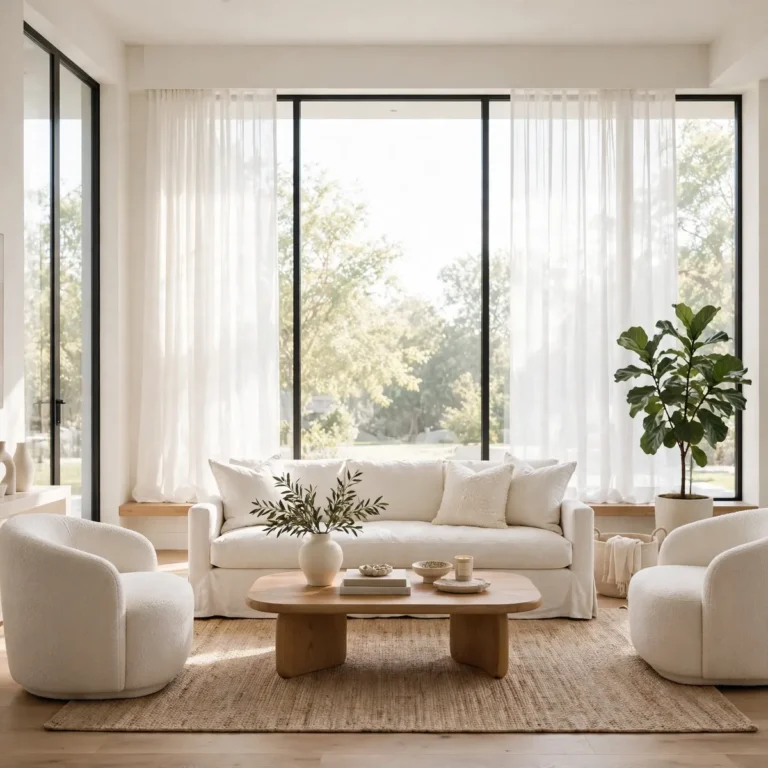
Minimalism starts before the accessories arrive. Give the sofa and main chairs enough space around them so the room feels easy to move through. Rather than pushing every piece against a wall, consider a layout that creates a clear conversation zone. A sofa facing two compact chairs can feel more composed than a large collection of mismatched seating.
Choose furniture according to the scale of the room. A small space often benefits from raised-leg seating and a compact coffee table, while a generous room can handle a longer sofa with a substantial rug. The goal is not simply to own fewer pieces; it is to avoid pieces that compete with one another for visual space.
Build A Quiet Palette Before Adding Personality

A restrained palette gives a minimalist living room its calm foundation. Warm white, sand, taupe, mushroom, soft gray, muted olive, and natural wood can work beautifully together. You do not need every surface to be the same shade. Small shifts between related tones create depth while keeping the room visually connected.
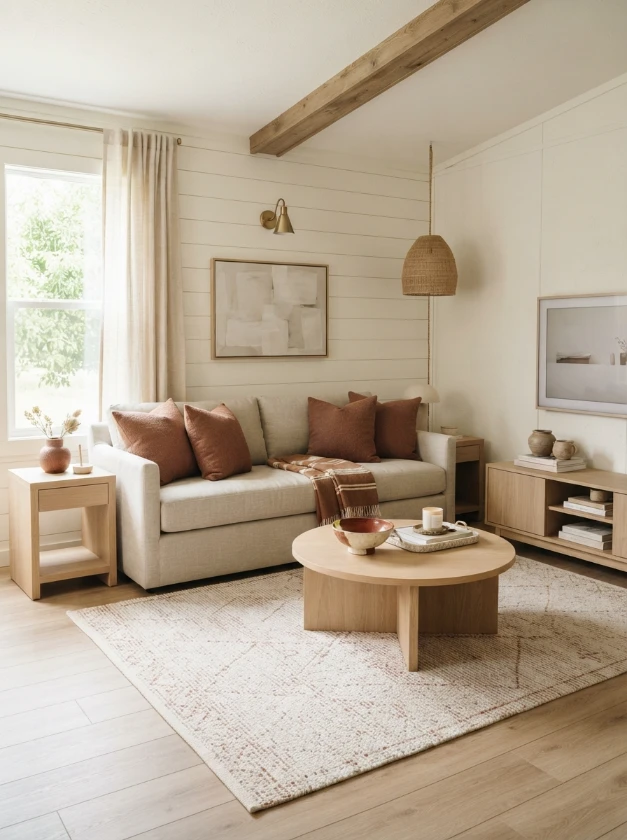
For a more sophisticated result, choose one dominant neutral, one supporting neutral, and a restrained accent. A cream sofa with pale oak furniture and a muted clay accent can feel richer than a room filled with unrelated colors. This is especially useful in open-plan homes because repeating the same tones helps the living area transition naturally into nearby spaces.
Let Texture Do The Work That Color Usually Does

When color stays controlled, texture becomes one of the main sources of character. Combine linen, boucle, wool, matte ceramics, lightly grained wood, woven fibers, and natural stone. The room can remain almost entirely neutral while still feeling layered because each material reacts differently to daylight and touch.
Try repeating two or three textures instead of collecting every trend. For example, a linen sofa, woven rug, and oak coffee table already create a strong material story. Add a ceramic lamp or stone tray and the room gains another tactile note without becoming crowded. This is one of the simplest ways to make minimalist interiors feel warm rather than sterile.
Use One Architectural Feature Instead Of Many Decorative Objects
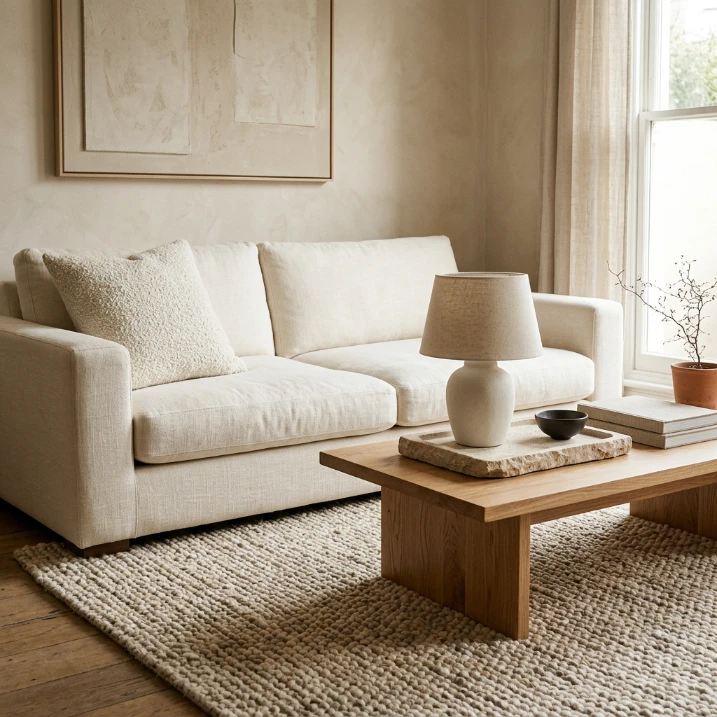
Minimalist rooms benefit from a focal point with enough scale to carry the composition. A vertical oak slat wall, limewashed fireplace, large plaster feature, built-in shelving, or softly curved media wall can provide visual interest without requiring a collection of small decorations.
If you choose a strong architectural element, keep the surrounding styling quieter. A slatted wall may only need one low console and a simple piece of art. The restraint is what allows the feature to feel intentional instead of becoming another layer of visual noise.
Choose Curved Shapes To Soften Clean Lines

Minimalist interiors often contain many horizontal and vertical lines, so rounded forms can make the composition feel more relaxed. A circular coffee table, curved sofa, arched floor lamp, rounded mirror, or sculptural chair can interrupt rigid geometry without introducing visual clutter.
Use curves selectively. One large rounded piece usually has more impact than several small decorative objects with different shapes. When the same gentle silhouette appears in two or three places, the room develops a quiet sense of rhythm.
Make Lighting Part Of The Design, Not An Afterthought

Lighting can completely change a minimalist living room after sunset. Instead of depending on one ceiling fixture, combine ambient, task, and accent lighting. A floor lamp beside the sofa, a small table lamp on a console, and concealed lighting around shelving can create several gentle layers.
Warm bulbs generally complement wood, cream upholstery, and earthy finishes particularly well. During the day, keep window treatments light enough to preserve natural brightness. Full-length curtains can still add softness, but hanging them close to the ceiling and letting them fall to the floor helps the room feel taller and more finished.
Repeat Materials So The Room Feels Connected
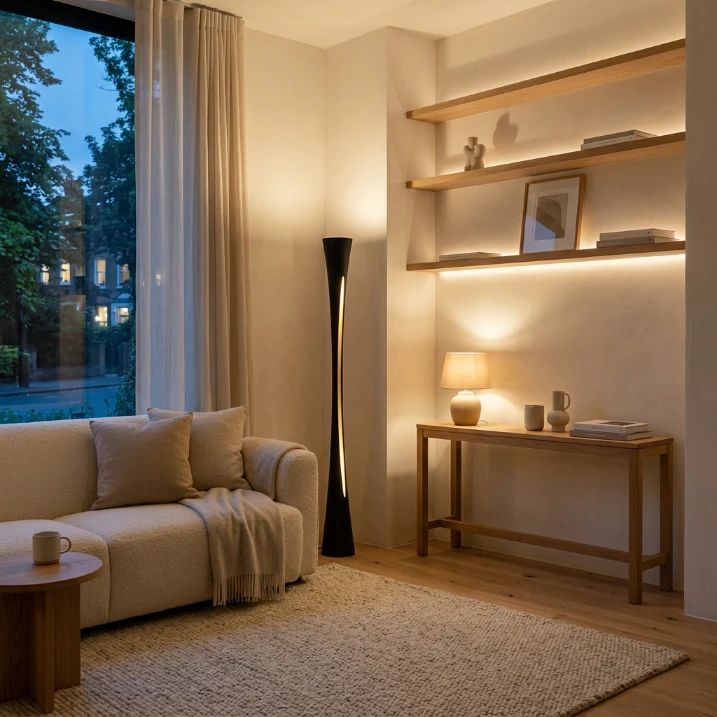
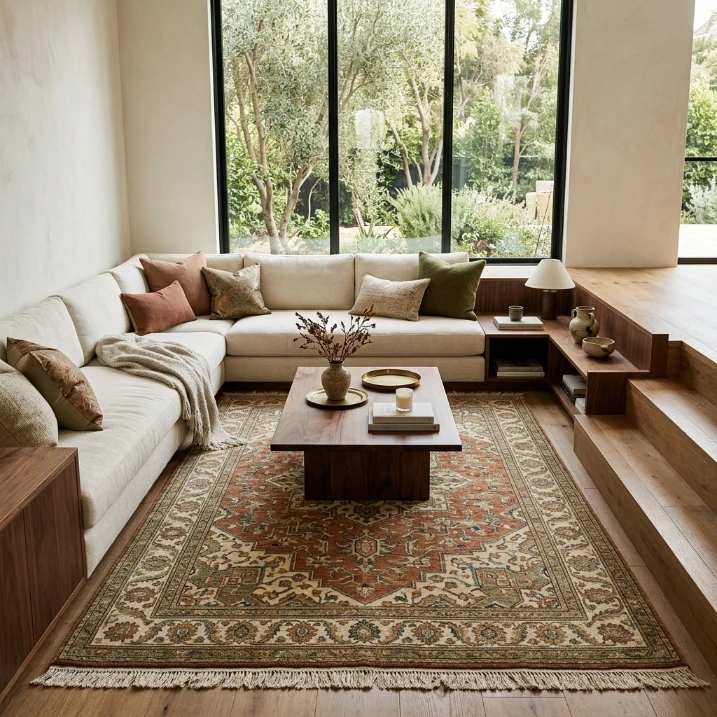
Repetition is a quiet design tool that makes a minimalist room look intentional. If you use walnut on the coffee table, echo it in a side table or shelving detail. If matte black appears on a lamp, repeat that finish on a small frame or hardware. The repeated material does not need to be identical; it only needs to feel related.
This technique is especially helpful in open-plan layouts. A repeated wood tone can visually connect the living room with the kitchen, while a consistent metal finish can make separate furniture pieces feel like part of one scheme.
Use Large-Scale Art Instead Of Filling The Walls

One oversized artwork can give a minimalist living room a stronger identity than a crowded gallery wall. Choose a piece with colors already present in the room so it feels integrated rather than added at the last minute. Abstract work, quiet landscapes, line drawings, and tonal photography can all work well.
Pay attention to placement. A large artwork should relate to the furniture beneath it rather than floating too high on an empty wall. Leave enough surrounding space for the piece to remain visually important. That empty area is not wasted space; it is part of the composition.
Bring In Greenery With A Clear Purpose

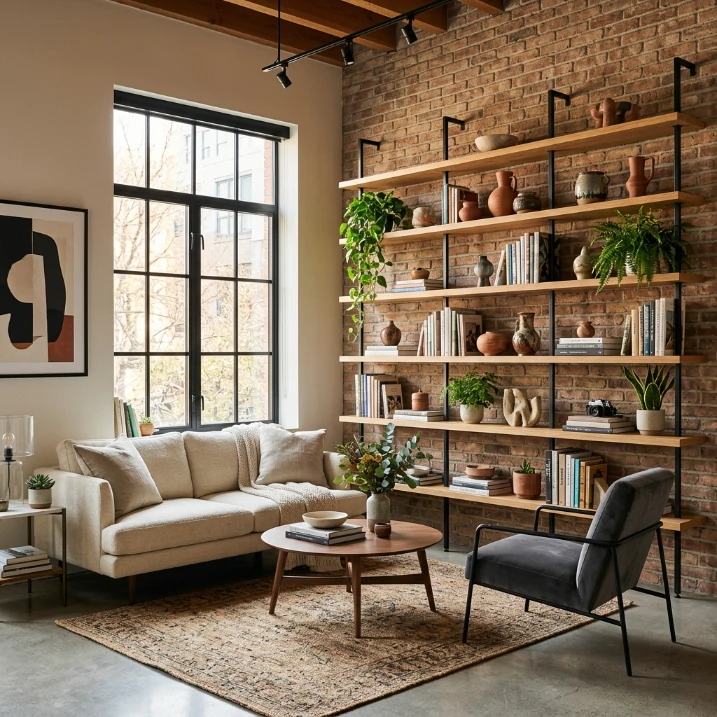
Plants are useful in minimalist living rooms because they add organic shape and natural color without requiring a busy arrangement. One tall olive tree, a sculptural rubber plant, or a trailing plant on a simple shelf can provide enough contrast against a neutral backdrop.
Choose containers that support the room’s material palette. A stone planter can reinforce a quiet earthy scheme, while a simple ceramic pot works well with soft contemporary interiors. Keep the number of plants intentional so the greenery reads as part of the design rather than another collection to manage.
Add Warmth Through Natural Wood And Handmade Pieces

Natural wood keeps minimalist rooms from becoming overly polished. Pale oak creates a light Scandinavian feel, walnut brings depth, and medium-toned timber can bridge warm and cool finishes. Small handmade pieces such as a ceramic bowl, woven basket, or carved stool can add personality without changing the clean overall structure.
For an even more relaxed room, mix one or two imperfect natural finishes with cleaner modern furniture. That contrast creates a home that feels designed but still comfortable enough for everyday life. You can also connect this approach with ideas from our small apartment living room guide when working with limited square footage.
Keep The Coffee Table Styling Edited
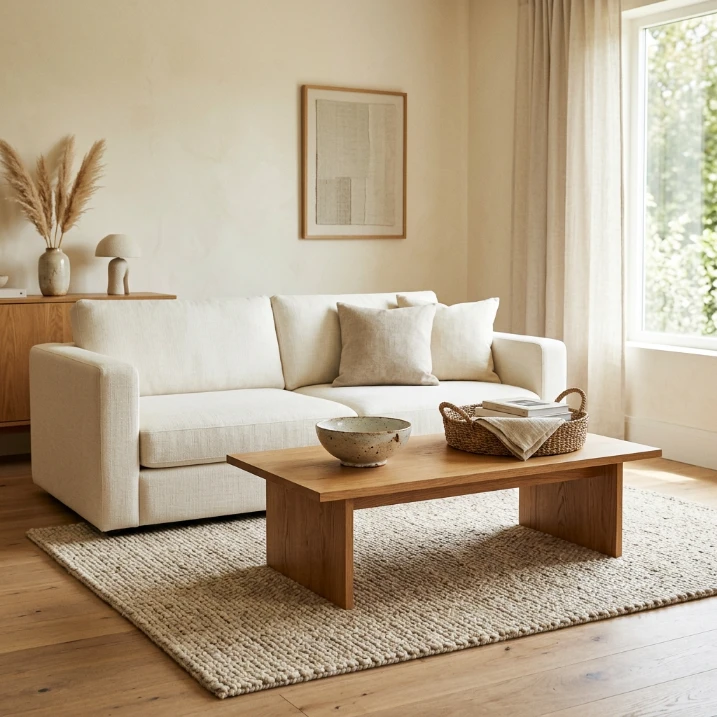
The coffee table is one of the easiest places for minimalist styling to go wrong. Instead of covering it with accessories, create one compact arrangement: a low tray with a book and ceramic object, a single sculptural bowl, or a small vase with branches. Leave generous portions of the tabletop visible.
The same principle works on consoles and shelves. Give objects room around them so each piece can be seen. A small amount of negative space often makes a room feel more expensive because the eye can understand the composition immediately.
Use Contrast Carefully For A More Refined Finish

Minimalist design does not have to stay pale. A charcoal sofa, deep olive chair, black window frames, or dark walnut cabinet can give a neutral room a strong visual anchor. The key is to repeat the darker tone in small, deliberate places so it feels connected to the rest of the space.
For a softer contrast, pair warm ivory with muted brown or dusty green rather than using stark black everywhere. If you prefer a stronger modern look, black accents can be balanced with warm timber, textured upholstery, and soft lighting. Our colorful living room ideas can also help if you want to introduce more color while keeping the overall composition controlled.
The Final Test: Remove What Does Not Help The Room
The most useful minimalist habit is a final editing pass. Look around the room and ask whether each visible item adds comfort, function, texture, shape, or meaning. If an object does none of those things, it may not need to stay in the main visual field.
This does not mean your living room needs to look empty. It means the pieces you keep should have enough space to be appreciated. That is the real lesson behind the design tricks behind beautiful minimalist living rooms: beauty comes from clarity, proportion, warmth, and intention rather than simply owning less.