12 TV Wall Decor Ideas That Make the Screen Part of the Design
Most living rooms have one wall dominated by a big black rectangle, and most advice treats the television like an eyesore to hide. There is a better approach: treat the screen as one element in a considered composition. The best tv wall decor ideas don’t fight the television — they give it neighbors. Texture, color, shelving, and art share the wall’s visual weight, so the screen reads as intentional rather than accidental.
Below are 12 ways to decorate the wall around your TV, from budget-friendly paint tricks to built-in media walls. You’ll also find practical notes on mounting height (keep the screen’s center at seated eye level, roughly 42 to 48 inches from the floor), cable concealment that doesn’t need cutting into the wall, and lighting that cuts glare instead of creating it. And remember that the same rules of scale and balance behind good living room wall art ideas apply here too — the screen is simply the largest “frame” on the wall.
1. TV Wall Decor Ideas with Oak Slat Panels
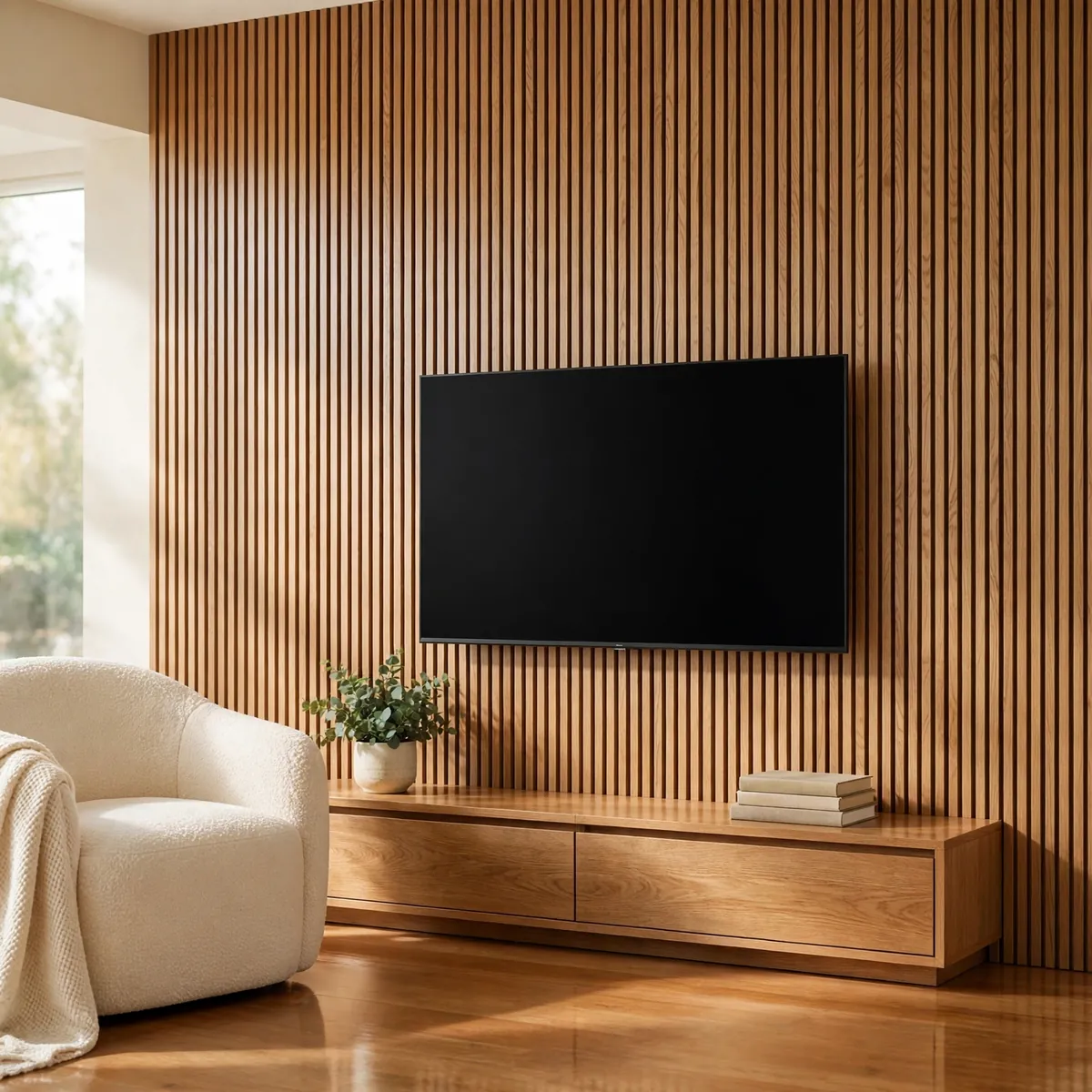
Vertical wood slats turn the wall behind the TV into a warm, textured backdrop that makes the screen look built in. The linear rhythm breaks up the flat darkness of the screen, and prefinished slat panels mount over existing drywall with adhesive and a few screws — a weekend project, not a renovation. Keep the palette calm: oak slats with cream walls let the texture do the talking. On a tight budget, slat just the section behind the TV; a defined zone reads as deliberate design, not a half-finished job.
Quick tips:
- Leave 1/2 to 3/4 inch gaps between slats so the dark backing shows — that’s what creates the depth.
- Run cables through a slim channel behind one slat before mounting the TV.
- Choose acoustic slat panels with felt backing if the room echoes.
2. Gallery Wall Around the TV
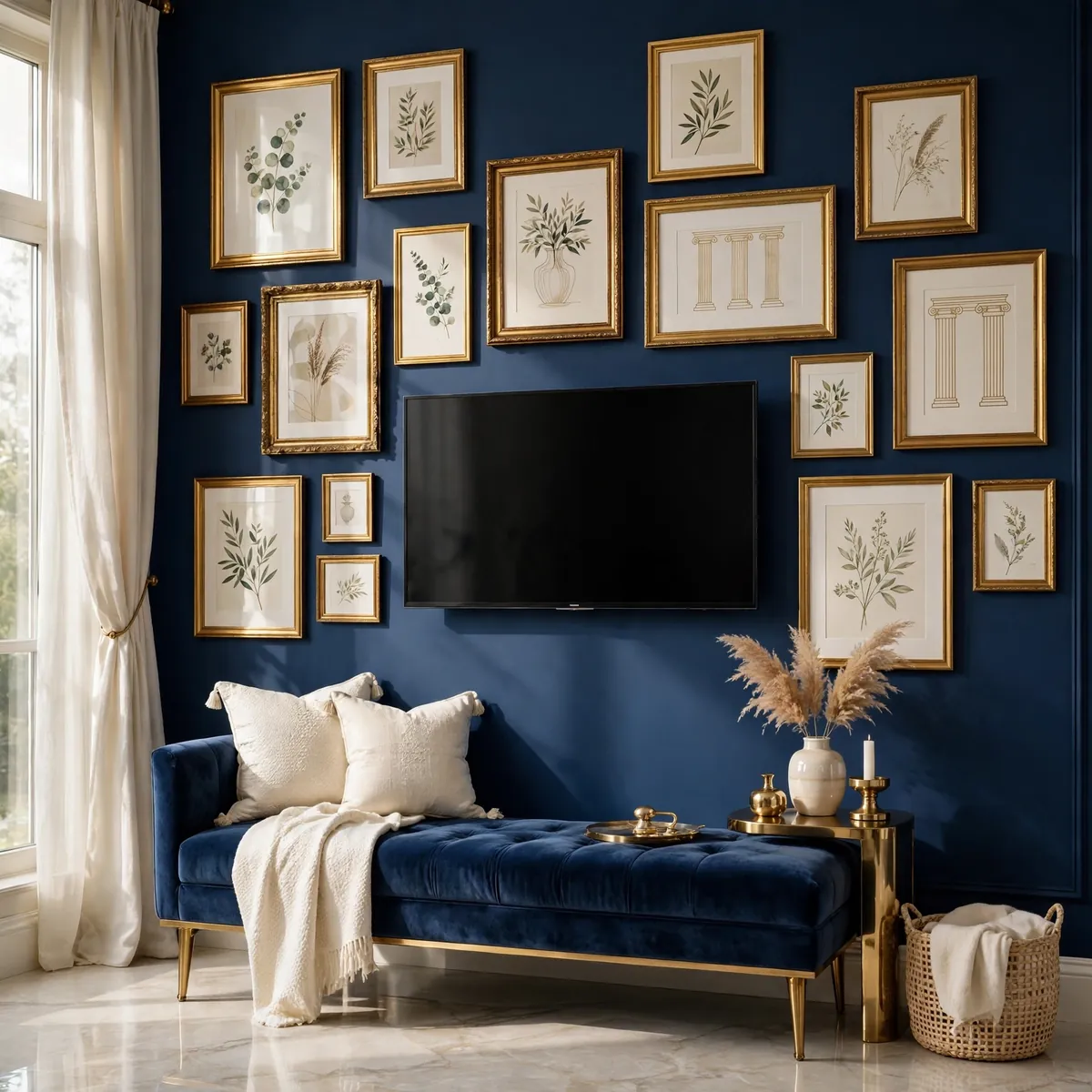
A gallery wall treats the TV as the anchor piece of an art collection. Since the screen is the largest “frame” on the wall, arrange smaller pieces around it with enough breathing room that the TV still leads and the art supports. Matching frame finishes — brass frames on a deep navy wall, for instance — turn the screen into one dark tile in a richer mosaic.
- Plan the layout on the floor first, taping the TV’s outline in painter’s tape on the wall.
- Keep 3 to 6 inches between the TV edge and the nearest frame.
- Mix one or two larger pieces with smaller prints so the scale reads intentional.
Quick tips:
- Balance visual weight: one heavy frame on the left wants one on the right.
- Repeat one frame color elsewhere in the room (a cushion, a throw) to tie the wall in.
- Use adhesive hooks and lightweight frames for a renter-friendly version.
3. Floating Shelves Beside and Below

Floating shelves give the screen a supporting cast without permanent commitment. One long shelf below the TV grounds it; a pair of shorter shelves flanking it fills the dead space on either side. Style them with books, small ceramics, and a trailing plant, and the wall stops being “the TV wall” — it becomes a display wall that happens to hold a TV. Group objects in odd numbers, vary their heights, and leave some empty shelf space. A crammed shelf competes with the screen; a restrained one complements it.
Quick tips:
- Hang shelves at least 6 inches from the TV edge to avoid a cluttered look.
- One plant with height variation softens the hard rectangle of the screen.
- Run a cable raceway from the TV down behind the shelf — the shelf hides it completely.
4. A Frame TV That Doubles as Art
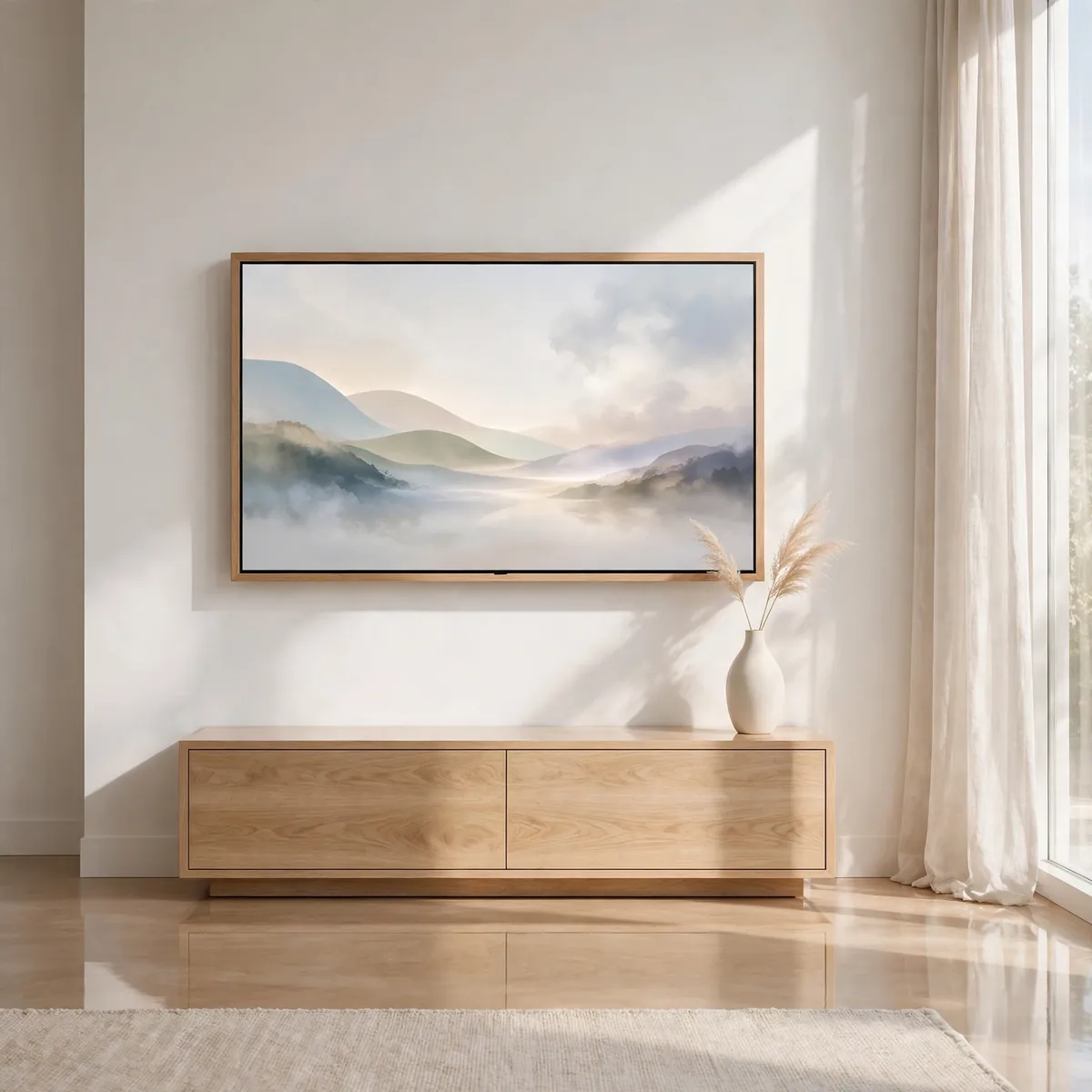
A frame-style TV shows artwork when it’s off, so the wall reads as a gallery even when nobody is watching. Hang it flush to the wall the way you would hang a real picture, and add a slim bezel that matches your frames. In a bright, minimal room, a single art-mode TV on an empty wall can be the whole decor statement.
- Mount it flush with a low-profile bracket so it sits like a framed print, not a gadget.
- Choose one wide piece of art for off-hours; a rotating slideshow reads as screensaver, not decor.
- Dim the backlight in art mode to match the room’s lighting — full brightness reads as “TV on,” not “painting.”
Quick tips:
- Hide the visible cable with a paintable cord cover running to the nearest furniture.
- Art-mode TVs still need ventilation — don’t seal them into a recessed niche.
- A small picture light or sconces beside the frame complete the gallery illusion.
5. Built-In Cabinetry Media Walls

Built-in cabinetry is the highest-impact option for a TV wall: floor-to-ceiling units frame the screen with closed storage below and open display niches above, so the whole wall reads as one piece of furniture. The television sits in a tailored alcove with every box, remote, and cable hidden in cabinets — and it replaces the need for a separate media console, bookshelf, and cable-management system in one move. Measure every device and add two inches of clearance on all sides — heat and remotes both need breathing room.
If custom joinery isn’t in the budget, mount two tall bookcases on either side of the TV and bridge them with a floating shelf above for the same framed effect.
Quick tips:
- Paint the built-ins the same color as the wall for a seamless look, or contrast them for a furniture feel.
- Cut cable passthrough holes in cabinet backs before installation, not after.
- Add LED strip lighting inside open niches for an evening glow that doesn’t glare on the screen.
6. Limewash and Textured Plaster Walls

Sometimes the wall itself is the decor. A limewash or textured plaster finish in a warm tone — terracotta, clay, warm putty — gives the TV a backdrop with movement and depth that flat paint can’t. The tonal variation softens the hard edge of the screen, and because the wall has its own character, you need far less furniture and art to make the corner feel finished. Two coats of limewash take a day; real plaster needs a skilled trowel but looks incredible under raking window light.
Quick tips:
- Test a sample board in your light — limewash shifts dramatically between morning and evening.
- Keep the console and accessories minimal; the wall is doing the work.
- Matte textured finishes cut reflected glare on the screen, since they scatter light instead of bouncing it.
7. One Oversized Piece of Art
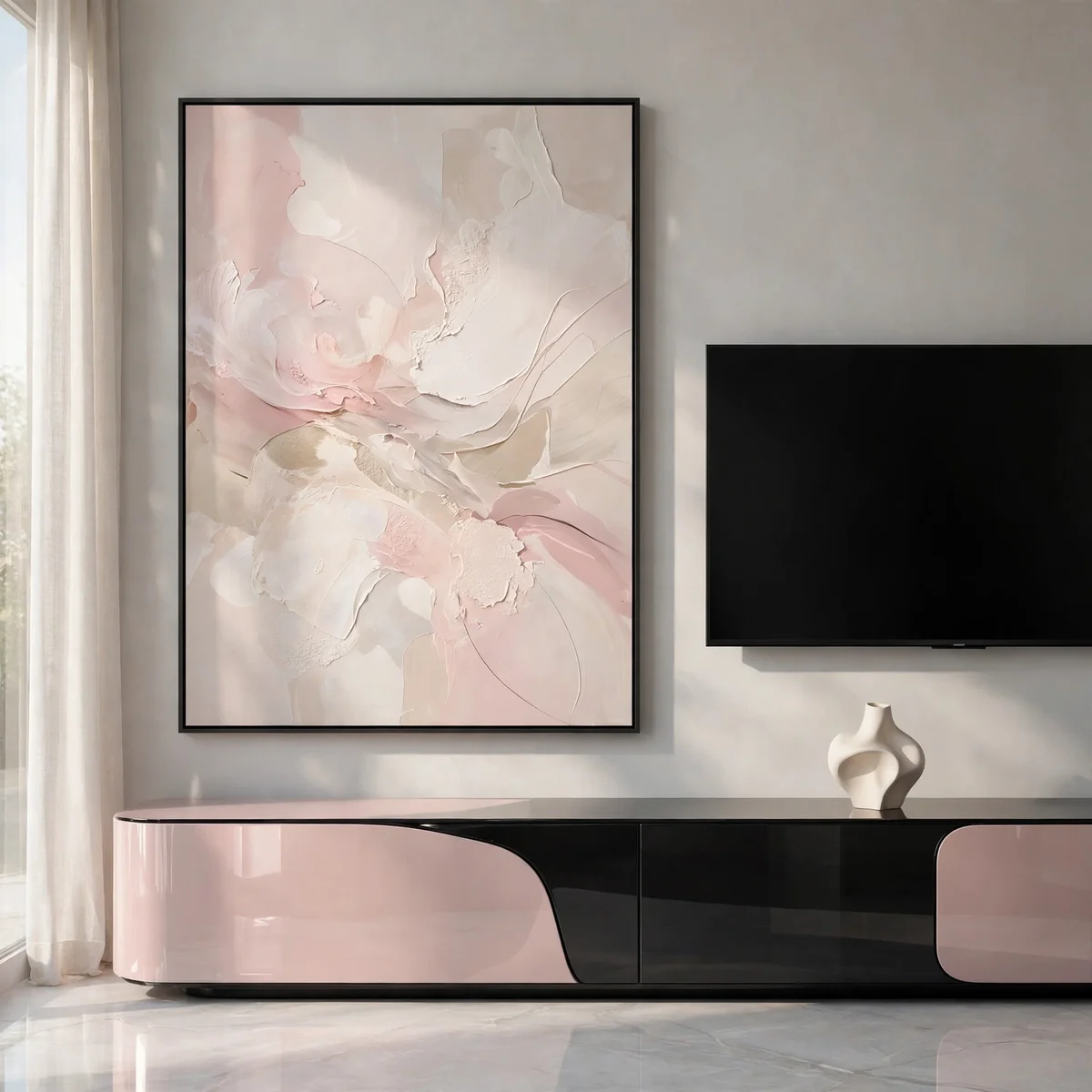
Instead of many small frames, hang one large piece of art — as wide as the TV or wider — beside or above the screen. One oversized canvas carries more visual authority than a scatter of small prints, and it requires a single decision. A large abstract in soft tones next to a black TV creates a striking dark-light balance that makes the whole wall feel gallery-curated.
- Hang the art with its center at 57 inches from the floor, the standard gallery line.
- Keep at least 4 inches between the art and the TV edge so they read as separate compositions.
- If hanging above the TV, keep the art’s width to roughly two-thirds of the screen’s width.
Quick tips:
- Oversized art prints cost far less than a gallery wall of individually framed pieces.
- One big piece is the safest choice for small rooms — less visual noise.
- Swap the art seasonally to refresh the room without touching the mount.
8. Panel Molding and Shiplap Walls
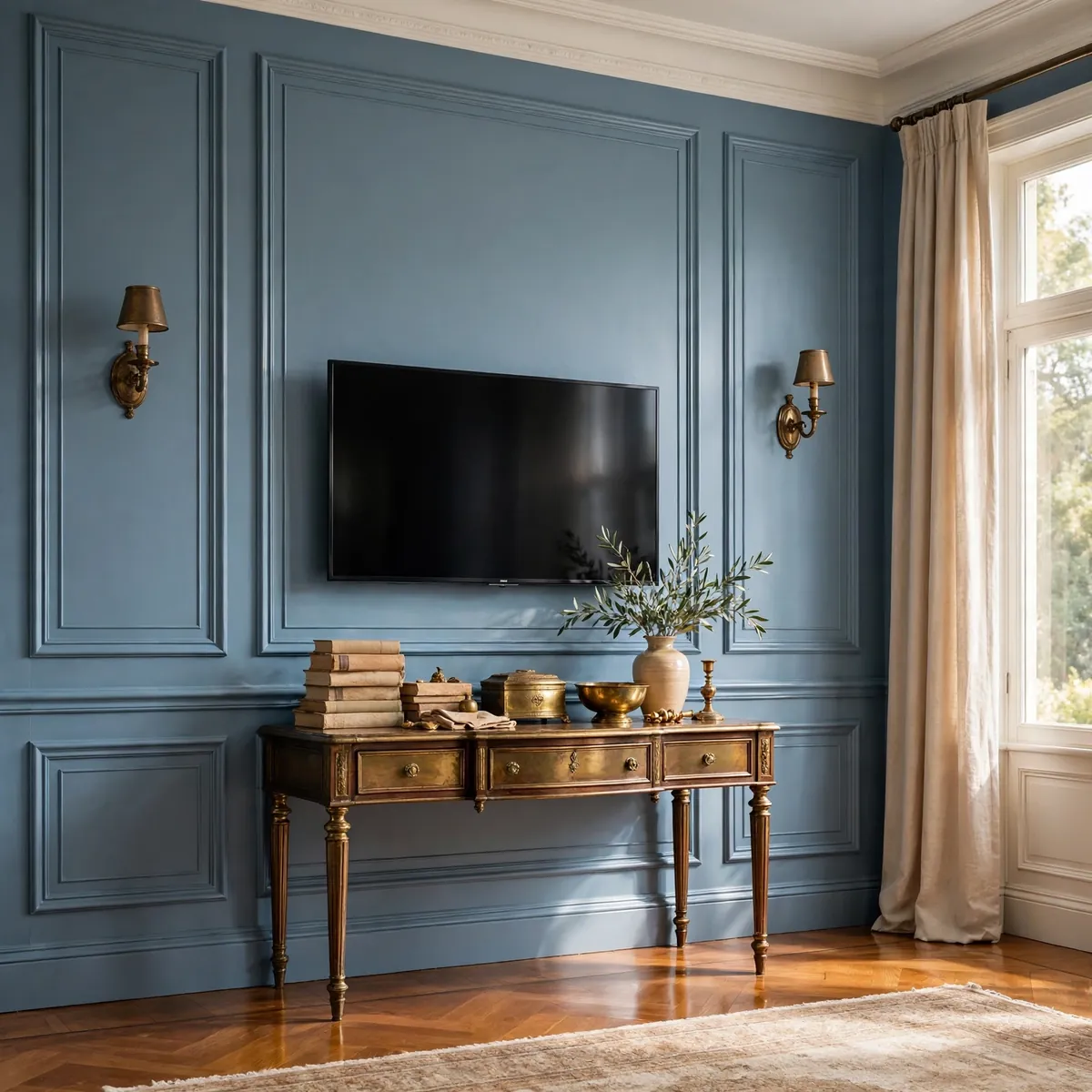
Applied molding — rectangular panel trim or horizontal shiplap — adds architectural detail that makes a plain TV wall feel finished and expensive. Panel molding suits traditional rooms: paint it the same color as the wall, mount the TV in the center panel, and flank it with sconces for a composed, symmetrical look. Shiplap leans farmhouse and coastal, and its horizontal lines make a narrow wall feel wider.
- Keep panel sizes consistent and centered on the TV for the tailored look.
- Caulk and paint the trim the same color as the wall — the shadow lines provide the detail.
- Mount the TV bracket through the trim into the studs, not just the molding.
Quick tips:
- Sconces wired or plug-in with cord covers both work; keep them at the same height.
- Don’t let trim lines collide with the screen — keep the TV inside a panel, not across trim edges.
- Shiplap can be faked convincingly with 1/4-inch plywood strips and a nail gun.
9. A Styled Media Console Anchor
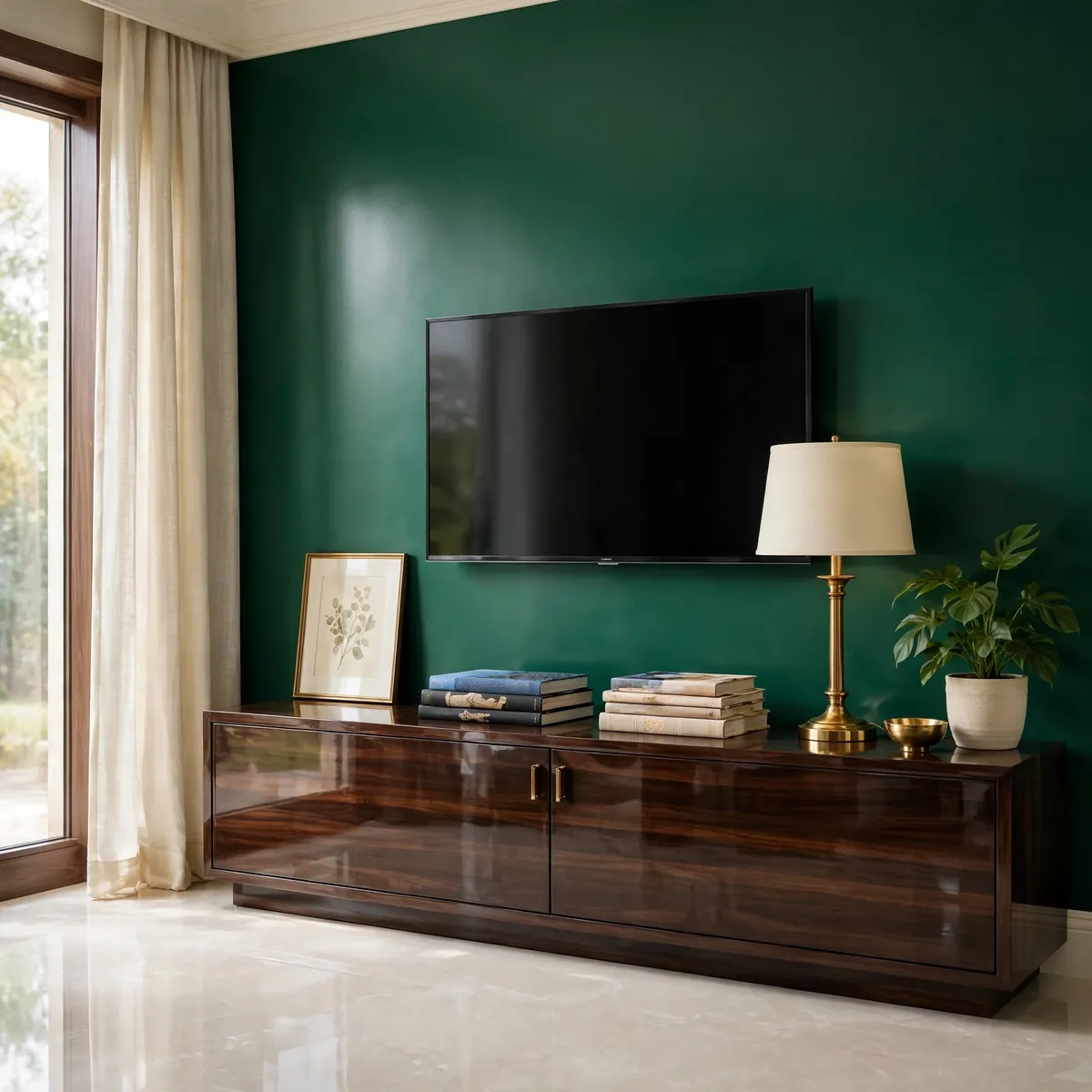
If you aren’t mounting anything, the console does the heavy lifting. A well-chosen media console — low, wider than the screen by at least 6 inches on each side — anchors the TV and gives you a styling surface. Build the vignette in layers: a tall lamp on one side for height, stacked books with a small object on top for the middle ground, and a plant or sculptural bowl on the other end. Choose closed storage to hide chargers and game consoles, or open shelving to show off the layered look.
The same layering instinct that makes a console look good works a few feet forward, too — once the TV wall feels considered, carry that energy into the seating area with thoughtful coffee table decor ideas so the whole arrangement hangs together.
Quick tips:
- The TV bottom should sit 6 to 12 inches above the console top — lower feels integrated, higher feels disconnected.
- Run a power strip inside the console so only one cord exits to the wall outlet.
- A tray on the console corrals remotes and keeps the surface looking styled.
10. Color-Blocked Accent Walls
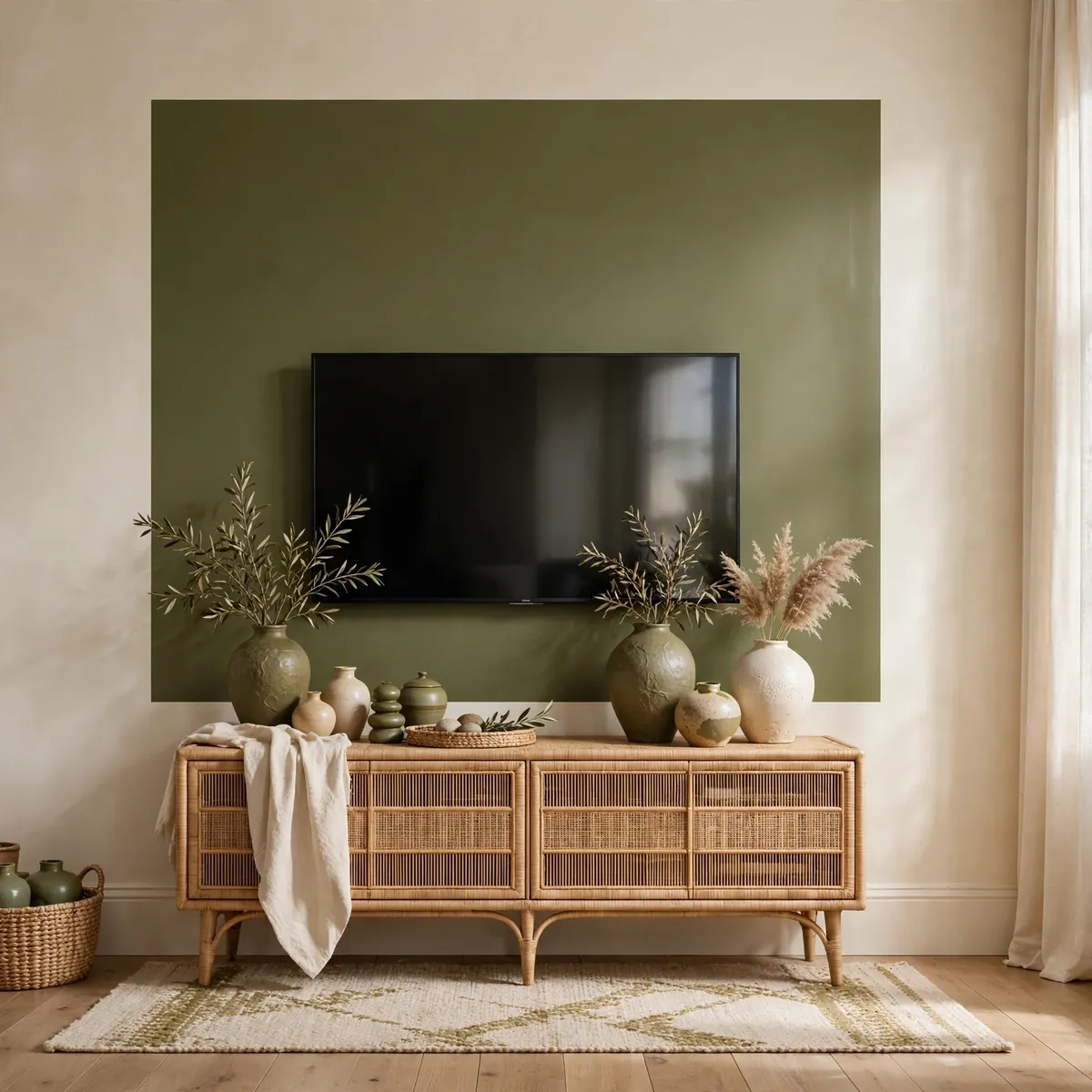
One can of paint can do what a carpenter charges thousands for. Color-blocking — painting a defined rectangle, arch, or half-wall behind the TV — creates a “zone” that frames the screen without any construction. An olive rectangle on ivory walls draws the eye exactly where the TV sits and makes the screen feel smaller and more deliberate.
Quick tips:
- Size the block 12–18 inches wider than the screen on each side.
- Paint the block to include the console below the TV for one unified shape.
- Dark blocks hide the screen best; warm mid-tones flatter the room in daylight.
11. Mirrors and Sconces for Glow
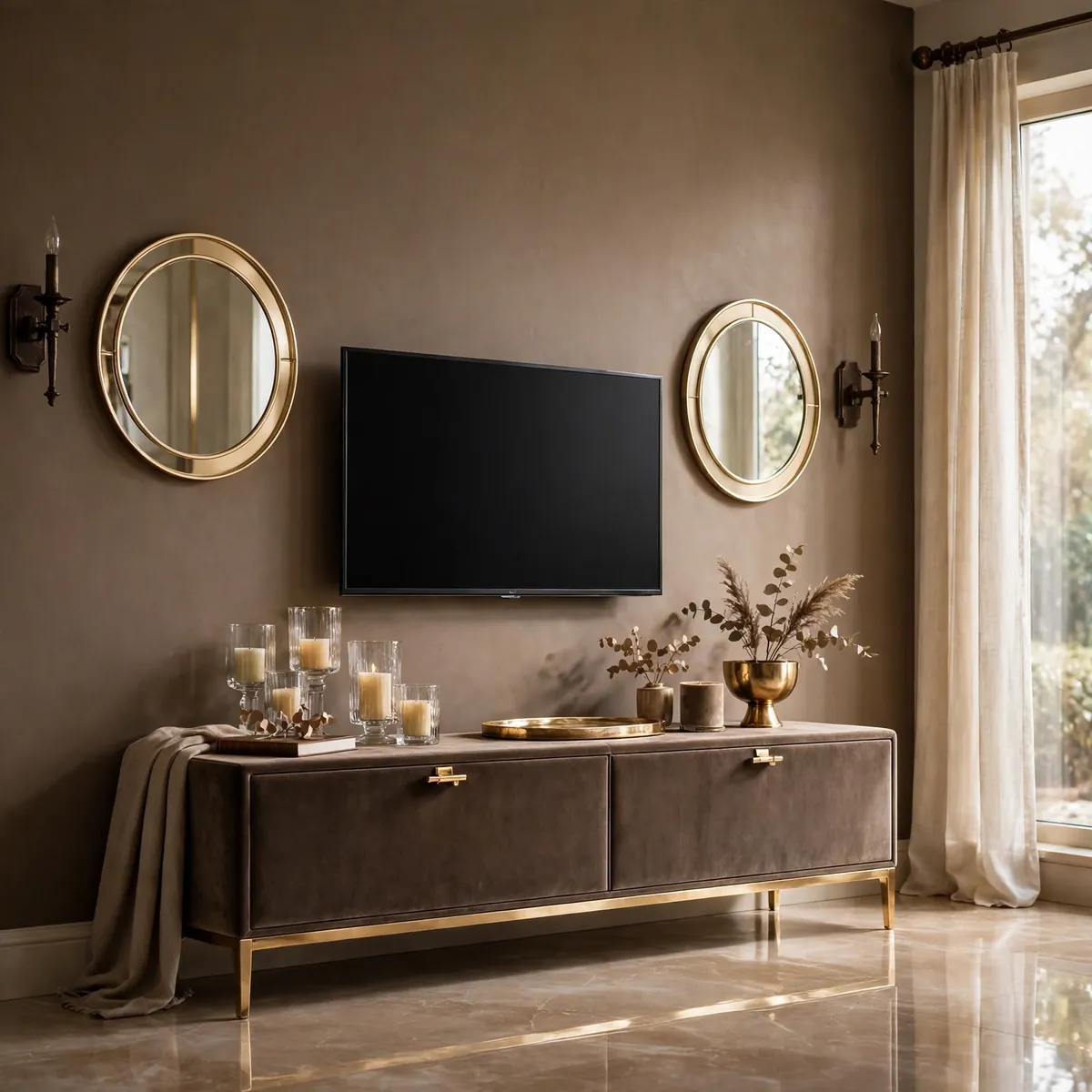
Mirrors beside a TV bounce light around the room and break up the solid darkness of the screen with reflective sparkle. Two round mirrors with sconces alongside create symmetry and a warm evening glow. The one placement rule: never put a mirror directly opposite a window if it will throw a bright reflection onto the screen during the day.
- Round or arched mirrors soften the TV’s hard rectangle.
- Sconces at the TV’s mid-height frame the screen without adding glare.
- Warm bulbs (2700K) keep the glow cozy rather than clinical.
Quick tips:
- Plug-in sconces with cord covers are a drill-free option that still looks hardwired.
- Keep mirror edges 4–6 inches from the screen for breathing room.
- A dimmer switch on the sconces lets you tune the glow for movie nights.
12. Corner and Small-Space TV Walls

Small rooms rarely have a full empty wall for the TV, and that’s fine — a corner setup can feel intentional with the right support. Mount the TV on a slim corner bracket or narrow corner stand, then add wall interest beside it: one tall plant on one side, one small print or shelf on the other.
- Angle the screen toward the main seating — a 15 to 20 degree angle usually covers the sofa.
- Keep the corner stand narrower than the screen’s width for a tidy footprint.
- Use vertical elements (tall plant, floor lamp) to draw the eye up and make the corner feel generous.
Quick tips:
- Light the corner with a small lamp so it doesn’t become a dark cave at night.
- Choose lighter wall colors in tight spaces so the dark screen doesn’t dominate.
- Corners hide cords better than flat walls — run the cable down the seam with adhesive clips.
FAQs
What height should I mount my TV on the wall?
Aim for the screen’s center at your seated eye level — roughly 42 to 48 inches from the floor for most sofas. The quickest way to get it right: sit down, measure your eye height from the floor, and align the TV’s center with that number.
How can I hide TV cables without cutting into the wall?
Use a paintable cord raceway running from the TV down to the console or floor — it blends into the wall and needs no drilling. Other renter-friendly options: a cable sleeve that bundles cords together, or a basket on the console that hides the outlet area.
Is it okay to mount a TV above the fireplace?
It can work, but check heat and neck strain first. Fireplace heat should stay below the TV’s rated operating temperature, and a mantel shelf helps deflect rising heat away from the screen. Keep the screen’s center no higher than about 60 inches from the floor; if the mantel forces it higher, use a tilting or pull-down mount to angle the screen toward your seating.
How do I reduce glare on my TV screen?
Control the light, not the TV. Put dimmable bias lighting behind the screen, place lamps to the sides rather than behind the seating, and choose warm white bulbs around 2700–3000K for evening viewing. Matte wall finishes behind the TV scatter light better than glossy ones, and sheer shades or blackout curtains handle the daytime sun that causes the worst glare.
Conclusion
A television doesn’t have to be the design problem of the living room — it can be the anchor of a well-composed wall. Whether you go big with built-in cabinetry, keep it simple with one oversized piece of art, or spend a weekend on slat panels and floating shelves, the principle stays the same: give the screen thoughtful neighbors, hide the clutter, and light the wall like you mean it. Start with mounting height and cable hiding, pick one idea that fits your budget and space, and the black rectangle on your wall will finally look like it belongs there.