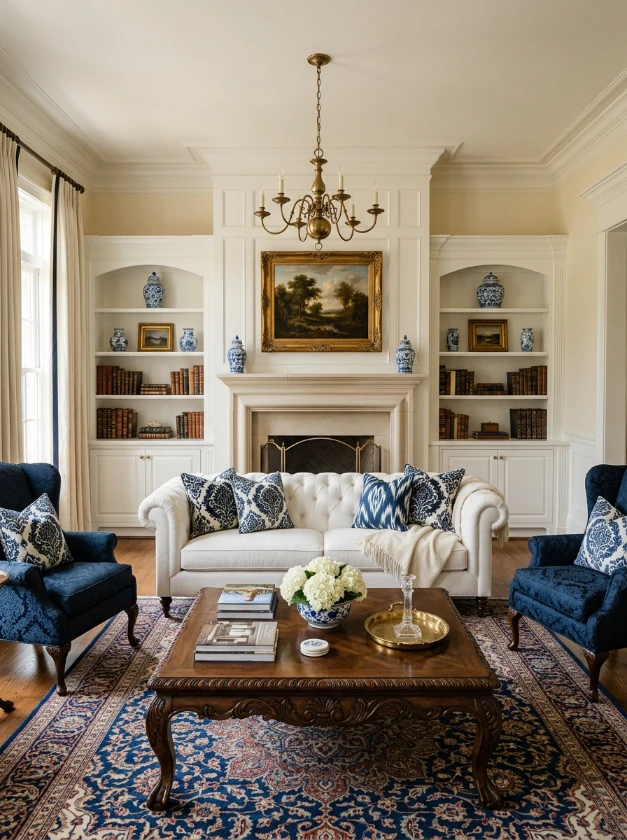
12 Beautiful Living Room Lighting Ideas
Key Takeaways
How many light sources should a living room have?
Three light sources is the minimum for a comfortable living room: one overhead or ambient source, one task lamp near seating, and one accent light for warmth or a focal point. Fewer than three leaves dark corners; more than five can feel cluttered.
What is layered lighting in a living room?
Layered lighting is the combination of ambient, task, and accent light working together at different heights. Ambient light fills the room, task light serves reading or conversation, and accent light highlights art, shelves, or texture.
Should living room light be warm or cool?
Warm white light suits most living rooms because it flatters skin tones, wood, and fabric. Save cooler white light for a dedicated reading corner, and keep one consistent colour temperature across the lamps you can see together.
Can a living room work without a ceiling light?
Yes — a mix of floor lamps, table lamps, and wall sconces can fully light a living room. Place lamps at seating height, add one taller source for overall glow, and use dimmers so the room can shift from bright to cosy.
Table of Contents
- Key Takeaways
- Good Light Is the Room’s Best Furniture
- How Many Light Sources Does a Living Room Really Need?
- How Do You Layer Lighting So a Room Feels Finished?
- 1. Brass Statement Chandelier
- 2. Black Arc Floor Lamp
- 3. Warm Recessed Glow
- 4. Cobalt Ceramic Table Lamps
- 5. Gold Wall Sconces
- 6. Copper Pendant Cluster
- 7. Amber String Light Magic
- 8. Natural Rattan Lanterns
- 9. Cool LED Cove Lighting
- 10. Candlelight Ambience
- 11. Industrial Tripod Lamp
- 12. Sculptural White Statement Light
- Frequently Asked Questions
- Conclusion
Good Light Is the Room’s Best Furniture
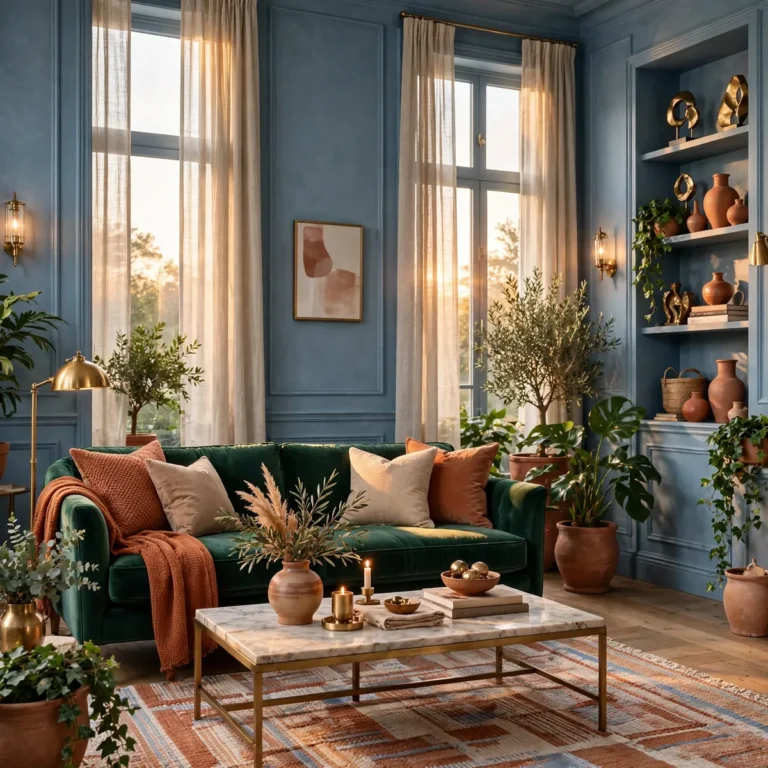
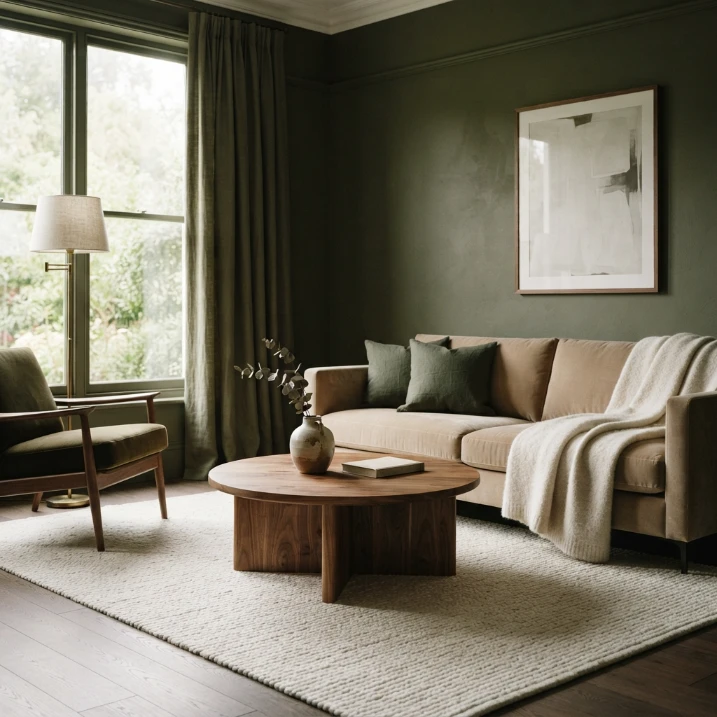
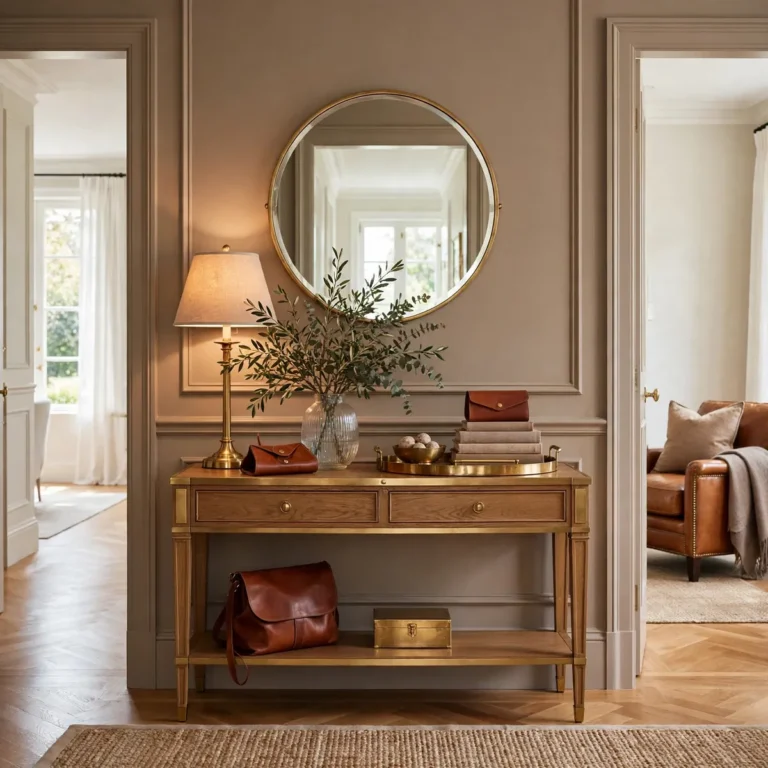
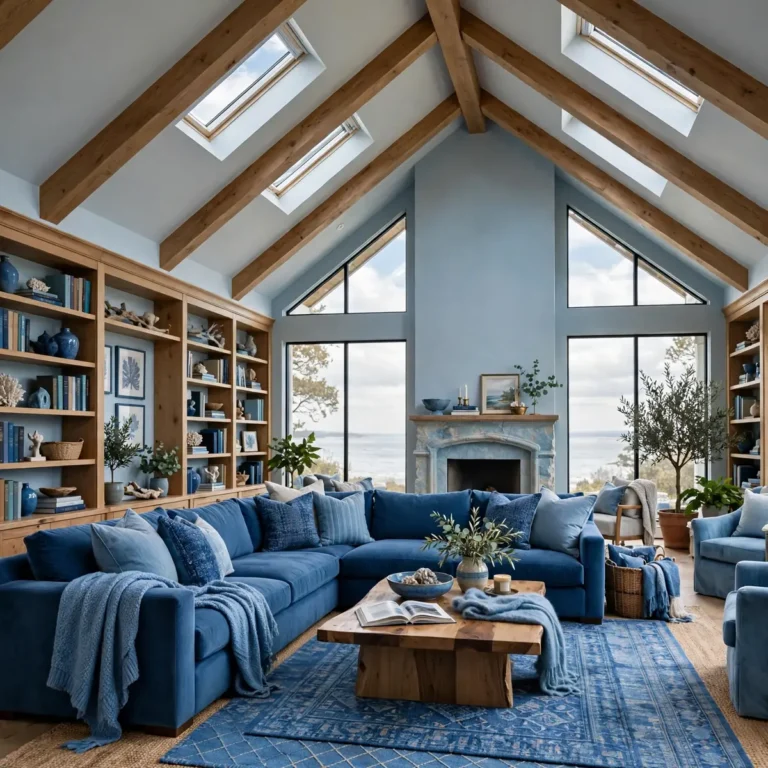
The best living room lighting ideas do not start with a chandelier — they start with how you actually use the room, and they build in layers so no single bulb has to do all the work. A room lit only from above feels flat and harsh, while lamps at seating height, a soft overhead glow, and one warm accent feel welcoming the moment you walk in. If your room is tight on space, start with these small living room ideas before you buy a lamp, because scale and placement matter more than wattage.
Use the twelve looks below as a menu, not a shopping list. Pick one hero fixture, add one or two supporting lamps, and finish with a low, warm accent — that simple formula suits almost every room, whatever its size or style.
How Many Light Sources Does a Living Room Really Need?
Three is the honest minimum, and four or five is the sweet spot for a larger room. That is why good living room lighting ideas count sources, not bulbs: one overhead fixture, one lamp beside each main seat, and one accent — a sconce, a picture light, or candles — covers the room without glare. Add a source only when a corner stays dark or a chair has nowhere to read.
| Source | Best for | Feel | Where it sits |
|---|---|---|---|
| Overhead fixture | General brightness | Even and practical | Ceiling centre |
| Floor lamp | Reading and corners | Focused and flexible | Beside a chair or sofa end |
| Table lamp | Conversation and warmth | Soft and low | Side table at seated eye level |
| Wall sconce | Glow without floor space | Gentle and flattering | Wall, above seating height |
| Candles or lanterns | Evening mood | Warm and flickering | Coffee table or hearth |
Dimmers turn a good plan into a great one. Put the overhead fixture and the main lamps on dimmers where you can, so the same room works for a bright family evening and a low, restful night in.
How Do You Layer Lighting So a Room Feels Finished?
Start with ambient light — the soft overall glow from a ceiling fixture or cove — then add task light where people actually sit, such as a reading lamp beside an armchair. Finish with accent light: a sconce washing a wall, a small lamp on a bookshelf, or candles on the coffee table. Each layer should be switchable on its own.
The most common mistake is stopping at the ceiling. One overhead light flattens faces and casts shadows, while lamps at different heights draw the eye around the room and make the space feel larger. If a corner still feels dull after the first three layers, it usually needs a small accent, not a brighter bulb.
1. Brass Statement Chandelier

A brass chandelier gives a living room an instant centrepiece and a warm metallic glow. Choose a size that suits the seating area rather than the whole room, so the fixture feels generous without crowding the ceiling.
For example, hang a medium brass chandelier over the coffee table zone, with two small table lamps at the sofa ends to soften its light. Keep the finish brushed rather than mirror-shiny for a calmer, more lived-in gleam.
Quick tips:
- Hang it high enough to see across the room beneath it.
- Pair brass with cream, sage, or navy for a classic look.
- Use a dimmer so the chandelier can glow softly at night.
2. Black Arc Floor Lamp

An arc lamp solves the hardest spot in a living room: light over a chair with no table beside it. Its curved arm brings the bulb exactly where you need it, without a ceiling fixture or a trailing cord across the floor.
For example, arc a black lamp with brass details over a reading chair in the corner, with a small side table for a book and a cup. The base tucks behind the chair, so the footprint stays surprisingly small.
Quick tips:
- Check the arc clears heads when someone stands up.
- Choose a shade that directs light downward for reading.
- Black and brass suit both modern and traditional rooms.
3. Warm Recessed Glow

Recessed lights disappear into the ceiling and leave the room itself as the star. In a warm white tone, they give an even, shadow-free base that works under a chandelier, pendants, or lamps.
For example, space warm recessed lights around the edges of a seating area rather than in a rigid grid, and put them on a dimmer. At dusk they read as a gentle ceiling glow, not a row of spotlights.
Quick tips:
- Choose warm white bulbs for a cosy evening feel.
- Avoid placing a recessed light directly over a TV screen.
- Dim them low once lamps are switched on.
4. Cobalt Ceramic Table Lamps

Cobalt ceramic lamps add colour and craft to a room while doing the quiet work of evening light. Their glazed surface catches the light even when switched off, so they double as decor.
For example, place a pair of cobalt lamps on matching side tables at each end of a cream sofa. The symmetry anchors the seating area, and the blue pops beautifully against neutral fabric.
Quick tips:
- Match the lamps but vary the shades slightly if you like.
- Keep the shade at seated eye level to avoid glare.
- Cobalt pairs well with white, rattan, and warm wood.
5. Gold Wall Sconces

Gold sconces wash a wall with warm light and free up every inch of floor and table space. They are the easiest way to add glow to a small room or a wall that holds art.
For example, flank a fireplace or a media wall with a pair of gold sconces, then balance them with a low lamp on the far side of the room. For the wall itself, our tv wall decor ideas show how to style the surface the sconces will light.
Quick tips:
- Mount sconces just above seated eye level.
- Use warm bulbs so the gold finish glows, not glares.
- Plug-in sconces suit renters who cannot rewire.
6. Copper Pendant Cluster

A cluster of copper pendants turns a coffee table into a glowing focal point. Hung at staggered heights, the pendants feel collected and casual rather than formal.
For example, hang three small copper pendants over a round coffee table, with the lowest just above standing eye level. Their warm metal tones flatter wood, leather, and deep green upholstery.
Quick tips:
- Stagger the drops by a few inches for a natural look.
- Keep pendants clear of walkways and head height.
- Warm bulbs keep copper looking rich, not orange.
7. Amber String Light Magic

Amber string lights bring a festive, gentle sparkle that suits relaxed living rooms and rented homes. Draped loosely, they read as a warm garland of light rather than a holiday decoration.
For example, drape one strand along a picture ledge above the sofa, letting it dip slightly between hooks. Combined with a floor lamp, the room gains sparkle without any extra brightness.
Quick tips:
- Choose amber, not cool white, for a warm glow.
- Hide the plug behind furniture for a clean finish.
- Use a timer so the lights come on at dusk.
8. Natural Rattan Lanterns

Rattan lanterns filter light through woven texture, casting soft patterned shadows that make a room feel organic and calm. They suit coastal, boho, and warm modern rooms alike.
For example, set a large rattan lantern on the floor beside a lounge chair and a smaller one on a side table. With battery candles inside, both are safe to move and easy to rearrange.
Quick tips:
- Mix two sizes for a collected, not matched, look.
- Battery candles keep woven lanterns safe and simple.
- Rattan glows best against pale walls and wood floors.
9. Cool LED Cove Lighting

LED cove lighting hides a strip of light along a ceiling edge or shelf, so the room glows without any visible fixture. It is ideal for modern rooms, media walls, and ceilings that cannot take a chandelier.
For example, run a cool white LED strip along the top of a media wall, with warm table lamps below to balance it. The cove light outlines the architecture, while the lamps keep the seating area inviting.
Quick tips:
- Hide the strip so only the glow, not the LEDs, shows.
- Balance cool cove light with at least one warm lamp.
- Choose a dimmable strip for movie nights.
10. Candlelight Ambience

Nothing softens a living room faster than candlelight. Grouped candles lower the whole feel of a room, making conversation easier and screens less dominant in the evening.
For example, cluster pillar candles of three heights on a tray on the coffee table, with a lantern at each end. Light them as the lamps dim, and the room shifts into evening mode in minutes.
Quick tips:
- Group candles on a tray to contain wax and heat.
- Never leave real flames unattended or near curtains.
- Flameless pillars suit homes with pets or children.
11. Industrial Tripod Lamp

A tripod lamp brings studio character to a living room, with its three-legged stance and oversized shade acting as sculpture as well as light. It anchors a corner that might otherwise feel empty.
For example, place a black metal tripod lamp with copper details beside a leather armchair, angled slightly toward the seat. It reads as a design piece by day and a reading light by night.
Quick tips:
- Give tripod legs room — they need a wider footprint.
- Angle the shade toward seating, not toward the TV.
- Black metal suits brick, leather, and reclaimed wood.
12. Sculptural White Statement Light

A sculptural white pendant is light as art: a bold shape that glows from within and quietly organizes the whole room around it. White keeps the statement soft, so the shape, not the colour, does the talking.
For example, hang a sculptural white pendant over the centre of a modern seating group, with low warm lamps at the sofa ends. The pendant gives the room its silhouette; the lamps give it its warmth.
Quick tips:
- Let the pendant be the only bold shape overhead.
- Keep surrounding decor simple so it can stand out.
- Warm bulbs stop white shades looking clinical.
Frequently Asked Questions
How do you layer lighting in a living room?
Work in three heights rather than three fixtures: ceiling light for overall brightness, lamps at seated height for conversation, and a low accent such as candles or a shelf lamp for warmth. Put each height on its own switch, then test the room at night — if one corner still feels flat, that corner needs its own small accent.
Is warm or cool light better for a living room?
Warm light is the safer default for relaxing, eating, and conversation, while cool light suits only a focused task such as detailed reading or crafts. Never mix colour temperatures within one view: a cool lamp beside warm sconces makes both look wrong, so pick one temperature for the main seating area.
How do you light a small living room without making it feel crowded?
Move light onto the walls and up high: plug-in sconces, a slim arc lamp, and a mirror opposite a lamp all add brightness without taking floor space. Keep lampshades slim and pale so they blend in, and use one brighter source near a mirror to bounce light deeper into the room.
How do you light a living room with no ceiling lights?
Build the room around three floor and table lamps at different heights, plus plug-in wall sconces for the walls. Start with a tall lamp in the darkest corner, add table lamps at each sofa end, and finish with a battery picture light or lantern for evening warmth.
Conclusion
These living room lighting ideas all share one rule: no single light should carry the room alone. Choose a hero fixture you love, support it with lamps at seating height, and finish with a low warm accent — then dim everything until the room feels like evening. Get that balance right, and the room will feel finished long before anything else changes.