27 Beautiful Scandinavian Living Room Ideas for a Bright, Cozy Home
Scandinavian living room ideas are built on a simple formula: white or cream walls, pale wood floors, clean-lined furniture, and layers of soft textiles that make a bright room feel warm rather than stark. The style comes from the Nordic countries, where long winters taught designers to squeeze every drop of light from a room while keeping it comfortable enough to live in all day. In this guide you will find 27 practical ideas, from paint colors and sofas to lighting, rugs, and small hygge touches, so you can build a calm, light-filled living room whatever your budget or room size.
The beauty of this look is that it is forgiving. You do not need to replace everything at once, and a single change, such as swapping heavy curtains for sheer linen or adding a wool throw, can shift the whole mood of a room. If you love pared-back rooms in general, our guide to minimalist living room ideas pairs well with this one, because the two styles share the same love of clear surfaces and honest materials. Below, each idea includes a concrete example and a quick tip so you can put it to work this weekend.
Key Takeaways
What is a Scandinavian living room? A Scandinavian living room is a bright, uncluttered space built on white walls, pale wood, and natural materials, finished with soft textiles and warm light so it feels cozy rather than cold.
What colors define Scandinavian style? Warm whites, creams, soft greys, and beige form the base, with muted accents such as sage green, dusty blue, or blush added sparingly through cushions, art, or a single painted wall.
How do I make a Scandinavian living room cozy? Layer wool throws, sheepskin, linen cushions, and a soft rug, then add warm lighting from a pendant, a floor lamp, and candles at different heights.
Does Scandinavian style work in a small living room? Yes, it suits small rooms especially well, because pale colors, low-profile furniture, and clear surfaces make a compact space feel larger and brighter.
1. How Do White Walls Make a Scandinavian Living Room Brighter?
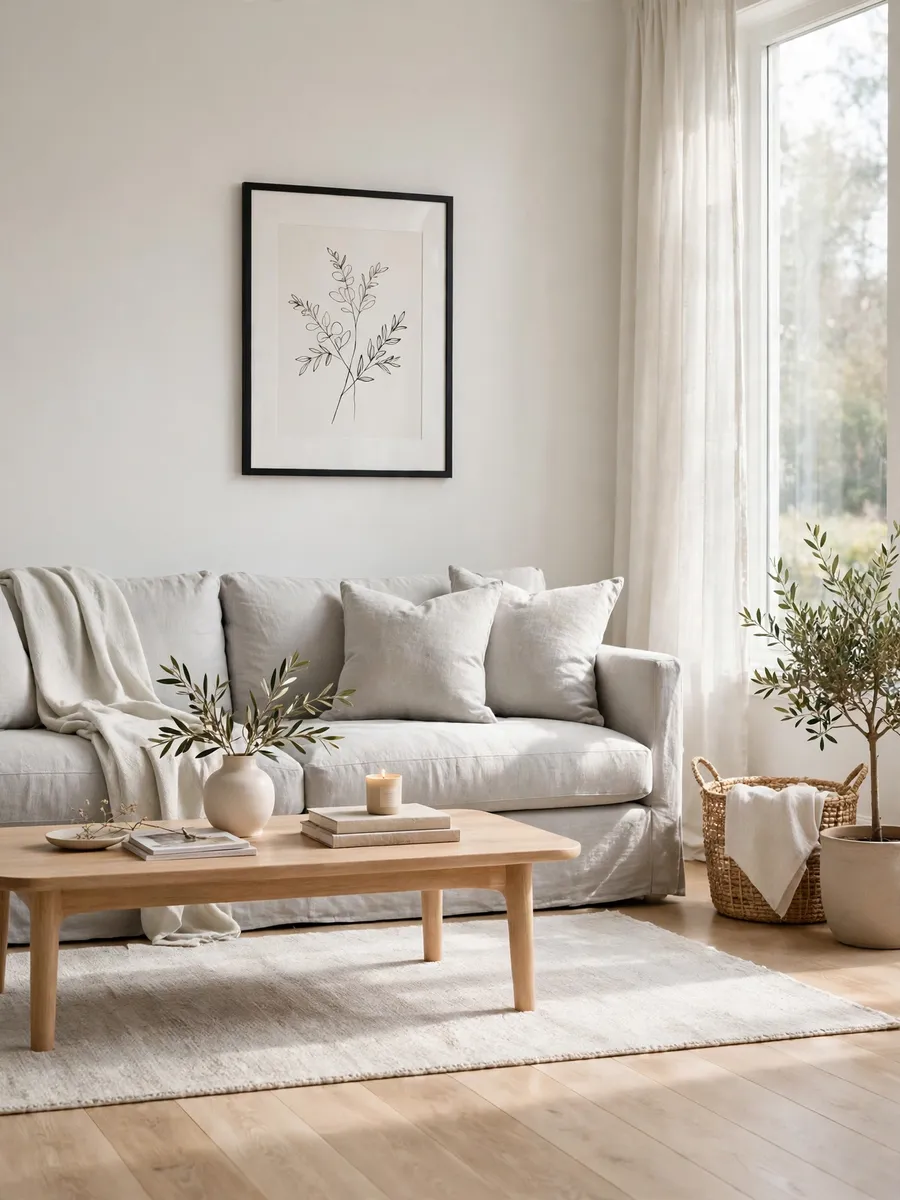
White walls are the foundation of Scandinavian style. They bounce scarce northern daylight around the whole room.
Picture a warm white wall behind a pale oak floor and a light grey linen sofa. Pick a warm white with a yellow undertone, not a cold blue-white.
Quick tip: Test two warm white samples in morning and evening light before you commit.
2. Why Choose a Light Grey Linen Sofa as Your Anchor?
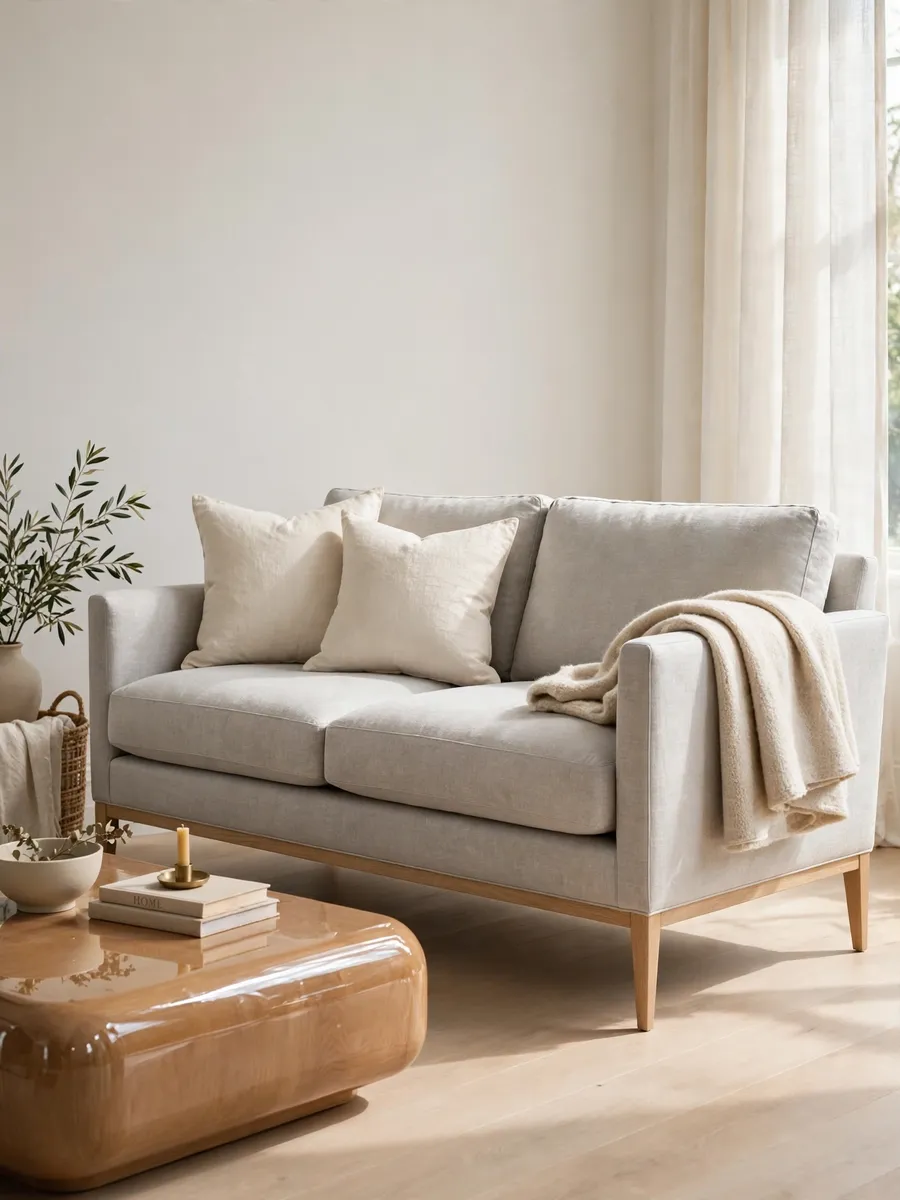
The sofa is the largest piece in the room, so its color sets the tone. A light grey linen sofa in a clean, low profile works with every accent in the palette, from sage green to dusty blue.
Try a three-seat light grey linen sofa with slim tapered oak legs, two cream linen cushions, and a folded oatmeal wool throw over one arm.
Quick tip: Choose removable, washable linen covers so everyday life does not spoil the pale fabric.
3. How Does a Sheepskin Throw Transform an Accent Chair?
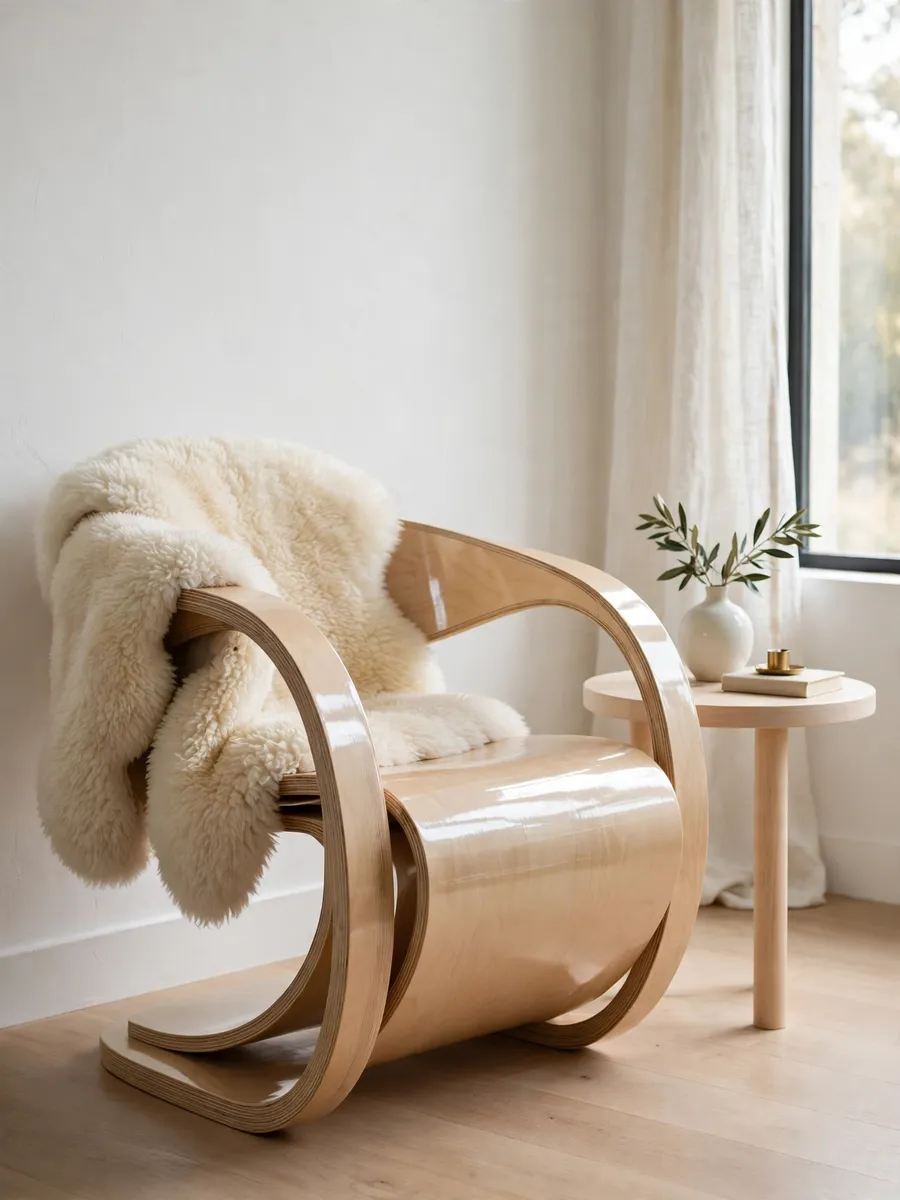
A sheepskin throw is the fastest way to add hygge warmth, and it works on almost any chair. Draped over the back or seat, it softens hard lines.
Picture a curved birch plywood chair with a thick cream sheepskin over one arm and a small round side table beside it. The pale wood and cream fleece keep the look light, while the texture adds the warmth a bare chair lacks.
Quick tip: Shake a sheepskin outdoors once a month, and never put it in a washing machine.
4. What Is the Secret to Layering Wool Throws?
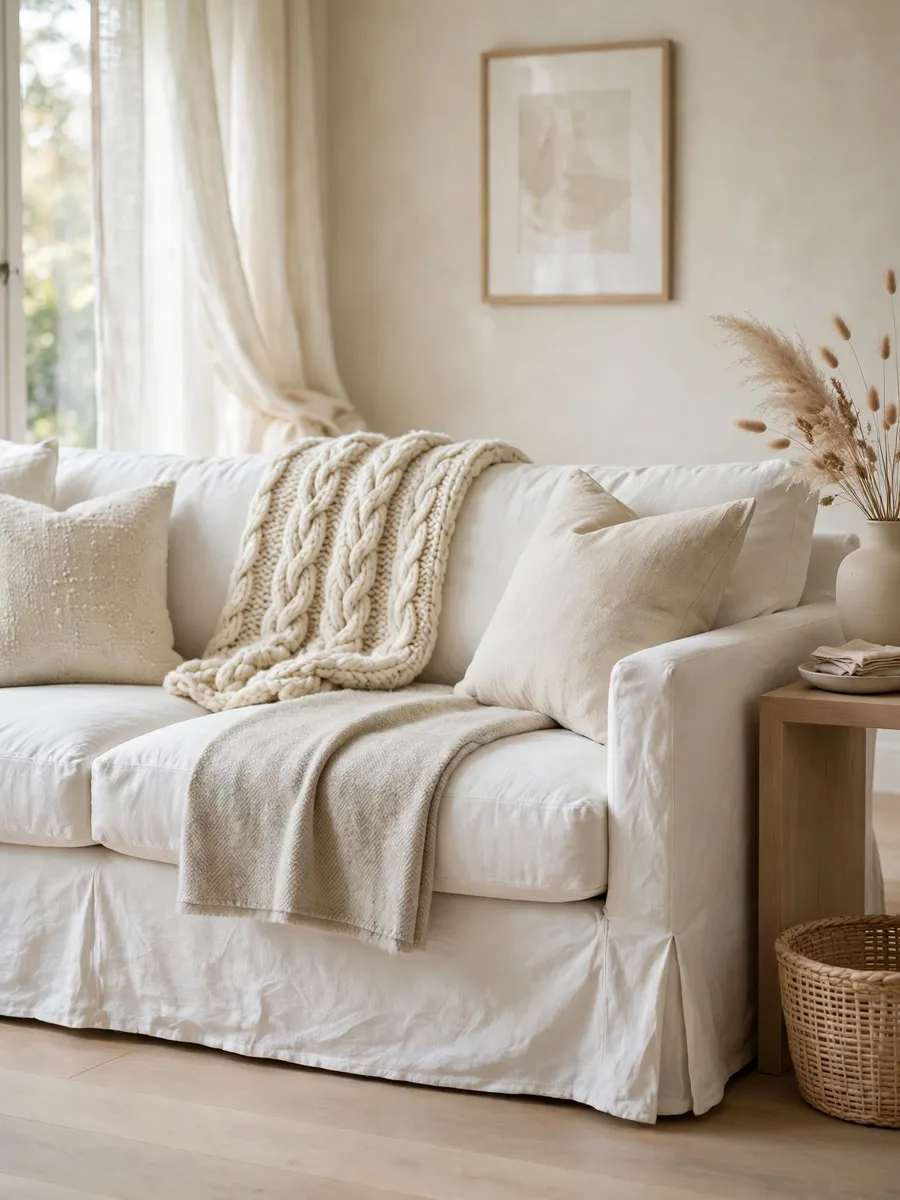
Layering is what separates a Scandinavian room from plain minimalism. One throw looks tidy but flat, while two or three in different weaves create the depth and softness the style is known for.
Try a white slipcovered sofa with a chunky cream knit throw over the back and a finer oatmeal wool throw across the seat. Keep the colors in one calm family, such as oatmeal, cream, and soft stone.
Quick tip: Fold throws loosely, because the soft folds are part of the cozy look.
5. How Do Black Accents Keep a Pale Room From Looking Washed Out?
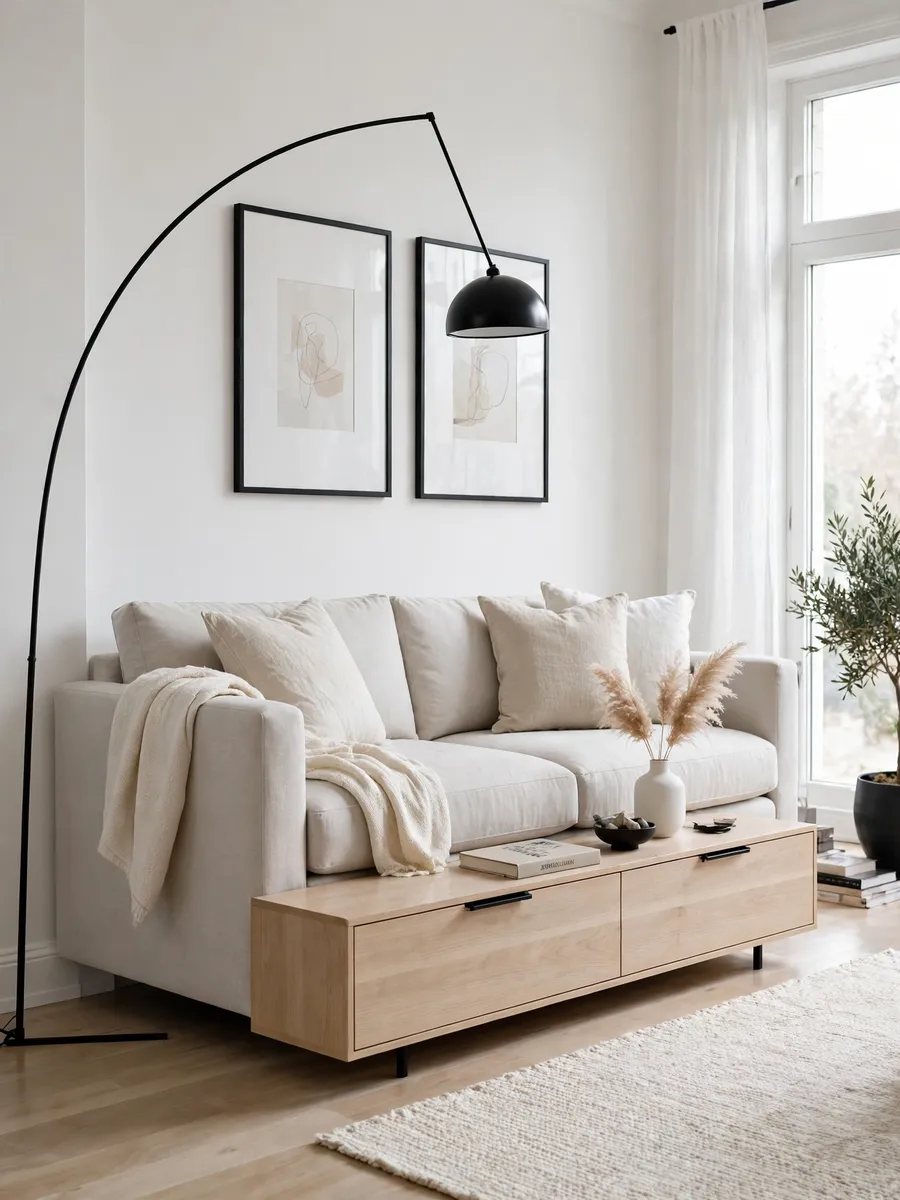
A room of only white and pale wood can look flat, and that is where black accents earn their place. A few slim black pieces, such as a floor lamp or picture frames, give the eye something to rest on.
Picture a white room with a slim black metal arc floor lamp, two thin black frames above the sofa, and black handles on a pale oak console.
Quick tip: Repeat black at least three times so it looks deliberate rather than accidental.
6. Why Add Sage Green Cushions to a Neutral Sofa?
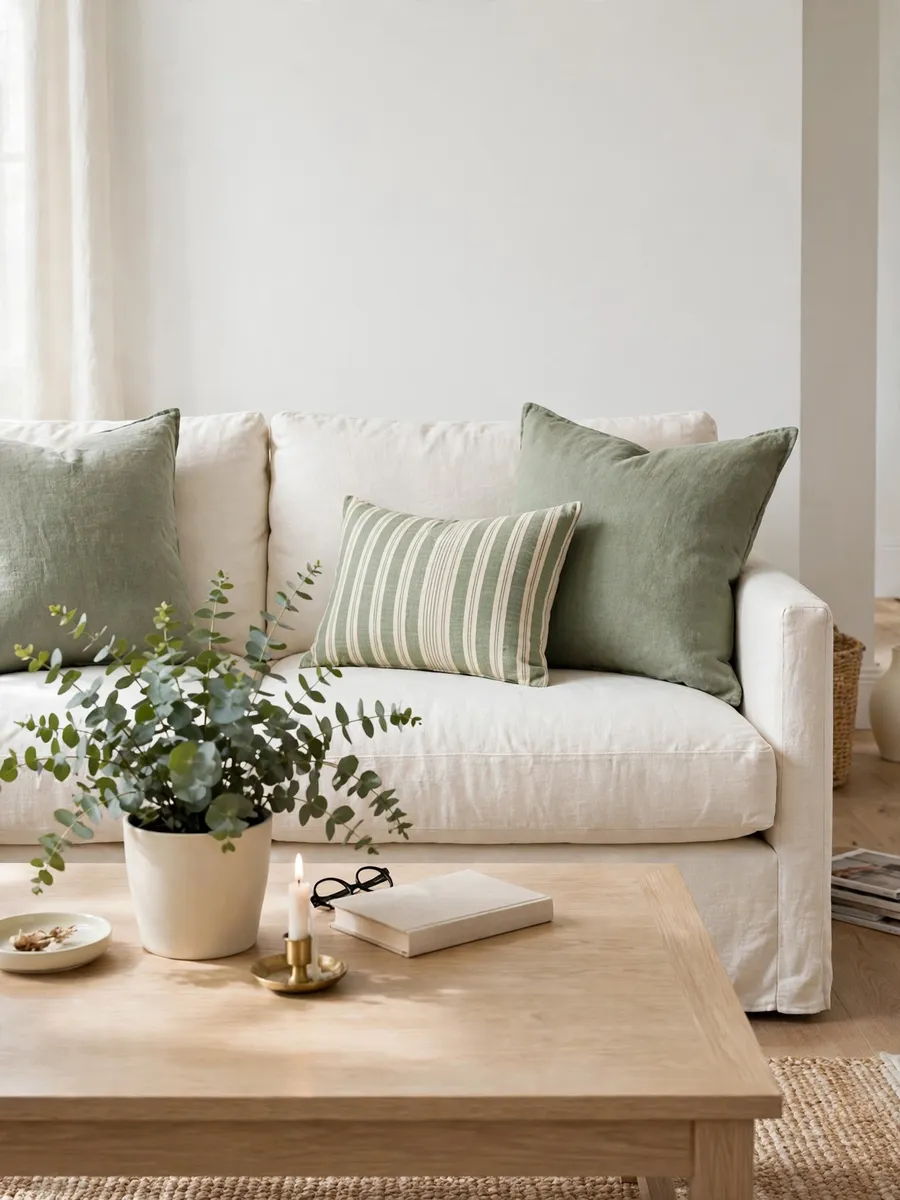
Sage green is one of the safest accents for this style because it is muted, natural, and easy to live with. It echoes the green of plants and the outdoors, yet it stays quiet enough not to fight the calm palette.
Try a cream linen sofa with two sage linen cushions, one small sage-and-cream striped cushion, and a potted eucalyptus on the coffee table.
Quick tip: Keep sage to soft furnishings and plants so you can swap the accent easily next season.
7. How Can a Dusty Blue Accent Wall Warm Up a Scandi Room?
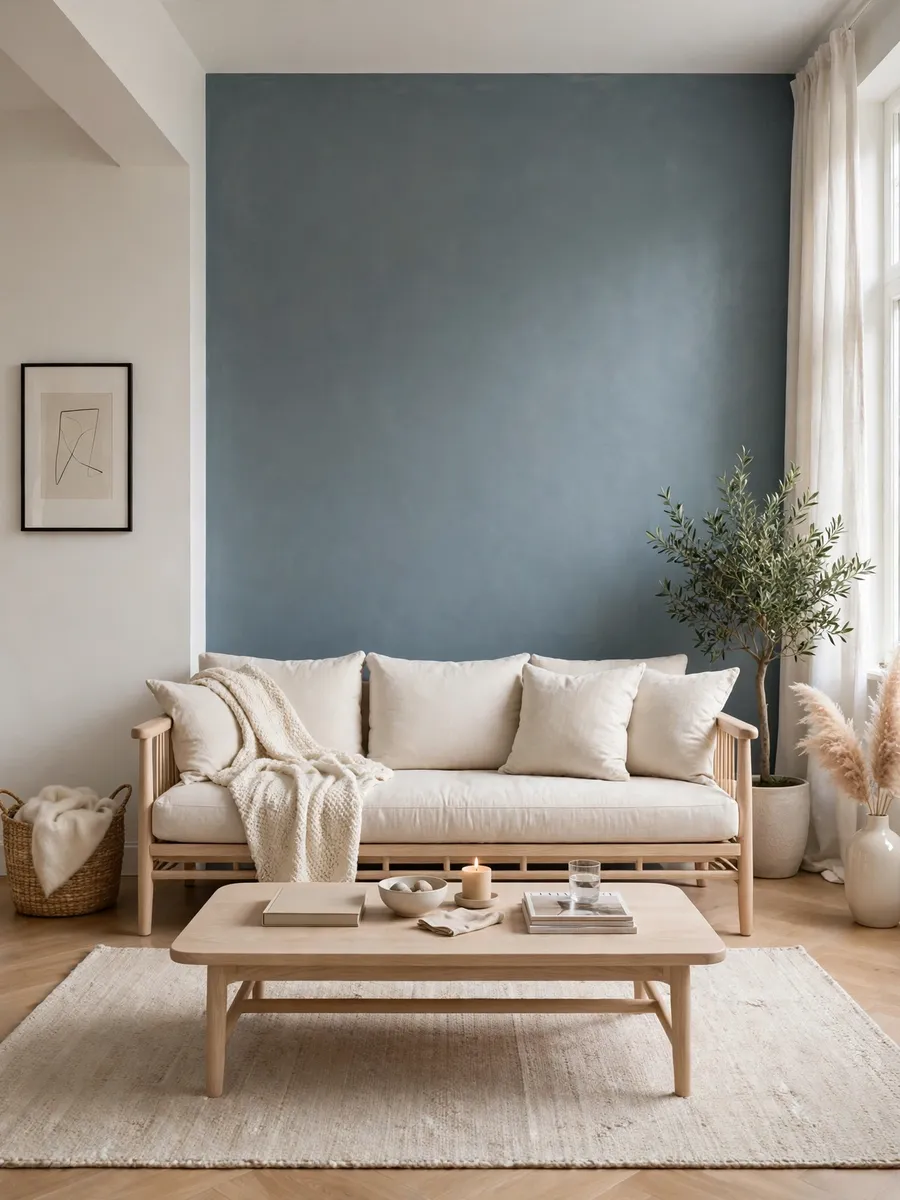
Most Scandinavian rooms keep all four walls white, but one muted accent wall adds depth without breaking the calm. Dusty blue works well because it is soft and desaturated, so it reads as a gentle backdrop.
Picture the wall behind the sofa in dusty blue-grey, with a light wood sofa frame, cream cushions, and a pale oak coffee table. The blue gives the room a focal point, while the light furniture keeps it bright and airy.
Quick tip: Paint only the wall behind the sofa, and keep the other three walls warm white.
8. What Makes Warm Beige and Rattan Such a Natural Pair?
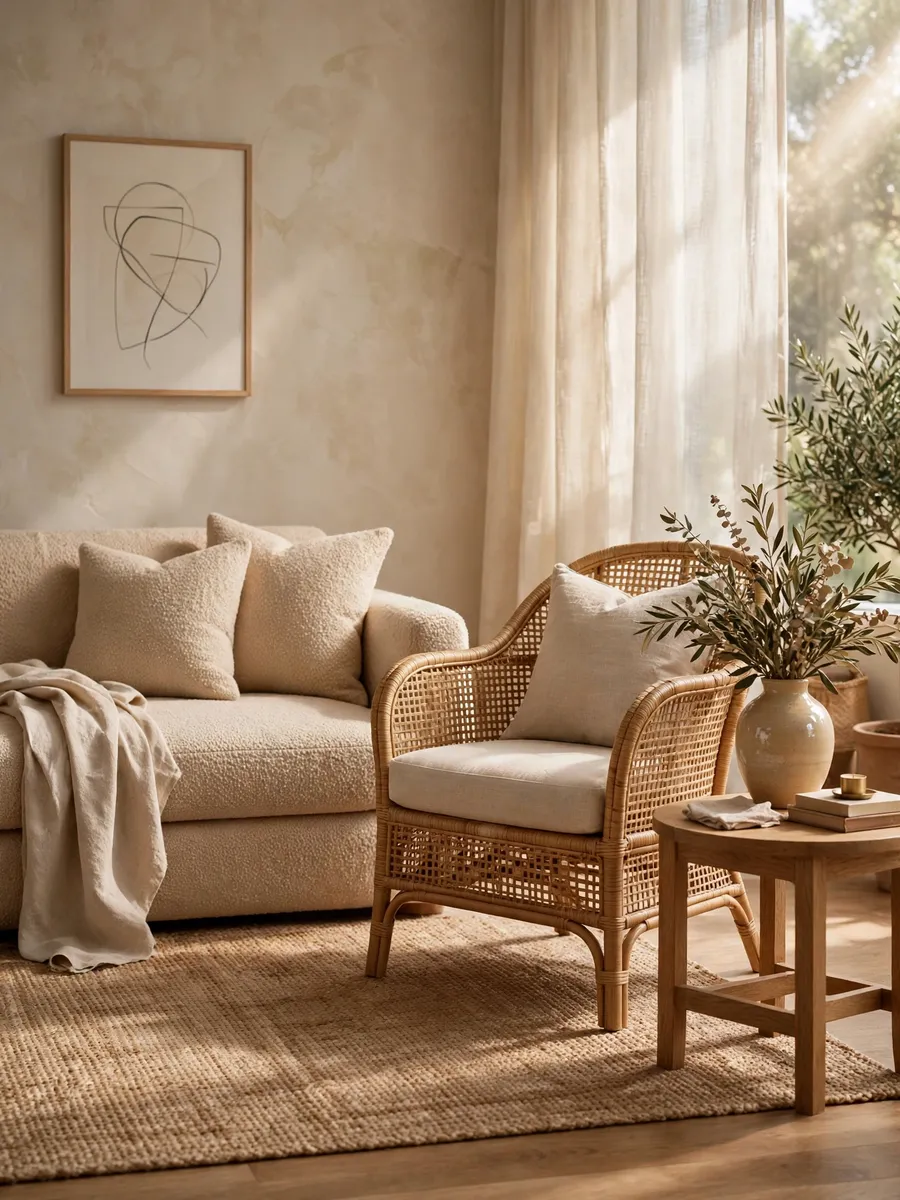
Rattan brings a handwoven texture that softens clean Scandinavian lines, and warm beige is the perfect color beside it. Together they create a relaxed, sun-warmed feeling that suits rooms with lots of natural light.
Try a warm beige boucle sofa with a rattan armchair, a jute rug, and a small oak side table holding a ceramic vase.
Quick tip: Limit rattan to one or two pieces so the texture stays special instead of taking over.
9. How Do Sheer Linen Curtains Maximize Natural Light?
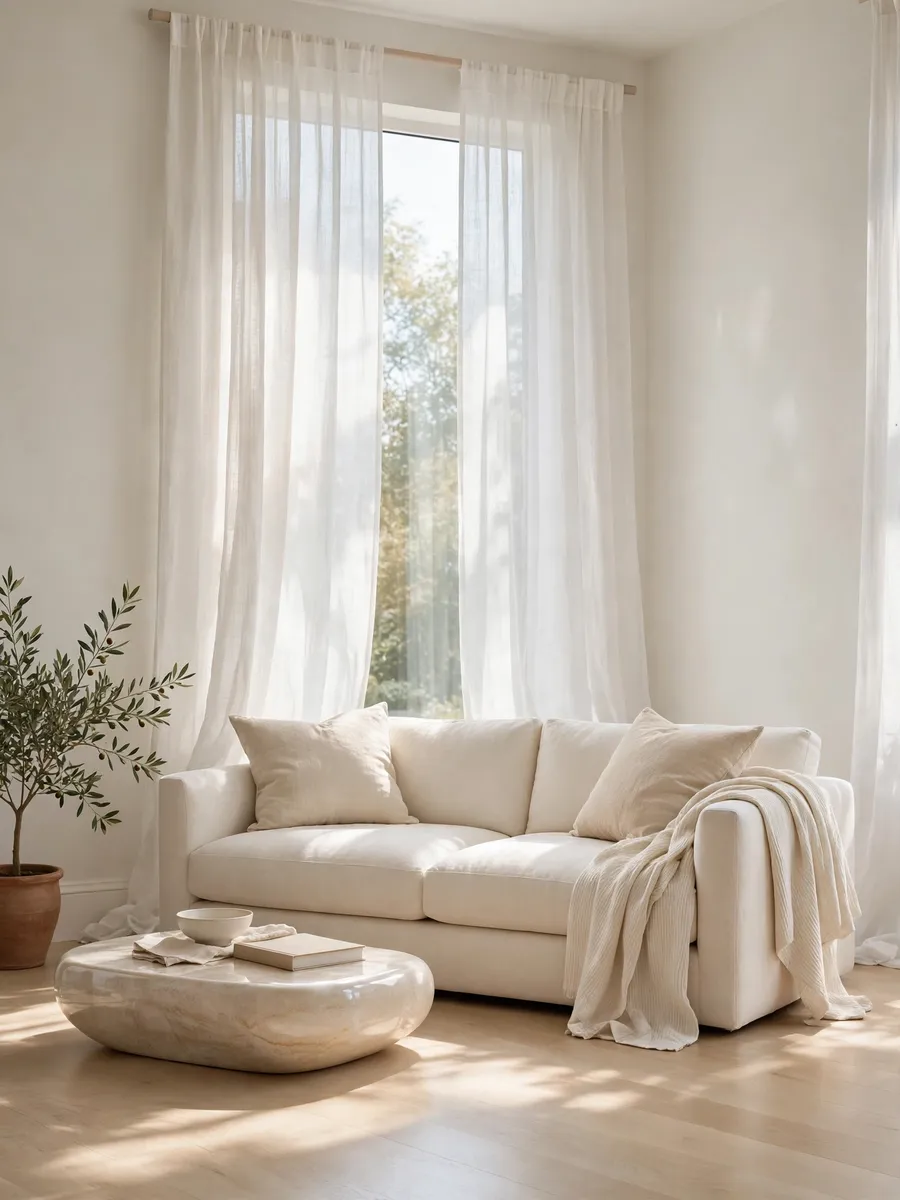
Heavy curtains are the enemy of this style because they block the daylight it depends on. Sheer linen curtains soften the window, give privacy in the evening, and still let most daylight through.
Hang sheer white linen curtains from a slim black or pale wood rod, mounted near the ceiling so the window looks taller.
Quick tip: Use sheers only, and skip heavy blackout curtains in the living room entirely.
10. Why Is a Low-Profile Oak Coffee Table a Scandi Essential?
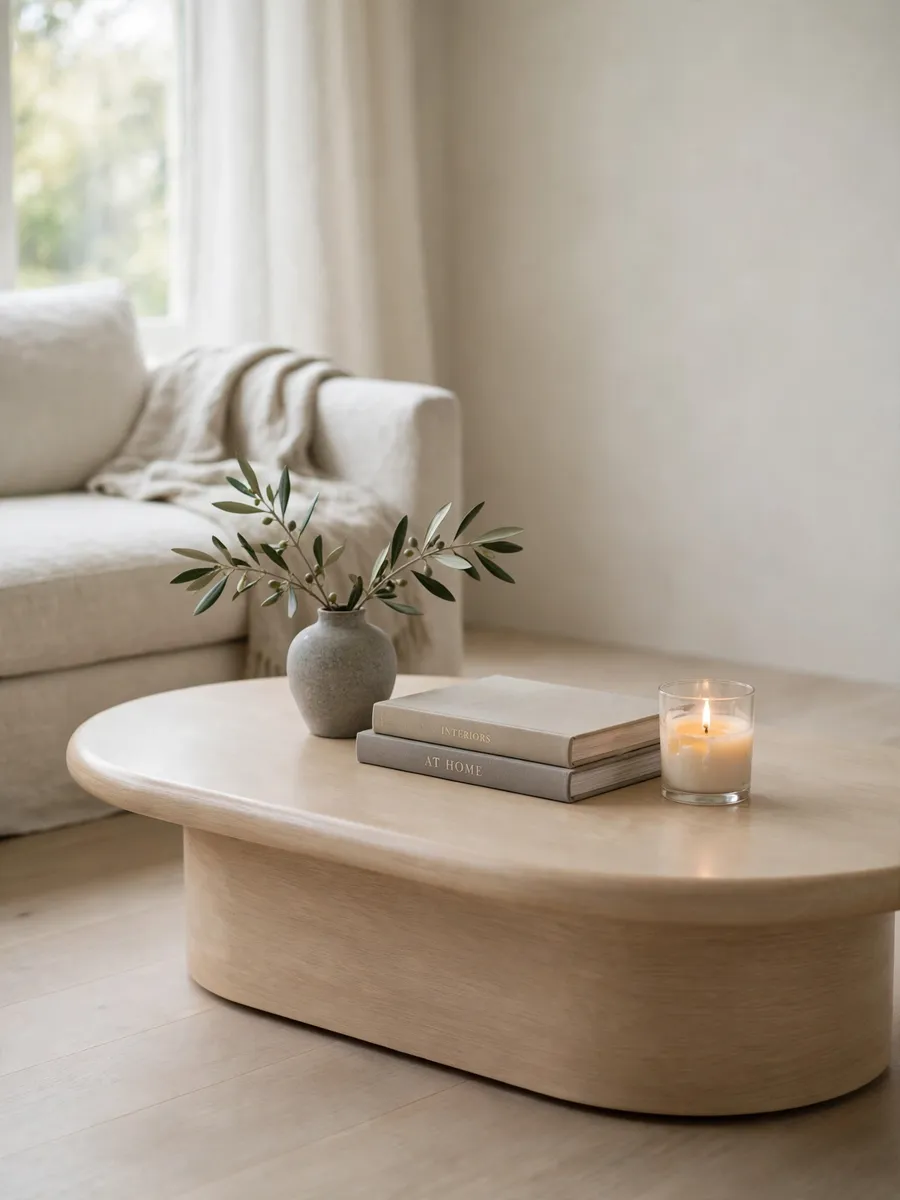
The coffee table sits at the center of the seating area, so its shape and material set the tone. A low table in pale oak keeps sightlines open, lets light travel, and adds the warm wood tone that defines the style.
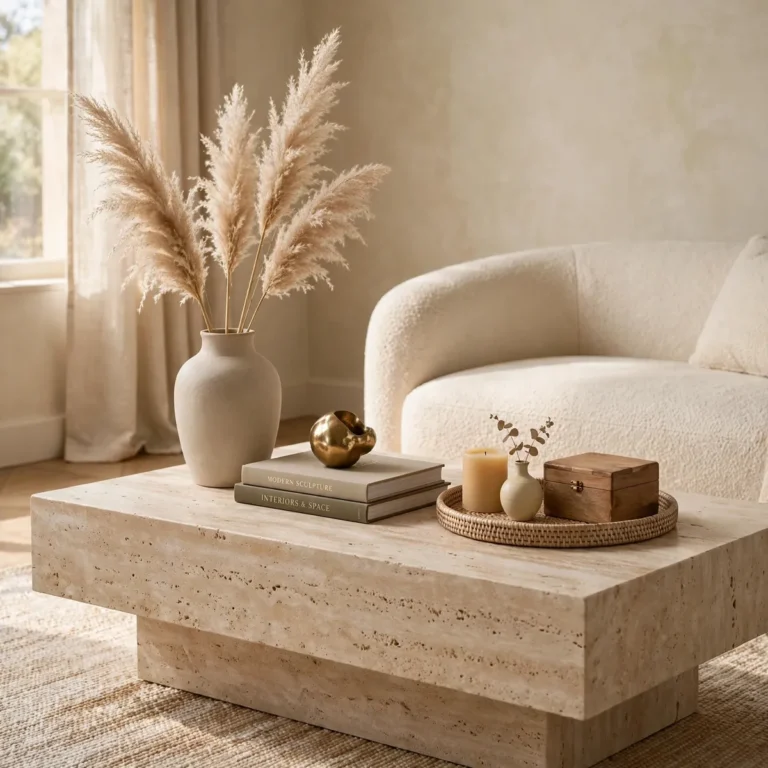
Try a low oval oak table with softly rounded edges, a small stone-grey ceramic vase, a stack of two books, and a lit candle in a glass holder.
Quick tip: Keep the tabletop about two-thirds clear, because empty space is part of the look.
11. How Do You Layer Lighting the Scandinavian Way?
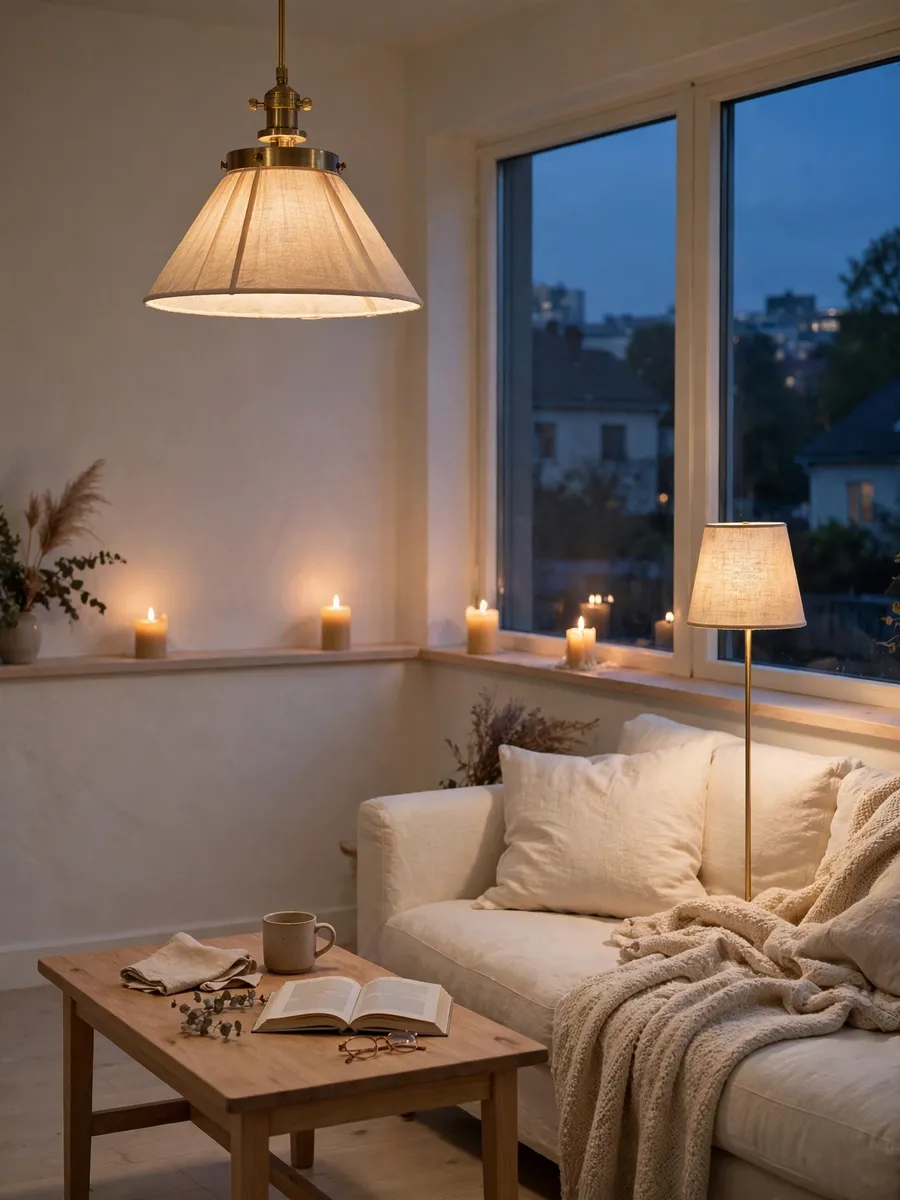
Scandinavian homes are famous for layered lighting, and the rule is simple: at least three light sources at three different heights. A pendant, a floor lamp, and candles together create a warm pool of light that one ceiling fixture can never match.
Try a brass pendant with a paper shade over the coffee table, a slim floor lamp with a linen shade beside the sofa, and three candles on the windowsill. With warm white bulbs around 2700K, each light switches on separately.
Quick tip: Use warm white bulbs everywhere, because cool white light fights the cozy atmosphere.
12. Which Plants Suit a Scandinavian Living Room?
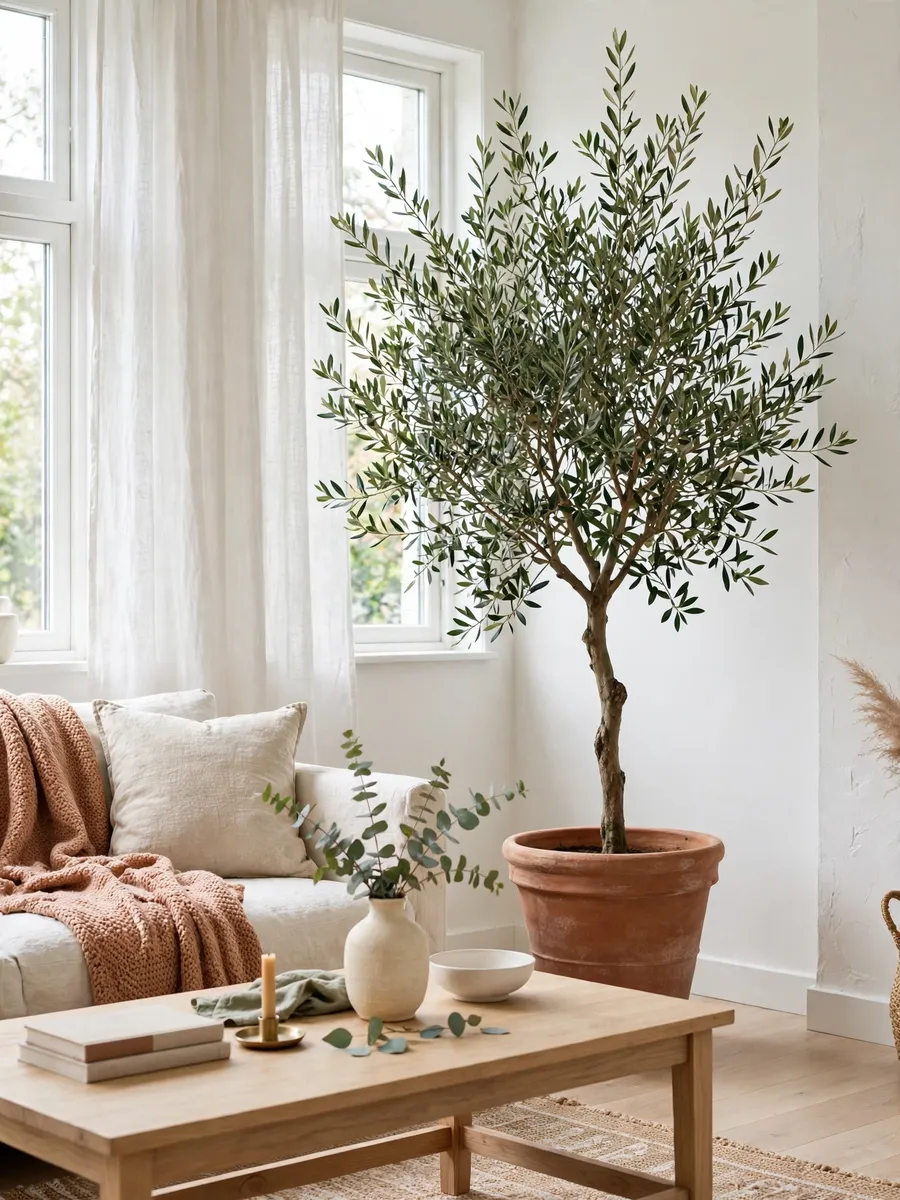
Plants are the easiest way to bring life into a pale room, and this style favors a few large, sculptural plants over many small ones. An olive tree or a tall eucalyptus stem adds a fresh green shape against white walls and pale wood.
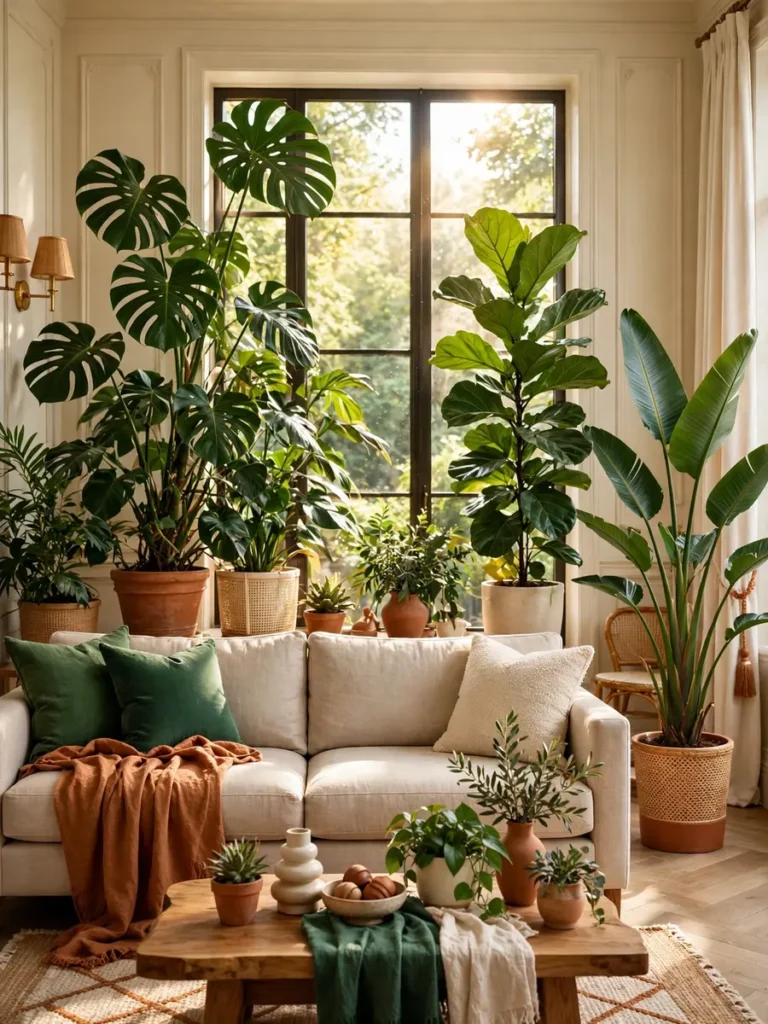
Picture a tall olive tree in a large terracotta pot in a bright corner, with a small eucalyptus stem in a cream ceramic vase on the coffee table.
Quick tip: Choose one large plant as a statement piece, then add one small one, and stop there.
13. How Do You Layer Rugs for a Cozy Scandi Floor?
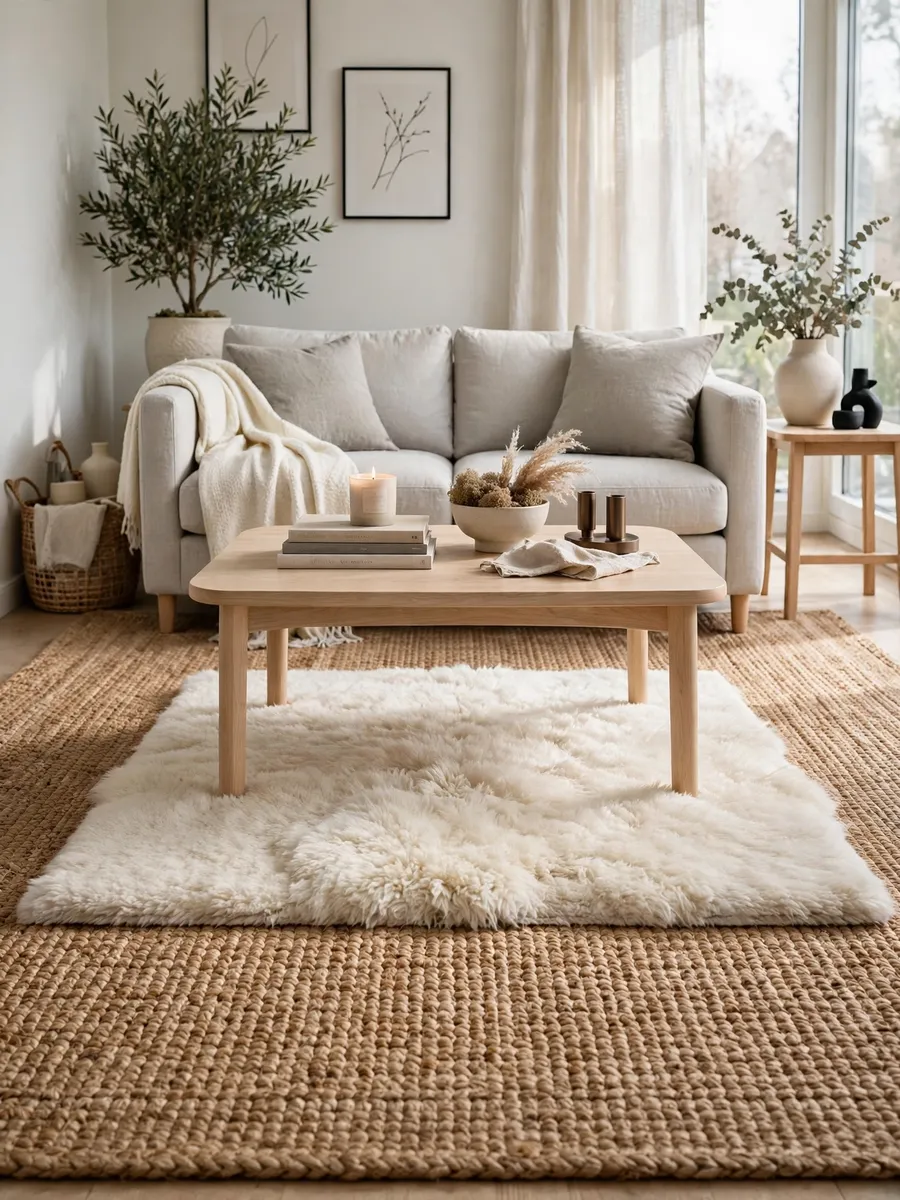
A bare pale wood floor looks beautiful but can feel cold underfoot, so Scandinavian rooms almost always use a rug. Layering two rugs adds softness: a large flat-weave jute rug as the base, with a smaller plush wool rug on top.
Try a natural jute rug under the whole seating area with a smaller ivory wool rug centered under the coffee table. Our guide to living room rug ideas covers sizes and placements for this layered look.
Quick tip: Let the front legs of the sofa and chairs sit on the rug so the seating area feels anchored.
14. How Do You Build a Calm Gallery Wall With Black Frames?
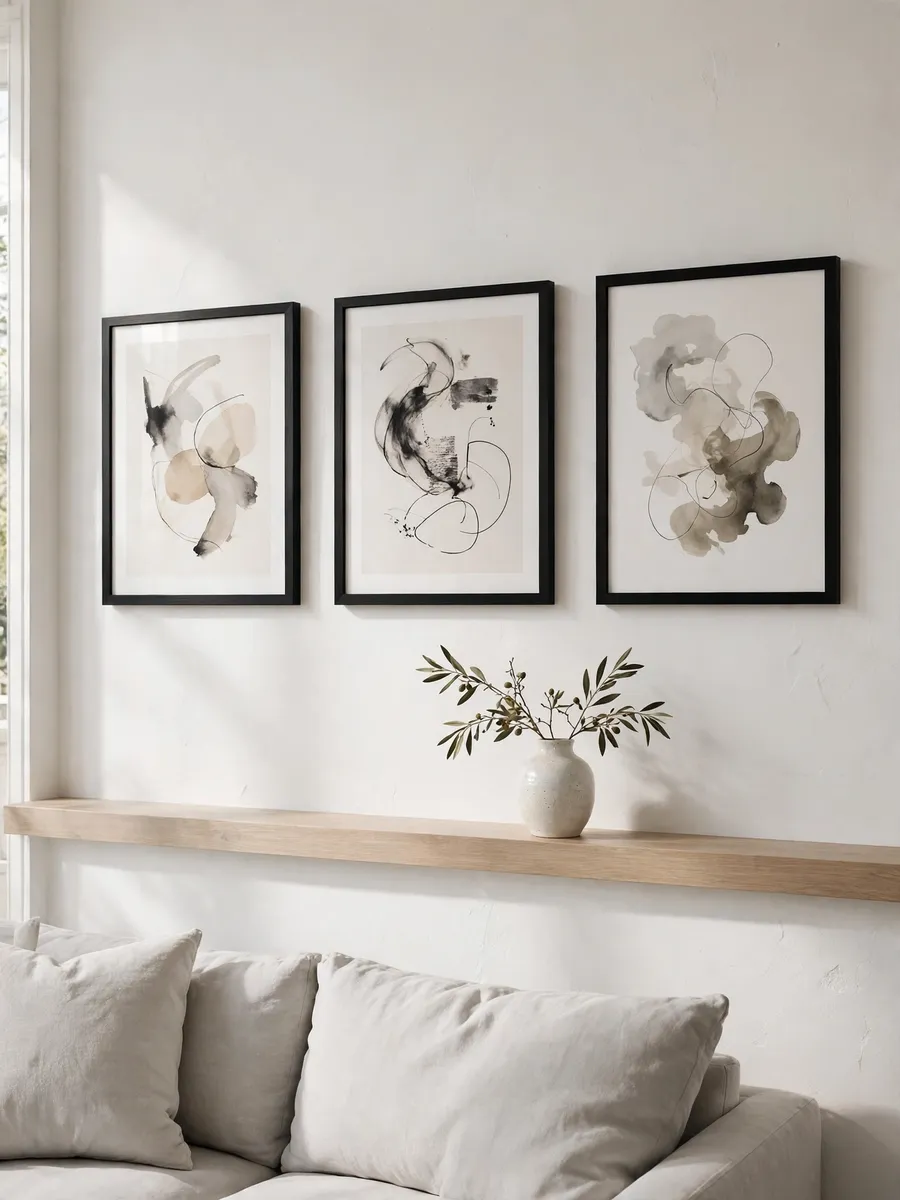
A gallery wall can easily become busy, but the Scandinavian version stays calm through restraint. Choose two or three prints in a similar style and hang them in thin black frames with generous white space.
Try three black-framed prints of different sizes in a loose row above a pale oak picture ledge, with a small ceramic vase on the ledge below. The black frames echo the room’s other black accents and give the wall structure.
Quick tip: Lay the frames on the floor first and photograph the arrangement before putting nails in the wall.
15. How Do You Style a Fireplace the Scandinavian Way?
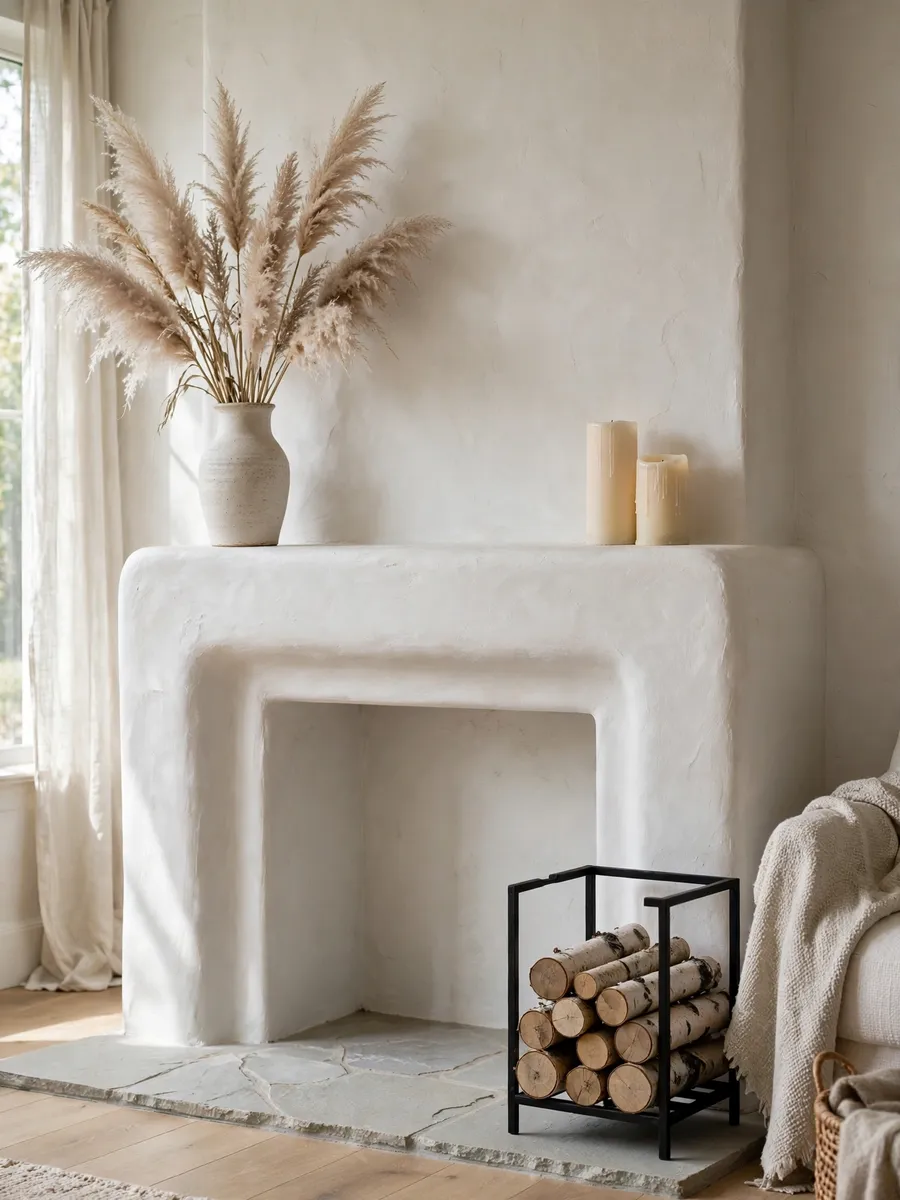
A fireplace is a natural focal point, and in a Scandinavian room it should feel calm rather than grand. Keep the surround simple, such as white plaster or pale grey stone, and style the mantel with just a few objects.
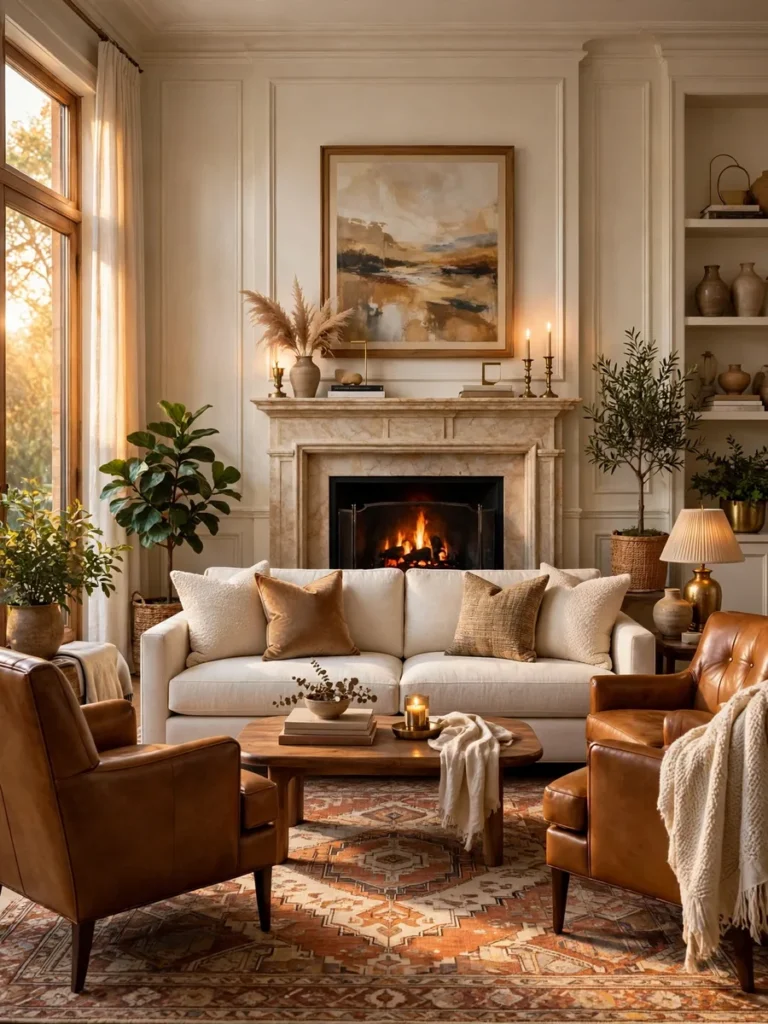
Picture a white plaster fireplace with a pale grey stone hearth, a tall ceramic vase of dried pampas stems on one side, and two pillar candles on the other.
Quick tip: Keep the mantel half empty, because a crowded mantel fights the calm it should create.
16. How Do You Make a Small Scandinavian Living Room Feel Spacious?
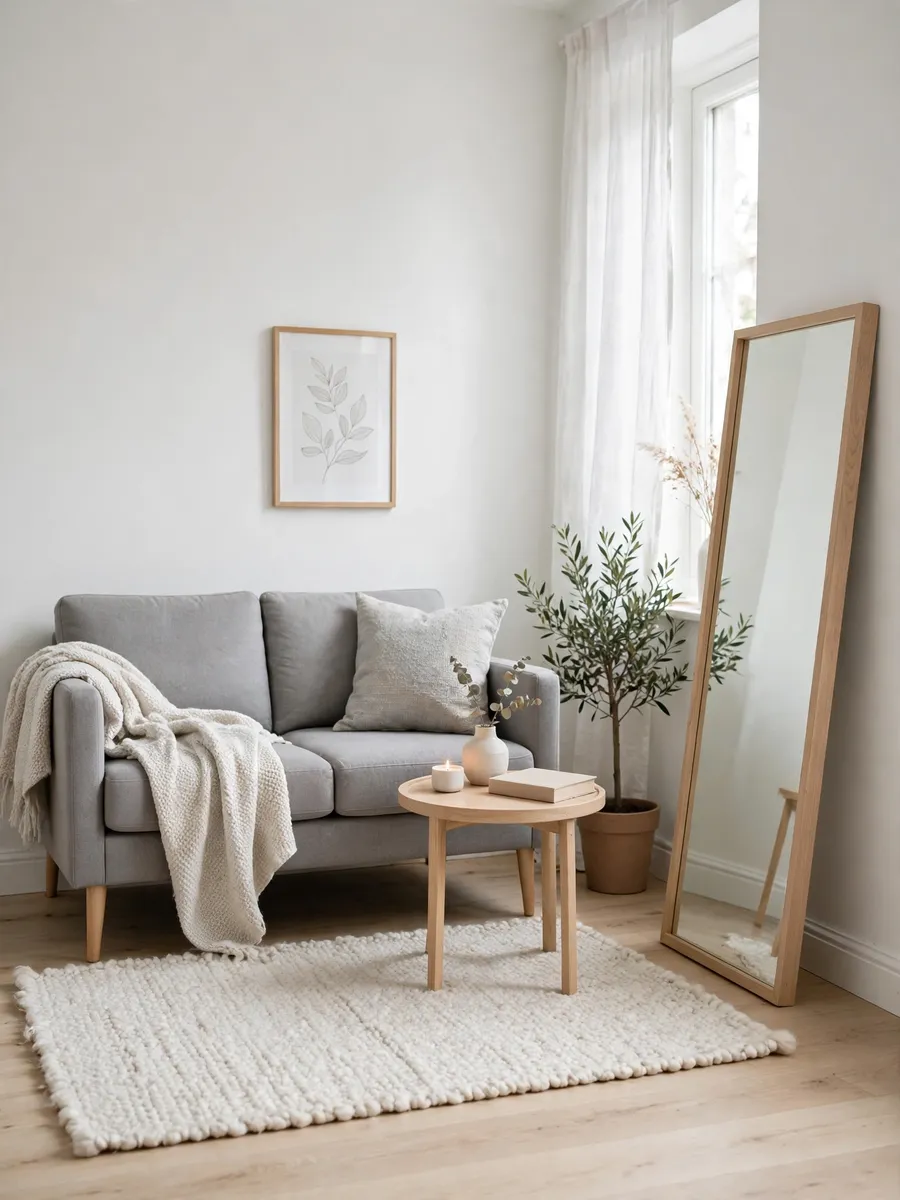
Scandinavian design suits small rooms better than almost any other style, because its pale palette and low furniture make a compact space feel larger. Choose fewer, smaller pieces and let light and empty space do the work.
Try a compact soft grey two-seat sofa on slim legs, a round pale oak side table instead of a bulky coffee table, and a large mirror leaning against the wall to bounce light.
Quick tip: Choose furniture with visible legs, because the floor showing underneath makes a small room feel more open.
17. How Do You Create a Cozy Reading Corner?
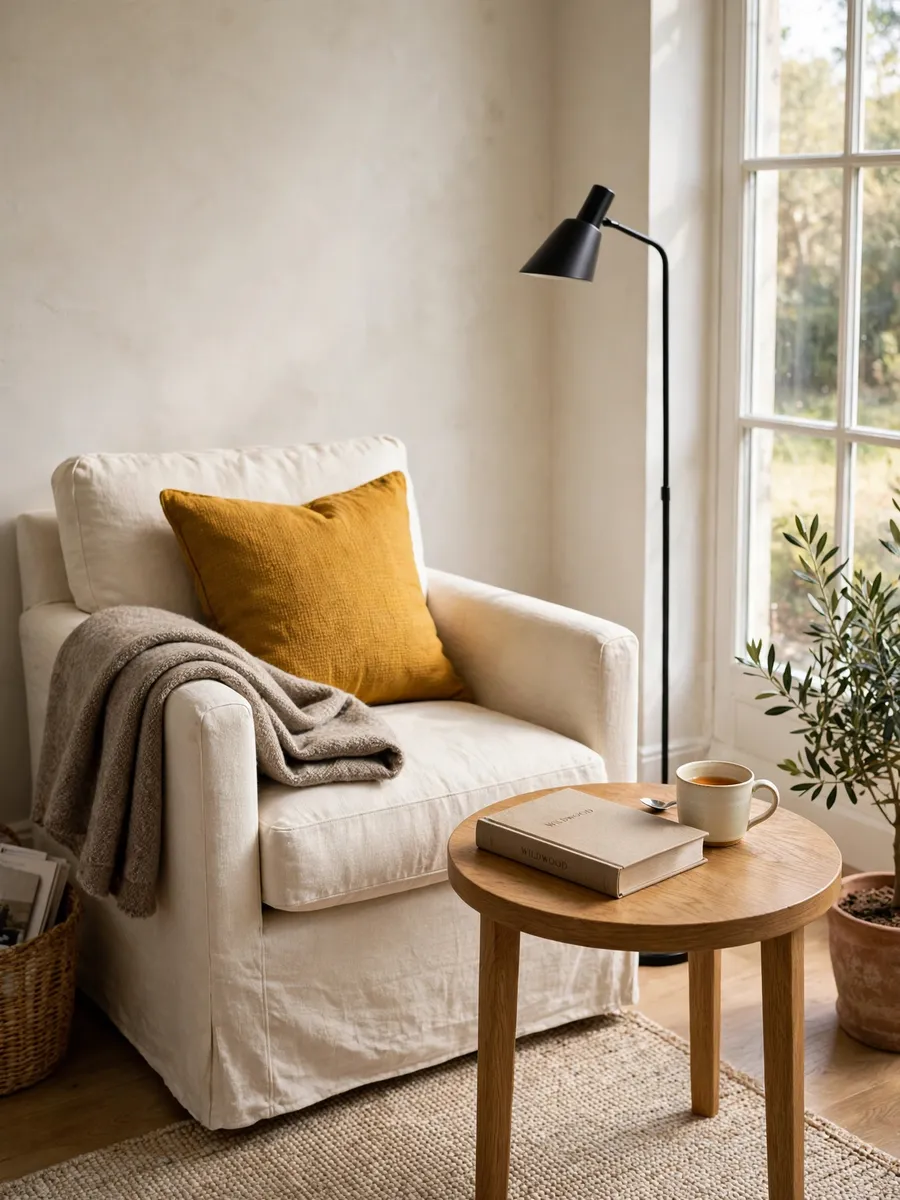
A reading corner turns an unused corner into the most loved spot in the house, and this style does it with four pieces: a chair, a floor lamp, a small table, and a throw. It should feel separate from the main seating, yet part of the same calm palette.
Picture a cream linen armchair with a mustard yellow cushion, a slim black floor lamp, a round oak side table holding a book and a cup of tea, and a folded wool throw over the arm.
Quick tip: Place the chair near a window for daylight reading and a view to rest your eyes on.
18. What Storage Keeps a Scandi Living Room Clutter-Free?
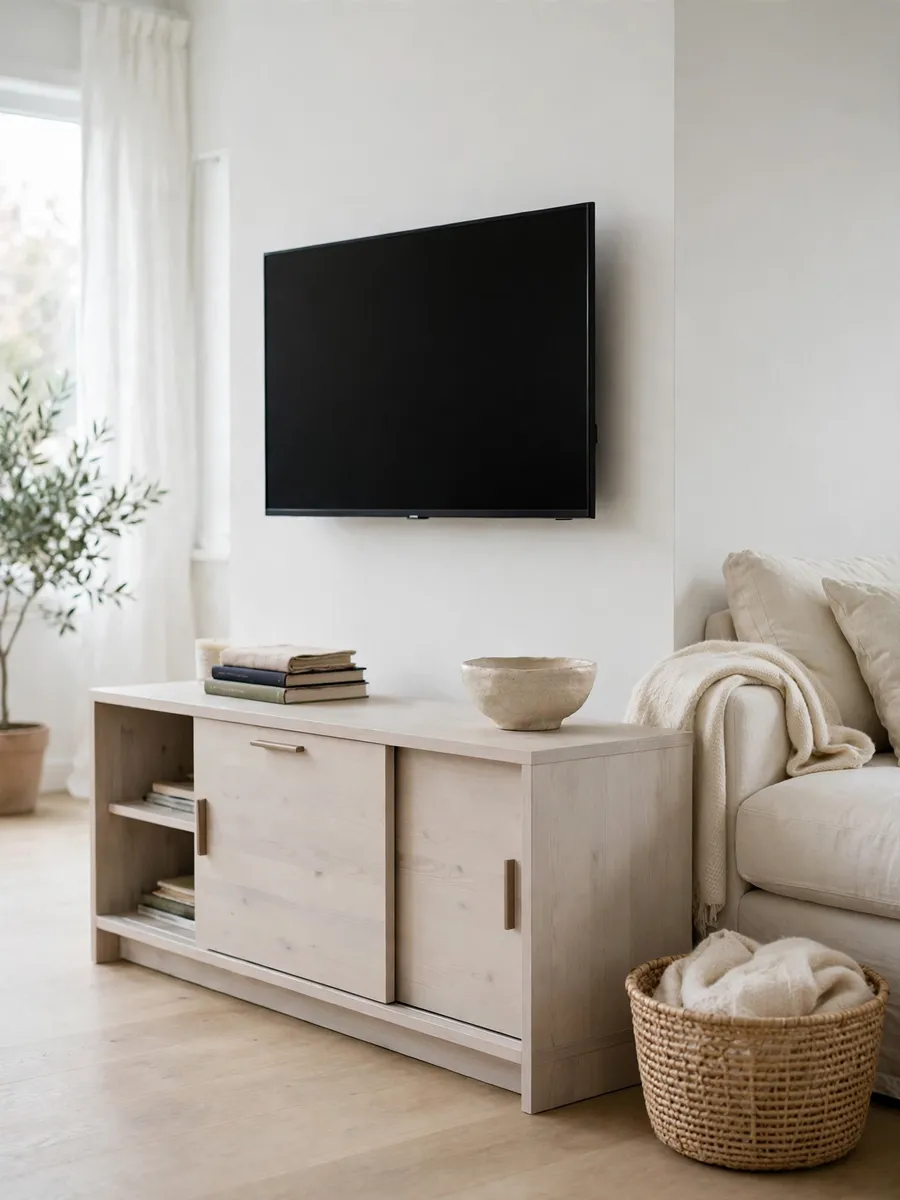
Scandinavian calm depends on clear surfaces, and clear surfaces depend on good closed storage. The best pieces hide everyday clutter, such as remotes, cables, and chargers, behind clean doors and drawers.
Try a low pale ash media console with two sliding doors and one open shelf, the television above it, and a small stack of books and a ceramic bowl on top. A woven basket beside the sofa holds throws and magazines just as neatly.
Quick tip: Give every object a home inside closed storage, and the surfaces will stay clear with almost no effort.
19. Why Is Boucle the Texture of the Moment in Scandi Rooms?
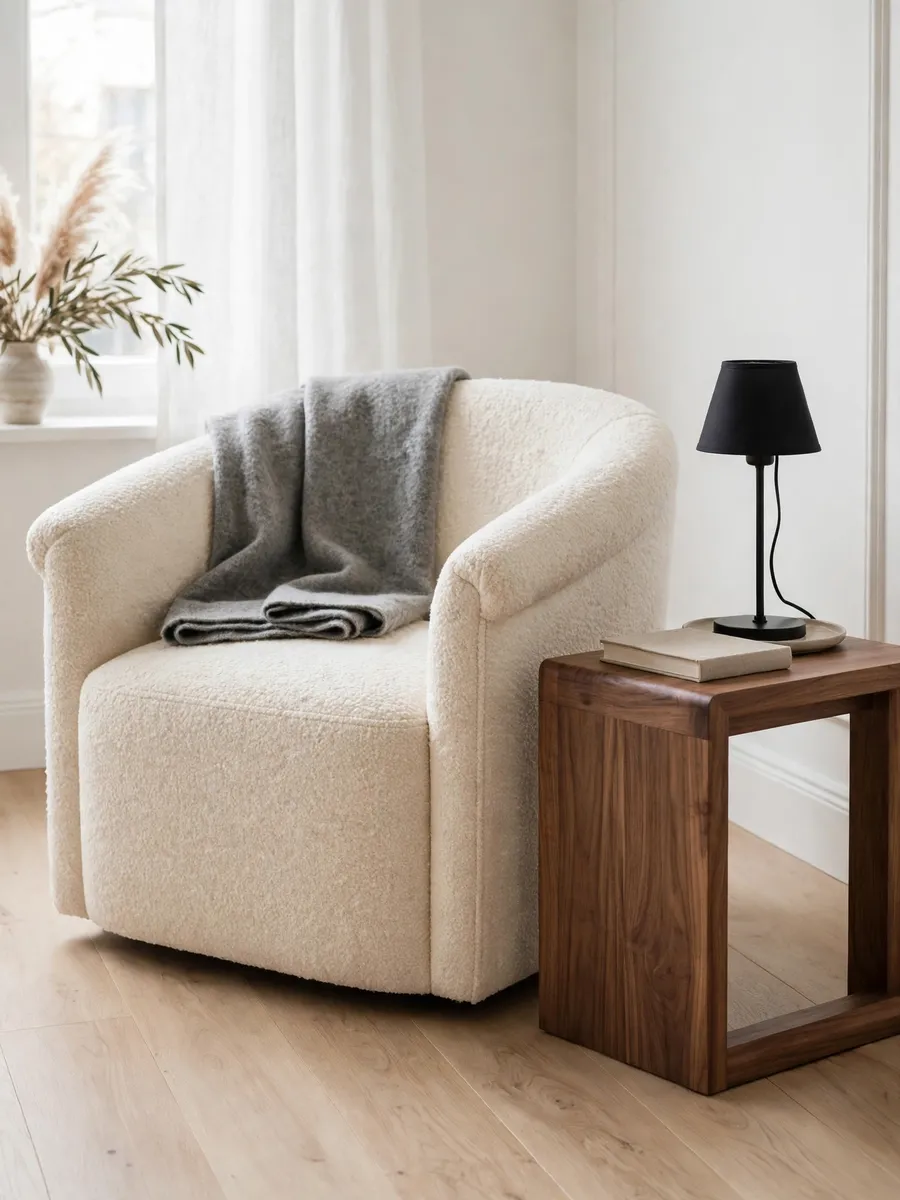
Boucle, with its soft looped wool texture, adds instant softness to clean-lined furniture. A boucle armchair or a pair of boucle cushions brings a cloud-like quality that flat linen cannot, and the creamy white color keeps the palette pale and bright.
Try a cream boucle armchair with a walnut side table beside it, a small black table lamp, and a grey wool throw over the chair back.
Quick tip: Use boucle on one statement piece only, and balance it with smooth wood and flat linen.
20. How Do You Blend a Living Room and Dining Area the Scandi Way?
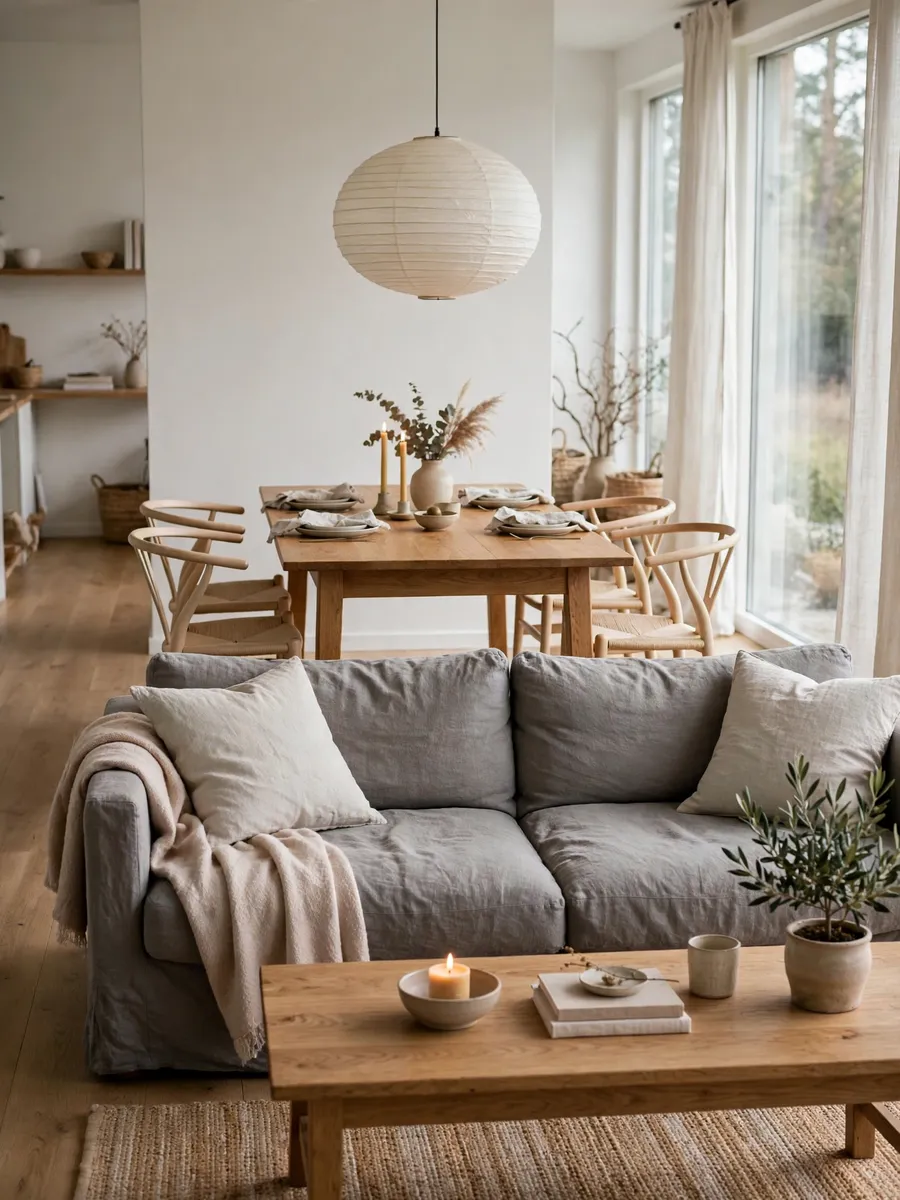
Open-plan living is common in Scandinavian homes, and the style handles it with one consistent palette across both areas. The same pale wood, white walls, and soft textiles run through both zones, while a rug or pendant marks where one ends and the other begins.
Picture a warm wood dining table with four pale wishbone-style chairs behind the sofa, lit by a single paper pendant, while the living area keeps its grey sofa and oak coffee table.
Quick tip: Use one rug under the dining table and a different rug in the living area to define each zone.
21. Can Blush Pink Work in a Scandinavian Living Room?
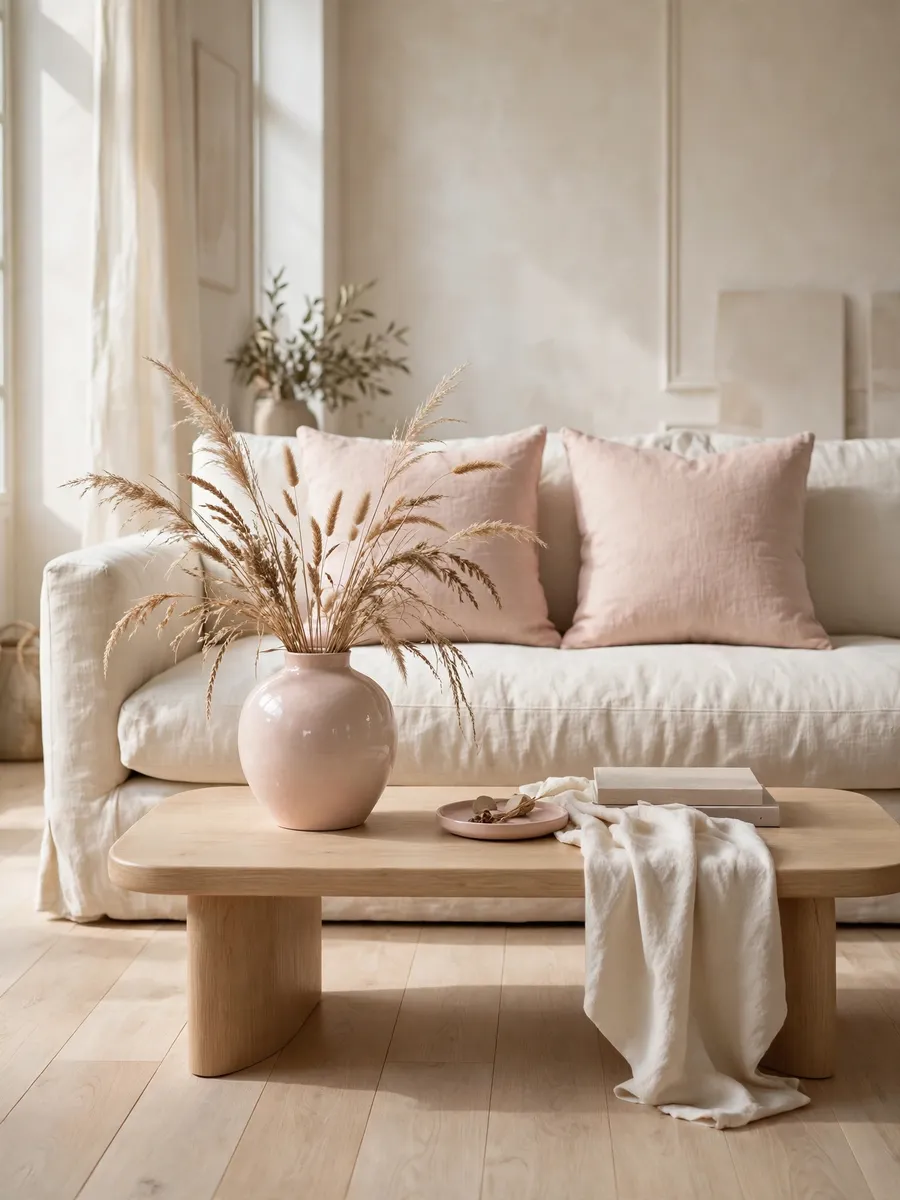
Blush pink works beautifully as long as it stays soft and muted. A dusty, powdery blush reads as a warm neutral rather than a bright color, so it sits comfortably next to cream, pale wood, and white.
Try a cream sofa with two blush pink linen cushions, a blush ceramic vase with dried grasses on the coffee table, and a pale oak floor to ground the softness. The pink appears in small doses only, so the room stays calm.
Quick tip: Choose blush with a grey or beige undertone, and avoid bright bubblegum pink.
22. How Does a Charcoal Accent Wall Add Depth Without Darkening the Room?
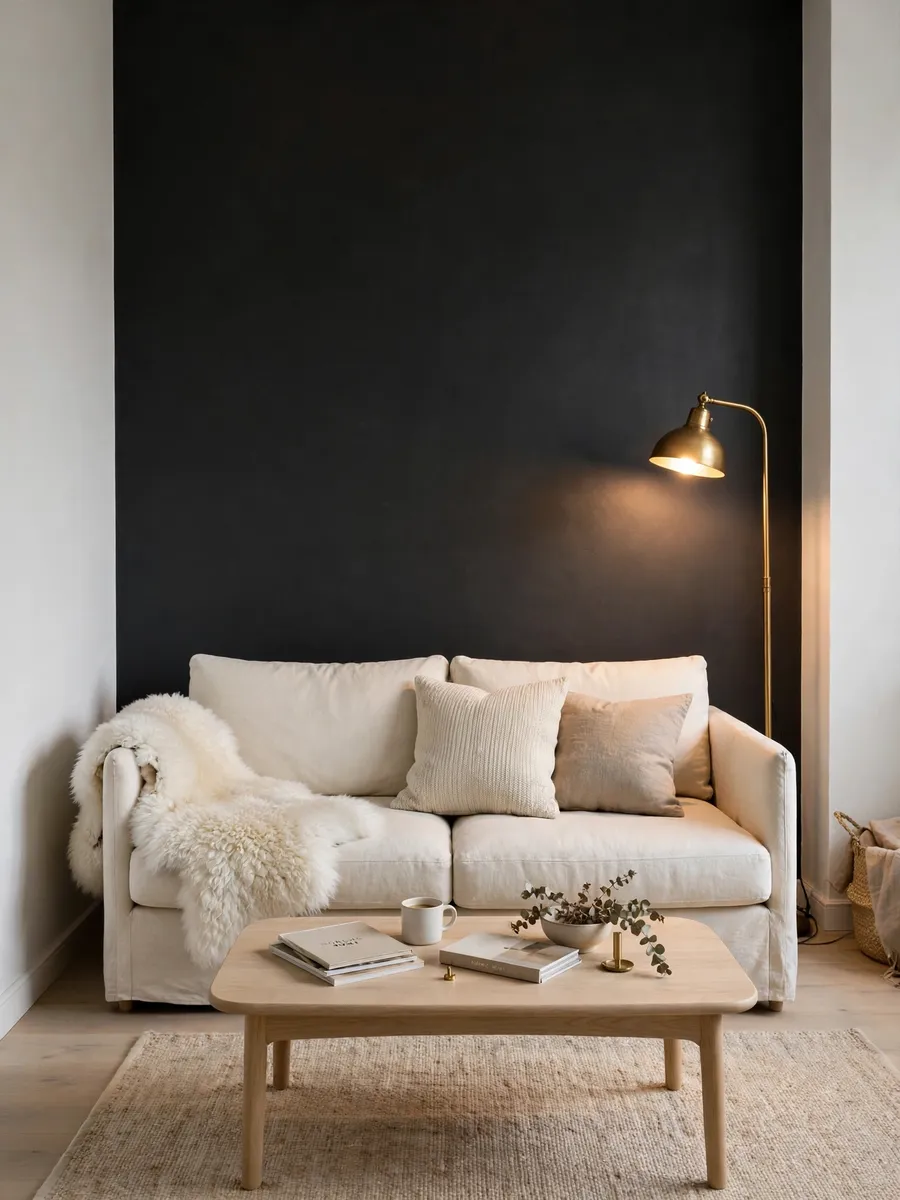
A charcoal accent wall sounds bold for a style built on white, but on a single wall it adds depth and makes pale furniture glow. The dark backdrop sharpens a light sofa and pale wood, and it gives the room a cozy evening mood.
Picture a charcoal wall behind a cream linen sofa, with a pale oak coffee table, a sheepskin over one arm, and a brass floor lamp casting warm light across the dark paint.
Quick tip: Choose the wall opposite the windows so the dark paint does not block your main daylight.
23. How Do You Design a Family-Friendly Scandinavian Living Room?
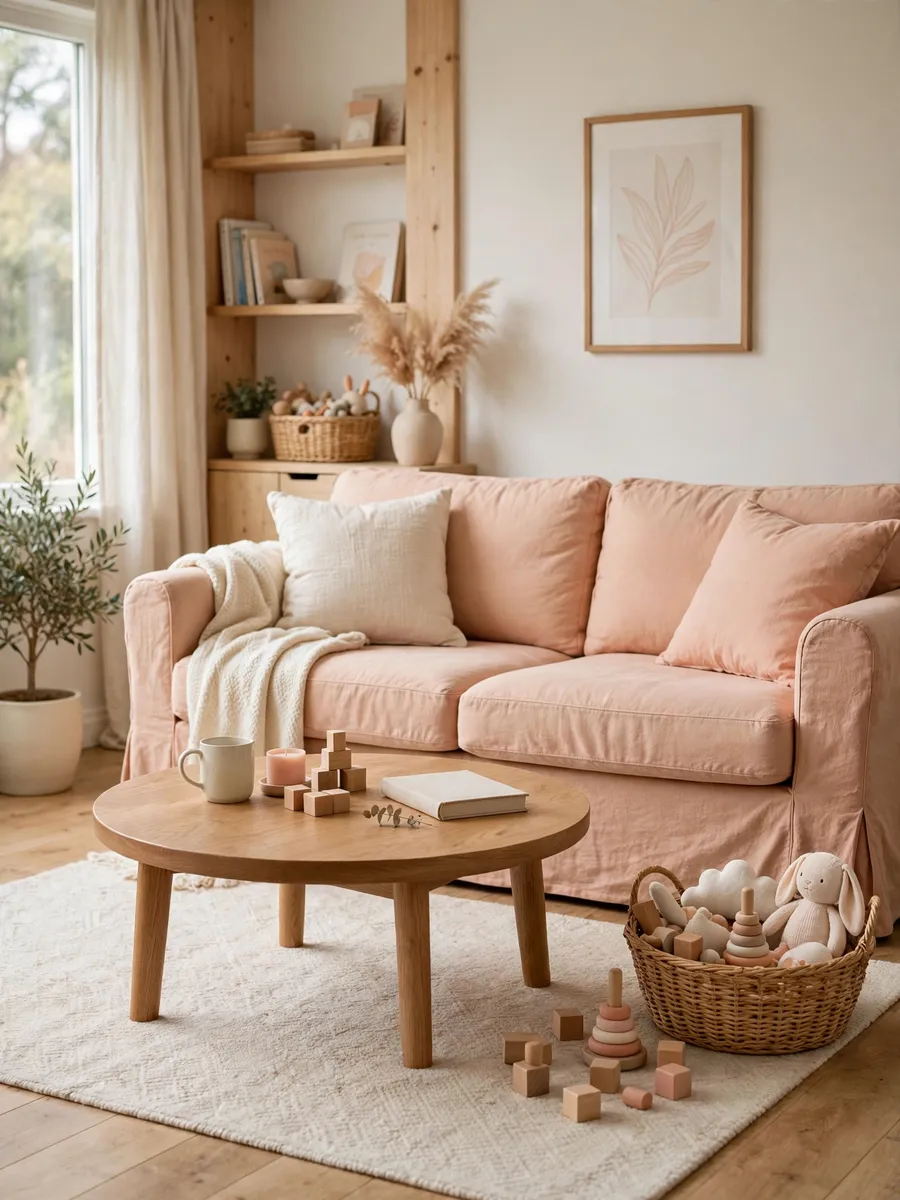
A Scandinavian room can be family-friendly without losing its calm, as long as you choose materials that forgive everyday life. Washable sofa covers, a low-pile wool rug, and rounded furniture edges make the room practical for children while keeping the pale, tidy look.
Try a soft peach slipcovered sofa with washable covers, a round oak coffee table with no sharp corners, a low-pile cream rug, and a woven basket for toys beside the sofa.
Quick tip: Pick a rug with a subtle pattern, because it hides crumbs far better than a plain pale rug.
24. How Does a Touch of Vintage Teak Warm Up a Scandi Room?
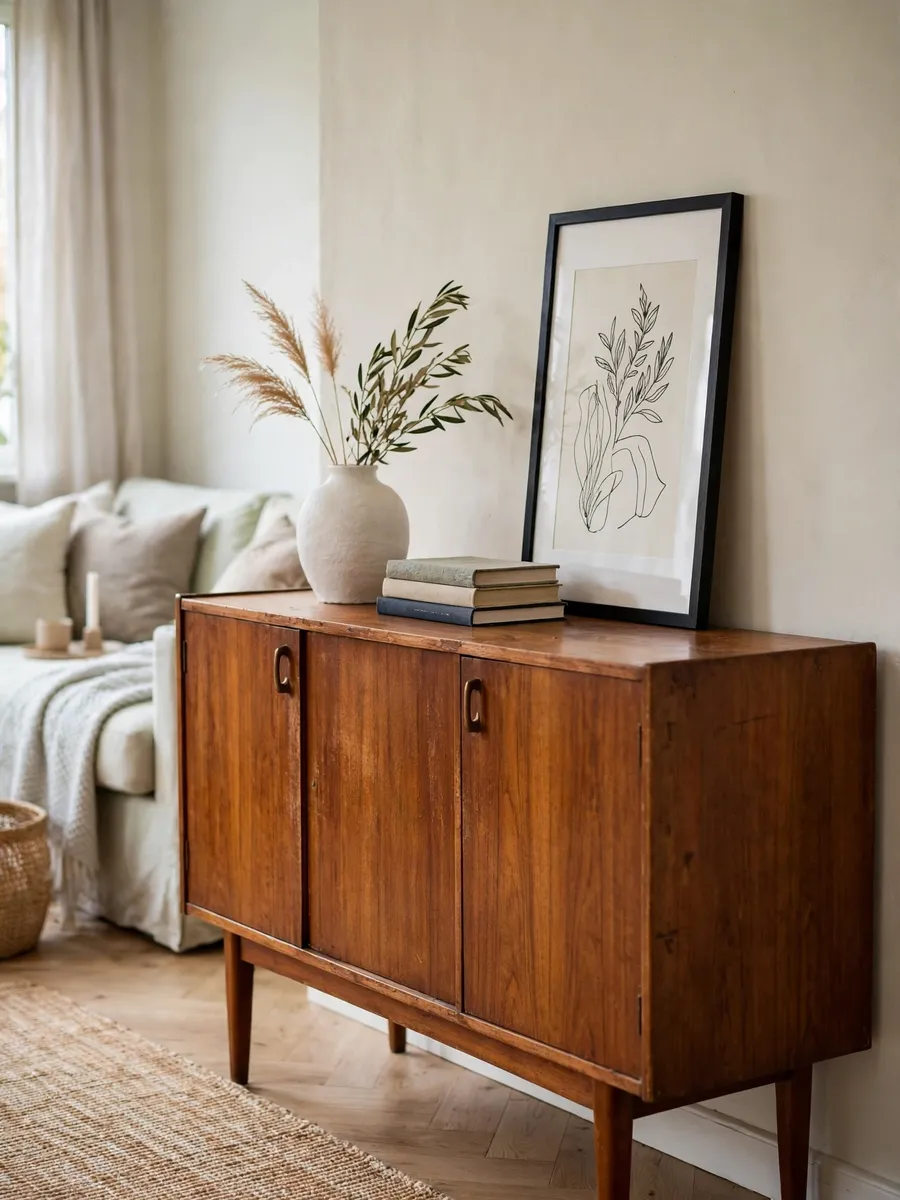
Mid-century teak shares Scandinavian roots, so one vintage teak piece fits naturally into a modern Scandi room and adds history and warmth. The rich honey-brown wood contrasts gently with pale walls, and its simple lines match the clean shapes around it.
Try a vintage teak sideboard against a cream wall, styled with a white ceramic vase, a small stack of books, and a black-framed print leaning above it.
Quick tip: Use one vintage teak piece as a feature, and keep the other wood in the room pale.
25. What Is Coastal Scandinavian Style?
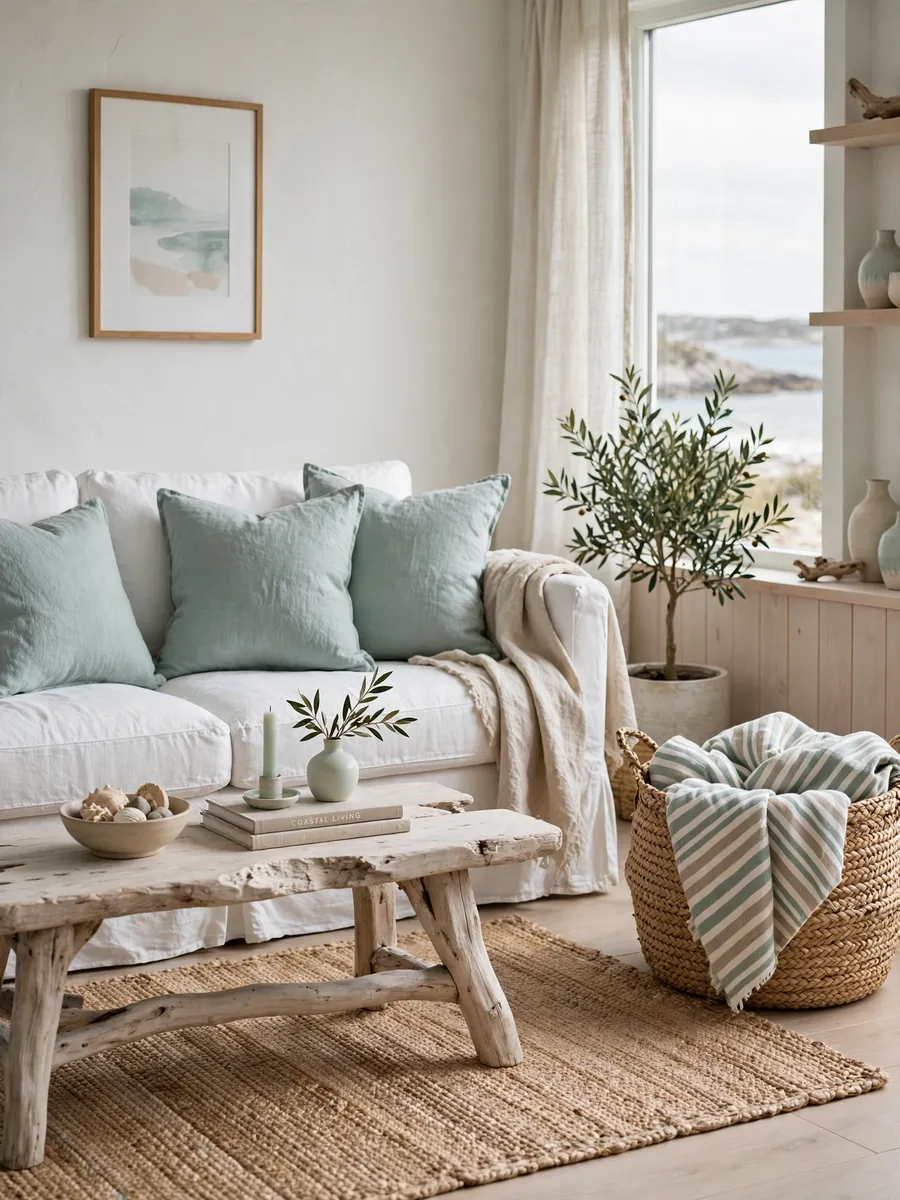
Coastal Scandinavian style blends the pale, calm Nordic base with soft seaside colors such as seafoam, sand, and pale driftwood grey. The result feels fresh and breezy, like a beach house, but it keeps the clean lines and uncluttered surfaces of a Scandinavian room.
Picture a white slipcovered sofa with seafoam linen cushions, a sand-colored jute rug, a pale driftwood coffee table, and a large woven basket holding a folded striped throw.
Quick tip: Keep coastal colors pale and desaturated, and avoid obvious nautical decorations such as anchors.
26. How Do Candles Create Hygge on Dark Evenings?
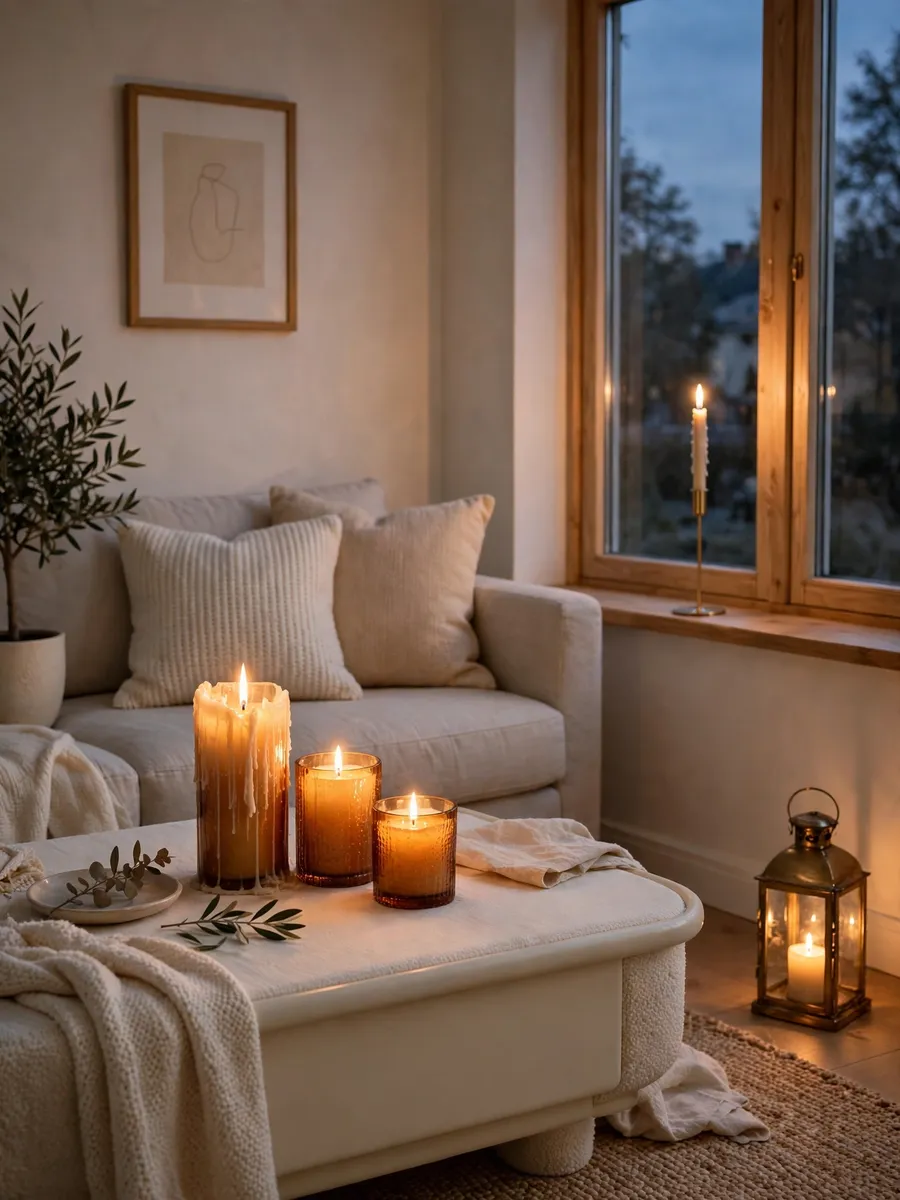
Candles are the simplest and most affordable hygge tool, and they are used daily in Nordic homes through the long dark winters. A few candles at different heights, lit in the early evening, soften every edge and create a warm glow that electric light cannot copy.
Picture three pillar candles in amber glass holders on a cream coffee table, a taper candle in a slim brass holder on the windowsill, and a lantern with a candle inside on the floor beside the sofa.
Quick tip: Use unscented candles, and always place them on a stable, heat-safe surface away from curtains.
27. How Do Ceramics and Minimal Art Finish the Look?
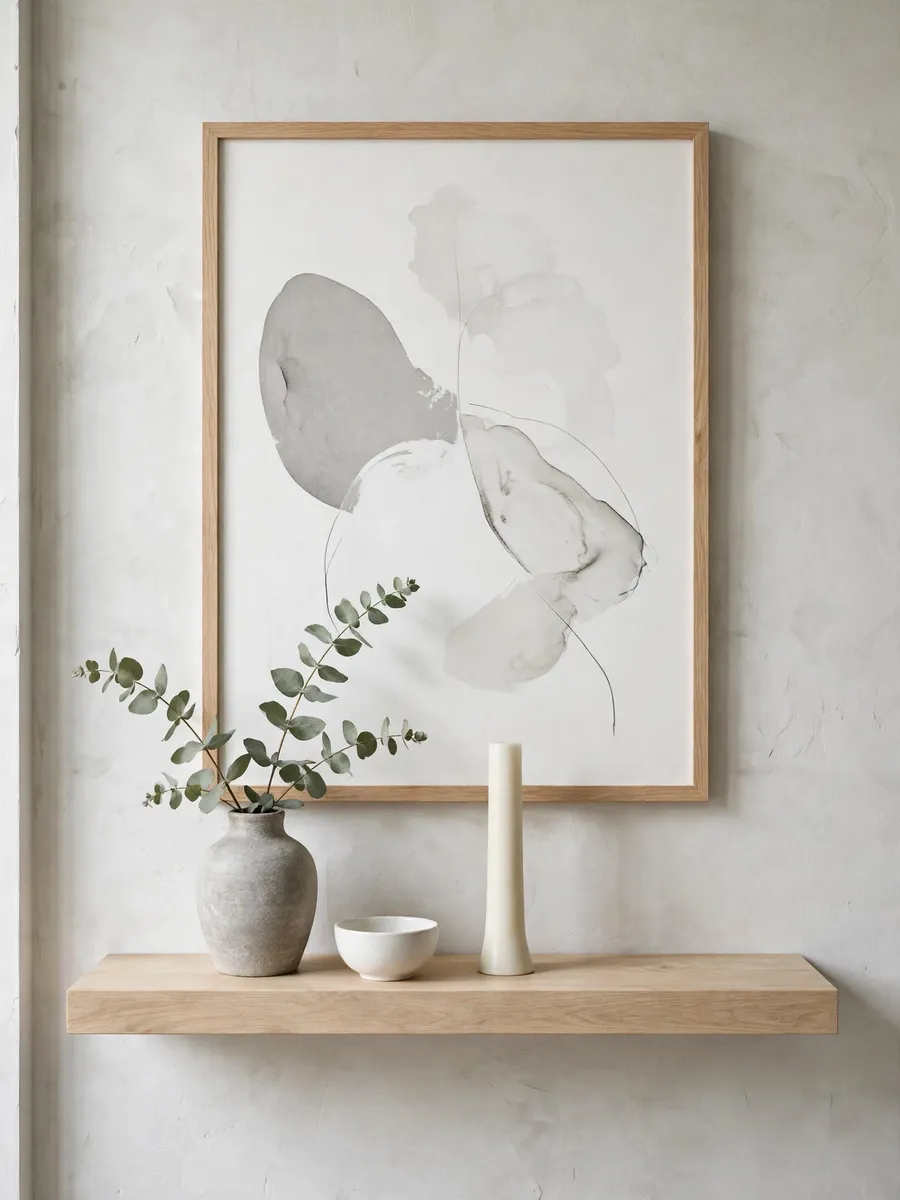
The final layer is the styling, and handmade ceramics with one or two pieces of minimal art do the job better than a shelf full of small objects. A few stone-grey or white ceramic vases add shape and texture, while one large abstract print gives the wall a quiet focal point.
Picture a pale oak shelf holding a stone-grey ceramic vase with a single eucalyptus stem, a small white ceramic bowl, and a tall cream candle holder, with one large minimal abstract print in a thin oak frame above.
Quick tip: Style in odd numbers, such as three objects on a shelf, and leave at least half the shelf empty.
Frequently Asked Questions
What makes a living room look Scandinavian?
A Scandinavian living room is built from a few consistent habits: light wood such as oak or birch, a pale and low-contrast palette of creams, whites, and soft greys, soft textures from wool, linen, and sheepskin, simple low furniture shapes, and closed storage that keeps surfaces clear.
What is the difference between a Scandinavian and a minimalist living room?
A minimalist living room is about having fewer things, and it can feel austere or almost empty. A Scandinavian living room is minimalist in layout but deliberately warm: natural wood, wool throws, linen cushions, candles, and plants soften the simplicity.
How do I make a small Scandinavian living room feel warm?
Use warm whites or cream on the walls instead of bright white, add warm 2700K bulbs in two or three lamps, lay down a wool rug, and include wood in at least two pieces of furniture. Texture adds warmth without clutter, so layer a wool throw and a linen cushion or two.
What lighting is best for a Scandinavian living room?
Use three to five light sources at different heights, with warm white 2700K bulbs. A good combination is a central pendant, a floor lamp beside the sofa, a table lamp on a side table, and candles at a low level.
What colors are used in a Scandinavian living room?
The base is warm white, cream, soft grey, and beige, with pale wood adding a natural honey tone. Accent colors stay muted and desaturated: sage green, dusty blue, blush pink, and soft terracotta are the most common choices, used sparingly so the room stays calm and light.
What is Scandinavian design?
Scandinavian design is a Nordic design tradition from the 1930s onward that combines simplicity, function, natural materials, and warmth, aimed at everyday life. It grew in Denmark, Sweden, Finland, Norway, and Iceland, and it is defined by pale woods, white walls, clean lines, wool, and linen.
Conclusion
Scandinavian living room ideas work because they start with light and end with warmth, and the style has stayed popular because it is genuinely easy to live with. Pale walls and light wood make a room feel bigger, soft textiles make it comfortable, and warm lighting makes it welcoming after dark, so even a small apartment can feel calm and generous. Choose a pale, calm base, add light wood and soft textiles, layer warm lighting, and keep surfaces clear. Start with one idea from this guide, such as a wool throw or a sheer curtain, and build the look one calm layer at a time.