12 Beautiful Living Room Rug Ideas
Key Takeaways
What is the single biggest mistake people make with a living room rug?
Buying too small. A rug that floats under just the coffee table makes the whole room feel unfinished; size it so at least the front legs of every seat sit on it.
Which rug material actually survives a busy household?
Wool for comfort and longevity, polypropylene or PET for stain-prone homes with pets and kids, and flatweave cotton or jute where you want easy cleaning underfoot.
Can a rug work on top of wall-to-wall carpet?
Yes — lay a flat, low-pile rug directly on the carpet so the edges lie flat. Skip thick shag on carpet; it slides, ripples, and trips.
How do you make a rug last longer?
Rotate it every six months for even wear, vacuum without the beater bar on delicate weaves, blot spills immediately instead of rubbing, and use a rug pad underneath.
Table of Contents
- Ground Your Room: Rugs That Pull Everything Together
- What Size Rug Works Best? Living Room Rug Ideas by Layout
- Which Rug Material Holds Up Best in a Busy Living Room?
- 1. Ivory Wool Anchor
- 2. Vintage Persian Layer
- 3. Natural Jute Ground
- 4. Gray Geometric Grid
- 5. Floral Antique Wash
- 6. Coastal Stripe Rug
- 7. Moroccan Graphic Pattern
- 8. Blush Shag Comfort
- 9. Botanical Green Flatweave
- 10. Mid-Century Golden Pattern
- 11. Dark Dramatic Statement
- 12. Small-Space Layering Trick
- Frequently Asked Questions
- Conclusion
Ground Your Room: Rugs That Pull Everything Together
A rug is the one piece that can fix a room without changing anything else. These living room rug ideas start with fit, not color — because the right size under the right furniture grouping does more for a room than any pattern can. Anchor the front legs of every seat on the rug, let the palette echo one existing piece, and match the pile to your lifestyle. If your whole layout is on the small side, our small living room ideas guide covers furniture arrangements that leave proper room for the rug underneath.
What Size Rug Works Best? Living Room Rug Ideas by Layout
Go big enough that the rug touches the seating group: 8×10 feet suits a standard sofa plus two chairs, 9×12 fits sectionals and large rooms, and 5×8 only works when the furniture arrangement is compact enough to keep front legs on it.
| Seating layout | Rug size | Leg placement | Floor border |
|---|---|---|---|
| Sofa + 2 chairs, standard room | 8′ x 10′ | Front legs on rug | About 12–18 inches of floor showing |
| Sectional or large lounge | 9′ x 12′ | All legs on rug, or front legs minimum | About 18–24 inches of floor showing |
| Compact two-seat setup | 6′ x 9′ | Front legs on rug | About 8–12 inches of floor showing |
| Accent zone (reading corner) | 5′ x 8′ | Front legs on rug | About 8 inches of floor showing |
| Open-plan seating island | 10′ x 14′ | All legs on rug | About 24 inches of floor showing |
Which Rug Material Holds Up Best in a Busy Living Room?
Wool is the workhorse — dense, naturally stain-resistant, and soft enough to sit on for years; polypropylene and PET stand up to pets, kids, and red-wine spills; flatweave cotton and jute are light, affordable, and easy to shake out or wash.
1. Ivory Wool Anchor
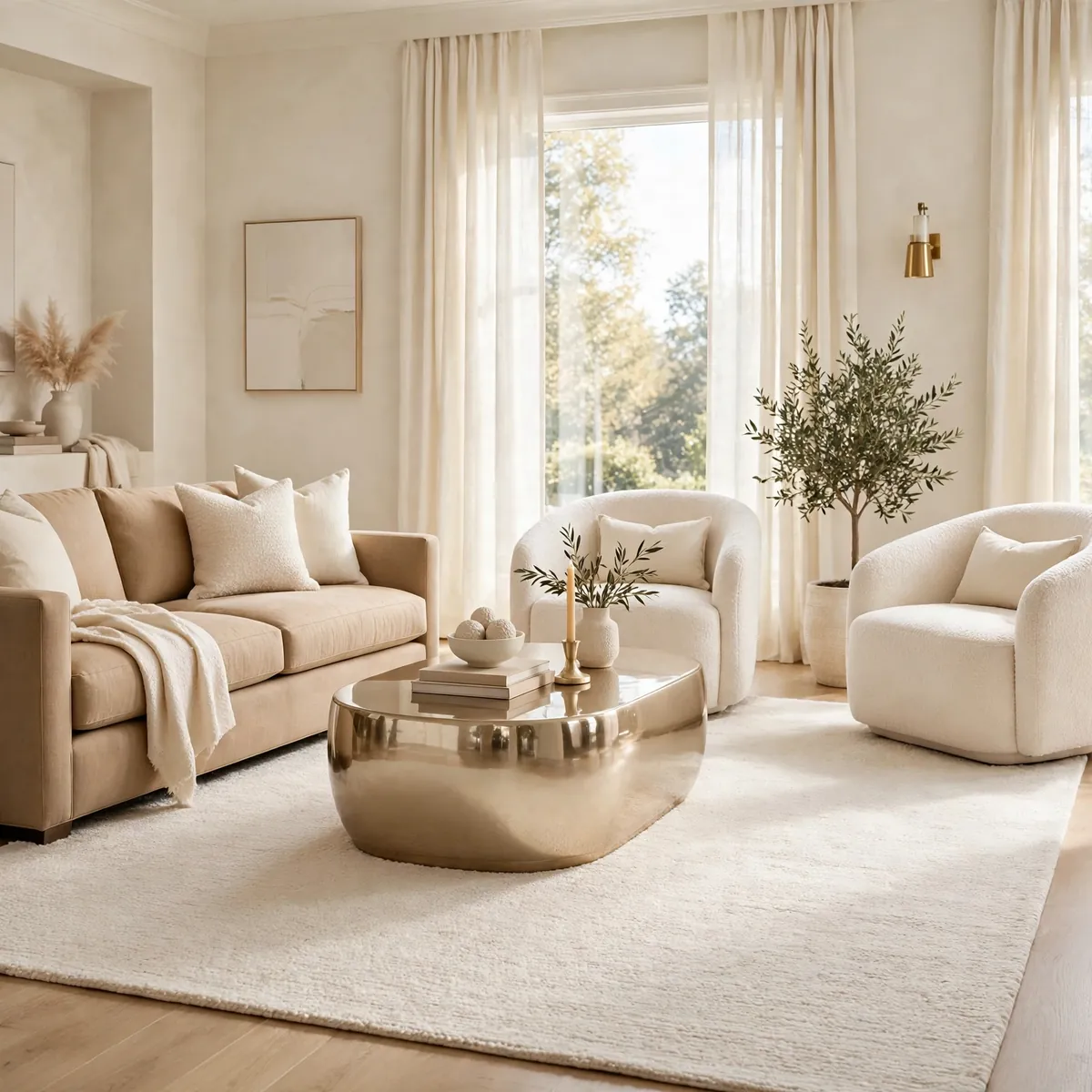
An ivory wool rug is the quiet luxury move: it brightens a beige or gray room without introducing a single competing color. Choose a hand-tufted or hand-loomed wool rug in warm ivory — not stark white, which shows every mark — sized so the front legs of the sofa and both chairs land on it.
The concrete example: an 8×10 ivory wool rug with a subtle high-low texture under a camel linen sofa, flanked by two cream bouclé chairs, with the rug’s edge stopping about 15 inches from the walls. The texture catches light and reads expensive from across the room.
Quick tips:
- Pick warm ivory over bright white; it hides daily wear far better.
- A dense pad underneath keeps wool flat and doubles its life.
- Blot spills fast — wool resists stains but punishes rubbing.
2. Vintage Persian Layer
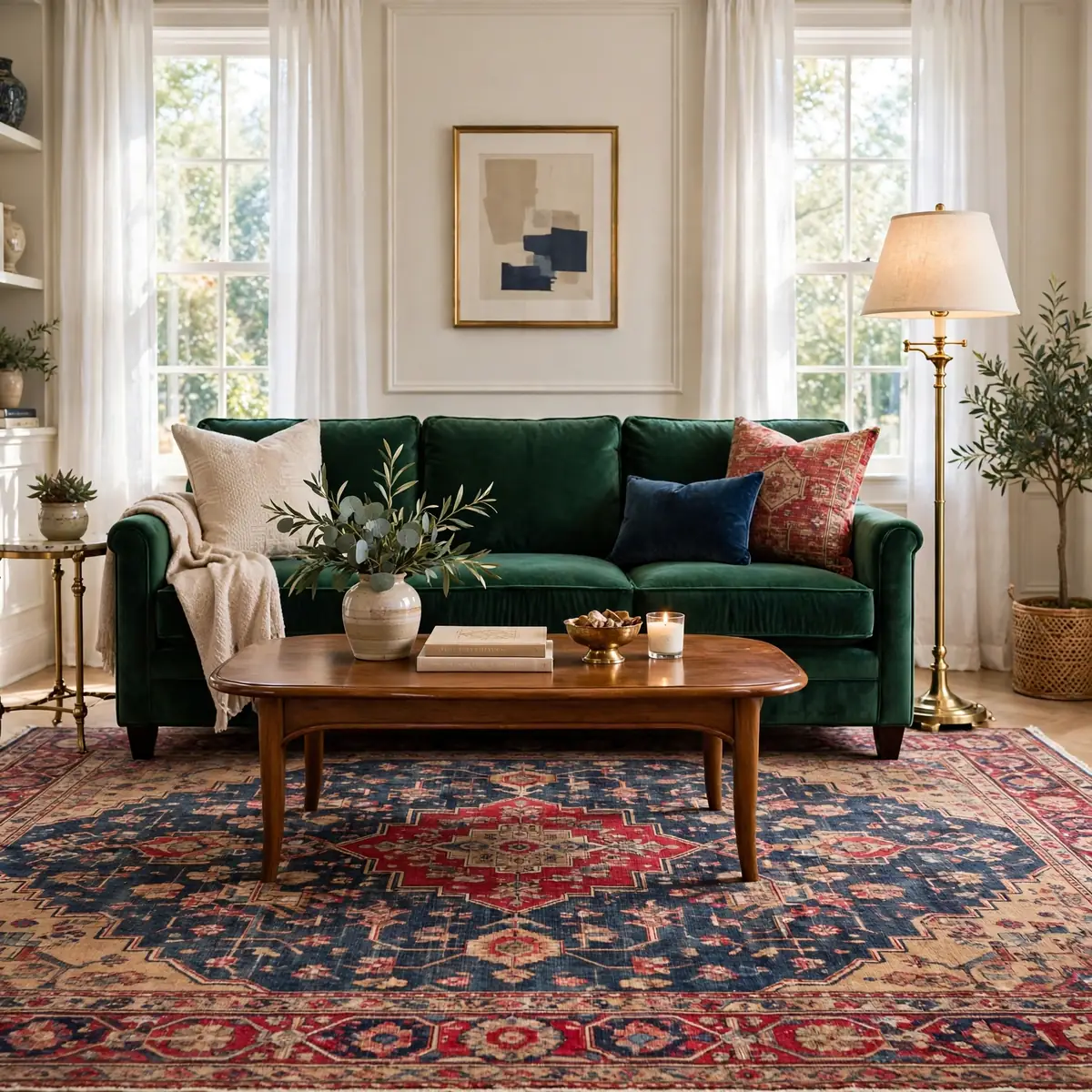
A vintage-look Persian rug brings the pattern so your furniture doesn’t have to. Deep navy, crimson, and sand motifs work with almost any sofa color — emerald velvet, cognac leather, or plain gray — because the rug’s palette does the color-story work.
The concrete example: a 9×12 machine-washable Persian-style rug in faded navy and rust, with an emerald green velvet sofa fully on it and brass floor lamp at one corner. Washability matters here, because this is the rug people actually gather around.
Quick tips:
- Pull one rug color for cushions or curtains to tie the room together.
- Faded/distressed finishes hide traffic patterns better than saturated ones.
- Machine-washable options exist in convincing vintage patterns now.
3. Natural Jute Ground
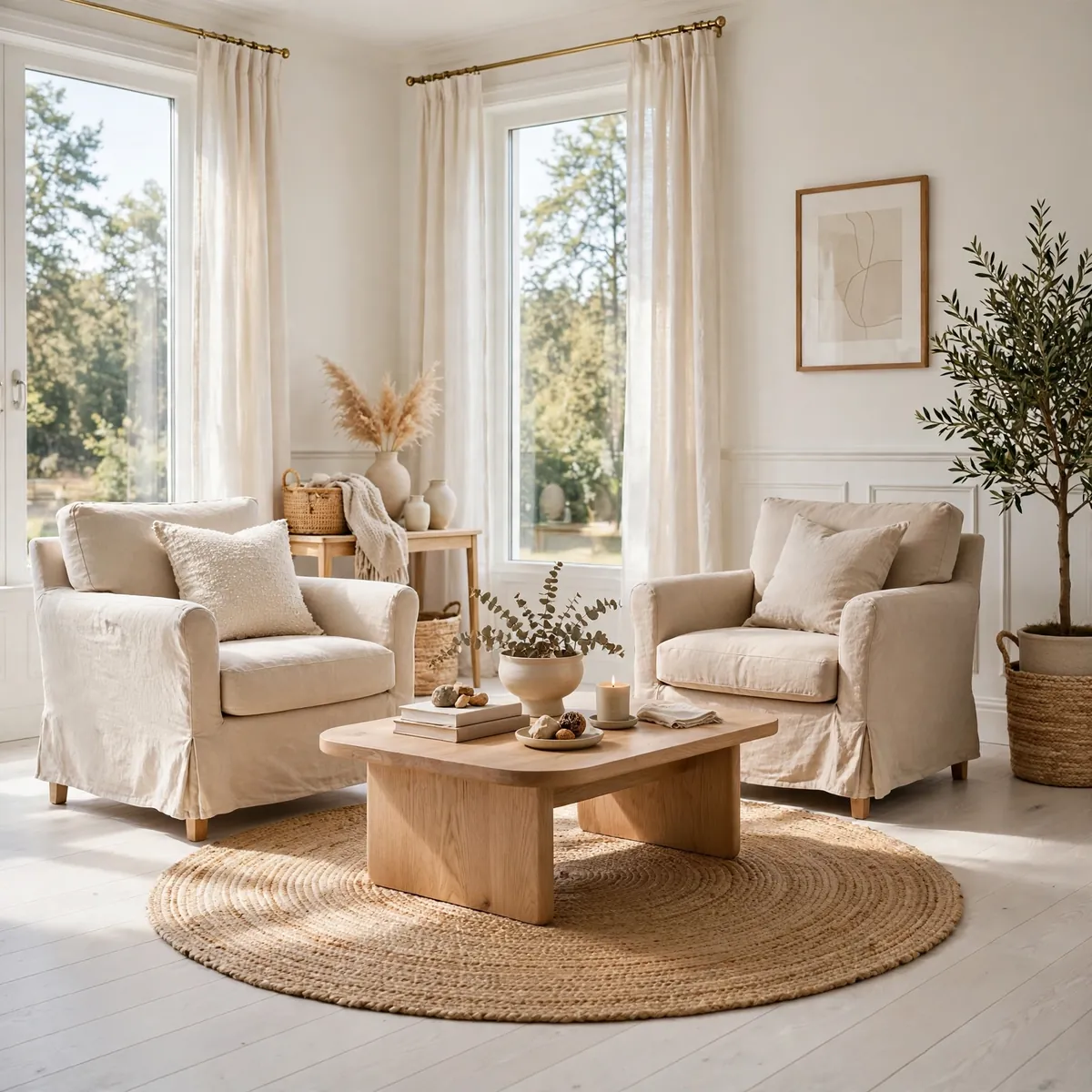
Jute is the texture of calm: warm, sandy, and completely unfussy. A chunky braided jute rug suits light Scandinavian rooms where everything else is white, oak, and linen — the rug adds the one natural layer the palette is missing.
The concrete example: a 6-foot round braided jute rug centered under a small white oak coffee table, with two linen slipcovered chairs angled in. Round rugs soften boxy furniture arrangements and work beautifully in rooms without a dominant sofa.
Quick tips:
- Jute hates moisture — keep it out of damp entries or near pet bowls.
- Vacuum with suction only; beater bars snag the braids.
- Layer a small patterned flatweave on top for color without losing the texture.
4. Gray Geometric Grid
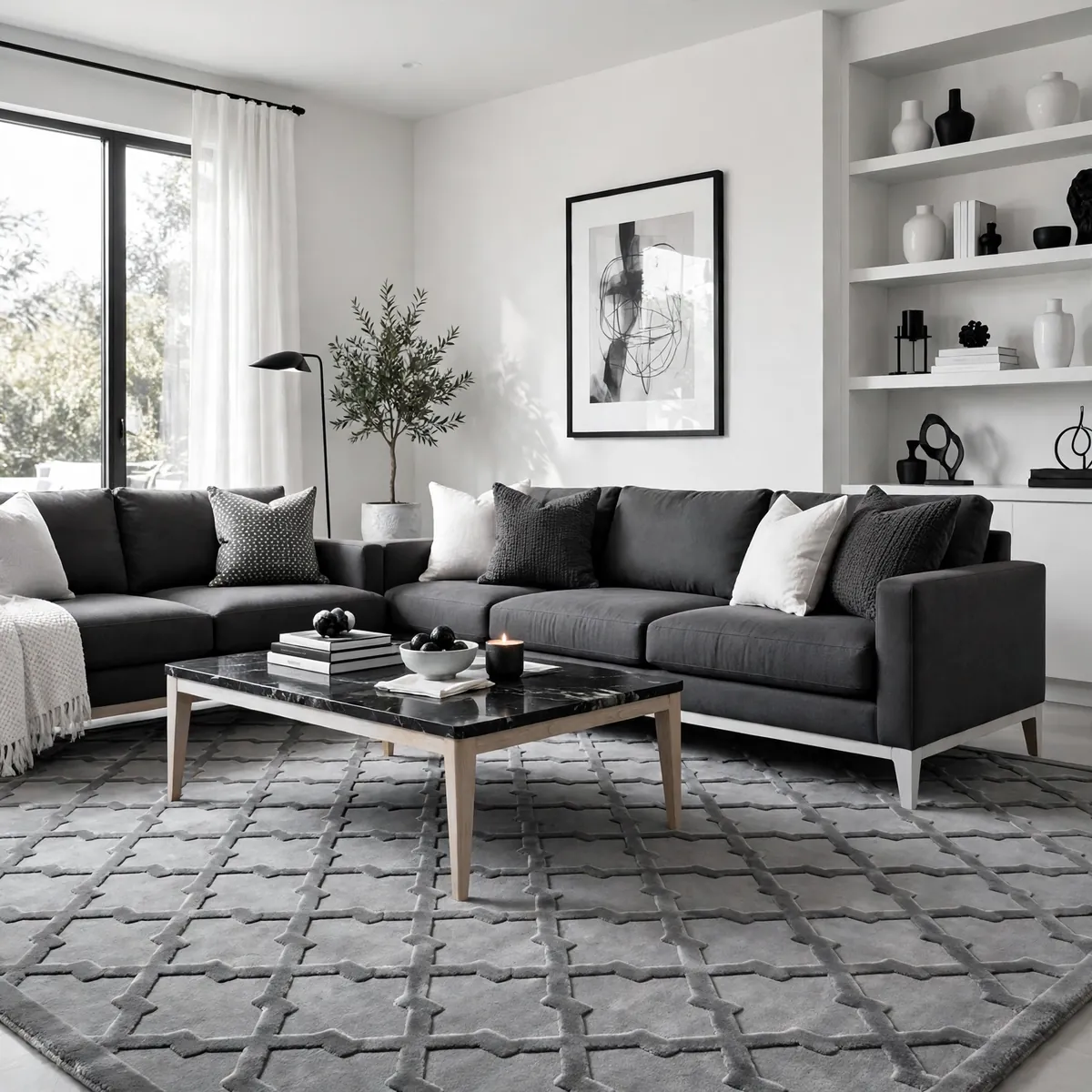
A gray geometric rug gives a modern room structure without noise. Think overlapping diamonds, fine pinstripes, or a large-scale trellis in charcoal on light gray — graphic enough to read from the doorway, quiet enough to live with for years.
The concrete example: an 8×10 low-pile rug with a large gray trellis pattern, under a charcoal sectional with white oak legs and a black marble coffee table. The low pile means dining-adjacent chairs slide easily and robot vacuums climb without complaint.
Quick tips:
- Large-scale patterns suit large rooms; small motifs suit small ones.
- Low pile (under half an inch) is the practical choice for busy seating areas.
- Match the rug’s gray undertone — warm or cool — to your sofa fabric.
5. Floral Antique Wash
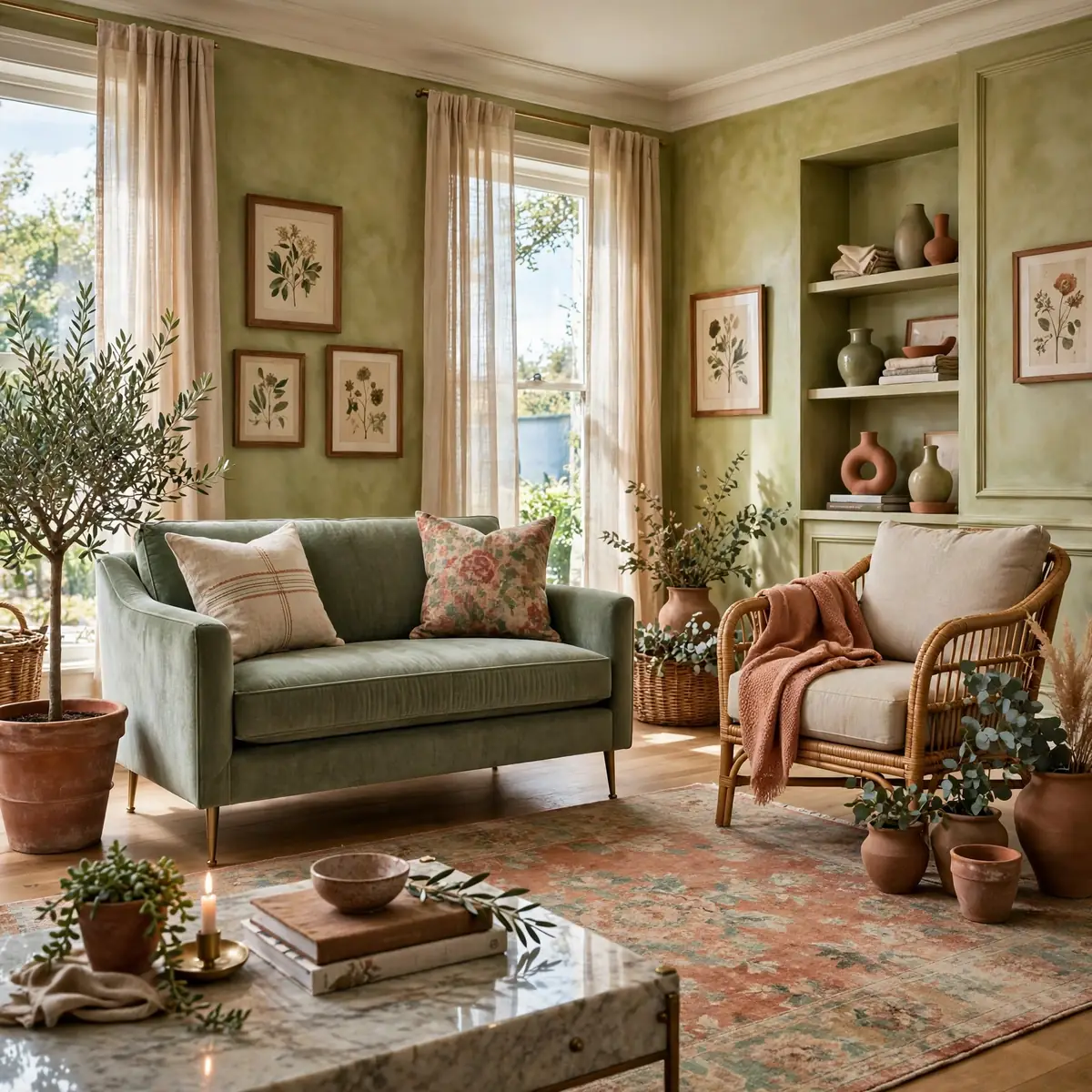
A faded floral rug in washed terracotta, sage, and clay brings old-house soul to a plain room. The “antique wash” finish — muted, sun-faded-looking — is forgiving: crumbs, pet hair, and traffic all disappear into the mottled background.
The concrete example: an 8×10 washable rug with a faded all-over floral in terracotta and olive, under a sage-green loveseat and a rattan armchair, with terracotta pots of trailing plants on the windowsill. The room reads collected rather than decorated.
Quick tips:
- Washable floral rugs make this look realistic for homes with kids.
- Echo one faded tone in a throw or art frame to make it intentional.
- Keep walls calm — this rug is the room’s entire pattern allowance.
6. Coastal Stripe Rug
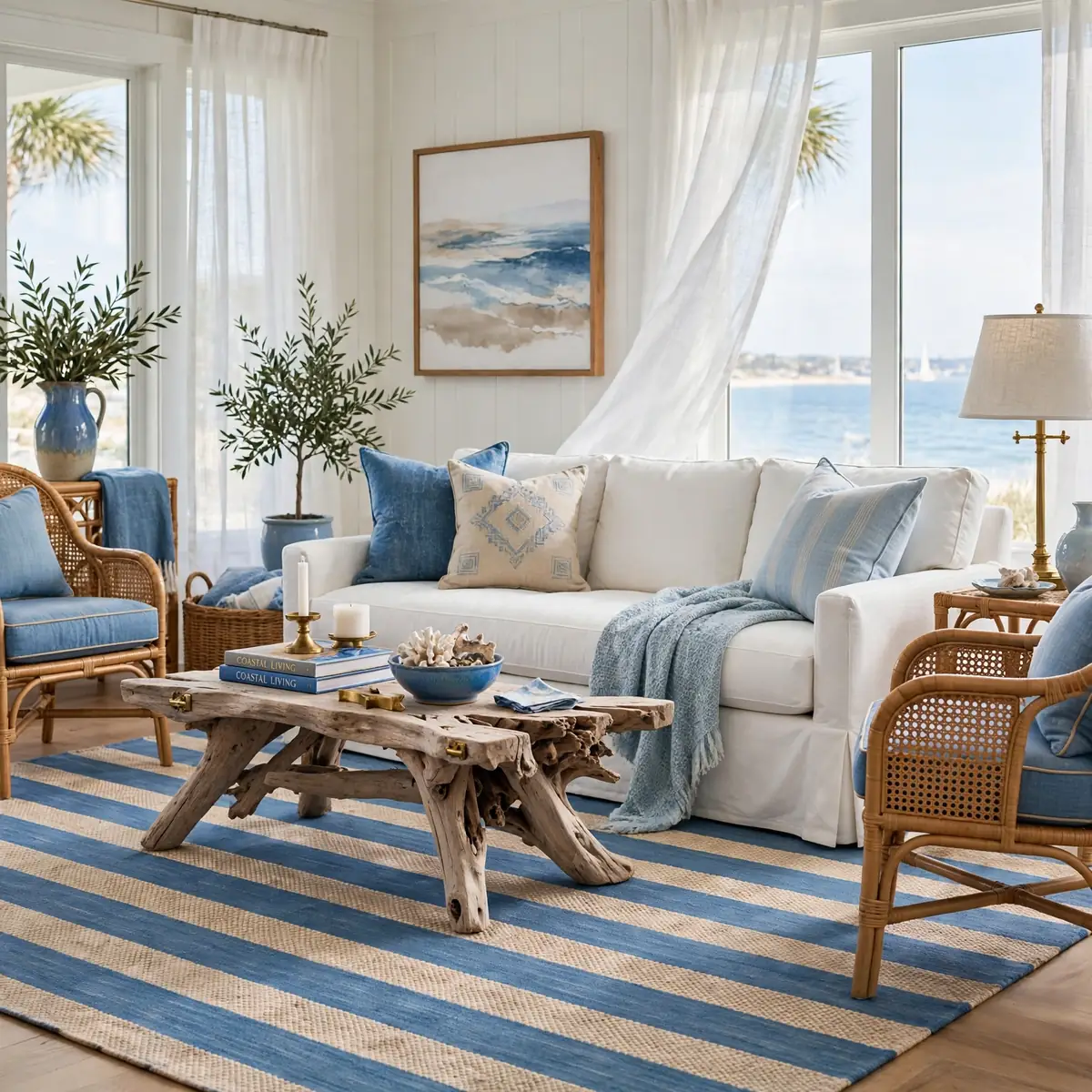
Wide blue-and-white stripes are the fastest route to a breezy coastal living room. A flatweave cotton rug in denim blue and sand reads fresh in summer and still works in winter when you pile on cream throws — stripes are seasonal-proof.
The concrete example: an 8×10 hand-loomed cotton rug with wide denim stripes, under a white slipcovered sofa with rattan side chairs, a driftwood-finish coffee table, and a jute basket for throws beside the sofa. Nothing here can stain permanently.
Quick tips:
- Cotton flatweaves are often machine washable — check before buying.
- Stripes visually widen a narrow room; run them across the short axis.
- Denim blue hides wear; navy shows lint, pale blue shows spills.
7. Moroccan Graphic Pattern
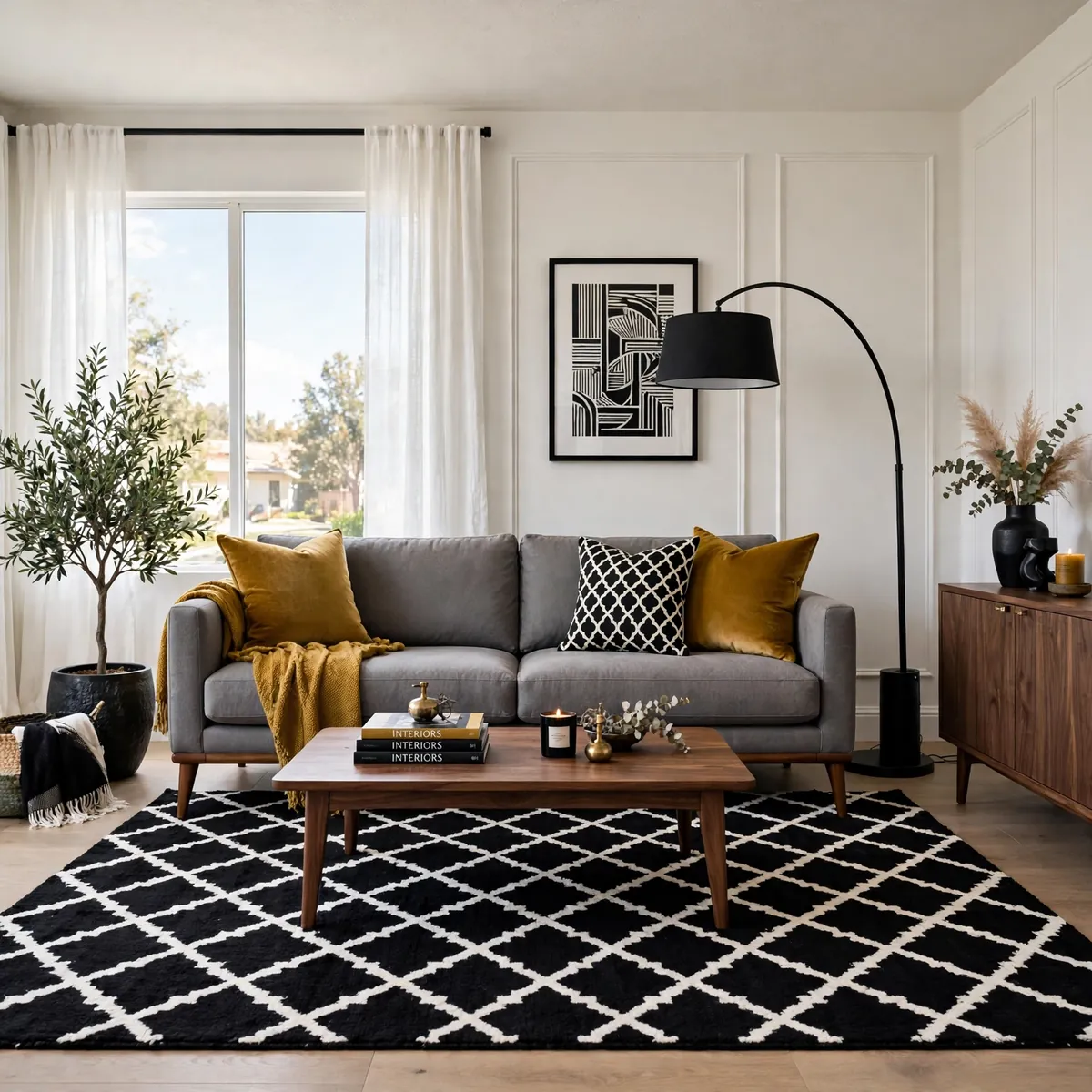
The black-and-white Moroccan trellis is a classic for a reason: it adds pattern with zero color commitment. It works with mid-century wood, boho layers, or a plain gray sofa that needs one bold move.
The concrete example: an 8×10 high-low shag rug with a bold black Berber trellis on ivory, under a walnut-legged gray sofa, with two mustard velvet cushions and a black arc floor lamp. The mustard warms up the graphic black-and-white so the room doesn’t feel stark.
Quick tips:
- One bold pattern per room — keep curtains and upholstery solid.
- High-low texture traps crumbs; shake it outside monthly.
- Warm it with one saturated accent (mustard, rust, ochre) so it doesn’t read cold.
8. Blush Shag Comfort
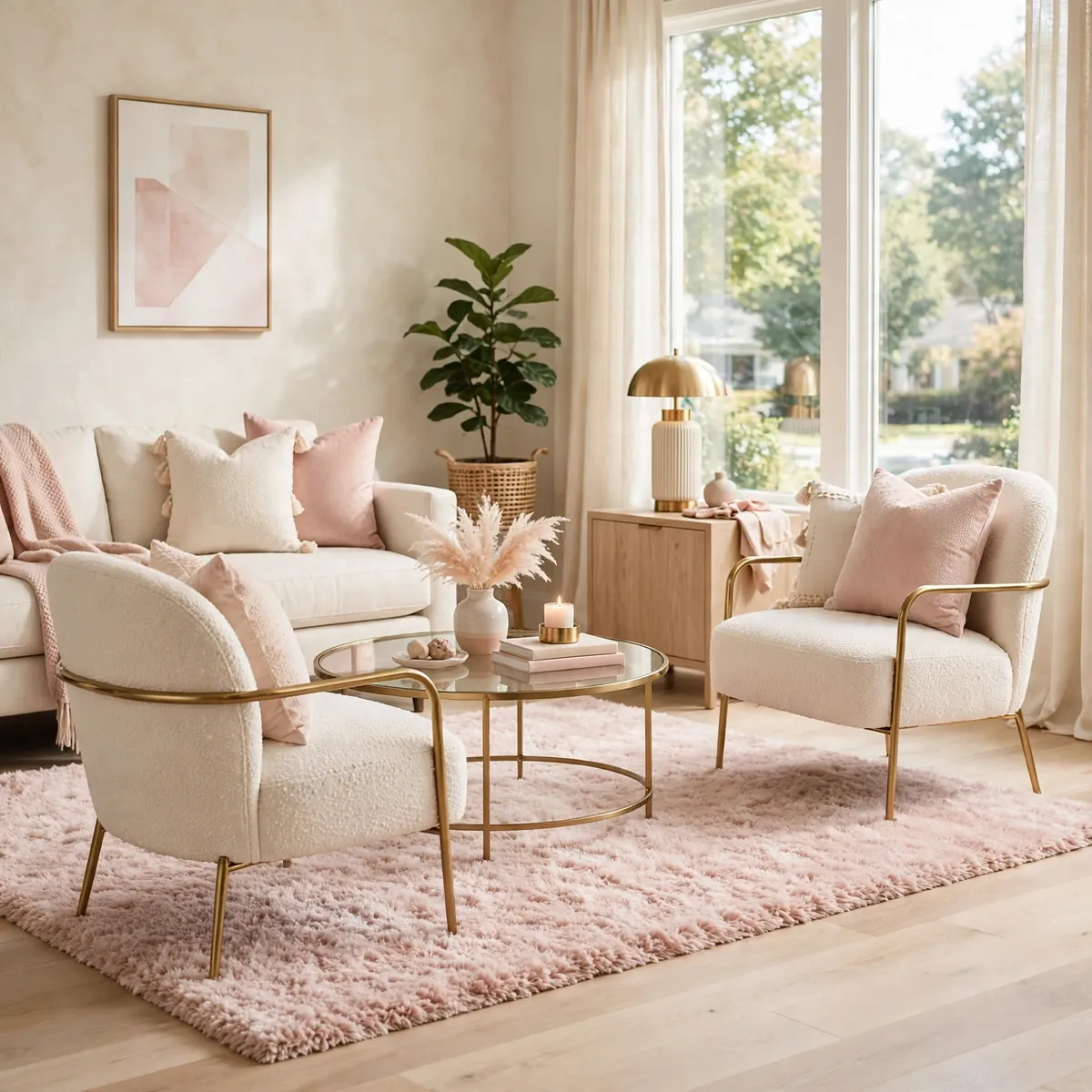
A blush shag rug is pure comfort — the room people sink into. High-pile blush works in cream, beige, and light-gray rooms where it reads as a warm neutral rather than pink, adding the softness flatweaves can’t.
The concrete example: a 6×9 blush high-pile shag under a round glass coffee table with cream bouclé chairs, layered over pale oak floors. If you have a media setup nearby, our tv wall decor ideas guide keeps the wall above the console as considered as the floor below.
Quick tips:
- Reserve shag for low-traffic zones — it mats down under heavy use.
- Brush monthly with a soft broom to keep the pile standing.
- Keep the rug one shade deeper than your sofa so it reads as an accent, not a match.
9. Botanical Green Flatweave
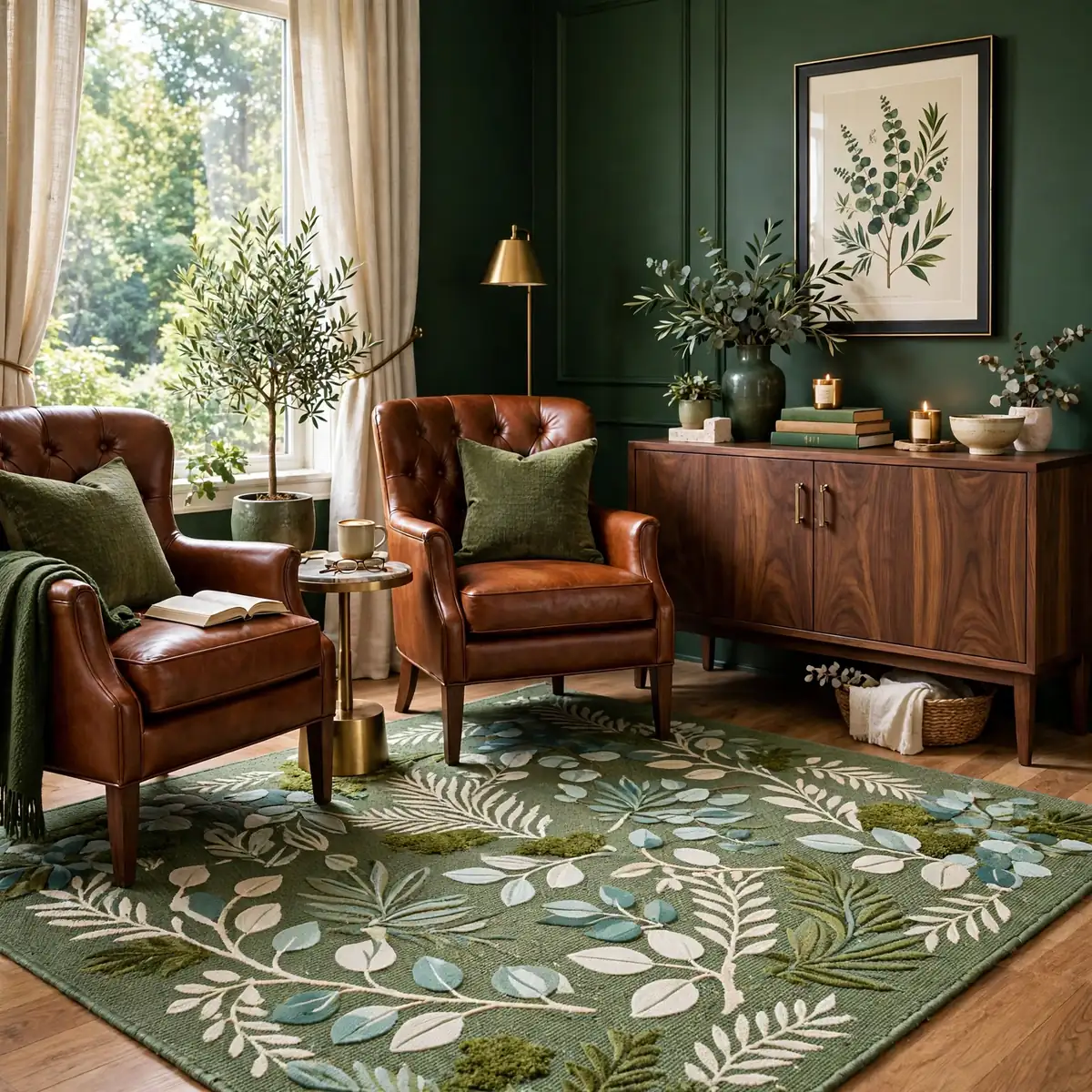
A green flatweave with botanical or leaf motifs brings the outdoors in without a single plant. Deep eucalyptus or olive patterns suit walnut and oak furniture beautifully — wood and green are a natural pair.
The concrete example: an 8×10 kilim-style flatweave in eucalyptus, moss, and cream with a subtle leaf repeat, under a walnut credenza and two cognac leather chairs in a reading corner. The rug defines the corner as its own zone inside an open-plan room.
Quick tips:
- Flatweaves are door-swing friendly — no pile to catch.
- Green rugs glow under warm 2700K light; cool bulbs flatten them.
- Use a botanical rug to zone a reading nook or desk area within a bigger room.
10. Mid-Century Golden Pattern
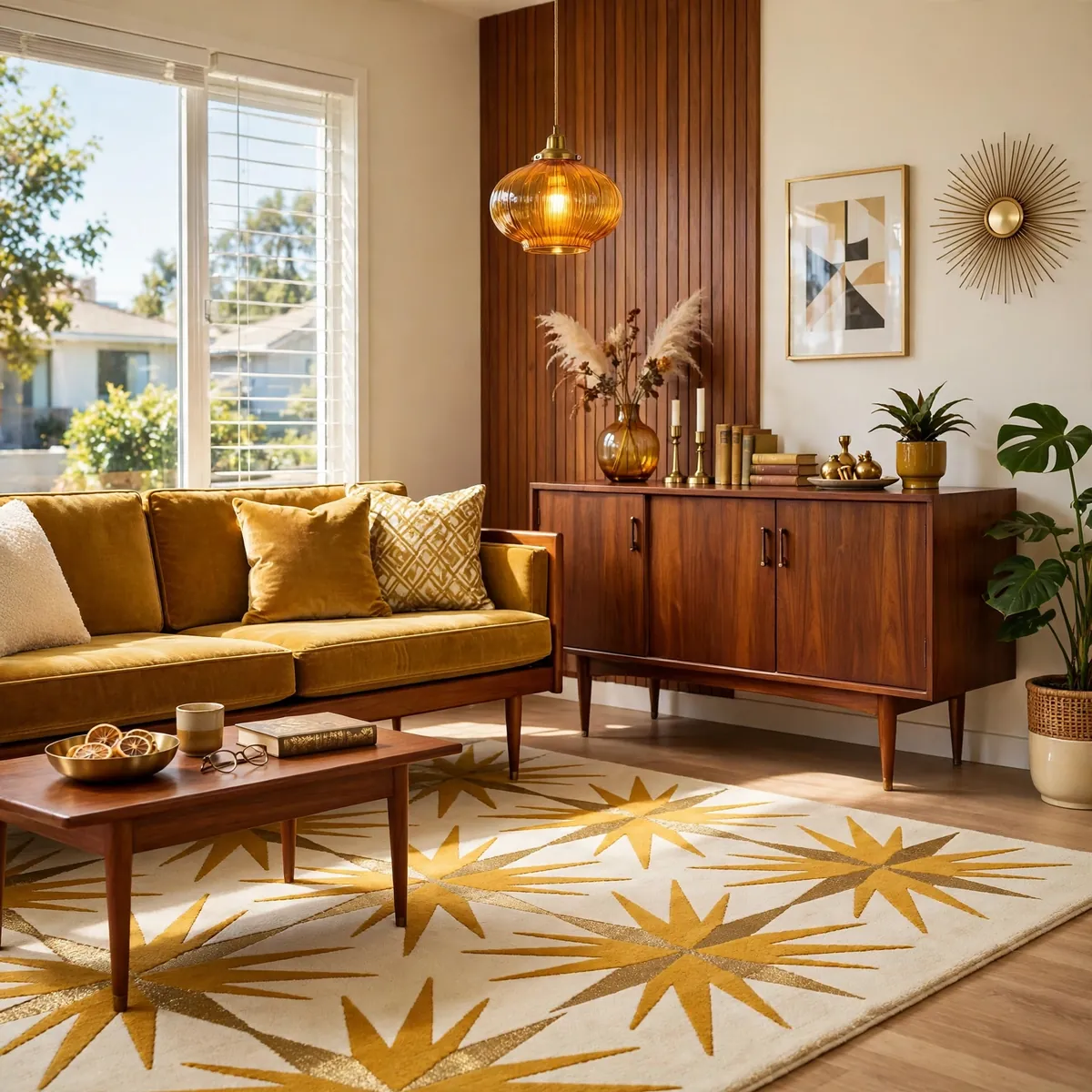
Mustard, gold, and burnt orange geometrics are mid-century’s signature on the floor. A retro starburst or atomic pattern rug makes teak and walnut furniture look like it was always meant to be there.
The concrete example: an 8×10 low-pile rug with a mustard starburst pattern on a cream field, under a teak-framed mid-century sofa with tapered legs, an amber glass pendant above, and a walnut sideboard. The rug’s geometry echoes the furniture’s clean lines.
Quick tips:
- Let the rug’s gold tones meet brass or teak — metal and wood amplify the pattern.
- Retro patterns age well; avoid literal kitsch prints that date fast.
- Keep adjacent textiles solid so the pattern breathes.
11. Dark Dramatic Statement
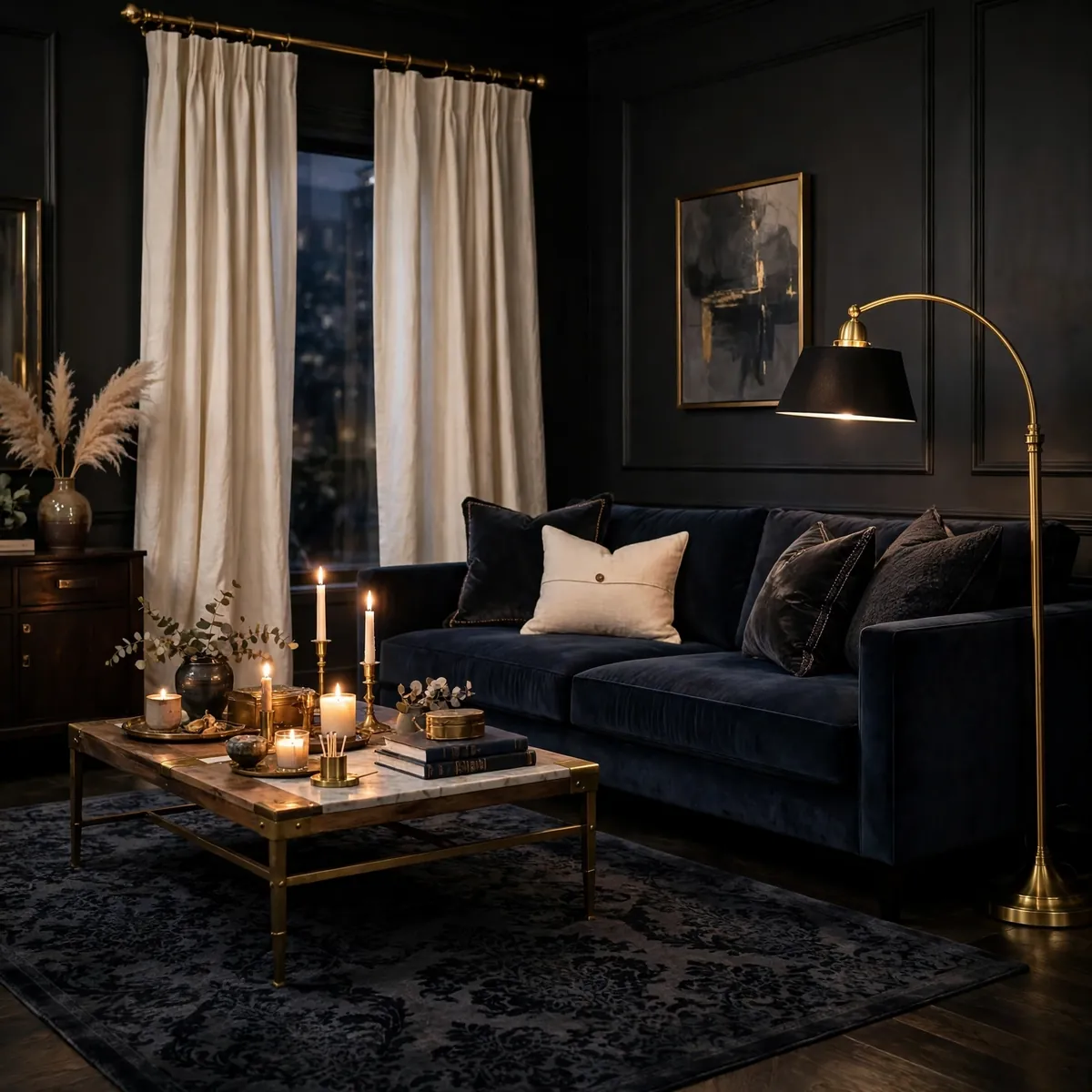
A dark rug is the moody-living-room secret: deep charcoal or ink-blue grounds the furniture and makes everything else — brass, velvet, candlelight — look richer by contrast. It works best in rooms with decent natural light so the floor doesn’t swallow the space.
The concrete example: a 9×12 charcoal rug with a tonal damask pattern, under a navy velvet sofa and brass arc lamp, with cream linen curtains balancing the darkness. The tonal pattern keeps it interesting up close while reading nearly solid from the door.
Quick tips:
- Dark rugs hide stains and pet hair better than any light color.
- Pair with light curtains and one cream piece so the room doesn’t close in.
- Tonal patterns (dark on dark) add depth without visual noise.
12. Small-Space Layering Trick
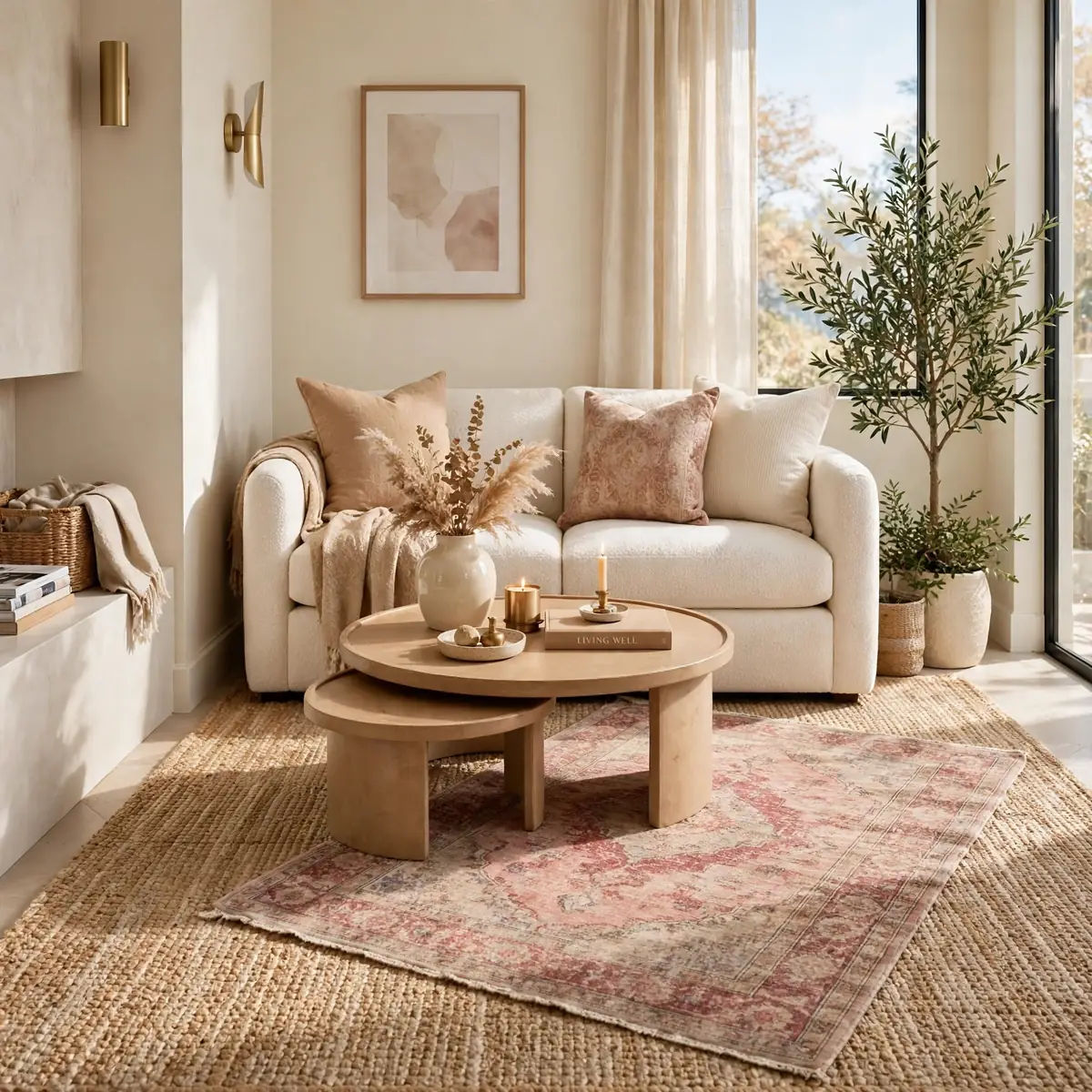
Small rooms don’t need small rugs — they need layered ones. A large flat jute or sisal base with a smaller patterned rug on top gives you the generous footprint of a big rug plus the personality of a small one, for less money.
The concrete example: an 8×10 natural sisal rug as the base with a 5×7 vintage-style rug in faded rose layered on top at a slight angle, under a compact loveseat and a round nesting table.
The angle adds movement so a boxy small room feels less rigid.
Because every element is flat, the layers stay put without bunching — and this is the longest paragraph in the article because layering is where most small-room rug mistakes happen: people buy one tiny rug that floats in the middle of the floor and wonder why the room feels unfinished, when a wide natural base plus one character layer would have grounded the furniture, hidden a mediocre floor, and cost less than a single premium 8×10.
Lay the base first, center it on the room rather than the furniture, then place the top rug under the coffee table’s front half so the two layers read as one intentional composition. A thin rug tape or pad between layers stops sliding.
Quick tips:
- Keep at least 12 inches of the base rug visible on all sides of the top layer.
- Flat-on-flat layers grip best; avoid shag as either layer.
- A slight angle on the top rug loosens up rigid small rooms.
Frequently Asked Questions
Should a rug go under the sofa?
Yes — at least the sofa’s front legs should sit on the rug so the furniture and rug read as one group. All four legs on the rug is even better in a large room, and the only common exception is a floating accent rug under just the coffee table in a small space.
Can a living room rug be smaller than the couch?
It can, but it usually looks better larger. A rug shorter than the sofa makes the seating area feel pinched; if the room truly can’t fit an 8×10, use a 6×9 placed so the sofa’s front legs and the coffee table both sit on it.
What is the best rug material for a home with pets and kids?
Polypropylene and PET rugs handle the most abuse — they’re stain-resistant, bleach-cleanable, and inexpensive to replace. Wool is the premium pick: naturally stain-resistant and durable, though it costs more. Either way, add a quality rug pad to prevent slipping.
Can you layer a rug on top of carpet?
Yes. Use a flat, low-pile rug directly on the carpet so the edges lie flat, and add a rug pad designed for carpet-on-carpet to stop bunching. Avoid thick shag or heavily textured rugs on carpet — they slide, ripple, and become trip hazards.
Conclusion
The best living room rug ideas all come back to three decisions made in order: size that fits the furniture, material that fits your life, and color that fits what you already own. Get the size right first — front legs on, floor border showing — and even a simple flatweave looks like a designer’s choice. Pick one idea from this list that matches your room, measure with painter’s tape before you buy, and let the rug do the heavy lifting.