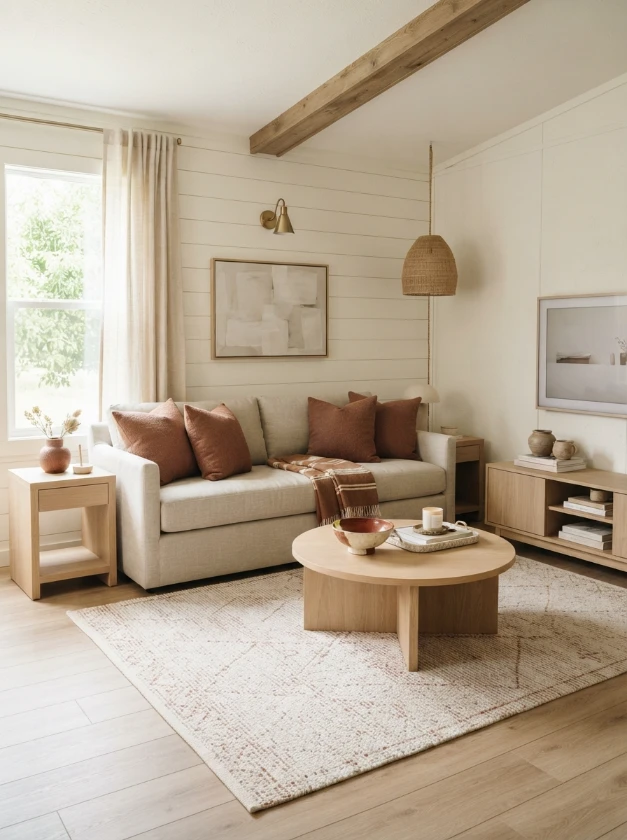
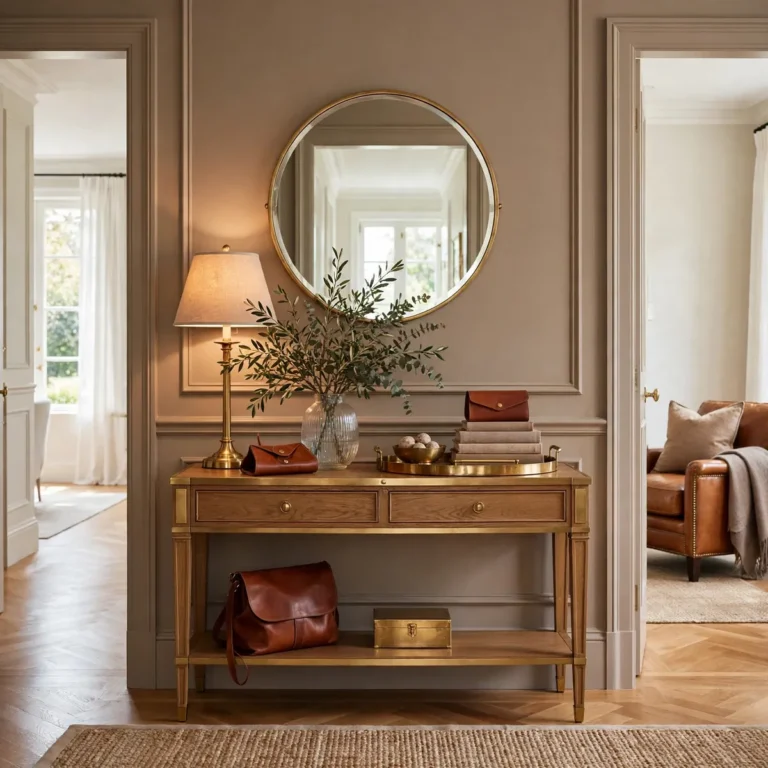
What Actually Makes A Small Apartment Living Room Feel Finished Instead Of Cramped
A small apartment living room does not need more furniture, more decoration, or a bigger floor plan to feel complete. What it needs is a clear visual rhythm. When lighting, furniture scale, color, storage, and empty space work together, even a compact apartment living room can feel comfortable, polished, and genuinely personal.
The trick is to stop treating limited square footage as a problem to hide. Instead, every choice should have a reason. A slim sofa can create breathing room, a wall-mounted light can free a side table, and one large piece of art can make the room feel more intentional than a collection of tiny decorations. Once these principles are in place, these mid-century modern apartment ideas show how the same small-space thinking looks in a fully styled apartment.
Start With A Layout That Gives The Room Breathing Space
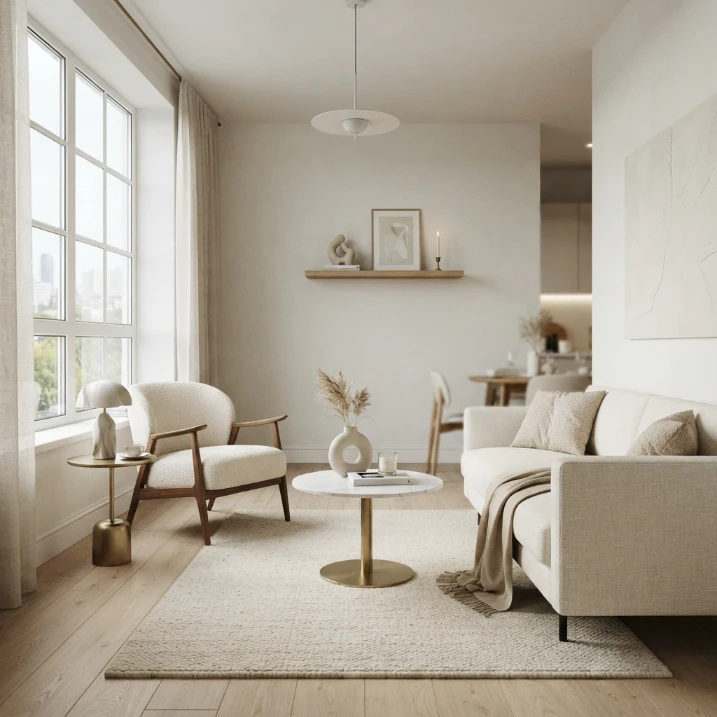
The layout has more influence on a small living room than almost any decorative accessory. Begin by identifying the natural walking path between the entrance, sofa, windows, balcony, and other rooms. Keep that route as open as possible instead of pushing furniture into random corners.
Choose a sofa that fits the wall without overwhelming it, then build the rest of the room around that main piece. A compact coffee table, narrow accent chair, or small nesting tables can provide function without creating a wall of furniture.
Do not feel obligated to place every piece directly against a wall. A sofa positioned slightly away from the wall can sometimes create a more intentional seating zone. The goal is not to maximize the number of objects in the room; it is to make movement feel effortless.
Build The Small Apartment Living Room Around Lighting
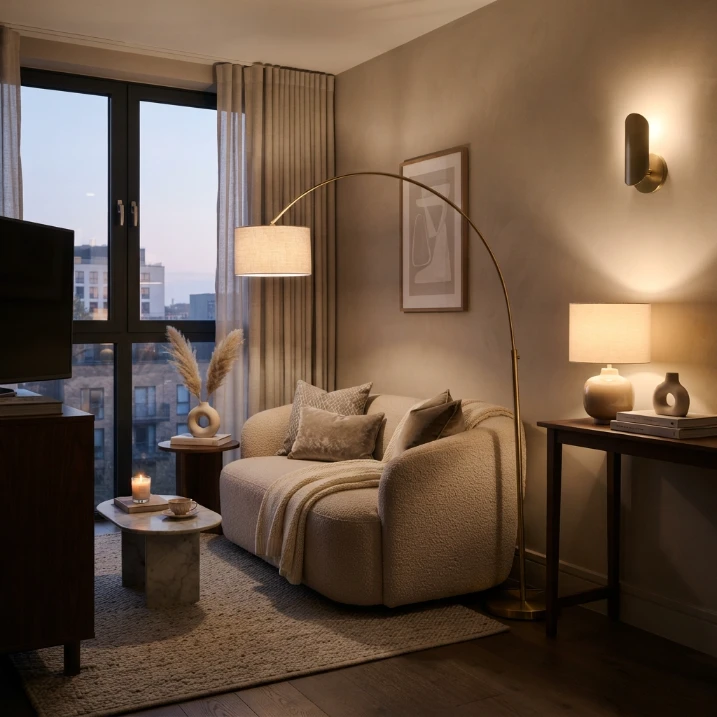
Lighting can make a compact room feel dramatically more finished because it changes how the walls, furniture, and corners are perceived. A single ceiling fixture often leaves a small living room looking flat, especially at night.
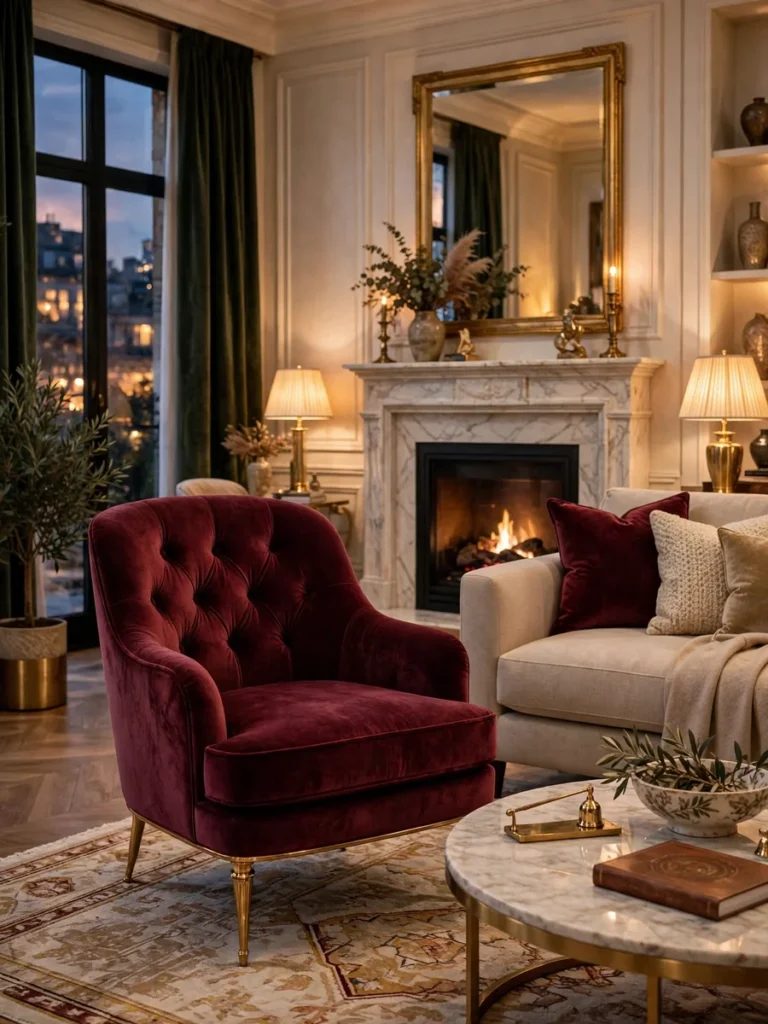
Instead, layer several light sources. Use a floor lamp beside the sofa, a table lamp on a narrow console, wall sconces where practical, and warm accent lighting on a shelf. During the day, keep window areas visually open so natural light can travel through the room.
Warm bulbs can make wood, cream upholstery, earthy colors, and textured fabrics feel inviting. If the room has limited daylight, mirrors placed thoughtfully across from or near windows can help reflect available light without making the space feel overly decorated.
Choose Furniture With A Lighter Visual Footprint
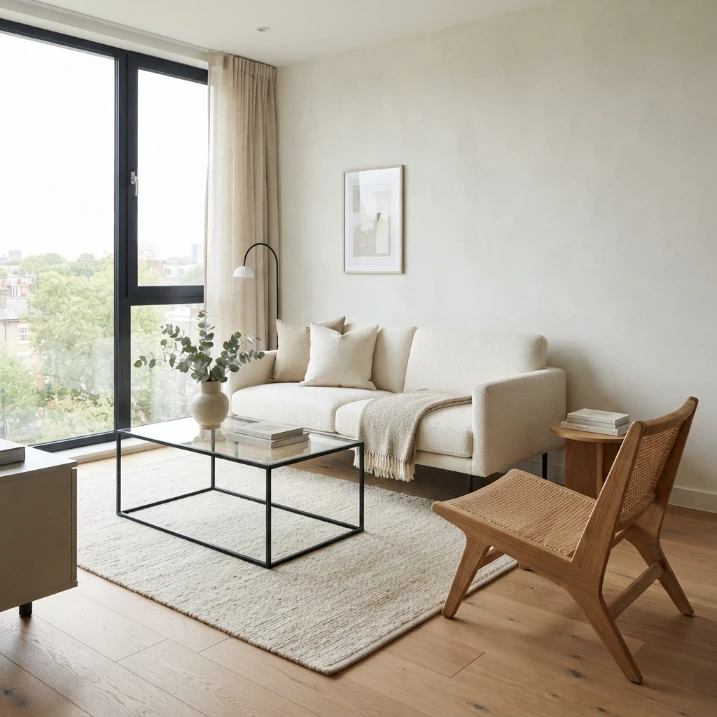
Small-space furniture does not always have to be miniature. What matters is how much visual weight it carries. A sofa with raised legs, an open-frame coffee table, or an armchair with exposed wood or metal can make more of the floor visible.
Glass and acrylic can also work well for occasional tables because they provide useful surfaces without creating another heavy visual block. Upholstered furniture with slim arms can offer comfortable seating while taking up less width than a bulky traditional sofa.
Before buying anything, measure the room and the furniture itself. Leave enough space for doors, drawers, walking paths, and everyday movement. A beautiful piece that blocks circulation will make the entire room feel smaller.
Give The Walls A Job
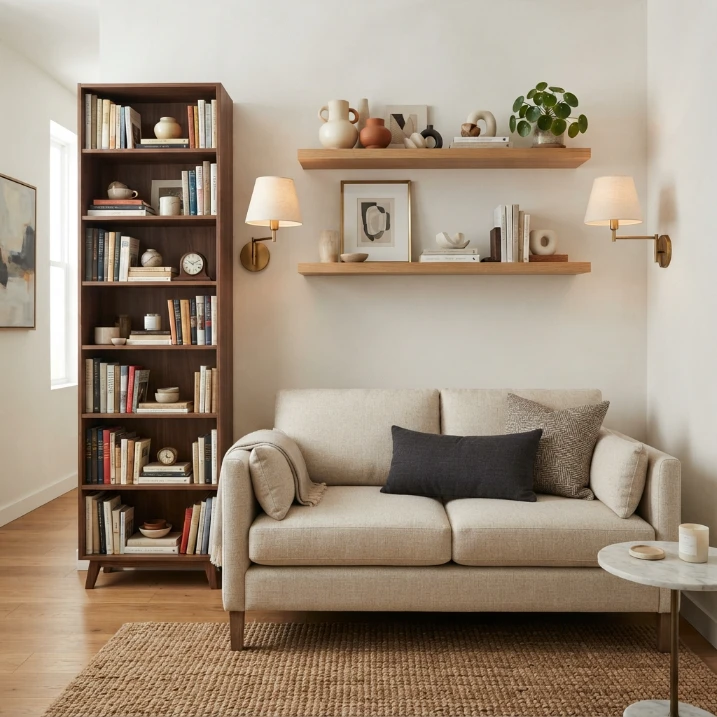
When floor space is limited, the walls become valuable real estate. Use them for storage, lighting, art, or architectural interest rather than adding another floor-standing item.
Floating shelves can hold a small collection of books, framed artwork, ceramics, and plants. A tall bookcase can draw the eye upward while providing storage. Wall-mounted sconces can replace table lamps where surface space is scarce. If you rent and cannot drill, leaning frames, adhesive hooks, and freestanding shelf units give you most of the same wall function without putting holes in the walls.
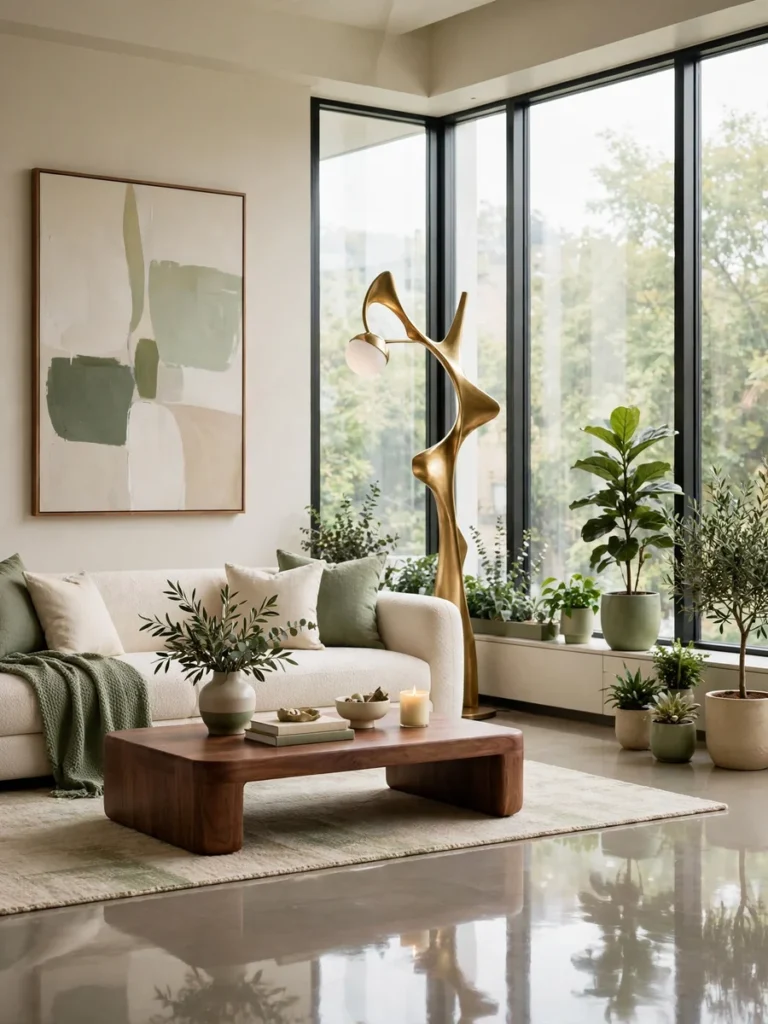
One oversized artwork can also create a strong focal point. Instead of filling every wall with small frames, choose one large print, painting, textile, or gallery-style arrangement that connects with the room’s color palette.
Use A Cohesive Color Palette Instead Of Too Many Accents
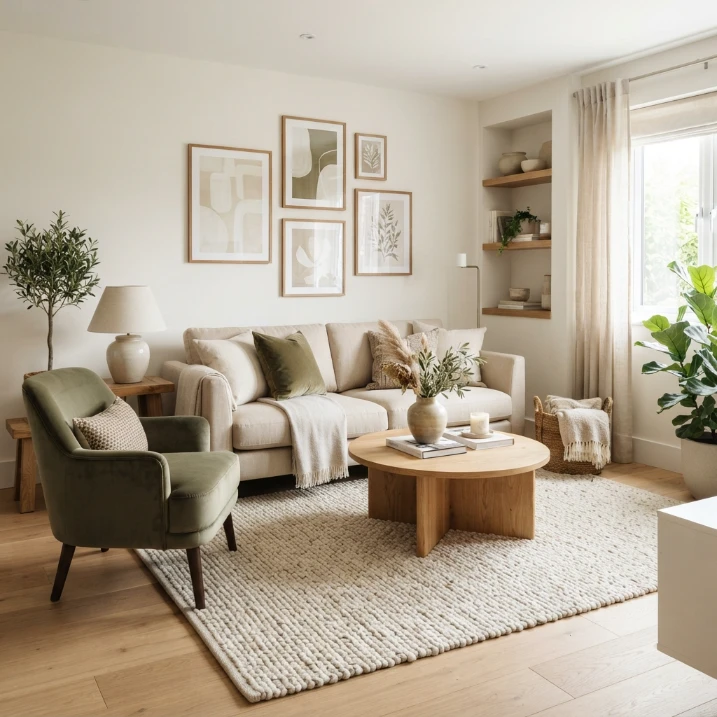
A compact living room often feels calmer when the main colors are repeated across several elements. This does not mean everything has to match. It means the room should have a visual relationship between the walls, sofa, rug, curtains, artwork, and accessories.
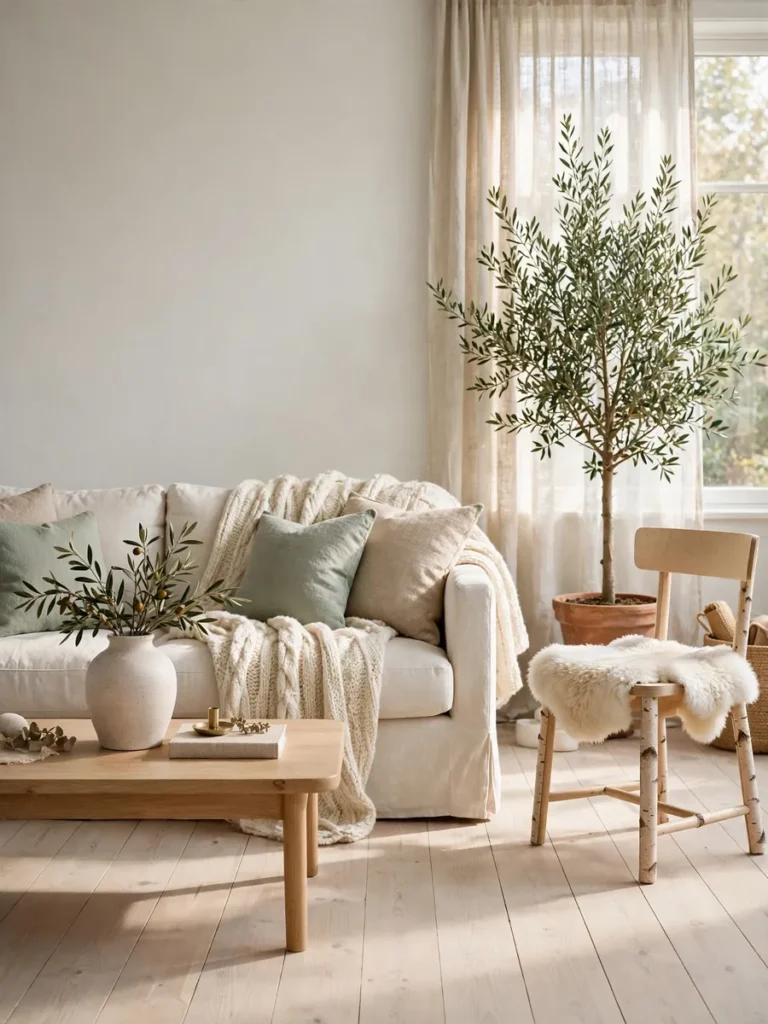
Start with two or three core colors. For example, warm white walls can work with oatmeal upholstery, natural wood, and muted olive accents. A soft beige room can take on more character through rust, chocolate brown, or dusty blue details.
If you love bold color, use it strategically. A deep green chair, terracotta rug, or blue artwork can become the feature without making the whole room feel crowded.
Let One Rug Define The Seating Area
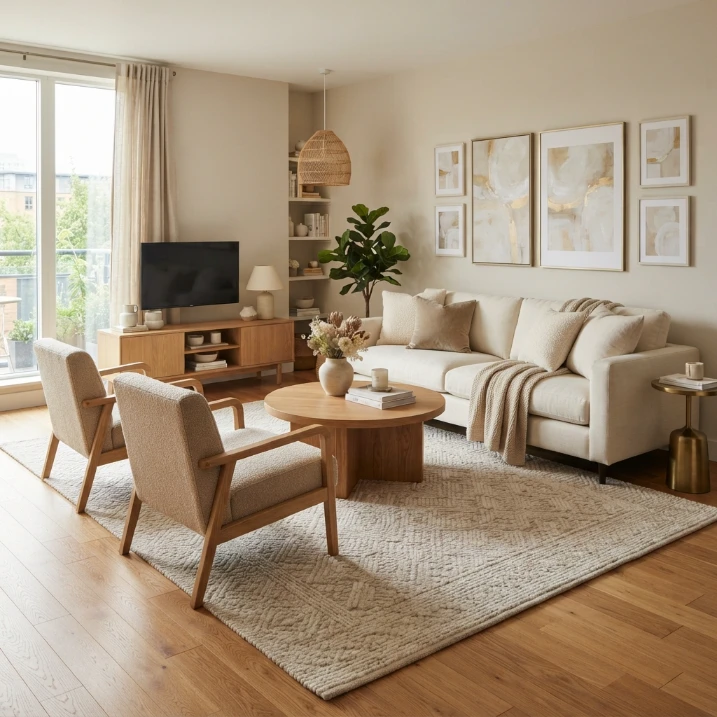
A rug can make a small living room feel more finished because it visually gathers separate pieces into one intentional zone. Without one, a sofa, coffee table, and chair can look like unrelated objects scattered around the floor.
Choose a rug large enough for at least the front legs of the main seating pieces to sit on it when possible. In a very small room, a smaller rug can still work if it clearly anchors the coffee table and seating arrangement.
Subtle patterns are useful when you want personality without visual overload. If the furniture is plain, a patterned rug can provide energy. If the sofa and artwork are already expressive, a quiet textured rug may be the better choice.
Make Storage Look Like Part Of The Decor
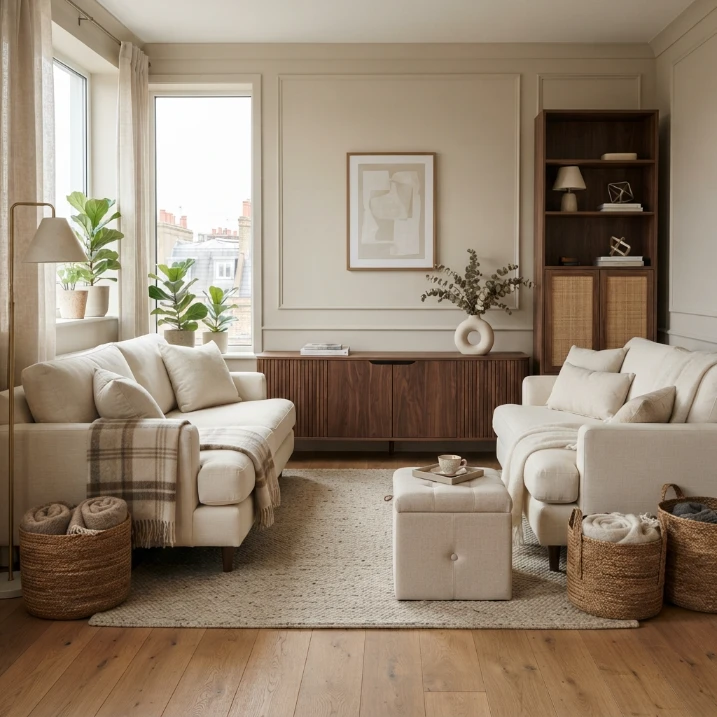
Clutter is one of the fastest ways to make a small apartment living room feel cramped. Instead of adding storage as an afterthought, choose pieces that contribute to the design.
A closed media console can hide electronics, baskets can collect blankets, and a storage ottoman can provide both seating and concealed space. A narrow cabinet can hold everyday items while doubling as a surface for a lamp or artwork.
Keep frequently used objects easy to put away. When the room can be reset quickly at the end of the day, it is much easier to maintain the clean, finished appearance you want.
Use Curtains To Add Height
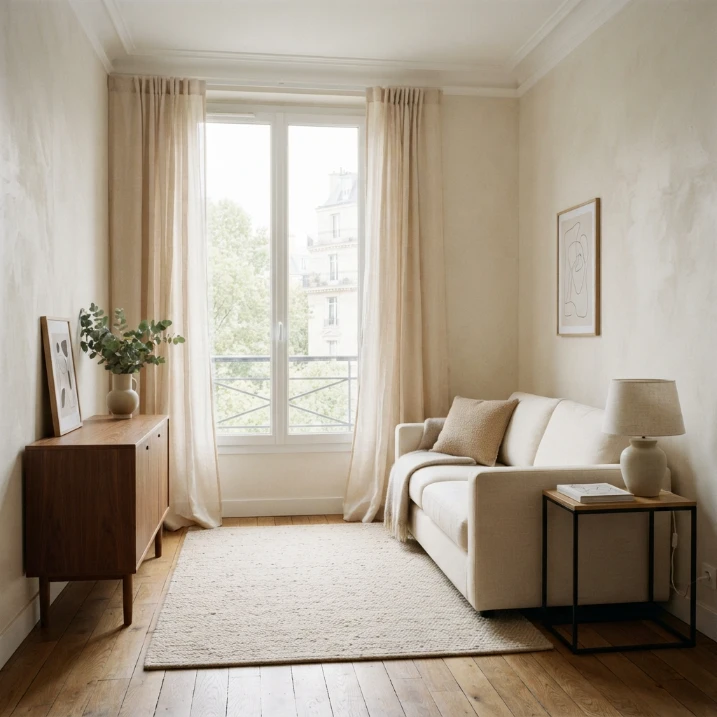
Window treatments can change the proportions of a compact living room. Hanging curtains close to the ceiling and allowing them to fall near the floor can create a taller, more elegant appearance.
Choose a fabric that does not feel excessively heavy. Linen-look panels, cotton blends, or lightweight textured curtains can soften the windows while allowing daylight to remain part of the room.
Keep the curtain color close to the wall color if your priority is visual calm. For more contrast, choose a shade that repeats an existing color from the rug, artwork, or upholstery.
Add Texture So The Room Feels Layered, Not Crowded
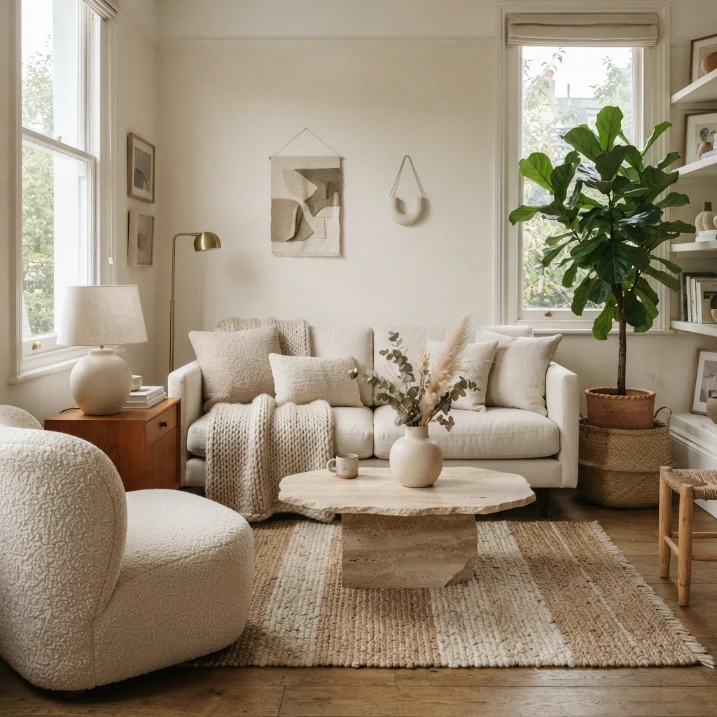
A small room can still have plenty of personality without having many objects. Texture is one of the easiest ways to create that richness.
Combine a woven basket with a soft throw, a textured cushion with smooth ceramic, or a wooden table with a boucle or linen accent chair. These contrasts make the room feel considered without requiring additional decorative pieces.
Plants can also bring texture and softness. One medium or tall plant is often more effective than several tiny pots spread across every surface.
Choose A Focal Point And Let It Breathe
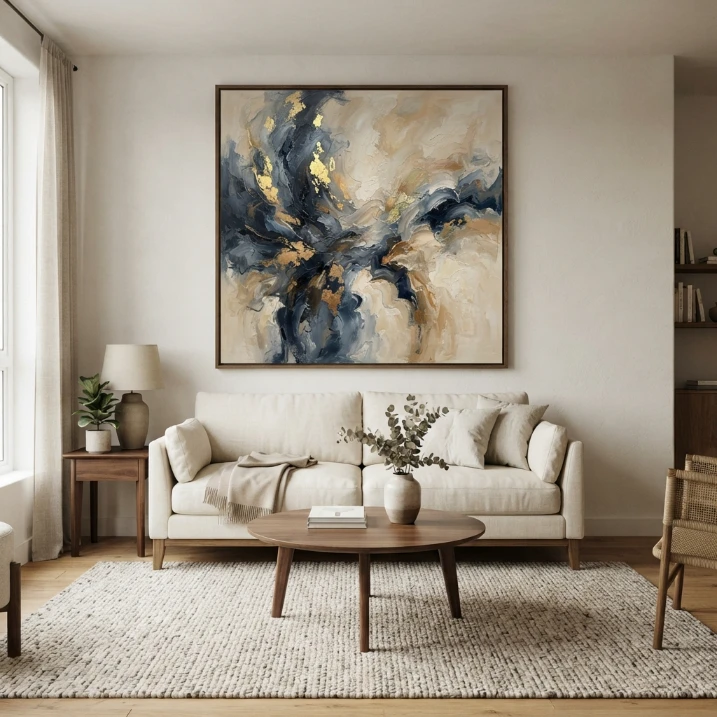
Every finished living room benefits from a visual anchor. In a small apartment, that might be a beautiful sofa, a large artwork, a fireplace, a statement light, a colorful rug, or a distinctive view from the window.
Once you have chosen the focal point, keep the surrounding areas quieter. Too many competing statement pieces can make a compact room feel visually busy even when the actual floor is tidy.
Leave some empty wall and floor space around your strongest feature. Negative space is not wasted space; it gives the eye somewhere to rest and makes important pieces stand out.
Make The TV Blend Into The Room
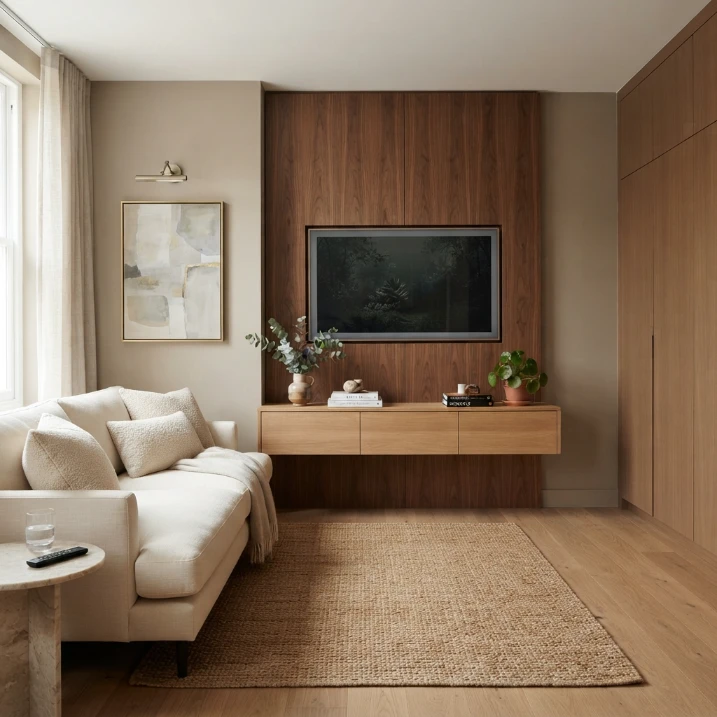
Televisions can become one of the largest dark rectangles in a small living room. If the TV is essential to your setup, make it feel connected to the room rather than treating it as the only focal point.
Mounting it at a comfortable viewing height can reduce the need for a large media unit. Keep cables tidy with a slim cord cover or adhesive cable clips so the setup reads as intentional rather than improvised. A slim console below it can provide storage while keeping the composition balanced. Artwork, books, plants, or decorative objects can be used carefully around the screen when they do not interfere with viewing.
Keep The Coffee Table Proportional
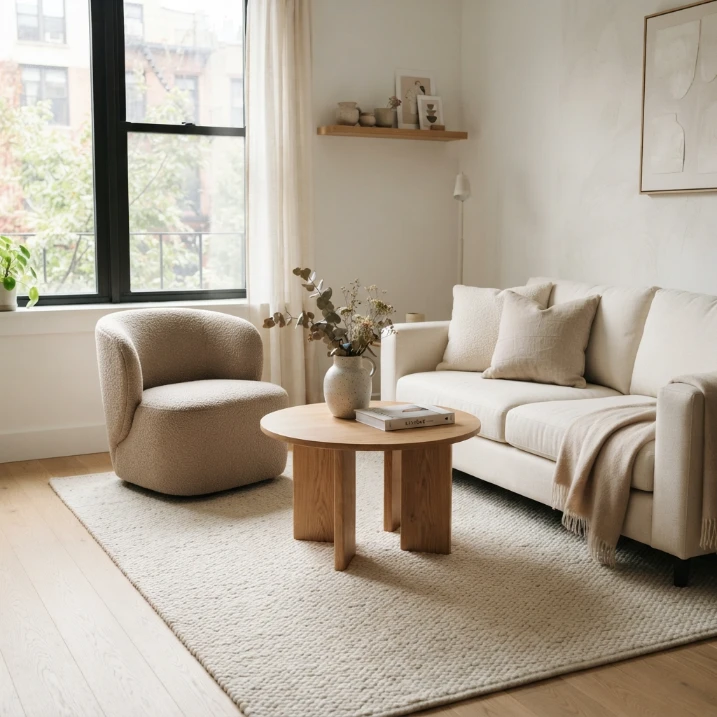
The coffee table should serve the seating area without becoming an obstacle. In a tight room, nesting tables, a round table, or a compact oval design can make movement easier than a large rectangular piece.
Round and softly curved shapes are particularly useful when you want to reduce the number of hard corners around a narrow walking path. Keep the tabletop edited to a few useful or attractive items rather than covering it with accessories.
Repeat Shapes To Make The Design Feel Intentional
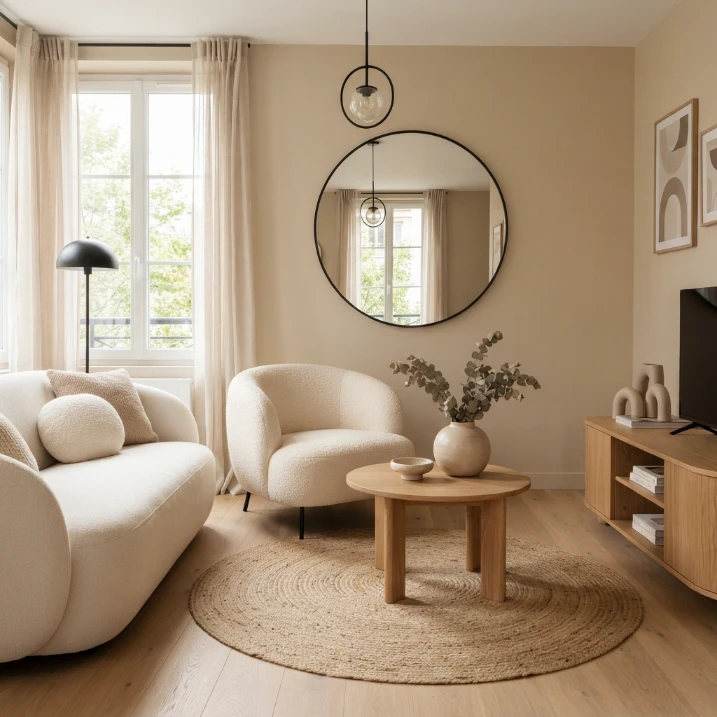
Small rooms benefit from repetition. If your coffee table has rounded edges, echo that shape in a mirror, lamp, cushion, or artwork. If you have black metal details, repeat that finish in two or three places rather than introducing several unrelated metals.
This simple design technique creates cohesion without requiring matching furniture. The room feels finished because the eye recognizes relationships between different objects.
What To Avoid In A Small Apartment Living Room
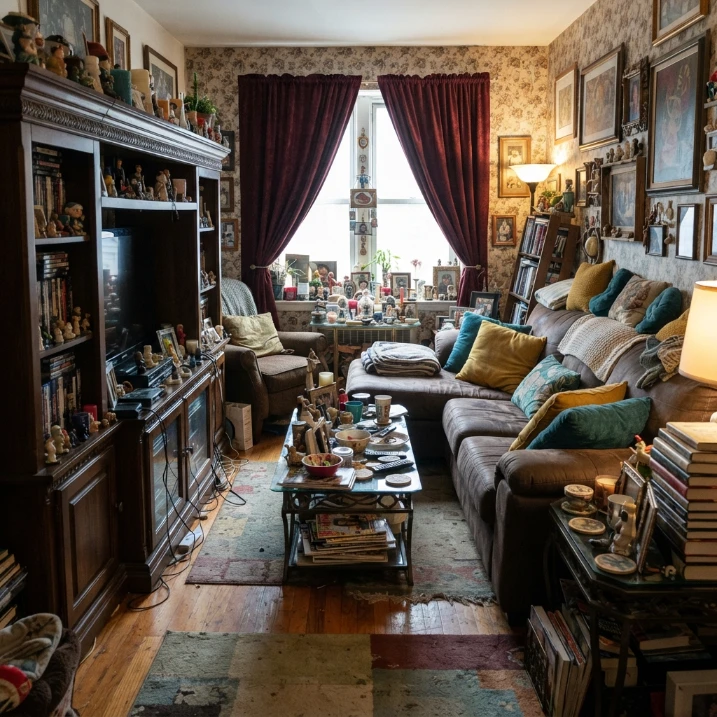
- Oversized furniture that blocks walking paths or windows.
- Too many tiny decorative objects spread across every surface.
- Heavy curtains that reduce natural light.
- Multiple competing accent colors with no visual connection.
- Storage furniture that adds bulk without solving a real problem.
- Furniture arranged only around the walls rather than around how people actually use the room.
Final Thoughts
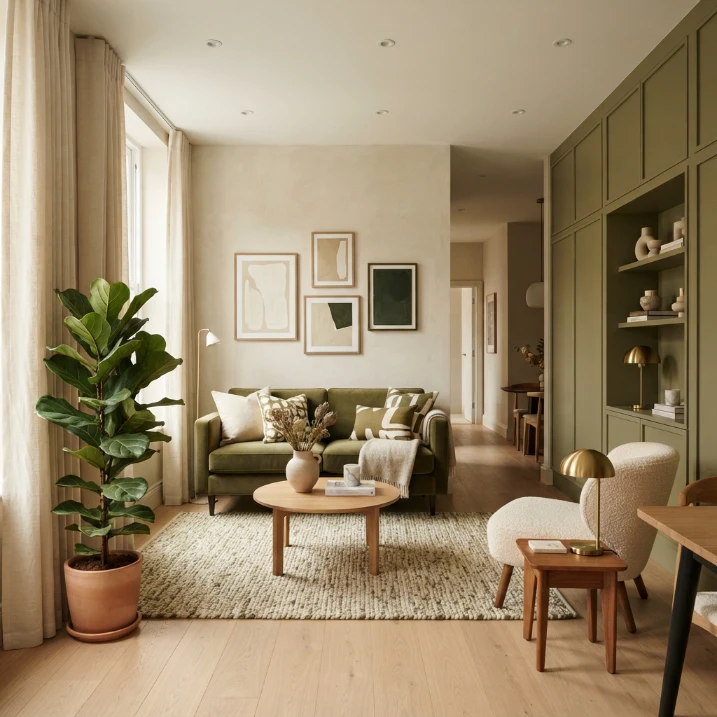
A finished small apartment living room is not created by squeezing more into a limited footprint. It comes from choosing fewer things more carefully. Start with a practical layout, layer the lighting, select furniture with a lighter visual presence, use the walls intelligently, and repeat colors and shapes throughout the space.
Most importantly, leave room for the space to breathe. A compact living room can feel warm, stylish, and personal when every major choice supports comfort instead of competing for attention.