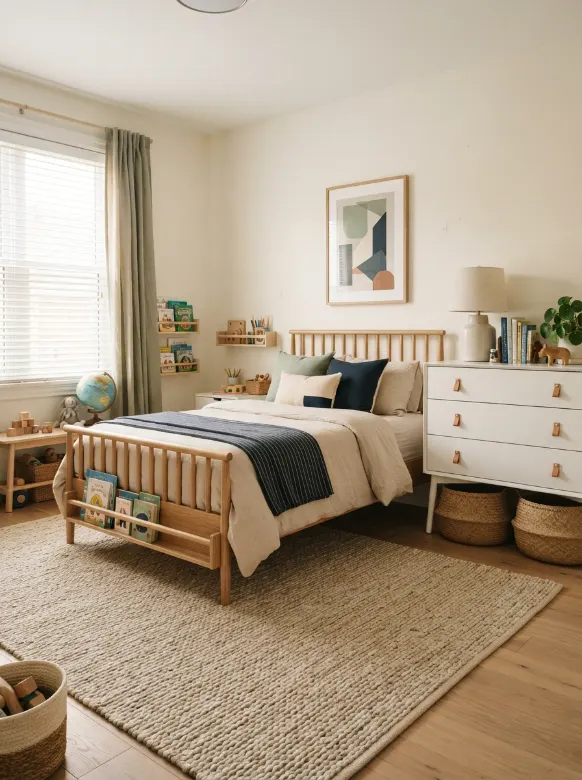
How Real Designers Theme A Toddler Boy Room Without It Looking Childish
Designing a Toddler Boy Room is less about covering every wall with a theme and more about giving the room a clear point of view. A toddler may love dinosaurs today and space rockets next year, while the furniture still needs to work every night. The most successful rooms leave room for that change. They use color, shape, artwork, textiles, and a few playful details to create personality without making the whole bedroom feel like a nursery or a toy store.
The goal is a bedroom that feels fun enough for a little boy but polished enough for the adults living with it. Start with a flexible foundation, then let the theme appear through details that are easy to replace. That approach keeps the room attractive now and much easier to update later.
Start With A Grown-Up Foundation And Add The Toddler Personality
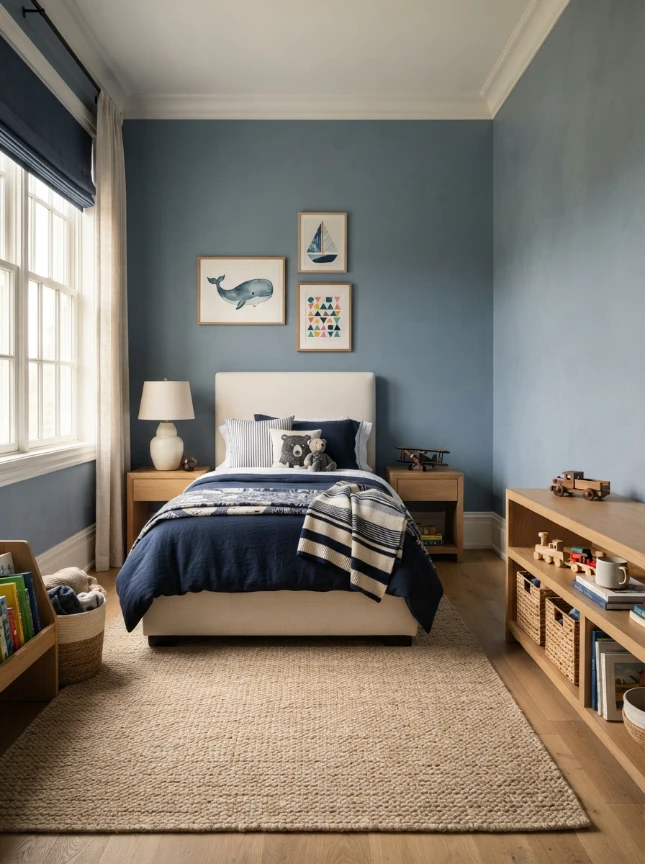
Begin with the pieces that are expensive or difficult to change: the bed, dresser, storage, flooring, and main lighting. Natural wood, warm white, soft beige, muted blue, or gentle green can give those pieces a lasting look. Once the foundation is calm, brighter colors and playful patterns can come from bedding, rugs, curtains, wall art, and small accessories.
This creates an important visual balance. The room can clearly belong to a toddler without every surface announcing his age. It also means a new duvet cover or set of prints can change the mood without replacing the entire bedroom.
Choose One Theme And Give It Plenty Of Breathing Room
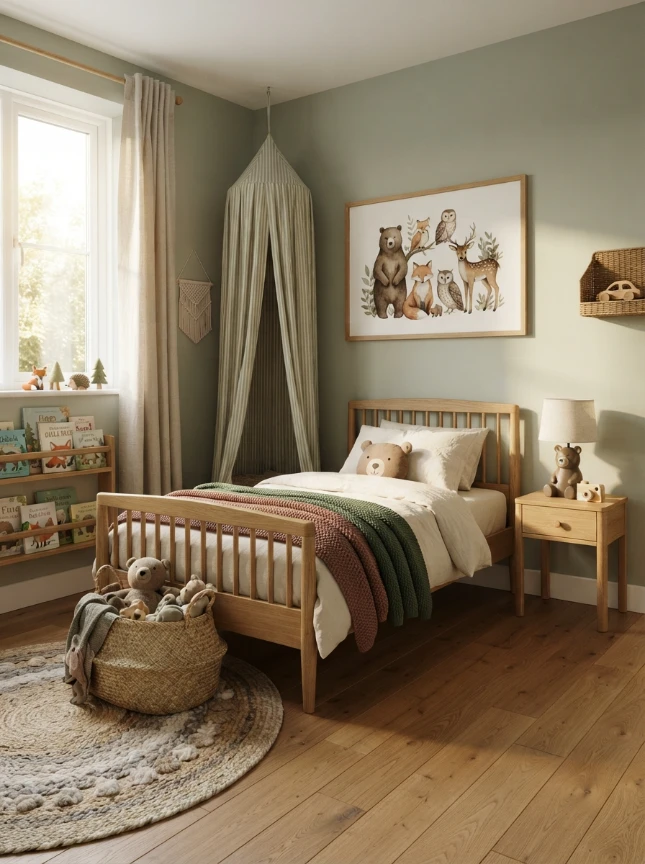
A strong theme does not need to appear ten different ways. Pick one idea your child genuinely enjoys—such as woodland animals, vehicles, outer space, dinosaurs, or the great outdoors—and choose two or three visual references from it. For example, a woodland room might use a forest-print rug, one framed animal illustration, and a few small tree shapes on the wall.
Leaving quieter areas around those details makes each feature easier to notice. Too many matching objects compete with one another and can make a bedroom feel younger than it needs to. A restrained theme usually looks more intentional and gives you more freedom when your toddler’s interests change.
Use A Two-Color Palette Before Adding Accent Shades
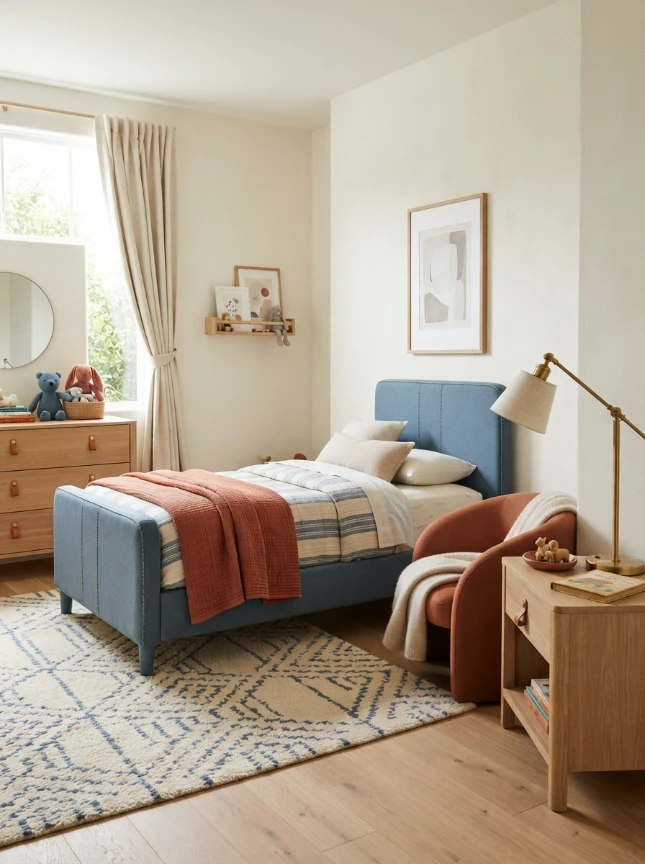
Color is one of the easiest ways to make a Toddler Boy Room feel designed rather than assembled. Choose one main color and one supporting color, then let warm neutrals fill the rest of the room. Dusty blue with sand, sage with cream, navy with warm white, or terracotta with soft beige can all create a playful but mature base.
Use the strongest color in small doses: a chair, blanket, artwork, lamp, or storage bins. Repeating the same accent in several locations makes the room feel connected without forcing every item to match.
Make The Bed The Main Character

The bed naturally becomes the visual center of a toddler’s bedroom, so it is a better place to carry the theme than every wall. A simple wood bed can look adventurous with a striped quilt, a map-inspired blanket, animal-print cushions, or a canopy in a soft natural fabric.
If you want a stronger statement, use a shaped headboard or a simple painted wall arch behind the bed. Keep the surrounding furniture quiet so the sleeping area feels special rather than crowded. For a young child, also keep bedding practical, washable, and appropriate for the child’s age and sleep needs.
Turn A Small Wall Into A Storytelling Corner
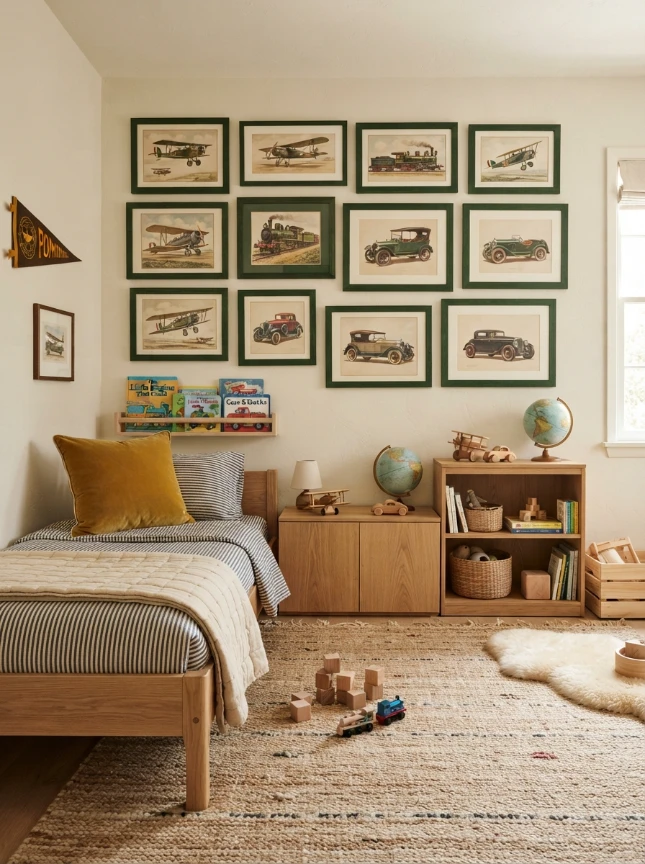
Instead of decorating every wall, dedicate one small area to storytelling. A low picture ledge can hold rotating books and a few framed prints. A collection of simple illustrations can create a mini gallery, while removable decals can add mountains, clouds, stars, trees, or vehicles without committing the entire room to a permanent mural.
Keep the arrangement slightly open. Toddlers benefit from being able to see and reach familiar objects, and the display can double as a learning area when you rotate books and pictures based on current interests.
Create A Reading Nook That Feels Like His Own Place
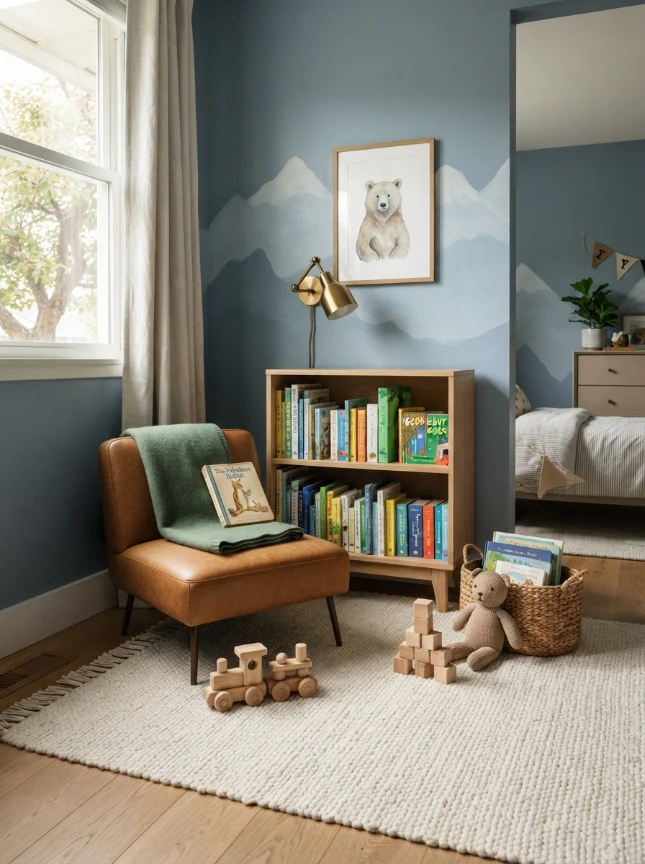
A toddler bedroom becomes more useful when it includes a small place for quiet play and reading. A floor cushion beside a low bookshelf can be enough. In a larger room, add a compact upholstered chair, a washable rug, and a warm reading lamp. The corner does not need a complicated built-in to feel intentional.
Choose storage that lets your child see the books and toys rather than hiding everything behind tall cabinet doors. Low furniture also makes it easier for a toddler to participate in simple cleanup routines.
Use Lighting To Change The Mood At Night
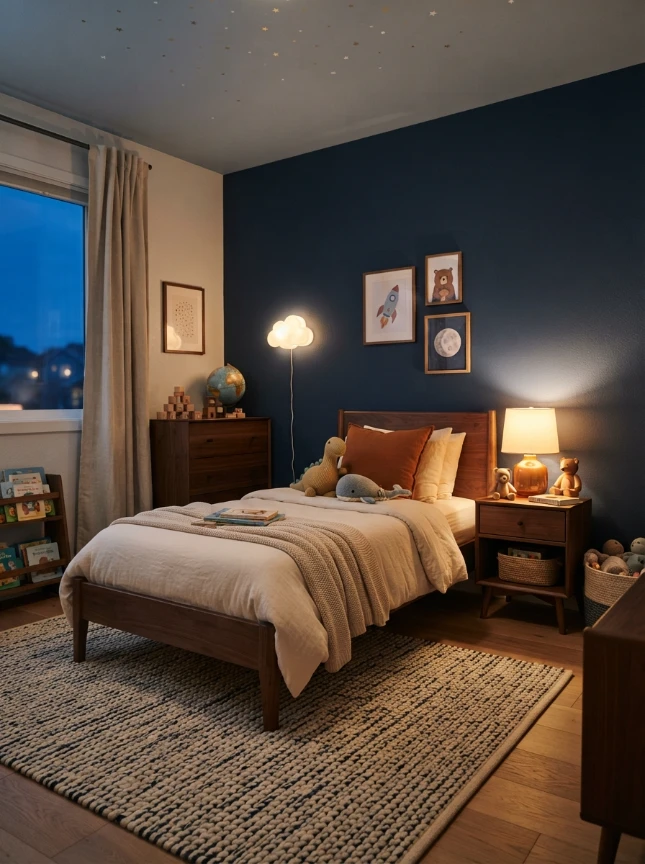
Lighting can make a themed bedroom feel polished rather than overly decorative. Use one main ceiling fixture for general light, then add a softer bedside or reading light. A cloud-shaped, globe, star, or simple fabric shade can bring a playful note without taking over the room.
Warm-toned light is especially helpful in the evening because it creates a calmer atmosphere than harsh, cool illumination. Any lamps, cords, wall fixtures, and decorative lighting should be installed and positioned with the child’s safety in mind.
Give Toys A Designed Home Instead Of Hiding Them Away
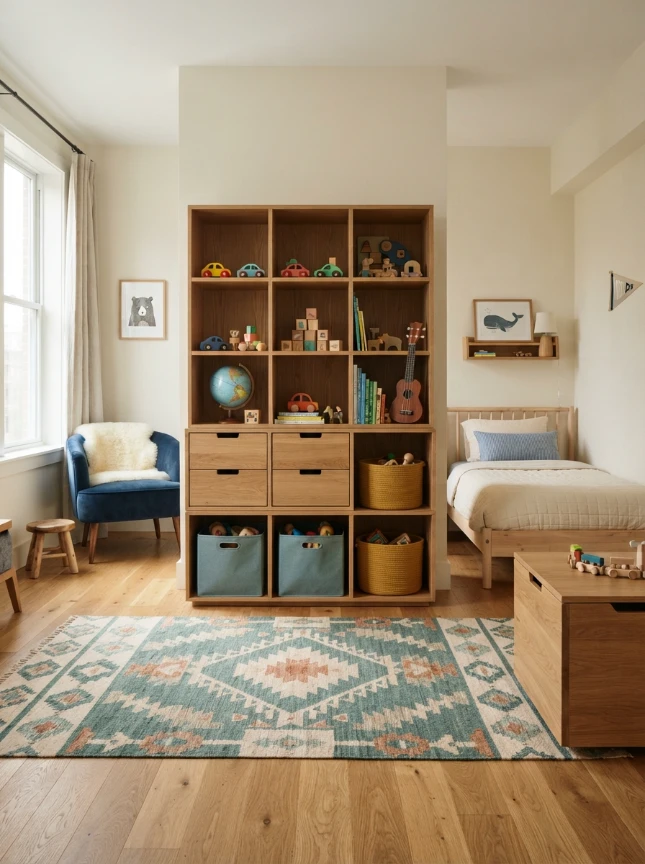
Toys are going to be visible in a toddler’s bedroom, so design the storage around that reality. Open cubbies, labeled baskets, low drawers, and a small toy chest can make everyday cleanup easier. Choose containers that repeat the room’s colors instead of introducing a completely new palette.
Keep the most frequently used toys at child height and rotate the rest. A smaller selection on display can make the room feel calmer while giving forgotten toys a chance to feel new again when they return to the shelves.
Bring In Natural Wood And Soft Textures

Natural materials are an easy way to keep a themed bedroom from looking like a commercial playroom. A wood stool, woven basket, cotton curtain, textured rug, or linen-look cushion adds warmth around brighter colors and illustrated patterns.
Mixing textures is more effective than adding more decorations. A simple room with wood, cotton, wool-like softness, and a little woven texture can feel layered even when the color palette remains restrained.
Add One Oversized Element For A Memorable Finish
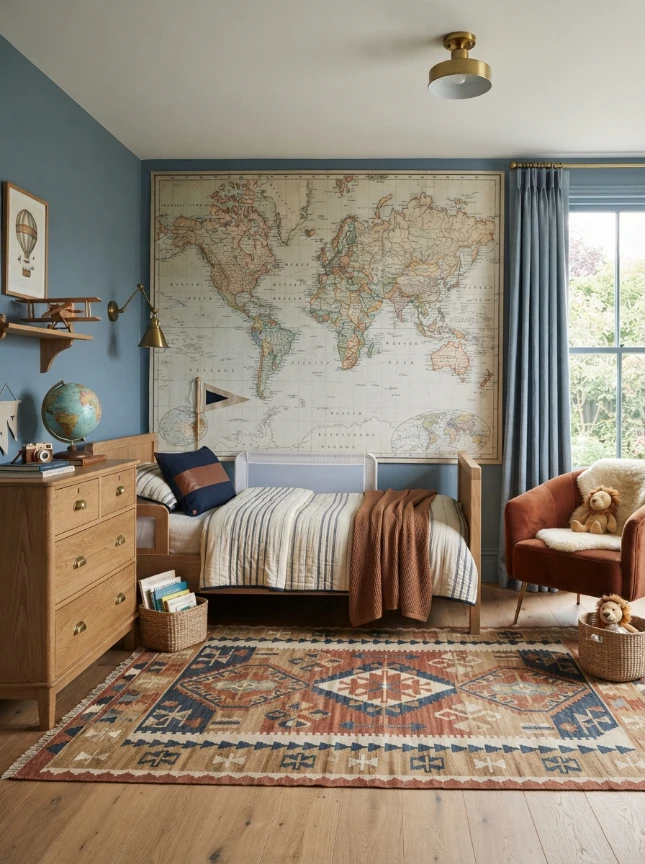
Every good Toddler Boy Room benefits from one feature that immediately catches the eye. It could be an oversized map, a large animal illustration, a playful rug, a painted arch, a canopy bed frame, or a statement chair. One substantial feature usually has more impact than a collection of tiny decorations.
Place that feature where it can be appreciated as soon as you enter the room. Then let the surrounding furniture and accessories support it rather than compete with it.
Design The Room So It Can Grow With Him
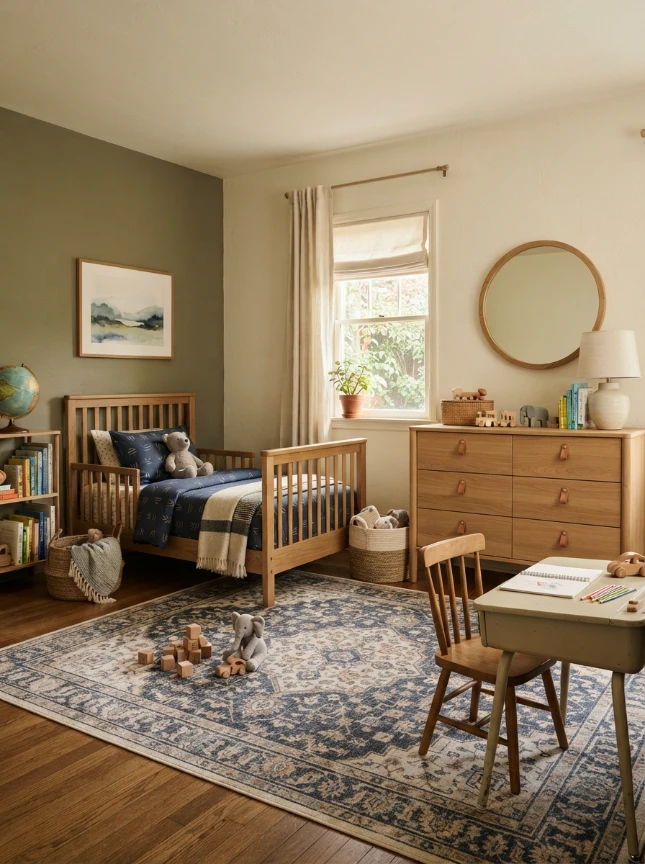
The smartest toddler bedroom is not designed only for the next six months. Choose a bed and storage system that can remain useful as your child grows, then keep the age-specific personality in pieces that are easy to replace.
Wall art, rugs, bedding, curtains, cushions, and small decorative objects can change quickly. A neutral dresser, solid wood bed, quality light fixture, and simple shelves can stay. This approach protects your budget and keeps the bedroom from requiring a complete makeover every time a new favorite interest appears.
Keep Safety Part Of The Design From The Beginning
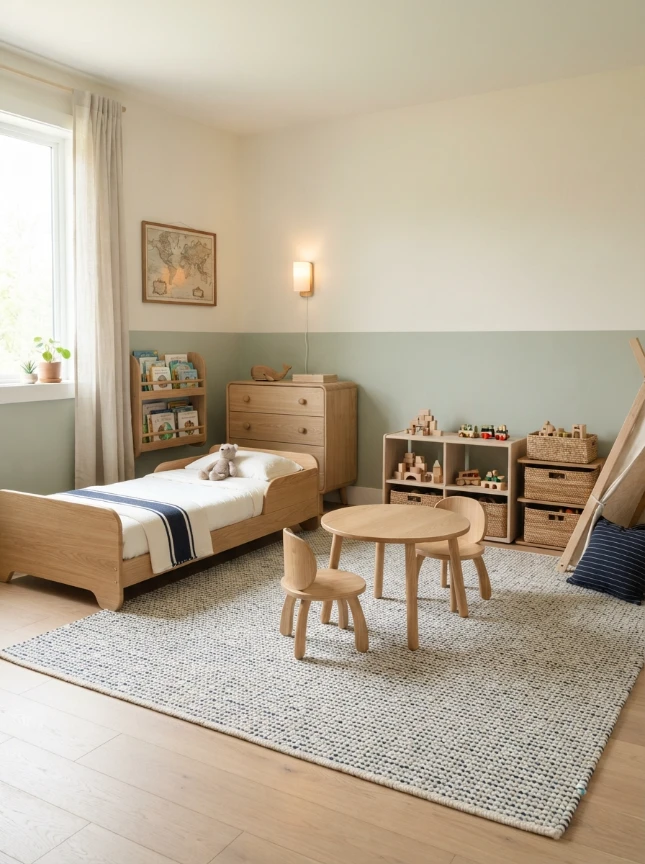
A beautiful toddler room still needs to work as a safe everyday space. Secure tall furniture to the wall, keep cords out of reach, use age-appropriate furniture and bedding, and avoid small decorative objects that could become hazards. Window treatments, shelves, mirrors, lighting, and climbing-prone furniture should be installed with the child’s age and behavior in mind.
Safety does not have to make the room look plain. When storage, lighting, and furniture are selected thoughtfully from the start, practical choices can become part of the overall design.
Final Thoughts On A Stylish Toddler Boy Room
The best Toddler Boy Room is playful without being overloaded. Give the room a calm foundation, choose one clear theme, repeat a small color palette, and let bedding, artwork, storage, and one memorable feature carry the personality. Most importantly, design around how your child actually sleeps, plays, reads, and cleans up.
That balance creates a bedroom that feels special now while leaving plenty of room for the next stage. You do not need a perfect themed set. You need a thoughtful combination of useful furniture, inviting textures, playful details, and enough breathing room for a toddler’s personality to take center stage.