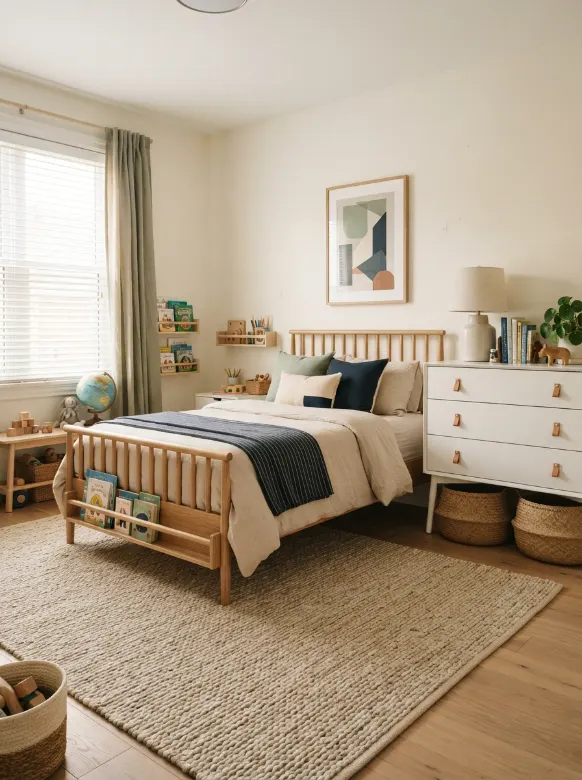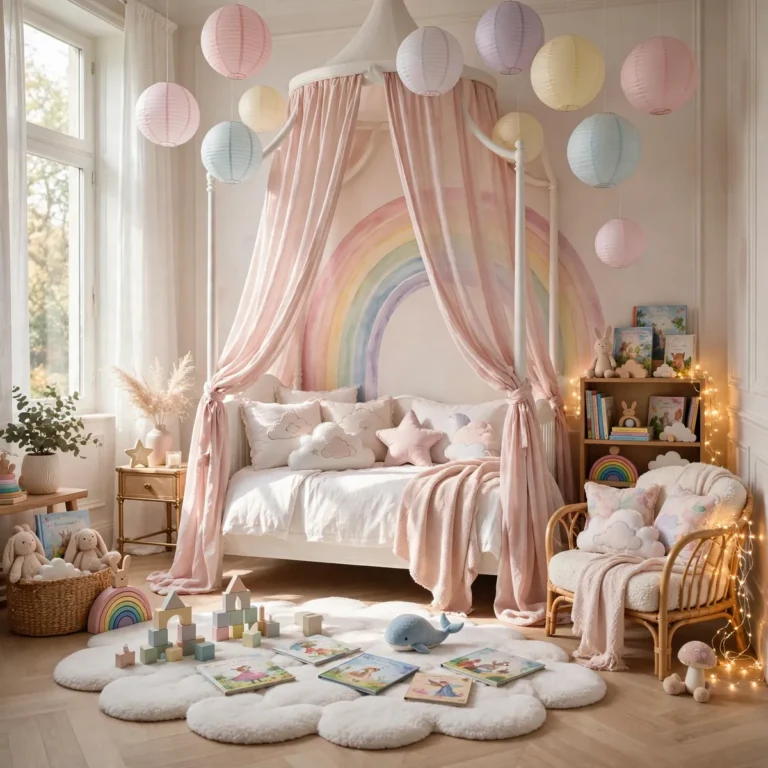
Blue Rooms: 12 Beautiful Ways to Use Blue Without Making a Space Feel Cold
Blue rooms can feel calm, dramatic, classic, coastal, elegant, or surprisingly warm depending on the shade, materials, lighting, and colors around them. That flexibility is what makes blue such a reliable choice for home interiors. A pale powder blue can create an airy bedroom, while navy can make a room feel rich and cocooning. Add natural wood, brass, rust, cream, or textured fabrics, and the same basic color can take on a completely different personality.
The most successful blue rooms are not simply painted blue from floor to ceiling. They use blue with intention. Sometimes a single wall carries the color; sometimes a velvet headboard, rug, curtains, or artwork becomes the main blue feature. The ideas below show how to build a room around blue while keeping the result layered, inviting, and timeless.
1. Let One Blue Wall Become the Focal Point

A bold blue wall can completely change a room without requiring every surface to match. Choose the wall you naturally notice when entering the space and let it carry the strongest color. A wave mural, painted arch, large-scale pattern, or deep navy finish can work beautifully when the furniture around it stays quieter.
Balance a saturated wall with cream bedding, pale wood, natural linen, or a jute rug. The contrast gives the blue room structure instead of making it feel visually heavy. If the wall has a strong pattern, keep the remaining patterns small and restrained.
2. Mix Blue Patterns Inside One Color Family

Blue does not mean every pattern needs to match perfectly. In fact, combining two or three patterns can make a room feel much more collected. Try floral wallpaper with a blue geometric rug, striped bedding, or a subtle medallion pattern.
The key is to keep the palette tight. Navy, soft blue, and cream can support several patterns without creating visual chaos. Add one solid upholstered piece, such as a headboard or chair, to give the eye a quiet place to rest.
3. Use Neutral Walls to Make Blue Furniture Stand Out
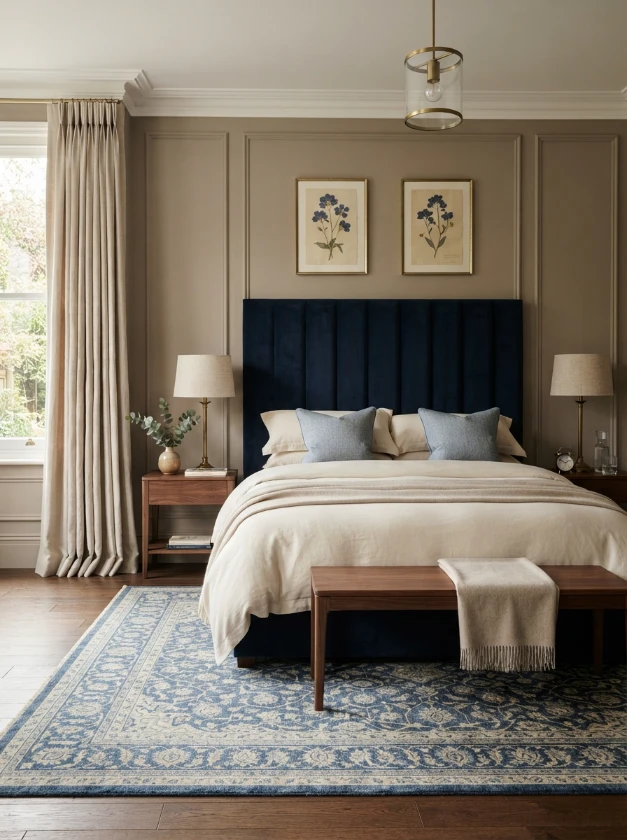
If you love blue but do not want blue walls, start with a warm neutral backdrop. Taupe, greige, soft beige, or creamy white can make a navy sofa, velvet headboard, accent chair, or blue cabinet feel richer and more intentional.
This approach is especially useful when you already have neutral walls. Instead of repainting the entire room, introduce one substantial blue piece and repeat the shade through a rug, artwork, or smaller textile.
4. Make Navy Walls Feel Warm

Navy is one of the most dramatic choices for blue rooms, but it can become cold if the rest of the space is too stark. Warm lighting makes a major difference. Use table lamps, wall sconces, pendant lighting, or concealed accent lighting with a warm glow.
Architectural details also help. Wall molding, paneling, textured paint, or built-in shelving can break up a large navy surface and create shadows that add depth. Brass and aged-gold accents are particularly effective against deep blue.
5. Pair Deep Blue With Natural Wood

One of the easiest ways to soften a saturated blue is to bring in natural wood. Oak, walnut, pine, and lightly finished timber add warmth while keeping the room grounded.
Try a navy wall with an oak bed, a blue living room with a walnut coffee table, or blue cabinetry paired with wood shelves. Add woven baskets, jute, rattan, or linen for another layer of natural texture.
6. Add Rust, Terracotta, or Ochre
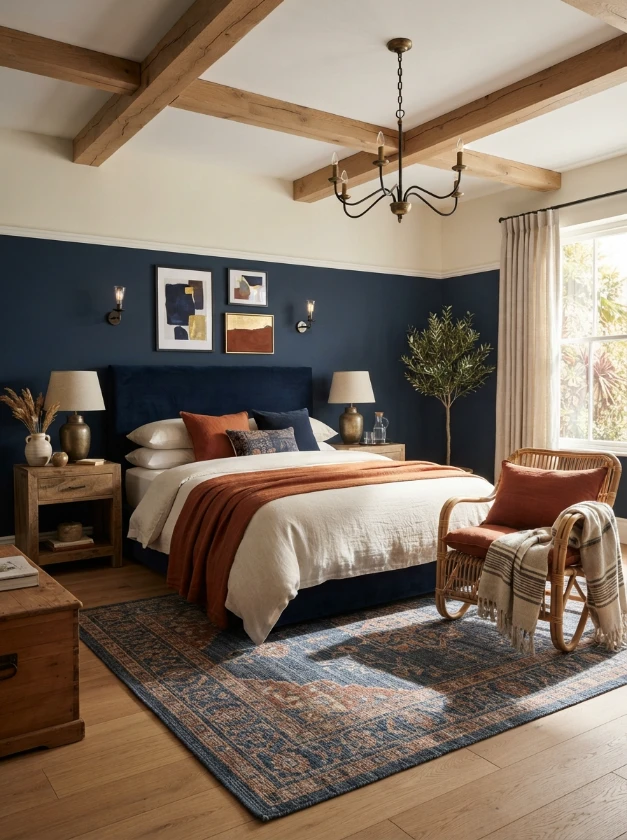
Blue becomes especially inviting when paired with a warm accent. Rust, terracotta, burnt orange, mustard, and ochre create contrast because they sit opposite blue on the color wheel.
You do not need much of the warm shade. A throw, cushion, upholstered bench, artwork, or ceramic accent can be enough. Navy and rust are particularly effective in bedrooms because the warm textile tones prevent deep blue from feeling overly cool.
7. Give Pale Blue More Personality With Texture
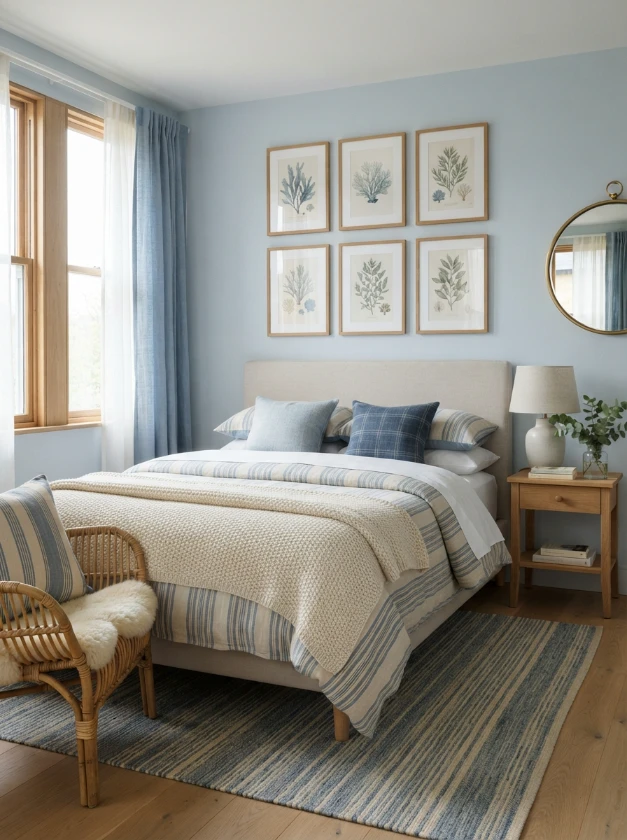
Pale blue can be beautiful, but a room made entirely from flat pastel surfaces may feel unfinished. Add texture through chunky throws, linen curtains, boucle seating, woven rugs, rattan furniture, or softly patterned bedding.
A gallery wall can also give pale blue walls more structure. Keep the frames consistent in material and spacing so the room feels curated rather than crowded.
8. Try A Blue-and-White Room With One Strong Accent

Blue and white remain popular because the combination feels fresh and easy to adapt. To keep it from becoming predictable, introduce one stronger accent such as brass, natural wood, terracotta, or olive green.
For a bedroom, blue-and-white bedding can become the foundation while a wooden nightstand and warm metal lamp add contrast. In a living room, a blue sofa can work with cream walls, a patterned rug, and a single warm accent chair.
9. Use Blue From Floor to Ceiling for a Cocooning Look
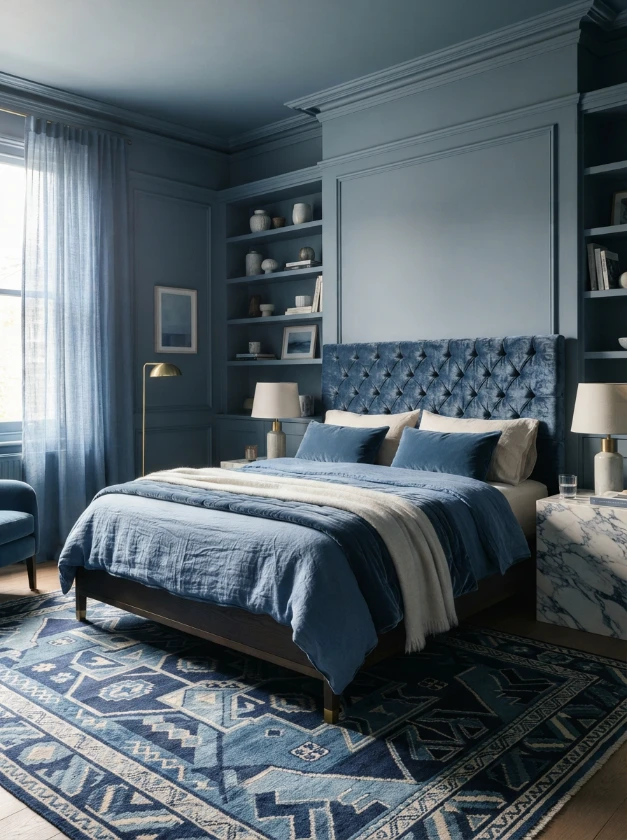
For a more dramatic approach, use closely related blue tones across the walls, trim, upholstery, and textiles. This tonal method creates a cocooning effect without relying on many different colors.
Texture becomes essential here. Velvet, linen, marble, wool, sheer curtains, and patterned rugs can all reflect light differently even when they stay within the same blue family. The result feels layered rather than flat.
10. Make Blue the Loudest Accent in an Otherwise Neutral Room

You can also keep the architecture almost entirely neutral and allow blue to carry the visual drama. A royal-blue headboard, saturated curtains, statement sofa, or large rug can become the centerpiece while the walls and ceiling remain ivory or soft white.
Repeat that blue at least once somewhere else in the room. A rug that includes the same shade, a pair of cushions, or artwork with matching blue helps connect the larger statement piece to the rest of the space.
11. Bring Blue Into an Open Wardrobe or Storage Area
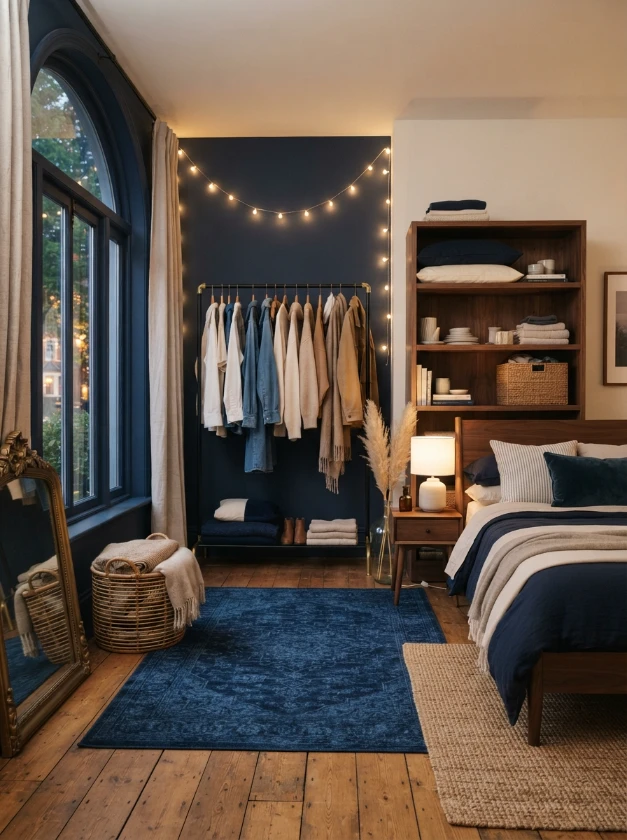
Blue can also organize a practical part of the room. A navy wardrobe wall, blue built-in shelving, or a coordinated open clothing rack can make storage feel like part of the design rather than something added afterward.
If clothing is visible, keep the displayed pieces reasonably coordinated. Denim, cream, navy, tan, and muted neutrals naturally work together and help the storage area look intentional.
12. Combine Blue With Vintage and Collected Pieces

Blue does not have to look modern or coastal. Pair it with vintage mirrors, antique-style artwork, aged brass, old wood, patterned rugs, or traditional furniture for a more collected room.
A deep blue wall behind an antique mirror can feel dramatic and classic. Powder blue with vintage botanical prints creates a softer look. The goal is not to make everything match but to repeat the blue in enough places that the room feels connected.
How to Choose the Right Blue for Your Room
Before committing to a large painted surface, test your blue in the actual room. Natural daylight, evening lamps, surrounding flooring, and nearby furniture can all change how a shade appears. A blue that looks soft in a store may look much darker at night.
Think about the mood you want. Powder and sky blues feel light and relaxed. Dusty blue feels softer and more sophisticated. Teal adds more energy. Navy creates depth and drama. Royal blue makes a stronger statement. Once you choose the mood, build the rest of the palette around it rather than selecting every color independently.
Final Thoughts on Blue Rooms
The best blue rooms are built around a clear color story rather than a single paint color. Blue can be the backdrop, the furniture, the pattern, or the dramatic accent. Natural wood, warm metals, cream, rust, terracotta, and layered textures can keep it from feeling cold, while tonal blue shades can create a rich and calming atmosphere.
Whether you prefer pale blue and rattan or navy and brass, start with one strong decision and let the rest of the room support it. That is what makes blue flexible enough to keep working even as decorating trends change.