15 Brilliant Ground Level Deck Ideas That Make Outdoor Space Work Harder
A ground-level deck ideas can change the way you use a yard without requiring a tall structure, complicated stairs, or a dramatic construction project. The best ground level deck ideas create a comfortable transition between the house and garden, add a clear place for relaxing, and make even a modest outdoor area feel intentional.
Whether you want a quiet reading corner, a dining spot for family meals, or a low-maintenance platform around a fire pit, the deck design should match how you actually live. These practical ideas combine attractive materials, smart layouts, and simple styling so your deck feels like a natural extension of your home.
1. Build a Simple Platform Beside the Back Door

A compact platform directly outside the kitchen or living room is one of the most useful ground level deck ideas. Keep the shape rectangular and align it with the door so carrying food, drinks, and garden tools is easy. Add two lounge chairs, a small table, and a weather-resistant rug to create an outdoor room without crowding the yard.
2. Use Wide Boards for a Calm, Modern Look
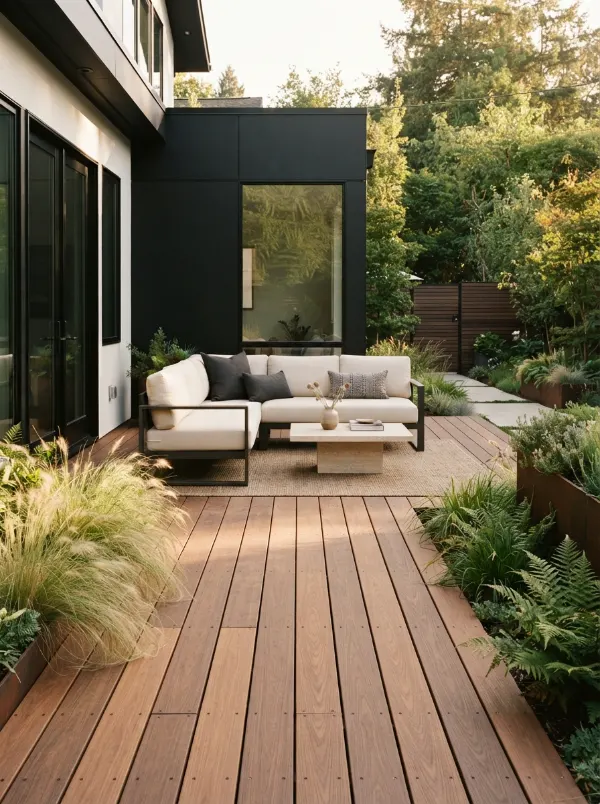
Wide decking boards create fewer visual lines and give a small platform a more spacious appearance. Natural timber brings warmth, while composite boards offer a clean finish with less routine maintenance. Choose a restrained color such as honey oak, warm gray, or soft walnut so the deck works with the exterior of the house.
3. Frame the Deck with Built-In Planters

Built-in planters can define the edge of a low deck while adding privacy and greenery. Use ornamental grasses, lavender, herbs, or compact shrubs depending on your climate. Keep taller plants toward the back and lower plants near the seating area so the deck remains open and easy to walk around.
4. Create a Dedicated Outdoor Dining Zone

If your family eats outside during warm weather, plan the deck around a dining table first. Leave enough room to pull out chairs comfortably and keep the grill nearby but not directly beside the table. A pendant-style outdoor light, simple tableware, and a shade umbrella can make the space feel like a second dining room.
5. Add a Lounge Area for Everyday Relaxation
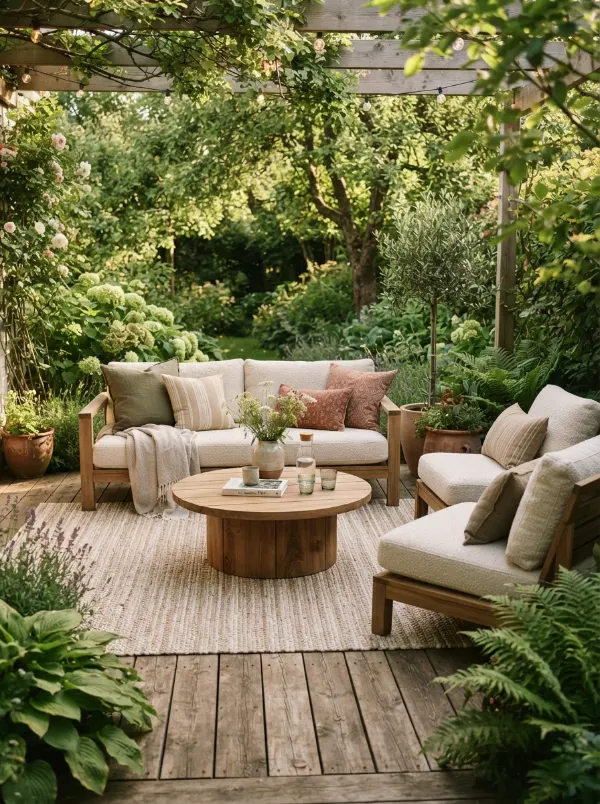
For a more relaxed layout, use a low sofa, two deep chairs, and a coffee table. Choose performance cushions in cream, olive, sand, or charcoal, then add texture with woven throws and outdoor pillows. Place the seating toward the best garden view rather than automatically facing the house.
6. Design Around a Fire Pit
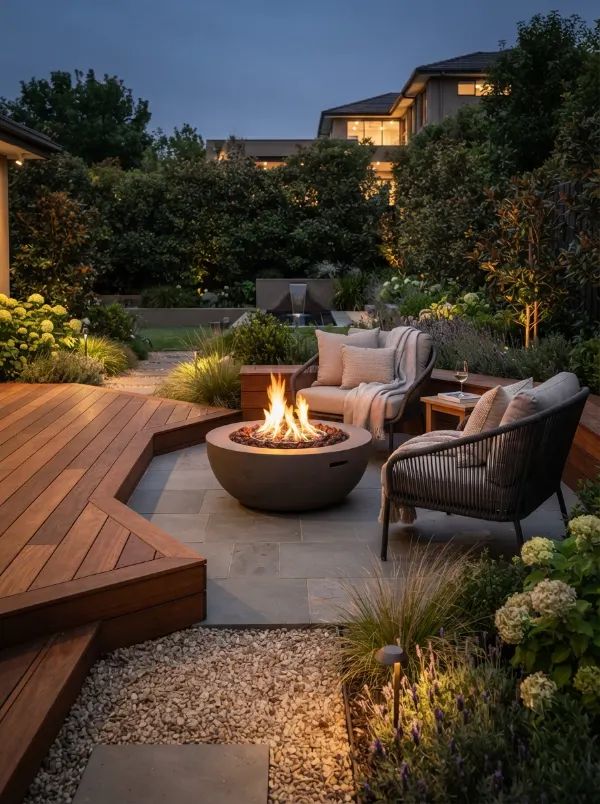
A fire-pit deck can become the main gathering place in the yard. Use a circular or square seating arrangement and keep a safe, manufacturer-recommended distance between the fire feature and combustible decking. A non-combustible pad or separate gravel zone is often a better solution than placing an open flame directly on timber.
7. Connect the Deck to a Garden Path

Make the deck feel integrated by linking it to a stepping-stone path, gravel walkway, or paver route. This small detail improves movement between the lawn, planting beds, and house. Repeat one material or color from the path on the deck through planters, edging, or furniture for a coordinated look.
8. Try a Two-Level-Looking Layout Without Building Height
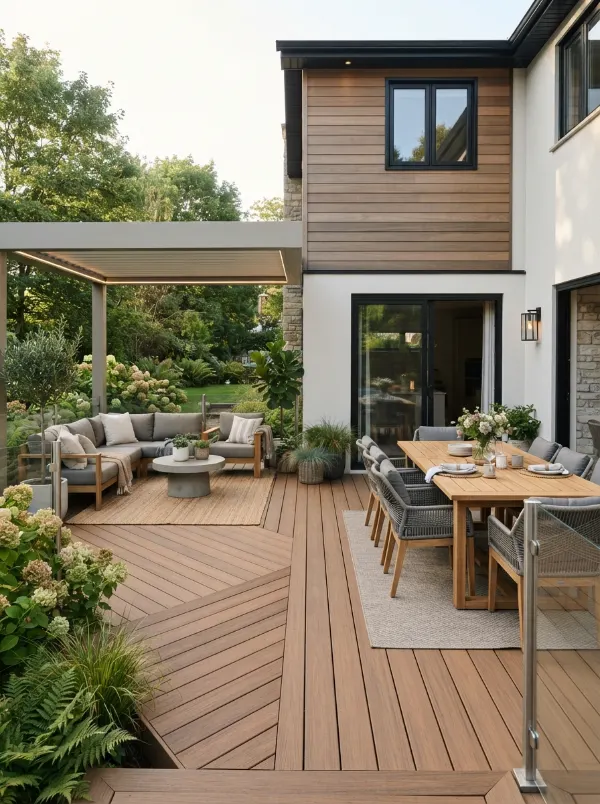
You can create visual zones on one level by changing the direction of the boards, using a large outdoor rug, or arranging furniture in separate groupings. A dining area on one side and a lounge area on the other can feel like two rooms while remaining accessible and safe for children or older family members.
9. Add a Privacy Screen on One Side
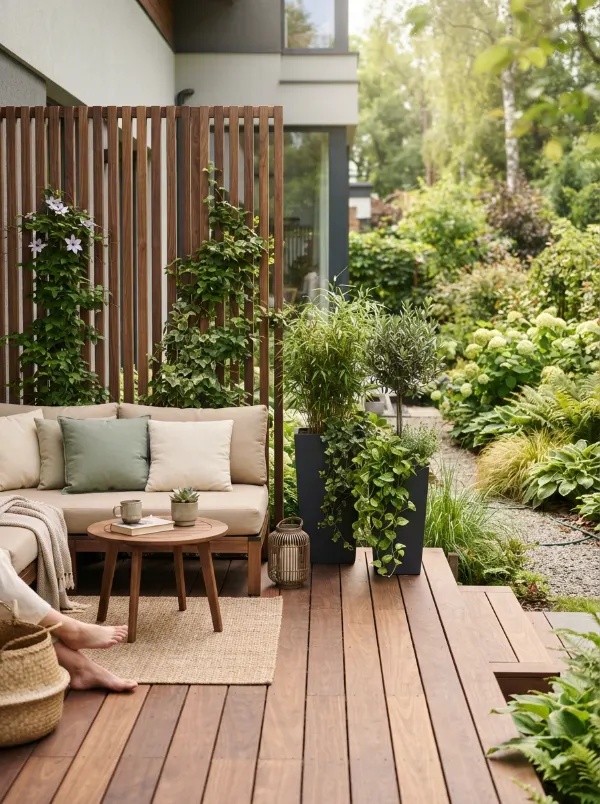
A partial privacy screen makes a ground-level deck more comfortable without closing it in. Vertical timber slats, a painted trellis, woven panels, or tall planters can block an unattractive view and create a more sheltered atmosphere. Keep at least one side open to preserve airflow and the connection with the garden.
10. Use a Pergola for Shade and Structure

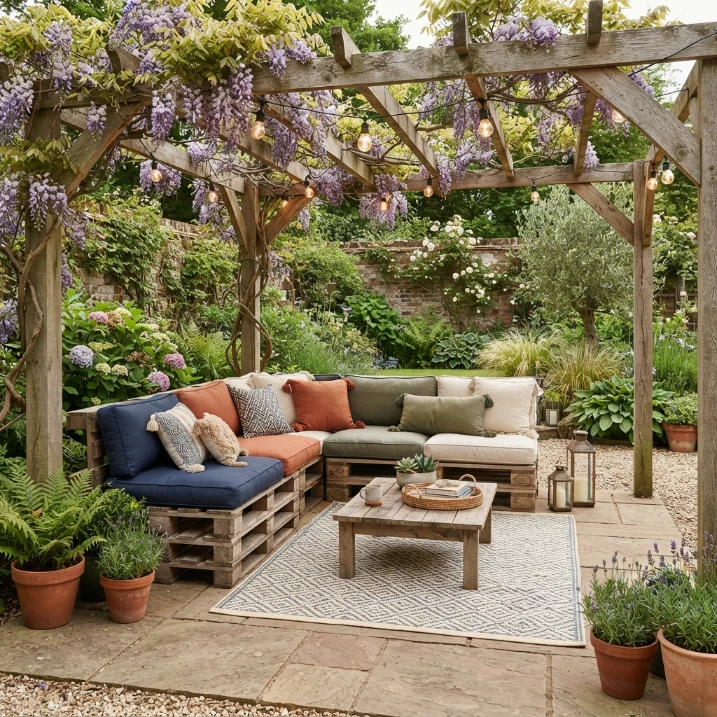
A pergola gives a low deck a stronger architectural identity. It can support climbing plants, outdoor curtains, or a retractable shade canopy. Keep the structure proportionate to the deck and choose a finish that complements the home’s trim, windows, or fencing rather than introducing a completely unrelated color.
11. Make a Small Corner Deck

A corner platform is ideal when the yard is narrow or when you want to preserve most of the lawn. A built-in bench along one edge can provide seating without taking up much floor space. Add a small bistro table, a planter, and soft lighting for a welcoming spot for morning coffee.
12. Blend Timber with Stone or Gravel
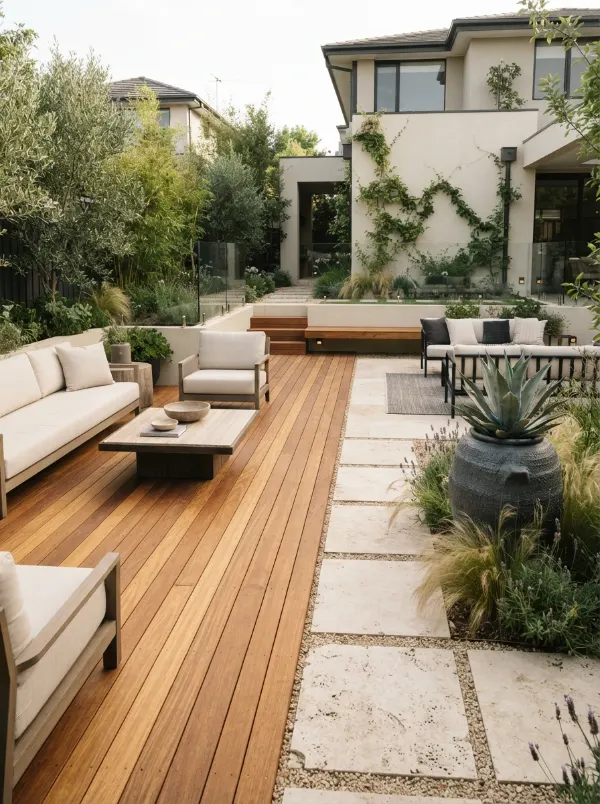
Combining decking with stone creates a grounded, high-end outdoor look. Use timber for the main seating platform and surround it with pale gravel, slate, concrete pavers, or natural stone. The contrast adds texture and helps define the deck from the rest of the yard without needing a fence.
13. Add Low-Level Lighting

Lighting improves evening use and makes the deck feel finished. Consider subtle step lights, warm string lights, wall-mounted fixtures, or small lanterns. Avoid harsh overhead brightness; layered, warm lighting is more comfortable for conversation and gives the garden a softer atmosphere.
14. Plan Storage into the Seating
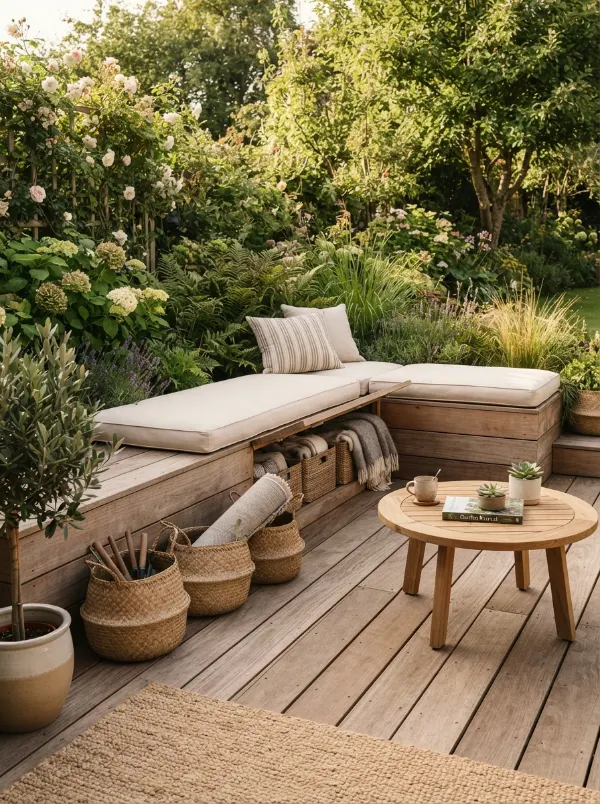
Storage benches are especially useful on a ground-level deck because they keep cushions, games, gardening tools, and blankets close at hand. Choose weather-resistant hardware and allow ventilation so moisture does not become trapped. A storage bench can also define the edge of the deck and reduce the need for extra furniture.
15. Keep the Styling Simple and Seasonal
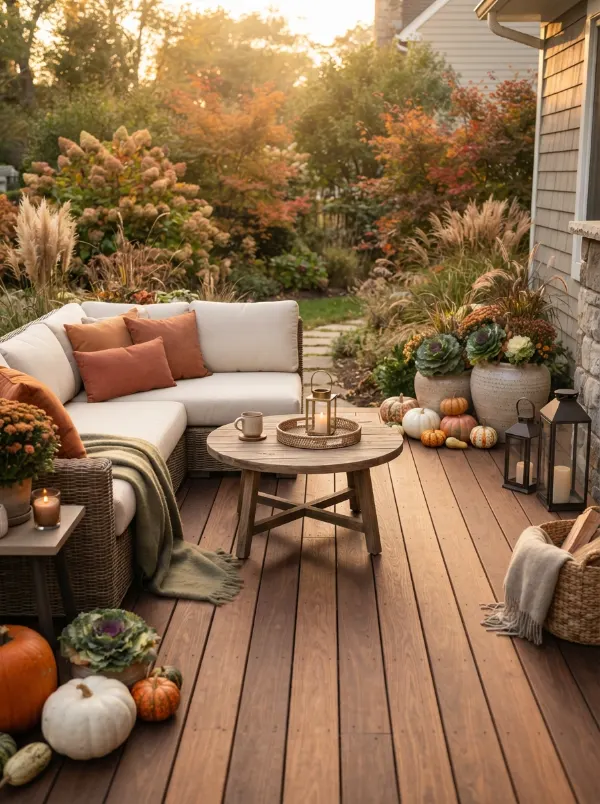
The most successful ground level deck ideas leave enough breathing room. Use a small number of durable pieces, repeat two or three colors, and update the look with seasonal accessories. Spring might call for fresh greenery and pale textiles, while autumn works beautifully with rust, olive, warm wood, and lantern light.
How to Choose the Right Ground-Level Deck Design
Start with the way you use the yard. Measure the available space, note the position of doors and windows, and decide whether dining, lounging, gardening, or entertaining is the priority. Check local rules, drainage, ground conditions, and the manufacturer’s installation guidance before construction. A low deck still needs proper support, ventilation, water management, and safe transitions.
For a cohesive result, coordinate the deck with the home’s exterior colors and nearby landscaping. A warm wood deck suits cream, white, beige, and earthy exteriors, while charcoal composite can complement modern gray, black, or white architecture. Finish with comfortable seating, practical lighting, and plants that suit the amount of sun the area receives.
FAQs
Are ground-level decks easier to maintain?
They can be easier to access for cleaning and seasonal care, but they still need proper drainage, ventilation, and regular inspection.
Can a ground-level deck be built over grass?
It should not simply be placed directly on grass. The ground needs suitable preparation and a stable support system designed for the site.
What is the best material for a low deck?
Pressure-treated timber, hardwood, and composite decking can all work. The best choice depends on budget, climate, maintenance expectations, and the look you want.
Final Thoughts
The right ground-level deck does more than add square footage. It creates a clear destination in the yard, improves everyday routines, and gives outdoor furniture a proper setting. Whether you choose a simple platform, a dining deck, a fire-pit zone, or a garden-connected corner, focus on proportion, movement, comfort, and materials that can handle your climate. With thoughtful planning, even a small deck can make the entire outdoor space feel more useful and inviting.