What Well-Styled Front Porch Flower Pots Do For Your Home’s First Impression
Front porch flower pots are containers of flowers and foliage placed at a home’s entrance to frame the door, add color, and soften hard surfaces. Front porch flower pots are small, but they can change how an entrance feels before anyone reaches the door. A well-planned container can add height beside a railing, soften hard siding, frame a doorway, or bring a tired porch back to life with seasonal color. The goal is not to fill the entry with plants. It is to make the containers, flowers, architecture, and walkway feel like one composition.
The best porch planters also work with the scale of the home. A narrow stoop needs a different approach from a wide brick porch with double doors. Some entrances look better with one oversized urn, while others benefit from two matching planters or a relaxed group of smaller pots. Below are practical styling ideas that borrow the visual principles seen in polished garden photography while giving each arrangement its own character. For seasonal porch styling, see these fall porch decor ideas.
Key takeaways
What is it? A container of flowers and foliage at the entrance that frames the door, adds color, and softens hard surfaces.
What size? Choose planters roughly one-third of the door’s height, so they read from the street instead of disappearing against the facade.
How to arrange it? Use three levels: one tall plant for height, mounding flowers for fullness, and one trailing plant over the rim.
What mistake to avoid? Blocking the walkway — keep the full path clear so visitors can reach the door without stepping around a pot.
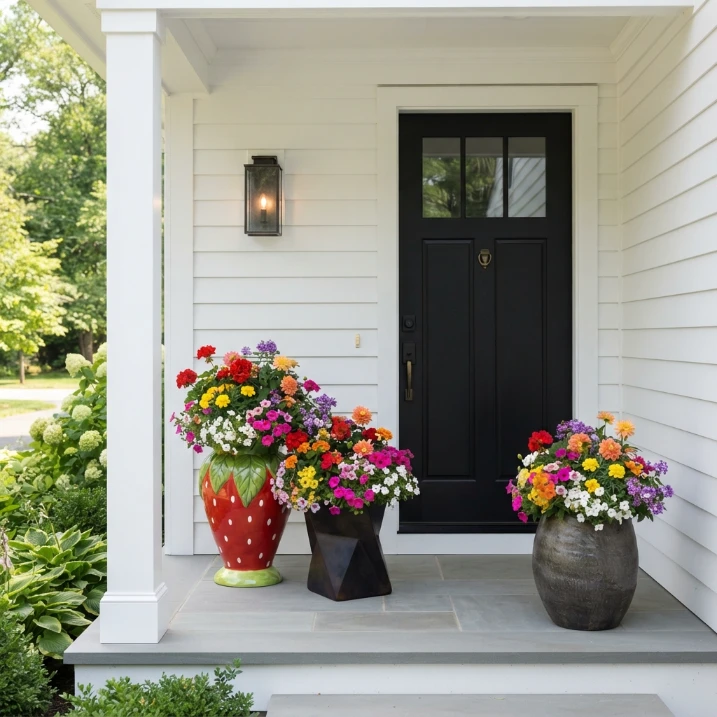
Start With One Strong Container As The Anchor
A single statement planter can make a small porch feel finished without adding lots of accessories. Look for a container with enough visual weight to hold its place beside the front door. Large ceramic urns, rounded stone planters, textured terracotta, and dark glazed pots can all work when their proportions suit the entrance.
For a classic house, a pedestal urn can echo architectural details. On a modern porch, a tall rectangular planter creates cleaner vertical lines. Keep the area around the main container relatively open so the pot reads as a deliberate focal point rather than one item in a crowded collection.
Choose a container with drainage and enough volume for the plant roots. If the pot is extremely large, use a lightweight filler beneath the soil to reduce unnecessary weight, while still keeping adequate depth for the plants you select. For example, a 20-inch-wide glazed ceramic urn about 28 inches tall, planted with one upright salvia and trailing ivy, anchors a standard single door without crowding the step.
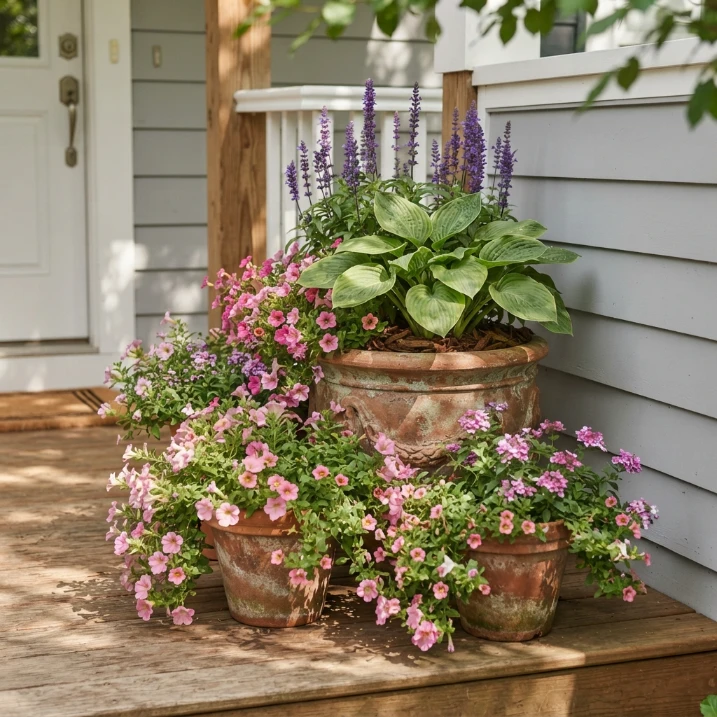
Build A Layered Pot With Height, Fullness, And Trailing Growth
The most convincing front porch flower pots often have three visual levels. A tall plant creates the upper silhouette, fuller flowers occupy the middle, and a trailing plant softens the edge.
This structure is useful because it gives the container movement from top to bottom. Upright grasses, salvia, ornamental foliage, or compact shrubs can provide height. Mounded flowers fill the center, while ivy, sweet potato vine, bacopa, or another suitable trailing plant can fall over the rim.
Do not force the exact same formula into every pot. A shady porch may need foliage instead of sun-loving flowers, while a hot entrance may require drought-tolerant choices. Think of the three levels as a design principle rather than a fixed shopping list. For example, in a 16-inch pot, use one purple fountain grass as the tall center, three pink petunias around it, and one sweet potato vine spilling over the rim. This three-level build works as a simple porch container garden method: a tall plant for height, mounding flowers for fullness, and a trailing plant to soften the rim.
For a shaded porch, use the same three levels with impatiens, begonias, ferns, and coleus, letting shade-tolerant flowers and foliage carry the color where sun-loving blooms would fade.
For a sunny porch, use the same three levels with petunias, marigolds, zinnias, and geraniums, which hold their color in heat and keep blooming through the season.
Use Terracotta For A Warm, Collected Porch
Terracotta has an advantage that many decorative containers do not: its warm clay color already connects naturally with garden soil, brick, wood, and dried foliage. A group of terracotta pots can therefore look coordinated even when the shapes and sizes are slightly different.
Try one taller patterned pot behind two smaller plain pots. Repeat the same warm clay tone while varying the plants. Pink flowers, purple blooms, white accents, or fresh green foliage can all sit comfortably against terracotta.
This style works especially well on cottage, farmhouse, Mediterranean, and traditional porches. Leave a little space between the containers so the grouping feels layered instead of packed together. For example, group one 18-inch patterned terracotta pot behind two 12-inch plain ones, all in the same clay tone, with pink geraniums and white alyssum. Unglazed terracotta dries faster than glazed pots, so it needs more frequent watering in warm weather.
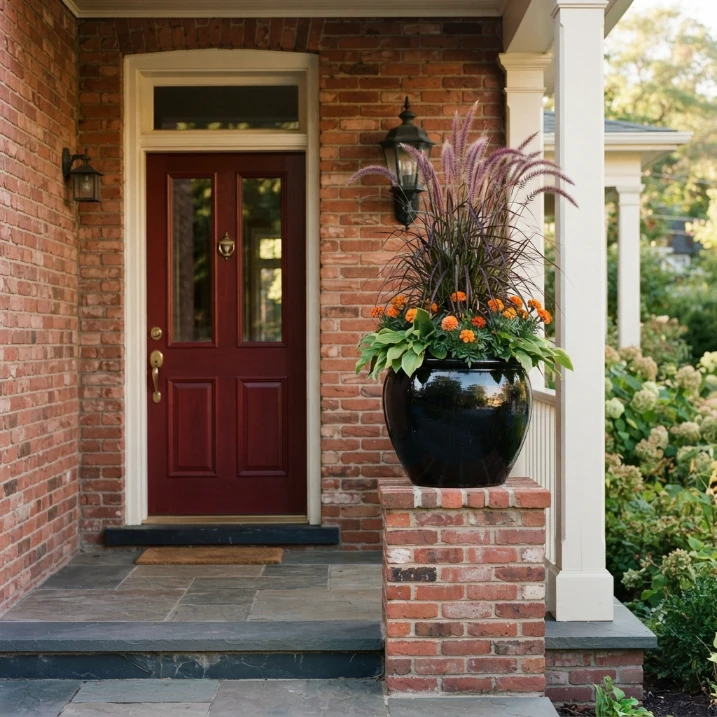
Frame The Door With Matching Planters
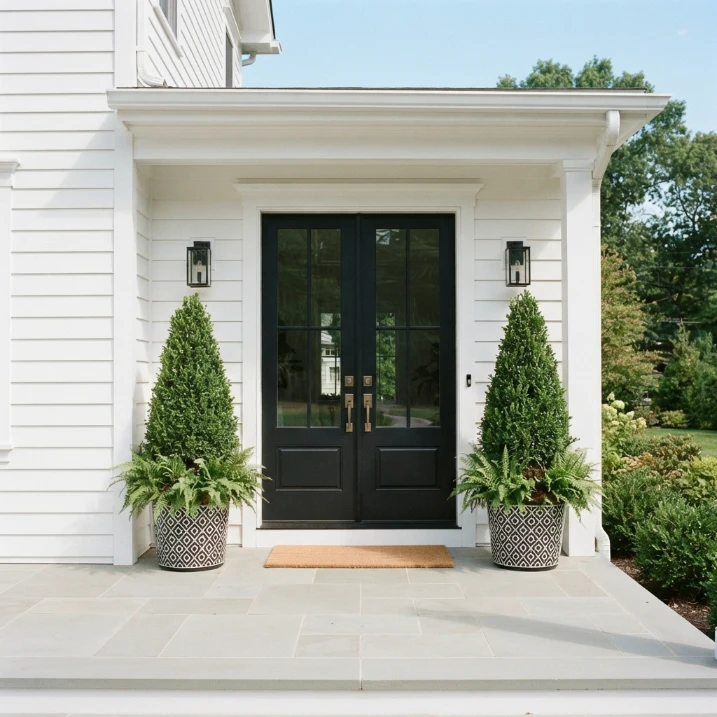
Symmetry is one of the easiest ways to make an entrance look intentional. Two matching planters placed on either side of the doorway create a visual frame and give the front elevation a stronger sense of order.
The containers do not have to be enormous. What matters is that their scale relates to the door. A tall entry with double doors can support substantial urns, while a compact single door may look better with medium-height pots.
Repeat one material or color from the house whenever possible. Black planters beside a black door, white ceramic against white siding, or dark bronze containers beneath matching lanterns can create a quiet connection between architecture and plants. For example, two matching 24-inch-tall dark bronze planters, one on each side of a 36-inch door, each holding a dwarf boxwood and white begonias, frame the entry symmetrically. Place the planters so their height relates to the door, keep both sides balanced, and leave the full walkway clear so visitors can pass without stepping around a pot.
Let A Romantic Urn Spill Over The Edge
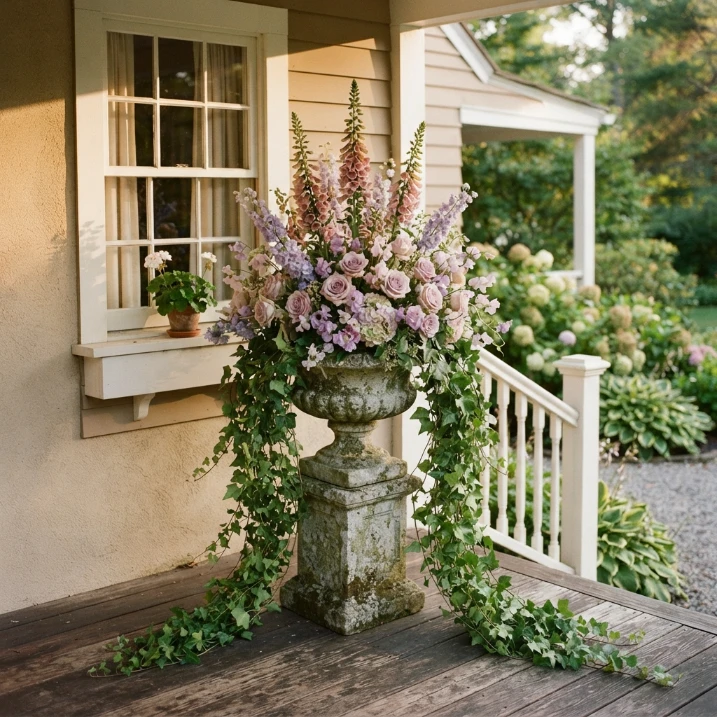
A traditional urn becomes softer when the planting is allowed to cascade. Instead of trimming everything into a tight mound, combine upright flowers with rounded blooms and trailing greenery that falls toward the porch floor.
Soft pinks, pale lavender, cream, and fresh green make a particularly gentle combination. The container can be ornate, but the planting should remain edited. Too many flower colors can compete with the shape of the urn.
This is also a useful approach when the porch needs more vertical presence. Raising flowers above the floor helps the arrangement relate visually to windows, columns, and door hardware. For example, a classical stone urn planted with pale lavender petunias, cream calibrachoa, and trailing bacopa softens a brick entry without hiding the urn’s shape.
Pair Different Pots For A Colorful Porch Corner
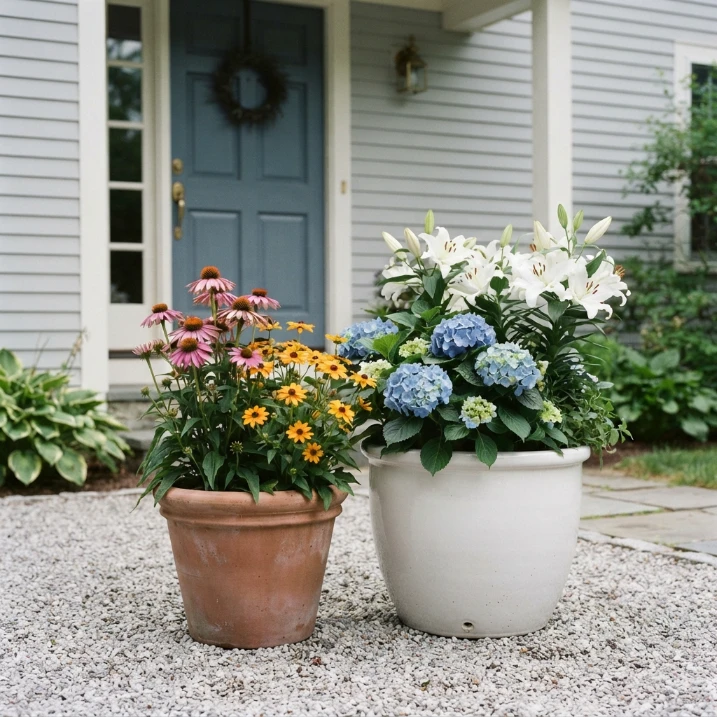
Not every entrance needs matching containers. A more relaxed arrangement can use two or three pots with different finishes while keeping the plants connected through color.
For example, place a matte terracotta pot beside a glossy white ceramic container. Fill one with warm orange and golden flowers and the other with cool blue or white blooms. The contrast between surfaces creates interest before the flowers even come into view.
Keep the number of materials limited. Two contrasting finishes are usually enough. If every pot has a different shape, material, and color, the porch can start to look accidental rather than collected. For example, set a matte terracotta pot of orange marigolds beside a glossy white ceramic pot of blue lobelia and white petunias for a warm-versus-cool corner. For long bloom, choose petunias, calibrachoa, and geraniums, and deadhead regularly so new flowers keep replacing spent ones.
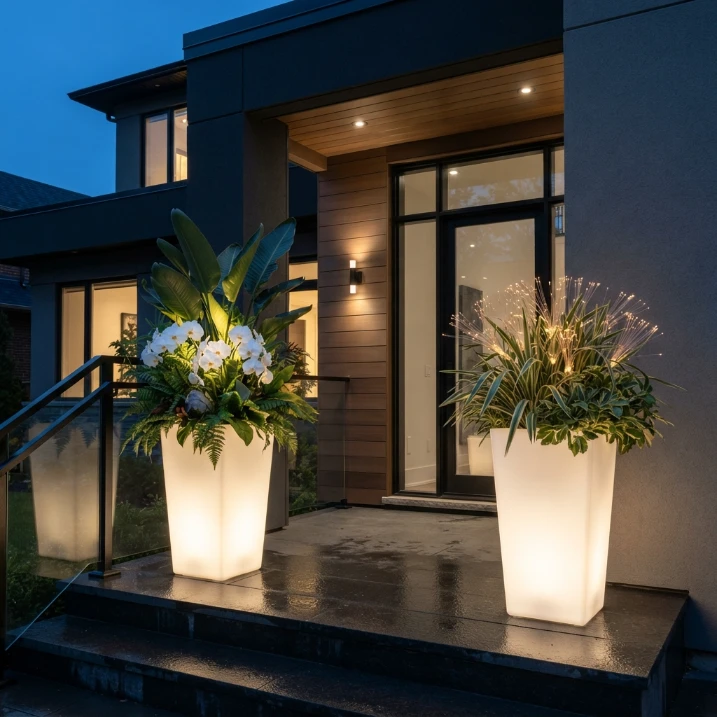
Make A Modern Porch Glow After Sunset
Lighting can turn containers into part of the evening atmosphere. Tall illuminated planters with soft internal light work particularly well beside contemporary doors, wide steps, or dark porch floors.
Use plants with strong silhouettes so the foliage remains visible against the glow. Upright tropical-style leaves, architectural grasses, orchids, or bold leafy plants can create a sculptural effect.
The light should support the entry rather than become the only focal point. Combine low planter illumination with an existing wall lantern or overhead fixture. Keep electrical connections suitable for outdoor use and protected from rain. For example, two tall illuminated planters flanking a modern door, each holding one architectural grass and low white impatiens, keep the foliage readable at night.
Use Oversized Planters When The Architecture Is Large
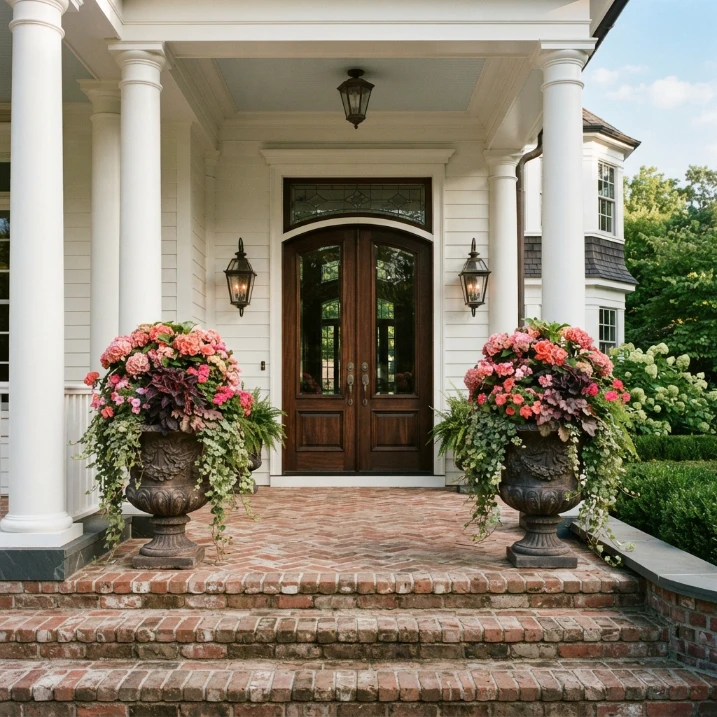
A large porch can make small pots look insignificant. If you are also planning the wider yard around the entrance, our guide to backyard corner ideas can help you connect the porch planting with nearby outdoor spaces. If the doorway has tall columns, broad steps, a double door, or a large covered area, increase the scale of the containers so they visually belong to the architecture.
One large urn can anchor an entry better than five tiny pots. Alternatively, place two substantial containers symmetrically around the door. Tall evergreen shrubs, ornamental grasses, or large leafy plants can provide structure even when flowers are not at their seasonal peak.
Scale is especially important from the street. A container that feels huge when you stand beside it may look perfectly balanced when viewed from the sidewalk. For example, beside double doors, one 30-inch-wide urn with a tall evergreen shrub reads as intentional from the street, where five small pots would disappear. As a rule of thumb, make planters roughly one-third of the door height, and at least about 14 inches wide for a standard door.
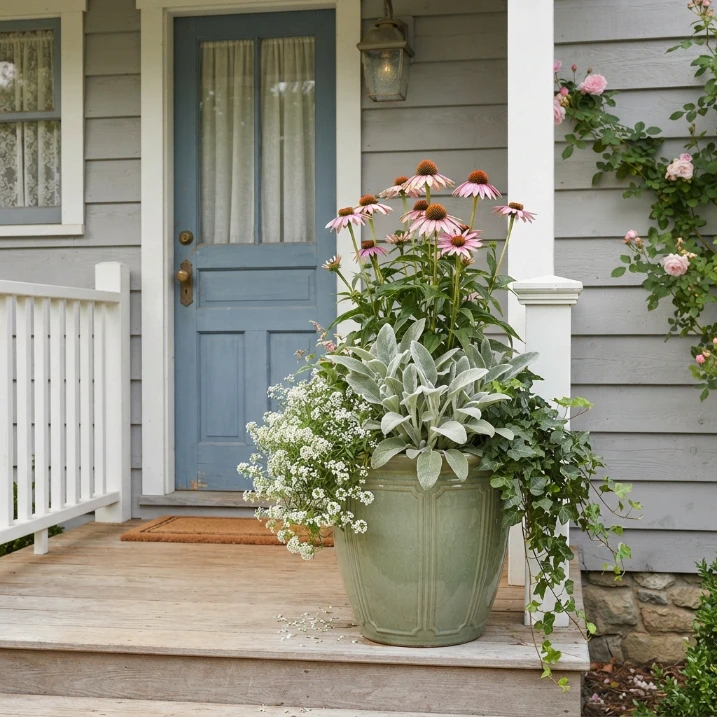
Try A Cottage-Style Pot With Soft Pastel Flowers
For a softer porch, combine pale flowers with silvery or textured foliage. Blush pink, cream, lavender, soft blue, and muted green create a relaxed garden feeling without making the entrance look overly formal.
The container can be painted ceramic, aged stone, or a softly weathered finish. Add one trailing plant so the arrangement connects visually with the porch floor.
This approach works particularly well when the home already has light siding, a painted front door, wood details, or a garden visible from the entrance. For another way to bring water and planting together outdoors, see our guide to bird baths in the garden. Keep the rest of the porch simple so the planting remains the main decorative feature.
For example, a weathered painted-ceramic pot with blush pink cosmos, cream sweet alyssum, and one trailing ivy suits a light-sided cottage with a painted door.
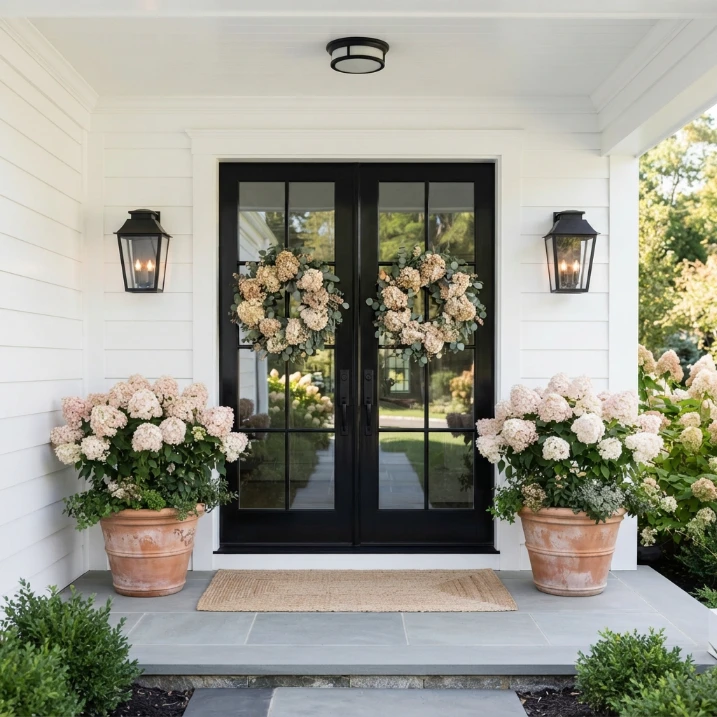
Choose A Single Pot For A Small Front Step
Small entrances do not need to be left without greenery. One carefully chosen pot can add enough color and texture to make a narrow step feel welcoming.
Choose a container that leaves the walking path clear. A medium-height pot placed beside the door can provide the needed vertical accent without making the entry difficult to use.
For a compact arrangement, select one plant with attractive foliage and flowers that suit the light conditions. A single well-proportioned container will usually look better than several small pots squeezed onto the same step. For example, on a 40-inch-wide step, one 14-inch pot with a compact lavender and trailing lobelia leaves the full walking path clear. For a narrow entry, a tiered stand or a grouped trio at varied heights can add fullness without taking much more floor space than one pot.
Match The Planting Style To Your Home
The strongest front porch flower pots feel connected to the house rather than imported from a completely different design style. Think about the architecture before choosing the container.
Traditional brick homes can support dark urns, classical shapes, and layered flowers. Farmhouse entrances often suit terracotta, galvanized finishes, simple ceramic, and relaxed greenery. Contemporary homes can handle geometric planters, restrained palettes, and architectural foliage. Cottage homes can welcome softer colors, mixed containers, and loose flowering arrangements.
You do not need to match every detail. Choose one or two visual cues from the architecture and repeat them in the containers or plant palette. For example, a farmhouse entry repeats its wood and galvanized-metal cues with two galvanized buckets of white geraniums, while a contemporary entry uses one geometric concrete planter with architectural grasses.
Keep The Porch From Looking Overdecorated
Beautiful flower-filled containers need breathing room. Once the containers are doing their job, resist the temptation to surround them with extra signs, lanterns, small statues, rugs, baskets, and other accessories.
Look at the entrance from the street and from the sidewalk. Ask whether the eye goes naturally toward the front door. If several objects compete for attention, remove the least useful piece.
A restrained porch often looks more expensive because each planter has room to make an impression. The flowers provide softness, the container supplies structure, and the architecture remains visible. For example, once two planters are in place, remove the extra lantern and small statue so the eye travels straight to the door instead of stopping at three competing objects.
Quick Checklist Before You Plant
Before arranging your containers, check five simple things: the amount of direct sunlight, the width of the walking path, the mature size of the plants, the drainage of each container, and the relationship between the pot color and the house. These details matter more than buying the most unusual planter.
If the entrance is exposed to strong afternoon sun, choose plants that can handle heat and reflected light from walls or paving. For a shaded porch, prioritize foliage and flowers that tolerate lower light. Also consider watering access. A beautiful arrangement that is difficult to maintain will quickly lose its appeal. For watering, use the finger test: water when the top inch of mix feels dry, and remember that covered porches get no rain, so check twice a week.
Finally, step back several times while styling. Check the view from the curb, the driveway, and the doorway itself. Good outdoor styling should look balanced from the places where people actually see it.
Best Flowers for Front Porch Pots by Sunlight
For a sunny porch, choose petunias, geraniums, marigolds, and zinnias. These heat-tolerant flowers hold their color in strong light and keep blooming all season with regular watering and deadheading.
For a shaded or covered porch, choose impatiens, begonias, ferns, and coleus. Their foliage and flowers tolerate lower light, but a covered porch gets no rain, so hand-watering matters even after wet weather.
Front porch flowers at a glance — pick by your porch’s light
| Porch light | Flowers that do well | Care note |
| Sunny (6+ hours) | Petunias, geraniums, marigolds, zinnias | Water when the top inch of mix is dry; deadhead weekly for repeat blooms. |
| Shaded / covered | Impatiens, begonias, ferns, coleus | Keep soil lightly moist; covered porches get no rain, so check twice a week. |
| Either / flexible | Calibrachoa, sweet alyssum, ornamental grasses | Calibrachoa trails over the rim; grasses add height without flowers. |
Match the plant to the light first — a sun lover in deep shade, or a shade lover in full afternoon sun, will fade no matter how good the pot looks.
Keep Porch Pots Looking Good Into Winter
Keep the evergreen anchor, such as a dwarf boxwood or spruce, in place through winter, and swap the summer flowers for pine or cedar cuttings, red twig stems, and ornamental kale for seasonal color that handles cold weather.
Set the pots on feet so water drains freely and does not pool underneath before a freeze, which also helps protect the container from cracking.
What size planter works best beside a front door?
Aim for planters roughly one-third of the door’s height, about 28–36 inches tall for a standard door, at least 14 inches wide, with drainage holes; a pot that looks right indoors usually looks small against a house facade.
What flowers grow best in pots on a shaded porch?
Impatiens, begonias, ferns, and coleus; they flower or hold color in bright shade and suit covered porches, but they still need hand-watering because the roof blocks rain.
How often should I water front porch flower pots?
Check with a finger — water when the top inch feels dry, typically every 2–4 days in warm weather; sunny and windy spots dry faster, and pots under a roof need watering even after rain.
Can front porch pots stay out through winter?
The pot can, if it is frost-proof and set on feet for drainage; swap tender flowers for evergreen cuttings and hardy foliage, and water only on mild days.
How do I arrange a front porch flower pot so it looks full?
Use three levels — one tall plant in the center or back, mounding flowers around it, and one trailing plant over the rim — and group pots in odd numbers at varied heights.
Final Thoughts
Front porch flower pots can shape the first impression of a home without requiring a major renovation. The most successful arrangements use scale, repetition, plant texture, and color with a clear purpose. One oversized urn may be enough for a dramatic entrance, while a small porch may need only one compact container placed carefully beside the door.
Start by studying the architecture, then choose the container size, plant shape, and color palette that support it. Give every pot enough space, keep the walking route clear, and let a few strong arrangements do the visual work. That is what makes an entry feel welcoming rather than simply decorated.