Bird Baths in the Garden: 15 Stunning Ideas for a More Beautiful Outdoor Space
A bird bath in the garden is a shallow, open basin of fresh water that gives wild birds a safe place to drink and bathe. The best bird baths in the garden are no more than about 2 inches (5 cm) deep at the centre, with gently sloping sides and a rough, grippy surface so birds of all sizes can wade in safely. Bird baths in the garden are more than charming ornaments. When placed thoughtfully, they can become a beautiful focal point, add movement and sound, support visiting birds, and help connect separate areas of an outdoor space. The best designs feel like part of the landscape rather than an object simply placed on a lawn.
Whether your garden is small, cottage-inspired, modern, wild, or carefully structured, a bird bath can bring softness and purpose to the layout. The key is choosing the right material, scale, location, and surrounding planting. These ideas will help you create a welcoming feature that looks beautiful through every season. Water also draws species that skip feeders, such as wrens, warblers and thrushes.
1. Make the Bird Bath a Garden Focal Point
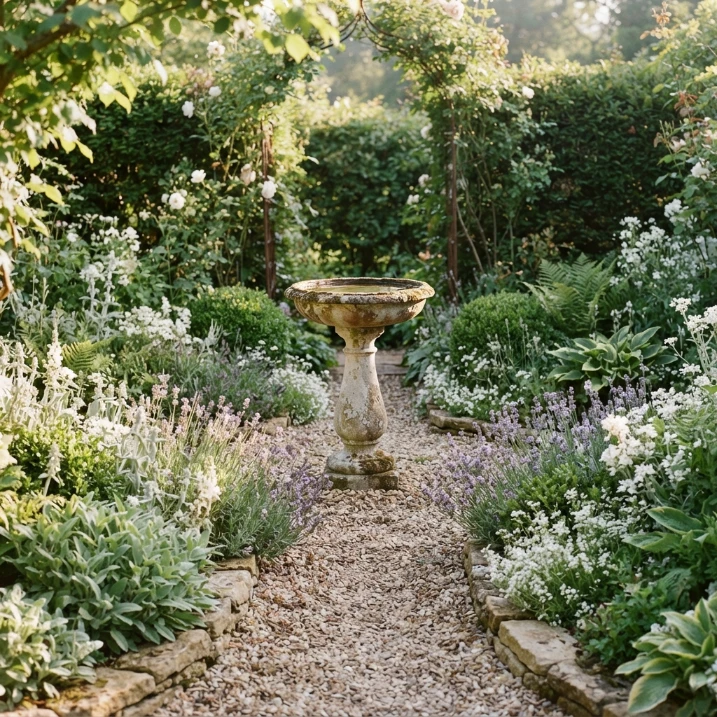
Start by giving the bird bath a clear visual role. Place it where it can be seen from a patio, kitchen window, or garden path. A pedestal design works especially well at the end of a sightline or in the center of a circular planting bed. Surround it with low flowers so the basin remains visible and the eye naturally moves toward it. For example, a classic concrete pedestal bath about 24 inches tall with a 16–18 inch basin works well in the middle of a lawn, set where you can see it from a window and within hose reach for daily refills.
2. Frame It With Layered Garden Planting
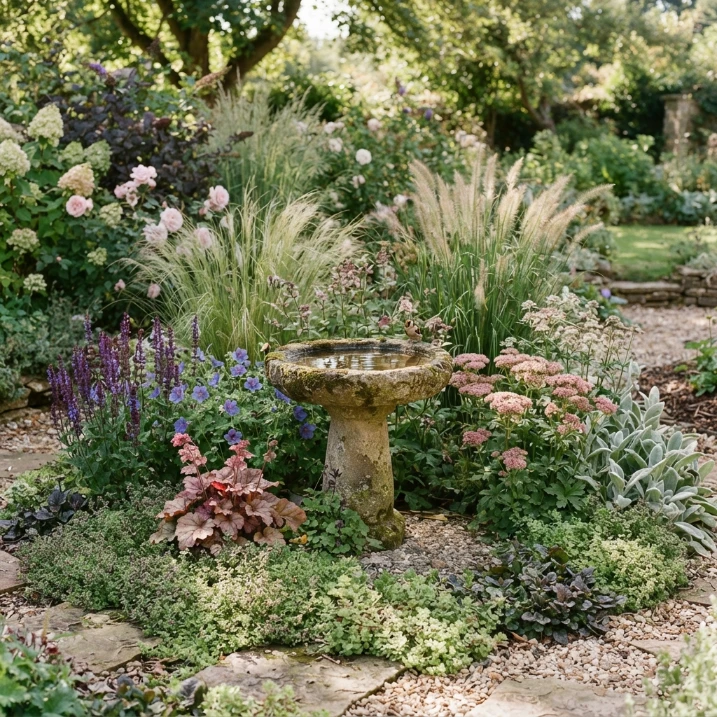
Use a simple planting structure around the basin: low ground cover in front, medium-height flowers at the sides, and taller shrubs or ornamental grasses behind. This layered approach makes the feature feel established while keeping enough open space for birds to approach safely. Choose plants with different leaf shapes for a more textured composition. For example, a stone basin about 18 inches across and 1–2 inches deep, set among layered planting beside a patio, gives birds open sightlines while the planting softens its edges.
3. Choose a Weathered Stone Bird Bath
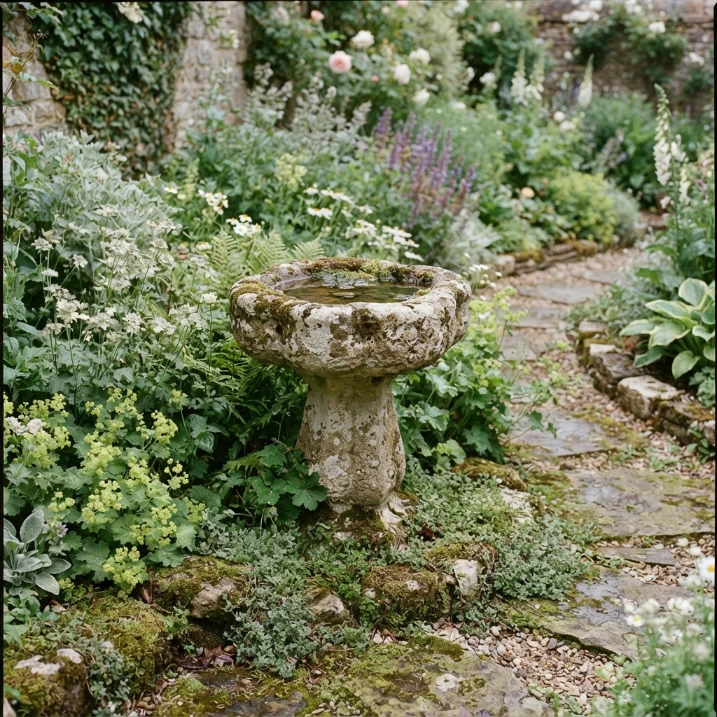
Weathered stone brings a timeless, natural quality to outdoor spaces. Its muted gray, warm beige, or mossy surface works with cottage gardens, woodland borders, and traditional patios. Look for softly aged edges rather than overly polished finishes. A stone basin looks especially attractive when paired with ferns, creeping thyme, and irregular stepping stones. For example, a hollowed sandstone basin sunk level into a shady perennial bed blends in naturally and stays cooler in summer heat.
4. Try a Modern Concrete Design
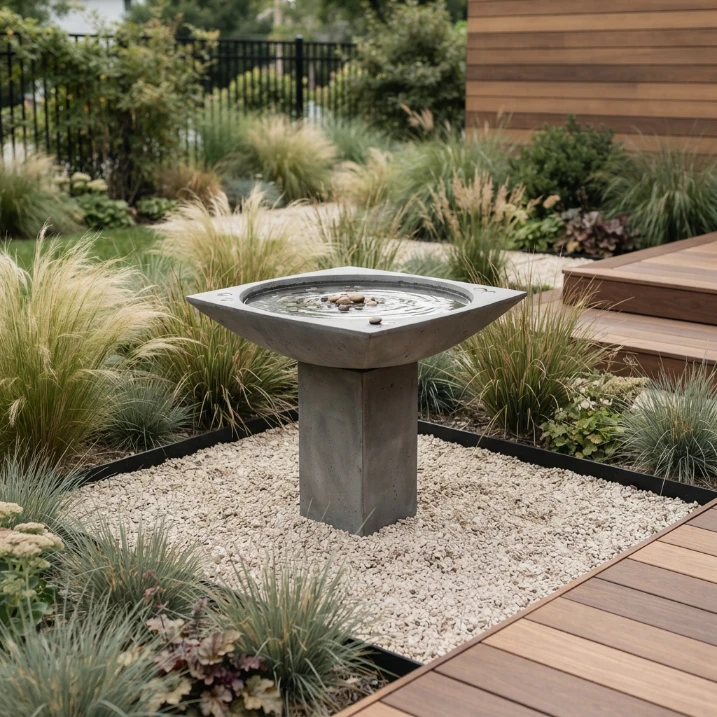
For a contemporary garden, choose a clean-lined concrete bird bath with a shallow bowl and a strong geometric base. Keep the surrounding palette restrained with gravel, clipped grasses, sculptural plants, and charcoal or warm wood accents. The contrast between the simple basin and softer planting creates a polished designer look. For example, a clean-lined concrete basin about 20 inches across and 1–2 inches deep, set on gravel in a contemporary garden, keeps the look simple while giving birds a safe, shallow edge.
5. Add a Bird Bath Beside a Garden Path
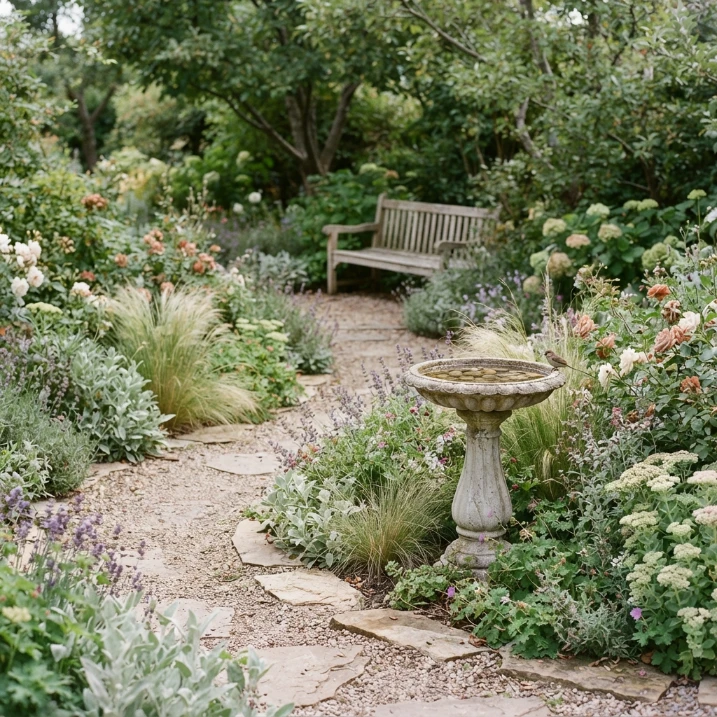
A path-side placement makes the feature part of the journey through the garden. Set it slightly off the walking line so it does not obstruct movement. A small bench, stepping stones, or a low border nearby can turn the area into a peaceful pause point. This works particularly well in narrow gardens where every feature needs to serve a purpose. For example, a shallow stone basin about 18 inches across and 1–2 inches deep, set slightly off a garden path beside a low border, gives passing birds a clear, visible drink.
6. Use a Bird Bath in a Cottage Garden
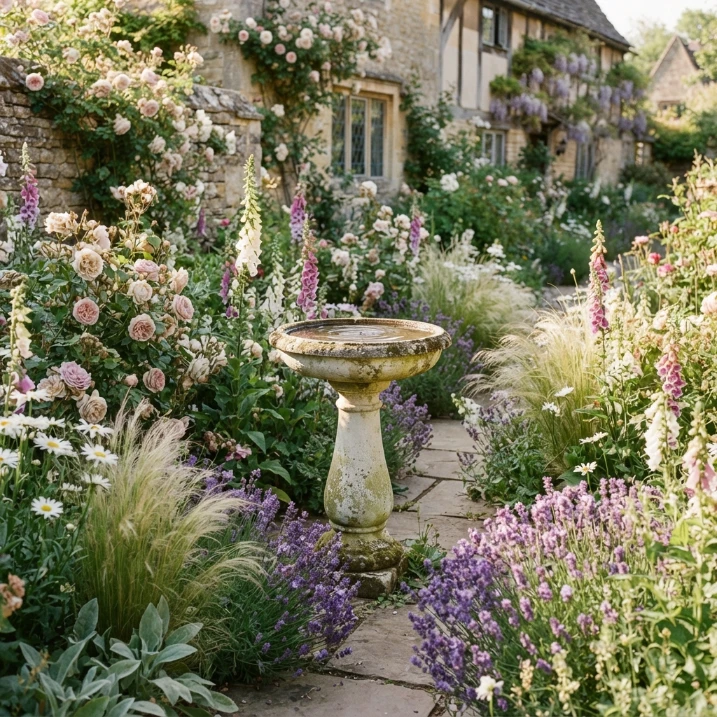
Cottage-style gardens benefit from romantic materials and informal planting. Pair a classic pedestal basin with roses, lavender, foxgloves, daisies, and soft grasses. Allow the planting to feel abundant without hiding the water. A faded white, pale sage, or natural stone finish will blend beautifully with the relaxed, layered character of the space. For example, a faded white pedestal basin about 18 inches across and 1–2 inches deep, set among roses and lavender in a cottage border, fits the relaxed planting without hiding the water.
7. Create a Woodland-Inspired Bird Bath Corner
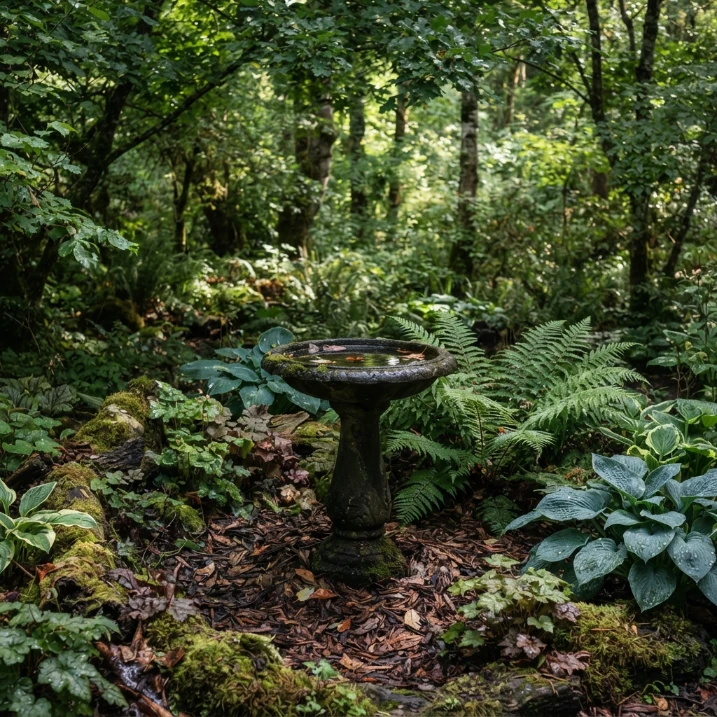
For a shaded garden, place the bath among ferns, hostas, mossy stones, and textured woodland plants. Choose a dark stone or aged ceramic finish that feels connected to the surrounding ground. Dappled light, natural bark, and a quiet background make this arrangement feel calm and secluded while still adding a useful water source. For example, a dark stone basin about 18 inches across and 1–2 inches deep, set among ferns and hostas in a shaded woodland corner, stays cooler and looks naturally settled.
8. Add Color With a Ceramic Basin

A glazed ceramic bird bath can introduce a controlled pop of color. Deep teal, cobalt blue, olive green, terracotta, and muted yellow all work well outdoors. Repeat the chosen color in a nearby pot, garden chair, or flowering plant so the basin feels intentional. Avoid using too many competing colors; one strong accent is usually enough. For example, a glazed ceramic basin about 16 inches across and 1–2 inches deep, set on a patio beside a matching pot, adds color without overwhelming the planting.
9. Place It Near Native Flowers
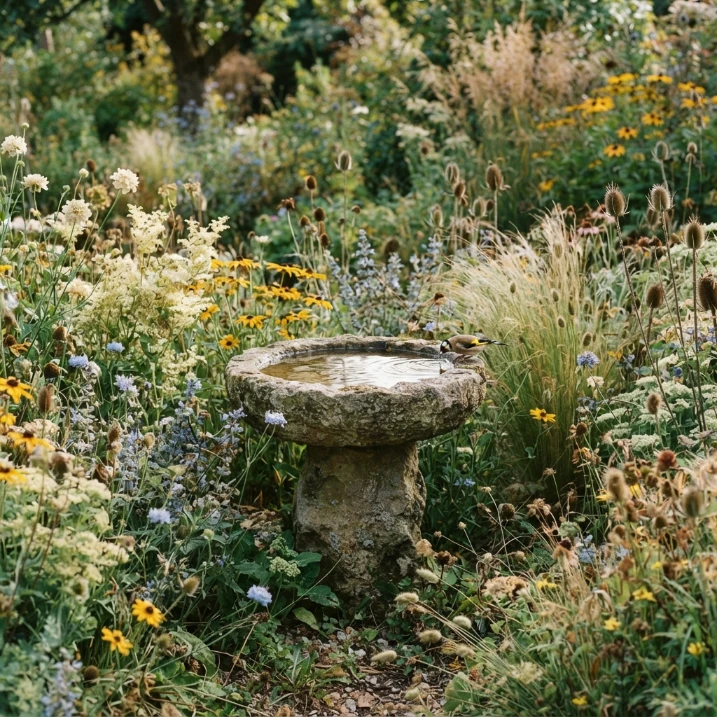
Native flowers can make the bird bath feel more natural and support a wider range of garden visitors. Plant a loose border of seasonal blooms around the feature, leaving a clear landing and drinking area. Mix seed heads, grasses, and flowers so the arrangement remains attractive even after peak flowering has passed. For example, a stone basin about 18 inches across and 1–2 inches deep, set in a loose border of native flowers, gives birds a natural-looking drink with clear landing space.
10. Use a Bird Bath to Connect Garden Zones
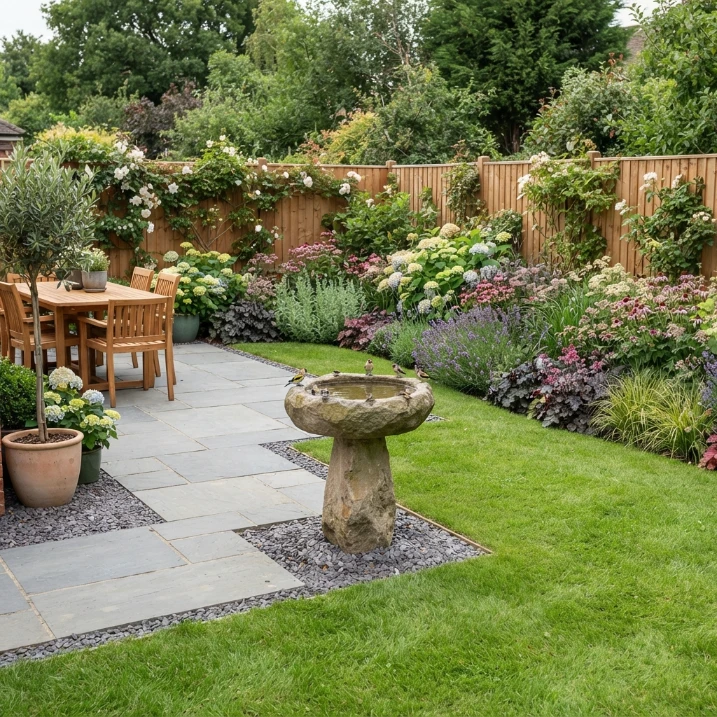
A bird baths in the garden can act as a transition point between the lawn, patio, vegetable beds, and flower borders. Repeat materials from both neighboring zones around it—for example, use the same gravel as the patio and the same planting style as the flower bed. This small design decision helps the entire garden feel connected rather than divided into unrelated sections. For example, a concrete basin about 20 inches across and 1–2 inches deep, set where the lawn meets a flower border, links the two zones with one repeated material.
11. Build a Small Pollinator-Friendly Water Station
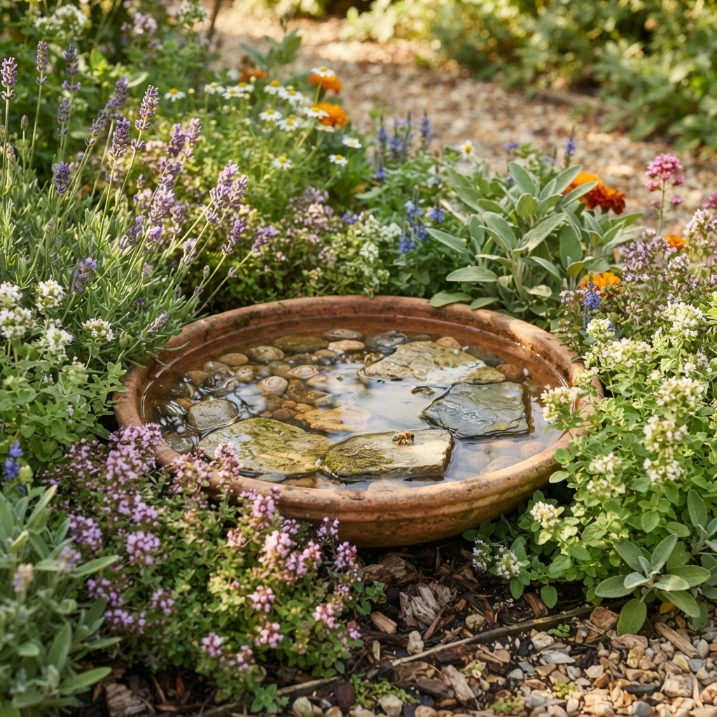
Combine the basin with pollinator-friendly flowers, herbs, and shallow textured stones. A few stones or pebbles inside the water give small insects a place to land, while nearby thyme, oregano, lavender, and flowering perennials add fragrance and movement. Keep the water fresh and the feature easy to clean. For example, a wide terracotta saucer about 16 inches across, set on level ground beside a low shrub, suits ground-feeding birds such as robins and dunnocks.
12. Use Repetition for a Designer Garden Layout
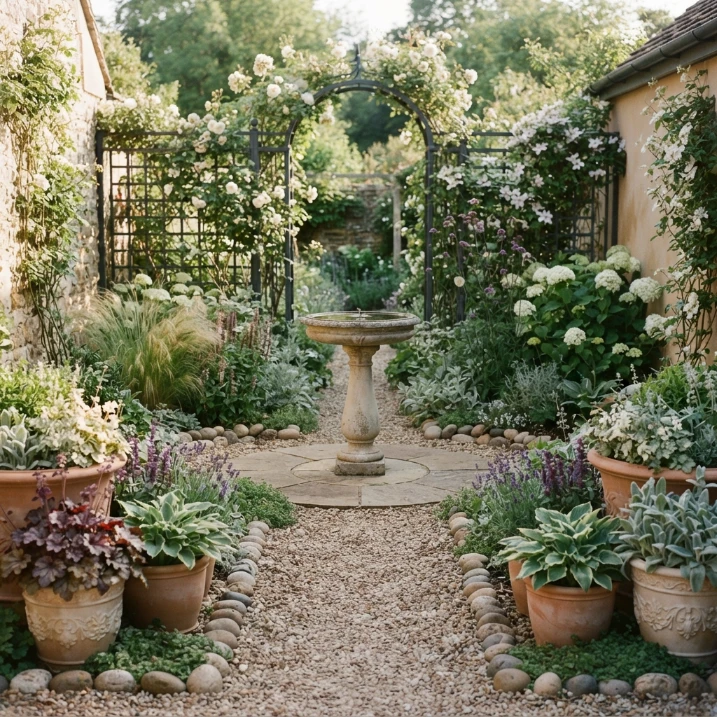
Repeat one visual detail near the bird bath to make it feel integrated. This could be a black metal finish, rounded stone shapes, warm terracotta, or a particular flower color. Repetition creates rhythm, which is especially helpful in modern gardens where a single decorative object might otherwise feel disconnected. For example, a black metal basin about 18 inches across and 1–2 inches deep, repeated beside matching planters in a modern garden, ties the feature into the wider layout.
13. Add Nighttime Atmosphere Around the Basin
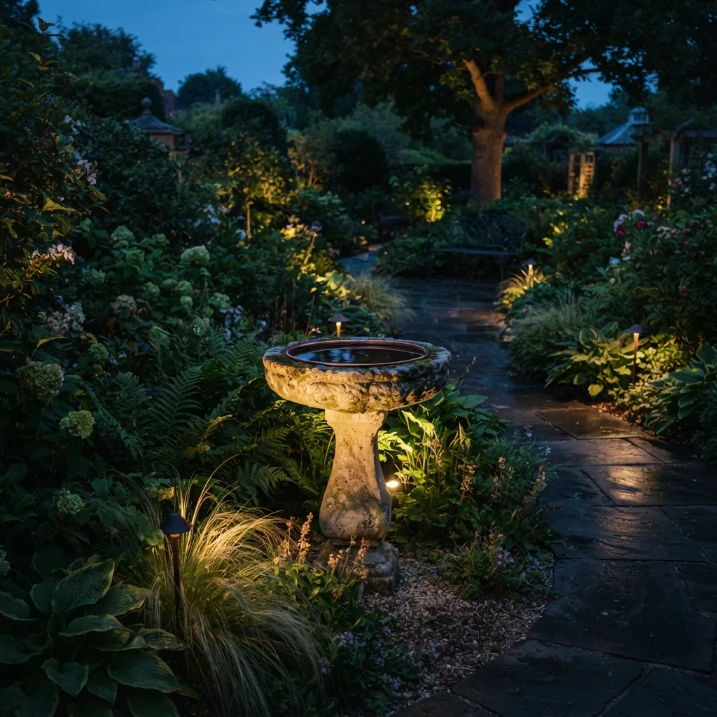
Although birds use the bath during daylight, the surrounding feature can still contribute to evening atmosphere. Use low, warm garden lighting aimed at nearby planting or the path rather than shining directly into the water. Soft illumination on stone, grasses, and leaves creates a gentle focal point without making the garden feel overlit. For example, a stone basin about 18 inches across and 1–2 inches deep, lit softly from nearby planting at night, remains a gentle focal point after birds have finished drinking.
14. Keep the Bird Bath Safe and Easy to Maintain
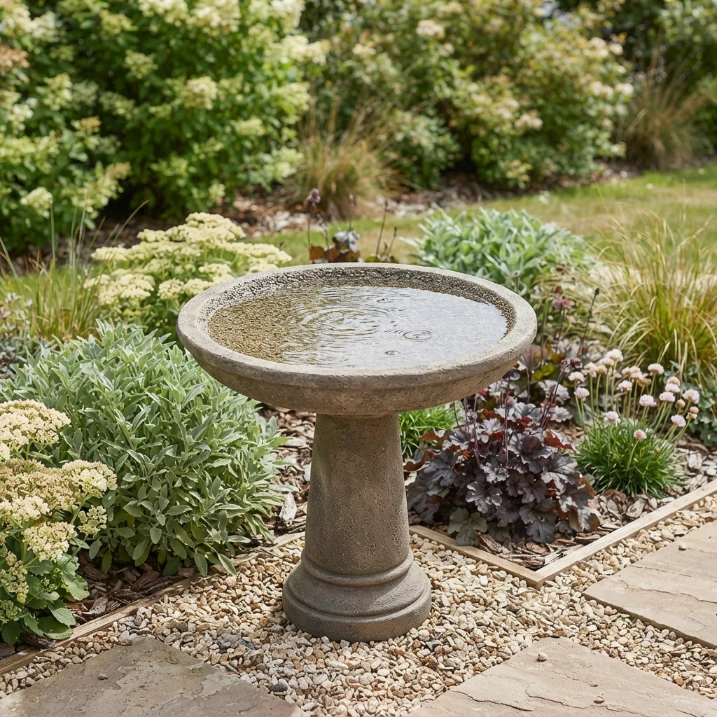
Place the basin on stable, level ground and keep it visible enough to monitor. Avoid dense hiding places immediately beside the water, and provide nearby shrubs at a sensible distance so birds have cover without creating an unsafe trap. Clean the basin regularly, refresh the water often, and choose a shallow design with a textured surface for better footing. For example, a concrete pedestal basin about 18 inches across and 1–2 inches deep, set on level ground in open view near shrubs, is easy to monitor, refill and scrub.
15. Match the Bird Bath to Your Garden Style
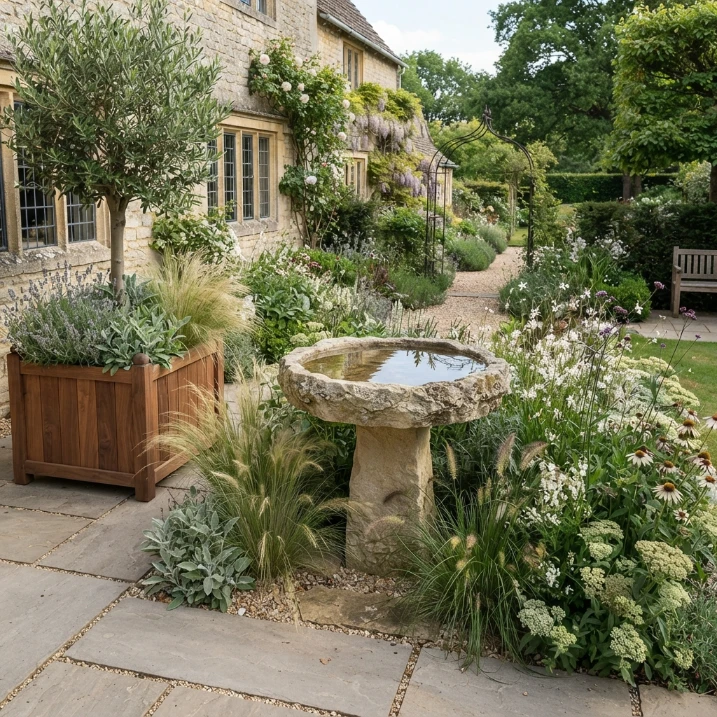
The strongest choice is the one that supports the existing mood of your outdoor space. Stone suits traditional and natural gardens, concrete fits modern layouts, ceramic adds personality, and metal can work in industrial or contemporary settings. Think of the bird bath as a small piece of garden architecture: it should repeat the colors, shapes, and materials already present. For example, a stone basin about 18 inches across and 1–2 inches deep, set in a traditional garden that already uses stone paths, repeats the garden’s own materials.
Bird Bath Types at a Glance
| Type | Best garden spot | Depth & care | Watch out for |
| Pedestal | Open lawn or flower bed | 1-2 in deep; scrub weekly | Heavy concrete can crack in hard frosts. |
| Ground-level basin | Beside low shrubs, out of cat range | 1 in at the edge; refill daily | Needs open sightlines so birds feel safe. |
| Hanging | Small garden, patio, balcony | Shallow bowl; top up often (small volume) | Must hang securely, away from fences cats use. |
| Solar fountain | Sunny spot with direct sun on the panel | Moving water; clean pump weekly | Stops on cloudy days; basin still works as a still bath. |
| Heated | Near an outdoor power point | Thermostat-controlled; check cord safety | Needs weatherproof (GFCI) outdoor power. |
Where to Place a Bird Bath in the Garden
Choose dappled shade so the water stays cooler and algae grows more slowly. Set the bath about 2-3 m from shrubs so birds have escape cover, but keep open views around it. Keep it 5-10 ft from feeders so seed does not foul the water, near a hose or spigot for easy refills, and visible from a window. Never tuck it where cats can hide.
Keeping a Bird Bath Clean
Change the water daily in summer and scrub the basin weekly with a stiff brush. Rinse it with a 10% vinegar solution, then refill with fresh water. Never use detergents or chemicals, which can harm birds even in small amounts.
Bird Baths in Winter
Keep the bath going through winter with a heated bath or a drop-in de-icer so birds can still drink. Never pour hot water on ice, which can crack the basin and refreeze quickly. Keep the bath in the same spot so birds keep finding it.
Bird Baths in the Garden FAQs
Where is the best place to put a bird bath in the garden?
Choose dappled shade near shrubs for cover but with open views, away from cat hiding spots, near a hose and visible from a window.
How deep should a bird bath be?
Keep it about 1 inch deep at the rim, sloping to no more than 2 inches at the centre. Add pebbles or gravel so small birds can stand safely.
How often should I clean a bird bath?
Top up daily, and change the water daily in summer. Scrub weekly, rinse with a 10% vinegar solution, and refill with fresh water.
Do bird baths really attract more birds?
Yes — water draws species that rarely visit feeders, such as wrens, warblers and thrushes, and moving water attracts even more.
What should I do with a bird bath in winter?
Keep it going with a heated bath or de-icer. Never add antifreeze or pour boiling water on ice.
Final Thoughts
Bird baths in the garden can provide the missing connection between beauty, wildlife, and layout. With the right placement, planting, and material, even a small basin can make an outdoor space feel more complete. Choose a design that fits your garden, leave enough open space for visiting birds, and treat the feature as part of the overall composition rather than an afterthought.