12 Lovely Winter Wreath Ideas That Make Your Front Door Feel Warm and Welcoming
The best winter wreath ideas are simple, full, and built to last past Christmas: a lush evergreen base, one clear color story, and a few natural textures like berries, pinecones, or dried fruit. A good winter wreath should look just as lovely in late February as in December, so choose frosted greenery, hardy berries, and weatherproof accents over anything fragile. Whether your door is painted, wood, or glass, there is a style here that will make it feel warm and welcoming all season long.
Start with the size that suits your door: a 24-inch wreath fits most standard front doors, while a 30-inch wreath suits a tall or double door. Hang it at eye level, about 57 inches from the ground, and pair it with a lantern, a doormat, and a small potted evergreen for a finished look, borrowing a few of these Christmas entryway decor ideas to carry the same warmth from the door into the hallway.
Key Takeaways
What makes a wreath look like winter, not just Christmas? Frosted greenery, pinecones, silver berries, dried oranges, and neutral ribbons read as winter all season, while Santa figures and tinsel read as Christmas only.
How long can a winter wreath stay on the door? A faux or dried wreath can stay up from late November through February, while a fresh evergreen wreath looks its best for four to six weeks outdoors.
What size wreath fits a standard front door? A 24-inch wreath is the safest choice for a standard 36-inch-wide door, leaving about six inches of door visible on each side for a balanced, generous look.
1. Classic Evergreen Wreath with Red Berries
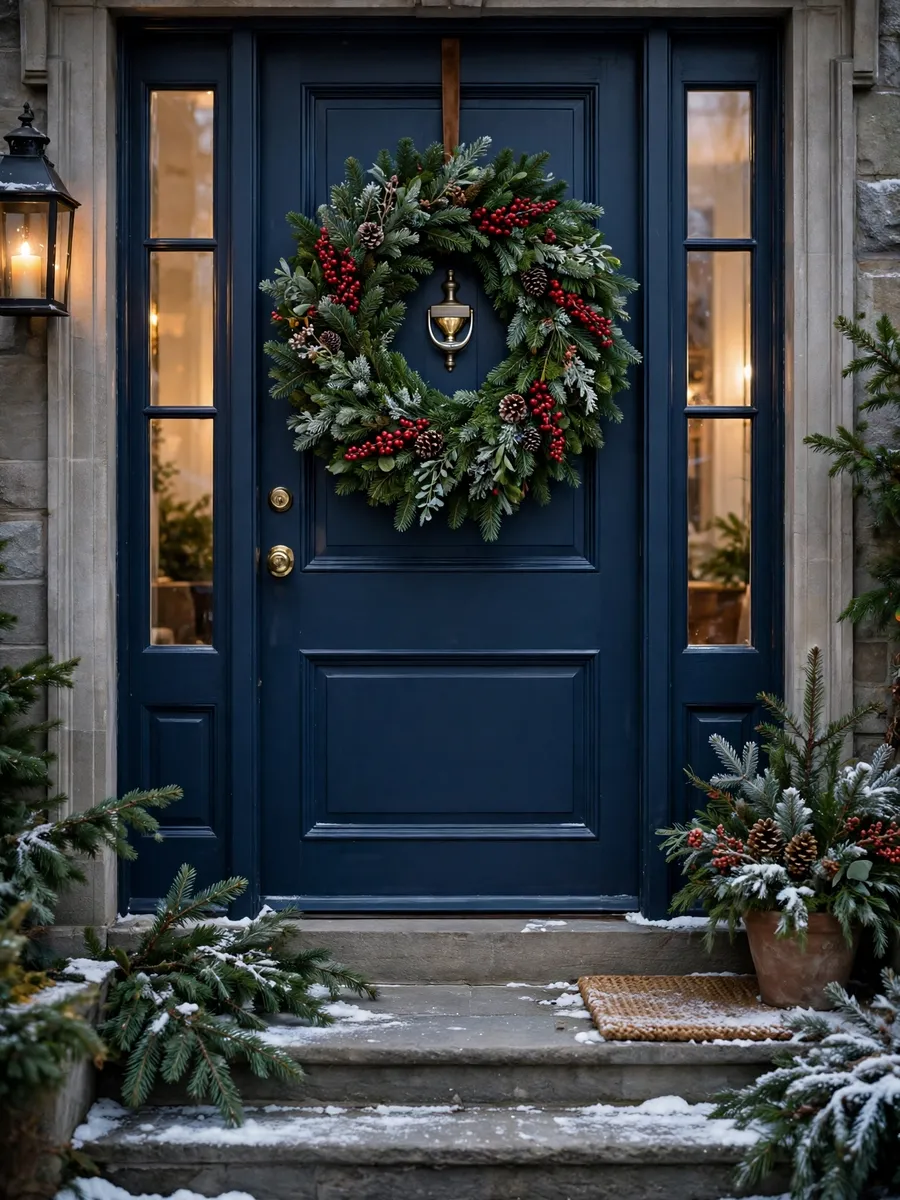
Nothing says winter quite like a full evergreen wreath dotted with red berries. Start with a 24-inch mixed pine and fir base, then tuck in three clusters of faux red winterberries, one at the top and one on each lower side, so the color feels balanced rather than crowded. Add five or six small pinecones wired in with floral wire, and finish with a simple deep-red velvet bow at the bottom. For example, picture this on a navy-blue front door with a brass knocker: the green reads rich, the berries pop, and the pinecones add woodland texture without making the wreath look busy.
Keep the berries slightly larger than the pinecones so they read first from the street, and choose UV-resistant berries so the red stays bright through February.
Quick tips:
- Use a 24-inch base for a standard door and a 30-inch base for a double door.
- Wire pinecones in with 22-gauge floral wire so they never slip.
- Spray the finished wreath lightly with clear sealant to protect the berries.
2. Frosted Eucalyptus Wreath with Silver Accents
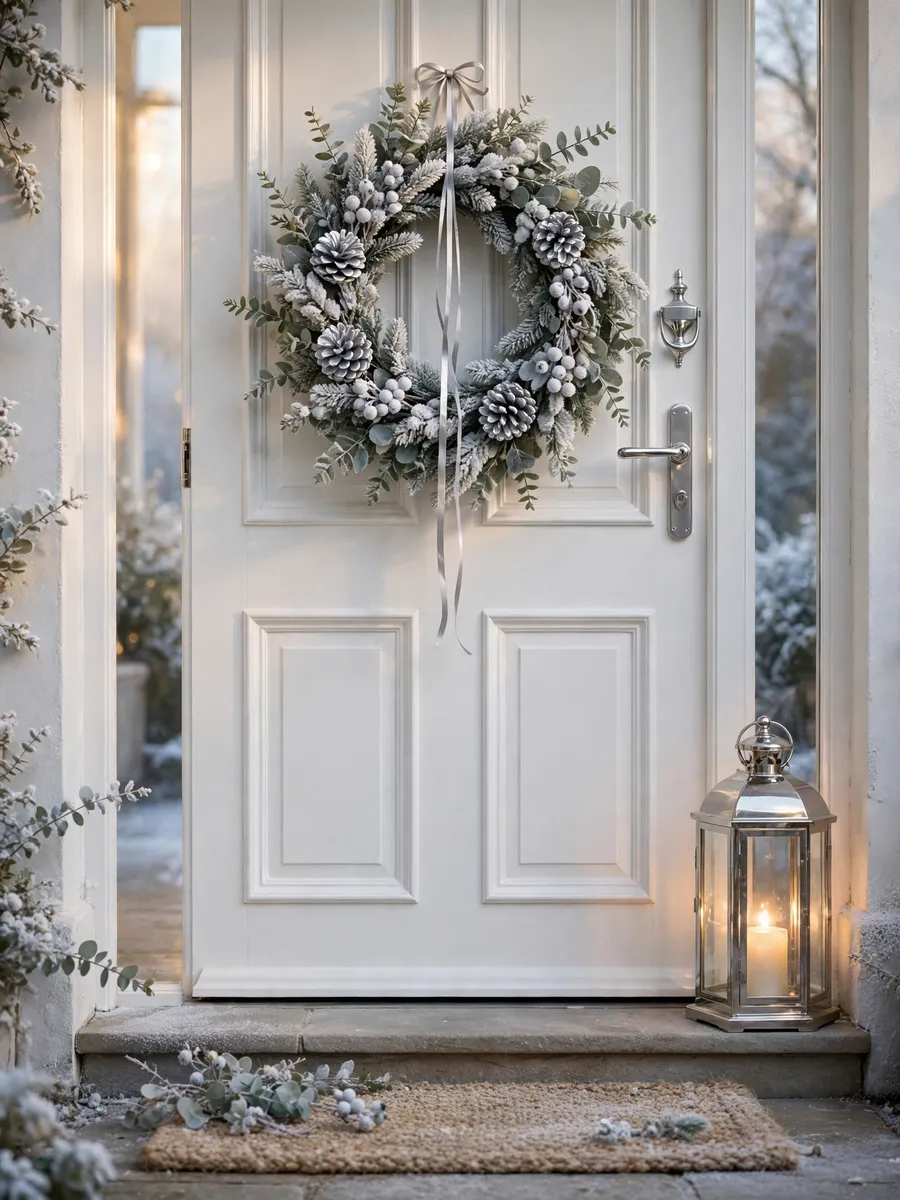
A frosted eucalyptus wreath is the calm, modern answer to a busy holiday door. Build it on a slim grapevine frame, layering frosted silver-dollar eucalyptus sprigs in one direction so the round leaves overlap like scales. Tuck in silver-painted pinecones, three frosted white berry sprays, and a thin silver ribbon looped loosely through the greenery. Imagine it on a white or pale grey door with a silver lantern beside it: the whole entry feels cool and fresh, like the first morning after snowfall.
This style also suits a glass or storm door, because the pale leaves will not darken the entry. Keep the palette strictly silver, white, and soft sage.
Quick tips:
- Layer eucalyptus in one direction for a smooth, polished finish.
- Use matte silver ornaments so they catch light without looking glittery.
- Hang it with a clear suction hook on glass doors.
3. Dried Orange and Cinnamon Twig Wreath
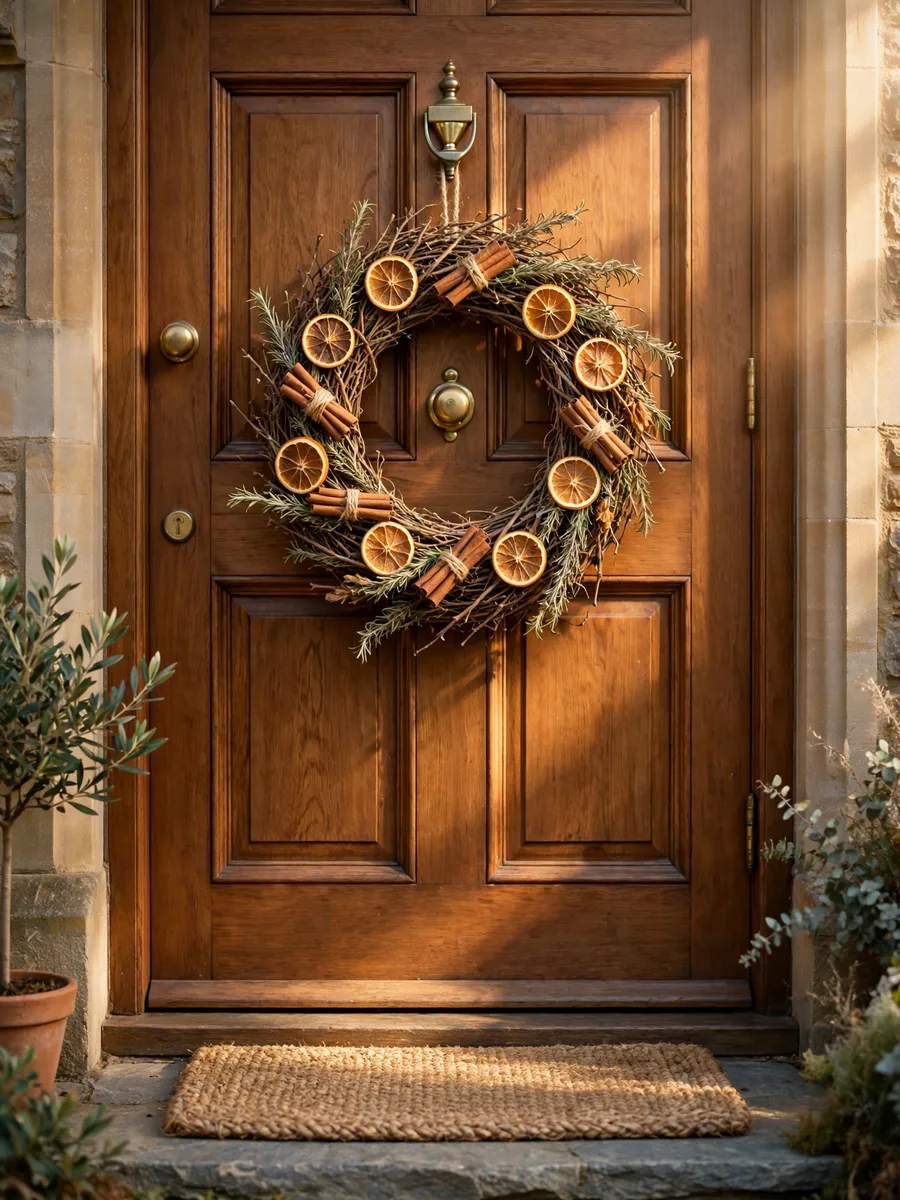
Dried orange slices and cinnamon sticks bring warmth and a gentle scent to a winter door, and they cost very little to make. Start with a twig base about 22 inches wide, wire on eight dried orange slices spaced evenly around the ring, and bundle cinnamon sticks in groups of three with thin twine. Add a few sprigs of dried rosemary or cedar for green contrast. Picture this on a warm brown wooden door with a woven doormat: the oranges glow amber in afternoon light and the cinnamon adds a spicy note.
Dry orange slices in a low oven at 200 degrees Fahrenheit for two to three hours, then seal them with clear craft spray so they do not soften in damp weather.
Quick tips:
- Space orange slices evenly so the wreath looks balanced from the street.
- Bundle cinnamon sticks in threes for a tidy, craft-shop look.
- Keep the wreath under a covered porch to protect the dried fruit.
4. White and Gold Elegant Wreath
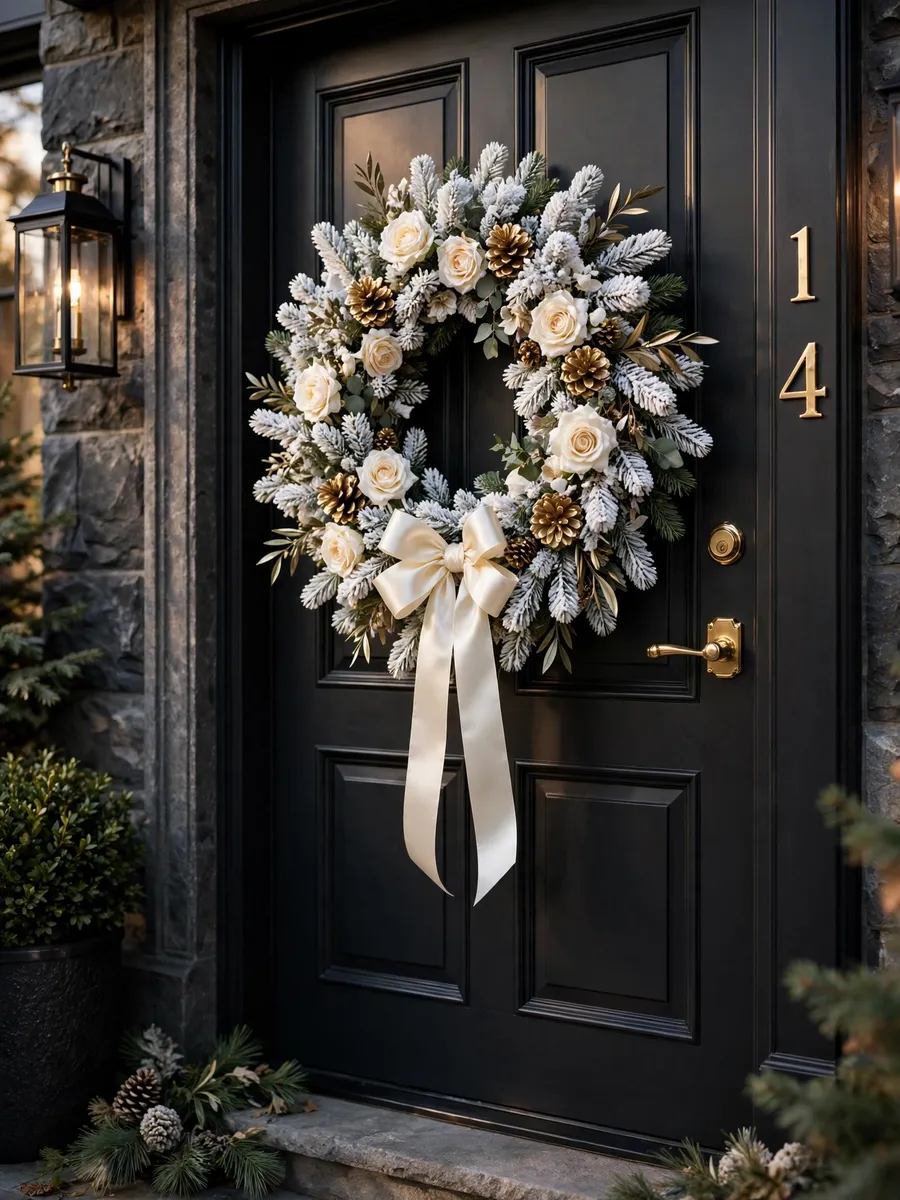
White and gold is the most elegant of all winter wreath ideas, and it suits a formal entry perfectly. Begin with a flocked white pine base, add ivory roses in three small clusters, gold-painted pinecones, and a wide ivory satin ribbon tied into a soft bow at the top. A few gold berry sprays tucked between the white tips add sparkle without turning the wreath into a Christmas decoration. Imagine it on a charcoal-black door with brass house numbers: the white glows, the gold warms it up, and the entry looks quietly luxurious.
Hang this wreath where it catches morning light, and choose warm gold over bright yellow gold for a softer finish.
Quick tips:
- Use warm gold, not bright yellow gold, for a softer look.
- Keep white flowers in odd-numbered clusters of three or five.
- Fluff flocked tips gently so the snowy coating does not shed.
5. Burgundy and Pine Wreath with Brass Bells
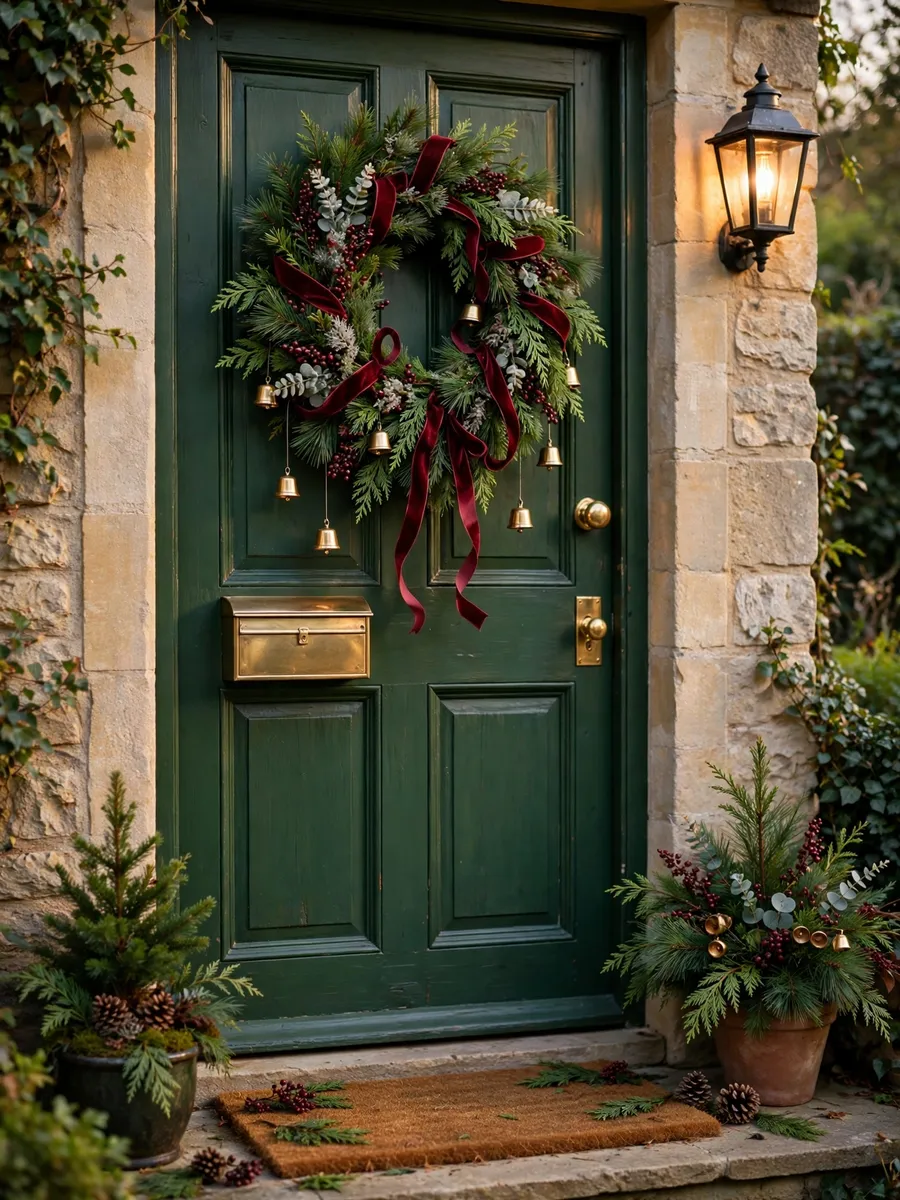
Deep burgundy against dark green pine feels rich, old-fashioned, and wonderfully wintery. Start with a full noble fir base, then wire in burgundy velvet ribbon loops, three clusters of burgundy berries, and five small brass bells hung from short lengths of twine. Add a few sprigs of cedar for a softer, feathery edge. Picture this on a deep green door with a brass mailbox: the burgundy and brass echo each other, and the door feels like the entrance to a cozy country house.
Keep the bells about one inch wide so they read as a detail, and space them evenly so the wreath stays balanced.
Quick tips:
- Choose one-inch brass bells so they chime softly, not loudly.
- Mix velvet ribbon with matte berries for rich texture contrast.
- Secure bells with twine, not glue, so they can move freely.
6. Blue Spruce Wreath with Icy Blue Accents
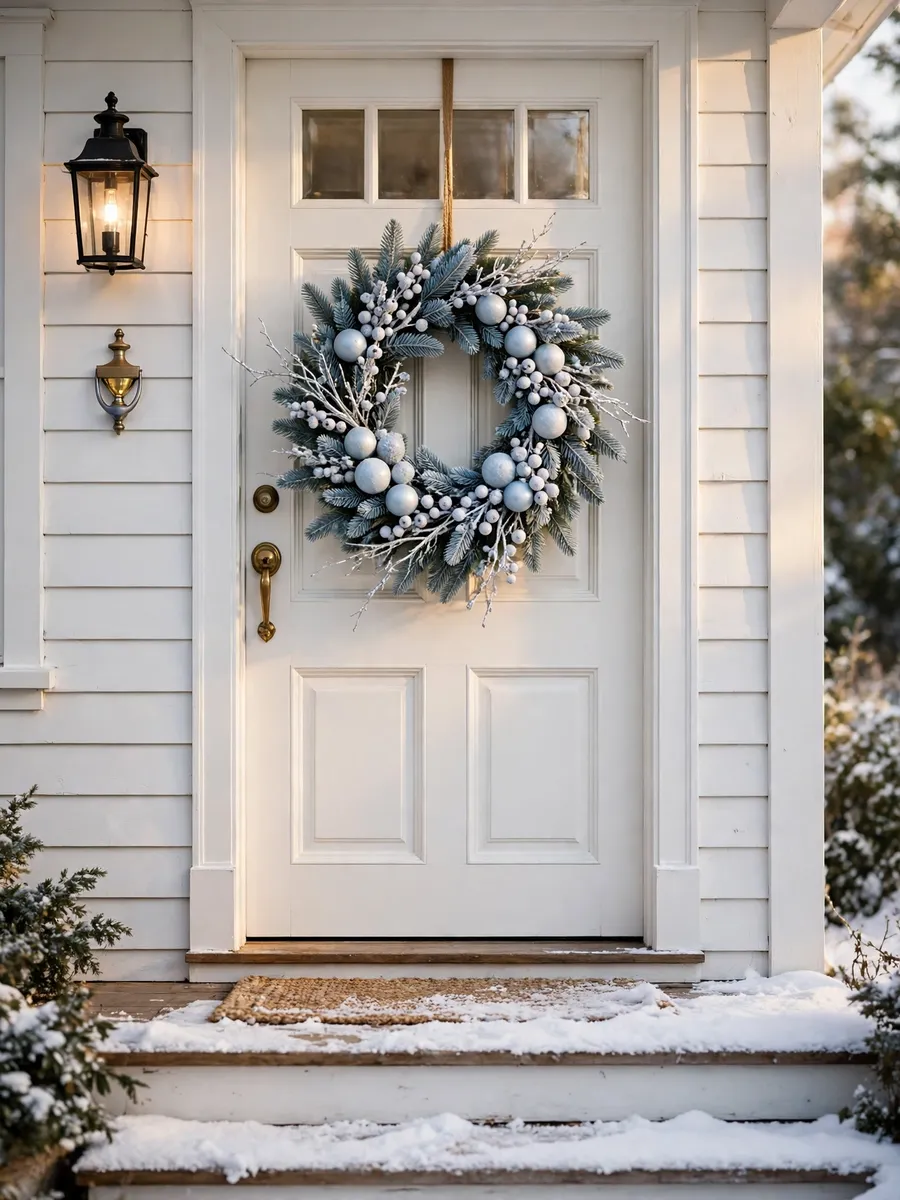
A blue spruce wreath captures the cold, clear beauty of a snowy forest. Use a blue spruce base, with naturally silvery-blue needles, then add frosted white berries, pale blue ornaments in two sizes, and a few silver-painted twigs like bare winter branches. A pale blue linen ribbon tied in a loose bow finishes the look. Imagine it on a white farmhouse door with snow on the porch steps: the blue needles, white berries, and silver twigs blend into the winter landscape.
Keep the ornaments matte or frosted rather than shiny, and use three per cluster.
Quick tips:
- Use matte or frosted blue ornaments for a calm, snowy feel.
- Mix two ornament sizes for depth without clutter.
- Pair with a pale blue doormat for a pulled-together entry.
7. Rustic Burlap and Red Plaid Wreath
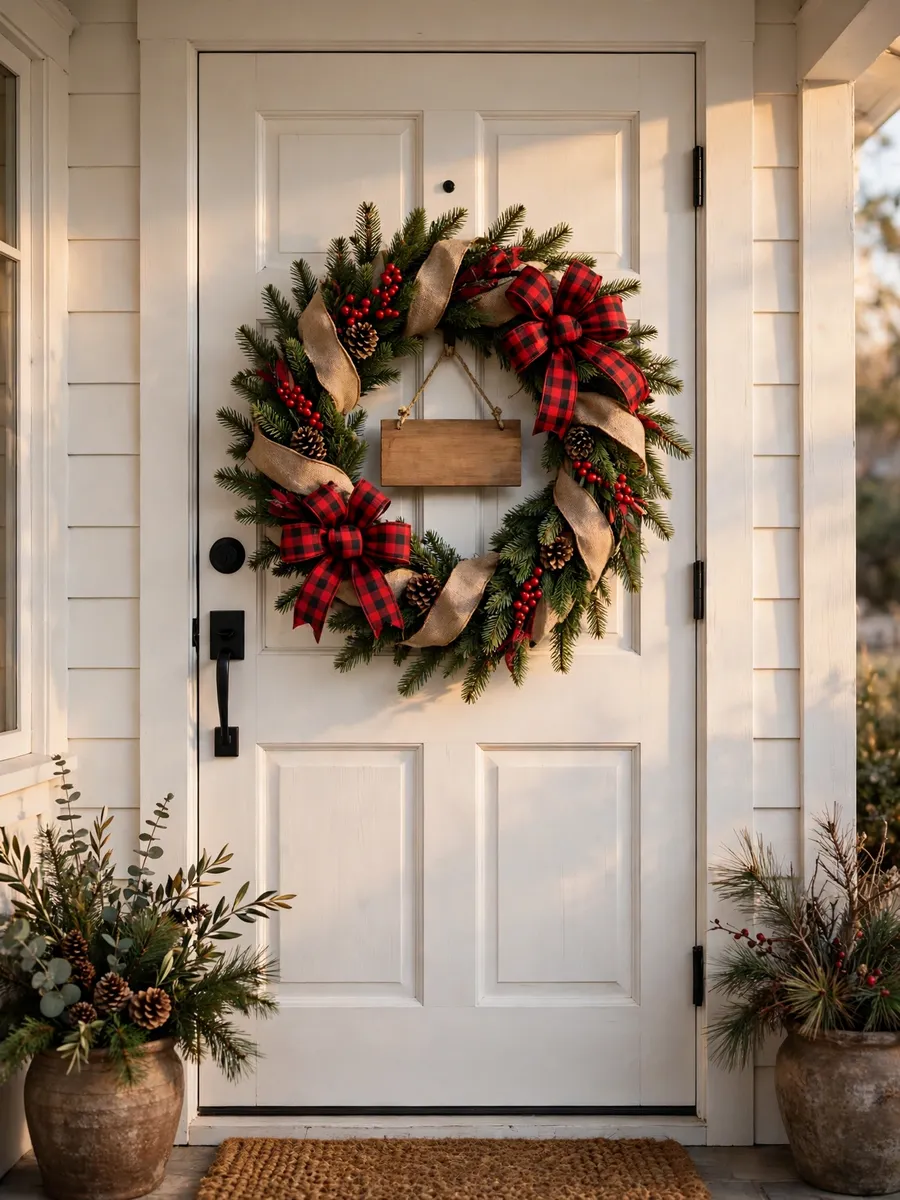
A burlap and red plaid wreath is pure farmhouse winter, cozy and a little bit rugged. Wrap a foam or straw wreath form with wide burlap ribbon, then layer pine sprigs, red plaid ribbon loops, and three small pinecones on one side for an asymmetrical look. Add a red plaid bow at the bottom and a few faux red berries for color. Picture this on a white farmhouse door with black hardware: the plaid reads warm and familiar, the burlap adds texture, and the pine keeps it firmly in winter.
The rustic style works best when it looks gathered rather than bought, so mix at least three textures in one wreath: burlap gives a rough, woven base, plaid ribbon adds a soft patterned layer, and pine brings the natural edge that keeps it from looking like a craft-store kit. Pin the plaid loops in place before gluing anything, step back to check the balance from six feet away, and finish with a small wooden welcome sign hung from the center with twine.
Quick tips:
- Pin ribbon loops in place before gluing so you can adjust the shape.
- Keep plaid to one bow and a few loops so it does not overpower the pine.
- Choose weatherproof burlap if the door is not covered.
8. Magnolia Leaf Wreath with Cream and Gold
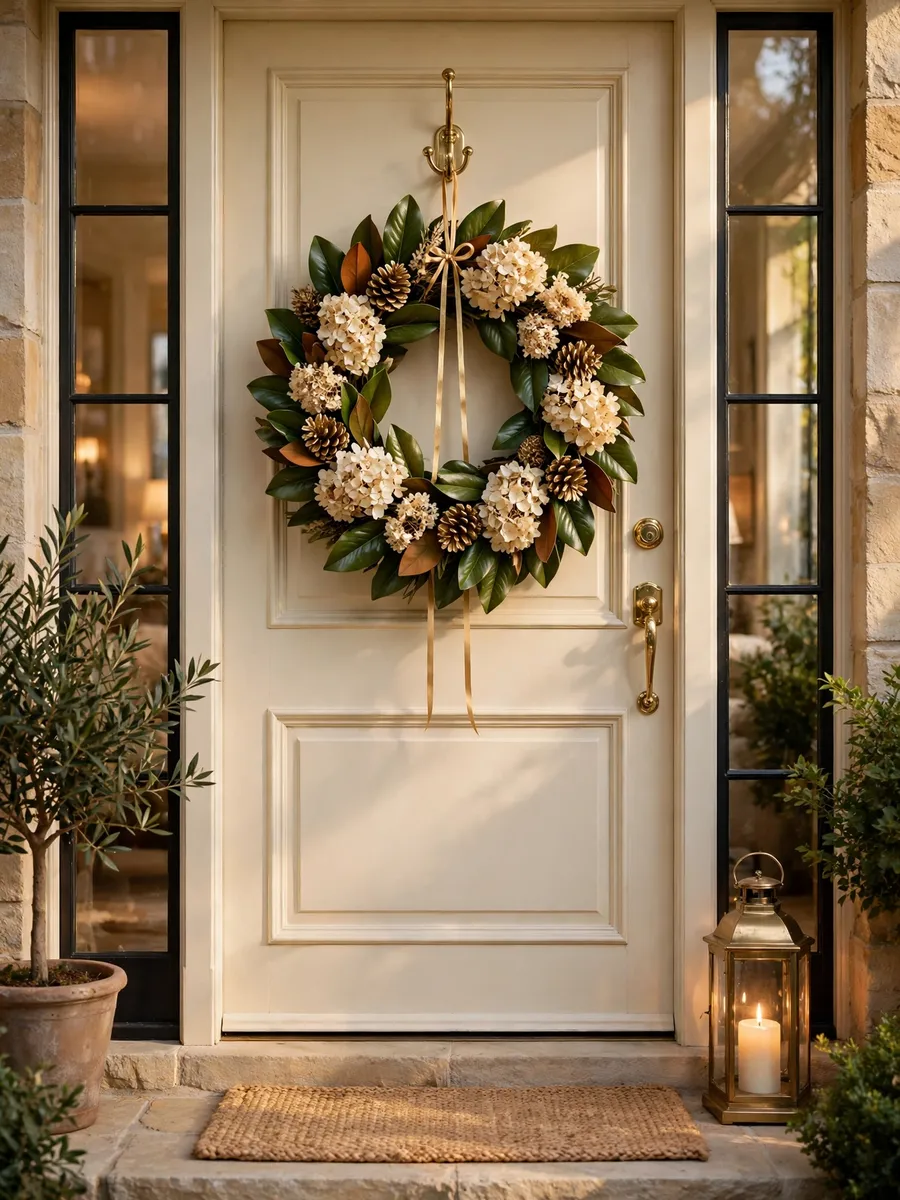
Magnolia leaves make a wreath that looks polished from November through February, because their glossy green tops and velvety brown undersides add depth without any extra decoration. Layer fresh or faux magnolia leaves in overlapping rows around a wire frame, then add cream-colored dried hydrangeas, two gold-painted pinecones, and a thin gold ribbon. Imagine this on a cream or sage-green door with a brass wreath hanger: the leaves shine, the cream flowers soften the edges, and the gold adds just enough celebration.
Mist fresh magnolia leaves lightly once a week indoors; faux magnolia holds its shape best on an uncovered door.
Quick tips:
- Overlap leaves in one direction for a smooth, tiled effect.
- Use cream flowers sparingly so the leaves stay the focus.
- Hang with a brass hook to echo the gold accents.
9. Cranberry and Cedar Wreath with Copper Accents
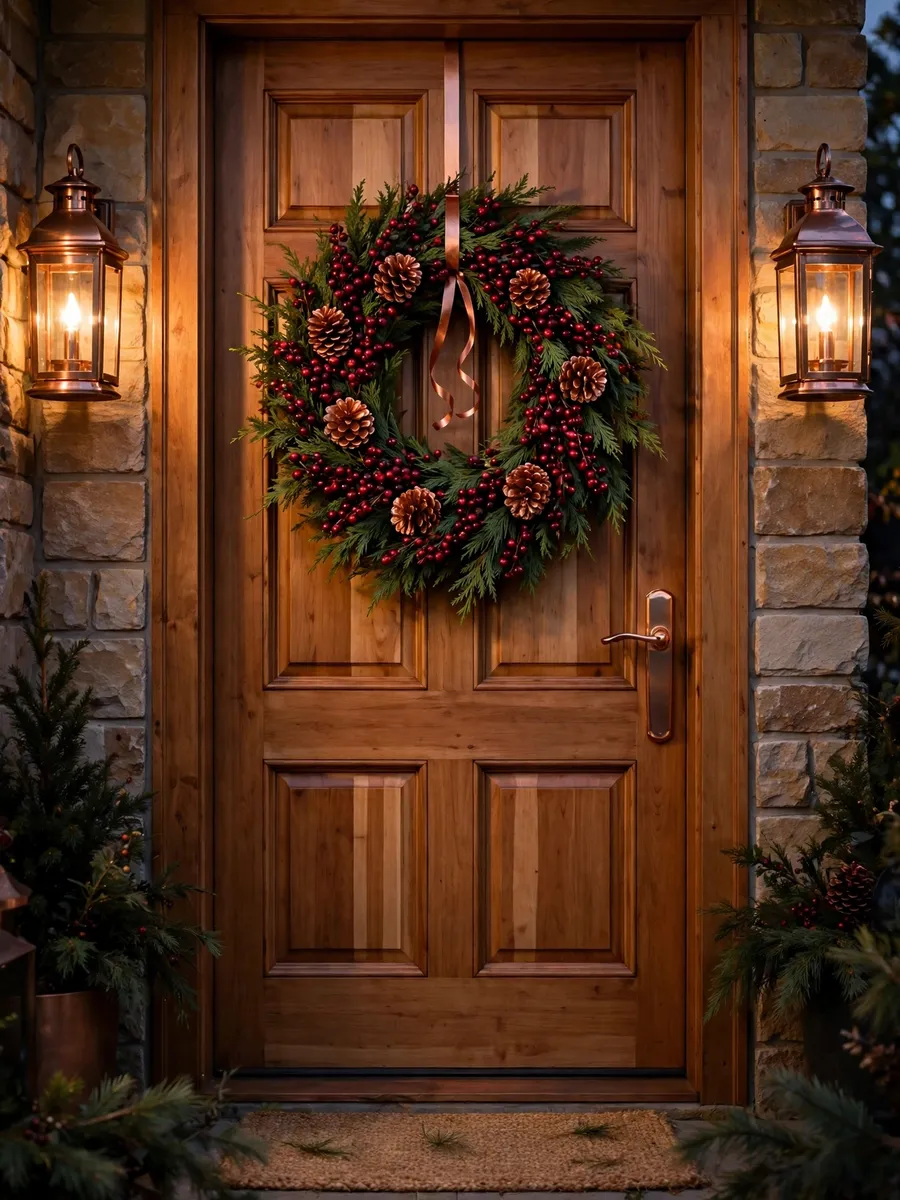
Cranberry and cedar is a fresh, slightly unexpected color story that feels both festive and calm. Start with a cedar base, which has soft, flat sprays that layer beautifully, then add clusters of deep cranberry berries, copper-painted pinecones, and a narrow copper ribbon woven through the greenery. A few dried seed pods tucked between the cedar sprays add a natural, gathered feel. Picture this on a warm wood door with copper lanterns on either side: the cranberry pops against the cedar and the copper glows in the porch light. The same cranberry and cedar pairing also works beautifully indoors, so try it in these winter centerpiece ideas if you want your table to echo your front door.
Cedar dries gracefully, so this wreath holds its shape for weeks, and copper will not fade in winter sun.
Quick tips:
- Use cedar as the base because its flat sprays layer neatly.
- Keep copper accents small so they glow rather than glare.
- Mist fresh cedar lightly to keep it soft and fragrant.
10. Lavender and Frosted Greenery Wreath
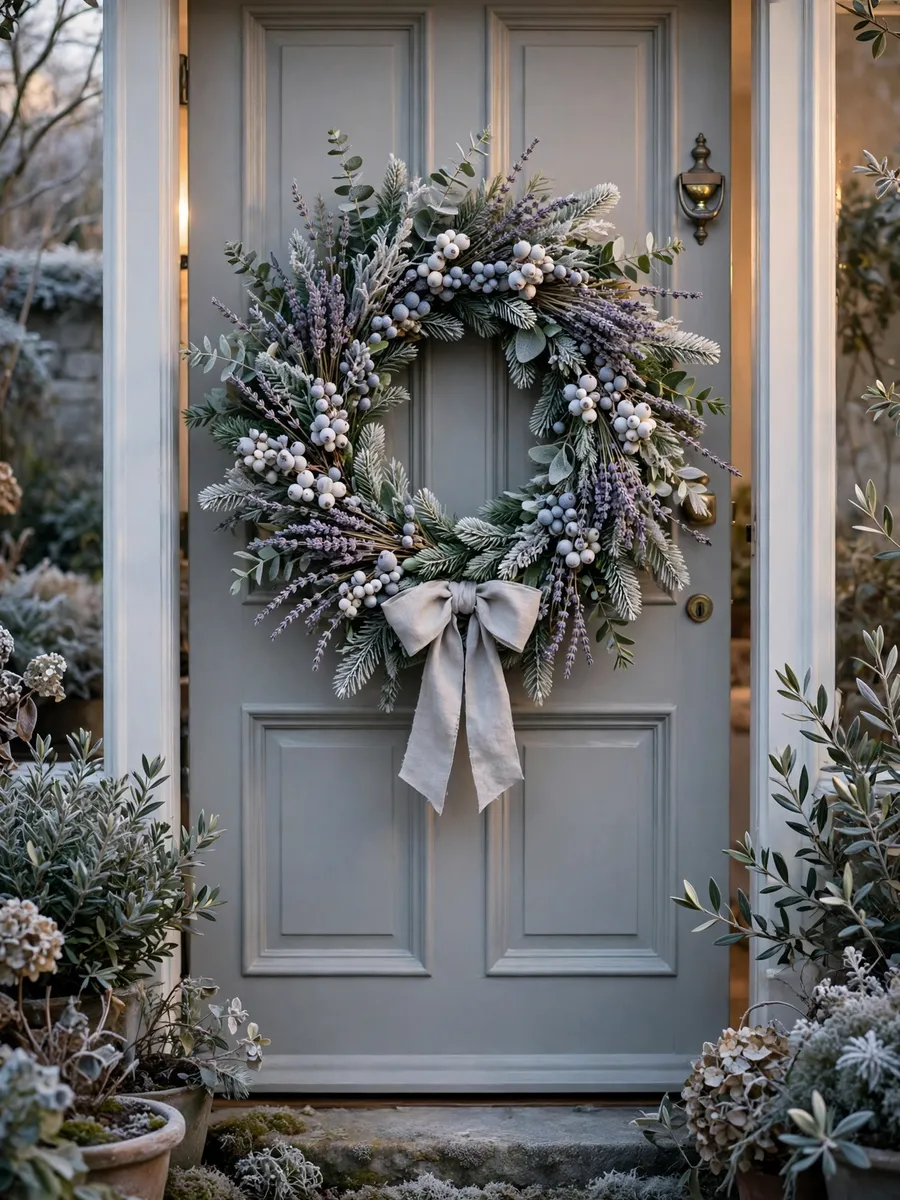
Lavender is not just for summer. Dried lavender sprigs mixed with frosted greenery make a quiet, fragrant winter wreath that stands out from the usual red and green. Start with a frosted fir base, then wire in small bundles of dried lavender, silver berries, and a few white snowberries. A pale grey or lavender linen ribbon tied in a simple bow completes the look. Imagine it on a soft grey door with white trim: the lavender, silver berries, and frosted green feel cool and calm, like a winter garden after frost.
Dried lavender holds its scent for weeks under a covered porch, and its muted color stays fresh long after brighter wreaths fade.
Quick tips:
- Use dried, not fresh, lavender so it keeps its color and scent.
- Bundle lavender in small groups of five stems for a tidy look.
- Keep the ribbon pale so the lavender stays the star.
11. Red and White Candy-Cane Wreath
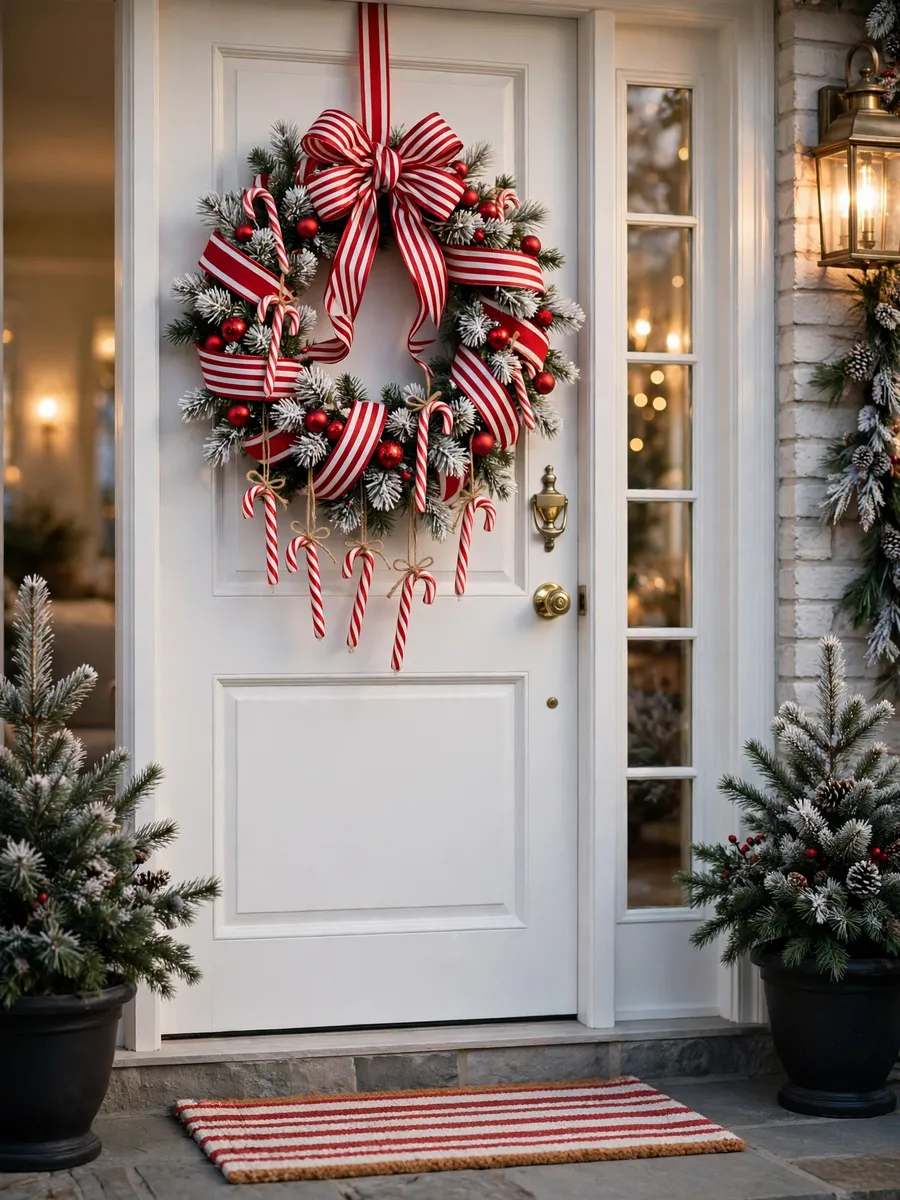
A red and white candy-cane wreath is playful, bright, and perfect for a family home. Wrap a foam wreath form with alternating bands of red and white striped ribbon, then add white frosted pine tips, small red ornaments, and a cluster of miniature candy canes tied together with twine at the bottom. A few white berries soften the bold stripes. Picture this on a crisp white door with a striped doormat: the candy canes make children smile and the door feels cheerful even on a grey winter morning.
Keep the stripes about two inches wide so they read from the street, and use shatterproof ornaments for a busy door.
Quick tips:
- Use two-inch ribbon bands so the stripes read from the street.
- Choose shatterproof ornaments for a busy family door.
- Place candy canes at the bottom so they do not snag coats.
12. Natural Grapevine Wreath with Warm Fairy Lights
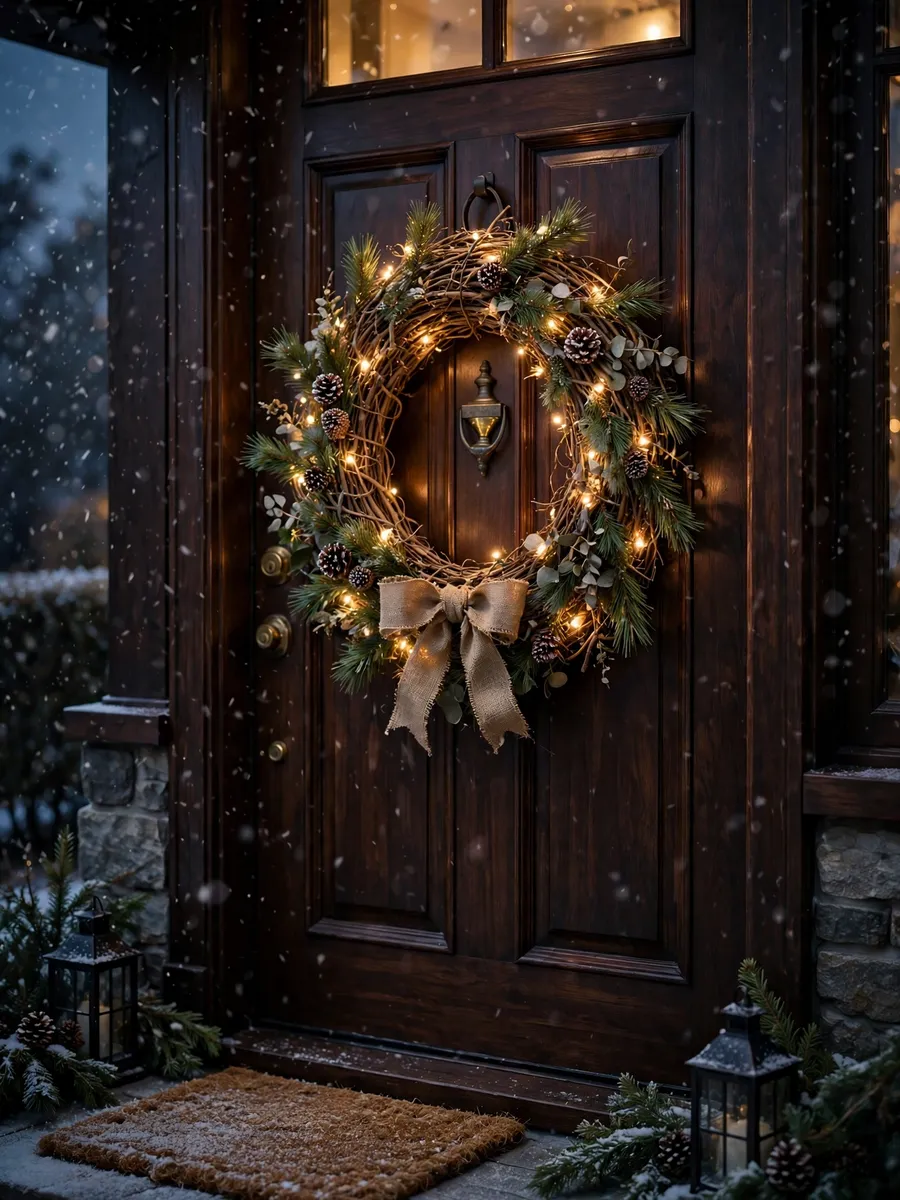
A natural grapevine wreath with warm fairy lights is the most welcoming design of all, because it glows after dark. Start with a bare grapevine base, weave in pine sprigs, a few small pinecones, and a battery-operated string of 50 warm white micro lights. Add a simple burlap bow and let a few pine tips stick out naturally for a loose, organic shape. Imagine it on a dark wood door at dusk, the lights glowing softly against the twigs: it looks less like a decoration and more like a warm invitation to come inside.
Choose lights with a timer so they switch on at dusk, and hide the battery pack in a small pouch pinned to the back.
Quick tips:
- Use warm white lights, not cool white, for a cozy glow.
- Pick a timer function so the lights switch on at dusk.
- Hide the battery pack behind the wreath with a small pouch.
FAQs
How long should you keep a winter wreath up?
A winter wreath is typically displayed from late November through the end of February, or until spring decor takes over in mid-March. Choose frosted greenery, pinecones, and neutral colors rather than holiday-only motifs, and it will look right all season.
How do you turn a Christmas wreath into a winter wreath?
Remove holiday-specific pieces such as Santa figures, bright red velvet ribbon, and tinsel, then add white or silver ribbon, extra flocking, and natural materials like birch twigs or dried berries. The evergreen base stays the same, so the change takes about fifteen minutes.
How do you make a winter wreath last longer outdoors?
Use faux greenery and faux berries for the longest life, and seal a fresh wreath with a UV-resistant clear acrylic spray to protect it from moisture and fading. Hang it under a covered porch when you can.
What size wreath should I hang on my front door?
A 24-inch wreath fits most standard 36-inch-wide front doors, leaving about six inches visible on each side. For a tall or double door, step up to a 30-inch or 36-inch wreath.
Can I use a winter wreath indoors?
Yes, a winter wreath works beautifully indoors on a wall, above a mantel, or as a table centerpiece with a candle in the middle. Use dried or faux materials indoors to avoid shedding needles.
Conclusion
A winter wreath is the simplest way to make your front door feel warm and welcoming all season long. Pick one color story you love, build it on a full evergreen or grapevine base, and add a few natural textures that will hold up through frost and snow. Hang it at eye level, step back, and enjoy a door that greets every guest with winter warmth.