Glass Yard Art: 10 Stunning Ways To Transform Your Landscape
Glass yard art is outdoor decoration made from glass — spheres, mosaics, sculptures, lanterns, and bottle art — that catches sunlight and color to turn an ordinary garden into a layered, artistic space. Glass yard art brings color, light, and personality into outdoor spaces without requiring a complete landscape makeover. From reflective garden spheres to jewel-toned sculptures, glass details can make a simple yard feel layered, artistic, and welcoming. The best designs use glass as an accent that works with plants, pathways, stone, and natural light.
Whether your garden is small, modern, cottage-inspired, or richly planted, the right pieces can create focal points that change throughout the day. Use the following ideas to plan a landscape that feels intentional rather than crowded.
1. Place A Reflective Glass Sphere Among Greenery
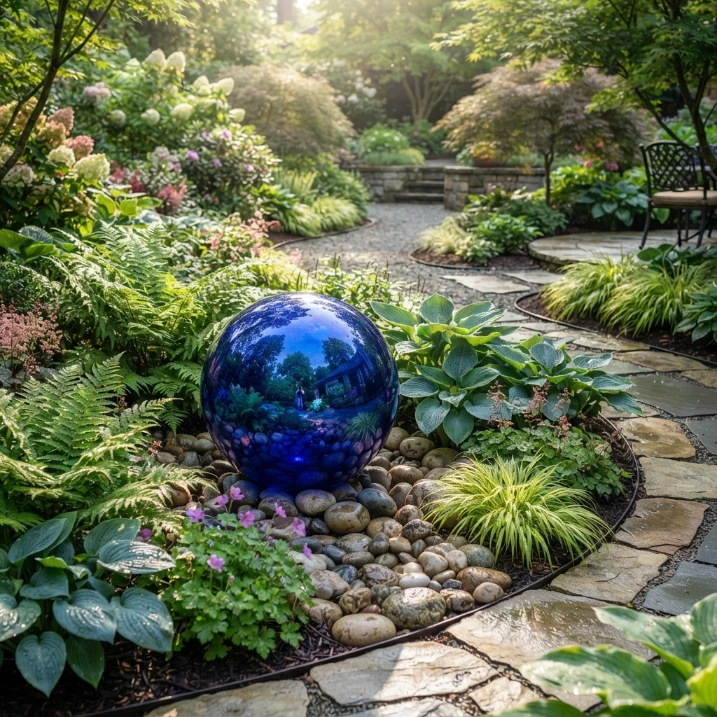
A reflective glass sphere is one of the easiest ways to introduce art into a garden. Set it among ornamental grasses, hostas, ferns, or flowering shrubs so the surface reflects the surrounding foliage. Choose emerald, cobalt, bronze, or silver depending on your garden palette. A single sphere often creates more impact than several unrelated ornaments. For a concrete example, set a cobalt blue gazing ball on a wrought-iron stand among hostas.
2. Create A Colorful Glass Mosaic Path

Use small glass tiles or safely finished glass pieces to add a mosaic border along a walkway, patio edge, or raised bed. Blue and turquoise glass create a water-inspired feeling, while amber, rust, and gold bring warmth. Keep the pattern simple and repeat two or three colors so the path feels connected to the rest of the landscape. For example, make the path from a quick-set concrete mold with polished glass shards pressed in, sealed grout, and a slip-resistant finish.
3. Add A Statement Glass Garden Sculpture

A tall glass sculpture can act as the visual anchor of a planting bed. Look for a shape with movement, such as a twisting flame, abstract flower, wave, or cluster of leaves. Place it where it can be seen from a window, seating area, or garden entrance. Surround the base with low plants so the sculpture remains visible without looking isolated. For example, build a lit stacked glass-block tower with a solar light inside.
4. Use Glass Art To Brighten A Shady Corner
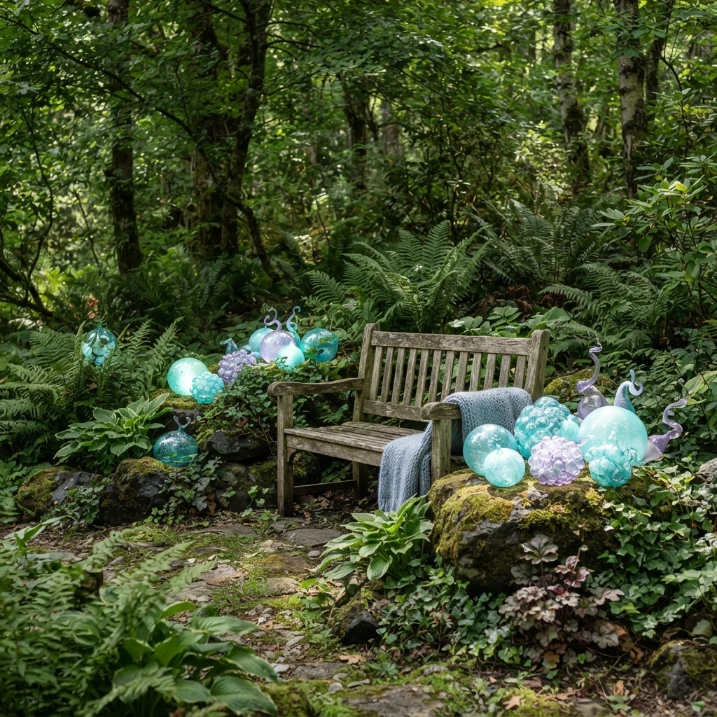
Shaded gardens can benefit from reflective and translucent details. Choose luminous blue, aqua, lavender, or clear glass and position it near a bench, stepping stone, or woodland planting area. The glass catches soft daylight and adds brightness where flowers may be limited. Combine it with moss, ferns, dark stone, and natural wood for a calm woodland mood. For example, place pale aqua glass pieces with a mirror backing in the shady corner to bounce light.
5. Design A Jewel-Toned Flower Bed
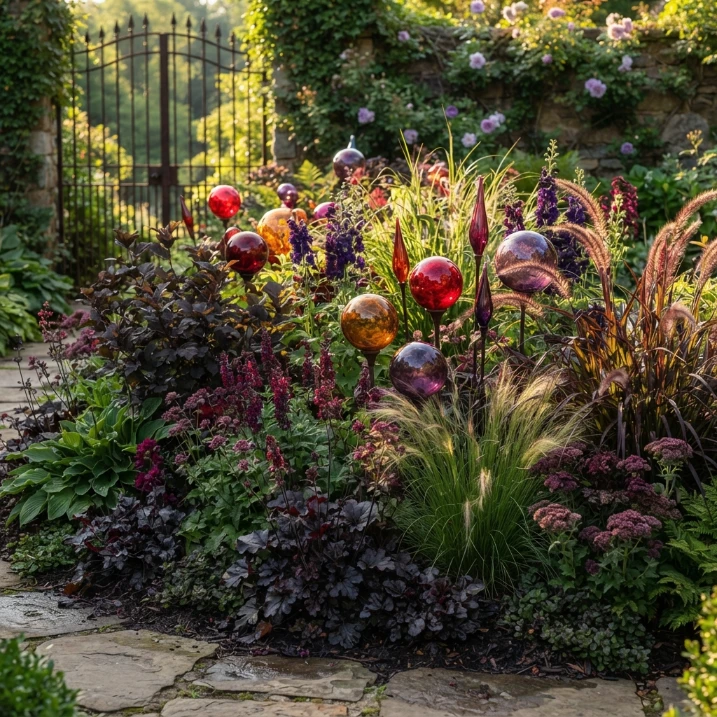
Glass yard art works beautifully with rich planting colors. Pair ruby-red or amber glass with burgundy flowers, purple blooms, and deep green foliage. For a cooler scheme, combine cobalt, turquoise, and violet pieces with silver-leaf plants and pale flowers. Repeat the same glass color at two or three points to create rhythm across the bed. For example, edge the bed with cobalt and amber bottles set neck-down in a shallow trench.
6. Decorate A Patio With Glass Lanterns

Glass lanterns can extend the beauty of the garden into the evening. Place them on outdoor tables, steps, walls, or low plinths, and use weather-safe LED candles rather than open flames. Frosted glass gives a soft glow, while colored glass creates a more dramatic atmosphere. Group lanterns in different heights for a relaxed designer look. For example, hang solar lanterns with wind guards at varied heights on the patio.
7. Combine Glass With Stone And Metal
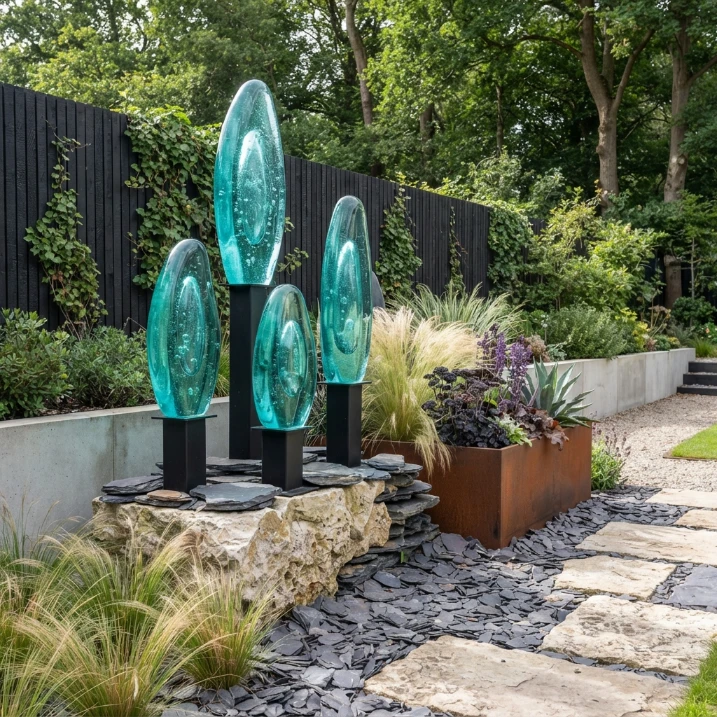
Glass becomes more sophisticated when balanced with contrasting materials. Pair translucent pieces with rough limestone, slate, river rocks, corten-style metal, or black steel. The contrast between smooth glass and textured materials makes even a small installation feel architectural. Use natural stone as a base and metal supports to give the display a finished appearance. For example, set the glass on a river-stone and black-metal sculpture base.
8. Build A Small Glass Art Focal Point Near Water
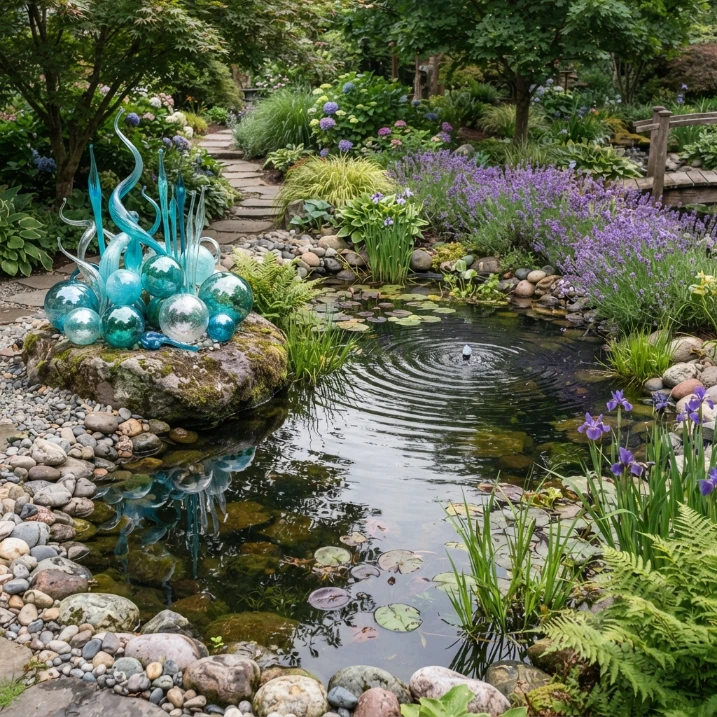
Place glass pieces near a pond, fountain, birdbath, or rain garden to emphasize reflection and movement. Aqua and blue tones echo the water, while clear glass keeps the scene light. Avoid placing fragile objects where they can fall into a pond or obstruct maintenance. A low arrangement beside the water can feel more natural than a large collection. For example, place a small glass orb on a stone plinth beside the water with a secure footing.
9. Use Repeated Glass Details Along A Fence

A fence can become an artistic backdrop with a repeated arrangement of glass discs, hanging ornaments, or weatherproof mosaic panels. Keep the spacing consistent and select one color family for a polished result. This approach works especially well in narrow yards because it adds visual interest vertically without taking valuable floor space. For example, space repeated cobalt bottle details evenly along the fence.
10. Finish The Landscape With One Unexpected Glass Accent

The most memorable garden may need only one surprising detail: a glass flower, colorful bird, sculptural mushroom, or oversized jewel-like ornament. Place it where visitors naturally pause, such as beside the front path or near a seating area. Keep surrounding plants relatively simple so the accent feels intentional and remains the focus. For example, use one oversized amber glass float as the single surprise accent.
Recycled Glass Yard Art on a Budget
Recycled glass keeps costs low and adds character. Make a bottle tree from a 5-ft post with 12-15 mixed bottles on wire arms, set in a concrete footing if needed, and edge a bed with bottles set neck-down in a shallow, soil-packed trench. Hang mason-jar lanterns with fairy lights or candles from branches, look for glassware at thrift stores, and wear cut-resistant gloves and safety glasses when handling broken glass.
Glass yard art at a glance
| Glass type | Best spot | Light effect | Care |
|---|---|---|---|
| Gazing ball | open lawn bed | bold reflections | wipe clean seasonally |
| Mosaic path | walkways | sparkle underfoot | reseal grout yearly |
| Glass block | towers and edging | glowing light sculpture | check seals |
| Bottle art | fences and borders | jewel color | replace cracked bottles |
| Lanterns | patio and trees | warm evening glow | protect flame from wind |
How To Choose Glass Yard Art For Your Space
Before buying, consider scale, sunlight, weather exposure, and the colors already present in your garden. Large yards can support taller sculptures, while small spaces usually benefit from one strong focal piece. Select outdoor-rated materials, secure fragile objects properly, and avoid sharp edges in areas used by children or pets. Glass should enhance the landscape while remaining safe and easy to maintain.
Glass Yard Art FAQs
Is glass yard art safe outdoors?
Yes, when you choose tempered or thick glass, use secure fixings, and keep loose shards away from paths.
How do I seal mosaic stepping stones?
Set the pieces in grout, let it cure fully, then coat the stone with an outdoor sealant and reseal it yearly to keep water out.
Will glass survive winter frost?
Thick, tempered glass usually does, but bring thin pieces indoors before hard frost, drain water from containers so it cannot freeze and expand, and check seals in spring.
How do I light glass art at night?
Place a solar light inside glass towers, aim low-voltage spotlights at sculptures, and tuck fairy lights into jars for a soft glow.
How do I clean outdoor glass?
Wash it with mild soap and water, wipe it with a soft cloth, and skip abrasives that can scratch the surface.
Final Thoughts On Glass Yard Art
Glass yard art can transform an ordinary landscape through reflection, color, texture, and carefully placed focal points. Start with one piece, repeat its colors through plants or accessories, and allow enough open space around it. With thoughtful placement, glass becomes part of the garden rather than an object simply added to it.