Top 15 Stunning Backyard Design Ideas That Feels Like a World of Its Own
Backyard design is the art of shaping outdoor rooms and zones so the yard works like an extension of the home, with places to cook, gather, relax, and wander. A backyard can be more than an outdoor space. With thoughtful planning, it can feel like a private retreat, a garden escape, a relaxed entertaining area, or a little world that feels completely separate from everyday life. The secret is to combine comfort, greenery, privacy, lighting, and a clear sense of atmosphere.
These backyard design ideas will help you shape an outdoor space that feels personal, welcoming, and visually connected from one corner to the next.
1. Start With a Clear Backyard Vision

Before buying furniture or planting flowers, decide how you want the backyard to feel. Do you imagine a peaceful garden, a modern lounge, a romantic retreat, or a family-friendly outdoor room? A clear direction makes every later decision easier.
Choose two or three words that describe your goal, such as peaceful, natural, warm, private, or elegant. Use those words to guide your materials, colors, plants, and furniture.
As a concrete starting point, sketch the yard to scale and test a main walk at 4 ft wide with secondary paths at 3 ft wide, so seating, planting beds, and paths all have real measurements before anything is bought. A family that sketches first, for example, might discover that a dining table fits near the kitchen door while a reading chair still has room in a sunny corner.
Plan the Layout Before You Buy Anything
Start with a simple order that saves money and rework: list how you will use the yard, map sun, shade, and drainage, zone the yard into outdoor rooms, draw the paths first, and only then size each zone to the furniture that will live in it. For example, a family that loves evening cookouts might put dining near the kitchen door, a lounge where the last light falls, and a quiet garden corner beyond both, with paths linking them in one calm loop. When a yard also needs a play corner, planning it early keeps it safe and visible without letting it take over the whole garden, as in these kids outdoor play area ideas.
Backyard Zone Sizes at a Glance:
- Dining: 12×12 ft
- Lounge: 10×12 ft
- Fire circle: 14–18 ft
- Grill station: 6×8 ft
- Raised beds: 4×8 ft per bed
2. Create Outdoor Rooms

One of the most effective backyard design ideas is to divide the space into outdoor rooms. Instead of treating the yard as one large area, create separate zones for relaxing, dining, gardening, and gathering.
- A lounge zone with comfortable seating and a coffee table.
- A dining zone near the kitchen or grill.
- A garden zone with layered planting.
- A quiet corner for reading or morning coffee.
Use rugs, planters, pathways, pergolas, or changes in paving to visually separate each area without making the backyard feel crowded.
For sizing, let the patio cover roughly 25–30% of the yard as a planning guide, and choose a surface that suits how the room will be used, such as large pavers for a calm modern floor, natural stone for warmth, or gravel for a softer, more informal edge. A 12×12 ft dining patio, for example, gives a table for six room to breathe, with space to pull chairs out without stepping off the edge.
3. Add a Layered Greenery Plan

A backyard feels more immersive when plants appear at different heights. Combine trees or tall shrubs, medium-height flowering plants, ornamental grasses, and low groundcovers. This creates depth and makes the garden feel established.
Repeat a few plant varieties throughout the space for a cohesive look. Then add one or two special plants near the seating area or entrance to create a focal point.
Turn the layers into a simple planting plan: generous beds for shrubs and perennials, containers near seating for scent and colour, and native plants chosen for your soil and sun so they settle in with less fuss. Weave in pollinator planting and stagger bloom times so something is always in flower, from early bulbs and spring blossom to summer perennials and autumn seed heads, and a small herb pot by the door makes the plan useful as well as beautiful.
4. Design a Private Garden Escape

Privacy is essential when you want your backyard to feel like a world of its own. Use living screens such as bamboo, hedges, climbing vines, or layered shrubs. For a faster solution, consider slatted wood screens, trellises, curtains, or a pergola with climbing plants.
Place privacy elements where they block the most distracting views while still allowing sunlight and airflow. A partially screened backyard often feels more welcoming than one enclosed by solid walls.
A slatted fence softens a boundary while still letting light and air through, and a living wall of climbers or planted panels can turn a plain fence into a green backdrop. Evergreen shrubs give year-round screening, while deciduous plants offer seasonal change but thin out in winter, so pair them where privacy matters most. On a slope, work with the ground instead of against it: build low terraces, use retaining-wall beds for planting, step the fencing down the grade, and always grade soil away from the house so water runs off rather than pooling by the walls.
5. Build a Comfortable Outdoor Lounge
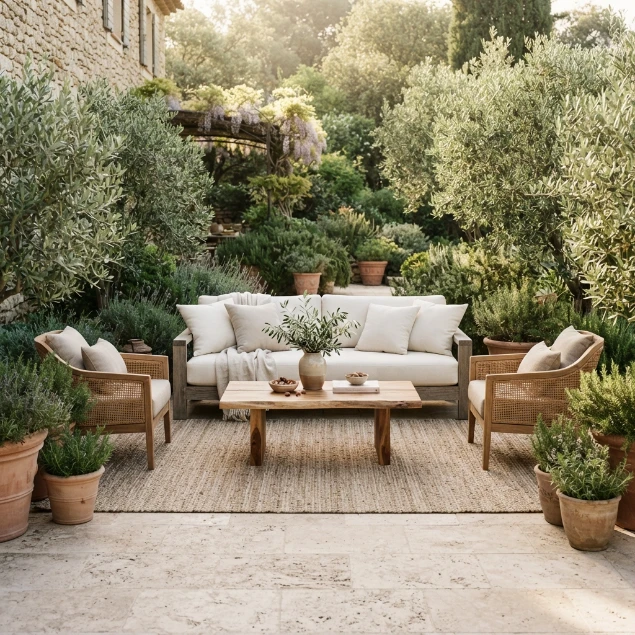
Comfort turns a beautiful backyard into a space you actually use. Choose weather-resistant seating with supportive cushions, side tables, and enough room to move around. Arrange furniture to encourage conversation rather than pointing everything toward one direction.
For a refined look, repeat materials from your home, such as warm wood, natural stone, black metal, or woven textures. Outdoor textiles in cream, olive, sand, and muted terracotta can create a relaxed, timeless palette.
For a modern feel, lay large pavers with slim joints, keep furniture low and simple, and let a few architectural plants, such as an olive in a pot, a sculptural agave, or upright grasses, do the decorating. A lounge of about 10×12 ft, for example, comfortably holds a sofa, two chairs, and a coffee table, with a side table close enough for evening drinks.
6. Use a Pergola or Shade Structure
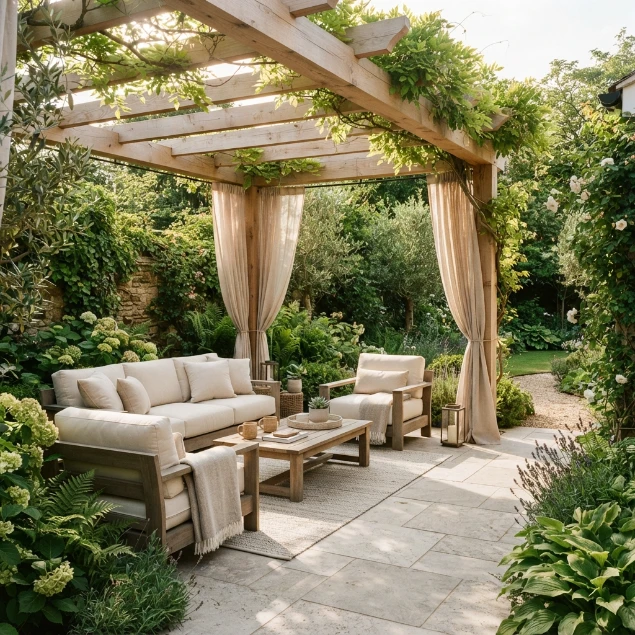
A pergola gives the backyard architectural character and creates a defined destination. It can shade a dining table, frame a lounge, or support climbing plants. Add outdoor curtains for softness and extra privacy.
If a full pergola is not practical, try a smaller shade sail, retractable canopy, or simple timber frame. The goal is to create a comfortable place that feels intentional.
A modern pergola works best with clean lines and slatted shade, where slim beams filter sunlight into soft stripes instead of blocking it completely. Pair it with large pavers underfoot and one architectural plant at each post, such as a tall grass or a potted bay, and the structure feels current rather than heavy. As a guide, size the pergola to the furniture beneath it, with at least a foot or two of breathing room around the seating.
7. Make Water the Focal Point

Water adds movement and a calming sound. A small fountain, reflective bowl, narrow pond, or birdbath can become the visual center of a garden corner. You do not need a large feature to create the feeling of an escape.
Place water where it can be enjoyed from a seating area. Surround it with stones, grasses, ferns, or soft lighting so it feels integrated into the landscape.
Size the feature to the space: a small fountain or reflective bowl suits a quiet corner, while a narrow pond needs a level spot and easy access for cleaning. As a concrete example, a birdbath set where it can be seen from the lounge, ringed with ferns and smooth stones, gives movement and birdsong without taking over the garden.
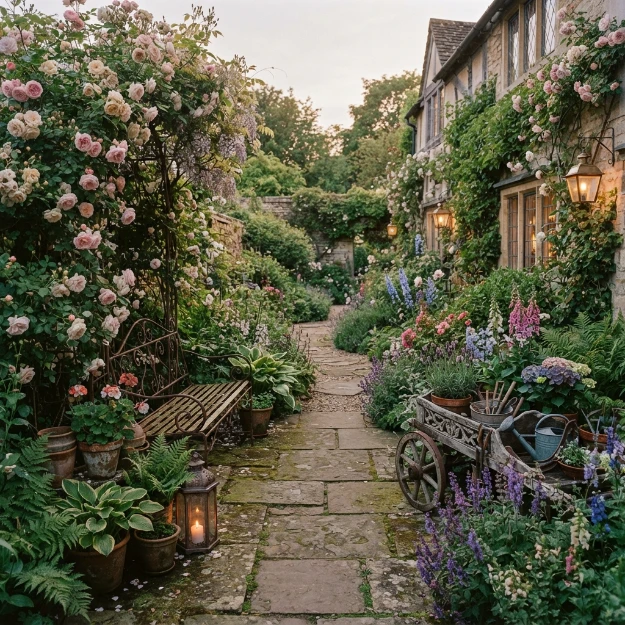
8. Create a Meandering Path

Straight paths feel practical, while gently curving paths create curiosity. Use stepping stones, gravel, brick, or natural stone to guide people through the backyard. Let the path lead toward a bench, fountain, fire pit, or hidden planting area.
Keep the route comfortable and safe, with stable surfaces and enough width for everyday use. A simple path can make a small yard feel larger because it reveals the space gradually.
Keep main walks 4 ft wide so two people can stroll side by side, and secondary paths 3 ft wide for single-file wandering between beds. A meandering main walk in large stepping stones, for example, can link the patio to a garden seat, with a narrower gravel spur branching off to a compost corner or a quiet reading nook.
9. Add Warm Outdoor Lighting

Lighting is what allows a backyard to feel magical after sunset. Use a combination of ambient, task, and accent lighting. String lights can create a welcoming glow, while lanterns and wall lights support practical activities.
Highlight trees, textured walls, steps, and special plants with low-level accent lights. Warm white light usually feels softer and more relaxing than harsh, cool lighting.
Layer the light at three heights: low path lights to guide footsteps, table-height lanterns or candles for warmth at seating, and overhead string lights or a pendant under a pergola for a soft ceiling of light. Solar path lights are an easy, wire-free way to start, since they charge by day and glow after dusk, and warm-white bulbs keep the whole scheme gentle rather than glaring.
10. Include a Fire Feature
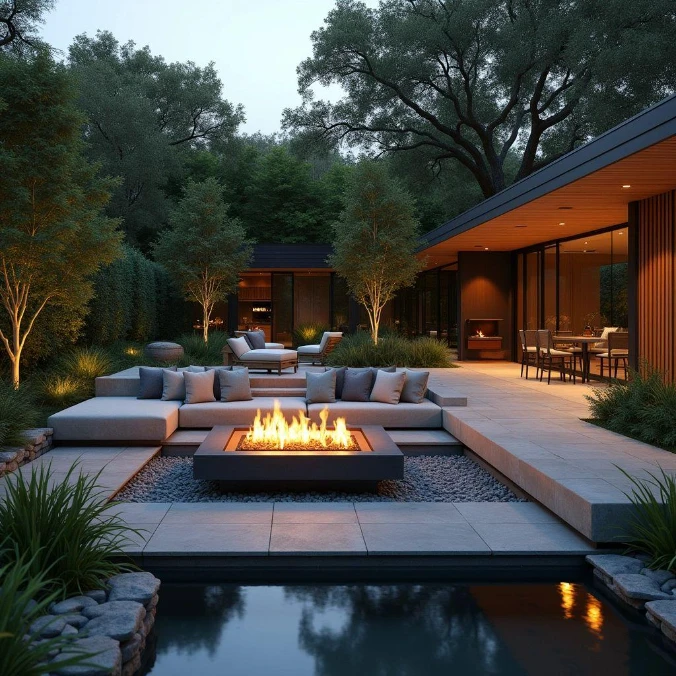
A fire pit or compact outdoor fireplace can turn the backyard into a destination for cool evenings. Choose a style that suits the scale of the yard and leave safe clearance around seating, plants, and structures.
Arrange chairs in a circle or gentle arc so the fire becomes a natural gathering point. Add outdoor blankets and a nearby table for drinks or snacks.
Plan a fire circle of about 14 ft across for four to six chairs, with seats arranged in a gentle arc so everyone can see both the flames and each other. A gas fire lights instantly and stays tidy, while a wood fire gives crackle and scent but needs dry storage and more clearing up, so choose the one that fits how often you will really use it. For example, a low stone circle with a gravel base and a few weatherproof cushions becomes the natural place to end an evening outdoors.
11. Mix Natural Materials
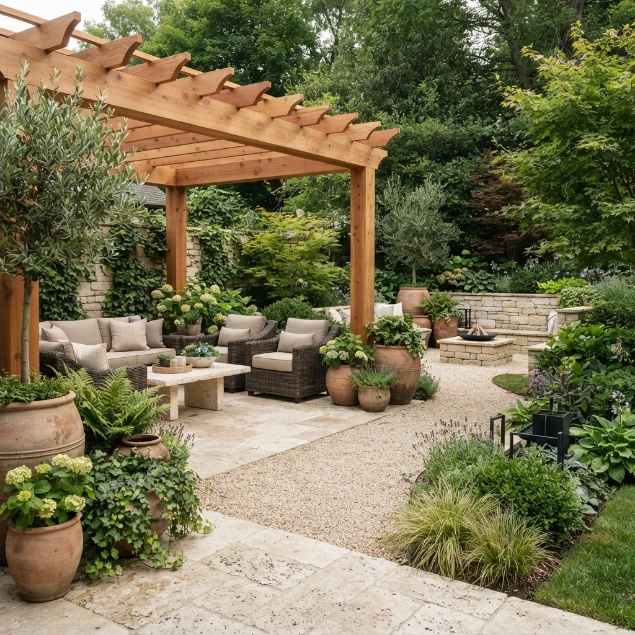
Natural materials help an outdoor space feel grounded. Combine wood, stone, gravel, clay, woven fibers, and matte metal. Too many unrelated finishes can make the yard feel busy, so repeat the same materials in several areas.
For example, use the same stone around a pathway and water feature, or repeat wood in the pergola and seating details.
Keep the palette to three main materials and repeat them everywhere: for example, warm wood on the pergola and seating, one natural stone on the patio and the water feature, and gravel underfoot on the paths. Repeating the same few materials is what makes a yard feel calm and finished rather than busy.
12. Add Personal Garden Details
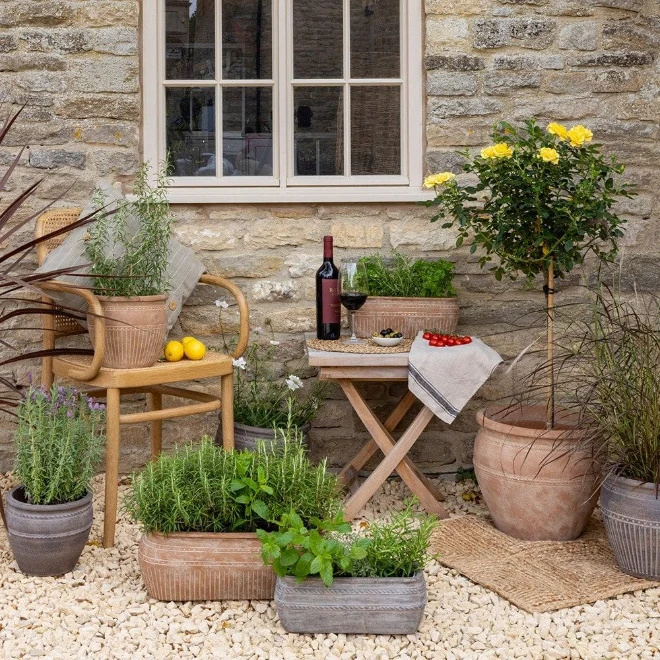
The most memorable backyard design ideas include details that reflect the people who use the space. Add a vintage chair, handmade pottery, a small herb garden, a favorite sculpture, or a collection of lanterns.
Personal touches should feel edited rather than cluttered. Select a few meaningful pieces and give each one enough space to stand out.
For example, a collection of terracotta pots gathered in one sunny corner reads as a deliberate display, while the same pots scattered one by one around the yard can look like clutter. Choose a few pieces you love, repeat one material or colour, and leave breathing room around each one.
13. Make the Backyard Useful in Every Season

Think about how the backyard will work throughout the year. Add shade for summer, a fire feature for cooler evenings, evergreen plants for winter structure, and weather-resistant storage for cushions and tools.
Choose plants with different bloom times so the garden changes naturally across the seasons. A backyard that offers something in every month feels more like a living world.
Give each season one anchor: for example, a sheltered seat that catches low winter sun, sits under the pergola in summer, and faces the fire circle after dinner, so the same corner earns its place all year.
14. Keep the Design Connected to Your Home

The backyard should feel like an extension of the house. Repeat exterior colors, flooring tones, architectural lines, or decorative materials from your interior spaces. This visual connection makes the transition from indoors to outdoors feel effortless.
Large doors, matching paving levels, and a clear view toward the garden can make the outdoor area feel like another room.
Treat the patio as a true outdoor living space: carry the flooring tone and a few colours from inside to outside, and frame the view from the main window so the garden reads as the next room. For example, a dining patio of at least 12×12 ft just outside the kitchen door, with the same warm wood tones as the kitchen, makes moving between cooking and eating feel effortless.
15. Plan for Maintenance

A beautiful backyard should also be manageable. Group plants with similar water needs, choose durable materials, and leave enough access for pruning and cleaning. Use mulch or groundcovers to reduce exposed soil and weeds.
Start with a simple structure and improve it over time. A thoughtful backyard grows more successfully when every addition has a purpose.
Keep it low-maintenance by choosing native and drought-tolerant plants, laying thick mulch over beds, using gravel in dry sunny spots, and grouping plants by water need so nothing is over- or under-watered. On a slope, shape low terraces and retaining-wall beds, step fencing to follow the ground, grade soil gently away from the house, and never put a patio in the yard’s low spot, where water will collect.
Small Backyard Ideas That Still Feel Generous
In a small yard, one generous multi-use patio beats several tiny zones that no one can use comfortably. Add built-in bench seating that doubles as storage, grow upward with vertical planting on a trellis or wall, lay light-coloured large pavers so the ground reads as one calm surface, and choose foldable or multi-purpose furniture that can be tucked away. For example, a compact corner with a bistro set for morning coffee, a trellis wall of climbers for privacy, and a small fire bowl does triple duty: breakfast spot by day, reading nook in the afternoon, and a glowing gathering place after dark.
Backyard Design on a Budget
Start with a mulch-first tidy-up: clear, edge, and mulch the beds, and the whole yard will look cared for before you spend anything else. A gravel or pebble patio, solar lights, repurposed planters, and secondhand furniture given a fresh coat of paint or new cushions can transform a space for far less than a full rebuild, and native or perennial planting keeps costs down year after year because the plants return and spread. The guide below gives broad range bands only, as a planning starting point rather than a price promise.
Backyard Budget Guide at a Glance:
- Mulch refresh: low
- Gravel or pebble patio: low to moderate
- Solar lights: low
- Repurposed planters: low
- Secondhand furniture refreshed: low to moderate
- Native or perennial planting: low to moderate
Outdoor Kitchen and Dining for Entertaining
Start with a grill station that has generous counter space on both sides, then let it grow into an island with bar seating when the budget and the yard allow. Keep the cooking zone near the kitchen door so food, plates, and drinks travel a short, easy path, and set the grill where smoke drifts away from seating rather than across it. For a relaxed cookout flow, guests gather first at the island for drinks, move to the table for dinner, and end the evening around the fire circle after the grill has cooled.
Backyard Design FAQs
How do I design a backyard layout from scratch?
Start by listing how you will use the yard, then walk it at different times of day to note sun, shade, and drainage. Sketch the space to scale, divide it into simple zones for dining, lounging, and planting, and draw the paths first so the zones connect in one easy loop. Finally, size each zone to the furniture that will live in it — for example, allow at least 12×12 ft for a dining table for six — before you buy anything.
What is the best layout for a small backyard?
Use one generous multi-use patio instead of several tiny zones, and let it do triple duty with a bistro set, a trellis wall, and a small fire bowl. Add built-in bench seating so chairs do not crowd the space, grow upward with vertical planting, and choose light-coloured, large pavers and foldable furniture so the yard feels open rather than cramped.
How much space do I need for a fire pit seating area?
Plan a circle about 14 ft across for four to six chairs, with seats arranged in a gentle arc so everyone can see the fire and talk comfortably. Allow roughly 14–18 ft overall once you count the chairs, a little foot room, and space to move around the back of the seats, and keep the surface level and fire-safe, such as stone or gravel.
What is the cheapest way to improve a backyard?
Start with a mulch-first tidy-up: clear, edge, and mulch the beds, then add solar lights and repurposed planters for instant polish. A gravel or pebble patio, secondhand furniture given a fresh coat, and native or perennial planting keep costs low while the yard still looks cared for and welcoming.
How do I make a sloped backyard usable and private?
Break the slope into low terraces with retaining-wall beds so each level becomes a flat, usable room, and step the fencing down the slope instead of forcing one long run. Keep patios off the yard’s low spot, grade the ground gently away from the house, and screen each terrace with evergreen planting or a slatted fence so the space feels both level and private.
Final Thoughts
Creating a backyard that feels like a world of its own is not about having the largest yard or the most expensive features. It is about creating atmosphere through thoughtful zones, layered greenery, privacy, comfortable seating, natural materials, and warm lighting.
Begin with one meaningful improvement, such as a lounge corner, a garden path, or a softly lit planting bed. As each element connects with the next, your backyard can become a peaceful retreat that feels personal, inviting, and entirely your own.