Top 10 New Way to Design a Kids’ Outdoor Play Area That Actually Gets Used
A kids’ outdoor play area is a yard zoned for movement, imagination, sensory play and quiet retreat, built around how children naturally play.
A great kids’ outdoor play area should do more than hold a swing set. The spaces children return to again and again usually combine movement, imagination, small challenges, quiet corners, and easy access to the rest of the yard. The result feels less like a piece of equipment dropped onto a lawn and more like a small outdoor world built around how children naturally play.
The strongest approach is to design the yard in layers. Give active play its own zone, add a creative or sensory station nearby, and leave room for a calmer retreat. Natural wood, stone, mulch, greenery, woven textures, and warm lighting can make the whole setting feel connected to the home. That balance also helps the space look considered from a kitchen window or patio.
Below are practical ideas for creating a kids’ outdoor play area that feels inviting, flexible, and useful for more than one age or activity.
How to Plan a Kids’ Outdoor Play Area That Feels Natural
Start by watching how the yard is already used. Notice where the shade falls, where adults naturally sit, which route children take through the garden, and which areas stay dry after rain. Then build around those patterns rather than forcing every feature into one compact playground.
Think in zones: an active zone for climbing and sliding, a creative zone for art or pretend play, a social zone for games, and a quiet zone for reading or resting. These areas do not need fences between them. A change in surface, planting, level, or furniture can be enough to signal a new activity.
For a polished kids’ outdoor play area, repeat a small group of materials. Weathered timber, natural rope, gravel, planting, and one restrained accent color can make several play features feel like one design.
Play Zones by Age
- Toddlers 1–3: Low slides and sensory panels — soft surfaces, with shade essential.
- Preschool 3–5: Climbing structures, swings, and a mud kitchen — soft landing surface under climbing equipment, with shade nearby.
- Elementary 5–8: Monkey bars, rope ladders, and an obstacle course — impact-absorbing surface under climbing equipment, with shade over the active zone.
- Tweens 10–12: Challenge course, climbing wall, sports area, and slackline — firm, level ground with impact-absorbing surface under climbing features, plus shade for rest breaks.
1. Build a Tire Climber With Natural Play Layers

A tire climbing structure adds vertical movement without requiring a huge footprint. Stack sturdy tires between timber posts, add rope elements, and vary the height of the climbing route. The important design idea is progression: children should have a simple route, a slightly harder route, and somewhere to pause.
Use muted paint colors if you want the tires to feel playful without dominating the garden. A mulch or soft ground layer visually anchors the structure and provides a clear boundary. Nearby stepping stones, a small tent, or a low balance element can turn one climbing feature into a more complete kids’ outdoor play area.
2. Create a Cottage Playhouse With a Garden Path
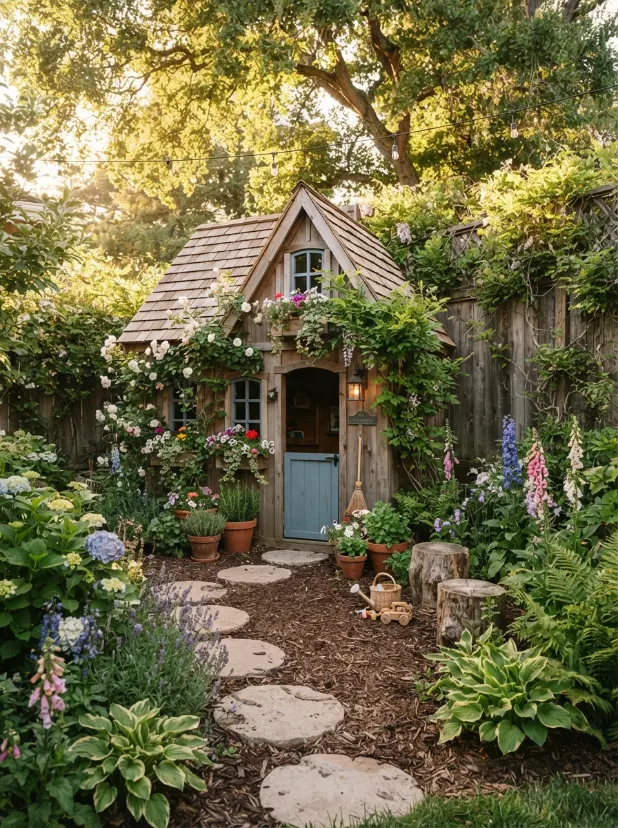
A small timber playhouse can become the focal point of the yard when the approach is designed as carefully as the house itself. Create a simple path using stepping stones, low planting, or playful painted rounds. This makes the walk to the playhouse part of the experience.
Window boxes, climbing greenery, flower pots, and a small bench add layers around the structure. A restrained palette of natural wood, green foliage, and one playful accent keeps the setting charming rather than visually busy. This type of kids’ outdoor play area works especially well in smaller yards because one strong focal point can do most of the visual work.
3. Add a Cozy A-Frame Reading Nook
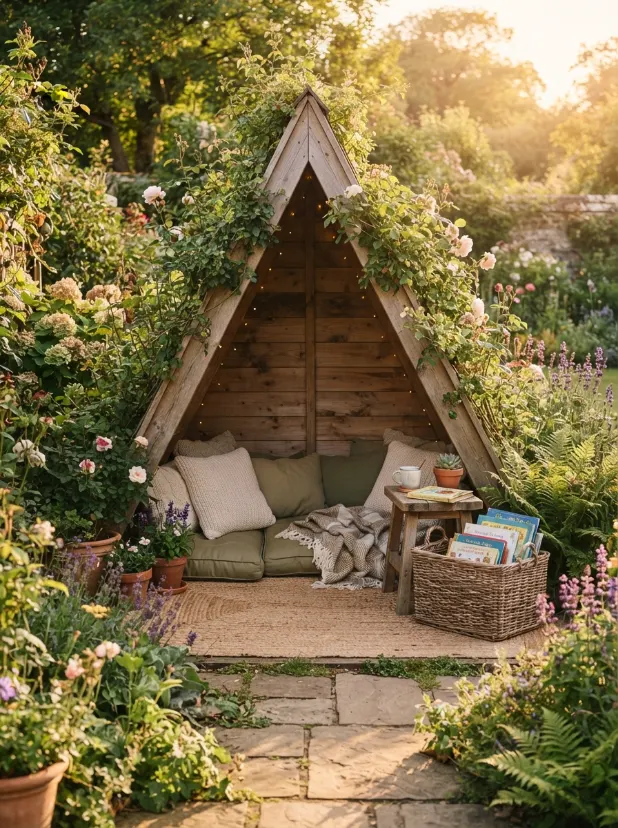
Not every part of an outdoor play space needs to be energetic. An A-frame nook gives children somewhere to read, draw, talk, or simply take a break. The triangular timber structure naturally creates a sense of enclosure while keeping the space open to the garden.
Layer a washable outdoor rug, a few cushions, a low basket for books, and a tiny side table inside. Warm string lights can make the nook feel special later in the day. Keep the surrounding planting soft and relaxed so this part of the kids’ outdoor play area feels like a retreat rather than another activity station.
For example, one child might settle in with a picture book while another sketches at the tiny side table, and both can stay in view of an adult nearby — a quiet use that keeps the nook busy without adding another activity station.
4. Design a Rustic Mud Kitchen With Clear Zones
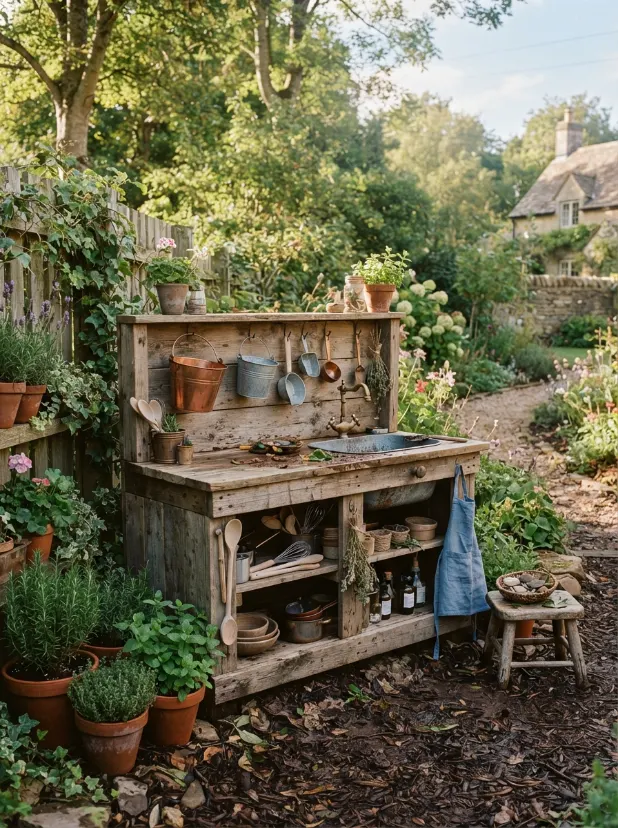
A mud kitchen is one of the easiest ways to encourage imaginative play because it gives children a familiar framework for making, mixing, pouring, and pretending. Build a simple counter from weather-resistant timber and include a basin, hooks, shelves, and a few metal or wooden containers.
Divide the station into small work areas: preparation, washing, storage, and serving. That organization keeps the setup easier to maintain while giving children more ways to play. A covered roof is useful because it protects materials and extends the life of the furniture. In a well-planned kids’ outdoor play area, the mud kitchen can sit beside planting beds so children can safely use leaves, herbs, sticks, and other garden materials in pretend play.
5. Add a Garden Game Table
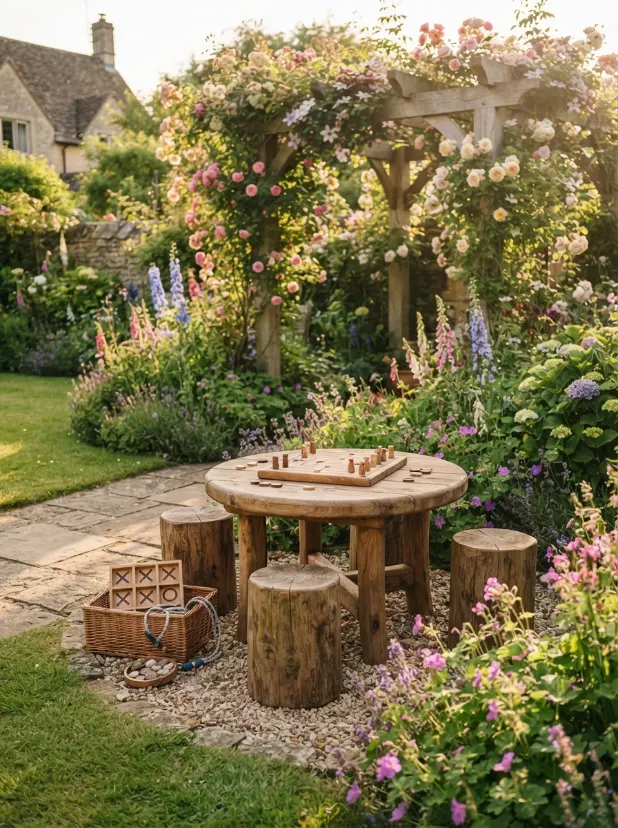
A low round game table creates a slower social activity that balances climbing and running. Use a solid timber top with rounded edges and place it where adults can see the children without standing directly over them.
Tree-stump stools, a nearby bench, and flowering planting can make the table feel like a small outdoor room. Keep games in a weather-resistant basket nearby so the activity is ready without a long setup. This is a useful feature for a kids’ outdoor play area because it can support drawing, puzzles, board games, nature sorting, and group activities.
6. Create an Elevated Treehouse Deck With Multiple Routes
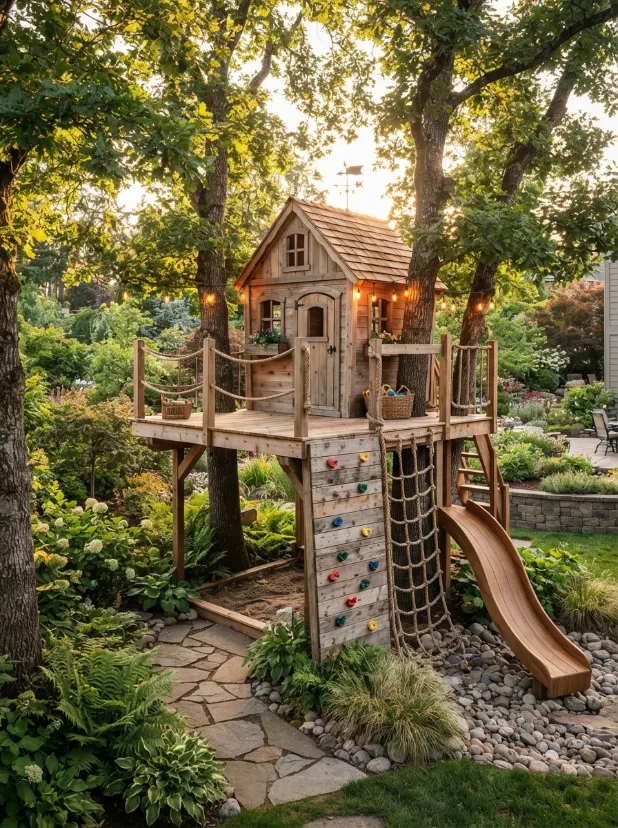
If your yard and budget allow a larger build, an elevated deck can become the main destination. Give children more than one way to reach it, such as a climbing wall, rope net, steps, or a short bridge. Multiple routes create choice and make the structure interesting over time.
Keep the landscaping underneath simple and intentional. Mulch, rounded stones, ferns, and low grasses soften the base and help the structure feel integrated into the garden. A timber treehouse with natural finishes can make a substantial kids’ outdoor play area feel more like architecture than a freestanding plastic unit.
7. Turn a Fence Into an Outdoor Chalkboard Wall
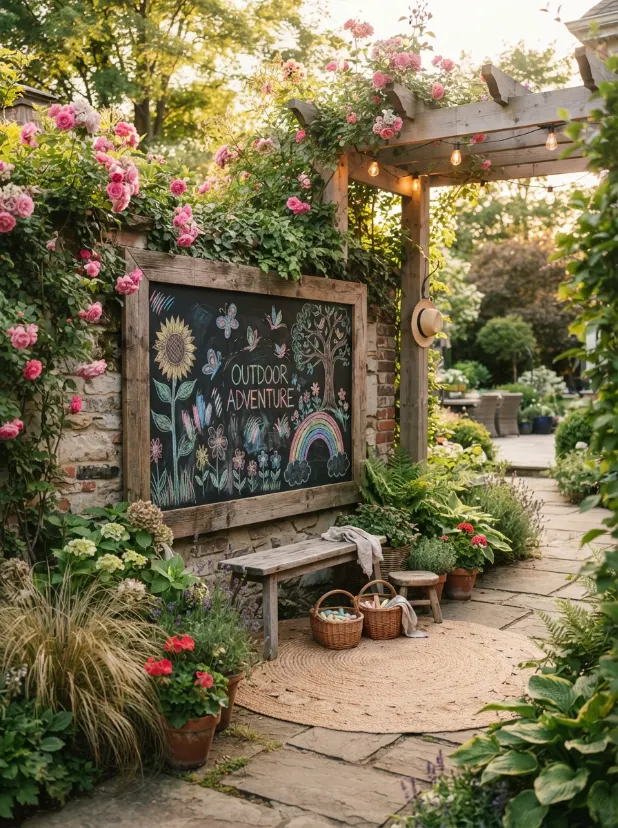
A large chalkboard is a simple creative feature that uses vertical space instead of taking over the lawn. Frame an exterior-grade board with timber and place it in partial shade if possible. Add a small bench and weather-resistant baskets for chalk.
The board can support drawing, simple games, letters, maps, pretend menus, and seasonal artwork. Because it is visually contained, it also creates a clear creative zone within the larger kids’ outdoor play area. Surrounding it with grasses, potted flowers, or climbing plants keeps the wall connected to the garden.
8. Make a Covered Mud Kitchen With Smart Storage
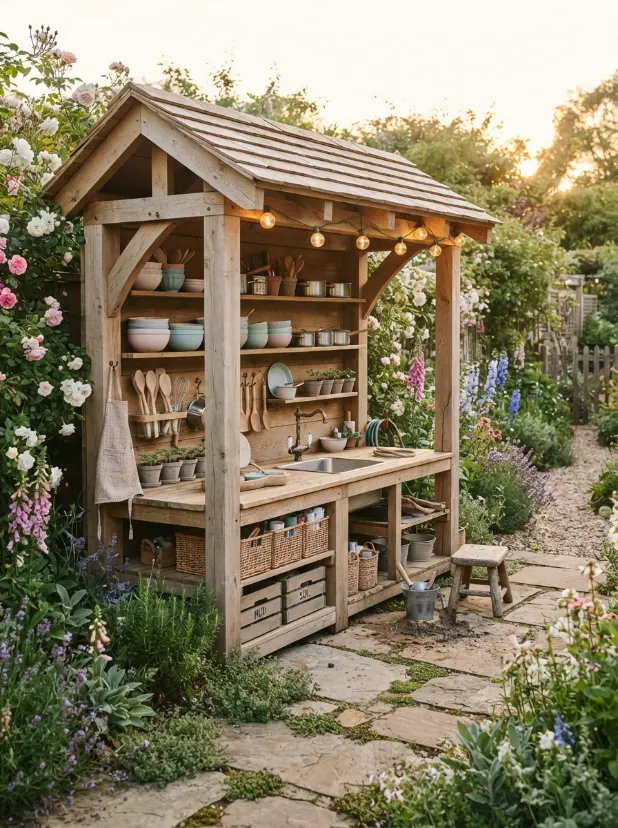
If a mud kitchen is likely to become a favorite, give it a roof and more storage. Open shelves keep frequently used items visible, while hooks can hold small tools and baskets can collect loose pieces. Vertical storage keeps the footprint compact and makes cleanup easier.
Use soft colors for bowls and utensils against natural timber so the station feels cheerful without becoming visually loud. A working water source can make the play more realistic, but it should be designed with safe drainage and age-appropriate supervision. A covered station can become one of the most practical parts of a kids’ outdoor play area.
9. Build a Wooden Stump Car Track
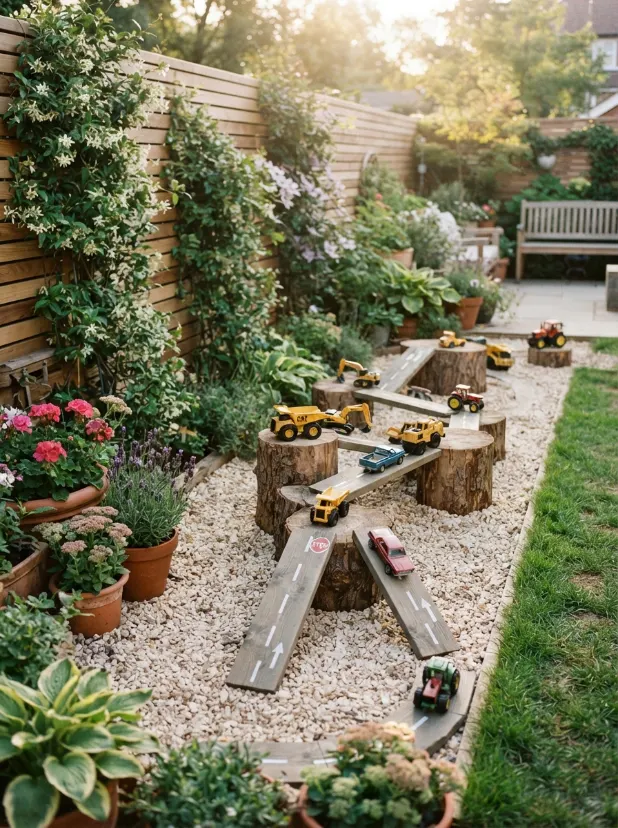
Tree stumps can become roads, bridges, platforms, or parking spaces for toy vehicles. Arrange several different heights and connect them with wide timber ramps painted like simple roads. The irregular layout makes the play route feel more organic than a perfectly symmetrical track.
Use a stable surface around the stumps and check every timber edge regularly. Low planting around the perimeter can make the track look like part of the landscape. This compact idea is especially useful when a kids’ outdoor play area has to fit beside a fence, shed, or narrow side yard.
10. Create a Multi-Playhouse Garden With Slides and Bridges
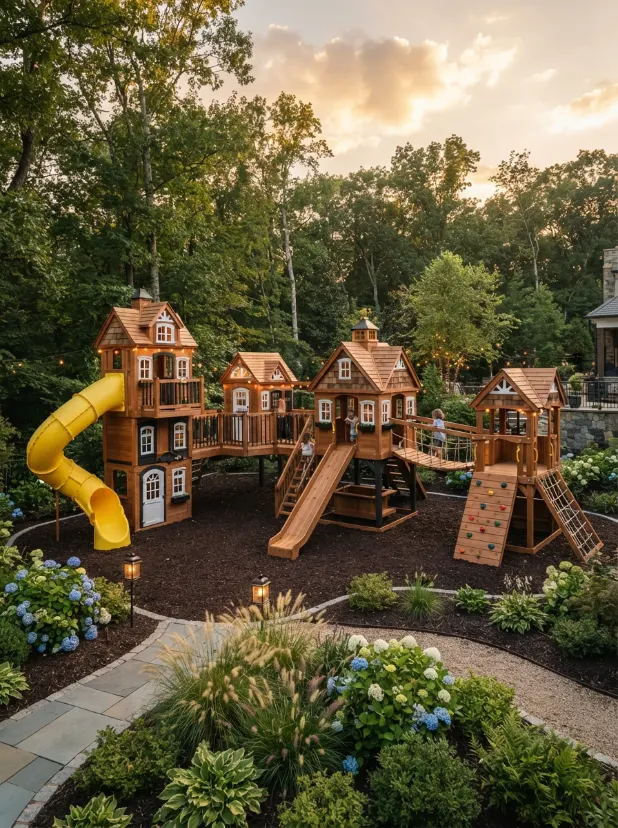
For a larger backyard, several small timber structures can create a miniature village. Connect them with bridges, slides, low walkways, or climbing routes so children can move from one destination to another.
The key is repetition. Use similar timber tones, roof shapes, hardware, and landscaping around each structure. That consistency prevents a complex kids’ outdoor play area from feeling cluttered. Low planting, warm garden lights, and defined paths can make the entire setting feel cohesive after sunset.
Sandbox and Water Play
A covered sandbox beside a simple water table gives younger children a calm, hands-on zone of their own. Choose a sandbox with a lid that fits well, since the lid keeps animals out and keeps the sand cleaner between play sessions. Place the water table close by on a surface that drains, and drain the water after use so it does not sit and breed mosquitoes or turn slippery. Keep both features in clear view of an adult seating spot, because water play always needs supervision, even in a shallow table.
Sensory Garden and Music Wall
A sensory corner works best when children can touch, smell, and listen. Lay a short barefoot path that changes texture underfoot — smooth stones, soft mulch, sand, and grass — and edge it with aromatic herbs such as mint, lavender, and rosemary that children can tend, pick, and smell. Add a small bug hotel and a bird feeder nearby so there is always something alive to watch. On a fence, mount a music wall of old pots, pans, and chimes at child height, with a wooden spoon or two kept close by, so banging and ringing becomes part of the garden rather than noise to stop.
Designing a Kids’ Outdoor Play Area That Children Actually Use
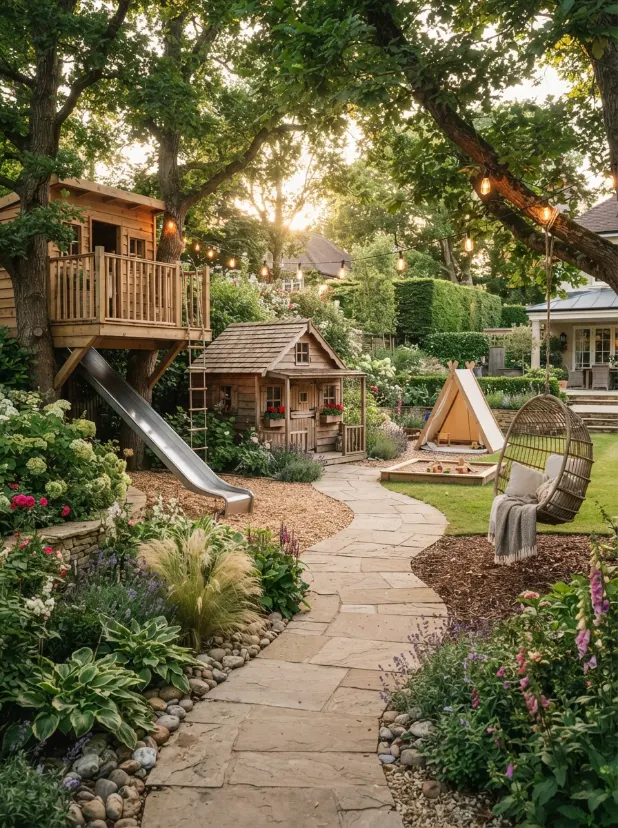
The most successful kids’ outdoor play area is not necessarily the one with the most equipment. It is the one that offers several reasons to stay. Children may climb for ten minutes, move to the mud kitchen, draw on the chalkboard, sit in the reading nook, and then return to the climbing structure. That sequence is what makes a backyard feel engaging.
Keep the routes between activities obvious but flexible. A stepping-stone path, change in ground material, low hedge, or timber border can quietly guide movement. Avoid filling every open space with equipment; breathing room makes the yard safer, calmer, and easier to adapt as children grow.
It also helps to design for the adults who use the yard. A bench near the play zones, good sightlines, useful storage, and attractive planting make it easier for parents to spend time outside. When the setting works for the whole household, the kids’ outdoor play area becomes part of the home’s everyday outdoor living rather than a feature that gets ignored.
Materials and Safety Details Worth Planning Early
Choose durable, outdoor-rated materials and inspect climbing structures, ropes, fasteners, steps, and platforms regularly. Keep sharp edges, unstable pieces, exposed hardware, and trip hazards out of the play route. Select the ground surface according to the height and type of equipment, and follow the manufacturer’s installation and safety guidance for commercial or purchased play equipment.
Shade is another practical consideration. Trees, a pergola, a canopy, or a simple roof can make the space more comfortable during warm weather. Good drainage matters too, particularly around mud kitchens and areas where children run. A beautiful kids’ outdoor play area should also be easy to inspect, clean, repair, and adapt.
- Grass: Low cushioning; drains well in sun but wears thin under swings and slides; needs mowing and reseeding; gentle for toddlers, but keep the cover thick where children land.
- Sand: Good cushioning at depth; drains well; needs raking, topping up, and a cover to keep animals out; fun for toddlers, but check for debris and keep it clean.
- Engineered wood fiber: Good cushioning; drains well; needs regular topping up and raking level; a good toddler choice when kept deep and even.
- Rubber mulch: Good cushioning; drains well; low upkeep but can scatter beyond the play zone; check pieces are large enough that mouthing toddlers cannot swallow them.
- Rubber tiles: Consistent cushioning; drains through joints; low upkeep and easy to clean; firm, even surface that suits toddlers.
- Artificial turf: Low cushioning unless padded underneath; drains through backing; low upkeep but can get hot in summer; choose a padded, soft-fiber product for toddlers.
Whichever surface you choose, keep a clear fall zone of about 6 feet around swings, slides, and climbing structures, and skip pea gravel where toddlers still mouth objects. Make inspecting and topping up the surfacing a regular habit, since loose fills thin out exactly where children land most.
How to Make a Small Backyard Work
You do not need a large lawn to create an effective kids’ outdoor play area. Start with one strong feature and one flexible activity. A compact playhouse can pair with a chalkboard wall, or a mud kitchen can share a corner with a small sand area.
Use vertical surfaces, narrow storage, foldable seating, and multipurpose features. A bench can become a reading seat and a play surface. A raised planter can double as a sensory garden. A timber platform can support imaginative play without permanently defining what it must be.
For small yards, visual simplicity matters. Repeat the same wood finish, limit accent colors, and use planting to soften the boundaries. The result feels larger because the eye can understand the layout quickly.
Shade and Weather
Shade makes a play area usable on hot days, so plan it before the equipment goes in. Use shade sails, umbrellas, tree canopy, or a covered structure such as a pergola, and shade the active zone first, since that is where children climb, slide, and run the most. Check metal slides and handles on hot summer days, because bare metal can burn small hands, and favor shaded or light-colored surfaces where possible. Make sure water drains away from mud and water zones so they do not stay muddy, and keep loose parts in weather-resistant storage near the play area so toys, chalk, and dress-up items survive rain and sun.
FAQs
What should a kids’ outdoor play area include?
A balanced setup can include an active feature such as climbing or sliding, a creative station such as a chalkboard or mud kitchen, a quiet nook, and a flexible surface for games. The exact mix should match the children’s ages, interests, available space, and supervision needs.
How can I make a play area look good with my landscaping?
Repeat natural materials such as timber, stone, gravel, mulch, and greenery. Use planting around the edges rather than crowding the play route, and keep the main structures within a restrained color palette.
What is a good idea for a small backyard?
A compact playhouse, chalkboard wall, stump car track, or mud kitchen can provide substantial play value without requiring a large lawn. Choose one focal feature and pair it with a flexible activity.
How do I make an outdoor play space useful for different ages?
Offer different levels of challenge. Combine simple routes with more advanced climbing, add imaginative and creative activities, and include a comfortable place for older children to sit, read, or socialize.
How can I keep an outdoor play area organized?
Use open shelves, hooks, labeled baskets, and weather-resistant storage close to the activity. Keep frequently used items accessible and create a simple cleanup routine so the space can be reset quickly.
What ground surface is safest under swings and climbing frames?
Use an impact-absorbing surface under swings and climbing frames, such as engineered wood fiber, rubber mulch, or rubber tiles, kept at the depth the product recommends. Extend it about 6 feet in every direction from the equipment, and further in front of and behind swings, so falls land on cushioning rather than bare ground. Keep the surface level and topped up, and avoid hard materials such as concrete, bare soil, or thin grass where children can fall.
How much space do I need for a kids’ outdoor play area?
A functional play zone fits in as little as 6×6 ft when vertical surfaces do the work — a fence chalkboard, a wall-mounted music board, or a climbing panel can carry the play while the ground holds a sandbox, a water table, or a small slide. For larger equipment, allow the clear fall zone around it as well, and plan one comfortable adult seat with a clear view of the whole area. In a bigger yard, start with one zone and let it grow rather than trying to fill the whole space at once.
How do I keep a sandbox and water table clean and safe?
Keep the sandbox covered with a well-fitting lid whenever it is not in use, so animals stay out and the sand stays clean. Rake the sand regularly, remove leaves and debris, and replace sand that looks dirty or smells damp. Drain the water table after every session and let it dry, rather than leaving standing water that breeds mosquitoes or turns slippery, and wipe the table down often. Always supervise water play, even in a shallow table, and store buckets and scoops in a dry, covered spot nearby.
How can I shade a play area without planting trees?
Use structures instead of trees: stretch shade sails over the active zone, add a large movable umbrella over a sand or water area, or build a simple pergola or canopy over the seating and play space. A covered playhouse, a pop-up canopy, or a retractable awning on the house wall can also shade a small zone quickly. Shade the area where children move most first, and choose light-colored, breathable fabrics so the shade stays cooler on hot days.
For more outdoor inspiration, see our guides to backyard design ideas and DIY outdoor projects.
Build It in Phases on a Budget
You do not need to build everything at once. Build in stages by zone, starting with the area children will use most, and add the next zone when time and budget allow. Upcycle where you can: pallets can become a mud kitchen or a climbing frame, old tires make planters and climbers, and reclaimed timber suits decks, edging, and small structures. Start with one focal feature plus one flexible activity, such as a sandbox paired with a chalkboard wall, so the space works from day one. The cheapest high-value build is a DIY sandbox frame plus sand, which gives hours of play for very little money.
Final Thoughts
A thoughtfully planned kids’ outdoor play area can be beautiful, practical, and genuinely engaging at the same time. The strongest designs combine active movement with creative play, quiet retreats, social activities, and natural materials. Instead of trying to copy a commercial playground, build a small outdoor environment that gives children choices.
Whether you have space for a full treehouse or only a narrow garden corner, the same principles apply: create zones, vary textures and heights, leave room to move, provide shade, and make the route between activities feel intentional. When the design works with the garden instead of fighting it, the play space becomes something the whole household can enjoy.