15 Powerful Mobile Home Exterior Ideas That Make It Look Like a Real House
Mobile home exterior ideas are the design changes — a stronger roofline, a grounded base, a clear entry, and a restrained color palette — that make a manufactured home read as a permanent, site-built house from the street. The most convincing results come from removing the three visual giveaways first, then layering porches, planting, and lighting on top, starting with a covered entry such as a front door overhang.
A mobile home can feel welcoming, permanent, and architecturally thoughtful without losing the practical advantages that make manufactured housing appealing. The key is not to cover the exterior with random decorations. Instead, use proportion, focal points, layering, color, and landscape design to guide the eye.
These mobile home exterior ideas focus on the design principles that make a home appear more grounded and house-like. Some changes are simple weekend upgrades, while others may require a contractor, permits, or approval from your park or community. Always confirm structural, roofing, electrical, and local code requirements before beginning major work.
1. Create a Stronger Roofline

Many mobile homes have a long, low silhouette. A more expressive roofline can add height and visual weight. Consider a permitted pitched-roof extension, a gable feature over the entry, or a carefully designed porch roof. The goal is to break up the rectangle and give the exterior a more traditional architectural profile.
Keep the new roof proportional to the home. An oversized structure can look disconnected, while a modest gable with clean trim can make the entire facade feel more balanced. For example, a 4-foot-wide gable over the front door, framed with 2×4 lumber and finished with matching asphalt shingles and white fascia boards, can give a long, flat facade a clear center point without rebuilding the whole roof.
2. Use Vertical Siding to Add Height
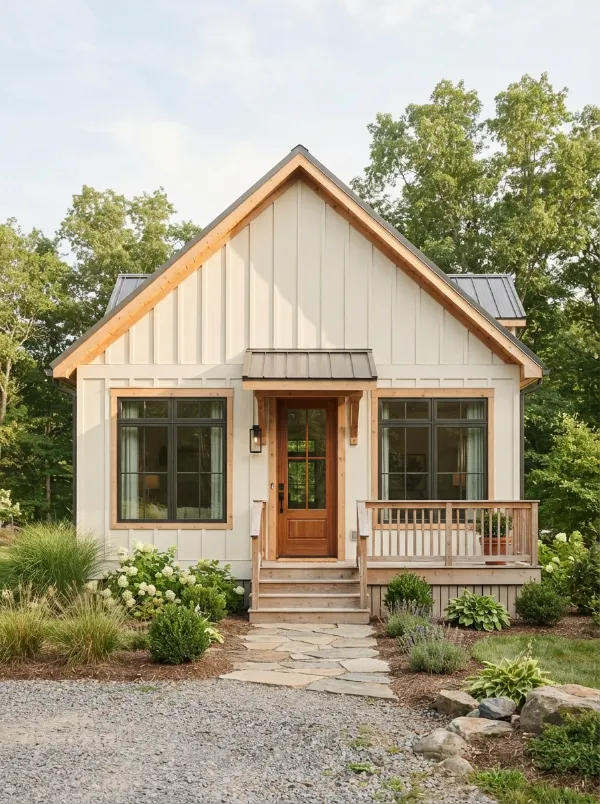
Horizontal siding emphasizes length. Vertical siding, board-and-batten panels, or vertical accents around the entrance draw the eye upward and make the home appear taller. You do not need to replace every wall. A vertical section on the front facade, porch wall, or gable can create enough contrast to change the visual rhythm. For example, a 6-foot-wide board-and-batten panel in white-painted fiber cement, fitted between the front door and the nearest window, can make that stretch of wall read taller while the rest of the home keeps its original horizontal siding.
3. Upgrade the Front Door
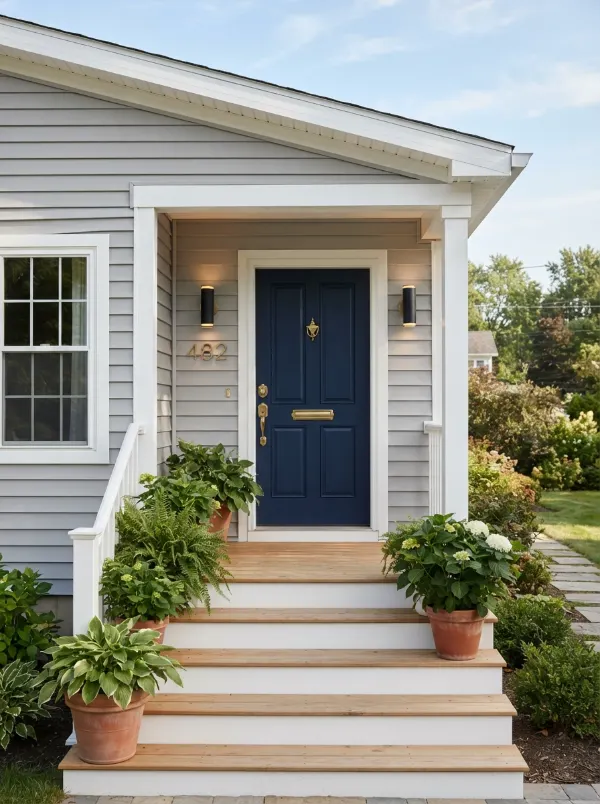
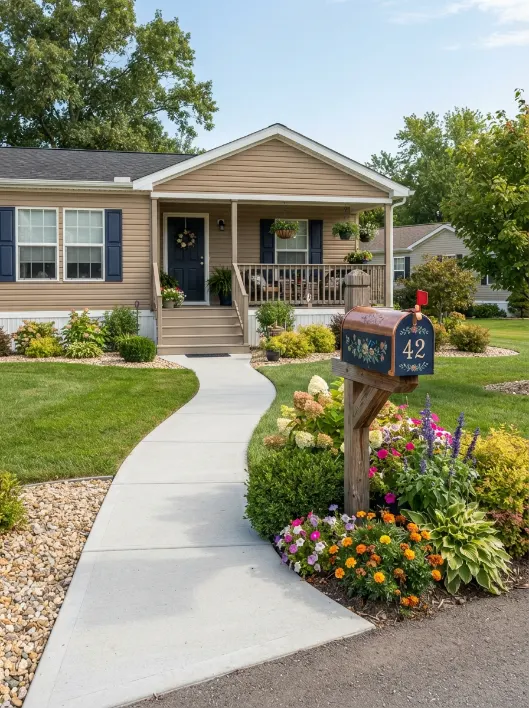
The front door should be the clearest focal point. A substantial door in navy, charcoal, muted green, warm wood, or another confident color can give the exterior personality. Add a quality handle, a simple house number, and coordinated lighting for a polished finish.
Choose a color that contrasts with the siding but still works with the roof, trim, and landscape. A strong door color is most effective when the rest of the facade remains calm. For example, a 36-inch fiberglass door with four raised panels, painted deep navy, paired with a black lever handle and 4-inch black house numbers mounted at eye level, can turn a plain entry into the clear focal point of the whole facade.
4. Frame the Entry with a Porch or Awning
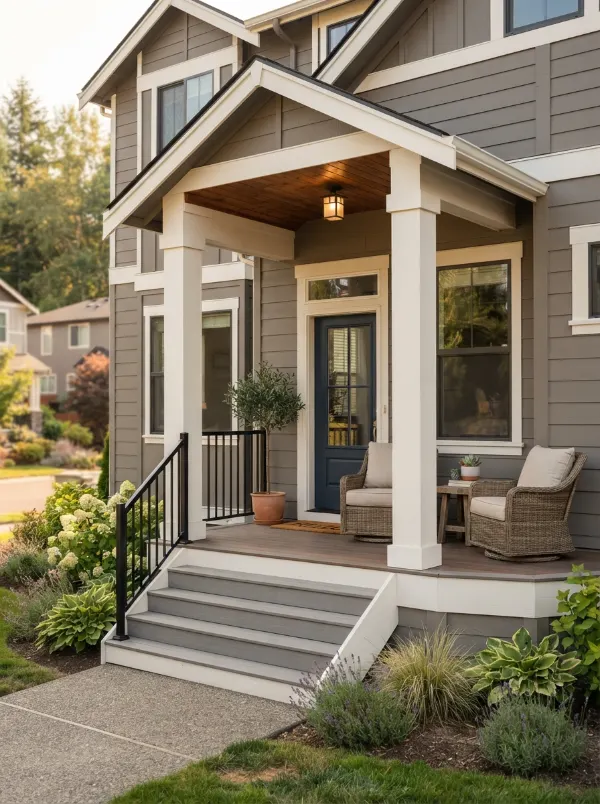
A porch gives a mobile home a sense of arrival. Even a compact covered landing can create depth and make the entrance feel more substantial. Use square posts, clean railings, and a ceiling finish that relates to the home’s siding or trim.
If a full porch is not practical, a well-scaled awning or entry canopy can provide a similar effect. Make sure the structure is engineered and approved where required. For example, a freestanding 8-by-6-foot covered landing with square 4×4 cedar posts, a simple shed roof, and two concrete footings can shelter the entry and give the front of the home a finished, house-like depth.
5. Replace Flat Windows with Better-Proportioned Trim
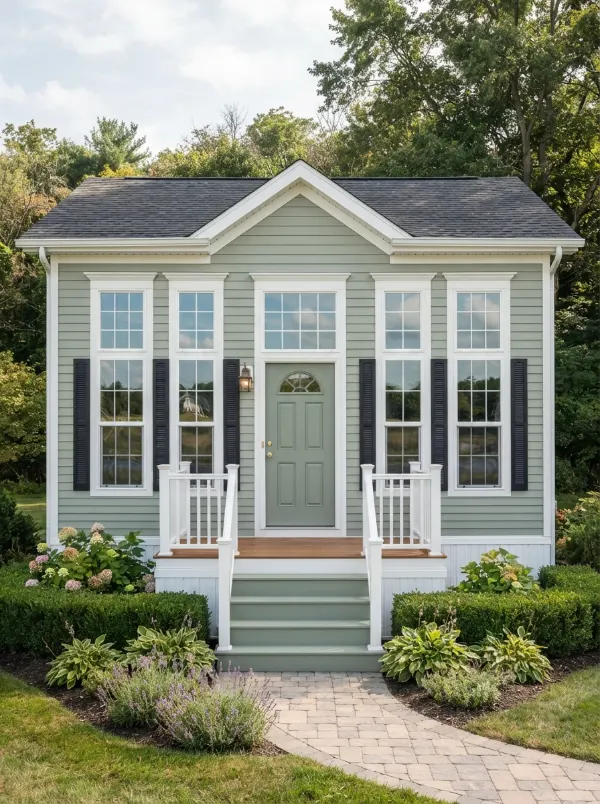
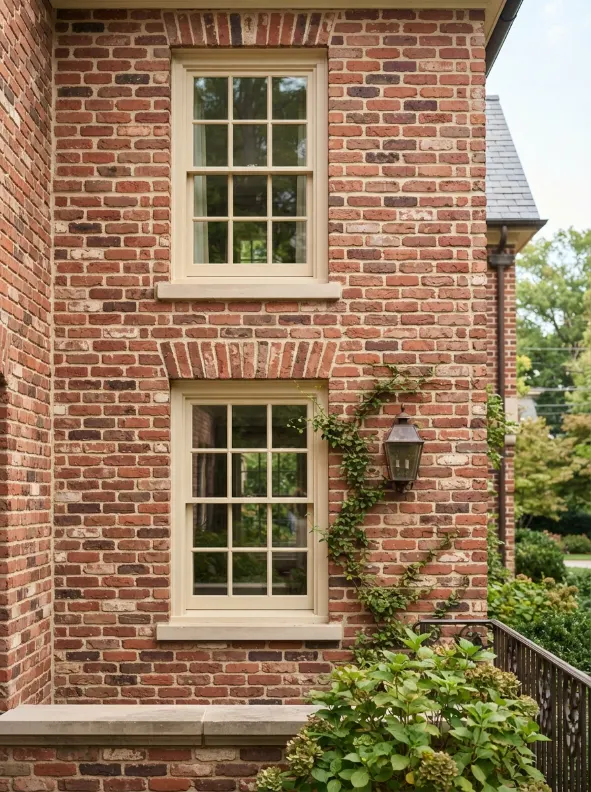
Window trim is one of the easiest ways to improve a plain exterior. Wider casing, simple shutters, window boxes, or decorative headers can give openings a more finished appearance. Taller-looking proportions often create a more traditional feel, but the replacement must fit the existing wall structure and budget.
Use one trim style throughout the facade. Consistency makes the home look designed rather than decorated piece by piece. For example, 3-and-a-half-inch flat casing boards in white PVC trim, fitted around each front window with a simple 5-inch header board on top, can give flat factory windows a framed, intentional look in a single weekend.
6. Add a Clear Path to the Front Door
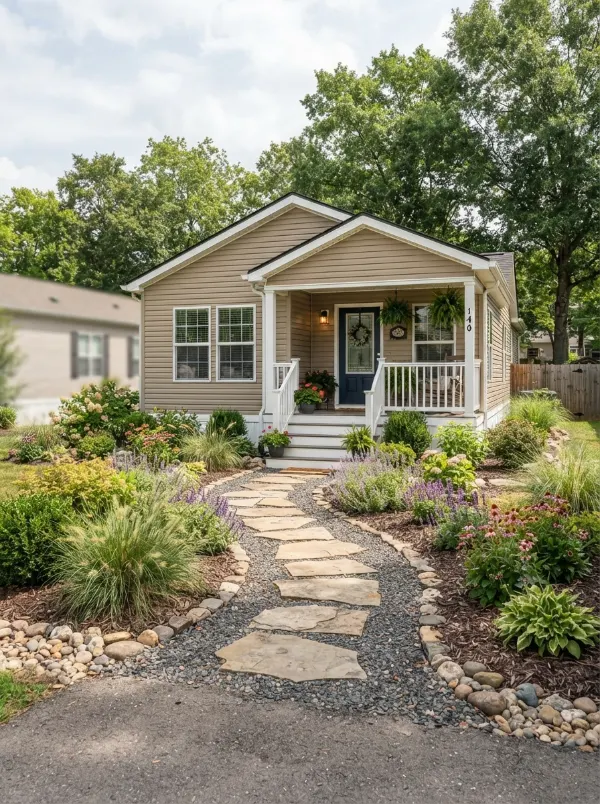
A curved or gently angled path directs attention toward the entrance. Stepping stones, gravel, brick, concrete pavers, or natural stone can all work when the route is comfortable and safe. Keep the path wide enough for everyday use and avoid creating trip hazards.
Connect the path to the driveway, sidewalk, or parking area so the front approach feels intentional. For example, a 3-foot-wide path of rectangular concrete pavers, laid in a gentle curve from the driveway to the front steps and edged with a single row of river stones, can guide visitors to the door and make the approach feel planned rather than improvised.
7. Layer the Facade with Planters
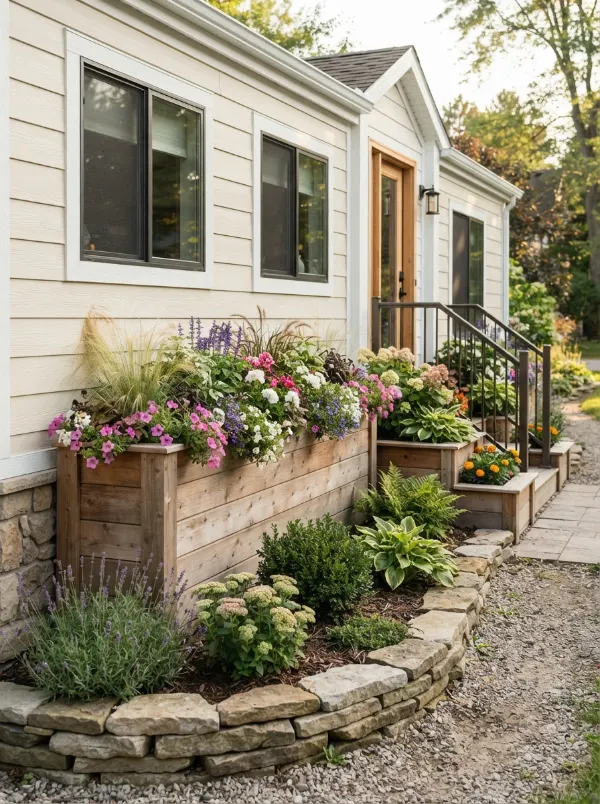
Planter boxes and raised beds add depth to a flat wall. Place them beneath windows, beside the door, or along the porch. Use repeated materials such as cedar, painted wood, stone, or black metal to create a coordinated look.
Choose plants that suit the sunlight and climate. Evergreen shrubs, ornamental grasses, herbs, and seasonal flower pots can make the home feel connected to the surrounding landscape. For example, two 24-inch square cedar planters flanking the front door, each holding one upright evergreen shrub and trailing ivy, can add depth to a flat wall and repeat the same wood tone used on the porch posts.
8. Install a Pergola or Decorative Trellis
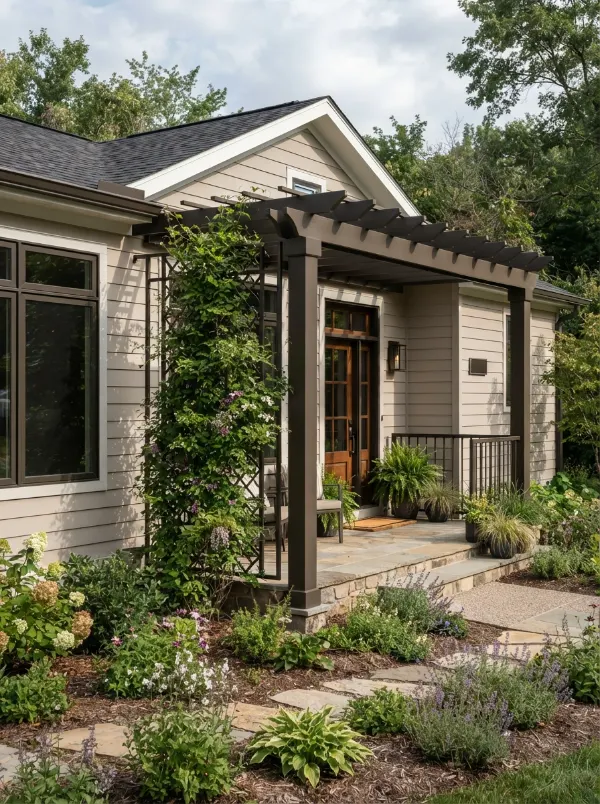
A pergola or trellis creates a foreground layer in front of the siding. It can frame a porch, soften a side wall, or support climbing plants. The shadows and overlapping lines make the facade feel more dimensional.
Keep the structure visually light and avoid blocking windows, vents, or required access points. A simple rectangular design usually looks more timeless than a complicated pattern. For example, a freestanding 8-foot-wide cedar pergola with 2×6 cross beams, set 18 inches in front of the porch wall and planted with a single climbing jasmine, can cast layered shadows across the siding and soften a long, flat elevation.
9. Choose a Refined Exterior Color Palette
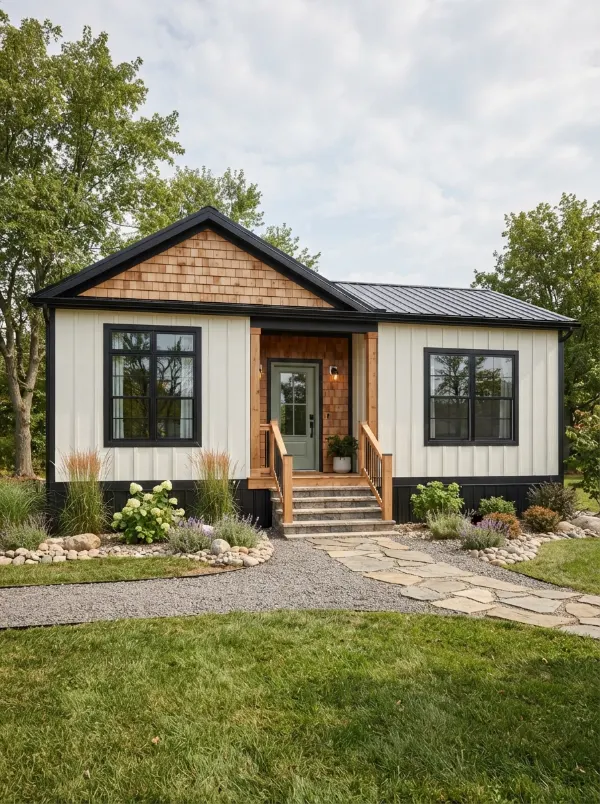
A limited palette often makes a mobile home look more like a custom house. Start with one main siding color, one trim color, and one accent color. Soft white with charcoal, sage with cream, warm gray with natural wood, and taupe with black are reliable combinations.
Use the accent color at the front door, shutters, planters, or porch furniture rather than spreading it everywhere. Repetition creates cohesion. For example, warm white siding with charcoal trim and a muted sage front door, repeated in the shutters and one planter, can hold the whole facade together with just three colors and no extra decoration.
10. Improve Exterior Lighting
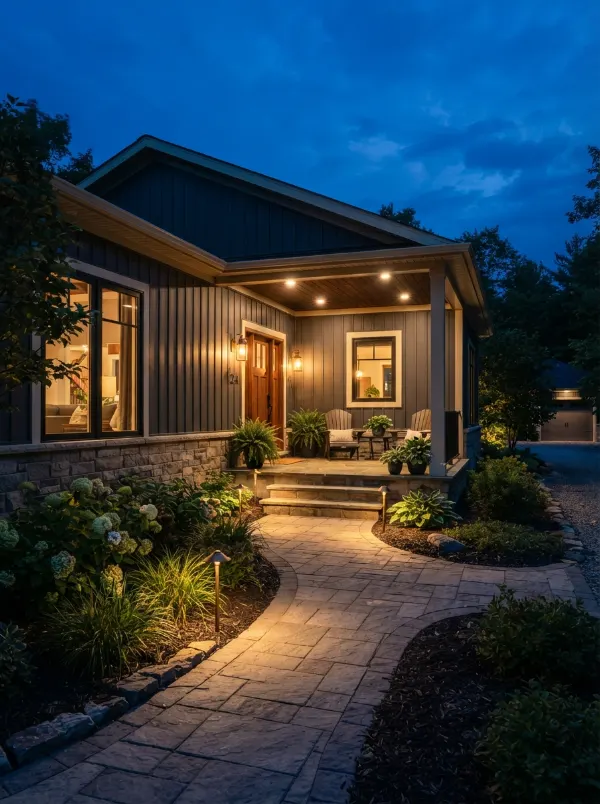
Lighting adds structure after sunset. Use matching sconces beside the door, a ceiling light under the porch, and low pathway lights where needed. Warm white bulbs usually create a welcoming residential atmosphere.
Point fixtures toward walking surfaces and architectural details instead of creating glare. Layered lighting also helps the home feel safer and more carefully planned. For example, two matching black wall sconces mounted 66 inches above the porch floor on either side of the door, plus three low solar path lights spaced 4 feet apart along the walkway, can make the entry readable and welcoming after dark.
11. Add House-Style Details Carefully
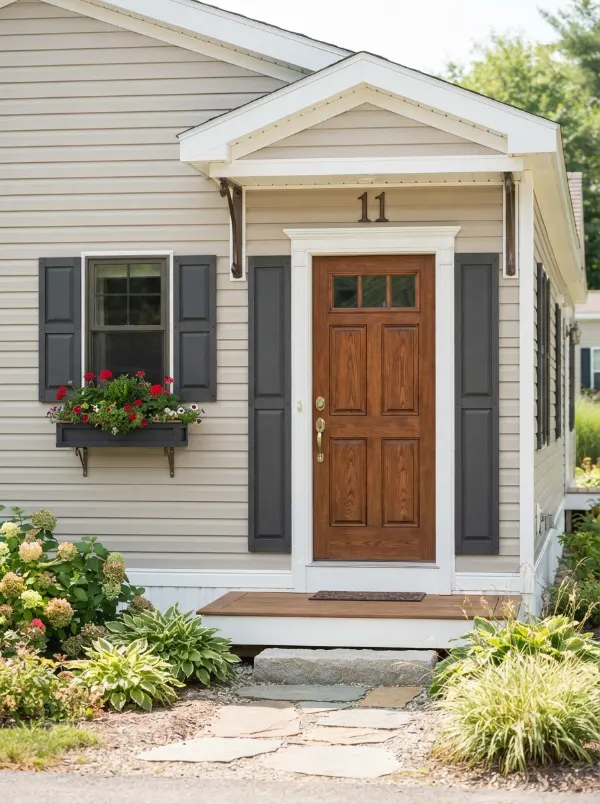
Small architectural details can make a major difference when they are used with restraint. Consider coordinated house numbers, a mailbox, shutters, a porch ceiling, brackets, window flower boxes, or a simple gable vent.
Avoid adding too many unrelated details. The most convincing exterior usually has a few repeated materials and shapes. For example, black metal house numbers, a black mailbox on a cedar post, and one white gable vent, all in the same matte black and white pairing as the door hardware, can add detail without introducing a new color or material.
12. Use Skirting that Connects with the Foundation
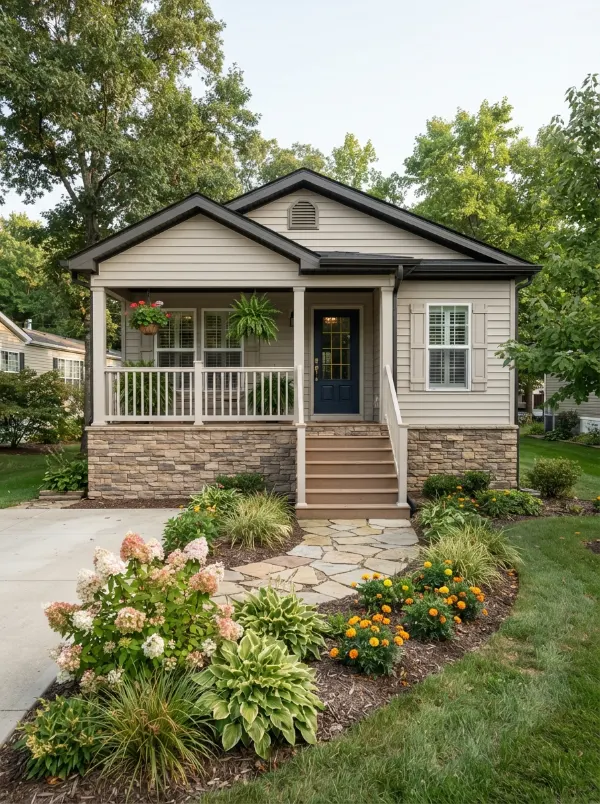
Skirting should visually anchor the home to the ground. Choose a durable material and color that relates to the siding, stonework, or landscape. Textured panels, faux stone, or clean painted skirting can look more integrated than mismatched sections.
Do not block ventilation or access panels. Skirting must remain practical as well as attractive. For example, interlocking faux-stone polyurethane panels in a gray ledgestone pattern, fitted around the full perimeter with vent panels left open near each corner, can hide the undercarriage and make the home sit on the ground like a site-built house.
13. Build a More Intentional Front Garden
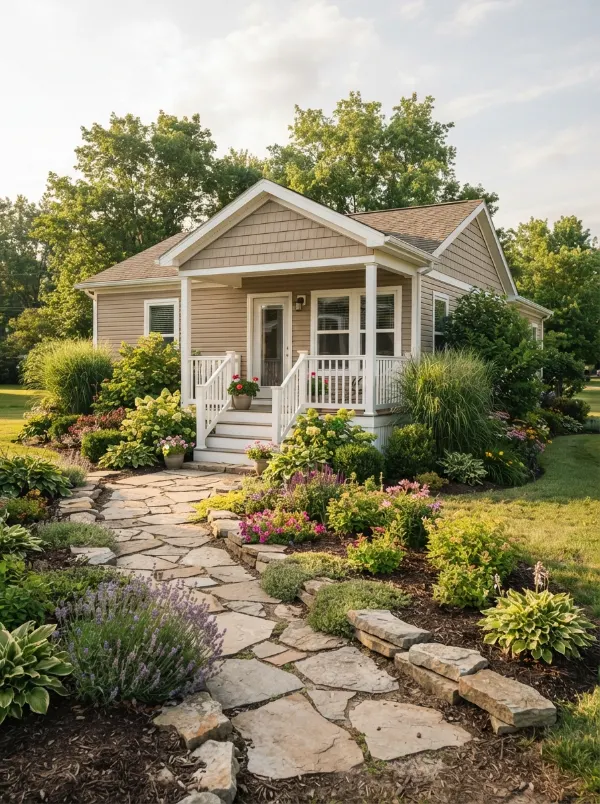
Landscape design can make the home appear settled into its site. Use layered planting: low flowers near the path, medium shrubs around the porch, and taller plants near corners. This creates a gradual transition from the ground to the walls.
Repeat a few plant varieties rather than buying one of everything. Repetition gives a small garden a professional, edited appearance. For example, a 3-foot-deep bed along the front wall planted with low boxwood at the back, mid-height hydrangeas in the middle, and white alyssum at the front edge can layer the garden from the ground up to the siding in three clear steps.
14. Add Outdoor Furniture with Real Scale
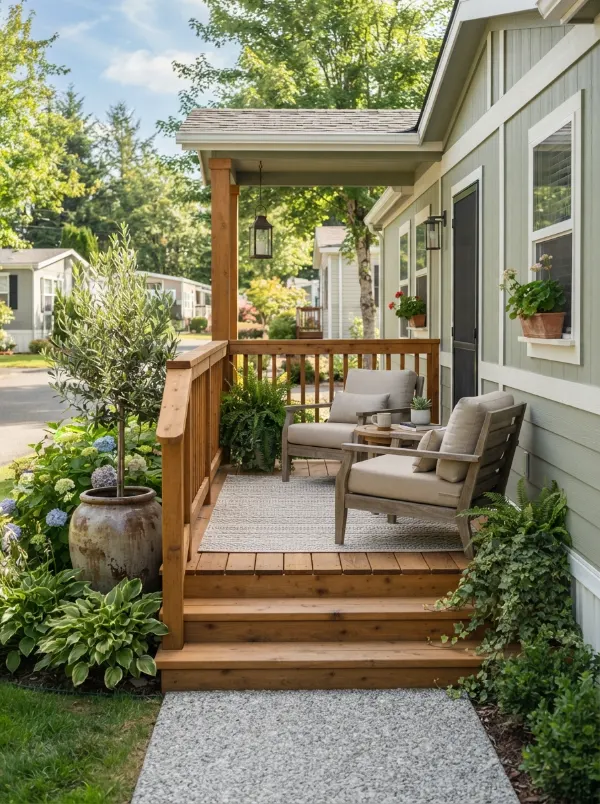
A pair of chairs, a compact bench, or a small porch table can make the entrance feel like part of a real home. Select furniture that fits the porch without crowding the walkway. Neutral cushions, a durable outdoor rug, and one planter are usually enough.
Scale matters. Tiny furniture can make the facade feel larger and less substantial, while oversized furniture can overwhelm the entrance. For example, two full-size Adirondack chairs in weathered teak with a small round side table between them, placed on a 5-by-7-foot outdoor rug on the porch, can make the entry feel like a real outdoor room rather than a decorated step.
15. Repeat Materials for a Custom Look
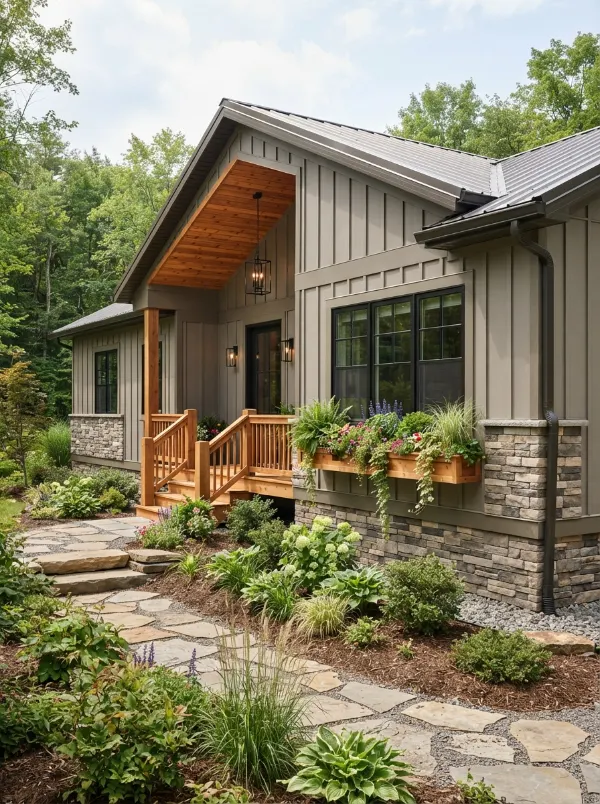
The most successful mobile home exterior ideas repeat details across the property. If the porch uses cedar, echo that tone in the planter boxes. If the trim is black, repeat black in the lighting and hardware. If stone appears near the steps, use a small amount near the skirting or garden border.
This material repetition creates visual unity and makes separate upgrades feel like one intentional design. For example, if the porch posts are cedar, echoing that cedar in the planter boxes, the mailbox post, and the house-number backplate can tie four separate upgrades into one intentional design with a single repeated material.
Start with the Three Giveaways
Most people can tell a mobile home from the street because of three details, not because of the home itself. The first is the visible gap beneath the home, where the steel frame and supports show. The second is the long, flat roofline with no break or peak. The third is thin, flat trim around windows and doors that leaves the walls looking unfinished. Fixing these three giveaways first makes every later upgrade — paint, planting, lighting — look more convincing, because the eye no longer has an obvious reason to read the building as temporary.
Start at the ground and work upward. Close the base with skirting that reads as a foundation, then give the roofline one clear peak or gable over the entry, then widen the trim around the front windows and door. Once those three changes are in place, smaller touches such as shutters, planters, and a new door color start to look like choices made for a real house, not decorations added to a mobile home.
Repaint Before You Replace Anything
Paint is the fastest way to change how a mobile home exterior reads, and it costs far less than new siding. Before opening a can, identify the siding material, because vinyl and aluminum behave differently. Aluminum siding accepts paint readily once it is cleaned and primed with a bonding primer. Vinyl siding moves with heat, so it should be painted in a color no darker than the original shade, using paint made for vinyl, or the panels can warp and buckle in strong sun.
Choose one body color, one trim color, and one accent color, and test each one on a full siding panel in morning and afternoon light before committing. A creamy off-white or warm gray body with charcoal trim and a deep green or navy door suits most mobile homes, because the light body keeps a long, narrow home from feeling like a tunnel while the dark trim defines its edges. Take a photo of the front of the home before painting and another from the same spot after, so the before-and-after difference — and what to do next — is easy to judge.
Add a Deck, Not Just a Porch
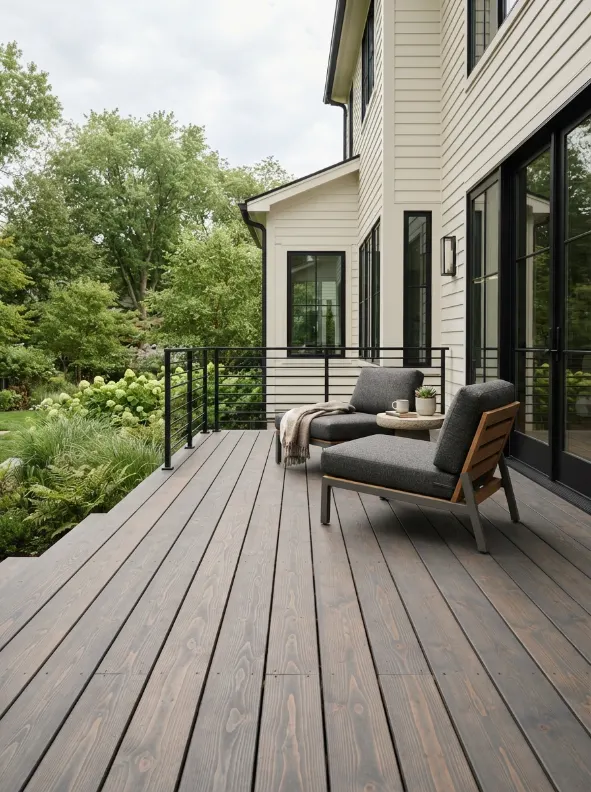
A porch frames the front door, but a low deck gives a mobile home something a porch alone cannot: usable outdoor floor space that extends the home’s footprint. A ground-level deck beside the entry, built as a freestanding platform on concrete deck blocks or a compacted gravel base, creates a place for chairs, a grill, or a morning coffee without the cost or permits of a full room addition. Because it stands on its own supports rather than hanging off the home’s frame, it can also settle independently of the home, which matters for manufactured housing.
Keep the deck low and simple: a 10-by-10-foot platform outside the front or side door, framed in pressure-treated lumber with composite or cedar boards, skirted with the same material as the home’s skirting, and linked to the front path with a matching paver or gravel walkway. Add a railing only on the sides where the drop or the view calls for it, and leave at least one side open so the deck still feels connected to the garden. A deck planned this way reads as part of the house, not as an add-on, and it gives the whole exterior a broader, more settled base.
Choose your starting point by effort, not by excitement — the cheapest changes often make the biggest first impression.
| Upgrade | Effort level | What it changes most |
|---|---|---|
| Repaint siding and trim | Weekend project | The whole facade reads fresher and more intentional |
| New front door and hardware | Weekend project | The entry becomes a clear focal point |
| Wider window trim and shutters | Weekend project | Flat walls gain depth and shadow lines |
| Faux-stone or brick-look skirting | Weekend to a few days | The home looks grounded on a real foundation |
| Covered porch or low deck | Contractor or skilled DIY | The entry gains shelter and outdoor living space |
| Vertical siding accent panel | Contractor or skilled DIY | One wall reads taller and more architectural |
| Pitched-roof extension or gable | Contractor, permits likely | The roofline breaks the long rectangle for good |
How to Plan Your Exterior Upgrade
Begin with the largest visual problem: the roofline, flat facade, entry, or landscaping. Fix that first instead of buying accessories immediately. Next, choose a palette and repeat it across the door, trim, lighting, and planters. Finally, add soft details such as flowers, furniture, and seasonal decor.
Set a realistic budget and divide the work into phases. Paint, lighting, hardware, and landscaping may be manageable first steps. Roofing, structural additions, electrical work, and window changes should be reviewed by qualified professionals.
FAQs
Can a mobile home really be made to look like a regular house?
Yes, in most cases the transformation is convincing from the street, because what gives a mobile home away is a short list of visual cues rather than the structure itself. Hiding the undercarriage with foundation-style skirting, breaking the flat roofline with a gable or porch roof, widening the window and door trim, and repeating a restrained color palette together remove those cues. The result still sits on its original frame, but from the curb it reads as a permanent, site-built house.
What is the cheapest way to improve a mobile home exterior?
Repainting is usually the lowest-cost change with the largest visible effect, followed by a new front door color, wider window trim, and fresh planting along the front wall. These are weekend-scale projects that change the whole facade without structural work. Skirting, porches, decks, and roof changes come later, once the low-cost layer is done and the home already looks cared for.
What skirting looks most like a real foundation?
Faux-stone and brick-look panels read as the most foundation-like, because their texture and varied color break up the flat base line in the way real masonry does. Pre-cast concrete underpinning panels give a similarly solid, uniform foundation appearance. Whichever material is chosen, it should run continuously around the perimeter, match the siding or landscape tones, and leave ventilation and access panels open so the space beneath the home stays dry and serviceable.
Do I need a permit for a porch, deck, or roof change on a mobile home?
It depends on the size of the structure and local rules, and porches and roof changes very often do need approval. Many areas require permits for covered porches, raised decks, and any change to the roof structure, and manufactured-home communities and parks may have their own design rules on top of local codes. Check with the local building department and the park or community office before building, and confirm that any porch or deck stands on its own footings rather than bearing on the home’s frame.
What works on a single-wide home with a narrow front?
A single-wide front benefits most from vertical emphasis and one strong focal point, because the home is long and narrow. A vertical siding accent beside the door, a small gable over the entry, a bold door color, and a pair of matching planters can give the narrow elevation height and a clear center without crowding it. Keep furniture and paths compact — a 3-foot-wide path and two chairs rather than a full seating set — so the front still feels open and easy to walk through.
Final Thoughts
The best way to make a mobile home look like a real house is to design the whole exterior as one composition. Improve the roofline, strengthen the entry, add depth with porches and planters, guide the eye with a path, and repeat a restrained palette. These choices do more than add decoration: they change how the home is perceived from the street and create a more welcoming place to live.