17 Stunning Deck Skirting Ideas That Look Luxurious on a Budget
A raised deck can add valuable outdoor living space, but the open area underneath often makes the whole structure feel unfinished. The right deck skirting ideas can hide exposed supports, improve curb appeal, and make a simple backyard deck look thoughtfully designed without a luxury renovation budget.
The secret is not expensive material. It is clean proportion, consistent spacing, coordinated color, strong framing, and a finish that works with the home. With those details in place, affordable lattice, basic lumber, painted panels, and even gravel can create a polished result.
What Makes Deck Skirting Look Expensive?
High-end-looking deck skirting usually follows a few simple design rules. First, the lines should be straight and evenly spaced. Second, the skirting should look connected to the deck and exterior rather than added as an afterthought. Third, the colors should repeat something already visible, such as the railing, siding, trim, or doors.
Before buying materials, decide what the skirting must do. It may need to hide storage, discourage animals, protect the underside from view, or simply give the deck a finished edge. Your answer will guide the best material and layout.
17 Budget-Friendly Deck Skirting Ideas
1. Classic Framed Lattice Panels

Framed lattice is one of the most practical deck skirting ideas for a limited budget. Use standard wood or vinyl lattice inside simple rectangular frames. The frame gives the panel a custom architectural edge and makes inexpensive material look intentional. Paint the frame and panel one coordinated shade for a calm appearance, or use a darker frame with a lighter infill for contrast.
2. Modern Horizontal Wood Slats
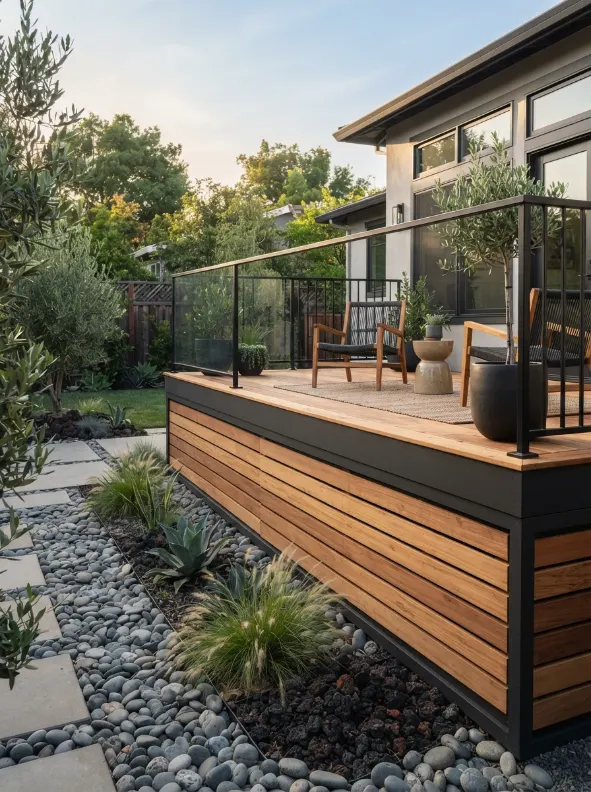
Horizontal slats create a clean, contemporary base. Use affordable exterior-rated boards and leave consistent gaps between each piece. The repeated lines make the deck feel wider and more structured. A warm stain suits natural landscapes, while charcoal or deep brown paint gives a more modern effect. Precision matters more than premium lumber.
3. Vertical Board Skirting
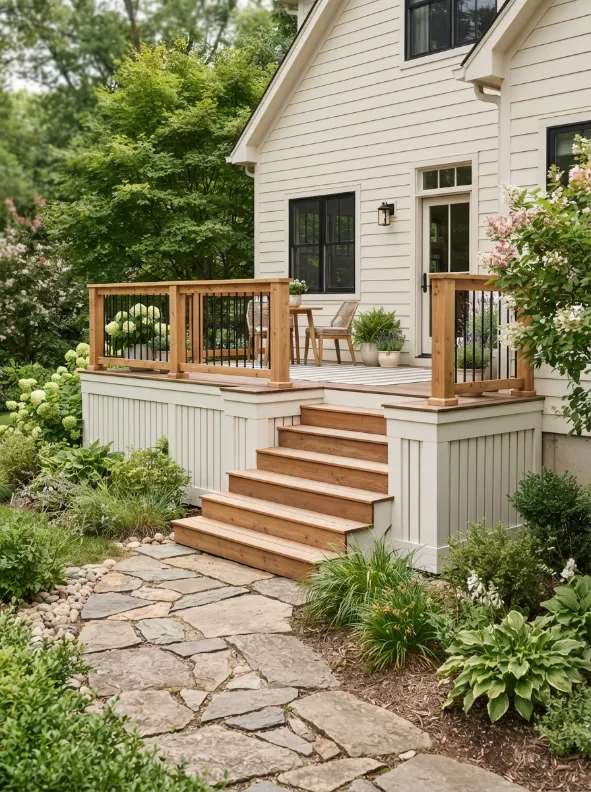
Vertical boards draw the eye upward and can make a raised deck feel taller. This approach works beautifully with farmhouse, cottage, and traditional exteriors. Install narrow boards with equal spacing, then add a wider top and side trim. A single exterior paint color keeps the pattern refined and hides variations in budget wood.
4. Two-Tone Painted Skirting

Two-tone deck skirting ideas create visual depth without requiring costly materials. Paint the frame, posts, and top band in a dark shade, then use a lighter color for the center panels. Navy with warm white, charcoal with soft gray, or deep green with cream can look tailored. Keep the palette limited so the design feels cohesive rather than busy.
5. Painted Diamond Lattice

Traditional diamond lattice can look dated when it is installed loosely or left unfinished. A solid paint color, accurate cuts, and clean framing make it feel fresh. Dark lattice visually recedes beneath the deck, while white lattice gives a classic porch appearance. Use exterior-rated paint and maintain airflow around the structure.
6. Board-and-Batten Panels

Board-and-batten is a strong option when you want the appearance of a small exterior wall. Use flat panels or closely installed boards with narrow battens over the seams. The vertical rhythm adds character and helps conceal the open underside. Add an access panel that follows the same batten pattern so it disappears into the design.
7. Natural Wood With a Dark Frame

Let the texture of affordable wood become the focal point. A dark painted frame around natural or lightly stained boards creates a sophisticated contrast. This works especially well beside stone paths, evergreen planting, and warm outdoor furniture. Seal the wood properly for your climate so the finish remains attractive.
8. Gravel and Simple Skirting
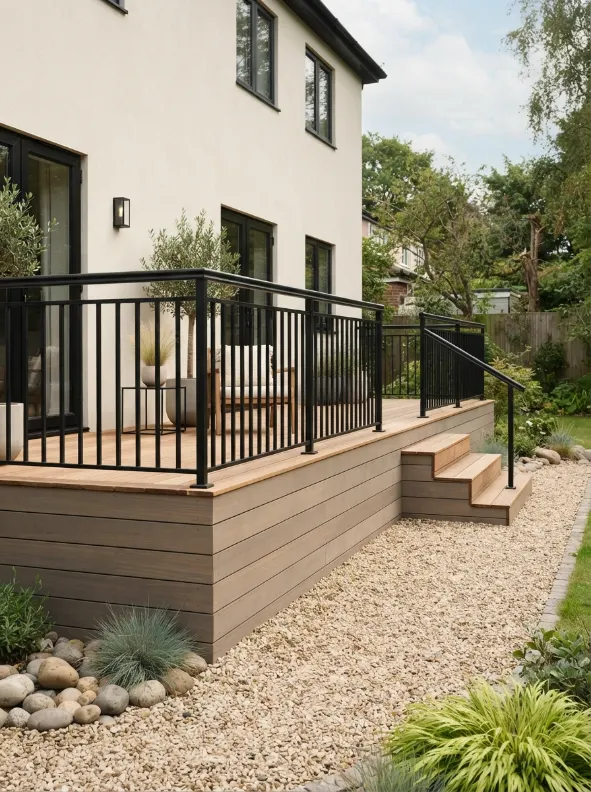
Gravel can make even basic deck skirting feel more complete. Place a neat border of pea gravel or crushed stone beneath the panels, leaving appropriate drainage space. The texture hides uneven soil, reduces mud, and creates a deliberate transition between the deck and yard. Choose stone that repeats a color from the house or walkway.
9. Faux-Stone Accent Panels

If the deck needs a heavier, grounded appearance, use faux-stone panels only on selected sections rather than covering the entire perimeter. A stone accent beneath stairs or near a seating area can create the look of a larger renovation while controlling cost. Combine it with simple painted boards to avoid visual overload.
10. Black Slat Skirting
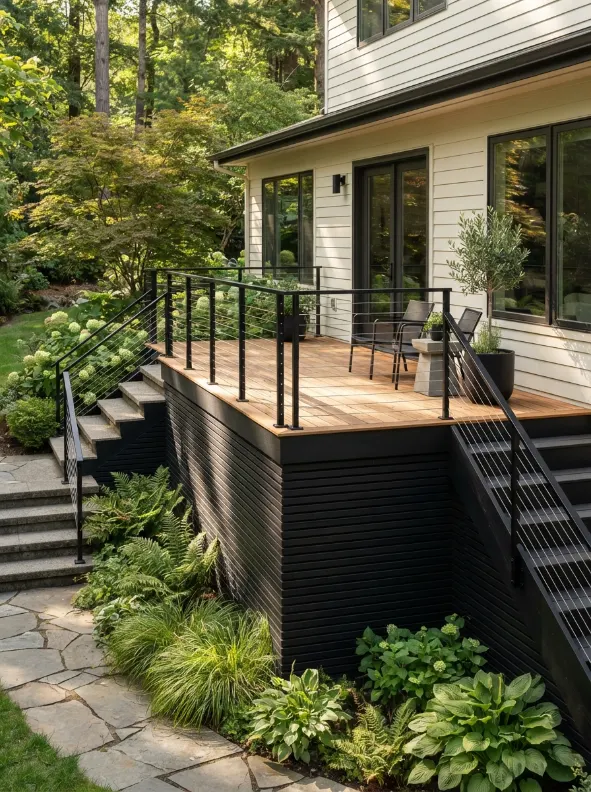
Black is a useful choice for deck skirting because it creates a quiet background and emphasizes the deck surface above. Narrow black slats paired with natural wood decking feel modern and architectural. Use a low-sheen exterior finish and keep the spacing consistent. Dark colors can absorb heat, so choose materials and finishes suitable for the location.
11. White Cottage-Style Panels

For a cottage or traditional home, white panels with a simple trim border create a bright, welcoming look. Add flowering plants in front, but keep them far enough away to preserve airflow and access. The combination of white paint, greenery, and a tidy gravel edge is affordable and highly photogenic.
12. Reclaimed Wood Skirting
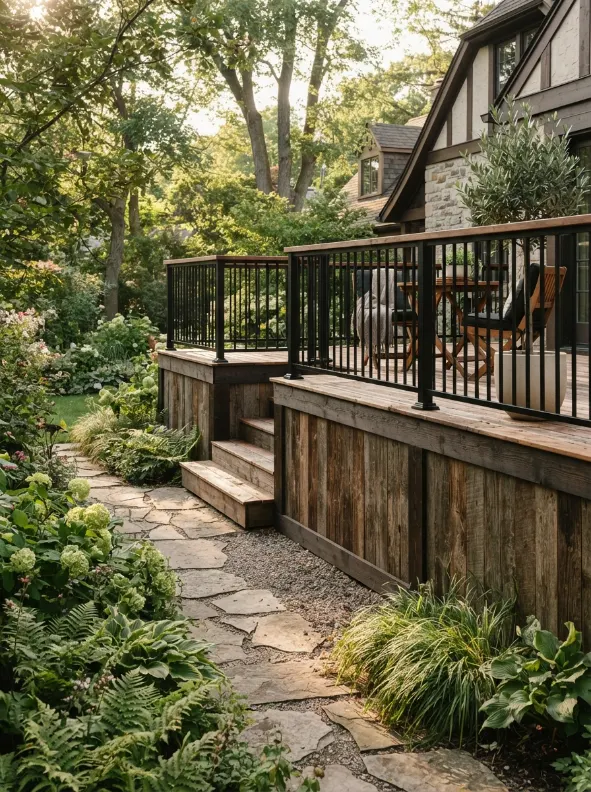
Reclaimed boards can add character at a low material cost. Sort the boards by thickness, remove unsafe pieces, and use a consistent layout rather than attaching random scraps. A transparent exterior finish preserves the weathered texture, while a solid stain creates a more uniform appearance. Check every board for rot, insects, and structural weakness before use.
13. Hidden Access Door
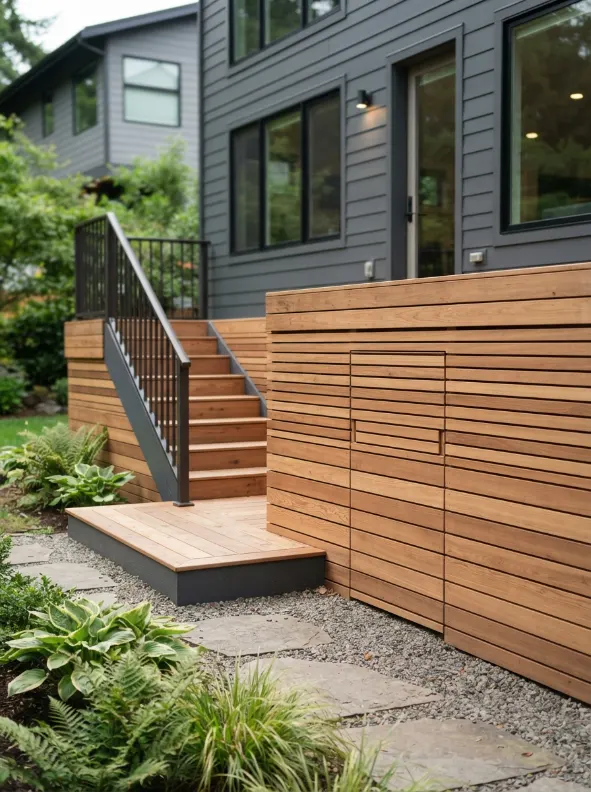
Every practical deck needs access for maintenance. Instead of adding an obvious door, build a removable or hinged panel that matches the surrounding pattern. Continue the slats, battens, or lattice across the door face. A discreet latch and a clear opening path keep the feature useful without interrupting the finished look.
14. Skirting With Planter Boxes

Planter boxes can soften straight deck lines and make simple skirting feel integrated with the landscape. Use weather-resistant boxes near corners or stairs, then repeat the same wood tone in the skirting. Choose plants that tolerate the available light and do not block vents, access panels, or drainage.
15. Mixed Materials in Small Zones

Mixing materials can be effective when each one has a clear job. For example, use horizontal wood slats across the main run, lattice beneath the stairs, and stone around the entry. Repeating one color across all sections keeps the combination connected. Avoid using too many patterns on a small deck.
16. Minimal Gray Skirting
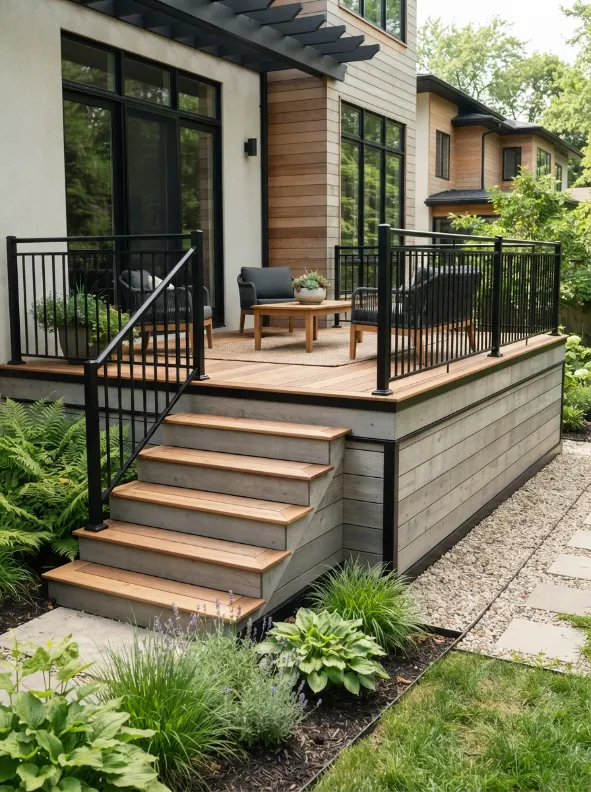
Gray boards offer a soft, modern appearance and pair well with black hardware, natural wood, and green landscaping. Weathered gray stain can suit rustic yards, while solid gray paint gives a cleaner finish. Use matching trim and a straight top line to make the entire base look carefully planned.
17. Simple Skirting With Layered Lighting
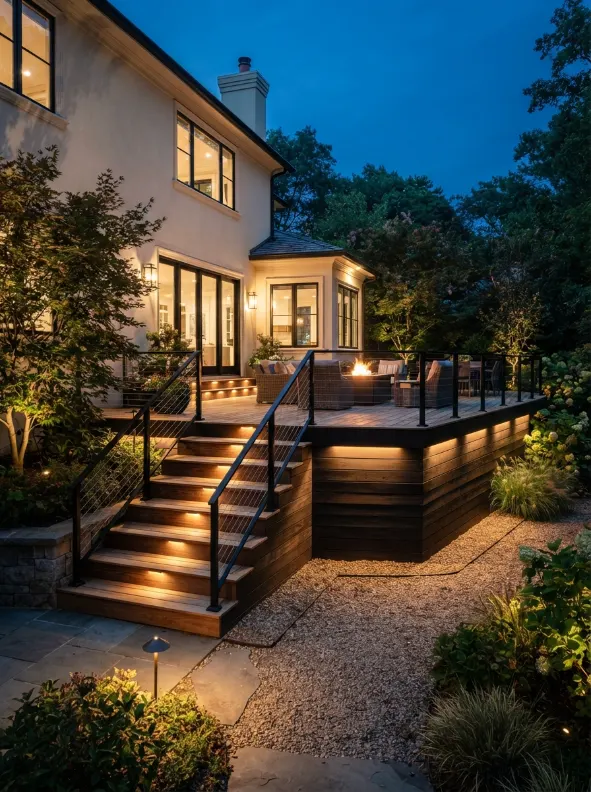
Lighting can improve the appearance of inexpensive deck skirting after sunset. Add low, shielded landscape lights or warm fixtures near steps and pathways, following local electrical requirements. Light grazing across slats or stone creates shadow and depth. Keep fixtures subtle so the deck remains the focal point.
How to Choose the Right Material
Vinyl lattice is often a practical low-cost choice and needs relatively little maintenance. Wood offers more flexibility in size, stain, and pattern, but it needs regular protection. Composite panels can provide durability with less upkeep, although the initial cost may be higher. Faux stone creates a substantial appearance but requires careful installation and suitable support.
Choose exterior-rated materials, fasteners, paint, and sealers. Provide ventilation, drainage, and access for inspections. Skirting should conceal the underside without trapping moisture or blocking important utilities.
Design Details That Make a Budget Look Custom
Use a clear top line, repeat the same trim width, and align the skirting with posts or deck bays. Finish cut edges, hide fasteners where appropriate, and keep the ground line neat. A small planting bed, coordinated stain, or tidy stone border can have more visual impact than an expensive material installed carelessly.
Before starting, sketch the elevation and measure each section. Plan corners, stairs, gates, vents, and access points first. Buy a little extra material for cuts and future repairs, and confirm local requirements before closing in the underside of a raised deck.
FAQs
What is the cheapest deck skirting option?
Basic vinyl or wood lattice is often among the most affordable options. Framing it neatly and painting it well can greatly improve the appearance.
Should deck skirting touch the ground?
Usually, leave suitable clearance for drainage, airflow, and maintenance. The correct gap depends on the site, material, and local requirements.
Can deck skirting be used for storage?
Yes, but include a planned access door and keep stored items away from moisture, pests, and important utilities.
Final Thoughts
The most effective deck skirting ideas focus on consistency rather than price. Framed lattice, horizontal slats, vertical boards, painted panels, gravel, and selective stone accents can all look expensive when the spacing, color, trim, and installation are handled carefully. Start with the function, choose a simple visual direction, and spend your budget on clean finishing details. For more outdoor inspiration, explore our outdoor pallet projects, Jacuzzi outdoor ideas, and garden pool design ideas.