11 Stunning Garden Pool Design Ideas for a Beautiful Flowing Backyard
Let’s be honest—adding water to a backyard is easy. Making it feel as though the water, planting, stone, paths, and seating were designed as one complete experience is much harder. That is the difference between simply installing a pool and creating a garden pool that feels connected to the landscape.
The most successful spaces are not necessarily the biggest. They work because the eye can move naturally from the house to the deck, from the deck to the water, and from the water into the planting. Materials repeat, levels feel intentional, and every transition has a purpose. If you are planning a backyard transformation, these principles can help you create something polished without making the landscape feel over-designed.
The Difference Between a Nice Pool and a Garden Pool
A beautiful pool can still feel strangely separate from the rest of a yard. The strongest garden pool designs solve that problem by treating the water as part of the landscape rather than a feature dropped into it. Hardscape, planting, lighting, furniture, and circulation should support the same visual story.
Start with the view from inside the house. What will you see through the main windows? A well-planned garden pool should become part of that view rather than feel like an isolated backyard object. Where should the eye land first? Then consider how people will move around the space. A clear path, a comfortable sitting zone, and a practical transition between lawn, paving, and water can make even a modest backyard feel remarkably complete.
1. Sunken Lounge Pool That Feels Like a Private Resort

One of the most effective ways to add depth is to change elevation. A slightly sunken lounge beside the water creates intimacy while keeping the pool visually dominant. A circular firepit, low upholstered seating, and a raised edge can make the backyard feel layered rather than flat.
Keep the material palette disciplined. Repeating the same stone on retaining walls and nearby paving helps the levels feel connected. A simple pergola or overhead frame can soften the hard geometry, especially when climbing greenery is allowed to spill naturally around the structure. Warm evening lighting then turns the lounge into a useful destination after sunset.
2. Modern Geometric Pool With a Dramatic Night Glow

For a contemporary backyard, sharp geometry can create a wonderfully architectural effect. Long rectangular lines, large-format pavers, dark edging, and discreet underwater lighting give the water a crisp presence after dark. The trick is to let the lighting define the structure instead of covering the yard in bright fixtures.
Use a restrained palette of charcoal, soft gray, natural timber, and controlled greenery. Tall hedges or narrow trees can form a clean privacy backdrop. Small uplights at planting bases add depth without competing with the water. The result feels sophisticated because every element has room to breathe, allowing the garden pool to remain the calm focal point instead of competing with the landscape.
3. Tropical Lagoon With a Relaxing Waterfall

If you want a backyard that feels immersive, move away from rigid edges. A freeform pool surrounded by layered stone, palms, broad-leaf plants, and a small waterfall can create the atmosphere of a secluded retreat. The organic shape also makes the landscape feel less constrained by the architecture of the house, which is especially useful when a garden pool needs to blend into mature planting.
The key is controlled variety. Use low groundcover near the edge, medium-height planting behind it, and taller foliage farther back. That vertical layering creates depth while the sound of moving water adds another sensory layer. Keep nearby furniture low and neutral so the planting remains the main visual feature.
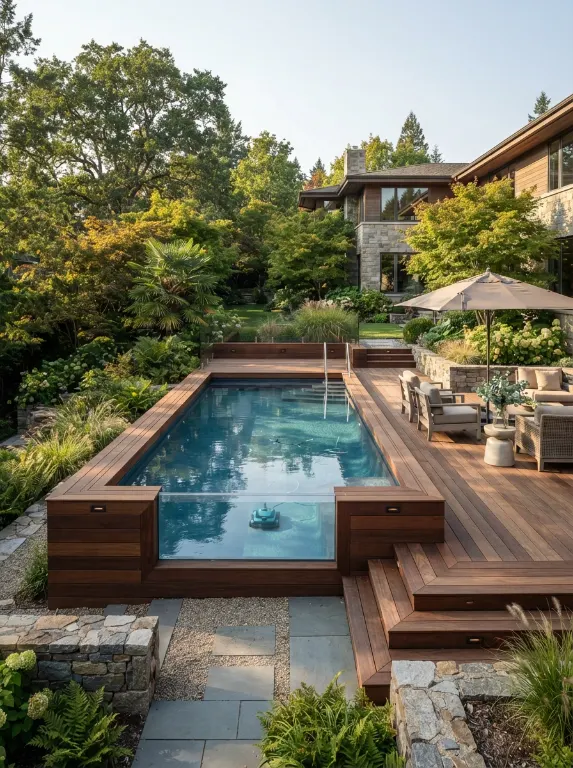
4. Glass Edge Water Feature With an Elevated Timber Deck
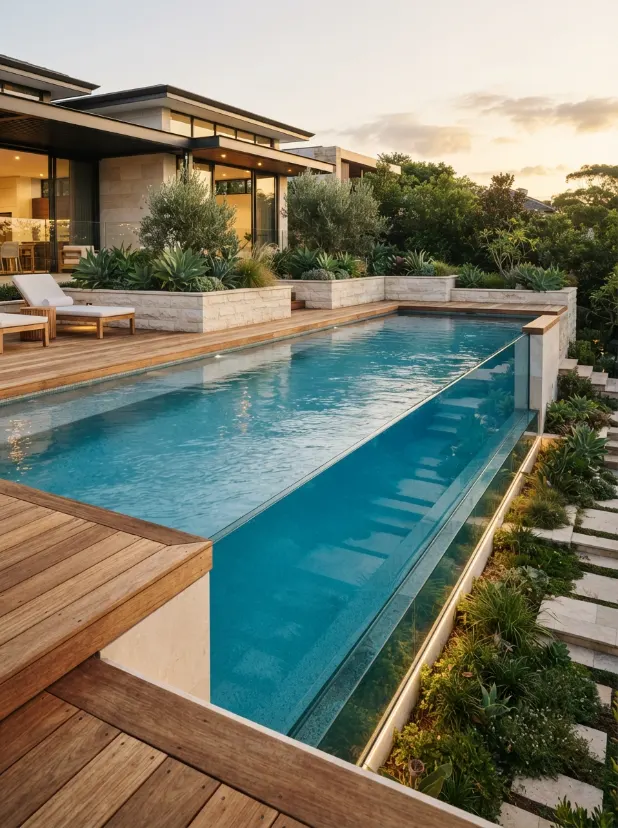
A glass edge can make water appear to float, especially when the garden pool sits above a lower garden level. This approach works beautifully beside contemporary architecture because the transparent edge keeps sightlines open and visually connects different elevations.
Balance the cool surface of the water with warm timber decking or natural stone. Built-in planters can repeat the architectural lines of the house, while structured greenery prevents the setting from feeling too stark. This type of garden pool is most successful when the surrounding finishes are genuinely considered; the transparency leaves nowhere for awkward transitions to hide.
5. Classic Rectangle Framed by Garden Symmetry
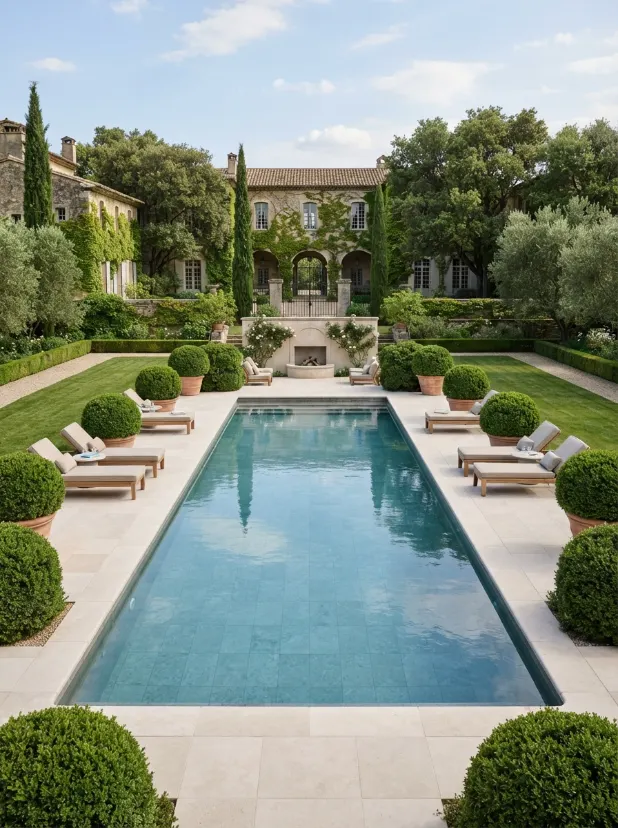
You do not need an unusual shape to create an impressive backyard. A classic rectangular pool can feel timeless when the surrounding landscape has a clear sense of balance. Matching planting on opposite sides, evenly spaced loungers, and a centered axis can make the entire garden feel calm and intentional.
Leave enough negative space around the water. Too many chairs, pots, and decorative objects weaken the composition. A few well-chosen pieces, a restrained planting scheme, and one strong focal feature such as a fire bowl can make the space feel finished without looking staged.
6. Checkerboard Garden Path Leading Straight to the Water
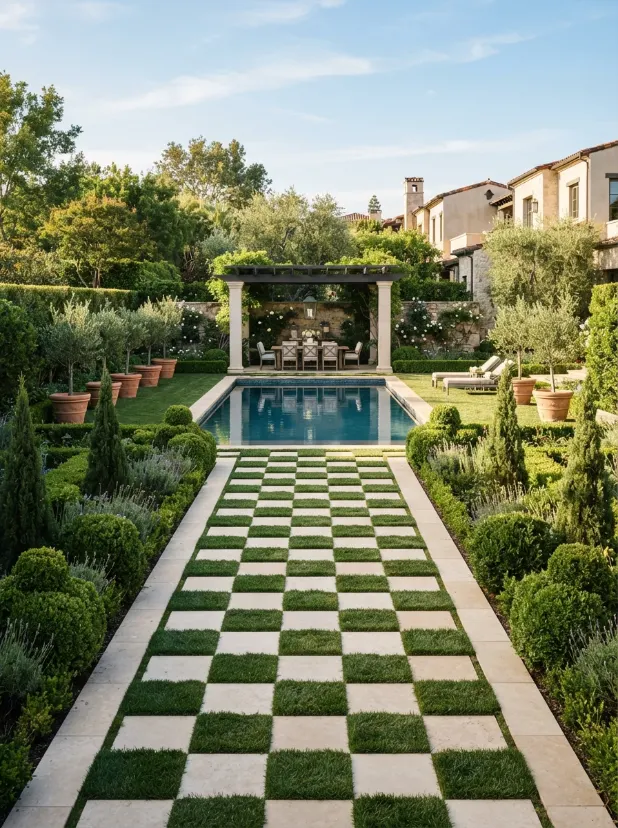
Path design can completely change how a backyard is experienced. Alternating square slabs and lawn create a checkerboard route that naturally directs attention toward the pool. It is a simple landscape device, but it gives a large garden an almost estate-like sense of order.
Keep the pattern strongest along the main axis and let the surrounding planting become softer toward the edges. A pergola, dining area, or sculptural tree at the far end gives the eye somewhere to travel after it reaches the water. The result feels planned without requiring elaborate decoration, and the garden pool remains the destination at the end of the visual path.
7. Raised Edge Pool With a Seamless Deck Transition

A raised edge is useful when you want a stronger architectural boundary without making the water feel disconnected. The change in level adds dimension, while a continuous deck can visually bridge the pool and lounge areas.
Limit yourself to two or three major materials. For example, warm wood, pale stone, and green planting are enough to create contrast. When the materials repeat from one zone to another, the whole backyard reads as a single composition. Soft seating and subtle lighting then make the structured setting feel comfortable rather than severe.
8. Curved Pool Surrounded by Dense Layered Greenery

Curves naturally slow the eye and make a landscape feel relaxed. A curved pool tucked into dense planting can create a private garden retreat, particularly when tall palms, shrubs, ornamental grasses, and groundcover overlap around the perimeter.
Do not make every plant the same height. The beauty comes from layering. Stone edging, a small cascade, or a narrow stream connection can introduce texture and movement. Keep the furniture simple so the greenery remains visually rich. This is especially effective in yards where privacy is as important as the pool itself.
9. Compact Pool With a Spa and Layered Deck Zones

A small backyard does not have to sacrifice atmosphere. Combining a compact pool with an attached spa can make one footprint perform several jobs. Instead of filling the area with furniture, use changes in paving, level, or texture to separate lounging, soaking, and circulation.
Vertical elements are valuable in compact spaces. A slim umbrella, tall planter, privacy screen, or narrow tree adds height without using much floor area. Choose a few strong details instead of many small ones. That restraint helps a compact garden pool feel intentional, spacious, and easier to maintain. That keeps the landscape comfortable and prevents a small garden pool from feeling crowded.
10. Pergola Pool With Soft Mediterranean Character
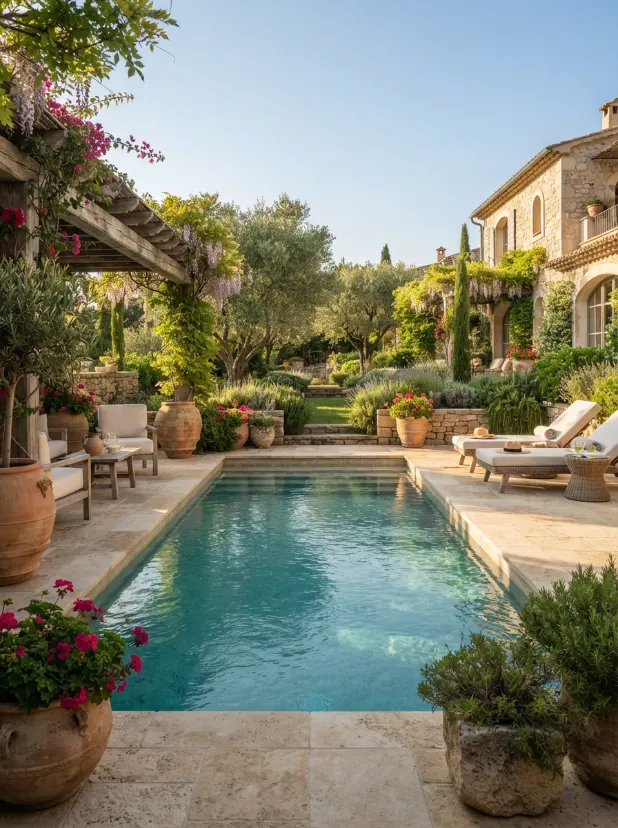
Warm stone, a simple pergola, climbing greenery, and relaxed furniture can give a rectangular pool an easy Mediterranean mood. The look works because the architecture is structured while the planting is softer and more natural.
Choose sandy neutrals, weathered timber, terracotta accents, and foliage that can handle the local conditions. Position loungers on one side and conversational seating on another so the backyard supports more than one activity. Oversized planters can add scale, while warm lighting keeps the space inviting in the evening.
What Actually Makes the Water Feel Like It Flows Through the Garden?
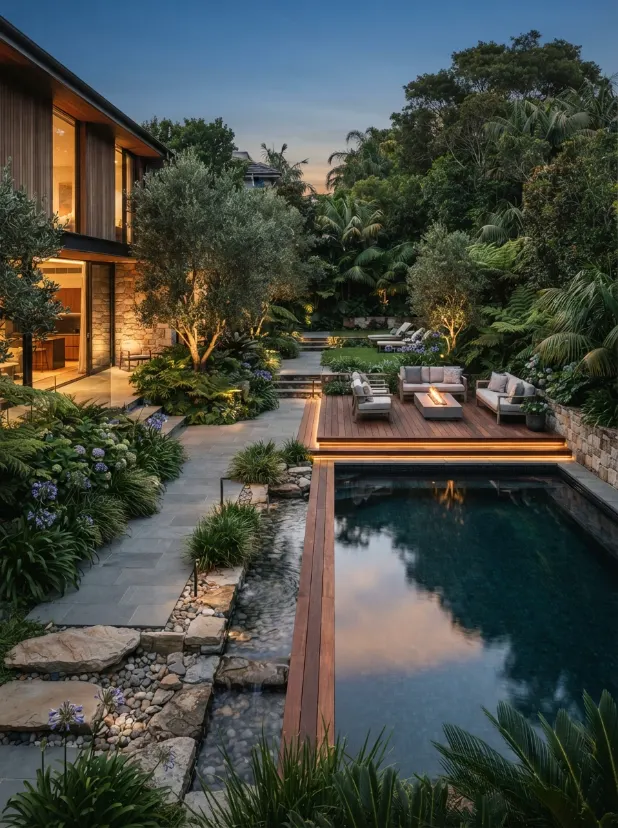
The word “flows” is about more than moving water. It is about visual continuity. When paving lines point toward the pool, planting frames the view, deck levels transition naturally, and the same materials appear in several zones, the whole backyard feels connected.
Think about the route from the kitchen door to the water. Then think about the route from the seating area to the garden. If people have to cross awkward corners, step around furniture, or walk through planting, the design is fighting the way the space wants to be used. Good landscape planning makes movement feel almost automatic.
How to Choose Materials That Keep the Design Cohesive
Material consistency is one of the easiest ways to make an outdoor project look professionally designed. Repeat a stone from the pool coping in a nearby retaining wall. Echo the timber of the deck in a pergola or privacy screen. Use the same metal finish on lights and furniture frames.
Before choosing finishes, make a small palette of three or four dominant materials. Then add planting as the soft layer. This prevents the common mistake of selecting every attractive material individually and discovering later that the backyard has no visual relationship between its parts.
How Lighting Changes the Entire Backyard After Sunset
Daylight shows the structure; evening lighting reveals the atmosphere. Underwater lights can define the waterline, while low path lights guide movement. Uplights can emphasize trees, textured walls, or architectural forms, and warm lanterns can make seating areas feel more intimate.
Avoid treating every part of the yard equally. Let a few areas become focal points and keep circulation lighting quieter. The goal is layered illumination, not maximum brightness. That approach also makes the water look deeper and more reflective without turning the backyard into a brightly lit commercial space.
Final Thoughts: Design the Garden Around the Water
The most memorable outdoor spaces are rarely about one spectacular feature. They are about relationships: water with stone, stone with planting, planting with architecture, and architecture with the way people actually live.
Whether you prefer a crisp modern layout, a lush tropical retreat, a classic symmetrical setting, or a warm Mediterranean escape, the same principles keep appearing. Create clear zones, repeat materials, layer greenery, protect useful sightlines, and give the eye a natural route through the landscape.
And before you commit to the pool itself, look at the entire backyard. Your backyard design ideas should work with the architecture and the way you use the space. If you are also refining planting and hardscape, ideas from pond landscaping and river rock landscaping can help you think beyond the waterline.
Frequently Asked Questions
What is the best shape for a garden pool?
The best shape depends on the architecture, available space, circulation, and planting style. Rectangles suit structured contemporary and classic gardens, while curved shapes can make naturalistic landscapes feel softer.
How can a small garden pool look more luxurious?
Use fewer, better-defined elements: a consistent material palette, integrated seating, layered planting, strong lighting, and clear zones. Visual clutter is usually more damaging to a small backyard than limited square footage.
What should surround a garden pool?
Choose slip-conscious paving, practical circulation space, planting suited to the climate, comfortable seating, and lighting. The surrounding elements should support maintenance, safety, privacy, and the overall landscape style.